
In 2007, just before making one of his best movies, Still Walking, Kore’eda Hirokazu started to film the Japanese singer Cocco and her concerts throughout Japan. The result was So I Can Be Alright : Cocco’s Endless Journey 大丈夫であるように-Cocco 終らない旅, a movie released theatrically in Japan the following year. It wasn’t a new encounter between the two, Cocco had collaborated before with Kore’eda when he directed two music videos for her, in 2002 Mizukagami, and in 2006 Hi no teri nagara ame no furu.
Cocco is probably more known outside Japan, especially among cinephiles, for her intense interpretation in Tsukamoto Shin’ya’s Kotoko, in my opinion, one of the best Japanese movies of the decade. The role she played in the movie had some affinities with her persona, a complex, delicate and troubled artist (at least she was so at the time of the shooting). Cocco’s eating disorders and self-harm tendencies are not a secret, when her diaphanous and skinny figure, not hiding the self-inflicted cuts on her wrists, appeared on the cover of the magazine Papyrus in October 2009, it caused quite a stir in the media.
It’s probably Cocco’s exceptional figure and personality, together with her uniqueness in Japanese show business world, that might have convinced Kore’eda to direct a documentary after more than five years from his previous one. As it is now well known, Kore’eda started his career in documentary, mainly for TV, when he joined the independent production company TV Man Union. However (1991) about the Minamata Disease and the legal struggles of the victims for compensation, was his debut, followed by Lesson from a Calf (1991) and I wanted to Be Japanese… (1992), the latter about the rights of second and third generation Koreans born and resident in Japan. In 1994 he directed August Without Him, a film that documents the fights of an AIDS patient and the relationship with his friends and with Kore’eda himself. From 1995 onwards, after his exceptional feature debut Maborosi/Maboroshi, Kore’eda then shifted towards fiction, but never really abandoned documentaries, a passion that he kept alive on the background of his main career. In 1996 for instance he was behind the camera for Without Memory, an indictment of medical malpractice and reflection on memory and loss, themes that feature prominently in all his fiction films. The most recent documentary-like work he directed was Ishibumi in 2015, a remake of a TV program made in 1969 about the tragedy of Hiroshima. While his commitment to documentary is still present, it is also obvious that his main career as a director has now moved away from it. Yet many of the qualities he developed as a documentarist are still very present in many of his feature films: the ability to improvise and capture the rawness of the moment, working with non-professional actors and children, and the use of natural light, for instance.
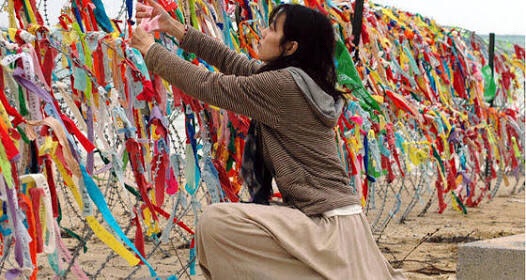
Cocco’s Endless Journey follows the Okinawa-born artist in an important period in her life and career, during her Kira-Kira Live Tour between 2007 and the beginning of 2008. The tour marked the 10th anniversary from her solo debut, and also a time when her insecurities as an artist and as a human being clashed, deteriorating her physical and mental condition.
The film moves pretty smoothly and ordinarily for most of its 110 minutes, performances by Cocco are alternated with the artist speaking with her staff or going back to Okinawa for a family reunion. But it’s in the last 20 minutes or so that the movie becomes a remarkable and fascinating watching. From a musical documentary following an artist, her concerts and her preoccupations with civil and environmental battles—Cocco’s tour touches Rokkasho, a town with a huge nuclear reprocessing plant in Aomori, and Okinawa with all the problems related to the presence of American bases, one of which being the extinction of the Okinawa dugong—the movie becomes something totally different. Cocco insecurities, her death drive and her fragile physical and psychological condition slowly come to the surface. It was something that was present before of course, we see her crying many times before or during the performances, but a long conversation with Kore’eda towards the end of the movie pushes the documentary to a different and somehow uncomfortable place. The long scene has a direct-cinema touch and works almost like a confession. On a hill facing the beautiful sea of Okinawa, Kore’eda, off camera, listens to Cocco talking about the difficulty of staying alive and about her suffering, but also the novelty brought to her life by the birth of her son (if I’m not wrong he was 7 at the time).
For instance, she explains the difference between watching Miyazaki’s Princess Mononoke by herself, disappointed by the hopefulness of the ending, and together with her son, when on the contrary she was relieved and glad for the happy end. The very last scene takes place on a beach at night, here after digging a hole in the sand, Cocco and her staff starts to fill it with the fan letters she received and read and a lock of her hair, a cleansing fire that ends the movie.
Before the ending roll we’re informed by intertitles about all the recent developments that occurred in Okinawa and Rokkasho after the shooting of the movie, and that in April of the same year, 2008, Cocco was hospitalised for treating her anorexia.
 Asian Docs
where did you find this and where can *i* find this
LikeLike
It’s streaming here in Japan
LikeLike