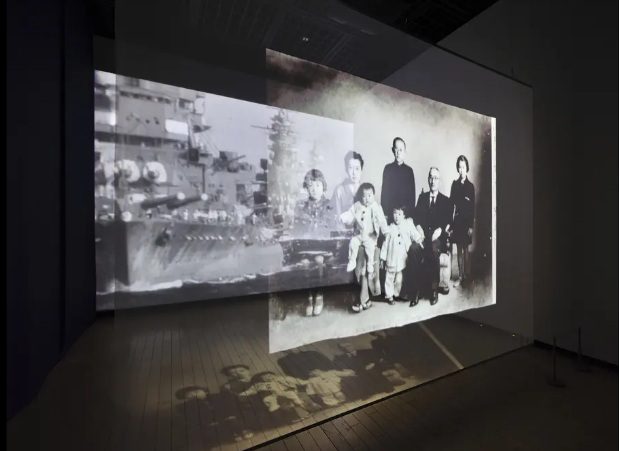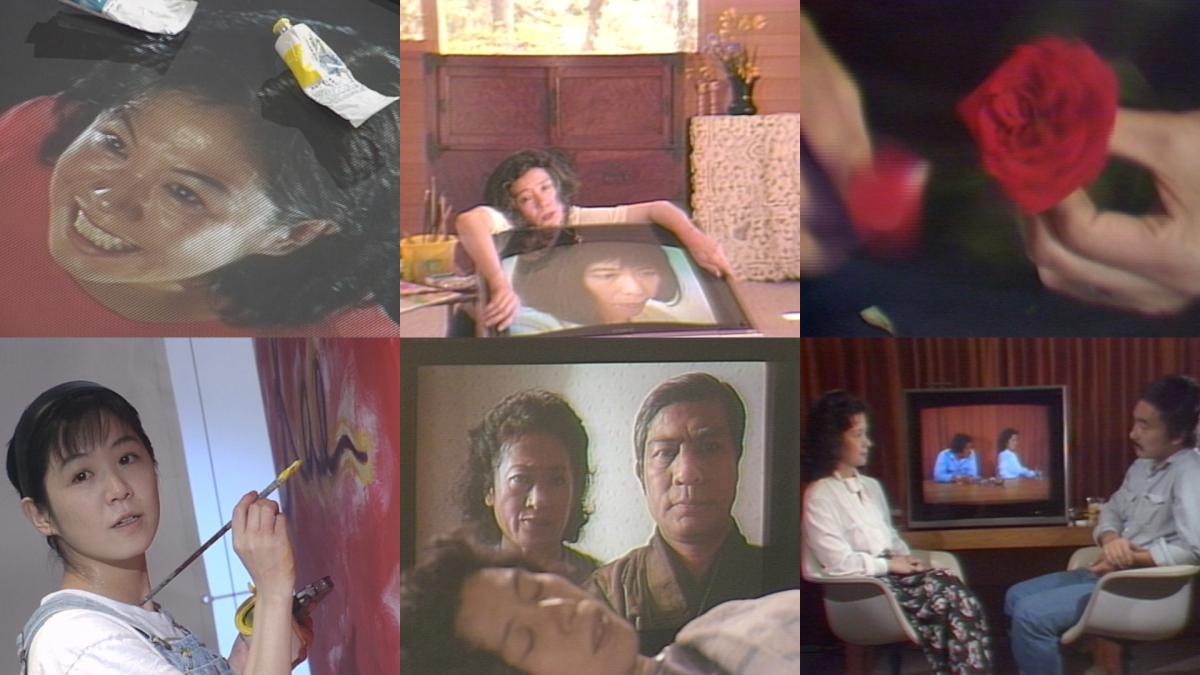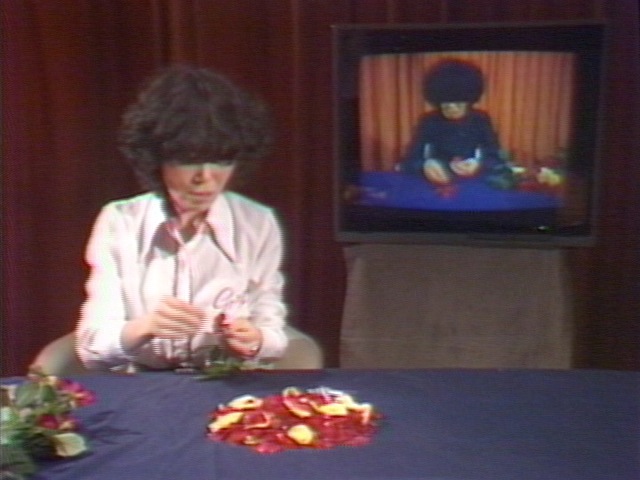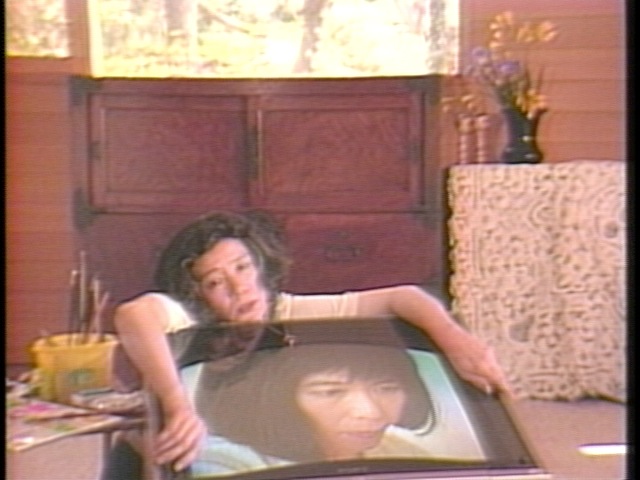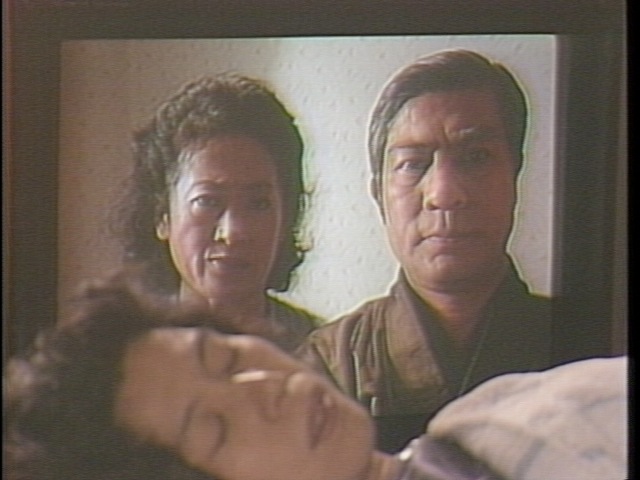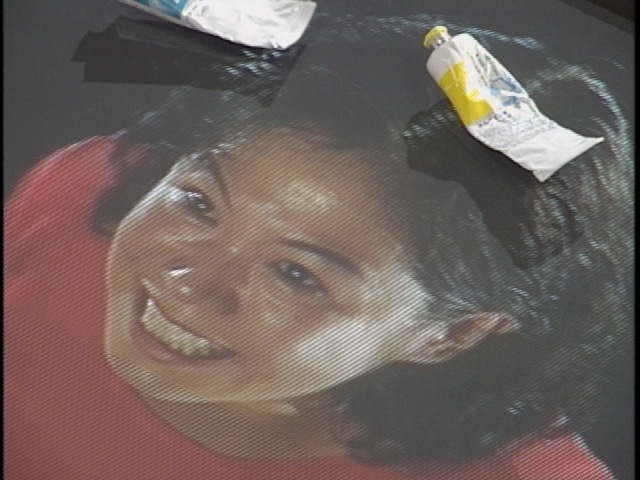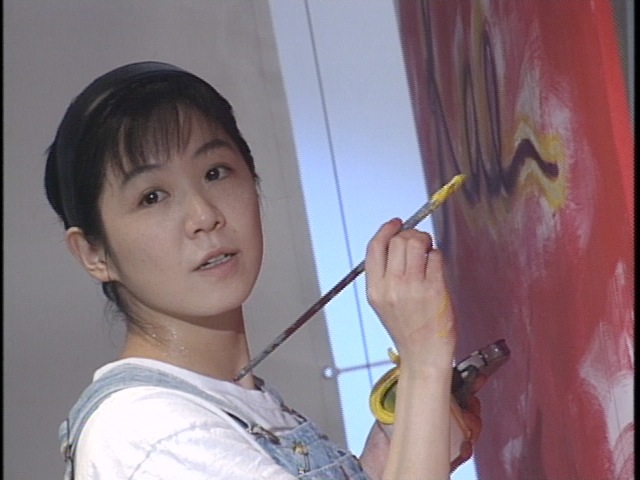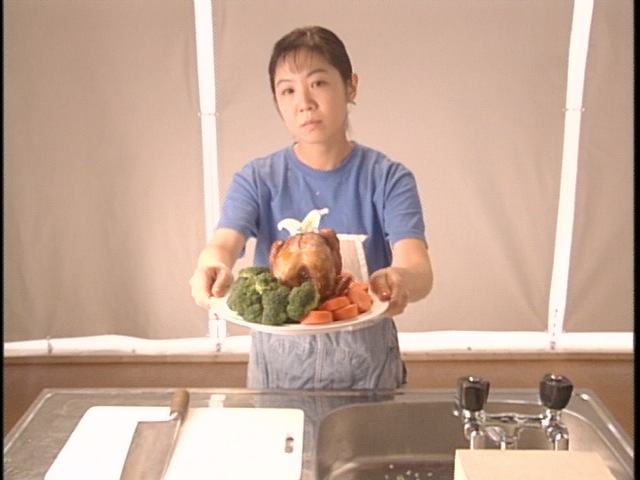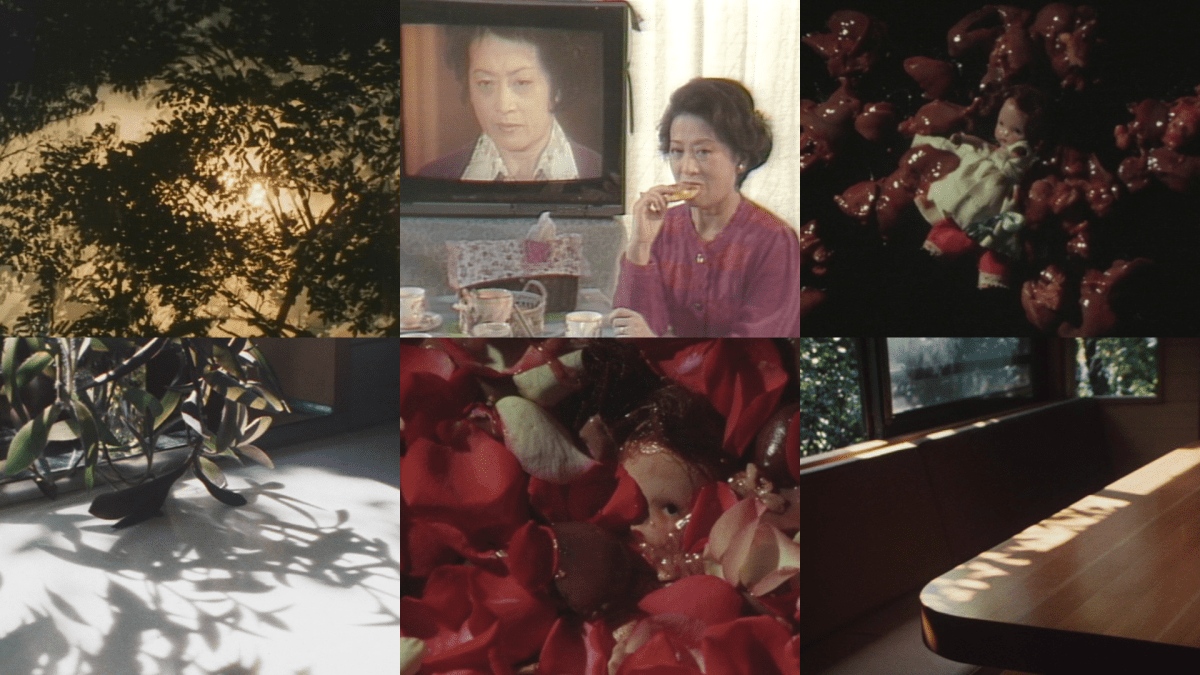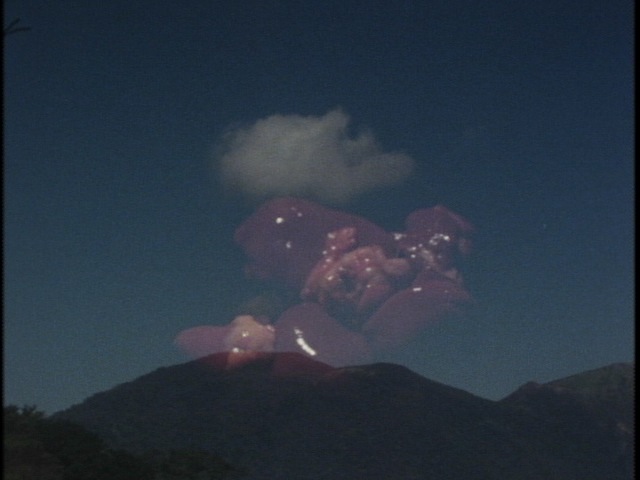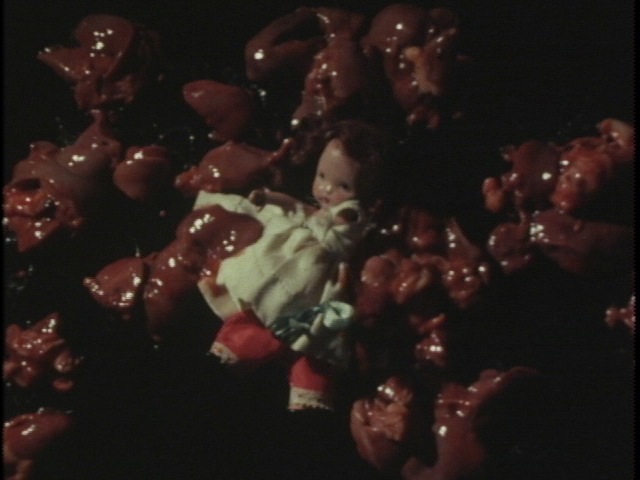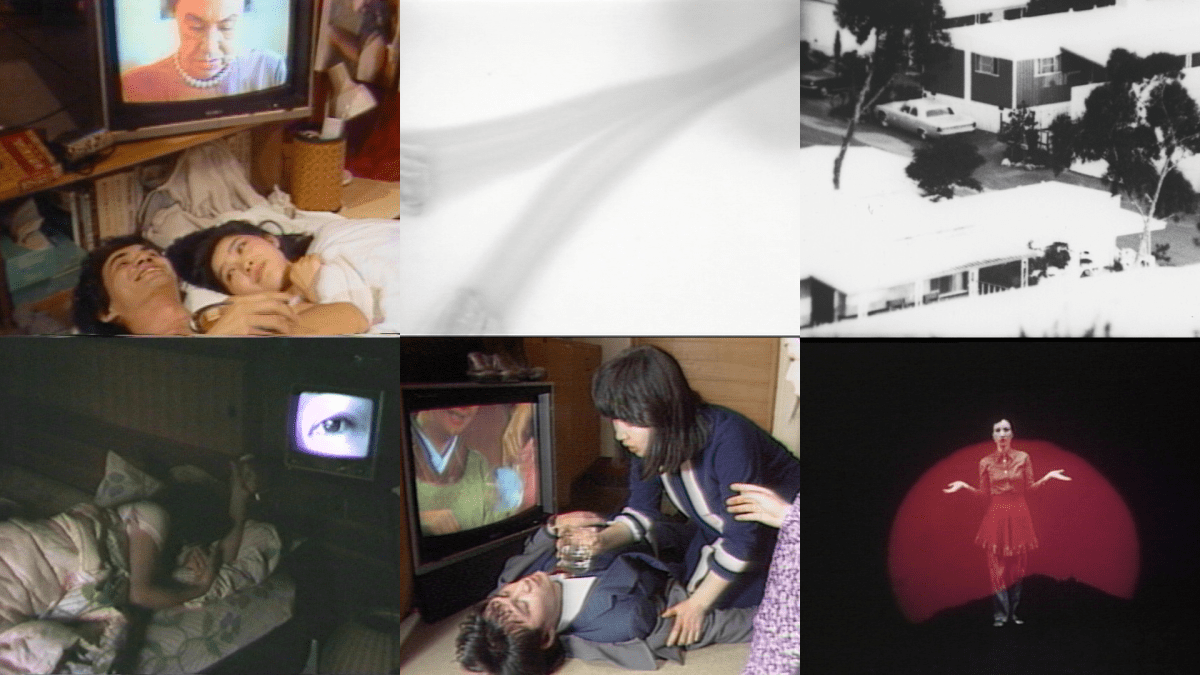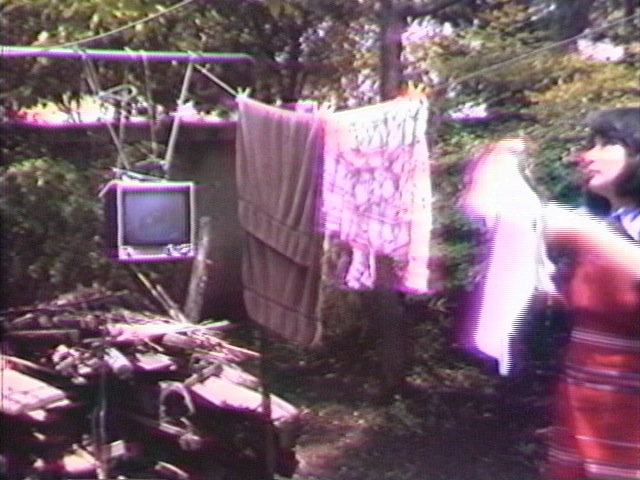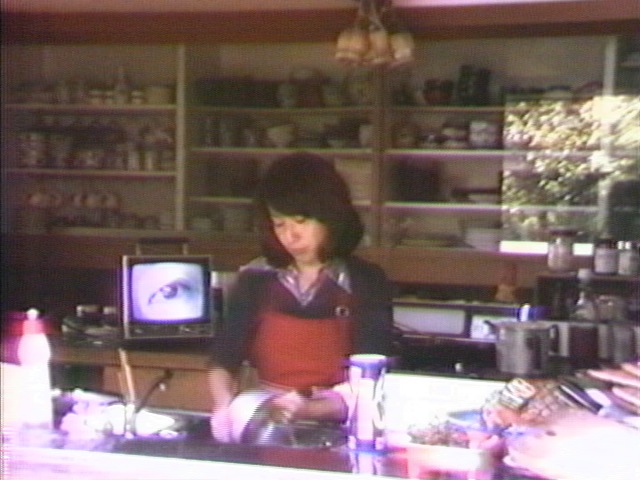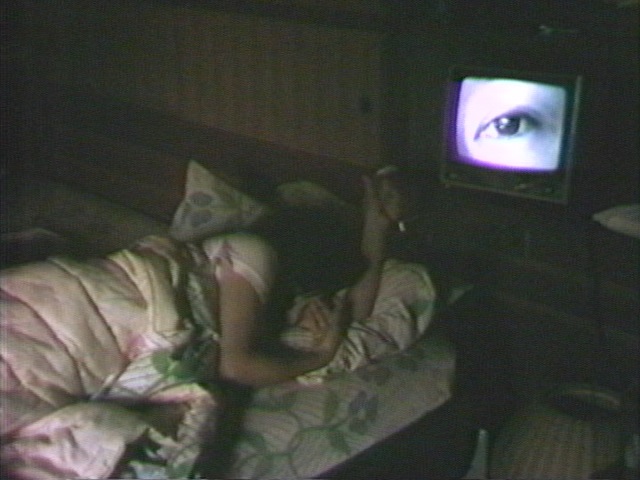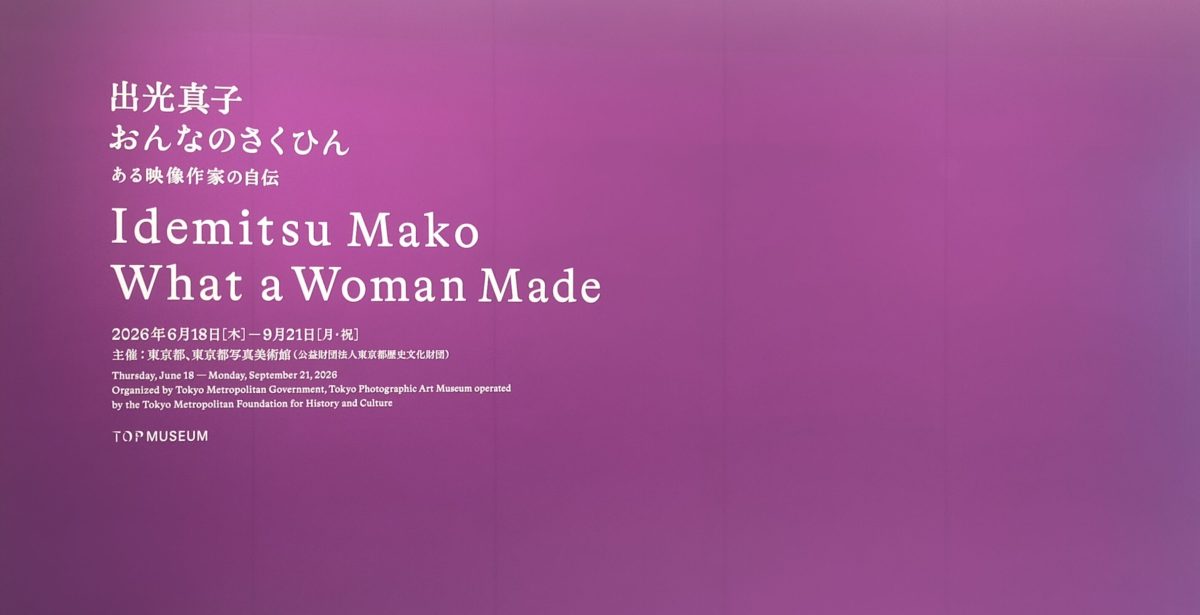
Perhaps not the best time—ongoing and looming wars are killing and disrupting the lives of thousands—but it’s nonetheless a great pleasure to announce the publication of The Documentary Cinema of Haneda Sumiko – Japan in Transition through Gender, Arts, Nature and Society. Edited by Marcos Centeno-Martin, Irene González-López, and Alejandra Armendariz-Hernandez, the volume offers an in-depth exploration of Haneda Sumiko’s career—from her early work at Iwanami Productions to her independent documentary practice, trailblazed by The Cherry Tree with Gray Blossoms.
I’m honored to be included in the book with an essay: Ode to Mt. Hayachine (1982). Between an End of an Era, and the Dawn of a New One: Capturing the Flow of History, a piece I could not have brought to its final form without the support and insightful feedback of the three editors, and without this webpage, which has helped me foster and develop it over the years.
On the publisher’s webpage, the volume is described as follows:
The first academic book to provide a comprehensive survey of the work of Haneda Sumiko (1926-), the first woman to regularly direct documentaries in postwar Japan, by examining her major documentaries amongst the extensive filmography she developed over sixty years.
Bringing together scholars from a range of disciplines—including film studies, gender studies, art history, eco-criticism, and aging studies—this volume explores Haneda’s depiction of critical issues in Japanese society, culture, history, and nature. It showcases how her cinema provides a personal and reflective view on Japan’s drastic transformations of the twentieth century, while her career also bore witness to changes taking place in the national cinema industry. It thus situates Haneda’s oeuvre within the history of Japanese non-fiction film whilst offering new perspectives on questions of authorship and representation.
Collectively, the chapters in this book make a case for Haneda to be recognised as a key figure in Japan’s postwar documentary scene. Bridging gaps in research on both documentary studies and women filmmakers, this will be a valuable resource to scholars and students of film studies, Japanese studies, gender studies and art history, as well as to film curators and programmers.
It’s an academic book, so it’s not inexpensive—hopefully a paperback edition will be available in the near future. In the meantime, if you can, please recommend it to libraries, universities or related institutions.
I was very shocked to hear the great artist and illustrator Tony Stella has passed away. He was not only an artist working in film posters and illustrations, but also a volcano of knowledge about international cinema, with a specific interest in Japanese films. I had the pleasure of interviewing him a couple of years ago, I still can’t believe it… he was only 45 or 46 years old…
As an homage to Tony I’ve translated the interview, but this is just a fraction of the conversation, we went on talking for hours, he was very generous and an unstoppable force when talking about movies…he will be missed.
Interview with Tony Stella (originally published in Italian on Il Manifesto/Alias in August 2018)
Hand-painted film posters and illustrations are an art that, unfortunately, is no longer practiced today as it once was. There are, however, pockets of resistance—admittedly increasingly rare—where artists still engage in this craft. No one manages to combine artistic flair with an encyclopedic knowledge of cinema from every latitude better than Tony Stella, the nom de plume of an artist and illustrator based in Germany with Italian roots, whose fame rather unexpectedly exploded a few years ago through social media and shows no sign of slowing down. In recent years, Stella has created posters for feature films and series, as well as numerous illustrations for DVD and Blu-ray releases—a unique touch capable of shifting and adapting depending on the tone of the work and the filmmaker in question.
How did your professional journey begin?
I started out in the fine arts world, and my works sold quite well, but prices were too tied to the name, to the “brand,” too dependent, so to speak, on market fluctuations. The turning point for me came during my stay in Japan. I lived in Kitakyushu for a year and a half; there, the entire international art world was magnified, and one couldn’t really go against the system. But I realized that this path wasn’t viable for me—I needed more creative freedom. Moreover, I wanted, and still want, my work to speak for me rather than my persona. I’m not interested in the name or in my personal figure. I started with graffiti on the streets—graffiti being, in a way, an anonymous art form—and perhaps everything stems from there.
During the time when I was painting professionally, I always continued—almost as a parallel passion—to draw film-related posters and illustrations for myself. Over nearly twenty years, purely out of passion and long before putting my work online, I had already created more than 600 posters and 2,000 drawings inspired by films, scenes, actors, and so on.
From your work and your podcast appearances, one can see an incredible knowledge of cinema—high and low, from art cinema to genre films, from Italian to Japanese cinema, from martial arts films to those of Bud Spencer and Terence Hill. Where does this passion come from?
I grew up with a group of friends for whom cinema was our shared language. The mother of one of my friends had a film distribution company here in Germany, and whenever we visited her house—after roaming the city doing graffiti—there were always films playing and videocassettes everywhere. Personally, I liked owning VHS tapes of my favorite films so I could watch them over and over again, and I also enjoyed customizing them by creating covers for them. In a way, on a different scale, that’s what I still do today.
When I was working in the fine arts world, people often asked me why I didn’t incorporate my passion for cinema into my paintings, but I always refused because I didn’t want to spoil that passion—I wanted to keep the two things separate.
How do you usually create your posters and drawings? Where do you start?
When I rewatch a film I like—even just a short clip—if I manage to perceive something new that strikes me, I start sketching instinctively. Those initial sketches then evolve into something more complete, so when a commission comes in, I already have material to work from.
All your works are hand-painted, correct?
Yes, of course. I use various techniques, often mixed. For example, if it’s an older film with a distinctive artistic cinematography, I might choose oil painting. If I’m working on a classic Japanese film, I might use ink or watercolors. Ultimately, it depends on the tone I want to give the work; I also use pastels or charcoal. In this sense, my teacher was my grandfather, who painted with whatever he could find—he experimented constantly. Using different techniques is also a way for me to disappear behind my work and let the film speak through the illustration or poster. It ties back to what I was saying about graffiti: in the early days, before being influenced by the ego-driven culture of hip hop, graffiti was appreciated for being recognizable yet anonymous—the identity of the artist wasn’t important.
Are there any artists you admire, in cinema or art more generally, who inspired you?
Above all, Tintoretto. When I visited Venice as a child, I was left speechless in front of his works—I couldn’t believe a human being had painted them. Probably also Giacometti; I appreciated his personality, restrained even in being a great artist. Then, when I became more interested in posters and illustrations, artists like Bob Peak and Robert McGinnis, Studio Favalli, Enrico De Seta, and the entire Roman school.
Your “success” came only recently, right?
Yes, although as a painter, as I mentioned, I was fairly appreciated at the beginning. But then everything came to a halt, driven by my unhappiness and dissatisfaction with the situation I was in. The beginning of my career as a poster artist and illustrator came when I was on vacation in Sardinia visiting a friend and feeling very low. I didn’t know which professional path to take, and this friend, seeing my passion for cinema, suggested putting my posters and illustrations online. Without telling me, he even uploaded some of my works on Tumblr. Then I discovered Twitter, and everything grew from there.
What was the first major or important commission you were asked to do?
There have been many, but one interaction I remember very fondly is when I received praise from William Friedkin for creating the original illustration for the vinyl soundtrack of Sorcerer.
Recently, you also created posters and illustrations for the miniseries The Underground Railroad by Barry Jenkins.
Yes, I had already collaborated with him on the cover of the soundtrack for If Beale Street Could Talk. For The Underground Railroad, he supported me a lot in dealing with Amazon, pushing for my drawings to be used without being altered or made more commercial. He wanted the poster and illustrations to be a form of art that communicated something about the series, not just simple advertising.
I’ve seen that you recently posted many drawings and posters about Columbo.
During the pandemic, many people rediscovered Columbo, and those drawings are part of a project related to a book about the series and the character that unfortunately never materialized. More generally—not only for Columbo—I have an enormous amount of material, hundreds of drawings and illustrations, and I don’t have the time needed to select and scan the originals. It’s a huge job that maybe one day someone will do for me.
Is there anything upcoming that you can talk about?
There are a couple of projects with well-known figures that I can’t talk about yet. But paradoxically, what I’m most looking forward to is having some time for myself to return to drawing. For me, it’s a kind of therapy, and it helps me maintain a sense of calm.
When I started this website, I thought of it as a space for documentary cinema in Japan, and later opened it up to include non-fiction films from Southeast Asia as well. Today though, I’m taking a bit of a detour to put together some scattered thoughts on the Italian collective Videobase, perhaps as a first step toward a longer, more in-depth essay one day…
“In order for the videos to be watched, videotape recorders had to be plugged into a television set. This enacted an occupation of the television screen that symbolically disrupted the state’s monopoly of the two television channels” Jacopo Galimberti, Images of Class
I came across Videobase while reading about Italian Operaismo and Autonomia, and at the same time while looking for examples of militant video works in 1970s Japan. Surprisingly not that many, even though it was the decade when the portable videotape recorders (Sony Portapak, Akai, etc. ironically almost all made in Japan) gave artists and collectives a new tool to experiment and explore with.
Videobase was formed in 1971 through the collaboration of Anna Lajolo and Guido Lombardi—already a duo active in experimental cinema in the past decade —together with Alfredo Leonardi, who likewise emerged from the Italian underground scene. As scholar Christian Uva has pointed out, the collective, while not the first to use videotape recorders, can be considered the first to have used the new technology for militant purposes in a systematic way, grounded in a clear theoretical understanding of the medium.
For the group, their collective activity was “an electronic extension of that form of interventionist and documentary cinema known as militant cinema” one that kept and intensified the difference with the mainstream output. As they recollect in the 1990s “that very sense of incompleteness and formal roughness created and defined a difference; they were reclaimed, through a widespread spontaneism, as qualities—a dirty, anti-bourgeois style set against a power that produced images—broadly speaking—polished and beautiful.”
A video(cinema) against the grain that aimed to choose a clear part on the barricades “to take sides for us, was a deliberate choice, a way of engaging with reality without distorting it—one defined by social figures that today appear blurred: the proletariat and the subproletariat. There was the risk of bias, but everything was laid out in the open. In contrast to a public television—and later a commercial one—that disguised, and still disguises, itself as impartial.”
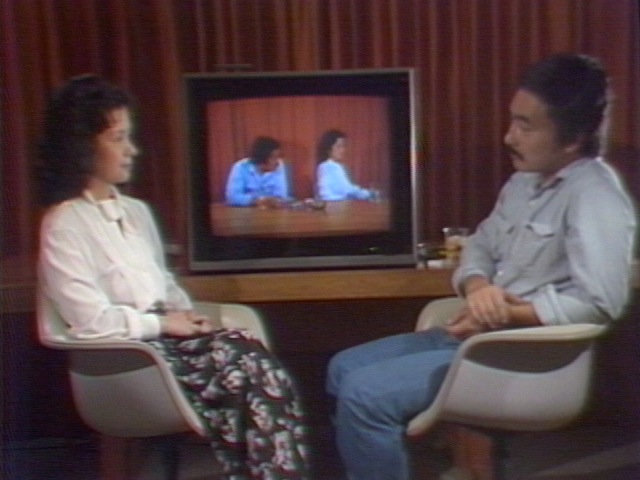
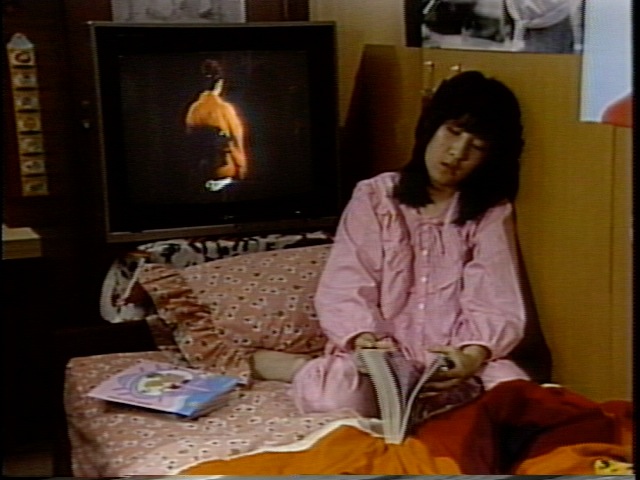
I’ve seen some of their works, including those shot on film during the same period, which, in my view, remain in clear continuity with their video output. However, I haven’t been able to track down two of their most significant works from the late 1970s, Porto Marghera, il lavoro contro la vita (Porto Marghera, Work Against Life, 1979) and L’isola dell’isola (The Island’s Island, 1974–77). I’ve seen the second part of the latter, which is often regarded as the most complete embodiment of Videobase’s (video)philosophy, at least in regards to creating a new form of video and “television” that was more participatory and circular. Here, previously shot footage is, so to speak, reframed and presented again to the same participants—not only to elicit discussion and reactions, but also to foster a deeper awareness of the representational apparatus at work within the contemporary mediascape.
Still from L’Isola dell’isola (1974-1977)
As I’ve done in the past, I’ve jotted down a series of scattered thoughts that may eventually coalesce into something more fluid and systematic, once I’ve had the chance to engage with the entirety of Videobase’s output.
La casa è un diritto non un privilegio (Housing is a Right, not a Privilege, 1970) “Our first work together was a 16 mm film about the slum dwellers and evictees of Rome, shot for Unitelefilm. It was a collective film, with group direction and discussion during the editing. Working this way, we had the opportunity to evaluate the work through discussion at all levels, including ideological ones.” (Anna Lajolo, Guido Lombardi, 1974)
Il fitto dei padroni non lo paghiamo più (We’re Not Paying the Owners’ Rent Anymore, 1972) the result of 10 months spent by Videobase’s members in the Magliana neighborhood and its committee is also their second work shot on video.
& Là il cielo e la terra si univano, là le stagioni si ricongiungevano, là il vento e la pioggia si univano (& There, sky and earth merged, there, seasons rejoined, there, wind and rain united, 1972)stands as a fascinating, radical, and rigorously constructed example of militant cinema. It weaves together interviews with social outsiders—exploited workers, former partisans, ex-prisoners, the disenfranchised—with passages of landscape filmmaking, all bound by a forceful Marxist critique of the city, capital, the state, trade unions, socialism, and the bourgeoisie. In its attention to the heterogeneous subjects it brings on screen, the work also operates as a compelling illustration of Mario Tronti’s concept of class composition, captured here in the very process of its formation. Formally, the film is built largely around long-take interviews, staged either inside old houses or outdoors against the backdrop of an ancient urban landscape. As mentioned, it is shot on 16mm from an elevated vantage point—perhaps a hill or even a castle—from which the camera frequently pans laterally, gradually revealing the surrounding terrain and embedding the speakers within a broader spatial and historical context. The interviews are framed—both opened and closed—by sequences in which the group stages discussions about their experiences and their vision of the future. These moments feel almost theatrical and re-enacted, yet they reinforce the collective dimension of the project: revolution and the seizure of power by the proletariat as a shared horizon. The ending is especially striking. After a succession of politically charged statements, the group disperses, each person leaving the hill and returning to their own path—an image that resonates as both a fragmentation and a continuation of the collective struggle just articulated.
Carcere in Italia (Prisons in Italy, 1973, according to the description given by the authors themselves, is the “recording of the revolt of prisoners barricaded on the roofs of Regina Coeli during the five-hour assault on the prison by the police and Carabinieri on the afternoon of July 28, 1973.” However, this work is much more than a document of an event, as it also includes long theoretical reflections on the countless difficulties awaiting prisoners once released (usually determined by class divide), a short segment featuring the wife of a detainee and her child speaking with him from outside the prison walls, and, above all, a deeply moving interview that opens and closes the work—20 minutes shot in a single long take in dim light—in which an inmate recalls how he has been incarcerated since the age of nineteen and recounts the brutal beatings he repeatedly suffered at the hands of prison guards. A powerful example of how video militancy gave space to subaltern voices.
Still from Lottando la vita – Lavoratori italiani a Berlino
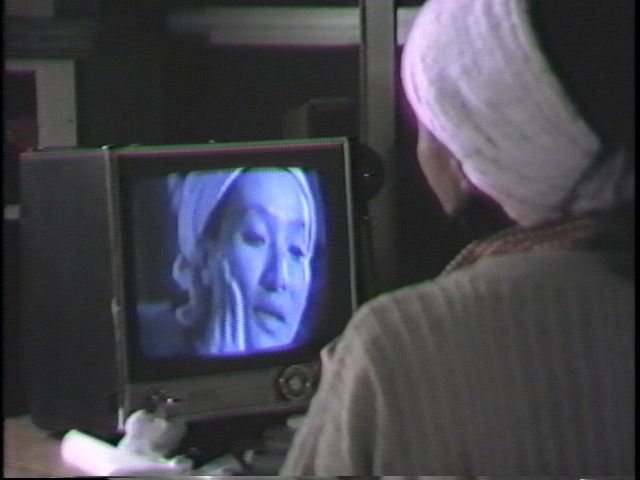
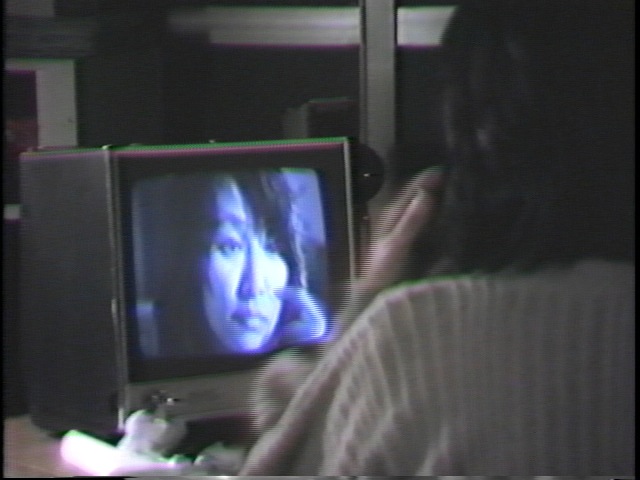
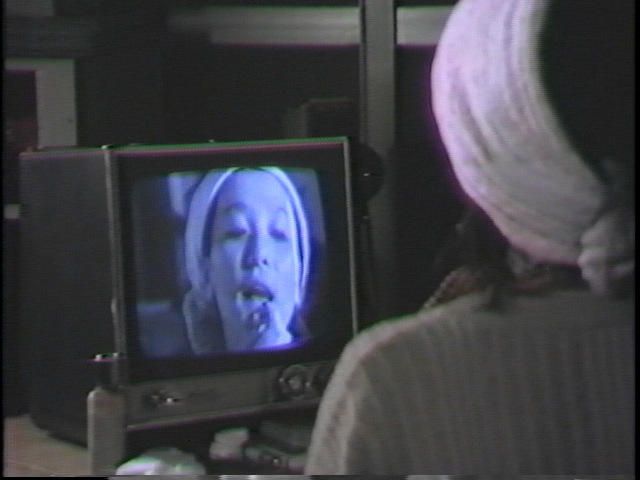
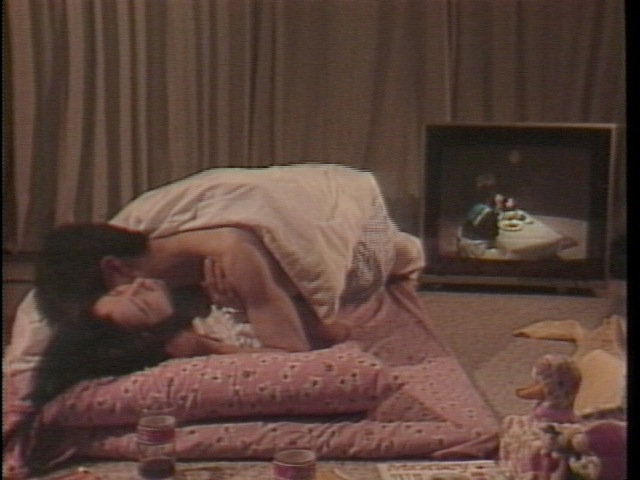
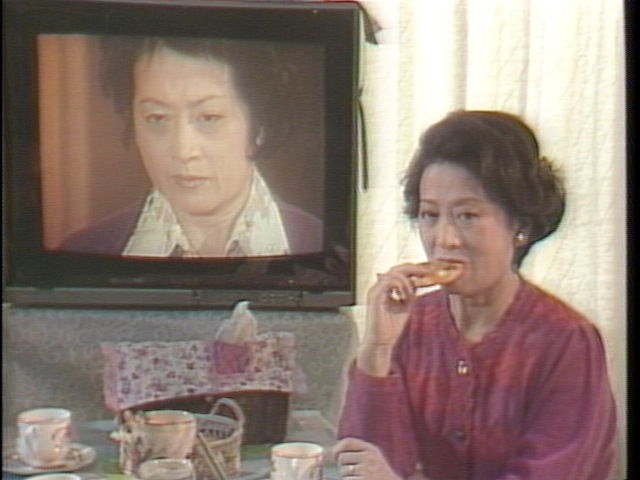
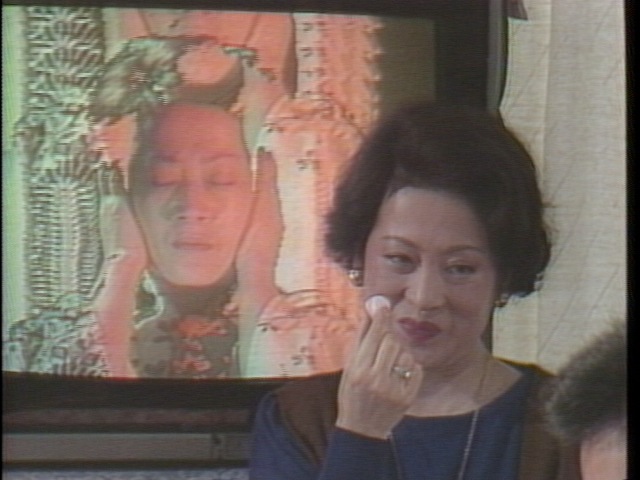
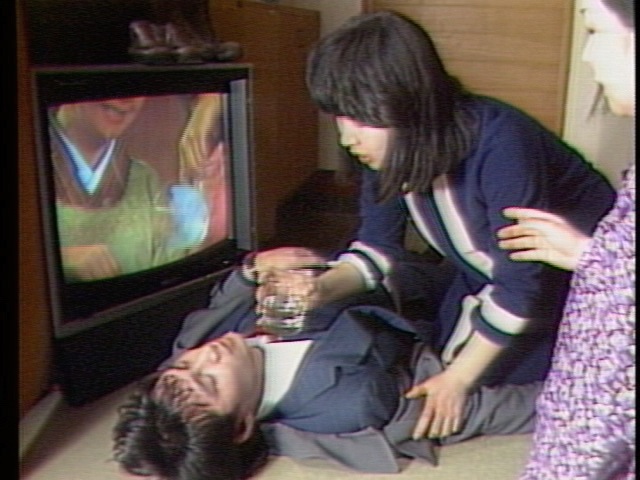
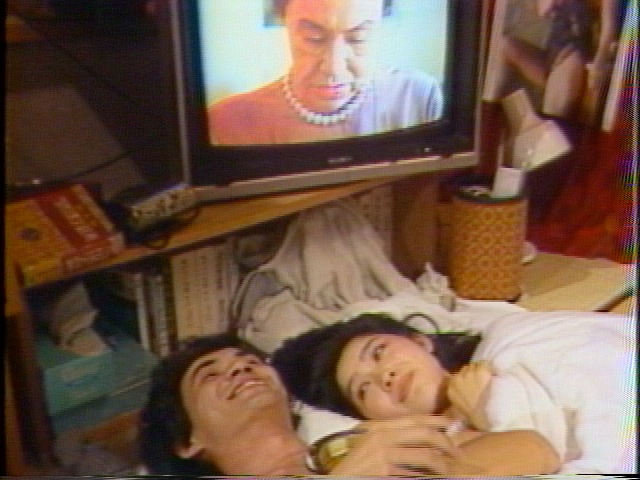
Lottando la vita – Lavoratori italiani a Berlino (Fighting life – Italian Workers in Berlin, 1975) was made during a three-month residency in Berlin in 1975 on a grant from the Artists-in-Berlin Program. The work is centered on the living and working conditions of Italian migrant laborers in Berlin in 1975. This is one of Videobase’s works which better embodies the shift from militant cinema to militant video, exploring the possibilities offered by the new medium. The two major advantages video recorders brought with their advent were the ability to shoot for longer periods of time, and the possibility of playing what was shot almost immediately. One exemplary moment encapsulates this transition and what it entails: we see and hear a worker describing the conditions faced by foreign laborers in Berlin and the role of the unions. In the following sequence, another comrade watches that testimony on a television set and comments on it. The image we have just seen is immediately re-mediated, reframed, and collectively discussed.
Not only it highlights the dialogical effect and power of the video within a video, but it points towards an epochal shift. The struggle moves from the cinema hall to the domestic screen: audiovisual militancy no longer relies on the theatrical space as its primary channel of expression; instead, it symbolically “occupies” what was then the medium of power par excellence—television. Videobase would push to the extreme this use of the remediated and reframed images through television sets in the aforementioned L’isola dell’isola (The island’s island) shot between 1974 and 1977 in the small island of San Pietro, Sardinia.
The extended recording time is put to striking use in Lavoratori italiani a Berlino in a fascinating scene where a group of young workers lounge around, half-asleep and half-dressed, chatting freely. The camera—as researcher Christian Uva notes “positioned as if it were one of them in the center of the room”—lingers on them allowing their conversation to unfold with an unusual sense of ease and intimacy. Another important element that permeates this work is the dense layering of dialects and accents, which subtly reveals the diverse regions of Italy these migrant workers came from. At the same time, many of them lost the ability to speak fluently in their own language, and were not able to master the new one (German). A symbolic and real disorientation, expressing an identity in crisis when not in flux.
Bibliography:
Anna Lajolo, Alfredo Leonardi, Guido Lombardi. L’isola dell’isola – Videobase, in Bianco e Nero settembre/dicembre, 1979, Edizioni dell’ateneo & bizzarri, 1979.
Galimberti, Jacopo. Images of Class: Operaismo, Autonomia and the Visual Arts (1962-1988), Verso, 2022.
Christian Uva. L’immagine politica: Forme del contropotere tra cinema, video e fotografia nell’Italia degli anni Settanta, Mimesis, 2015.
An embarrassment of riches awaits at this year’s Taiwan International Documentary Festival (May 1–10), now in its fifteenth edition. While the full programme, with its three major competitions—the Asian Vision Competition, International Competition, and Taiwan Competition—is well worth exploring in its entirety, I would like to highlight a few special sections that particularly caught my attention.
Palestine and Its Archiveless Archive examines how the scattered filmography of a people—subjected to decades of violence and now facing the threat of genocide—can itself become a form of resistance. This resistance unfolds not only through images, but also against them, as several experimental works here presented reflect on the entanglement between images and the construction of narratives of oppression. Notable examples include A Stone’s Throw (2024) by Razan Alsalah—one of my favorite documentaries of last year—The Diary of a Sky (2024) by the always engaging Lawrence Abu Hamdan, and A Fidai Film (2024) by Kamal Aljafari.
Another major highlight is Sensible but Unsayable — A Retrospective of the Sensory Ethnography Lab, a group whose distinctive aesthetic has profoundly shaped the trajectory of non-fiction cinema over the past fifteen years. The programme brings together twelve films, encompassing many of their key formal experiments, including the widely acclaimed Leviathan (2012) by Lucien Castaing-Taylor and Véréna Paravel. Among the selections, I would especially recommend De Humani Corporis Fabrica (2022), also by the duo, and especially Expedition Content by Ernst Karel and Veronika Kusumaryati, which stands, in my view, as a defining work in the recent history of audiovisual practices.
Among the programmes featuring films I have not yet seen—but am particularly eager to—Reel Taiwan: The Late 1980s on Film stands out. If the late 1980s marked a period of profound social transformation and upheaval—the lifting of Martial Law in 1987 being a decisive turning point—it was also a moment of technological transition, as film began to give way to videotape and, eventually, digital media. Framed by this dual shift, the programme presents four works by Lee Daw-ming and Hu Tai-li—the latter author of Voices of Orchid Island—, two filmmakers whose practice developed alongside—but distinct from—the more action-oriented Green Team (on which I have written at length elsewhere). Rather than engaging directly with sites of confrontation and resistance, their films—while maintaining a clear political stance—approach these issues from broader historical perspectives or through attention to marginalized communities, all while continuing to work on film. The four works included in the programme are:
Beyond the Killing Fields: Refugees on the Thai-Cambodian Border (Lee Daw-ming, 1986) Songs of Pasta’ay (Hu Tai-li & Lee Daw-ming, 1988) Beyond the Anti-DuPont Movement: Portraits of Some Social Activists (Lee Daw-ming, 1990) Voice of the People (Lee Daw-ming, 1991)
It is also nice to see an homage to the late Tomonari Nishikawa, an experimental filmmaker whose work is featured in Stranger Than Documentary, a program highlighting cross-disciplinary approaches to nonfiction cinema, alongside the world premiere of the Public Television Service (PTS) production Water in the Balance by Ke Chin-yuan, and a well-deserved tribute to filmmaker Peter Watkins with a screening of Punishment Park (1971).
The following is an excerpt from the first chapter of Dokyumentarii eiga no chihei: sekai o hihanteki ni uketomeru tame ni (The Horizon of Documentary Film: Toward a Critical Understanding of the World, 2001) by Satō Makoto, followed by a brief comment of my own. I believe that (re)discovering Satō’s writings is just as important as watching his films, as the two are often closely connected—if not reflections of one another. Disclaimer: as for Haneda Sumiko’s writings, please keep in mind that neither English or Japanese is my first language, and that I’m not a professional translator. The following translation should be considered as an approximation. A couple of further notes: I have used alternatively moving images or image for the term eizō (映像). As for the Benjamin’s passages quoted by Satō, I used the English translation by Harry Zohn (1969) for the longest quotes, but I kept the Japanese version used by Satō (translated by me in English) for other, shorter, sentences.
The aura captured by images
Let us call that which clings to images, something beyond words, aura. The term aura is one of the central concepts in Benjamin’s theory of art, employed when critiquing the visual arts in the age of mechanical reproduction. It signifies a certain subtle veil surrounding the genuine and original qualities once possessed by art.
According to Benjamin, aura is defined as “the uniqueness peculiar to the work of art, its ‘here’ and ‘now’,” and the resulting “one-time phenomenon that evokes a distant remoteness, however close it may be” (Walter Benjamin, The Work of Art in the Age of Mechanical Reproduction1). He criticized the new mass culture, arguing that this uniqueness, present in painting and theater, is destroyed by the reproductive arts of photography and film. However, Benjamin’s critique of the reproducible arts is not merely a lament over the loss of an artwork’s uniqueness and the disappearance of aura due to the rise of reproduction. He was trying to find a new aura within the emerging visual arts of photography and film, which were still considered dubious at the time.
Regarding cinema, then in its nascent phase, he presented an ambivalent view: it could be both a destroyer of artistic tradition and a revolutionary critique. Indeed, cinema fragmented the totality and uniqueness of a stage actor’s performance into “a series of individual episodes that could be pieced together later.” Yet, it also created the opportunity for “anyone, under certain circumstances, to appear within an artistic work.”
“Compared with painting, it is the infinitely more detailed presentation of the situation that gives the performance portrayed on the screen its greater analysability. Compared with live theatre, the greater analysability of the performance portrayed cinematically is due to a higher degree of isolatability. That fact (and this is its chief significance) tends to foster the interpenetration of art and science. Indeed, in connection with a piece of behaviour embedded in a specific situation and now (like a muscle from a cadaver) neatly dissected out, it can scarcely be said which is more gripping: its artistic worth or its scientific usefulness.” (Walter Benjamin, The Work of Art in the Age of Mechanical Reproduction)
The faithful reproduction inherent in film—akin to an “optical test”—is the path to creating a new form of this art of reproduction. In The Work of Art in the Age of Mechanical Reproduction, Benjamin further argues that this scientific power of representation expands the “world of unconscious vision2” for human beings.
I believe that the moving images are the optimal medium for capturing the unique radiance inherent in the ephemeral nature of life—a quality that transcends linguistic expression and might be called the unconscious, or aura. However, this is only true when fragments of captured reality are made into works without being forced into words, themes, or formulaic thinking. The majority of mass media images circulating in society are selected and categorized merely as materials necessary to support stereotypical narratives. Looking only at this aspect, one could certainly say that it is indeed the reproducible art that has robbed us of the aura—the beauty of the unique “here and now.”
Satō Makoto,ドキュメンタリー映画の地平: 世界を批判的に受けとめるために (Dokyumentarii eiga no chihei: sekai o hihanteki ni uketomeru tame ni), Gaifū-sha, 2001, pp 21-22.
The passage translated above is part of the opening chapter of Satō’s major theoretical work, where the filmmaker outlines his understanding of documentary cinema while examining a wide range of non-fiction films from Japan and beyond. The passage comes after a section distinguishing documentary from journalism, and is followed by a discussion of propaganda films produced during the Pacific War. There, Satō observes that even after the war, documentary filmmaking did not fundamentally transform: it remained largely structured around a central “message” to be conveyed to the viewers and shaped by a kind of formulaic thinking. At the same time, however, he points out that, even in the most programmatic or message-driven works, something invariably exceeds the filmmaker’s original intent. This surplus—produced by the very act of mechanically recording reality—emerges through the images themselves, revealing meanings that escape the imposed framework.
Following Walter Benjamin’s writings, Satō links the possibility of a new kind of aura in the moving image to the notion of the “world of unconscious vision” or “optical unconscious” as often the German term optisch-unbewusste is translated. This concept, first introduced by Benjamin in his 1931 essay Little History of Photography, designates the capacity of photographic—and, by extension, cinematic—images to reveal dimensions of reality that remain inaccessible to ordinary perception. As Benjamin famously writes: “It is through photography that we first discover the existence of this optical unconscious, just as we discover the instinctual unconscious through psychoanalysis.”
Aura and the optical unconscious are concepts to which Walter Benjamin would return on multiple occasions throughout his writings. As Arianne Conty observes, Benjamin “retains and develops another conception of the aura—understood through the key of the optical unconscious that is enabled by the very forms of technology that cause the decline of the cult status of the image. Technological media allows for an image of the past, lost to our conscious mind and lost to the history constructed by the victors, to surge into view. It is the unconscious eye of the camera that elicits a response and reveals the configuration of the present hidden in a snapshot of the past.”
I believe that the exploration of how past and present reconfigure themselves into something new—through the reuse of old, defective, or otherwise unused images—constitutes a central thread throughout Satō’s filmmaking practice. This tendency is already visible, for instance, in The Brightness of the Day a.k.a. I Want the Sun (1995), a work he conceived and edited, but it emerges with particular intensity toward the end of his life, most notably in Memories of Agano (2005).
By reusing past images—often shot in different formats—allowing them to “ferment” over time, and shifting his attention away from central figures favouring the opaque background, Satō enables these images to open up and acquire new meanings. This approach of waiting for the images to reveal themselves creates the conditions for the optical unconscious to emerge, echoing Walter Benjamin’s notion of “a past not ordinarily accessible to the waking self” something that “entails a passivity in which something ‘takes possession of us’ rather than vice versa”.
Bibliography/Filmography:
Benjamin Walter, The Work of Art in the Age of Mechanical Reproduction, in Illuminations, Schocken Books, 1969, pp. 1-26.
Benjamin Walter, Little History of Photography, in Selected Writings Volume 2, Part 2, 1931-1934, Harvard University Press, 2005, pp. 507-530.
Benjamin Walter, L’opera d’arte nell’epoca della sua riproducibilità tecnica – Tre versioni (1936-39), a cura di Fabrizio Desideri, Donzelli Edizioni, 2012.
Conty Arianne, They Have Eyes That They Might Not See: Walter Benjamin’s Aura and the Optical Unconscious, in Literature & Theology, Vol. 27. No. 4, December 2013, pp. 472–486.
Memories of Agano 阿賀の記憶 (Satō Makoto, 2005)
Satō Makoto, Dokyumentarii eiga no chihei: sekai o hihanteki ni uketomeru tame ni, Gaifū-sha, 2001, pp. 21-22.
Satō Makoto, Aga ni ikiru’ kara ‘Aga no kiōku’ e, in Dokyumentarii no shūjigaku. Misuzu Shobo, 2005.
The Brightness of the Day a.k.a. I Want the Sun おてんとうさまがほしい (1995), shot by Watanabe Shō, edited by Satō Makoto.
There are four versions of Benjamin’s essay—three in German and one in French, translated by Pierre Klossowski—the latter being the only version published during Benjamin’s lifetime. I’m not sure which version was used for the Japanese translation Satō read. ↩︎
無意識的な視覚 (muishiki teki na shikaku) is Benjamin’s Optisch-Unbewusste (optical unconscious) here and often translated into English also as “unconscious vision”. ↩︎
What Should We Have Done? was one of the most commercially successful independent documentaries released in Japanese theaters last year, earning more than 180 million yen after its initial release in December 2024, and remaining in cinemas for almost a year. The film directed by Fujino Tomoaki was also included in Kinema Junpo’s Best Bunka Eiga list for 2025, where it ranked second. Now What Should We Have Done? is again being screened in selected mini-theaters across the archipelago, giving me the chance to revisit it.
Produced by Fujino’s Zou-Shima, distributed in Japan by Tofoo Films, and completed with the support of Yamagata Dojo, a residency program for documentary filmmakers working on projects in progress, the film is built from video material—mostly shot digitally by the director himself over more than twenty years within his own family. These visual footage was recorded intermittently during his visits to the parents house, and traces the story of the director’s older sister, nicknamed Mako-chan or Mako, who suffered from mental illness, and of parents who, for almost her entire life, denied her condition and attempted to deal with it while almost never consulting a doctor.
Watching it for the second time gave me the chance to notice and appreciate things that, the first time around, were somewhat drowned out by the raw intensity of the experience. It was still a painful, heavy watch—perhaps even more piercing in some ways. As Fujino has stated on various occasions, What Should We Have Done? is, from its very title, a document of a failure: the failure of an entire family—director included—toward his sister Mako, who began showing symptoms of schizophrenia in 1983, when she was 24. After allegedly consulting a specialist, the parents came to the conclusion that there was absolutely nothing wrong with her, and the family was discouraged from seeking psychiatric care for their daughter.
The film begins on a black screen, with the sister’s voice out of control, recorded by her brother on a Walkman in 1992. The video recordings started almost ten years later, in 2001, during the visits the director—now living in Kanagawa—made back home in Sapporo, Hokkaido. He began documenting his sister’s life and her relationship with their parents as a way of opposing and criticizing their treatment and decisions regarding her.
The use of low-resolution video feels absolutely right for conveying Mako’s miserable experience and, secondarily, that of the entire family. The rough texture of the images almost mirrors the emotional conditions in which everyone is trapped. On a filmmaking level, the documentary works largely thanks to the editing, which naturally shapes what the film ultimately becomes: a partial but real point of view on the tragic reality of the family. It must have been a near-Promethean task for Fujino and Asano Yumiko, who edited the film with the support of Hata Takeshi, to decide what to include, and especially when to cut away from some of the most distressing moments.
The structure, in this regard, is exemplary. The first part briefly sketches Mako’s life and that of her parents using photographs and home movies shot by the father in the early 1960s during their trip, for business, around the world. The couple was highly educated, both were researchers, and made the whole situation even more astonishing. The film then moves forward chronologically, covering more than a decade beginning in 2001 and documenting the steady deterioration of Mako’s condition—and, alongside it, that of her parents. One day the director returns home and finds a padlock on the front door, installed by the parents so that Mako cannot escape. We learn, together with an appalled brother, that his sister has not left the house for almost a year.
The emotional peak of the documentary—and what must have been the lowest point in the relationship between daughter and parents, at least the one kept in the film—comes in a nighttime scene in which we realize that the mother, too, is beginning to show signs of dementia, while Mako’s piercing, bone-chilling screams fill the house.
The following scene—a black screen with written text—tells us that the parents finally gave up, and that Mako was hospitalized and given the appropriate medication. The contrast between those unbearable screams and the later scene in which she calmly speaks, cooks, and washes the dishes is both astonishing and heartbreaking. It points toward what might have been—and that makes it all the more painful. The final part of the film is filled with tender, almost peaceful moments between the father, Mako, and her brother—and then with the inevitable ending, which I will not spoil. An interesting layer is added when Fujino speaks with his father—now frail and in a wheelchair in a hospital—telling him about his wish to assemble all the footage shot over the past two decades and essentially asking, on camera, for his consent to do so.
Of the many satellite events organized during last October’s Yamagata International Documentary Film Festival that I was unable to attend, one in particular caught my attention: “Cinematographer Segawa Jun’ichi: Tracing Japanese Documentary Cinema through His Works.” This was an event organized to revisit the legacy of Segawa as a cameraman 30 years since his passing, and to kick off a retrospective that was held last December at the Athénée Français Cultural Center in Tokyo before traveling to Osaka’s Cinema Nouveau this February.
Although I had previously seen several documentaries in which Segawa worked as cinematographer, I only became fully aware of the real scope of his contribution to Japanese cinema about five years ago, while researching Haneda Sumiko’s Ode to Mt. Hayachine (1982). In Hayachine no fu (1984), her book on the film—part reflection on its genesis, part production diary—Haneda emphasizes several times the importance of having Segawa behind the camera. In what is arguably her masterpiece, Haneda organized the shooting into two units. One group, led by Nishio Kiyoshi, focused primarily on filming the villages of Take and Ōtsugunai, while the other, lead by Segawa, concentrated on the alpine landscapes and the scenes shot near or at the summit of Mt. Hayachine, although for major sequences, such as the summer festival, the entire crew worked together. Haneda repeatedly stresses how decisive Segawa’s prior experience filming at high altitudes—and the fact that he was himself from Iwate Prefecture, where the mountain is located—proved to be for the success of the documentary.
Once I realized how central Segawa had been to the making of Ode to Mt. Hayachine, I began to look more closely at his career and discovered his involvement in several other landmark works in the history of Japanese documentary cinema such as Kamei Fumio’s Fighting Soldiers (1939) or Yanagisawa Hisao’s Children Before the Dawn (1968). The retrospective moves precisely in this direction, offering a cartography of the evolution of Japanese nonfiction cinema, but also fiction films, through the major works in which Segawa played a key role. 24 works were screened in Tokyo and Osaka, here the list of the films in chronological order:
戦ふ兵隊 Fighting Soldiers (Kamei Fumio, 1939) 銀嶺の果て Snow Trail (Taniguchi Senkichi, 1947) ジャコ萬と鉄 Jakoman and Tetsu (Taniguchi Senkichi, 1949) 新しい鉄 Atarashii tetsu (Ise Chōnosuke, 1956) 法隆寺 Hōryū-ji (Hani Susumu, 1958) 新しい製鉄所 Atarashī seitetsusho (Ise Chōnosuke, 1959) 留学生チュアスイリン Chua Swee Lin, Exchange Student (Tsuchimoto Noriaki, 1965) 夜明け前の子どもたち Children Before the Dawn (Yanagisawa Hisao, 1968) 仕事=重サ×距離 三菱長崎造船所からのレポート Work = Weight x Distance Report from Mitsubishi Nagasaki Shipyard (Matsukawa Yasuo, 1971) 風 The Wind (Segawa Jun’ichi, 1977) 遠い一本の道 The Far Road (Hidari Sachiko, 1977) 不安な質問 Anxious Questions (Matsukawa Yasuo, 1979) 海とお月さまたち Fishing Moon (Tsuchimoto Noriaki, 1980) 水俣の図・物語 The Minamata Mural (Tsuchimoto Noriaki, 1981) 早池峰の賦 Ode to Mt. Hayachine (Haneda Sumiko, 1982) アントニー・ガウディー Antonio Gaudì (Teshigahara Hiroshi, 1984) 奈緒ちゃん Nao-chan (Ise Shin’ichi, 1995) ルーペ カメラマン瀬川順一の眼 Magnifying Glass: The Eyes of Photographer Jun’ichi Segawa (Ise Shin’ichi, 1997) 回想・瀬川順一 土本典昭、2003年3月13日 (Tsutsui Takefumi, 2025)
Unfortunately, I was able to spend only one day in each city, but I managed nonetheless to see or revisit some milestones of Japanese documentary cinema. In Tokyo, I attended a screening of Ode to Mt. Hayachine. Although I had watched it multiple times for my research, this was my first experience seeing it on 16mm and in a theatrical setting—and it was a revelation. The more lyrical sequences were, as expected, awe-inspiring, yet what stayed with me most after this viewing was Haneda and her team’s remarkable ability to weave an intricate and expansive audiovisual tapestry, in which people, history, folkloric practices, economic realities, non-human forces, and the mountain itself are all delicately embroidered into an ever-changing, open-ended whole.
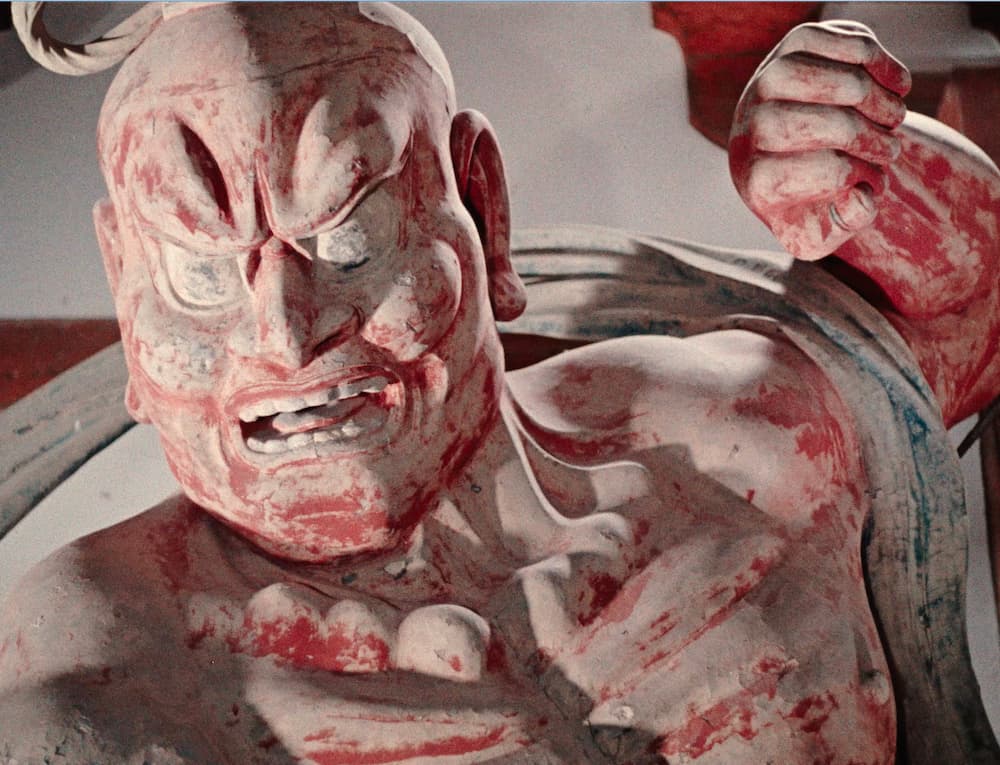
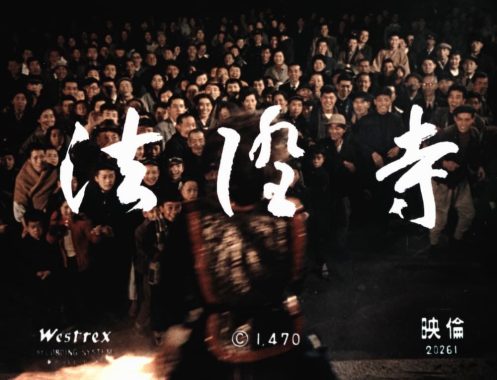
My day in Osaka was more densely packed, with screenings of Jakoman and Tetsu—one of the few fiction films included in the retrospective, and perhaps the most handsome Mifune Toshirō has ever looked on screen—The Minamata Mural, one of the most powerful works Tsuchimoto Noriaki directed on the Minamata disaster (I wrote more about it here), and Hani Susumu’s Hōryū-ji, which left such a deep impression on me that I decided to write about it separately. Like Hōryū-ji, Antonio Gaudí (1975)—the fourth film I saw in Osaka—engages with art, though of a different kind from the Buddhist sculpture housed at the temple in Nara. The way Segawa Jun’ichi’s camera and Teshigahara’s Hiroshi’s direction capture Gaudí’s sinuous buildings and imagination—enhanced by the music by Takemitsu Tōru—is hypnotic. For my part, the film could easily have lasted six hours.
I’m not sure whether the retrospective will travel to other Japanese cities, I suspect it will not, but I secretly hope it might eventually make its way to the Chūbu region region, where I live. The event was planned and organized by Tsutsui Takefumi, Tanaka Shinpei, Nakamura Daigo, and Okada Hidenori, and was accompanied by an excellent catalogue (in Japanese), featuring essays by film historians, scholars, and directors — including a contribution by Hamaguchi Ryūsuke.
At the top of all Japanese end-of-the-year best-of lists stands the one compiled annually by Kinema Junpo, the oldest film magazine in the archipelago, founded in 1919. In addition to rankings for Japanese and non-Japanese films, actresses, actors, new performers, and more, the magazine also includes a list dedicated to bunka eiga, one of the terms used since the very beginnings of cinema in Japan to designate a certain mode of non-fiction. The works selected for this list typically reflect a conception of documentary cinema that privileges social themes over the formal aspects of filmmaking. I have seen, and in some cases written about, some of them, so in some cases I will add some comments to the synopsis (the English titles are either the official ones or my translations of the original).
1) The Voices of the Silenced (Park Soo-nam, Park Maeui) is a compelling example of how old—and at times previously unused—footage can be woven together to create counter-archival projects. Sixteen-millimeter material shot by filmmaker and activist Park Soo-nam over nearly half a century is reworked and recontextualized with the assistance of her daughter, Park Maeui, as Soo-nam, now almost blind, revisits her own images. This touching homage to a courageous woman is also a powerful work that exposes the systematic suppression of minorities in Japan—particularly the Korean minority—throughout the twentieth century. The documentary appeared on my best-of list last year and was screened in Berlin two years ago, as well as in Yamagata last October.
2) In Their Own Words: The Women of Kurokawa 黒川の女たち (Matsubara Fumie) is a documentary that exposes the sexual violence inflicted on women from the Kurokawa settler group during Japan’s imperial expansion in Manchuria. Under state-led colonization in the 1930s and 1940s, settlers from various rural areas of Japan were sent to occupy Chinese land; in this case, a group originating from Kurokawa village in Gifu Prefecture. In August 1945, facing the Soviet invasion, the villagers offered fifteen women to enemy troops in a desperate attempt at survival. While the film could have benefited from tighter editing—certain sections, such as the final part involving young students, feel overextended—it remains an intensely powerful viewing experience. This is especially true when the documentary turns its attention to the relationships among the surviving women. The scene in which Satō Harue, in her final moments, is comforted by Yasue Yoshie, who gently strokes her hair, is not only profoundly moving but also suggests how the women’s traumatic experiences ultimately exceed what can be conveyed through words or images.
3) Though I’m His Daughterそれでも私は (Nagatsuka Yō) is a documentary that follows the life of Matsumoto Rika, Asahara Shōkō’s third daughter, over a six-year period, and investigates the reasons behind her decision to make her identity public. I have written about the film for this site, you can read it here.
4) Journey into Satō Tadao 佐藤忠男、映画の旅 (Terasaki Mizuho) Satō Tadao is a giant of film criticism with over 150 published works to his name. In the 1980s, he made it his life’s work to explore films across Asian countries with his beloved wife. Satō’s favorite film in the world is Kummatty (1979) by G. Aravindan from the Indian state of Kerala. The director, who had been Satō’s student at film school, embarks on a journey to seek out Satō ‘s treasures, visiting filmmakers in Korea, Japan, and Kerala, including South Korea’s Im Kwon-taek. (Synopsis from TIFF)
5) The Baren and the Small Knife: Ukiyo-e Stories Connecting the Ages バレンと小刀時代をつなぐ浮世絵物語 (Matsumoto Takako) follows the work of artisans at the Adachi Institute of Woodblock Prints, who continue Edo-period ukiyo-e techniques while undertaking a project to translate works by contemporary artists into woodblock prints.
In Their Own Words: The Women of Kurokawa 黒川の女たち
6) Shaking Justice 揺さぶられる正義 (Ueda Daisuke) In the 2010s, a series of cases saw parents arrested and indicted on suspicion of Shaken Baby Syndrome (SBS), a diagnosis associated with violent shaking that can result in severe brain damage in infants. Amid intense media coverage, doctors—driven by a sense of mission to protect young lives—identified SBS in these cases, while criminal defense lawyers and legal researchers launched the “SBS Investigation Project” in response. Working closely with defendants and their families, who maintained their innocence, the project’s members conducted thorough investigations into alternative explanations, including accidents or underlying illnesses.
7) Medical Ethics and War 医の倫理と戦争 (Yamamoto Sōsuke) is a work that examines the darker history of medical professionals’ complicity in wartime atrocities. According to the official synopsis, the documentary argues that many of the structural and ethical issues confronting modern Japanese medicine are rooted in the concealment of war crimes committed by medical personnel during World War II. Physicians who served in Unit 731 under the leadership of Ishii Shirō transformed knowledge obtained through human experimentation into professional capital, allowing them to rise to prominence in Japan’s postwar medical establishment.
8) Barefoot Gen Is Still Angry はだしのゲンはまだ怒っている (Komiyama Masanori) focuses on the landmark anti-war manga Barefoot Gen, created by Nakazawa Keiji beginning in 1973 and based on his firsthand experience of the atomic bombing of Hiroshima.
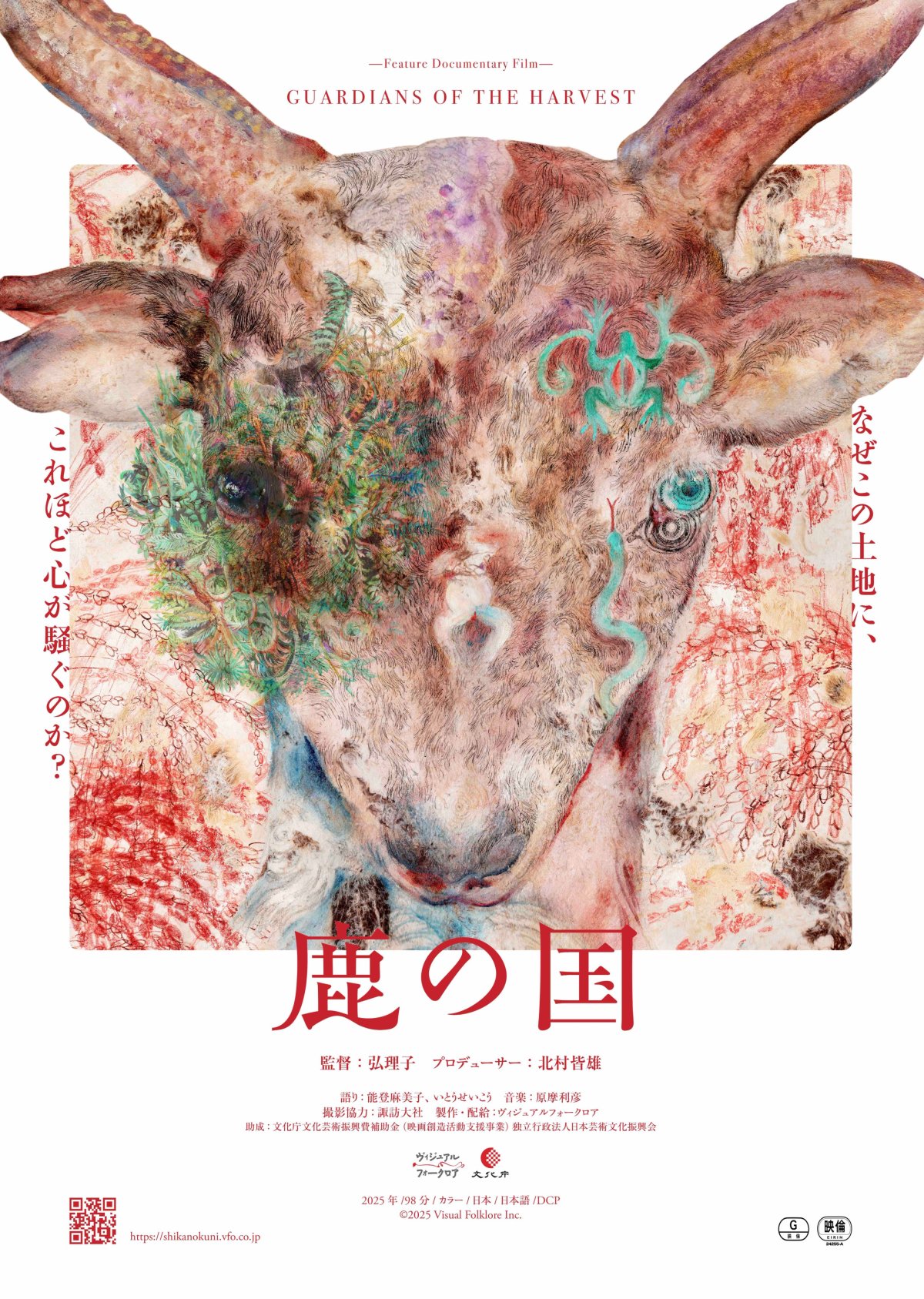
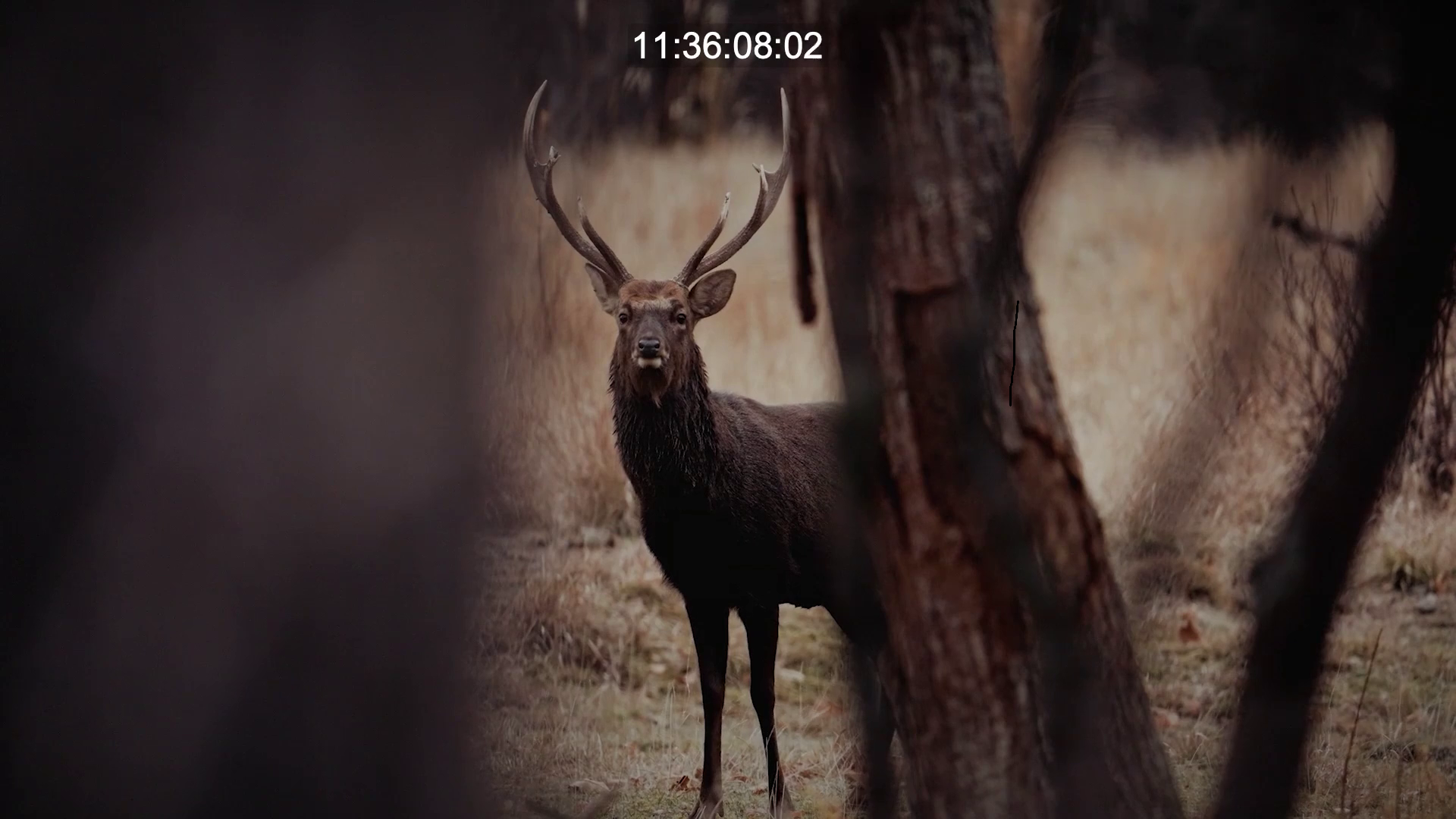
9) Guardians of the Harvest 鹿の国 (Hiro Rikō), one of my favourite films of last year—not only among documentaries—explores the traces of ancient (and still-living) belief systems in the Suwa Basin from multiple perspectives: folklore, religious practice, mythology, and the natural world. At the center of this spiraling universe of practices and signs stands the symbolic figure of the deer, both an object of worship and an integral presence within sacrificial rites.
10) Hippocrates’ Blind Spotヒポクラテスの盲 (Ōnishi Hayato) is, according the the official synopsis, about the potential aftereffects of the COVID-19 vaccine (mRNA gene formulation), developed using fundamentally different technology from conventional vaccines, and that Japan has consistently recommended up to a seventh booster dose without interruption.
Noto Democracy 能登デモクラシ (Iokibe Yukio) is a documentary set in Anamizu Town, Ishikawa Prefecture, a community of fewer than 7,000 inhabitants facing long-term population decline. The earthquake that struck the area in 2024 exposes the extent of political favoritism and corruption embedded in the town’s local governance.
Kobayashi Shigeru is an important figure in Japanese documentary cinema, he was mentored by Yanagisawa Hisao—with whom he worked as an assistant director in his last two films, そっちゃないこっちゃ コミュニティ・ケアーへの道(1982) and 風とゆききし(1989)—but is probably best known for his long-standing collaboration with Satō Makoto. Kobayashi was behind the camera and an integral part of the creative process on both Living on the River Agano (Aga ni ikiru, 1992) and Memories of Agano (Aga no kioku, 2004), and in more recent years he has also been a key force in preserving and reviving the legacy of the latter film, as well as Satō’s work more broadly. Their collaboration extended also in the opposite direction with Satō editing Kobayashi’s And Life Goes On (Watashi no kisetsu, 2004). Unfortunately, of the films directed by Kobayashi I have so far seen only Dryads in a Snow Valley (Kaze no hamon, 2015), a beautiful documentary set in a mountain area between Niigata and Nagano Prefecture, which also functions as a kind of homage to Satō’s cinema.
Kobayashi was born in Niigata Prefecture and, from a young age, became involved in groups supporting the victims of Minamata disease. One of the close friends he made during this period began, some thirty years later, to experience violent flashbacks related to the sexual abuse she had suffered as a child. Around the same time, Kobayashi met a female photographer—also a survivor—who was using her photographs to support others who had endured similar experiences. These encounters prompted Kobayashi to confront his own past, suffering and growing up in an abusive family. It was at this point that he decided to make a documentary film, with the aim of helping audiences understand the reality of sexual abuse from the survivors’ point of view.
In Their Traces (Tamashii no kiseki) was presented last year in Yamagata and later on at the Tokyo International Film Festival. I missed the film during my stay in Yamagata, so I was very eager to catch up with it, and I’m glad I finally did.
The film opens with a phone call in which Kobayashi’s elderly friend tells him, matter-of-factly, that she tried to hang herself the previous night, unable to bear the recurring memories of the repeated abuse she suffered as an elementary school student. The rawness of the subject matter, combined with the gentleness and respect with which the film is constructed, is one of the elements that makes In Their Traces such a remarkable and powerful viewing experience. A crucial decision in achieving this balance was Kobayashi’s choice to include himself as one of the film’s subjects. By foregrounding the violence he experienced—without lingering on it or allowing it to dominate the narrative—Kobayashi establishes a bond of trust with the viewer, while also underscoring the trust he built with the women who appear in the film.
It is this transparency and proximity to the other subjects that allows Kobayashi to build, on screen, resonances and parallels between the three women and their traumatic experiences. This transparency—and the trust it engenders—becomes even more powerful when the documentary, through the words of his friend (“you shouldn’t make the documentary” I’m paraphrasing), turns back on itself, questioning the very premise of the project.
The formal strategy of positioning the camera (operated by Oda Kaori), Kobayashi as director, and Kobayashi as participant as three active agents within the film’s reality enables to create a dialogic structure through which the women’s testimonies emerge in a touching and heart-wrenching manner, without ever feeling exploitative or overly dramatic. On the contrary, it is precisely the matter-of-fact quality of some of the exchanges we hear—regarding suicidal thoughts and experiences of sexual violence—that most deeply affects the viewer, making the film a profoundly empathetic experience. This effect is further achieved by interspersing the highly affecting scenes of conversation with striking black-and-white photographs taken by one of the women, as well as with shots of the countryside and the sea. The ocean, with its vast expanse stretching toward the horizon, has a special meaning, especially for one of the women, who describes it as offering a sense of openness and thus hope.
A fascinating point raised by the film is that in many cases the abusive fathers or male figures were themselves survivors of war or people whose lives were severely affected by war. Kobayashi has commented when talking about the documentary that his own family was reimpatriated from the former Manchuria, bearing the weight of war with them.
In conclusion, while the film loses some of its power, in my view, in the final thirty minutes—essentially from the point at which a workshop discussion about the making of the film is introduced—I found the first hour or so to be among the finest documentary filmmaking I have encountered in recent years.
On March 20, 1995—the day sarin nerve gas was released in several cars of the Tokyo subway—Japan experienced what is often regarded, together with the Great Hanshin earthquake two months earlier, a watershed moment in the recent history of the archipelago. Much has already been written and said about the attack carried out by members of the Aum Shinrikyō cult, which killed 13 people and injured hundreds, about the motivations behind it, and about the figure of Asahara Shōkō, the group’s leader, who was eventually executed in July 2018. Within documentary cinema, it is worth recalling at least Mori Tatsuya’s A (1998) and A2 (2001), two key works exploring the sect’s inner workings after Asahara’s arrest and its relationship with the mass media.
Far less attention, however, has been paid to Asahara’s family and to how the tragedy that unfolded three decades ago also affected his closest relatives. Most of them, understandably, changed their names and had their identities protected—especially the children, who were still minors at the time. The sole exception is Matsumoto Rika, Asahara’s third daughter (his real name being Matsumoto Chizuo), who was twelve years old at the time of the attack and had been designated as her father’s spiritual successor. A few years ago, she chose to reclaim her real name, come forward publicly, and stop hiding.
Though I’m His Daughter, a documentary directed by Nagatsuka Yō and released in Japan last year, investigates the reasons behind this decision and follows Rika’s life over a period of roughly six years, from 2018 to 2024. Although the film was screened in a limited number of cinemas across the archipelago last year, it appears to have maintained a relatively low profile, as addressing Aum Shinrikyō and its members remains a delicate and problematic subject—both for the Japanese state and for public opinion, which often, and rightly, calls for respect toward the victims of the attack.
Significantly, the film opens with a meeting between Rika and the brother of one of the victims of a manslaughter case that occurred in Aichi prefecture in 1979 (the so called Handa Hoken Kinsatsujin Jiken)—an encounter initiated by the latter—which immediately sets the film’s thematic tone. One of the documentary’s central concerns is precisely the way in which the relatives of victims and those of perpetrators come to share—to different degrees, naturally—a common fate: that of carrying an almost unbearable burden for the rest of their lives.
Yet the theme that perhaps emerges most forcefully from the film is the complex and deeply ambivalent relationship between father and daughter. While unequivocally condemning her father’s actions, Rika is shown to retain many positive personal memories of him. She cannot make sense of how the violence carried out by the group could coexist with one of its central tenets—the prohibition against killing, even insects. Moreover, following his arrest, she was never able to speak with him or ask about the true motivations behind his actions—both because officials did not permit such a meeting and because Asahara is said to have descended into a state of mental confusion after his arrest, to the point that he was reportedly no longer able to speak coherent Japanese. The film also shows briefly Tatsuya Mori, director of the aforementioned A and A2, attending a meeting held prior to Asahara’s execution in support of granting him proper medical treatment, so that it might be determined whether he was truly the one who ordered the killings—and why—two of the most significant unresolved questions hanging over both the film and Japanese society.
Rika learned of her father’s execution from a friend who was watching the news on television. At that moment, the director was understandably unable to film her; instead, Rika recorded herself, along with her sister Umi—whose identity is protected by the blurring of her face. The resulting footage shows her sister having an emotional breakdown while riding on a bus or in a car.
The emotional ambivalence towards his father is compounded by the discrimination Rika continues to face as she attempts to navigate Japanese society. Following the execution, Rika became the target of a wave of online harassment, with social media flooded by death threats and messages directing rage toward her. In this section of the film, screenshots of tweets and replies appear on screen, one of which starkly encapsulates the situation: “you have no right to be happy.” Finding employment, opening a bank account, or sustaining a romantic relationship all prove to be nearly insurmountable challenges. As a result, Rika experiences recurring bouts of depression and suicidal thoughts; here again, video footage—this time shot by her sister Umi—is used. The death wish Rika harbored as a teenager after her father’s arrest—she remained in the group for four years following the attacks—painfully resurfaces. Her memories of that period are rendered on screen through harrowing sequences depicted in pencil animation.
As a way of confronting and reconnecting with their past, Umi and Rika travel to their father’s hometown, where his family once ran a tatami shop, reminiscing about a time when they still saw him as a caring figure. During the same trip, they also visit relatives who had disowned them and completely severed ties with the Matsumoto family. It is at this point in the film that Nagatsuka decides to ask Rika what he considers the most important question: “Why did such a happy and fulfilled person come to do those horrible things?” The question remains unanswered, as no one is able to make sense of what happened in his life.
The final thirty minutes of the film focus on Rika’s efforts to break free from the depressive spiral into which she had fallen—exacerbated by the pandemic—and to forge an independent life, partly through her passion for mountaineering and bodybuilding, pursuits she approaches at a semi-professional level.
The film opens with the director’s own narration, and his voice—along with the rationale behind the making of the documentary—serves as the thread connecting the work as a whole. Nagatsuka frequently appears on screen, both during and after the pandemic, including in the inevitable Zoom split-screen sequences, a choice I found visually weak. The film is at its strongest in its first hour or so, concluding with the onset of the pandemic and the visit to Asahara’s hometown, when the editing is tighter and the images are less overtly—and cheaply—emotional. The film’s concluding shot, a drone-filmed image from the top of a mountain, exemplifies the opposite tendency and ultimately feels inappropriate.
Though I’m His Daughter may not be without faults, but it possesses the considerable merit of posing difficult and compelling questions, even for viewers who may not share its underlying premises.
You must be logged in to post a comment.