I’m delighted to share some news about the documentary scene in this part of the world. Australia’s only dedicated documentary and factual awards returns with seven categories, including a new digital-first award, as applications open for the 10th anniversary Leading Lights program.
Celebrating its 40th anniversary in 2027, the Australian International Documentary Conference (AIDC) has opened submissions for the 2027 AIDC Awards, with refreshed categories and eligibility criteria recognising the evolving landscape of Australian documentary and factual storytelling.
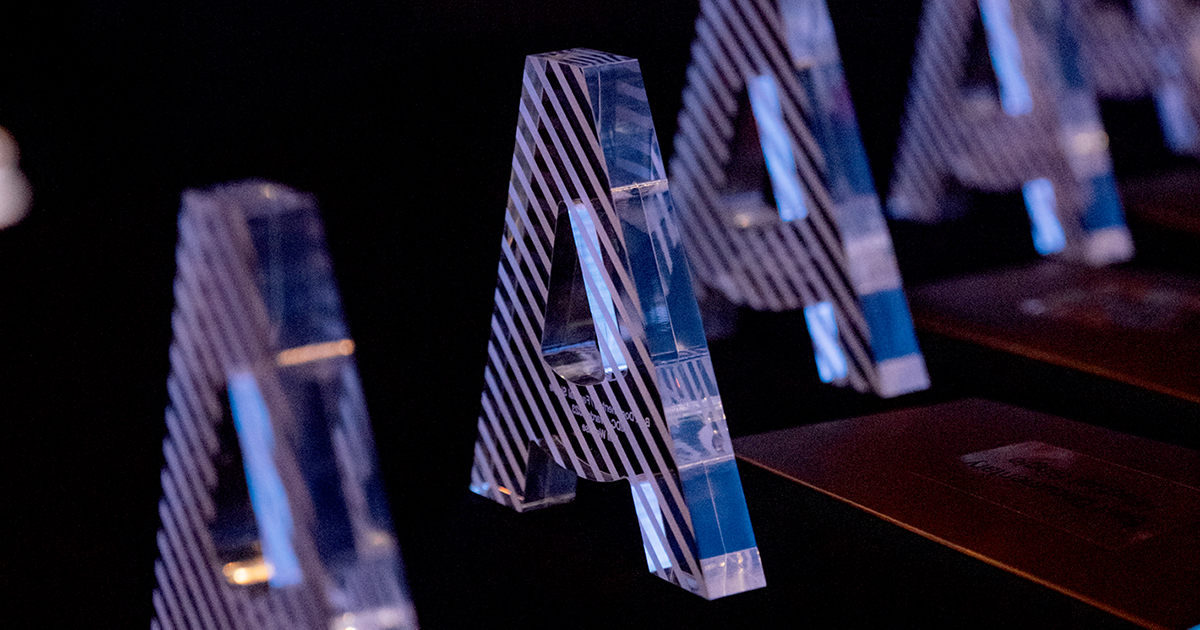
Now in their eighth year, the AIDC Awards are the only dedicated awards for the nonfiction sector, recognising excellence across seven categories, with winners to be announced on the closing night of AIDC 2027 (11 March) in Sydney.
For the first time, documentary and factual series will be recognised in separate categories, while a new Best Digital First Documentary award will expand the scope of the previous interactive and immersive category to recognise documentaries created for platforms including YouTube, Instagram and TikTok.
AIDC is now calling for Awards submissions across seven categories: Best Feature Documentary Best Documentary Series Best Factual Series Best Documentary / Factual Single Best Short Documentary Best Audio Documentary Best Digital First Documentary.
To be eligible, projects must be able to demonstrate a public release – a premiere in Australia or internationally – between 1 February 2026 and 1 February 2027. Submissions close Sunday 22 November, with late entries accepted until Wednesday 25 November. More information here: https://www.aidc.com.au/2027-aidc-awards-open-for-submissions-with-new-categories/
2027 LEADING LIGHTS PROGRAM
Applications are also now open for the 2027 Leading Lights Program, which celebrates its 10th anniversary next year.
The philanthropic funding initiative supports emerging and diverse Australian nonfiction practitioners to attend AIDC for the first time and participate in a customised professional development program co-presented by AIDC and AFTRS.
Since its launch, Leading Lights has secured more than $214,000 in donations and enabled 356 emerging and early-career practitioners, including Aboriginal and Torres Strait Islander, LGBTQIA+, d/Deaf, disabled and neurodiverse, regional and remote, and culturally and linguistically diverse (CALD) creatives, to attend AIDC.
Funding for 22 Leading Lights participants has already been pledged for 2027, with AIDC’s Leading Lights Donor Drive continuing to secure additional donations and open up more places for recipients.
Successful Leading Lights recipients receive a complimentary AIDC Sessions Pass and access to exclusive professional development activities co-presented by AFTRS, including skills workshops, networking opportunities and the Leading Lights Pitch. Leading Lights applications close Sunday 6 December 2026.
AIDC 2027 will take place 8-11 March in Sydney, NSW, on the land of the Gadigal people of the Eora Nation, at the Art Gallery of New South Wales, State Library of NSW and Botanic Gardens of Sydney, followed by an online international marketplace 23-24 March.
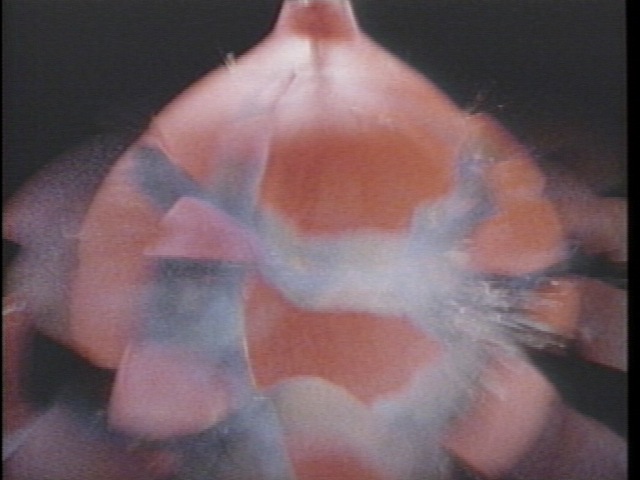
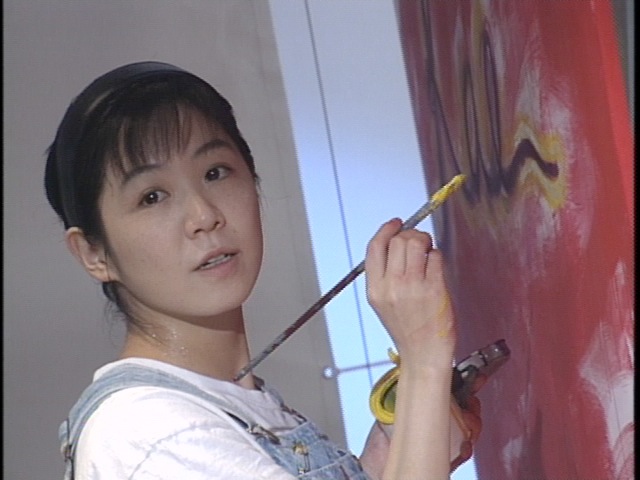
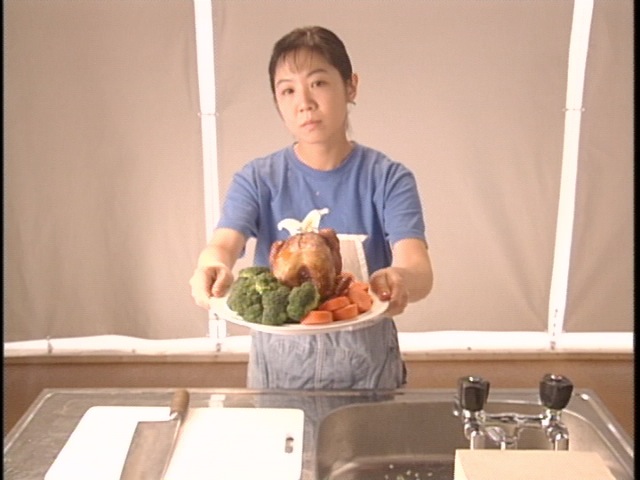
Self Portrait: At 47 KM is the first film Zhang shot in Diaoyutai, her father’s hometown, thus marking the first official entry in the 47 series. The documentary is also the first made in collaboration with the Folk Memory Documentary Project.
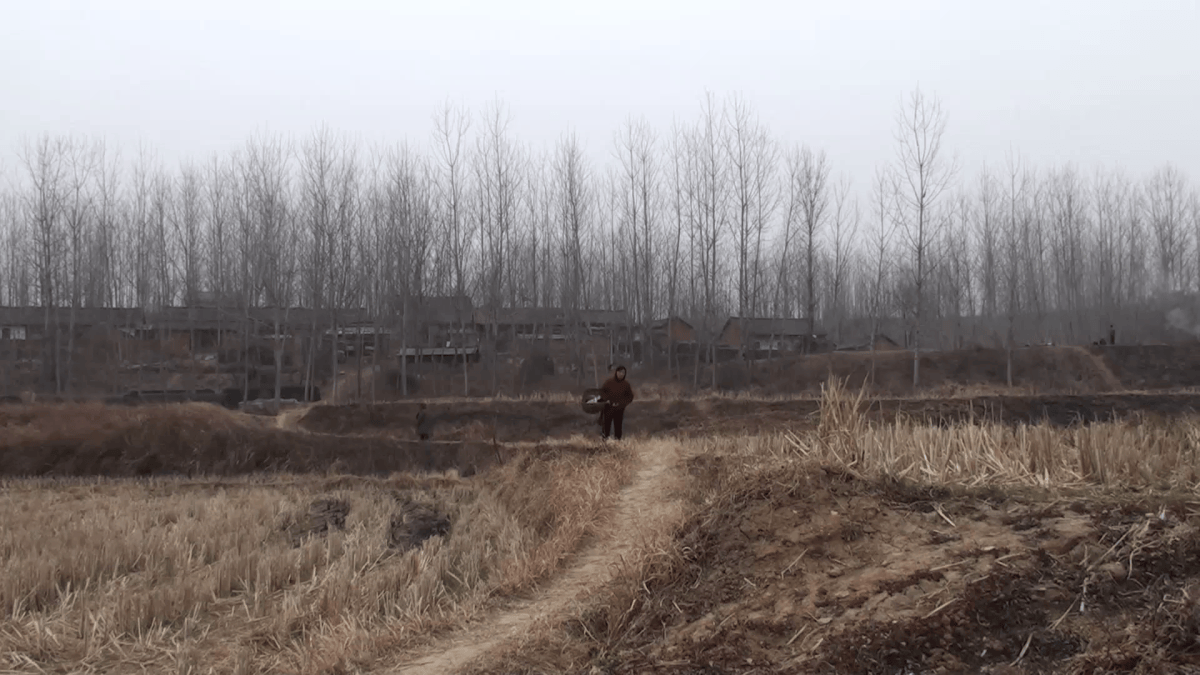
After my first documentary Self-portrait with Three Women, my second self-portrait was painted in a village named 47 KM. This village, located 47 kilometers from Suizhou, Hubei Province, is where my father was born. He left the village when he was 20, but his father, my grandfather, still lives there. In the summer and winter of 2010, through my participation in the Folk Memory Project, I went back to the village, which seems disconnected from my current life, and re-discovered and came to better understand my grandfather, the old villagers who underwent the disaster of the famine 50 years ago, as well as the village, which always perplexed and embarrassed me. What does 47 KM really mean to me? It seems to be like a mirror, I see myself in front of it.
From one of the very first scenes, a road in the countryside and the sign 47 Km on the side of it, it’s quite clear that the focus of the film has shifted from the interior spaces prevalent in the previous documentary, to the large expanse of land of the Hubei province. This movement from the interior to the exterior is also reflected in the themes explored. If in the previous film the personal stories of her mother and grandmother formed the main structure of the project, here the backbone is the famine that killed thousands of people in the Chinese countryside between 1958-1960. Yet, as often in the documentaries by Zhang, the historical shifts and the personal stories intermingles and cross their path: In Self Portrait: At 47 KM, by moving her focus to Diaoyutai, the filmmaker is also reorienting her gaze from the women of her family (mother and grandmother) to her (absent) father.
The documentary is structured with interviews to the elderly people who still remember the man-made tragedy of the famine, interwoven with scenes where the filmmaker is wandering the barren landscape, walking along the river, occasionally encountering people passing by. There are also scenes filmed on stage like in the previous entry, but they are far less frequent. One of the first person she interviews for the project is her grandfather, who has hearing problems. Zhang shouting her questions at him and the old man not catching the meaning of what she is trying to say is sweet and funny at the same time. Various other testimonies of the famine, some of them framed with an old poster of Mao Zedong on the background, reveal the harshness of the tragedy. Particularly harrowing are the accounts of a woman who describes the unbearable pain and constipation caused by surviving on nothing but weeds for an extended period, and a man who recounts being the sole survivor in his family after all of his siblings died of hunger.
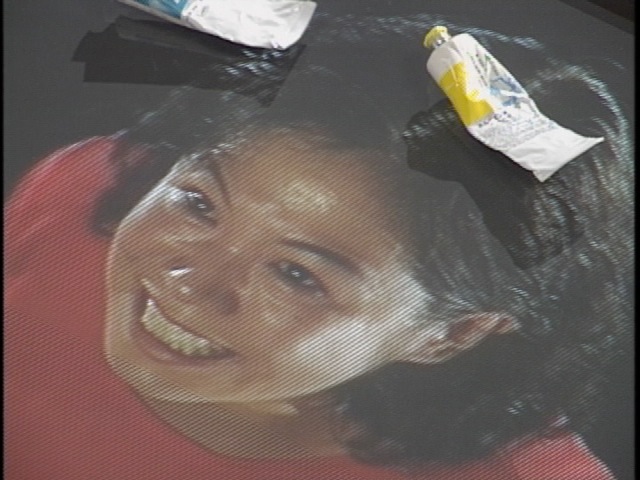
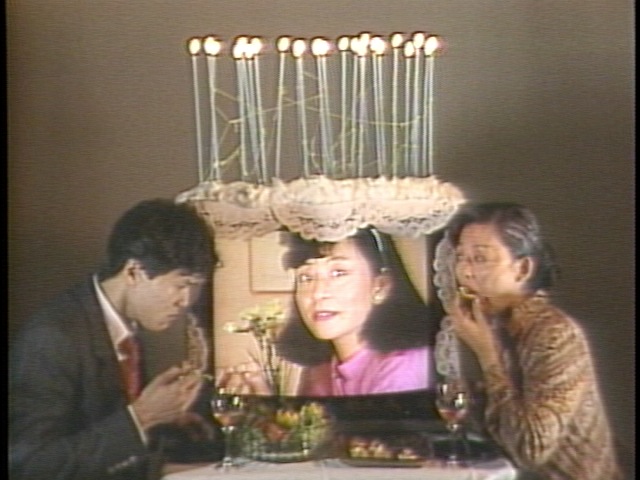
Each interview is preceded by a big photo of the interviewee placed in a dark room, a visual device that works as an introduction of sorts. These conversations are alternated with others in which Zhang chats with father’s friends and relatives about the absent man.
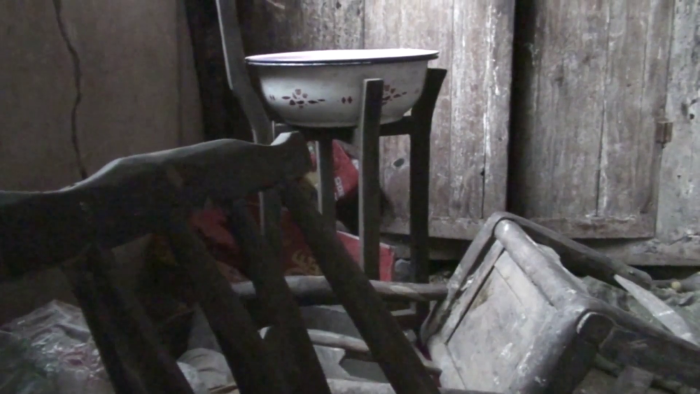
One of the central scenes of the documentary is the meeting and chat with an old lady, her name is Yu Xiantang, who seems to take a like on Zhang. A beautiful shot of the interiors of the woman house shows a bowl of ceramic placed on a wooden structure. The camera lingers a few seconds on it and then slowly pans to the left revealing other objects in the room and the old lady standing up and closing the window.
This scene could be read as an aesthetic shift of sorts in Zhang ‘s style. In the previous film and in many parts of this one as well, the camera is often moving and walking with her or still on a tripod capturing the landscape. Here, on the contrary, there is an intention of staying with the subject and her surroundings, a will to capture and to hint at the life of a person through her house and the objects she surrounds herself with. The subtle and slow swaying of the camera is also a hint at the passing of time and at the marks left by time on people and objects alike. The centrality of the encounter with Yu Xiantang for the movie and the Folk Memory Documentary Project is revealed in the following scene, when we learn that the lady has passed away after the filming.
In the final 20 minutes of the documentary, Zhang’s gaze shifts first to a child surrounded by chickens and then to two young children; while walking with them she asks about their dreams and aspirations for the future. A change of topic that creates a gap between what was on screen just few scenes before. These segments foreshadow the interest in the younger generations growing up in the village that will become more prominent in many following entries in the series, notably in Self-Portrait: Fairy Tale in 47KM (2021).
As mentioned at the beginning, the documentary continually interweaves the large movements of history, the famine, with the more personal stories. Zhang returns to her relationship with the father in one scene towards the end, when she makes a scarecrow with his old clothes, and after sitting beside it addresses the camera talking about his absent figure. A parallel “memory project” in itself, a very personal one.
It’s always fascinating when a filmmaker engages with a specific place and a group of people over a long period of time, and the history of documentary cinema provides many stunning examples: the Up series, naturally, comes to mind, but there are also the films made by Ogawa Production and those of Tsuchimoto Noriaki, for instance.
In recent years, a newer addition to this approach has been 47 Km series, ten documentaries made by artist and filmmaker Zhang Mengqi over the course of a decade in the rural village of Diaoyutai. Zhang nicknamed the village “47 km,” after its distance from the nearest town, Yindian, in Suizhou, Hubei. Besides being a filmmaker, Zhang is also active as a choreographer, her works have been performed in France, Austria, Croatia, and Germany, and this background is evident in many of the documentaries in the series, particularly the earlier ones.
PolePole Higashi-Nakano, a small cinema in Tokyo specializing in documentary films, will be screening the complete 47 km series starting on November 7. It’s a preliminary event related to the Yamagata International Documentary Film Festival 2027, a perfect excuse for me to revisit some of the films I’ve already seen and discover others for the first time.
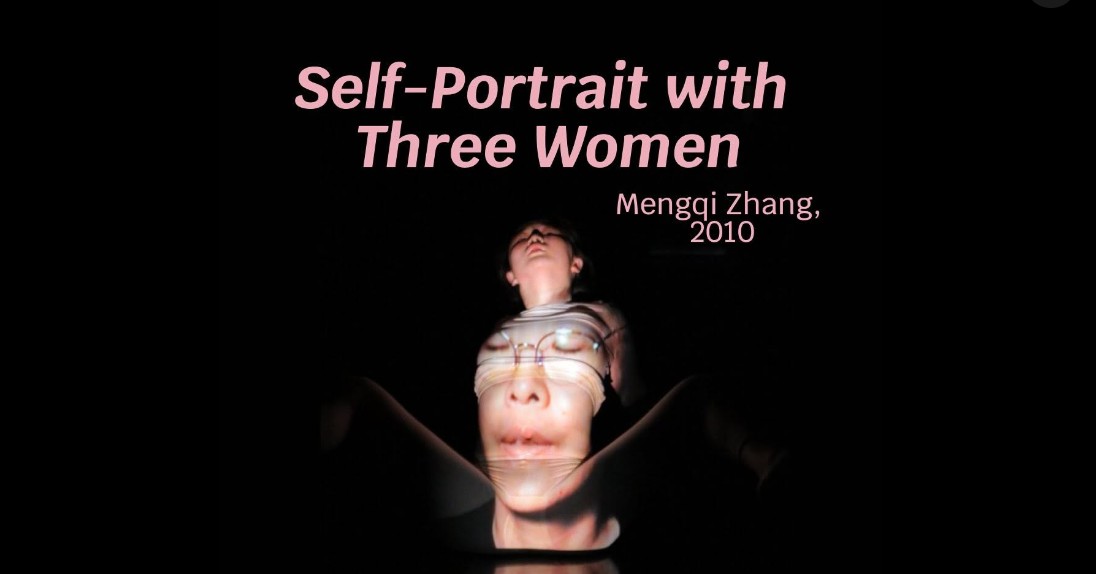
Self-Portrait with Three Women (2010) is not included in the retrospective at PolePole (it’s not part of the 47 Km series) but it marks Zhang’s beginnings as a filmmaker, so I thought it was fitting to start from this work.
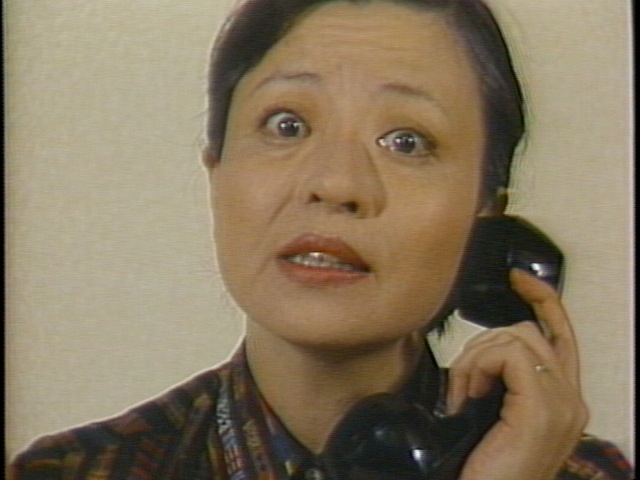
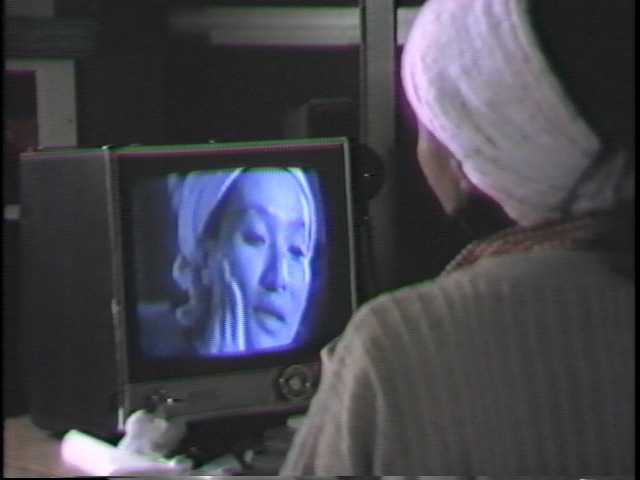
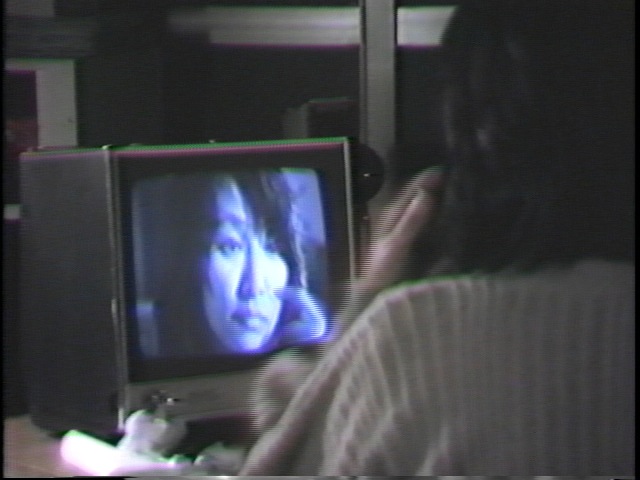
Formally, the documentary is constructed by interweaving footage of Zhang speaking with her mother and grandmother (some of it filmed by her mother herself) with old photographs, and recordings of Zhang’s own dance performances. At times, Zhang uses her body as a screen onto which images are projected, showing her mother recalling moments from her life or responding to her daughter’s questions. The narration, structured as a kind of spoken diary in which Zhang reflects on the lives of the three women, often overlaps with the dialogue taking place diegetically on screen. The filmmaker’s words also become an act of self-analysis, particularly in relation to her identity as a daughter: “more and more, I found myself to be my mother’s body double, her way of reliving her failures and missed opportunities.”
The relationship between Zhang and her grandmother is particularly strong. When Zhang was six, her mother left home to look for work in the cities, and it was her grandmother who raised her until she went to university. One of the documentary’s most touching scenes occurs when Zhang finds and reads letters she wrote to her mother as an elementary school student. It’s this experience of absence and distance from her mother that probably propels her inquiry into their relationship through the camera and her performances: “I want to search inside my body to see the connection between me and her [mother].”
Chaotic in its construction yet highly visceral in the way the filmmaker confronts fundamental questions about womanhood, daughterhood, and her relationship with her grandmother, Self-Portrait with Three Women reveals a strong feminist perspective on both intimate life and Chinese rural society in the latter part of the 20th century. Particularly revealing, in this sense, are the video calls in which Zhang asks her grandmother about how sex was discussed and taught in the Chinese countryside in the past, as well as those in which her grandmother speaks about her difficult relationship with her husband. In one scene, the two can be heard yelling at each other; in another, the grandmother recalls how badly she was treated by her husband’s family. What emerges through these candid conversations is the extent to which both Zhang’s grandmother and mother experienced unhappy marriages, but also how, despite their different generations (one growing up in the 1950s, the other in the 1970s) both held relatively progressive aspirations, including the desire to join the Communist Youth League of China.
While some of the filmed performances are very powerful—in one, for instance, Zhang recalls how, as a young teenager, she explored her sexuality by discovering her own breasts—they become somewhat repetitive as the film progresses, and Zhang’s reflections occasionally verge on the trite. Given that she was only 22 or 23 and had just graduated from university when she made the film, this is perhaps understandable. Nevertheless, Self-Portrait with Three Women remains a fascinating experiment in personal documentary, gaining particular interest when viewed in the context of how Zhang’s filming practice evolved through the documentaries that followed in the 47 Km series.
This is the last entry in my coverage of the exhibition (here Part 1, Part 2, Part 3, and Part 4)
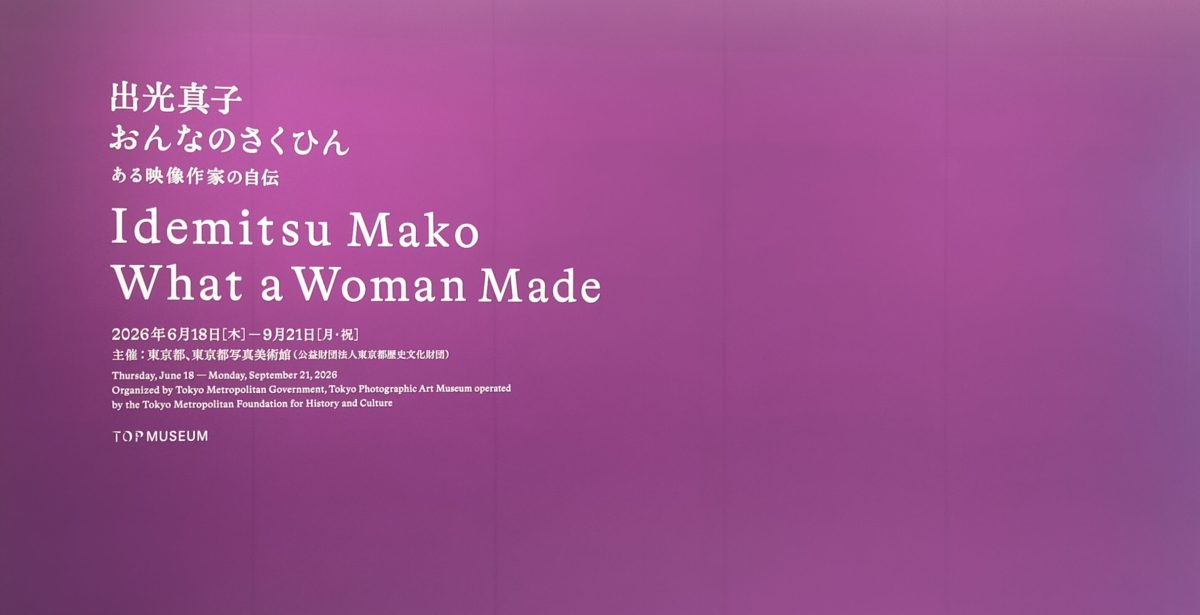
The retrospective Idemitsu Mako What a Woman Made, currently on view at the Tokyo Photographic Art Museum (July-September 2026), is one of the most comprehensive exhibitions ever devoted to the pioneering video artist and filmmaker. Bringing together films, video works, installations, and archival materials, it offers an unprecedented overview of more than five decades of Idemitsu’s artistic practice, tracing the evolution of a body of work that has consistently explored gender, domesticity, motherhood, and the mediated construction of female identity, especially in Japan. I visited the exhibition, which also featured special screenings of Idemitsu’s works, over two days in July, immersing myself completely in her world. It was one of the most extraordinary artistic experiences I’ve had in 2026, an aesthetic revelation that continues to resonate within me. From the museum’s homepage:
Idemitsu Mako (b. 1940) is a pioneering artist in the fields of experimental film and video art in Japan. After spending time in the United States during the 1960s, she began creating works that explored themes such as the lives of women, family, and the relationship between media and society, using film and early video as her mediums. Her video works from the 1970s onwards in particular incorporate the narrative techniques of television melodramas to depict themes such as mother-child relationships, the dynamics of marriage, and women’s social roles from a unique perspective. In recent years, as the global conversation surrounding gender and the body continues to grow, her practice has received renewed attention. The Tokyo Photographic Art Museum acquired Idemitsu Mako’s complete film and video works, as well as her major installation pieces, between 2017 and 2018. This large-scale retrospective offers a comprehensive overview of Idemitsu’s artistic practice, including works that are being exhibited for the first time since their acquisition by the museum. A total of 45 works, including those in the museum’s collection, will be presented through exhibitions and screenings.
As a future reference for myself and for anyone who might stumble upon this page, I’ll be publishing my notes on every work I saw during my two-day stay in Tokyo. They’re rough impressions rather than finished reviews, but I hope they’ll prove useful, whether as a personal archive or for readers interested in Idemitsu remarkable body of work. Hopefully I longer piece will eventually emerge from this work in progress.(Works are listed in the order I saw them)
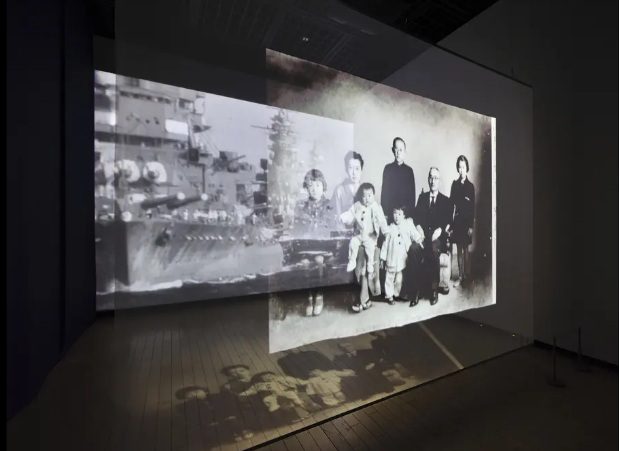
The Past Ahead (2004) I chose to end my coverage with this installation partly because it was located towards the end of the exhibition, but also because it was the work that resonated with me the most. Its compelling formal structure, the themes it explores, and the way it brings Idemitsu’s career full circle make it a fitting culmination of her artistic journey. The Past Ahead consists of two screens positioned some distance from one another. The screen closest to the viewer is transparent, allowing the eye to see through it to the second screen in the background. The result is a double exposure effect done in a physical space, a kind of three-dimensional superimposition. In addition to the two screens, the images projected onto the transparent screen are also cast onto the floor in the space between the two projections (see the photo above).
The screen in the foreground presents photographs and other images of Idemitsu’s family from the wartime years, during the early 1940s, while the screen behind it projects footage documenting the Japanese Empire’s military campaigns during the same period. Images of corpses, warships firing their guns, and aircraft carrying war across Asia are interwoven with excerpts from other films. Among them, I recognized scenes from Kami Fumio’s Fighting Soldiers, as well as clips from a documentary about the so-called “comfort women,” although I cannot recall the title.
If video and video art, as we have seen in the previous entries, possess the ability to capture and generate multiple temporalities, and if Idemitsu made full use of these possibilities throughout her works of the 1980s and 1990s, then this installation represents the culmination of her exploration of interweaving temporal flows. The key innovation Idemitsu introduces here is the incorporation of personal material, although this was already present, to some extent, in her earlier installation Real? Motherhood. Above all, however, the work offers a fierce critique of what her family, and her father in particular, represented within a Japanese society structured around patriarchal authority. It is worth remembering that Mako’s father, Sazō, in 1911 founded Idemitsu Kōsan, currently the second-largest petroleum company in Japan. He was a dominating and controlling figure and when his daughter decided to pursue a career in the arts and marry in the United States, he disowned her.
The problematic relationship with her father runs throughout Idemitsu’s career, but what distinguishes The Past Ahead is the way his figure is elevated into a symbol of patriarchy, male supremacy, and its connection to the violence of war and imperialism. The horrors of war and the violence perpetrated by the state, the artist seems to suggest, have their origins in the familial nucleus itself, they are already embedded in the very structure of the “traditional” family.
The effect of these two worlds, these two temporalities, overlapping before our eyes is mesmerizing. On one screen, we see the peaceful lives of Idemitsu’s family; on the other, the horrors produced by the imperial machine operating at full force. The contrast speaks of class divide, privilege, sexism, oligarchic power, and the exploitation of the most vulnerable. It evokes a past that, as the title suggests, is very much still ahead of us.
This contrast is amplified by the zooms into the family photographs, but also by the subtle movement of the images themselves, as if the screen were a curtain stirred by the wind. In some sections, the photographs drift out of focus, almost guiding our gaze toward the second screen behind them.
The complex sonic landscape, composed of two channels, is another of the main reasons why The Past Ahead is such a powerful and affecting work. The images on the first screen are accompanied by soft, ambient-like music, while those projected on the second screen are paired with static noise and voices of military personnel, often distorted and slowed down to create an even more unsettling effect. 終
The retrospective Idemitsu Mako What a Woman Made, currently on view at the Tokyo Photographic Art Museum (July-September 2026), is one of the most comprehensive exhibitions ever devoted to the pioneering video artist and filmmaker. Bringing together films, video works, installations, and archival materials, it offers an unprecedented overview of more than five decades of Idemitsu’s artistic practice, tracing the evolution of a body of work that has consistently explored gender, domesticity, motherhood, and the mediated construction of female identity, especially in Japan. I visited the exhibition, which also featured special screenings of Idemitsu’s works, over two days in July, immersing myself completely in her world. It was one of the most extraordinary artistic experiences I’ve had in 2026, an aesthetic revelation that continues to resonate within me. From the museum’s homepage:
Idemitsu Mako (b. 1940) is a pioneering artist in the fields of experimental film and video art in Japan. After spending time in the United States during the 1960s, she began creating works that explored themes such as the lives of women, family, and the relationship between media and society, using film and early video as her mediums. Her video works from the 1970s onwards in particular incorporate the narrative techniques of television melodramas to depict themes such as mother-child relationships, the dynamics of marriage, and women’s social roles from a unique perspective. In recent years, as the global conversation surrounding gender and the body continues to grow, her practice has received renewed attention. The Tokyo Photographic Art Museum acquired Idemitsu Mako’s complete film and video works, as well as her major installation pieces, between 2017 and 2018. This large-scale retrospective offers a comprehensive overview of Idemitsu’s artistic practice, including works that are being exhibited for the first time since their acquisition by the museum. A total of 45 works, including those in the museum’s collection, will be presented through exhibitions and screenings.
As a future reference for myself and for anyone who might stumble upon this page, I’ll be publishing my notes on every work I saw during my two-day stay in Tokyo. They’re rough impressions rather than finished reviews, but I hope they’ll prove useful, whether as a personal archive or for readers interested in Idemitsu remarkable body of work. Hopefully I longer piece will eventually emerge from this work in progress.(Works are listed in the order I saw them)
Part 4
“My 16 mm works are about creating another world to escape the rigid routine of daily life. Even now, film retains something of that quality, whereas video is a reflection of everyday reality. These two mediums exist as completely distinct entities. When I shoot on film, I want to detach myself from daily life and capture images that are incredibly beautiful. I actually love these kinds of films. For me, film and video stand clearly apart from each other.” Interview with Idemitsu Mako The Complete Works of Idemitsu Mako, 1970-1996, Pandora, 1996, p. 21
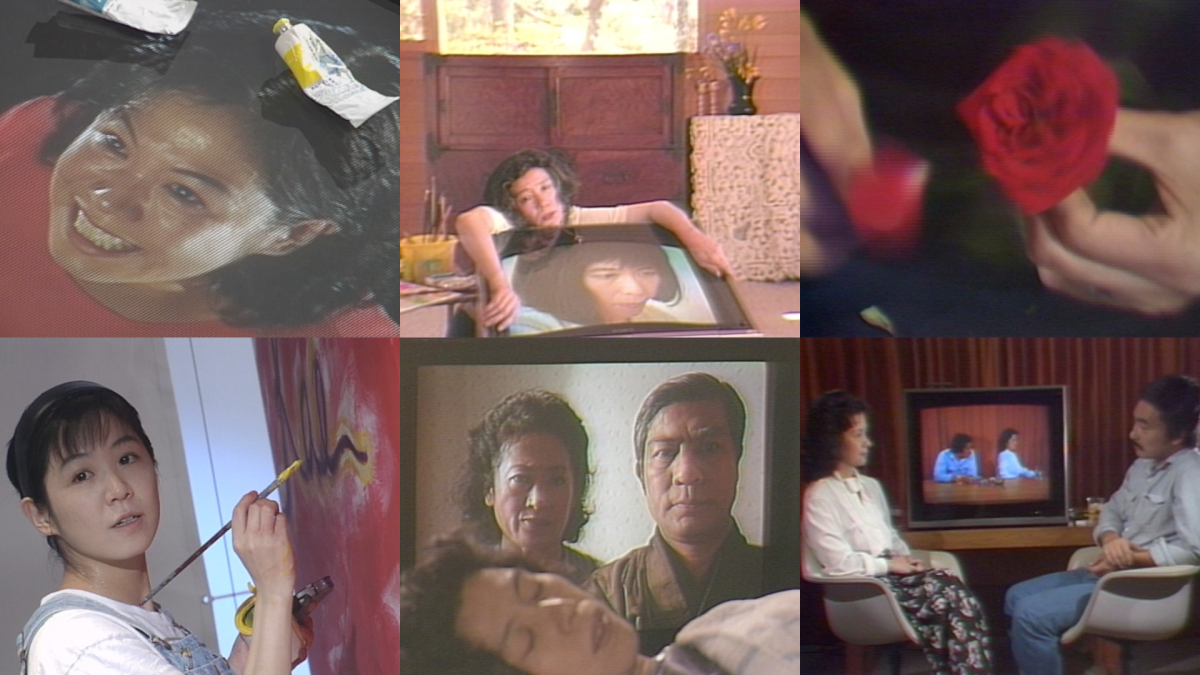
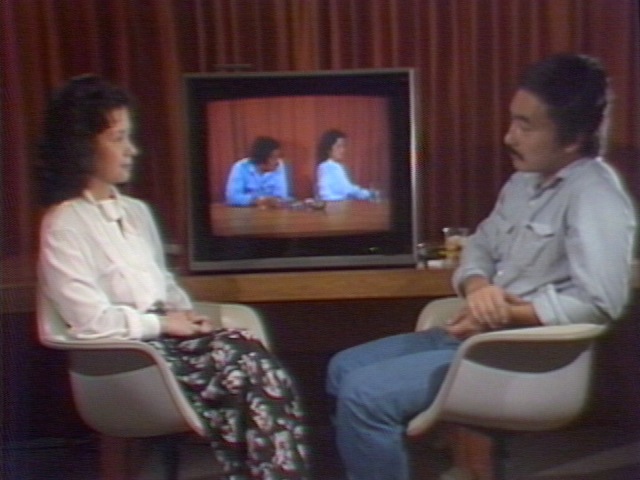
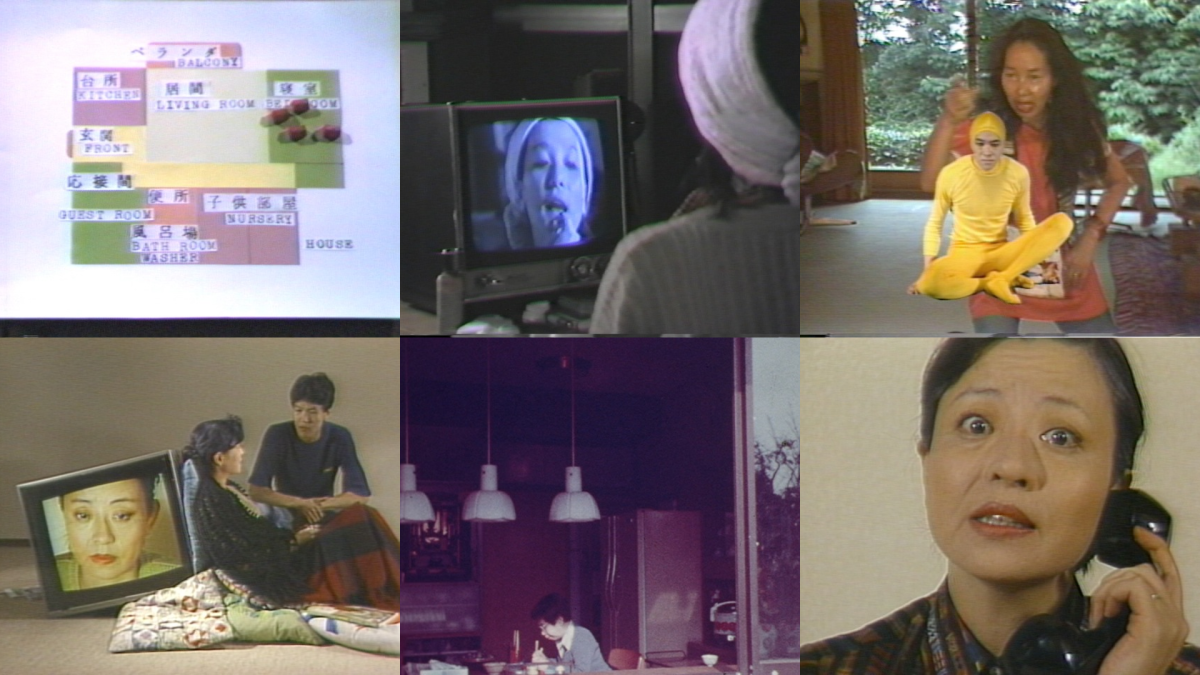
Shodows Part 1 (1980) video This work marks a pivotal moment in Mako Idemitsu’s career, as it was the first collaboration with Michael Goldberg, a Canadian videomaker based in Japan who would serve as cinematographer on many of her video works throughout the 1980s and beyond. We are in the world of fashion, and a woman is seen discussing her latest work with a male journalist, while a monitor display other conversations unfolding simultaneously. The sound moves freely from one reality to the other. As in many of Idemitsu’s videos, the work draws on a Jungian concept—in this case, the shadow, the hidden and often repressed dimension of female subjectivity. Perhaps more explicitly than in her other works, it becomes clear how the stories in the monitors and those outside (but the is no really inside and outside!) are different realities, different temporalities/fluxes. But there’s no real temporality vs fake temporality, or borrowing from the language of perspectivism, each monitor does not offer a point of view on reality; instead, it constitutes a real point of view. As the exhibition catalogue notes, the work was also strongly influenced by the pervasive presence of television in the daily lives of Japanese housewives.
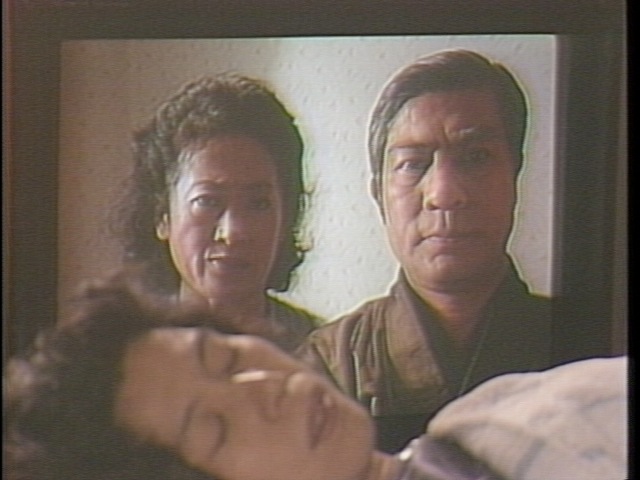
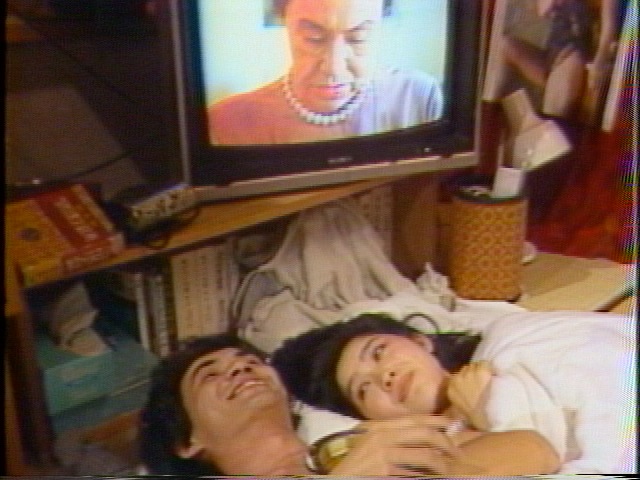
Kiyoko’s Situation (1989) video Almost a decade after Shadows Part 1, Kiyoko’s Situation returns to Idemitsu’s exploration of women artists in contemporary Japanese society. The protagonist is a woman who aspires to become a painter, but after marrying under pressure from her parents, her ambitions are gradually crushed by the domestic role she is expected to fulfill as a housewife. The scenes unfolding inside the monitors are more imposing and menacing than in Idemitsu’s earlier videos, particularly when Kiyoko’s parents perform their self-appointed “duty” as guardians of her life. Her husband is equally violent and insensitive, “You are half a woman if you don’t give birth.” Kiyoko, in turn, confesses, “Inside me there’s another me who becomes repressed by me becoming a mother and wife.” At one point, a vase is shattered, and Kiyoko desperately attempts to piece it back together: a metaphor for her effort to reconstruct both her dreams and the self she had hoped to become. The work culminates in a devastating ending, with Kiyoko hanging herself, using a television monitor as a footstool. Undoubtedly one of Idemitsu’s darkest reflections on the limited freedom afforded to women, especially women artists, within Japanese society and the traditional family structure. Formally, the texture of the images appears more refined and polished than in the earlier works, possibly reflecting improvements in the video equipment used. Once again, television monitors are employed horizontally as tables, an especially effective visual device. The interplay between multiple monitors is more sophisticated, while both the set design and the interaction between performers and monitors are more elaborate than in Idemitsu’s previous works. The voices and overall soundscape are more carefully constructed. According to the exhibition catalogue, Kiyoko’s Situation was inspired not only by Idemitsu’s own experiences but also by the lives of the artists Takamura Kōtarō and Takamura Chieko. The work is dedicated to Idemitsu’s older sister, who died young in Paris while pursuing her own dream of becoming a painter.
Kae, Act Like a Girl! (1996) video The preoccupation with the place of women artists in society reaches its culmination in this work. In many ways, it is Idemitsu’s most accomplished video: it is longer, makes use of projections as well as television monitors, features more professional acting, and has more elaborate sets. Its narrative follows a woman artist who gradually frees herself from social pressures and the web of expectations surrounding her, with the crucial support of her mother. Yet, for me, it is less impactful than her earlier works from the 1980s that deal with similar themes. Gone, for the most part, is the satirical, almost surreal quality that permeates those videos, while the greater aesthetic refinement of this work, in my opinion, slightly weakens its overall impact. Maybe it was just fatigue after two days of immersion in her video-world. On the other hand, I found the work’s performative quality and the inclusion of installations refreshing, and it probably marks a turning point in Idemitsu’s career, as new technologies and artistic possibilities opened up fresh path of exploration.
The summer special on sport and cinema I’m working on with my friends at Sonatine gave me the chance to revisit Ichikawa Kon’s Tokyo Olympiad (1965) last week, and today I turned to Shinoda Masahiro’s Sapporo Winter Olympics, a fascinating documentary in its own right.
I’m posting here the English version. Please keep in mind that, while slightly modified, this is a more traditional review in style, so to speak, and it might read differently from the pieces I usually publish here.
After two landmark events in Japan’s postwar history, the 1964 Olympics and the 1970 Osaka Expo, another major international event took place on the Japanese archipelago just a few years later. The 1972 Winter Olympics shifted attention northward, introducing Sapporo and Hokkaidō to the world. To document the event, the organisers called upon Shinoda Masahiro, at the time one of the leading figures of the so-called New Wave, directors who had revolutionised Japanese cinema from the 1960s onward.
In Shinoda’s documentary, the solemnity and formality of the Tokyo Games and Ichikawa’s film give way to an international atmosphere with an almost provincial charm—one shaped by the director and his staff primarily through a fascinating approach to sound. Downhill skiing, ski jumping, figure skating, speed skating, and luge are among the winter sports featured in the film, which also lingers on snow-covered landscapes, mountains, lakes, and snow—lots of snow.
Inevitably, Sapporo Winter Olympics is often compared to Kon Ichikawa’s 1965 documentary. The comparison stems not only from the fact that both films were directed by major auteur filmmakers—Ichikawa representing the old guard, while Shinoda the new wave—but also because they document two landmark international sporting events held in Japan less than a decade apart.
The two films, however, take markedly different approaches, largely because they portray very different sporting events. While today the Winter Olympics have grown into a massive international spectacle, fifty years ago they still retained a relatively modest scale. Shinoda emphasizes this almost provincial quality from the opening sequences, recalling the controversy surrounding Austrian skier Karl Schranz and his sponsorship deals. At the time, athletes were not allowed to wear clothing displaying commercial logos, and the incident became one of the defining disputes of the Games. The film’s more relaxed and informal atmosphere is also shaped by Shinoda’s stylistic choices, many of them suggested by the very nature of the winter sports themselves. His compositions consistently highlight the surrounding mountains, while the athletes compete against the snow-covered landscapes of Hokkaidō, turning the natural environment into a constant presence and almos a character throughout the documentary.
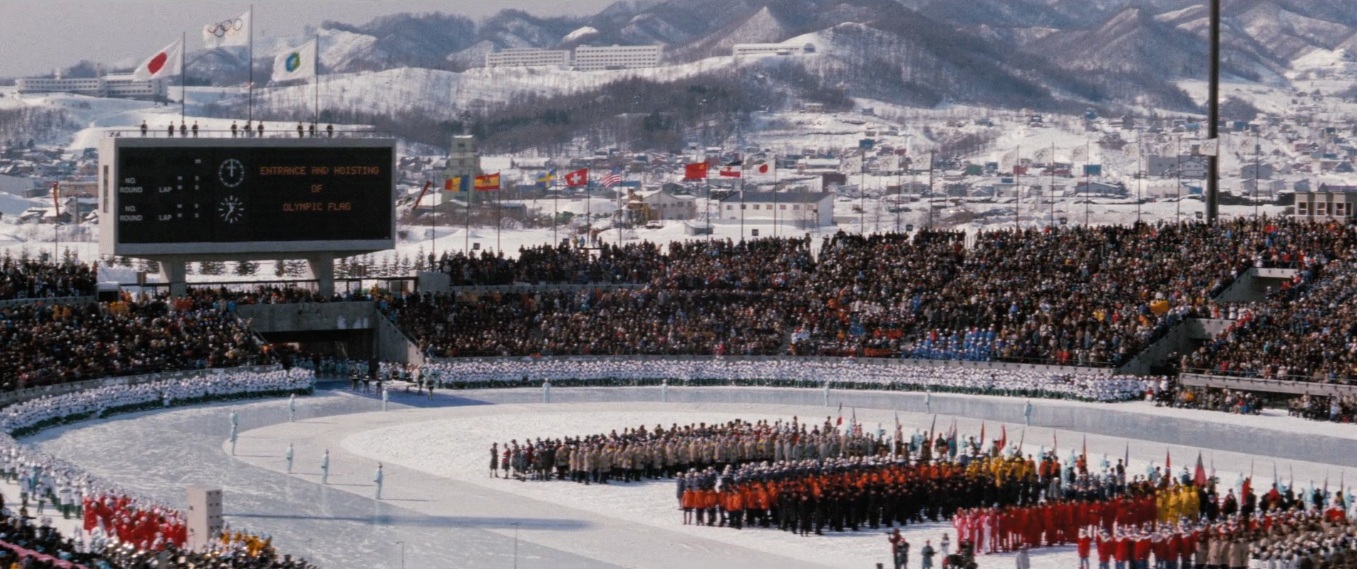
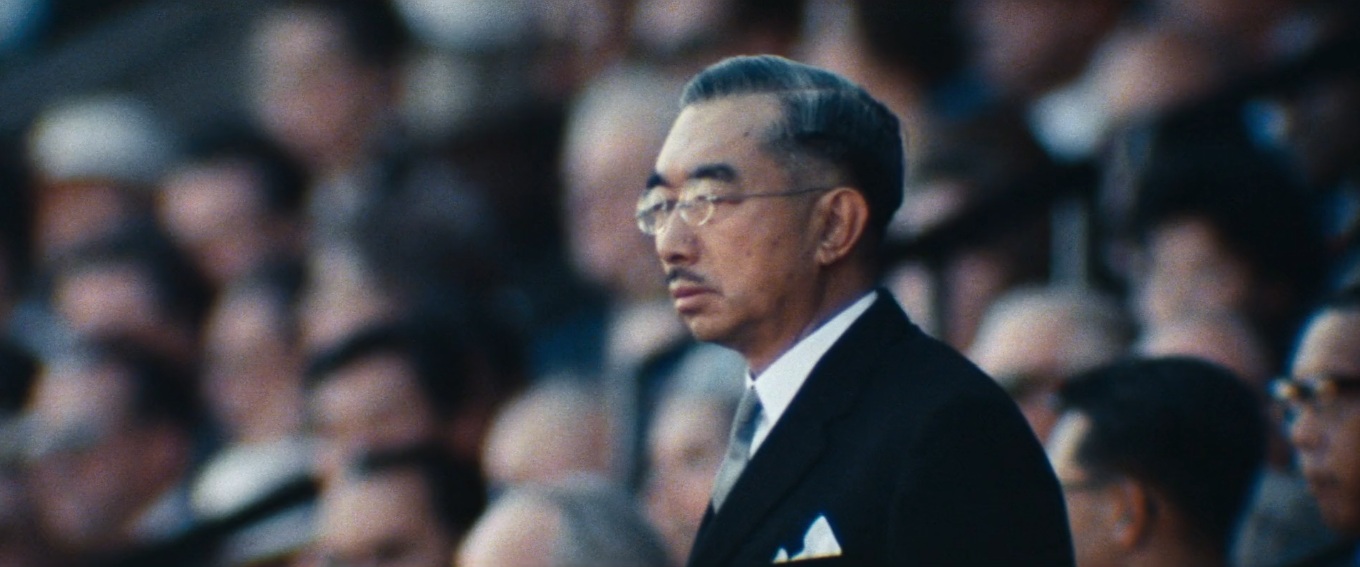
This almost matsuri-like atmosphere is already evident during the opening ceremony, where the diegetic music is performed by a brass band, but it emerges most clearly through Shinoda’s editing and directorial choices in the rest of the film. A telling example is the way he portrays Emperor Hirohito, who had also opened the Tokyo Games eight years earlier. His brief speech is presented here almost in its entirety, including its pauses and hesitations, details that render him surprisingly human, stripping away much of the institutional solemnity that typically surrounds his public image.
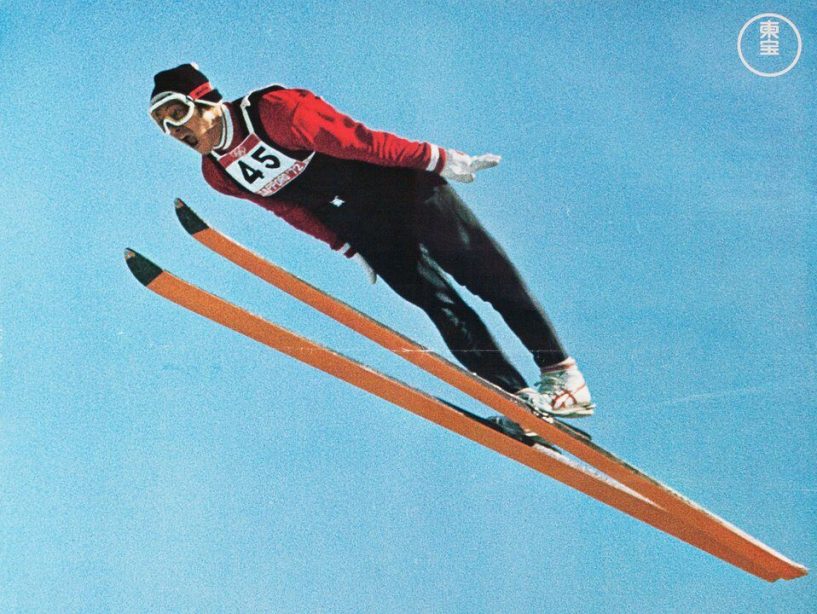
Watching the documentary, one has the impression of witnessing an international event that still retains an accessible, almost intimate quality at times. A good example is the men’s ski jumping competition, which ended in a historic Japanese clean sweep. Shinoda shows the athletes walking back up the long slope on foot, and, during a brief lull, one of the skiers is casually seen smoking a cigarette, an image almost unimaginable in contemporary sport. It not only reinforces the film’s relaxed tone but also highlights how profoundly the world of elite sport has changed over the past fiftyfive years.
One of the documentary’s greatest strengths is the way its form continually adapts to the sports it depicts, not only through its images but also, as we have mentioned, through its remarkable sound design. Downhill skiing, slalom, biathlon, speed skating, luge, and ice hockey are accompanied by a richly layered soundscape in which the murmur of spectators and officials, conversations in different languages, and, at times, even the voices of the athletes themselves merge with the scrape of skate blades on ice, the hiss of skis cutting through fresh snow, or the luge hurtling down the track with a missile-like whistle. Rather than simply documenting the competitions—which are shown only in fragments—Shinoda immerses the viewer in their sonic environment.
Another interesting choice is the decision to use two voices for the narration: a male voice, more informative in tone, and that of actress Kishida Kyōko, whose delivery moves between descriptive passages and moments of almost poetic intensity. The music, composed by Masaru Satō, further contributes to the film’s distinctive identity. At several points, it evokes the soundtracks of 1960s spy films (James Bond!), while the theme accompanying the opening title recalls the famous fanfares associated with Tōei films.
On a musical level, Shinoda also incorporates the sound of the mukkuri, a traditional Ainu instrument similar to a jaw’s harp, in several sequences of the documentary. This is a significant detail, recalling that Sapporo and Hokkaidō as a whole are territories that were inhabited by the Ainu people for thousands of years before being colonized and incorporated into the Japanese state in relatively recent history. Without explicitly dwelling on this past, the film allows a memory of the place to emerge through music, silently surfacing alongside the narrative of the sporting event.
Evocative and perfectly in tune with the documentary’s overall tone in its idiosyncrasy is the ending. While images of the closing ceremony appear on screen, a conversation with ski jumper Kasaya Yukio is heard. Asked, “Do you feel anxious about returning to normal society?”, he replies, “I feel fear.” The film responds to these words with a succession of still frames dedicated to the various Olympic disciplines, accompanied by a harsh, experimental musical score. The images then give way to an aerial shot of the Olympic facilities, slowly receding into the distance, as an orchestral composition replaces the earlier abrasive sounds.
The retrospective Idemitsu Mako What a Woman Made, currently on view at the Tokyo Photographic Art Museum (July-September 2026), is one of the most comprehensive exhibitions ever devoted to the pioneering video artist and filmmaker. Bringing together films, video works, installations, and archival materials, it offers an unprecedented overview of more than five decades of Idemitsu’s artistic practice, tracing the evolution of a body of work that has consistently explored gender, domesticity, motherhood, and the mediated construction of female identity, especially in Japan. I visited the exhibition, which also featured special screenings of Idemitsu’s works, over two days in July, immersing myself completely in her world. It was one of the most extraordinary artistic experiences I’ve had in 2026, an aesthetic revelation that continues to resonate within me. From the museum’s homepage:
Idemitsu Mako (b. 1940) is a pioneering artist in the fields of experimental film and video art in Japan. After spending time in the United States during the 1960s, she began creating works that explored themes such as the lives of women, family, and the relationship between media and society, using film and early video as her mediums. Her video works from the 1970s onwards in particular incorporate the narrative techniques of television melodramas to depict themes such as mother-child relationships, the dynamics of marriage, and women’s social roles from a unique perspective. In recent years, as the global conversation surrounding gender and the body continues to grow, her practice has received renewed attention. The Tokyo Photographic Art Museum acquired Idemitsu Mako’s complete film and video works, as well as her major installation pieces, between 2017 and 2018. This large-scale retrospective offers a comprehensive overview of Idemitsu’s artistic practice, including works that are being exhibited for the first time since their acquisition by the museum. A total of 45 works, including those in the museum’s collection, will be presented through exhibitions and screenings.
As a future reference for myself and for anyone who might stumble upon this page, I’ll be publishing my notes on every work I saw during my two-day stay in Tokyo. They’re rough impressions rather than finished reviews, but I hope they’ll prove useful, whether as a personal archive or for readers interested in Idemitsu remarkable body of work. Hopefully I longer piece will eventually emerge from this work in progress.(Works are listed in the order I saw them)
Part 3
“My 16 mm works are about creating another world to escape the rigid routine of daily life. Even now, film retains something of that quality, whereas video is a reflection of everyday reality. These two mediums exist as completely distinct entities. When I shoot on film, I want to detach myself from daily life and capture images that are incredibly beautiful. I actually love these kinds of films. For me, film and video stand clearly apart from each other.” Interview with Idemitsu Mako The Complete Works of Idemitsu Mako, 1970-1996, Pandora, 1996, p. 21
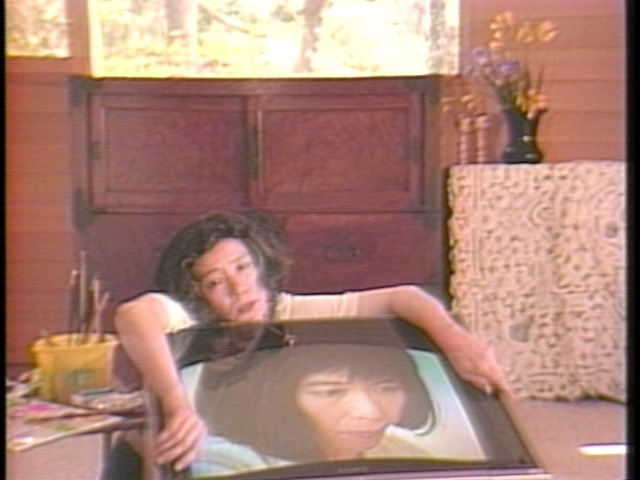
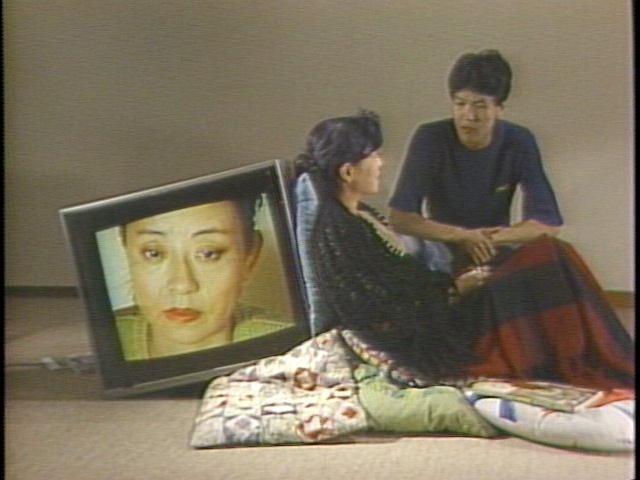
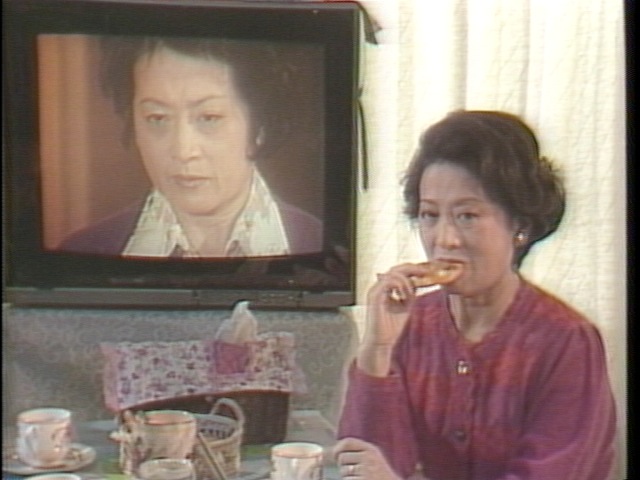
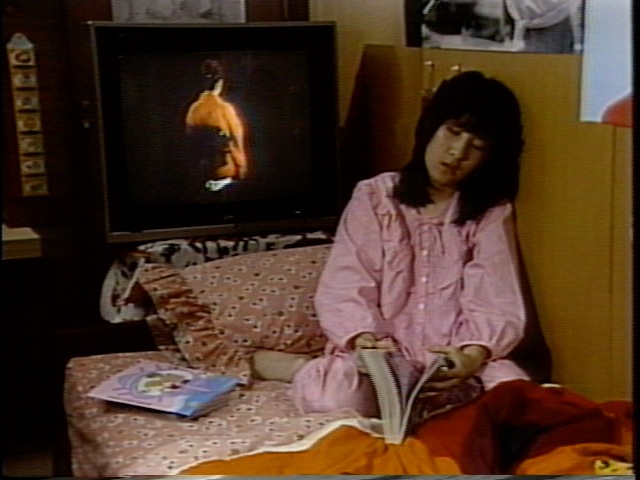
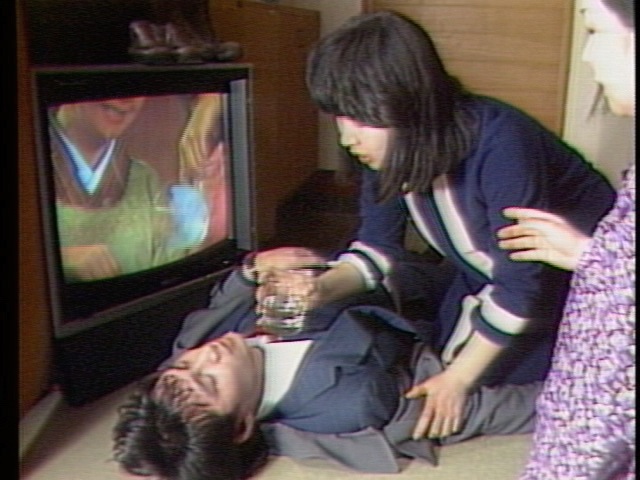
Yoji, What’s Wrong With You? (1987) video Of of Idemitsu’s best works. A Brechtian family psychodrama where absurdity reigns. Television screens function as magnifying lenses, enlarging and externalising the protagonists’ inner lives. The relationship between mother and son unfolds in a surreal, almost comical, and at times perverse register (as in the scene where the mother gazes at a monitor showing her son’s naked body), while the characters speak largely through clichés and stock phrases. While the central narrative revolves around a mother struggling with the gradual loss of her connection to her son, and the prospect of old age, the simple mise-en-scène, and especially the pervasive presence of television screens (here arranged in more playful and unconventional ways than in Idemitsu’s earlier works) also turns the video into an almost X-ray-like examination and deconstruction of the social roles and expectations internalised by women in Japanese society. Television monitors as a Cronenbergian and Ballardian materialization women’s dreams, memories, unrealized aspirations, fears, and desires…
Grandmother, Mother, Daughter (1976) was displayed at the exhibition entrance on three TV monitors stacked in a column. In the piece, Idemitsu’s grandmother, mother, and daughter each appears in one screen with several packs of cigarettes, improvising and playfully interacting with them. Women’s labor as captured and controlled by cameras? First installation by Idemitsu and possibly the first instance in which she used monitors inside the frame, at least the first on video.
Animus Part 2 (1982) video Another work inspired by Idemitsu’s fascination with women performing on stage. This time, Neo-Dada artist Kishimoto Sayako performs Messenger from Hell in Idemitsu’s living room. Over the footage, the filmmaker overlays an image of a pantomime figure in a yellow suit, and an oversized face. The work also includes English narration that does not fully translate Kishimoto’s words and carries a slightly ironic tone. Kishimoto’s fierce performance brought to mind the avant-garde theater of the 1970s. The title, Animus, refers to the Jungian concept of the masculine side of the female psyche. Kishimoto was a fascinating artist.
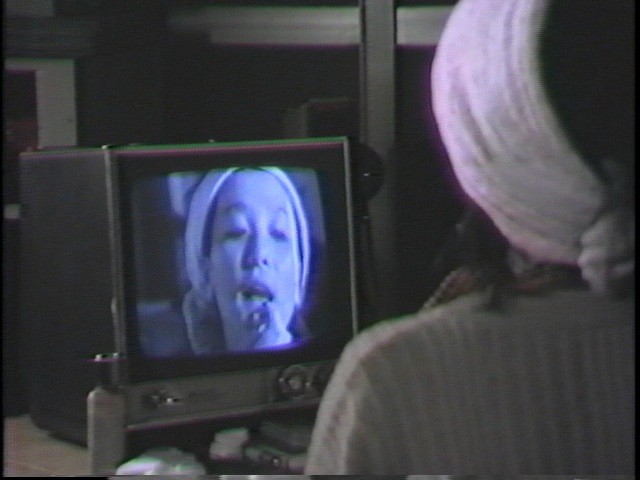
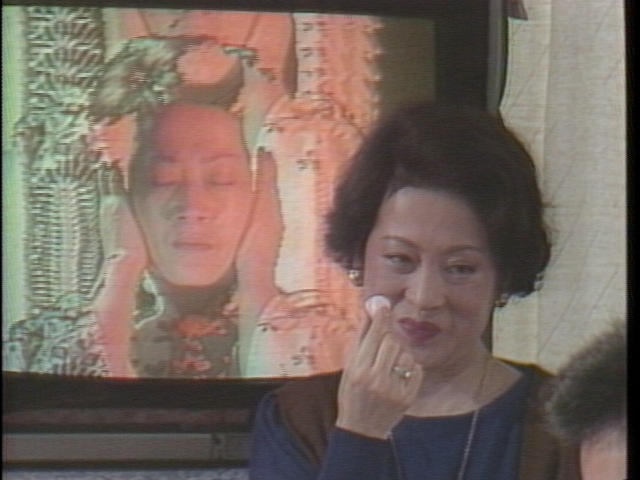
Make Up (1978) video Idemitsu is doing her make-up and uses a monitor as a mirrow. Video as a make-up, a distortion, but also a revealing tool for self-awareness, and at the same time anticipating today’s obsession with one’s own image as continuosly reflected by contemporary mediascape (smartphone’s selfies, social media, etc.)
At Yukigawa 3 (1979) 16mm Everyday scenes of Idemitsu’s mother and the artist herself are intercut with images of the gardens surrounding their houses in Yukigaya and Aobadai, accompanied by Chopin piano music. The editing is fast, alternating between interior spaces, where the mother sits at a table eating and drinking, and shots of trees gently swaying in the garden. Occasionally, the voices of children can be heard in the background.
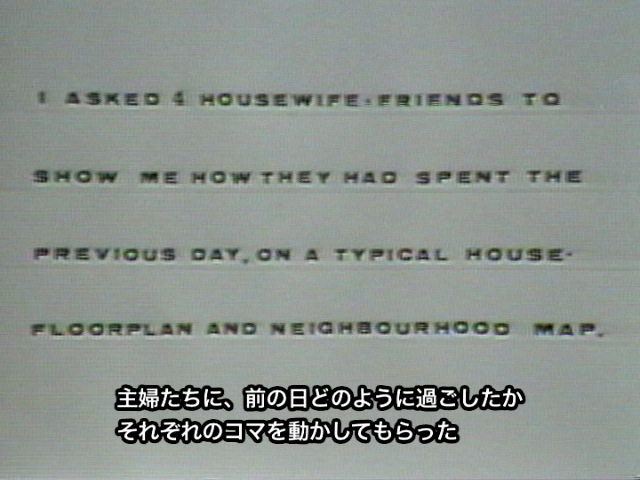
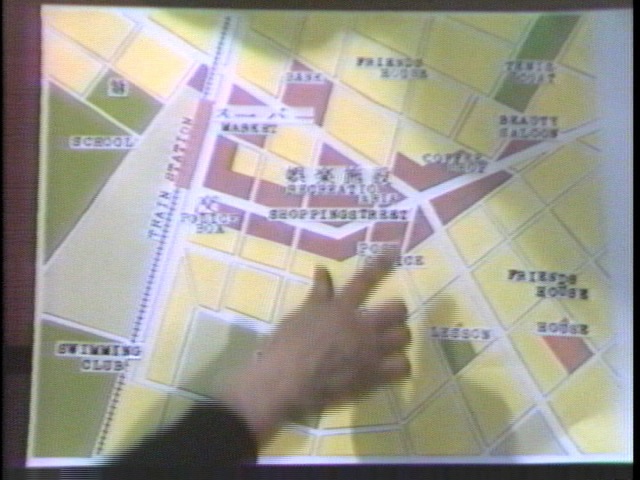
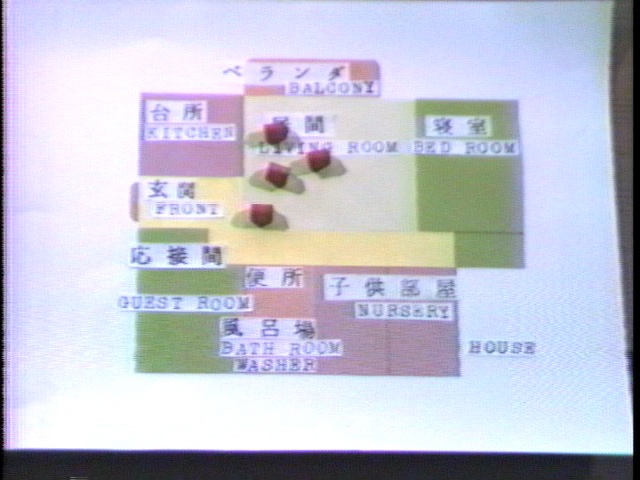
Housewives and a Day (1979) video This was one of the highlights of the exhibition for me. While extremely simple in both structure and execution, it gradually acquires new layers of meaning as it unfolds. Four housewives, living in Idemitsu’s neighbourhood, gather around a table with a floor plan of a typical house placed in front of them. Using the map as a guide, they reconstruct their daily routine, recalling what they did and where they went the previous day. Through this simple setup, the women trace their movements around the house while chatting freely and cheerfully about yesterday’s chores, often struggling to remember the exact sequence of their actions. At a certain point, the floor plan is replaced by a map of the surrounding neighbourhood as they describe going grocery shopping, picking up their children from school, returning home, and heading back out again to run more errands. Beyond documenting their routines and movements, the video creates an opportunity for these women to talk about their everyday lives and give voice to experiences that usually remain invisible or unspoken. As the work progresses, it increasingly becomes a space for sharing and solidarity among housewives (it should be noted that the women all appear to belong to the middle class). The exhibition catalogue describes the work as an experiment reminiscent of sandplay therapy, one that gradually fostered greater self-awareness among the four participants. The use of video technology also plays a crucial role in shaping the work. If I’m not mistaken, the piece consists of a single continuous take, or perhaps just two, and this technical choice informs both its aesthetic and the way its themes emerge.
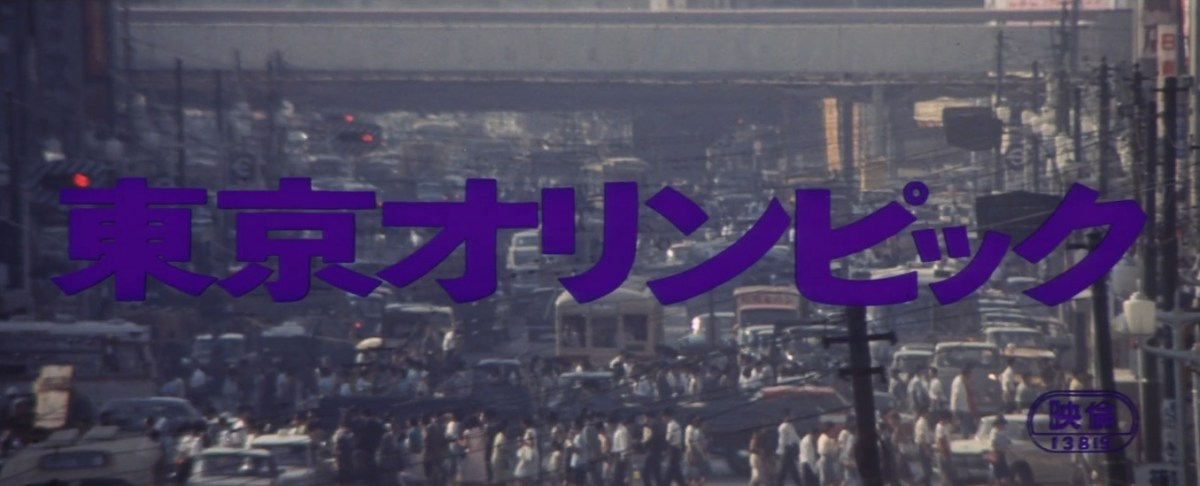
The summer special on sport and cinema I’m working on with my friends at Sonatine gave me the chance to revisit Ichikawa Kon’s Tokyo Olympiad (1965), a spectacle-documentary that revolutionised the way sports films were made, though not without its issues—especially those linked to the production context behind the film.
I’m posting here the English version. Please keep in mind that, while slightly modified, this is a more traditional review in style, so to speak, and it might read differently from the pieces I usually publish here.
The Historical Context The Tokyo Summer Olympics of 1964—held, it is worth remembering, in October rather than during Japan’s sweltering summer—are generally considered one of the defining symbolic moments in modern Japanese history. They were the first Olympic Games ever hosted by an Asian nation; the Games originally awarded to Tokyo in 1940 had been cancelled because of the outbreak of the Second Sino-Japanese War. More importantly, they symbolically marked Japan’s definitive transition from postwar reconstruction to the period of rapid economic growth that would later become known as the Japanese economic miracle. The Games also brought about lasting material transformations in the country. The construction of the Shinkansen high-speed rail line was justified in part by the need to accommodate the Olympics, giving rise to a technological innovation that would profoundly reshape Japan’s territory, patterns of mobility, and urban development over the following decades. At the same time, the Olympics accelerated the spread of television sets into Japanese households. The rapid adoption of television, driven in no small part by the Games, contributed to a fundamental shift in entertainment habits and became one of the factors behind the decline of the Japanese film industry in the early 1970s, bringing to an end the era of the big studios.
It is against this broader historical backdrop that Ichikawa’s sprawling documentary should be (re)considered. Released just five months after the conclusion of the Games, Tokyo Olympiad went on to become one of the biggest box-office successes in Japanese history, a distinction it still holds today, ranking as the country’s fifth most-watched film with more than 23 million tickets sold. A curiosity, to this day the first place with allegedly 100 million tickets sold belong to The War at Sea from Hawaii to Malaya (1942) a propaganda war film by Yamamoto Kajirō and with special effects by Tsuburaya Eiji.
The Opening Ceremony and the Emperor Tokyo Olympiad unfolds chronologically, following the progression of the Olympic Games from beginning to end. It opens with images of a building being demolished to make way for the construction of new Olympic facilities. This act of destruction can be read in several ways. On one level, it symbolizes a nation in transition, leaving its past behind as it enters a new era. On another, it hints at the darker side of economic growth and “progress”: the inevitable reality that someone or something is always left behind, forgotten, or quite literally destroyed.
This part maudite of postwar modernization has been a recurring concern in Japanese cinema, particularly in the work of filmmakers who emerged during the 1960s, such as Ōshima Nagisa, Imamura Shōhei, Masumura Yasuzō, Yoshida Kijū, and Shinoda Masahiro. Staying within the realm of non-fiction, and in close dialogue with the Olympics themselves, it is also worth recalling Tsuchimoto Noriaki’s On the Road: A Document (Dokyumento rojō, 1964), another film that captures the less celebrated realities hidden beneath the triumphant narrative of Japan’s rapid modernization.
The demolition scenes soon give way to more spectacular imagery, accompanied by a concise narration recounting the history of the modern Olympic Games and tracing the Olympic torch’s journey from Greece to Japan. Aerial shots, street-level footage, and brisk, often lyrical editing follow the relay across continents, frequently lingering on the faces of the people it encounters. Significantly, the film places particular emphasis on Asian countries and their populations, an appropriate choice given that these were the first Olympic Games ever held on the continent.
This opening section culminates in a montage of the opening ceremony, with athletes from the participating nations parading into the stadium. The traditional sporting and geopolitical powers are, of course, present: the United States, the Soviet Union, and the two German states competing separately under a unified team. Yet Ichikawa and his collaborators devote considerable attention to smaller delegations that would have been almost unknown to Japanese audiences at the time, including countries such as Congo and Cameroon.
Within these first thirty minutes, the documentary’s guiding approach is already clearly established. While it provides a comprehensive portrait of the Games, its gaze is repeatedly drawn toward smaller, seemingly less significant stories. The spectators, officials, and the quiet moments of preparation or recovery before and after the competitions become just as important as the athletes themselves.
At the same time, this opening section reveals many of the contradictions embedded both in the Olympic Games and, inevitably, in the documentary itself. Emperor Hirohito (Emperor Shōwa), whom many historians regard as bearing responsibility for Japan’s imperial expansion and colonial violence across Asia during the first half of the twentieth century, appears repeatedly on screen. In an opening ceremony celebrating international unity and peace, the prominence given to the Emperor’s face and voice is difficult to ignore. For Japanese audiences in 1965, his voice would inevitably have recalled the radio broadcast announcing Japan’s surrender following the atomic bombings. His presence therefore introduces a tension into the film’s message of universal harmony. Yet this contradiction ultimately belongs perhaps less to Ichikawa’s documentary than to the Olympic games themselves.
A horizontal approach The coverage of the competitions begins with the men’s 100 metres, the high jump, and the weight throw, perhaps the discipline that best exemplifies Ichikawa’s visual approach and the work of his six cinematographers. Through carefully orchestrated silences and a sound design that isolates the athletes’ breathing, footsteps, and physical exertion, the sequence conveys the profound solitude of athletic performance. The ambient sound was recorded by Ichikawa’s own crew, while the commentary appears to be taken from the original Japanese television broadcasts of the Games. More than anything else, the documentary captures the poetry of athletic effort through its extensive use of slow motion and long telephoto lenses. Combined with the widescreen TohoScope format, these techniques lend the film a distinctive visual language that remains immediately recognizable more than sixty years after its release.
As mentioned earlier, however, Ichikawa is ultimately less interested in sporting triumphs than in the stories unfolding at their margins. Victories are presented with remarkable restraint. There is no easy mythologizing of champions: we see the event, hear the winner’s name announced, listen to the national anthem, and then the film moves on. What is celebrated instead is the athletic gesture itself—the beauty of movement, as in the slow-motion sequence of a gymnast suspended against a black background, one of the film’s most strikingly stylized images. Equally important is the determination simply to complete the contest, exemplified by the runner from Sri Lanka—then competing as Ceylon—who finishes last in the men’s 10,000 metres.
After the intermission, the documentary continues its search for these “minor” stories. It opens with Ahmed Issa, a middle-distance runner from Chad, a nation that had gained independence only four years earlier and had sent just three athletes to Tokyo. The film briefly follows his solitary training sessions in the Olympic Village before accompanying him to the 800 metres, where his journey ends in the semi-finals.
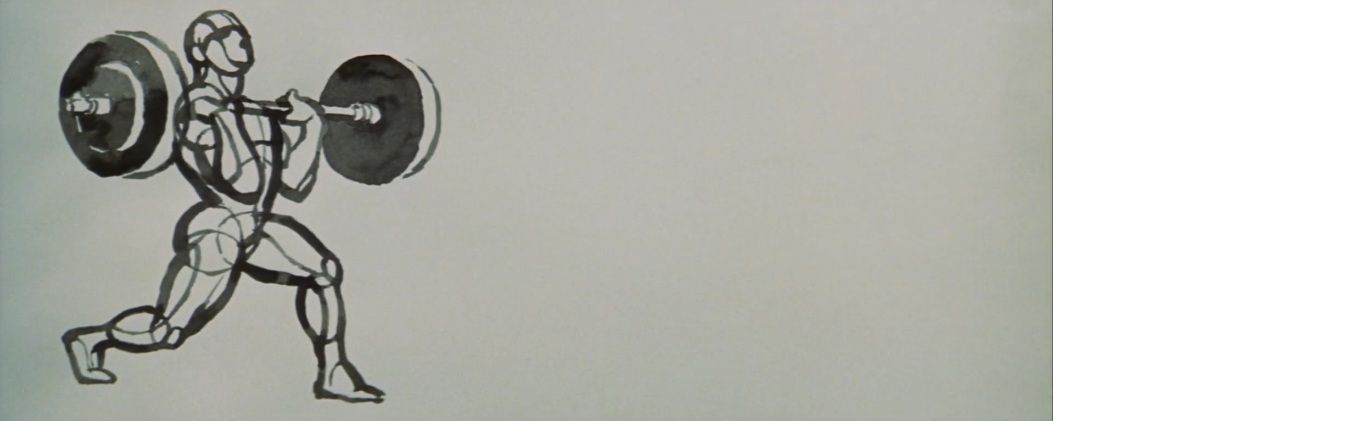
A multitude of sports, a multitude of styles The documentary’s second half moves steadily through a wide range of sporting events, each distinguished by its own visual and sonic identity. Among the most memorable are the weightlifting sequences, introduced by a series of sketches, and filmed in extreme close-ups; the Greco-Roman wrestling, introduced through an almost Cubist montage of intertwined limbs and bodies; and the boxing matches. Boxing is presented entirely in black and white, a stylistic choice that seems to emphasize the sport’s timeless, almost archaic qualities. In striking contrast, the women’s foil competition unfolds as a rapid, almost subliminal montage of vivid colours, evoking the visual language of 1960s Pop Art.
Each discipline is therefore granted its own cinematic treatment. Cycling, for example, takes the viewer beyond the Olympic venues and into the Japanese countryside, accompanied by an uptempo jazz soundtrack that conveys both speed and exhilaration. Throughout the film, Ichikawa refuses to impose a single visual style upon the Games. Instead, he continually adapts his cinematic language to the rhythm, physicality, and emotional texture of each sport.
It is in moments like these that Ichikawa’s remarkable versatility as a filmmaker becomes particularly evident. Over the course of his long career, few Japanese directors demonstrated such an ability to reinvent their style according to the subject at hand. From his beginnings in animation to documentaries and experimental pop-inflected commercials, from the period dramas of the 1950s and 1960s to The Inugami Family (Inugami-ke no Ichizoku, 1976)—the mystery film that not only revitalized his career but also reshaped the Japanese film industry by paving the way for what would later become known as the media mix.
The final thirty minutes of the documentary are devoted to the marathon and the closing ceremony. Once again, alongside the leading athletes of the race—including Abebe Bikila—the film turns its attention to those who fail to complete the course: the runners who collapse on the road, exhausted, as well as the anonymous volunteers and refreshment stations offering drinks and wet sponges to the competitors.
Documentary vs militant documentaries It is difficult not to consider Tokyo Olympiad a masterpiece of documentary cinema, almost a John Ford of non-fiction filmmaking, one might say. It is a work that remains technically breathtaking, thanks to its creative use of telephoto lenses, slow motion, large-format film, editing, camera angles, and frame composition. At the same time approaching the Olympic Games from a remarkably horizontal perspective, refusing to privilege certain athletes, nations, or sporting powers over others.
However, this vision and praise is only possible by understanding the documentary primarily as cinema-spectacle, one of the possible modes of non-fiction filmmaking, and by placing in parentheses everything that exists behind the Olympic machine: political rivalries and pressures, corruption, as well as the sacrifices imposed upon parts of the host population, usually those with the least social and economic power.
By accepting the project, Ichikawa had already chosen to stand with the Olympic Committee and the organisers, a position that was, in many ways, consistent with his long history of working within the major studio system (at least until the end of the 1960s). The members of “the other side” should already be familiar if you’ve been reading this space over the years: Ogawa, Tsuchimoto, and the many filmmakers, groups, and collectives who were resisting a particular way of producing, distributing, and exhibiting documentaries in Japan at the time.
And yet, in a way that recalls Ford once again, perhaps the images of Tokyo Olympiad ultimately resist and even contradict the very framework in which they were produced, or at least that is one of my more hopeful readings. The opening image of demolition is a perfect example. Reconsidered in light of what I have pointed out, it acquires an even greater complexity, becoming an unresolved and opaque symbol. Perhaps this is not enough to fundamentally alter our understanding of the documentary—we should get rid of our attachment to ‘spectacle’ and the ‘beautiful images’ once for all—but it remains a fascinating tension nonetheless.
Continuing my articles about the exhibition, Part 2 (Part 1 here)
The retrospective Idemitsu Mako What a Woman Made, currently on view at the Tokyo Photographic Art Museum (July-September 2026), is one of the most comprehensive exhibitions ever devoted to the pioneering video artist and filmmaker. Bringing together films, video works, installations, and archival materials, it offers an unprecedented overview of more than five decades of Idemitsu’s artistic practice, tracing the evolution of a body of work that has consistently explored gender, domesticity, motherhood, and the mediated construction of female identity, especially in Japan. I visited the exhibition, which also featured special screenings of Idemitsu’s works, over two days in July, immersing myself completely in her world. It was one of the most extraordinary artistic experiences I’ve had in 2026, an aesthetic revelation that continues to resonate within me. From the museum’s homepage:
Idemitsu Mako (b. 1940) is a pioneering artist in the fields of experimental film and video art in Japan. After spending time in the United States during the 1960s, she began creating works that explored themes such as the lives of women, family, and the relationship between media and society, using film and early video as her mediums. Her video works from the 1970s onwards in particular incorporate the narrative techniques of television melodramas to depict themes such as mother-child relationships, the dynamics of marriage, and women’s social roles from a unique perspective. In recent years, as the global conversation surrounding gender and the body continues to grow, her practice has received renewed attention. The Tokyo Photographic Art Museum acquired Idemitsu Mako’s complete film and video works, as well as her major installation pieces, between 2017 and 2018. This large-scale retrospective offers a comprehensive overview of Idemitsu’s artistic practice, including works that are being exhibited for the first time since their acquisition by the museum. A total of 45 works, including those in the museum’s collection, will be presented through exhibitions and screenings.
As a future reference for myself and for anyone who might stumble upon this page, I’ll be publishing my notes on every work I saw during my two-day stay in Tokyo. They’re rough impressions rather than finished reviews, but I hope they’ll prove useful, whether as a personal archive or for readers interested in Idemitsu remarkable body of work. Hopefully I longer piece will eventually emerge from this work in progress. (Works are listed in the order I saw them)
Part 2
“My 16 mm works are about creating another world to escape the rigid routine of daily life. Even now, film retains something of that quality, whereas video is a reflection of everyday reality. These two mediums exist as completely distinct entities. When I shoot on film, I want to detach myself from daily life and capture images that are incredibly beautiful. I actually love these kinds of films. For me, film and video stand clearly apart from each other.” Interview with Idemitsu Mako The Complete Works of Idemitsu Mako, 1970-1996, Pandora, 1996, p. 21
Women (1977) video The work was presented as a six-monitor installation, arranged in two vertical columns of three monitors each. According to the exhibition catalogue: “Idemitsu visited ‘Hoki-boshi’, a space for women, and asked four women involved in the women’s liberation movement to participate in this work. She gave each of them a video camera and shot them as they used those cameras to go about their own filming. Idemitsu also screened the footage shot by these four women and the footage she had filmed on two monitors at her home, and watched it together with the participants, a process that she also filmed. In the exhibition, these three types of footage were shown on a total of six monitors. This installation was created for a solo exhibition at the Shirakaba Gallery in Ginza; currently, only the tapes for two of the six monitors survive.”
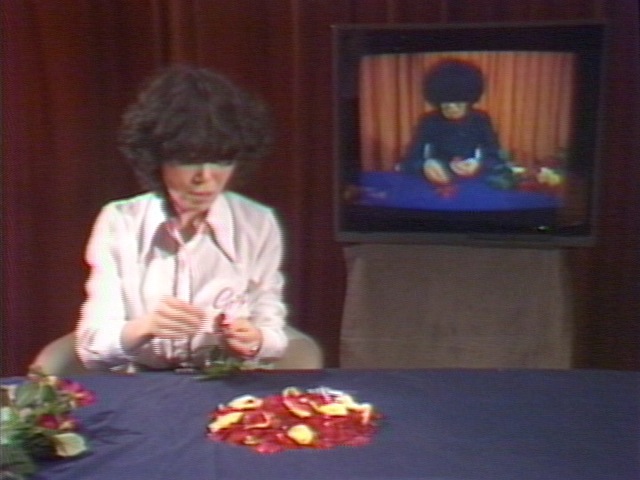
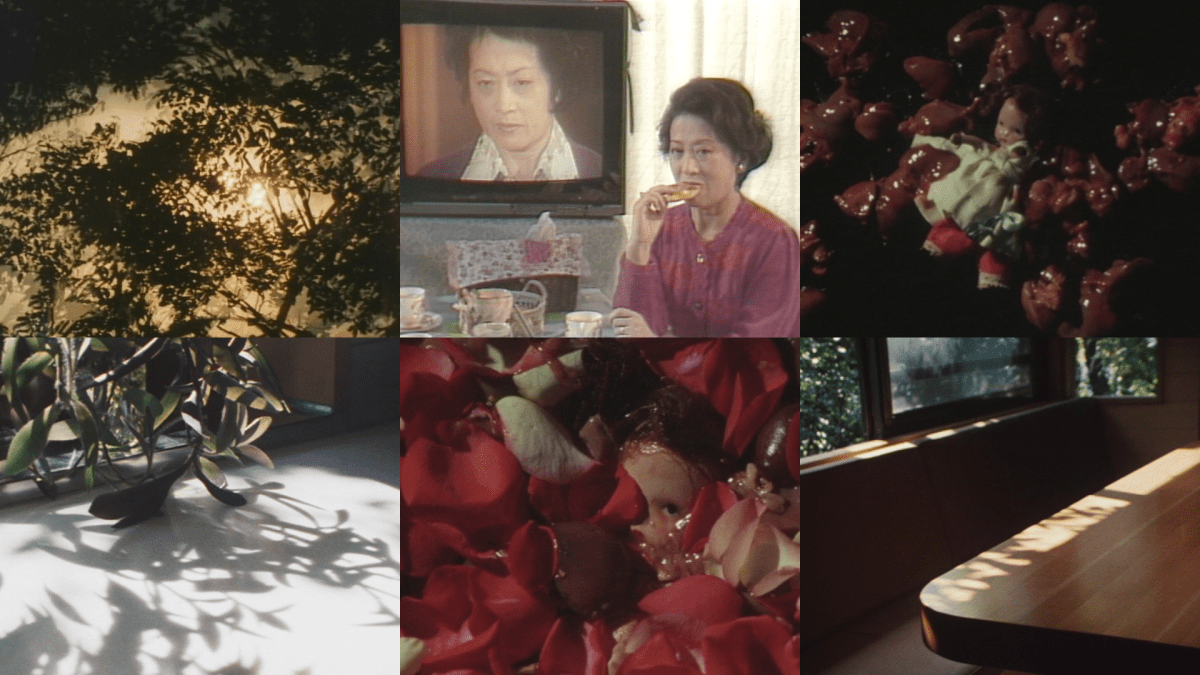
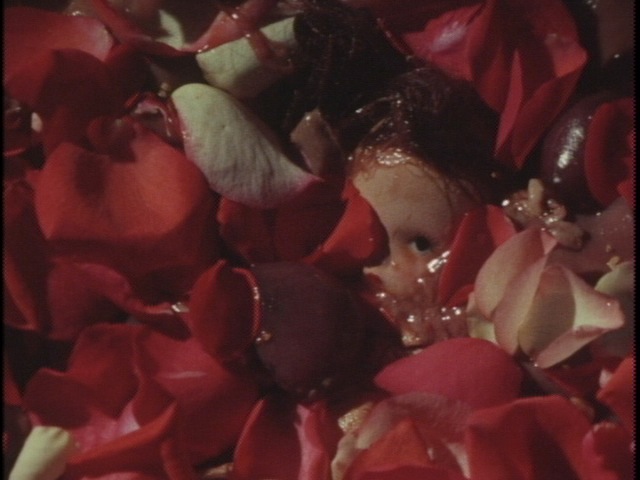
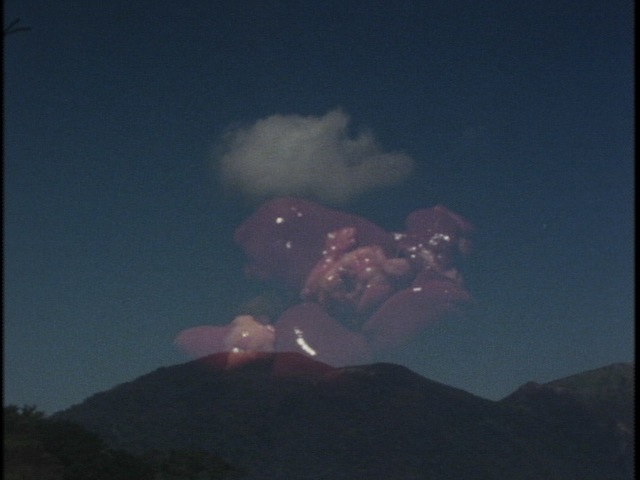
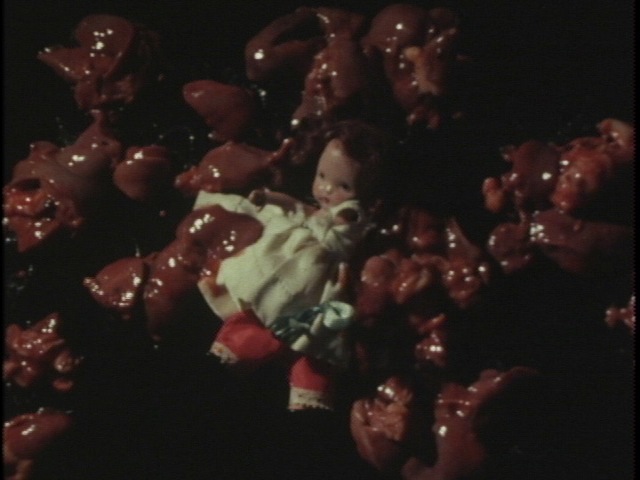
Emotional Volatility About My Father (1981) 16mm Showed on video. Idemitsu’s father, who disowned his daugher when she got married in the U.S., died in 1981. This work is a reaction to th epassing of the man: a doll born from a bamboo (Kaguya hime, but it’s Mako herslef?), firstly covered in petals, and later in pieces of raw meat…oppression by her father?
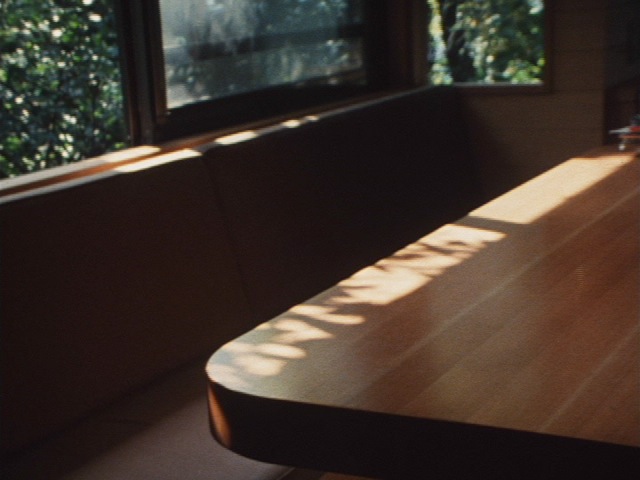
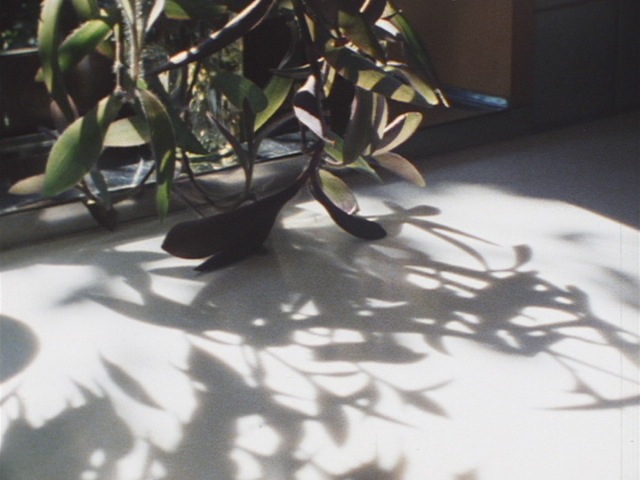
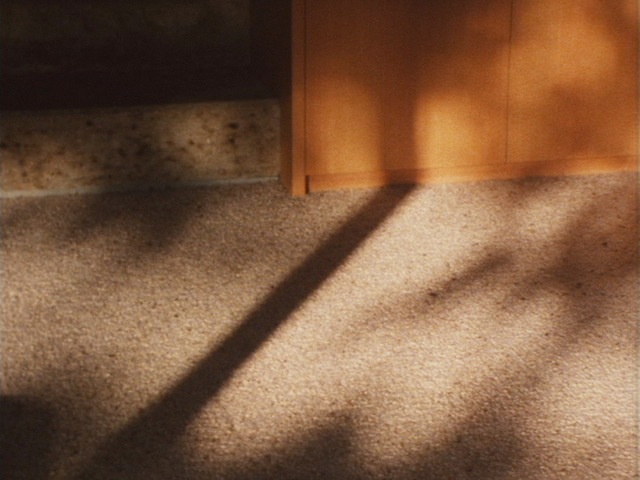
* Play and Capriciousness (1984) 16mm Images of interior spaces: chairs, sofas, flowers, blades of light projected onto walls, plants in the gardens, everything bathed in a winterly twilight. These images are interspersed with words by Idemitsu herself about the children she left in America after her divorce in 1981. Melancholic in tone this is very distant from her experimentations on video, and the angry and sarcastic tone she is more famous for in this period. Nonetheless, Play and Capriciousness is one of her most affective films….there is no sounds just silence and soothing images broken very seldom by Idemitsu words, almost whispered…words about families living with kids in her neighbourhood…people forming new families…in a way this film is a confession, a realization that, with her children becoming independent and going far away, a new phase of her life has begun. As the exhibition catalogue notes, it was precisely after her separation from her husband (she would later remarry) and her children’s departure that Idemitsu’s artistic output increased dramatically.
* Whispering Light (1985) 16mm Follows a similar structure and emotional register to Play and Capriciousness, this time as an elegiac tribute to Idemitsu’s mother, who had recently passed away. Once again, images of nature, green landscapes, trees, and foliage, are interwoven with Idemitsu’s own words. For me though, the film is somewhat less powerful than the previous, perhaps due to the use of sound. While Play and Capriciousness gained much of its emotional force from its almost absolute silence and the sole presence of Idemitsu’s voice, Whispering Light introduces a more cacophonous, experimental soundscape that often dominates the moments when narration is absent that breaks, for me, the fluidity of the piece. That being said, the passages in which Idemitsu recalls her mother are deeply moving: Idemitsu recalls for instance how her mother wanted to learn English and play golf, but that her father never allowed her to do so; or how, after his death, she remained alone in the large living room, sitting quietly in a corner.
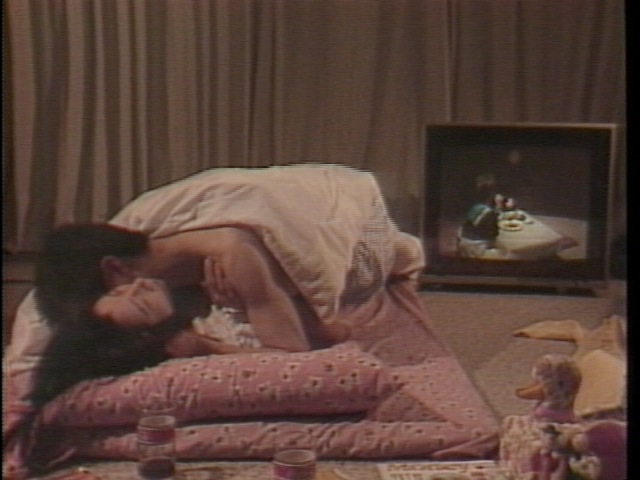
The Marriage of Yasushi (1986) video “We men are who made Japan great.” Following the Great Mother trilogy, Idemitsu continued to dissect and ridicule the tectonic plates underlying Japanese society through her “Jungian dramas”. In The Marriage of Yasushi, the complex psychological and social dynamics surrounding family, gender, and power are pushed to an even more exaggerated and theatrical extreme. The relationship between mother and son reaches new heights, largely thanks to Ozawa’s remarkable performance in the role of the mother. Funny, excessive, and at times unsettling, she smiles almost constantly, with a grin that reveals her delight whenever she can reclaim her son’s attention and possess him exclusively. The character becomes both absurd and frightening, embodying the emotional control and unconscious desires that Idemitsu often explored through her maternal figures. The other central configurations — mother, son, father, and husband — are perhaps more bitter and strained than ever before. One of Idemitsu’s most accomplished works from this period, The Marriage of Yasushi is also among her most carefully written and structurally fascinating pieces, especially for the use of sound in relation with her signature mark, the monitors. Again, what we see inside these screens are different temporalities of the protagonists and of the lives of others, but what really takes things to another level here is the sound editing. Idemitsu constantly shifts between the conversations happening inside the monitors and those taking place outside them, blurring the boundaries between different times and spaces.
The retrospective Idemitsu Mako What a Woman Made, currently on view at the Tokyo Photographic Art Museum (July-September 2026), is one of the most comprehensive exhibitions ever devoted to the pioneering video artist and filmmaker. Bringing together films, video works, installations, and archival materials, it offers an unprecedented overview of more than five decades of Idemitsu’s artistic practice, tracing the evolution of a body of work that has consistently explored gender, domesticity, motherhood, and the mediated construction of female identity, especially in Japan. I visited the exhibition, which also featured special screenings of Idemitsu’s works, over two days in July, immersing myself completely in her world. It was one of the most extraordinary artistic experiences I’ve had in 2026, an aesthetic revelation that continues to resonate within me. From the museum’s homepage:
Idemitsu Mako (b. 1940) is a pioneering artist in the fields of experimental film and video art in Japan. After spending time in the United States during the 1960s, she began creating works that explored themes such as the lives of women, family, and the relationship between media and society, using film and early video as her mediums. Her video works from the 1970s onwards in particular incorporate the narrative techniques of television melodramas to depict themes such as mother-child relationships, the dynamics of marriage, and women’s social roles from a unique perspective. In recent years, as the global conversation surrounding gender and the body continues to grow, her practice has received renewed attention. The Tokyo Photographic Art Museum acquired Idemitsu Mako’s complete film and video works, as well as her major installation pieces, between 2017 and 2018. This large-scale retrospective offers a comprehensive overview of Idemitsu’s artistic practice, including works that are being exhibited for the first time since their acquisition by the museum. A total of 45 works, including those in the museum’s collection, will be presented through exhibitions and screenings.
As a future reference for myself and for anyone who might stumble upon this page, I’ll be publishing my notes on every work I saw during my two-day stay in Tokyo. They’re rough impressions rather than finished reviews, but I hope they’ll prove useful, whether as a personal archive or for readers interested in Idemitsu remarkable body of work. Hopefully I longer piece will eventually emerge from this work in progress. (Works are listed in the order I saw them)
Part 1
“My 16 mm works are about creating another world to escape the rigid routine of daily life. Even now, film retains something of that quality, whereas video is a reflection of everyday reality. These two mediums exist as completely distinct entities. When I shoot on film, I want to detach myself from daily life and capture images that are incredibly beautiful. I actually love these kinds of films. For me, film and video stand clearly apart from each other.” Interview with Idemitsu Mako The Complete Works of Idemitsu Mako, 1970-1996, Pandora, 1996, p. 21
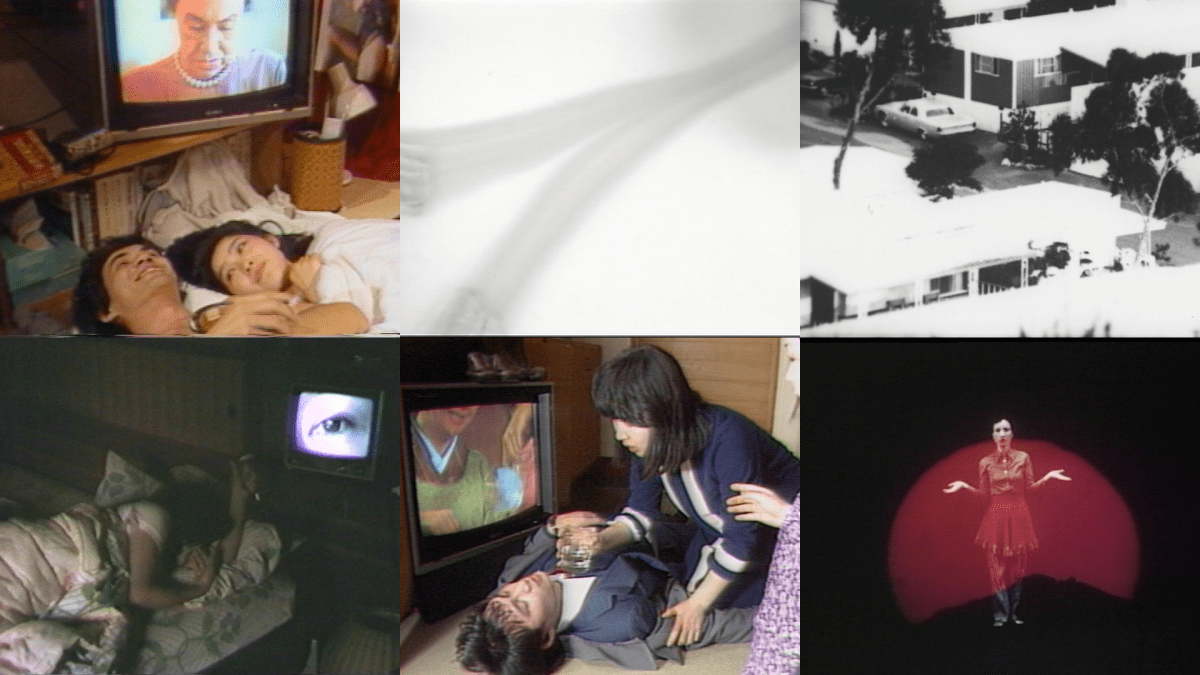
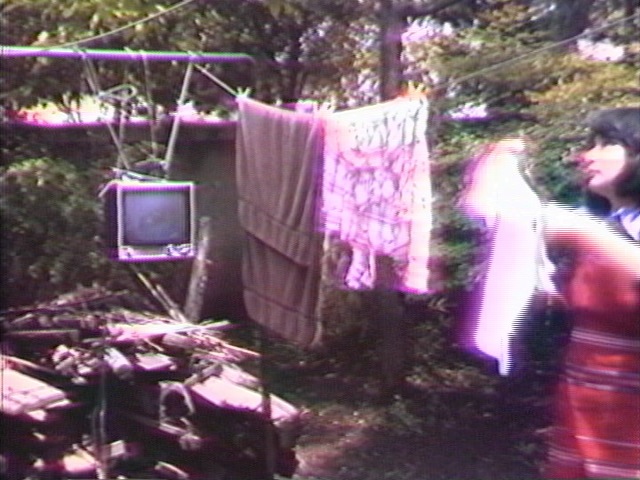
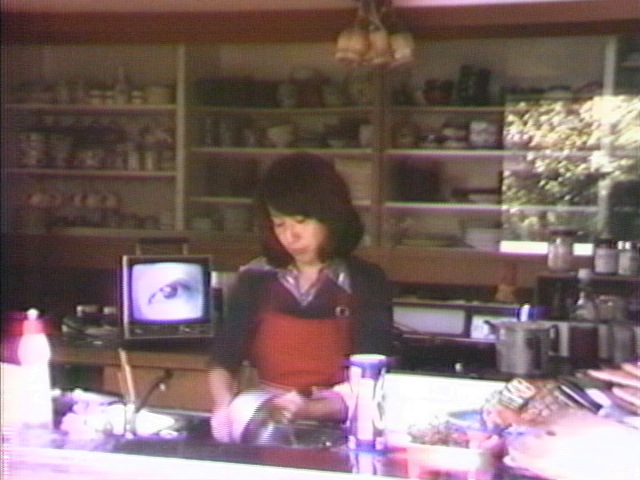
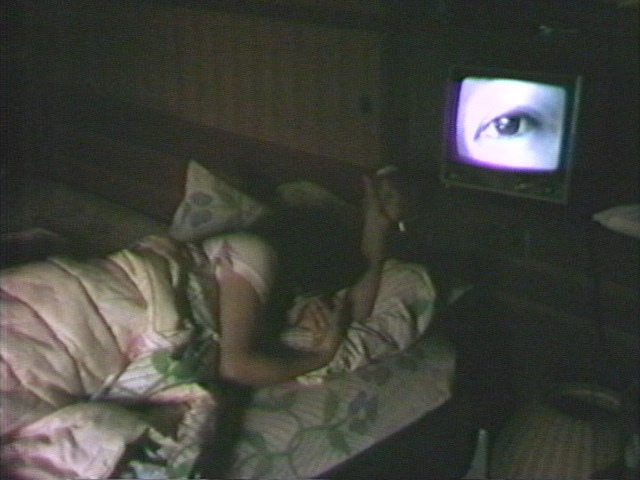
Another Day of a Housewife (1977) Video Presented on a big television, this is the work that opens the exhibition. This early video observes the everyday routines of a housewife—played by Idemitsu herself—through a series of long, static takes. Waking up, cooking, washing the dishes, grocery shopping, hanging laundry, calling friends on the phone. Throughout the film, a giant eye—again, the filmmaker’s own—repeatedly appears on a television monitor, silently watching the protagonist. The constant presence of this eye is deeply unsettling. It evokes the omnipresence of the media, but even more powerfully, especially in the film’s darker, more intimate scenes, it comes to embody the internalized gaze of society: an apparatus of self-surveillance through which the protagonist judges and disciplines herself. The eye is at once external and internal, suggesting that social expectations have become inseparable from the housewife’s own consciousness. Although this is not the first work in which Idemitsu incorporates television monitors, Grandmother, Mother, Daughter (1976) is probably the one, it is perhaps the first in which they function as a channel and window to the protagonists’ inner world. This formal device would become increasingly central to her work throughout the 1980s, eventually evolving into one of the defining features of her visual language, often referred to as the “Mako Style.”
*
Woman’s House (1972) 16mm First work in 16mm by Idemitsu, the film is the recording, a re-composition of Womanhouse, an exhibition conceived by Judy Chicago and Mirian Schapiro at the California Instutite of Arts in 1971. Small objects, clothes, interiors of a room, curtains, dolls, everything bathed in bright light. The screen is saturated with white from the very first shot. Surreal: fake breast cover the ceiling and walls, later giving way to sunny-side-up eggs.
What a Woman Made (1973) video Static white sceen with a voice talking on it, the topic is gender roles for children as expected and codified in Japanese society. The image on screen is out of focus, abstract-like, and only toward the end does it gradually come into focus, revealing a tampon swirling in a toilet bowl. Idemitsu’s first significant work, also from a feminist point of view.
Great Mother (Harumi) (1983) video Great Mother (YUMIKO) (1984) video Great Mother (Sachiko) (1984) Trilogy inspired by the Jungian concept of the “Great Mother”. The relationship between mother and daughter varied in each work, but it’s alway excessive in hate or love. The rebellious girl in the seond part seems to represent Idemitsu herself, who grew up in an affluent and powerful family. In the last segment the mother/daughter relationship it’s not only very strong, but also a necessary shield, a safe space, against the violence, physical and mental, perpetrated daily by the husband (another vile male figure in the Idemitsu’s universe). Of the three the last is perhaps the nastiest in relation to the position and role played by the man, who is a representation of the alpha male/Japan/masculinity embedded in Japanese society. Worth noting: in the last video, the television monitor is used also horizontally, as a table. What is most astonishing here is the way the television monitors function not only as a means of materializing Jungian archetypes, but also of introducing multiple temporalities. They become windows onto the past or onto moments from another person’s life, collapsing different psychological and temporal dimensions into the same video space (“video is time” as Nam June Paik has stated and Maurizio Lazzarato expanded upon).
*
At Santa Monica 3 (1975) 16mm Black-and-white silhouettes, the sun slowly setting, shifting patterns of light and shadow, reflections in constant motion. Accompanied by music by John Cage “String Quartet in Four Parts”, the film unfolds as an impressionistic vision of her house in Santa Monica and surroundings, where Idemitsu lived for many years. Probably the best work of her first period (in 16mm), at least amongst the ones I’ve seen.
Next (1973) 16mm Single channel video form the original 16mm, Next collects together several works by artist CIBA: colorful geometrical shapes on white background, reds and yellows predominate.
At Any Place 4: From the Habanera of a Housewife by Yoneyama Mamako (1978) 16mm Projected on a wall of the exhibition on single-channel video. Idemitsu continues her interest in shooting and re-elaborating on stage performances, here pantomime Yoneyama Mamako’s performance is overlayed with images of natural places she filmed. Visually and for its use of a wide range of music is a very fascinating work.


You must be logged in to post a comment.