Three short takes on some of the most interesting documentaries I’ve seen recently.
The Man Who Has a Camera (Liu Na’ou, 1935)
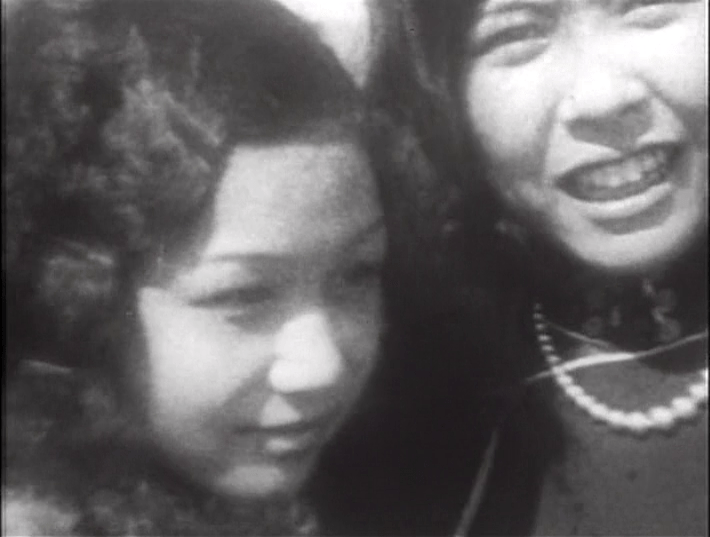
One the the discoveries of the year for me. Clearly inspired by Dziga Vertov, filmmaker, poet and writer Liu Na’ou shot this movie in four cities across national boundaries: Tainan, Canton, Shenyang, and Tokyo. A beautiful film that is in equal part amateur cinema, a city symphony film, and an experiment in poetic filmmaking, less a work about landscapes of certain areas, and more an actuality film depicting faces and people’ feelings across and beyond borders. Incredibly charming, fresh and well constructed, a feverish dream of transculturality that is much deeper and complex than its simplicity on the surface level might suggest. I’m planning to write a longer piece about the fascinating figure that was Lui Na’ou and this film in the near future.
Many Undulating Things (Wang Bo, Lu Pan, 2019)
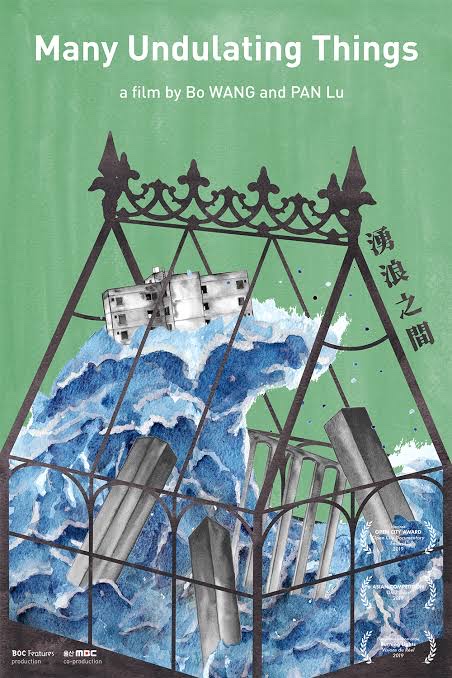
The film begins and ends in a shopping centre in Hong Kong. We carefully observe the smooth movement of the escalators, the constant flow of people that never stops, the musical fountain that presides over the centre of the internal courtyard, as if this gigantic complex could concentrate the circulation of the entire city, or even, the entire country. From there, it will be more a tale about concrete, enormous port warehouses, glazed galleries built for the 2010 universal exhibition, overpopulated tower blocks, the fragments of still recent colonialism… Through the history of urban changes, we witness the profound social transformation of this territory that is constantly swinging between the East and the West. Hong Kong thus emerges, like an archetypal space of many other cities of globalised capitalism. MANY UNDULATING THINGS offers a complex reflection on the relationships between landscape, nature, urbanisation and society. Thanks to its exhaustive approach, the film questions the function of cities in the development of the capitalist system. A political poem.
I almost despised the first part, the visuals are fascinating, but the narration and the philosophical frame used didn’t really work for me. From the second chapter onward, the work elevates itself and gets definitely more interestingly nuanced and complex, exploring the historical layers that constitute contemporary Hong Kong, analyzed through cinema, photography and paintings. When it moves to the third chapter, the documentary also explores how colonization in the past centuries worked and was deeply linked to the alteration of the botanical realm, “the reorganization of ecosystems under imperial order (…) was actualised through the glass boxes” an important invention and crucial part of the conquering process pushed by imperialism. The glass box would later mutate and evolve into greenhouses, exhibitions, arcades, spectacles and finally into shopping malls. This section, and especially the second chapter of the movie, is an expansion of Miasma, Plants, Export Paintings, a short made in 2018 by Wang Bo, and definitely forms the strongest part of Many Undulating Things, in my opinion. When the movie moves from the historical perspective back to contemporary Hong Kong, moving also from a visual and hybrid approach that uses old movies and photos to convey its meaning, it loses its power, trying to be too many things at once and meandering in too many directions.
That being said and even though Many Undulating Things feels at times too randomly constructed, and a sort of patchwork of three or four short documentaries, it’s still a fascinating piece of work worth revisiting.
Nuclear Power Plants Now いま原子力発電は (Sumiko Haneda, 1976)
This is an obscure and short documentary made for TV by Haneda Sumiko in 1976, shortly before establishing her own company and releasing The Cherry Tree with Gray Blossoms, if I’m not mistaken. Haneda and her troupe visit the Fukushima Daiichi Nuclear Power Plant to explore the state of atomic energy in Japan, and its lights and shadows. The short is mainly composed of interviews, but the most fascinating part is when doubts about safety concerns start to emerge in the talks. While some people from the Tokyo Electric Power Company, the company that owns the plant, compare the possibility of an incident at the power plant to that of a meteor hitting the earth, there’s a professor from Waseda, if I remember correctly, who says that there have not been enough cases to delineate or guess the consequences, or even to calculate the possibility, of a nuclear incident. The style is that of a TV documentary, and there’s a lot of explanation about how nuclear energy is produced, however, the doubts that the film raises, especially knowing what would happen 35 years later, are chillingly prescient and make it an interesting viewing. Even essential if you consider Haneda, like I do, one of the most important female directors in the history of Japanese cinema.
 Asian Docs
2 thoughts on “Movie journal (Dec. 2019): Man Who Has a Camera, Many Undulating Things, Nuclear Power Plants Now”