
No best documentaries list for me this year, unfortunately I have not seen, or liked, enough films to make one. Instead, I have compiled a list of the best documentary discoveries I had in the past 12 months (the first two are actually movies released in 2022). As usual, the films are listed in no particular order.
名付けようのない踊りThe Unnameable Dance (2022) by Inudo Isshin is the portrait of dancer and performer Tanaka Min, one of the most fascinating Japanese artists alive. The documentary retraces some of the events and encounters that guided his life as a dancer and actor, such as meeting Hijikata Tatsumi in the 1960s, and dancing in Paris in 1978, a trip that de facto launched Tanaka’s career, and a place where he met Roger Caillois, a writer Tanaka strongly admired (the title of the movie is taken from a sentence the French writer used to describe Tanaka’s dance). The documentary, using Tanaka’s own narration, continues by retelling his debut as an actor in Yamada Yōji’s Twilight Samurai (2002), an event that kicked off, at the age of 57, his career in cinema, and focuses also on his work as a farmer, an important part of his life, as he famously stated “In agriculture one can find the anti-modern coming from the past. There you find the concreteness of the present.”
The retelling of all these experiences is interspersed with some of his recent performances, always awe-inspiring, even when mediated by the camera. Performances that were recorded in Japan, but also abroad, in Paris, and especially in Portugal, a country where the documentary begins and ends. The film is an enthralling viewing experience also because it is constructed by interweaving Tanaka’s performances with Yamamura Kōji ‘s beautiful and affective animation, used here mainly to depict Tanaka’s memories and dreams as a child.
Particularly significant is also how the documentary includes purposely the audience, their faces and their reactions when filming Tanaka’s performances in public spaces, since dance is, for the artist, born between dancer, place, and audience.
In Fire of Love (2022)American documentarian Sara Dosa crafted a fascinating work assembling images and films shot around the world in the course of their life by two French volcanologists, Katia and Maurice Krafft. Dosa interweaves these images with other videos about them, and wrapped up everything with the narration of actress, filmmaker and artist Miranda July. I would have preferred a movie made entirely of their films without narration, while July’s voice is very affective, but it is nonetheless a powerful viewing experience. Not only because of the spectacular images, but also because the documentary is very good at delving into the obsession and raison d’etre that guided the life, and ultimately the death, of the couple.
Origin of Cosmos (Lothar Baumgarten) was for me the cinematic experience of 2022, I had the chance to see the movie at the Aichi Triennale, where is was screened in a loop in a very dark room as an installation. Shot between 1973–1977 and finished in 1982, Origin od Cosmos is based on a myth of the Tupi people, a South America’s indigenous group, and while conceptually it is a film about the rain forest, it was filmed in its entirety along the Rhine near Düsseldorf Airport. It is a sensorial experience, as people nowadays say, that envelops the viewers with images and especially with the cacophonous soundscape. Animate and inanimate life is displayed and amassed on screen like a Pollock’s painting: stones, insects, trees, soil, mud, plastic, branches, spiders, eyes, the moon, the sky…
It has to be seen in darkness, because in some of its parts the shapes emerging from the pitch black background are very subtle. I definitely need to do more research on the movie, its production history, filming, and on director Lothar Baumgarten himself.
東京‘69 – 青いクレヨンのいつかは . . . Tokyo ’69 – one day blue crayons . . . (1969) and 治安出動草稿 お昼の戒厳令 Public Order Project: Martial Law at Noon (1981) are two recently discovered works made by the collective NDU (Nihon Documentary Union). I wrote about them here.
死者よ来たりて我が退路を断て Dead, Come and Cut Off my Retreat (1969) is a documentary chronicling the resistance of the students at Nihon University (College of Art) in 1968-69 made by a group of activists called グループびじょん Group Vision, people working at the time at Nippon Eiga Shinsha.
Besides being a powerful documentary about a certain type of resistance at a crucial time in Japan, what I found extremely compelling is how the film is also a profound exploration of places and spaces. It is an interesting documentary also because it gives voice, not much, but more than usual in these kind of contexts in Japan, to women on screen, but also off screen. Among the members of the group, there were at least two women in important positions: Kitamura Takako was one of directors, and Sasaki Michiko one of the cameraman.
Group Vision was also involved in the production of Ogawa Shinsuke’s A Report from Haneda, and Dead, Come and Cut Off My Retreat (the English title is unofficial) has definitely a similar tone. Apparently Jōnouchi Motoharu was also affiliated for a period of time with the group, but I cannot confirm. The group has uploaded the movie on YouTube:
Autour de Jeanne Dielman( Sami Frey, 1975) is a touching document of the filming of Jeanne Dielman, 23, quai du Commerce, 1080 Bruxelles, a window open to the fascinating working relationship between Chantal Akerman and Delphine Seyrig, and to the making of a masterpiece. The movie is available through Another Screen, here.
Before the Flood (Yifan Li, Yu Yan, 2005) chronicles the death of Fengjie, on the Yangtze River, a city and its people slowly being executed and reduced to rubbles by the state and “progress”, in order to make way for the new Three Gorges Dam that eventually ended up flooding the entire valley.
2H (Li Ying, 1999) is a compelling piece of documentary cinema about ageing, the Chinese diaspora, and a group of Chinese expatriates in Tokyo at the end of last century. Ma Jinsan is a 95 year-old former Kuomintang general who defected to Japan nearly 50 years earlier, shortly after the Communist revolution, who has a strong connection with Xiong Wenyun, a young avant-garde artist.
Through the DV camcorder’s aesthetics, used here to its full potential, everything is hugely impactful in 2H, from the staged scenes of Xiong and her lover, to the portrait of Ma, from the dialogic relationship between the camera/director Li and all the people filmed, to the touching finale with Tokyo covered in snow.
Incident at Restigouche (Alanis Obomsawin, 1984) is a documentary chronicling two raids on the Listuguj Mi’gmaq First Nation (Restigouche) by the Sûreté du Québec in 1981, as part of the efforts of the Quebec government to impose new restrictions on Native salmon fishermen. The film, constructed through interviews, photos, and original footage, explores the history behind the Quebec Provincial Police (QPP) raids and the reasons of the protests. The Quebec government had decided to restrict salmon fishing, traditionally an important source of food and income for Micmac Indians. It’s a bless every time we can watch a movie from an author we have never seen anything of, and get blown away; a cinematic door opens in front of us presenting and offering a new landscape to explore. This was for me Incident at Restigouche, and I’m looking forward to watching more documentaries by Obomsavin this year.
Model (1981) Every time I watch a new (for me) film by Frederick Wiseman it is a discovery, this one was glorious, one of his most entertaining, and at the same time, ça va sans dire, deep works. A pivotal film in his career, where something new started to surface. Perhaps the first documentary where he started to use extensively the “pillow shots”. Listen to the excellent Wiseman Podcast, a perfect companion to his documentaries, if you decide to delve in his filmography.
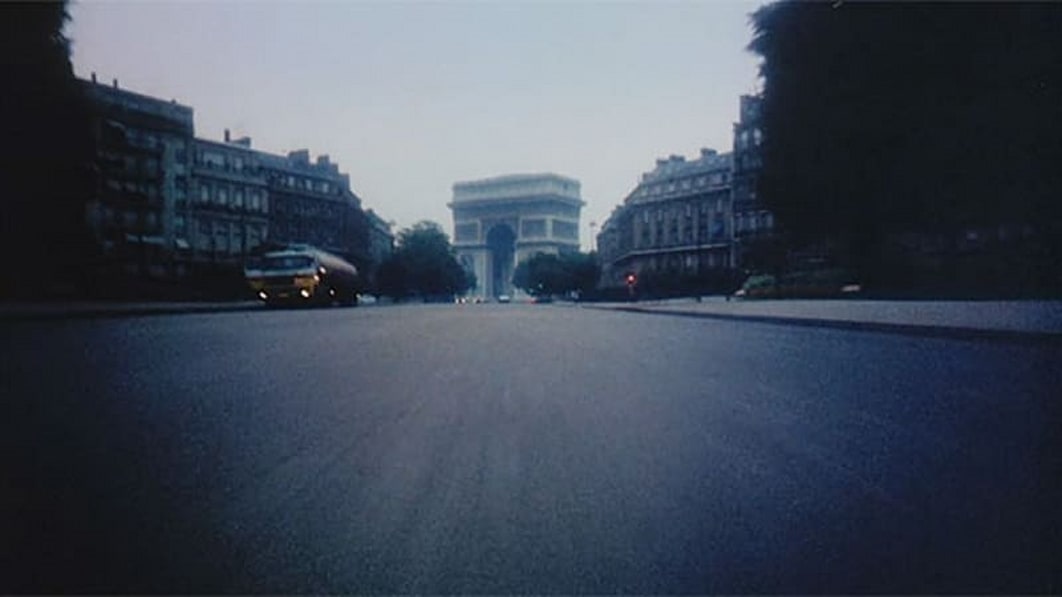
C’etait un Rendezvous (Claude Lelouch, 1976), eight adrenalinic minutes of high-speed drive through the street of Paris.
 Asian Docs