Previous reports:
YIDFF 2025: preview
report 1: SPI (Sayun Simung)
report 2: Awards
report 3: From the River to the Sea, and the Mountains: Filmmakers in Solidarity with Palestine – A Gathering
I saw a couple of films presented in the Perspectives Japan program this year in Yamagata. I will write about The Future of Dialogue: The Yoshida Dormitory (Fujikawa Keizō) in the near future, and I had previously written about Spring, On the Shores of Aga (Komori Haruka). One of the films I’d like to focus on here today is Appalachian Lenses, a documentary shot in the U.S. by Japanese filmmaker Kasezawa Atsushi.
The film follows a workshop that has been running since 1969 in the small town of Whitesburg, Kentucky, in the Appalachian region. Usually held at Appalshop, an art and educational center in the town, the workshop offers young people a way to confront and express the memories and realities of their community through filmmaking. It is worth noting that Whitesburg is not far from where one of the milestones of American documentary cinema, Harlan County, USA (Barbara Kopple, 1975)—also screened in Yamagata, in the Direct Cinema section—was filmed.
Appalachian Lenses opens at Appalshop, with an introductory meeting between the new members of the workshop. The venue becomes a recurring and significant location throughout the film—not only as the site of the group’s activities, but also as a media archive preserving over half a century of community-made films.
The first part of the documentary, roughly its opening twenty minutes, focuses on the workshop and its role as a vital part of the town’s social fabric. However, on July 27th, 2022, a catastrophic flood devastated the region, displacing hundreds of people and destroying dozens of houses. No one was killed in Whitesburg, but forty-five people lost their lives in the surrounding area.
In the aftermath of the disaster, the tone and direction of the film shifts dramatically. Kasezawa, who had initially intended to document local protests against an anti-abortion law and the young participants’ responses to it, suddenly found himself unable to continue filming. It was only when the young people began photographing the ruined neighborhoods and the families affected by the flood, that he found the motivation to resume shooting—encouraged also by his wife and producer, Tabakotani Akiko, who appears on screen speaking with and empathizing with survivors.
From this point onward, the documentary transforms into something else: the narrative centers on one of the workshop participants, who begins taking photographs as a way to process her own loss—having lost her home—and to document the collective grief of the town.
What ultimately makes Appalachian Lenses stand out is its capacity to illuminate a lesser-known side of America while bearing witness to a community at a moment of crisis. Kasezawa’s respectful gaze captures both the sorrow and the quiet resilience that emerge in the aftermath of disaster. His film becomes not only a record of loss, but also an exploration of how images—and the act of making them—can help a community process change and reaffirm its sense of belonging.
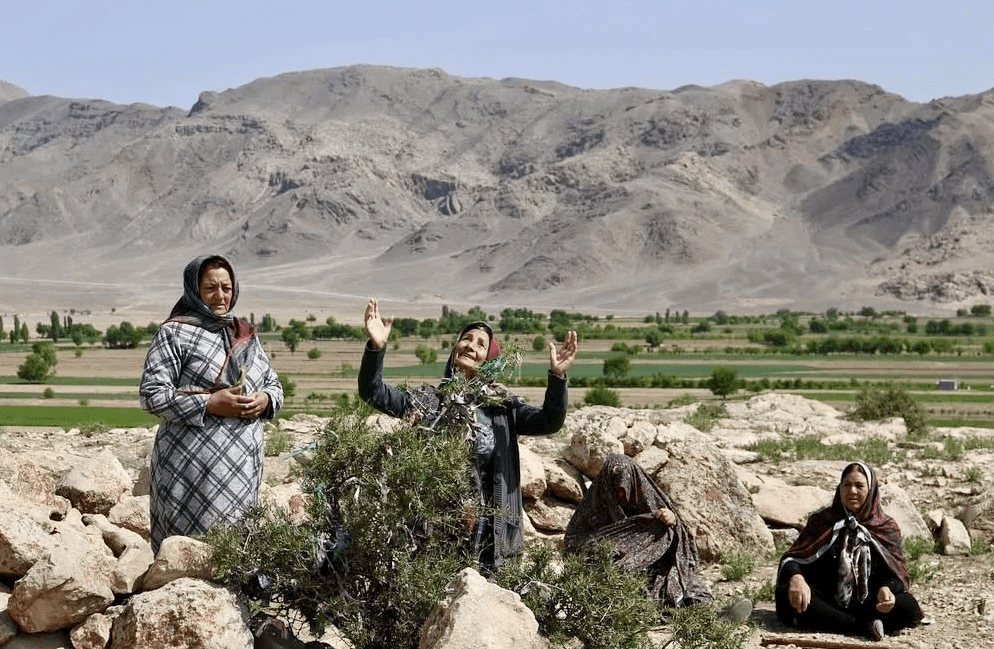
One of the last films I managed to catch at the festival was Hakishka, directed by Narges Judaki and Iman Paknahad and presented in the Asian Currents program. The documentary follows an annual traditional dance event held in Khoy County, a region in western Iran near the borders with Turkey and Armenia. The dance is performed by the Muslim women of Pir Kandi village, who organize a kind of picnic at the valley of Nana Hill. Men are not allowed—only women and their children climb the hill to dance.
The earthy colors of the land, the houses, and the women’s clothing are beautifully rendered through simple, often still, yet striking cinematography. These images—especially those of the barren landscape—convey a powerful sense of place. The film also captures the joyful vitality of the women as they gather, talk, and prepare for the songs and dances. The filmmaking, however, loses some of its strength in the final part of the documentary, when the camera follows the women during the dance itself.
 Asian Docs
2 thoughts on “YIDFF 2025 – report 4: Appalachian Lenses, Hakishka”