At the top of all Japanese end-of-the-year best-of lists stands the one compiled annually by Kinema Junpo, the oldest film magazine in the archipelago, founded in 1919. In addition to rankings for Japanese and non-Japanese films, actresses, actors, new performers, and more, the magazine also includes a list dedicated to bunka eiga, one of the terms used since the very beginnings of cinema in Japan to designate a certain mode of non-fiction. The works selected for this list typically reflect a conception of documentary cinema that privileges social themes over the formal aspects of filmmaking.
I have seen, and in some cases written about, some of them, so in some cases I will add some comments to the synopsis (the English titles are either the official ones or my translations of the original).
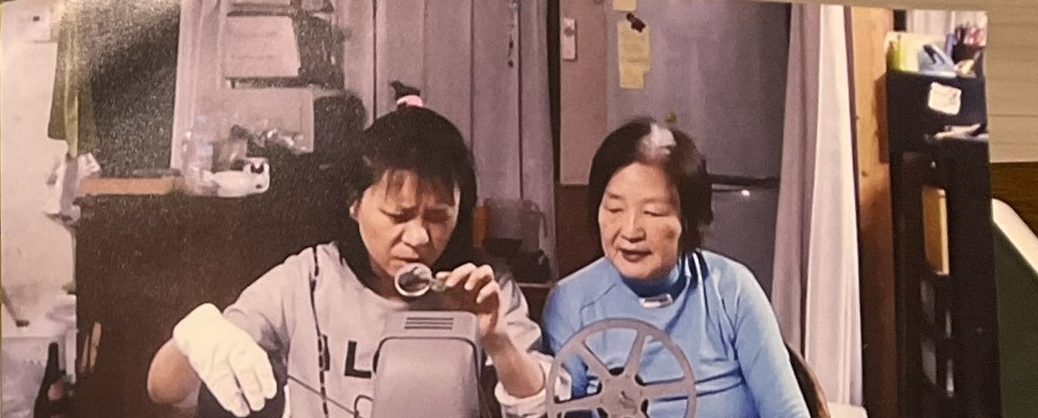
1) The Voices of the Silenced (Park Soo-nam, Park Maeui) is a compelling example of how old—and at times previously unused—footage can be woven together to create counter-archival projects. Sixteen-millimeter material shot by filmmaker and activist Park Soo-nam over nearly half a century is reworked and recontextualized with the assistance of her daughter, Park Maeui, as Soo-nam, now almost blind, revisits her own images. This touching homage to a courageous woman is also a powerful work that exposes the systematic suppression of minorities in Japan—particularly the Korean minority—throughout the twentieth century. The documentary appeared on my best-of list last year and was screened in Berlin two years ago, as well as in Yamagata last October.
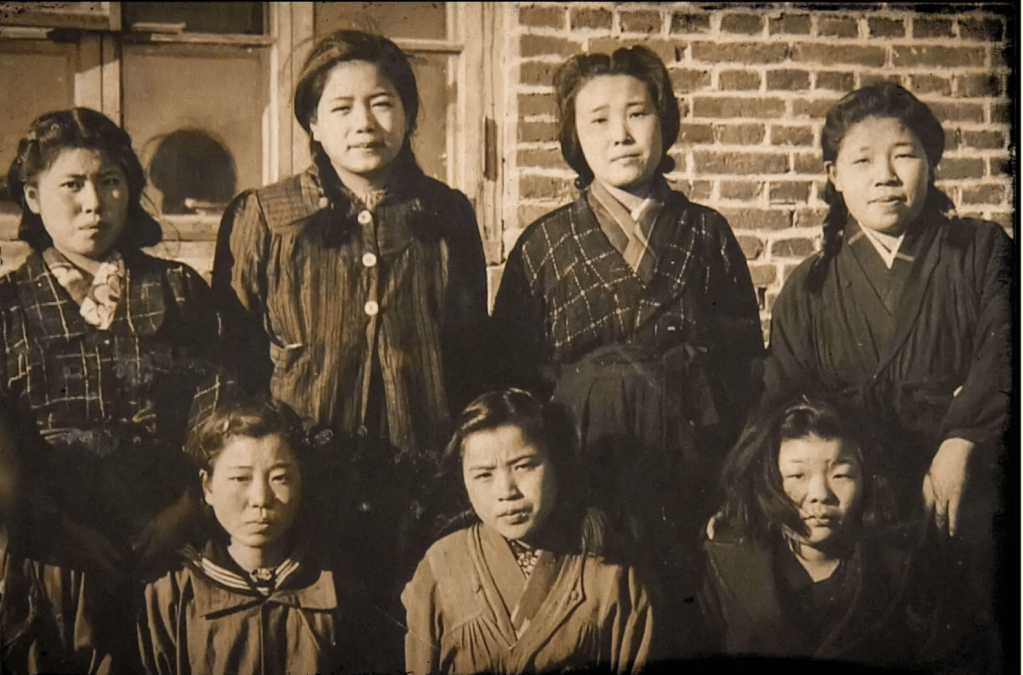
2) In Their Own Words: The Women of Kurokawa 黒川の女たち (Matsubara Fumie) is a documentary that exposes the sexual violence inflicted on women from the Kurokawa settler group during Japan’s imperial expansion in Manchuria. Under state-led colonization in the 1930s and 1940s, settlers from various rural areas of Japan were sent to occupy Chinese land; in this case, a group originating from Kurokawa village in Gifu Prefecture. In August 1945, facing the Soviet invasion, the villagers offered fifteen women to enemy troops in a desperate attempt at survival.
While the film could have benefited from tighter editing—certain sections, such as the final part involving young students, feel overextended—it remains an intensely powerful viewing experience. This is especially true when the documentary turns its attention to the relationships among the surviving women. The scene in which Satō Harue, in her final moments, is comforted by Yasue Yoshie, who gently strokes her hair, is not only profoundly moving but also suggests how the women’s traumatic experiences ultimately exceed what can be conveyed through words or images.
3) Though I’m His Daughter それでも私は (Nagatsuka Yō) is a documentary that follows the life of Matsumoto Rika, Asahara Shōkō’s third daughter, over a six-year period, and investigates the reasons behind her decision to make her identity public. I have written about the film for this site, you can read it here.
4) Journey into Satō Tadao 佐藤忠男、映画の旅 (Terasaki Mizuho) Satō Tadao is a giant of film criticism with over 150 published works to his name. In the 1980s, he made it his life’s work to explore films across Asian countries with his beloved wife. Satō’s favorite film in the world is Kummatty (1979) by G. Aravindan from the Indian state of Kerala. The director, who had been Satō’s student at film school, embarks on a journey to seek out Satō ‘s treasures, visiting filmmakers in Korea, Japan, and Kerala, including South Korea’s Im Kwon-taek. (Synopsis from TIFF)
5) The Baren and the Small Knife: Ukiyo-e Stories Connecting the Ages バレンと小刀時代をつなぐ浮世絵物語 (Matsumoto Takako) follows the work of artisans at the Adachi Institute of Woodblock Prints, who continue Edo-period ukiyo-e techniques while undertaking a project to translate works by contemporary artists into woodblock prints.
6) Shaking Justice 揺さぶられる正義 (Ueda Daisuke) In the 2010s, a series of cases saw parents arrested and indicted on suspicion of Shaken Baby Syndrome (SBS), a diagnosis associated with violent shaking that can result in severe brain damage in infants. Amid intense media coverage, doctors—driven by a sense of mission to protect young lives—identified SBS in these cases, while criminal defense lawyers and legal researchers launched the “SBS Investigation Project” in response. Working closely with defendants and their families, who maintained their innocence, the project’s members conducted thorough investigations into alternative explanations, including accidents or underlying illnesses.
7) Medical Ethics and War 医の倫理と戦争 (Yamamoto Sōsuke) is a work that examines the darker history of medical professionals’ complicity in wartime atrocities. According to the official synopsis, the documentary argues that many of the structural and ethical issues confronting modern Japanese medicine are rooted in the concealment of war crimes committed by medical personnel during World War II. Physicians who served in Unit 731 under the leadership of Ishii Shirō transformed knowledge obtained through human experimentation into professional capital, allowing them to rise to prominence in Japan’s postwar medical establishment.
8) Barefoot Gen Is Still Angry はだしのゲンはまだ怒っている (Komiyama Masanori) focuses on the landmark anti-war manga Barefoot Gen, created by Nakazawa Keiji beginning in 1973 and based on his firsthand experience of the atomic bombing of Hiroshima.
9) Guardians of the Harvest 鹿の国 (Hiro Rikō), one of my favourite films of last year—not only among documentaries—explores the traces of ancient (and still-living) belief systems in the Suwa Basin from multiple perspectives: folklore, religious practice, mythology, and the natural world. At the center of this spiraling universe of practices and signs stands the symbolic figure of the deer, both an object of worship and an integral presence within sacrificial rites.
10) Hippocrates’ Blind Spotヒポクラテスの盲 (Ōnishi Hayato) is, according the the official synopsis, about the potential aftereffects of the COVID-19 vaccine (mRNA gene formulation), developed using fundamentally different technology from conventional vaccines, and that Japan has consistently recommended up to a seventh booster dose without interruption.
Noto Democracy 能登デモクラシ (Iokibe Yukio) is a documentary set in Anamizu Town, Ishikawa Prefecture, a community of fewer than 7,000 inhabitants facing long-term population decline. The earthquake that struck the area in 2024 exposes the extent of political favoritism and corruption embedded in the town’s local governance.
 Asian Docs
One thought on “Kinema Junpo best 10 bunka eiga (documentaries) of 2025”