Wrapping up November with some of the most interesting non-fiction works (made in , or about, the Far East) I’ve watched in the past months.
私たち生まれた島 Okinawa 2018 (Todori Shin’ya, 2020) is an informative documentary about how the new generations of Okinawans deal and cope with the American military bases in the islands. Filmed in the last few years, the film covers the protests againsst the relocation of one of the biggest American bases in Henoko, the election of a female representative (for the communist party) in a small town, and the election of governor Denny Tamaki in 2018. A mix of video journalism and grassroots activism caught on video, the documentary offers an interesting insight of a complex and layered situation.

Sooner or later I will have to write something longer about the documentaries directed by Yoshida Kijū, one of the towering figures in post war Japanese cinema. For today let me just share a few random thoughts about two of his best non-fiction films I’ve recently rewatched.
With The Cinema of Ozu according to Kijū Yoshida 吉田喜重が語る小津安二郎の映画世界 (1994) the Japanese director adds images to his reflections on Ozu written in his beautiful Ozu’s Anti-Cinema. If you have already read the volume, it’s nothing particularly new, but it is a delight nonetheless. I watched the short version, but apparently there also a longer version out there.
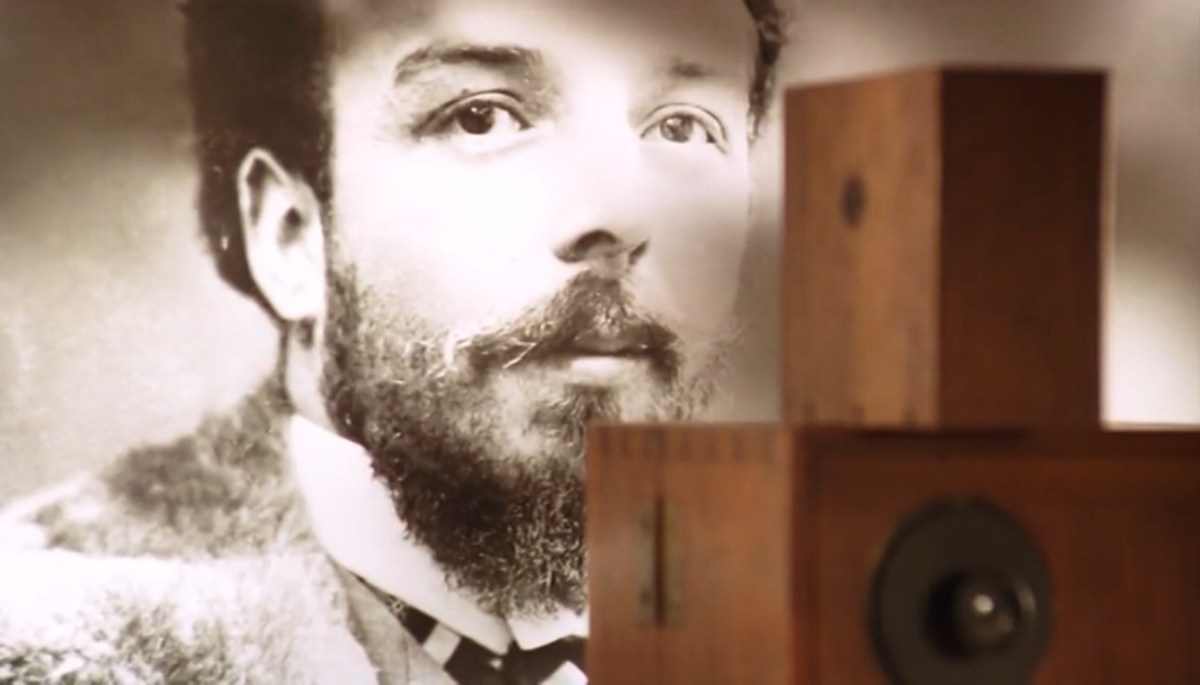
While both were made in the same period and share a certain style and approach ーYoshida providing the narration, and the preoccupation with cinema and the act of representing through images as a theoretical structureー Dreams of Tokyo, Dreams of Cinema 夢のシネマ 東京の夢 (1995) is by far my favourite of the two. By telling the story of the early travels of Gabriel Veyre, the Lumière Brothers’ cameraman, in Mexico, Japan and Morocco, Yoshida reflects on the advent of this new technology and the changes and cultural shifts that were caused by the cinematograph and everything that came with it. This relatively short documentary (50’) is a fascinating example of how effective and poetic essay cinema can be when used at its best. Yoshida, using Veyre’s gaze, exposes the power and dangers that the birth of cinema brought with it since its very beginning, forseeing also the prominence that visual representation would reach in the world to come.
One of the most significative passage is, in this sense, one where we see a group of indigenous people in Mexico filmed by Veyre, a group that is definitely not glad to pose for the camera. At a certain point a white person violently grabs the head of a woman and forces her to see and face the camera to get a “better” shot. At this point the footage ends. According to Yoshida probably Veyre sensed that something was not right and decided to interrupt the shooting. Quoting Yoshida “Most people enthusiastically perceived the moving images of the cinematograph as reality itself and so the representation ended up taking precedence over the reality of the world, but Veyre for some unknown reason adopting an opposing standpoint, saw the future of the cinema from a different angle.”
Here the scene:
 Asian Docs