I’d been meaning to write something about 鹿の国 Guardians of the Harvest for months, but the documentary’s sheer scope, my fascination with the themes it explores (which led me, among other things, to discover the work of artist Ōkojima Maki) and, not least, the complexity of its construction kept getting in the way. In the end, its inclusion in this year’s Nippon Connection lineup, along with my collaboration with Sonatine covering the festival, gave me the excuse I needed to finally gather my thoughts into a review. I had originally planned to write a much longer essay instead….maybe another day….(This is a slightly different version of the review posted on Sonatine).
_______________________________________________
“Ancient beliefs in Suwa are said to have centered around Mishaguji, the spirit of natural forces, or the power of nature that presides over the cycle of life and death. This was neither monotheism nor polytheistic animism, in the sense of folk traditions that revere a range of minor or localized “gods”. The formless and omnipresent Mishaguji spirit could be summoned by a shaman and could come to possess a piece of land, a tall tree, a large rock, or any other natural object (…) Although the ancient shamanistic Mishaguji cult lost its dominant position, its practices ‘snuck back’, as it were, into the rituals of the Suwa Shrine in Shinto disguise. The original spiritualism of Suwa had nothing to do with later Japanese Shintoism, and was in fact more similar to the shamanism that had existed for millennia in many parts of Asia.”
Matsuzawa Yutaka and the Spirit of Suwa, Shimada Yoshiko
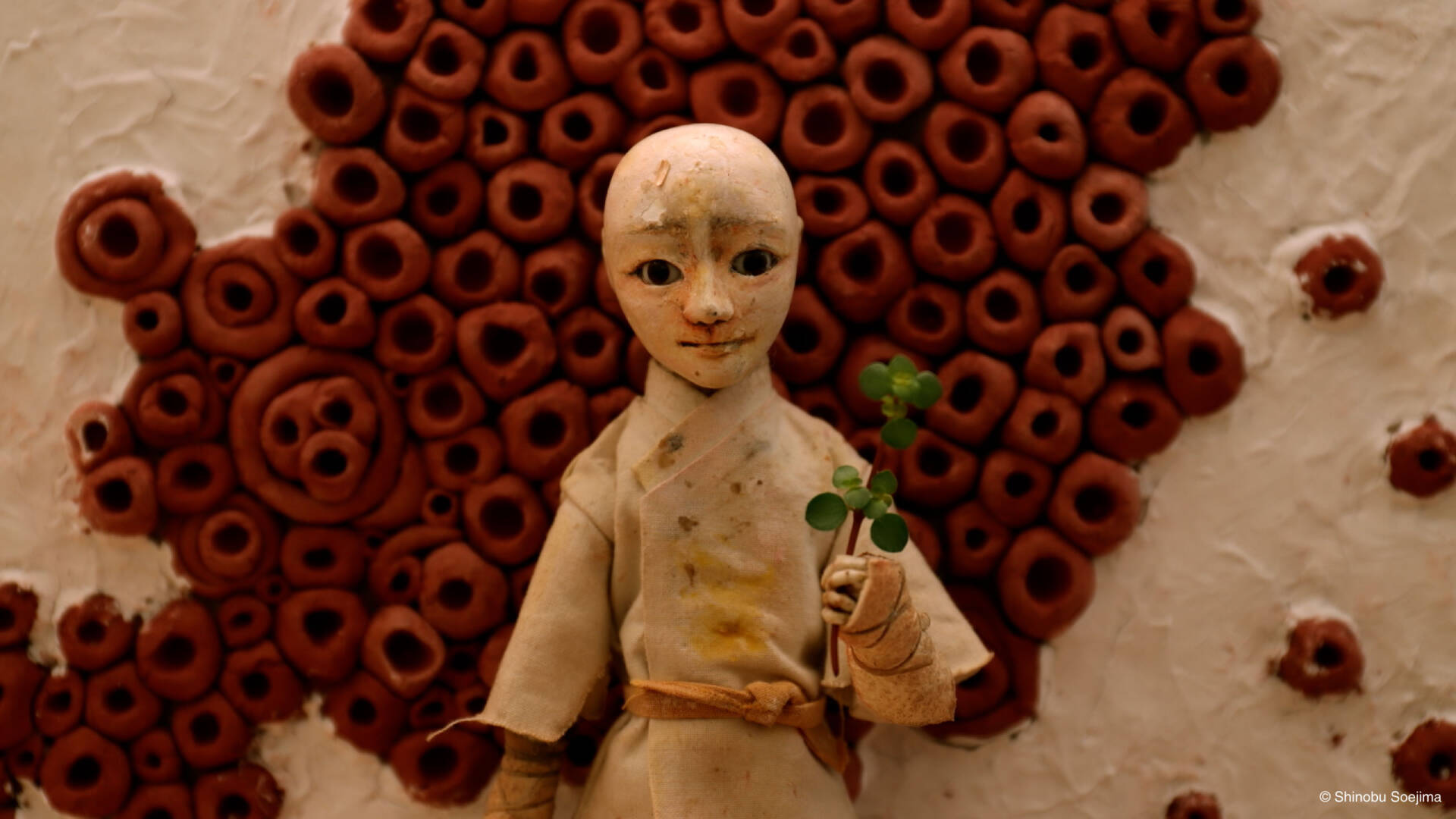
During the three winter months of the Ōmuro Shinto ritual, the divine spirit Mishaguji is invoked into a young boy, who becomes the living deity known as the Ōhōri. He is then secluded within a semi-underground sanctuary called the Ōmuro, where numerous ritual performances are conducted before him throughout the winter. With the arrival of spring, the cycle culminates in the Ontōsai festival, during which seventy-five deer heads are offered to the Ōhōri in a ceremony symbolizing the renewal of life and the bond between humans, the divine, and the natural world.
Situated at the intersection of the Itoigawa-Shizuoka Tectonic Line and the Central Tectonic Line, the Suwa basin occupies the geological heart of the Japanese archipelago. These fault lines are not merely geological fractures but channels through which myths, beliefs, and human movement have flowed for millennia. Parallel to the overlapping of religious practices, the documentary merges a visual anthropologic approach (producer Kitamura Minao would call it visual folklore) with a poetic one, reenactments, and with more experimental bits that make it one of the more unique non-fiction works coming out of the archipelago in recent years.
“Mishaguji, Misaguji, Misakuchi, Saguji, Sagu, Sago…” Over slow-motion images of a snow-covered forest, where deer silently leap through the trees, these words open Guardians of the Harvest, though I much prefer its Japanese title, Shika no kuni (The Land of Deer). Its central concerns are multiple and ultimately ineffable, much like the many names given to the spirits or deities that have inhabited this land throughout history. These names may refer to the same elusive presence, or perhaps they instead evoke the fluid, ever-changing power of the rituals, folk practices, and mythologies that have shaped the region across centuries.
The region is the Suwa Basin, in the Shinshū region—present-day Nagano Prefecture—and takes as its point of departure the unique religious culture surrounding Suwa Taisha, one of Japan’s oldest shrines. The shrine’s rituals and traditions preserve traces of belief systems that long predate institutional Shinto, offering a rare glimpse into layers of religious practice that have endured through centuries of transformation. Here, the ancient worship of the enigmatic Mishaguji (Misakuchi, Saguji, Sagu…) spirits intertwines with medieval Buddhist doctrines, hunting customs, and agricultural rites, forming a singular spiritual and material landscape in which disparate traditions continue to coexist and reshape one another.
Hiro, a filmmaker who lived and did field research in Nepal and in the Himalayas, together with producer Kitamura Minao—one of Japan’s foremost documentary filmmakers, still largely undiscovered outside the country, and someone who has studied the Suwa region for decades—structures the film around the changing seasons and the rituals associated with each stage of the year. Winter gradually gives way to spring, ceremonies unfold in step with the rhythms of the natural world, and the reconstruction of the medieval Ōmuro (great chamber) Shinto rite becomes less an exercise in historical reenactment than an attempt to recover a forgotten way of understanding life itself. The living deity embodied in a child and known as the Ōhōri, secluded for months within a semi-subterranean sanctuary; the ritual consumption of venison; performances offered to the gods; and, ultimately, the sacrifice of seventy-five deer heads all point toward a conception of existence in which human beings remain inseparable from the cycles that sustain them.
The reenactment of the Ōhōri ritual, performed by local residents, occupies a substantial portion of the documentary, which constantly shifts between these reconstructed ceremonies, breathtaking images of the Suwa Basin and Lake Suwa (at times drone photography is perhaps overused), scenes of rice planting and harvesting, and footage of communal gatherings and seasonal rites. A female narrator guides the film throughout, while the reconstructed Ōhōri sequences introduce a male voice whose less restrained, almost joyous delivery occasionally recalls that of a traditional town crier.
It is within these reenacted passages that one of the documentary’s few less convincing elements appears: the rather incongruous use of CGI to depict serpentine spirits. More problematic, at least for some viewers, are the graphic scenes of deer killing. Yet these moments are inseparable from the spiritual terrain the film seeks to investigate, even if they occasionally verge on, or can be percieved as, romanticizing an ancient way of life. Fortunately, Guardian of the Harvest never settles into a glorification of a mythical past, but it takes more the shape of a rigorous study. Moreover, its mosaic-like structure allows meanings to remain layered, ambiguous, and at times opaque, resisting any simplistic reading of the practices it depicts.
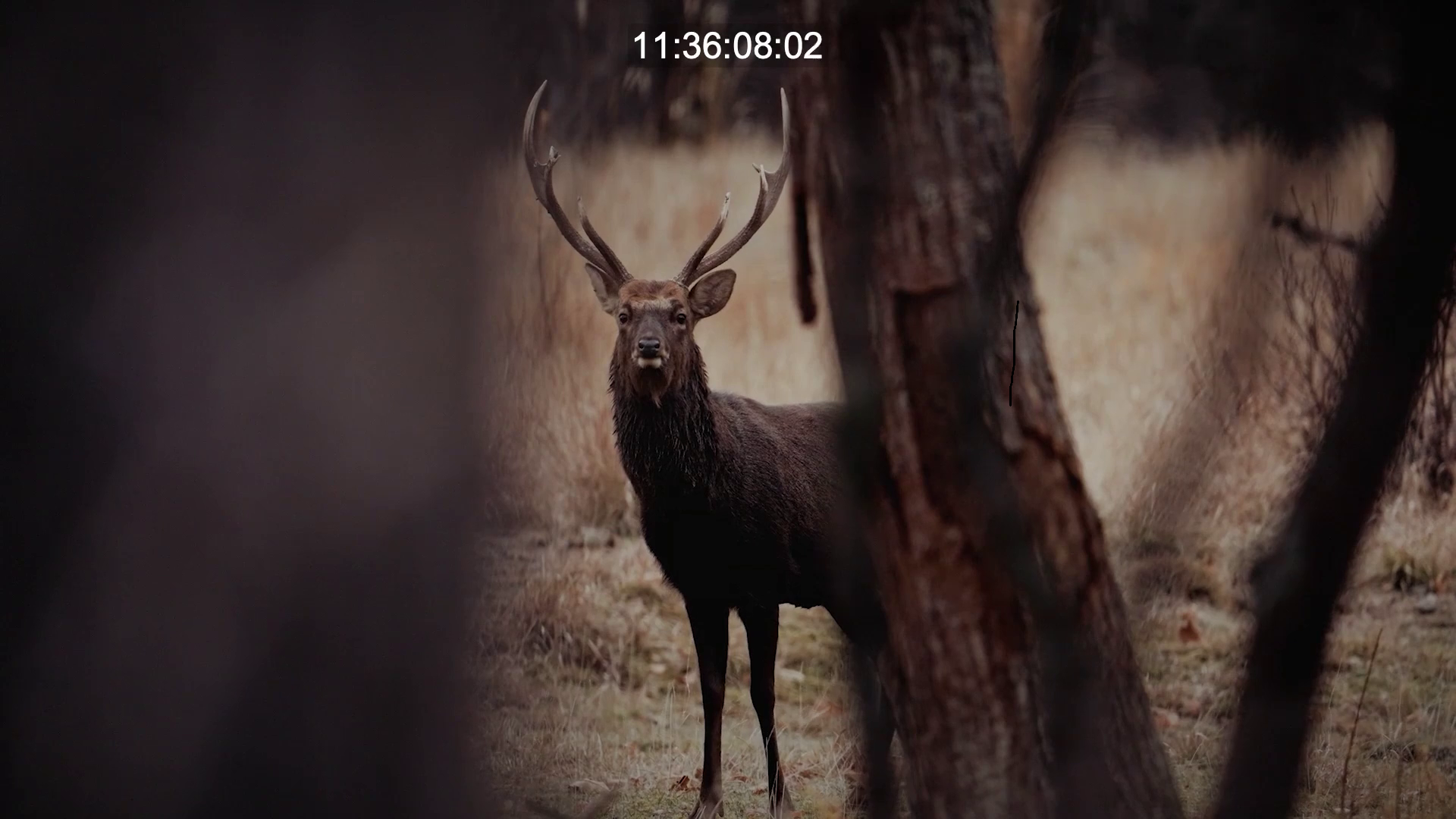
Ultimately, it is the overwhelming power of the imagery—above all the recurring, almost symbolic figure of the deer, around which the entire film seems to orbit, hence the Japanese title—together with Hara Marihiko’s evocative score, which moves effortlessly between electronic textures, chamber music, and solo piano, that elevates the documentary into something far more than an ethnographic record. It becomes an immersive meditation on ritual, memory, and humanity’s place within the non-human world.
The documentary has enjoyed a remarkable run in Japan’s mini-theater circuit, where strong word of mouth has repeatedly filled small cinemas and led to encore screenings nearly a year after its initial release, January 2025. As a companion project, the production company behind the film, Visual Folklore, together with director Hiro Riko, also released Suwa, a short film exploring the basin’s rituals and traditions from a woman’s perspective, with text by actor Konoe Hana. It is available to watch online.
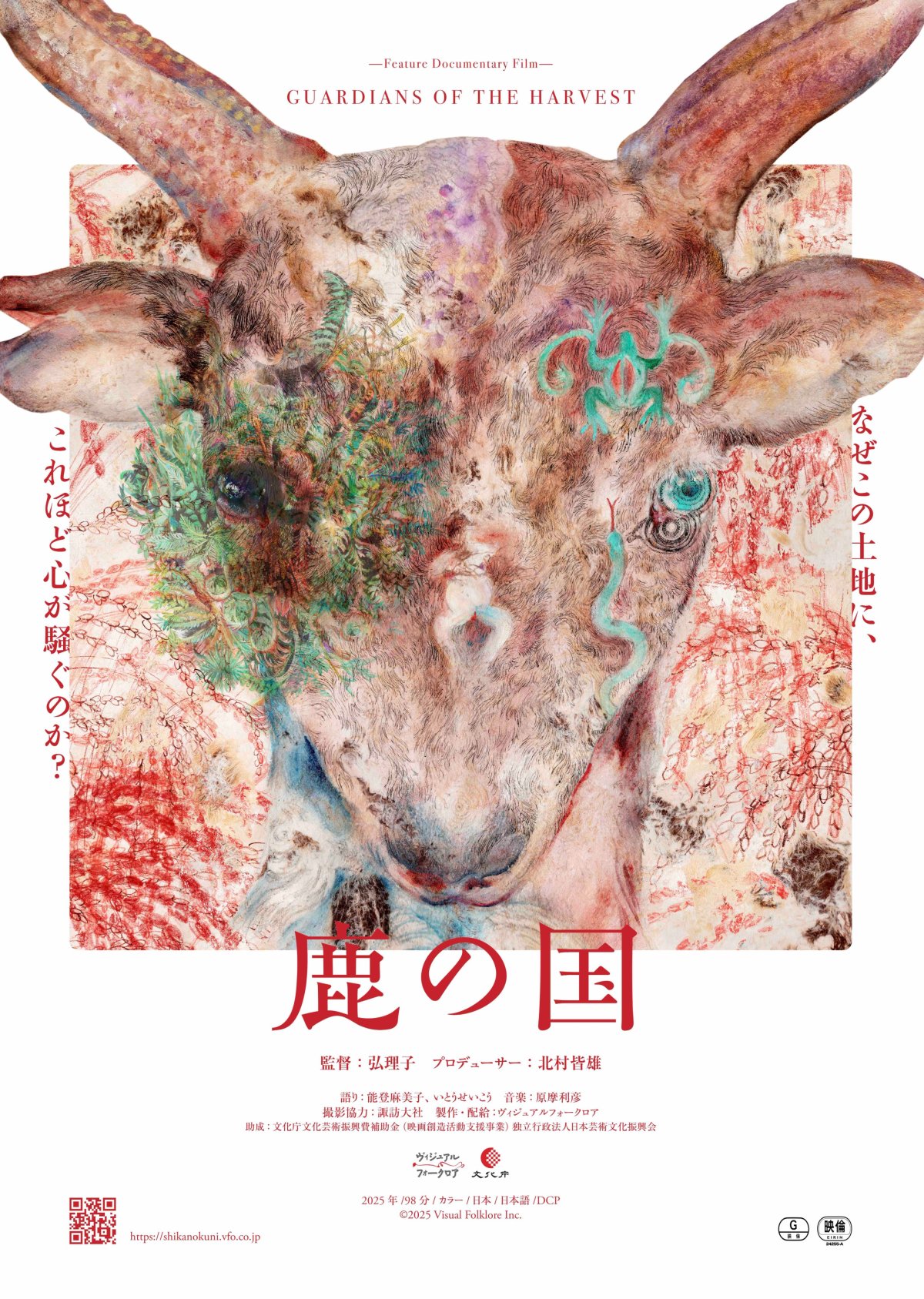
One final word should be reserved for the documentary’s beautiful poster. Its artwork was created by the artist unit Ohkojima Maki, who undertook extensive research into the Suwa region and its cosmology before producing the image. Their work offers a fascinating visual interpretation of the beliefs and myths explored in the film, and some of the reflections developed in this review were inspired by their own writings and artistic research on the subject.








You must be logged in to post a comment.