Wrapping up March and the first 3 months of 2021 with some of the most interesting non-fiction works I’ve watched this year so far.
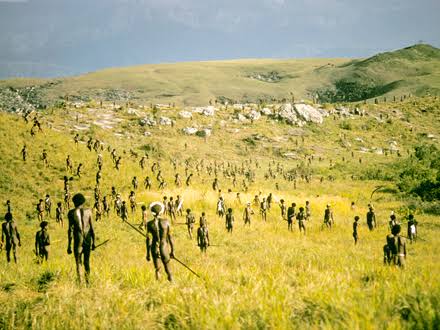
Dead Birds (Robert Gardner, 1963)
I discovered the existence of the movie through Expedition Content, thus I watched it and experienced it knowing what was behind it, colonial gaze and everything else that comes when a movie is constructed to fit a certain, problematic to say the least, view of the world.
That being said, some of the images used are so powerfulーI’m here referring especially to the long shots of the battles between the two tribes, or the children washing the intestine of a pig in a river ーthat they escape the film own narration and the conceptual framing of the work. The movie is available here.
The First Emperor (Hara Masato, 197?)
From IFFR:
In 1971, Hara Masato and a group or actors started shooting his 16mm film, The First Emperor, based on an old Japanese book about history and myths that is known as the Kojiki (‘Record of Ancient Matters’). He did not finish the film. A year later, he started filming again with a small Super8 camera, all on his own, now intending to make some shots of the locations he had not previously been able to film. On the way, he reconsidered his ideas and realised that the myths could not be found anywhere outside and were not filmable in a material sense, but that they were located in cinema itself or in the making of cinema. He decided that recording his hunt for locations was the best way to finish The First Emperor, in which the Japanese myths could also serve as material. The smallest universe known as cinema corresponds with the universe of telling myths about Creation. This is a travelogue by the film maker himself and a film about film, while it is also a myth about film.
There are many iterations of this “movie”, the work completed by Hara in 1973 was 7 hour long, and there are later versions of 4 and 2 hours. A decade or so ago, I saw a 7 hour version (not sure if it was the first version), with live accompaniment by Hara himself, few years ago the 4 hour long, and last month the restored 2 hour edit (two-screen version).
The latter is for me the best, a lysergic trip into the fabric of filmmaking and memories, and film as memory.
Hara and his works is something that should be explored more—not only in connection with the so called Japanese new wave, he co-wrote Ōshima’s The Man Who Left His Will on Film, and the concept of fûkeiron (landscape theory) in film, to which this movie certainly belongs —but also as a unique filmmaker who works “outside” of cinema as traditionally conceived, in a liminal space formed between personal cinema and amateur filmmaking.

Japanese science and PR films are a well of discoveries, particularly those produced in the late 1950s and 1960s, when many directors who later would have become big names, started their career working in this genre. In the last past months I’ve had the chance to watch a couple of shorts directed by Noda Shinkichi, a director, poet, theorist and producer who was affiliated and collaborated with, among others, Matsumoto Toshio, and who was a central figure in the development of documentary in Japan.
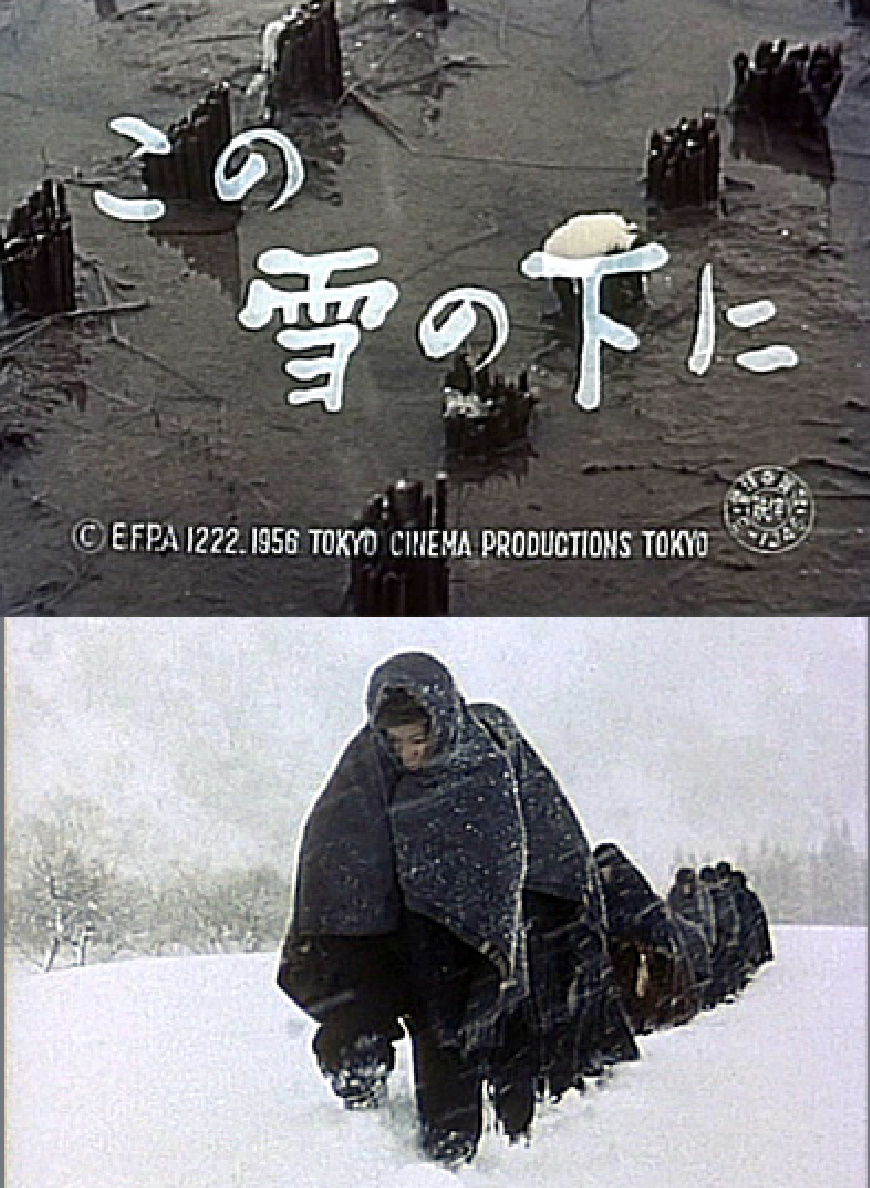
Country Life Under Snow この雪の下に (1956) is a fascinating depiction of the harsh life in a rural area in Yamagata prefecture, while Transporting the Olympics オリンピックを運ぶ (1964) is a documentary about the logistics and the behind the scene of the 1964 Olympics. How things (boats, yachts, traffic cones, film reels, etc.) and animals (horses, pigeons) were transported from and to Tokyo. Directed by Matsumoto and Noda, the film was part of the official coverage of the event, but the two crafted an interested filmic object nonetheless (the classic music used, for instance, reminded me of the Japanese new wave). The work tells us that without the people working behind the scene, such a big scale events would not be possible.
 Asian Docs