
The 2021 edition of the Yamagata International Documentary Film Festival has ended last Thursday. Like many other events in the past two years, the festival took place exclusively online, this is the second and final dispatch, you can read the first one here.
This is the list of the movies awarded:
The Robert and Frances Flaherty Prize (The Grand Prize): Inside the Red Brick Wall
The Mayor’s Prize: Camagroga
Awards of Excellence: City Hall , Night Shot
Ogawa Shinsuke Prize: Little Palestine, Diary of a Siege
Awards of Excellence: Three Songs for Benazir, Makeup Artist
Special Mention: Broken,
Citizens’ Prizes: Writing With Fire
(Synopses are from the official homepage of the festival)
Wuhan, I Am Here (2021, Lan Bo) A film crew that had traveled to Wuhan to make a fiction film is confronted with the sudden lockdown of the city and decides to go film in the streets. They race through the city, joining forces with volunteers who are offering free resources collected through the internet to the elderly and the homeless. The director and his troupe were able to capture on camera the chaos, tensions, fears and pain experienced by the citizens of Wuhan during the first lockdown of the city, in the first months of 2020. A woman crying on a sidewalk because her husband, at home with cancer, cannot be hospitalised due the Covid situation. A group of volunteers distributing food to the various communities of elderly, but often halted and contested because of bureaucracy and the lack of passes. People denied their right to visit relatives in hospital…the documentary is about stories of struggle and grief, death is very present in the film, stories we all became accustomed to witness in the last two years. This is a documentary whose appeal and point of interest will probably increase with the passing of time, when one day, hopefully, we will look back at the pandemic days and reflect on this huge historical juncture.
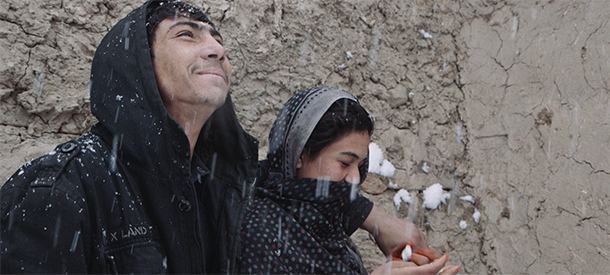
Three Songs for Benazir (2021, Gulistan Mirzaei, Elizabeth Mirzaei) In a camp for displaced persons in Kabul, a young man sings for his beloved wife Benazir as if the whole world was theirs alone. We see him next four years later, facing the consequences of the path he was forced to choose in providing for his family, after his struggle to find work. In just twenty two minutes the film says more about contemporary Afghanistan than a dozen newspaper articles about the subject.
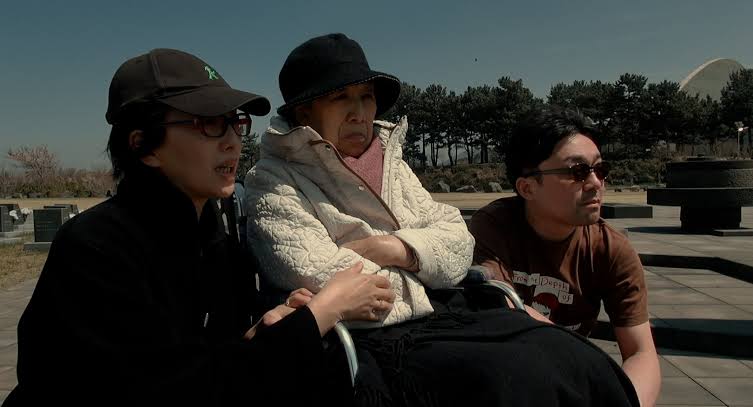
Soup and Ideology (2021, Yang Yonghi) Yang Yonghi is a zainichi director born and rised in Osaka. When her father passed away in 2009, of her family, only her mother and herself were left in Japan. The director who now lives in Tokyo, is worried about her aged mother living alone, so she visits her home in Osaka every month. One day, the mother suddenly tells her that she had experienced the Jeju uprising as a young woman. Her memories of the tragic event, buried deep in her heart, resurfaced and came back to life. She begins to talk specifically about how she got involved in the Jeju uprising. With her latest documentary Yang Yonghi continues her exploration of her family history and the history of the two countries she is connected with, Japan and North Korea. The movie opens in 2018, with her mother lying on a bed remembering the killings and the dead bodies piled along the roads, as she was escaping from Jeju island in 1948. Soup and Ideology is a very touching viewing experience, and on many different levels. The movie presents not only the painful memories of the Jeju massacre (April 3rd 1948) as remembered by the director’s mother, and the destruction of her family, her three brothers were sent from Japan to North Korea at a young age, but also an emotional portrait of her frail and old mother, as a Korean who grew up in Japan worshipping North Korea. As the film progresses she is diagnosed with senile dementia, and little by little she loses her memories, including those of the massacre she witnessed, only 18, in the small Korean island. The movie is also partly an act of self-reflection by Yang Yonghi herself, if in the first part she is the one filming her mother, in the second, when her mother condition worsens, she enters the frame, so to speak. We can clearly see her emotions, especially when she visits the island, with mother and husband, for the anniversary of the massacre. There Yang Yonghi understands that her mother’s affiliation/attraction for North Korea, something the director had never completely forgiven her and her father for, was also partly caused by the atrocities committed by the ROK her mother saw with her own eyes. It would have been a better movie for me, had not been for the five or so minutes of animation used to explain her mother story and the historical situation in Jeju in 1948. I found the segment unnatural and it really took me out of the movie. The soup of the title is a dish that her mother usually prepares, and that is later cooked by Yang Yonghi’s Japanese husband, we see the first meeting between her mother and him in one of the first scenes of the movie, as a way of entering or belonging to her wife’s family, the director parents had always wanted her to married exclusively a North Korean national. Soup and Ideology is important piece of documentary and was one of the highlights of the festival for me.
Other documentaries I’ve watched: The Buddha Mummies of North Japan (2017, Watanabe Satoshi), about the practice of sokushinbutsu or self-mummification through which some mountain monks, usually related to Shugendō, are believed to have attained satori. The World’s “Top” Theater (2017, Satō Kōichi), a fascinating trip into post-war film culture in Yamagata, the film focuses on the Green Room, a cinema in Sakata City that was completely destroyed in a fire in 1976. Before the Dying of the Light (2020, Ali Essafi); Dorm (2021, So Yo-hen), partly documentary and partly performance/reenactment, female Vietnamese laborers arrive at a dormitory in Taiwan. Creative and surprising the finale.
Some final thoughts. After going to Yamagata for almost a decade, it was a very singular experience to join the festival online—the system adopted, with movies available only in Japan and at certain time, like in the in-presence edition, raised more than a doubt (I had a press pass, but I will write more on this in the following weeks). Of course I missed the people, the discussions, the city itself, experiencing the movies on a big screen, the food and the drinks, however, the festival turned out to be a satisfying experience. Of the works I watched, a couple were outstanding, but each one was interesting in its own way. Yamagata is, among other things, a nice occasion to reflect on what happened in the documentary world in the past two years, with a particular focus on Asia: new trends and new voices, but also how the cinema of the real captured, mirrored, and represented the events that took place around the globe. See you in two years Yamagata!
 Asian Docs