
Yesterday I had the chance to attend one of the programs of this year Image Forum Festival, in Nagoya. Every year the event is held first in Tokyo, and later in the year, in a scale-down format, in other cities in Japan: Yokohama, Kyoto, and Nagoya.
In the past decade I went to the festival in Tokyo a couple of times, once in Kyoto if I remember correctly, and recently just in Nagoya, since it’s for me, a closer location. The event is dedicated mainly to experimental cinema and video, produced all over the world, with a particular attention of what is going on in Japan and Asia. The festival has been for me a source of wonderful discoveries, here I wrote about the 2018’s edition, here about Stop-Motion Slow-Motion, and here about Heliography by Yamazaki Hiroshi. Unfortunately this year I could just see a tiny fraction of what I planned and wanted to, just four works of the East Asian Experimental Film Competition.
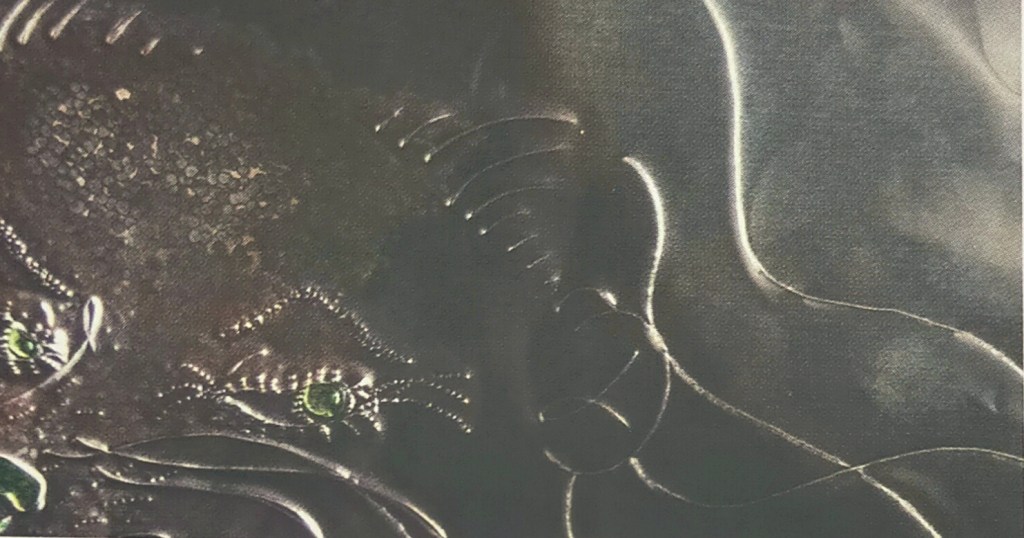
Silver Cave (2022) by Cai Caibei is an interesting piece that plays with surfaces, and the flat metallic substance that animates and “moves” for most of the work. For its focus on abstractions, rhythm, and its quasi meta-filmic quality, it reminded me of the works of some pioneer animators of the beginning of last century, such as Walter Ruttmann. Silver Cave won the Award for Excellence at the festival.

Filmmaker and artist Bi Gan’s latest work, A Short Story (2022) tells about a black cat that embarks on a bizarre journey to meet three curious characters. Presented in the short competition at Cannes last spring, the work is populated with dream-like images, visual inventiveness, and poetry, but I could not really connect with it.

I was really looking forward to checking ユーモレスク Humoresque (2022) by Isobe Shinya, who in 2020 made 13, one of my favourite films of that year. I had already read that this work was something very different from what he had done before, Humoresque is 46 minutes long and was shot digitally, so I was somehow prepared. As the description in the official catalog reports the work is
an abrupt turn from “13”, this film employs the technique of home movies to tell the story of the lives of a mother and child across four seasons. Day after day, water drawn from a lake is filtered and bartered for food. One day, a man visits with a portable gramophone. The song it plays is Dvorak’s “Humoresque.” What does he think about this music?
and according to Isobe
I created a fictional world by converting and extending home movie shooting as a filmmaking technique. Many of the scenes in the film were inspired by their real-life counterparts. The small story in front of us, the big story far away, and the story that is no longer here. This film is an attempt to assimilate them in fiction and reality.
Some images are really mesmerising, the way sound is used is remarkable, and while very different from the time-lapse experiments Isobe is known for, Humoresque is still a movie about time, the thickness of it, and the passage of it. That being said, I definitely need to watch it again to give it a proper assessment. Humoresque was awarded the Grand Prize at the festival.
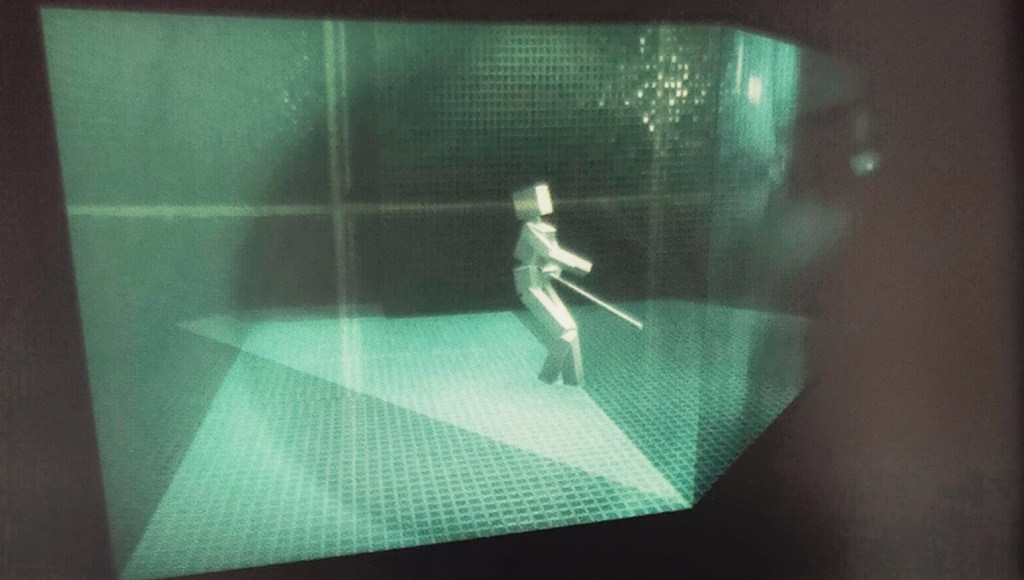
The Cleaning Lady After 100 Years: Spectre (Shichiri Kei, 2022) is a reimagining of the filmmaker’s own multimedia stage drama The Cleaning Lady, where the ghost of her mother appears to an old woman. This was probably the most powerful work among the four I saw, in a completely digitised world the human presence is not even a memory, even the words uttered are just part of the cacophonous soundscape presented in the film. No straightforward meanings emerge from the work, but images and sounds slowly and aggressively point towards and put the viewer through a sensorial and exhilarating experience. The film loses part of this power towards the end when the spoken words try to enunciate philosophical ideas.
Leafing through the catalogue made me realised how many interesting and possibly wonderful works I missed: a retrospective on contemporary Chinese independent cinema, Qingnian Express: New Voices and Visions of Chinese Independent Cinema Today (curated by Tong Shan and Ma Ran), TUNOHAZU, the latest by Tezka Macoto, a retrospective on artist and graphic designer Tanaami Keiichi, and much more.
 Asian Docs