This is an essay that grew out of two articles I wrote for this site last year. I submitted it for publication, but it was rejected. It is perhaps too vague and unfocused. Hopefully I will return to the subject in the future with more to say.
The essay is available in pdf here.
Found Footage Films, Compilation Documentary and Recycled Cinema in Japan: a preliminary study
The practice of making found footage films and compilation documentaries from archival material has been widespread in Europe and the USA for some time, but research into these cinematic practices in Japan often leads to a deafening silence and a dead end. This essay constitutes a preliminary exploration into the development, or absence thereof, of this captivating field in Japan, whilst concurrently highlighting two works produced in the archipelago that can be categorised as archival film practices. The term ‘archival film practices’ is employed here as an umbrella term denoting a constellation formed by found footage documentaries, compilation documentaries, recycle cinema and collage films. The present essay is also intended to stimulate new studies and research on the subject.
In 1947, the French filmmaker Nicole Védrès created Paris 1900, a compilation film comprising footage shot between 1900 and 1914. In 1965, the Italian artists Gianfranco Baruchello and Alberto Grifi experimented with found footage of Hollywood films that were earmarked for destruction in Uncertain Verification; and in 1987, Yervant Gianikian and Angela Ricci Lucchi reworked the colonialist gaze of footage shot in 1925 into something entirely different in From the Pole to the Equator. These are just some of the most significant examples of compilation or found footage cinema from the last century. The practice of recycling cinema, another term that has emerged within this constellation, has seen a surge in production and quality in recent decades. Technological advances and the availability of archival material have played a significant role in this development, but so too has a willingness to explore the meaning of reassembling images from the past and their impact in the present. A diverse group of filmmakers, including Bill Morrison, Haroun Farocki, Jonas Mekas and Sergej Loznitsa, have extensively explored the possibilities and challenged the limits of archival film practices, resulting in insightful and boundary-pushing works.
The question that arises is: what is the history of these film practices in Japan? A review of the relevant literature suggests that there has been a scarcity of such films, particularly within the documentary and experimental realms, despite these modes of filmmaking being frequently associated with these practices in other regions. Given Japan’s extensive, diverse and heterogeneous history of documentary and experimental cinema, this apparent absence is surprising and warrants further investigation.
There are, of course, exceptions to this, which will be discussed in the second part of this essay, and there are several documentaries made in Japan that do indeed make use of archival footage, especially those dealing with and depicting the Pacific War or the social uprisings of the late 1960s. Daishima Haruhiko’s tetralogy of documentaries (2014-2024) on the Sanrizuka struggle and student movements[1], or Boy Soldiers: The Secret War in Okinawa (2018) by Mikami Chie and Ōya Hanayo are notable examples of this approach, combining interviews, reenactments, newly filmed scenes and narration to create a compelling narrative.
However, these films cannot be included in the cinematic practices discussed here in that they utilise archival material to illustrate a point rather than to provoke a sensation or a reflection on the status of the images.
Alberto Brodesco and Maurizio Cau posit that “in general terms, the expression [archival cinema] describes the operation of reuse, recycling and reappropriation of material shot in the past, which is recomposed to produce new film texts” (2023, Introduction), and according to Eric Thouvenel, “Found footage films are far more than the “documentation” of an era; there is always a critical statement behind the images. Because these films are a special form of archeology (to use a cur-rent and fashionable term), their significance is not located at the level of the represented event, but with the events occurring within the representation itself.” (2008, 98) Moreover, Bill Nichols, writing about Jay Leyda and his seminal volume on the subject, points out that “the core idea of the compilation film revolves not only montage and photomontage, but also ostranenie, the basic tenet of Russian formalism as put forward by Victor Shklovsky: ‘the purpose of art is to impart the sensation of things as they are perceived, not as they are known'” (2014, 149). Furthermore, the quantity and duration of the material employed is also a pertinent factor: the more archival images or found footage are utilised, the closer the films approach a concept of recycle cinema that engenders novel meanings for the assembled images, “in such a way as to produce new knowledge about history that evokes a deeper, more sensual and experiential understanding of the past.” (Russell 2018, 65)
The scarcity of such practices in the archipelago can be attributed, in no small part, to the considerable difficulty and expense of obtaining and using footage, or even stills, from films produced by major Japanese companies. While Japanese Copyright Law does allow for a certain degree of reproduction, the absence of a robust discourse on fair use in the country further exacerbates the issue. However, this cannot be the sole reason, as there are alternatives, such as the use of found footage from home movies and amateur cinema, or other non-commercial sources.
In search for words
To illuminate this subject further, a brief reflection on words and the use, or absence thereof, of specific terminologies in Japanese film studies is necessary. It should be noted that the purpose of this discussion is not to advocate for the superiority of any particular language, whether it be English, French, Italian, or any other, over Japanese. Rather, the objective is to provide an overview of a dynamic and constantly evolving field, one that is open to external influences and is, by its very nature, subject to change and development. It should also be noted that I am not advocating for the absolute correspondence and translatability between languages. Instead, I advocate for the expression of specificities inherent to geographical regions (not necessarily countries) and human groups. The existence of different languages, dialects, political conditions, and cultures gives rise to diverse cinematic expressions and approaches to visual communication.
In Japan, this linguistic peculiarity can be traced back to the early days of cinema and persists to this day. The spectrum of non-fiction films in Japanese has been characterised by a range of terms, including kiroku eiga (record film), senden eiga (propaganda film), bunka eiga (cultural film), and finally, dokyumentarii eiga (Nornes 2003, 2). Bunka eiga continues to be utilised by the prestigious film magazine Kinema Junpo to categorise and award non-fiction films. It is interesting for the discussion to note how the term bunka eiga tends to denote a certain type of non-fiction cinema that deals with historical and, above all, social issues without experimenting too much with cinematic language.
While the absence of a terminology does not necessarily correspond to the absence of a certain way of making cinema, it is interesting to note how the scarcity of certain documentary and experimental practices in the archipelago is reflected in the absence of a terminology, and how these two phenomena are related. As I have previously explained, following the English literature on the subject, I have decided to use the terms archival film practices, found footage documentary and compilation documentary to describe the galaxy of films discussed here. This constellation of terms, in conjunction with recycled cinema and collage film, provides a more comprehensive description of the field under analysis: a set of cinematic practices that utilise found footage and archive images to create works that traverse both the non-fiction and experimental realms.
However, the boundaries between what these practices are and what they are not are often nebulous, and the English terms employed in this field are similarly ambiguous, constituting a less than stable foundation for analysis. Nevertheless, these terms can serve as a point of departure. My research into Japanese terminology reveals a paucity of specific terms, or at least a lack of utilisation. For instance, the English term ‘compilation documentary’ appears to be without an equivalent in Japanese. Instead, the term is more likely to be expressed in phrases such as 映像素材を映画に編集した (edited the footage into a film), or or 映像素材をコラージュした作品 (a work made from a collage of footage), and so on. ‘Recycled cinema’ and ‘collage film’ are definitely two terms that point to a practice more akin to experimental filmmaking. While the former seems to have no equivalent in Japanese, the latter, コラージュ映画 (collage film) or 映像コラージュ (video collage), is a term that has been used in the archipelago for decades[2]. This is probably because the term ‘collage’ came to film studies from and through the visual arts and avant-garde movements of the early 20th century, for instance, Braque and Picasso. The term ‘found-footage documentary’ is even more confusing, since in Japan found-footage horror is a very popular subgenre that often overlaps with mockumentary, and a brief search for ファウンドフッテージドキュメンタリー (found footage documentary) on the Internet resulted in a substantial number of horror films and related works. The only occasion on which the term ファウンドフッテージ was used in a non-fiction context was when the articles were translations of discussions in English. However, a different case can be made for アーカイヴァルドキュメンタリー or アーカイヴァル映画 (archival documentary or archival film). This term appears to have gained currency in recent years in connection with the so-called “archival turn”. This is particularly evident in the films of Sergei Loznitsa, a filmmaker whose works have been screened multiple times in Japanese cinemas and are even available on streaming platforms. It is therefore reasonable to hypothesise that the adoption of this term in Japan may have originated with the diffusion of the Ukrainian auteur’s films. To date, I have found no examples of アーカイブヴァルドキュメンタリー being used to describe a film made in Japan. This is, however, only a preliminary investigation and further research is needed to provide a more comprehensive overview of its usage.
Two compilation documentaries made in Japan
Although there are some examples of collage films and recycled cinema projects in Japanese experimental cinema, often short works derived from installations and primarily produced in the 1960s and early 1970s[3], the focus of this segment is on two longer films that can be categorised as compilation documentaries: A “Toy Film” History of Shōwa: The Second Sino-Japanese War, 1931-1945 (Ōta Yoneo, 2021) and Tokyo Trial (Kobayashi Masaki, 1983). These works are notable for their examination of the Japanese wartime period, encompassing the nation’s military expansion and imperialist endeavours. Each of them offers a distinctive perspective, utilising archival footage to illuminate diverse historical events.
A “Toy Film” History of Shōwa: The Second Sino-Japanese War, 1931-1945 stems from Professor Ōta’s extensive involvement with omocha eiga (toy films), their restoration and preservation[4]. The film begins with intertitles providing the viewer with a definition of toy films: fragments of 35mm theatrical prints created for sale and domestic use, typically projected by hand-cranked toy projectors, and ranging in length from 30 seconds to 3 minutes. These include excerpts from documentaries, propaganda films, newsreels, home movies, and digest versions of theatrical feature films. Ōta, who also served as the film’s writer and editor, assembles these fragments, which were sourced from the collection of the Toy Film Museum, to offer a distinctive viewpoint on a calamitous era in Japanese history, 1931 to 1945, interweaving images from animated propaganda films, “the funeral of Emperor Taishō (Yoshihito, reigned 1912-1926), the enthronement of Emperor Shōwa (Hirohito, reigned 1926-1989), military training drills and field exercises, battlefield scenes in China, and home movie footage of the daily life of Manchukuo’s Japanese colonists.” (Bernardi 2023)
The structure of the film is didactic and content-oriented, with maps, historical dates and explanatory intertitles contextualising the moving images which are essentially militaristic if not propagandistic in nature. By chronologically linking and combining these images, the project is thus, as stated through the intertitles in the opening minutes, an attempt to bring to light a different historical truth and a deeper understanding of a crucial period in the history of the Far East. The music that accompanies the film varies from screening to screening, but the two versions I was able to see[5] were both accompanied by live piano music. This choice lends the entire project a certain sense of “silent film rediscovered”, instilling it with a classical tone and drawing attention to the film’s museum origins and the profession of its creator.
It is also noteworthy that the fragments were selected, restored and digitised by Ōta and his collaborators using the material available at the Toy Film Museum. Consequently, the film is composed entirely of images produced from a Japanese perspective, thus offering a single and one-sided point of view, an observation that was raised during the post-screening Q&A at the Lenfest Center in New York in 2023 (Ipek 2023). While acknowledging that images captured by the colonised would have provided a compelling counterpoint, it is important to recognise that one of the objectives of the project is to showcase the Japanese military propaganda apparatus in operation during the era, in all its might and ramifications, and that a counterbalance to the images is already provided by the addition of explanatory intertitles and maps, inclusions that reveal the real goals of the imperialist state.
Moreover, and more importantly, there is always an excess of meaning inherent in the images that goes beyond the original intent, and there is always the possibility of new meanings emerging from interweaving such diverse visual material within one single work. “The dilemma of images, their resistance to reuse, or, on the contrary, their openness to take on new meanings, remains something unfathomable.” (Bertozzi 2012, Chapter 5) A “Toy Film” History of Shōwa: The Second Sino-Japanese War, 1931-1945 does not represent an overt endeavour to reflect on the status of images and to question the mode of appearance of the ‘real’, but rather a reflection on history through images. Nevertheless, the juxtaposition and combination of images of such divergent styles and textures can also work on the viewer on a more purely aesthetic and perceptual level, raising new questions and pointing to new possible configurations of the past. This is especially true in the animated fragments of propaganda and home movies, where the complexity and richness of the act of representing the ‘real’ is fully revealed.
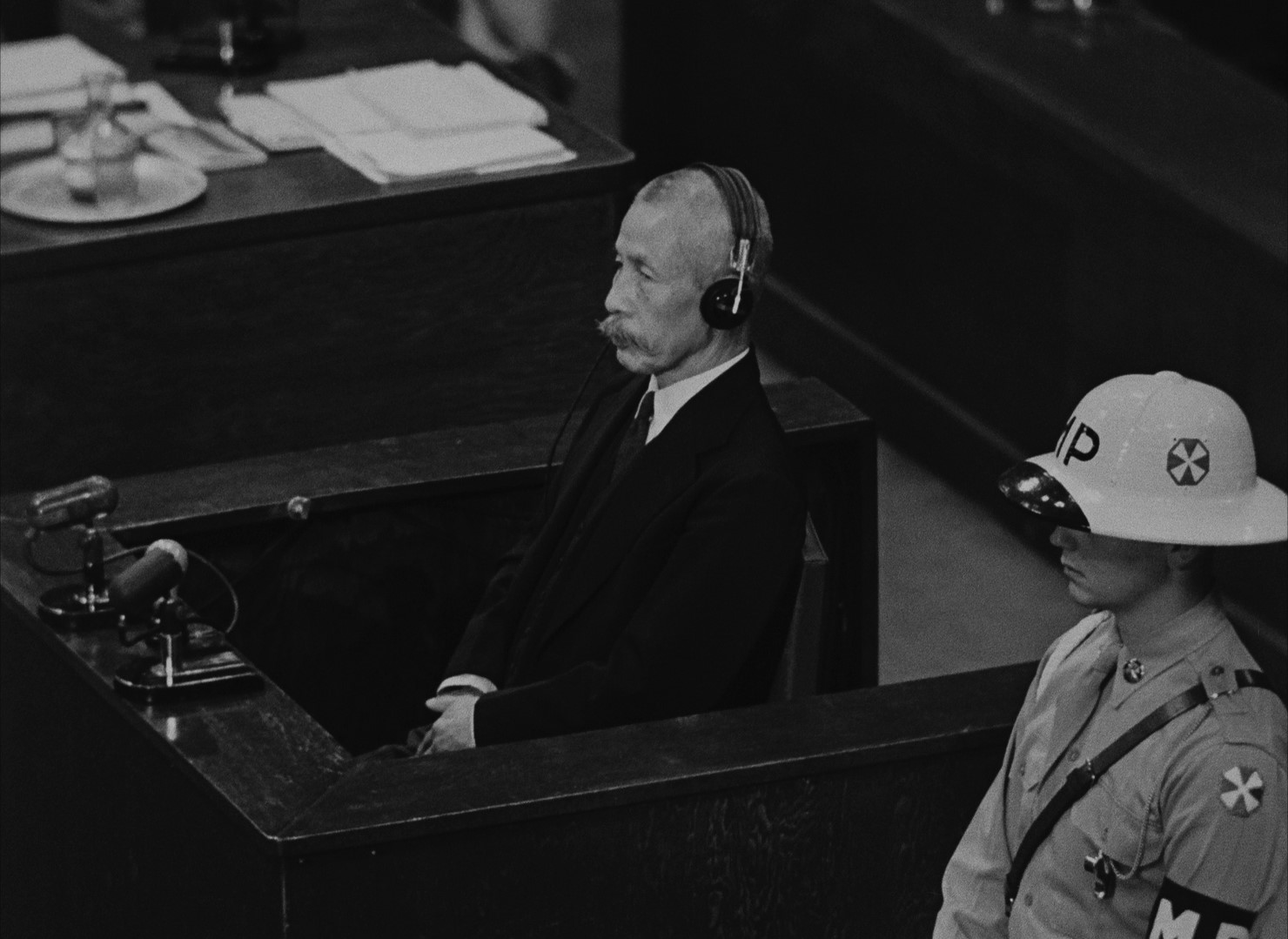
Tokyo Trial is a 1983 documentary compilation film directed by Kobayashi Masaki, one of the giants of the so-called golden era of classical Japanese cinema[6]. The film runs for a duration of over four and a half hours and was edited over a period of five years from nearly 100 hours of footage acquired from the US Department of Defense, material released 25 years after the conclusion of the International Military Tribunal for the Far East (29 April 1946 – 12 December 1948).
The documentary is narrated by the renowned actor Satō Kei and begins with scenes from the Potsdam Conference, followed by archival footage of the Pacific War. It then transitions to Emperor Shōwa’s Imperial Rescript of Surrender on 15 August 1945 and to footage of the rise and fall of Nazi Germany under Hitler. It is not until approximately the 40-minute mark that the film moves to the Tokyo courtroom and the ‘parade’ of war criminals, including Ōkawa Shūmei, a Class A war criminal and nationalist, in one of the most memorable scenes in the entire film, a behaviour which made headlines around the world at the time of the trial. This scene is shown twice: once from a distance at normal speed, and once again in slow motion from a frontal and close angle, showing Ōkawa hitting Tōjō Hideki, the former Prime Minister of Japan, on the head.
Another powerful scene portrays the controversial speech delivered by lawyer Benjamin Bruce Blakeney as a defence, asserting: “If the killing of Admiral Kidd by the bombing of Pearl Harbor is murder, we know the name of the very man who[se] hands loosed the atomic bomb on Hiroshima, we know the chief of staff who planned the act, we know the chief of the responsible state. Is murder on their consciences? We may well doubt it. We may well doubt it, and not because the event of armed conflict has declared their cause just and their enemies unjust, but because the act is not murder. Show us the charge, produce the proof of the killing contrary to the laws and customs of war, name the man whose hand dealt the blow, produce the responsible superior who planned, ordered, permitted or acquiesced in this act, and you have brought a criminal to the bar of justice.” The act of presenting the scene on screen, more than three decades after the event and in a new and evolving geopolitical context, approaches what scholar Marco Bertozzi defines as “the degree zero of archive reuse, an epistemic purity that leaves its mark: sometimes presenting a film (or a series of rediscovered sequences) as it is can be an artistically disruptive gesture that goes far beyond the arrangement of re-edited fragments.” (2012, Chapter 2)
However, Kobayashi also employs the power of editing on multiple occasions, such as when he presents images of the Nanjing Massacre, described as “a revelation of the inhumanity that had put down deep roots and being nurtured within the organization of the Japanese military, (…) a cross that the Japanese people must bear forever”, followed by images of the bombing of Hiroshima and Nagasaki. This is a choice that can be criticised as expressing Japanese collective victimhood in the context of the Second World War, but which is more likely, in Kobayashi’s mind, an editing decision that underscores his humanist perspective and the collective tragedy experienced by ordinary people affected by war, irrespective of their nationality.
The documentary ends with the death sentences of seven of the war criminals, who were executed on 23 December 1948, a month after the verdicts were announced. The film then presents a parade celebrating President Truman’s re-election, while concurrently adding subtitles that detail various wars and conflicts that took place globally following the Second World War, including the Korean War in 1950. The film concludes with the poignant image of Phan Thi Kim Phuc (the so-called “Napalm Girl”) fleeing an air raid during the Vietnam War.
Conclusion
In this article, I have attempted to trace a concise cartography of archival film practices, or the absence thereof, in the Japanese archipelago. A study that aspires to stimulate further interest in a field that has yet to be explored. I have briefly focused on the terminology associated with the field, and attempted to suggest reasons for the alleged scarcity of recycled cinema, compilation documentaries and found footage film production in Japan.
In the second part of the article, I have examined two significant ‘exceptions’; that is, two works that embody, albeit differently, the idea of archival film practices in Japanese cinema: A ‘Toy Film’ History of Shōwa: The Second Sino-Japanese War, 1931-1945 and Tokyo Trial. These are compilation documentaries that explore and reconsider Japan’s wartime and imperial past through the use and combination of diverse and varied archival footage. While not overtly experimental, both works illustrate the potential of archival film practices to resonate with contemporary times, thereby generating novel and evolving constellations between the past (the rediscovered images) and the present (the time when the compilation work is assembled and viewed).
References:
Bernardi, Joanne Notes on A ‘Toy Film’ History of Shōwa: The Second Sino-Japanese War, 1931-1945, unpublished, 2023.
Bertozzi, Marco Recycled cinema. Immagini perdute, visioni ritrovate, Marsilio Editore, Venice, 2012.
Brodesco, Alberto and Cau Maurizio, ed. Found footage. Il cinema, i media, l’archivio. Cinema e Storia. Rivista di studi interdisciplinari n. 2023, Rubbettino, 2023.
Ipek, Celine ‘Toy Film’ Restores Lost History, Reveals Shadows of the Showa Period, Columbia University, 2023. https://arts.columbia.edu/news/toy-film-restores-lost-history-reveals-shadows-showa-period (Retrieved 23 February 2025).
Leyda, Jay Films Beget Films: A Study of the Compilation Film, Hill and Wang, 1971.
Nichols, Bill Remaking History: Jay Leyda and the Compilation Film, Film History
Vol. 26, No. 4, Indiana University Press, 2014.
Russel, Catherine Archiveology: Walter Benjamin and Archival Film Practices, Duke University Press, 2018.
Thouvenel, Eric How “Found Footage” Films Made Me Think Twice about Film History, in Cinéma & Cie, Milano University Press, 2008.
Nornes, Markus Japanese Documentary Film: The Meiji Era Through Hiroshima, University of Minnesota Press, 2003.
[1] They are: The Wages of Resistance: Narita Stories (2014) co-directed with Ōtsu Kōshirō, The Fall of Icarus: Narita Stories (2017), Whiplash of the Dead (2021), and Gewalto no mori – kare wa Waseda de shinda (2024).
[2] The 1998 edition of the Image Forum Festival presented a programme called FAKE THE TIME, which was dedicated to collage films – コラージュ映画 in the original title – shot on video or 16mm by artists such as Johan Grimonprez, Jay Rosenblatt or Martin Arnold. Kitakōji Takashi, Korāju eiga ― sono kanōsei no tansaku Imēji Fōramu Fesutibaru 1998 “tokushū FAKE THE TIME” https://artscape.jp/museum/nmp/nmp_j/review/0701/movie0701.html (retrieved 23 February 2025)
[3] For instance, On Eye Rape (Iimura Takahiko, Nakanishi Natsuyuki, 1962), Gewaltopia Trailer (Jōnouchi Motoharu, 1968), and Jointed Film (Imai Norio, 1972). I am indebted to Julian Ross for his invaluable input on this matter.
[4] Ōta Yoneo is a Professor of Art, Archivist, Curator, and director of the Toy Film Museum in Kyoto: https://toyfilm-museum.jp/ (retrieved 23 February 2025)
[5] I saw the pilot, about thirty minutes long, during the online edition of the Kyoto Historica International Film Festival in 2022. The screener of what can be considered the final version (97′) was shared with me by Ōta and Joanne Bernardi, Professor of East Asian Studies at the University of Rochester, who also provided the English translation of the film’s intertitles. The screener is a recording of a live screening presented at the Columbia’s Lenfest Center for the Arts, New York, on September 17, 2023. I am deeply indebted to both Professor Ōta and Professor Bernardi for their invaluable help and their kindness.
[6] Tokyo Trial is a film that stands in dialogue with the late careers of some of Kobayashi’s contemporaries, such as Kurosawa Akira and Kinoshita Keisuke, who also reflected on Japan’s past and its involvement in the Pacific War through their films released in the 1980s and 1990s. Significantly, in 1983 Kinoshita released Children of Nagasaki, a film that focused on the tragedy that befell the city and its inhabitants on 9 August 1945.


 Asian Docs
You must be logged in to post a comment.