A recent rewatch of 三里塚 辺田部落 Sanrizuka – Heta Village prompted me to reflect on, and reconsider two of the most significant scenes in the documentary. I’m referring to the short one with the snake crawling through the grass and Ogawa reflecting on the changing situation in the village, and the one, much longer, when the two young men from Heta are taken by plain-clothes police officers. It goes without saying that everything I’m writing here is built upon, and would not be possible without, the writings of Markus Nornes; his volume on Ogawa Production was the starting point of this site, and what kindled my interest in the collective.
I’ve uploaded both scenes on YouTube, hopefully they will not be taken down.
The snake here is seen as a symbol of transformation and rebirth, Ogawa himself is commenting that, I’m paraphrasing, the resistance and battles in Sanrizuka caused the reappearance and the strengthening of old folklore practices and rites, but also the creation of new collective practices, such as the Women Alliance, and the Youth Alliance. He repeatedly mentions the concept of kō (講); following Joan Mellen “at the base of their movement is the revitalization of the concept of the kō, or group meeting, a theme that lies at the heart of Heta Village. The kō began as a Buddhist prayer meeting and later developed many forms, including that of the town meeting. (…) The kō is a historical means among Japanese peasants of uniting people horizontally, rather than vertically by rank. Ogawa shows how this ancient communal tradition provides the backbone to the Sanrizuka movement, sustaining it by drawing on established, familiar, and revered patterns of social organization” (Mellen, 1976)
I’ve always found this section, part of a longer take, beautiful and revealing: two young men from the village are taken away by the police. The camera stops, a group of farmers keep following the cars, sometimes kicking them. The wind blows through the rice fields. The camera now gently pans 180 degrees towards two ladies talking, one of them is the mother of one of the boys taken away, and grandpa Tonojita, one of the central figures in Heta and the protagonist of the awe-inspiring long opening scene, praises her son. As the long take continues, the camera slowly pans back to the cars moving, we see them going out of the frame in distance, while the drum cans signal their passage. The almost-tribal beating sound and the accompanying voice shouting, through a megaphone, what the police is doing to the village, are also perceived far away and fading.
I read this long passage as a cartography of sorts of what was happening in Heta village at the time: the hamlet, shaken by recent events (the death of young Sannomiya, and the police spreading division and discord among the farmers), was looking within itself to find a new balance and unity to overcome the crisis. I also read this part of the long take as an embodiment of two of the more significant lines of flight traversing the film: a sense of distance from the action and the battles, but at the same time an extreme proximity to the core of the struggle and its motivations, achieved by turning the gaze towards the lives and histories of the villagers.
Completed only in 2001, although the preliminary works for its construction started 30 years prior (in 1971), the Okumiomote Dam is one of the many mammoth projects built in Japan in the latter part of the 20th century in order to satiate the country’s growing thirst for energy; the other side of the Japanese post war economic miracle. Constructed also to prevent flooding in the Miwa water reservoir, the main purpose of the dam remains to generate hydroelectric power, a type of energy considered, and rightly so, “green”. However, as a “side effect”, the construction of dams often ends up reshaping the geographical and social landscape of the area where they are built, destroying villages, displacing people, and erasing the cultural and historical heritage of the area.
There are several documentaries that explore how the construction of a dam impacts and alters the lives of people and their histories, from Before the Flood by Li Yifan and Yu Yan in 2005, about the colossal Three Gorges Dam in China, to Mizu ni natta mura (2007) by photographer and director Ōnishi Nobuo on the Tokuyama Dam in Gifu prefecture. Last August I had the chance to attend a screening of Echigo Okumiomote: A Traditional Mountain Village (越後奥三面 山に生かされた日々) at the newly established Kinema Neu in Nagoya. Side note, this is a mini-theater born from the ashes of the Nagoya Cinematheque, a cinema that, in turn, arised from the jishu jōei undō (自主上映運動), the independent screenings organised throughout Japan during the 1970s and 1980s, in this specific case to show Ogawa Production’s documentaries.
Echigo Okumiomote is a documentary directed by Himeda Tadayoshi (1928-2013), a film director and visual folklorist who, in 1976, established the Center for Ethnological Visual Documentation, an organization that has produced almost 300 works, both films and videos, exploring and capturing the varied folk culture of the archipelago. Originally released in Japan in September 1984, Echigo Okumiomote was recently restored in 4K. This was my second time watching it, I took part in the crowdfunding project to restore it organised last year (2023), and so I received a temporary digital screener as a perk.
Shot in four years, between 1980 and 1984, after Himeda visited the village for the first time in the spring of 1979, the movie follows the everyday life of the people of Okumiomote, an isolated mountain village in Niigata prefecture, located near the border with Yamagata prefecture. The village, its inhabitants, the mountains, the forest and the rivers, all together form a fascinating ecosystem and microcosm of a life dependent upon and regulated by the interaction of natural and human elements, where the former are predominant. This lifestyle and the specific traditions, customs, and habits practiced—changed and improved for centuries by the people—would eventually disappear as a result of the construction of the dam: the village and the surrounding area would be completely submerged. The villagers were relocated to a nearby place, this was the subject of Himeda’s Echigo Okumiomote dai ni-bu furusato wa kieta ka (1996) a documentary that follows the villagers from 1984 to 1995, a film that unfortunately I have have not seen.
While, as we learn in the first minutes of the film, there had been an anti-dam movement active since 1971, the entirety of the documentary depicts and focuses on various jobs done in the mountains and in the fields by the villagers, such as hunting, plant gathering, and harvesting, and on the rituals practiced in the hamlet. Only the last thirty minutes are a more direct reflection on the disappearance of the village, and on the act of documenting its existence, and thus preserving its memory on film. The work is narrated by Himeda himself—more like a commentary of what is happening on screen, a reflection on his and his staff experience, than a traditional narration— and his presence and that of the troupe are never hidden. Once we even see a special meeting, requested by Himeda himself, when the village’s hunters are strongly opposing the presence of the camera during an upcoming and very important bear-hunting trip. The theatrical viewing allowed me, ça va sans dire, to focus more, and the darkness of the teather made the colours stand out even more since the very beginning: the blue screen of the title, the white of the snowy landscape, and the greens of the woods in the first opening minutes, plunge the viewer in a world rich and abundant in colours and tonalities. It’s a didactical movie in a way, but, as written above, the narration by Himeda keeps everything very matter-of-fact. Moreover, while the pace is not fast, the film moves very quickly from one aspect of the village to the other. What slowly emerges on screen is the complex economics of the microcosms that is the village: gathering chestnuts, burning different patches of the land every three years to plant different grains, fishing, hunting bears and chamois, and gathering zenmai, a type of edible fern that, as we learned, provided half of the income for the town. This is one of the most fascinating sections of the film, families would usually go into the woods for a month, living in a shed, gathering, boiling and then drying the plants, everything onsite. There was even a school holiday in the area that allowed kids to go into the woods with their parents for about ten days. This and all the activities in the fields, mountains, and rivers captured on film signal a natural abundance, on the one hand, and a very harsh life dictated by the natural elements and the cycle of seasons for the people of the village, on the other. I think it is this contrast, together with the specificity of the practices developed in the area for centuries, that makes Echigo Okumiomote a unique and enriching viewing experience, especially seen now, 30 years after everything was filmed.
There is no doubt that by focusing mainly on ancient practices—more on this later—the documentary can be read as a slightly traditionalist work, that is, a film that glorifies the way of the past. While this take might be partly true, I think the images, the time spent by the crew with the people of the village, and the care with which Himeda and his group recorded and preserved aspects of a way of life about to disappear, make it nonetheless a compelling chapter in the history of Japanese documentary cinema.
An interesting statement by a responsible of the Center for Ethnological Visual Documentation, and, if I’m not mistaken, a member of the crew that was with Himeda in Niigata, posted online in August 2024, sheds light on the process behind the making of Echigo Okumiomote. According to his words, I’m paraphrasing, this is not a film that records the real life of the Okumiomote community in 1984, but a film that captured the various inherited customs before they were submerged under the dam. I think this statement could and should be read more as a stylistic choice than a reflection about what was going on at the time. Also it is worth adding that documentary is always a form of “fiction”, a construction that cannot reproduce or represent the totality of “life” or “lifestyle” of a certain area and a certain time. Documentary is not a point of view on the real, but a real point of view. In 1984 Japan was about to enter into its bubble economy phase, and lifestyle was changing even in rural areas. By focusing their camera on old and traditional practices still alive in the village, and not on the changes brought by modern life, Himeda and his crew stayed true to their ethnographic and folkloric approach. Not to the extent done in Oku-Aizu kijishi (奥会津の木地師, 1976), when the practice of building a temporary shed in the woods was basically exhumed and brought to life one more time for the camera, but nonetheless, it is a cinematic choice that functions as a philosophical foundation for the film.
The documentary pairs very well, in my opinion, with Haneda Sumiko’s Ode to Mt. Hayachine (早池峰の賦 ,1982), filmed almost during the same years in the mountains of Iwate prefecture, although their approach could not be more different. On the one hand, Himeda is interested, as we have seen, to preserve and document on film practices on the cusp of oblivion, on the other, Haneda, while documenting an ancient tradition (Kagura), seems to be more interested in the changes happening in the two towns and how ritual practices have evolved and are evolving in time.
Echigo Okumiomote was accompanied by a publication of a massive volume about the life of the village, an ethnographic study and document of the area that is as impressive as the film itself.
I’ve decided to publish here my essay on three films by Oda Kaori that was originally meant to be published in an international film magazine (things have stalled, unfortunately). I took the decision because in the meantime Oda’s career (the piece was written almost five years ago) has evolved significantly, with more exhibitions, art installations, political and social stances, and films (Gama, and the Underground project). It goes without saying that now I would write the piece quite differently, mainly in style but also regarding the content. Posting here this short essay does not preclude that in the future I might return to write on the subject; on the contrary, it gives me the chance and the peace of mind to turn the page and freshly reassess the filmography of one of the most fascinating artists working in Japan today.
Reassessing the human: three experimental documentaries by Oda Kaori
“The landscape thinks itself in me and I am its consciousness.”[1]
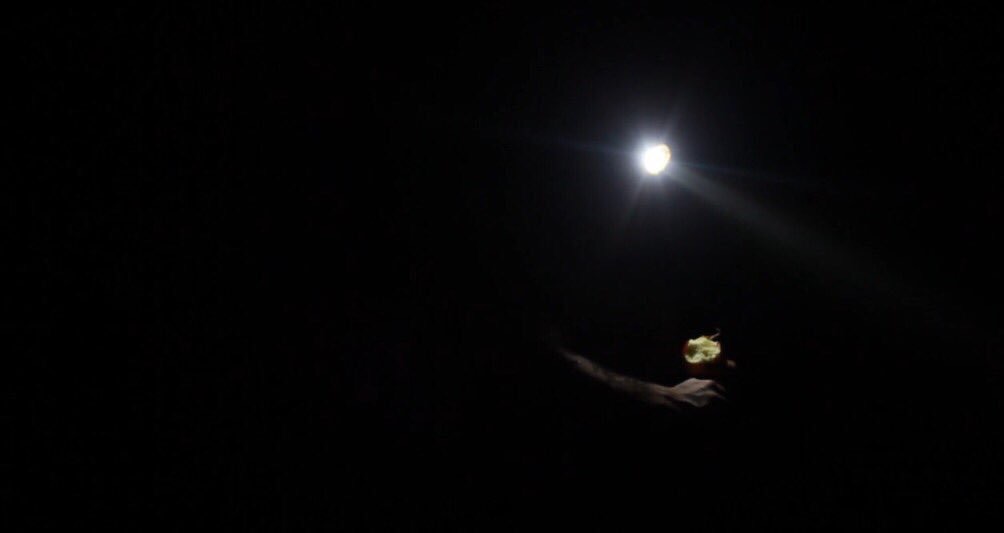
A worker sits down and takes a break. In the deep belly of a mine and enveloped in a pitch black surrounding, he bites a red apple. His helmet lamp provides the only few blades of light in a scene of almost Vermeer-like beauty. In the preceding scenes the noise from the machinery at work in the mine is so unbearable that the words are oftentimes superfluous or just a waste of energy. The life in the mine is only silence or cacophony: there is no middle ground. It is an alien landscape, both visual and sonic, where the human is just one element among several. The beauty of the moment derives from the interplay between darkness and light, from the silence after the wall of noise that precedes it, and from the empathy towards the man conveyed by the camera.
The scene is one of most significant and impressive passages in Aragane, a feature documentary shot, edited, sound-designed and directed by Oda Kaori in 2015. Oda made her debut in 2010 with the short Thus a Noise Speaks, a personal documentary that unflinchingly explored her coming out as gay and the subsequent reactions from her family, especially her mother. The experience of Thus a Noise Speaks, one where the camera is also used, in Oda’s own words, “as a weapon for revenge against my mother,” was a fundamental experience for the young Japanese director, who was 23 years old at the time: Not only because it was a way of expressing her true self, but also because it was a chance to grasp the incredible power that filmmaking can have, and to realize how harmful a camera pointed at someone can be.
Born in Japan, but partly educated in the U.S.[2] and with three formative years spent in Bosnia, Oda’s artistic arc began from a position of hybridity from the very beginning and afterward wandered around the globe in search of places and stories to explore. The sense of displacement experienced and expressed in her debut short, and her background as a so-called “halfie,”[3] opened the gates for a cinema conceived as a nomadic wandering, and an artistic path that in crossing borders, cultures, genres, and styles, explores what it means to be a subject in flux and always open, as the best ethnographers always are, to what the world has to offer[4]. Moving from one geographical area to the next, from Japan to Bosnia, back to Japan and then to Mexico—but a Mexico filtered through Mayan mythology—Oda’s filmography expresses the idea of a nomadic cinema not interested in broad and essentialist discourses about cultures, but more focused on specific places and the collective experiences and memories linked to such places.
Towards an alien phenomenology
The first (and to this day, most artistically accomplished) example of this approach arrived for Oda in 2015, when Aragane was presented at the Yamagata International Documentary Film Festival. A work, as previously mentioned, that she directed, photographed, edited, and sound-designed, but also a “product” of Bela Tarr’s film.factory, the short-lived film school based in Sarajevo and established by the Hungarian director in 2013, a place where Japanese director Oda studied for three years.
Aragane, meaning ore or small pieces of stone in Japanese, was shot in a Bosnian coal mine as a project for film.factory. An immersive and hypnotic sensorial experience, the movie starts, and thus sets the tone for the rest of the work, with a pounding noise and a close-up of a machine. The scene is followed by a short depiction of life on the surface, with workers preparing and completing various tasks before commencing the deep dive into the mine. Once in, we’re in a different kind of world, one where the only lights rippling and dancing in the total darkness are those of the headlights of the workers and of Oda herself, and one where the noise is so deafening and monotonous it turns into a sort of alien music.
Aragane is not a direct inquiry into the harsh conditions of the people working in the mine (although that is something that eventually and necessarily emerges) but more an attempt to convey on screen the time and space of the coal mine as experienced by the people working in it. Creating a sensory experience of the place, an experience constructed through the interplay of machines, darkness, head lamps and the miners, Oda hints at a different field of perception and at a different type of time. For most of the duration of the film, we don’t really know what’s going on and who is doing what: what is missing is a central orientation, a focal point around which the movie can organize itself in the usual sense.
“The darkness, no sunlight, no moonlight”
“timber dust floating”
“pump, electric saws”
“grey fog”
“steam evaporating from T-shirts”
“a flickering head lamp sways”
“A small universe within a universe”.
“I see because there is light”
“In this underground world people and machine carry the same weight”[5]
Once we get accustomed to the things, events and musicality of the noise presented on screen, though, everything slowly begins to make sense. What starts to surface from the images, sounds, tracking shots and slow and hypnotic camera movements, is the time and the materiality of the mine itself. When a long and dark scene towards the end of the movie, with the carts ascending to the surface of the earth, is brutally interrupted by a static image of the outside of the mine covered in snow, it is almost like a revelation. After an hour of darkness inside the bowels of the earth experiencing a different perception of time and space, the whiteness of the snow, the colors of the clothes and those of the equipment hanging are so sharp and bright that gazing upon them almost induces vertigo.
With the sensory and cacophonic descent into the alien landscape that is the life in the mine, Aragane is also an exploration of the relation between the people working inside and the place itself. This is a crucial point in understanding Oda’s works: her films are, for the most part, and especially on first viewing, an overwhelming visual and sensory experience that seem to focus more on the non-human elements of what is filmed. However, when fully absorbed, they reveal the true potential of what her cinema can do at its best: establish a cartography of non-human landscapes and, at the same time, reflect on the role and position of the human element in this “new world.” It is not by chance that the central part of the movie, the core and one of the most significant scenes in the entire documentary, is the beautiful scene that we have described at the very beginning of this essay.
“Tell me how I can touch a butterfly without breaking her wings”[6]
The preoccupation towards people is one of the central themes of Towards a Common Tenderness. Released in 2017, the movie is many things: a visual poem structured like a diary about the experience Oda had while filming her first and second works, but at the same time a reflection on the act of filming, and, as in Thus a Noise Speaks, the power the camera has when pointed at someone.
The movie starts with a beautiful murmur of voices and sounds, with Oda herself pronouncing lines from her memories and reading from Notes on Cinematography by Robert Bresson and Rosemary Menzies’ Poems for Bosnia. It then moves to a shot of her first movie (a shot of a shot) of her mother crying when Oda comes out. The movie is, in fact, structured as a long letter sent to Oda’s mother, in which the director speaks directly to her mother about her experiences with the camera and everything that happened to her after she decided to become a filmmaker. Toward a Common Tenderness uses a mixed visual style, with abstract and poetic images intertwined with shots recorded by Oda in Bosnia and Herzegovina during her period at Bela Tarr’s school, outtakes not used in Aragane, and other images from unfinished projects.
The central part of the documentary is when Oda was a guest at a family of Romani descent for a week. When talking about this experience, she recalls how she couldn’t finish filming the project because she could not stare at the old husband and go deeper inside him, depicting the loss and grief his family went through when one of their members passed away. Rosemary Menzies’s poem shown at the end of the movie through extreme close-ups of the printed page is exemplary of the conundrum that haunts and informs the whole movie. “Tell me how can I touch a butterfly without breaking her wings.” How can we gracefully depict the beauty of things without destroying it? How can we film reality without annihilating it or destroying the things and the people in it?
“…reveals the base of inhuman nature upon which man has installed himself”[7]
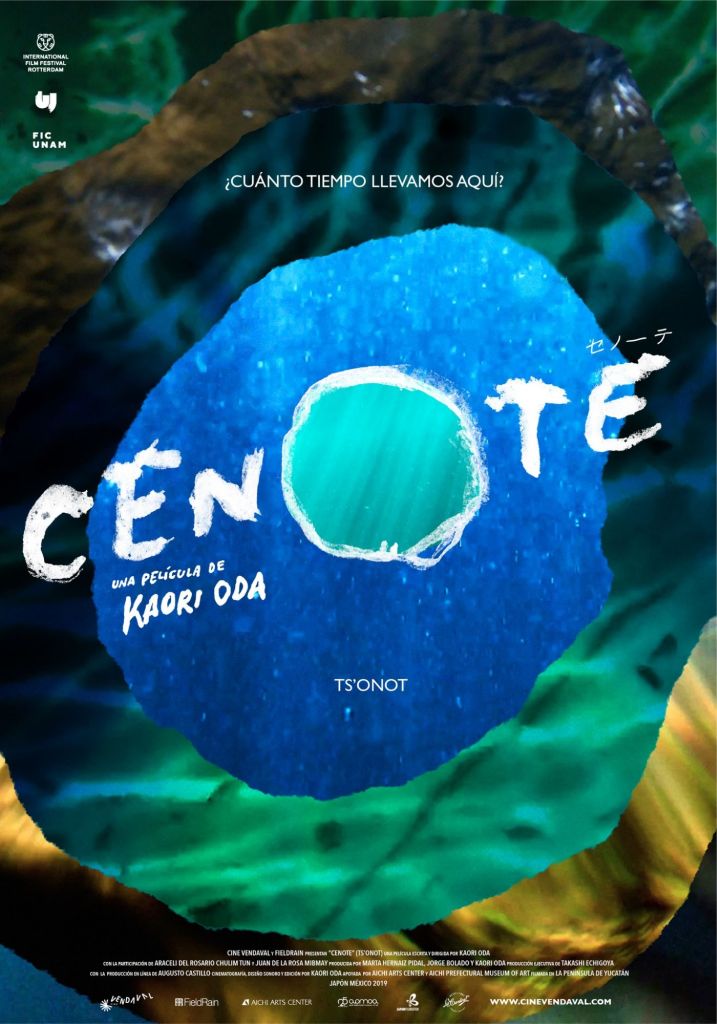
If Aragane is a movie revolving formally around darkness, slow movement, and repetition, and Towards a Common Tenderness a reflection on the riddle that is the act of filming, Cenote is a movie that combines the two approaches.
It is about water, light and their connection to the cosmos, but also about people and their collective memories. Cenotes, or ts’onot in a form of Mayan, are natural sinkholes found in the Yucatan Peninsula in Mexico, the only source of water for people living far away from rivers or lakes, and considered sacred places in ancient Mayan civilization.
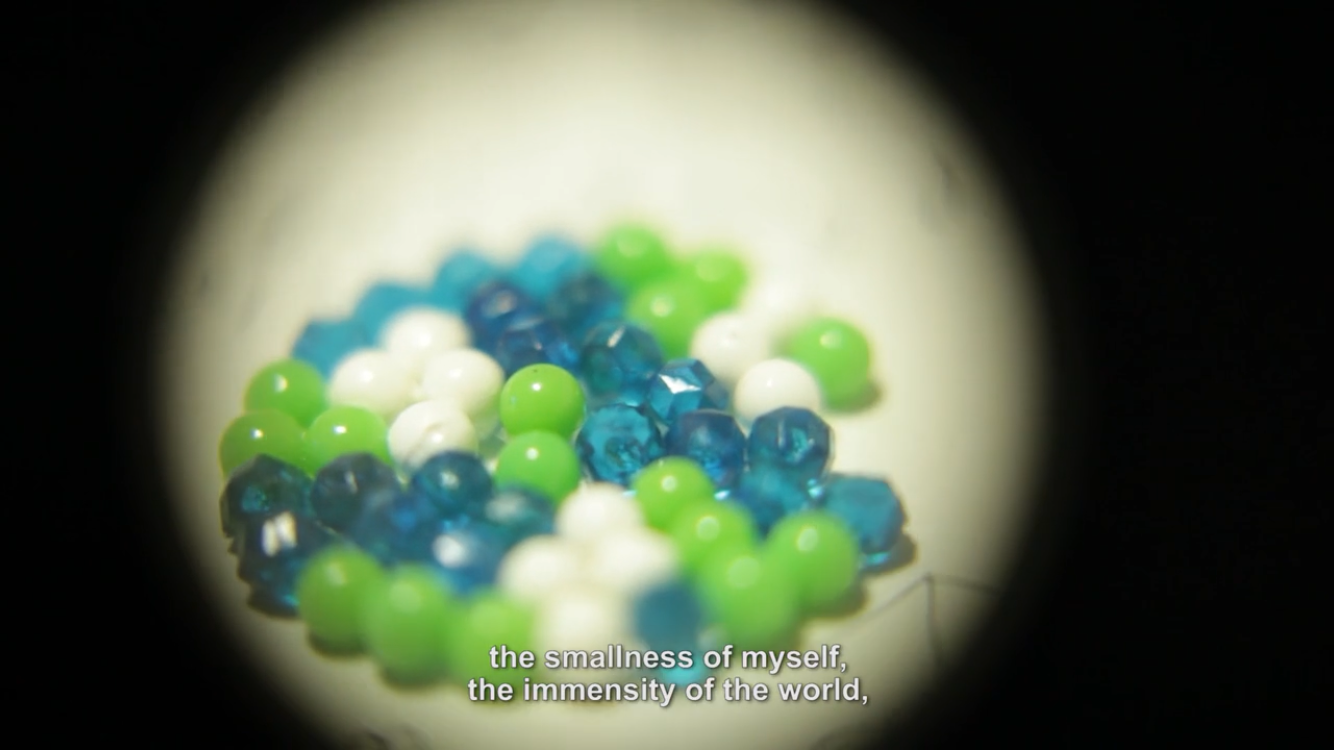
Abstract images of the underwater world inside the cenotes intercut with people reciting, almost whispering, old Mayan poems, and other voices, in Spanish, recalling memories about life near these natural pits. Swimming in the water, the camera is enfolded in a reality that is perceived and created by the play of water and light. The first ten minutes, the more experimental part of the work, are in this sense an absolute bliss, an exhilarating and liberating artistic experience that brings us back to the womb of the earth, to the origin of life, or, as one of the quoted Mayan poems states, to the place where the sun sinks, disappears and reappears every day. Blotches and blades of colors flash on screen, drops of water dance like subatomic particles on the surface of water, and fish swim as peacefully as ancient deities. While this formal experimentation is noticeable in the path blazed by Aragane, a cinema of sensation that shifts the representation of humanity towards the periphery of reality, the non-human elements presented in Cenote expand further, reaching the spiritual and the mythical.
Another novelty that Cenote brings when compared to Aragane or even Towards a Common Tenderness is the presence, throughout the film, of a dialogic tension, both aesthetically and thematically, between words and noise, light and water, grainy images and digital sharpness, mythical time and geological time, and people and natural elements. Using 8mm film (Super8) and images shot underwater with an iPhone, Oda creates a difference and an aesthetic space, a poetic “ma” (間) that reflects and has a parallel in the space between the two worlds explored: the sensory experience taking place underwater, on the one hand, and the close-ups of faces and the voices of people on the other. Faces of people, but also animals, chicken, butterflies, dogs, cats, and local festivals are filmed in 8mm, while the world inside the cenotes is filmed with an iPhone. The dialog between these two types of images, the intercut between these two worlds, becomes the structural backbone around which the movie develops.
The sound and words spoken in the movie, folklore, mythical stories, memories of people who live near a cenote, and legends of children who drowned in them are all weaved together, recited and spoken in Yucatec Maya and Spanish. The stories told are important, of course, but the musicality of the words is an element that, paired with the underwater sounds and the distorted noise captured or created by the camera’s microphone, form a sonic tapestry of rare beauty. The soundscape used in Cenote, more than the one adopted in Aragane, where the human voices were relegated to very few words, hints at an idea of the cosmos in which humans are part of a larger dimension, both in time and space. The images confirm this larger scope on a geological scale: the sinkholes are a product of a celestial encounter between a shower of meteorites and the earth’s crust, but at the same time, a mythical place for ancient Mayan civilization, a portal and a threshold where, according to the Popol Vuh, this world and the afterlife touch each other. The connection between these two realms is an important part of Cenote, and, as a matter of fact, the movie also works as an exploration of collective memories and ancient mythologies, both still very present in the area and the villages around these sinkholes. The dead (via the poems), the women sacrificed in the pits, and all the legends and stories retold by the villagers, form a layer where the past, real or mythical, and the present coexist. This present-permeated-by-the-past has a phantasmic quality channeled into the movie by the images in 8mm, which always feel distant from the here and now, and by the voices in Spanish and Yucatec Maya, always out of sync and hovering above the images, as it were. The connection between the dead and the living is made more explicit in a brief and beautiful passage when the movie gazes, bathed in a frail and milky light, at funeral rituals in the area, when human bones and skulls are brushed, polished and collected with extreme care as remnants of past lives.
Conclusion
Like some of the works made at the Sensory Ethnography Lab[8], and to the cinema of Bela Tarr and Wang Bing, Oda’s filmmaking has, in the past years, built a unique trajectory in the film world: a brand of experimental documentary born at the intersection between visual anthropology and a cinema that prioritizes a pre-reflective engagement with the world. The result is an oeuvre that traces and establishes new connections between people, things, memories and the landscape they inhabit and from which they emerge. The human element is thus repositioned and reframed according to a different vision of reality, compared to one that often dominates the field of documentary, especially in contemporary Japan. This artistic approach is also traceable in her works as a painter: for instance, in a series of CD covers of Aragane’s soundtrack she painted by hand. Each cover is a thick impasto depiction of a scene from the movie, or a memory from her filming inside the mine. Another example is a series of portraits of women Oda made inspired by the story of the women who were thrown into the cenotes as ritual sacrifices. In these paintings, the faces of these women seem to resurface from the water like deities, made by the recollection of what Oda experienced while filming and swimming in these sinkholes.
Visual and sonic experimentation which engages with the world and creates a cinema that, while reassessing the human element and abandoning a human-centered perspective on reality, continues at the same time to show a deep care, affection and interest toward people. This is the biggest accomplishment of Oda’s artistic trajectory so far.
[1] Paul Cézanne, quoted in Cezanne’s Doubt, Maurice Merleau-Ponty, 1945. Later in Sense and Non-Sense, trans. by Hubert and Patricia Dreyfus (Evanston: Northwestern, 1964).
[2] She studied film at Hollins University in Virginia.
[3] “People whose national or cultural identity is mixed by virtue of migration, overseas education, or parentage” Lila Abu-Lughod, Writing Against Culture, in Fox, Richard G. Hg, Recapturing Anthropology: Working in the Present. Santa Fe, S. 137–162.
[4] More than fifty years before, a similar approach to documentary was proposed by Matsumoto Toshio: “Matsumoto’s avant-garde documentary theory focused instead on the revelation of the existential force of an object or the actual people filmed through the process of subjective film-making” Hata Ayumi, ‘Filling our empty hands’: Ogawa Productions and the politics of subjectivity in H. Fujiki, A. Phillips ed. The Japanese Cinema Book, Bloomsbury 2020.
note: I took the liberty of writing about a non-Asian documentary today, and it might become the new rule…
Mother of Many Children (1977) is the first feature-length documentary by Abenaki filmmaker Alanis Obomsawin, one of the towering figures in contemporary non-fiction cinema, and an artist who has been making films about indigenous struggle, representation, and from a Native perspective for almost five decades. Mother of Many Children is not only her first feature-length film, but also one of her best works, in my opinion—I personally think Kanehsatake: 270 Years of Resistance (1993), and Incident at Restigouche (1984) are her two other masterpieces. Insightful, touching, multilayered, and beautifully constructed, it focuses on several Native women of different indigenous people, and from different backgrounds, living in Canada at the time (1977). As Randolph Lewis poignantly notes in his book Alanis Obomsawin The Vision of a Native Filmmaker (University of Nebraska Press, 2006):
Mother of Many Children works on a horizontal plane: rather than diving deep into one or two subjects, it moves around the Canadian landscape every few minutes, pausing to focus on a woman of interest, to take in her story, before moving to another interviewee, often someone quite different. The result of this lateral movement is a feeling that all these women are connected, despite differences in language, tribal affiliation, educational background, and geography.
Clouds of War 戦雲(いくさふむ)(2024) is the latest documentary by journalist and filmmaker Mikami Chie, a director who, in her previous works (The Targeted Village, Boy Soldiers: the Secret War in Okinawa, We Shall Overcome) has been focusing on the current situation in the Ryūkyū archipelago (Okinawa), its complex geopolitical history, and on the resistance of its people against the several American bases operating in the islands. Clouds of War was shot in the span of eight year, starting in 2015, and documents the construction of military ports and ammunition depots by the Japanese Self-defense Force, and more broadly the general militarisation happening in Okinawa main island, Yonaguni Island, Miyako Island, and Ishigaki Island. These spine-chilling changes affecting the land and its citizens, such as the construction of underground shelters built in Yoneguni, or a plan for the evacuation, to Kyūshū, of all the inhabitants, are done in preparation to the next war on the horizon, the one between China and Taiwan. If the picture painted by the documentary is as interesting as it is frightening, less inspired is the way the documentary interweaves all the footage together. The style is journalistic, like in the previous works of the director, but there’s here a lack of focus, in my opinion. It’s very informative nonetheless, and there are some very powerful and profound moments.
As a sort of work in progress, draft for a possible future research, or more probably simply as a trace of a significant and very rare viewing experience, in the past weeks I published the unedited notes and reflections I took while attending the Noda Shinkichi‘s retrospective (Yamagata International Documentary Film Festival, October 2023). A total of 38 films were screened in 5 days (you can read the synopsis of each film here). My thoughts on days 1-2, 3 and 4.
Final thoughts
Unfortunately, I could not attend the last day of screenings, day five, at the festival. Mental and physical exhaustion kicked in, as usually does at these kind of events, but I also opted to see some of the films presented in the main program, after all I had to write a general piece on the event for the Italian publication I freelance for. As a sort of justification and excuse, I recall people saying that the films presented on the last day were the “less interesting” ones of all the Noda’s program. .. That being said, I can definitely say that the retrospective was a very impactful viewing experience; as a film writer interested in Japanese documentary, I found the program to be revelatory. It was a very well curated showcase, and I really appreciated the fact that the films were not presented chronologically, but divided into thematic blocks. There are some incredibly powerful and fascinating works in Noda’s filmography —personally Forgotten Land, The Matsukawa Incident, Nitiray A La Carte, The Feast of the Gods, and Good Road for the Livingand the Dead are some films that, for different reasons, still resonate with me to this day. However, the stongest point of the event was, in my opinion, that it presented a significant section of Noda’s filmography, and in doing so it highlighted the developments of Noda’s style and interests in the course of almost five decades, but also, and perhaps more importantly, the developments and transformations of post-war Japanese documentary. All the films screened hint, in their totality, at connections, coincidances (cit. Joyce), and constellations with other works and names in the field of Japanese non-fiction cinema: Matsumoto Toshio, Ogawa Pro, Haneda Sumiko, Kitamura Minao, and others. Each day of the program, there was at least a talk or a discussion with experts and documentarians, the one, by far, most deep and fascinating saw the great Kitamura Minao, a filmmaker and visual anthropologist (or visual folklorist as he, probably, would like to be called), talking about his personal experience with Noda, with whom, in 1978, he co-founded the Japan Visual Folklore Society. I believe Kitamura, his films and his writings, should be (re)discovered, sooner rather than later.
Some of the films that were shown in Yamagata are available on streaming, legally and for free (see below), or for rental. After the festival I was able to revisit some of them, especially The Feast of the Gods, and Good Road for the Living and the Dead deserve probably a longer treatment and a specific focus, an article or a longer essay (?).
As a sort of work in progress, draft for a possible future research, or simply as a trace of a significant, and very rare viewing experience, I have decided to publish, unedited, the notes and reflections I took while attending the Noda Shinkichi’s retrospective, organized at the Yamagata International Documentary Film Festival, in October 2023. A total of 38 films were screened in 5 days; you can read the synopsis of each film here. Below you can find the notes I took on day 4 (my notes on the first two days, and the third one):
Day 4
The Mikagura Festival of Tomiyama Village 1985 Opens with 1970s folk music. Shots of mountains. Graphs. Photos in black & white explaining how part of the town was moved because of the construction of a Dam. Production of tea and shitake mushrooms. Cut to new credits: 1985 January 3rd and 4th. Creative way to use multiple openings. In the following films, there are multiple endings. Describing step by step each phase of the festival. Preparing mochi. Purifying rooms, musical instruments, and people who will join the festival. Offerings to the tree. No direct sound. Music and images combined. Small room. Dances start. Men, men, men. No women for most of the time. We see some of them in the audience later. All the music is very similar, what changes is the dance. Ichi no mai, Shishi mai, Yubayashi no mai, Oni no mai. Interesting: drunk (?) young people interacting freely with the masked dancer. Masks are very expressive and feel very specific to the area. Atmosphere is very “casual” (or better, popular?) from the very beginning. It’s a ritual, but not hyeratic. Everyone seems relaxed, joking, while others are performing, the singing and chanting themselves are not perfect, it’s all over the place. After all it’s a matsuri, not a ceremony or only a performance. Meaning of matsuri: giving new life to people and area, renewing life.
The Procession of Weird and Wonderful Masks 1988 No narration, solemn music. Shot of people wearing masks, all together on the stairs. Panning on each mask slowly. Amazing colours and shapes. Again they feel very specific of the area. It’s a film about masks. Parade. Close-ups of masks and people’s faces. Like in the films about strikes/protests: images filmed on the street in the parade shaking-style, are alternated with shots from above, and low angles shots from street level. Fast editing. End: introducing each mask, explanation cards, mask on a black background. No sound in this part.
Sarushima-Island With a Fort: Ruins and Graffiti 1987 Music. No narration. Shots stay longer on soil, walls, stones. Panning. Concrete shelters. Holes in the walls (bullets). Graffiti and traces of war overlap. Different times. Sometimes there is no sound. Sometimes music (guitar). Camera pans on walls, entrances, tunnels, corridors. The ending is very beautiful (Noda master of ending in this period): black frame with a tiny bright square (entrance/exit out of tunnel) oscillating for a long time. Bright spot gets bigger. We’re out. Cut to the island (mirroring the beginning). Zoom out slightly. Stay on the image for long. End. Filmed between in 1968 and 1983 (really?!) edited together in 1987.
Good Road for the Living and the Dead: Niino Bon Odori, Festival to Send Off the Gods 1991
The Feast of the Gods on a Winter’s Night: Toyama’s Shimotsuki Festival 1970 B&W. Images of the area. Music. Images of fire. Images of shide (paper hanging from the ceiling). Images of hands. Close-ups of hands. Fire. Water boiling. Fire and smoke are often on the foreground. Dancers are almost never shown from far away. Camera is in the middle, part of the constellation formed by people and objects. Performers shown in a fragmented way. Everything is continuously cut. Camera goes back to shide, fire and water many times. Kitamura explained in the after talk that fire and water come together in the ceremony. Chants, dances and images become monotonous like in a trance. Cinema-trance. No narration or explanation. Just a card at the beginning. As Kitamura Minao said: this is a festival captured without knowing almost anything about it. Sensorial. The most experimental of the folklore films. Exceptional.
Good Road for the Living and the Dead: Niino Bon Odori, Festival to Send Off the Gods 1991 People dancing for three days welcoming the dead during Obon. Again, shot from above, from street level and low angles. Colourful. Impressive images of all the town dancing. Different times soak the images in different lights (twilight, dawn, etc.) Singing and dancing together as in utagoe: identity making? Young people make kind of a mess, but scenes are kept in the movie like in the first movie of the day. The film takes its time, slower rhythm, music and dances envelop the viewer slowly. Cinema-trance, but of a different sort from the previous. People move toward the graveyard. Burning the small floats. The spirits of the dead. Fascinating and creative the ending, long time black screen, music. The dead.
Personal note: there’s a similar festival in Gifu (Gujō Hachiman, 3 days in Obon) but it’s so packed with tourists that we can’t even enter the town (link to Hayachine and tourism). Impossible now to film a festival like Noda did.
Snow as Flowers: Niino’s Snow Festival 1980 Opens with the deep blue of the sky and a beautiful map of the area. Constructed like Mikagura Festival: documenting each step of the festival. Shots and scenes are here much longer. Again, Noda does not shy away to show the rough/popular side of the festival: two guys parading are drunk, people interacting quite directly and roughly with the performers, one guy is caught yawning. Wondering is the presence of the camera enhanced or altered the behaviour of some participants. Less poetic and experimental compared to the two previous films. Noda getting more interested in folklore itself than in the representation of it?
As a sort of work in progress, draft for a possible future research, or simply as a trace of a significant and very rare viewing experience, I have decided to publish, unedited, the notes and reflections I took while attending the Noda Shinkichi‘s retrospective, organized at the Yamagata International Documentary Film Festival, in October 2023. A total of 38 films were screened in 5 days (you can read the synopsis of each film here). Below the notes I took on day 3 (my thoughts on the first two days are here):
Day 3
Tying Land and Sea 1960 The film opens like a Shōchiku movie, but the colour palette is not very poppy. Various ports in Japan: Yokohama, Toyama, Kobe, Niigata, Hiroshima, Hokkaido, Nagoya, Shikoku, etc. Interesting how in the film, the narration uses the term ura nihon to describe cities on the West coast, nowadays it is considered offensive and it’s not used anymore. Noda uses it in other movies too, the geography ones, I think. The editing’s rhythm mirrors the music, when it is fast the music also gets fast, or more “aggressive”. Focus is not on people but on the things (there are very few close-up shots of faces)
Carrying the Olympics 1964 If the previous was like a Shōchiku, this one felt like an action produced by Nikkatsu, although the focus on things is similar. The music is louder, mainly classic, organ and baroque. Starts from the empty pool and the national stadium, empty. New monorail. Trucks transporting materials for the Olympics. Equipment arriving for the players from different countries. Aeroplanes, luggage, horses. Night scene with oblique shots and superimposition of the 5 rings (one of the most beautiful images of the film). The editing is much faster than in the previous movie. Same scene is shot from different angles. Mirroring the subject of the movie, the images are continuously moving, rarely we get a static shot for more than 2 seconds. The camera is always panning, zooming in or out, or the image is vibrating (telephoto lens), or the camera is moving because it is on a truck. Shots from the perspective of the cones, of the pigeons, of the reels for TV. While the subject is “simple”, formally it is a very sophisticated movie, very smartly constructed.
Nitiray A La Carte 1963 From the very first shot to the last, the film is pure experimentation, visual and sonic. Music by Takahashi Yūji is hinting at a space age to come. Abstract titles. Stagy parade of models like in Suzuki’s Tokyo Drifter. Felt like an installation sometimes. The narration is comedic and almost surreal. Slow motion, shots in the mirror, close-up of lips, 4 screens. Shot of the meeting from above. Kids parading. Graphs/animation about the history of the company. Pure art-house entertainment. The music suggests a futuristic product (nylon) constantly evolving, the images are experimental as the company is experimenting with new chemicals. This sense of looking ahead and moving away from the past is also hinted at by alternating black and white scenes with the ones in popping colour.
A Town Not Yet Seen1963 One view was not enough for me to fully appreciate it. Street, water flowing, walls, stones, meat hanging. A small stone bridge reflected on the water. The film is in dialogue with Matsumoto Toshio’s The Song of Stones, and The Weavers of Nishijin (1962). I found the music a bit too intrusive.
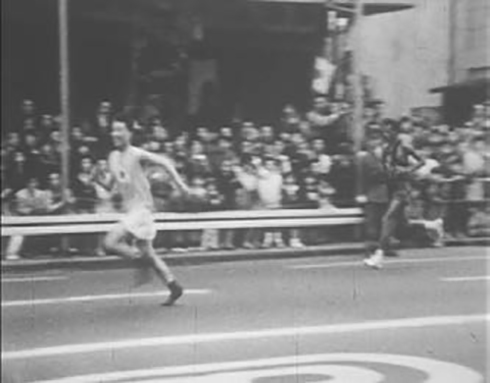
The Loneliness of Two Long Distance Runners 1966 Credits written on cardboard with ants. Starts with a black screen and music (in English) The scene is repeated 19 times. Every time we notice something new, the police, the official cameraman, the audience, the smile on the face of the young Japanese. The music matches ironically with what we see on screen: “c’mon” “you move me baby” “go go go go go” “oh yeah!” The perception of what is on screen changes with repetition and music, the more we see it the more it gets funny. Difference in repetition.
Collapsed Swamp, or Painter Yamashita Kikuji 1976 Unfortunately, I haven’t taken so many notes on this, I’ll add some lines from the Osaka’s “phantom” retrospective organised in 2020.
Film opens with the artist’s face. He was in the war, and so was his brother, all his art is about expressing what is almost impossible to express, the horror of war. His paintings depict scenes where animals and spirits coexist with humans. Noda and Yamashita were colleagues at Tōhō Studio, where they both experienced the Tōhō dispute. It’s a very peculiar film about an artist, in that it’s in black & white, the words of the artist are prominent. Yamashita’s words were recorded in 1969, images were captured between 1970 and 1972. Work completed in 1976. When the film moves to the Owls it becomes almost comedic, but a surreal comedy. Scenes when Yamashita talks about being questioned by the police on images of him smashing birds head: Violence on the protesters in the late 60s?
Mizutani Isao’s Wanderings through Ten Spiritual Worlds 1984 Silent but originally was accompanied by the artist’s own narration, benshi-like. Pouring paint on canvas at night. Morning, Mount Fuji in the background. Frozen Yamanaka Lake. When is pouring paint, his face is like a Noh mask. Performance for the camera? Cut inside. Making the final touches. Close up of details. Insects. Summertime. Finished paintings are placed in different parts of the city: stairs, middle of a street, etc. Feels like performance art. A happening.
As a sort of work in progress, draft for a possible future research, or simply as a trace of a significant and very rare viewing experience, I have decided to publish, unedited, the notes and reflections I took while attending the Noda Shinkichi’s retrospective, organized at the Yamagata International Documentary Film Festival, in October 2023. A total of 38 films were screened in 5 days, here are my notes on the first two days (you can read the synopsis of each film here, notes on the third day here).
Day 1 Renovating Farm Houses (1941) Festivals in Tohoku Part 1 (1956 ) Festivals in Tohoku Part 2 ( 1956 ) Festivals in Tohoku Part 3 (1957 ) Impressive use of colours, especially in the second film, where the parade reminded me of Rio’s carnival.
Forgotten Land: Record of Life Series II (1958) Impressive film, especially on a formal level. Opening: the camera pans on the faces of students, who are telling their dreams, mainly to leave the village. The use of editing reminded me of soviet montage, for example: close-up of a fisherman, fast cut to the sea and wave, or when the woman is ploughing the soil, the editing is almost in rhythm with her actions. The soundscape has also a big part in the film: the sounds of waves penetrate each image, and each individual’s life, we are reminded that the sea is always there with its harshness On the Method of Avant Garde Documentary by Matsumoto Toshio was published in June 1958, in Kiroku Eiga, the journal founded by Noda, Matsumoto and others.
The Girl of the Valley (1949) Fiction with a heavy touch of realism. Making of charcoal is a theme recurring in all his movies about or set in Tohoku, signifying an old and severe way of living,
The Locomotive Kid (1950) The scenes about the train are beautifully filmed, I liked the transition from the kid looking at a photo of a locomotive to images of it. The tone of the movie is definitely lighter than the previous one. Of course the train is the kid’s dream but also, as always, symbolises progress, especially for a rural area. Slow paced. Noda is good at directing kids. The two movies and Work in Retail (1951) reminded me of the films of Shimizu Hiroshi, the kids of course but also the tone (a mixture of serious and funny).
Day 2
The Unforgivable Atom Bomb: The Singing Voice of 1954 Japan (1954) Impressive film that reminds us the importance of utagoe festivals, and utagoe culture more in general. As we’ll see in the next couple of movies, singing while protesting gives the people an identity, unifies them. Each union or group has a different song. Formally the film alternates long shots, when we see the stage and groups performing on it, with images filmed close to the performers. As the movie progresses the images of the auditorium with all the people singing and moving together are used more often. Very impactful scenes. Noda a couple of times cuts to images of strikes. Chinese and Korean groups are also performing on stage, it is a very transnational movement, highlighting class struggle first, in this it reflects the political atmosphere of the 1950s. Women are very present and a very active part of the unions, at least it seems so from the film. Utagoe as a convergence of popular and political is fascinating, it is popular before becoming pop (probably in the 60s)
On a side note, in the credits I’ve seen the name かんけまり Kanke Mari, she was a director of PR movies and documentaries active in the 60s and 70s (did a documentary on a railway workers strike screened at National Film Archive ), Noda writes about her in his book about documentary.
The Matsukawa Incident: Seeing the Truth Through the Wall (1954) Opens with images of a wall, silent, and then with organ music. From here we move to the court where we are explained about the incident, the official version. The film is constructed as a counter story of the incident and does so in a very modern way that feels very fresh even today. Interviews with the men wrongly accused, graphs and animation used to explain the movements of the suspects, scenes that feel almost reenactments (man walking along the railway). The film takes its time in explaining the facts and in depicting the wrongly-accused men. It is strange to say, but it feels like a crime novel, there’s even suspense.
The Workers of Keihin 1953 (1953) Film starts with the depiction of the workers on the way to their job place, bus, train and boat. Use of photos. During the demos, we often see the mothers with their kids. Preparation for May Day, all the different unions and some new ones are formed (department stores, mainly women). U.S. bases are considered responsible for the conditions of the workers, overworking, low salaries, etc. This sentiment against the US is added to the one against the war in Korea. As in the utagoe film, the events organised by the unions are horizontal in their scope, here we see a sports day organised for the Korean community in Japan. We also see support in China, Italy (just mentioned), and other countries. Important: the unions/workers are reaching to the farmers to get their support against the use of Japanese land by the American bases (this predates the documentaries about the Sunagawa riots by Kamei Fumio and of course Ogawa Pro). The farmer resistance of the 60s does not appear suddenly from nothing.
June 1960: Rage Against the Security Treaty (1960) Dramatic music opens the film, from the very beginning it’s very noticeable how the style has evolved: fast cutting, shaky hand camera, many shots are from street levels and in the action (Sunagawa and Sanrizuka style), close-ups, direct sound… Powerful scene: arrival in Japan of Ike, helicopter is landing among a sea of people protesting. Farmers are more present here in the protests, Miike mine workers are also showing solidarity. Spectacular images of protests in front of the American embassy and the National Diet Building. Death of Kanba Michiko, killed in the protests. After the tragedy the movie goes silent for a couple of minutes showing mainly photos of people beaten laying on the street, powerful and violent images. Photos of prime minister Nishi are often used and stay on screen for quite a long period of time.
The New Japanese Geography Film Series: Tone River (1955) The New Japanese Geography Film Series: The Roofs of Honshu (1957 ) The New Japanese Geography Film Series: Tokaido, Yesterday and Today (1958) The New Japanese Geography Film Series: Villages of the Northeast (1959) What I remember of the four movies is that in one it is said that the modernisation of Japan, while obviously necessary, turns every city into something similar. The specificity is lost.
Technique of Foundry: The Cupola Operation (1954) Experimental music used throughout. Images of melting metal are like abstract paintings, the camera stays on these images for long periods of time (considering it is a PR film).
Marine Snow: The Origin of Oil (1960) Well, a spectacle, the colours are amazing, the editing in a scene about the waves is almost jump-cut. Again, some images, are like abstract paintings, it’s science porn (like the rice ones in Magino). Grandiose music. Commissioned by a oil company, thus partly celebrating the petroleum industry, and yet…
Country Life under Snow (1956) The colour palette is tone down here, what I remember is the music being similar to the one used in Godzilla.
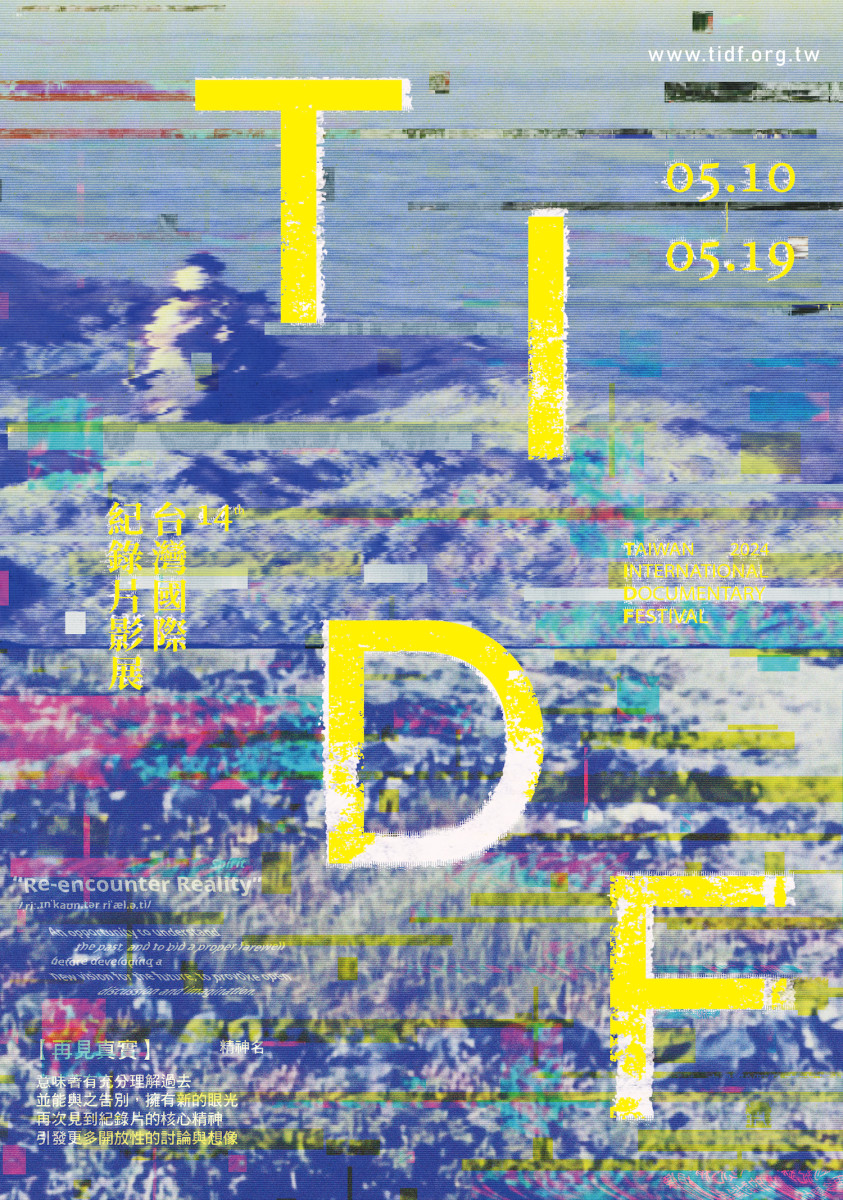
In the past days, the Taiwan International Documentary Festival (TIDF) has announced the official line-up for its 14th edition. Launched in 1998, the TIDF has slowly but surely become one of the most important festivals dedicated to documentary cinema in Asia. Held in various venues in the capital city of Taipei, the event will take place from May 10 to the 19, and will showcase the best non-fiction cinema produced in recent years —with a special attention and focus towards Asia, but also other parts of the world— through its four sections: the Asian Vision Competition, International Competition, Taiwan Competition, and TIDF Visionary Award.
This year, the festival will also commemorate two key figures in the development of documentary in Taiwan, Chang Chao-tang, author of works that are widely considered the first poetic and experimental documentaries in the island (The Boat-Burning Festival, Homage to Chen-Da), and ethnographic filmmaker pioneer Hu Tai-li (Voices of Orchid Island), who passed away in 2022. Unfortunately I will not be able to attend, one day though, one day…anyway these are the sections and the films.
Taiwan Competition A Holy Family Elvis LU|Taiwan, France
A Performance in the Church (World Premiere) HSU Chia-wei|Taiwan
All and Nothing (World Premiere) LIAO I-ling, CHU Po-ying|Taiwan
And Miles to Go Before I Sleep TSAI Tsung-lung|Taiwan
Come Home, My Child (Asian Premiere) Jasmine Chinghui LEE|Taiwan
Diamond Marine World HUANG Hsiu-yi|Taiwan
From Island to Island (World Premiere) LAU Kek-huat|Taiwan
I Must Keep Singing LIN Chih-wen, LIAO Ching-wen, CHUNG Hyeuh-ming|Taiwan
Lauchabo TSAI Yann-shan|Taiwan
Parallel World HSIAO Mei-ling|Taiwan
Taman-taman (Park) (World Premiere) SO Yo-hen|Taiwan
Pongso no Tao〜 Island of People TSAO Wen-chieh, LIN Wan-yu|Taiwan
The Clinic Midi Z|Taiwan、Myanmar
When Airplanes Fly Across LEE Li-shao|Taiwan
Worn Away CHEN Chieh-jen|Taiwan
Asian Vision Competition Atirkül in the Land of Real Men (Asian Premiere) Janyl JUSUPJAN|Czech Republic
As usual, the list below is a reflection of my taste, interests, and viewing habits during the past year. Some works are from 2022, but became available here in Japan just in 2023. The synopses are taken from Letterboxd (films are in no particular order).
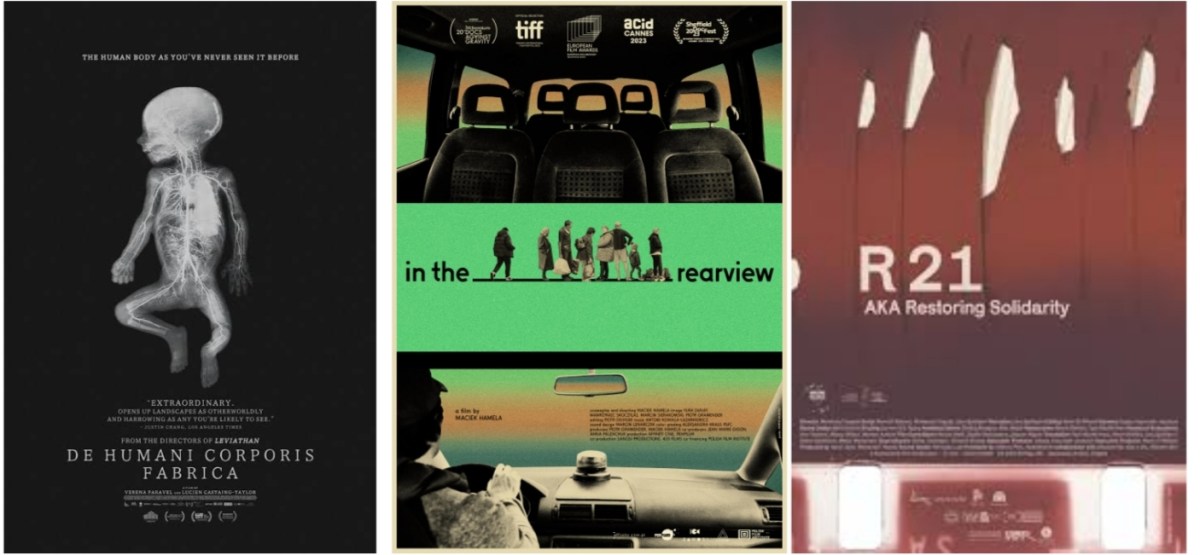
R 21 aka Restoring Solidarity (Mohanad Yaqubi) The growing struggle for Palestinian self-determination between 1960 and 1980 was supported by radical left-wing movements worldwide, also in Japan. This is illustrated by a collection of 16mm films by militant filmmakers from various countries, which were dubbed and screened in Japan. Their Japanese audiences felt oppressed by the US after World War II, and not only sympathized but also identified with the Palestinians.
De Humani Corporis Fabrica (Lucien Castaing-Taylor, Véréna Paravel) An extraordinary adventure through the interior of the human body; or the discovery of an alien landscape of unprecedented beauty.
In the Rearview (Maciek Hamela) A Polish vehicle traverses the roads of Ukraine. On board, people are evacuated following the Russian invasion. This van becomes a fragile and transitory refuge, a zone of confidences and confessions of exiles who have only one objective, to escape the war.
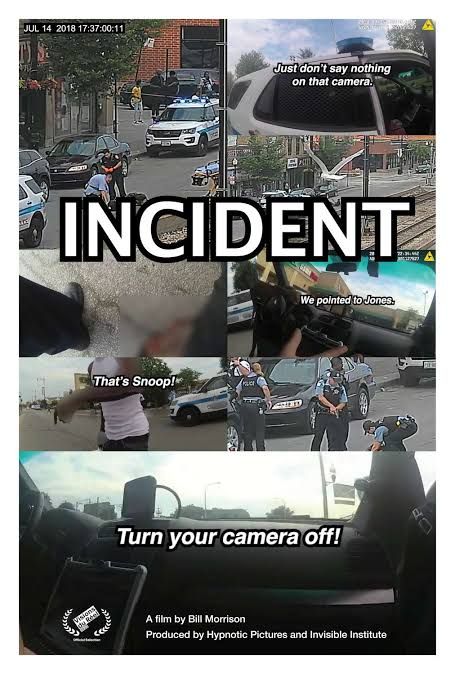
Incident (Bill Morrison) Chicago, 2018. A man is killed by police on the street. Through a composite montage of images from surveillance and security footage as well as police body-cams, Incident recreates the event and its consequences, featuring vain justifications, altercations and attempts to avoid blame. Bill Morrison delivers a chilling political investigation in search of the truth.
Losing Ground (Anonymous) In February 2021, Myanmar wakes up to the sounds of a military coup. The hopes of an entire generation are extinguished. Protests are held, but the dictatorship is too powerful: arrests, imprisonments and threats of execution ensue. The capital becomes a large open-air prison, but a few anonymous voices still have the strength to cry out.
Raat: Night Time in Small Town India (The Third Eye Portal) What is that you can see at night? What is allowed, what is not? What do you become a witness to?
The Natural History of Destruction (Sergei Loznitsa) Is it morally acceptable to use the civilian population as yet another tool for waging war? Is it possible to justify death and destruction for the sake of supposedly lofty ideals? The question remains as pertinent today as it was at the beginning of World War II, and it is becoming increasingly urgent to answer, as countless tragedies have been caused by unethical political decisions.
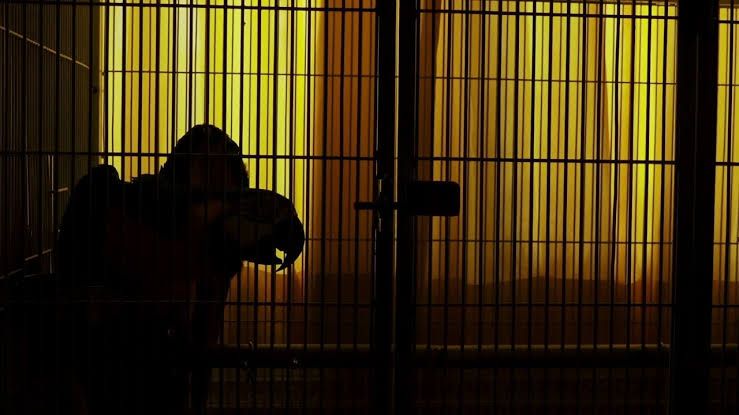
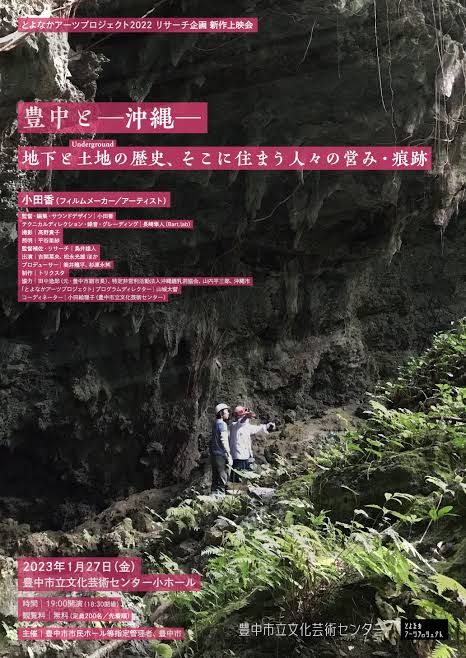
GAMA 2023 (Oda Kaori) A storyteller of peace serves as a guide in the “Gama”—natural caves where many local people lost their lives during the Battle of Okinawa. The woman in blue standing by his side represents the intersection of the present and the past. Here my report from the screening of the movie last January.
Youth (Spring) (Wang Bing) This film was shot between 2014 and 2019 in the town of Zhili, a district of Huzhou City in Zhejiang province, China. Zhili is home to over 18,000 privately-run workshops producing children’s clothes, mostly for the domestic market, but some also for export. The workshops employ around 300,000 migrant workers, chiefly from the rural provinces of Yunnan, Guizhou, Anhui, Jiangxi, Henan and Jiangsu.
Waorani Omede Beye Ante Nee Adani (Luisana Carcelén) For thousands of years, the Waorani women of the Ecuadorian Amazon have lived in perfect harmony with Mother Earth in the most bio diverse spot on the planet: the Yasuní. They have coexisted within this delicate ecosystem, allowing them to flourish while preserving their unique customs and traditions. However, the winds of change have swept through their lands, and now, the sacred place that grandmothers, daughters, and granddaughters have cherished as home stands under grave threat.










 Asian Docs
You must be logged in to post a comment.