Best (favorite) documentaries and discoveries of 2024

As usual, the list below reflects my tastes, interests and viewing habits during the year. Some works are from 2023, but only became available here in Japan in 2024. Synopses, in italics, are from Letterboxd. Films are listed in no particular order:

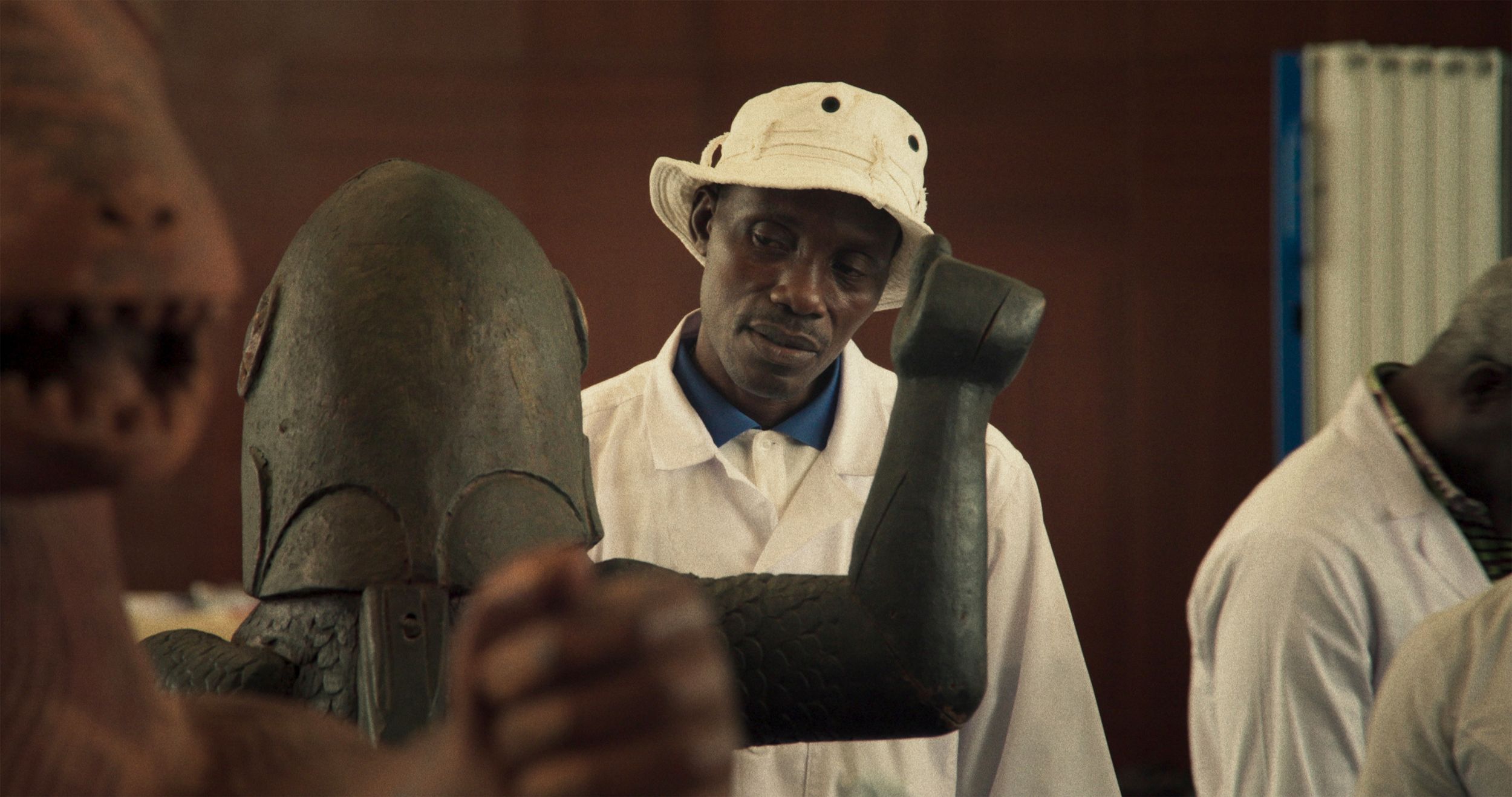
Dahomey (Mati Diop)
Thousands of royal artifacts of Dahomey, a West African kingdom, were taken by French colonists in the 19th century for collection and display in Paris. Centuries later, a fraction returned to their home in modern-day Benin. This dramatized documentary follows the journey of 26 of the treasures as told by cultural art historians, embattled university students, and one of the repatriated statues himself.
Dahomey is a mesmerising experiment, both visually and thematically: it poses so many questions about decolonisation, essentialism, the traces in the present left by the actions in the past, language, art, religious practices, politics, and the life of objects (Object Oriented Onthology?), while hinting at possible lines of flight…Diop has an incredible talent in capturing the beauty of people and things, and blend them together…
“I am the face of the metamorphosis”

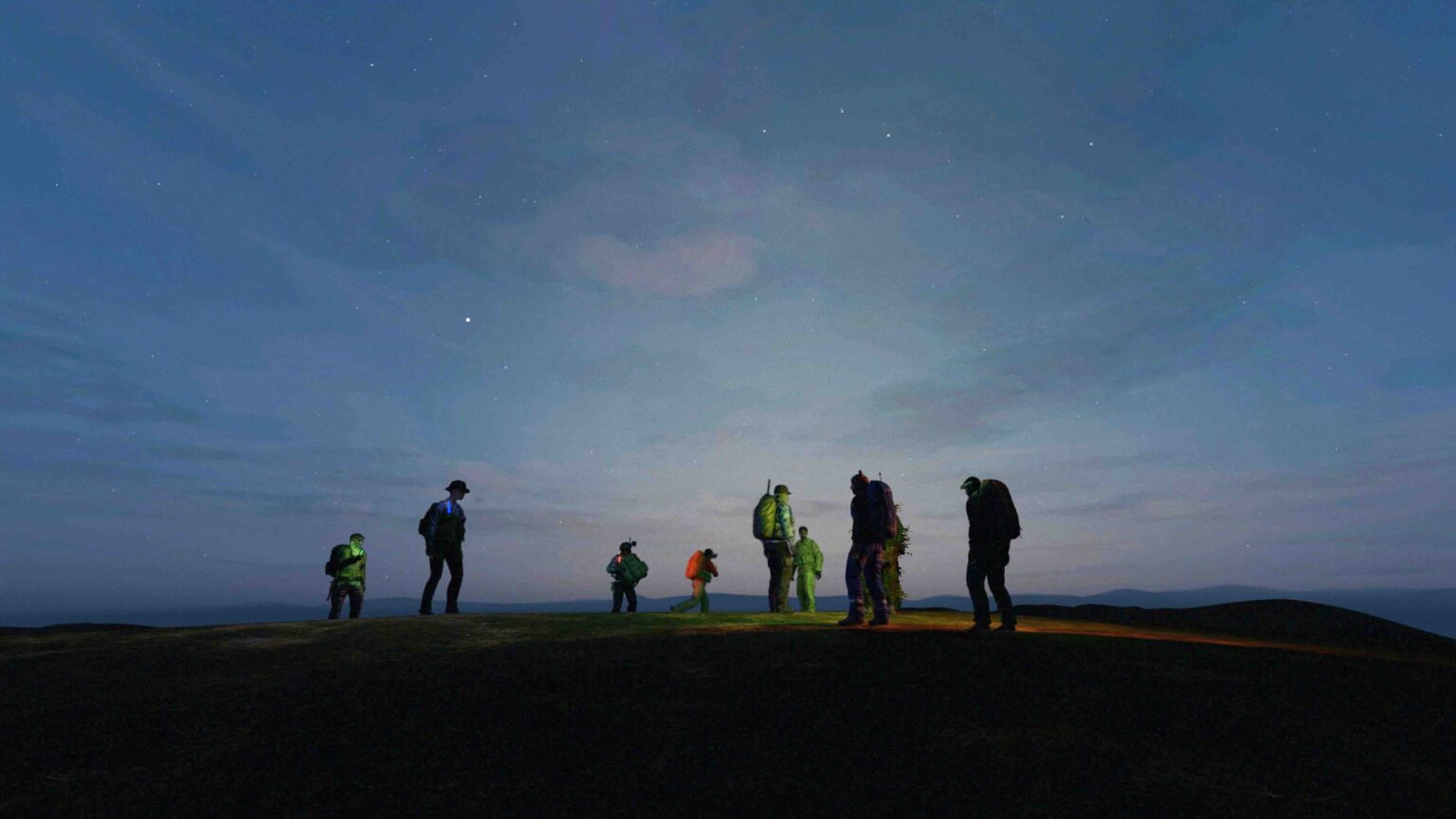
Knit’s Island (Ekiem Barbier, Guilhem Causse, Quentin L’helgoualc’h)
Somewhere on the internet is a land where communities pretend to live out a survivalist fiction. The avatars of the directors of Knit’s Island spent 963 hours there, creating a fascinating film resulting from their encounter with these communities. The “players” reveal their fears and fantasies, in an at times unsettling blurring of the real and the virtual.
I am not a gamer, and not particularly interested in online videogames, but when I first saw it at the Niigata International Animation Film Festival, it blew my mind. The reality of the virtual, complex, subtle, and much much more.

No Other Land (Yuval Abraham, Basel Adra, Rachel Szor, Hamdan Ballal)
Made by a Palestinian-Israeli collective, this documentary shows the destruction of the West Bank’s Masafer Yatta by Israeli authorities and the unlikely friendship that blossoms between Palestinian activist Basel Adra and Israeli journalist Yuval Abraham.


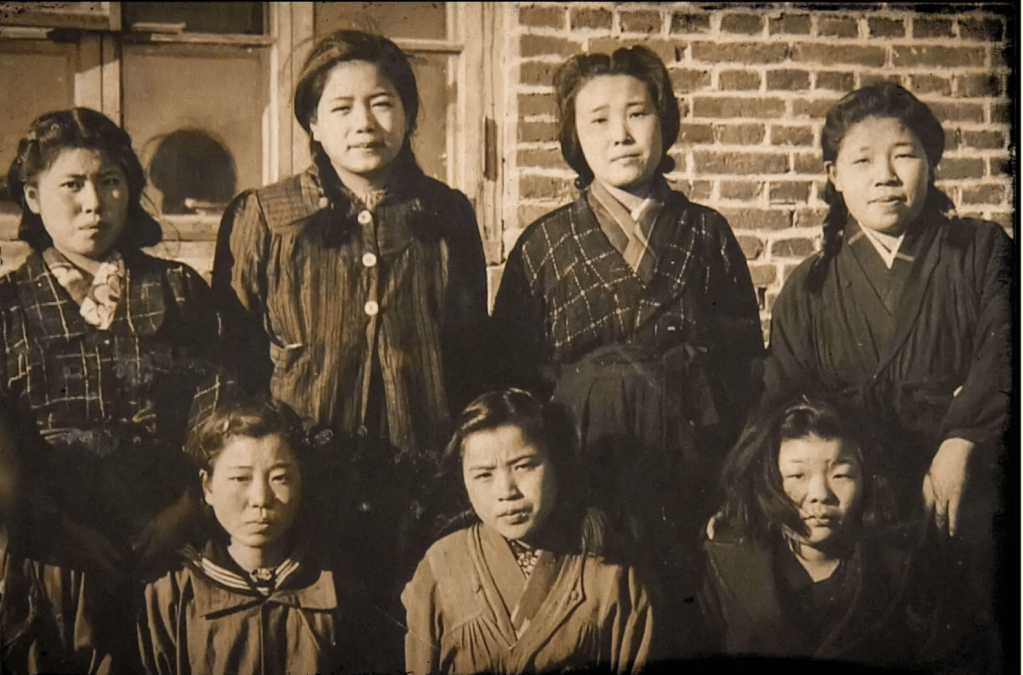
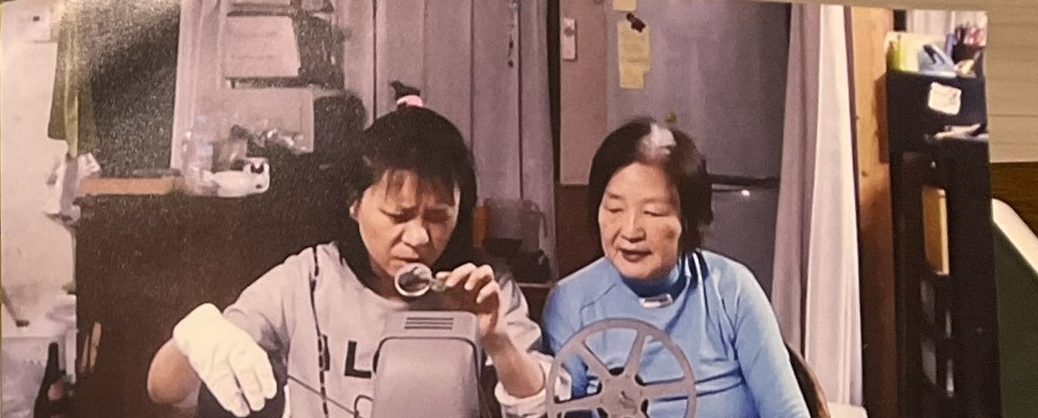
The Voices Of The Silenced (Park Maeui, Pak Su-nam)
Director Park Soo-nam, a second-generation Korean resident in Japan who is losing his eyesight, decides to digitally restore 16mm film she shot a long time ago, relying on her daughter Park Ma-eui’s eyesight. The blood, tears, and numerous corpses of Koreans living in Japan are clearly engraved in the film filmed over 50 years.

Hiroshima – Nagasaki (Ikezoe Shun)
Voices from Tsuyoshi Yamaguchi, who was twice exposed to the atomic bombs in Hiroshima and Nagasaki and later became a storyteller, as well as those who continue the storyteller activities with his daughters, grandchildren, and great-grandchildren, and other people who were twice exposed to the atomic bombs. How will a storyteller who was not involved in the story pass on the memories in the future?

Clouds of War (Mikami Chie)
This is the latest documentary by journalist and filmmaker Mikami Chie, a director whose previous works (The Targeted Village, Boy Soldiers: the Secret War in Okinawa, We Shall Overcome) have focused on the current situation in the Ryūkyū archipelago (Okinawa), its complex geopolitical history and the resistance of its people against the various American bases operating on the islands. Filmed over the course of eight years, beginning in 2015, Clouds of War documents the construction of military harbours and ammunition depots by the Japanese Self-Defence Forces, and more broadly, the general militarisation of the main island of Okinawa, Yonaguni, Miyako and Ishigaki. These frightening changes affecting the land and its citizens, such as the construction of underground shelters in Yoneguni or a plan to evacuate the inhabitants to Kyūshū, are being done in preparation for the next war on the horizon, the one between China and Taiwan.

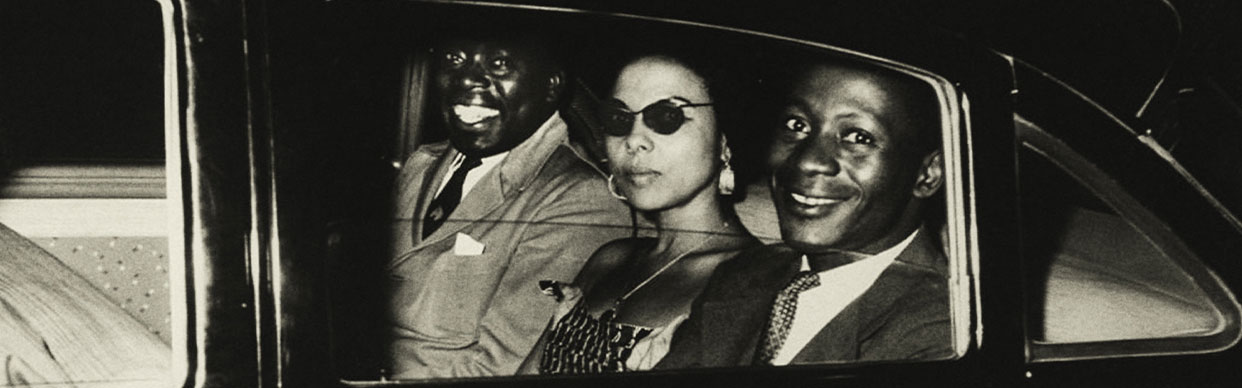
Soundtrack to a Coup d’État (Johan Grimonprez)
In 1960, United Nations: the Global South ignites a political earthquake, musicians Abbey Lincoln and Max Roach crash the Security Council, Nikita Khrushchev bangs his shoe denouncing America’s color bar, while the U.S. dispatches jazz ambassador Louis Armstrong to the Congo to deflect attention from its first African post-colonial coup.

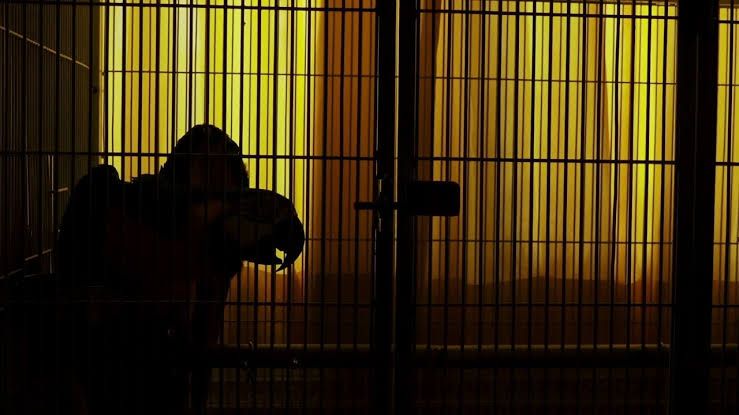
The Oasis I Deserve (Inès Sieulle)
Replika is a public platform that allows anyone to create a relationship with a chatbot trained by artificial intelligence. This chatbot has been designed to replace us with our loved ones after our death. Thus, its goal is to learn as much as possible about us in order to reproduce us identically. Through a walk that takes place only from the subjective point of view of Replikas, we see them evolve and discover the images & sounds of the world around them through a system of videos generated by artificial intelligence. Phone conversations that Replikas have with users fill the narration. The Oasis I Deserve is not a film that questions the system of machine/human domination under the axis of a future war against the machine. It is a film that is mainly human. It speaks about our relationship to the unknown and how we share violence. (source).
I was really impressed by the subject tackled and by the way the images, Francis Bacon like, are able to convey the themes and the feelings explored .

Black Box Diaries (Itō Shiori)
Journalist Shiori Itō embarks on a courageous investigation of her own sexual assault in an improbable attempt to prosecute her high-profile offender. Her quest becomes a landmark case in Japan, exposing the country’s outdated judicial and societal systems.
A powerful example of how women can reclaim their agency through the visual medium.

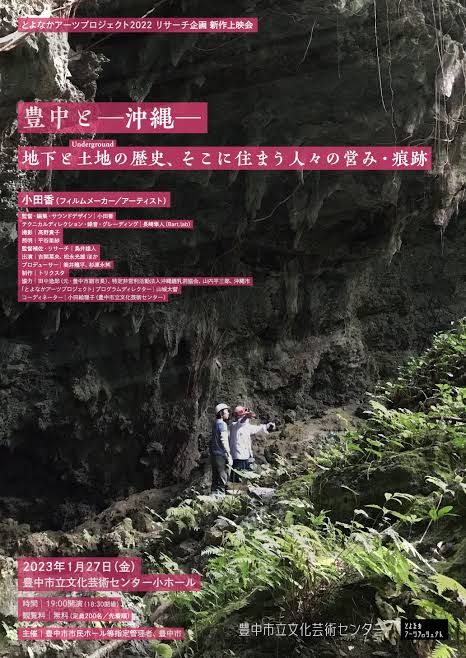
Underground (Oda Kaori)
The latest work by the Japanese artist, I have written about it, here: Sculpting space with light.


Discoveries:

Mother of Many Children (Alanis Obomsawin, 1977)
This film is an album of Native womanhood, portraying a proud matriarchal society that for centuries has been pressured to adopt different standards and customs. All of the women featured share a belief in the importance of tradition as a source of strength in the face of change.
Obomasawin’s first feature-length documentary is also one of her best (along with Kanehsatake and Restigouche, in my opinion): insightful, touching, multi-layered and beautifully constructed.

Echigo Okumiomote: A Traditional Mountain Village (Himeda Tadayoshi, 1984)
I wrote an article about the film: here.

A Grasscutter’s Tale (Fukuda Katsuhiko, 1985)
Part of the Sanrizuka notes that Fukuda took after he left Ogawa Pro in the late 1970s and the group moved to Yamagata, A Grasscutter’s Tale is a crucial film in the history and development of documentary practices in Japan. It occupies two spaces at once: a militant cinema and a cinema that explores the waves of history through the personal; in other words, it’s an oral film that uses images to explore the physical and historical space of a place.
Fukuda experiments with style and form, for example: one segment about a dream is completely dark except for a bright light in the top left corner of the screen, and in another, the narration explains, again on a black screen, how the re-enactment of an episode from the old lady’s life was scrapped at the request of her son, who was in it.
The episodic structure of the film, which is made up of 19 chapters (some comic, some tragic) that explore episodes in the life of the protagonist, does not capture a totality, but provides an image that leaves room for the creation of meanings. This is also reflected in the visual style used, where images and words are parallel and do not touch each other, so to speak.
I was lucky enough to attend a screening of the documentary in 16mm, the greens of the crops and grass are almost tactile, and the time-lapse scene of the setting sun, here a fiery red, is similar to that used in Magino Village: A Tale.

addendum (January 5, 2024): I forgot Tokyo Trial (Kobayashi Masaki, 1983), one of the fews examples of found footage/compilation documentary in the history of Japanese cinema.

Best (favorite) documentaries of 2023

As usual, the list below is a reflection of my taste, interests, and viewing habits during the past year. Some works are from 2022, but became available here in Japan just in 2023. The synopses are taken from Letterboxd (films are in no particular order).

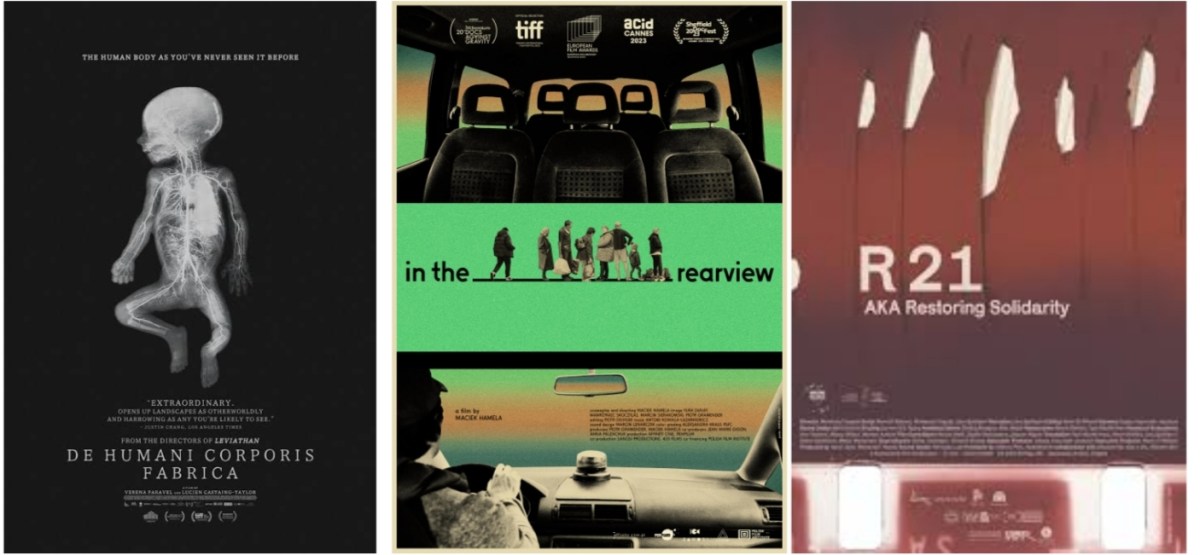
R 21 aka Restoring Solidarity (Mohanad Yaqubi) The growing struggle for Palestinian self-determination between 1960 and 1980 was supported by radical left-wing movements worldwide, also in Japan. This is illustrated by a collection of 16mm films by militant filmmakers from various countries, which were dubbed and screened in Japan. Their Japanese audiences felt oppressed by the US after World War II, and not only sympathized but also identified with the Palestinians.

De Humani Corporis Fabrica (Lucien Castaing-Taylor, Véréna Paravel) An extraordinary adventure through the interior of the human body; or the discovery of an alien landscape of unprecedented beauty.

In the Rearview (Maciek Hamela) A Polish vehicle traverses the roads of Ukraine. On board, people are evacuated following the Russian invasion. This van becomes a fragile and transitory refuge, a zone of confidences and confessions of exiles who have only one objective, to escape the war.

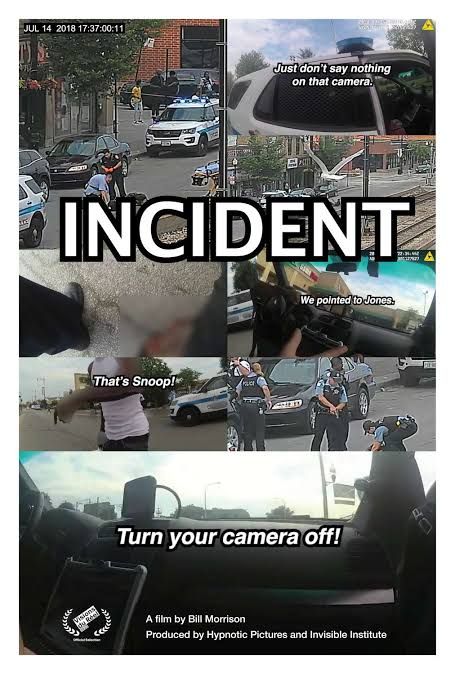
Incident  (Bill Morrison) Chicago, 2018. A man is killed by police on the street. Through a composite montage of images from surveillance and security footage as well as police body-cams, Incident recreates the event and its consequences, featuring vain justifications, altercations and attempts to avoid blame. Bill Morrison delivers a chilling political investigation in search of the truth.

Losing Ground (Anonymous) In February 2021, Myanmar wakes up to the sounds of a military coup. The hopes of an entire generation are extinguished. Protests are held, but the dictatorship is too powerful: arrests, imprisonments and threats of execution ensue. The capital becomes a large open-air prison, but a few anonymous voices still have the strength to cry out.

Raat: Night Time in Small Town India (The Third Eye Portal) What is that you can see at night? What is allowed, what is not? What do you become a witness to?

The Natural History of Destruction (Sergei Loznitsa) Is it morally acceptable to use the civilian population as yet another tool for waging war? Is it possible to justify death and destruction for the sake of supposedly lofty ideals? The question remains as pertinent today as it was at the beginning of World War II, and it is becoming increasingly urgent to answer, as countless tragedies have been caused by unethical political decisions.

GAMA 2023 (Oda Kaori) A storyteller of peace serves as a guide in the “Gama”—natural caves where many local people lost their lives during the Battle of Okinawa. The woman in blue standing by his side represents the intersection of the present and the past. Here my report from the screening of the movie last January.

Youth (Spring) (Wang Bing) This film was shot between 2014 and 2019 in the town of Zhili, a district of Huzhou City in Zhejiang province, China. Zhili is home to over 18,000 privately-run workshops producing children’s clothes, mostly for the domestic market, but some also for export. The workshops employ around 300,000 migrant workers, chiefly from the rural provinces of Yunnan, Guizhou, Anhui, Jiangxi, Henan and Jiangsu.

Waorani Omede Beye Ante Nee Adani (Luisana Carcelén) For thousands of years, the Waorani women of the Ecuadorian Amazon have lived in perfect harmony with Mother Earth in the most bio diverse spot on the planet: the Yasuní. They have coexisted within this delicate ecosystem, allowing them to flourish while preserving their unique customs and traditions. However, the winds of change have swept through their lands, and now, the sacred place that grandmothers, daughters, and granddaughters have cherished as home stands under grave threat.

Documentary discoveries of 2022

No best documentaries list for me this year, unfortunately I have not seen, or liked, enough films to make one. Instead, I have compiled a list of the best documentary discoveries I had in the past 12 months (the first two are actually movies released in 2022). As usual, the films are listed in no particular order.


名付けようのない踊りThe Unnameable Dance (2022) by Inudo Isshin is the portrait of dancer and performer Tanaka Min, one of the most fascinating Japanese artists alive. The documentary retraces some of the events and encounters that guided his life as a dancer and actor, such as meeting Hijikata Tatsumi in the 1960s, and dancing in Paris in 1978, a trip that de facto launched Tanaka’s career, and a place where he met Roger Caillois, a writer Tanaka strongly admired (the title of the movie is taken from a sentence the French writer used to describe Tanaka’s dance). The documentary, using Tanaka’s own narration, continues by retelling his debut as an actor in Yamada Yōji’s Twilight Samurai (2002), an event that kicked off, at the age of 57, his career in cinema, and focuses also on his work as a farmer, an important part of his life, as he famously stated “In agriculture one can find the anti-modern coming from the past. There you find the concreteness of the present.”
The retelling of all these experiences is interspersed with some of his recent performances, always awe-inspiring, even when mediated by the camera. Performances that were recorded in Japan, but also abroad, in Paris, and especially in Portugal, a country where the documentary begins and ends. The film is an enthralling viewing experience also because it is constructed by interweaving Tanaka’s performances with Yamamura Kōji ‘s beautiful and affective animation, used here mainly to depict Tanaka’s memories and dreams as a child.
Particularly significant is also how the documentary includes purposely the audience, their faces and their reactions when filming Tanaka’s performances in public spaces, since dance is, for the artist, born between dancer, place, and audience.

In Fire of Love (2022)American documentarian Sara Dosa crafted a fascinating work assembling images and films shot around the world in the course of their life by two French volcanologists, Katia and Maurice Krafft. Dosa interweaves these images with other videos about them, and wrapped up everything with the narration of actress, filmmaker and artist Miranda July. I would have preferred a movie made entirely of their films without narration, while July’s voice is very affective, but it is nonetheless a powerful viewing experience. Not only because of the spectacular images, but also because the documentary is very good at delving into the obsession and raison d’etre that guided the life, and ultimately the death, of the couple.

Origin of Cosmos (Lothar Baumgarten) was for me the cinematic experience of 2022, I had the chance to see the movie at the Aichi Triennale, where is was screened in a loop in a very dark room as an installation. Shot between 1973–1977 and finished in 1982, Origin od Cosmos is based on a myth of the Tupi people, a South America’s indigenous group, and while conceptually it is a film about the rain forest, it was filmed in its entirety along the Rhine near Düsseldorf Airport. It is a sensorial experience, as people nowadays say, that envelops the viewers with images and especially with the cacophonous soundscape. Animate and inanimate life is displayed and amassed on screen like a Pollock’s painting: stones, insects, trees, soil, mud, plastic, branches, spiders, eyes, the moon, the sky…
It has to be seen in darkness, because in some of its parts the shapes emerging from the pitch black background are very subtle. I definitely need to do more research on the movie, its production history, filming, and on director Lothar Baumgarten himself.

東京‘69 – 青いクレヨンのいつかは . . . Tokyo ’69 – one day blue crayons . . . (1969) and 治安出動草稿 お昼の戒厳令 Public Order Project: Martial Law at Noon (1981) are two recently discovered works made by the collective NDU (Nihon Documentary Union). I wrote about them here.

死者よ来たりて我が退路を断て Dead, Come and Cut Off my Retreat (1969) is a documentary chronicling the resistance of the students at Nihon University (College of Art) in 1968-69 made by a group of activists called グループびじょん Group Vision, people working at the time at Nippon Eiga Shinsha.
Besides being a powerful documentary about a certain type of resistance at a crucial time in Japan, what I found extremely compelling is how the film is also a profound exploration of places and spaces. It is an interesting documentary also because it gives voice, not much, but more than usual in these kind of contexts in Japan, to women on screen, but also off screen. Among the members of the group, there were at least two women in important positions: Kitamura Takako was one of directors, and Sasaki Michiko one of the cameraman.
Group Vision was also involved in the production of Ogawa Shinsuke’s A Report from Haneda, and Dead, Come and Cut Off My Retreat (the English title is unofficial) has definitely a similar tone. Apparently Jōnouchi Motoharu was also affiliated for a period of time with the group, but I cannot confirm. The group has uploaded the movie on YouTube:

Autour de Jeanne Dielman( Sami Frey, 1975) is a touching document of the filming of Jeanne Dielman, 23, quai du Commerce, 1080 Bruxelles, a window open to the fascinating working relationship between Chantal Akerman and Delphine Seyrig, and to the making of a masterpiece. The movie is available through Another Screen, here.

Before the Flood (Yifan Li, Yu Yan, 2005) chronicles the death of Fengjie, on the Yangtze River, a city and its people slowly being executed and reduced to rubbles by the state and “progress”, in order to make way for the new Three Gorges Dam that eventually ended up flooding the entire valley.

2H (Li Ying, 1999) is a compelling piece of documentary cinema about ageing, the Chinese diaspora, and a group of Chinese expatriates in Tokyo at the end of last century. Ma Jinsan is a 95 year-old former Kuomintang general who defected to Japan nearly 50 years earlier, shortly after the Communist revolution, who has a strong connection with Xiong Wenyun, a young avant-garde artist.
Through the DV camcorder’s aesthetics, used here to its full potential, everything is hugely impactful in 2H, from the staged scenes of Xiong and her lover, to the portrait of Ma, from the dialogic relationship between the camera/director Li and all the people filmed, to the touching finale with Tokyo covered in snow.

Incident at Restigouche (Alanis Obomsawin, 1984) is a documentary chronicling two raids on the Listuguj Mi’gmaq First Nation (Restigouche) by the Sûreté du Québec in 1981, as part of the efforts of the Quebec government to impose new restrictions on Native salmon fishermen. The film, constructed through interviews, photos, and original footage, explores the history behind the Quebec Provincial Police (QPP) raids and the reasons of the protests. The Quebec government had decided to restrict salmon fishing, traditionally an important source of food and income for Micmac Indians. It’s a bless every time we can watch a movie from an author we have never seen anything of, and get blown away; a cinematic door opens in front of us presenting and offering a new landscape to explore. This was for me Incident at Restigouche, and I’m looking forward to watching more documentaries by Obomsavin this year.

Model (1981) Every time I watch a new (for me) film by Frederick Wiseman it is a discovery, this one was glorious, one of his most entertaining, and at the same time, ça va sans dire, deep works. A pivotal film in his career, where something new started to surface. Perhaps the first documentary where he started to use extensively the “pillow shots”. Listen to the excellent Wiseman Podcast, a perfect companion to his documentaries, if you decide to delve in his filmography.

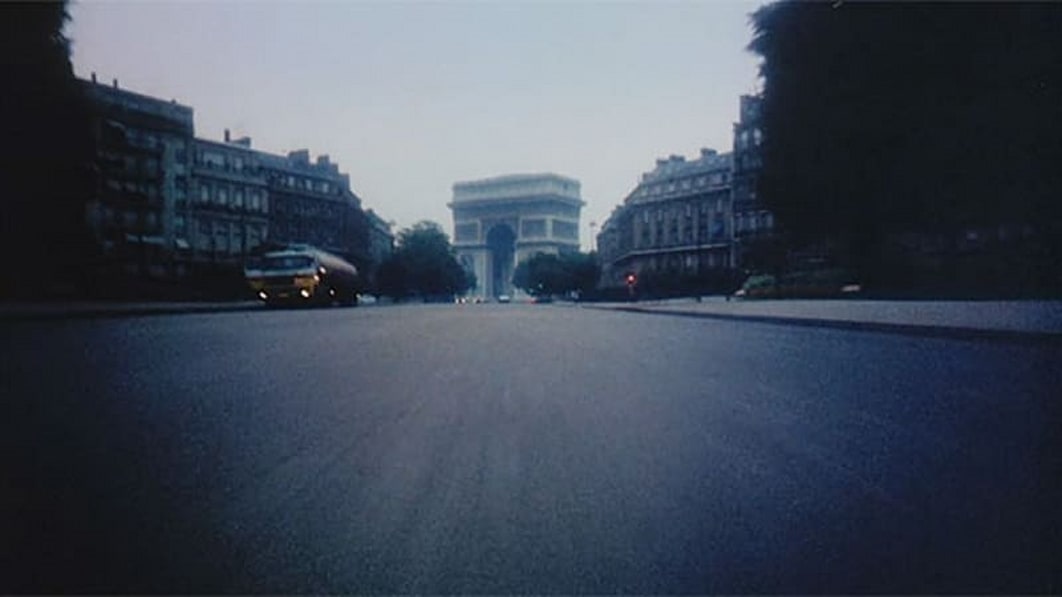
C’etait un Rendezvous (Claude Lelouch, 1976), eight adrenalinic minutes of high-speed drive through the street of Paris.

Personal documentary, diary films, first-person cinema and “Self documentary” in Japan

Originally published in 2018, edited with some minor changes on September 2022, in remembrance of Suzuki Shiroyasu (1935-2022)

Cinephiles and film buffs on the internet, and specifically those active on social media, are often times obsessed by lists. Although I’m not a big fan of them when used to rank movies, it is nonetheless unquestionable that lists are one of the best tools, when properly used that is, to discover new movies and explore novel cinematic landscapes.

In the past month I’ve asked on Twitter to list some of the most significant or favourite personal documentaries/diary films made in Japan. Some friends were kind enough to reply and share some titles, some of which I wasn’t aware of.

With this feedback in mind, I started to collect my thoughts and compile a list of what I consider the most important personal documentaries made in Japan since the advent of cinema. I’ve also included some titles I have not seen yet, don’t kill me for this, but I’ve trusted what has been written and discussed by people I trust and respect.

Before starting to explore what the list has to offer, let me clarify what we mean when we talk about “personal documentary”. Keeping in mind that the definition is always vague, in flux and susceptible to change, and so is the term documentary, I think we can approach a sort of truthfulness by stating that personal documentaries are works often made, but not always, in the first person and about the life of the director/cameraman. For these reasons often they are also called, or more precisely they overlap with, diary films and first-person cinema.

In Japan the term often used to define this kind of works is “Self Documentary” セルフ ドキュメンタリー. Illuminating in this respect is this piece written by Nada Hisashi for the Yamagata International Documentary Film Festival in 2005. Also available on the YIDFF site, an interview with Matsumoto Toshio conducted by Aaron Gerow, in it the theoretician and director criticized some trends in the Japanese self documentary scene of the 1990s, a take that, for what is worth, I agree with:

there are problems with an “I” which doesn’t doubt its “self” and the so-called “I-films” (watakushi eiga) share those: they never put their “I” in question. Since they don’t attempt to relativize themselves through a relationship with the external world, they gradually become self-complete–a pre-established harmony.

With this in mind, let’s start:

Extreme Private Eros: Love Song 1974 (Hara Kazuo, 1974)

My favourite film by Hara Kazuo, at the moment, maybe together with Minamata Mandala, one of the cinematic highlights of the second part of his career. The movie is one of the first and finest examples of diary cinema and personal documentary in Japan, and contrary to what many films made in the following decades did, Extreme Private Eros is a sublime embodiment of the famous artistic motto of the 1960s and 1970s “the personal is political”.

Impressions of a Sunset (Suzuki Shiroyasu, 1975)

If Extreme Private Eros is where the Japanese personal documentary started, Impression of a Sunset is where the diary film à la Mekas emerged in the Japanese archipelago. Mostly unknown outside Japan, it’s in every way a diary composed by images where Suzuki, after buying a CineKodak 16 (a pre-war 16mm camera) at a second hand camera shop, starts filming his wife, his newborn baby and his workplace. With Impressions of a Sunset and other works such as 15 Days (1980), Suzuki is more a poet with a camera than a documentarian in the sense we give the term today.

Embracing (1992) and Katatsumori (1994)

Probably the most known personal documentarian from Japan, Kawase started her career with short home movies about the search for her father, who abandoned her as a child, in Embracing, and about the strong bond with her grandmother, who became de facto her adopted mother, in Katatsumori.

Memories of Agano (Satō Makoto, 2004)

I’ve written extensively about the movie and its hybrid and experimental qualities, clearly it’s much more than a personal documentary, but director Satō and his cameraman returning to the locations and the people filmed more than 10 years before in Niigata, make it a movie perfect for this list.

Dear Pyongyang (2006) and Sona, the Other Myself (2009) by Yang Yong-hi

A documentary by zainichi Korean director Yang Yong-hi about her own family. It was shot in Osaka (Yang’s hometown) and Pyongyang, North Korea. In the 1970s, Yang’s father, an ardent communist and leader of the pro-North movement in Japan, sent his three sons from Japan to North Korea under a repatriation campaign sponsored by ethnic activist organisation and de facto North Korean embassy Chongryon; as the only daughter, Yang herself remained in Japan. However, as the economic situation in the North deteriorated, the brothers became increasingly dependent for survival on the care packages sent by their parents. The film shows Yang’s visits to her brothers in Pyongyang, as well as conversations with her father about his ideological faith and his regrets over breaking up his family. In Sona, the Other Myself the director continues the exploration of her family, Sona is the daughter of her brother who moved to North Korea from Japan in the early 1970s. Narrating her story, the film shows the struggles of a generation that migrated from Japan to North Korea, and the life of their offspring, who were born and raised in North Korea. (from Letterboxd).

Ending Note: Death of a Japanese Salesman (Sunada Mami, 2011)

Recently retired from a company after some 40 years of service, Sunada Tomoaki, father of filmmaker Sunada Mami, is diagnosed with terminal cancer and only has a few months left to live. True to his pragmatic core, Sunada sets out to accomplish a list of tasks before his final departure: playing with his grandchildren, planning his own funeral, saying “I love you” to his wife, among others. (from Letterboxd)

Everyday is Alzheimer’s (2012), Everyday Is Alzheimer’s 2 – The Filmmaker Goes to Britain (2014) Everyday Is Alzheimer’s the Final: Death Becomes Us (2018) by Sekiguchi Yūka

Director Sekiguchi Yūka documents and depicts the daily life of her dementia-diagnosed mother and how this changed her family’s life.

Yongwanggung : Memories from Across the Water ( Kim Im-man, 2016)

Statement from the director: “Yongwangung was a Gutdang (shaman’s shrine) where first generation Korean women who crossed the seas from Jeju to Japan use to go before the Second World War. In 2009, I heard that the shrine was about to be demolished by the Osaka city government. My childhood memory of my mother praying in the kitchen came back when I was filming elderly women in Jeju. I felt the urge to have a shamanistic ritual for my mother who had been hospitalized.”

Home Sweet Home (Ise Shinichi, 2017)

This was one of the movies I was more eager to see last year, but unfortunately I couldn’t catch it. The film covers 35 years in the life of filmmaker Ise Shinichi’s family, documenting his disabled niece Nao since 1983.

Special mentions

Toward a Common Tenderness (Oda Kaori, 2017)

It’s one of my favourite viewings of the year, but it has just come out and I need to rewatch it, that’s why it’s not included in the list. The balance between the personal and the poetic is what makes it special.

Magino Village – A Tale (Ogawa Shinsuke, 1986)

As the mysterious object of Japanese documentary per excellence, Magino Village goes of course far beyond the realm of personal films, but somehow this sprawling movie is, among other things, the result and the partial documentation of more than a decade spent in Yamagata by the Ogawa collective.

Best (favorite) documentaries of 2020

As usual, the list below is a reflection of my taste, interests, and viewing habits during 2020. For obvious reasons I have not attended any film festivals in person, but the online viewing events organized all over the globe were, for me at least, one of the few positive things to come out of this annus horribilis.

Synopsys in italics, followed by my quick take and the trailer:

Expedition Content (Veronika Kusumaryati, Ernst Karel)

In 1961, filmmaker Robert Gardner organized the Harvard Peabody Expedition to Netherlands New Guinea (current day West Papua). Funded by the Dutch colonial government and private donations, and consisting of several of the wealthiest members of American society wielding 16mm film cameras, still photographic cameras, reel-to-reel tape recorders, and a microphone, the expedition settled for five months in the Baliem Valley, among the Hubula (also known as Dani) people. It resulted in Gardner’s highly influential film Dead Birds, two books of photographs, Peter Matthiessen’s book Under the Mountain Wall, and two ethnographic monographs. Michael Rockefeller, a fourth-generation member of the Rockefeller (Standard Oil) family, was tasked with taking pictures and recording sound in and around the Hubula world. Expedition Content is an augmented sound work composed from the archive’s 37 hours of tape which document the strange encounter between the expedition and the Hubula people. The piece reflects on intertwined and complex historical moments in the development of approaches to multimodal anthropology, in the lives of the Hubula and of Michael, and in the ongoing history of colonialism in West Papua.

Visual representation and the obsession with it has become, in our society, a black hole absorbing and distorting everything around it. Expedition Content, by offering us for most of its duration a black screen —the are only some written words, and a couple of minutes of images towards the end—allows the sound to take prominence. The freshness of the encounter and discovery, different languages, different sounds, different time, is here preserved and conveyed with an almost haptic quality. It is a work where the experience for the “viewer” is thus channeled through sounds and voices, however I firmly believe it is primarily a film to be watched, possibly on a big screen, in that it establishes its discourse within the frame of the power of (here absent) images.

Expedition Content is also a theoretical piece that goes deeply into colonialism and how the anthropology endeavor, at least a certain way of doing anthropology, is deeply embedded in it. The last 20 minutes of the movie (I’m not revealing more because I don’t want to spoil it) are in this regard an incredible exposure of the stance of the anthropologist as a colonial subject.

By far the best work I saw this year, fiction or non-fiction, it definitely deserves a stand alone and more in-depth piece (I’m working on it, hopefully it will be ready early next year).


The Brilliant Biograph: Earliest Moving Images of Europe (1897-1902)

A compilation film of newly-restored rare images from the first years of filmmaking. Immerse yourself in enchanting images of Venice, Berlin, Amsterdam and London from 120 years ago. Let yourself be carried away in the mesmerizing events and celebrities of the time, and feel the enthusiasm of early cinema that overcame the challenge of capturing life-like movement.

One of the highlights of the Le Giornate del Cinema Muto/Pordenone Silent Film Festival, which this year moved its edition online. An incredible and touching dive into the anodyne beauty of everyday life, captured 120 years ago.


Concrete Forms of Resistance (Nick Jordan)

Filmed in Beirut and Tripoli, Lebanon, Concrete Forms of Resistance is a documentary centred upon Tripoli’s abandoned ‘Permanent International Fair’, designed by Brazilian architect Oscar Niemeyer in the mid-1960s. The film presents themes of progress and crisis, labour and capital, material and memory, contrasting the utopian vision of the original plans with the stark realities of sectarian divisions, regional conflicts and rising economic inequalities.

A short documentary I watched back in February, although it feels like ages ago, Jordan’s film is an enthralling journey through the recent history of the Middle East seen through the lens of Oscar Niemeyer’s works.


Dick Johnson is Dead (Kirsten Johnson)

As her father nears the end of his life, filmmaker Kirsten Johnson stages his death in inventive and comical ways to help them both face the inevitable.

Stylistically I was expecting something different, so it didn’t have the impact I thought it would, yet the way Kirsten Johnson is able to blend grief and laughs was touching, healing and in the end refreshing.


Edo Avant-Garde (Linda Hoaglund)

Edo Avant-Garde reveals the pivotal role Japanese artists of the Edo era (1603 – 1868) played in setting the stage for the “modern art” movement in the West. During the Edo era, while a pacified Japan isolated itself from the world, audacious Japanese artists innovated stylization, abstraction, minimalism, surrealism, geometric composition and the illusion of 3-D. Their elegant originality is most striking in images of the natural world depicted on folding screens and scrolls by Sotatsu, Korin, Okyo, Rosetsu, Shohaku and many others who left their art unsigned.

While thematically is in another universe, stylistically the movie is very similar to Hoaglund’s ANPO: Art X War (2010). Coproduced by NHK, Edo Avant-Garde was shot using a special Sony 4k camera, and the sound and music used are also superb. For me it was the perfect viewing experience during the partial “lockdown” we had here in Japan in Spring. Soothing.


Me and the Cult Leader (Sakahara Atsushi)

Me and the Cult Leader — A Japanese Documentary on the 1995 Tokyo Sarin Gas Attack perpetrated by doomsday cult Aum Shinrikyo, following victim Atsushi Sakahara’s travels with current cult executive Hiroshi Araki.

Don’t be misguided by the trailer below, the film is a slow meditation on the banality of evil, and an exploration of a fascinating and problematic relationship. 


Archiving Time (Lu Chi-yuan)

In Taiwan, there is a group of people participating in this race against time. They are hidden inside the film archive of New Taipei City’s “Singapore Industrial Park”, where the 17,000-plus film reels and over a million film artifacts have become their spiritual nourishment. Day after day, they shuttle back and forth inside, carrying their doubts, their learnings, and their faith. What they are doing is awakening these long-neglected film reels, then piecing together the no-longer-existent social atmospheres and lives of distant pasts recorded on them. And spending time in this archive has become everyday life for these film archivists and restorers.

If you are a lover of movies and interested in how preservation and archiving are changing and shaping what the history of cinema, in this particular case, Taiwan cinema, will be in the near future, this is the documentary for you.


Fireball: Visitors From Darker Worlds (Werner Herzog, Clive Oppenheimer)

Fireball: Visitors From Darker Worlds takes viewers on an extraordinary journey to discover how shooting stars, meteorites and deep impacts have focused the human imagination on other realms and worlds, and on our past and our future.

While Family Romance was a complete letdown, a disaster both stylistically and content-wise, I quite enjoyed this documentary released on Apple TV a couple of months ago. “Enjoyed” is the correct word because this is, make no mistakes about it, 100% Herzog, for better or worse, and at the end of the day a documentary fully drenched in the public persona he has become in the last 10 years or so. That being said, the themes tackled and the time framing of the events narrated and shown on screen really resonated with me.


Ghosts: Long Way Home (Tiago Siopa)

After a spell cast by Grandma Faraway, the oldest son of a small family encounters the ghost of his late Grandma Maria still living in her old house, and they chat as they used to.

Moving between documentary and fiction, the film explores the memories of a family and those of an area, in a slow-paced style reminiscing of Pedro Costa’s cinema. Beautifully photographed, this hybrid experiment works also a visual poem and an ode to rural Portugal and its ancestral and magical/pagan beliefs. The dreamlike quality that is infused throughout the whole film really works well, but at the same time I think that some scenes could have been left out, especially those in the second half of the movie when the magical realism and the ghost story aspects are pushed too much on the surface and become too on the nose, so to speak.


Lil’Back: Real Swan (Luis Walkecan)

Dancer Lil’ Buck grew up jookin and bucking on the streets of Memphis. After a breathtaking video of him dancing to Camille Saint-Saëns’ “The Swan” accompanied by cellist Yo-Yo Ma went viral, everything changed.

A documentary about a topic I was not familiar at all, and yet, or because of this, it was a nice surprise, a discovery of a world.

Best (favorite) documentaries of 2019

Here we go again, like every year and like all (wanna-be) respectable cinema blogs or cinephiles around the web, these are my personal favorite documentaries of 2019. As usual, and it goes without saying, the list below is a reflection of my taste, interests and viewing habits during 2019, and thus it is mainly composed of documentaries made in the Eastern part of the Asian continent (but there are few exceptions of course).


Outstanding works (unranked)

Many Undulating Things (Wang Bo, Pan Lu)
History, art, geography and colonialism mixed in an aesthetically challenging piece of work. The movie is an expansion of Miasma, Plants, Export Paintings, a short made in 2018 by Wang Bo and Pan Lu.

No Data Plan (Miko Revereza)
A travelogue and a drifting through America to explore the identities of undocumented immigrants, the director himself and his mother.

Memento Stella (Takashi Makino)
Like a wave of spiritual materialism in continuous becoming.

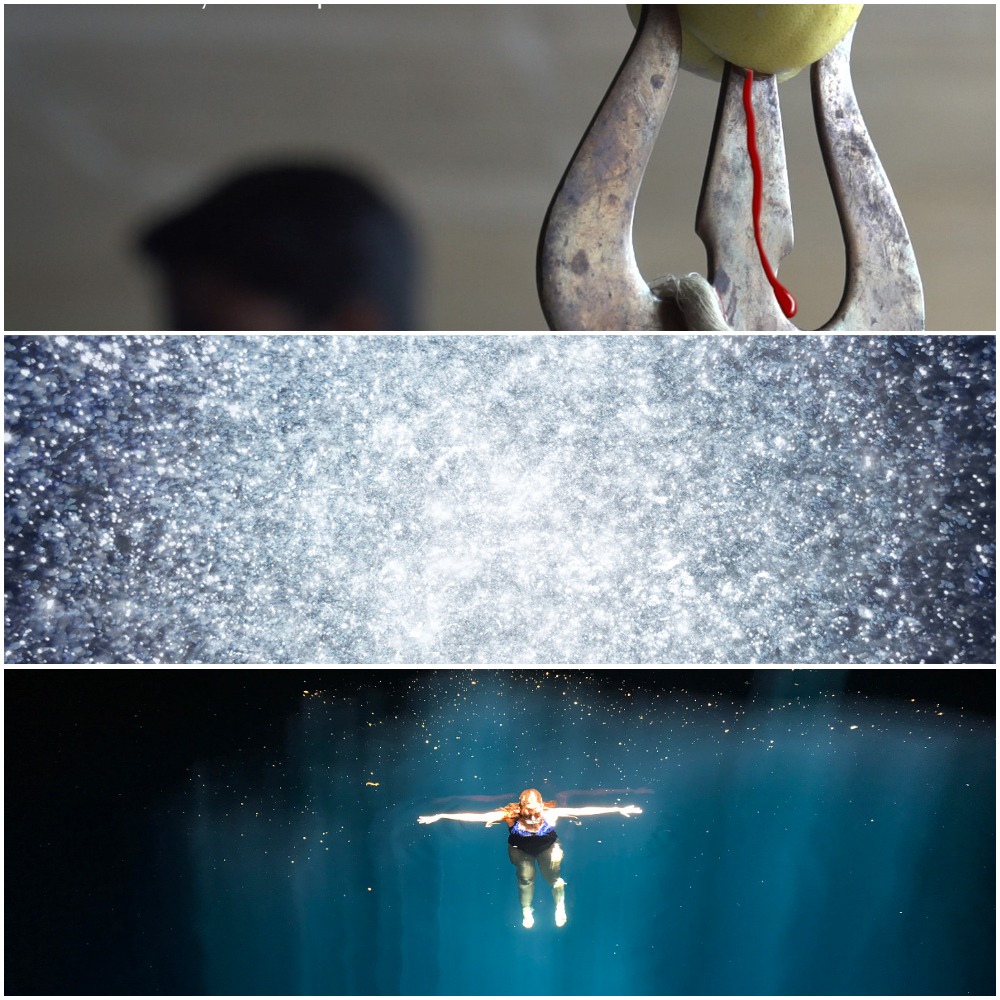
Cenote (Ts’onot) (Oda Kaori)
After Aragane, and Toward a Common Tenderness Oda moves her attention to the cenotes in Mexico. It’s not a perfect movie, but has some of the most impressive combination of sound and images I’ve seen last year. Entrancing to say the least.

Reason (Anand Patwardhan)
Fascism in contemporary India.

This slideshow requires JavaScript.


Honorable mentions:

Indiana, Monrovia(Frederick Wiseman)

Happy Android (Jaina Kalifa)

The Holiday Inn-Side (Charby Ibrahim)

Dutch Angle: Chas Gerretsen & Apocalypse Now (Baris Azman)


Special (re)discoveries:

The Man Who Has a Camera (Liu Na’ou, 1935)

Kobayashi Issa (Kamei Fumio, 1941)

Senso Daughter (Sakiguchi Yuko, 1990)


Best cinematic experience

By far the best viewing experience I had in 2019 was not at all an orthodox cinematic experience. At Yamagata  I was lucky enough to be at a Gentou (magic lanterns) screening, dedicated to the grass-roots movements in the Miike mine’s strikes during the 1950s.


Kinema Junpo Best Japanese Documentaries of 2018

A couple of weeks ago the film magazine Kinema Junpo announced its 2018 Best Ten Lists. Launched in 1924 with only non-Japanese films, and from 1926 including Japanese movies as well, the poll includes, in its present form, four categories: Japanese movies, non-Japanese movies, bunka eiga and a section awarding individual prizes such as best director, best actor, best actress, best screenplay, etc.
You can check the results for all the categories here.

The best 10 Japanese bunka eiga — a term that, more or less, could be translated into culture movies, in orher words documentary — according to the magazine are:

1 Boy Soldiers: The Secret War in Okinawa  沖縄スパイ戦史 (Chie Mikami, Hanayo Oya)

2 Sennan Asbestos Disaster ニッポン国VS泉南石綿村 (Kazuo Hara)

3 ぼけますから、よろしくお願いします (Naoko Nobutomo)

4 奇跡の子どもたち (Hidetaka Inazuka)

5 Gokutomo 獄友 (Sung Woong Kim)

6 武蔵野 江戸の循環農業が息づく (Masaki Haramura)

7 春画と日本人(Ōgaki Atsushi)

8 蒔絵 中野孝一のわざ

9 夜明け前 呉秀三と無名の精神障害者の100年 (Tomoki Imai)

10 まだ見ぬまちへ〜石巻 小さなコミュニティの物語 (Kenji Aoike)

Not all of them have an official English title, since most were not, and probably will not be, released internationally.

I haven’t seen all of them, but the list seems to reflect certain general and for me disappointing aspects of contemporary documentary in Japan, or at least, a certain way of doing and conceptualizing documentary in the archipelago. Documentary seems to be viewed more as a vehicle to present a certain subject or a certain theme to the viewers and less as a form of visual expression. In other words, no much effort and time is spent on how to stylistically construct the film, and I think part of the “problem”, at least regarding the list in question, is connected to the meaning of term bunka eiga and thus to the by-the-fault approach from the magazine that seems to prioritize the subject matter over cinematic style.
The list is also a reflection of what is happening at the moment in the Japanese documentary scene. I haven’t watched every single non-fiction movie made in the archipelago in recent years, but I see a good number of Japanese documentaries every year, and not only there are almost no trace of documentaries that successfully blur the boundaries between non-fiction, avant-garde and fiction — with few glorious exceptions of course — but there’s hardly space even for works that try to present and tackle themes in different ways.

This slideshow requires JavaScript.

With that out of the way, I can now move to the positive notes. It was nice to see at the first two places Boy Soldiers: The Secret War in Okinawa and Sennan Asbestos Disaster. The former is the third “installment” of the ongoing exploration, by journalist and documentarist Chie Mikami, of the resistance and fight of the Okinwan people against the American “occupation” of the islands. This time Mikami’s movie (co-directed with Hanayo Oya) focuses more on the past, documenting with old photos, footage and interviews, how in the closing stages of the Battle of Okinawa, a unit called “Gokyotai” was used to wage guerrilla behind enemy lines.
Sennan Asbestos Disaster is the latest work by Hara Kazuo (Extreme Private Eros: Love Song 1974, The Emperor’s Naked Army Marches On), about former workers and the relatives of workers at asbestos factories in Osaka’s Sennan district. Hara with his camera follows their legal battle against the Japanese government while seeking compensation for the damage done to their health by asbestos. I had the chance to see the movie in Yamagata in 2017, with four of the victims sitting and chatting in the row in front of me, a very impactful viewing experience that I still treasure.

A final point worth noting is that many of the documentaries in the list are about, to different degrees, the third age. In Sennan Asbestos Disaster the victims are almost all over 60, and so are the five men wrongly convicted in Gokutomo, and the couple depicted in Bokemasukara, yoroshiku onegaishimasu (ぼけますから、よろしくお願いします), a movie about senile dementia,  is well over 90. The disease is also the central theme explored in the triptych of documentaries Everyday is Alzheimer (毎日がアルツハイマー 2012-2018) by Yuka Sekiguchi, the third and latest was released last year, an underrated series in my opinion. I am not discovering anything new, but this heavy focus on the elderly is another signal of the increasingly aging population In Japan, a demographic shift that is shaping, and in fact has already started to shape, the country in several ways, not least its film and visual production.

Best documentaries of 2018

2018 has been an intense and fruitful year for documentary, especially on the margins, between works released theatrically, those made available directly on streaming platforms, and those screened almost exclusively at festivals, the offer has become as diversified as ever. As usual on this blog I have tried to direct my attention to some of the most significant works of nonfiction produced in East and Southeast Asia, and in doing so (time is limited I’m afraid) I have neglected many others made in other parts of the world, and living in Japan also didn’t help. For instance I was not able to see Dead Souls by Wang Bing, a movie I’m looking forward to seeing.
If last year my main focus was Taiwan and its dynamic contemporary documentary scene, a research that culminated with this essay I wrote for Cinergie in July, 2018 was more varied. The screening of NDU‘s To the Japs: South Korean A-Bomb Survivors Speak Out (1971) at the Kobe Planet Film Archive, part of my ongoing exploration of the works of the collective, was one of the highlights of the year, unfortunately I didn’t have the time to write about it, but hopefully I will be able to scribble down something next year.
It goes without saying that the list below is a reflection of my taste, interests and viewing habits, and thus it is mainly composed of documentaries made in the Asian continent (but there are few exceptions of course), and works that push the boundaries of what is usually considered nonfiction cinema.

This slideshow requires JavaScript.

Outstanding works

Toward a Common Tenderness (Oda Kaori, 2017)
After Aragane, Oda confirms herself as one of the most original voices in contemporary nonfiction with another excellent work, this time mixing the diaristic and the poetic. Mesmerizing, as usual, the sound design.

Miasma, Plants, Export Paintings (Wang Bo, Pan Lu, 2018)
I discovered the movie a month or so ago, but it was a revelation: history, art, geography and colonialism mixed in an aesthetically challenging piece of work.

A Room with a Coconut View (Tulapop Saenjaroen, 2018)
The most overtly experimental work in this list, not for everyone taste for sure, but I found it refreshingly good.

Inland Sea (Soda Kazuhiro, 2018)
Probably my favorite by Soda, one that resonates more with me and my experience of living in Japan. You can read more here.

Everyday Is Alzheimer’s the Final: Death Becomes Us (Sekiguchi Yuka, 2018)
A really important documentary, not stylistically daring, nonetheless a film that delivers a strong punch in the stomach of the viewer with its matter-of-factness exposure of the disintegration of memory, aging and death.

MATA-The Island’s Gaze (Cheng Li-Ming, 2017)
An elliptical work that focuses its attention on the gaze of Scottish photographer John Thomson, who visited Taiwan in 1871 , and on his relationship with some members of the Siraya tribe – one of the several that inhabited Taiwan before the arrival of the Dutch and the Han. (here more)

The Hymns of Muscovy (Dimitri Venkov, 2017)
“…the sky itself appeared to me like an abyss, something which I had never felt before ー the vertigo above and the vertigo below” Goerge Bataille

Slow Motion, Stop Motion (Kurihara Mie, 2018)
A poetic and witty personal film, documenting the filmmaker’s wanderings and meetings in Laos, Myanmar and Thailand. I’ve written more here.

This slideshow requires JavaScript.

Special (re)discoveries:

What Do You Think About the War Responsibility of Emperor Hirohito (Tsuchiya Yutaka, 1997)
A video experiment and an important time capsule inside a time capsule: the Pacific War and the emperor’s responsibility as perceived by certain strata of the Japanese population during the 1990s.

Jakub (Jana Ševčicová, 1992)
A film of faces, the ancient faces of the Ruthenians people, “painted” in a black and white so dense, grainy and gritty that is almost painful to watch.

Cambodia Lost Rock & Roll (John Pirozzi, 2014)
Incredibly sad, but at the same time incredibly fun to watch and listen to.


This slideshow requires JavaScript.

Best cinematic experience

Heliography
By far the best viewing experience I had in 2018. You can read my excitement here.


This slideshow requires JavaScript.

Honorable mentions:

78/52 (Alexandre O. Philippe, 2017)
A guilty pleasure.

Matangi/ Maya/ M.I.A. (Stephen Loveridge, 2018)
I did not like many things in the movie, but the last 30-40 minutes offer an interesting take on complex topics such as being an artist in the contemporary world, fame, social awareness, and immigration and art.

A Man Who Became Cinema
A documentary about Hara Masato and his struggles to keep making movies, one day I need to write something on Hara, a fascinating and “cinematic” figure.

2017: Kinema Junpo Best 10 – documentary

Awaited every year with trepidation by cinephiles and the community of Japanese film-lovers, and a perfect occasion for discussing the state of the art in the archipelago and agree or disagree with it, last month the prestigious film magazine Kinema Junpo announced its 2017 Best Ten Lists . Launched in 1924 with only non-Japanese films, and from 1926 including Japanese movies as well, the poll includes, in its present form, four categories: Japanese movies, non-Japanese movies, bunka eiga and a section awarding individual prizes such as best director, best actor, best actress, best screenplay, etc.
You can check the results for all the categories here. Given the nature of this space, I want to focus my attention (with the slowness that characterizes this blog, apologies) on the bunka eiga list, that is to say, the best 10 Japanese documentaries released in 2017 according to Kinema Junpo (as far as I know only three have been released outside of Japan and thus have international titles):

1 人生フルーツ Life is Fruity

2 標的の島 風(かじ)かたか The Targeted Island: A Shield Against Storms

3 やさしくなあに 奈緒ちゃんと家族の35年

4 ウォーナーの謎のリスト

5 谺雄二 ハンセン病とともに生きる

6 沈黙 立ち上がる慰安婦 The Silence

7 米軍が最も恐れた男 その名は、カメジロー

8 笑う101歳×2 笹本恒子 むのたけじ

9 まなぶ 通信制中学 60年の空白を越えて

10 廻り神楽

With the term bunka eiga (cultural film), for a comprehensive analysis of the word and its usage in relation with other definitions, read here, the magazine awards non-fiction movies that explore social, cultural and political themes, often focusing more on the subjects tackled than on the formal aspects of the films themselves.
It is almost a fact that we’re living in a new golden age for documentaries, an era when every year, in theaters or on streaming platforms alike, there’s at least one film that push the boundaries of non-fiction cinema towards new territories. Unfortunately Japan, with all the exceptions of the case, seems to have stayed or have left behind. This is not the right place to discuss and deep dive into the reasons for this impasse, suffice to say that it is a problem affecting Japanese cinema in general and not only nonfiction movies.

That being said, it is nice to see at the top of the list Life is Fruity, a movie directed by Fushihara Kenshi and produced by Tokai TV, a production company based in Nagoya that in the last twenty years or so has been releasing a bunch of interesting and insightful documentaries. Again, all of them have quasi-TV aesthetics, nonetheless the topics explored and, in the best cases, the touch used, make them worth watching. Of the 21 documentaries produced by Tokai TV I’ve had the chance to watch five, among these my favorite is 青空どろぼう (Sky’s Thieves, 2010), a movie on the Yokkaichi Asthma, one of Japan’s four major diseases caused by pollution.
Life is Fruity tells the story of 90-years-old architect Shuichi Tsubata and his wife Hideko living in Aichi prefecture in a house surrounded by vegetables and fruits. Almost half a century ago Tsubata was asked to plan a new town in the area, but his idea of building houses that could coexist with woods and blend with the natural environment was rejected, and a project more in tune with the fast growing Japanese economy of the time was chosen. Tsubata left his job, purchased a piece of land and built his dream-house in a manner of his master,  Czech-American architect Antonin Raymond.

You can see an English subtitled trailer by clicking on the Vimeo button:

Number two in the list is A targeted Village, the second documentary directed by Mikami Chie about the ongoing protests and resistance of Okinawa people against the American military presence and expansion in the island.
In 1983 director Ise Shinichi started to record the daily life of his 8-year-old niece Nao, a girl with intellectual disability who also suffers epilepsy, and her interaction with her family and society. After 12 years of shooting he edited the material into Nao-chan, a movie released in theaters in 1995, followed by 「ぴぐれっと」in 2002 and ありがとう 『奈緒ちゃん』自立への25 in 2006. やさしくなあに 奈緒ちゃんと家族の35年, number 3 in the Kinema Junpo list, is the fourth installment in this ongoing series and documents the ups and downs in the daily life of Nao and his family. I haven’t seen the movie yet, but it seems to perfectly continue the tradition of Japanese documentaries dealing with disability, from Tsuchimoto Noriaki to Yanagisawa Hisao (a retrospective of his works is happening now in Tokyo) and, in more recent years, Soda Kazuhiro with Mental.

Nao_chan.jpg

ウォーナーの謎のリスト is a documentary about American archeologist Langdon Warner and his list of culturally valuable Japanese sites that, allegedly, saved the most important temples and monuments from destruction during the American bombing of Japan in World War II. 谺雄二 ハンセン病とともに生きる tells the story of poet, activist and writer Kodama Yōji, who suffered from leprosy and fought against isolation and discrimination during his entire life, while with The Silence, second generation Japanese-Korean Park Soonam, records the struggle carried on by the victims of sexual slavery during the invasion of Korea by imperial Japan. In 米軍が最も恐れた男 その名は、カメジロー, his debut behind the camera, newscaster Sako Tadahiko explores the life of Senaga Kamejirō, an outspoken politician and communist who fought the American occupation of Okinawa until his death in 2001.
The list does not represent Japanese documentary landscape in its variety and complexity of course, by design the more experimental works are ruled out, nonetheless besides few titles, the films here selected don’t seem to hold any particular appeal to an international audience, again at the risk of becoming trite, it’s not because of the themes explored, but more because of what to me appears to be the lack of a distinctive style and vision.

Best documentaries of 2017

Although I saw fewer documentaries released in 2017 than I wanted, this was for me the year of the box-set (Wiseman, Rouch, etc.), there were a couple that really impacted and resonated with me for long time, and others that, for various reasons, I’ve thoroughly enjoyed discovering.
It might sound tautological, but it is always better to clarify: this is the list of my favourite non-fiction movies, thus it reflects my taste in documentary and it’s very partial.

Outstanding works:

Also Know as Jihadi (Eric Baudelaire)
An homage to and partially a remake of Adachi Masao’s A.K.A. Serial Killer. Baudelaire’s finest work to date.

Letter #69 (Lin Hsin-i)
My fascination with the works of this young Taiwanese artist continues. read more

Machines (Rahul Jain)
You can read my review here

Rubber Costed Steel (Lawrence Abu Hamdan)
Short but powerful, thematically and aesthetically.

Honorable mentions:

Sennan Asbestos Disaster (Hara Kazuo)
Hara is back after more than 10 years with a work about the legal battle between the Citizen Group for Sennan Asbestos Damage and the Japanese government.

Ex-Libris: New York Public Library (Frederick Wiseman)
Not my favourite by the American legendary director, but Wiseman is Wiseman.

Donkeyote (Chico Pereira)

A Yangtze Landscape (Xu Xin)

Dislocation Blues (Sky Hopinka)

Turtle Rock (Xiao Xiao)
A soothing and beautifully shot documentary set in a remote village in China, the black and white photography reminded me of Lav Diaz.

Special (re)discoveries:

The Mad Masters (Jean Rouch, 1955)
Whatever it is, docufiction, ethnofiction, problematic documentary or theatrical exploitation, it’s a powerful and raw punch. Masterpiece.

Homeland: Iraq Year Zero (Abbas Fahdel, 2015)
Probably the best documentary I’ve seen in 2017.

A House in Ninh Hoa (Nguyễn Phương-Đan &. Philip Widmann, 2016)
You can read my review and interview with the director here.

Beirut Never More (Jocelyne Saab, 1976)
Jocelyne Saab was one of my cinematic discoveries of the year.