My favourite documentaries of 2016

2016 has been a busy year and unfortunately, and for various reasons (one of them being the place where I live, Japan), I haven’t had the chance to see as many new documentaries as I wanted to. On the other hand though, having had access to many documentaries produced in Taiwan through Taiwan Docs, for a couple of months I binge-watched the non-fiction movies produced in the island in 2016 (and 2015), and it was a revelation. Not only it allowed me to discover and explore the complex sociopolitical situation of the area and its recent history, but luckily I also stumbled upon a couple of formally challenging films.

That being said, I can’t really miss what recently has become a sort of yearly custom, so here is my list of the best documentaries I’ve seen in 2016, some of them are from 2015, but released internationally, or at least in Japan, only this year. At the end I’ve also compiled a short list of the best (re)discoveries of 2016. (disclaimer: best should here be understood as “favourite” of course)

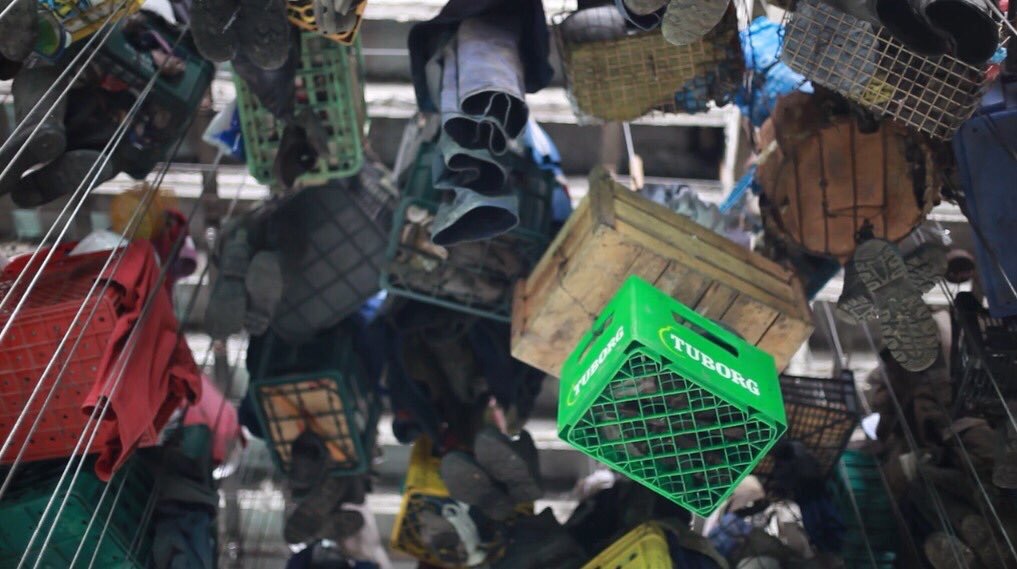
8. Quemoy (Chiu Yu-nan)

quemoy_doc

“Quemoy, the islands adjacent to Mainland, used to be the frontier between Taiwan and China. However, it opens its border for the cross-strait exchanges. The film shows traces of Quemoy people in different generations and builds up a picture of complicated national identity in the boundary island.”
A relatively short movie (just 45′) whose main appealing point is its depiction of the complex geopolitical situation of the area.

7. Into the Inferno  (Werner Herzog)
6. Lo and Behold, Reveries of the Connected World (Werner Herzog)

“This boiling mass is just monumentally indifferent to scurrying roaches, retarded reptiles and vapid humans alike.”
Both movies are pure Herzog, for better or for worse, I personally adore the man, but the risk the great German director is running in his recent documentaries – especially now in an era when the social media is so pervasive and his persona in the mediascape is sort of overexposed – is that of becoming prisoner of the image forged in almost 50 years of incredible career.
Be that as it may, if you like Herzog, these two documentaries released in 2016 are very enjoyable, Lo and Behold is a better work in my opinion, or at least more appealing to me, and not necessarily for its subject, more for its rhythm and editing. Into the Inferno in some points wanders a bit too much, the segment set in North Korea for instance, albeit fascinating for the unique insights on the country, felt too much like a long digression.

5. Further Beyond

An interesting experiment in meta-documentary and a non banal reflection of what identity and its construction through images and storytelling is. The movie is maybe a bit excessive in its meandering here and there, but 
some passages are pure digital beauty.

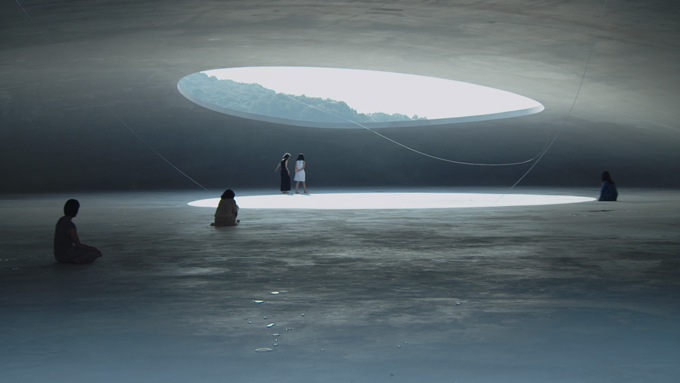
4. A Room of Her Own: Rei Naito and Light (Yuko Nakamura)

a_room_of_her_own_rei_naito

Graced by outstanding sound design and soundtrack, the movie captures and beautifully embodies the sense of fragility and ephemerality of life seen through the art of Naito Rei. But A Room of her Own is interesting on many other different levels, partly experiment in non-fiction, partly personal documentary – what brought Nakamura to approach Naito was the severe illness of her mother – and partly a work that explores the intangibility of life, the movie is a very refreshing work of non-fiction, especially when considered in the context of Japanese contemporary documentary. I wish the last part, when four women are gathered on Teshima island, would have been longer. 
One last note on the photography, in tone with the themes explored by the movie, is really one of the most accomplished aspects of it.

3. 15 Corners of the World (Zuzanna Solakiewicz)

15_corners_of_the_world

I cheated, I know it’s a movie from 2014, but I watched it this year and it made a big impression on me, so I decided to include it in my list anyway.
15 Corners of the World is a mesmerizing and hypnotic documentary about the Polish electronic-music pioneer Eugeniusz Rudnik and, more importantly, about the visualisazion of sound and its materiality. An incredible visual and auditory experience.

2. Forgetting Vietnam

forgetting_vietnam

The latest visual work from Trinh Minh-ha, I’ve written more about the movie here.

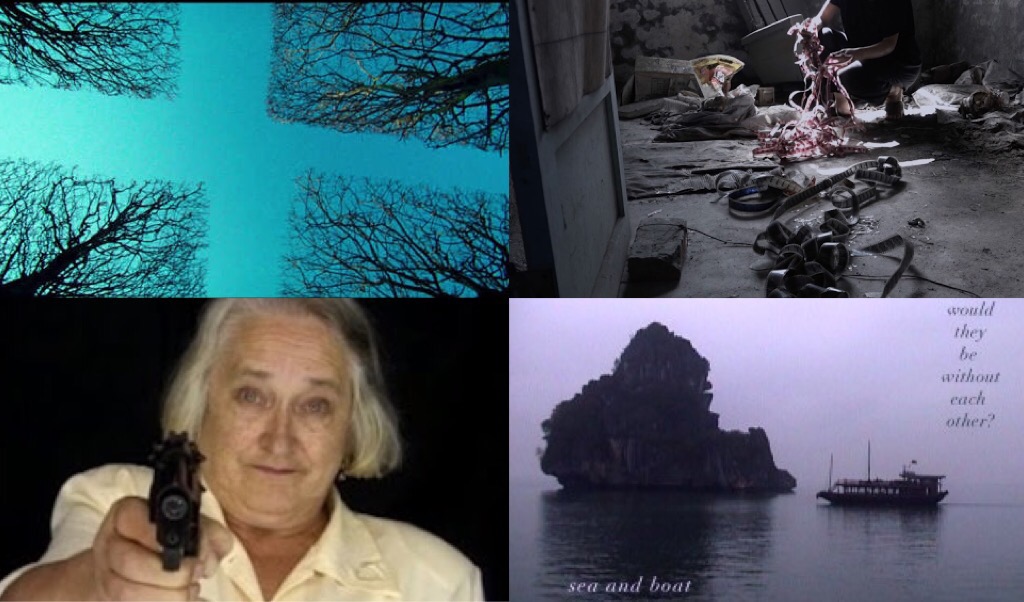
1. 3 Island (Lin Hsin-i)

img_2531

A work that creates a complex and experimental mapping of three distinct geographical Asian areas, interweaving poetry, abstract imagining, historical data and archival footage. If you want, you can read more here.


(re)discoveries (in no particular order)


Asia is One (NDU), read more here.

On the Road: A Document (Tsuchimoto Noriaki, 1964), read more here.

Hospital ( Frederick Wiseman, 1970)

Broadway by Light (William Klein, 19589

The Festival Pan-African of Algiers (William Klein, 1969)

Documentary in East and Southeast Asia, a list/database

Few months have passed since I’ve launched here on the blog, a project to create a list of the most significant East and Southeast documentaries, and, as I expected, the submissions did not come in big numbers — after all “documentary” and “East and Southeast Asia” are terms still part of a niche in the discourse about cinema around the world — but the quality of their content was very high. I think it’s about the right time to publish the list and have it circulated around the web.

The idea was to compile a list of the most significant and important works of non-fiction made in East and Southeast Asia, a database that could function as a guide for cinephiles and anybody else interested in documentary, but also as a sort of cartography to discover and explore non-fiction cinema, and its history and development in the region.
Cinema arrived at varying times in different areas of the continent, thus evolving in completely diverse ways, and this is even more true when considering documentary, a minority mode of cinema whose limits and definitions have been hazy and shifting since the dawn of the seventh art. Moreover, because many countries in the region have experienced, and tragically are still experiencing, colonization and dictatorship, in most of the area documentary was for a long period associated to propaganda, and it’s only in the last decades, with the impact of political change and the liberating advent of new and affordable technologies, that non-fiction cinema was able to free itself, rise and gain its status as a mode of free-expression and art, although unfortunately not yet in every country. For these reasons some national cinematographies (namely Japan) are more represented than others on the list, while others are sadly absent. Lack of access is also another problem that affected the making of the list, even today in the internet age and in a time where the net has become, or at least is trying to be, a different mode of distribution, access is a big and unresolved issue.
I’m sure there are many knowledgeable scholars out there in the world, who could give us more titles and insights to enrich the project. The list does not pretend to be all-inclusive, it’s not a dictionary or a documentary encyclopedia — although at certain stage in the future it might turn into one — but the aim is nonetheless to offer a database, a list and a sort of expanding work in progress. If you think there are works worth to be included, do please leave a comment or even better, reach me by email here, we can discuss about it.

Last but not least a big and special thank you to the bunch of scholars and film experts who submitted their titles, the project wouldn’t have seen the light without their vital contributions. Special credits go to Rowena Santos Aquino, film scholar and critic who specialises in documentary film history/theory and Asian cinemas/histories, Nadin Mai, independent researcher specialized in Slow Cinema and Trauma Cinema, and curator of Tao films, and Frank Witkam were essential in broadening and deepening the scope of the list.

Works are listed in chronological order:
vlcsnap-2013-10-27-18h56m10s89

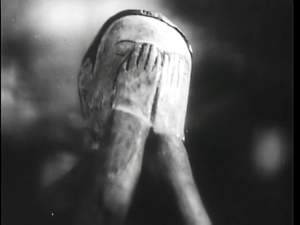
Fighting Soldiers (Kamei Fumio, Japan 1939)
Although in the 20s and 30s Japan had Prokino, it can be said that Fighting Soldiers was the first true example of Japanese (Asian?) non-fiction cinema made with an authorial touch. You can read more here.

Children in the Classroom (Hani Susumu, Japan 1954), Children Who Draw (Hani Susumu, Japan 1955)
Capturing the daily routine of an elementary school class in the manner of  direct cinema and cinema vérité, but way before the terms were coined, these two films brought radical changes and opened up new possibilities in the world of Japanese non-fiction cinema.

The Weavers of Nishijin (Matsumoto Toshio, Japan 1961)
The process of manufacturing textile in a famous Kyoto’s district rendered through rhythm, montage and music in a beautiful and grainy B&W.

Record of a Marathon Runner (Kazuo Kuroki, Japan 1964)
Focusing on the young runner Kimihara Kenji and his preparation for Tokyo Olympics, Kuroki turns a PR sport movie into a fine piece of authorial expression.

Summer in Narita (Ogawa Pro, Japan 1968), Narita: Heta Village (Ogawa Pro, Japan 1973)
The two films here stand for the whole Sanrizuka/Narita series, but especially Heta Village deserves to be in this list, a milestone in world documentary and an extraordinary documentary about time and place“.

Okinawa Islands (Higashi Yoichi, Japan 1969)
From August to October 1968, a film crew from the Japanese mainland ventured into U.S.-controlled Okinawa. Student struggles entered a new phase from 1968, rejecting “values” in the broad sense of the word. Higashi strongly felt the need to be free from previously established values, choosing in this work to grapple with the theme of Okinawa. The Okinawan problems analyzed in this film remain unresolved today. (from YIDFF)

A.K.A. Serial Killer (Adachi Masao, Japan 1969)
The avant-garde Japanese documentary film par excellence, and the first embodiment of Landscape Theory, A.K.A. Serial Killer is a film solely composed of a series of locations where young Norio Nagayama lived and passed by before committing the crimes for which he was later arrested.

Motoshinkakarannu (NDU, Japan 1971), Asia is One (NDU, Japan 1973)
Promoting an anonymus cinema made by amateurs and not by professionals, the Nihon Documentary Union delves here into the margins of Okinawan and Taiwanese society, focusing their gaze on the minorities and on the historical fractures in the areas. More here.

Minamata: The Victims and Their World (Tsuchimoto Noriaki, Japan 1971), The Shiranui Sea (Tsuchimoto Noriaki, Japan 1975)
Another monument in the history of world documentary, the Minamata series is an incredible and touching exploration of one of the biggest poisoning incident ever happened in Japan, and how it tragically affected people and their lives. You can read more here.

Extreme Private Eros 1974 Love Song (Hara Kazuo, Japan 1974)
A defining work for Japanese non-fiction cinema, exploring the personal sphere (the famous scene showing the birth of Hara’s child remains shocking even by today’s standards) in a period when it was “cool” to make politically engaged films, Hara was nonetheless able to avoid sealing himself and the movie off from the rest of the world in a sort of closed and solipsistic universe, more than ever the private is here the public and vice-versa.

God Speed You! Black Emperor (Yanagimachi Mitsuo, Japan 1976)
The camera follow a group of Japanese bikers, “The Black Emperors”, part of the so-called bōsōzoku movement, the motorcycling subculture that arose during the 70s in Japan.

The Cherry Tree with Grey Blossoms (Haneda Sumiko, Japan 1976)
Shot in a small valley in Gifu prefecture, the movie is a reflection on the mortality and ephemerality of all things disguised as a documentary about a 1300-year-old cherry tree. More here.
turumba

Turumba (Kidlat Tahimik, the Philippines 1981)
Turumba is a commissioned piece, which shows the work of a family making paper mâché figurines in preparation for the major “Turumba” festival in the area.

Oliver (Nick Deocampo, the Philippines 1983), Children of the Regime (Nick Deocampo, the Philippines 1985), Revolutions happen like refrains in a song (Nick Deocampo, the Philipines 1987)
These three films are all part of a trilogy of life under Marcos and Martial Law. Children is a documentary on child prostitution while Revolutions is a personal essay film in which Deocampo traces his own personal development and history against the backdrop of the People Power Revolution, which started in 1983 and later led to the ousting of president Marcos. Just like Oliver, a work that follows the life and work of a transvestite in the Philippines in the 1980s, it is shot on Super-8.

Magino Village: a Tale (Ogawa Production, Japan 1986)
Another masterpiece from Ogawa Pro, a stunning and epic movie that follows and tracks down the various histories traversing a village in Northern Japan, and at the same time a record of 15 years lived together by the collective.
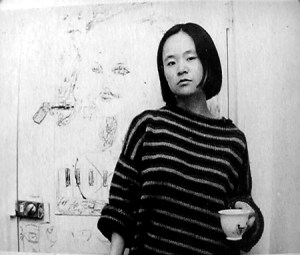
bumming_in_beijing

Bumming in Beijing – The Last Dreamers (Wu Wenguang, China 1990)
Generally considered one of the films that heralded the advent of what Lu Xinyu terms the ‘New Chinese Documentary Film Movement,’ its subject is fittingly a group of Wu’s artist friends and their (marginal) lives in Beijing.

I Have Graduated (Wang Guangli, China 1992)
Series of interviews with university students graduating in 1992 in the post-Tiananmen Square protests/massacre, interspersed with performances of songs.

The Murmuring (Byun Young-joo, South Korea 1995), Habitual Sadness (Byun Young-joo, South Korea 1997), My Own Breathing (Byun Young-joo, South Korea 1999)
Byun’s ‘comfort women’/‘low voice’ trilogy is a monumental project that gives space for Korean survivors to give their testimony, protest for redress, and fight against the social stigma of their traumatic past, staunchly filmed in the observational, present tense of the everyday and with the women’s direct collaboration.

Quitting (Zhang Yang, China 2001)
Centered on the late actor Jia Hongsheng’s real battle with drug addiction, the film is a docudrama in which Jia, his actual parents and sister, and his doctors play themselves as they reenact events that occurred during his addiction in the 1990s.

DV China (Zheng Dasheng, China 2002)
With its subject of a state employee making amateur films in collaboration with the villagers of Jindezheng, with limited state funds and equipment, the film gives the lie that ‘independent,’ ‘amateur,’ and the state media are mutually exclusive terms.

The Big Durian  (Amir Muhammad, Malaysia 2003)
A soldier who in 1987 began to randomly fire his rifle in the streets of Kuala Lumpur is an entry point to exploring racism and racial politics that the incident triggered among the city’s diverse population.

tie-xi-qu-west-of-the-tracks

Tie Xi Qu: West of the Tracks (Wang Bing, China 2003)
Quite possibly one of the most startling documentary debuts in recent decades, one that painstakingly observes the gradual decline of state-run factories as well as livelihoods and community bonds in the Tiexi district.

S-21: The Khmer Rouge Killing Machine (Rithy Panh, Cambodia-France 2003)
Arguably Panh’s most striking documentary on the Cambodian genocide, as it brings together survivors and torturers/executioners to the site of Tuol Sleng, now a museum but formerly a prison during the Khmer Rouge regime where tens of thousands were killed.

Memories of Agano (Satō Makoto, Japan 2004)
Ten years after the acclaimed film Living on the River Agano, the film crew returns to Niigata. Personal memories reflect upon remnants of those who passed away as the camera observes abandoned rice fields and hearths that have lost their masters.
More here

Singapore Rebel (Martyn See, Singapore 2004), Zahari’s 17 Years (Martyn See, Singapore 2006), Dr. Lim Hock Siew (Martyn See, Singapore 2010)
These three works represent oppositional voices/perspectives – opposition party leader Chee Soon Juan, ex-political detainee Said Zahari, and the second-longest held political prisoner the late Dr. Lim – which betray See’s commitment to political filmmaking and suppressed Singaporean histories.

Dear Pyongyang (2005,Yang Yong-hi Japan)
A second generation zainichi Korean director makes inquiries about the history of her activist father and mother. Over the years she records on video visits to her three brothers and their families, who migrated from Ikuno, Osaka to Pyongyang over thirty years ago, while reflecting on how she had been running away from the values her father forced upon her. (from YIDFF)

Oxhide I (Liu Jiayin, China 2005), Oxhide II (Liu Jiayin, China 2009)
Novelistic in detail and scope and in pushing the notion of filming in real time and filming real life perhaps to an extreme, with a shot count of twenty-three and nine, respectively, Liu and her family reenact real-life events and pierce the multilayeredness of lived experience.

The Heavenly Kings (Daniel Wu, Hong Kong 2006)
Following the formation of the boy band Alive, of which Wu is a member, the film follows the band’s attempts to crack the music market and, in the process, delivers satirical jabs at the Cantopop industry and Hong Kong popular culture in general and reveals itself as a hoax.

24 City  (Jia Zhangke, China 2007)
One of Jia’s documentary contributions, with a bit of fictional play with the interview, which nevertheless does not take away from its sober examination of the demolition of a factory town and its transformation as ‘24 City’.

Investigation on the night that won’t forget (Lav Diaz, the Philippines 2009)
Perhaps Diaz most invisible and least accessible film. The films is a two-shot recording of Erwin Romulo speaking about the circumstances of the death of popular film critic Alexis Tioseco and the subsequent investigation.

Disorder (Huang Weikai, China 2009)
A black-and-white found-footage film assembled from 1,000+ hours of footage shot by amateur filmmakers of everyday scenes in the Guangzhou region, whose effect is assaulting and absorbing.

Last Train Home (Lixin Fan, Canada 2009)
Canada-based Chinese filmmaker’s debut follows a couple who work in the city and annually make the long trek to their home village for Chinese New Year and becomes, in the long run, a frank portrait of one family’s diverging values/priorities.

The Actresses (E J-yong, South Korea 2009) Behind the Camera (E J-yong, South Korea 2012)
This mockumentary diptych takes the premise of a photo shoot and remote directing, starring top Korean stars, to address celebrity culture, the (absurd) nature of filmmaking, and the public/private divide.

Live Tape (Matsue Tetsuaki, Japan 2010)
On New Year’s Day in 2009, Musician Kenta Maeno strums his guitar and sings in a pilgrimage from Kichijoji Hachiman Shrine, packed with people paying respects, to Inokashira Park, where he joins his band on the outdoor stage. Live Tape is a miraculous live documentary capturing Maeno’s New Year’s Day nomadic guerrilla show in a single 74-minute take.

Arirang (Kim Ki-duk, South Korea 2011)
Kim’s sole documentary effort thus far followed a three-year hiatus from directing and is aptly a self-portrait of himself as a suffering (and at times, insufferable) artist – and perhaps even a parody of artistic self-portraits.

Golden Slumbers (Davy Chou, France-Cambodia 2011)
With his lineage of being the grandson of famed (and disappeared) Cambodian producer of the 1960s/1970s Van Chann, Cambodian-French filmmaker searches for the oral history of pre-Khmer Rouge Cambodian cinema and cinephilia.

ex_press

Ex Press (Jet Leyco, the Philippines 2011)
A passenger train travels across the landscape of the Philippines, while a monologue description of the journey presents fragments of memory and fantasy that look back at the country’s past.

Theatre 1 and 2 (Soda Kazuhiro, Japan, USA, France 2012)
The most complex and broadest in scope of Soda’works. Following Oriza Hirata and the Seinendan Theatre Company, Theatre 1 and 2 form a deep analysis of the creative process, but at the same time touching topics such as politics, performance, economy, art, engagement.

No Man’s Zone (Fujiwara Toshi, Japan 2012)
One of the best works about the triple disaster that hit Japan in March 2011, No Man’s Zone reflects on the meaning of natural and man-made disasters for our age, but has also been defined Tarkovskian in its aesthetics.

The Act of Killing (Joshua Oppenheimer, Christine Cynn, Anonymus, Norway-Denmark-UK, 2012), The Look of Silence (Joshua Oppenheimer, 2014)
Two successive works on the 1965-66 massacres of civilians in the name of Communist purges and the suppression of this past are set stubbornly in the present and made in collaboration with both perpetrators and survivors.

War is a tender thing (Adjani Arumpac, the Philippines 2013)
Arumpac is the child of a Christian mother and a Muslim father. She explores the second-longest running conflict in the world, the Mindanao War, through the lens of her parents’ divorce.

Storm Children, Book I (Lav Diaz, the Philippines 2014)
The film is supposed to be the first part of a two-part film, albeit Diaz never said when he would finish the second part of it. Storm Children follows the lives of children in the parts of the country hit hardest by typhoon Yolanda in 2013. Months later, the documentary shows that nothing has been done to alleviate the people’s struggle.

IMG_0170Aragane (Oda Kaori, Bosnia and Herzegovina, Japan 2015)
A breath of fresh air in the Japanese documentary world, Aragane, made by Oda at Bela Tarr’s school in Sarajevo, explores in the manner of structural cinema the time and dark spaces of a Bosnian coal mine. You can read more here.

Jade Miners (Midi Z, 2015), City of Jade (Midi Z, 2016)
This duology by the Taiwan-trained Burmese filmmaker was clandestinely shot in northern Myanmar to capture hundreds of labourers (one of which has been his brother, City of Jade’s focus) toiling the earth in jade mines, which are also part of a site of a civil war.

Interview with Oda Kaori


Directed, shot and edited by Oda Kaori, Aragane was one of my favorite documentaries of 2015, a work that came out from film.factory, a film school based in Sarajevo and founded by renown Hungarian director Bela Tarr.
Aragane it’s an experimental documentary shot in a Bosnian coal mine, an immersive and hypnotic sensorial experience that was presented last year at the Yamagata International Documentary Film Festival, where it got a special mention. 
I wrote a review of the movie in Italian for the blog Sonatine, but I’m planning to write one in English as well and post it here, time permitting. 

In October I had the pleasure of interviewing Oda for the Italian newspaper Il Manifesto, the following is the original and longer version of that interview.

Can you tell us how you got involved in cinema, that is, how you got interested in watching and making movies in the first place?

 I wanted to be a professional basketball player, I played for 8 years since I was 10 years old, but unfortunately my right knee got broken. I underwent two big operations but it was not possible to keep playing seriously. Doctors said NO to me. So I was lost completely because the only thing I knew in life was basketball. I decided to go to the US to study abroad then, you know the typical thought that if you move the place, something may change in your life. There I took a film course, that was the first encounter to filmmaking, I was not cinephile at all and I am still not. (but I like some films, of course)

I made the very first film with my family in 2010 (ノイズが言うには Thus a Noise Speaks). It is a self-documentary made by my real family and myself about the coming-out as gay. The idea was to use filmmaking to communicate with my family and face the fact that they could not accept that I was gay. It was a tough experience but I learned a lot from that and started to see and use camera as a tool for communication. Communication between myself and the subject (the people/ the space).

 
(A still from Thus a Noise Speaks 「ノイズが言うには」)

How about film.factory? how did you happen to move to Sarajevo and be part of the group?  

 I got a chance to screen my first film in the student section of Nara International Film Festival in 2011, and there I met Kitagawa Shinji, the person who more than anybody else understands my filmmaking. He was the programmer/organizer of the section. The film got an audience award and we kept in touch since then. In 2012, he wrote me an email that there would be a new program in Sarajevo to support young filmmakers from all over the world. I was very much lost at that time, because it was very difficult to make my next film after a self-documentary by which I confronted the biggest conflict I had.

So I decided to apply to the program, moving to a new place and meeting new people.

Luckily, my application got accepted.   


Can you tell us more about Aragane, where did the idea come from? I heard that originally it was supposed to be a fiction inspired by a Kafka story (A Visit to a Mine), is that true?

Bela (Tarr) gave us an assignment to do an adaptation work. He wanted me to do ‘Bucket Rider’ a short story from Kafka that revolves around man looking for coal. So I went to a coal mine company to do research for the project. The space and the workers were incredibly attractive, immediately I knew I wanted to shoot them as I felt and not through an adaptation work.

What was the involvement of Bela Tarr in the making of Aragane? Did he give you any suggestions, ideas or was he just supervising the project?

I brought some shots I made there and told him that I wanted to make a film. He watched them and said ‘Go and shoot’. We had one meeting when I was still shooting and I had doubts about which direction I should go with the project, should I go more for the people and their story or more with the space itself?

He told me ‘Listen to yourself, what do you want to do?’

I said ‘I am attracted to the space and the physical work of miners’

After shooting, I edited the film and showed the first rough cut to him and he gave me some comments such as ‘maybe you should eliminate this shot’ or ‘keep this one’.

More than once you’ve mentioned space and your relationship with space when making a film, I think is a very fascinating subject. When I watched Aragane I felt very strongly that it’s a work about landscapes (a dark one, the mine), the materiality of it and the machinery in it. An “alien” landscape and the beauty of it. What brought you to focus more on the space/landscape and the machinery, and is there a reason behind the use of long takes?

 I think I was fascinated by the space because it was something totally new, complete darkness, magnificent volume of noises, but also sudden silence where there were no machines around.

The space drugged me into the film, my camera (gaze) was a communicator/mediator between what was there in front of camera and myself. I tried to understand and feel what was going on by shooting the space and its own time. Also, I didn’t approach the subject from the angle of the hard conditions of miners, unfairness and danger of their works (even though it is there in the film because it was just there). I hope people would not get me wrong by saying this. I/my camera shared some moments with them, I tried to be with them moment by moment. Focusing on social issue can be something good for miners, to say what is the problem and how ignorant we are about the issue, but I think the best I can do with my filmmaking is to try to be with the subject (space/people/time) and make them seen by being with them.

About the machinery, I think I shot them because their existence is big in that space and also because miners were proud of the machines, especially the huge ones digging into the side walls.

It may be a bit difficult to explain why the shots needed to be so long, but I tried to be honest toward the moments I captured with my camera.


I think the sound in Aragane is as important as the images, can you tell us more on how you were able to capture and magnify the sounds of the machines and, if you can, tell us about your relationship (as a filmmaker) to sounds/noise and soundscapes?

 It is very interesting to me that lots of people mention about sounds and soundscapes. The sound was recorded with the internal microphone of a Canon 5D, because I didn’t have something like Zoom, also I was most of the time alone, so my hands and focus was with the Camera/Image. My light was on the helmet to make the curtain space visible, so it would have been impossible for me to take care of the sound recording. What was recorded was done “without care” and automatically.

I did the sound mix myself, changing the volume here and there, cleaning a bit of noises, and making rhymes/music by adding some noise on top of another noise. That was fun and I think made the film to gain a sensorial feeling.

I was just playing with sound in Aragane , but I want to learn more about sound. The film made me realize and feel that Film is an audiovisual art.

It’s interesting that you’ve used the words “sensorial feeling”, the first time I saw Aragane I thought straight away of the works of the Harvard Sensory Ethnography Lab (Leviathan, Manakamana, Iron Ministry, etc.), you told me already you haven’t watched their movies and that you’re not really a cinephile, but I was wondering if you got ispired for your approach by any movies or more in general by any other work of art.

 After your email, Matteo, I watched ‘Manakamana’ ‘Iron MInistry’, and ‘People’s park’,

and I see what you see as similar.

It is very interesting because, before you mention about the Lab, I’ve thought that if I stop making films, I want to be an anthropologist. And I feel I am learning about human beings by making movies.

I might not be so good yet and I have not a clear idea about what I am doing with my camera, but it has been very clear for me that my theme is ‘where we come from, what we are, and where are we going?’ .

I know it sounds abstract and even pretentious, but I’m serious. I may not get the answers before I die, but I have at least the right to explore and challenge these themes with my life, I guess.

 I am inspired by: Wang Bing, Pedro Costa, Raymond Depardon, Wiseman, Cezanne. My bible: Letters To A Young Poet by Rilke.


One last question: what are your future plans, are you working on something at film.factory and how about after film.factory?

I have a few projects now.

One is my essay film, to conclude the experience in Bosnia and filmmaking here. This is my priority right now. It’s in the production stage.

And then I plan to do a workshop of filmmaking/photography/camera in a discipline center in Sarajevo. (It is a institution for the underage kids who commit crimes, not strict as much as a prison). I want to share the possibility of using the camera as a tool of communication and expression with these kids. This kind of workshop is what I want to do as my life time project, I don’t know if I can finance such a project, but I want to try my best to make it a constant practice in my life.

Or I might move to Mexico to do a project after film.factory, one of my colleagues is from Mexico and I want to shoot something there related to sea/water/cave. It’s still in the research/developing stage. Or maybe I’ll go back to Japan, it all depends on if I can support myself and how these projects can be produced!

 Feel free to add something you want to say or share.

 So many people have been supporting my filmmaking. My family, Kitagawa Shinji, Bela Tarr, and my dear colleagues. Most of the time, I shoot and edit alone and this sometimes make me misunderstand that I am making films alone, but in fact, there is always someone who introduces the subject to me, tries to support me mentally, gives me some thoughts on the film, shares the film, writes about the film, and watches the film. All these people make films. All these spaces and times make films. I’m just one of the gears/energies that make films happen.

New documentary for Hara Kazuo


Hara Kazuo is one of the most internationally well known Japanese documentarists, his The Emperor Naked Army Marches On (1987) is the first Japanese entry in the Sight & Sound’s poll The Best Documentaries of All Time and a movie that is often screened, talked about and studied in Japan as well as abroad. Now, personally The Emperor is not my favourite work from Hara, Sayonara CP (his debut from 1972) and especially Extreme Private Eros (1974) are better docs for reasons I’m not going to explore here today, and to be honest he’s not even among my favorite directors of non-fiction, but nonetheless I can’t deny he’s a very important and pivotal figure in Japanese cinema. Hara is also the only Japanese documentarist whose writings have been translated in English and collected in a volume, a very good one indeed, that everyone interested in non-fiction cinema should read. The title is Camera Obtrusa: The Action Documentaries of Hara Kazuo: By Hara Kazuo and was published in 2009 by Kaya Press.

All that was to introduce him and to give an idea of his status as a respected director in the international documentary world. The good news is that Hara has a new work out, the first documentary for the big screen after 22 years of absence, he’s been active with feature films, on TV, writing books and with other projects, but 「ニッポン国泉南石綿村 劇場版 命て なんぼなん?」, this the title of the movie, breaks a silence of more than two decades. The film had its premiere at a small event in Tokyo, フィクションとドキュメンタリーのボーダーを超えて, and is about the victims of asbestos exposure in Sennan city (Osaka), where Hara has been intermittently filming for more than a decade, while at the same time working on a project about Minamata’s victims. 
I haven’t seen the movie yet, but I hope to catch up with it as soon as possible, although, for some reason, I have very low expectations, but I’m ready and willing to be surprised. 

Addendum: Hara won’t be screening it again until summer at the earliest, and most likely the fall (again somewhere in Tokyo), as he’s planning on reworking/editing it after these screenings in Shibuya. 

Many thanks to Jordan A. Yamaji Smith for the update

List of lists – best documentaries of 2015

Let’s go “meta” once in a while, this is the idea I had few days back when I thought it would be interesting to make a list of lists, of course about documentaries. So, for the fun of it, but also because it might turn out into something surprisingly fascinating, I’ve decided to collect as many lists about “best non-fiction/documentary of 2015” as possible, newspapers, blogs, websites, magazines, personal lists and anything else will go. As usual with best-of-the-year-lists, and it’s particularly true for non-fiction movies, the most insightful part of the endeavour will probably be to see what other people have watched, that is what documentaries were distributed in different countries (in theatres or in other formats) during 2015, more than agreeing or not with someone’s choices.

This page will be updated periodically

Indiewire_best_doc_2015

Indiewire – The 20 Best Documentaries Of 2015 (here the original article):

  • 20. “The Hunting Ground” (Andrea Pino)
  • 19. “Heart Of A Dog” (Laurie Anderson)
  • 18. “Prophet’s Prey” (Amy Berg)
  • 17. “Seymour: An Introduction” (Ethan Hawke)
  • 16. “The Seven Five” (Tiller Russell)
  • 15. “The Jinx” (Andrew Jarecki)
  • 14. “The Pearl Button” (Patricio Guzmán)
  • 13. “The Salt of the Earth” (Wim Wenders)
  • 12. “In Jackson Heights” (Frederick Wiseman)
  • 11. “The Black Panthers: Vanguard of a Revolution” (Stanley Nelson)
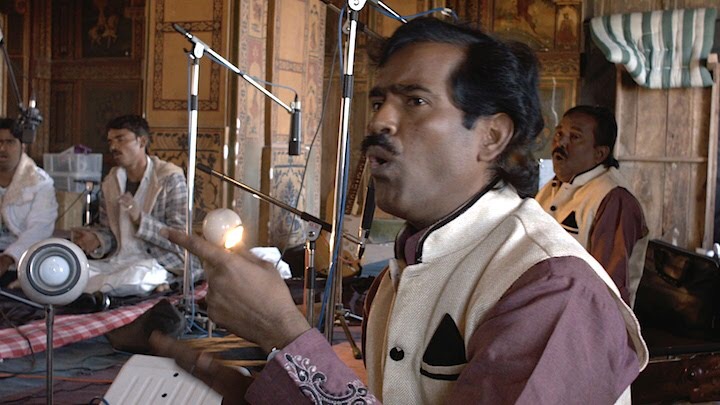
  • 10. “Junun” (Paul Thomas Anderson)
  • 9. “Dreamcatcher” (Kim Longinotto)
  • 8. ”Listen To Me Marlon” (Stevan Riley)
  • 7. “Best of Enemies” (Robert Gordon, Morgan Neville)
  • 6. “The Look of Silence” (Joshua Oppenheimer)
  • 5. “Kurt Cobain: Montage of Heck” (Brett Morgen)
  • 4. “Amy” (Asif Kapadia)
  • 3. “(T)error” (Lyric R. Cabral, David Felix Sutcliffe)
  • 2. “Meru” (Jimmy Chin, E. Chai Vasarhelyi)
  • 1. “Cartel Land” (Matthew Heineman)


Men’s Journal – 13 must-watch docs of 2015 (original article here):

  • Cartel Land (Matthew Heineman)
  • Stray Dog (Debra Granik)
  • Winter of Fire (Evgeny Afineevsky)
  • Montage of Heck (Brett Morgen)
  • Listen to Me Brando (Stevan Riley)
  • Racing Extinction (Louie Psihoyos)
  • Going Clear (Alex Gibney)
  • Amy (Asif Kapadia)
  • Meru (Jimmy Chin, E. Chai Vasarhelyi)
  • Call Me Lucky (Bobcat Godthwait)
  • Best of Enemies (Robert Gordon, Morgan Neville)
  • The Look of Silence  (Joshua Oppenheimer)
  • All Things Must Pass (Colin Hanks) 


NonFics – The 6 Must See Musical Dicumentaries of 2015 (original here): 

  • Amy (Asif Kapadia)
  • Don’t Think I’ve Forgotten: Cambodia’s Lost Rock ‘n’ Roll (John Pirozzi) 
  • Junun (Paul Thomas Anderson)
  • A Poem is a Naked Person (Les Blank)
  • Rubble Kings (Shan Nicholson)
  • Seymour: An Introduction (Ethan Hawke)

  
Paste – The 20 Best Documentaries of 2015 (here the article): 

  • 20. Finders Keepers (Bryan Carberry, J. Clay Tweel)
  • 19. What Happened, Miss Simone? (Liz Garbus)
  • 18. The Wolf Pack (Crystal Moselle)
  • 17. Amy (Asif Kapadia)
  • 16. Best of Enemies” (Robert Gordon, Morgan Neville)
  • 15. The Nightmare (Rodney Ascher)
  • 14. Welcome to Leith (Michael Beach Nichols, Christopher K. Walker)
  • 13. Approaching the Elephant (Amanda Wilder) 
  • 12. We Come as Friends (Hubert Sauper)
  • 11. Stray Dog (Debra Granik) 
  • 10. Heart Of A Dog” (Laurie Anderson)
  • 9. Western (Bill Ross, Turner Ross)
  • 8. Brand: A Second Coming (Indi Timoner) 
  • 7. Iris (Albert Maysles)
  • 6. Seymour: An Introduction (Ethan Hawke)
  • 5. Janis: Little Girl Blue (Amy Berg)
  • 4. In Jackson Heights” (Frederick Wiseman)
  • 3. The Look of Silence (Joshua Oppenheimer)
  • 2. (T)error (Lyric R. Cabral, David Felix Sutcliffe
  • 1. Cartel Land” (Matthew Heineman)

  
Screen Daily – critics’ top documentaries of 2015 (complete article here):

Fionnuala Halligan

  • My Nazi Legacy (David Evans)

Tom Grierson

  • (T)error (Lyric R Cabral, David Felix Sutcliffe)

Allan Hunter

  • The Fear of 13 (David Sington)

Dan Fainaru

  • Hitchcock/Truffaut (Kent Jones)

Lee Marshall

  • Behemoth (Zhao Liang)

Jonathan Romney 

  • De Palma (Noah Baumbach, Jake Paltrow)

Lisa Nesselson

  • Where To Invade Next (Michael Moore)

Charles Gant

  • Amy (Asif Kapadia)

Wendy Ide 

  • Behemoth (Zhao Liang)

James Marsh

  • The Look Of Silence (Joshua Oppenheimer)

  
Awards Daily – Seven Great Documentaries of 2015 (here the original article): 

  • The Look Of Silence (Joshua Oppenheimer)
  • Heart Of A Dog (Laurie Anderson)
  • Amy (Asif Kapadia)
  • In Jackson Heights (Frederick Wiseman)
  • Clear: Scientology and the Prison of Belief (Alex Gibney)
  • Montage of Heck (Brett Morgen)
  • Listen To Me Marlon” (Stevan Riley)

  
Philly.com – Best documentaries of 2015  (original article here): 

  • Amy (Asif Kapadia)
  • Hitchcock/Truffaut (Kent Jones)
  • Listen to Me Marlon (Stevan Riley)
  • What Happened Miss Simone? (Liz Garbus) 
  • The Wolfpack (Crystal Moselle) 

  
Keyframe – The Best Documentaries of 2015 (here the original):

  • 1. The Look of Silence (Joshua Oppenheimer)
  • 2. The Iron Ministry (J.P. Sniadecki)
  • 3. In Jackson Heights (Frederick Wiseman)
  • 4. The Pearl Button (Patricio Guzmán)
  • 5. The Royal Road (Jenni Olson)
  • 6. Heart of a Dog (Laurie Anderson)
  • 7. Amy (Asif Kapadia)
  • 8. What Happened, Miss Simone? (Liz Garbus)
  • 9. Iris (Albert Maysles)
  • 10. Listen to Me Marlon (Stevan Riley)


Nonfics – The 15 Best Documentaries of 2015 (here the original): 

  • 15. Evaporating Borders (Iva Radivojevic)
  • 14. Best of Enemies (Robert Gordon and Morgan Neville)
  • 13. Finders Keepers (J. Clay Tweel and Bryan Carberry)
  • 12. The Nightmare (Rodney Ascher)
  • 11. In the Basement (Ulrich Seidl)
  • 10. The Iron Ministry (J.P. Sniadecki)
  • 9.  Stray Dog (Debra Granik) 
  • 8. Approaching the Elephant (Amanda Wilder)
  • 7. The Salt of the Earth (Wim Wenders)
  • 6. We Come as Friends (Hubert Sauper)
  • 5. Amy (Asif Kapadia)
  • 4. In Jackson Heights (Frederick Wiseman)
  • 3. The Russian Woodpecker (Chad Gracia)
  • 2. A Poem is a Naked Person (Les Blank)
  • 1. The Look of Silence (Joshua Oppenheimer)

  
Doc Soup – Top Ten Documentaries of 2015 (original article here):

  • 10. Hunting Ground (Kirby Dick)
  • 9. Listen to Me Marlon (Stevan Riley)
  • 8. The Wolfpack (Crystal Moselle)
  • 7. Hitchcock/Truffaut (Kent Jones)
  • 6. Almost There (Dan Rybicky, Aaron Wickenden)
  • 5. Winter on Fire (Evgeny Afineevsky)
  • 4. Stand By for Tape Playback (Ross Sutherland)
  • 3. Montage of Heck (Brett Morgen)
  • 2. Cartel Land (Matthew Heineman)
  • 1. The Look of Silence (Joshua Oppenheimer)

  
Peter Bradshaw – Best documentaries of 2015 (read the original here): 

  • Amy (Dir. Asif Kapadia)
  • The Look of Silence (Dir. Joshua Oppenheimer)
  • He Named Me Malala (Dir. Davis Guggenheim)
  • A Syrian Love Story (Dir. Sean Mcallister)
  • Going Clear: Scientology and the Prison of Belief (Dir. Alex Gibney)
  • We Are Many (Dir. Amir Amirani)
  • The Last of the Unjust (Dir. Claude Lanzmann)
  • Beyond Clueless (Dir. Charlie Lyne)
  • Best of Enemies (Dirs. Morgan Grenville, Robert Gordon)
  • My Nazi Legacy (Dir. David Evans) 


Ray Pride – Fifteen Feature Documentaries For 2015 (original’s here

  • 1. The Look Of Silence (Joshua Oppenheimer) 
  • 2. Amy (Asif Kapadia)
  • 3. Heart of a Dog (Laurie Anderson) 
  • 4. Hitchcock/Truffaut (Kent Jones) 
  • 5. In Jackson Heights (Frederick Wiseman)
  • 6. The Iron Ministry (J. P. Sniadecki) 
  • 7. The Russian Woodpecker (Chad Gracia) 
  • 8. We Come As Friends (Hubert Sauper)
  • 9. Almost There (Dan Rybicky, Aaron Wickenden)
  • 10. Iris (Albert Maysles)
  • 11. Listen To Me Marlon (Stevan Riley)
  • 12. The Black Panthers: Vanguard of the Revolution (Stanley Nelson) 
  • 13. Arabian Nights (Miguel Gomes)
  • 14. Sembène! (Samba Gadjigo, Jason Silverman)
  • 15. Going Clear: Scientology And The Prison of Belief (Alex Gibney)


3rd Annual Nonfics Year-End Poll (the complete list, 103 docs, here

  • 1. The Look Of Silence (Joshua Oppenheimer) 
  • 2. Amy (Asif Kapadia)
  • 3. Best of Enemies (Dirs. Morgan Grenville, Robert Gordon)
  • 4. Listen to Me Marlon (Stevan Riley)
  • 5. In Jackson Heights (Frederick Wiseman) 
  • 6. Stray Dog (Debra Granik)
  • 7. Cartel Land (Matthew Heineman)
  • 8. Montage of Heck (Brett Morgen)
  • 9. Finders Keepers (J. Clay Tweel and Bryan Carberry)
  • 10. The Wolfpack (Crystal Moselle)

  
The Film Stage – The Best documentaries of 2015 (here the original): 

  • Amy (Asif Kapadia)
  • Ballet 422 (Jody Lee Lipes)
  • Best of Enemies (Morgan Neville and Robert Gordon)
  • Call Me Lucky (Bobcat Goldthwait
  •  Cartel Land (Matthew Heineman)
  • Cobain: Montage of Heck (Brett Morgen)
  • Democrats (Camilla Nielsson)
  • Finders Keepers (Bryan Carberry and J. Clay Tweel)
  • Going Clear: Scientology and the Prison of Belief (Alex Gibney)
  • Hitchcock/Truffaut (Kent Jones)
  • The Hunting Ground (Kirby Dick)
  • In My Father’s House (Ricki Stern and Annie Sundberg)
  • Iris (Albert Maysles)
  • Junun (Paul Thomas Anderson)
  • In Jackson Heights (Frederick Wiseman)
  • Listen to Me Marlon (Stevan Riley)
  • The Look of Silence (Joshua Oppenheimer)
  • The Pearl Button (Patricio Guzmán)
  • The Russian Woodpecker (Chad Gracia)
  • The Salt of the Earth (Wim Wenders and Juliano Ribeiro Salgado)
  • Stray Dog (Debra Granik)
  • We Come as Friends (Hubert Sauper)
  • Leith (Michael Beach Nichols and Christopher K. Walker)
  • What Happened Miss Simone? (Liz Garbus)
  • The Wolfpack (Crystal Moselle)

Ray Pride – Fifteen Feature Documentaries For 2015 (original’s here

  • 1. The Look Of Silence (Joshua Oppenheimer) 
  • 2. Amy (Asif Kapadia)
  • 3. Heart of a Dog (Laurie Anderson) 
  • 4. Hitchcock/Truffaut (Kent Jones) 
  • 5. In Jackson Heights (Frederick Wiseman)
  • 6. The Iron Ministry (J. P. Sniadecki) 
  • 7. The Russian Woodpecker (Chad Gracia) 
  • 8. We Come As Friends (Hubert Sauper)
  • 9. Almost There (Dan Rybicky, Aaron Wickenden)
  • 10. Iris (Albert Maysles)
  • 11. Listen To Me Marlon (Stevan Riley)
  • 12. The Black Panthers: Vanguard of the Revolution (Stanley Nelson) 
  • 13. Arabian Nights (Miguel Gomes)
  • 14. Sembène! (Samba Gadjigo, Jason Silverman)
  • 15. Going Clear: Scientology And The Prison of Belief (Alex Gibney)

3rd Annual Nonfics Year-End Poll (the complete list, 103 docs, here

  • 1. The Look Of Silence (Joshua Oppenheimer) 
  • 2. Amy (Asif Kapadia)
  • 3. Best of Enemies (287)
  • 4. Listen to Me Marlon (220)
  • 5. In Jackson Heights (193)
  • 6. Stray Dog (164)
  • 7. Cartel Land (159)
  • 8. Kurt Cobain: Montage of Heck (146)
  • 9. Finders Keepers (139)
  • 10. The Wolfpack (138)

The best documentaries of 2015 – my list

As 2015 comes to an end, it’s that time of the year again, the period when every cinephile is compelled to make his/her best movies list. I couldn’t not post my own one. I’ve mostly watched documentaries from East Asia, my list is then more like a “Best documentary of 2015 from East Asia” type of list, but at the end I’ve added a couple of movies from other part of the world and some (re)discoveries I’ve done during this 2015. Just a disclaimer, it’s a favorite list more than a best list, here we go (listed in the order I’ve seen them):

Walking with my Mother (Sakaguchi Katsumi, 2014)

An exploration of loss, sickness and memory in a society (the Japanese one) that is getting older and older, told in the shape of a private documentary, here some thoughts on the movie.

walking_with_mother

Aragane (Oda Kaori, 2015)

The camera follows patiently and almost hypnotically the workers of an old coal mine in Bosnia down into the darkness of their daily routine. The movie is visually stunning, partly documentary and partly experimental cinema, director Oda Kaori knows how to use the digital medium for her cinematic purposes in a work that revolves around the concept of duration and its materiality, and that is almost structural cinema in its construction. I had the pleasure of meeting and interviewing the director, the conversation was published on the Italian newspaper Il Manifesto, I’m currently working on an English translation and on a review/piece for this blog (maybe next year).

Oyster Factory (Sōda Kazuhiro, 2015)

The latest work from Japanese director Sōda Kazuhiro, together with Theatre 1 and 2, my favourite among his documentaries. I’ve written more about the film here.

IMG_5344

France Is Our Mother Country (Rithy Panh, 2015)

Rithy Panh (2-21: The Khmer Rouge Killing Machine, The Missing Picture) constructs a critical and satirical work about the colonial rule of Cambodia by France, using only footage, archival images and propaganda films shot by the rulers themselves. The power of re-editing and collage documentary.

france-is-our-mother-country

Night and Fog in Zona (Jung Sung-il, 2015)

A documentary about the great Wang Bing by movie critic-turned-director Jung Sung-ilhere you can read my review.

IMG_0379-0

The Moulin (Huang Ya-li, 2015)

Formally engaging and elliptical, I don’t really know how much of my fascination for this movie comes from its themes, a group of Taiwanese avant-garde artists active in the 30′ during the Japanese colonial period, and how much from the documentary itself.

TheMoulin_Taiwan4

Documentaries from other parts of the world:

The Iron Ministry ( J.P. Sniadecki, 2014) and in general all the movies by Sniadecki: Demolition, People’s Park, Yumen….

Jujun (Paul Thomas Anderson, 2015)


(re)discoveries of 2015:

The Vampires of Poverty (Carlos Mayolo, Luis Ospina, 1977)

All the documentaries/works of the great Agnès Varda (it was a pleasure watching 14 of her films this year)


God Speed You! Black Emperor and other works by Yanagimachi Mitsuo released (again) on DVD


God Speed You! Black Emperor (ゴッド スピード ユー! Black Emperor) is 16mm black & white documentary  by Yanagimachi Mitsuo about a group of Japanese bikers, “The Black Emperors”, part of the so-called bōsōzoku movement, the motorcycling subculture that arose during the 70s in Japan. In the following years the film became a cult movie, inspiring even a Canadian rock band that took its name from it. Now, the good news is that from September 2nd the film is again available on DVD, although only in Japan and, as far as I know, without English subtitles. If you live in Japan you can also rent the same edition, try at your local Tsutaya or Geo. 
God Speed You! Black Emperor was the feature debut for Yanagimachi Mitsuo, shot after establishing his own production company, Gunro Films, 2 years before. Yanagimachi, who is known internationally also for Himatsuri (火まつり, 1985), is a director whose production during his 40 years career has been sparse to say the least, his last movie to date is Who’s Camus Anyway? (カミュなんて知らない, 2005), released exactly 10 years ago. 

  
Together with God Speed You! Black Emperor the home video company Dimension (DIG) has also released other films by Yanagimachi, A 19-Year-Old’s Map (十九歳の地図, 1979), Farewell to the Land (さらば愛しき大地, 1982) and About Love, Tokyo (愛について 東京, 1992) all 3 works of fiction. A very intriguing work for me is The Wandering Peddlers (旅するパオジャンフー, 1995) his only other documentary,  it premiered at the Venice Film Fest in 1995 and had never been released on home video before. I haven’t seen it, but according to Variety, Yanagimachi “and his crew went to Taiwan where they filmed, in loose cinema verité style a number of medicine peddlers, who still travel the country selling their wares and entertaining small-town audiences. Resulting pic blurs the line between documentary and fiction as Yanagimachi explores the lives of a couple of groups of peddlers, and they appear to act out their personal dramas for the camera”. The cinematographer being Tamura Masaki just adds more interest to the film. 


As for the releases, as far as we know from the description, the DVDs are bare-bone editions without special features, the only extra material listed is a recent interview with Yanagimachi himself that is included in each DVD. One day it would be nice to see an edition of God Speed You! Black Emperor with English subtitles and lots of extras; putting the movie in its sociopolitical context and drawing connections with other works of the period would indeed benefit and deepen our viewing experience of it. 

Links: 

God Speed You! Black Emperor on DVD

Farewell to the Land on DVD

A 19-Year-Old’s Map on DVD

About Love, Tokyo on DVD

The Wandering Peddlers on DVD

Satō Tadao’s best documentaries of all time

IMG_3659

Satō Tadao is without any doubt one of the most renowed film critics and theorists living and working in Japan today with a career spanning more than 50 years, a scholar also known and respected in the West through the translations of his writing and some of his books. In the last year Sight & Sound poll – the greatest documentaries of all time, Satō was one of the voters, here are his picks:

Nanook of the North (1922)
Robert Flaherty

The Effects of the Atomic Bomb on Hiroshima and Nagasaki (1946)
Chozo Obata, Sueo Ito, Masao Yamanaka, Dairokuro Okuyama

Night and Fog (1955)
Alain Resnais

Minamata:The Victims and Their World (1972)
Noriaki Tsuchimoto

Kenji Mizoguchi: The Life of a Film Director (1975)
Kaneto Shindo

Echigo Okumiomote (1984)
Tadayoshi Himeda

The Emperor’s Naked Army Marches On (1987)
Kazuo Hara

Kabuki-yakusha Kataoka Nizaemon (1994)
Sumiko Haneda

Fatherless (1999)
Yoshihisa Shigeno

Acid Ocean (2012)
Sally Ingleton

IMG_3660

An interesting list through which I could discover some works I had never heard about before like Fatherless and Echigo Okumiomote, it was also a pleasant surprise to see listed, among some “classics” of Japanese non-fiction cinema such as Minamata:The Victims and Their World or The Emperor’s Naked Army Marches, Kabuki-yakusha Kataoka Nizaemon, a work by Haneda Sumiko, a director I’m very fond of and a filmmaker who plays an important role in the history of Japanese documentary.

IMG_3658

On a not-so-related-note, in the March issue of Sight & Sound a piece on Sergei Loznitsa’s Maidan by Nick Bradshaw opens with a collage of stills from different documentaries on anti-government protests. Among them a still of Sanrizuka: Heta Village (Ogawa Pro, 1973), a nice sign that Japanese documentary is slowly infiltrating (again?) in the international cinematic discourse, at least this is my hope.

Best Japanese documentaries’ poll – results

More than 2 months have passed since I launched the best Japanese documentaries of all time poll, it’s time to wrap things up and to take a look at the results. Thanks everybody for your votes, for your support and for helping me spreading the word. sdgblogBefore digging into this fascinating trip through the history of Japanese non-fiction film, let me add some overall thoughts.
On the negative side, I have to admit that I’m a bit disappointed that I couldn’t get many people to vote, and this is partly my fault, the blog is pretty new and relatively unknown and I’ve been lazy and shy about pushing it through the social networks world. Besides, Japanese documentary is a niche subject inside a niche (Japanese cinema), and there are not so many people interested in documentary film as an art form, so I should have expected this. Many people, most of them cinema professionals, were kind enough to decline my invitation, honestly admitting their lack of knowledge in the field. After all, one of the purposes of the poll was indeed to check how much exposure Japanese non-fiction movies have in the world of cinephiles, so I shouldn’t really complain too much.
On the positive side, I was really surprised by the deep knowledge of the voters, most of them, I have to add, cinema professionals: festival programmers, critics, professors, and so on.
Below you’ll find the list, when possible I’ve added some information about each movie’s availability on DVD/BD.
Thanks again everyone, feedback and comments are, as always, welcomed.

1)Included in their lists by 40% of voters
Extreme Private Eros: Love Song 1974 「極私的エロス・恋歌1974」 (Hara Kazuo, 1974)
Extreme_private_eros_hara_kazuo

Available on DVD (with English subtitles).

2)Included in their lists by 33% of voters
Children in the Classroom 「教室の子供たち」(Hani Susumu, 1954)
children_in_the_classroom_Hani
Available in Japanese in this Iwanami DVD box

Tokyo Olympiad 「東京オリンピック」(Ichikawa Kon, 1965)
Tokyo_Olympiad_Ichikawa
Available on DVD in Japanese or with English sub, but the Criterion Collection edition is out of print.

Minamata: The Victims and Their World 「水俣 患者さんとその世界」(Tsuchimoto Noriaki, 1971)
Minamata_Victims
Available on DVD with English sub by Zakka Films

The Emperor’s Naked Army Marches On 「ゆきゆきて、神軍」(Hara Kazuo, 1987)
Emperor_Naked_army_Hara_Kazuo
Available on DVD with English sub

3)Included in their list by 27% of voters
Without Memory 「記憶が失われた時」(Koreeda Hirokazu, 1996)
Without_memory_Koreeda
Not available

4)Included in their lists by 20% of voters
A.K.A. Serial Killer 「略称・連続射殺魔」 (Adachi Masao, Iwabuchi Susumu, Nonomura Masayuki, Yamazaki Yutaka, Sasaki Mamoru, Matsuda Masao, 1969)
AKA_serial_Killer
There used to be a VHS in Japanese….

Fighting Soldiers 「戦ふ兵隊」(Kamei Fumio, 1939)
vlcsnap-2015-01-23-09h11m10s188
Available in Japanese on DVD (the quality of the transfer is pretty low though). Here my analysis of the first scenes.

A Man Vanishes 「人間蒸発」(Shōhei Imamura, 1967)
A_Man_Vanishes_Imamura
Available on DVD with English subtitles by Master of Cinema and by Icaruswith 5 bonus documentaries made for TV by Imamura in the 70s (reccomended).

The Shiranui Sea 「不知火海」(Tsuchimoto Noriaki, 1975)
ShiranuiSea_Tsuchimoto
Available by Zakka Films with English sub.

Antonio Gaudi 「アントニー・ガウディー」(Teshigahara Hiroshi, 1985)
antonio_gaudi_teshigahara
Available with English sub by Criterion Collection.

5)Included in their list by 13,3% of voters
For My Crushed Right Eye 「つぶれかかった右眼のために」(Matsumoto Toshio, 1968)
for-my-crushed-right-eye
The work is in the Matsumoto Toshio DVD collection – volume 2 – released by Uplink (now out of print?) in Japanese.

Goodbye CP [さよならCP] (Hara Kazuo, 1972)
Goodbye_CP_Hara_Kazuo
Available with English sub by Facets Video.

Narita: Heta Village 「三里塚・辺田部落」(Ogawa Production, 1973)
IMG_1328
Not available on DVD or VHS

God Speed You! Black Emperor 「ゴッド・スピード・ユー!」(Yanagimachi Mitsuo, 1976)
godspeedyou_emperor
Available in Japanese on DVD (used and expensive).

The Cherry Tree with Gray Blossoms 「薄墨の桜」(Haneda Sumiko, 1977)
vlcsnap-2015-01-28-21h24m04s10
Available on DVD (only in Japanese) by Jiyū Kōbō or in this Iwanami Nihon Documentary DVD-BOX

Magino Village – A Tale / The Sundial Carved With A Thousand Years of Notches 「1000年刻みの日時計 牧野村物語」(Ogawa Production, 1986)
magino1
Not Available

Embracing 「につつまれて」(Kawase Naomi, 1992)
Embracing_Kawase_Naomi
Available in Japanese with English sub in this DVD-BOX

A (Mori Tatsuya, 1998)
A_Mori_Tatsuya
Available with English sub by Facets Video

The New God 「新しい神様」(Tsuchiya Yutaka, 1999)
IMG_3593
Available on DVD in Japanese

Memories of Agano (阿賀の記憶, 2004 Satō Makoto)
IMG_0105
Available on DVD with English sub by SIGLO.

Campaign 「選挙」(Sōda Kazuhiro, 2007)
Campaign_Soda_Kazuhiro
Available on DVD with English sub.

Best 10 Japanese documentaries – my list

As a reminder that you still have a month to join the poll “Best 10 Japanese documentaries of a time” I’ve put together my list. I left out many good and inspiring documentaries made in recent years (Genpin, No Man’s Zone, Flashback Memories and others) and I’ve cheated twice, but anyway:

vlcsnap-2013-10-27-18h56m10s89
Fighting Soldiers (戦ふ兵隊, 1939 Kamei Fumio)

/home/wpcom/public_html/wp-content/blogs.dir/279/79975380/files/2015/01/img_3366.jpg
Children Who Draw (絵を描く子どもたち, 1956 Hani Susumu)

AKA-SerialKiller
A.K.A. Serial Killer (略称・連続射殺魔, 1969 Adachi Masao, Iwabuchi Susumu, Nonomura Masayuki, Yamazaki Yutaka, Sasaki Mamoru, Matsuda Masao)

motoshinkakarannu
Onikko (鬼ッ子 闘う青年労働者の記録, 1969) and
Motoshinkakarannu (沖縄エロス外伝 モトシンカカランヌー 1971) by NDU/Nunokawa Tetsurō

Minamata_Victims
Minamata: The Victims and Their World (水俣 患者さんとその世界, 1971 Tsuchimoto Noriaki)

hetaburaku083
Sanrizuka: Heta Village (三里塚 辺田部落,1973) and
Magino Village – A Tale / The Sundial Carved With A Thousand Years of Notches (1000年刻みの日時計 牧野村物語, 1986) by Ogawa Pro

akamata
Song of the Akamata–The life histories of the islanders, Komi, Iriomote Islands, Okinawa (海南小記序説・アカマタの歌-西表・古見, 1973 Kitamura Minao)

/home/wpcom/public_html/wp-content/blogs.dir/279/79975380/files/2015/01/img_3040.png
Extreme Private Eros 1974 Love Song (極私的エロス・恋歌1974, 1974 Hara Kazuo)

/home/wpcom/public_html/wp-content/blogs.dir/279/79975380/files/2015/01/img_3370.jpg
The Cherry Tree with Gray Blossoms (薄墨の桜, 1977 Haneda Sumiko)

Memories_Agano1
Memories of Agano (阿賀の記憶, 2004 Satō Makoto)