The second part of this ongoing series (first is here) is about words and the use, or the lack thereof, of certain terminology in Japanese cinema (studies). This is also the article I am less confident about, since it is, strictly speaking, about language, a field I am not an expert in. The following paragraphs are, thus, more a tentative search for words that might not even exist, than a proper analysis or definitive statement.
A necessary disclaimer: I am by no means advocating for a certain superiority of the English language (or French, Italian, etc.) over the Japanese, nor for a codification of a way to construct a documentary or a film that Japanese cinema should follow and adopt. My effort aspires more to be a survey of a situation that is open to external influences and thus in flux and evolving. I am also not advocating for a perfect correspondence and total translatability between languages, on the contrary, I am all for letting the specificities of geographical areas (not necessarily countries) and groups of people express themselves: different languages, dialects, political conditions and cultures give birth to different types of cinemas, and more broadly, to a diverse approach towards visual expression.
After all, in Japan this linguistic specificity goes back to the dawn of cinema and is still alive today: the galaxy of non-fiction films in Japanese has been rendered, throughout the years, with a variety of words such as ‘kiroku eiga (record film), the senden eiga (propaganda film), (…) the bunka eiga (culture film), and, finally, the dokyumentarii eiga‘ (Nornes 2003), and bunka eiga is still used today to categorize and award non-fiction films by the prestigious film magazine Kinema Junpo. It is interesting for the discussion to note how the term bunka eiga has a tendency to denote a certain type of non-fiction cinema that tackle historical and especially social themes, but without experimenting too much with the cinematic language.
While the absence of a terminology does not necessarily correspond to a lack of a certain mode of doing non-fiction cinema, what interests and fascinates me, is how the scarcity (yet to be proved) of certain documentary and experimental practices in the archipelago, is reflected in the lack of a terminology (again, yet to be proved), and how these two phenomena are related.
In search for words
As discussed in the previous entry, following the English literature on the subject, I have decided to use the terms archival film practices, found footage documentary and compilation documentary in the title. A constellation of expressions that, together with recycled cinema and collage film, better describes the field I’m here analyzing: a series of cinematic practices that employ found footage and archival images to create works of non-fiction, and visual essays.
That being said, the boundaries between what these practices are and what they are not, are often nebulous. As nebulous are the English terms used, a very shaky ground to build upon, but at least these expressions can function as a starting point. In Japanese, as far as I could gather from my inquiries, there is, again, a scarcity in the specific terminology, or at least, in the use of it .
The English term compilation documentary, for instance, appears not to have a corresponding Japanese translation. That is to say, it is rather rendered with sentences such as 映像素材を映画に編集した (edited the footage into a film), or 映像素材をコラージュした作品 (a work made of a collage of footage), and so on.
Recycled cinema and collage film are definitely two terms that point towards a practice more in tune with experimental filmmaking than documentary. While the former appears not to have a correspondent word in Japanese, the latter, コラージュ映画 collage film, or 映像コラージュ video collage, is a term that has been used in the archipelago for decades. It is probably so because the term collage came to film studies from and through the pictorial arts and the avant-garde movements of the early 20th century (Braque, Picasso). For instance, I found an essay written in 1998 for the Image Forum Festival by scholar Kitakōji Takashi about a program titled FAKE THE TIME dedicated to collage films—コラージュ映画 in the original title—shot on video or on 16mm by artist such as Johan Grimonprez, Jay Rosenblatt, or Martin Arnold.
As for the term found footage documentary, the situation is more muddled, since in Japan found footage horror is a subgenre, often overlapping with mockumentary, that enjoys great popularity (Noroi: the Curse, and in general the movies by Shiraishi Kōji). Searching ファウンドフッテージドキュメンタリー (found footage documentary) on the internet resulted in a plethora of horror movies and related papers, the only time I found ファウンドフッテージ used in a non-fiction context, was when the articles were translations of discussions in English.
Different is the case of アーカイヴァルドキュメンタリー or アーカイヴァル映画 (archival documentary or archival film), a term that seems to have gained currency in recent years, in concomitance with the so called “archival turn”. Especially when the writings are discussing the films of Sergei Loznitsa, an author whose works have been screened in Japanese cinemas on several occasions, and some of which are even available on streaming platforms. It is not far-fetched to say that probably the usage of the term started in Japan with the films of the Ukrainian author. So far, I have not found examples whereアーカイブヴァルドキュメンタリー is used to describe a film made in Japan, again my (re)search has not been deep, but I believe it to be indicative nonetheless.
In the next installment I will tackle some works made in Japan that fit the categories here discussed.
References:
Markus Nornes, Japanese Documentary Film: The Meiji Era Through Hiroshima, University of Minnesota Press, 2003.
I’ve decided to publish here my essay on three films by Oda Kaori that was originally meant to be published in an international film magazine (things have stalled, unfortunately). I took the decision because in the meantime Oda’s career (the piece was written almost five years ago) has evolved significantly, with more exhibitions, art installations, political and social stances, and films (Gama, and the Underground project). It goes without saying that now I would write the piece quite differently, mainly in style but also regarding the content. Posting here this short essay does not preclude that in the future I might return to write on the subject; on the contrary, it gives me the chance and the peace of mind to turn the page and freshly reassess the filmography of one of the most fascinating artists working in Japan today.
Reassessing the human: three experimental documentaries by Oda Kaori
“The landscape thinks itself in me and I am its consciousness.”[1]
A worker sits down and takes a break. In the deep belly of a mine and enveloped in a pitch black surrounding, he bites a red apple. His helmet lamp provides the only few blades of light in a scene of almost Vermeer-like beauty. In the preceding scenes the noise from the machinery at work in the mine is so unbearable that the words are oftentimes superfluous or just a waste of energy. The life in the mine is only silence or cacophony: there is no middle ground. It is an alien landscape, both visual and sonic, where the human is just one element among several. The beauty of the moment derives from the interplay between darkness and light, from the silence after the wall of noise that precedes it, and from the empathy towards the man conveyed by the camera.
The scene is one of most significant and impressive passages in Aragane, a feature documentary shot, edited, sound-designed and directed by Oda Kaori in 2015. Oda made her debut in 2010 with the short Thus a Noise Speaks, a personal documentary that unflinchingly explored her coming out as gay and the subsequent reactions from her family, especially her mother. The experience of Thus a Noise Speaks, one where the camera is also used, in Oda’s own words, “as a weapon for revenge against my mother,” was a fundamental experience for the young Japanese director, who was 23 years old at the time: Not only because it was a way of expressing her true self, but also because it was a chance to grasp the incredible power that filmmaking can have, and to realize how harmful a camera pointed at someone can be.
Born in Japan, but partly educated in the U.S.[2] and with three formative years spent in Bosnia, Oda’s artistic arc began from a position of hybridity from the very beginning and afterward wandered around the globe in search of places and stories to explore. The sense of displacement experienced and expressed in her debut short, and her background as a so-called “halfie,”[3] opened the gates for a cinema conceived as a nomadic wandering, and an artistic path that in crossing borders, cultures, genres, and styles, explores what it means to be a subject in flux and always open, as the best ethnographers always are, to what the world has to offer[4]. Moving from one geographical area to the next, from Japan to Bosnia, back to Japan and then to Mexico—but a Mexico filtered through Mayan mythology—Oda’s filmography expresses the idea of a nomadic cinema not interested in broad and essentialist discourses about cultures, but more focused on specific places and the collective experiences and memories linked to such places.
Towards an alien phenomenology
The first (and to this day, most artistically accomplished) example of this approach arrived for Oda in 2015, when Aragane was presented at the Yamagata International Documentary Film Festival. A work, as previously mentioned, that she directed, photographed, edited, and sound-designed, but also a “product” of Bela Tarr’s film.factory, the short-lived film school based in Sarajevo and established by the Hungarian director in 2013, a place where Japanese director Oda studied for three years.
Aragane, meaning ore or small pieces of stone in Japanese, was shot in a Bosnian coal mine as a project for film.factory. An immersive and hypnotic sensorial experience, the movie starts, and thus sets the tone for the rest of the work, with a pounding noise and a close-up of a machine. The scene is followed by a short depiction of life on the surface, with workers preparing and completing various tasks before commencing the deep dive into the mine. Once in, we’re in a different kind of world, one where the only lights rippling and dancing in the total darkness are those of the headlights of the workers and of Oda herself, and one where the noise is so deafening and monotonous it turns into a sort of alien music.
Aragane is not a direct inquiry into the harsh conditions of the people working in the mine (although that is something that eventually and necessarily emerges) but more an attempt to convey on screen the time and space of the coal mine as experienced by the people working in it. Creating a sensory experience of the place, an experience constructed through the interplay of machines, darkness, head lamps and the miners, Oda hints at a different field of perception and at a different type of time. For most of the duration of the film, we don’t really know what’s going on and who is doing what: what is missing is a central orientation, a focal point around which the movie can organize itself in the usual sense.
“The darkness, no sunlight, no moonlight”
“timber dust floating”
“pump, electric saws”
“grey fog”
“steam evaporating from T-shirts”
“a flickering head lamp sways”
“A small universe within a universe”.
“I see because there is light”
“In this underground world people and machine carry the same weight”[5]
Once we get accustomed to the things, events and musicality of the noise presented on screen, though, everything slowly begins to make sense. What starts to surface from the images, sounds, tracking shots and slow and hypnotic camera movements, is the time and the materiality of the mine itself. When a long and dark scene towards the end of the movie, with the carts ascending to the surface of the earth, is brutally interrupted by a static image of the outside of the mine covered in snow, it is almost like a revelation. After an hour of darkness inside the bowels of the earth experiencing a different perception of time and space, the whiteness of the snow, the colors of the clothes and those of the equipment hanging are so sharp and bright that gazing upon them almost induces vertigo.
With the sensory and cacophonic descent into the alien landscape that is the life in the mine, Aragane is also an exploration of the relation between the people working inside and the place itself. This is a crucial point in understanding Oda’s works: her films are, for the most part, and especially on first viewing, an overwhelming visual and sensory experience that seem to focus more on the non-human elements of what is filmed. However, when fully absorbed, they reveal the true potential of what her cinema can do at its best: establish a cartography of non-human landscapes and, at the same time, reflect on the role and position of the human element in this “new world.” It is not by chance that the central part of the movie, the core and one of the most significant scenes in the entire documentary, is the beautiful scene that we have described at the very beginning of this essay.
“Tell me how I can touch a butterfly without breaking her wings”[6]
The preoccupation towards people is one of the central themes of Towards a Common Tenderness. Released in 2017, the movie is many things: a visual poem structured like a diary about the experience Oda had while filming her first and second works, but at the same time a reflection on the act of filming, and, as in Thus a Noise Speaks, the power the camera has when pointed at someone.
The movie starts with a beautiful murmur of voices and sounds, with Oda herself pronouncing lines from her memories and reading from Notes on Cinematography by Robert Bresson and Rosemary Menzies’ Poems for Bosnia. It then moves to a shot of her first movie (a shot of a shot) of her mother crying when Oda comes out. The movie is, in fact, structured as a long letter sent to Oda’s mother, in which the director speaks directly to her mother about her experiences with the camera and everything that happened to her after she decided to become a filmmaker. Toward a Common Tenderness uses a mixed visual style, with abstract and poetic images intertwined with shots recorded by Oda in Bosnia and Herzegovina during her period at Bela Tarr’s school, outtakes not used in Aragane, and other images from unfinished projects.
The central part of the documentary is when Oda was a guest at a family of Romani descent for a week. When talking about this experience, she recalls how she couldn’t finish filming the project because she could not stare at the old husband and go deeper inside him, depicting the loss and grief his family went through when one of their members passed away. Rosemary Menzies’s poem shown at the end of the movie through extreme close-ups of the printed page is exemplary of the conundrum that haunts and informs the whole movie. “Tell me how can I touch a butterfly without breaking her wings.” How can we gracefully depict the beauty of things without destroying it? How can we film reality without annihilating it or destroying the things and the people in it?
“…reveals the base of inhuman nature upon which man has installed himself”[7]
If Aragane is a movie revolving formally around darkness, slow movement, and repetition, and Towards a Common Tenderness a reflection on the riddle that is the act of filming, Cenote is a movie that combines the two approaches.
It is about water, light and their connection to the cosmos, but also about people and their collective memories. Cenotes, or ts’onot in a form of Mayan, are natural sinkholes found in the Yucatan Peninsula in Mexico, the only source of water for people living far away from rivers or lakes, and considered sacred places in ancient Mayan civilization.
Abstract images of the underwater world inside the cenotes intercut with people reciting, almost whispering, old Mayan poems, and other voices, in Spanish, recalling memories about life near these natural pits. Swimming in the water, the camera is enfolded in a reality that is perceived and created by the play of water and light. The first ten minutes, the more experimental part of the work, are in this sense an absolute bliss, an exhilarating and liberating artistic experience that brings us back to the womb of the earth, to the origin of life, or, as one of the quoted Mayan poems states, to the place where the sun sinks, disappears and reappears every day. Blotches and blades of colors flash on screen, drops of water dance like subatomic particles on the surface of water, and fish swim as peacefully as ancient deities. While this formal experimentation is noticeable in the path blazed by Aragane, a cinema of sensation that shifts the representation of humanity towards the periphery of reality, the non-human elements presented in Cenote expand further, reaching the spiritual and the mythical.
Another novelty that Cenote brings when compared to Aragane or even Towards a Common Tenderness is the presence, throughout the film, of a dialogic tension, both aesthetically and thematically, between words and noise, light and water, grainy images and digital sharpness, mythical time and geological time, and people and natural elements. Using 8mm film (Super8) and images shot underwater with an iPhone, Oda creates a difference and an aesthetic space, a poetic “ma” (間) that reflects and has a parallel in the space between the two worlds explored: the sensory experience taking place underwater, on the one hand, and the close-ups of faces and the voices of people on the other. Faces of people, but also animals, chicken, butterflies, dogs, cats, and local festivals are filmed in 8mm, while the world inside the cenotes is filmed with an iPhone. The dialog between these two types of images, the intercut between these two worlds, becomes the structural backbone around which the movie develops.
The sound and words spoken in the movie, folklore, mythical stories, memories of people who live near a cenote, and legends of children who drowned in them are all weaved together, recited and spoken in Yucatec Maya and Spanish. The stories told are important, of course, but the musicality of the words is an element that, paired with the underwater sounds and the distorted noise captured or created by the camera’s microphone, form a sonic tapestry of rare beauty. The soundscape used in Cenote, more than the one adopted in Aragane, where the human voices were relegated to very few words, hints at an idea of the cosmos in which humans are part of a larger dimension, both in time and space. The images confirm this larger scope on a geological scale: the sinkholes are a product of a celestial encounter between a shower of meteorites and the earth’s crust, but at the same time, a mythical place for ancient Mayan civilization, a portal and a threshold where, according to the Popol Vuh, this world and the afterlife touch each other. The connection between these two realms is an important part of Cenote, and, as a matter of fact, the movie also works as an exploration of collective memories and ancient mythologies, both still very present in the area and the villages around these sinkholes. The dead (via the poems), the women sacrificed in the pits, and all the legends and stories retold by the villagers, form a layer where the past, real or mythical, and the present coexist. This present-permeated-by-the-past has a phantasmic quality channeled into the movie by the images in 8mm, which always feel distant from the here and now, and by the voices in Spanish and Yucatec Maya, always out of sync and hovering above the images, as it were. The connection between the dead and the living is made more explicit in a brief and beautiful passage when the movie gazes, bathed in a frail and milky light, at funeral rituals in the area, when human bones and skulls are brushed, polished and collected with extreme care as remnants of past lives.
Conclusion
Like some of the works made at the Sensory Ethnography Lab[8], and to the cinema of Bela Tarr and Wang Bing, Oda’s filmmaking has, in the past years, built a unique trajectory in the film world: a brand of experimental documentary born at the intersection between visual anthropology and a cinema that prioritizes a pre-reflective engagement with the world. The result is an oeuvre that traces and establishes new connections between people, things, memories and the landscape they inhabit and from which they emerge. The human element is thus repositioned and reframed according to a different vision of reality, compared to one that often dominates the field of documentary, especially in contemporary Japan. This artistic approach is also traceable in her works as a painter: for instance, in a series of CD covers of Aragane’s soundtrack she painted by hand. Each cover is a thick impasto depiction of a scene from the movie, or a memory from her filming inside the mine. Another example is a series of portraits of women Oda made inspired by the story of the women who were thrown into the cenotes as ritual sacrifices. In these paintings, the faces of these women seem to resurface from the water like deities, made by the recollection of what Oda experienced while filming and swimming in these sinkholes.
Visual and sonic experimentation which engages with the world and creates a cinema that, while reassessing the human element and abandoning a human-centered perspective on reality, continues at the same time to show a deep care, affection and interest toward people. This is the biggest accomplishment of Oda’s artistic trajectory so far.
[1] Paul Cézanne, quoted in Cezanne’s Doubt, Maurice Merleau-Ponty, 1945. Later in Sense and Non-Sense, trans. by Hubert and Patricia Dreyfus (Evanston: Northwestern, 1964).
[2] She studied film at Hollins University in Virginia.
[3] “People whose national or cultural identity is mixed by virtue of migration, overseas education, or parentage” Lila Abu-Lughod, Writing Against Culture, in Fox, Richard G. Hg, Recapturing Anthropology: Working in the Present. Santa Fe, S. 137–162.
[4] More than fifty years before, a similar approach to documentary was proposed by Matsumoto Toshio: “Matsumoto’s avant-garde documentary theory focused instead on the revelation of the existential force of an object or the actual people filmed through the process of subjective film-making” Hata Ayumi, ‘Filling our empty hands’: Ogawa Productions and the politics of subjectivity in H. Fujiki, A. Phillips ed. The Japanese Cinema Book, Bloomsbury 2020.
Both for their importance in the history of Japanese documentary, and for their intrinsic artistic value, the two films below would deserve a longer and deeper analysis, but time is always scarce here… perhaps in the future…
For some reason, in my exploration of the documentaries made during his long career by Tsuchimoto Noriaki about the Minamata disease and its victims, The Minamata Mural (1981) completely escaped me, at least until now. The film asks the delicate question of how it is possible to represent and depict the suffering and the struggles of Minamata’s victims, and more broadly, how artists can express, through their medium of choice, the sorrow caused by other tragedies as well, such as the bombing of Hiroshima and Nagasaki, or the suffering inflicted to minority groups in Japan. Tsuchimoto and his crew follow Maruki Iri and Akamatsu Toshiko, a couple of artists working on a series of panels dedicated to the people of Minamata, showing us the couple at work on the mural, and during their visits in Kyūshū, when they meet some of the people affected by the disease. By showing how these encounters, especially with two young girls, influenced and changed the perspective of the two artists, Tsuchimoto is also, subtly but obviously, reflecting on his own (at the time) decade-long endeavour in capturing and siding with the people in Minamata. The segment around the middle of the film, when activist and writer Ishimure Michiko reads her poems over the close-ups of the huge mural, is a spine-chilling and heart-wrenching masterpiece of a sequence. For me, one of the most impressive qualities of the scene, besides the poetic words by Ishimure, is how powerfully the camera is able to convey the intensity of the paintings. Another striking aspect of the documentary is how Tsuchimoto and his cameramen are able to capture and convey on film the beauty of the young people affected by the disease. Shiranui Sea (1975), probably the peak of Tsuchimoto’s career, has a balance and a grace in depicting the people of Minamata, particularly the young ones, that can be found here as well.
One of the two cameramen in The Minamata Mural is Segawa Jun’ichi, a director of photography who, among other films, worked in the seminal Snow Trail—directed by Taniguchi Senkichi in 1947, from a script by Kurosawa Akira, and starring Mifune Toshirō in its first role—and with Haneda Sumiko in Ode to Mt. Hayachine— he was mainly in charge of filming the mountains—a documentary filmed around the same period as the one here discussed. It would be interesting to know if Segawa shot the paintings, was involved in filming the people and scenery in Minamata, or was involved in both (I’m inclined to think it’s the former).
The Minamata Mural
“This linking of memories, this setting remembrances in motion, is not a nostalgia but an immanence,”
Crisca Bierwert
A Grasscutter’s Tale (1986) is one of the Japanese “documentary treasures” I have been meaning to watch for quite a long time. The occasion finally came last April, when it was screened at Athénée Français Cultural Center in Tokyo, part of a very interesting retrospective about resistance and political struggle on film, organised to launch the new documentary by Daishima Haruhiko, Gewalto no mori – kare wa Waseda de shinda (ゲバルトの杜 彼は早稲田で死んだ, 2024).
The film focuses on grandma Someya, born in 1899, one of the farmers who lived and worked on the land to-be-expropriated for the construction of Narita Airport. She fiercely opposed the second phase of the airport, a stance that severed her relationship with her family, and resulted in her living alone on her land. The film consists of nineteen stories narrated by grandma Someya’s own words, and mainly of images of the old lady cleaning her field.
Part of the Sanrizuka notes Fukuda Katsuhiko (1943-1998) took after he left Ogawa Production at the end of the 1970s, after the collective left for Yamagata, the film is a crucial work to better understand the history and development of documentary practices in Japan, in that it heralds a shift in the way documentary was conceived, theorised and practiced in the archipelago. The film occupies at least two spaces: militant cinema with a focus on the resistance of one person (Someya-san) against the construction of Narita Airport on the one side, and a mode of cinema that explores the different (hi)stories traversing a physical space, Sanrizuka, and how these intersect with the personal history of one individual. Moreover, seen from a different perspective, A Grasscutter’s Tale can also be considered as an example of “oral cinema”, that is, a cinema that connects and activates the untapped potential of storytelling and the spoken word in relation with the moving image. By combining images and tales that are parallel and do not touch each other, so to speak—as previously noted, the images show mainly Someya-san working on her field—the film constructs a segmented and open portrait of a life, a poetic bricolage made of stories and images that invites the viewers to wander inside of this personal/historical “landscape”.
The film has an episodic structure and is composed of chapters, some funny and some tragic, such as the story of her sons who died, her husband who worked as barber, a strange dream remembered, the time she first came to Sanrizuka, or how she once ate only matches as a child to avoid starvation. Sometimes A Grasscutter’s Tale edges towards the experimental. In the segment about the dream, the screen is completely dark except a bright light on the upper left corner, in another, the voice of the director explain (if I’m not wrong) again on a black screen, how the reenactment of an episode from the old lady’s life was scrapped from the final work at the request of her son, who was in it. The screening I attended was in 16mm, a rare chance to better appreciate the colours and the texture of the work. The greens of the crops and of the grass are almost tactile, and the time-lapse scene of the setting Sun, here a fiery red, is akin to that in Magino Village, a very different film, but a work that nonetheless shares many common traits with A Grasscutter’s Tale.
Held in Osaka from March 15th to September 13th, the 1970 World Exposition was, along with the Tokyo Olympics of 1964, one of the events that most reflected the changes happening in Japanese society, and especially in the world of art, between the end of the 1960s and the beginning of the 1970s. According to scholar Yoshimoto Midori, Expo ‘70, as it is commonly known, has become in this century “one of the most frequently discussed topics in the Japanese art world”, and the subject and the setting of many comic books, movies, and books. It is worth mentioning here at least Urasawa Naoki’s manga 20th Century Boys (1999-2006), and Crayon Shin-chan: Storm-invoking Passion! The Adult Empire Strikes Back (2001) directed by Hara Keiichi.
Many of the people invited to participate in the event were part of a wave of artists that was affected by and shaped the 1960s, when art was conceived and practiced as a form of political activism and social resistance, a period kicked off in 1960 with the ANPO protests. The act of participating in Expo ‘70 was considered in itself, by many, a betrayal of what was theorized in the previous decade: a “selling out” to power and a symbolic gesture that (re)institutionalized art, after the urban and rural revolts of the sixties had sought a path outside of the official circles. However, for some of the criticized artists, the event “provided unprecedented opportunities to realize ambitious and big-budget projects that would otherwise never have been conceived” (Yoshimoto), and pushed artistic boundaries, helping to explore unkown creative landscapes.
One of the artists who joined Expo ‘70 was filmmaker and theorist Matsumoto Toshio. In the second half of the 1960s, with some of his short films, Matsumoto had reflected on the protests against ANPO, and more broadly on the artistic and political fervor of the time. For Expo ‘70, Matsumoto created Space Projection Ako, a work projected on ten screens inside a pavilion dedicated to textiles production. On the occasion of the previous World Exposition, held in Montreal in 1967, many artists had already begun to experiment with multi-projections films, for instance Canada ’67 by Walt Disney Production, a work in which the audience was surrounded on 360 degrees by nine large screens, where images of Canada were displayed. On the one hand, art funded by large companies, Space Projection Ako by a textile company, Canada ’67 by a telephone company. On the other, an experimentation that explored the limits, possibilities, and role of visual media, and intermedia, in contemporary society, thus casting a fascinating glance into the evolution of the relationship between technology and humanity.
It is in this socio-historical context that Teshigahara Hiroshi and Abe Kōbō collaborated once again—together they had already made at least three masterpieces: Woman in the Dunes, The Face of Another, and The Man Without a Map— to make what would become their last join effort, 240 Hours in OneDay (1日240時間). A short visual experiment directed by Teshigahara and based on an idea by Abe, 240 Hours in One Day was sponsored and screened at the Automobile Pavilion during Expo ‘70. Rediscovered and restored only in recent years, the short film was shown on a couple of occasions in the past decade, and last March at the Osaka Asian Film Festival, a screening event I was lucky to attend.
…but they say that the passage of time that the dream fish experiences is quite different from when it is awake. The speed is remarkably slower, and one has the feeling that a few terrestrial seconds are drawn out to several days or several weeks. The Box Man, Abe Kōbō
The short film was originally projected at the World Exposition on four screens, three arranged horizontally, the fourth, trapezoidal in shape, placed almost on the ceiling. At the Osaka Film Festival, the work was projected on one flat screen with the 4 original screens forming an upside down T, so to speak (the still that opens this article gives hopefully an idea of it).
240 Hours in One Day is set in a city of the near future, where Dr. X and his female assistant have successfully developed a miraculous drug. When inhaled, this medicine, an accelerator known as Acceletin, allows the user to function ten times faster than normal, perhaps a reference and homage to the protagonist of Alfred Bester’s novel The Stars My Destination (1956), or Ishinomori Shōtarō’s Cyborg 009. At first, people celebrate the newfound freedoms offered to them by this miraculous drug that extends a single day to 240 hours, but gradually things start to change. Teshigahara experiments with a dizzying combination of genres, and the tone is always playful and joyous, a bit all over the place to be honest, and probably by design, because the work does not take itself too seriously. In this regard, it reminded me of the best and most delirious PR movies (industrial films) of the 1960s, such as Noda Shinkichi’s Nitiray A La Carte (ニチレ・ア・ラ・カルト) (1963) or Kuroki Kazuo’s 恋の羊が海いっぱい (1961).
Science fiction, comedy, musical, animation, documentary, and metafiction are weaved together in an aesthetic divertissement that is also a light critic of the obsession of our society with speed and production. The film also offers an obvious reference to the changes produced by the invention of means of transportation; after all, the film was screened in the Automobile Pavilion. What particularly stood out to me is the inventiveness of the different cinematic styles used, and how the four screens are used to create a cinematic viewing experience that is spatially different from the usual one: the characters move freely from one screen to the other, and sometimes each screen represents a distinctive point of view on the same scene.
As pointed out by Tomoda Yoshiyuki, professor and scholar that did a short but fascinating talk after the screening, in the last scenes of the film, when the doctor runs away and spins so rapidly that he becomes a wheel of light and colours, Teshigahara and Abe are hinting at something different that goes beyond the pure negative sides of an accelerated society. The two artists are pointing towards the post-human changes and becomings that new technologies inevitably bring with them, a becoming-thing that was one of the themes often touched by Abe in his books.
Reference: – Expo ’70 and Japanese Art: Dissonant Voices An Introduction and Commentary, Yoshimoto Midori, Review of Japanese Culture and Society, Vol. 23, 2011. – The Box Man, Abe Kōbō, Vintage, 2001.
As a sort of work in progress, draft for a possible future research, or more probably simply as a trace of a significant and very rare viewing experience, in the past weeks I published the unedited notes and reflections I took while attending the Noda Shinkichi‘s retrospective (Yamagata International Documentary Film Festival, October 2023). A total of 38 films were screened in 5 days (you can read the synopsis of each film here). My thoughts on days 1-2, 3 and 4.
Final thoughts
Unfortunately, I could not attend the last day of screenings, day five, at the festival. Mental and physical exhaustion kicked in, as usually does at these kind of events, but I also opted to see some of the films presented in the main program, after all I had to write a general piece on the event for the Italian publication I freelance for. As a sort of justification and excuse, I recall people saying that the films presented on the last day were the “less interesting” ones of all the Noda’s program. .. That being said, I can definitely say that the retrospective was a very impactful viewing experience; as a film writer interested in Japanese documentary, I found the program to be revelatory. It was a very well curated showcase, and I really appreciated the fact that the films were not presented chronologically, but divided into thematic blocks. There are some incredibly powerful and fascinating works in Noda’s filmography —personally Forgotten Land, The Matsukawa Incident, Nitiray A La Carte, The Feast of the Gods, and Good Road for the Livingand the Dead are some films that, for different reasons, still resonate with me to this day. However, the stongest point of the event was, in my opinion, that it presented a significant section of Noda’s filmography, and in doing so it highlighted the developments of Noda’s style and interests in the course of almost five decades, but also, and perhaps more importantly, the developments and transformations of post-war Japanese documentary. All the films screened hint, in their totality, at connections, coincidances (cit. Joyce), and constellations with other works and names in the field of Japanese non-fiction cinema: Matsumoto Toshio, Ogawa Pro, Haneda Sumiko, Kitamura Minao, and others. Each day of the program, there was at least a talk or a discussion with experts and documentarians, the one, by far, most deep and fascinating saw the great Kitamura Minao, a filmmaker and visual anthropologist (or visual folklorist as he, probably, would like to be called), talking about his personal experience with Noda, with whom, in 1978, he co-founded the Japan Visual Folklore Society. I believe Kitamura, his films and his writings, should be (re)discovered, sooner rather than later.
Some of the films that were shown in Yamagata are available on streaming, legally and for free (see below), or for rental. After the festival I was able to revisit some of them, especially The Feast of the Gods, and Good Road for the Living and the Dead deserve probably a longer treatment and a specific focus, an article or a longer essay (?).
As a sort of work in progress, draft for a possible future research, or simply as a trace of a significant and very rare viewing experience, I have decided to publish, unedited, the notes and reflections I took while attending the Noda Shinkichi‘s retrospective, organized at the Yamagata International Documentary Film Festival, in October 2023. A total of 38 films were screened in 5 days (you can read the synopsis of each film here). Below the notes I took on day 3 (my thoughts on the first two days are here):
Day 3
Tying Land and Sea 1960 The film opens like a Shōchiku movie, but the colour palette is not very poppy. Various ports in Japan: Yokohama, Toyama, Kobe, Niigata, Hiroshima, Hokkaido, Nagoya, Shikoku, etc. Interesting how in the film, the narration uses the term ura nihon to describe cities on the West coast, nowadays it is considered offensive and it’s not used anymore. Noda uses it in other movies too, the geography ones, I think. The editing’s rhythm mirrors the music, when it is fast the music also gets fast, or more “aggressive”. Focus is not on people but on the things (there are very few close-up shots of faces)
Carrying the Olympics 1964 If the previous was like a Shōchiku, this one felt like an action produced by Nikkatsu, although the focus on things is similar. The music is louder, mainly classic, organ and baroque. Starts from the empty pool and the national stadium, empty. New monorail. Trucks transporting materials for the Olympics. Equipment arriving for the players from different countries. Aeroplanes, luggage, horses. Night scene with oblique shots and superimposition of the 5 rings (one of the most beautiful images of the film). The editing is much faster than in the previous movie. Same scene is shot from different angles. Mirroring the subject of the movie, the images are continuously moving, rarely we get a static shot for more than 2 seconds. The camera is always panning, zooming in or out, or the image is vibrating (telephoto lens), or the camera is moving because it is on a truck. Shots from the perspective of the cones, of the pigeons, of the reels for TV. While the subject is “simple”, formally it is a very sophisticated movie, very smartly constructed.
Nitiray A La Carte 1963 From the very first shot to the last, the film is pure experimentation, visual and sonic. Music by Takahashi Yūji is hinting at a space age to come. Abstract titles. Stagy parade of models like in Suzuki’s Tokyo Drifter. Felt like an installation sometimes. The narration is comedic and almost surreal. Slow motion, shots in the mirror, close-up of lips, 4 screens. Shot of the meeting from above. Kids parading. Graphs/animation about the history of the company. Pure art-house entertainment. The music suggests a futuristic product (nylon) constantly evolving, the images are experimental as the company is experimenting with new chemicals. This sense of looking ahead and moving away from the past is also hinted at by alternating black and white scenes with the ones in popping colour.
A Town Not Yet Seen1963 One view was not enough for me to fully appreciate it. Street, water flowing, walls, stones, meat hanging. A small stone bridge reflected on the water. The film is in dialogue with Matsumoto Toshio’s The Song of Stones, and The Weavers of Nishijin (1962). I found the music a bit too intrusive.
The Loneliness of Two Long Distance Runners 1966 Credits written on cardboard with ants. Starts with a black screen and music (in English) The scene is repeated 19 times. Every time we notice something new, the police, the official cameraman, the audience, the smile on the face of the young Japanese. The music matches ironically with what we see on screen: “c’mon” “you move me baby” “go go go go go” “oh yeah!” The perception of what is on screen changes with repetition and music, the more we see it the more it gets funny. Difference in repetition.
Collapsed Swamp, or Painter Yamashita Kikuji 1976 Unfortunately, I haven’t taken so many notes on this, I’ll add some lines from the Osaka’s “phantom” retrospective organised in 2020.
Film opens with the artist’s face. He was in the war, and so was his brother, all his art is about expressing what is almost impossible to express, the horror of war. His paintings depict scenes where animals and spirits coexist with humans. Noda and Yamashita were colleagues at Tōhō Studio, where they both experienced the Tōhō dispute. It’s a very peculiar film about an artist, in that it’s in black & white, the words of the artist are prominent. Yamashita’s words were recorded in 1969, images were captured between 1970 and 1972. Work completed in 1976. When the film moves to the Owls it becomes almost comedic, but a surreal comedy. Scenes when Yamashita talks about being questioned by the police on images of him smashing birds head: Violence on the protesters in the late 60s?
Mizutani Isao’s Wanderings through Ten Spiritual Worlds 1984 Silent but originally was accompanied by the artist’s own narration, benshi-like. Pouring paint on canvas at night. Morning, Mount Fuji in the background. Frozen Yamanaka Lake. When is pouring paint, his face is like a Noh mask. Performance for the camera? Cut inside. Making the final touches. Close up of details. Insects. Summertime. Finished paintings are placed in different parts of the city: stairs, middle of a street, etc. Feels like performance art. A happening.
A couple of interesting documentaries I’ve watched recently, besides those I saw at the Yamagata International Documentary Film Festival.
Shot in four years, 越後奥三面 山に生かされた日々 Echigo Okumiomote: A Traditional Mountain Village (1984) follows the everyday life of Okumiomote, a mountain village in Niigata prefecture, near the border with Yamagata prefecture. The village, its inhabitants, the mountains, the forest and the rivers, form a fascinating ecosystem and microcosm of a life (1980-1984) dependent upon and regulated by natural elements and the cycle of seasons. This lifestyle and the specific traditions, customs and habits—performed, changed and improved throughout centuries by the inhabitants—would eventually disappear years after the documentary was filmed, due to the construction of the Okumiomote Dam (the area would be submerged).
The documentary has been recently digitally remastered and screened, together with other works by director and video ethnographer Himeda Tadayoshi, at a special retrospective organized at Athénée Français Culture Center in Tokyo.
While the film opens with one of the villagers talking about the anti-dam movement active since 1971, the entirety of the documentary depicts matter-of-factly the various customs and jobs done in the mountains and in the fields (hunting, gathering, harvesting). Only the last 30 minutes are more a direct reflection on the disappearance of the village, and on the act of documenting its existence and preserving its memory on film. The documentary is narrated, or better, commented, in a very friendly manner, so to speak, by Himeda himself. The presence of the director and his troupe is never hidden, once we even see a special meeting, requested by Himeda himself, when the village’s hunters are strongly opposing the presence of the camera during their upcoming bear-hunting trip. This film pairs very well, thematically but not stylistically, with Haneda Sumiko’s 早池峰の賦 Ode to Mt. Hayachine, filmed almost during the same years in the mountains of Iwate prefecture.
Echigo Okumiomote was accompanied by a publication of a huge volume about the life of the village, an ethnographic study and document of the area (I own it, I might return to the movie and the book in the future). Himeda would return to Okumiomote in 1996 to film a new work, 越後奥三面 第二部 ふるさとは消えたか Echigo Okumiomote dai ni bu furusato wa kieta ka, about the situation after the people of the village were forced to relocate. One of the discoveries of 2023 for me.
Nguyen Quoc Phi was a Vietnamese migrant worker, who on 31 August 2017 was reported for a car theft in Hsinchu County, near Taipei. On the same day, he was shot nine times by police officer Chen Chung-wen. He was left bleeding on the ground, and tragically died on his way to the hospital. A part of the public in Taiwan supported Chen’s use of firearms against the runaway immigrant who resisted arrest.
And Miles to Go Before I Sleep (Tsai Tsung-lung, 2022) is a documentary that asks the viewer uncomfortable questions, first by sketching the situation of immigrant workers in Taiwan (regular and irregular), and then by using images filmed by the body cameras of the policeman who shot Nguyen to death. These are very tough scenes to watch: after being shot, the young man lies down completely naked, slowly dying, with the officers observing and walking around him. It could be said that these scenes are exploitative, but as some viewers have commented, they also could function as a sort of “visual moral report”. I’m not sure I agree with the statement.
While as a document of a shocking and tragic event, the work has its merits, I think it meanders too much from the scene of the death, to others with the family of the deceased or where the conditions of immigrants are explained, losing in the end its focus.
While as an experimental film made of and about things, rocks, textiles, roof tiles, wood, and houses, Kyoto by Ichikawa Kon (1969) is extraordinary, also because of the experimental music by Takemitsu Tōru. As a documentary about Kyoto (or Japan more broadly ), the narration and the film itself are orientalist at best, even if it was written by a Japanese. In this respect, it should be noted that the film was commissioned by the Italian company Olivetti, so there’s the usual “I’m giving you what your image of me is” typical of some cultural products made for export in Japan. Ichikawa’s editing here starts (or perhaps it had already started before) to become almost subliminal. For more extreme examples, see his post Inugami Family’s production.
I watched the version with English and Italian narration. I would need to check out the Japanese version as well to properly assess the film.
Wang Bing’s Youth (Spring) was a fascinating viewing experience, for me also because of the long time it took to be completed: it was shot between 2014-2019 and edited/released in 2023. At the same time, I share some of the doubts expressed in this review, points that are not really about how the work is constructed or filmed, but more about the very meaning of the project itself (it’s only the first installment of a trilogy, apparently).
Sometimes the documentary felt like a Big Brother shot in a factory, that is to say, very performative in some of its parts. In the age of YouTube and tik-tok the young generations know very well how to behave when a camera is in front of them, thus, even though it goes against Wang Bing’s style, a certain dialogue with the camera (I’m sure there was, but was cut) would have made the documentary more “authentic”, so to speak. After watching the film, I had the distinct feeling that something was missing and had been cut out.
Having been filmed almost 10 years ago and for 5 years, I also would have liked to see the year of filming for each segment.
In 1979, after the Formosa Incident, Taiwanese politician Hsu Hsin-liang was forced to leave the country for his opposition to the ruling party, the Kuomintang (KMT), he would spend the following ten years in exile in the US. In 1986, after the first opposition party in Taiwan, the Democratic Progressive Party (DPP), was created, and while the campaign for the upcoming election was getting to the heart, Hsu tried to return to Taiwan, flying back to his country via Japan. On November 30th 1986, thousands of supporters gathered at Taoyuan Airport to welcome back the politician. Not only was Hsu not allowed to repatriate, but the central government sent a large number of police and military personnel to the airport, attacking his supporters with water cannons and tear gas. The three national and pro-government television stations used the images of the clashes to craft a narrative in which the supporters were depicted as a violent mob attacking the police. A completely different narrative emerged from a series of videos that were shot on the ground, in the midst of the clashes, by a group of DPP supporters and activists. Images that clearly showed how it was the police that provoked and attacked the people, and not vice versa. These videos were edited together to create The Taoyuan Airport Incident (1986), the first documentary made by the Green Team, a group active between 1986 and 1990 in Taiwan. The collective was originally formed by “Mazi” Wang Zhizhang, Li Sanchong and Fu Dao, and later added members such as Lin Xinyi, Zheng Wentang, and Lin Hongjun. In these four years, the collective made more than 300 works, all of them shot using video camcorders. In their works the group documented the various movements and protests that swept and destabilized the social and political fabric of the Island, in the years soon before and after the lifting of the Martial Law (July 15th 1987).
In 1998, the Green Team handed over their videos to the National Tainan University of the Arts, and 2006 saw the creation of the Taiwan Green Group Image Record Sustainability Association (literal translation). This was done in order to digitize and preserve the original video tapes (more than 3000 hours), and to set up an archive and a searchable website. Moreover, in more recent years, the works of the Green Team have been presented internationally, circulating at different film festivals around the globe. The starting point could be considered the retrospective organized at the Taiwan International Documentary Festival in 2016, where 21 works of the collective were screened on the occasion of the 30th anniversary of The Taoyuan Airport Incident. Screenings at festivals around the world soon followed, in 2017 at the Ji.hlava International Documentary Film Festival, in the Czech Republic, and two years ago in Rome during Flowers of Taiwan, an event organized to promote the cinema of the island. Furthermore, in the past years, the online platform DaFilms has made them available on streaming a couple of times in collaboration with Taiwan Docs.
Green Team’s videos mark a pivotal moment in the history of documentary and in the evolution of alternative media in Taiwan. During the forty years of Martial Law, documentaries were still produced in the country and enjoyed some success—the Fragrant Formosa TV series, for instance—however, practically none of them, even those produced independently, depicted and commented overtly on the social, let alone the political, situation in the country.
By documenting protests and fights related to environmental issues, indigenous self determination, and women rights, Green Team’s output opened a path that many Taiwanese documentaries would follow in the next decades. Another important novelty brought in the field by the group was the use of portable and low-cost video cameras, a technology that had become affordable and mass-produced in the mid 1980s.
The intersection of this technological shift and a mutated socio-political situation, made possible a novel documentary practice and an alternative media approach that was unthinkable only a few years before. At the same time, Green Team’s activity represented also an evolution of what had been happening since the beginning of the decade, when the media control exerted by the state started to show its cracks as a consequence of the Formosa Incident in 1979. In the aftermath of the event, political magazines critical of the government began to flourish, and in the second half of the 1980s, thanks to the aforementioned technological shift, this radical dissent took the shape of independent videos. To be in the trenches criticizing the government you needed now to bring your videocamera.
One of the VHS camcorders used by the Green Team (source)
On a purely aesthetic level, this approach resulted in works of low image quality and an almost amateurish look. After all, Green Team’s videos were never meant to be shown on huge screens and in cinemas, and by the members own admission, they never tried to make cinematic works in the first place. The group was more interested in using their videos ‘to break the barrier of media control and fulfil the concept of social practice” (Chuan 2014). This “video revolution” was made possible and successful also because of the adoption of underground distribution and exhibition practices, a clear break with what was done in the past and what was going on, at the time, in the mainstream media. I will return to this point at the end of this piece.
Labor battles and environmental protests
I have watched only a small fraction of the videos made by the collective, but two of them stood out for me, both for the topics covered, labor disputes and environmental issues, and for their construction as visual expressions. While I have touched on other videos as well, I have spent more ink, so to speak, on those two.
In 1987 alone, Taiwan saw as many as 1835 protests erupting in different parts of the island. Demonstrations and acts of civil resistance sprung up in all areas of social life: from environmental to labor issues, from student movements to indigenous rights, and from feminist fights to peasants protests. Farmers resistance is at the core of The 20th May Incident (1988), a work that documents the demonstrations of thousands of peasants in the city of Taipei, protesting against the government’s indifference to their rights and requests. It was the first farmers’ demonstration after the abolition of the Martial Law. The protest turned into an urban battle when the police stopped some farmers from using the bathrooms. Led by the Yunlin Farmers’ Rights Association and supported by a group of university students, the protesters fought back and some of them were arrested. At night, peasants and students marched to the police station, demanding the release of the people imprisoned. The police instead reacted by attacking them and arresting in total more than a hundred people.
Similar to the strategy employed during the events at The Taoyuan Airport two years prior, the national TV stations kept spreading lies through their channels, labelling the protesters as members of a conspiracy group. When the Green Team released the documentary with the images of what really happened, the government, fearing to be exposed, tried to seize the VHS cassettes of the video circulating around the country.
In 1985, the KMT government greenlighted the construction of a titanium dioxide plant, by American company DuPont, near Lukang, Changhua County. In the following months, the local residents organized a series of demonstrations that eventually caused the project to be cancelled. Lukang Residents’ Anti-DuPont Movement (1987) documents this historical victory through images of street protests, peaceful (and less peaceful) demonstrations, and discussions about broader environmental and civic issues. The work opens with a brief explanation of the situation, and interviews with the opinions of the people of Lukang. The work then moves on to show the march of the citizens in front of the presidential office to give the authorities a petition to stop the construction of the plant. Next, we see professors, poets and experts speaking at a special seminar organized in the city. This is the most insightful part of the video in my opinion, the points touched are very nuanced, complex, and more relevant than ever, even today more than 35 years later. Environment should be considered as a public asset and a collective right, says one of the speakers, and if the government is not able to protect it, it should be prosecuted. Environmental rights do not just belong to the people who are now alive, the current generation, the speaker continues, but to the citizens of the future as well. A professor of law adds that environmental rights are part of the right to life, basic human rights, and constitutional rights. In the same seminar another speaker touches on the division of labor on the global scale, that is, the exploitative nature of multinationals, in this case DuPont coming to Taiwan to use the resources of the land, without giving back anything but pollution and empty promises of “progress”.
These words provide a perfect philosophical background and set the table for what is coming on screen in the second part of the video, when we see the protests and clashes between the police and the citizens, as the distrust of the people towards the institutions has increased. It is particularly impactful to see how these demonstrations are somehow reminiscent of local folklore festivals (plus the rage). A big drum is rhythmically struck and accompanies the protest on the streets, it is often heard and seen at the center of the action, and even used as a battering ram, as it were, to break the security cordon made by riot police. Ending the video with images of a religious festival, held to express the gratitude for the success of the protests to the goddess Mazu, is thus a natural continuation of what we saw before, and a conclusion that emphasizes a reinforced sense of identity and belonging for the people of the area.
In the work, we see an organization of university students being involved in supporting the protests and in helping to do environmental research in the area. One of the major traits emerging from the works made by the Green Team, at least the ones I was able to watch, is the almost constant presence and involvement of students from various universities, but especially from the capital, in most of the demonstrations and acts of resistance that shook Taiwan at the time. This is the case with Labour’s Battle Song (Laid-off Shinkong Textile Workers’ Protest) as well, a work shot by the collective in 1988.
The film opens with a brief overview of the events that happened in Shilin district, Taipei, in 1988, when the closure of the Shinkong Textile factory left hundreds of workers unemployed and without a place to live. Some workers decided to self-organize in groups and to occupy factory spaces to express their anger towards both the company and the government. From the very first sequence it is clear how this protest is not only aimed against the closure of the plant, but also against the exploitative nature of the job. Women seem to be the ones who were more affected by the demanding labor conditions in the factory: they had to work for long hours to provide an income for their families, but at the cost of neglecting their personal lives. The documentary also sheds light on the inherent dangers of the job done in the plant and on the conditions inside the factory. This is exemplified by a very young lady without a hand, shown and interviewed during a demonstration, and who painfully recalls the incident that left her disabled.
One of the major driving forces behind the movement is a group of aboriginal students from Taitung and Hualien. As the female narrator beautifully put it, their traditional war dances and songs—performed joyfully on the street, together with factory workers and as a form of protest—bring not only a sense of needed solidarity to the workers, but have the power to “challenge the discreteness of the middle class”. Singing and dancing become fundamental elements of the workers’ identity, class identity, both during the demonstrations and in their recreational time in the occupied spaces. A particularly creative move involves turning the repetitive movements of the assembly line in the factory into a choreographed dance to perform on the streets.
On November 12, 1988, the plant workers took part in a historical event, a demonstration joined by others labor groups from across Taiwan to protest the government’s proposed amendments to the Labor Standards Act and Labor Union Act. This event marked a pivotal moment in Taiwan’s independent labor movement, with Shinkong’s workers playing a crucial role in the fight. The class divide is a common thread permeating the whole work and that powerfully emerges when we see the workers camping on the cold streets in front of the company’s head office. It is winter and they are preparing food to share with their comrades, while life in the rest of the city goes on as usual, indifferent to their struggle.
As time passed, challenges started to surface. The company cut off water and electricity in the plant and dormitory, leading workers to question their strategy and methods of dissent. By December 23, after more than two months, many workers reluctantly started to give up the struggle as SWAT teams were deployed at the protest site. The video cut to scenes of empty factories and rooms where workers used to live, the sense of defeat brings with it also a feeling of personal loss, a period of 75 days of resistance and labor fights is ending, but with it are also fading the memories of lives lived together for years. As a counterpoint to this mood, the film concludes on a positive note, with a montage of black-and-white photos, primarily featuring female workers, set to a labor song. While this specific fight has ended, the broader message remains clear: “Oppose exploitation. Fight for equality. Keep Fighting. Tomorrow will be better!”
Underground distribution and exhibition practices
The Green Team was not the only group of video-activists operating in Taiwan at the end of the 1980s and at the beginning of the 1990s, but was the one that lasted longer, and whose works had a lasting impact on future generations of Taiwanese documentarians. The importance of the group and its activities is deeply intertwined with the manner their works were produced and distributed. The group released their works through video dealers—more than sixty at the height of their activities—selling their VHS cassettes at video rental shops and at night markets, but also through branches of the DPP, and by organizing screening tours in the countryside. Free copies were also made and dispatched for political movement purposes, for The Taoyuan Airport Incident, for instance, about 2000 cassettes were produced and distributed around the country. When the videos were about the peasants’ protests, such as The 20th May Incident, the collective formed a group in charge of screening them in rural villages to spread the knowledge, spark discussions, and as a vehicle for social and political participation. The production method behind these works is also very important, at first the funding came from donations (but not from political parties), and later mainly from the sales of their videocassettes. After shooting the footage, the members of the group edited all the material and made the cassettes, when possible on the same day, and on the following day the videos were already dispatched, by car, to the selling points. This was the case for the first years of their activities at least, and since they could not stay up to speed with the official media, later on, the collective tried to set its own underground TV station, an event documented in Green TV’s Inaugural Film (1989).
The reasons for the end of Green Team’s activities are multiple. On the one hand, the technological advance that made their success possible in the first place, brought about also a cheaper reproducibility. Piracy, that is to say, copying video cassettes illegally, became a problem, and selling videos through the channels described above became, thus, unsustainable. This happened also because other groups of video activists operating at the time in Taiwan were selling their videos at a cheaper price. On the other hand, the end of the Martial Law contributed to creating a freedom of speech that allowed the traditional media, TV and newspapers, to cover social and political issues considered taboo before, making the Green Team’s videos less exceptional. In truth, the issues affecting people living at the margins of society remained still very much ignored by mainstream media, and became a topic to explore for filmmakers and groups in the next two decades.
In this new cultural landscape and mediascape, the Green Team, their videos, and their distribution and exhibition practices partly lost their raison d’être. In the second half of the 1990s, cinemas and TV became the main release platforms for documentaries, and while maintaining their independence, documentaries started to be financed by the “system”, television channels or public institutions. The average documentary filmmaker changed as well, more directors came now from film studies and were naturally more interested in making documentaries as cinematic art—the 1980s saw also the ascent of the so-called Taiwan New Wave, capped by Hou Hsiao-Hsien winning the Golden Lion for City of Sadness at the Venice Film Festival in September 1989. Not to mention the advent of the digital revolution—smaller, cheaper and more portable cameras—an event that would radically change, in the following decades, the field of documentary, allowing filmmakers to shift their focus towards more personal and individual themes.
Yamagata International Documentary Film Festival 2023 wrapped up two weeks or so ago. It was a nice and enriching experience to attend the festival in presence again (the 2021 edition was held online only), and to catch up with old and new friends.
Most of my viewing time was cannibalized (and I mean it in a good way) by Noda Shinkichi‘s huge retrospective, a deep dive into the works of a pivotal figure in the development of documentary filmmaking in post-war Japan. I’m planning to write about this fascinating and almost overwhelming viewing experience in the following weeks, but today I’m going to focus on some of the other films I saw in Yamagata.
Three documentaries about the current socio-political situation in Myanmar, films shot in the country, were screened in the always interesting New Asian Currents program.
Losing Ground (anonymous, 2023) is a short film (23’ in the version presented in Yamagata) about the filmmaker’s own personal experiences in the protests that erupted in Myanmar, after the coup d’état brought chaos to the country, in February 2021. A somber, and beautifully shot, personal reflection on how the event altered his life and those of the people who joined the resistance. After actively participating in the demonstrations on the streets, the anonymous director was imprisoned for eight months, and once released, he was unable to return to his “normal” life. The film is a recollection of what happened in 2021 and a depiction of his current situation, trapped in his house, his dreams and those of his generation have been destroyed by the military regime. This sense of entrapment is expressed by images enveloped in darkness mainly shot in and from his home, also a way not to show the filmmaker’s face and thus guarantee his safety. After the time spent in prison, the director’s house and the city where he lives, Yangon, have also become a prison, a metaphorical but inescapable one. As the filmmaker states in the film, the sense of dread experienced during his imprisonment now pervades every fiber of his body. Just seeing a police or army vehicle from his window makes him feel nauseous and shake with fear. The sense of defeat and existential paralysis emanating from the minimalistic images is extremely powerful, and the whole movie feels like a desperate scream for help. It is thus very important that Losing Ground was awarded with the Ogawa Shinsuke Prize, and I couldn’t agree more with the comment of the jury’s members: “We want to send a strong message to this as well as other filmmakers who are similarly trapped or imprisoned, physically or metaphorically, that we see you. We care, and we are in solidarity with each and everyone of you.”
Conceptually and stylistically very different, but equally interesting, is Journey of a Bird (anonymous, 2021). Filmed in the days and months following the coup d’état, the short work documents the daily life of a group of young people, all in their early twenties, facing the lack of freedom brought after the military seized power. Shot with smartphones and a small digital camera, the film chronicles the daily life of a group of friends: organizing and protesting in the streets, changing apartments to avoid being followed, drinking and singing together, and dealing with their parents and the world of adults. While on the opposite spectrum of Losing Ground—it is a less reflective work and it feels like the director and his friends were thrown into making a film almost by chance—the situation depicted on screen reveals, in all its complexity, the struggle to keep living in a country under a dictatorial regime.
Also filmed in Myanmar, but not dealing directly with the consequences of the coup d’état, is Above and Below the Ground (Emile Hong, 2023). The work depicts events that happened before February 2021, and it is set in a peripheral area of the country, the Kachin region in the north of Myanmar, near the border with China. The life of a small community, the ethnic Christian minority that inhabits the area, is about to be disrupted by a soon-to-be-built dam, whose construction has been entrusted to a Chinese company. The resistance to the project and their fight for self-determination is described from the point of view of two of the women at the forefront of the protests, probably the better part of the documentary. To this storyline the film interweaves that of a local rock band invested in the demonstrations, a section too meandering and that lessens the impact of what the documentary is trying to say.
Women’s voices are also featured in two documentaries filmed in India about the Citizenship Amendment Act (2019), and more broadly on the political and social situation since Narendra Modi’s far-right government was elected in 2014. A Night of Knowing Nothing is an experimental documentary, screened and awarded at Cannes in 2021, directed by Payal Kapadia. The film has been critically praised internationally, a trend that continued in Yamagata, where it won the competition’s Grand Prize, The Robert and Frances Flaherty Prize. It was a very impactful viewing experience for me, the grainy black-and-white images perfectly convey the sense of horror and terror in which young generations of Indian students live in New Delhi, amid caste discrimination and police repression. However, it is a movie that I would like to watch again to better assess and appreciate the nuances and aesthetic choices made. I find the statement from the jury illuminating:
“A Night of Knowing Nothing adopts a fictional conceit in order to historicize the reality of a tumultuous present, crafting a portrait of a nation in crisis that is equally a story of love, friendship, memory, and youth. Marshaling a vast array of cinematographic techniques and technologies with skill and creativity, Payal Kapadia reflects on how and why images are made and what they can do. This enchanting and risk-taking film abandons all didacticism while retaining a political acuity that resonates intellectually and emotionally”.
Formally very different, Land of My Dreams (2023) addresses the same period and social tensions from a more feminist, more direct, and perhaps more articulate and critical point of view. Director Nausheen Khan, a university student, crafts a piece of resistance cinema that depicts, through interviews and images shot in the midst of the action, the story of the women who formed the non-violent movement against India’s Citizenship Amendment Act. Between 2019 and 2020, for over 100 days, the women of Shaheen Bagh in New Delhi, students, mothers and older women, protested the systematic repression against the Muslim minority, one of the pillars of nationalist propaganda set in motion by the government. Month after month these peaceful sit-ins spread to the rest of the capital, and eventually of the country, creating a broader movement that criticized the right-wing policies of Modi. In addition to providing a complex and dynamic picture of the socio-political situation in New Delhi, the film is also a painful reflection by the filmmaker herself on her identity. As a Muslim and as a woman, she finds herself at the center of personal tensions between the religious beliefs she grew up with, and her social experiences. The film (unsurprisingly, it’s Yamagata!), was awarded the Citizen’s Prize.
A special mention goes to Night Walk (Sohn Koo-yong, 2023), a work without sound, and with static images of night landscape accompanied with written poems on screen. An extreme visual experiment I could not completely connect with, but that still fascinates me. Predictably, many people walked out of the theater, but it was refreshing to hear, in the after talk, that many viewers were mesmerized by and could engaged with it. Again, the words of the jury come to rescue: “Night Walk might be called an anti-cinematic, anti-poetic, and anti-landscape-theory documentary.”
After the special online edition of 2021 (the in-person event was canceled due to the pandemic), starting from today the Yamagata International Documentary Film Festival is back in its regular format. For a week, October 5-12, the city in Northern Japan will be the capital of non-fiction cinema, with screenings, events, workshops, and meetings on and around the varied landscape of international documentary, with a special focus on Asia. If you want to have a look at the program, check the official page of the festival.
This will be my 5th edition (6th counting the online one), and the main focus for me will be following, as much as possible—but as usual everything changes during the festival—the huge retrospective on the works of Noda Shinkichi (1913-1993). A poet, filmmaker, film theorist, and an important figure to understand the different evolutions and developments of documentary filmmaking in the archipelago during the 20th century. Some of his works (industrial, science, and folklore films) are available on the NPO Science Film Museum‘s official homepage for free; or for rental, on the platform Ethnos Cinema.
この雪の下に Country Life Under Snow (1956), for instance, is a fascinating depiction of the harsh life in a rural area in Yamagata prefecture, while オリンピックを運ぶ Transporting the Olympics (1964), co-directed with Matsumoto Toshio, focuses on the logistics and the behind the scene of the 1964 Tokyo Olympics. How things (boats, yachts, traffic cones, film reels, etc.) and animals (horses, pigeons) were transported from and to the capital.
One of the most relatively known works by Noda is マリン・スノー-石油の起源-Marine Snow – The Origin of Oil, co-directed by Ōnuma Tetsurō, a celebrated science film produced by Tokyo Cinema, sponsored by Maruzen Oil Co., and filmed using Eastmancolor. The short film describes the vertiginous span of time (millennia) in which sea plankton, through decomposition, turns into natural gas and oil. Commissioned by an oil company, and thus partly celebrating the petroleum industry— directly only in its last 5 minutes though—Marine Snow remains a visually astounding piece of science film, flawed by its own design and origin, but astounding nonetheless. You can watch here the version with an English narration (I prefer the Japanese one, for what it’s worth).
These films are just a fraction of what will be shown in Yamagata, in total the Noda’s retrospective includes 38 works, produced between 1941 and 1991. A Japanese/English flyer with summaries for each film is available here.
I really look forward to learn more about this towering figure in Japanese documentary, also because his contribution to the art of cinema does not stop with filmmaking, but it encompasses also books on the subject. One I’m particularly interested in is 日本ドキュメンタリー映画全史 Nihon dokyumentarii eigashi (1984), a history compiled by listing and analyzing the individuals involved in making documentary films in Japan, from the beginning of cinema to the mid-1980s. Having leafed through the volume, I could see names I had never heard before. I’m excited to discover more.
If I’m not mistaken, this retrospective in Yamagata originates from a special program organized in 2020 at the National Museum of Art in Osaka, an event that was unfortunately canceled because of the pandemic. One of the positive outcomes of this phantom retrospective was the publication online of a series of essays (in Japanese) exploring Noda’s filmmaking and his role in Japanese non-fiction cinema.
Naturally, many more works will be screened in Yamagata, the international competition, for instance, will present Self-Portrait: 47 KM 2020 (2023) by Zhang Mengqi, a friend of the festival who is bringing the newest entry of her ongoing film series shot in her hometown, and What About China? (2022) by theorist and filmmaker Trinh T. Minh-ha. One of my most anticipated works of the festival, the film was assembled using Hi8 video footage shot by the artist about 30 years ago.
New Asian Currents is usually a section that does not disappoint, and in past editions, it was a chance for me to make some big discoveries. This year, one of the threads of the program seems to be a special attention towards Myanmar and the ongoing resistance to the current political situation in the country. Losing Ground (anonymous, 2023), Journey of a Bird (anonymous, 2021), and Above and Below the Ground (Emily Hong, 2023) are some of the titles dealing with the subject. Also in New Asian Currents, Gama by Oda Kaori (I’ve written about it here), and the always interesting Miko Revereza with Nowhere Near (2023).
Other programs of this year festival are Yamagata and Film, Cinema with Us 2023, Film Letter to the Future, Perspectives Japan, Double Shadows 3, and View People View Cities—The World of UNESCO Creative Cities.
Usually the most impactful viewings I had at the festival in the past—at any festival, to be honest—are those that came at me unexpected and that I discovered by chance or by word of mouth. Hopefully it will be the same this year.


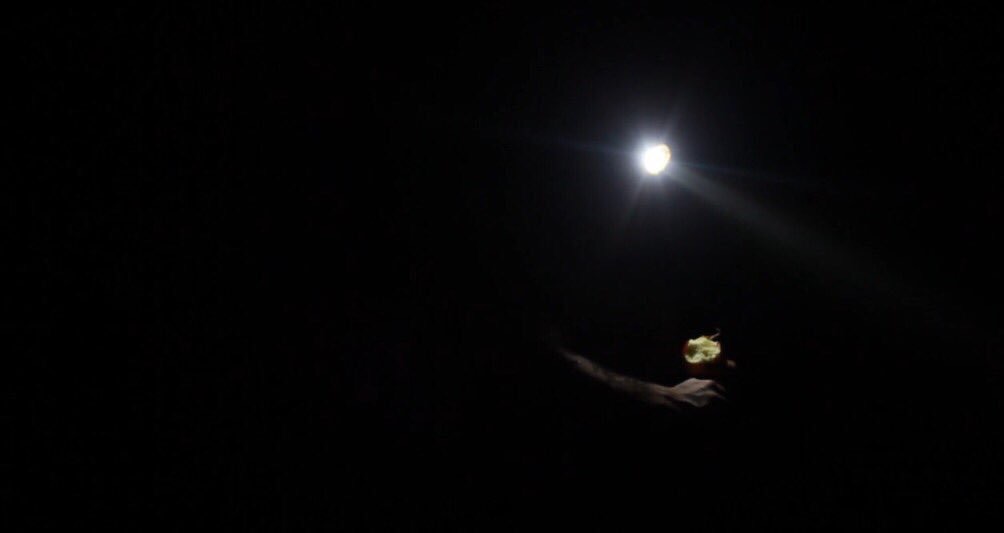
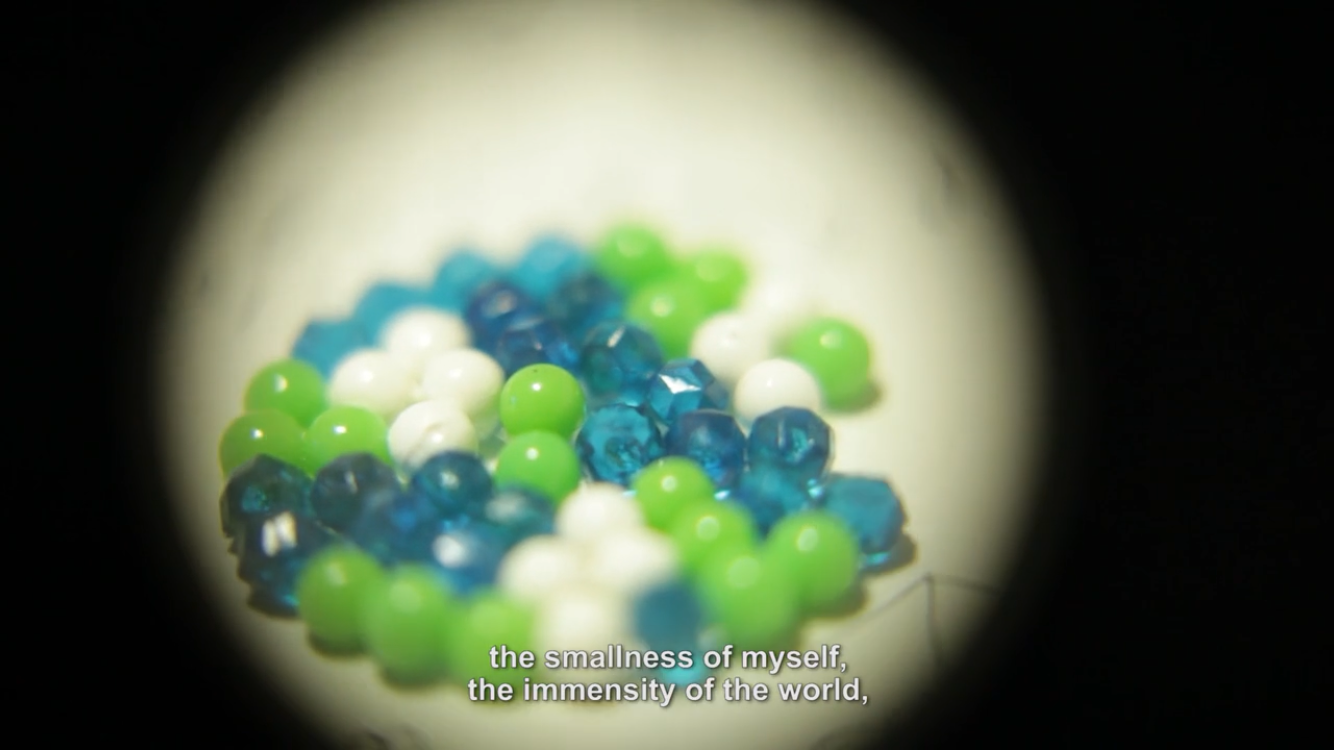
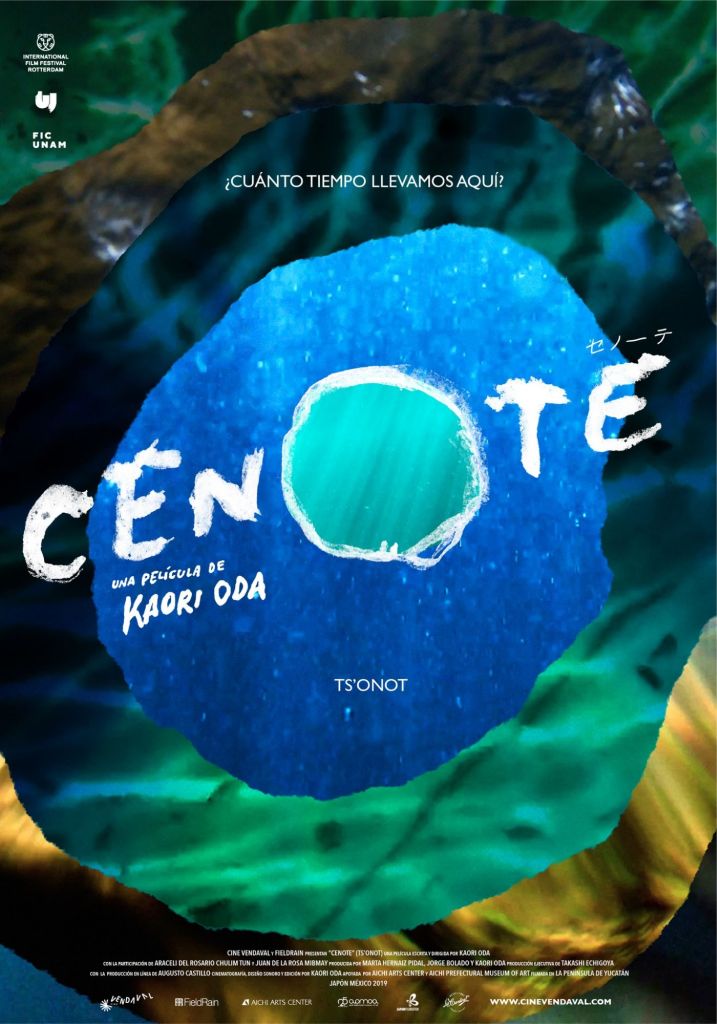
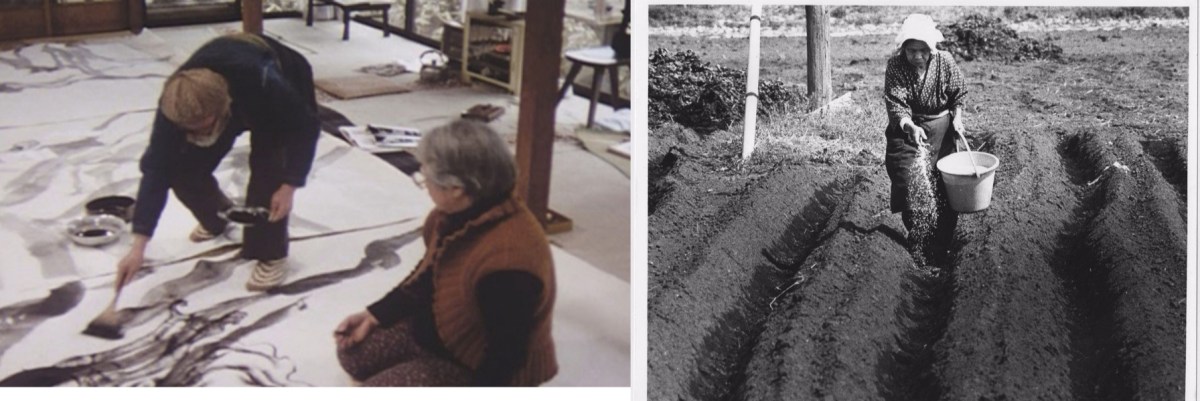

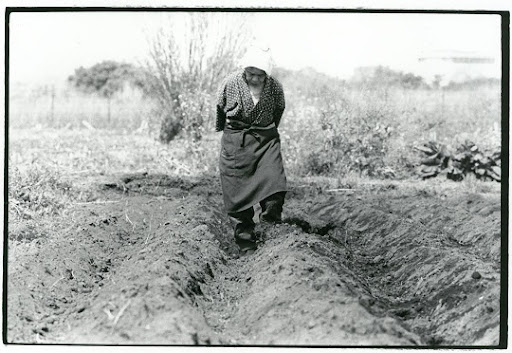


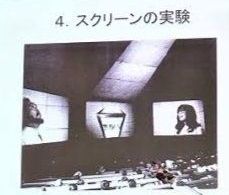
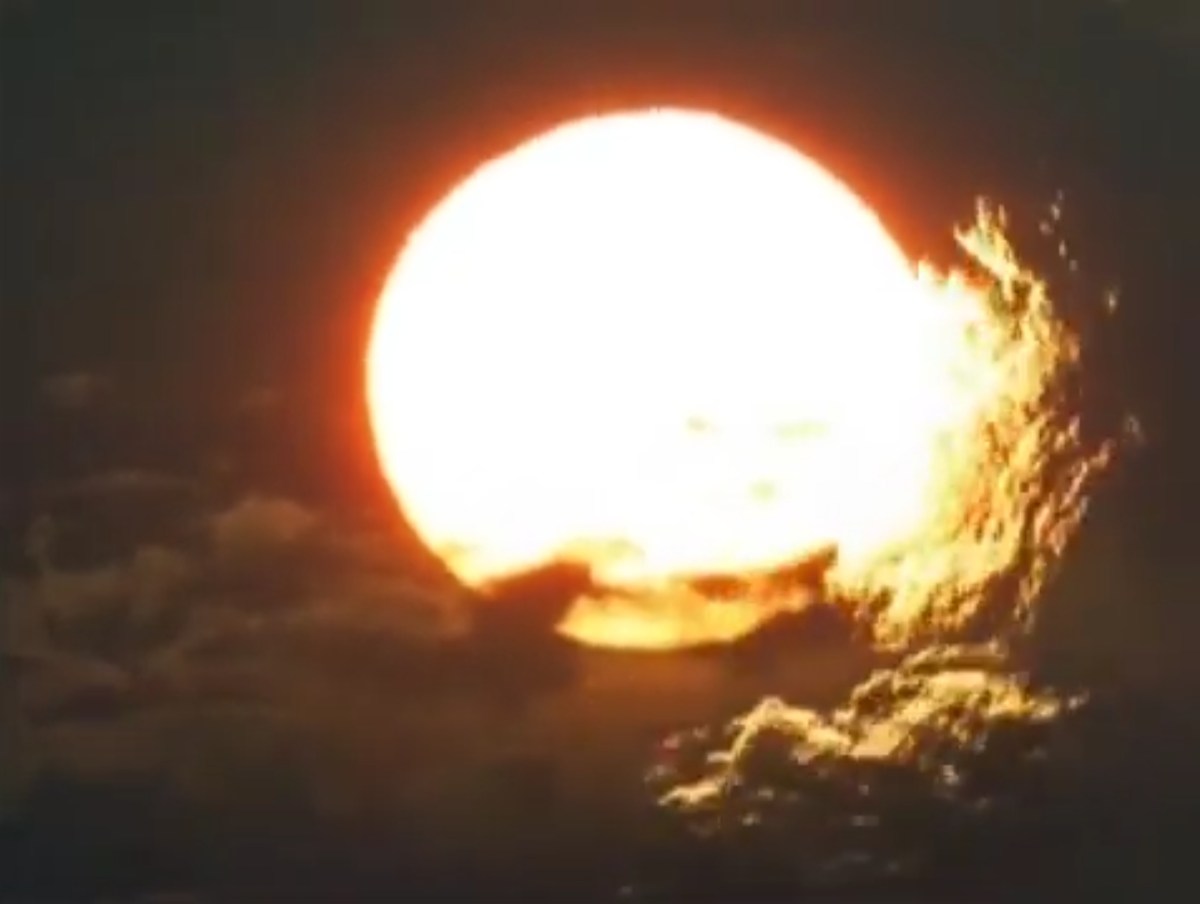

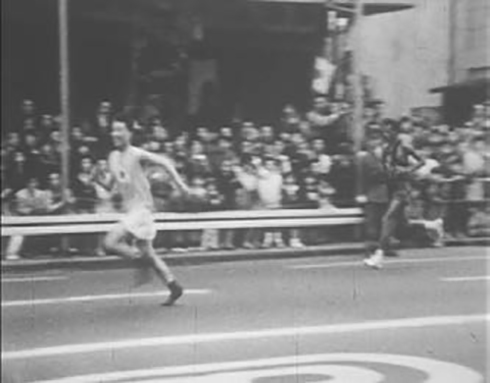

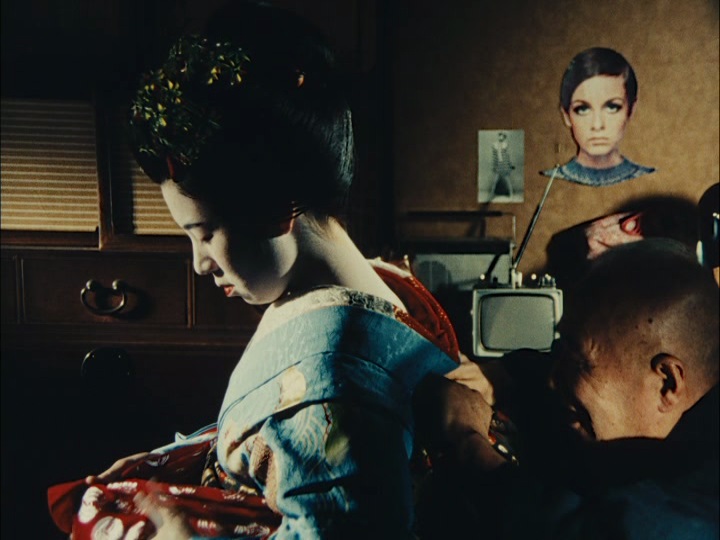


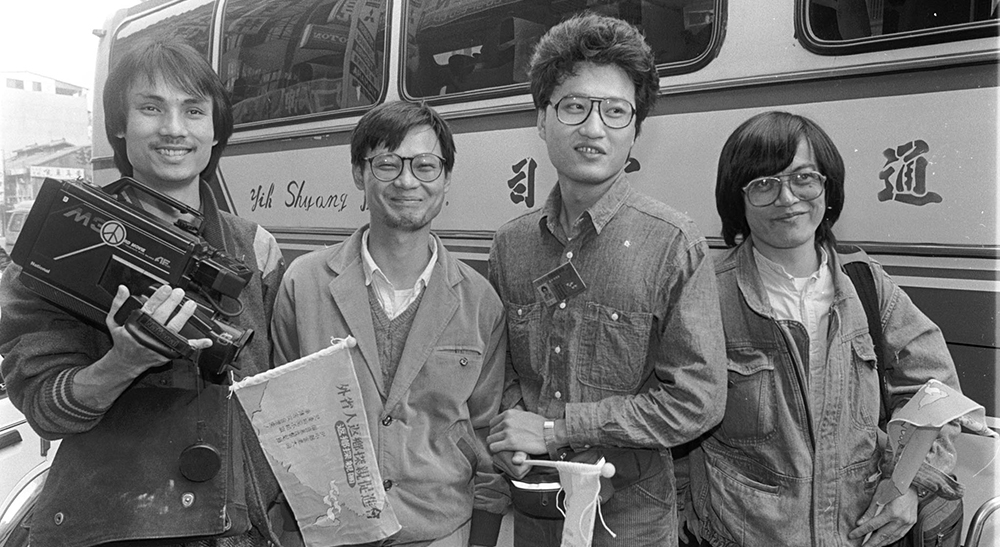


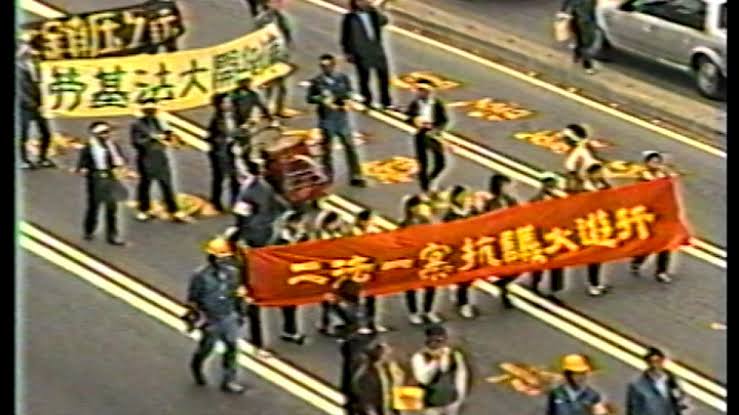
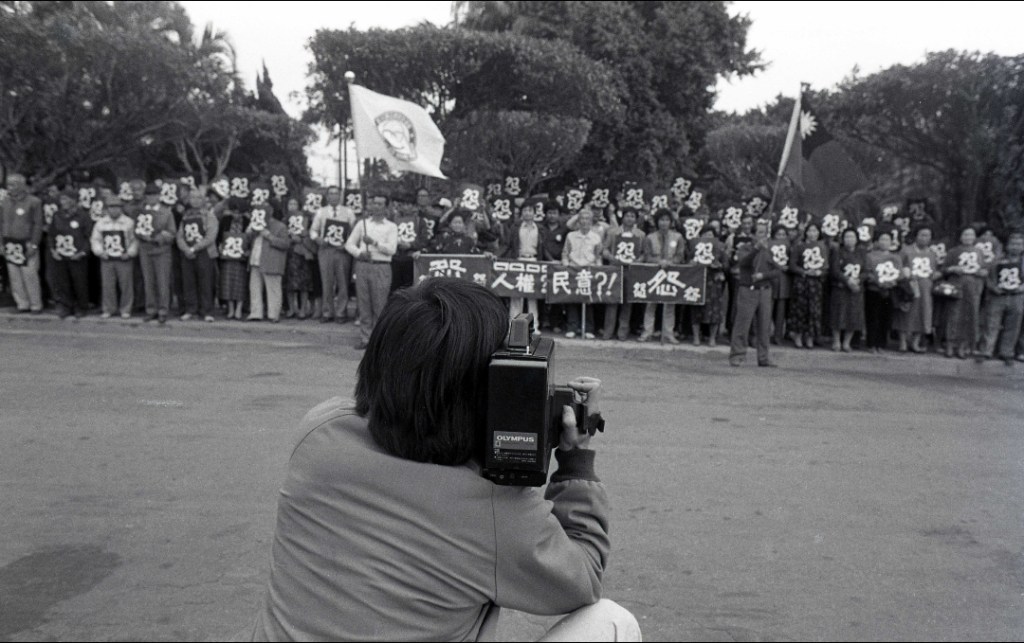
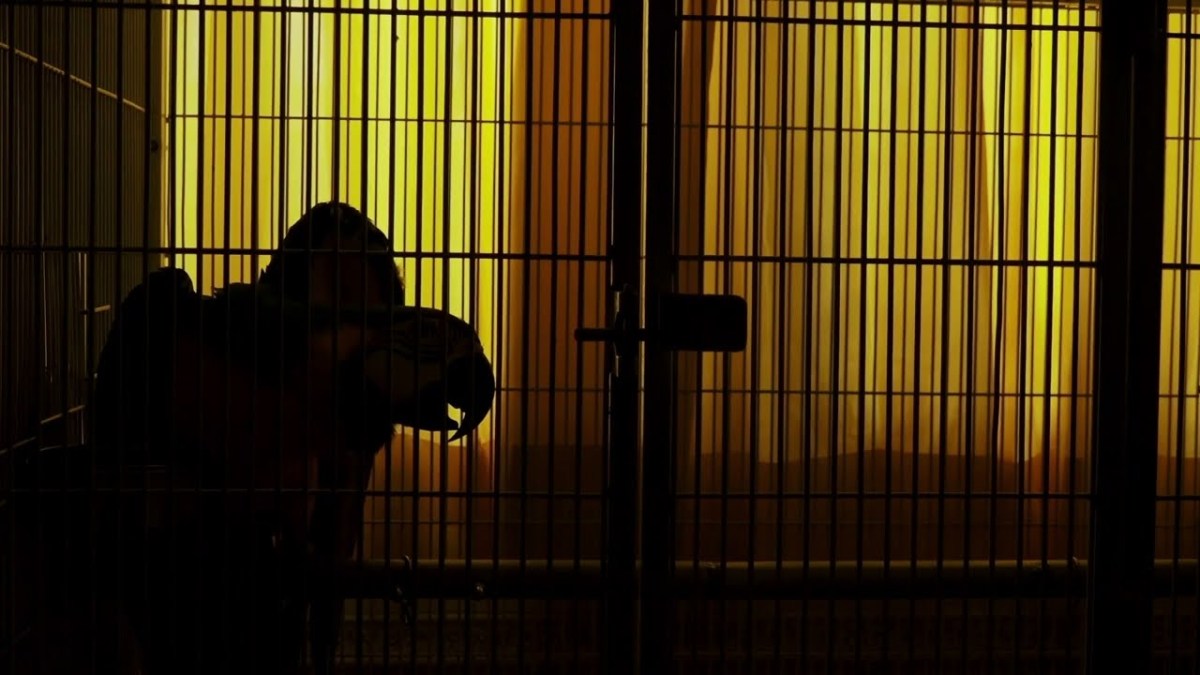

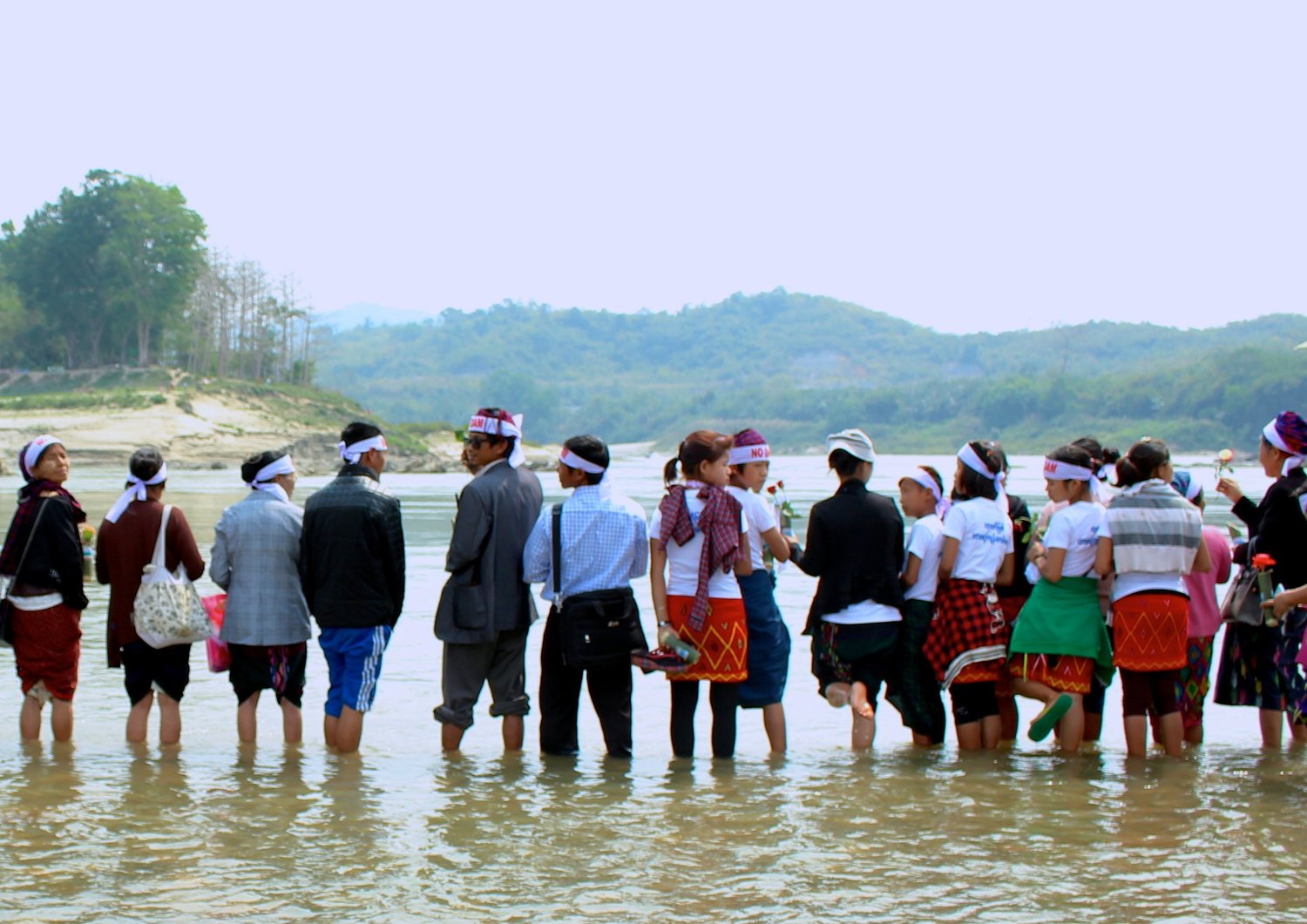
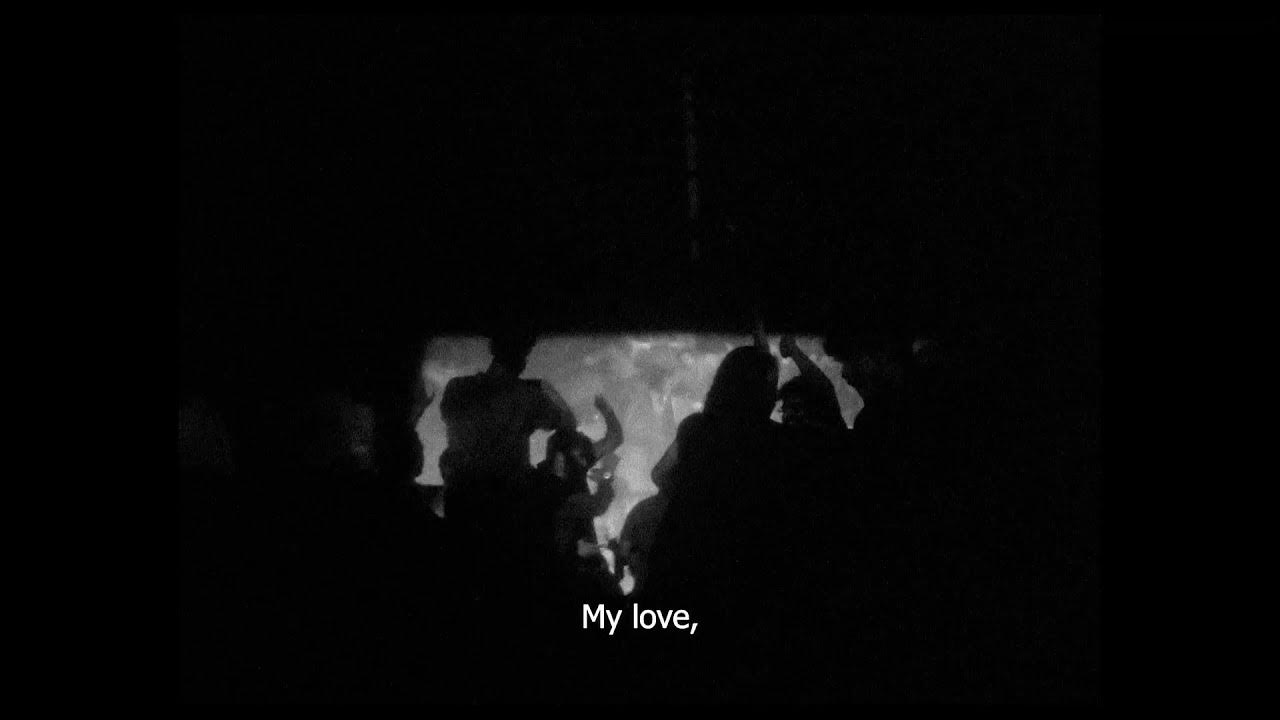


 Asian Docs
You must be logged in to post a comment.