Surfing through the internet in search of information and publications about documentary in East Asia, I’ve stumbled upon what seems to be an interesting and original dissertation.”Extending the local: documentary film festivals in East Asia as sites of connection and communication” is a thesis written in 2012 by Cheung Tit Leung at Lingnan University and, as the title suggests, it’s a study about the importance of East Asian documentary film festivals for the development, nurture and distribution of Asian non-fiction cinema, and Asia in general, across the globe. The author focuses his attention on four film festivals in the region, arguably the most important ones, the Yamagata International Documentary Film Festival (Japan), the Documentary Film Festival China (China), the Taiwan International Documentary Festival (Taiwan) and the Hong Kong’s Chinese Documentary Festival (Hong Kong).
I’ve read a dozen of pages so far and I have to say that the topic is really fascinating, more than I expected; whether or not you’re into Asian cinema, this thesis is an important piece to the relatively new field of Film Festival studies, but also one that explores the connections between cinema and a region, East Asia, seldom analysed on specialist periodicals or inside academic circles.
Your can legally download and read the thesis here.
The Chinese Cultural Revolution began 50 years ago, and newspapers, websites, magazines, blogs and books have recently taken the opportunity of this anniversary to write about, discuss and analyse the huge and still controversial historical event that shaped the Asian country and whose ripples were felt all over the world.
In 1966, a group of filmmakers from Japan were allowed to enter the country, or rather, they were lucky enough, almost by chance, to be in China just after the revolution was proclaimed (in August 1966) to film and record, almost without knowing what was happening, the changes brought about by the event. This was something of a “miracle”, as there were no formal diplomatic relations between the two countries at the time. The documentary is by no means a critical view of the revolution, as it was still in its infancy, and also because there were areas the group was not allowed to film, but it works as a visual and unique document of the early period of the revolution. The group spent seven months filming landscapes, factories, cities, farms and people across China, and the resulting documentary was compiled the following year under the title Land of the Dawn 夜明けの国.
The film was directed by Tokieda Toshie, a filmmaker who worked for and was associated with Iwanami Production for over 30 years. Among her extensive filmography, at least worth mentioning is Town Politics-Mothers Who Study 町の政治 – 勉強するおかあさん」 (1957), a depiction of a group of mothers-turned-activists in the town of Kunitachi, Tokyo (the short documentary is part of the films featured in this edition box set).
There’s an interesting interview with Tokieda on the Yamagata International Documentary Film Festival website, in which she recalls her experiences of filming in China. The film is also discussed in a chapter of Nakajima Takahirō’s The Chinese Turn in Philosophy (2007):
「The film」opens with a scene showing young Red Guards arriving from throughout China and gathering in Tian’an men Square. In the following scene a train appears with a plate indicating “Wansui Maozhuxi [long live Chairman Mao];” it is an express train traveling from Beijing to Shanhai Guan. The narrator of the film tells us that the young people clustering around Shanhai Guan station are tourists going to see the Great Wall. However, Tsuchiya Masaaki suggests that
these young people teeming around the station are not tourists, but are going to Tian’an men Square to see Mao Zedong.
It must be easy to reach such an understanding if we could comprehend the meaning of August 1966, or at least if we could grasp the meaning of the opening scene of the young Red Guards gathering in Tian’an men Square. However, the film presents the opening scene like a picnic or a school excursion, when they take souvenir photos and write their names in Mao notebooks and exchange them. It is “daily life” in the New China, which is regarded as being similar to daily life in Japan where people enjoy having fun. Following this line, the second scene at Shanghai Guan station is to be understood as showing tourists going to the Great Wall. Likewise, if we go to the third scene, it shows people bathing in the Songhua River in Ha’erbin City. In short, “Country of the Dawn” is edited to make the unusual event of the Cultural Revolution become normal and understandable to a Japanese audience.
This is just an excerpt from a chapter in which the author analyses the documentary in relation to Soseki Natsume’s Travels in Manchuria and Korea (here if you want to read more).
A final note on the availability of the film. In 2008 the movie was released on DVD, together with a book about the Cultural Revolution, it’s in Japanese without English subtitles, but if you’re interested you can buy it here.
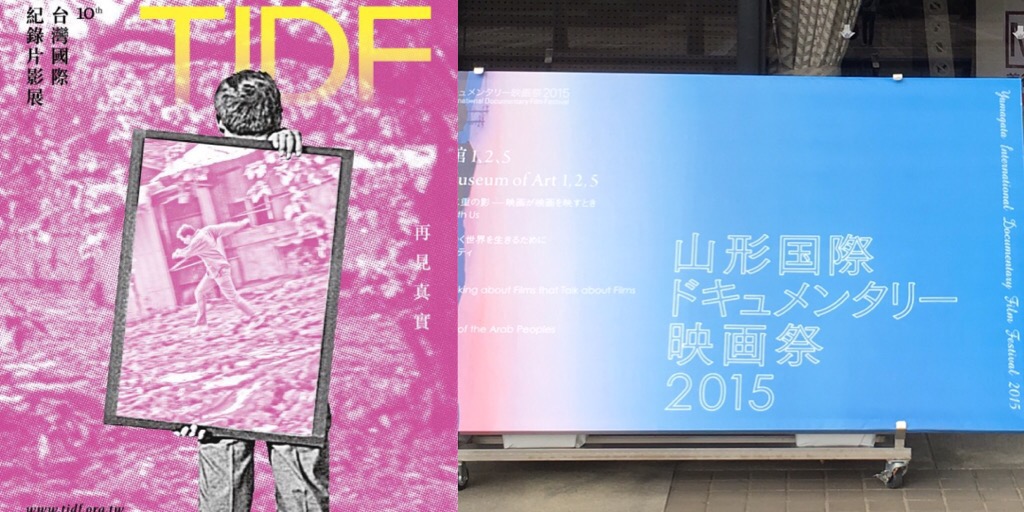
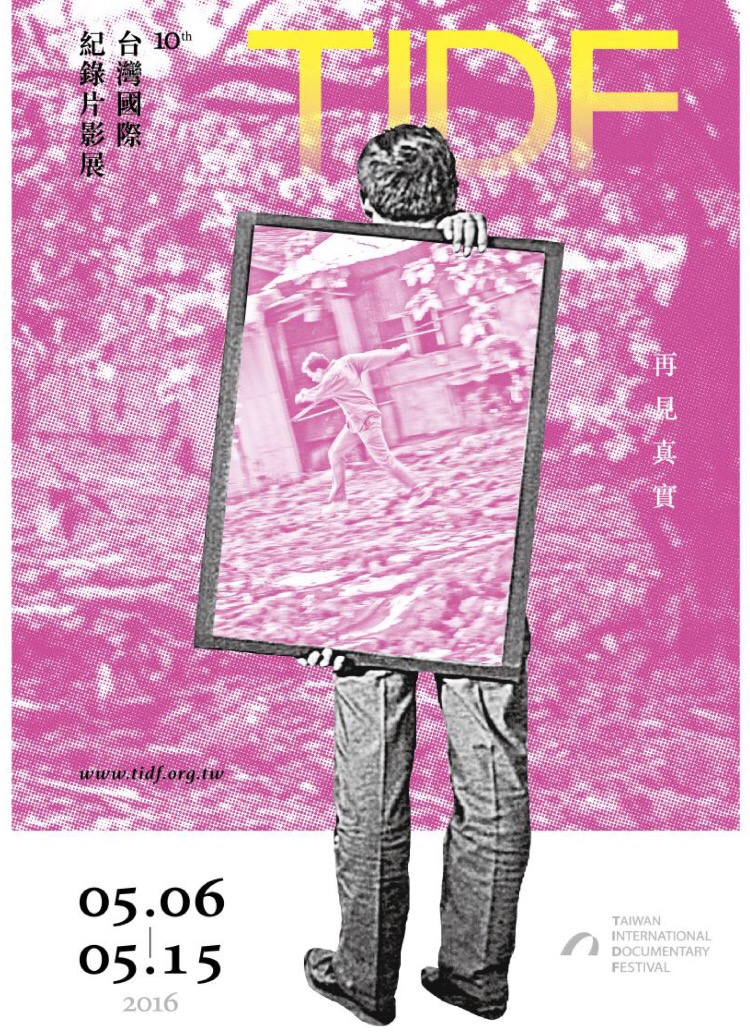
The Taiwan International Documentary Festival kicked off its 10th edition over the weekend, an important event for the region and one of the main avenue and showcase for non-fiction in Asia, the festival will last 10 days, till May 15th.
Let’s take a look at the presentation for this year edition as written in the official brochure:
Founded in 1998, TIDF is now 18-year-old, reaching the age of adulthood. This year marks our 10th edition. With the core spirit o‘f Re-encounter Reality’, TIDF preserves its traditions as well as blazes new trails, aiming to present diversity, break boundaries and bring back the essence of documentary.
During the preparation of the film festival, we went through rounds of discussions, debates and brainstorming. Our initially vague ideas and perceptions were elaborated step by step. When most of the decisions have been made, it is the best time for us to examine our original intention.
This year we have arranged more Q&A sessions, set up a regular venue for professional interaction, organised a new interdisciplinary workshop, cancelled the policy of‘not allowing admission 20 minutes after each screening starts’, and launched a long-term volunteer plan DOC U. All these changes are made in the hope of making things more practical and convenient for festival-goers. It also means we are offering more accessibility and trust. In our programme, time, memory and aesthetics are in conversation. We have curated three special sections: Director in Focus: Hubert SAUPER, the Folk Memory Project, and the retrospective celebrating the 30th anniversary of Green Team. Although focusing on different regions and periods of time, these films share a power to challenge history, fight authority and bravely reveal the reality most people avoid. Furthermore, they lead us to reflect on how to take actions, make changes and be able to imagine the future.
As we progress along the trail of documentary, future does not lie ahead of us but rather in the past.
Welcome to participate in TIDF’s coming-of-age celebration. Let us walk into the cinema and re-encounter reality!
15 documentaries will take part to the International Competition, among them the Taiwanese Why Aren’t You Angry (2016) shot by Green Team and about the Wild Lily Movement, a student demostration that took place in Taipei in March 1990, and Le Moulin (Huang Ya-li, 2015) also from Taiwan, an experimental documentary that was one of my favorites of the past year (more here). There are many other interesting works from other parts of the world of course, but being this a blog devoted mainly to East Asian documentary, I’ll focus only to movies produced in that part of the globe. Also in competition Realm of Reverberations (Chen Chieh-jen, 2015), about the Lesheng Sanatorium in Taipei, a hospital for lepers established in 1930 during the Japanese colonial period, and a facility that although the government planned to demolish, it’s still there due to people’s opposition.
15 are also the documentaries shortlisted in the Asian Vision Competition, a section that intrigues me a lot for obvious reasons, I’m very happy to see that Aragane (Oda Kaori, 2015) and Dryads in a Snow Valley (Kobayashi Shigeru) will be part of the group. I’ve written many times about Aragane (here my recent review), as for Kobayashi, he’s a cameraman turned director who collaborated prominently with Satō Makoto (Living on the River Agano, Memories of Agano), unfortunately I haven’t seen his new movie yet, but I’m planning to do it as soon as possible since the movie is now in the Japanese theaters. Asian Vision will also present 2 works from South Korea, A Roar of the Prairie (Oh Min-wook, 2015) and Welcome to Playhouse (Kim Soo-vin, 2015), a self-documentary about the 23 year-old director whose life changes when she becomes unwantedly pregnant. The movies from mainland China are 3, Shaman’s Journey (Gu Tao, 2016), Enclave (Li Wei, 2015) and The Road (Zhang Zanbo, 2015), a work filmed for three years in a small town where a section of a new highway is being built, while those from the Philippines are 2, Murmurs from the Somber Depths of Sta. Mesa (Hector Barretto Calma, 2015) and Of Cats, Dogs, Farm Animals and Sashimi (Perry Dizon, 2015). But there are many more documentaries, you can read about all of them in the program – there’s a section devoted exclusively to non-fiction cinema from Taiwan, one on re-enactment and one on significant documentaries shown at international festivals – on the official brochure (here the PDF).
Just a final note on a series of special events and screenings organized by the festival with the Folk Memory Project, an initiative started in 2010 by Wu Wenguang, the so called father of Chinese independent documentary, whose aim is to preserve the oral memories of the Great Chinese Famine of 1959-1961 through documentaries, interviews and theatrical performances.
Aragane is the first full-length movie by Oda Kaori, a talented Japanese director who had her debut in 2012 at the Nara International Film Festival with the short Thus A Noise Speaks, a meta self-documentary that unflinchingly explored her coming out as a female gay and the subsequent reactions from her family. Aragane is a completely different work though, an experimental documentary that Oda directed, photographed and edited herself, but also a “product” of Bela Tarr‘s film.factory, the film school based in Sarajevo and established by the Hungarian director few years ago, a place where the Japanese director studied for three years. Aragane, the Japanese title means “ore” or small pieces of stone, was shot in a Bosnian coal mine and it’s an immersive and hypnotic sensorial experience, a very special and rewarding one that was presented last year at the Yamagata International Documentary Film Festival and later at the DocLisboa in Portugal.
I had the pleasure of meeting Oda in Yamagata and later on she was kind enough to answer my questions by email, you can read the interview here.
Aragane
Bosnia and Herzegovina, Japan 2015, 68’ Director: Kaori Oda, Cinematographer: Kaori Oda, Editor: Kaori Oda, Producers: Shinji Kitagawa – FieldRain, Emina Ganic – film.factory.
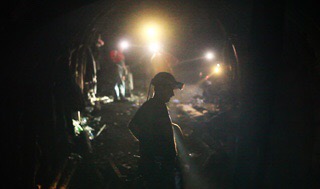
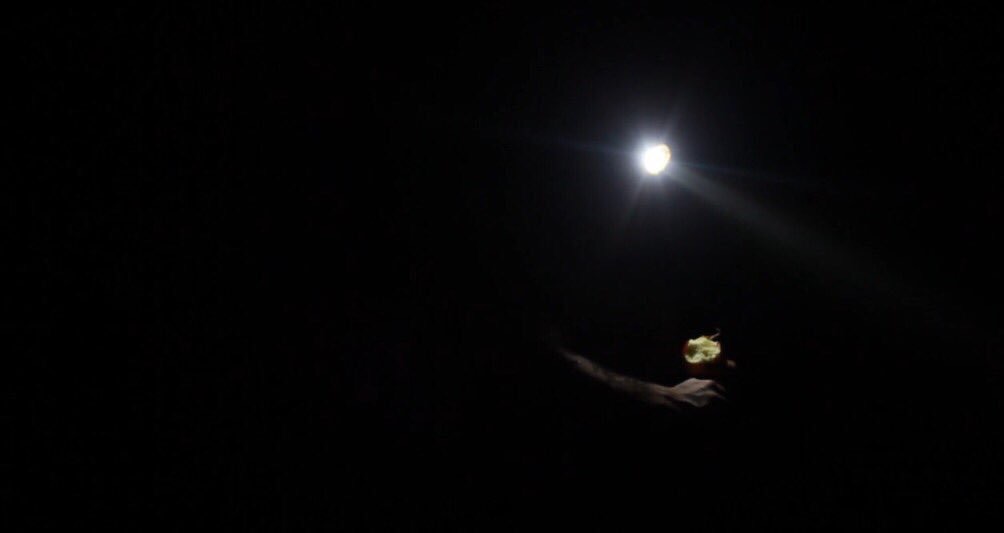
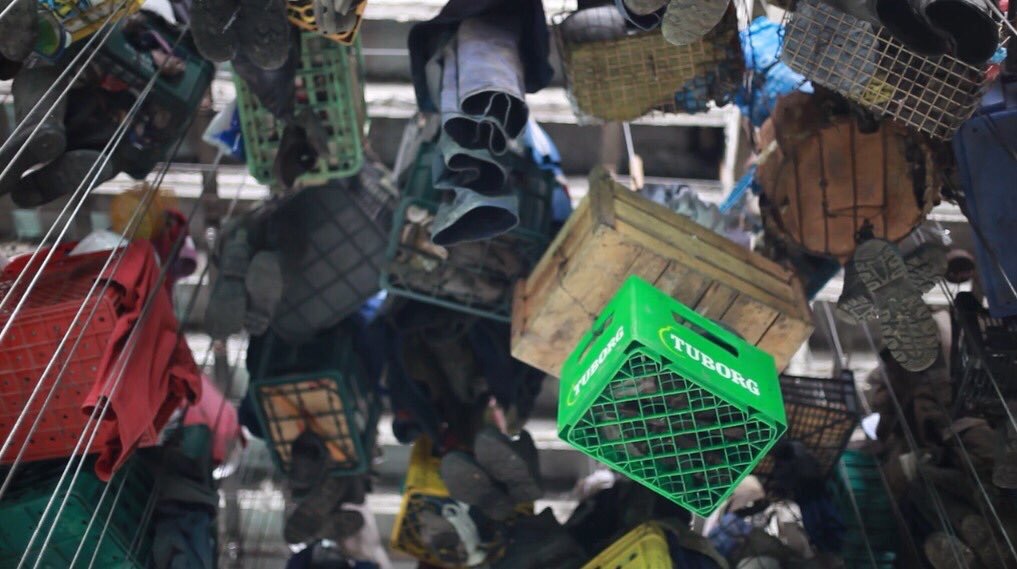
The movie starts overground with the camera gazing at some busy workers preparing and checking the machines before going deep down into the mine, the camera then ride on a cart and with a very long tracking shot slowly starts its descent into the inner part of earth. Once inside, we’re introduced and enveloped in a world of darkness, a pitch black curtain broken only by sudden and random flashes of lights revealing a segment of a machine here and a face smeared with coal there. There are really few spoken words, we hear some random sentences uttered every now and then by the workers, but that’s all, much more important is the wall of noise created by movie, the soundscape being a crucial element of it. In the 68 minutes of deep immersion into the chthonian and dissonant world of the mine, we are almost constantly submerged by the cacophonous noise of the machinery, although the movie is also punctuated by sparse but significant and sudden moments of deafening silence. At the end of the movie for instance, when we emerge from the bowels of the earth, the peace and the vivid colors of the changing rooms and the stillness of the hanging clothes have an almost soothing quality for our eyes and ears. As stated by the director herself, Aragane is not a direct inquiry into the harsh conditions of the people working in the mine, although it’s something that eventually and necessarily emerges, but more an attempt to convey on screen the time and the space of the coal mine as experienced by the workers, or, I would add, as experience by the mine itself. It takes some time to get used to the alien space and almost abstract geographies of the mine, for most of the time we don’t really know what’s going on and who is doing what, it’s more like being thrown into a cubistic landscape in the middle of its making. Once we get accustomed to the time and the space presented on screen though, everything slowly begins to make sense, what starts to surface from the images and sounds, and through the tracking shots and the slow and hypnotic camera movements, is the time of the mine – time experienced as duration – and the materiality of the space depicted. On this point Aragane is a documentary very akin to the works of the the Harvard Sensory Ethnography Lab, Aragane reminded me – albeit with some distinctions of course- of Leviatahn, Single Stream and The Iron Ministry, just to name a few.
Aragane is a compelling viewing experience, not a cinematic revolution or a masterpiece of course, but nonetheless a very significant work for Japanese documentary – it’s only partly Japanese to be honest, since it was produced and shot outside the archipelago. What particularly interests me here is that finally Japanese cinema has an important work of non-fiction able to emancipate itself from the imprint of social and political documentary that usually dominates the contemporary non-fiction scene in Japan, and a work that in doing so liberate and explore the experimental qualities of documentary. I might exaggerate, but to find something similar in the history of Japanese cinema we have to go back to the great Matsumoto Toshio and his Ishi no uta (The Song of Stone, 1963).
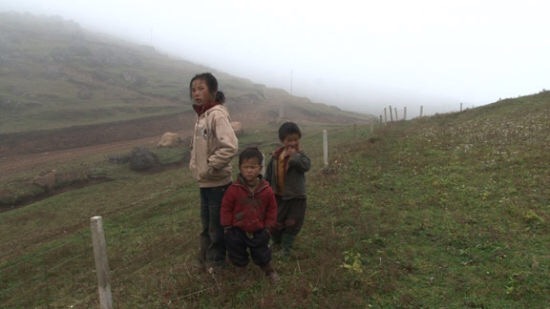
Alone is the shorter version (89′) of Three Sister, a documentary about three little girls living alone in the mountains of the Yunnan province in China, a movie that was entered at the Venice Film Festival in 2013. Both of them are directed by Wang Bing, one of the most prominent filmmakers working today in non-fiction. Here’s the synopsis, taken from the International Documentary Film Festival Amsterdam where the movie premiered in 2013:
Ten years after Tie Xi Qu: West of the Tracks, which documented China’s transition to a modern industrial society and the growing pains this involves, filmmaker Wang Bing finds three sisters aged four, six and ten living with no parents 10,000 feet above sea level, in a small village in Yunnan province. Their mother has disappeared, while their father works in a nearby city and comes home every now and again to bring them new clothes. Family members and other villagers help keep the three children alive – efforts which, along with the communal vegetable garden, evoke the old days of socialism. This oscillation between modernization on the one hand and older values on the other is reflected by switching from long, patient observation by the camera to sudden accelerations and questions from the filmmaker, who operates the camera himself while recording the silent desperation and deprivations of this fragmented family. The mist that surrounds the village almost daily gives the impression that it has withdrawn from the rest of the world – although this proves an illusion. The surrounding areas are modernizing, the mayor explains, so the cost of living will have to increase here, too. All this escapes the children completely. They are too busy collecting food and delousing one another to notice.
More than a review of the movie, I’m sure you can find them out there in the vastness of the internet, what I’d like to do today is to throw some thoughts on the technical and aesthetic aspects of Wang Bing’s filmmaking, elements that make his movies – specifically Alone and by extension Three Sisters – a cinema of immanence (the definition is of course taken from Deleuze, you can read something about Wang Bing and the French philosopher here, while this review in Italian gave me the idea for this post).
I think it’s not far fetched to say that it is because we, as viewers, are compelled and fascinated by the visual quality of Wang Bing’s works, that we also feel so engaged and moved by the stories he depicts in his documentaries. Remarkable is for instance the use he does of light, natural when shooting in the big expanses of rural China, and artificial -diegetic – when the filming takes place indoor; it’s something really impressive, but that often goes unnoticed because the subjects filmed and the stories told, socially and politically relevant, capture and consume the viewer attention. Every scene shot inside the shack where the three sisters live feels in fact like a painting, and this happens for a series of technical reasons: use of light, camera position, framing, duration and time of filming.
(a still from Night and Fog in Zona)
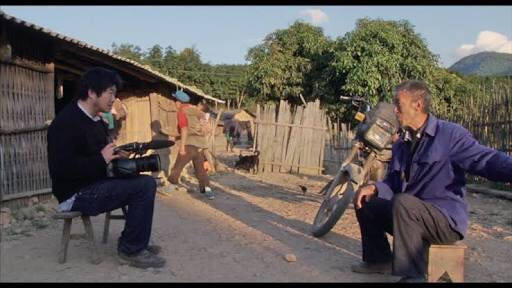
Something I’ve noticed when I was watching Night and Fog in Zona, the beautiful documentary on Wang Bing by Jung Sung-il, something very simple but at the same time a sort of revelation on his movie making style, is the way Wang Bing holds his camera (if I’m wrong I hope some readers will correct me). Rarely on his shoulder, and this is true especially when shooting indoor or outdoor while sitting, the camera often rests on his lap, or at least below his head, static and almost devoid of movements, it forges images that are less distant and thus more engaged with, and almost merged, with what he’s shooting. Wang Bing is crafting a cinema of immanence, an immanence made possible by the digital, and this is all the more true when he is filming people and their faces. It’s in these shots and scenes that the sound design gains its importance, the camera is gazing at the sisters from such an extreme proximity that we can literally hear their breathing, swallowing and sniffling, adding an element of almost tactile sonority to the movie. It is through this style and aesthetics that Wang Bing is able to convey the poverty and miserable destiny of the sisters, but at the same time their playfulness and innocence, everything here is depicted against the background of mountains, villages and shacks, deep inside the cold desolation of rural China, landscapes of absolute beauty and absolute indifference.
Directed, shot and edited by Oda Kaori, Aragane was one of my favorite documentaries of 2015, a work that came out from film.factory, a film school based in Sarajevo and founded by renown Hungarian director Bela Tarr.
Aragane it’s an experimental documentary shot in a Bosnian coal mine, an immersive and hypnotic sensorial experience that was presented last year at the Yamagata International Documentary Film Festival, where it got a special mention.
I wrote a review of the movie in Italian for the blog Sonatine, but I’m planning to write one in English as well and post it here, time permitting.
In October I had the pleasure of interviewing Oda for the Italian newspaper Il Manifesto, the following is the original and longer version of that interview.
Can you tell us how you got involved in cinema, that is, how you got interested in watching and making movies in the first place?
I wanted to be a professional basketball player, I played for 8 years since I was 10 years old, but unfortunately my right knee got broken. I underwent two big operations but it was not possible to keep playing seriously. Doctors said NO to me. So I was lost completely because the only thing I knew in life was basketball. I decided to go to the US to study abroad then, you know the typical thought that if you move the place, something may change in your life. There I took a film course, that was the first encounter to filmmaking, I was not cinephile at all and I am still not. (but I like some films, of course)
I made the very first film with my family in 2010 (ノイズが言うには Thus a Noise Speaks). It is a self-documentary made by my real family and myself about the coming-out as gay. The idea was to use filmmaking to communicate with my family and face the fact that they could not accept that I was gay. It was a tough experience but I learned a lot from that and started to see and use camera as a tool for communication. Communication between myself and the subject (the people/ the space).
(A still from Thus a Noise Speaks 「ノイズが言うには」)
How about film.factory? how did you happen to move to Sarajevo and be part of the group?
I got a chance to screen my first film in the student section of Nara International Film Festival in 2011, and there I met Kitagawa Shinji, the person who more than anybody else understands my filmmaking. He was the programmer/organizer of the section. The film got an audience award and we kept in touch since then. In 2012, he wrote me an email that there would be a new program in Sarajevo to support young filmmakers from all over the world. I was very much lost at that time, because it was very difficult to make my next film after a self-documentary by which I confronted the biggest conflict I had.
So I decided to apply to the program, moving to a new place and meeting new people.
Luckily, my application got accepted.
Can you tell us more about Aragane, where did the idea come from? I heard that originally it was supposed to be a fiction inspired by a Kafka story (A Visit to a Mine), is that true?
Bela (Tarr) gave us an assignment to do an adaptation work. He wanted me to do ‘Bucket Rider’ a short story from Kafka that revolves around man looking for coal. So I went to a coal mine company to do research for the project. The space and the workers were incredibly attractive, immediately I knew I wanted to shoot them as I felt and not through an adaptation work.
What was the involvement of Bela Tarr in the making of Aragane? Did he give you any suggestions, ideas or was he just supervising the project?
I brought some shots I made there and told him that I wanted to make a film. He watched them and said ‘Go and shoot’. We had one meeting when I was still shooting and I had doubts about which direction I should go with the project, should I go more for the people and their story or more with the space itself?
He told me ‘Listen to yourself, what do you want to do?’
I said ‘I am attracted to the space and the physical work of miners’
After shooting, I edited the film and showed the first rough cut to him and he gave me some comments such as ‘maybe you should eliminate this shot’ or ‘keep this one’.
More than once you’ve mentioned space and your relationship with space when making a film, I think is a very fascinating subject. When I watched Aragane I felt very strongly that it’s a work about landscapes (a dark one, the mine), the materiality of it and the machinery in it. An “alien” landscape and the beauty of it. What brought you to focus more on the space/landscape and the machinery, and is there a reason behind the use of long takes?
I think I was fascinated by the space because it was something totally new, complete darkness, magnificent volume of noises, but also sudden silence where there were no machines around.
The space drugged me into the film, my camera (gaze) was a communicator/mediator between what was there in front of camera and myself. I tried to understand and feel what was going on by shooting the space and its own time. Also, I didn’t approach the subject from the angle of the hard conditions of miners, unfairness and danger of their works (even though it is there in the film because it was just there). I hope people would not get me wrong by saying this. I/my camera shared some moments with them, I tried to be with them moment by moment. Focusing on social issue can be something good for miners, to say what is the problem and how ignorant we are about the issue, but I think the best I can do with my filmmaking is to try to be with the subject (space/people/time) and make them seen by being with them.
About the machinery, I think I shot them because their existence is big in that space and also because miners were proud of the machines, especially the huge ones digging into the side walls.
It may be a bit difficult to explain why the shots needed to be so long, but I tried to be honest toward the moments I captured with my camera.
I think the sound in Aragane is as important as the images, can you tell us more on how you were able to capture and magnify the sounds of the machines and, if you can, tell us about your relationship (as a filmmaker) to sounds/noise and soundscapes?
It is very interesting to me that lots of people mention about sounds and soundscapes. The sound was recorded with the internal microphone of a Canon 5D, because I didn’t have something like Zoom, also I was most of the time alone, so my hands and focus was with the Camera/Image. My light was on the helmet to make the curtain space visible, so it would have been impossible for me to take care of the sound recording. What was recorded was done “without care” and automatically.
I did the sound mix myself, changing the volume here and there, cleaning a bit of noises, and making rhymes/music by adding some noise on top of another noise. That was fun and I think made the film to gain a sensorial feeling.
I was just playing with sound in Aragane , but I want to learn more about sound. The film made me realize and feel that Film is an audiovisual art.
It’s interesting that you’ve used the words “sensorial feeling”, the first time I saw Aragane I thought straight away of the works of the Harvard Sensory Ethnography Lab (Leviathan, Manakamana, Iron Ministry, etc.), you told me already you haven’t watched their movies and that you’re not really a cinephile, but I was wondering if you got ispired for your approach by any movies or more in general by any other work of art.
After your email, Matteo, I watched ‘Manakamana’ ‘Iron MInistry’, and ‘People’s park’,
and I see what you see as similar.
It is very interesting because, before you mention about the Lab, I’ve thought that if I stop making films, I want to be an anthropologist. And I feel I am learning about human beings by making movies.
I might not be so good yet and I have not a clear idea about what I am doing with my camera, but it has been very clear for me that my theme is ‘where we come from, what we are, and where are we going?’ .
I know it sounds abstract and even pretentious, but I’m serious. I may not get the answers before I die, but I have at least the right to explore and challenge these themes with my life, I guess.
I am inspired by: Wang Bing, Pedro Costa, Raymond Depardon, Wiseman, Cezanne. My bible: Letters To A Young Poet by Rilke.
One last question: what are your future plans, are you working on something at film.factory and how about after film.factory?
I have a few projects now.
One is my essay film, to conclude the experience in Bosnia and filmmaking here. This is my priority right now. It’s in the production stage.
And then I plan to do a workshop of filmmaking/photography/camera in a discipline center in Sarajevo. (It is a institution for the underage kids who commit crimes, not strict as much as a prison). I want to share the possibility of using the camera as a tool of communication and expression with these kids. This kind of workshop is what I want to do as my life time project, I don’t know if I can finance such a project, but I want to try my best to make it a constant practice in my life.
Or I might move to Mexico to do a project after film.factory, one of my colleagues is from Mexico and I want to shoot something there related to sea/water/cave. It’s still in the research/developing stage. Or maybe I’ll go back to Japan, it all depends on if I can support myself and how these projects can be produced!
Feel free to add something you want to say or share.
So many people have been supporting my filmmaking. My family, Kitagawa Shinji, Bela Tarr, and my dear colleagues. Most of the time, I shoot and edit alone and this sometimes make me misunderstand that I am making films alone, but in fact, there is always someone who introduces the subject to me, tries to support me mentally, gives me some thoughts on the film, shares the film, writes about the film, and watches the film. All these people make films. All these spaces and times make films. I’m just one of the gears/energies that make films happen.
Hara Kazuo is one of the most internationally well known Japanese documentarists, his The Emperor Naked Army Marches On (1987) is the first Japanese entry in the Sight & Sound’s poll The Best Documentaries of All Time and a movie that is often screened, talked about and studied in Japan as well as abroad. Now, personally The Emperor is not my favourite work from Hara, Sayonara CP (his debut from 1972) and especially Extreme Private Eros (1974) are better docs for reasons I’m not going to explore here today, and to be honest he’s not even among my favorite directors of non-fiction, but nonetheless I can’t deny he’s a very important and pivotal figure in Japanese cinema. Hara is also the only Japanese documentarist whose writings have been translated in English and collected in a volume, a very good one indeed, that everyone interested in non-fiction cinema should read. The title is Camera Obtrusa: The Action Documentaries of Hara Kazuo: By Hara Kazuo and was published in 2009 by Kaya Press.
All that was to introduce him and to give an idea of his status as a respected director in the international documentary world. The good news is that Hara has a new work out, the first documentary for the big screen after 22 years of absence, he’s been active with feature films, on TV, writing books and with other projects, but 「ニッポン国泉南石綿村 劇場版 命て なんぼなん?」, this the title of the movie, breaks a silence of more than two decades. The film had its premiere at a small event in Tokyo, フィクションとドキュメンタリーのボーダーを超えて, and is about the victims of asbestos exposure in Sennan city (Osaka), where Hara has been intermittently filming for more than a decade, while at the same time working on a project about Minamata’s victims.
I haven’t seen the movie yet, but I hope to catch up with it as soon as possible, although, for some reason, I have very low expectations, but I’m ready and willing to be surprised.
Addendum: Hara won’t be screening it again until summer at the earliest, and most likely the fall (again somewhere in Tokyo), as he’s planning on reworking/editing it after these screenings in Shibuya.
Many thanks to Jordan A. Yamaji Smith for the update
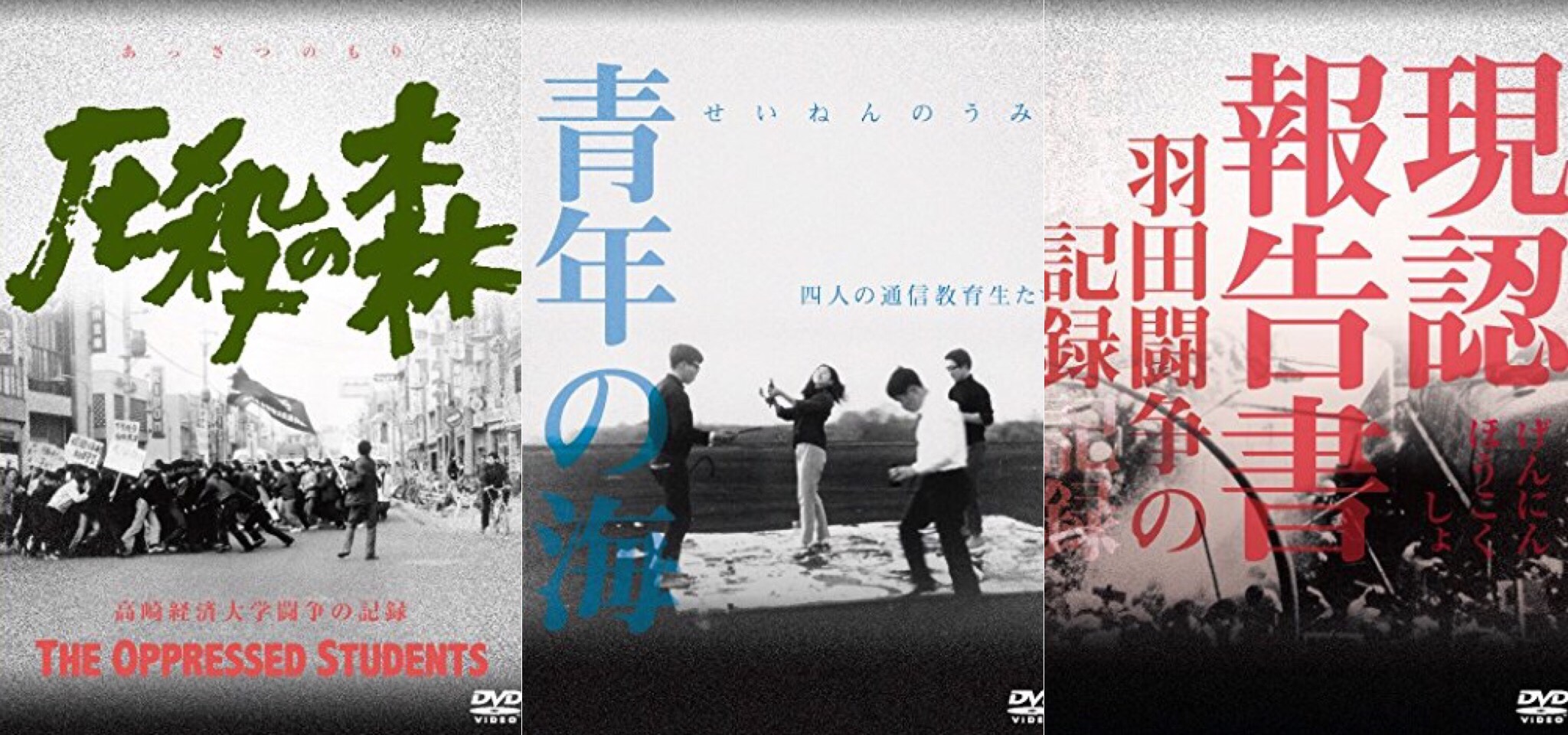
I’ve often written, here and elsewhere, about Ogawa Pro and the documentaries made by the collective, first in Sanrizuka – documenting the resistance of the peasants against the construction of Narita airport – and later in Yamagata. A couple of days ago through social networs I found out that finally all the works produced by the collective will see the light on DVD, a project by the Japanese label DIG. First, on June 2nd, we will get 3 of the early documentaries: A Sea of Youth (青年の海, 1966), The Oppressed Students (圧殺の森 高崎経済大学闘争の記録, 1967) and A Report From Haneda 現認報告書 羽田闘争の記録, 1967) and later, presumably in one or two years, all the 20 documentaries made between 1966 and 1986 by the group. The news is big, at least for me, and although I have sample DVDs of many of the movies shot in Sanrizuka and Yamagata, copies kindly given to me by the festival people in Yamagata, it will be nice to have the films “neatly transferred” on DVDs, the samples I have being a copy of a copy of a copy of a VHS. But here comes my biggest concern about this otherwise great news, will the transfer be really a proper one? Almost all the documentaries are shot in 16mm and I’m not really sure about the condition of the originals, in an ideal world we should see them first lovingly restored and then made them available for the home-video release. But the huge debt left by Ogawa complicates everything, what we’re likely to get is something close to the DVD of Kamei Fumio‘s Fighting Soldiers, a bare bones release, watchable of course but with a poor transfer, in the particular case probably due to the condition of the source material. The docs will not have English subtitles, adding them would have helped to “spread the word” of Ogawa Production to a wider international audience, but again, we don’t live in an ideal world and we should be happy and content with what we will get. Be that as it may, I’m pretty excited about this and I’ll write again about the project, the image quality, etc. when I get more information or in June, the time of the first releases.
Under the Cherry Tree (桜の樹の下) is the feature documentary debut of director Tanaka Kei, a work that follows the lives of the elderly residents of a public housing complex in Kawasaki. The movie had its premiere last October at the Yamagata International Documentary Film Festival (Perspective Japan) where I had the chance to see it.
From the opening scene the film reveals its touch, low-tech and anti-spectacular in style, with a pretty straightforward approach, even though there are some formal choices that tend to be elliptical, I’ll come back to it later. Through her camera Tanaka gives voice to the elderly living in the building, focusing especially on four of them whom, during the 92 minutes of the movie, we slowly get to know and attached to. They all tell stories of solitude, each of them of course has a diverse background and even comes from different areas of Japan. Recollecting their past and the reasons for their present condition, a life on the edge of poverty, is a sort of candid confession that each of them is not afraid to make in front of the camera. In the chatting with the director what strongly emerges is a sense of impending death, a common horizon that feels very near, and yet seems to be accepted and sometimes even anticipate as a sort of deliverance particularly from one elderly lady. Enveloped in their loneliness, the only sparse moments of comfort for these people are represented by the weekly meetings with the care staff or other various recreational activities organised in the neighborhood.
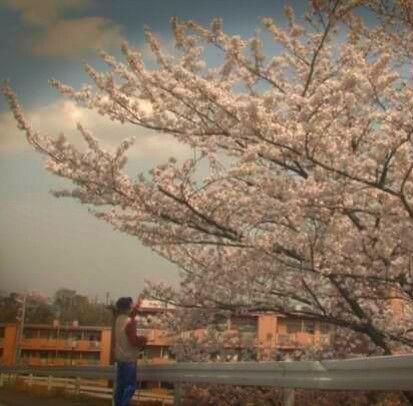
There’s a big cherry tree near the housing complex, often we see these old people taking a stroll, passing under it and stopping to contemplate its flowers, one of the few bursts of beauty coloring their lives and the visual element that gives the movie its title.
As gray as it might seem, the documentary is not only and always a bleak depiction of lives without hope, on the contrary and on a deeper level, is more an act of understanding and acceptance of what it means to become old in a society that doesn’t really know what to do with its old population. To lighten up the mood there are here and there some comic moments, especially when the two old ladies, one of them has also mental problems and lives in a flat piled with garbage, visit each other, chat and quarrel. Renouncing the classical narration in favor of intertitles and written texts to introduce the four protagonists is a perfect choice by the director, as a result the movie is smooth in its flow and doesn’t feel redundant or pathetic, gaining instead a matter-of-fact quality that is one of the best traits of the movie.
Under the Cherry Tree perfectly situates itself in a recent trend of Japanese documentary, a trend that has become almost a sub-genre, exploring and depicting the population ageing in Japan by focusing on personal lives of few individuals. A demographic trend that will dictate the political and economic decisions for years to come, Under the Cherry Tree goes together with Walking With my Mother, Everyday Alzheimer 1 and 2 as one of the best examples of this unavoidable turn that Japanese non-fiction and Japanese society in general is undertaking.
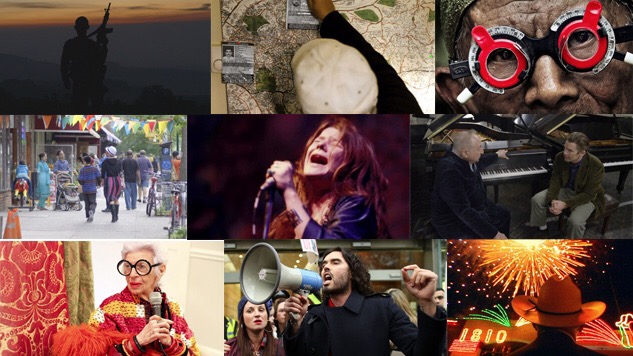
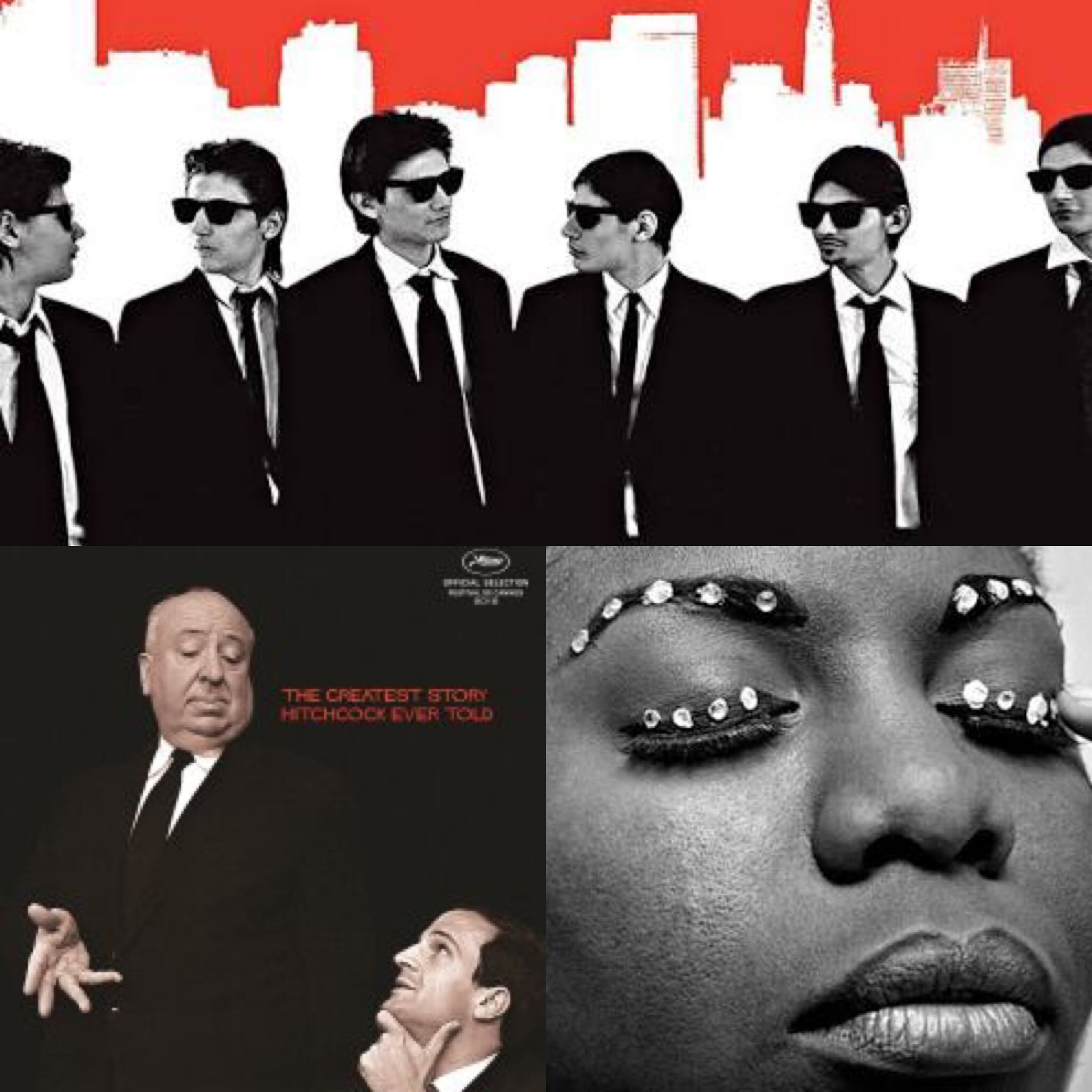
Let’s go “meta” once in a while, this is the idea I had few days back when I thought it would be interesting to make a list of lists, of course about documentaries. So, for the fun of it, but also because it might turn out into something surprisingly fascinating, I’ve decided to collect as many lists about “best non-fiction/documentary of 2015” as possible, newspapers, blogs, websites, magazines, personal lists and anything else will go. As usual with best-of-the-year-lists, and it’s particularly true for non-fiction movies, the most insightful part of the endeavour will probably be to see what other people have watched, that is what documentaries were distributed in different countries (in theatres or in other formats) during 2015, more than agreeing or not with someone’s choices.
This page will be updated periodically
Indiewire – The 20 Best Documentaries Of 2015 (here the original article):
20. “The Hunting Ground” (Andrea Pino)
19. “Heart Of A Dog” (Laurie Anderson)
18. “Prophet’s Prey” (Amy Berg)
17. “Seymour: An Introduction” (Ethan Hawke)
16. “The Seven Five” (Tiller Russell)
15. “The Jinx” (Andrew Jarecki)
14. “The Pearl Button” (Patricio Guzmán)
13. “The Salt of the Earth” (Wim Wenders)
12. “In Jackson Heights” (Frederick Wiseman)
11. “The Black Panthers: Vanguard of a Revolution” (Stanley Nelson)
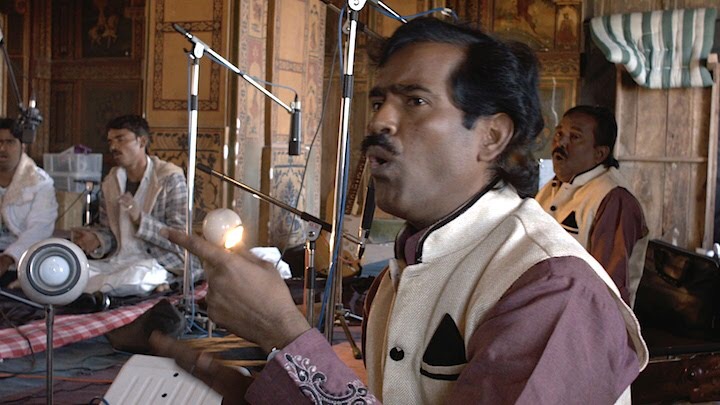
10. “Junun” (Paul Thomas Anderson)
9. “Dreamcatcher” (Kim Longinotto)
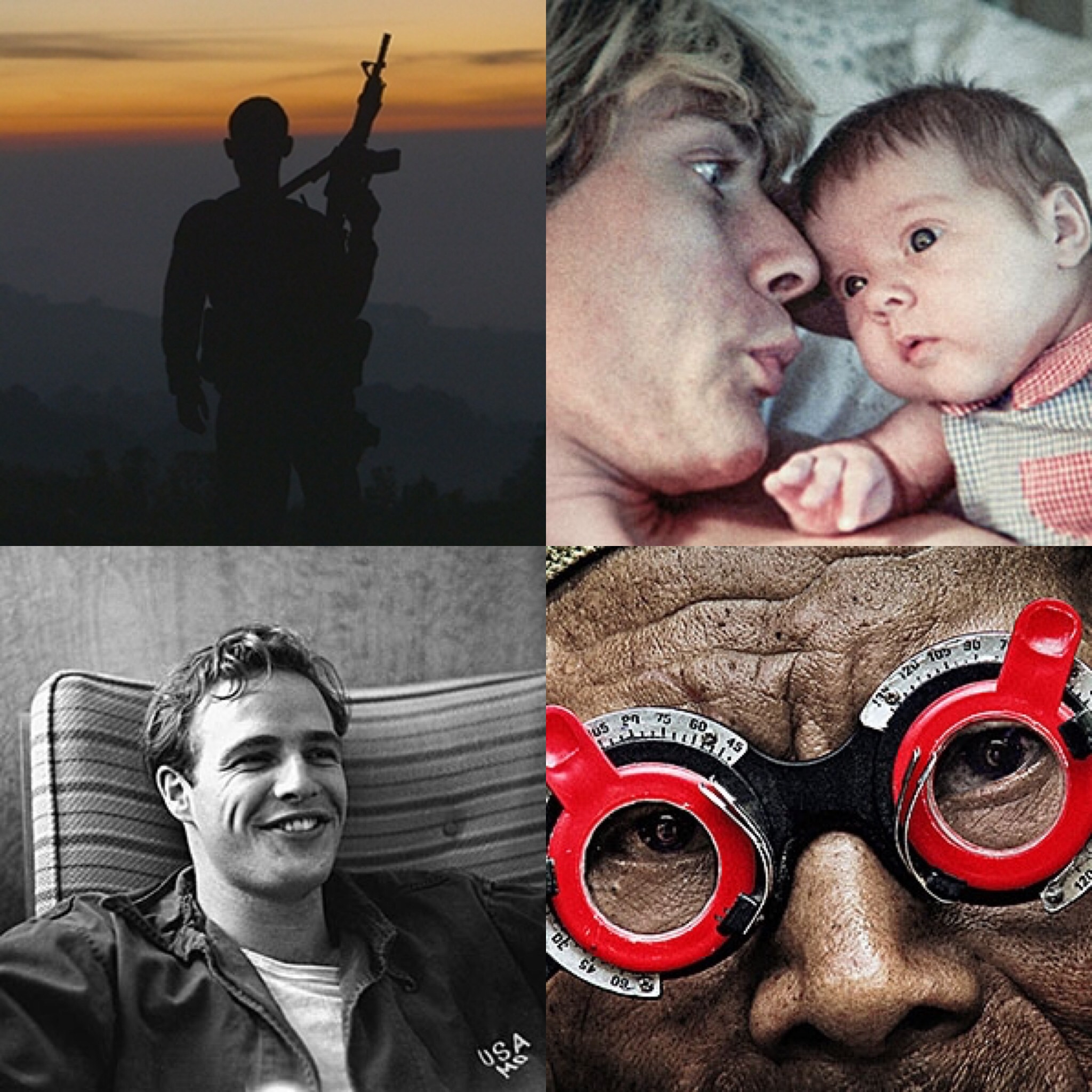
8. ”Listen To Me Marlon” (Stevan Riley)
7. “Best of Enemies” (Robert Gordon, Morgan Neville)
6. “The Look of Silence” (Joshua Oppenheimer)
5. “Kurt Cobain: Montage of Heck” (Brett Morgen)
4. “Amy” (Asif Kapadia)
3. “(T)error” (Lyric R. Cabral, David Felix Sutcliffe)













 Asian Docs
You must be logged in to post a comment.