Film journal, spring 2025: Death Education, Keiko Kishi Eternally Rebellious, Landscape Hunter.

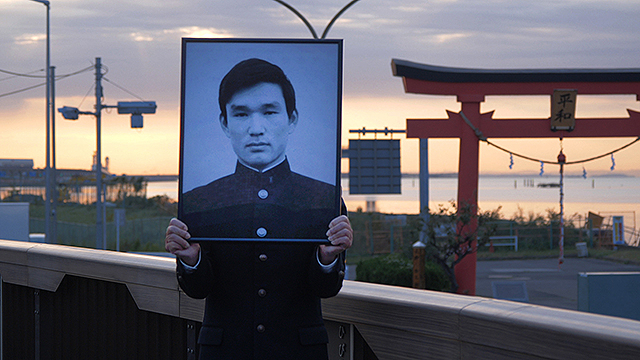
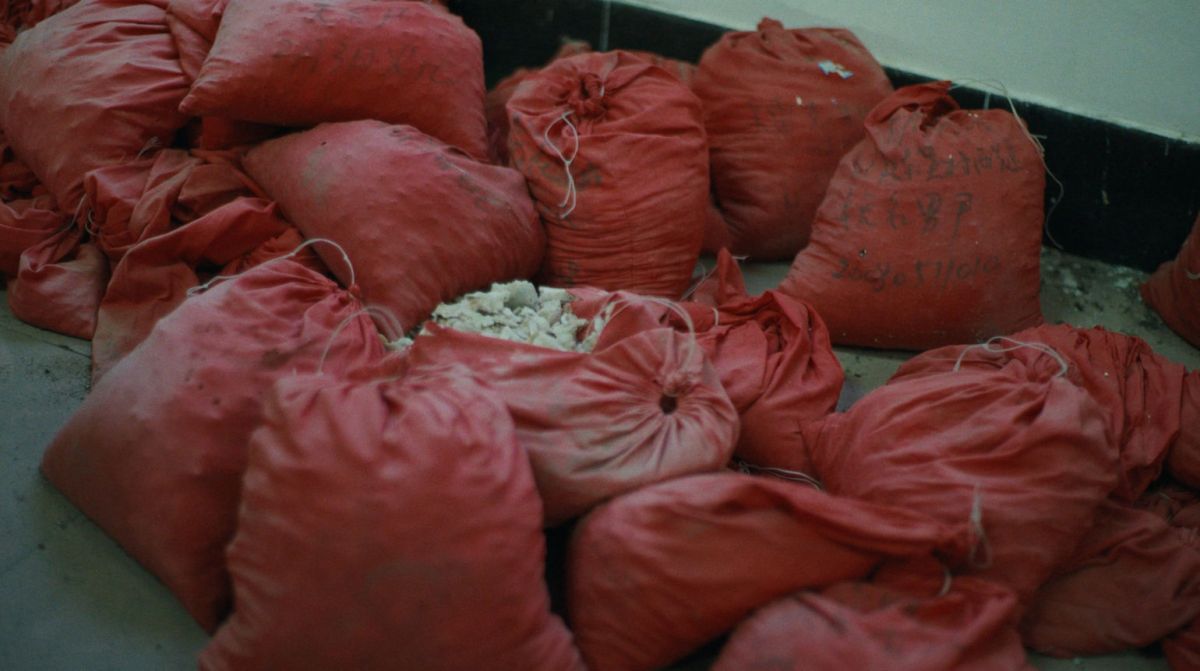
Death Education (Yuxuan Ethan Wu, 2025) is a well-shot and edited short film about how a group of young people in China think about death. The reflection is, of course, universal and is based on a program created by a high school teacher in which a class of students buries unidentified ashes in a public cemetery on Tomb Sweeping Day.
As explained at the end of the short: “Every March, Teacher Qian Jianbo holds a death education class for his students, opening up the conversation about death for the first time”.
Though the film is overly stylized in places – the slow motion of the petals scattered on a tomb was unnecessary – it succeeds in creating a somber and meditative mood that envelops the viewer. This is especially evident when images of human ashes, cremation facilities, and graves are combined with soothing music and the voices of the students reading their diary entries.

Keiko Kishi: Eternally Rebellious (Pascal-Alex Vincent, 2023) is an intriguing portrait of a Japanese cinema icon. Through interviews with the actress and film scholars, as well as home movies and clips from her most famous films directed by Ozu, Ichikawa, and Kobayashi, this French production paints a fascinating, albeit partial and incomplete, portrait of Kishi.
While the film is not particularly notable for its formal elements, I found it nonetheless interesting for several reasons. For instance, it recounts Kishi’s decision to move to France and marry director Yves Ciampi in 1957 after he filmed her as a protagonist in Typhoon Over Nagasaki. I was also surprised to learn about her involvement with the Ninjin Club, an actors’ agency founded by Kishi, Kuga Yoshiko, and Arima Ineko in 1954, that later became a production company. For two decades, the Ninjin Club produced some of the best and most boundary-pushing films of the time, including the Masaki Kobayashi Human Condition trilogy (1959–1961), Shinoda Masahiro’s Pale Flower (1964), Kinuyo Tanaka’s Love Under the Crucifix (1962), and Kobayashi’s Kwaidan (1964). Kwaidan is now considered a masterpiece, but it was a box-office bomb at the time, causing the company to file for bankruptcy. To pay off the debt, Kishi appeared on many TV programs in both France and Japan in the 1970s. Later in life, she shifted her career completely and started working as a photojournalist, often visiting war zones around the world.

Landscape Hunter (2021) is an experimental documentary commissioned by Chiayi Art Museum, Taiwan, and directed by Liao Hsiu-hui and the Your Bros. Filmmaking Group, a collective responsible for another fascinating experiment in nonfiction, Dorm (2021).
The film centers on Fang Ching-mian (also known as Uncle Hsin-kao), an indigenous man of the Bunun people who was a passionate amateur mountain photographer. Seventy years ago, he climbed and took photos of Mount Jade (Yu Shan), the highest mountain in Taiwan, more than a thousand times. Landscape Hunter is structured like a mosaic composed of several overlapping facets: a nonlinear, oblique, and opaque work that interweaves Uncle Hsin-kao’s shots of Yu Shan’s locations; interviews with mountaineers discussing the significance of his endeavors for the discipline; Black-and-white alpine scenery; Bunun words; and reflections on representing and capturing reality, as well as an interrogation of the absence of indigenous peoples in the history of photography.

This absence reminded me of a presentation at the last Niigata International Animation Film Festival in March. A group from the Taichung International Animation Festival concluded their showcase of animated works produced in Taiwan with a question: What is missing from Taiwan’s animation landscape? The answer is the voices of indigenous peoples.
While this is also true in the documentary field, the technological revolution brought about by video cameras and DV camcorders gave rise to a wave of indigenous-made works in the last decade of the 20th century. This was the focus of a fascinating program titled Indigenous with a Capital ‘I’ which was presented at the Taiwan International Documentary Festival in 2020. An interrogation of the relation between Photography and indigenous peoples in Taiwan is also at the center of the impressive MATA-The island’s Gaze by Cheng Li-Ming.

The self-reflexive and somewhat obscure qualities of Landscape Hunter can be traced back to the collective’s working methods and the professional backgrounds of its members. Some are video artists, some are architects, some are art history researchers, and some are theater critics. Field research, creative workshops, unforeseen circumstances, and flexible scripts are fundamental to their works and they describe their approach as “filmmaking as a method for reinterpreting reality, endowing it with an aesthetic form, and transforming it into a medium of thinking.”

Taiwan International Documentary Festival (TIDF) 2024

In the past days, the Taiwan International Documentary Festival (TIDF) has announced the official line-up for its 14th edition. Launched in 1998, the TIDF has slowly but surely become one of the most important festivals dedicated to documentary cinema in Asia. Held in various venues in the capital city of Taipei, the event will take place from May 10 to the 19, and will showcase the best non-fiction cinema produced in recent years —with a special attention and focus towards Asia, but also other parts of the world— through its four sections: the Asian Vision Competition, International Competition, Taiwan Competition, and TIDF Visionary Award.

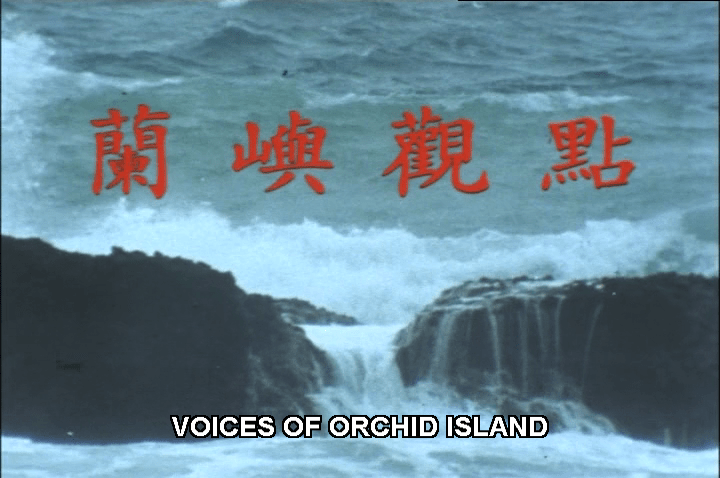
This year, the festival will also commemorate  two key figures in the development of documentary in Taiwan, Chang Chao-tang, author of works that are widely considered the first poetic and experimental documentaries in the island (The Boat-Burning Festival, Homage to Chen-Da), and ethnographic filmmaker pioneer Hu Tai-li (Voices of Orchid Island), who passed away in 2022. Unfortunately I will not be able to attend, one day though, one day…anyway these are the sections and the films.

Taiwan Competition
A Holy Family
Elvis LU|Taiwan, France

A Performance in the Church (World Premiere)
HSU Chia-wei|Taiwan

All and Nothing (World Premiere)
LIAO I-ling, CHU Po-ying|Taiwan

And Miles to Go Before I Sleep
TSAI Tsung-lung|Taiwan

Come Home, My Child (Asian Premiere)
Jasmine Chinghui LEE|Taiwan

Diamond Marine World
HUANG Hsiu-yi|Taiwan

From Island to Island (World Premiere)
LAU Kek-huat|Taiwan

I Must Keep Singing
LIN Chih-wen, LIAO Ching-wen, CHUNG Hyeuh-ming|Taiwan

Lauchabo
TSAI Yann-shan|Taiwan

Parallel World
HSIAO Mei-ling|Taiwan

Taman-taman (Park)  (World Premiere)
SO Yo-hen|Taiwan

Pongso no Tao〜 Island of People
TSAO Wen-chieh, LIN Wan-yu|Taiwan

The Clinic
Midi Z|Taiwan、Myanmar

When Airplanes Fly Across
LEE Li-shao|Taiwan

Worn Away
CHEN Chieh-jen|Taiwan


Asian Vision Competition
Atirkül in the Land of Real Men (Asian Premiere)
Janyl JUSUPJAN|Czech Republic

Damnatio Memoriae
Thunska PANSITTIVORAKUL|Thailand、Germany

Far From Michigan (Asian Premiere)
Silva KHNKANOSIAN|Armenia、France

Flickering Lights
Anupama SRINIVASAN, Anirban DUTTA|India

From Island to Island (World Premiere)
LAU Kek-huat|Taiwan

I Look Into the Mirror and Repeat to Myself
Giselle LIN|Singapore

K-Family Affairs
NAM Arum|South Korea

Lost a Part Of (International Premiere)
CHAN Hau-chun|Hong Kong

My Stolen Planet (Asian Premiere)
Farahnaz SHARIFI|Iran、Germany

No Winter Holidays
Rajan KATHET , Sunir PANDEY|Nepal

Saving a Dragonfly
HONG Daye|South Korea

Self-Portrait: 47KM 2020
ZHANG Mengqi|China

Song of Souls
Sai Naw Kham|Myanmar

Taman-taman (Park) (World Premiere)
SO Yo-hen|Taiwan

What Should We Have Done? (International Premiere)
FUJINO Tomoaki|Japan


International Competition
Anhell69
Theo MONTOYA|Colombia、Romania、Germany、France

Bye Bye Tiberias
Lina SOUALEM|France

Canuto’s Transformation (Asian Premiere)
KUARAY ORTEGA, Ernesto DE CARVALHO|Brazil

Crossing Voices
Raphaël GRISEY, Bouba TOURÉ|France、Germany、Mali

Guapo’y (Asian Premiere)
Sofía PAOLI THORNE|Paraguay、Argentina、Qatar

KIX (Asian Premiere)
Bálint RÉVÉSZ, Dávid MIKULÁN|Hungary、France、Croatia

Knit’s Island
Ekiem BARBIER, Guilhem CAUSSE, Quentin L’HELGOUALC’H|France

Light Falls Vertical (Asian Premiere)
Efthymia ZYMVRAGAKI|Spain、Germany、Netherlands、Italy

My Worst Enemy
Mehran TAMADON|France

Nowhere Near
Miko REVEREZA|Philippines、United States

Parallel World
HSIAO Mei-ling|Taiwan

Richland (Asian Premiere)
Irene LUSZTIG|United States

The Trial (Asian Premiere)
Ulises DE LA ORDEN|Argentina、Norway、Italy、France

Where Zebus Speak French (Asian Premiere)
Nantenaina LOVA|France、Madagascar、Germany、Burkina Faso

Zinzindurrunkarratz
Oskar ALEGRIA|Spain


TIDF Visionary Award
A Performance in the Church (World Premiere)
HSU Chia-wei|Taiwan

Bitter Rice (World Premiere)
JIANG Chunhua|China

The Clinic
Midi Z|Taiwan、Myanmar

Diamond Marine World
HUANG Hsiu-yi|Taiwan

From Island to Island (World Premiere)
LAU Kek-huat|Taiwan

I Look Into the Mirror and Repeat to Myself
Giselle LIN|Singapore

In Your Shoes (World Premiere)
Florence LAM, CHAN Tze Woon|Hong Kong

Let’s Talk (Asian Premiere)
Simon LIU|Hong Kong、 United States

Lost a Part Of (International Premiere)
CHAN Hau-chun|Hong Kong

Obedience
WONG Siu-pong|Hong Kong

Parallel World
HSIAO Mei-ling|Taiwan

Resurrection (World Premiere)
HU Sanshou|China

Self-Portrait: 47KM 2020
ZHANG Mengqi|China

Taman-taman (Park) (World Premiere)
SO Yo-hen|Taiwan

Movie journal, autumn 2023: Echigo Okumiomote, And Miles to Go Before I Sleep, Ichikawa Kon’s Kyoto, Youth (Spring)

A couple of interesting documentaries I’ve watched recently, besides those I saw at the Yamagata International Documentary Film Festival.

Shot in four years, 越後奥三面 山に生かされた日々 Echigo Okumiomote: A Traditional Mountain Village (1984) follows the everyday life of Okumiomote, a mountain village in Niigata prefecture, near the border with Yamagata prefecture. The village, its inhabitants, the mountains, the forest and the rivers, form a fascinating ecosystem and microcosm of a life (1980-1984) dependent upon and regulated by natural elements and the cycle of seasons. This lifestyle and the specific traditions, customs and habits—performed, changed and improved throughout centuries by the inhabitants—would eventually disappear years after the documentary was filmed, due to the construction of the Okumiomote Dam (the area would be submerged).

The documentary has been recently digitally remastered and screened, together with other works by director and video ethnographer Himeda Tadayoshi, at a special retrospective organized at Athénée Français Culture Center in Tokyo. 

While the film opens with one of the villagers talking about the anti-dam movement active since 1971, the entirety of the documentary depicts matter-of-factly the various customs and jobs done in the mountains and in the fields (hunting, gathering, harvesting). Only the last 30 minutes are more a direct reflection on the disappearance of the village, and on the act of documenting its existence and preserving its memory on film. The documentary is narrated, or better, commented, in a very friendly manner, so to speak, by Himeda himself. The presence of the director and his troupe is never hidden, once we even see a special meeting, requested by Himeda himself, when the village’s hunters are strongly opposing the presence of the camera during their upcoming bear-hunting trip. This film pairs very well, thematically but not stylistically, with Haneda Sumiko’s 早池峰の賦 Ode to Mt. Hayachine, filmed almost during the same years in the mountains of Iwate prefecture.

Echigo Okumiomote was accompanied by a publication of a huge volume about the life of the village, an ethnographic study and document of the area (I own it, I might return to the movie and the book in the future). Himeda would return to Okumiomote in 1996 to film a new work, 越後奥三面 第二部 ふるさとは消えたか Echigo Okumiomote dai ni bu furusato wa kieta ka, about the situation after the people of the village were forced to relocate. One of the discoveries of 2023 for me.

Nguyen Quoc Phi was a Vietnamese migrant worker, who on 31 August 2017 was reported for a car theft in Hsinchu County, near Taipei. On the same day, he was shot nine times by police officer Chen Chung-wen. He was left bleeding on the ground, and tragically died on his way to the hospital. A part of the public in Taiwan supported Chen’s use of firearms against the runaway immigrant who resisted arrest. 

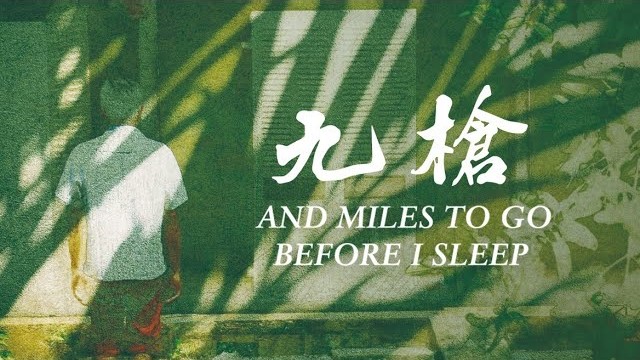
And Miles to Go Before I Sleep (Tsai Tsung-lung, 2022) is a documentary that asks the viewer uncomfortable questions, first by sketching the situation of immigrant workers in Taiwan (regular and irregular), and then by using images filmed by the body cameras of the policeman who shot Nguyen to death. These are very tough scenes to watch: after being shot, the young man lies down completely naked, slowly dying, with the officers observing and walking around him. It could be said that these scenes are exploitative, but as some viewers have commented, they also could function as a sort of “visual moral report”. I’m not sure I agree with the statement.

While as a document of a shocking and tragic event, the work has its merits, I think it meanders too much from the scene of the death, to others with the family of the deceased or where the conditions of immigrants are explained, losing in the end its focus. 

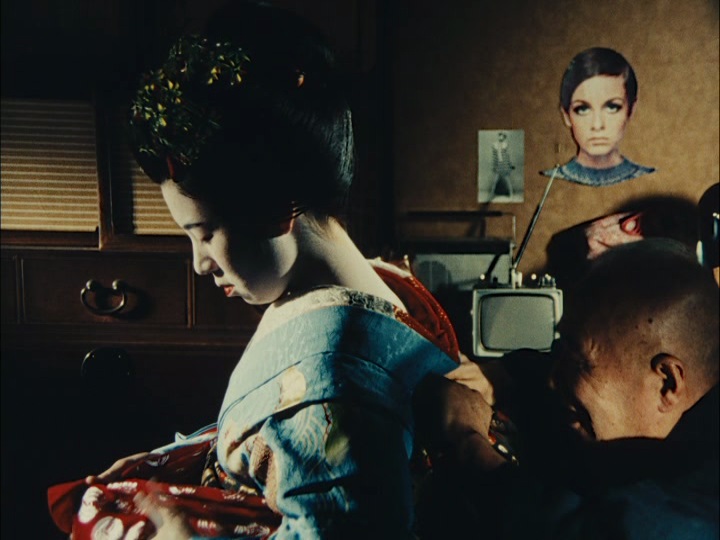
While as an experimental film made of and about things, rocks, textiles, roof tiles, wood, and houses, Kyoto by Ichikawa Kon (1969) is extraordinary, also because of the experimental music by Takemitsu Tōru. As a documentary about Kyoto (or Japan more broadly ), the narration and the film itself are orientalist at best, even if it was written by a Japanese. In this respect, it should be noted that the film was commissioned by the Italian company Olivetti, so there’s the usual “I’m giving you what your image of me is” typical of some cultural products made for export in Japan. Ichikawa’s editing here starts (or perhaps it had already started before) to become almost subliminal. For more extreme examples, see his post Inugami Family’s production. 

I watched the version with English and Italian narration. I would need to check out the Japanese version as well to properly assess the film. 

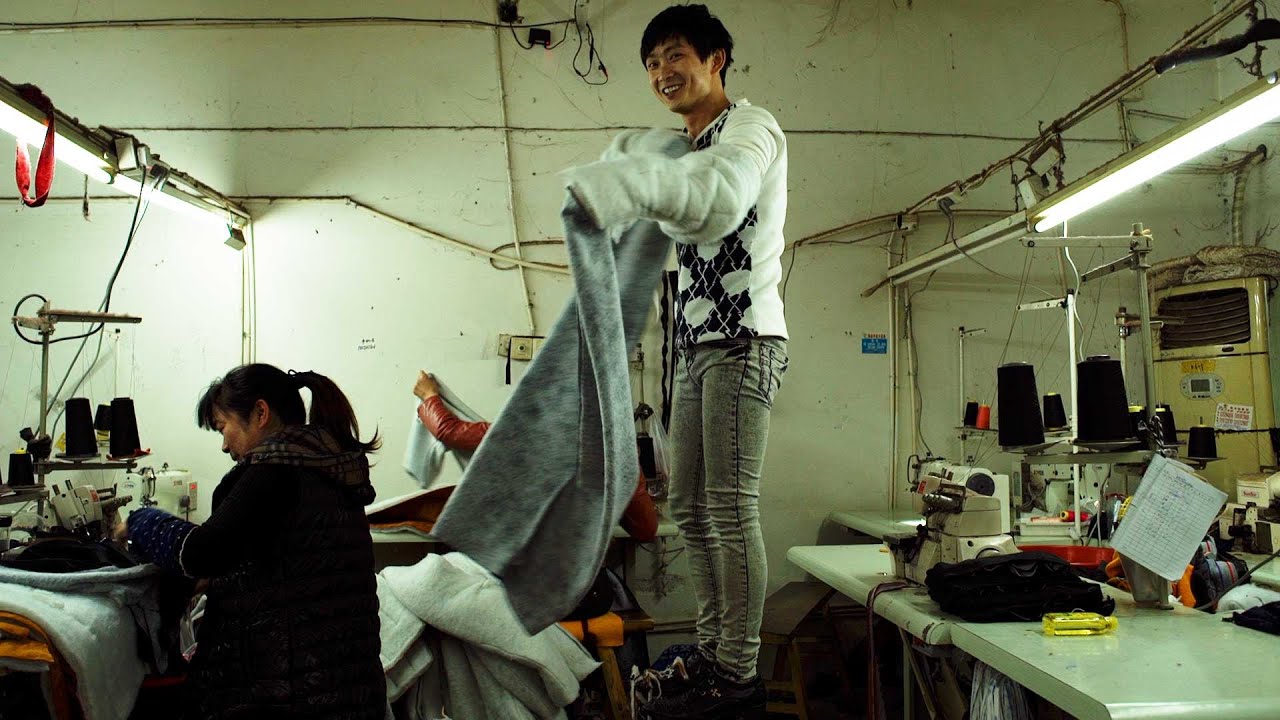
Wang Bing’s Youth (Spring) was a fascinating viewing experience, for me also because of the long time it took to be completed: it was shot between 2014-2019 and edited/released in 2023. At the same time, I share some of the doubts expressed in this review, points that are not really about how the work is constructed or filmed, but more about the very meaning of the project itself (it’s only the first installment of a trilogy, apparently).

Sometimes the documentary felt like a Big Brother shot in a factory, that is to say, very performative in some of its parts. In the age of YouTube and tik-tok the young generations know very well how to behave when a camera is in front of them, thus, even though it goes against Wang Bing’s style, a certain dialogue with the camera (I’m sure there was, but was cut) would have made the documentary more “authentic”, so to speak. After watching the film, I had the distinct feeling that something was missing and had been cut out. 

Having been filmed almost 10 years ago and for 5 years, I also would have liked to see the year of filming for each segment.

Night and Fog in Zona (Jung Sung-il, 2015)

I’m reposting a slightly edited version of a piece I wrote 8 years ago, an article about Night and Fog in Zona, directed by South Korean film critic, Jung Sung-il.

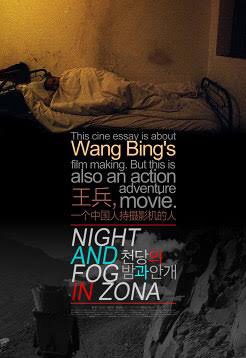
It’s always fascinating when cinema reflects on cinema, and even more so when a documentary’s subject is director Wang Bing filming one of his movies. Night and Fog in Zona is a documentary, or better yet a cine-essay as it is called by its author: South Korean critic turned director Jeong Sung-il, who follows the renowned Chinese filmmaker throughout a whole winter while working on two of his projects, ‘Til Madness Do Us Part and a sequel to his Three Sisters.

The “coming” of Wang Bing has been, and still is, one of the most important events that occurred in the world of cinema in the last 15 years: not only did he contribute asserting the aesthetic value of digital filmmaking, but with his documentaries he also brought an auroral and liberating gaze upon the world.
Jung Sung-il had the same kind of dawning experience watching West of the Tracks in 2001.

“When I was at the Rotterdam Film Festival I bought a ticket for a movie 9 hours and 10 minutes long, I was surprised by its length but went anyway. It begins with a train in movement and it reminded me of the first movie ever made by the Lumière brothers in 1895. Watching Wang Bing’s work I had the feeling of witnessing the cinema of 21st Century just like the audience in 1895 witnessed its birth.”

There’s no narration in Night and Fog in Zona, everything is explained with intertitles: geographical coordinates, places where Wang Bing is headed to, his plans. Sometimes these intertitles also work as a poetic comment to the following scene.
The only time when Wang speaks directly to the camera is in an interview-like fashion at the very beginning of the film, a sequence that works as a brief introduction to his world and his filmmaking style. A few minutes where, among other things, he talks about his filmmaking process, truth in cinema, the impossibility of conveying the totality, his projects, Chinese history and peasants, and the similar cultural background his generation shares with Andrei Tarkovsky.

In 235 minutes Night and Fog in Zona illuminates a great deal about Wang Bing’s approach to filmmaking. Among other things, we learn about his habit of taking photos of the people he films, his relationship with them, and, most fascinating of all, about his “interview technique”: it’s compelling to see how he is able to seamlessly switch from “chatting with” to “shooting at” his subjects, as if there was no real break between the two actions.
It’s also interesting to witness how “Wang searches for the ‘strategic point’, the single position from which all of the actions in the scene can be recorded”. This is a fundamental feature of his filmmaking, as the relationship between the camera and the people and things around it determines both the movie’s sense of space and how space itself is conveyed in his works. And space, together with time/duration, is one of the most crucial elements of his cinema.
Another revelation of Night and Fog in Zona is to discover how Wang Bing is a director whose involvement with the subjects of his movies is deeper than we might think from just watching his works: when the camera is off, he’s often seen giving practical help and advices to his “protagonists”.

Particularly fascinating, from a movie making point of view, is a scene where the director and his two collaborators have an evening meeting to watch the footage shot during the day at the Asylum — footage that would eventually become ‘Til Madness Do Us Part. A few but meaningful minutes where he explains the reasons behind his use of long takes, why avoiding telephoto lens, and other rules to follow while shooting, so that the final work can gain a certain consistency, a certain style.
However, the best quality of Night and Fog in Zona is that it’s not only a documentary about Wang Bing shooting his movies, but it’s also shot and conceived — with all the due differences – just like one of Wang’s documentaries. In terms of style, it mirrors Wang Bing’s filmmaking: long takes, no narration, abstract landscapes and experimental music, everything put together to explore his filmmaking and, in a broader sense, contemporary China, a country gazed upon, as in most of Wang Bing’s works themselves, from a peripheral and rural point of view.
One of the best examples of this mirroring process is to be found towards the beginning of the film, when the Chinese director and his collaborators move to the Yunnan province.

A very long sequence shot from the car everyone is on, that shows us streets, mountains, plains, lights and tunnels almost melting together. A scene almost 10 minute long, matched with a hypnotic and minimalistic music interacting with the abstract landscape captured by the camera.
We encounter these sort of sequences a couple of times during the movie: another powerful one, shown in slow motion, is inside the asylum. Bing is sleeping and ten or so patients are sitting and moving around him. What gives Night and Fog in Zona a further experimental and even meta-filmic touch are two scenes, placed at the beginning and at the end of the movie, that show a Korean girl dressed in red sitting in a theater and making a phone call.
The only flaws to be found in this documentary, an otherwise almost perfect work, are some editing choices, in some cases too abrupt, and the pace of the intertitles, definitely too fast. But that’s just splitting hairs, Night and Fog in Zona is definitely one of the best non-fiction movies seen this year, not only for its fascinating subject, but also for its ability to resonate with Wang Bing’s own style at a deep and aesthetic level.

Kobe Discovery Film Festival 2022 – dispatch 1: two newly discovered films by NDU

A week ago, I had the pleasure of attending the opening weekend of this year’s Kobe Discovery Film Festival (October 15-16, 21-23), as always held at and organized by the Kobe Planet Film Archive. Now in its sixth edition, the event started in 2009 as Kobe Documentary Film Festival, and later changed its name and guiding philosophy (2017), when it broadened its scope to include programs about home movies, film preservation, film restoration, and the (re)discovery of less known movies from the past. I will write, time permitting, about some of the other films I saw at a different time (second dispatch is here), but today I’d like to focus on what, for me, was the highlight of the festival, a short program dedicated to two documentaries made by NDU (Nihon Documentary Union).              

2022 has been a sad year for NDU’s former members, but a fruitful one in establishing its legacy in the history of Japanese cinema and beyond. Inoue Osamu, one of the key members of the group, passed away last June, and this year marks also the tenth anniversary of the passing of Nunokawa Tetsurō, one of the main figures of the collective. On the positive side of things, 2022 was the year NDU received its first official international exposure, when last spring the Japan Society in New York organized a special (online) screening of two of their best works, 沖縄エロス外伝 モトシンカカランヌー Motoshinkakarannu (1971) and アジアはひとつ Asia is One (1973). I’ve written about NDU and Nunokawa in more than one occasion (check the links below), and for a more in-depth and better written piece, check Alexander Zahlten’s  The archipelagic thought of Asia is One (1973).

The two films shown in Kobe, Tokyo ’69 – One Day Blue Crayons… (1969) and Public Order Project: Martial Law at Noon (1981) – have only recently been (re)discovered or identified as works by the collective and have rarely been screened before (the latter has actually never been shown publicly). Neither is more than half an hour long, but I believe they represent two essential pieces of the fascinating mosaic that was NDU, not least because they encapsulate a certain era of social dissent, and consequently documentary making, in Japan between the late 1960s and early 1980s. After the screenings, Nakamura Yoko, a film scholar specialising in NDU, spoke briefly about the films in the context of NDU and Nunokawa’s career, which was very helpful in understanding the two films, especially Public Order Project: Martial Law at Noon.

東京’69 – 青いクレヨンのいつかは . . . Tokyo ’69 – One Day Blue Crayons . . . (1969) Shot on 16mm between 1967-68, this documentary is a propaganda film funded by the Tokyo headquarters of the Japanese Socialist Party to support Governor Minobe Ryōkichi, who was elected in 1967. While on the surface a piece of political advertising, Tokyo ’69 – one day blue crayons . . . reflects on and depicts various problems facing the capital and its citizens in the late 1960s, a time when urban sprawl was increasingly and dramatically changing. Expropriation and exploitation seem to be two of the main threads running through the film: we learn that 95% of Tokyo’s land was in the hands of 5% of the population, as redistributed after the war. The film also shows how truck drivers carry and deliver goods they don’t use or own, or how workers who come to the city from other areas live in precarious conditions. For example, we see a man from Hokkaido working almost 14 hours a day while living and sleeping in an extremely small rented room.

It is also interesting to note the focus on the lack of crèches for working women to leave their children in, a problem that still seems to be unresolved, and the criticism of the new stadium built for the 1964 Olympics, a structure that, as NDU points out, was of no use to the people of Tokyo after the games. An uncanny resemblance to what is happening now after the 2021 Games. The title of the documentary seems to refer to the final scene, in which we see a young boy drawing pictures with crayons in a sketchbook. At one point he is asked a series of questions, including “What colour is the sky?”, and his annoyed answer is always “shiran” (I don’t know). The hope is that one day the sky will be blue.

According to the festival leaflet, this film has never appeared in Nunokawa’s statements, but it is credited as an NDU production at the very end, in the bottom right-hand corner of the screen, a fact confirmed by Inoue before his death. The film was made at the same time as 鬼ッ子 闘う青年労働者の記録 Onikko-A Record of the Struggle of Youth Labourers (1969), also funded by the Socialist Party, a work that shares not only the general tone but also some famous shots. The freight train carrying petrol for American planes to Vietnam passing through Shinjuku station, and a tank parade in the middle of the city.

In its critique of Tokyo and its exploration of the dark side of the 1960s economic miracle, the documentary reminded me very much of Tsuchimoto Noriaki’s 東京部 Tokyo Metropolis (1962), a short documentary made for television that was never broadcast because it was considered too dark and pessimistic (you can watch it, in Japanese and legally, here, here

治安出動草稿 お昼の戒厳令 Public Order Project: Martial Law at Noon (source)

治安出動草稿 お昼の戒厳令 Public Order Project: Martial Law at Noon (1981). Shot in Super 8 by a group of NDU members in one day – though credited at the end as a Nunokawa production – the film documents the second Six Cities Joint Disaster Prevention Drill, organised in Shinjuku on 1 September 1981. When it was announced that some twelve million people were expected to take part, an astonishing and frightening number, Date Masayasu, a former Shinjuku city official turned cultural critic and writer, declared alarmingly:  “We will be moved under the command of the Self-Defence Forces! “. Inspired by this comment, Nunokawa and seven other members of the collective began filming people marching and gathering in Shinjuku, protests in the streets, and military manoeuvres in Tokyo and the surrounding area on 1 September.

As is often the case with NDU’s films, especially the later ones, there is no great explanation of what is happening on screen, or the reasons for what we are seeing. As the film progresses, however, a sense, if not a meaning, slowly begins to emerge. In a country regularly hit by natural disasters such as earthquakes, typhoons and floods, emergency drills are a normal part of life, but this one felt and was very different. The connection made by Date and Nunokawa and NDU with the documentary is a subtle but deep and powerful one, at least for me. Disaster drills of this scale are deeply connected to public order and the idea of a strong and unified nation/state imposing its will from above. Self-Defence Forces landing in Shizuoka from the sea, helicopters flying constantly over the city, the sheer mass of people moving in the streets – it is worth repeating, almost 12 million people! – and the effort to coordinate six cities within the megalopolis, all this is seen and understood in the film as something dangerously close to an act of military mobilisation. The documentary is very effective in capturing and expressing this massive sense of potential fear. A past – the narration mentions, for example, the lynchings of Koreans and other minorities that continued after the great Kantō earthquake in 1923 – that could resurface at any time in the future.

Formally, the film alternates between scenes of helicopters flying over the city – the sound here is distorted and becomes almost hypnotic – and scenes of the Self-Defence Forces, sometimes in slow motion, with scenes of clashes between demonstrators and the police. It is worth noting how different the scale of the protests were from those of a decade earlier. Japanese people continued to protest and demonstrate even after the end of the so-called political season, Narita docet, but the number of people involved and the motivations changed dramatically, for reasons that cannot be explored in this piece. What stood out for me aesthetically, compared to other NDU works, was the extensive use of electronic music throughout the documentary, especially in the final part, when activists and police clash and march to the sound of electronic drums. As a mere curiosity and possible coincidence, it is interesting to note that on the same day, 1 September 1981, Kraftwerk, the German group that more than anyone else pioneered electronic music in popular culture, were also in Tokyo, ready to embark on their first Japanese tour.

The film has not been included in any of NDU’s special features to date and, as the flyer suggests, this special screening in Kobe was made possible thanks to the efforts of Mitsui Mineo, a former collaborator of Nunokawa’s and probably a former member of NDU, who worked with him on his documentaries in Palestine.

Explore more about NDU:

Alexander Zahlten:  The archipelagic thought of Asia is One (1973).

To The Japs: South Korean A-Bomb Survivors Speak out (1971)

Asia is One (1973)

special (online) screening of Motoshinkakarannu (1971) and Asia is One (1973) at Japan Society New York

Movie journal, summer 2022

An overdue return to my movie journal entries, with some interesting documentaries—as always the definition here is quite broad— I’ve watched in the last couple of months.

Oral History (Koizumi Meiro, 2013-2015). Comprised of interviews with people of different ages, Oral History is a fascinating exploration of memory, or the lack of it, through different generations of Japanese. The work starts by highlighting the lack of historical knowledge in young, and not so young, people, and how this disinformation is shaping their opinions about Japan—a process that felt a bit annoying and patronising, especially in the first interviews, if I have to be completely honest. What makes this experimental work interesting though, is the progression that moves it from presenting various and very shorts interviews to focusing, in its last part, solely on a deep conversation about war and personal memories, expatriation, and grief with an old lady of Korean descent. Besides the fascinating interweaving of personal history with macro-history, and the touching stories told by the woman, what I found also interesting is that here is the interviewer who shows the apparent lack of knowledge about history, the history of Koreans in Japan, Osaka to be precise, and the Repatriation Project established at the end of the 1950s by the North Korean government. Everything is made more powerful, at least in 2022, by the aesthetic choice used, filming only the mouths of the people speaking, a decision that after three years of pandemic and masks (here in Japan at least), feels freshly disorienting. (Part of the e-flux online program curated by Julian Ross)

Before the Flood (By Yifan Li, Yu Yan, 2005). The documentary depicts the final weeks of Fengjie, an old city famous because of Li Bai, one of the most renowned poet in Chinese history. Located on the Yangtze River, the city, at the time of filming, was about to be reduced to dust, and its inhabitants were forced to relocate, in order to make way to the new Three Gorges Dam that would eventually flood the entire valley. The film documents the slow death of a city, or better, the execution of a city and its people, some of them are fighting to stay until the end, by the state and for the so called progress. The lo-fi aesthetics of DV cameras so fundamental in the development of independent documentary in Asia in the 1990s and 2000s, are here used at their best. An ideal sequel, Before the Flood II – Gong Tan, a documentary about another city soon to be destroyed by the construction of a dam, was completed by Yu Yan in 2009.

Filmmaking and the Way to the Village (Fukuda Katsuhiko, 1973). A relatively short documentary, just less than an hour, directed by a member of the Ogawa collective, about the making of the group’s masterpiece, Sanrizuka: Heta Village (1973). Fukuda left the collective after completing this film, decided to stay in the area, and kept making documentaries, for instance A Grasscutter’s Tale (1985). I revisited the documentary after long time, and it was even better than I remembered, years spent watching the films of Ogawa and reading about them, gave me a different perspective on them. The movie offers a glimpse behind the curtain, so to speak, of course you need to be familiar with Ogawa Pro’s filmography and its story, but it’s nonetheless an invaluable document to understand how Heta Village came into existence. The scenes when the collective discusses how the old people of the village enjoy long takes are priceless. It was fascinating also to see how important and integral to the success and reception of the Sanrizuka Series were the screenings. In a pre mini-theaters/independent cinemas era, all the screenings throughout Japan were organized through a network of activists, unions, supporters, people as important for the movies, as the crew that made them.

Yamagata International Documentary Film Festival 2021 (online) – first dispatch

This year edition of the Yamagata International Documentary Film Festival is, like many other events in the past two years, taking place exclusively online. The festival is available only for viewers in Japan and will end next Thursday (October 14th). This is a first dispatch, others, will possibly follow.

(Synopses are from the official homepage of the festival)

Pickles and Komian Club (2021, Satō Kōichi) Questions and heartbreak emerge from the closing of long-established pickled foods store, Maruhachi Yatarazuke, whose 135-year operation was brought to an abrupt end during the pandemic. The film follows the store owner, forced to make a difficult decision, and those who freely gathered at the store and supported the space.  If you have attended at least once the YIDFF, you certainly know about Komian Club, the place where all the people of the festival, directors, producers, cinema lovers, press, or just people from the prefecture, used to gather and discuss about cinema, fueled by sake, beer, or just pure passion for documentaries. Unfortunately, the place, together with the pickled store that ran it, closed down and was demolished, in part due to the pandemic. The documentary is a nice glimpse of what the Komian represented for the documentary community in Yamagata, but also a look at the dire situation of old and historical properties and buildings in peripheral areas in Japan.

Komian Club

Self-Portrait: Fairy Tale in 47KM (2021, Zhang Mengqi) The newest instalment in a series set in a small village in a mountainous region in China. In the winter marking ten years since the director began filming, she tries to get a new building constructed in the village. The girls, who had thus far been the subjects of her films, take up the camera themselves, and begin recording scenes of the village. This is a lovely addition to the series the director has been making since 2011, here the focus is on the children and their interaction with the landscape they inhabit, always breathtaking I have to say, through the mediation of video cameras.

Whiplash of the Dead (2021, Daishima Haruhiko) Weaving together the memories of a university student who lost his life in the First Haneda Struggle in 1967 through the words of his bereaved family and ex-classmates, this film turns the memories of those who protested against government power into questions for the future. The movie is comprised of two parts, for a total of 3 hours and 20 minutes. While in the first 90 minutes the director focuses on the events preceding and leading to the the death of Yamazaki, in the second segment (it could easily have been another movie), the protagonists of the students protests of the late 1960s, now in their 70s, reflect on the reasons of the implosion of the Japanese new left and its movements. The latter part is definitely the one I latched more with, listening to some of the protagonists of the season of politics in Japan, explaining how the hierarchical structure of the factions, the almost military attitude of its members, and last but not least, how the uchi-geba, the internal purges, de facto destroyed the movements, was mind-opening. Of course I’ve read about it in books and papers, and watched movies depicting this falling (and even wrote about it), but hearing it from the people who were on the frontline, was, weirdly enough, liberating.
The story of the Mito family, not affiliated with any left group, but a family that helped the young protesters in prison, and later promoted anti-nuclear activism, and whose members (father and two sons) tragically died in 1986, is so fascinating, that would deserve its own documentary. 

Whiplash of the Dead

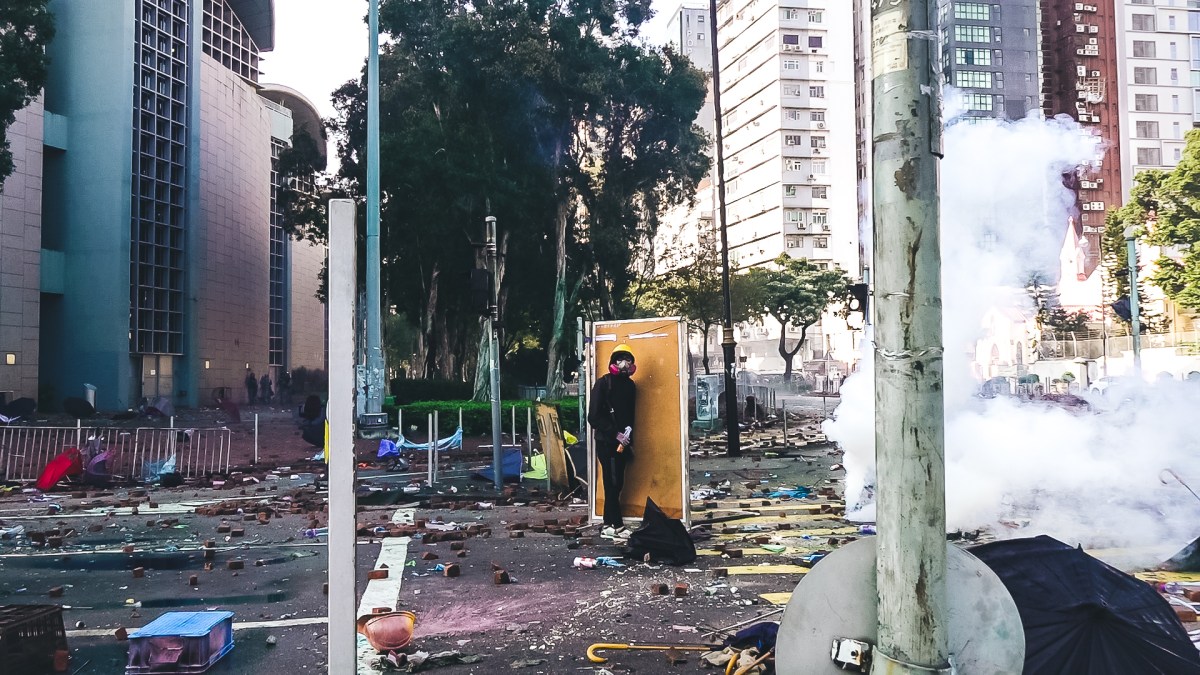
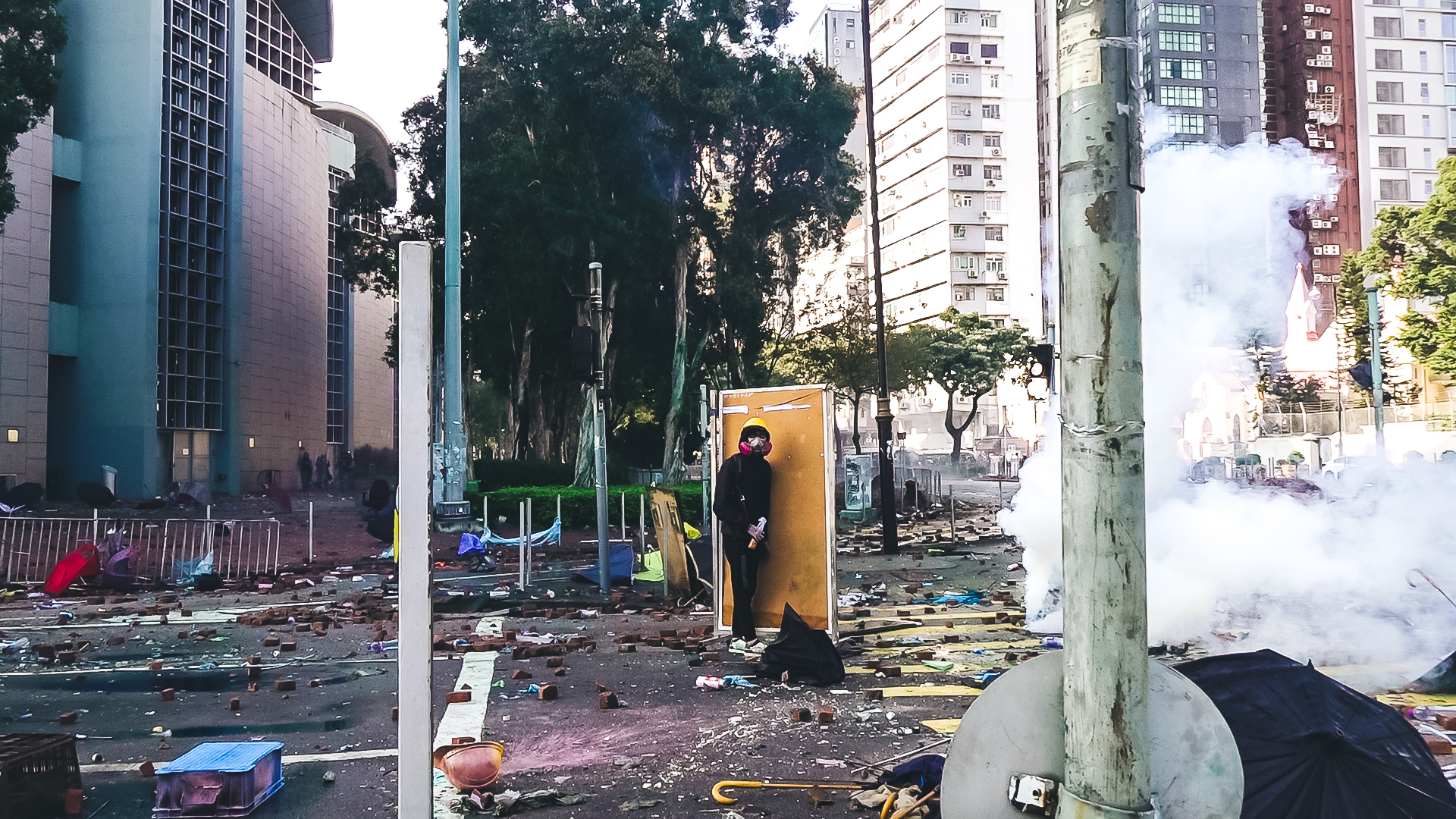
Inside the Red Brick Wall (2020, Hong Kong Documentary Filmmakers) Hong Kong, shaken by the “one country, two systems” policy. November 2019, protestors calling for democratic reform are besieged in a university by heavily armed officers. In scrupulous detail, these anonymous filmmakers capture the worn out and anxious youth who are being beat into submission by the violent and cunning forces of power. This was for me the highlight of the festival, so far. Not only a raw punch in the stomach and a visceral viewing experience, but also and incredibly fascinating film on so many other different levels. First of all, there’s the emotional and political side of the resistance, seeing the events of the siege after almost two years, and from a different point of view was, once more, enraging. The second part of the film, when many of the young students broke down, cried and walked out, defeated, from the campus, often criticized by their comrades, was — although something I’ve seen over and over again in the documentaries about the Japanese protests of the 1960s and 1970s—heartbreaking. What was also extremely fascinating, was that all the young people wearing gas-masks and gear, for protection and for anonymity, formed, shall we say, a multitude, a resistance, expressed not through the act of individuals, although there are some speakers who stand out, but more through a sense community and togetherness. It is true that it’s a community that in the second part of the documentary, as I said above, partly dissipates. However, for the period of the siege, twelve long days, it shone as a fight of the multitude.
Very interesting was also how the documentary, by filming the violence between riot police, students, aid people, and members of the press (mainly independent press that live-streamed the battles on the internet) was able to capture and create a very powerful sense of space and proximity. A visual cartography of violence, but also of resistance.

Inside the Brick Wall

Other documentaries I’ve watched: Entropy (2021, Chang Yu-sung), a short and abstract experimentation with images shot in a mine; It’s Just Another Dragon (2020, Taymour Boulos); Broken (2021, Nan Khin San Win) a short but touching portrait of abuse and violence in Myanmar. Her Name Was Europa (2020, Anja Dornieden, Juan David González Monroy) a playfully and fascinating trip into the obsession of recreating/simulating/reviving things from the past/present with a deranged and derailed finale. Afternoon Landscape (2020, Sohn Koo-yong), more an installation than a movie, better to be experienced on the big screen probably; Nuclear Family (2021, Erin Wilkerson, Travis Wilkerson) a descent into the heart of darkness of the US; and The Still Side (2021, Miko Revereza, Carolina Fusilier) the latest from the talented duo Revereza/Fusilier, but one I could not really connect with.

Movie journal (November 2020): 2 documentaries by Yoshida Kijū, and Okinawa 2018

Wrapping up November with some of the most interesting non-fiction works (made in , or about, the Far East) I’ve watched in the past months.

私たち生まれた島 Okinawa 2018 (Todori Shin’ya, 2020) is an informative documentary about how the new generations of Okinawans deal and cope with the American military bases in the islands. Filmed in the last few years, the film covers the protests againsst the relocation of one of the biggest American bases in Henoko, the election of a female representative (for the communist party) in a small town, and the election of governor Denny Tamaki in 2018. A mix of video journalism and grassroots activism caught on video, the documentary offers an interesting insight of a complex and layered situation.

Sooner or later I will have to write something longer about the documentaries directed by Yoshida Kijū, one of the towering figures in post war Japanese cinema. For today let me just share a few random thoughts about two of his best non-fiction films I’ve recently rewatched.

With The Cinema of Ozu according to Kijū Yoshida 吉田喜重が語る小津安二郎の映画世界 (1994) the Japanese director adds images to his reflections on Ozu written in his beautiful Ozu’s Anti-Cinema. If you have already read the volume, it’s nothing particularly new, but it is a delight nonetheless. I watched the short version, but apparently there also a longer version out there.

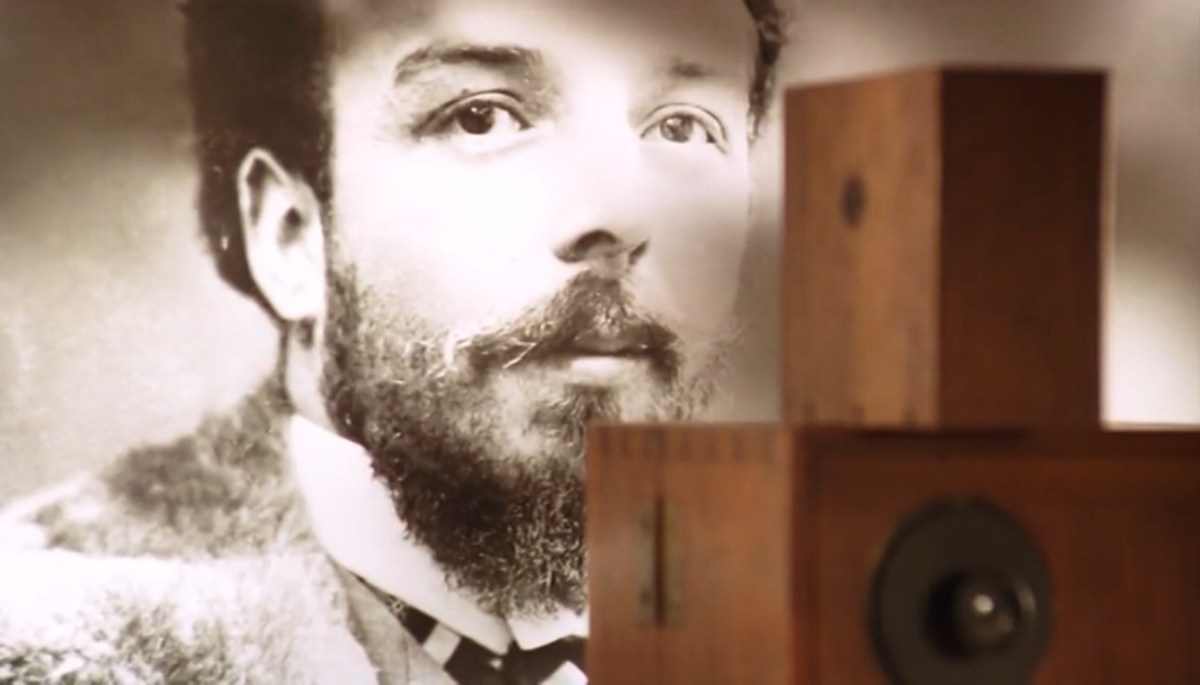
While both were made in the same period and share a certain style and approach ーYoshida providing the narration, and the preoccupation with cinema and the act of representing through images as a theoretical structureー Dreams of Tokyo, Dreams of Cinema 夢のシネマ 東京の夢 (1995) is by far my favourite of the two. By telling the story of the early travels of Gabriel Veyre, the Lumière Brothers’ cameraman, in Mexico, Japan and Morocco, Yoshida reflects on the advent of this new technology and the changes and cultural shifts that were caused by the cinematograph and everything that came with it. This relatively short documentary (50’) is a fascinating example of how effective and poetic essay cinema can be when used at its best. Yoshida, using Veyre’s gaze, exposes the power and dangers that the birth of cinema brought with it since its very beginning, forseeing also the prominence that visual representation would reach in the world to come.

One of the most significative passage is, in this sense, one where we see a group of indigenous people in Mexico filmed by Veyre, a group that is definitely not glad to pose for the camera. At a certain point a white person violently grabs the head of a woman and forces her to see and face the camera to get a “better” shot. At this point the footage ends. According to Yoshida probably Veyre sensed that something was not right and decided to interrupt the shooting. Quoting Yoshida “Most people enthusiastically perceived the moving images of the cinematograph as reality itself and so the representation ended up taking precedence over the reality of the world, but Veyre for some unknown reason adopting an opposing standpoint, saw the future of the cinema from a different angle.”

Here the scene:

https://youtu.be/rNpzCJsSEz4


Voices of Orchid Island ( Hu Tai-Li, 1993)

Hu Tai-Li (1950-2022) was one of the prominent ethnographic filmmakers active in Taiwan, a professor, an anthropologist, and also the president, for two decades, of Taiwan International Ethnographic Film Festival. Throughout her career, both as a documentarian and as a visual anthropologist, she tackled issues related to national and native identity, colonialism, and how the culture and traditional practices of the tribes inhabiting the island(s) are surviving in contemporary Taiwan.

At the beginning of the 1990s Hu went to Orchid Island, 45 miles off the southeast coast of Taiwan in the Pacific Ocean and just 20 miles away from the Philippines, to explore how the native people, the Yami, were affected by the influence from outside: tourism, TV people, anthropologists, mass-media…

Voices of Orchid Island opens with a self-reflexive touch, we see director Hu discussing the documentary she is going to make with some of the people who are going to be filmed in a short, casual, but significant exchange of opinions on a beach. There she talks with three people (and a kid) from different ethnic groups, two of them are from the Yami tribe, while the third man is of the Bunun tribe, an ethnic group external to the island, and who, at the time of filming, had been living there for three years, working as a doctor. While two of the people are welcoming the director and her endeavor, the youngest among them (from the Yami tribe) has an interesting response:

I often feel that the more research anthropologists do on this island, the worse the island is harmed. I feel anthropologists come to Orchid Island just so they can advance to a certain social status. They just use Orchid Island as a tool, they don’t benefit the subject of their research.


In the next scene we hear the voice and see a guide on a bus full of tourist from mainland Taiwan, explaining about the Yami people while filming them (the tourists). We (the viewers) are already thrown on the side of the outsiders/tourists, and fed with information and data about the native people. After this “lecture”, it is unsettling to see the group getting off the bus and hoarding throughout the village like it was some sort of tourist spot or a zoo where to admire some sort of rare animals. Hu constructs a cynical mirror of sort where we cannot hide our own reflection, the tourists are “us” viewers, trapped in a cursed routine by which we experience places we’re not familiar with, and objectify people who live differently from us.  It is really compelling how the director is able to hint at the problematics at work in the island just in a couple of minutes of well-edited images. 

“They don’t regard us as human beings” “They called us barbarians in loincloths” complain two of the Yami people interviewed, but we also hear a deeper and more material complaint:

Recently some TV crews came here (…) sometimes we see ourselves on television, and we feel we’re being exploited for profit, we don’t benefit at all, but the people who film us do. They earn all the money, not us.

On the one side we have the villagers’ will not to be exploited or misrepresented, on the other, the bureaucrats and various heads of tourism, usually from mainland Taiwan, who welcome mass tourism as the sole industry in the island. The whole first part of the movie is dedicated to explore these power relations and how the Yami react and interact with Han Chinese while trying to preserve their way of life. Everything however is more complex and layered than it might appear at first sight, it is not a clash between two different and rigid worlds, but more a nuanced blending of the two parts. We discover, for instance, that the Yami are forced (or maybe they’re doing it willingly?) to stage their biggest festival and a very important ritual dance, mainly for attracting tourists, and in doing so keeping the flow of money that guarantees their survival. 

In the second section of the movie, we meet again with the doctor we saw at the beginning, he’s running a clinic in the island and his experiences with patients are as difficult as they are fascinating. The shamanic healing practices they are accustomed to, and the refusal, but also their mediated and occasional acceptance, of a medicine practice alien to them, brought from mainland Taiwan, is an unsolvable dilemma that Hu is able to convey with empathy towards the subjects filmed. This is for me the most accomplished and most powerful part of the entire documentary. 

For instance, if someone didn’t want to live, how was I to change that? He believed his injury was caused by an evil ghost entering his leg and I couldn’t change his mind.

In the last section, the film moves to the resistance of some island’s inhabitants against the big nuclear waste storage facility completed by Taipower at the beginning of the 1980s. The fight and civil resistance is promoted also by a group of Christians,  creolized Christians to be precise, and it intertwines with another big problem affecting the island, that of young people leaving for Taiwan in search of jobs and opportunities.

First they told us they were building a military harbor, then a canning factory. They fooled us and kept us in the dark.

While the resistance against Taipower is a fascinating subject, amplified by the colonialist aspect of the question, an approach that disregard ethnic minorities and exploit their powerlessness, the movie just hints at it and does not explored fully its potential. It definitely would have benefited the documentary to stay a bit longer and delve deeper into the topic, or even better, to make a separate work about the nuclear waste site (it’s very possible that there are already other works out there on the subject that I’m not aware of).

In closing, Voices of Orchid Island is a captivating work, not only because it presents a complex, challenging, and multilayered glimpse at the situation of the place at a specific time in history, but also because it shades light on what it means to approach and confront oneself with “different” cultures, Eduardo Viveiro de Castro would say  different natures, and what this encounter implies for “us” filming/viewing subjects, and for the people being filmed as well.

If you want to know more about the contemporary documentary scene in Taiwan, I’ve written a piece here.


Best (favorite) documentaries of 2019

Here we go again, like every year and like all (wanna-be) respectable cinema blogs or cinephiles around the web, these are my personal favorite documentaries of 2019. As usual, and it goes without saying, the list below is a reflection of my taste, interests and viewing habits during 2019, and thus it is mainly composed of documentaries made in the Eastern part of the Asian continent (but there are few exceptions of course).


Outstanding works (unranked)

Many Undulating Things (Wang Bo, Pan Lu)
History, art, geography and colonialism mixed in an aesthetically challenging piece of work. The movie is an expansion of Miasma, Plants, Export Paintings, a short made in 2018 by Wang Bo and Pan Lu.

No Data Plan (Miko Revereza)
A travelogue and a drifting through America to explore the identities of undocumented immigrants, the director himself and his mother.

Memento Stella (Takashi Makino)
Like a wave of spiritual materialism in continuous becoming.

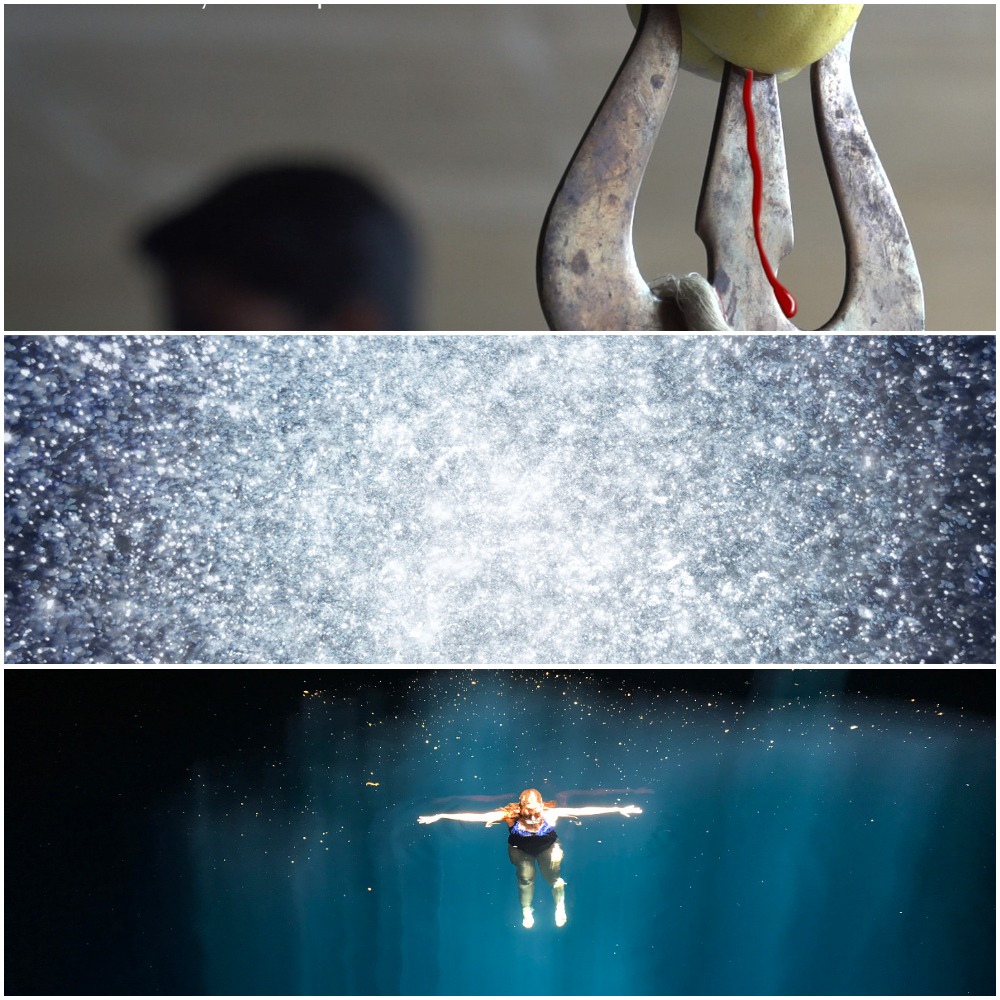
Cenote (Ts’onot) (Oda Kaori)
After Aragane, and Toward a Common Tenderness Oda moves her attention to the cenotes in Mexico. It’s not a perfect movie, but has some of the most impressive combination of sound and images I’ve seen last year. Entrancing to say the least.

Reason (Anand Patwardhan)
Fascism in contemporary India.

This slideshow requires JavaScript.


Honorable mentions:

Indiana, Monrovia(Frederick Wiseman)

Happy Android (Jaina Kalifa)

The Holiday Inn-Side (Charby Ibrahim)

Dutch Angle: Chas Gerretsen & Apocalypse Now (Baris Azman)


Special (re)discoveries:

The Man Who Has a Camera (Liu Na’ou, 1935)

Kobayashi Issa (Kamei Fumio, 1941)

Senso Daughter (Sakiguchi Yuko, 1990)


Best cinematic experience

By far the best viewing experience I had in 2019 was not at all an orthodox cinematic experience. At Yamagata  I was lucky enough to be at a Gentou (magic lanterns) screening, dedicated to the grass-roots movements in the Miike mine’s strikes during the 1950s.