Wansei Painter – Tetsuomi Tateishi


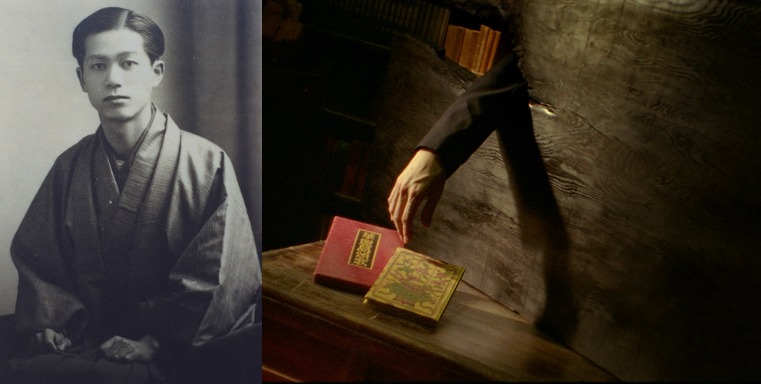
After Le Moulin, and partly Asia is One, my personal exploration of the period when Taiwan was under Japanese rule (1895 – 1945) continues today with Wansei Painter – Tetsuomi Tateishi (2015), a documentary directed by Kuo Liang-yin and Fujita Shuhei, and presented at the last Taiwan International Documentary Festival, where it received the Audience Award.
Here the synopsis:

Tateshi Tetsuomi was born in Taiwan in 1905. He returned to his birthplace to find painting subjects and then he had been attracted by the landscape and local cultures of Taiwan. During his stay in Taiwan, he made oil paints, illustrations and wood engravings for the magazine Minzoku Taiwan (Taiwanese Folklore). He was regarded as a promising painter, but his achievements were to be forgotten when he was repatriated to Japan at the end of WWII and lost most of his paintings. He earned a living as an illustrator for children’s books, but finally achieved unique expressions in his last years. This film reveals his ambition and struggle, and reflects the dramatic political, cultural and social change in Taiwan.”

The word Wansei refers to the Japanese individuals born in Taiwan during the colonial occupation of the island, people who were forced to leave Taiwan, and de facto deported, in the years following the end of the Pacific War (1945). The movie, exploring the life of one of these people and a very special one, is indeed a biopic, but at the same time and on a more subtle level, it’s a depiction of what it means to belong and to live in two different cultures in times of shifting historical changes.
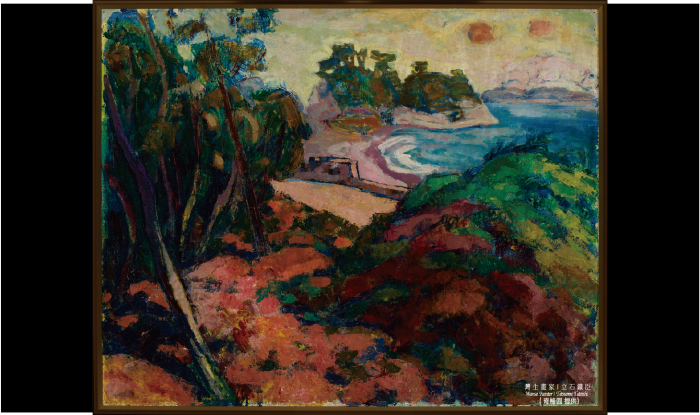
Tateishi was born and lived part of his life in Taiwan, a place and a culture that played a great part in his development as an artist and human being, when he returned there from Japan during the 1930s, the colors and landscape absorbed in his daily experiences would remain forever with him and would be very recognisable in his future paintings. As he writes in his memoir “I have always peferred strong colors and bold lines. Taiwan’s landscapes suited my personality perfectly”.
Things started to dramatically change in the sociopolitical environment at the beginning of the 40s, when the “divide began to emerge between Japanese and Taiwanese in areas such as painting, literature, and theater. The government was promoting Japanesation, Taiwanese culture was considered vulgar and barbaric”. In such a period, when the imperialistic and fascistic oppression promoted by Japan was at its peak and the propaganda machine was in full swing, Teteishi extensively wrote for Folklore Taiwan, a magazine (in Japanese) exploring and reviving the traditional arts and custom of the island. This (re)discovery of Taiwanese cultural heritage was so important that is still praised nowadays among Taiwanese scholars.
At the age of 39 in 1944 Tateishi was drafted and sent to the war front, and after the conflict ended his family stayed in Taiwan, part of those people called “overseas Japanese” in a land now under Chinese administration. In 1949 they were forced to leave the country and go back to Japan, where he continued to paint and eventually became a well-known illustrator for encyclopedias and scientific publications, many of his illustrations can be found in Japanese children’s books and covers of the 1960s and 70s. As for his painting, after the war his style changed considerably, becoming more surrealistic and abstract “military and post-war experiences in Taiwan cast a shadow over my heart, I searched for new styles of painting, yet I could not make up my mind on a particular style.”

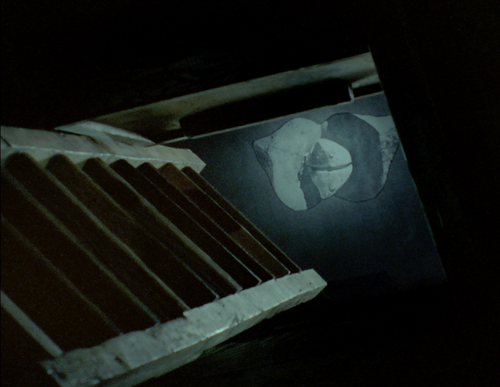
From a purely cinematic point of view, the documentary is mainly composed by still photos, paintings, archival images and interviews with Tateishi’s relatives, his wife and his two sons, and Taiwanese arts scholars. The narration is heterogeneous, the main voice, the one from his granddaughter, is intertwined with short pieces read from his memoir and the voices of his wife and children. There are also few scenes of modern Taiwan and Japan, a school where he used to teach or places where he used to go, and everything is held together by a minimal and unobtrusive music, a sound design that gives the movie its almost contemplative mood.

When the story moves to Japan after the war, the documentary loses, for me, its appeal, it’s still a well crafted work, but the risk of becoming an hagiography is very strong. Fortunately balancing up this tendency are the artist’s beautiful and diverse paintings filling up the screen with their colors, shapes and mystery. Another problem I have with the movie is that the period of colonization, to my eyes at least, is depicted with some indulgence, of course the aim of the work wasn’t to deeply explore the violence of the occupation, but still, watching the documentary it seems like the period was after all a positive phase in Taiwan history, especially when opposed to the post-war Chinese administration. I am maybe reading too much into it, and again I’m not an expert on the subject, so I could be wrong and it may well be that amid all the violence and oppression, important cultural and artistic achievement were obtained, but at what price?  
If raising doubts about a subject is one of the best achievements a movie can obtain, willingly or not, Wansei Painter – Tatsuomi Tateishi for what I’ve written above is certainly a compelling work and a must-watch for anyone interested in how the life of an individual interweaves and is shaped by the events of a very intricate historical period.

The next installment in my personal series about Japan/Taiwan will be, time permitting, 3 Islands by Lin Hsin-i, you can now read my review here.
NDU and Asia is One (アジアはひとつ)

NDU (Nihon Documentary Union) was a Japanese collective established in 1968 by a group of Waseda University students, who would eventually drop out, one of the most prestigious universities in Japan. From 1968 to 1973, the year the group dismantled, this group of activists, they considered themselves first of all as a collective of activists,  made four documentaries, moving from the street of Tokyo – the first work was Onikko – A Record of the Struggle of Youth Laborers – to the far away islands in Micronesia passing through Okinawa, the archipelago where they shot two of the their most significant documentaries. Motoshinkakarannu (1971) was made and is about Okinawa before the reversion to Japan, the group went to the island in 1971 and captured on film a society in flux and in the middle of a shifting passage. The film show and focuses on the margins of society with illegal prostitution and life in the red districts, at the same time highlighting the historical and social fractures that were traversing the area: anti-establishment and anti-American riots, the Black Panthers visiting Okinawa, pollution of water and much more. I listed Motoshinkakarannu as one of my favorite Japanese documentaries in the poll I’ve organised a year ago, but today I want to shift my attention on the second movie made by the collective in Okinawa (and beyond): Asia is One (アジアはひとつ),  a work that I hadn’t seen at the time of the poll, and that would have certainly figured in my list paired with Motoshinkakarannu.

Asia is One was screened on June 26th at Kyoto Kambaikan, as part of the AAS in Asia, and it was screen with English subtitles for the first time, the movie was shelved for many many years, forgotten, and was (re)discovered only in 2005 when was screened at the Yamagata International Documentary Film Festival. The screening in Kyoto was followed by a fascinating Q&A with the only surviving member of NDU, Inoue Osamu, Nunokawa Tetsurō, who after the dismantling of the collective made other interesting solo documentaries in Palestine and US, passed away in 2012. As described by Roland Domenig (1), with Asia is One

NDU further explored the margins of Okinawan society and continued to break through borders by focusing on the Taiwanese minority. The film portrays Taiwanese migrant workers on the main island of Okinawa who substitute the Okinawa laborers who in turn are employed as migrant workers on Japan’s main islands. It traces the history of Taiwanese coal miners on Iriomote Island, follows legal and illegal workers to the westernmost island of Yonaguni and finally lands in Taiwan in a village of he Atayal tribe of Taiwanese aborigines, where still the Japanese naval anthem is played every noon.

Formally the documentary is composed of  landscapes and interviews, all of them out of sync, possibly due to the equipment used or maybe the lack of it. The uncanny space created by this displacement, but also by the use of music from radio broadcasts and kids voices, thrown here and there during the movie, gives the work  a peculiar aesthetic tone, a type of non-fiction cinema that I like to call “chaos cinema”. (2)
To explain and understand the “chaotic” trait of Asia is One, and Motoshinkakarannu, we have to delve deeper in the philosophy that laid behind NDU. What the collective has tried to convey through their cinema is extremely fascinating, in their writings (3), mainly published in the magazine Eiga Hihyo, the group was explicitly pushing towards a cinema/activism of anonymity, trying to reach an “impersonal space” and rejecting even the term “work” (sakuhin) because it was seen as the product of a single person in command and as a result of a dominating power structure. In this regard famous was their criticism of Ogawa Production, a collective that bore the name of a single person and that was basically structured hierarchically (4). To this kind of collectivism NDU tried to oppose a more fluid idea of group activism, where the structure was a flat and horizontal one,  and in doing so promoting a cinema made by amateurs (5) and not by professionals. “Everybody can push the button and shoot with a 16mm camera” said Inoue, and this is even more true today since the advent of the digital revolution. Whether this approach was successful or not, and more importantly, whether this horizontal structure and “amateur cinema” is possible at all, are questions without answers that are haunting scholars to this day.
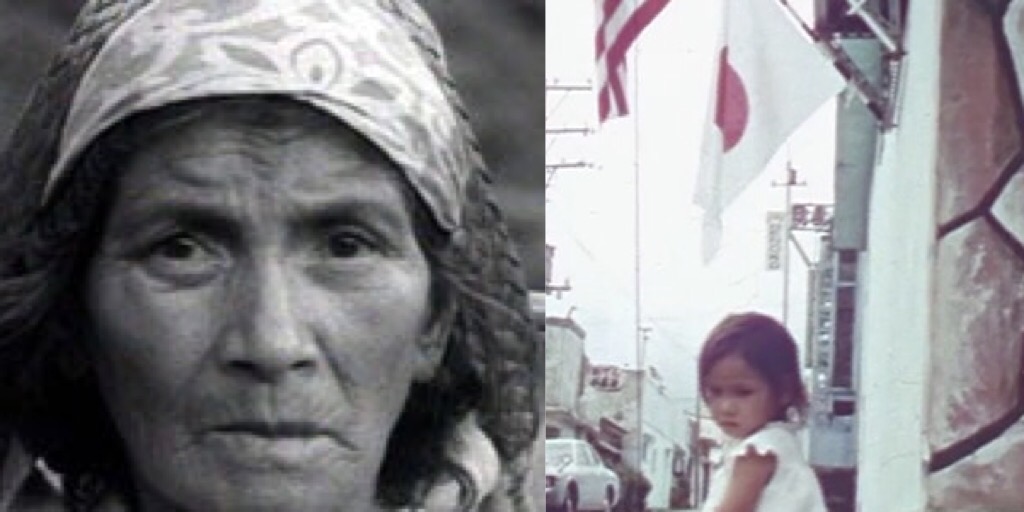
Going back to Asia is One, the part of the movie the resonates more with me is the last one, when the film moves to the Atayal village in Taiwan. There’s a quality in the close-ups of the tribe people, beautiful and ancient faces, that is very fascinating, also because it is in these scenes that the political discourse on identity, or the negation of it, reach its peak. From the 17th Century onward The Atayal people, like the rest of the tribes inhabiting the island,  had to face the colonization of the Dutch, the Spanish, the Chinese and later of the Japanese (1895 – 1945). Calling them “barbarians” the Japanese Empire tried to assimilate and annihilate their culture (6), the words from the tribe people in the movie add layers of complexity to the situation  : “Japan conquered us and abolished many of our ancient traditions and customs”, but at the same time “we were drafted and went to war with pride and ready to die” and “luckily the Japanese abolished some of our ancestral traditions like beheading”.
Asia is One ends with the militaristic song If I Go to Sea against an everyday scene with the aboriginal Taiwanese people isolated in the mountains singing “We want to go to war again.” Of course there is oppression and violence, physical and cultural, in every colonization, but things here are very layered. It seems to me that in this process of cultural and historical coring that the movie conveys, from Okinawa to Taiwan, two very significant points emerge. The first is the crisis of the identity concept, often a forced cultural and national superstructure imposed by the stronger part on a “highly fluid space of human life” (6), as Inoue explained “identity was one of the most hated words inside the NDU, identity is a choking concept”. The second point that struck me is the recurrence of a power and social structure that exploits the margins and the outsiders, in mainland Okinawa the illegal prostitutes and worst jobs are done from people from Miyako island, and in Miyako and other small islands the lower part of society is occupied by Koreans, Taiwanese and aboriginal people.
A final note on the title, the movie as a product of a collective that was thriving towards anonymity, has not film credits, nor it had originally a title, Asia is One was attached to it only later, and it’s a kind of a joke because as Inoue himself said “we all know that Asia is not one!”

notes:

1 Faraway, yet so close by Roland Domenig, in The Legendary Filmmaking Collective NDU and Nunokawa Tetsurō ed. Yasui Yoshio, Tanaka Noriko, Kobe Documentary Film Festival Committee, 2012.

2 This might not be the best way to describe the movie, but aesthetically it reminded me, maybe because of the out of sync, of Imamura Shōhei’s documentaries shot in South East Asia during the 70s.

3 Some of the writings are translated in The Legendary Filmmaking Collective NDU and Nunokawa Tetsurō, op. cit.

4 You can find more in  Forest of Pressure: Ogawa Shinsuke and Postwar Japanese Documentary, Abé Markus Nornes, Visible Evidence 2007.

5 Some interesting insights on amateurism in cinema can be found in The Flash of Capital: Film and Geopolitics in Japan, Eric Cazdyn, Duke University Press 2002.

6 In 1930 the village was the site of an anti-Japanese uprising, the so called Musha Incident, an event portrayed in Warriors of the Rainbow: Seediq Bale (Wei Te-Sheng, 2011)

7 Nunokawa Tetsurō in YIDFF 2005 Special Program, Borders Within – What it means to live in Japan.

Documentary film festivals in East Asia

Surfing through the internet in search of information and publications about documentary in East Asia, I’ve stumbled upon what seems to be an interesting and original dissertation.”Extending the local: documentary film festivals in East Asia as sites of connection and communication” is a thesis written in 2012 by Cheung Tit Leung at Lingnan University and, as the title suggests, it’s a study about the importance of East Asian documentary film festivals for the development, nurture and distribution of Asian non-fiction cinema, and Asia in general, across the globe. The author focuses his attention on four film festivals in the region, arguably the most important ones, the Yamagata International Documentary Film Festival (Japan), the Documentary Film Festival China (China), the Taiwan International Documentary Festival (Taiwan) and the Hong Kong’s Chinese Documentary Festival (Hong Kong). 
I’ve read a dozen of pages so far and I have to say that the topic is really fascinating, more than I expected; whether or not you’re into Asian cinema, this thesis is an important piece to the relatively new field of Film Festival studies, but also one that explores the connections between cinema and a region, East Asia, seldom analysed on specialist periodicals or inside academic circles. 

Your can legally download and read the thesis here.

Taiwan International Documentary Festival 2016

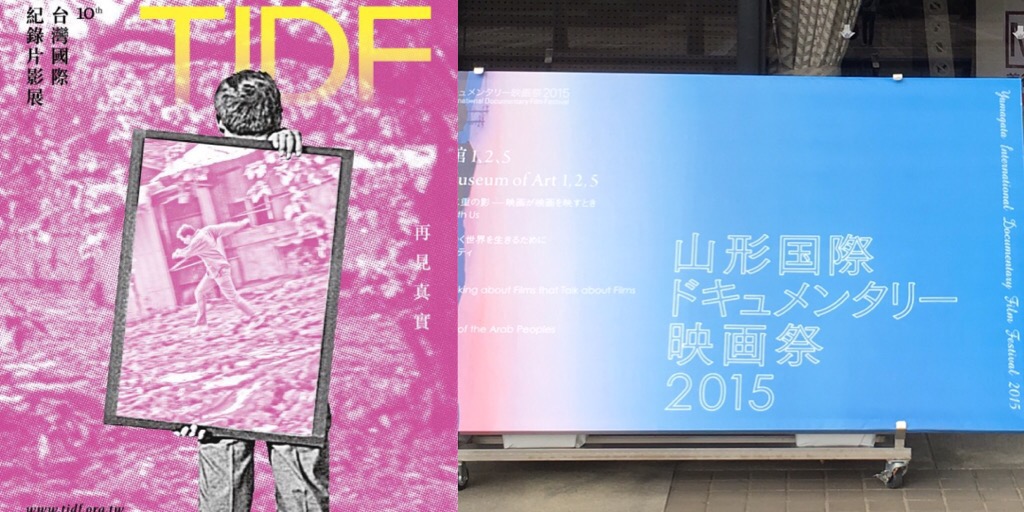
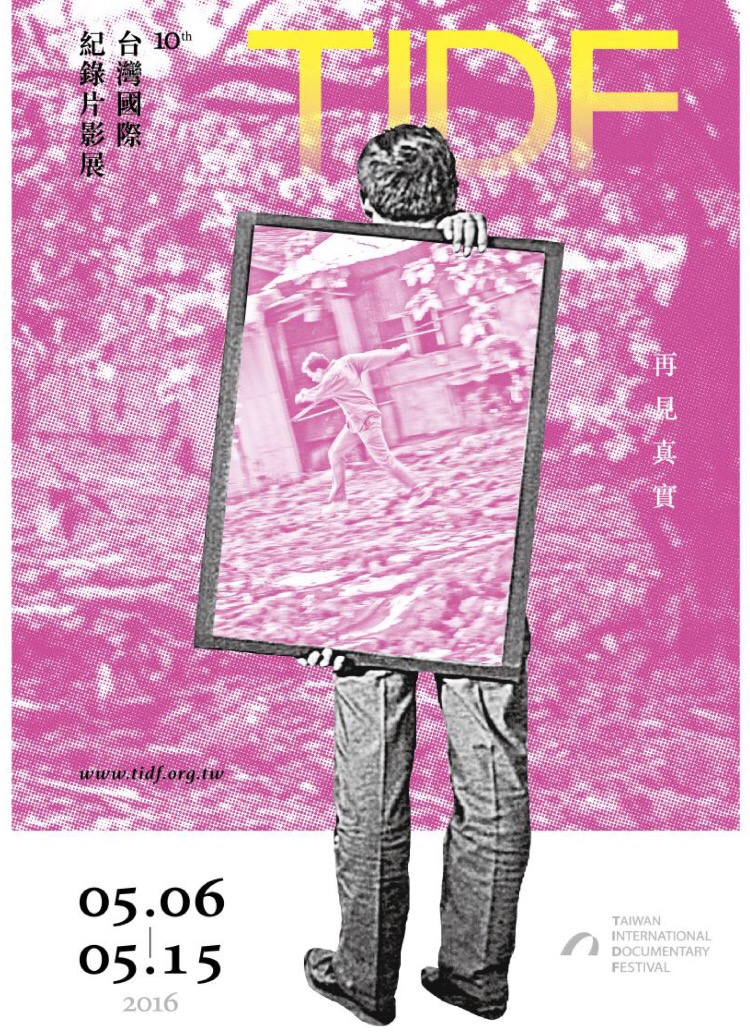
The Taiwan International Documentary Festival kicked off its 10th edition over the weekend, an important event for the region and one of the main avenue and showcase for non-fiction in Asia, the festival will last 10 days, till May 15th. 

Let’s take a look at the presentation for this year edition as written in the official brochure:

Founded in 1998, TIDF is now 18-year-old, reaching the age of adulthood. This year marks our 10th edition. With the core spirit o‘f Re-encounter Reality’, TIDF preserves its traditions as well as blazes new trails, aiming to present diversity, break boundaries and bring back the essence of documentary.
During the preparation of the film festival, we went through rounds of discussions, debates and brainstorming. Our initially vague ideas and perceptions were elaborated step by step. When most of the decisions have been made, it is the best time for us to examine our original intention.
This year we have arranged more Q&A sessions, set up a regular venue for professional interaction, organised a new interdisciplinary workshop, cancelled the policy of‘not allowing admission 20 minutes after each screening starts’, and launched a long-term volunteer plan DOC U. All these changes are made in the hope of making things more practical and convenient for festival-goers. It also means we are offering more accessibility and trust. In our programme, time, memory and aesthetics are in conversation. We have curated three special sections: Director in Focus: Hubert SAUPER, the Folk Memory Project, and the retrospective celebrating the 30th anniversary of Green Team. Although focusing on different regions and periods of time, these films share a power to challenge history, fight authority and bravely reveal the reality most people avoid. Furthermore, they lead us to reflect on how to take actions, make changes and be able to imagine the future.
As we progress along the trail of documentary, future does not lie ahead of us but rather in the past.
Welcome to participate in TIDF’s coming-of-age celebration. Let us walk into the cinema and re-encounter reality!

15 documentaries will take part to the International Competition, among them the Taiwanese Why Aren’t You Angry (2016) shot by Green Team and about the Wild Lily Movement, a student demostration that took place in Taipei in March 1990, and Le Moulin (Huang Ya-li, 2015) also from Taiwan, an experimental documentary that was one of my favorites of the past year (more here). There are many other interesting works from other parts of the world of course, but being this a blog devoted mainly to East Asian documentary, I’ll focus only to movies produced in that part of the globe. Also in competition Realm of Reverberations (Chen Chieh-jen, 2015), about the Lesheng Sanatorium in Taipei, a hospital for lepers established in 1930 during the Japanese colonial period, and a facility that although the government planned to demolish, it’s still there due to people’s opposition.
15 are also the documentaries shortlisted in the Asian Vision Competition, a section that intrigues me a lot for obvious reasons, I’m very happy to see that Aragane (Oda Kaori, 2015) and Dryads in a Snow Valley (Kobayashi Shigeru) will be part of the group. I’ve written many times about Aragane (here my recent review), as for Kobayashi, he’s a cameraman turned director who collaborated prominently with Satō Makoto (Living on the River Agano, Memories of Agano), unfortunately I haven’t seen his new movie yet, but I’m planning to do it as soon as possible since the movie is now in the Japanese theaters. Asian Vision will also present 2 works from South Korea, A Roar of the Prairie (Oh Min-wook, 2015) and  Welcome to Playhouse (Kim Soo-vin, 2015), a self-documentary about the 23 year-old director whose life changes when she becomes unwantedly pregnant. The movies from mainland China are 3, Shaman’s Journey (Gu Tao, 2016), Enclave  (Li Wei, 2015) and The Road (Zhang Zanbo, 2015), a work filmed for three years in a small town where a section of a new highway is being built, while those from the Philippines are 2, Murmurs from the Somber Depths of Sta. Mesa (Hector Barretto Calma, 2015) and Of Cats, Dogs, Farm Animals and Sashimi (Perry Dizon, 2015). But there are many more documentaries, you can read about all of them in the program – there’s a section devoted exclusively to non-fiction cinema from Taiwan, one on re-enactment and one on significant documentaries shown at international festivals – on the official brochure (here the PDF).
Just a final note on a series of special events and screenings organized by the festival with the Folk Memory Project, an initiative started in 2010 by Wu Wenguang, the so called father of Chinese independent documentary, whose aim is to preserve the oral memories of the Great Chinese Famine of 1959-1961 through documentaries, interviews and theatrical performances. 

Some thoughts on Le Moulin (Huang Ya-Li, 2015)

TheMoulin_Taiwan4

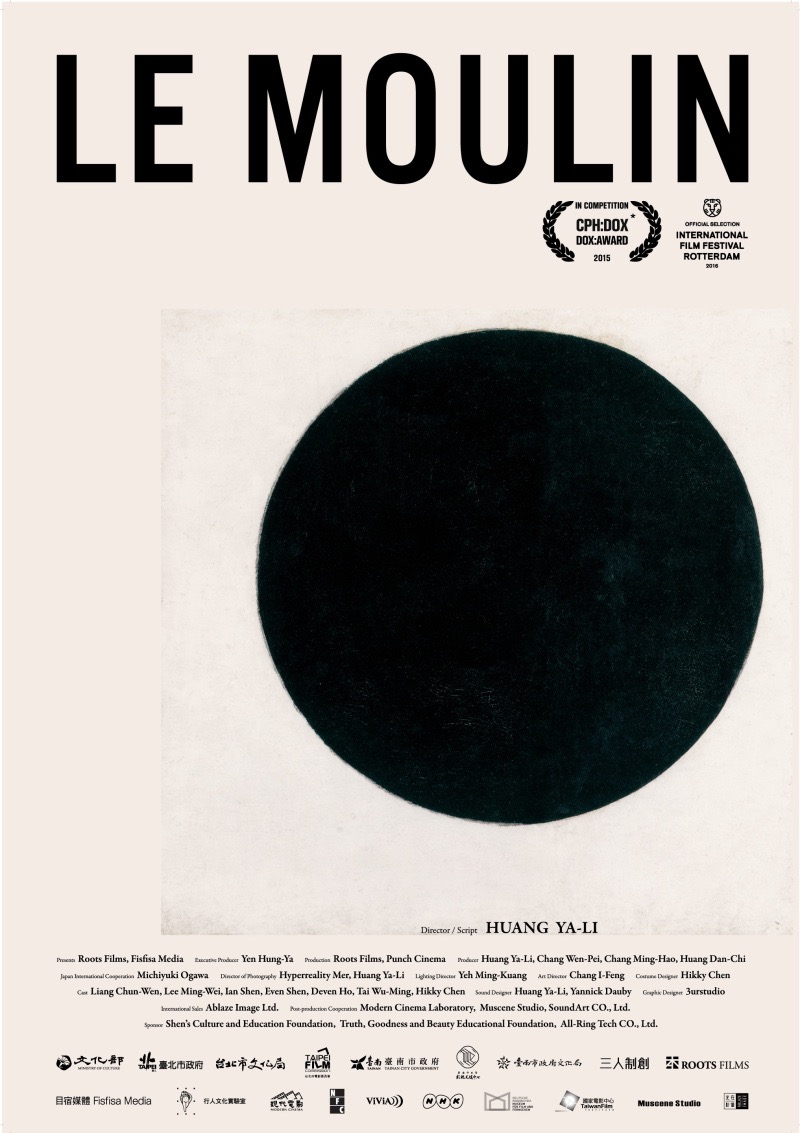
Le Moulin is one of the most challenging and interesting documentaries I’ve had the chance to watch during the past year, thought-provoking in its formal construction and revealing in its themes, the cultural and poetic movements that stirred Taiwan in the last part of the Japanese colonial period. The movie is directed, scripted and photographed by Huang Ya-Li, a young independent experimental Taiwanese filmmaker. His video poetry The Unnamed in 2010 was nominated by the 33th Golden Harvest Awards for Outstanding Short Films (Best Experimental Short Film) in Taiwan and was presented in many countries around the world.

Here the description of the movie:

Taiwan had already been under Japanese rule for forty years, and was in a stable period of cultural assimilation, when the country’s first modern art group – ‘Le Moulin’ – arose in the 1930s in a poetic protest against the colonial power’s cultural superiority. The name reflected the small group’s orientation towards the West and especially France, with the surrealists as their absolute role models. In an uncompromising and aesthetically sophisticated reconstruction of the group’s underground activities, the young filmmaker Huang Ya-Li has created a delicate and evocative feature film debut about a historical period that paved the way for a new freedom and self-awareness. A film where tableaux and beautifully calligraphed texts surround the ‘Moulin’ members, and where you sense an echo of their fellow Taiwanese writer Hou Hsiao-Hsien’s epic and elliptical period dramas.

Because of its “headless” structure it’s really difficult, if not impossible, to write a “normal” review, mirroring the construction of the film itself, I’ve tried to randomly accumulate a series of reflections instead.


Stylistically the movie is a deluge of poetic words & images from a variety of sources: painting, movies, poetry, photos, reenactment and radio programs.

Photos of the French surrealists themselves, lots and lots of their works, Dali, Breton, Cocteau, etc. everything is shown accompanied by spoken poetry written in Japanese by the Moulin group members themselves.

A sort of collage of photos, at least in the first part, a la mode of the Surrealist, but also the dadaists and their Japanese counterpart: fascination with machines, trains & speed, fragmentation of perception through objects.

Footage of Tokyo during the 30s, footage of the Maso festival

The fascination and admiration of the Taiwanese poets with Jean Cocteau and his works is one of the pivotal moment of the movie, he visited Japan for 3 days in May of 1936 where he had the chance to watch a kabuki play and was very impressed by it.

In the enacted sequences, never the faces of the people are shown, but most of the time we see hands, writing, turning pages, lighting cigarettes and holding books or photos. A choice in style that encapsulate the mood of the movie, anti-narrative, non-linear, accumulative and elliptical. Although it proceeds somehow chronologically, from the early 20th century to the total mobilization of the end of the 30′ and Pearl Harbor in 1941, a change in mood and attitude is reflected in the texture of the movie after the deteriorating relationship between Taiwanese and Japanese poets in the late part of the decade, the Allied bombing of Taiwan and, after the surrender, the arrival of “fatherland China” and its sour aftermath.

All in all, the movie functions like a huge and complex poem constructed with digital images, footage, written and spoken poetry, and minimalist music, a cubistic landscape of an era and of the poetic instances traversing the period and the place, occupied Taiwan.

The Moulin is in no way an easy watch, but nonetheless a very rewarding experience able to trail blaze uncharted cinematic territories.

TheMoulin_Taiwan2

The best documentaries of 2015 – my list

As 2015 comes to an end, it’s that time of the year again, the period when every cinephile is compelled to make his/her best movies list. I couldn’t not post my own one. I’ve mostly watched documentaries from East Asia, my list is then more like a “Best documentary of 2015 from East Asia” type of list, but at the end I’ve added a couple of movies from other part of the world and some (re)discoveries I’ve done during this 2015. Just a disclaimer, it’s a favorite list more than a best list, here we go (listed in the order I’ve seen them):

Walking with my Mother (Sakaguchi Katsumi, 2014)

An exploration of loss, sickness and memory in a society (the Japanese one) that is getting older and older, told in the shape of a private documentary, here some thoughts on the movie.

walking_with_mother

Aragane (Oda Kaori, 2015)

The camera follows patiently and almost hypnotically the workers of an old coal mine in Bosnia down into the darkness of their daily routine. The movie is visually stunning, partly documentary and partly experimental cinema, director Oda Kaori knows how to use the digital medium for her cinematic purposes in a work that revolves around the concept of duration and its materiality, and that is almost structural cinema in its construction. I had the pleasure of meeting and interviewing the director, the conversation was published on the Italian newspaper Il Manifesto, I’m currently working on an English translation and on a review/piece for this blog (maybe next year).

Oyster Factory (Sōda Kazuhiro, 2015)

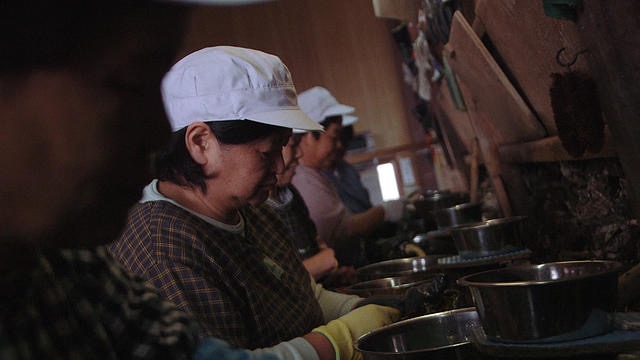
The latest work from Japanese director Sōda Kazuhiro, together with Theatre 1 and 2, my favourite among his documentaries. I’ve written more about the film here.

IMG_5344

France Is Our Mother Country (Rithy Panh, 2015)

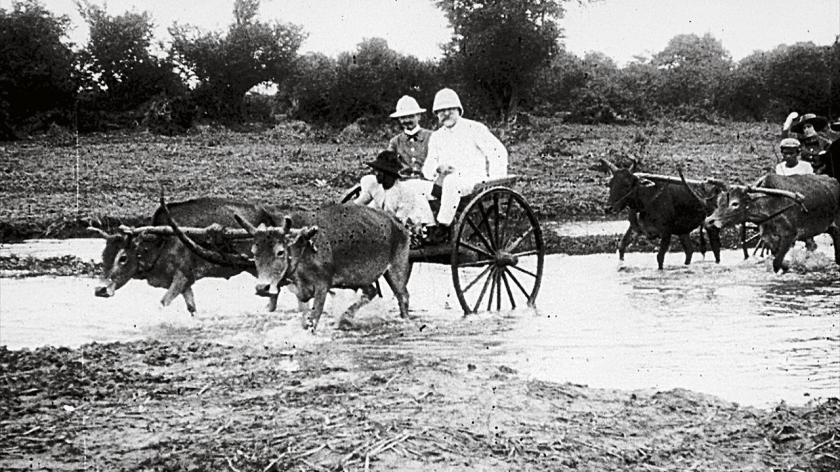
Rithy Panh (2-21: The Khmer Rouge Killing Machine, The Missing Picture) constructs a critical and satirical work about the colonial rule of Cambodia by France, using only footage, archival images and propaganda films shot by the rulers themselves. The power of re-editing and collage documentary.

france-is-our-mother-country

Night and Fog in Zona (Jung Sung-il, 2015)

A documentary about the great Wang Bing by movie critic-turned-director Jung Sung-ilhere you can read my review.

IMG_0379-0

The Moulin (Huang Ya-li, 2015)

Formally engaging and elliptical, I don’t really know how much of my fascination for this movie comes from its themes, a group of Taiwanese avant-garde artists active in the 30′ during the Japanese colonial period, and how much from the documentary itself.

TheMoulin_Taiwan4

Documentaries from other parts of the world:

The Iron Ministry ( J.P. Sniadecki, 2014) and in general all the movies by Sniadecki: Demolition, People’s Park, Yumen….

Jujun (Paul Thomas Anderson, 2015)


(re)discoveries of 2015:

The Vampires of Poverty (Carlos Mayolo, Luis Ospina, 1977)

All the documentaries/works of the great Agnès Varda (it was a pleasure watching 14 of her films this year)


East and Southeast Asian documentary. And beyond 


Today just a quick note to announce a small topic shift I’d like to give to my blog. I will still primarily write about Japanese documentaries, but in the past months I realised just how limiting it is to keep the focus only on the works coming out of Japan and by doing so missing the chance to explore the rich and vibrant non-fiction scene of East and Southeast Asian countries. To be honest, I don’t know where this decision will bring the blog and even if there will be real changes in my blogging at all. Reviews of Asian documentaries? news about a new DVD/Blu-ray or an interesting movie from China, Taiwan, South Korea or the Philippines? More about film festivals in the region? I have no idea, stay tuned.