Best (favorite) documentaries of 2021

As usual, the list below is a reflection of my taste, interests, and viewing habits during 2021, this year mainly, but not exclusively, online. I’m not sure all the titles can be considered documentaries, but this is, after all, the fascinating beauty of dealing with documentary cinema. Synopsys in italics, followed by my quick take and, when available, the trailer:

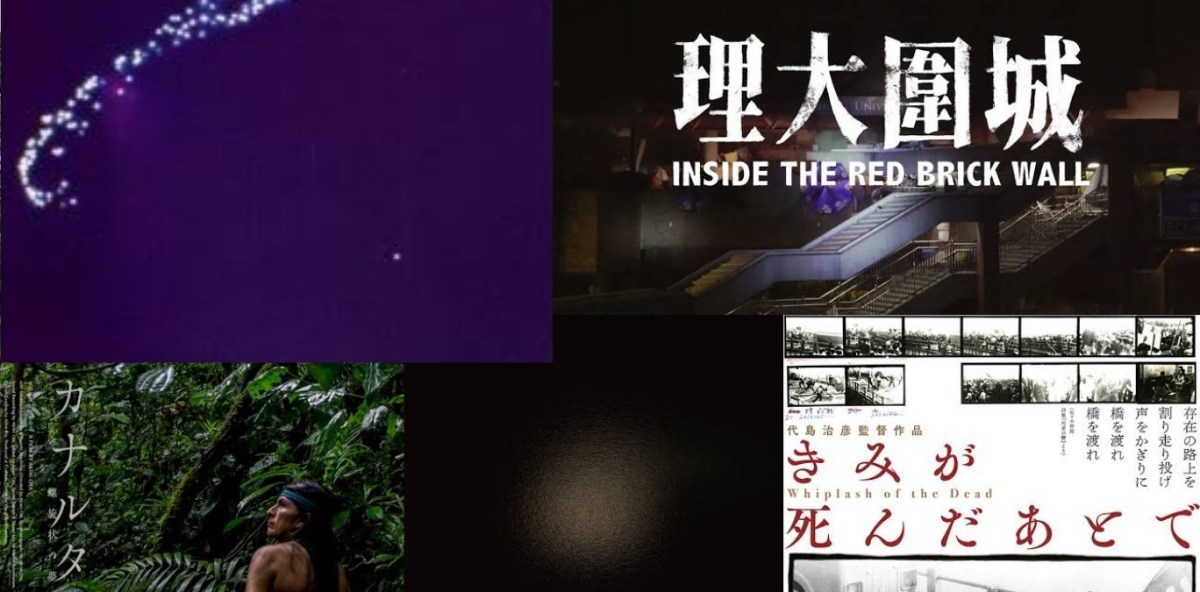
Kanarta – Alive in Dreams (Ōta Akimi). Sebastian and Pastora live in a Shuar village in the upper Amazonia of Ecuador. Sebastian is not only a respected healer, but also a medicinal botanist who experiments with unknown plants he encounters in the forest. His unique practice seeks to cultivate new knowledge, reconnecting him with his ancestors. Pastora is one of the rare female leaders in Amazonia, who struggles to negotiate with local authorities for her community. With powerful plants such as ayahuasca, they revive and energise their perceptions of the future. These plants allow them to acquire power and a faith to cope with the obstacles they now face, given that their lives have been irreversibly affected by the modern state system. There is a lot to like about this movie, and, like in the best works that cross the boundaries between documentary, visual anthropology and experimental cinema, every new viewing reveals extra layers. On the one hand Kanarta shows the problems Shuar people and their culture encounter in dealing with modern society and the way their community adapts and changes in response. On the other, it also offers a glimpse of their being part, almost as if made by the same flesh, of the Amazon forest, and their vital connection with the medicinal plants, “plants that make reality” as one of the people suggests.
However, what really kept me engaged throughout the whole movie is that the documentary is permeated by joy, there are lots of laughs and funny scenes, usually fuelled by chicha, an alcoholic beverage made of fermented potatoes. The joy is also coming from the movie and its protagonists being in a constant state of exploration, through the visions and through the wandering in the forest in search for new plants or new places where to build a house. Kanarta offers also some emotional and even dramatic scenes, it’s very touching for instance, when we see Sebastian’s son receiving his medical diploma during a small ceremony, and father and mother posing with him for the camera with pride and smiles. This contributes to build a stronger sense of attachment for the two protagonists, Sebastian and Pastora, who are willing to show and tell the director about their culture and their way of living.
The main reason why everything works though—from the more poetic scenes, to the more visceral ones, when Sebastian takes ayahuasca for instance—is because the documentary is structured in a dialogic manner, so to speak. The camera is not a passive actor in the scenes, but it’s part of, and often influences, what is going on, directly or indirectly. Furthermore, Ōta is very good at transmitting, through an immersive visual and sensorial experience, the powerful feeling of empathy that emanates from Sebastian and Pastora, and the Amazon forest itself.

.

13 (Isobe Shinya) The filmmaker left his camera in exactly the same spot for five years to shoot a picture of the sunset every thirteen seconds. In a series of merged time-lapses, we see the sun(s) moving repeatedly from the left part of the screen to the right. One of the best movies I’ve seen this year, documentary or not, I wrote about it here.

.

Inside The Red Brick Wall (Hong Kong Documentary Filmmakers) On 17 November 2019, the police laid siege to protestors at the Hong Kong Polytechnic University in a blockade lasting nearly two weeks. Beleaguered students fought teargas with makeshift whiteboard shields, hoping to escape and return home to safety. With the media barred from on-site access, an anonymous collective films from within the campus, recording the teenage protesters’ hopes and distress. From the very first shot the documentary is imbued with a sense of precariousness and anger, and by filming the violence between riot police, students, aid people, and members of the press —mainly independent press that live-streamed the battles on the internet— captures and creates, through a masterful use of editing, a very powerful sense of space and proximity with the students, a visual cartography of violence and resistance. The scenes when many of the young students break down, cry and walk out, defeated, from the campus, often criticized by their comrades, is— although it is something I have seen over and over again in the documentaries about the Japanese protests of the 1960s and 1970s—heartbreaking. What is also extremely fascinating for me, is that all the young people wearing masks and gear, for protection and for anonymity, form, more than a revolt of the individuals, a resistance of the multitude. The sense that the struggle is about something bigger than the siege itself is very palpable.

.

Minamata Mandala (Hara Kazuo)         After years of dumping industrial wastes from the factory to the ocean, Chissō Chemical Corporation contaminated the area of a small Japanese fishing village with excessive amounts of methylmercury. This highly toxic chemical bioaccumulated in fishes of the local water, which when consumed by the local populace resulted in mercury poisoning. In 1977, Minamata disease certification criteria was set by a strange method that tried not to recognize the rights of environmental disease patients. However, an Osaka court won the case for some patients because of a newly developed theory by medical doctors’ recent experiments and proofs. For decades, these patients struggled within the Japanese judicial system for their rights to receive compensation as victims of environmental disease. Those different aspects of these patients’ lives have been filmed by director Hara for the last 15 years, inspired by the late director Tsuchimoto’s documentary MINAMATA: THE VICTIMS AND THEIR WORLD (1971).                                                Not a minute of the documentary (it’s 373′ long) is superfluous. This is, in my view, one of Hara’s best works, and so far the pinnacle of the second part of his career as a filmmaker.

.

The Works and Days (of Tayoko Shiojiri in the Shiotani Basin) (C.W. Winter, Anders Edström) An eight-hour fiction shot for a total of twenty-seven weeks, over a period of fourteen months, in a village population forty-seven in the mountains of Kyoto Prefecture, Japan. It is a geographic description of the work and non-work of a farmer. A portrait, over five seasons, of a family, of a terrain, of a soundscape, and of duration itself. Undeniably it’s an impressive cinematic achievement and is worth engaging with it, but for me, once the “artificiality” of the movie becomes apparent, it loses part of the appeal and power. I’m not revealing more to avoid spoilers (but are there really spoilers?). Also, I’m approaching the movie from a special angle: I live in Japan, in a somehow similar place to the one depicted in the film.
All that being said, the soundscape is astounding, and I like how the movie’s editing is often constructed following the sounds. I really should, and I wish to one day, experience it in a theater.

.

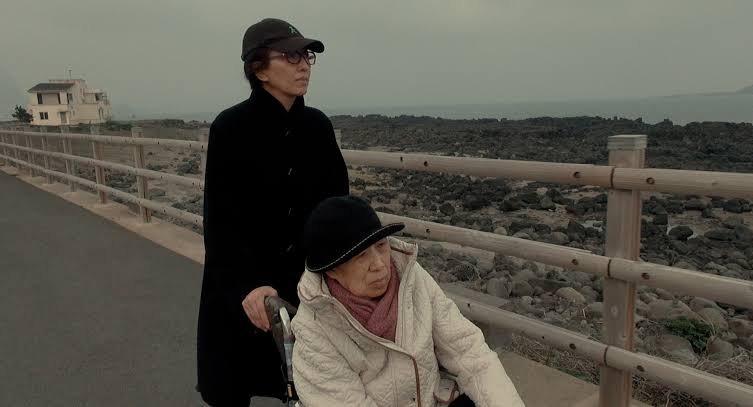
Soup and Ideology (Yang Yong-hi) Confronting half of her mother’s life—her mother who had survived the Jeju April 3 Incident—the director tries to scoop out disappearing memories. A tale of family, which carries on from Dear Pyongyang, carving out the cruelty of history, and questioning the precarious existence of the nation-state. With her latest documentary Yang Yonghi continues to explore how her own personal life is tragically connected to the post war history of Japan and Korea. The movie presents not only the painful memories of the Jeju massacre (April 3rd 1948) as remembered by the director’s mother, and the destruction a family, her three brothers were sent from Japan to North Korea at a young age, but it is also an emotional portrait of her frail and ageing mother. As the film progresses she is diagnosed with senile dementia, and little by little she loses her memories, including those of the massacre she witnessed, only 18, in the small Korean island. The movie is also partly an act of self-reflection by Yang Yonghi herself, if in the first part she is the one filming her mother, and we don’t really see her too much, in the second, when her mother condition worsens, she enters the frame more often, and becomes the co-protagonist of the film. We can clearly see her emotions, especially when she visits the island, with mother and husband, for the anniversary of the massacre. There, Yang Yonghi understands that her mother’s affiliation and attraction for North Korea, something the director had never completely forgiven her for, was also caused by the atrocities committed by the South Korean Army her mother saw with her own eyes.
It would have been a better movie for me, had not been for the five or so minutes of animation used to explain her mother story in Jeju in 1948. I found the segment out of place and it really took me out of the movie.

.

Shiver (Toyoda Toshiaki) A music movie featuring a performance of Taiko Performing Arts Ensemble ‘Kodo’ and Koshiro Hino. Filmed entirely on Sado island. Partly a filmed music performance, partly a visual experiment connecting music, landscape and spirituality, Shiver is a fascinating piece of work that fits perfectly with what Toyoda has being creating in recent years. Through the spiritual encounter between Sado landscape and the hypnotic music of the taiko drummers, Toyoda touches and expands some of the themes tackled in some of his most recent films, such as the The Blood of Rebirth, Monsters Club, and The Day of Destruction. That is, the primal nature of the world we inhabit, and how we, humans, can connect with it through music, a similar approach was also at the core of Planetist in 2020. Something primal not in a temporal sense as something that comes before, or ancestral, but more as something essential that is always present and awaits to be discovered and brought to light. Like the rock/monolith towards the end of the work, which seems to have some kind of energy inside, and whose light is filtering through the cracks only when the music plays.

.

Whiplash of the Dead (Daishima Haruhiko) Weaving together the memories of Yamazaki Hiroaki, a university student who lost his life in the First Haneda Struggle in 1967 through the words of his bereaved family and ex-classmates, this film turns the memories of those who protested against government power into questions for the future. The movie is comprised of two parts, for a total of 200 minutes, in the first 90 minutes the director focuses on the events preceding the death of Yamazaki, while in the second segment, that could easily have been another movie, the protagonists of the students protests of the late 1960s, reflect on the reasons of the implosion of the new left and its movements.
The story of the Mito family, not affiliated with any left group, but a family that helped the young people in prison, and later promoted anti-nuclear activism and whose members (father and two sons) tragically died in 1986 in a mountain incident, is so fascinating that would deserve its own documentary.

.

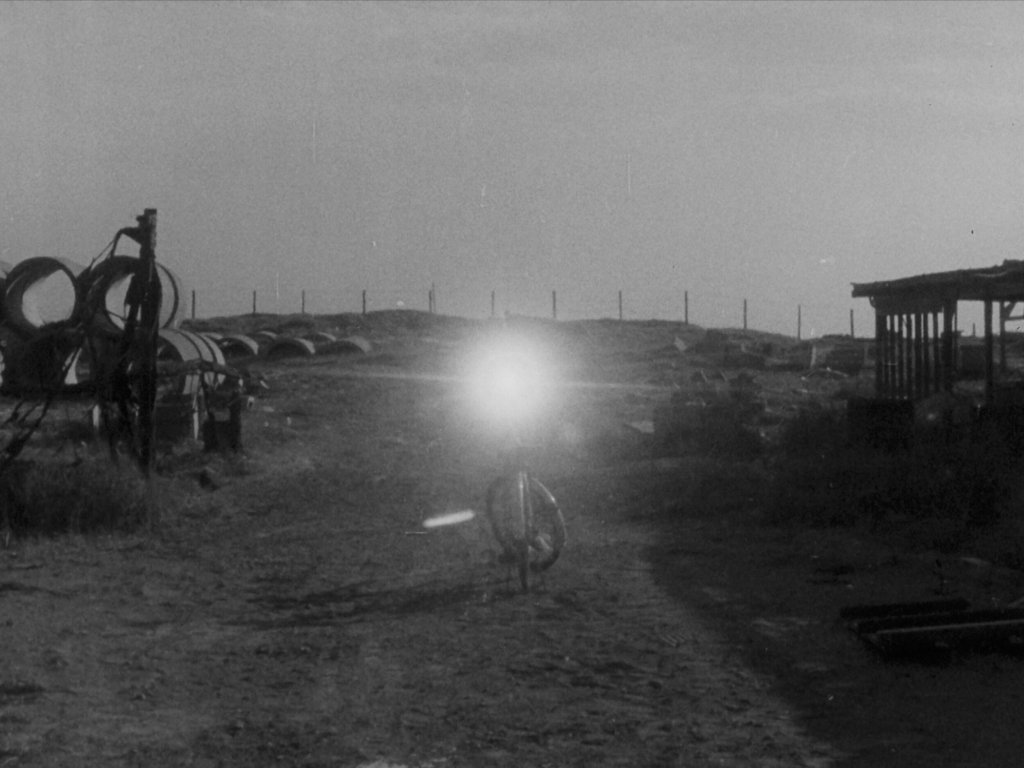
Discovery of the year: Alchemy (Nakai Tsuneo, 1971). The camera slowly zooms, in over a long period of time, on the light of the sun reflected in the mirror of a bicycle parked at the construction site. To this is added a slowly evolving flicker effect derived from negative-positive reversals, progressively dismantling the distance from the subject. Nakai created a masking film with a calculated pattern of black and white frames into which he inserted positive and negative images and made a print out of two separate rolls of film. The original projection speed was 16 frames per second, but the sound is separate from the open-roll tape rather than burned in, so it can also be screened at 24fps. Also, the original sound consisted of the friction noise of rubbing steel, but in 2019 a new version of the sound was created featuring the friction noise of glass. Two versions of the film exist: 24:15 mins at 24 fps and 40 mins at 16 fps.                                   A structuralist film made in 1971 by Nakai, clearly inspired by Michael Snow’s Wavelength, but at the same time highly original, and somehow anticipating Matsumoto’s Atman.

.

Honourable mentions: Her Socialist Smile (John Gianvito), Summer of Soul (…or, When the Revolution Could Not Be Televised) (Questlove)


Interview with Hamaguchi Ryūsuke

At the end of last February, I had the pleasure of interviewing Hamaguchi Ryūsuke about his Wheel of Fortune and Fantasy, a movie that would debut at the Berlinale. The short interview was conducted on zoom and it was published in the Italian newspaper I usually write for, Il Manifesto.

In recent months, with the release and success of Drive My Car, many long and more in-depth interview with the Japanese director have been published around the world, but I decided nonetheless to translate my interview in English and post it here on the blog (even if it’s not really related to documentary). As said, the conversation was about Wheel of Fortune and Fantasy and before the release of Drive My Car. In recent months, with the release and success of Drive My Car, many long and more in-depth interview with the Japanese director have been published around the world, but I decided nonetheless to translate my interview in English and post it here on the blog (even if it’s not really related to documentary). As said, the conversation was about Wheel of Fortune and Fantasy and before the release of Drive My Car.

Interview with Hamaguchi Ryūsuke (February 27th, 2021)

Although you had already made short and medium length films in the past, this is the first time you have tackled the anthology film format, could you tell us more about this choice?

A few years ago, I made the medium length film Heaven Is Still Far Away, a project also born out of a collaboration with actresses and actors that for me worked partly as a sort of review of Happy Hour, and partly as preparation for my next film, Asako I & II. This experience was also very useful to me because I was able to find my own rhythm, so to speak, in alternating feature films and short or medium length films, something that I think I will continue to do in the future. However, one of the problems with short films is not having a real exhibition outlet, that is, it is very difficult to find a proper distribution for these kinds of works. The solution I tried this time was to combine three shorts into an anthology, making them into a feature film that thus could be distributed. 

Compared to feature films, do you think the format you worked on this time opens up different expressive possibilities?

Of course. All works, whether long or short, must have an end, a point at which they stop and leave the viewer with a strong feeling of having seen a world. Having said that, short films have the possibility, in my opinion, to leave a more intense and vivid impression as they only offer a brief glimpse into a certain world. A shorter film can also show something rare, events whose existence is not certain, leaving everything in suspense and without going too deep into it.

In each of the three episodes that make up the film there are at least three scenes of strong aesthetic and emotional impact. In Magic (or Something Less Assuring), the first episode, the long initial part with the two women in a taxi, in Door Wide Open the scene where the female protagonist visits the professor and in the last episode, Once Again, the final part with the two women embracing. Each of these scenes uses very different acting styles, yet there are parts in them where the characters, within the narrative, are acting, and where the boundary between what is real in the story and what is acted is ambiguous and fluid. Could you tell us how you worked with the actors to create this ambiguous feeling?

I wanted to create this ambiguity, but I also tried to create a clear sense of ambiguity, so to speak. That is, I wanted to create something defined, but something that can be interpreted in different ways. The fascinating thing for me is that the act of acting itself is ambiguous, and in the three scenes you mentioned, the actresses themselves in the midst of their performances must surely have noticed the ambiguity of the question “what is real?”. One strategy I used to create this ambiguity was, first of all, to write it into the scenes themselves, by inserting the act of acting into the narrative. I could not ask the actors to emphasise the fact that they were acting, it was rather a matter of achieving a very light and thin performance that, as in the case of the two women in the taxi, could later be read differently in the continuation of the story, when more information is revealed to us. In addition, it is important that there is something hidden in the performance, as happens for example in the second episode where even the main character, Nao, realises that she does not know exactly why she is doing what she is doing, thus generating a sense of displacement in the scene.

The third episode is set in a world where a computer virus has made the internet unusable. Could you tell us more about the reasons for this choice?

I shot the first two segments in 2019 and the last one in 2020. I originally planned to shoot it in spring, but the pandemic disrupted all the plans and we ended up shooting it in summer. The script was already completed, but an event as big as the pandemic made me tweak it. I couldn’t avoid taking into account the effect the Corona virus had on all of us, so I decided to set it in a kind of parallel world where the internet is no longer usable, a world disrupted by a different kind of calamity. 

One last question about the situation of independent cinemas (mini-theaters) in Japan at the time of the pandemic, a culture that is very close to your heart and for which you are fighting with various initiatives, such as Mini-Theater Aid (crowdfunding that helped these small cinemas survive last year and that is still active with various support initiatives). What is your relationship with these independent theatres?

For me, they have been an important place to discover films that are completely different from the Hollywood films or TV series I was used to, films that were “boring” compared to the ones I used to see.  Seeing these “boring” films in the space of these small independent theatres, I discovered a new kind of feeling, my body changed and I learned to appreciate a different kind of cinema. Now my films are shown here in Japan, mainly in these independent theatres, and I am in contact with all the people working there, it is for these reasons that I have been actively participating and supporting projects like Mini-Theater Aid.

Movie journal (November 2020): 2 documentaries by Yoshida Kijū, and Okinawa 2018

Wrapping up November with some of the most interesting non-fiction works (made in , or about, the Far East) I’ve watched in the past months.

私たち生まれた島 Okinawa 2018 (Todori Shin’ya, 2020) is an informative documentary about how the new generations of Okinawans deal and cope with the American military bases in the islands. Filmed in the last few years, the film covers the protests againsst the relocation of one of the biggest American bases in Henoko, the election of a female representative (for the communist party) in a small town, and the election of governor Denny Tamaki in 2018. A mix of video journalism and grassroots activism caught on video, the documentary offers an interesting insight of a complex and layered situation.

Sooner or later I will have to write something longer about the documentaries directed by Yoshida Kijū, one of the towering figures in post war Japanese cinema. For today let me just share a few random thoughts about two of his best non-fiction films I’ve recently rewatched.

With The Cinema of Ozu according to Kijū Yoshida 吉田喜重が語る小津安二郎の映画世界 (1994) the Japanese director adds images to his reflections on Ozu written in his beautiful Ozu’s Anti-Cinema. If you have already read the volume, it’s nothing particularly new, but it is a delight nonetheless. I watched the short version, but apparently there also a longer version out there.

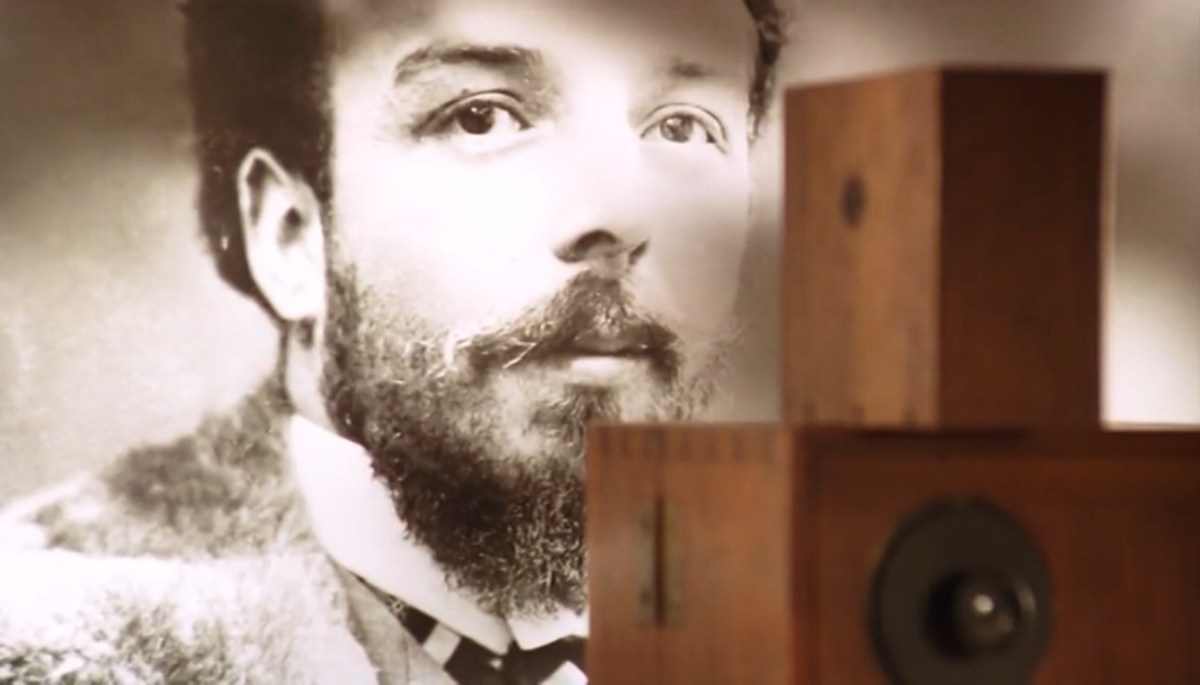
While both were made in the same period and share a certain style and approach ーYoshida providing the narration, and the preoccupation with cinema and the act of representing through images as a theoretical structureー Dreams of Tokyo, Dreams of Cinema 夢のシネマ 東京の夢 (1995) is by far my favourite of the two. By telling the story of the early travels of Gabriel Veyre, the Lumière Brothers’ cameraman, in Mexico, Japan and Morocco, Yoshida reflects on the advent of this new technology and the changes and cultural shifts that were caused by the cinematograph and everything that came with it. This relatively short documentary (50’) is a fascinating example of how effective and poetic essay cinema can be when used at its best. Yoshida, using Veyre’s gaze, exposes the power and dangers that the birth of cinema brought with it since its very beginning, forseeing also the prominence that visual representation would reach in the world to come.

One of the most significative passage is, in this sense, one where we see a group of indigenous people in Mexico filmed by Veyre, a group that is definitely not glad to pose for the camera. At a certain point a white person violently grabs the head of a woman and forces her to see and face the camera to get a “better” shot. At this point the footage ends. According to Yoshida probably Veyre sensed that something was not right and decided to interrupt the shooting. Quoting Yoshida “Most people enthusiastically perceived the moving images of the cinematograph as reality itself and so the representation ended up taking precedence over the reality of the world, but Veyre for some unknown reason adopting an opposing standpoint, saw the future of the cinema from a different angle.”

Here the scene:

https://youtu.be/rNpzCJsSEz4


Online Film Festivals: first impressions

Already more than half year has passed since the pandemic generated a tidal wave of changes in our daily lives and habits. Of course the world of cinema and the film industry at large have been affected by Covid-19 too, and one of the consequences is that the international film festival circuit has been completely disrupted.

From last March, most of the big film events worldwide have been cancelled, postponed or have moved online, and it was only in recent months that we saw, with Venice as a frontrunner, the return of the film festival as we used to know it, with all the necessary social distancing and limitations.

Many festivals opted for an online and often limited edition. It has been interesting for me to see how these net-events have been organised and scheduled (ticket price, catalogs, regional restrictions, etc.) and, I have to be honest, it was fun to experience them in all their diversity, and I’m not talking about the movies. Before proceding with some reflections on a couple of online festivals I’ve “attended”, let me make some disclaimers:

– I live in central Japan, in a small city far from Tokyo, and neither very near to Osaka or Kyoto, that is, for me going to a festival here in Japan means to plan in advance and commit time and money.

– I work in the field, so to speak, I write and occasionaly collaborate with film festivals, but I have also a daily job that allows me to survive.

– I really enjoy going to film festivals, watching the movies is only a part of the experience, it’s everything else that makes it special for me, film culture extends way beyond the mere act of wtching a movie, online or not. That is one of the reasons why going to the Yamagata International Documentary Film Festival every two years has been a real joy.

That was to clarify my position. Now, in the past months I had the chance to experience, in one form or another, watching many movies or only one, the following online film festivals:

Far East Film Festival, Udine, Italy

Il Cinema Ritrovato, Bologna, Italy

EXiS 2020, Seoul, South Korea

Open City Documentary Festival, London

Yūbari International Fantastic Film Festival, Yūbari, Japan.

2020 Skip City International D-Cinema Festival, Saitama, Japan.

Le Giornate del cinema muto, Pordenone, Italy (starting soon)

and counting…

The biggest wall that everybody interested in watching film festivals online (or should I call them film events online?) bump into are the regional restriction. Understandably, not all movies can be licensed to stream in all locations, and navigating through these limitations can be frustrating at times. The Udine Far East and Il Cinema Ritrovato had regional restrictions but their sites (actually the MyMovie platform) was very easy to navigate and it was very clear which movies were available in which country.

Those two festivals and Le Giornate in Pordenone use the same screening schedule’s method: each movie is scheduled at a certain day on a certain time, like in a normal film festival, but it’s available to watch online for 24 hours, also to make it easy for people watching from different time zones. On the other hand, the Yūbari Film Festival in Hokkaido basically replicated online the format of the physical festival: there were three “screens” (channels on Hulu Japan, the festival was free if you had the service) each showing different movies, a bit like TV, with the only difference being that the movies were rotating. While this option is without doubt the closer to the real festival, I found the 24 hours window to be the perfect one for me, you still have the “pressure” of missing a movie, but at the same time it’s easy to organise your day.

A different approach is being used by the Skip Digital Festival (at the time I’m writing still happening), if you buy a pass, about 1500 yen, you can can watch, only if you’re in Japan, all the 24 movies presented, at any time during the event.

While, as I wrote above, the online festival is not the same as the “real thing” ーno big screens no communal viewing, no socializingーit is undisputable that for cinema people who, like me, live far from big cities, in other countries, or don’t have much free time, it’s a golden chance for new discoveries. And by the way, you’re finally watching movies like the film festival programmers and directors…on your PC….

Is the online film festival here to stay? I don’t honestly know, but I would say that in the next few years we will see more hybrid experiments between online and physical film festivals happening.

Feel free to chime in and share your experience, you can do it here.

Movie journal (Dec. 2019): Man Who Has a Camera, Many Undulating Things, Nuclear Power Plants Now

Three short takes on some of the most interesting documentaries I’ve seen recently.

The Man Who Has a Camera (Liu Na’ou, 1935)

One the the discoveries of the year for me. Clearly inspired by Dziga Vertov, filmmaker, poet and writer Liu Na’ou shot this movie in four cities across national boundaries: Tainan, Canton, Shenyang, and Tokyo. A beautiful film that is in equal part amateur cinema, a city symphony film, and an experiment in poetic filmmaking, less a work about landscapes of certain areas, and more an actuality film depicting faces and people’ feelings across and beyond borders. Incredibly charming, fresh and well constructed, a feverish dream of transculturality that is much deeper and complex than its simplicity on the surface level might suggest. I’m planning to write a longer piece about the fascinating figure that was Lui Na’ou and this film in the near future.

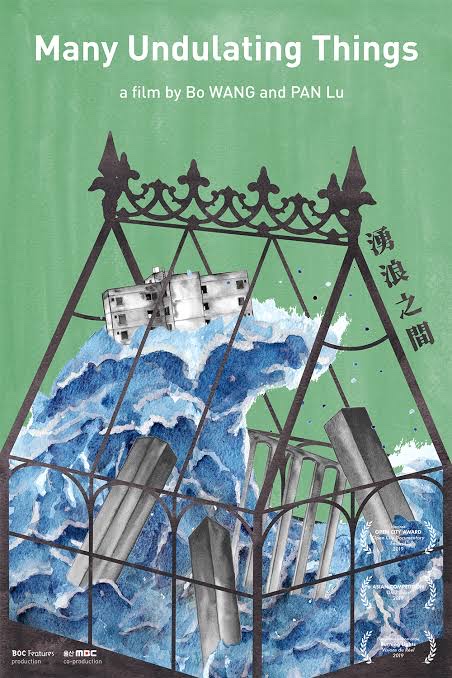
Many Undulating Things (Wang Bo, Lu Pan, 2019)

The film begins and ends in a shopping centre in Hong Kong. We carefully observe the smooth movement of the escalators, the constant flow of people that never stops, the musical fountain that presides over the centre of the internal courtyard, as if this gigantic complex could concentrate the circulation of the entire city, or even, the entire country. From there, it will be more a tale about concrete, enormous port warehouses, glazed galleries built for the 2010 universal exhibition, overpopulated tower blocks, the fragments of still recent colonialism… Through the history of urban changes, we witness the profound social transformation of this territory that is constantly swinging between the East and the West. Hong Kong thus emerges, like an archetypal space of many other cities of globalised capitalism. MANY UNDULATING THINGS offers a complex reflection on the relationships between landscape, nature, urbanisation and society. Thanks to its exhaustive approach, the film questions the function of cities in the development of the capitalist system. A political poem.

I almost despised the first part, the visuals are fascinating, but the narration and the philosophical frame used didn’t really work for me. From the second chapter onward, the work elevates itself and gets definitely more interestingly nuanced and complex, exploring the historical layers that constitute contemporary Hong Kong, analyzed through cinema, photography and paintings. When it moves to the third chapter, the documentary also explores how colonization in the past centuries worked and was deeply linked to the alteration of the botanical realm, “the reorganization of ecosystems under imperial order (…) was actualised through the glass boxes” an important invention and crucial part of the conquering process pushed by imperialism. The glass box would later mutate and evolve into greenhouses, exhibitions, arcades, spectacles and finally into shopping malls. This section, and especially the second chapter of the movie, is an expansion of Miasma, Plants, Export Paintings, a short made in 2018 by Wang Bo, and definitely forms the strongest part of Many Undulating Things, in my opinion. When the movie moves from the historical perspective back to contemporary Hong Kong, moving also from a visual and hybrid approach that uses old movies and photos to convey its meaning, it loses its power, trying to be too many things at once and meandering in too many directions.
That being said and even though Many Undulating Things feels at times too randomly constructed, and a sort of patchwork of three or four short documentaries, it’s still a fascinating piece of work worth revisiting.

Nuclear Power Plants Now いま原子力発電は (Sumiko Haneda, 1976)

This is an obscure and short documentary made for TV by Haneda Sumiko in 1976, shortly before establishing her own company and releasing The Cherry Tree with Gray Blossoms, if I’m not mistaken. Haneda and her troupe visit the Fukushima Daiichi Nuclear Power Plant to explore the state of atomic energy in Japan, and its lights and shadows. The short is mainly composed of interviews, but the most fascinating part is when doubts about safety concerns start to emerge in the talks. While some people from the Tokyo Electric Power Company, the company that owns the plant, compare the possibility of an incident at the power plant to that of a meteor hitting the earth, there’s a professor from Waseda, if I remember correctly, who says that there have not been enough cases to delineate or guess the consequences, or even to calculate the possibility, of a nuclear incident. The style is that of a TV documentary, and there’s a lot of explanation about how nuclear energy is produced, however, the doubts that the film raises, especially knowing what would happen 35 years later, are chillingly prescient and make it an interesting viewing. Even essential if you consider Haneda, like I do, one of the most important female directors in the history of Japanese cinema.

Kinema Junpo Best Japanese Documentaries of 2018

A couple of weeks ago the film magazine Kinema Junpo announced its 2018 Best Ten Lists. Launched in 1924 with only non-Japanese films, and from 1926 including Japanese movies as well, the poll includes, in its present form, four categories: Japanese movies, non-Japanese movies, bunka eiga and a section awarding individual prizes such as best director, best actor, best actress, best screenplay, etc.
You can check the results for all the categories here.

The best 10 Japanese bunka eiga — a term that, more or less, could be translated into culture movies, in orher words documentary — according to the magazine are:

1 Boy Soldiers: The Secret War in Okinawa  沖縄スパイ戦史 (Chie Mikami, Hanayo Oya)

2 Sennan Asbestos Disaster ニッポン国VS泉南石綿村 (Kazuo Hara)

3 ぼけますから、よろしくお願いします (Naoko Nobutomo)

4 奇跡の子どもたち (Hidetaka Inazuka)

5 Gokutomo 獄友 (Sung Woong Kim)

6 武蔵野 江戸の循環農業が息づく (Masaki Haramura)

7 春画と日本人(Ōgaki Atsushi)

8 蒔絵 中野孝一のわざ

9 夜明け前 呉秀三と無名の精神障害者の100年 (Tomoki Imai)

10 まだ見ぬまちへ〜石巻 小さなコミュニティの物語 (Kenji Aoike)

Not all of them have an official English title, since most were not, and probably will not be, released internationally.

I haven’t seen all of them, but the list seems to reflect certain general and for me disappointing aspects of contemporary documentary in Japan, or at least, a certain way of doing and conceptualizing documentary in the archipelago. Documentary seems to be viewed more as a vehicle to present a certain subject or a certain theme to the viewers and less as a form of visual expression. In other words, no much effort and time is spent on how to stylistically construct the film, and I think part of the “problem”, at least regarding the list in question, is connected to the meaning of term bunka eiga and thus to the by-the-fault approach from the magazine that seems to prioritize the subject matter over cinematic style.
The list is also a reflection of what is happening at the moment in the Japanese documentary scene. I haven’t watched every single non-fiction movie made in the archipelago in recent years, but I see a good number of Japanese documentaries every year, and not only there are almost no trace of documentaries that successfully blur the boundaries between non-fiction, avant-garde and fiction — with few glorious exceptions of course — but there’s hardly space even for works that try to present and tackle themes in different ways.

This slideshow requires JavaScript.

With that out of the way, I can now move to the positive notes. It was nice to see at the first two places Boy Soldiers: The Secret War in Okinawa and Sennan Asbestos Disaster. The former is the third “installment” of the ongoing exploration, by journalist and documentarist Chie Mikami, of the resistance and fight of the Okinwan people against the American “occupation” of the islands. This time Mikami’s movie (co-directed with Hanayo Oya) focuses more on the past, documenting with old photos, footage and interviews, how in the closing stages of the Battle of Okinawa, a unit called “Gokyotai” was used to wage guerrilla behind enemy lines.
Sennan Asbestos Disaster is the latest work by Hara Kazuo (Extreme Private Eros: Love Song 1974, The Emperor’s Naked Army Marches On), about former workers and the relatives of workers at asbestos factories in Osaka’s Sennan district. Hara with his camera follows their legal battle against the Japanese government while seeking compensation for the damage done to their health by asbestos. I had the chance to see the movie in Yamagata in 2017, with four of the victims sitting and chatting in the row in front of me, a very impactful viewing experience that I still treasure.

A final point worth noting is that many of the documentaries in the list are about, to different degrees, the third age. In Sennan Asbestos Disaster the victims are almost all over 60, and so are the five men wrongly convicted in Gokutomo, and the couple depicted in Bokemasukara, yoroshiku onegaishimasu (ぼけますから、よろしくお願いします), a movie about senile dementia,  is well over 90. The disease is also the central theme explored in the triptych of documentaries Everyday is Alzheimer (毎日がアルツハイマー 2012-2018) by Yuka Sekiguchi, the third and latest was released last year, an underrated series in my opinion. I am not discovering anything new, but this heavy focus on the elderly is another signal of the increasingly aging population In Japan, a demographic shift that is shaping, and in fact has already started to shape, the country in several ways, not least its film and visual production.

So I Can Be Alright : Cocco’s Endless Journey 大丈夫であるように-Cocco 終らない旅 (Kore’eda Hirokazu, 2008)

In 2007, just before making one of his best movies, Still Walking, Kore’eda Hirokazu started to film the Japanese singer Cocco and her concerts throughout Japan. The result was So I Can Be Alright : Cocco’s Endless Journey 大丈夫であるように-Cocco 終らない旅, a movie released theatrically in Japan the following year. It wasn’t a new encounter between the two, Cocco had collaborated before with Kore’eda when he directed two music videos for her, in 2002 Mizukagami, and in 2006 Hi no teri nagara ame no furu.
Cocco is probably more known outside Japan, especially among cinephiles, for her intense interpretation in Tsukamoto Shin’ya’s Kotoko, in my opinion, one of the best Japanese movies of the decade. The role she played in the movie had some affinities with her persona, a complex, delicate and troubled artist (at least she was so at the time of the shooting). Cocco’s eating disorders and self-harm tendencies are not a secret, when her diaphanous and skinny figure, not hiding the self-inflicted cuts on her wrists, appeared on the cover of the magazine Papyrus in October 2009, it caused quite a stir in the media.

It’s probably Cocco’s exceptional figure and personality, together with her uniqueness in Japanese show business world, that might have convinced Kore’eda to direct a documentary after more than five years from his previous one. As it is now well known, Kore’eda started his career in documentary, mainly for TV, when he joined the independent production company TV Man Union. However (1991) about the Minamata Disease and the legal struggles of the victims for compensation, was his debut, followed by Lesson from a Calf (1991) and I wanted to Be Japanese… (1992), the latter about the rights of second and third generation Koreans born and resident in Japan. In 1994 he directed August Without Him, a film that documents the fights of an AIDS patient and the relationship with his friends and with Kore’eda himself. From 1995 onwards, after his exceptional feature debut Maborosi/Maboroshi, Kore’eda then shifted towards fiction, but never really abandoned documentaries, a passion that he kept alive on the background of his main career. In 1996 for instance he was behind the camera for Without Memory, an indictment of medical malpractice and reflection on memory and loss, themes that feature prominently in all his fiction films. The most recent documentary-like work he directed was Ishibumi in 2015, a remake of a TV program made in 1969 about the tragedy of Hiroshima. While his commitment to documentary is still present, it is also obvious that his main career as a director has now moved away from it. Yet many of the qualities he developed as a documentarist are still very present in many of his feature films: the ability to improvise and capture the rawness of the moment, working with non-professional actors and children, and the use of natural light, for instance.

Cocco’s Endless Journey follows the Okinawa-born artist in an important period in her life and career, during her Kira-Kira Live Tour between 2007 and the beginning of 2008. The tour marked the 10th anniversary from her solo debut, and also a time when her insecurities as an artist and as a human being clashed, deteriorating her physical and mental condition.
The film moves pretty smoothly and ordinarily for most of its 110 minutes, performances by Cocco are alternated with the artist speaking with her staff or going back to Okinawa for a family reunion. But it’s in the last 20 minutes or so that the movie becomes a remarkable and fascinating watching. From a musical documentary following an artist, her concerts and her preoccupations with civil and environmental battles—Cocco’s tour touches Rokkasho, a town with a huge nuclear reprocessing plant in Aomori, and Okinawa with all the problems related to the presence of American bases, one of which being the extinction of the Okinawa dugong—the movie becomes something totally different. Cocco insecurities, her death drive and her fragile physical and psychological condition slowly come to the surface. It was something that was present before of course, we see her crying many times before or during the performances, but a long conversation with Kore’eda towards the end of the movie pushes the documentary to a different and somehow uncomfortable place. The long scene has a direct-cinema touch and works almost like a confession. On a hill facing the beautiful sea of Okinawa, Kore’eda, off camera, listens to Cocco talking about the difficulty of staying alive and about her suffering, but also the novelty brought to her life by the birth of her son (if I’m not wrong he was 7 at the time).

For instance, she explains the difference between watching Miyazaki’s Princess Mononoke by herself, disappointed by the hopefulness of the ending, and together with her son, when on the contrary she was relieved and glad for the happy end. The very last scene takes place on a beach at night, here after digging a hole in the sand, Cocco and her staff starts to fill it with the fan letters she received and read and a lock of her hair, a cleansing fire that ends the movie.
Before the ending roll we’re informed by intertitles about all the recent developments that occurred in Okinawa and Rokkasho after the shooting of the movie, and that in April of the same year, 2008, Cocco was hospitalised for treating her anorexia.

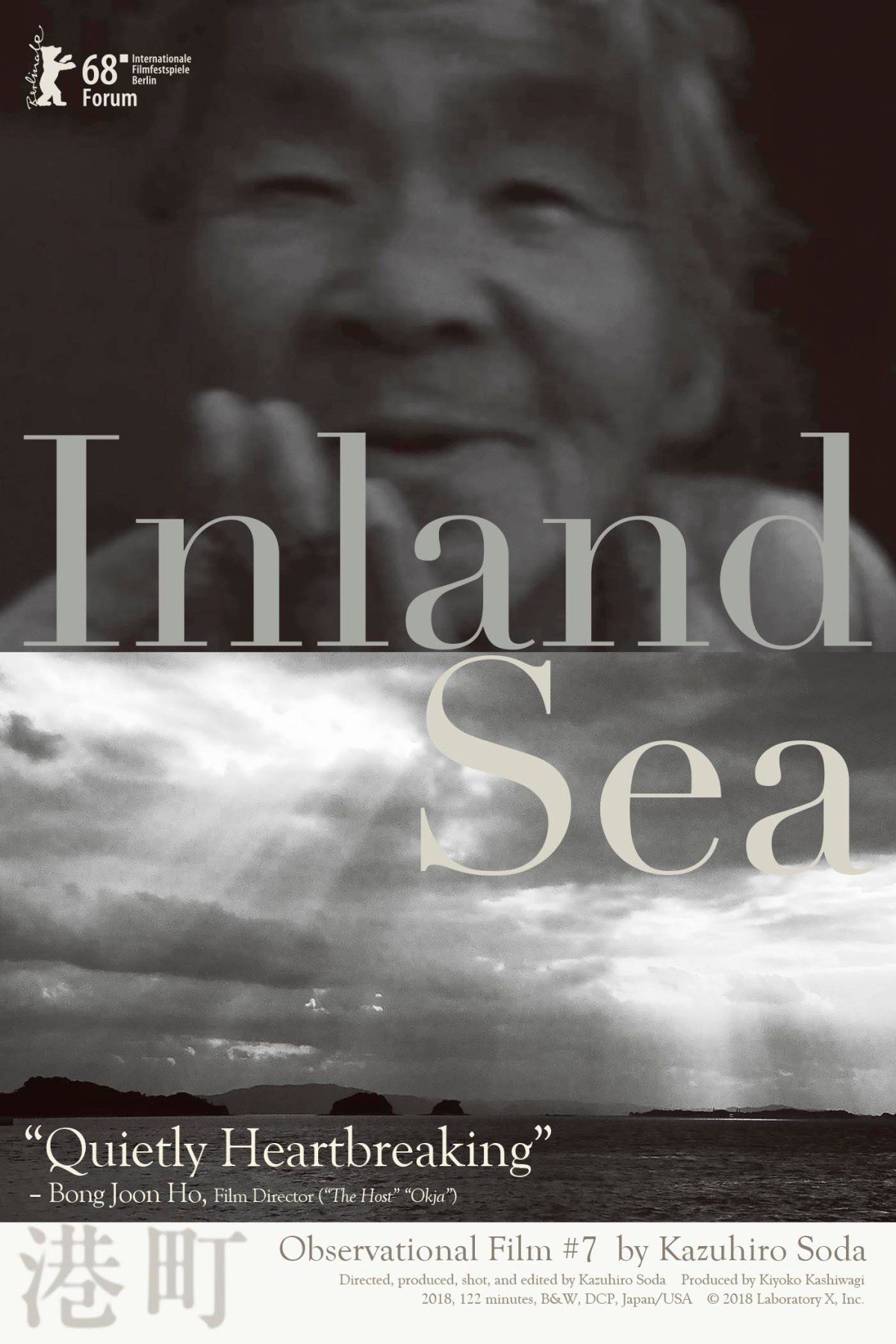
Inland Sea 港町 (Sōda Kazuhiro, 2018)

Screen at this year edition of the Berlinale (Forum), Inland Sea is the latest documentary by one of the most interesting and original voice working in Japanese non-fiction today, Sōda Kazuhiro.  Based in New York, Soda in the last 10 years or so has built an impressive body of work, Inland Sea is the seventh documentary in his ongoing observational series, among my favorite Theatre 1 and 2, a diptych about playwright Oriza Hirata and his theatrical company, and Oyster Factory, a documentary premiered at the Locarno International Film Festival in 2015. Inland Sea was filmed soon after Oyster Factory, in fact the town is the same, Ushimado, a small village facing the Seto Inland Sea in Okayama prefecture. While in the previous film Soda focused his gaze on a small oyster factory and the problems of surviving in a globalized world (you can read more here), in Inland Sea he follows three elderly people living in the village and their daily activities. Here the synopsis:

Wai-chan is one of the last remaining fishermen in Ushimado, a small village in Seto Inland Sea, Japan. At the age of 86, he still fishes alone on a small boat to make a living, dreaming about his retirement. Kumi-san is an 84 year old villager who wanders around the shore everyday. She believes a social welfare facility “stole” her disabled son to receive subsidy from the government. A “late – stage elderly” Koso-san runs a small seafood store left by her deceased husband. She sells fish to local villagers and provides leftovers to stray cats. Foresaken by the modernization of post-war Japan, the town Ushimado’s rich, ancient culture and tight-knit community are on on the verge of disappearing.

While, as mentioned above, the film is part of his observational series, from the very first scene is clear how Soda with his camera and his voice is an important and catalytic presence in the relational texture that is Inland Sea. As Nichols would put it, while Sōda is filming and representing a certain reality, the documentary and the act of filming itself becomes also an important part of that reality. More than in his other works, his voice and that of his wife and their presence is here a fundamental part of the movie, often the people filmed converse with Sōda and we, as spectators, are always aware of the relationship between the camera and its environment. Naturally all documentaries are works of fiction, to one degree or another, but to my eyes acknowledging the presence of the camera and its effects in a documentary shot in an observational style, is one of the main qualities of the movie. It’s a honest and ethic filmic approach that I really value as important, especially in the contemporary documentary landscape, an approach that stems also from the style and methodology adopted by Sōda:

I spontaneously roll my camera, watching and listening closely to the reality in front of me, banning myself from doing research or prescribing themes or writing a script before shooting. I impose certain rules (‘The Ten Commandments’) on myself to avoid preconceptions and to discover something beyond my expectation.

The movie is shot in its entirety in black and white, the only case in Sōda’s filmography, just the very last scene, a boat floating, is in colour. I haven’t read so much about the movie, I wanted to experience it without preconceptions, so I don’t know the reason behind not shooting in colour, but certainly this choice gives a very distinctive elegiac tone to the movie, and a flavour of obsolescence and marginality to the places and the people depicted in it. Compared to Sōda ’s previous movies there is, at least in the first hour or so —  the last 30 minutes are basically a very long and touching monologue of one of the old ladies, Kumi-chan — less talking and more insistence on the daily routine of Wai-chan and Koso-san, long periods of time are spent with the old man on the boat, fishing, and with the old lady, selling the fish.

By focusing on a place on a relatively far corner of Japan, far away from the metropolitan excitement that too often is associated with Japan, a place not yet forgotten, but on the edge of disappearing, and where the population is shrinking — the akiya (empty houses) seen in a sequence are becoming part of the present and near future of the archipelago — Sōda is also hinting, consciously or not, to one of the crucial issues of contemporary Japan and its geopolitical construction as a nation. That is, the parasitic relationship between sprawling urban centers and countryside, often forgotten, exploited (as highlighted by the situation in Fukushima or the Rokkasho Reprocessing Plant), or reduced to the folkloric image and touristic destination of Japan National Railway’s posters. In a post on his blog last year commenting on the Ogawa Pro’s Sanrizuka series, Soda wrote that, I’m paraphrasing, the struggle and resistance to the construction of the airport, because of the thick dialect spoken by the farmers at the time, almost incomprehensible to a person born and raised in Tokyo, felt like an act of exploitation perpetrated by the central state towards its colonies.

Another aspect of Sōda’s style that really stands out in Inland Sea and a direct consequence of his methodological approach, is the absence of any explanation on the historical background and context of the subject filmed. His films do not offer any extra information about the people he meets and the places he shoots, but the camera and his documentaries are, in a certain way, an extension of his gaze. It is up to us the viewers to decipher and image what stories lie behind the landscapes and the people captured on screen, for instance we don’t know if the stories told by the very talkative Kumi-san, to whom the movie in dedicated (she passed away in 2015),  are completely true or to what degree they’re even truthful, yet this is life and it is here presented in all its complexity, sadness and beauty.

https://player.vimeo.com/video/250935060

Inland Sea – Trailer from Laboratory X on Vimeo.

Memories of Agano (阿賀の記憶 Satō Makoto, 2004)

This is an unfinished draft for an essay on Satō Makoto’s Memories of Agano 「阿賀の記憶」, a work in progress, at this stage no more than a series of random thoughts about one of my favorite movies.


last update: 26 September 2017


“…the habit of imposing a meaning to every single sign”

Trinh Minh-Ha


Satō Makoto’s documentaries seem to be (again) part of the filmic discourse in Japan, or at least on the rise in some cinematic circles, and deservedly so. Nine years have passed since his death, this year (2016) a book titled「日常と不在を見つめて ドキュメンタリー映画作家 佐藤真の哲学」(roughly rendered “Gazing at everyday and absence, the philosophy of documentarist Satō Makoto”) was published and a screening of all his documentaries, followed by discussions and talks, was held in Tokyo in March and later at the Kobe Planet Film Archive. I haven’t read the book yet, but the title summarizes and conveys perfectly the themes embodied in Satō’s last works: the dicothomy absence/presence and the presence of absence, that is to say the phantasmatic presence of cinema.

Sato’s final works, Self And Others, Memories of Agano and Out of Place: Memories of Edward Said witness and embody a shift in Satō’s approach, movies through which he was attacking and partly deconstructing the documentary form, to be fair with his works though, it’s a touch that was partly present in his films since the beginning, but in these three documentaries it becomes a very prominent characteristic. This publication seems to be timely and enlightening because is tackling Sato’s oeuvre not necessarily from a purely cinematic point of view, the book’s curator is by her own admission not a cinema expert, but it’s expanding the connections of Satō’s movies and writings towards the philosophical.

I hope the book will kindle and revive a new interest on his works, Satō is in my opinion one of the most important Japanese directors of the last 30 years, and sadly one of the most unknown in the West, I don’t really think there’s much out there in the internet or on paper about Satō, nor in English nor in other non-Japanese languages, and it’s a pity and a missed occasion because his movies, again, are more than “just” documentaries, or even better, are documentaries that have the power to question their own form and stretch in many differents areas. If you’re not familiar with his works, you can get a glimpse of Satō and his touch reading this beautiful and long interview, or you can buy them on DVD thanks to Siglo, it’s a rarity in Japan, but they come with English subtitles.

This year (2017) Yamagata International Documentary Film Festival will also hold a retrospective for the 10th anniversary of Satō’s death, commemorating and celebrating his works, his influence and his reception abroad.

One of Satō’s documentaries that resonates with me more than others, even after many viewings, is Memories of Agano (阿賀の記憶, 2004). As the YIDFF describes it:

Ten years after the acclaimed film Living on the River Agano, the film crew returns to Niigata. Personal memories reflect upon remnants of those who passed away as the camera observes abandoned rice fields and hearths that have lost their masters.

It is a relatively short but complex movie running only 55 minutes, an experiment in the form of a non-fiction film, splendidly shot on 16mm by cameraman Kobayashi Shigeru, the same cameraman who worked and lived together with Satō in Niigata for more than three years during the shooting of Living on the River Agano. The film is a poem on the passing of time and consequently on the objects that will outlive us, the persistence of things in time, including cinema itself. The original idea was in fact to make a film about the remnants of Meiji, that is “the glass photographic plates of the Niigata landscape from the late Meiji to early Taisho era (1910s) left behind by photographer Ishizuka Saburo. Using those old black and white photographs as a motif, we started out making the film with the same concept as Gocho Shigeo in Self and Others”. This quasi-obsession with objects is the thread that waves through the film’s fabric: boiling tea pots, old wooden houses, tools…

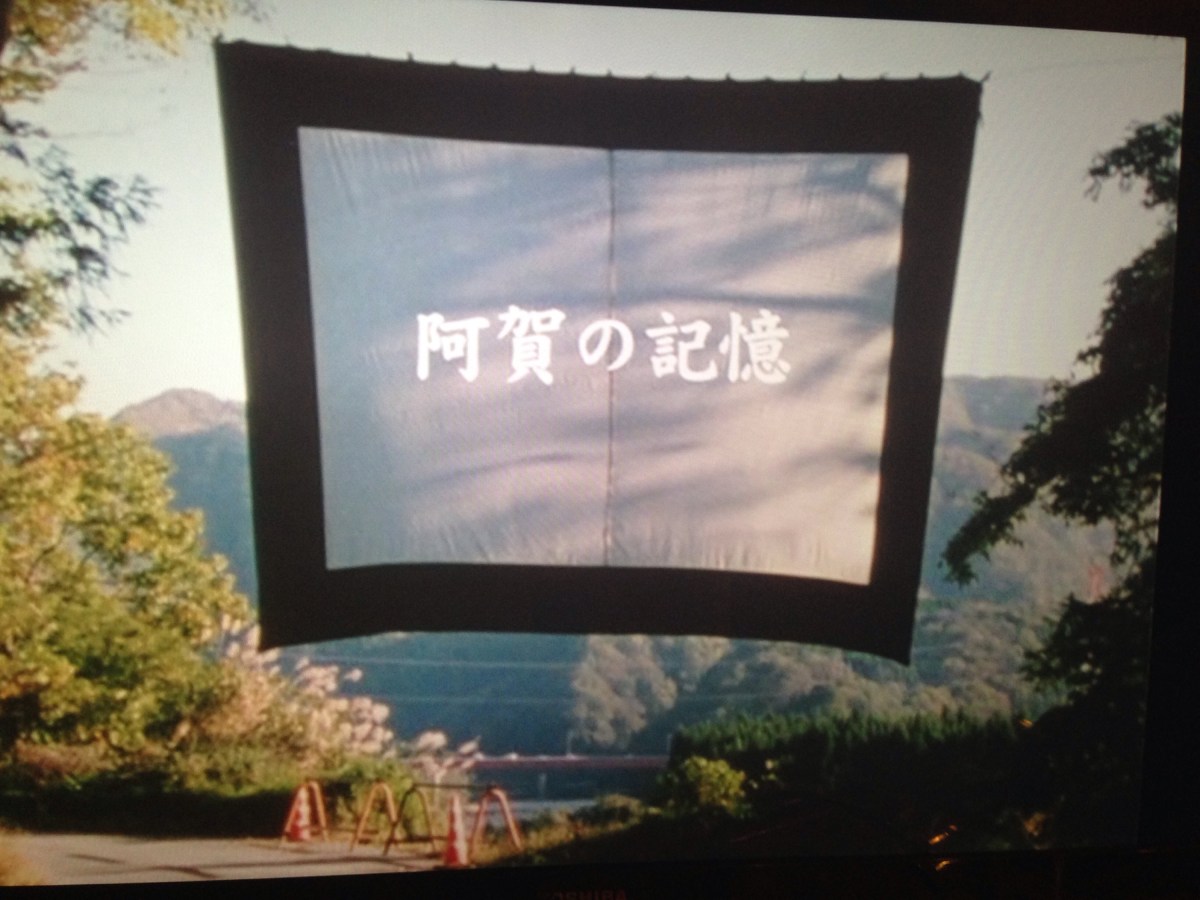
One of the most stunning scene of the movie and one that defines Memories of Agano is placed at the very beginning, when Satō and Kobayashi after returning to the area where the first movie was shot hang a big canvas tarp in the middle of a wood projecting on it the documentary they made 10 years before. The effect is profoundly disturbing and touching at the same time, images and thus memories are suddenly like tangible spectres.

On another level, Memories of Agano with its intertwining of past, present and landscapes ー the external ones with mountains, fields, rivers, and the interior landscapes of old and almost empty houses ー could also be read as an attempt to approach and partly re-elaborate the fūkeiron-cinema, the theory-of-landscape-oriented-cinema, 「footnote: “launched” almost five decades ago with A.K.A. Serial Killer (1969),  The Man Who Left His Will on Film (1970), Red Army/PLFP: Declaration of World War (1971) and The First Emperor (1973)」

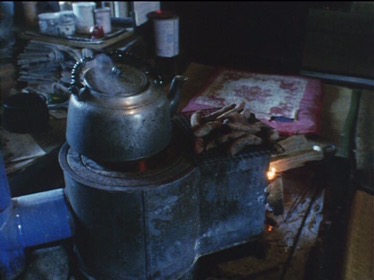
As for its aesthetics, one of the quality that strikes me every time I rewatch it, is the slow pace and the use of long takes that give the movie a dreamlike quality of lethargic torpor. The scene that embodies at most this aesthetic idea is an almost static shot of a teapot boiling on an old stove lasting about 10 minutes, on the background, sort of white noise, the words of an old lady spoken with a thick Niigata accent. She talks sparsly with Satō himself also about the fact she doesn’t wanna be filmed, half jokingly half seriously, a breaking of the fourth wall so to speak, a dialogue between camera and object filmed that was prominently present in Living on River Agano as well (“Are you filming me?” “Don’t shoot me!” are sentences that punctuate the course of this movie and the one made in 1992).

Memories of Agano also present itself as a documentary of opacity rather than one of transparency, the choice of not using the subtitles when people speak with their thick Niigata accent, a Japanese citizen from another area of the archipelago would probably understand 50% or 60% of what is said, a technical option that was used in Living on the River Agano – signals a major change in Satō’s approach to documentary and cinema in general. Feeding the viewer with limpid and clear messages and making a “comprehensible” movie is not what interests Satō here, but rather placing obstacles, visual riddles so to speak – the aforementioned tarp for instance, but also visually striking moments of pure experimentation – and thus presenting the opacity of the cinematic language seems to be the goals he had in mind when he conceived Memories of Agano. The images are thus escaping the organizing discourse tipical of so many Japanese documentaries, in contrast they open to new (cinematic) discoveries and keep resonating with the viewers and engage us on many different levels.

100 best Japanese labor films

Last June the NPO organization “Hataraku Bunka Net” made and released a list of the 100 best Japanese labor films, a vast and varied list that besides documentaries includes also many classic movies and big names, TV series, indies and so on, from the beginning of cinema, with the actualities filmed by the Lumière company at the end of 19th century, to the present day. Below you can find the list in Japanese followed by my translation (feel free to correct me if you find any mistakes):

  1. 『明治の日本』(1897~1899, Lumière company )
  2. Kawasaki Mitsubishi Strike 「川崎・三菱造船所労働争議」(1921)
  3. What Made Her Do It? 「何が彼女をそうさせたか」(Suzuki Shigeyoshi, 1930)
  4.  Twelfth Annual Tokyo May Day 「第 12 回東京メーデー」(Prokino, 1931)
  5. Sumida River 「隅田川」(Yabushita Taiji, 1931)
  6. I Was Born, But… 「生れてはみたけれど」(Ozu Yasujirō, 1932)
  7. Mr. Thank You 「有りがたうさん」(Shimizu Hiroshi, 1936)
  8. Fighting Soldiers 「戦ふ兵隊」(Kamei Fumio, 1939)
  9.  Renga jokō 「煉瓦女工」(Chiba Yasuki, 1940)
  10. Kikansha C57 「機関車C57」 (Imaizumi Zenju, 1940)
  11. Record of a Kindergarten Teacher 「或る保姆の記録」(Mizuki Soya, 1942)
  12. We’re Working So So Hard 「私たちはこんなに働いている」(Mizuki Soya, 1945)
  13. Rushing Forward 「驀進」(Iwasa Ujitoshi, 1946)
  14. Coal Mine 「炭坑」(Itō Sueo, Yanagisawa Hisao, 1947)
  15. We Are Electric Industry Workers 「われら電気労働者」(1947)
  16. Living on the Sea 「海に生きる」 (Yanagisawa Hisao, Kabashima Seichi, 1949)
  17. Shirayuki-sensei to kodomo-tachi「白雪先生と子供たち」(Yoshimura Ren, 1950)
  18. Still We Live 「どっこい生きてる」(Imai Tadashi, 1951)
  19. Ikiru 「生きる」(Kurosawa Akira, 1952)
  20. Mother 「おかあさん」(Naruse Mikio, 1952)
  21. May Day 1952 [1952年メーデー」(Yoshimi Yutaka, 1952)
  22. Woman Walking Alone on the Earth「女ひとり大地を行く」(Kamei Fumio, 1953)
  23. The Crab Cannery Ship 「蟹工船」 (Yamamura Sō, 1953)
  24. The Wokers of Keihin 「京浜労働者」(Noda Shinkichi, 1953)
  25. The Street Without Sun 「太陽のない街」(Yamamoto Satsuo, 1954)
  26. Tachiagaru onnanoko rōdōsha (Zensen domei, 1954)
  27. Koko ni izumi ari 「ここに泉あり」(Imai Tadashi, 1955)
  28. Street of Shame 「赤線地帯」(Mizoguchi Kenji, 1956)
  29. The Lighthouse aka Times of Joy and Sorrow 「喜びも悲しみも幾歳月」(Kinoshita Keisuke, 1957)
  30. Bota san no enikki 「ボタ山の絵日記」(Tokunaga Mizuo, 1957)
  31. Yuki to tatakau kikansha 「雪と闘う機関車」(Tani Kyōsuke, 1958)
  32. My Second Brother「にあんちゃん」(Imamura Shōhei, 1959)
  33. Umi ni kizuku seitetsujo「海に築く製鉄所」(Ise Chōnosuke, 1959)
  34. 刈干切り唄(1959, Ueno Kōzō)
  35. The Secret of Tree Rings (TV series) 「年輪の秘密」(Hani Susumu, Noriaki Tsuchimoto, Nagano Shigeichi 1959-60)
  36. Ōinaru tabiji「大いなる旅路」(Sekigawa Hideo, 1960)
  37. The Naked Island 「裸の島」(Shindō Kaneto, 1960)
  38. 1960 nen  6 gatsu anpo e no ikari「1960年6月 安保への怒り」(Noda Shinkichi Noda, Tomizawa Yukio, 1960)
  39. The Weavers of Nishijin 「西陣」(Matsumoto Toshio, 1961)
  40. Foundry Town 「キューポラのある街」(Urayama Kirio, 1962)
  41. Woman of Design「その場所に女ありて」(Suzuki Hideo, 1962)
  42. An Engineer’s Assistant「ある機関助士」 (Tsuchimoto Noriaki, 1963)
  43. On the Road—A Document 「ドキュメント 路上」(Tsuchimoto Noriaki, 1964)
  44. 68 no sharin 「68の車輪」(Morita Minoru, 1965)
  45. Kokoro no sanmyaku「こころの山脈」(Yoshimura Kōzaburō, 1966)
  46. The Siblings 「若者たち」(Tokihisa Tokihisa Morikawa, 1966)
  47. Nōyaku ka「農薬禍」(Shūkichi Koizumi, 1967)
  48. Waga Town, Waga District in Summer 1967 「特集 和賀郡和賀町 1967年 夏」(Kudo Toshiki, 1967)
  49. The Sands of Kurobe 「黒部の太陽」(Kumai Kei, 1968)
  50. The Great Adventure of Horus, Prince of the Sun「太陽の王子 ホルスの大冒険」(Takahata Isao, 1968)
  51. It’s Tough Being a Man 「男はつらいよ」(Yamada Yōji, 1969)
  52. Shipyard no seishun 「シップヤードの青春」(Kamiuma Isao, 1969)
  53. Where Spring Comes Late 「家族」(Yamada Yōji, 1970)
  54. Men and War trilogy 「戦争と人間 三部作」(Yamamoto Satsuo, 1970-73)
  55. Yūko gishiki Hokkaido Yubari shi mayachi tankō kaede ana「友子儀式 北海道夕張市真谷地炭鉱 楓坑」(NHK archives, 1973)
  56. Nihon no inasaku sono kokoro to dentō「日本の稲作 そのこころと伝統」(Aoyama Michiharu, 1974)
  57. A Poet’s Life 「詩人の生涯」(Kawamoto Kihachirō, 1974)
  58. Torakku Yarō: goiken muyō 「トラック野郎 御意見無用」(Suzuki Norifumi, 1975)
  59. A Song of the Bottom「どっこい!人間節 寿・自由労働者 の街」(Ogawa Production, 1975)
  60. Impressions of a Sunset「日没の印象」(Suzuki Shiroyasu, 1975)
  61. Otokotachi no tabiji 「男たちの旅路」(NHK drama, 1976-1982)
  62. Nihon no sengo dai 5 「NHK特集 日本の戦後 第5集 一 歩退却 二歩前進 二・一ゼネスト前 夜」(NHK, 1977)
  63. Oh! The Nomugi Pass 「あゝ野麦峠」(Yamamoto Satsuo, 1979)
  64. The Sakana man 「ザ・サカナマン」(Kuroda Teruhiko, 1979)
  65. Enrai 「遠雷」(Negishi Kichitarō, 1981)
  66. Kaikyō 「海峡」(Minami Kōsetsu, 1982)
  67. Genpatsu wa ima 「原発はいま」(Ōmi Michihiro, 1982)
  68. The Catch 「魚影の群れ」 (Sōmai Shinji, 1983)
  69. Gung Ho (Ron Howard, 1986)
  70. A Taxing Woman 「マルサの女」(Itami Jūzō, 1987)
  71. Haha ga shinda – seikatsu hogo no shūhen  『母さんが死んだ―生活保護の周辺』(Mizushima Hiroaki, 1987)
  72. Kiki’s Delivery Service「魔女の宅急便」(Miyazaki Hayao, 1989)
  73. Earth 「あーす」(Kim Soo-Kil, 1991)
  74. All Under the Moon 「月はどっちに出ている」(Sai Yōichi, 1993)
  75. Bayside Shakedown 「踊る大捜査線」(Motohiro Katsuyuki, 1997)
  76. Whalers and the Sea 「鯨捕りの海」(Umekawa Toshiaki, 1998)
  77. Poppoya 「鉄道員/ ぽっぽや」(Furuhata Yasuo, 1999)
  78. Be More Human – Kokuro’s 15-year Struggle 「人らしく生きよう 国労冬物語」(Matsubara Akira, Sasaki Yumi
  79. Konbanwa「こんばんは」(Mori Yasuyuki, 2003)
  80. Genchō no hoshi「県庁の星」(Nishitani Hiroshi, 2003)
  81. Hula Girls 「フラガール」 (Lee Sang-il, 2006)
  82. Echoes From The Miike Mine「三池 終わらない炭鉱(やま)の物語」(Kumagai Hiroko, 2006)
  83. Hagetaka – TV drama 「土曜ドラマ ハゲタカ」 (Ōtomo Keishi, Inoue Go, Horikirizono Kentarō, 2006)
  84. Haken no Hinkaku – TV drama 「ハケンの品格」(Nagumo Seiichi, Satō Toya, 2007)
  85. Departures 「おくりびと」(Takita Yōjirō, 2008)
  86. A Normal Life, Please 「フツーの仕事がしたい」(Tsuchiya Tokachi, 2009)
  87. Genkai in a Black Company 「ブラック会社に勤めてるんだが、 もう俺は限界かもしれない」(Satō Yūichi, 2009)
  88. Ninkyō Helper 「任侠ヘルパー」(TV drama, 2009)
  89. A Lone Scalpel 「孤高のメス」(Narushima Izuru, 2010)
  90. Showa Housekeeping 「昭和の家事」(Koizumi Kazuko, 2010)
  91. Saudade 「サウダーヂ」(Tomita Katsuya, 2011)
  92. The Great Passage 「舟を編む」(Ishii Yuya, 2013)
  93. Tale of a Butcher Shop 「ある精肉店のはなし」(Hana usa Aya, 2013)
  94. Dandarin Rules 「ダンダリン 労働基準監督官」(Sato Tayō, Nakajima Satoru, 2013)
  95. Wood Job! 「ウッジョブ~神 去なあなあ日常」(Yaguchi Shinobu, 2014)
  96. Pale Moon 「紙の月」(Yoshida Daihachi, 2014)
  97. A Little Girl’s Dream 「夢は牛のお医者さん」(Tokita Yoshiyaki, 2014)
  98. Hirumeshi tabi: Anata no gohan misetekudasai! 「昼めし旅 ~あなたのご飯見せてく ださい」(TV drama, 2014)
  99. A Sower of Seeds 「種まく旅人 くにうみの郷」(Shinohara Tetsuo, 2015)
  100. Shitamachi Rocket 「下町ロケット」(TV drama, 2015)