Dissenting Japan – A History of Japanese Radicalism and Counterculture 

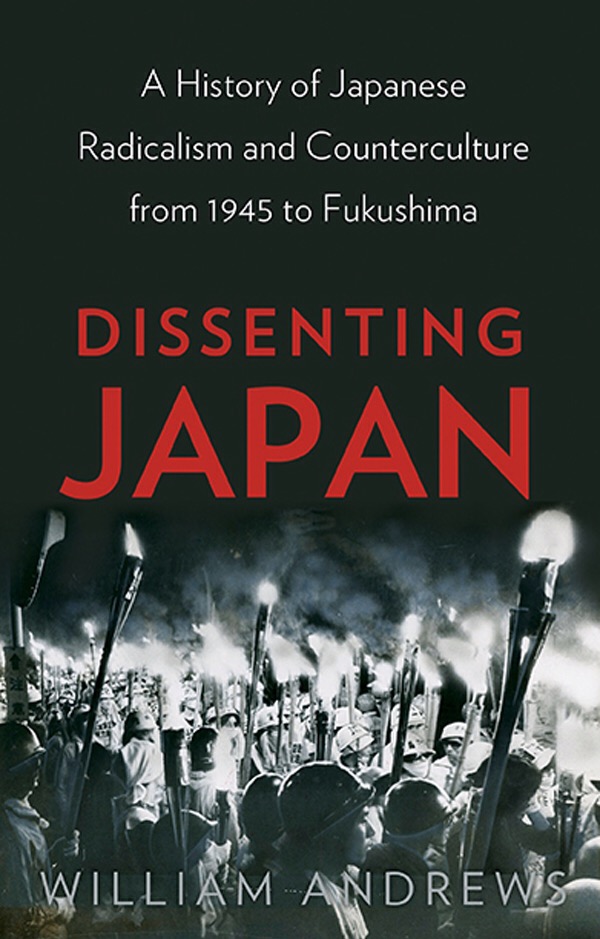
Just a quick post to draw your attention on a significant book that the London-based Hurst will publish next September. The volume is titled Dissenting Japan – A History of Japanese Radicalism and Counterculture and is written by the Tokyo-based writer and translator William Andrews, who by the way runs an excellent blog on the same topic here


Here’s the description from the publisher’s homepage: 

Following the March 2011 Tsunami and Fukushima nuclear crisis, the media remarked with surprise on how thousands of demonstrators had flocked to the streets of Tokyo. But mass protest movements are nothing new in Japan. The post-war period experienced years of unrest and violence on both sides of the political spectrum: from demos to riots, strikes, campus occupations, factional infighting, assassinations and even international terrorism.
This is the first comprehensive history in English of political radicalism and counterculture in Japan, as well as of the artistic developments during this turbulent time. It chronicles the major events and movements from 1945 to the new flowering of protests and civil dissent in the wake of Fukushima. Introducing readers to often ignored aspects of Japanese society, it explores the fascinating ideologies and personalities on the Right and the Left, including the student movement, militant groups and communes. While some elements parallel developments in Europe and America, much of Japan’s radical recent past (and present) is unique and offers valuable lessons for understanding the context to the new waves of anti-government protests the nation is currently witnessing.

Who’s is familiar with documentary cinema (and cinema in general) knows very well that radicalism, dissenting, resistance and counterculture are a very important part of the vocabulary that defines the post war Japanese non-fiction landscape, and the fiction as well, especially during the 60s and 70s. Ogawa Production and Sanrizuka, Tsuchimoto Noriaki and Minamata, NDU and Okinawa and the borders, but also Kamei Fumio and his Sunagawa Trilogy, maybe the first Japanese works to fully embody this “philosophy” of resistance and struggle on film (excluding the Prokino before the war of course). 

For all these reasons, Dissenting Japan will probably be (I haven’t read it yet) a very important read not only for historians but also for film scholars interested in Japanese cinema and in documentary in general. I’ll certainly write more about it when the book is out. 

Kuroki Kazuo, two works available for free at the Science Film Museum website

In postwar Japan, industrial films, PR movies, science films and educational movies formed an important space where filmmakers and production companies were allowed a certain degree of freedom and experimentation.

It’s a bless that such an important and massive output is now available to watch online at the Science Film Museum – free science movies resurrected from the Shōwa Era, a visual archive for researchers interested in non-fiction and films produced outside the entertainment sphere.

Although the works subtitled in English are really few, it is indeed an archive worth-checking and the reasons are well explained on their homepage:

The science films such as “THE WORLD OF MICROBES”, filmed using special camera techniques that gave the world it’s first film footage of the world under a microscope received many major awards in domestic and international scientific film festivals A true photographic legacy. From an academic perspective, these films will prove to be effective educational materials for the present and for the future.

However, with the existence of these films known only by a few, they lie dormant within companies that undertook the projects and the storerooms of production companies. Furthermore, as these films were produced in the analog era, the degree of deterioration is severe and their maintenance is proving extremely difficult.

Consequently, we established “The Science Film Museum (Incorporated NPO)” to make practical use of those science films in educational and research facilities by converting them to the high quality digitalisation (HD) from the original 35mm negatives through telecine transfer. And we present them through the website, also so that many people can experience the wonders of the mysteries of life.

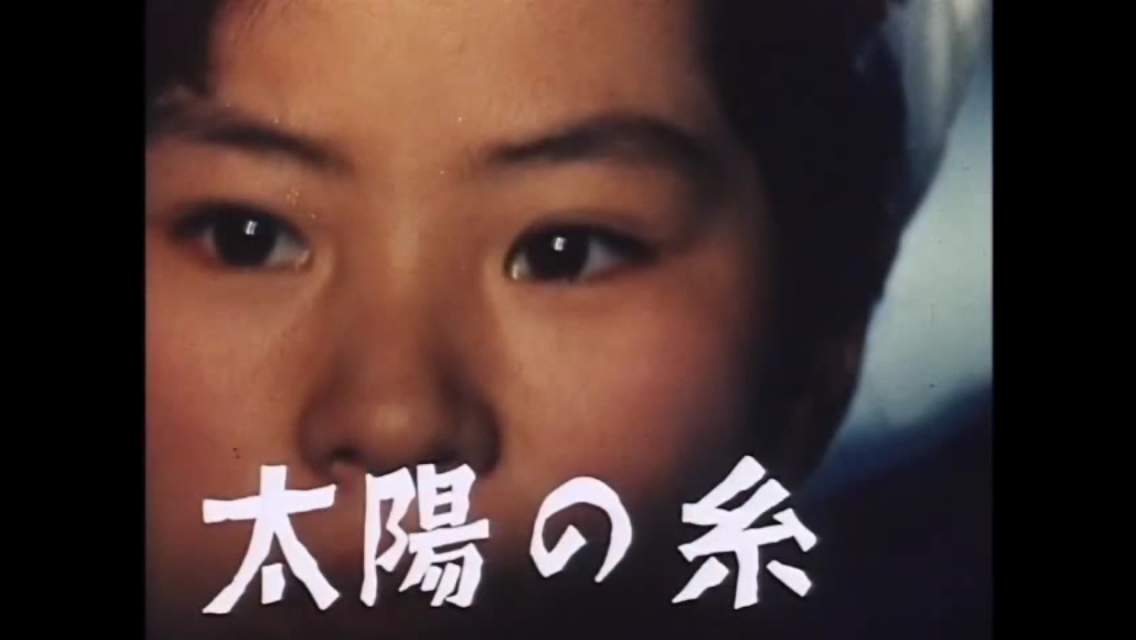
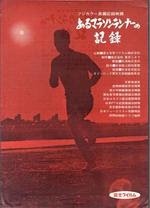
What I’d like to focus on today are two movies made in the 1960s by one of my favourite Japanese filmmakers of the era, Kuroki Kazuo, a director who before establishing himself as an author somehow associated with the new wave (Silence Has No Wing, Ryōma Assassination among others) was a respected non-fiction filmmaker. On The Science Film Museum webpage it’s possible to watch the PR movie The Solar Thread (太陽の糸) commissioned by the ryon campany Torey, and the more known Record of a Marathon Runner(あるマラソンランナーの記録), shot in 1964, the year of Tokyo Olympics, a defining event for Japan that symbolically ushered the country in the elite of Western and modernized nations.

Even if you don’t understand Japanese, the first minutes of The Solar Thread – co-directed with another big name in Japanese cinema and documentary, Higashi Yōichi – are quintessential sixties: disorienting music, vivid colours palette, free-style editing and a taste for the abstract and the experimental that was still alive in the Japanese documentary scene of the time. Here the movie:

http://www.kagakueizo.org/movie/industrial/72/

As for Record of a Marathon Runner, there are various articles dealing with it online, I would recommend at least this long interview with Kuroki. Record of a Marathon Runner represents, for different reasons (subject tackled, overall tone, and music used), the negative, the other side, of the Olympics official discourse that was pushed by the mainstream media at the time:

http://www.kagakueizo.org/create/tokyo-sinema/79/

Motohachi Seiichi’s new documentary『アラヤシキの住人たち』


Motohachi Seiichi is a photographer and documentary filmmaker whose works and activity and I’m referring here especially to his achievements in non-fiction, although presented at international film festivals, have not yet reached the audience and the recognition they deserved, in my opinion of course. 


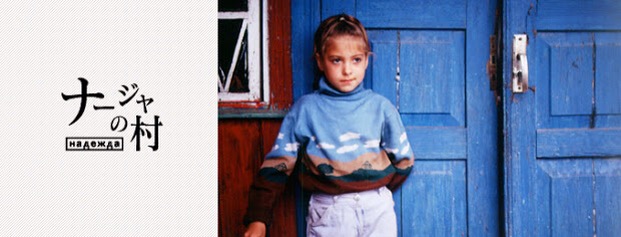
He’s the author of, among others,  Nadja’s Village and Alexei and the Spring, works screened at the Berlin International Film Festival, but also the producer of other interesting documentaries such as A Village That Changed Into Water (Onishi Nobuo, 2007) or Tale of a Butcher Shop (2013), the latter listed last year by Kinema Junpo in its annual best bunka eiga section. 


His new documentary, 『アラヤシキの住人たち』(Arayashiki no jūnintachi)  will open in some selected cinemas in Japan on May 1st and was shot during a year at the Kyodo Gakusha farm, a cooperative community which hosts people from a variety of backgrounds such as mentally disadvantaged persons or who are tired of the city life. Raising animals, growing vegetables and making cheese with ecological and organic methods, staying in this community means for its people also exploring a different style of living. It seems a documentary worth mentioning and following for a series of reasons, the topic of course but also the style adopted, at least from what we can glimpse from the trailer, is a move “back” when documentary in Japan meant to be first of all a visual work and the filmmaker cared about framing, light, editing etc. and wasn’t just a branch or a development of video journalism…..

Satō Tadao’s best documentaries of all time

IMG_3659

Satō Tadao is without any doubt one of the most renowed film critics and theorists living and working in Japan today with a career spanning more than 50 years, a scholar also known and respected in the West through the translations of his writing and some of his books. In the last year Sight & Sound poll – the greatest documentaries of all time, Satō was one of the voters, here are his picks:

Nanook of the North (1922)
Robert Flaherty

The Effects of the Atomic Bomb on Hiroshima and Nagasaki (1946)
Chozo Obata, Sueo Ito, Masao Yamanaka, Dairokuro Okuyama

Night and Fog (1955)
Alain Resnais

Minamata:The Victims and Their World (1972)
Noriaki Tsuchimoto

Kenji Mizoguchi: The Life of a Film Director (1975)
Kaneto Shindo

Echigo Okumiomote (1984)
Tadayoshi Himeda

The Emperor’s Naked Army Marches On (1987)
Kazuo Hara

Kabuki-yakusha Kataoka Nizaemon (1994)
Sumiko Haneda

Fatherless (1999)
Yoshihisa Shigeno

Acid Ocean (2012)
Sally Ingleton

IMG_3660

An interesting list through which I could discover some works I had never heard about before like Fatherless and Echigo Okumiomote, it was also a pleasant surprise to see listed, among some “classics” of Japanese non-fiction cinema such as Minamata:The Victims and Their World or The Emperor’s Naked Army Marches, Kabuki-yakusha Kataoka Nizaemon, a work by Haneda Sumiko, a director I’m very fond of and a filmmaker who plays an important role in the history of Japanese documentary.

IMG_3658

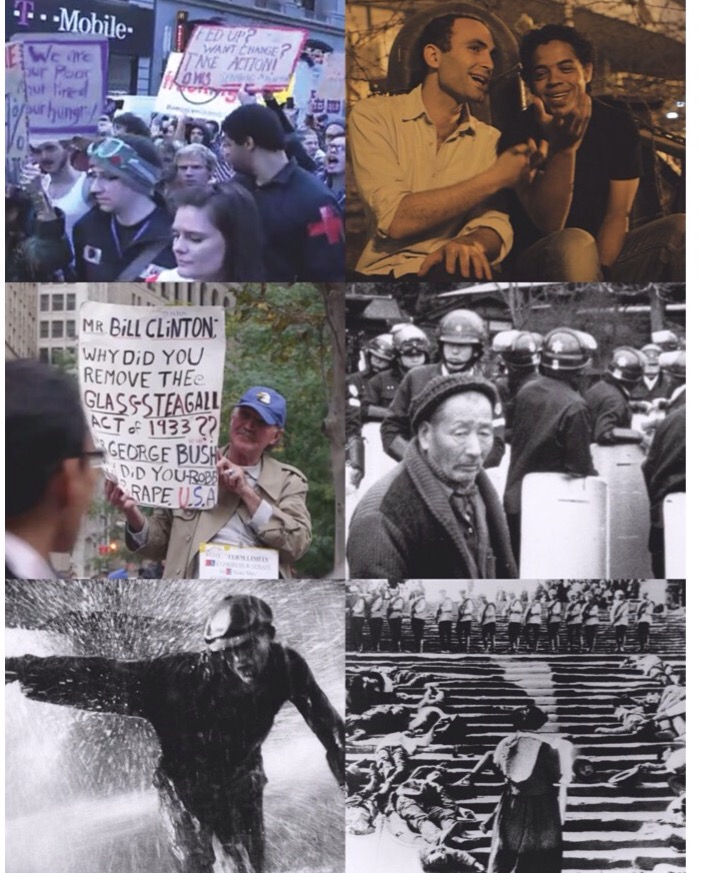
On a not-so-related-note, in the March issue of Sight & Sound a piece on Sergei Loznitsa’s Maidan by Nick Bradshaw opens with a collage of stills from different documentaries on anti-government protests. Among them a still of Sanrizuka: Heta Village (Ogawa Pro, 1973), a nice sign that Japanese documentary is slowly infiltrating (again?) in the international cinematic discourse, at least this is my hope.

Japanese documentary of the week vol. 1 – Impressions of a Sunset (Suzuki Shiroyasu,1975)

Impressions_of_a_Sunset

I’ll start today a new feature – Japanese documentary of the week – a weekly and very short post to introduce an important work of non-fiction cinema, or at least a documentary that I believe is worth seeing and discovering. I’ll focus on works that are either available to watch online (legally) or available on DVD/BD (with English sub).
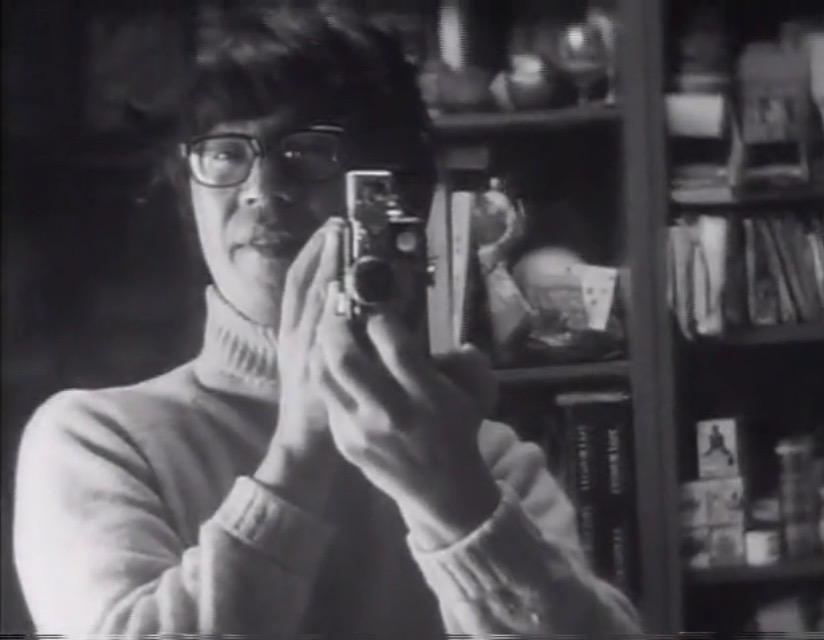
The fist movie is Impressions of a Sunset (日没の印象) , a short diary-movie/self documentary/artistic home-movie made by Suzuki Shiroyasu in 1975. Suzuki is a poet and a professor who worked also for TV and who, from the mid 1970s, started to expand his artistic world in the cinematic realm. Impressions of a Sunset is probably, together with Fifteen Days (1980), his most famous work. Deeply inspired by Reminiscences of a Journey to Lithuania (Jonas Mekas, 1973) Suzuki:

has gotten his hands on a “CineKodak 16” (a pre-war 16mm camera) at a second hand camera shop, and in sheer delight he films his beloved wife, films his newborn baby, proudly takes his camera to work to film his colleagues, and then films the Tokyo sky at sunset.

(from Self-Documentary: Its Origins and Present State, Nada Hisashi. You can read the complete article here)

Partly experiment, partly diary and partly home-movie, this short work has, even today, a special appeal for me, maybe the grain of the film (16mm), maybe the freshness of the approach, or maybe the subtle experimental touch we can feel here and there (the dots, the reflections, etc.). Below you can see Impressions of a Sunset legally, it is linked, together with some of works, on Suzuki’s official homepage. It’s in Japanese (no English sub) but even if you don’t understand the language you can feel the magic.

日没の印象 / Impression of Sunset

Best Japanese documentaries’ poll – results

More than 2 months have passed since I launched the best Japanese documentaries of all time poll, it’s time to wrap things up and to take a look at the results. Thanks everybody for your votes, for your support and for helping me spreading the word. sdgblogBefore digging into this fascinating trip through the history of Japanese non-fiction film, let me add some overall thoughts.
On the negative side, I have to admit that I’m a bit disappointed that I couldn’t get many people to vote, and this is partly my fault, the blog is pretty new and relatively unknown and I’ve been lazy and shy about pushing it through the social networks world. Besides, Japanese documentary is a niche subject inside a niche (Japanese cinema), and there are not so many people interested in documentary film as an art form, so I should have expected this. Many people, most of them cinema professionals, were kind enough to decline my invitation, honestly admitting their lack of knowledge in the field. After all, one of the purposes of the poll was indeed to check how much exposure Japanese non-fiction movies have in the world of cinephiles, so I shouldn’t really complain too much.
On the positive side, I was really surprised by the deep knowledge of the voters, most of them, I have to add, cinema professionals: festival programmers, critics, professors, and so on.
Below you’ll find the list, when possible I’ve added some information about each movie’s availability on DVD/BD.
Thanks again everyone, feedback and comments are, as always, welcomed.

1)Included in their lists by 40% of voters
Extreme Private Eros: Love Song 1974 「極私的エロス・恋歌1974」 (Hara Kazuo, 1974)
Extreme_private_eros_hara_kazuo

Available on DVD (with English subtitles).

2)Included in their lists by 33% of voters
Children in the Classroom 「教室の子供たち」(Hani Susumu, 1954)
children_in_the_classroom_Hani
Available in Japanese in this Iwanami DVD box

Tokyo Olympiad 「東京オリンピック」(Ichikawa Kon, 1965)
Tokyo_Olympiad_Ichikawa
Available on DVD in Japanese or with English sub, but the Criterion Collection edition is out of print.

Minamata: The Victims and Their World 「水俣 患者さんとその世界」(Tsuchimoto Noriaki, 1971)
Minamata_Victims
Available on DVD with English sub by Zakka Films

The Emperor’s Naked Army Marches On 「ゆきゆきて、神軍」(Hara Kazuo, 1987)
Emperor_Naked_army_Hara_Kazuo
Available on DVD with English sub

3)Included in their list by 27% of voters
Without Memory 「記憶が失われた時」(Koreeda Hirokazu, 1996)
Without_memory_Koreeda
Not available

4)Included in their lists by 20% of voters
A.K.A. Serial Killer 「略称・連続射殺魔」 (Adachi Masao, Iwabuchi Susumu, Nonomura Masayuki, Yamazaki Yutaka, Sasaki Mamoru, Matsuda Masao, 1969)
AKA_serial_Killer
There used to be a VHS in Japanese….

Fighting Soldiers 「戦ふ兵隊」(Kamei Fumio, 1939)
vlcsnap-2015-01-23-09h11m10s188
Available in Japanese on DVD (the quality of the transfer is pretty low though). Here my analysis of the first scenes.

A Man Vanishes 「人間蒸発」(Shōhei Imamura, 1967)
A_Man_Vanishes_Imamura
Available on DVD with English subtitles by Master of Cinema and by Icaruswith 5 bonus documentaries made for TV by Imamura in the 70s (reccomended).

The Shiranui Sea 「不知火海」(Tsuchimoto Noriaki, 1975)
ShiranuiSea_Tsuchimoto
Available by Zakka Films with English sub.

Antonio Gaudi 「アントニー・ガウディー」(Teshigahara Hiroshi, 1985)
antonio_gaudi_teshigahara
Available with English sub by Criterion Collection.

5)Included in their list by 13,3% of voters
For My Crushed Right Eye 「つぶれかかった右眼のために」(Matsumoto Toshio, 1968)
for-my-crushed-right-eye
The work is in the Matsumoto Toshio DVD collection – volume 2 – released by Uplink (now out of print?) in Japanese.

Goodbye CP [さよならCP] (Hara Kazuo, 1972)
Goodbye_CP_Hara_Kazuo
Available with English sub by Facets Video.

Narita: Heta Village 「三里塚・辺田部落」(Ogawa Production, 1973)
IMG_1328
Not available on DVD or VHS

God Speed You! Black Emperor 「ゴッド・スピード・ユー!」(Yanagimachi Mitsuo, 1976)
godspeedyou_emperor
Available in Japanese on DVD (used and expensive).

The Cherry Tree with Gray Blossoms 「薄墨の桜」(Haneda Sumiko, 1977)
vlcsnap-2015-01-28-21h24m04s10
Available on DVD (only in Japanese) by Jiyū Kōbō or in this Iwanami Nihon Documentary DVD-BOX

Magino Village – A Tale / The Sundial Carved With A Thousand Years of Notches 「1000年刻みの日時計 牧野村物語」(Ogawa Production, 1986)
magino1
Not Available

Embracing 「につつまれて」(Kawase Naomi, 1992)
Embracing_Kawase_Naomi
Available in Japanese with English sub in this DVD-BOX

A (Mori Tatsuya, 1998)
A_Mori_Tatsuya
Available with English sub by Facets Video

The New God 「新しい神様」(Tsuchiya Yutaka, 1999)
IMG_3593
Available on DVD in Japanese

Memories of Agano (阿賀の記憶, 2004 Satō Makoto)
IMG_0105
Available on DVD with English sub by SIGLO.

Campaign 「選挙」(Sōda Kazuhiro, 2007)
Campaign_Soda_Kazuhiro
Available on DVD with English sub.

Fighting Soldiers 「戦ふ兵隊」(Kamei Fumio, 1939) 

Kamei Fumio’s Fighting Soldiers is a defining work in the history of Japanese documentary, possibly one of the first non-fiction works made in the archipelago to have a very distinctive authorial touch, to the extent that it is often referred to as the “first Japanese documentary”.

In 1939, on behalf of Toho (PCL had changed its name to Toho just three years earlier), Kamei and cameraman Miki Shigeru went to China to make a propaganda documentary, or rather a war record, about the Japanese Imperial troops involved in the ongoing invasion of Manchuria. However, Kamei made something very different from what the government and the army expected, and the film was immediately banned from release. What the authorities particularly disliked was the portrayal of the soldiers, and also the depiction of Chinese casualties. As the head of the Japanese Metropolitan Police Board famously remarked at an advance screening: “These aren’t fighting soldiers, they’re tired soldiers!” .

I’m going to focus on the first 5 minutes of the film, one of my favourite openings in Japanese cinema and a powerful example of Kamei’s use of montage, a “method of philosophical expression” that the Japanese director so beautifully explained in his book Takakau eiga:

I think documentary film must be like haiku. If the viewer observes something with shot A, then shot B must produce the space for the viewers to freely develop their own creative possibilities. Shot B, therefore, demands a new observation by the viewer. Shot B is what i call the MA of documentary film.
(quote from “The Flash of Capital” Eric Cazdyn, pag. 64)

Kamei was obviously and directly influenced by Soviet cinema and, in particular, Soviet montage theory, a technique he mastered while studying film in Leningrad (now St Petersburg) in the early 1930s.

You can watch the opening here:

All the following stills are taken from the first five minutes of Fighting Soldiers and are here displayed in chronological order:

(1)

vlcsnap-2015-01-23-09h07m34s210

(2)

vlcsnap-2015-01-23-09h13m01s252

After the opening credits, the film begins with an old man praying in front of a shrine, images of destroyed houses, shots of children staring at the camera (1) and a powerful close-up of the same old man (2).

(3)

vlcsnap-2015-01-23-09h08m29s106

(4)

vlcsnap-2015-01-23-09h08m46s24

(5)

vlcsnap-2015-01-23-09h09m42s79

(6)

vlcsnap-2015-01-23-09h09m53s194

In the next scene, a group of people carrying all their belongings, walk away from the destroyed town (3) through a barren land (4), soon after, the movie cuts to a close-up of a small statue hands on its face, almost frozen in a scream of despair (5). Next we see the same statue from a different perspective with the expanse of dry land on its background (6).

(7)

vlcsnap-2015-01-23-09h10m52s1

(8)

vlcsnap-2015-01-23-09h11m10s188

In the next shot we see the departure (or arrival) of Japanese tanks (7) from the land they conquered and destroyed, these war vehicles are seen from a medium distance. Next, in one of the most stunning shots and cuts in the history of Japanese documentary, the point of view shifts and we are now on a tank moving through the ruins of the bombed city. It’s a short tracking shot, and there’s also an amazing close-up of a Japanese flag flapping from the tank, but what we see in the background of the flag is the village reduced to rubble (8).

As a filmmaker, Kamei had the philosophical necessity, paradoxically even though he was making what is still considered a propaganda documentary, to bring to the fore what is usually relegated to the background: the suffering, the grief, the destruction and the loss that every military conflict brings. Because of this inner conflict/dichotomy, Fighting Soldiers is still hated or loved by many viewers and critics, and the film is considered by many critics and scholars to be both a cinematic miracle and an enigma. To make matters worse, in the years that followed, Kamei himself would often repeat and write that what he had made was in no way an anti-war film.
Problematic films, more than perfect ones, encourage us to think about and engage with their themes, they do not offer easy and ready-made points of view or solutions, they keep coming back to us, view after view, challenging our vision. Fighting Soldiers is one of these films, and one of the best to come out of the world of Japanese non-fiction cinema.

It’s a real shame that the film isn’t as well known in the West and that, apart from a cheap Japanese DVD, we don’t have a proper DVD or BD release.

Further readings:

Japanese Documentary Film – The Meiji Era Through Hiroshima, Abe Mark Nornes, University of Minnesota Press, 2003.

The Flash of Capital, Eric Cazdyn, Duke University Press, 2002.
Net

A Talk by Kamei Fumio
The typical genius of Kamei Fumio