This is the translation of an article I originally wrote in Italian about two years ago for Sonatine.it, a contemporary Japanese cinema portal I often collaborate with.
Voices from the Waves is the second part of a trilogy of documentaries directed by Sakai Kō and Hamaguchi Ryūsuke about the disaster that struck northeastern Japan in March 2011. This second part consists of two documentaries, Voices of the Waves Kesennuma and Voices of the Waves Shinchi-machi. The only difference between the two works is that they were filmed in two different locations and are about the people who lived and experienced the disaster in two different but geographically very close areas. Both documentaries consist mainly of conversations between two people, often family members or colleagues, who survived the earthquake and tsunami.
Both films begin with images of the silent landscape of the areas, the sea and the waves, houses under construction and the remains of buildings that no longer exist. The idea around which the conversations take place is very simple: each person begins by telling where they were and what they were doing on the day of the earthquake and subsequent tsunami, and from there memories and reflections unfold.
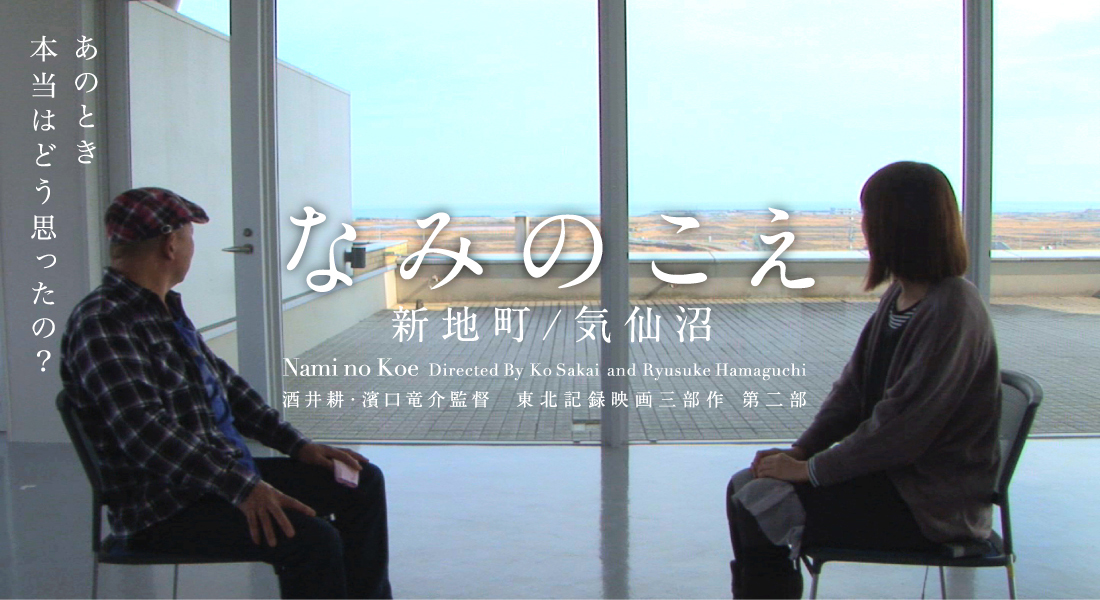
In the first conversation of the Shinchi-machi film, a father and his grown-up daughter sit across from each other. As they recall the arrival of the tsunami and the size of the waves, their conversation is briefly interrupted by the father’s tears as he remembers friends and acquaintances who have disappeared, swept away by the tsunami. From the very first scenes, one of the trilogy’s strengths becomes clear: the moving stories of people who remember become something much more empathetic for the viewer than the flood of images of the disaster. In today’s mediascape, and the Japanese triple disaster of 2011 has become a striking case in point, spectacular images often fade from view in the few moments they are seen, leaving no trace. It is then that words, tone and intonation – in this case the man’s pronounced northeastern accent – manage to convey something much deeper and more affecting than the visual element alone.
Among the various couples we hear and see, whether friends, spouses or colleagues, some recall the difficulty of communicating with their loved ones in the moments immediately after the earthquake and the fact that they turned to images broadcast on television or circulated on the Internet. One of the most interesting parts of the first documentary is when we listen to two fishermen, both of whom were no longer fishermen at the time of the interview, but were doing other things to survive. This conversation, which is more edgy and direct and touches on the issue of radiation in the sea, reflects the character and occupation of the two and provides an interesting but painful variation on the people and personalities affected by the tragedy. The same problems that gripped the area in the aftermath of the disaster are perceived differently depending on people’s social class and economic background. It should be noted that some of these conversations are between a resident of the area and one of the two filmmakers, who then stands in for the second interviewee, but we will return to this important point later.
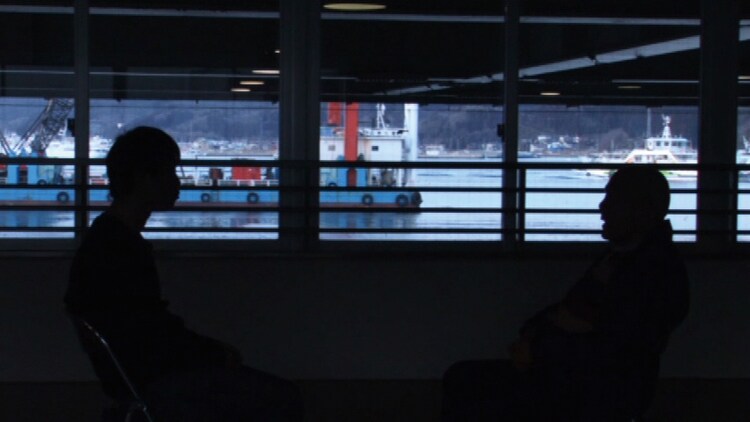
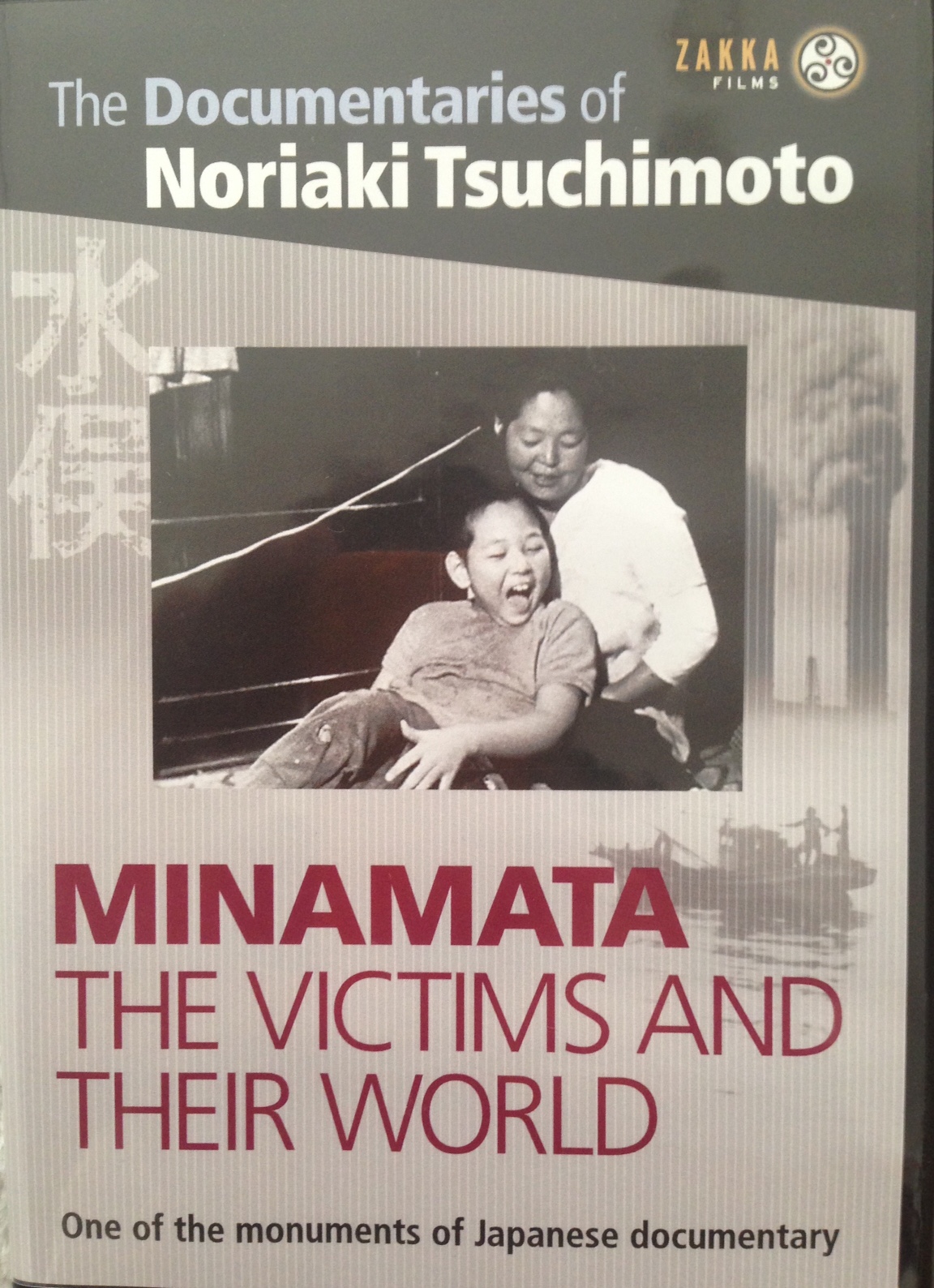
The second documentary, as the title suggests, was shot in Kesennuma, one of the towns hardest hit by the tsunami. It begins with a night-time view of the town’s harbour and then moves to the first conversation, probably recorded in the evening, between two colleagues working in a bar-restaurant. They share the memory and the feeling of despair and fear when they heard the sound of cars and houses colliding and destroying each other on that tragic day. A middle-aged couple does not want to remember the day of the tsunami because it is still so fresh, even though a year has passed since the tragedy. What emerges here is the willingness of the local people to forget, not to not remember, but to move on and not to base their future lives on the disaster. This is a sentiment that has emerged more and more in recent years, especially in Fukushima, and is often found in many communities affected by natural or man-made disasters, such as mercury poisoning and the resulting Minamata Syndrome, which Tsuchimoto Noriaki has explored in his documentaries.
Tsuchimoto, one of Japan’s greatest documentary filmmakers, who has devoted much of his career to following the lives of the victims of Minamata Syndrome, has often commented on how, after decades of documentaries on the subject, many of the victims’ relatives began to treat him coldly. It is therefore important to emphasise one more time that the conversations in Hamaguchi e Ko’s documentaries were filmed just over a year after the triple disaster, when the pain and memories were still fresh, but also when the perspective of those affected by the earthquake and tsunami was slowly but surely changing.
The talking pairs are often in an airy space, especially in the first documentary, where the conversations take place inside buildings, but with large windows looking out. The chosen setting therefore gives a sense of spaciousness and grandeur that an enclosed space would not allow. Between one conversation and the next, there are short ‘pillow shots’, scenes showing the area being rebuilt, the sea, the waves, the excavators and cranes that are still constantly at work. Although these images often capture the landscape filmed by a horizontally moving camera, the entire trilogy differs from most documentaries made about the earthquake and tsunami in that it is composed of mostly static shots. Many of the works that have attempted to document the plight of the local population and the triple disaster over the years have in fact done so through shots taken from a moving vehicle, partly because the vastness of the area affected by the tsunami requires it, but this choice of filming also ended up becoming almost a documentary style in itself and a cliché of how to film the disaster.
It is also significant that the two documentaries are not constructed with interviews, a practice used and abused in the aftermath of the triple disaster, which establishes a relationship of power and impartiality between interviewee and interviewer. Conversations between two people, even though they take place in a staged and constructed space, with at least two cameras and two directors in the room, achieve something different. No one intervenes from outside, of course there is editing, but a kind of horizontal and equal dialogue is created, because these are people who have experienced the tragedy first hand. In this sense, the fact that the two directors intervene in some of the conversations is interesting, almost revealing the “artificiality” of the work, but in the long run it reduces the impact of the two films. The same could be said of the different angles and techniques used to film the two interlocutors (this insightful essay by Markus Nornes is illuminating); while in some cases this works almost perfectly, in others it exacerbates a sense of artificiality that detracts from what is being said.
There is, however, one part where all these techniques are used to the full, and that is the final conversation of Voices From the Waves Kesennuma, when a young couple, a man and a woman aged 26 and 23, amid silences, awkwardness, nervous smiles, ringing mobile phones and yawns, bring out the cinematic power of the unspoken, of gestures and pauses, making this scene perhaps the most touching and at the same time amusing of all those seen in both works.

 Before digging into this fascinating trip through the history of Japanese non-fiction film, let me add some overall thoughts.












 Asian Docs
You must be logged in to post a comment.