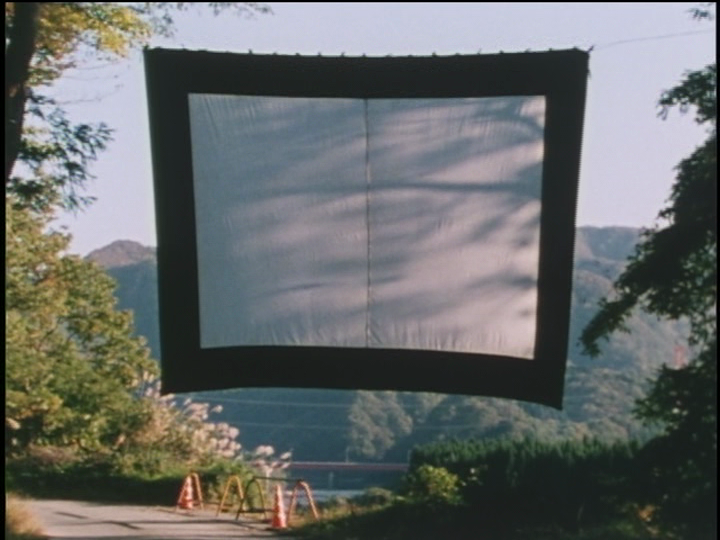
Kobe Discovery Film Festival 2022 – dispatch 1: two newly discovered films by NDU

A week ago, I had the pleasure of attending the opening weekend of this year’s Kobe Discovery Film Festival (October 15-16, 21-23), as always held at and organized by the Kobe Planet Film Archive. Now in its sixth edition, the event started in 2009 as Kobe Documentary Film Festival, and later changed its name and guiding philosophy (2017), when it broadened its scope to include programs about home movies, film preservation, film restoration, and the (re)discovery of less known movies from the past. I will write, time permitting, about some of the other films I saw at a different time (second dispatch is here), but today I’d like to focus on what, for me, was the highlight of the festival, a short program dedicated to two documentaries made by NDU (Nihon Documentary Union).              

2022 has been a sad year for NDU’s former members, but a fruitful one in establishing its legacy in the history of Japanese cinema and beyond. Inoue Osamu, one of the key members of the group, passed away last June, and this year marks also the tenth anniversary of the passing of Nunokawa Tetsurō, one of the main figures of the collective. On the positive side of things, 2022 was the year NDU received its first official international exposure, when last spring the Japan Society in New York organized a special (online) screening of two of their best works, 沖縄エロス外伝 モトシンカカランヌー Motoshinkakarannu (1971) and アジアはひとつ Asia is One (1973). I’ve written about NDU and Nunokawa in more than one occasion (check the links below), and for a more in-depth and better written piece, check Alexander Zahlten’s  The archipelagic thought of Asia is One (1973).

The two films shown in Kobe, Tokyo ’69 – One Day Blue Crayons… (1969) and Public Order Project: Martial Law at Noon (1981) – have only recently been (re)discovered or identified as works by the collective and have rarely been screened before (the latter has actually never been shown publicly). Neither is more than half an hour long, but I believe they represent two essential pieces of the fascinating mosaic that was NDU, not least because they encapsulate a certain era of social dissent, and consequently documentary making, in Japan between the late 1960s and early 1980s. After the screenings, Nakamura Yoko, a film scholar specialising in NDU, spoke briefly about the films in the context of NDU and Nunokawa’s career, which was very helpful in understanding the two films, especially Public Order Project: Martial Law at Noon.

東京’69 – 青いクレヨンのいつかは . . . Tokyo ’69 – One Day Blue Crayons . . . (1969) Shot on 16mm between 1967-68, this documentary is a propaganda film funded by the Tokyo headquarters of the Japanese Socialist Party to support Governor Minobe Ryōkichi, who was elected in 1967. While on the surface a piece of political advertising, Tokyo ’69 – one day blue crayons . . . reflects on and depicts various problems facing the capital and its citizens in the late 1960s, a time when urban sprawl was increasingly and dramatically changing. Expropriation and exploitation seem to be two of the main threads running through the film: we learn that 95% of Tokyo’s land was in the hands of 5% of the population, as redistributed after the war. The film also shows how truck drivers carry and deliver goods they don’t use or own, or how workers who come to the city from other areas live in precarious conditions. For example, we see a man from Hokkaido working almost 14 hours a day while living and sleeping in an extremely small rented room.

It is also interesting to note the focus on the lack of crèches for working women to leave their children in, a problem that still seems to be unresolved, and the criticism of the new stadium built for the 1964 Olympics, a structure that, as NDU points out, was of no use to the people of Tokyo after the games. An uncanny resemblance to what is happening now after the 2021 Games. The title of the documentary seems to refer to the final scene, in which we see a young boy drawing pictures with crayons in a sketchbook. At one point he is asked a series of questions, including “What colour is the sky?”, and his annoyed answer is always “shiran” (I don’t know). The hope is that one day the sky will be blue.

According to the festival leaflet, this film has never appeared in Nunokawa’s statements, but it is credited as an NDU production at the very end, in the bottom right-hand corner of the screen, a fact confirmed by Inoue before his death. The film was made at the same time as 鬼ッ子 闘う青年労働者の記録 Onikko-A Record of the Struggle of Youth Labourers (1969), also funded by the Socialist Party, a work that shares not only the general tone but also some famous shots. The freight train carrying petrol for American planes to Vietnam passing through Shinjuku station, and a tank parade in the middle of the city.

In its critique of Tokyo and its exploration of the dark side of the 1960s economic miracle, the documentary reminded me very much of Tsuchimoto Noriaki’s 東京部 Tokyo Metropolis (1962), a short documentary made for television that was never broadcast because it was considered too dark and pessimistic (you can watch it, in Japanese and legally, here, here

治安出動草稿 お昼の戒厳令 Public Order Project: Martial Law at Noon (source)

治安出動草稿 お昼の戒厳令 Public Order Project: Martial Law at Noon (1981). Shot in Super 8 by a group of NDU members in one day – though credited at the end as a Nunokawa production – the film documents the second Six Cities Joint Disaster Prevention Drill, organised in Shinjuku on 1 September 1981. When it was announced that some twelve million people were expected to take part, an astonishing and frightening number, Date Masayasu, a former Shinjuku city official turned cultural critic and writer, declared alarmingly:  “We will be moved under the command of the Self-Defence Forces! “. Inspired by this comment, Nunokawa and seven other members of the collective began filming people marching and gathering in Shinjuku, protests in the streets, and military manoeuvres in Tokyo and the surrounding area on 1 September.

As is often the case with NDU’s films, especially the later ones, there is no great explanation of what is happening on screen, or the reasons for what we are seeing. As the film progresses, however, a sense, if not a meaning, slowly begins to emerge. In a country regularly hit by natural disasters such as earthquakes, typhoons and floods, emergency drills are a normal part of life, but this one felt and was very different. The connection made by Date and Nunokawa and NDU with the documentary is a subtle but deep and powerful one, at least for me. Disaster drills of this scale are deeply connected to public order and the idea of a strong and unified nation/state imposing its will from above. Self-Defence Forces landing in Shizuoka from the sea, helicopters flying constantly over the city, the sheer mass of people moving in the streets – it is worth repeating, almost 12 million people! – and the effort to coordinate six cities within the megalopolis, all this is seen and understood in the film as something dangerously close to an act of military mobilisation. The documentary is very effective in capturing and expressing this massive sense of potential fear. A past – the narration mentions, for example, the lynchings of Koreans and other minorities that continued after the great Kantō earthquake in 1923 – that could resurface at any time in the future.

Formally, the film alternates between scenes of helicopters flying over the city – the sound here is distorted and becomes almost hypnotic – and scenes of the Self-Defence Forces, sometimes in slow motion, with scenes of clashes between demonstrators and the police. It is worth noting how different the scale of the protests were from those of a decade earlier. Japanese people continued to protest and demonstrate even after the end of the so-called political season, Narita docet, but the number of people involved and the motivations changed dramatically, for reasons that cannot be explored in this piece. What stood out for me aesthetically, compared to other NDU works, was the extensive use of electronic music throughout the documentary, especially in the final part, when activists and police clash and march to the sound of electronic drums. As a mere curiosity and possible coincidence, it is interesting to note that on the same day, 1 September 1981, Kraftwerk, the German group that more than anyone else pioneered electronic music in popular culture, were also in Tokyo, ready to embark on their first Japanese tour.

The film has not been included in any of NDU’s special features to date and, as the flyer suggests, this special screening in Kobe was made possible thanks to the efforts of Mitsui Mineo, a former collaborator of Nunokawa’s and probably a former member of NDU, who worked with him on his documentaries in Palestine.

Explore more about NDU:

Alexander Zahlten:  The archipelagic thought of Asia is One (1973).

To The Japs: South Korean A-Bomb Survivors Speak out (1971)

Asia is One (1973)

special (online) screening of Motoshinkakarannu (1971) and Asia is One (1973) at Japan Society New York
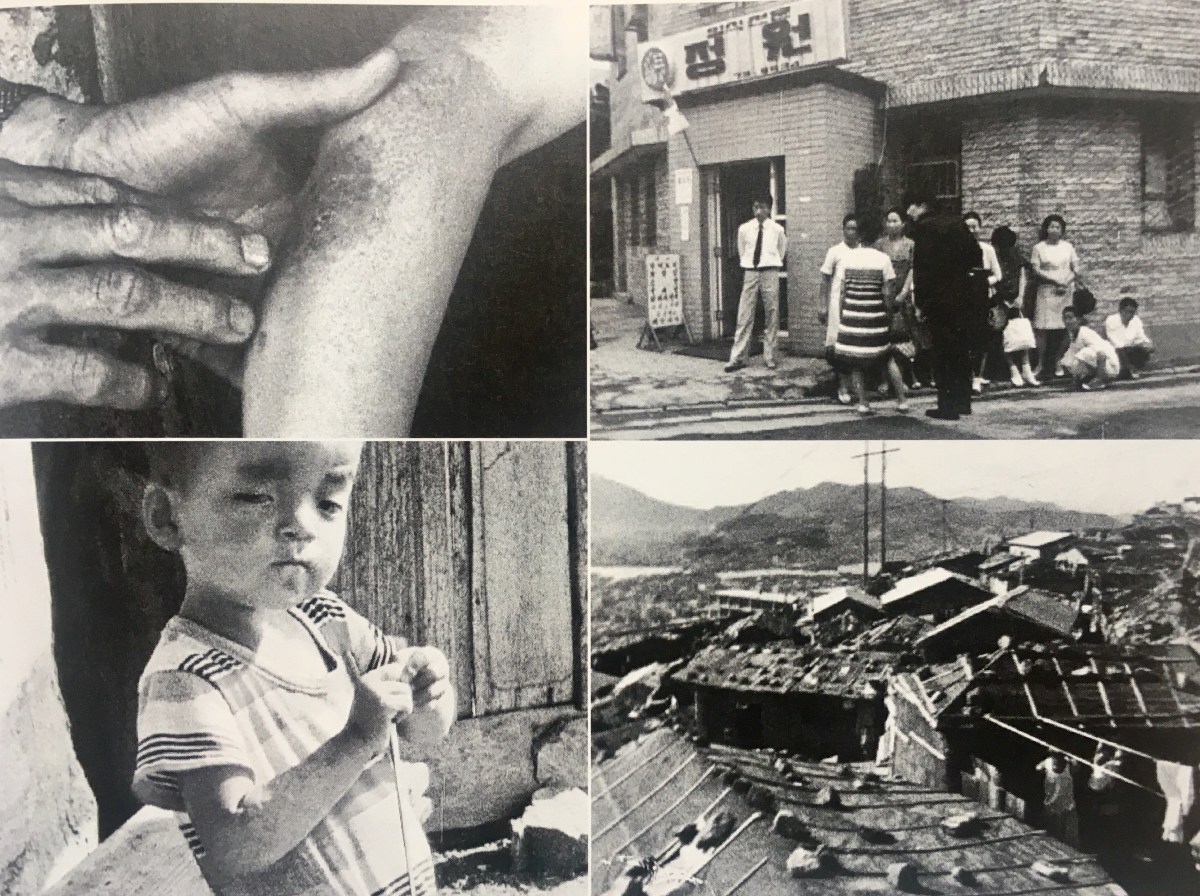
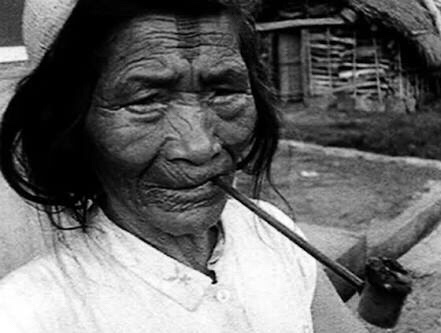
To the Japs: South Korean A-Bomb Survivors Speak Out (NDU, 1971)

Last autumn (10 months ago!) I was lucky enough to attend a special screening event dedicated to the Japanese collective Nihon Documentary Union (NDU), at the Kobe Planet Film Archive. I’ve written elsewhere about NDU and the movies of Nunokawa Tetsurō, specifically about Asia is One (1973), and if you’d like to take a deeper and more academic dive into the subject, there’s this excellent essay by Alexander Zahlten on the Journal of Japanese and Korean Cinema.

Titled From NDU to NDS, the program was organised by the archive’s director Yasui Yoshio and included the screening of To the Japs: South Korean A-Bomb Survivors Speak Out (NDU, 1971) followed by a short documentary/visual report by Kim Imman shot in 2008 (but I’m not really sure about the date), when Nunokawa Tetsurō and Kim himself went to Korea to meet the women portrayed more than 30 years before in the NDU’s movie. The last movie screened was Kim Imman’s Give Back Kama’s Rights! (2011), produced by NDS (Nakazaki-cho Documentary Space) and shot with the help of Nunokawa himself in Kamagasaki, Osaka’s largest dosshouse, a powerful example of video-activism/documentary of the new century. It is interesting to note that one of the members of NDS was Satō Leo, director of the surprisingly good Kamagasaki Cauldron War, one of the best movies of 2019 in my opinion.

The day ended with a short talk between Inoue Osamu, the only surviving member of NDU, Imman and a young Japanese scholar who specializes on NDU and 1960s/1970s Japanese cinema. The small theater was, with my surprise, packed, and extra chairs had to be added to fit everybody in.
One of the reasons for this relatively wide audience was that ー and I got a confirmation in the after talk, but more on this later ー the interest in the post war relations between Korea and Japan is still an open wound (at the moment I’m posting this report, July 2019, the tensions seem to have reached new hights).

This is the synopsis of the movie (from YIDFF) :

In 1971, while the Japanese prime minister Sato Eisaku was visiting South Korea to attend a party for President Park Chung-hee, a group of eight South Korean hibakusha(atomic bomb survivors) took a direct petition to the Japanese embassy. The South Korean hibakusha were detained by South Korean authorities for the duration of the prime minister’s visit. This film follows the lives of these eight people. That same year, Son Chin-tu, a hibakusha who had entered Japan illegally and was being held at the Omura Detention Center, filed his so-called “Hibakusha Certificate Lawsuit” demanding Japanese residency and medical treatment.

To the Jap was made in 1971, just after Motoshinkakarannu and before Asia is One (1973). The film opens with what looks to me like a parody of a TV commercial, but could just as easily be a real one, advertising the city of Busan and its tourist attractions, one of the main locations where the film was shot. From the first scenes, it’s clear that although the film is a documentary, it continues the arc started by Motoshinkakarannu, but differs from it in its style, reminding me more of the anarchic and pop finale of Onikko: A Record of the Struggle of Youth Laborers (1970), the first documentary made by the collective, when the film goes from black and white to colour and Nunokawa himself writes big red letters on a wall.

The vibrant colours of the early scenes are contrasted with the stark, almost blue quality of the black and white used to depict the women on the train as they travel to Seoul, and the more ‘traditional’ black and white used in some other parts of the film. This sense of formal non-linearity is accentuated and amplified by the off-sync audio – as in many of the collective’s other works, more a necessity than an aesthetic choice, I think – but also by the background noise of the city and the various and composite soundscapes through which the film is constructed. Once again, and this is a common trait that formally unites all the NDU’s films, especially Motoshinkakarannu and Asia is One, I would say, To the Japs proves that the documentaries made by the collective were first and foremost what I’d like to call a “cinema of chaos”, a complex and mosaic representation of reality, without seeking a resolution of conflicts and without searching for a clarity that isn’t there.

The after talk was too short and mainly focused on the absence of Japanese subtitles in some scenes in Imman’s short work, and on other language related problems in To the Japs, mainly why the women were called by their Japanese name and not by their Korean one. There are no doubts that these are very significant political topics worth discussing, however nothing was said on the formal elements of the film, and I think it was a missed opportunity.

In conclusion, To the Japs cemented my opinion of the importance of NDU and its place in the history of Asian cinema. Its insistence on liminal spaces and geographical thresholds continues to function today as a kind of cinematic alchemical ‘solution’, placing Japanese national identity in flux and pointing to a possible and desirable Caribbeanisation of the archipelago yet to come.

Asia is One アジアはひとつ (NDU, 1973) edited

I’m reposting an edited version of my piece on NDU’s Asia is One, an article I wrote two years ago.

NDU (Nihon Documentary Union) was a Japanese collective founded in 1968 by a group of Waseda University students who would eventually drop out to dedicate their lives to filmmaking and political struggle. From 1968 to 1973, when the group disbanded, this group of activists, who saw themselves first and foremost as a collective of activists, made four documentaries, moving from the streets of Tokyo – the first work was Onikko – A Record of the Struggle of Youth Labourers – to the distant islands of Micronesia, passing through Okinawa, the archipelago where they made two of their most important documentaries.

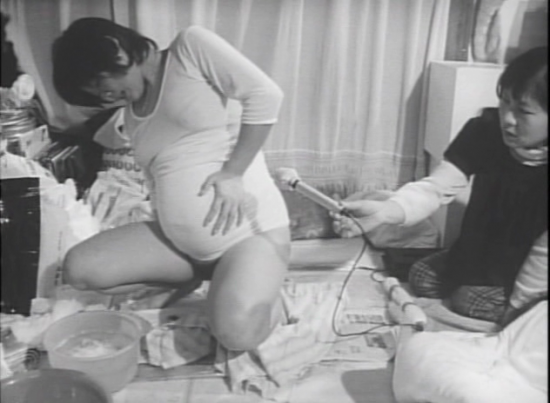
Motoshinkakarannu (1971) was made in and about Okinawa, before the archipelago was ‘returned’ to Japan. The group went to the island in 1971 and captured on film a society in transition. The film shows and focuses on the fringes of society, with illegal prostitution and life in the red districts, while also highlighting the historical and social fractures that have run through the area: anti-establishment and anti-American riots, the Black Panthers’ visit to Okinawa, water pollution and much more. I voted Motoshinkakarannu one of my favourite Japanese documentaries in a poll I organised a year ago, but today I’d like to turn my attention to the second film made by the collective in Okinawa (and beyond): Asia is One アジアはひとつ (1973, 16mm, 96′), a work that I hadn’t seen at the time of the poll and that would have certainly made my list along with Motoshinkakarannu.

Asia is One was screened on June 26th at Kyoto Kambaikan, as part of the AAS in Asia, and it was screen with English subtitles for the first time, the movie was shelved for many many years, forgotten, and was (re)discovered only in 2005 when was screened at the Yamagata International Documentary Film Festival. The screening in Kyoto was followed by a fascinating Q&A with the only surviving member of NDU, Inoue Osamu. Nunokawa Tetsurō, who after the dismantling of the collective made other interesting solo documentaries in Palestine and US, passed away in 2012. As described by Roland Domenig (1), with Asia is One

NDU further explored the margins of Okinawan society and continued to break through borders by focusing on the Taiwanese minority. The film portrays Taiwanese migrant workers on the main island of Okinawa who substitute the Okinawa laborers who in turn are employed as migrant workers on Japan’s main islands. It traces the history of Taiwanese coal miners on Iriomote Island, follows legal and illegal workers to the westernmost island of Yonaguni and finally lands in Taiwan in a village of he Atayal tribe of Taiwanese aborigines, where still the Japanese naval anthem is played every noon.

Formally the documentary is composed of landscapes and interviews, all of them out of sync, possibly due to the equipment used or maybe the lack of it. The uncanny space created by this displacement, but also by the use of music from radio broadcasts and kids voices, thrown here and there during the movie, gives the work a peculiar aesthetic tone, a type of non-fiction cinema that I like to call “chaos cinema”. (2)
To explain and understand the “chaotic” trait of Asia is One, and Motoshinkakarannu as well, we have to delve deeper in the philosophy that laid at the core of NDU’s approach. What the collective has tried to convey through their cinema is extremely fascinating, in their writings (3), mainly published in the magazine Eiga Hihyo, the group was explicitly pushing towards a cinema/activism of anonymity, trying to reach an “impersonal space” and rejecting even the term “work” (sakuhin) because it was seen as the product of a single person in command and as a result of a dominating power structure. In this regard famous was their criticism of Ogawa Production, a collective that bore the name of a single person and that was basically structured hierarchically (4). To this kind of collectivism NDU tried to oppose a more fluid idea of group activism, where the structure was a flat and horizontal one, and in doing so, promoting a cinema made by amateurs (5) and not by professionals. “Everybody can push the button and shoot with a 16mm camera” said Inoue, and this is even more true today since the advent of the digital revolution. Whether this approach was successful or not, and more importantly, whether this horizontal structure and “amateur cinema” is possible at all, are questions without answers that are haunting scholars to this day.
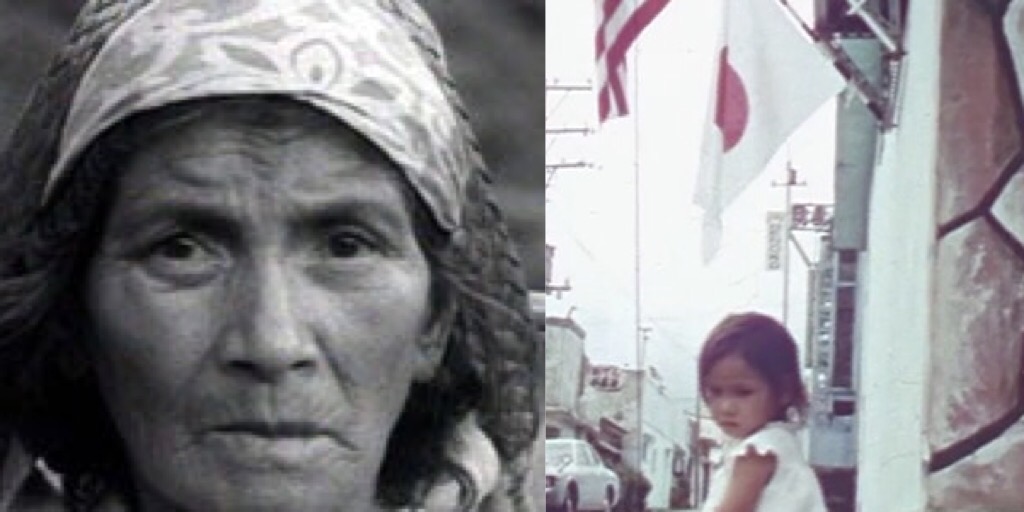
Going back to Asia is One, the part of the movie the resonated more with me was the last one, when the film moves to the Atayal village in Taiwan. There’s a quality in the close-ups of the tribe people, beautiful and ancient faces, that is extremely fascinating, also because it is in these scenes that the political discourse on identity, or the negation of it, reach its peak. From the 17th Century onward The Atayal people, like the rest of the tribes inhabiting the island, were forced to face the colonization of the Dutch first, the Spanish and the Chinese later, and eventually that of the Japanese Empire (1895 – 1945), which called them “barbarians” and tried to assimilate and annihilate their culture (6). That being said, the words spoken by the member of the tribe provide more context and add layers of complexity to the situation. “Japan conquered us and abolished many of our ancient traditions and customs”, but at the same time “we were drafted and went to war with pride and ready to die” and also “luckily the Japanese abolished some of our ancestral traditions like beheading”. Asia is One ends with the militaristic song If I Go to Sea against an everyday scene with the aboriginal Taiwanese people isolated in the mountains singing “We want to go to war again.”

Of course there is oppression and violence, physical and cultural, in every colonization, but things here are deeper than what they seem. In the process of cultural and historical coring that the movie conveys with its images and words, from Okinawa to Taiwan, I believe that two significant elements emerge. The first is the crisis of the identity concept, often a forced cultural and national superstructure imposed by the stronger and more powerful part on a “highly fluid space of human life” (6), as Inoue explained “identity was one of the most hated words inside the NDU, identity is a choking concept”. The second point that struck me is the recurrence of a power and social structure that exploits the margins, the outsiders and the weakest people. In mainland Okinawa the illegal prostitutes and worst jobs are done by people from Miyako island, and in Miyako and other small islands the lower part of society is occupied by Koreans, Taiwanese and aboriginal people. This perpetuating exploitation is possible only as long as a certain part of society is described as different and inferior, and only when and where the concept of border is a monolitic divide used to create the “other”, the “foreigner” and the “stranger”. NDU’s documentaries are an antidote against all this poisonous discourse, and an invitation to break through the borders, those in the world outside us, but also those inside ourselves.
A final note on the title, the movie as a product of a collective that was thriving towards anonymity, has not film credits, nor it had originally a title, Asia is One was attached to it only later, and it’s a kind of a joke because as Inoue himself said “we all know that Asia is not one!”

notes:

1 Faraway, yet so close by Roland Domenig, in The Legendary Filmmaking Collective NDU and Nunokawa Tetsurō ed. Yasui Yoshio, Tanaka Noriko, Kobe Documentary Film Festival Committee, 2012.

2 This might not be the best way to describe the movie, but aesthetically it reminded me, maybe because of the out of sync, of Imamura Shōhei’s documentaries shot in South East Asia during the 70s.

3 Some of the writings are translated in The Legendary Filmmaking Collective NDU and Nunokawa Tetsurō, op. cit.

4 You can find more in Forest of Pressure: Ogawa Shinsuke and Postwar Japanese Documentary, Abé Markus Nornes, Visible Evidence 2007.

5 Some interesting insights on amateurism in cinema can be found in The Flash of Capital: Film and Geopolitics in Japan, Eric Cazdyn, Duke University Press 2002.

6 In 1930 the village was the site of an anti-Japanese uprising, the so called Musha Incident, an event portrayed in Warriors of the Rainbow: Seediq Bale (Wei Te-Sheng, 2011)

7 Nunokawa Tetsurō in YIDFF 2005 Special Program, Borders Within – What it means to live in Japan.

NDU and Asia is One (アジアはひとつ)

NDU (Nihon Documentary Union) was a Japanese collective established in 1968 by a group of Waseda University students, who would eventually drop out, one of the most prestigious universities in Japan. From 1968 to 1973, the year the group dismantled, this group of activists, they considered themselves first of all as a collective of activists,  made four documentaries, moving from the street of Tokyo – the first work was Onikko – A Record of the Struggle of Youth Laborers – to the far away islands in Micronesia passing through Okinawa, the archipelago where they shot two of the their most significant documentaries. Motoshinkakarannu (1971) was made and is about Okinawa before the reversion to Japan, the group went to the island in 1971 and captured on film a society in flux and in the middle of a shifting passage. The film show and focuses on the margins of society with illegal prostitution and life in the red districts, at the same time highlighting the historical and social fractures that were traversing the area: anti-establishment and anti-American riots, the Black Panthers visiting Okinawa, pollution of water and much more. I listed Motoshinkakarannu as one of my favorite Japanese documentaries in the poll I’ve organised a year ago, but today I want to shift my attention on the second movie made by the collective in Okinawa (and beyond): Asia is One (アジアはひとつ),  a work that I hadn’t seen at the time of the poll, and that would have certainly figured in my list paired with Motoshinkakarannu.

Asia is One was screened on June 26th at Kyoto Kambaikan, as part of the AAS in Asia, and it was screen with English subtitles for the first time, the movie was shelved for many many years, forgotten, and was (re)discovered only in 2005 when was screened at the Yamagata International Documentary Film Festival. The screening in Kyoto was followed by a fascinating Q&A with the only surviving member of NDU, Inoue Osamu, Nunokawa Tetsurō, who after the dismantling of the collective made other interesting solo documentaries in Palestine and US, passed away in 2012. As described by Roland Domenig (1), with Asia is One

NDU further explored the margins of Okinawan society and continued to break through borders by focusing on the Taiwanese minority. The film portrays Taiwanese migrant workers on the main island of Okinawa who substitute the Okinawa laborers who in turn are employed as migrant workers on Japan’s main islands. It traces the history of Taiwanese coal miners on Iriomote Island, follows legal and illegal workers to the westernmost island of Yonaguni and finally lands in Taiwan in a village of he Atayal tribe of Taiwanese aborigines, where still the Japanese naval anthem is played every noon.

Formally the documentary is composed of  landscapes and interviews, all of them out of sync, possibly due to the equipment used or maybe the lack of it. The uncanny space created by this displacement, but also by the use of music from radio broadcasts and kids voices, thrown here and there during the movie, gives the work  a peculiar aesthetic tone, a type of non-fiction cinema that I like to call “chaos cinema”. (2)
To explain and understand the “chaotic” trait of Asia is One, and Motoshinkakarannu, we have to delve deeper in the philosophy that laid behind NDU. What the collective has tried to convey through their cinema is extremely fascinating, in their writings (3), mainly published in the magazine Eiga Hihyo, the group was explicitly pushing towards a cinema/activism of anonymity, trying to reach an “impersonal space” and rejecting even the term “work” (sakuhin) because it was seen as the product of a single person in command and as a result of a dominating power structure. In this regard famous was their criticism of Ogawa Production, a collective that bore the name of a single person and that was basically structured hierarchically (4). To this kind of collectivism NDU tried to oppose a more fluid idea of group activism, where the structure was a flat and horizontal one,  and in doing so promoting a cinema made by amateurs (5) and not by professionals. “Everybody can push the button and shoot with a 16mm camera” said Inoue, and this is even more true today since the advent of the digital revolution. Whether this approach was successful or not, and more importantly, whether this horizontal structure and “amateur cinema” is possible at all, are questions without answers that are haunting scholars to this day.
Going back to Asia is One, the part of the movie the resonates more with me is the last one, when the film moves to the Atayal village in Taiwan. There’s a quality in the close-ups of the tribe people, beautiful and ancient faces, that is very fascinating, also because it is in these scenes that the political discourse on identity, or the negation of it, reach its peak. From the 17th Century onward The Atayal people, like the rest of the tribes inhabiting the island,  had to face the colonization of the Dutch, the Spanish, the Chinese and later of the Japanese (1895 – 1945). Calling them “barbarians” the Japanese Empire tried to assimilate and annihilate their culture (6), the words from the tribe people in the movie add layers of complexity to the situation  : “Japan conquered us and abolished many of our ancient traditions and customs”, but at the same time “we were drafted and went to war with pride and ready to die” and “luckily the Japanese abolished some of our ancestral traditions like beheading”.
Asia is One ends with the militaristic song If I Go to Sea against an everyday scene with the aboriginal Taiwanese people isolated in the mountains singing “We want to go to war again.” Of course there is oppression and violence, physical and cultural, in every colonization, but things here are very layered. It seems to me that in this process of cultural and historical coring that the movie conveys, from Okinawa to Taiwan, two very significant points emerge. The first is the crisis of the identity concept, often a forced cultural and national superstructure imposed by the stronger part on a “highly fluid space of human life” (6), as Inoue explained “identity was one of the most hated words inside the NDU, identity is a choking concept”. The second point that struck me is the recurrence of a power and social structure that exploits the margins and the outsiders, in mainland Okinawa the illegal prostitutes and worst jobs are done from people from Miyako island, and in Miyako and other small islands the lower part of society is occupied by Koreans, Taiwanese and aboriginal people.
A final note on the title, the movie as a product of a collective that was thriving towards anonymity, has not film credits, nor it had originally a title, Asia is One was attached to it only later, and it’s a kind of a joke because as Inoue himself said “we all know that Asia is not one!”

notes:

1 Faraway, yet so close by Roland Domenig, in The Legendary Filmmaking Collective NDU and Nunokawa Tetsurō ed. Yasui Yoshio, Tanaka Noriko, Kobe Documentary Film Festival Committee, 2012.

2 This might not be the best way to describe the movie, but aesthetically it reminded me, maybe because of the out of sync, of Imamura Shōhei’s documentaries shot in South East Asia during the 70s.

3 Some of the writings are translated in The Legendary Filmmaking Collective NDU and Nunokawa Tetsurō, op. cit.

4 You can find more in  Forest of Pressure: Ogawa Shinsuke and Postwar Japanese Documentary, Abé Markus Nornes, Visible Evidence 2007.

5 Some interesting insights on amateurism in cinema can be found in The Flash of Capital: Film and Geopolitics in Japan, Eric Cazdyn, Duke University Press 2002.

6 In 1930 the village was the site of an anti-Japanese uprising, the so called Musha Incident, an event portrayed in Warriors of the Rainbow: Seediq Bale (Wei Te-Sheng, 2011)

7 Nunokawa Tetsurō in YIDFF 2005 Special Program, Borders Within – What it means to live in Japan.

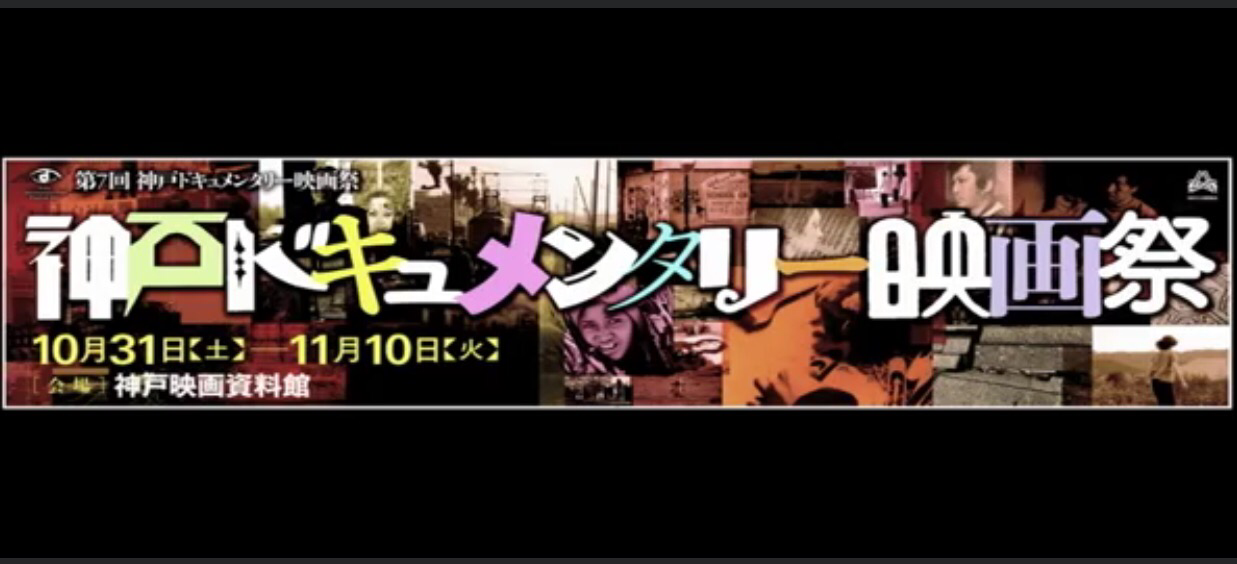
Kobe Documentary Film Festival 2015 第7回神戸ドキュメンタリー映画祭 (Oct 31st – Nov 10th)

In the autumn film festival madness, there are more film fests between October and November than stars in the sky, a very tiny but special place is occupied by the Kobe Documentary Film Festival,  an event established in 2009 at the Kobe Planet Film Archive. An important place for cinephiles and cinema lovers, the archive is a small structure, the theatre has only 38 seats, set up in 2007 and currently managed by Yasui Yoshio, one of the most renowed film historians and archivists of Japan. Incidentally Kobe has a special relationship to the seventh art, Edison’s Kinetoscope was imported to Kobe in 1896 and one year after the city was also the first place in Japan where the Lumiere brothers brought their Cinematographe

In these 7 years the mini festival, it’s more like a retrospective than a “real” fest, has presented works of Yanagisawa Hisao and Tsuchimoto Noriaki – in its 2 first editions, a special devoted to the great Tōhōku Earthquake and documentary in 2011, and the following year a retrospective on NDU and Nunokawa Tetsurō, a showcase that I was able to attend, a real discovery that allowed me to deepen my knowledge of one of the most important Japanese film collective of the 60s and 70s, a real treat. 

Kobe Documentary Film Festival kicks off tomorrow, October 31st,  and will last until November 10th. This year the main focus won’t be on one filmmaker or a movement in particular, but the screenings will be more varied. Discovering Images—The Age of Matsumoto Toshio, a documentary on Matsumoto Toshio by Takefumi Tsutsui, almost 12 hours (the work is divided in 5 parts) to retrace the career of one of the most important Japanese filmmakers and theorists of the post-bellic period, is maybe the most important to me. London (1994), Robinson in Space (1997) and Robinson in Ruins (2001) by Patrick Keiller, under the wave, on the ground (波のした、土のうえ) by Komori Haruka and Seo Natsumi will also be screened, and last but not least a special selection from the Yamagata International Documentary Film Festival, 5 films screened in the last 25 years at the prestigious event. 

Unfortunately I won’t be able to attend the festival this year, what I really wanted to see was the massive documentary on Matsumoto – I missed it at Yamagata as well, and under the wave, on the ground, but I’m sure there will be more chances to catch up with them. 

You can find the program here (only Japanese)

Dissenting Japan – A History of Japanese Radicalism and Counterculture 

Just a quick post to draw your attention on a significant book that the London-based Hurst will publish next September. The volume is titled Dissenting Japan – A History of Japanese Radicalism and Counterculture and is written by the Tokyo-based writer and translator William Andrews, who by the way runs an excellent blog on the same topic here


Here’s the description from the publisher’s homepage: 

Following the March 2011 Tsunami and Fukushima nuclear crisis, the media remarked with surprise on how thousands of demonstrators had flocked to the streets of Tokyo. But mass protest movements are nothing new in Japan. The post-war period experienced years of unrest and violence on both sides of the political spectrum: from demos to riots, strikes, campus occupations, factional infighting, assassinations and even international terrorism.
This is the first comprehensive history in English of political radicalism and counterculture in Japan, as well as of the artistic developments during this turbulent time. It chronicles the major events and movements from 1945 to the new flowering of protests and civil dissent in the wake of Fukushima. Introducing readers to often ignored aspects of Japanese society, it explores the fascinating ideologies and personalities on the Right and the Left, including the student movement, militant groups and communes. While some elements parallel developments in Europe and America, much of Japan’s radical recent past (and present) is unique and offers valuable lessons for understanding the context to the new waves of anti-government protests the nation is currently witnessing.

Who’s is familiar with documentary cinema (and cinema in general) knows very well that radicalism, dissenting, resistance and counterculture are a very important part of the vocabulary that defines the post war Japanese non-fiction landscape, and the fiction as well, especially during the 60s and 70s. Ogawa Production and Sanrizuka, Tsuchimoto Noriaki and Minamata, NDU and Okinawa and the borders, but also Kamei Fumio and his Sunagawa Trilogy, maybe the first Japanese works to fully embody this “philosophy” of resistance and struggle on film (excluding the Prokino before the war of course). 

For all these reasons, Dissenting Japan will probably be (I haven’t read it yet) a very important read not only for historians but also for film scholars interested in Japanese cinema and in documentary in general. I’ll certainly write more about it when the book is out. 

Best 10 Japanese documentaries – my list

As a reminder that you still have a month to join the poll “Best 10 Japanese documentaries of a time” I’ve put together my list. I left out many good and inspiring documentaries made in recent years (Genpin, No Man’s Zone, Flashback Memories and others) and I’ve cheated twice, but anyway:

vlcsnap-2013-10-27-18h56m10s89
Fighting Soldiers (戦ふ兵隊, 1939 Kamei Fumio)

/home/wpcom/public_html/wp-content/blogs.dir/279/79975380/files/2015/01/img_3366.jpg
Children Who Draw (絵を描く子どもたち, 1956 Hani Susumu)

AKA-SerialKiller
A.K.A. Serial Killer (略称・連続射殺魔, 1969 Adachi Masao, Iwabuchi Susumu, Nonomura Masayuki, Yamazaki Yutaka, Sasaki Mamoru, Matsuda Masao)

motoshinkakarannu
Onikko (鬼ッ子 闘う青年労働者の記録, 1969) and
Motoshinkakarannu (沖縄エロス外伝 モトシンカカランヌー 1971) by NDU/Nunokawa Tetsurō

Minamata_Victims
Minamata: The Victims and Their World (水俣 患者さんとその世界, 1971 Tsuchimoto Noriaki)

hetaburaku083
Sanrizuka: Heta Village (三里塚 辺田部落,1973) and
Magino Village – A Tale / The Sundial Carved With A Thousand Years of Notches (1000年刻みの日時計 牧野村物語, 1986) by Ogawa Pro

akamata
Song of the Akamata–The life histories of the islanders, Komi, Iriomote Islands, Okinawa (海南小記序説・アカマタの歌-西表・古見, 1973 Kitamura Minao)

/home/wpcom/public_html/wp-content/blogs.dir/279/79975380/files/2015/01/img_3040.png
Extreme Private Eros 1974 Love Song (極私的エロス・恋歌1974, 1974 Hara Kazuo)

/home/wpcom/public_html/wp-content/blogs.dir/279/79975380/files/2015/01/img_3370.jpg
The Cherry Tree with Gray Blossoms (薄墨の桜, 1977 Haneda Sumiko)

Memories_Agano1
Memories of Agano (阿賀の記憶, 2004 Satō Makoto)