Best (favorite) documentaries of 2021

As usual, the list below is a reflection of my taste, interests, and viewing habits during 2021, this year mainly, but not exclusively, online. I’m not sure all the titles can be considered documentaries, but this is, after all, the fascinating beauty of dealing with documentary cinema. Synopsys in italics, followed by my quick take and, when available, the trailer:

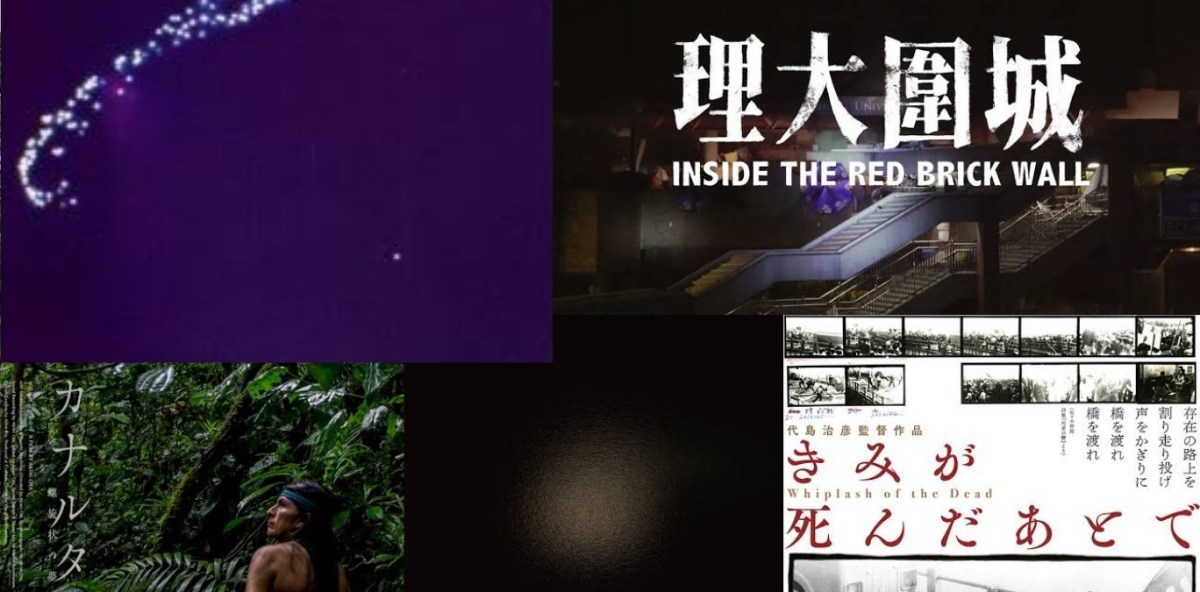
Kanarta – Alive in Dreams (Ōta Akimi). Sebastian and Pastora live in a Shuar village in the upper Amazonia of Ecuador. Sebastian is not only a respected healer, but also a medicinal botanist who experiments with unknown plants he encounters in the forest. His unique practice seeks to cultivate new knowledge, reconnecting him with his ancestors. Pastora is one of the rare female leaders in Amazonia, who struggles to negotiate with local authorities for her community. With powerful plants such as ayahuasca, they revive and energise their perceptions of the future. These plants allow them to acquire power and a faith to cope with the obstacles they now face, given that their lives have been irreversibly affected by the modern state system. There is a lot to like about this movie, and, like in the best works that cross the boundaries between documentary, visual anthropology and experimental cinema, every new viewing reveals extra layers. On the one hand Kanarta shows the problems Shuar people and their culture encounter in dealing with modern society and the way their community adapts and changes in response. On the other, it also offers a glimpse of their being part, almost as if made by the same flesh, of the Amazon forest, and their vital connection with the medicinal plants, “plants that make reality” as one of the people suggests.
However, what really kept me engaged throughout the whole movie is that the documentary is permeated by joy, there are lots of laughs and funny scenes, usually fuelled by chicha, an alcoholic beverage made of fermented potatoes. The joy is also coming from the movie and its protagonists being in a constant state of exploration, through the visions and through the wandering in the forest in search for new plants or new places where to build a house. Kanarta offers also some emotional and even dramatic scenes, it’s very touching for instance, when we see Sebastian’s son receiving his medical diploma during a small ceremony, and father and mother posing with him for the camera with pride and smiles. This contributes to build a stronger sense of attachment for the two protagonists, Sebastian and Pastora, who are willing to show and tell the director about their culture and their way of living.
The main reason why everything works though—from the more poetic scenes, to the more visceral ones, when Sebastian takes ayahuasca for instance—is because the documentary is structured in a dialogic manner, so to speak. The camera is not a passive actor in the scenes, but it’s part of, and often influences, what is going on, directly or indirectly. Furthermore, Ōta is very good at transmitting, through an immersive visual and sensorial experience, the powerful feeling of empathy that emanates from Sebastian and Pastora, and the Amazon forest itself.

.

13 (Isobe Shinya) The filmmaker left his camera in exactly the same spot for five years to shoot a picture of the sunset every thirteen seconds. In a series of merged time-lapses, we see the sun(s) moving repeatedly from the left part of the screen to the right. One of the best movies I’ve seen this year, documentary or not, I wrote about it here.

.

Inside The Red Brick Wall (Hong Kong Documentary Filmmakers) On 17 November 2019, the police laid siege to protestors at the Hong Kong Polytechnic University in a blockade lasting nearly two weeks. Beleaguered students fought teargas with makeshift whiteboard shields, hoping to escape and return home to safety. With the media barred from on-site access, an anonymous collective films from within the campus, recording the teenage protesters’ hopes and distress. From the very first shot the documentary is imbued with a sense of precariousness and anger, and by filming the violence between riot police, students, aid people, and members of the press —mainly independent press that live-streamed the battles on the internet— captures and creates, through a masterful use of editing, a very powerful sense of space and proximity with the students, a visual cartography of violence and resistance. The scenes when many of the young students break down, cry and walk out, defeated, from the campus, often criticized by their comrades, is— although it is something I have seen over and over again in the documentaries about the Japanese protests of the 1960s and 1970s—heartbreaking. What is also extremely fascinating for me, is that all the young people wearing masks and gear, for protection and for anonymity, form, more than a revolt of the individuals, a resistance of the multitude. The sense that the struggle is about something bigger than the siege itself is very palpable.

.

Minamata Mandala (Hara Kazuo)         After years of dumping industrial wastes from the factory to the ocean, Chissō Chemical Corporation contaminated the area of a small Japanese fishing village with excessive amounts of methylmercury. This highly toxic chemical bioaccumulated in fishes of the local water, which when consumed by the local populace resulted in mercury poisoning. In 1977, Minamata disease certification criteria was set by a strange method that tried not to recognize the rights of environmental disease patients. However, an Osaka court won the case for some patients because of a newly developed theory by medical doctors’ recent experiments and proofs. For decades, these patients struggled within the Japanese judicial system for their rights to receive compensation as victims of environmental disease. Those different aspects of these patients’ lives have been filmed by director Hara for the last 15 years, inspired by the late director Tsuchimoto’s documentary MINAMATA: THE VICTIMS AND THEIR WORLD (1971).                                                Not a minute of the documentary (it’s 373′ long) is superfluous. This is, in my view, one of Hara’s best works, and so far the pinnacle of the second part of his career as a filmmaker.

.

The Works and Days (of Tayoko Shiojiri in the Shiotani Basin) (C.W. Winter, Anders Edström) An eight-hour fiction shot for a total of twenty-seven weeks, over a period of fourteen months, in a village population forty-seven in the mountains of Kyoto Prefecture, Japan. It is a geographic description of the work and non-work of a farmer. A portrait, over five seasons, of a family, of a terrain, of a soundscape, and of duration itself. Undeniably it’s an impressive cinematic achievement and is worth engaging with it, but for me, once the “artificiality” of the movie becomes apparent, it loses part of the appeal and power. I’m not revealing more to avoid spoilers (but are there really spoilers?). Also, I’m approaching the movie from a special angle: I live in Japan, in a somehow similar place to the one depicted in the film.
All that being said, the soundscape is astounding, and I like how the movie’s editing is often constructed following the sounds. I really should, and I wish to one day, experience it in a theater.

.

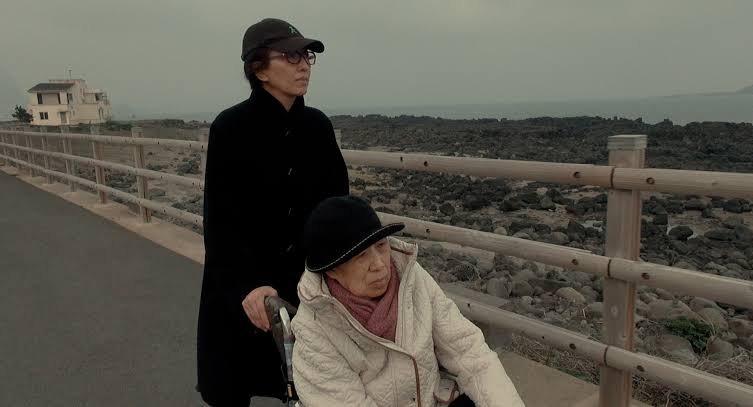
Soup and Ideology (Yang Yong-hi) Confronting half of her mother’s life—her mother who had survived the Jeju April 3 Incident—the director tries to scoop out disappearing memories. A tale of family, which carries on from Dear Pyongyang, carving out the cruelty of history, and questioning the precarious existence of the nation-state. With her latest documentary Yang Yonghi continues to explore how her own personal life is tragically connected to the post war history of Japan and Korea. The movie presents not only the painful memories of the Jeju massacre (April 3rd 1948) as remembered by the director’s mother, and the destruction a family, her three brothers were sent from Japan to North Korea at a young age, but it is also an emotional portrait of her frail and ageing mother. As the film progresses she is diagnosed with senile dementia, and little by little she loses her memories, including those of the massacre she witnessed, only 18, in the small Korean island. The movie is also partly an act of self-reflection by Yang Yonghi herself, if in the first part she is the one filming her mother, and we don’t really see her too much, in the second, when her mother condition worsens, she enters the frame more often, and becomes the co-protagonist of the film. We can clearly see her emotions, especially when she visits the island, with mother and husband, for the anniversary of the massacre. There, Yang Yonghi understands that her mother’s affiliation and attraction for North Korea, something the director had never completely forgiven her for, was also caused by the atrocities committed by the South Korean Army her mother saw with her own eyes.
It would have been a better movie for me, had not been for the five or so minutes of animation used to explain her mother story in Jeju in 1948. I found the segment out of place and it really took me out of the movie.
.

Shiver (Toyoda Toshiaki) A music movie featuring a performance of Taiko Performing Arts Ensemble ‘Kodo’ and Koshiro Hino. Filmed entirely on Sado island. Partly a filmed music performance, partly a visual experiment connecting music, landscape and spirituality, Shiver is a fascinating piece of work that fits perfectly with what Toyoda has being creating in recent years. Through the spiritual encounter between Sado landscape and the hypnotic music of the taiko drummers, Toyoda touches and expands some of the themes tackled in some of his most recent films, such as the The Blood of Rebirth, Monsters Club, and The Day of Destruction. That is, the primal nature of the world we inhabit, and how we, humans, can connect with it through music, a similar approach was also at the core of Planetist in 2020. Something primal not in a temporal sense as something that comes before, or ancestral, but more as something essential that is always present and awaits to be discovered and brought to light. Like the rock/monolith towards the end of the work, which seems to have some kind of energy inside, and whose light is filtering through the cracks only when the music plays.

.

Whiplash of the Dead (Daishima Haruhiko) Weaving together the memories of Yamazaki Hiroaki, a university student who lost his life in the First Haneda Struggle in 1967 through the words of his bereaved family and ex-classmates, this film turns the memories of those who protested against government power into questions for the future. The movie is comprised of two parts, for a total of 200 minutes, in the first 90 minutes the director focuses on the events preceding the death of Yamazaki, while in the second segment, that could easily have been another movie, the protagonists of the students protests of the late 1960s, reflect on the reasons of the implosion of the new left and its movements.
The story of the Mito family, not affiliated with any left group, but a family that helped the young people in prison, and later promoted anti-nuclear activism and whose members (father and two sons) tragically died in 1986 in a mountain incident, is so fascinating that would deserve its own documentary.

.

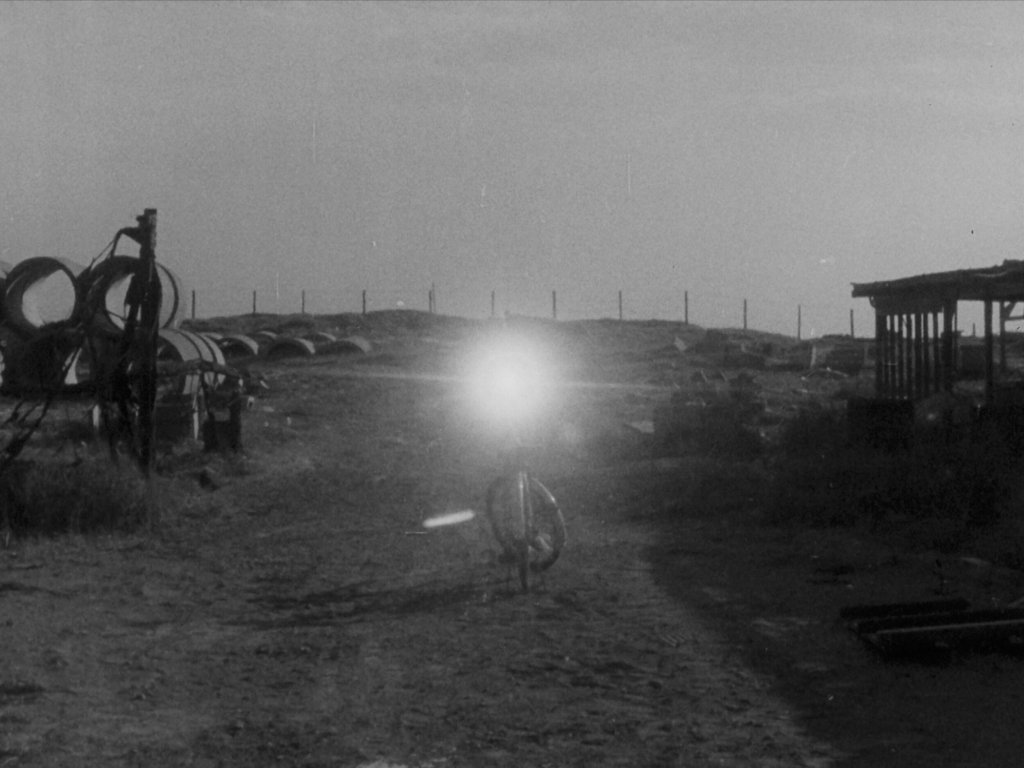
Discovery of the year: Alchemy (Nakai Tsuneo, 1971). The camera slowly zooms, in over a long period of time, on the light of the sun reflected in the mirror of a bicycle parked at the construction site. To this is added a slowly evolving flicker effect derived from negative-positive reversals, progressively dismantling the distance from the subject. Nakai created a masking film with a calculated pattern of black and white frames into which he inserted positive and negative images and made a print out of two separate rolls of film. The original projection speed was 16 frames per second, but the sound is separate from the open-roll tape rather than burned in, so it can also be screened at 24fps. Also, the original sound consisted of the friction noise of rubbing steel, but in 2019 a new version of the sound was created featuring the friction noise of glass. Two versions of the film exist: 24:15 mins at 24 fps and 40 mins at 16 fps.                                   A structuralist film made in 1971 by Nakai, clearly inspired by Michael Snow’s Wavelength, but at the same time highly original, and somehow anticipating Matsumoto’s Atman.
.

Honourable mentions: Her Socialist Smile (John Gianvito), Summer of Soul (…or, When the Revolution Could Not Be Televised) (Questlove)
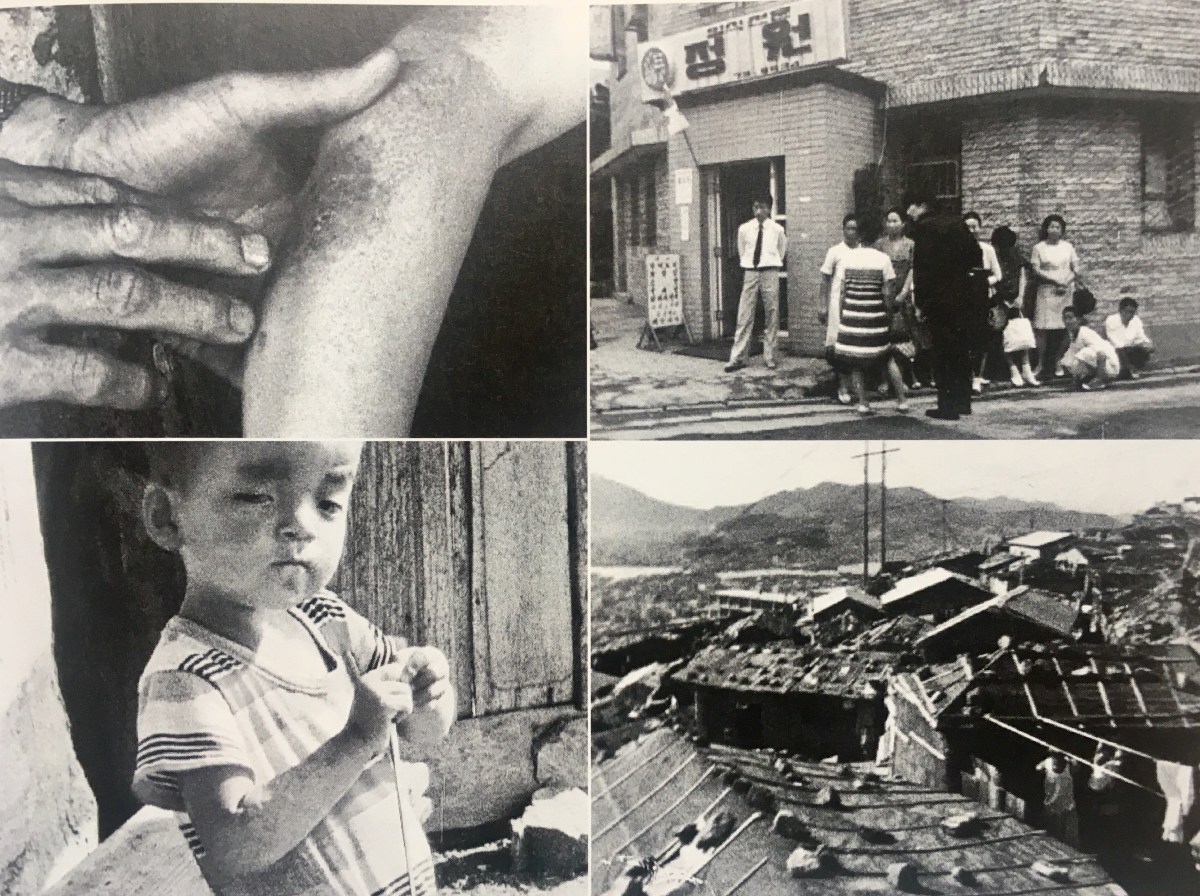
 

To the Japs: South Korean A-Bomb Survivors Speak Out (NDU, 1971)

Last autumn (10 months ago!) I was lucky enough to attend a special screening event dedicated to the Japanese collective Nihon Documentary Union (NDU), at the Kobe Planet Film Archive. I’ve written elsewhere about NDU and the movies of Nunokawa Tetsurō, specifically about Asia is One (1973), and if you’d like to take a deeper and more academic dive into the subject, there’s this excellent essay by Alexander Zahlten on the Journal of Japanese and Korean Cinema.

Titled From NDU to NDS, the program was organised by the archive’s director Yasui Yoshio and included the screening of To the Japs: South Korean A-Bomb Survivors Speak Out (NDU, 1971) followed by a short documentary/visual report by Kim Imman shot in 2008 (but I’m not really sure about the date), when Nunokawa Tetsurō and Kim himself went to Korea to meet the women portrayed more than 30 years before in the NDU’s movie. The last movie screened was Kim Imman’s Give Back Kama’s Rights! (2011), produced by NDS (Nakazaki-cho Documentary Space) and shot with the help of Nunokawa himself in Kamagasaki, Osaka’s largest dosshouse, a powerful example of video-activism/documentary of the new century. It is interesting to note that one of the members of NDS was Satō Leo, director of the surprisingly good Kamagasaki Cauldron War, one of the best movies of 2019 in my opinion.

The day ended with a short talk between Inoue Osamu, the only surviving member of NDU, Imman and a young Japanese scholar who specializes on NDU and 1960s/1970s Japanese cinema. The small theater was, with my surprise, packed, and extra chairs had to be added to fit everybody in.
One of the reasons for this relatively wide audience was that ー and I got a confirmation in the after talk, but more on this later ー the interest in the post war relations between Korea and Japan is still an open wound (at the moment I’m posting this report, July 2019, the tensions seem to have reached new hights).

This is the synopsis of the movie (from YIDFF) :

In 1971, while the Japanese prime minister Sato Eisaku was visiting South Korea to attend a party for President Park Chung-hee, a group of eight South Korean hibakusha(atomic bomb survivors) took a direct petition to the Japanese embassy. The South Korean hibakusha were detained by South Korean authorities for the duration of the prime minister’s visit. This film follows the lives of these eight people. That same year, Son Chin-tu, a hibakusha who had entered Japan illegally and was being held at the Omura Detention Center, filed his so-called “Hibakusha Certificate Lawsuit” demanding Japanese residency and medical treatment.

To the Jap was made in 1971, just after Motoshinkakarannu and before Asia is One (1973). The film opens with what looks to me like a parody of a TV commercial, but could just as easily be a real one, advertising the city of Busan and its tourist attractions, one of the main locations where the film was shot. From the first scenes, it’s clear that although the film is a documentary, it continues the arc started by Motoshinkakarannu, but differs from it in its style, reminding me more of the anarchic and pop finale of Onikko: A Record of the Struggle of Youth Laborers (1970), the first documentary made by the collective, when the film goes from black and white to colour and Nunokawa himself writes big red letters on a wall.

The vibrant colours of the early scenes are contrasted with the stark, almost blue quality of the black and white used to depict the women on the train as they travel to Seoul, and the more ‘traditional’ black and white used in some other parts of the film. This sense of formal non-linearity is accentuated and amplified by the off-sync audio – as in many of the collective’s other works, more a necessity than an aesthetic choice, I think – but also by the background noise of the city and the various and composite soundscapes through which the film is constructed. Once again, and this is a common trait that formally unites all the NDU’s films, especially Motoshinkakarannu and Asia is One, I would say, To the Japs proves that the documentaries made by the collective were first and foremost what I’d like to call a “cinema of chaos”, a complex and mosaic representation of reality, without seeking a resolution of conflicts and without searching for a clarity that isn’t there.

The after talk was too short and mainly focused on the absence of Japanese subtitles in some scenes in Imman’s short work, and on other language related problems in To the Japs, mainly why the women were called by their Japanese name and not by their Korean one. There are no doubts that these are very significant political topics worth discussing, however nothing was said on the formal elements of the film, and I think it was a missed opportunity.

In conclusion, To the Japs cemented my opinion of the importance of NDU and its place in the history of Asian cinema. Its insistence on liminal spaces and geographical thresholds continues to function today as a kind of cinematic alchemical ‘solution’, placing Japanese national identity in flux and pointing to a possible and desirable Caribbeanisation of the archipelago yet to come.

Kinema Junpo Best Japanese Documentaries of 2018

A couple of weeks ago the film magazine Kinema Junpo announced its 2018 Best Ten Lists. Launched in 1924 with only non-Japanese films, and from 1926 including Japanese movies as well, the poll includes, in its present form, four categories: Japanese movies, non-Japanese movies, bunka eiga and a section awarding individual prizes such as best director, best actor, best actress, best screenplay, etc.
You can check the results for all the categories here.

The best 10 Japanese bunka eiga — a term that, more or less, could be translated into culture movies, in orher words documentary — according to the magazine are:

1 Boy Soldiers: The Secret War in Okinawa  沖縄スパイ戦史 (Chie Mikami, Hanayo Oya)

2 Sennan Asbestos Disaster ニッポン国VS泉南石綿村 (Kazuo Hara)

3 ぼけますから、よろしくお願いします (Naoko Nobutomo)

4 奇跡の子どもたち (Hidetaka Inazuka)

5 Gokutomo 獄友 (Sung Woong Kim)

6 武蔵野 江戸の循環農業が息づく (Masaki Haramura)

7 春画と日本人(Ōgaki Atsushi)

8 蒔絵 中野孝一のわざ

9 夜明け前 呉秀三と無名の精神障害者の100年 (Tomoki Imai)

10 まだ見ぬまちへ〜石巻 小さなコミュニティの物語 (Kenji Aoike)

Not all of them have an official English title, since most were not, and probably will not be, released internationally.

I haven’t seen all of them, but the list seems to reflect certain general and for me disappointing aspects of contemporary documentary in Japan, or at least, a certain way of doing and conceptualizing documentary in the archipelago. Documentary seems to be viewed more as a vehicle to present a certain subject or a certain theme to the viewers and less as a form of visual expression. In other words, no much effort and time is spent on how to stylistically construct the film, and I think part of the “problem”, at least regarding the list in question, is connected to the meaning of term bunka eiga and thus to the by-the-fault approach from the magazine that seems to prioritize the subject matter over cinematic style.
The list is also a reflection of what is happening at the moment in the Japanese documentary scene. I haven’t watched every single non-fiction movie made in the archipelago in recent years, but I see a good number of Japanese documentaries every year, and not only there are almost no trace of documentaries that successfully blur the boundaries between non-fiction, avant-garde and fiction — with few glorious exceptions of course — but there’s hardly space even for works that try to present and tackle themes in different ways.

This slideshow requires JavaScript.

With that out of the way, I can now move to the positive notes. It was nice to see at the first two places Boy Soldiers: The Secret War in Okinawa and Sennan Asbestos Disaster. The former is the third “installment” of the ongoing exploration, by journalist and documentarist Chie Mikami, of the resistance and fight of the Okinwan people against the American “occupation” of the islands. This time Mikami’s movie (co-directed with Hanayo Oya) focuses more on the past, documenting with old photos, footage and interviews, how in the closing stages of the Battle of Okinawa, a unit called “Gokyotai” was used to wage guerrilla behind enemy lines.
Sennan Asbestos Disaster is the latest work by Hara Kazuo (Extreme Private Eros: Love Song 1974, The Emperor’s Naked Army Marches On), about former workers and the relatives of workers at asbestos factories in Osaka’s Sennan district. Hara with his camera follows their legal battle against the Japanese government while seeking compensation for the damage done to their health by asbestos. I had the chance to see the movie in Yamagata in 2017, with four of the victims sitting and chatting in the row in front of me, a very impactful viewing experience that I still treasure.

A final point worth noting is that many of the documentaries in the list are about, to different degrees, the third age. In Sennan Asbestos Disaster the victims are almost all over 60, and so are the five men wrongly convicted in Gokutomo, and the couple depicted in Bokemasukara, yoroshiku onegaishimasu (ぼけますから、よろしくお願いします), a movie about senile dementia,  is well over 90. The disease is also the central theme explored in the triptych of documentaries Everyday is Alzheimer (毎日がアルツハイマー 2012-2018) by Yuka Sekiguchi, the third and latest was released last year, an underrated series in my opinion. I am not discovering anything new, but this heavy focus on the elderly is another signal of the increasingly aging population In Japan, a demographic shift that is shaping, and in fact has already started to shape, the country in several ways, not least its film and visual production.

Image Forum Festival 2018 イメージフォーラムフェスティバル 2018

The 32nd Image Forum Festival ended last Sunday in Tokyo. The nine-day-long event, hosted at two different locations in the Japanese capital, the Theatre Image Forum and the Spiral Hall, screened in total more than 80 films, including 23 in the East Asian Experimental Film Competition, the main section. Established in its present form in 1987, the festival succeeded and replaced an experimental film festival that was held, in various phases and different shapes, in the capital from 1973 to 1986.

To this day the festival continue to embody the mission and the legacy of its predecessors. Primarily dedicated to experimental cinema and video, the event provides a special opportunity for the viewers to experience on a big screen a mix of feature films, home cinema, documentary and experimental animation.
After Tokyo, the festival will move to Kyoto, Yokohama and Nagoya, with slightly different contents, there will be special sections dedicated to artists of each city. This is a right and welcomed decision, since too often Tokyo ends up cannibalizing the cultural and artistic events taking place in the archipelago.

This slideshow requires JavaScript.

This year’s special retrospectives were dedicated to the provocative films of Christoph Schlingensief, German director who expanded his works beyond cinema to touch theater, television and public happenings, Kurt Kren, Austrian artist associated with Viennese Actionism, but also author of structural films, and the experiments on celluloid by Japanese photographer Yamazaki Hiroshi. I wasn’t aware of the films of Schlingensief, and I have to say that it was at the same time a discovery and a delusion. While I really liked 100 Years of Adolf Hitler (1989), claustrophobic and parodic reconstruction of the last hours of the dictator and comrades in his bunker, I couldn’t digest the other two movies of the so called German Trilogy. German Chainsaw Massacre (1990) and especially Terror 2000 (1992) are too much of a mess and stylistically all over the place , and probably too bound to the events of the time, the Fall of the Berlin Wall and the consequent unification of the two Germanies, for me to decipher them.

Unfortunately I wasn’t able to check the works of Yamazaki, but I’m planning to see them at the end of September, when the festival will come to Nagoya. As with his conceptual photos, the shorts made during his entire life explore the relationship between time and light, a topic I’m very attracted to.
I also missed the screening of Caniba (2017) by Lucien Castaing-Taylor and Véréna Paravel, about the “cannibal” Sagawa Issei, if I’m not wrong, this was the Japanese premiere of the film, and the special focus Experimenta India, a collection of visual art from the Asian country.
Interesting was to catch Matangi/Maya/M.I.A. (Steve Loveridge, 2018), about the famous ex-refugee of Tamil origin, now a pop icon and singer, an artist I was completely unaware of. The documentary is based on more than 20 years of footage filmed by herself and her friends in Sr Lanka and London. While I didn’t connect with the first part of the movie, too self-indulgent for my taste, the film gets much better in the last 30-40 minutes when, albeit briefly, touches on complex and fascinating topics such as immigration and art, fame, and social awareness in the show business.

The East Asia Experimental competition was pretty solid, besides several short films coming from a variety of areas like South Korea, China, Hong Kong, Taiwan and naturally Japan, two were the long documentaries screened. A Yangtze Landscape (Xu Xin, 2017), a visual exploration of the social and geographical landscape along the longest river in Asia (you can read my review here), and Slow Motion, Stop Motion (Kurihara Mie, 2018) a movie that positively surprised me and won both the Grand Prize and the Audience Award. A review is coming soon, stay tuned.

Documentaries at the London Korean Film Festival 2017

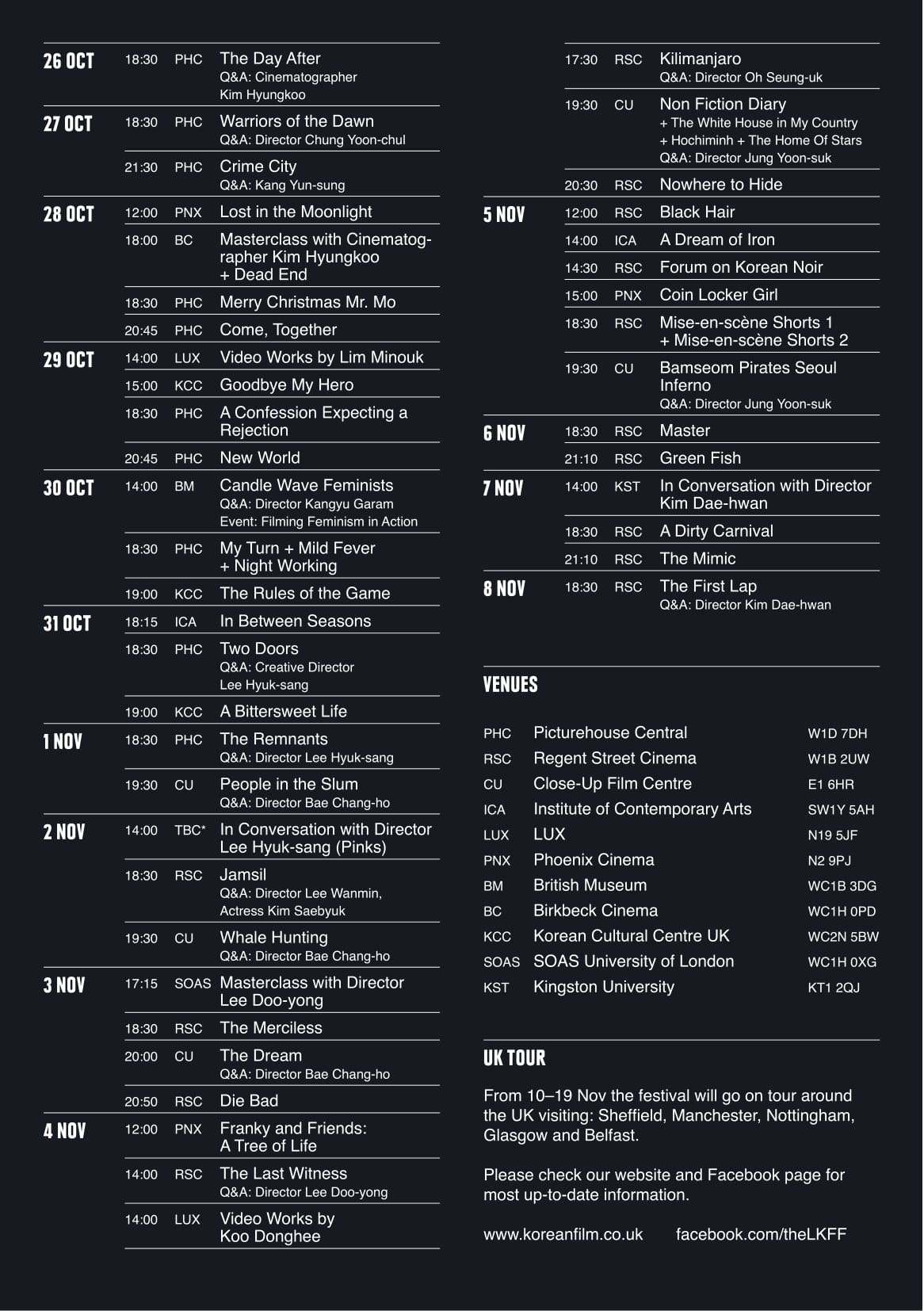
The London Korean Film Festival has opened its 12th edition last Thursday and will run in the capital for two weeks, from November 10th through the 19th the festival will then go on tour around the UK, touching Sheffield, Manchester, Nottingham, Glasgow and Belfast.
In addition to showcasing a wide-range of titles produced in the Asian country, there will also be masterclasses, talks and collateral events, a special occasion for the British audience to get a glimpse of South Korean cinema and film culture in general. This year line-up includes not only UK and European premieres, animations, classics, shorts and indies, but also a fascinating focus on Korean Noir, “Illuminating the Dark Side of Society”, and, of particular interest for this blog, a program dedicated to documentary.

The first movie presented will be Two Doors (2012) directed by Kim Il-rhan and Hong Ji-you, a documentary investigating the the Yongsan Disaster, when in January of 2009 a sit-in rally in central Seoul resulted in the deaths of five protesters and one police officer. While Two Doors focuses more on the legal aspects of the tragedy, amassing documents against the violence used to prohibit the demonstration and the sit-in, The Remnants  (2017) is about the personal tribulations and the legal problems that some the people who took part in the demonstration had to go through in the seven years after the tragedy. The movie was directed by Lee Hyuk-sang, who was also creative director behind Two Doors, and the festival has organised a special conversation with the director on November 2.
Goodbye my Hero (2017) by Han Younghee, a movie addressing labour relations and workers’ rights in contemporary South Korea, and Park Kyung-hyun’s Dream of Iron (2017), a film essay about the development of the steel industry in the country during the 1960s, will complete the section.
The ‘Women’s Voices’ s section includes also a documentary, Candle Wave Feminists (2017) by Kangyu Garam, a movie that delves into the revolution that led to former prime minister Park’s impeachment and her spiritual mentor Choi Soon-Sil’s arrest.

All the documentaries will be screened this week starting from tomorrow, October 31st.

LKFF17-Screening-Schedule-1.jpg

Kobe Discovery Film Festival 神戸発掘映画祭 2017

A new beginning for the Kobe Documentary Film Festival. From this year the annual event held at the Kobe Planet Film Archive since 2009 will change its name and concept into Kobe Discovery Film Festival (神戸発掘映画祭). The renaming reflects a shift of the festival’s focus from documentary to film and moving image preservation and restoration, and the (re)discovery of less known movies from the past, something on the lines of what, with great success, Il Cinema Ritrovato in Bologna has been able to become in recent years. I really like the idea, because I think that in an era like the one we live in, when digital images are produced, consumed and binged frenetically every day, going back to the dawn of cinema and exploring the fringes of film culture is a refreshing and re-balancing practice, especially in Japan.

The festival, although it is more a cinematic event organized in four days than an actual film festival, is also an opportunity to reflect on the importance of cinema archives in the contemporary mediascape, it may sounds tautological, but Kobe Planet Film Archive before being a theater is first of all, well, an important film archive.

The first edition of the Discovery Film Festival will take place from November 23 to 26 and is divided in six sections.
Amateur cinema discovered: home movie day, with screening of 13 Japanese short movies made in prewar Japan during the 1930s (there’s even a colour film, 兵隊と花), is an interesting occasion to get a glimpse of the everyday life in Japan in a period when the country was rapidly changing (mainly for the worst).
100 years of animation in Japan is dedicated to celebrate the early animations made in the country, divided in three sub-sections the program will present early examples of amateur experimental animation and silhouette animation, and some early works from the 1920s, including  An Old Fool (のろまな爺, 1924) by Ōfuji Noburō, rediscovered by the Planet Film Archive itself few years back. In the program also a couple of works recently discovered (sorry I don’t have the English titles): HOT CHINA 聖林(ハリウッド)見物, マンガ 空中凸凹拳闘 (1941),  カテイ石鹸 (an advertisement made in 1921) and 小人の電話 (1953).
The latest digitized films is a program that will showcase an interesting selection of movies recently digitized from 35mm prints, otherwise impossible to screen, by the Kobe Design University, while Selected by Planet will present a bunch of movies from its archives, including The Peerless Patriot (国士無双, 1932) directed by Itami Mansaku (father of Itami Jūzō), and the 1950’s 海魔陸をいく (no English title) by Igayama Masamitsu, a film between documentary and narrative cinema similar, as far as I know, to the works of Jean Painlevé.
A special screening of the color (Konikolor) version of A Jazz Girl is Born (ジャズ娘誕生, 1957) by Sunohara Masahisa, shown last year at Il Cinema Ritrovato, and a series of 8mm experiments by musician and filmmaker Mori Ari will conclude the festival. You can find the entire program (in Japanese) here.

The idea and the concept behind the Kobe Discovery Film Festival are really promising, also considering the important position of Planet Archive in preservation and restoration in Japan, and I whish the organizers the best of luck.

From the archives: Kamei Fumio, Hani Susumu, and Ogawa Production in two Italian publications (1967, 1970)

The Centro sperimentale di cinematografia (Experimental film centre) in Rome is one of the oldest cinema schools in the world and the oldest in Europe. Founded in 1935, the centre nourished and helped establishing, in different degrees, the career of many important filmmakers, photographers and actors. Japanese director Masumura Yasuzō famously studied at the school for about two years at the beginning of the 1950s under luminaries such as Michelangelo Antonioni, Federico Fellini and Luchino Visconti, an experience that without doubt helped shaping his approach to cinema and his views as a filmmaker.
In 1937 the centre started to publish its own film journal, Bianco e Nero, a monthly magazine that is still been published to this day. A couple of years back I bought a copy from 1967 (February) that has an article, penned by film critic Claudio Bertieri, on the documentaries of Hani Susumu and Kamei Fumio. In November of the previous year the Festival dei Popoli in Florence, an event dedicated to non-fiction still running today, presented a mini-retrospective on Japanese documentary, and Bertieri discusses in the short article, titled Susumu Hani, Fumio Kamei ed il documentario giapponese (Susumu Hani, Fumio Kamei and Japanese documentary), the movies he was able to see at the festival. He devotes most of the article on Hani, Yuki Matsuri (1953), Children in the Classroom (1954), Children Who Draw (1955), Twins in the Class (1956) and Hōryū-ji (1958) are the documentaries here analysed, while the rest of the piece is spent examining Kamei’s It’s Good to Live (1956) and The World of Yukara (1964), a trilogy about Ainu’s traditions. Although written in 1967 — a period when Japanese documentaries certainly were not known or available to watch as they are today (well, they are not that discussed even today…)— and with few dated observations here and there, most of the analysis remain solid to this day. Documentary as opposed to mainstream cinema ‘the man in the street here [in Europe] has not seen Louisiana Story, in Japan he does not know Hani or Kamei’, Hani’s ability to capture moments of pure innocence in children, or Kamei sensibility when portraying human suffering are spot-on insights.

Even more interesting, but for different reasons, is Cinema: Giappone e Zengakuren (Cinema: Japan and Zengakuren) a short book published in 1970 by Samonà e Savelli, later Savelli – La Nuova Sinistra, a publisher established in 1963 and the first to directly represent the extra-parliamentary left-wing in the Italian publishing world. Over the next decade the books printed by Savelli – La Nuova Sinistra, also fueled by political and social unrest in the peninsula, would gain momentum and become a cultural reference point for left-wing groups such as Potere Operaio and Lotta Continua , and for the newspaper Il Manifesto.

The book is devoted to Ogawa Shinsuke’s The Battle Front for the Liberation of Japan – Summer in Narita (1968), the first movie in the Narita/Sanrizuka Series. A brief introduction that outlines the Japanese political situation and the fierce resistance by the peasants and the students, is followed by a translation of some writings by members of Ogawa Production, just a couple of paragraphs nothing more, while the main part of the volume is a transcription of the dialogues spoken in the film. It was a period where revolutionary cinema(s) of the globe were connecting to each other and were trying to build a common front against capitalism, the people in power and the establishment. The back cover is in this regard illuminating: Comitato di Cinema e Rivoluzione: Baldelli, Filippi, Ivens, Ogawa, Rocha, Solanas, Straub (Cinema and Revolution’s committee: Baldelli, Filippi, Ivens, Ogawa, Rocha, Solanas, Straub).

Reading these two publications after almost 50 years since they were originally printed was a very fascinating discovery, Ogawa and Kamei are two of the most important documentarists in the history of world cinema and essentially the reason this blog exists. Cinema: Japan and Zengakuren in particular is revelatory not as much for the information it contains, there are some mistakes of course—in the pre-internet age Japan was still a land far away and often misrepresented—but more as an artifact of an era long gone but still able to resonate with our present. An era when the arts were explicitly politicized, in a state of never-ending struggle and ready to change the world.

This slideshow requires JavaScript.

A Yangtze Landscape (Xu Xin, 2017)

Festivalscope is giving access, till mid April,  to some of the documentaries screened at this year edition of Cinéma du réel, one of the most prestigious festivals dedicated to non-fiction cinema. (You can learn more here)
I grabbed the chance and last night I watched A Yangtze Landscape, a movie directed, photographed and edited by Xu Xin. IMDB describes it as follows:

A Yangtze Landscape utilizes a non-narrative style, setting off from the Yangtze’s marine port Shanghai, filming all the way to the Yangtze River’s source, Qinghai/Tibet – filming a total distance of thousands of kilometers. Experimental music and noise recorded live on scene are used in post-production, painstakingly paired with relatively independent visuals, creating a magically realistic atmosphere contrasted with people seeming to be ‘decorative figures’ right out of traditional Chinese landscape scrolls.

The documentary is composed of stunning scenary rendered in beautiful digital black & white, particularly the night landscapes are of almost pictorial quality, punctuated by scenes of people inhabiting the areas along the river, mostly areas ruined or emptied by the industrial and urban changes of the last decades. These parts with people are, in my opinion, performative, in a sense that the people seen, most of them poors, with mental problems or homeless, are performing themselves and their daily routine in front and for the camera. A Yangtze Landscape is for this reason a very partial film that focuses its attention on certain edges of Chinese society, I’m pretty sure that most of the comunities living near or on the banks of the Yangtze river are very different from the few exceptional individuals shown in the movie. Yet this is not a demerit of the film, a certain quality of artificiality so to speak, or performance as I have called it above, is very obviously present from the first minutes of the documentary, and the fact that it’s shot in its entirety in black & white is after all the biggest hint of its poetic aspiration and quality. Also on a technical side, it is worth noticing how in more than 2 hours and half there’s never a camera movement and a zoom in or out, the frame never moves, everything is crystallized and done by a very crafted editing, we have the camera “moving” only in the scenes where it is positioned on a ship floating on the river.
The movie has some similarity in its basic concept and structure to P. J. Sniadecki’s The Iron Ministry, if I’m not wrong, the american director is among the people thanked at the end of the documentary. There the camera followed the lives of Chinese people commuting by train from one part of the country to the other, from the lower to the upper class, here Xu Xin directs his gaze from the port of Shanghai to its source in Tibet.
We see and learn through intertitles, there’s no narration, about abandoned old villages, a bridge where every year many people commit suicide and other disasters and accidents that have happened near or on the river in the last 5 or 10 years.
The only witness of all these happenings seems to be the landscape, it is almost useless to say it, but the real protagonist of the movie is the landscape, a space where natural, human and industrial histories/stories intermingle and merge.

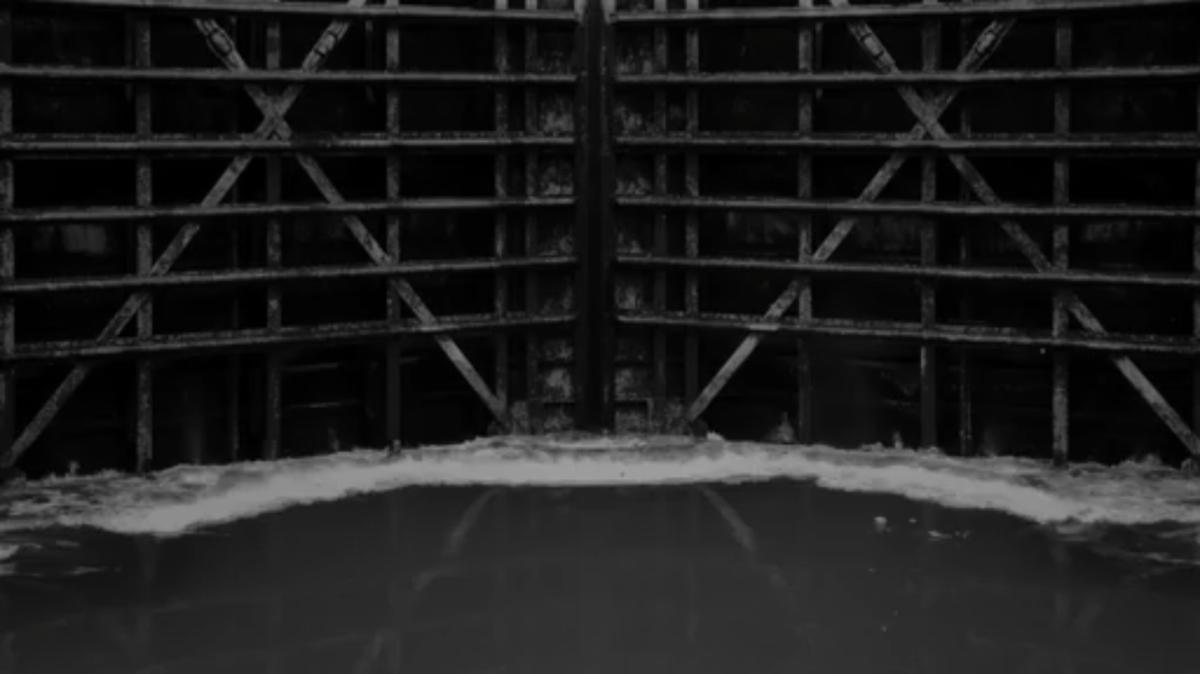
Interesting and well crafted as it is, I nonetheless feel that something is missing from it, to denounce and criticize certain aspects of contemporary Chinese society, and not only China, is something that absolutely must be done, but now that the country is in the spotlight internationally the risk is to look too redundant. For instance, towards the end of the movie there’s a long part all dedicated to a couple of homeless, their shacks and their dogs, we can see them on the foreground sitting in an old sofa or wandering among ruins with the ultramodern city and its skyscrapers on the background. The image is beautiful in its contrast, and even if it possesses a degree of truth, it ends up being trite and obvious, weakening the potential of the movie. While I like the general style, again the black & white is pictorial and the editing is perfect, it must be said that sometimes the film looks too “beautiful” and the image too “clean” without being subversive. The parts that resonate with me the most are those where Xu Xin explores the aesthetics of documentary to its limits. The aforementioned night scenes of the cities lights along the river, shiny but empty jewel boxes, or those at the river locks, slow and almost endless images of the water level, the ships raising and the gates opening, paired with a cacophonous soundscape made of squeaking noises and experimental music.

My favourite documentaries of 2016

2016 has been a busy year and unfortunately, and for various reasons (one of them being the place where I live, Japan), I haven’t had the chance to see as many new documentaries as I wanted to. On the other hand though, having had access to many documentaries produced in Taiwan through Taiwan Docs, for a couple of months I binge-watched the non-fiction movies produced in the island in 2016 (and 2015), and it was a revelation. Not only it allowed me to discover and explore the complex sociopolitical situation of the area and its recent history, but luckily I also stumbled upon a couple of formally challenging films.

That being said, I can’t really miss what recently has become a sort of yearly custom, so here is my list of the best documentaries I’ve seen in 2016, some of them are from 2015, but released internationally, or at least in Japan, only this year. At the end I’ve also compiled a short list of the best (re)discoveries of 2016. (disclaimer: best should here be understood as “favourite” of course)

8. Quemoy (Chiu Yu-nan)

quemoy_doc

“Quemoy, the islands adjacent to Mainland, used to be the frontier between Taiwan and China. However, it opens its border for the cross-strait exchanges. The film shows traces of Quemoy people in different generations and builds up a picture of complicated national identity in the boundary island.”
A relatively short movie (just 45′) whose main appealing point is its depiction of the complex geopolitical situation of the area.

7. Into the Inferno  (Werner Herzog)
6. Lo and Behold, Reveries of the Connected World (Werner Herzog)

“This boiling mass is just monumentally indifferent to scurrying roaches, retarded reptiles and vapid humans alike.”
Both movies are pure Herzog, for better or for worse, I personally adore the man, but the risk the great German director is running in his recent documentaries – especially now in an era when the social media is so pervasive and his persona in the mediascape is sort of overexposed – is that of becoming prisoner of the image forged in almost 50 years of incredible career.
Be that as it may, if you like Herzog, these two documentaries released in 2016 are very enjoyable, Lo and Behold is a better work in my opinion, or at least more appealing to me, and not necessarily for its subject, more for its rhythm and editing. Into the Inferno in some points wanders a bit too much, the segment set in North Korea for instance, albeit fascinating for the unique insights on the country, felt too much like a long digression.

5. Further Beyond

An interesting experiment in meta-documentary and a non banal reflection of what identity and its construction through images and storytelling is. The movie is maybe a bit excessive in its meandering here and there, but 
some passages are pure digital beauty.

4. A Room of Her Own: Rei Naito and Light (Yuko Nakamura)

a_room_of_her_own_rei_naito

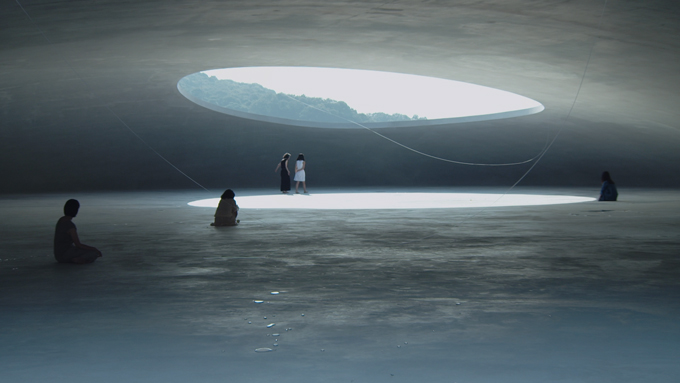
Graced by outstanding sound design and soundtrack, the movie captures and beautifully embodies the sense of fragility and ephemerality of life seen through the art of Naito Rei. But A Room of her Own is interesting on many other different levels, partly experiment in non-fiction, partly personal documentary – what brought Nakamura to approach Naito was the severe illness of her mother – and partly a work that explores the intangibility of life, the movie is a very refreshing work of non-fiction, especially when considered in the context of Japanese contemporary documentary. I wish the last part, when four women are gathered on Teshima island, would have been longer. 
One last note on the photography, in tone with the themes explored by the movie, is really one of the most accomplished aspects of it.

3. 15 Corners of the World (Zuzanna Solakiewicz)

15_corners_of_the_world

I cheated, I know it’s a movie from 2014, but I watched it this year and it made a big impression on me, so I decided to include it in my list anyway.
15 Corners of the World is a mesmerizing and hypnotic documentary about the Polish electronic-music pioneer Eugeniusz Rudnik and, more importantly, about the visualisazion of sound and its materiality. An incredible visual and auditory experience.

2. Forgetting Vietnam

forgetting_vietnam

The latest visual work from Trinh Minh-ha, I’ve written more about the movie here.

1. 3 Island (Lin Hsin-i)

img_2531

A work that creates a complex and experimental mapping of three distinct geographical Asian areas, interweaving poetry, abstract imagining, historical data and archival footage. If you want, you can read more here.


(re)discoveries (in no particular order)


Asia is One (NDU), read more here.

On the Road: A Document (Tsuchimoto Noriaki, 1964), read more here.

Hospital ( Frederick Wiseman, 1970)

Broadway by Light (William Klein, 19589

The Festival Pan-African of Algiers (William Klein, 1969)

Forgetting Vietnam ( Trinh T. Minh-ha, 2015)

Writing about Trinh T. Minh-ha, one of the most significant filmmakers, cultural theorists and artists active today, was something I meant to do for a long time, and the occasion finally came a couple of weeks ago when I had the chance to watch her newest movie, Forgetting Vietnam (2015).
For everyone interested in documentary also as a way of questioning the ontological status of cinema and the nature of filmic representation, Trinh T. Minh-ha is a familiar name. Born in Vietnam and raised in Hanoi during the Vietnam War, she migrated to the U.S. in 1970, where she now resides and is active as a filmmaker, writer, composer, and professor of rhetoric and of gender and women’s studies at the University of California, Berkeley. Among her most important films are the seminal Reassemblage (1982), Surname Viet Given Name Nam (1989) and The Fourth Dimension (2001).

Forgetting Vietnam was screened at this year Cinéma du Réel in Paris and at various sites throughout U.S., here the movie’s description:

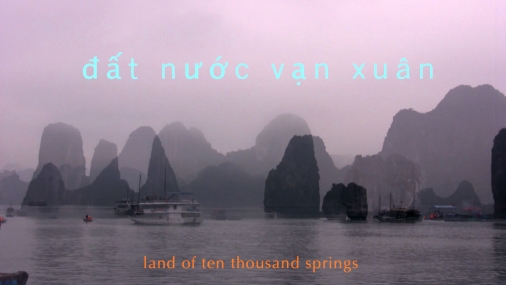
Vietnam in ancient times was named đất nứớc vạn xuân – the land of ten thousand springs. One of the myths surrounding the creation of Vietnam involves a fight between two dragons whose intertwined bodies fell into the South China Sea and formed Vietnam’s curving ‘S’ shaped coastline. Legend also has it that Vietnam’s ancestors were born from the union of a Dragon King, Lạc Long Quân and a fairy, Âu Cơ. Âu Cơ was a mythical bird that swallowed a handful of earthly soil and consequently lost the power to return to the 36th Heaven. Her tears formed Vietnam’s myriad rivers and the country’s recurring floods are the land’s way of remembering her. In her geo-political situation, Vietnam thrives on a fragile equilibrium between land and water management. A life-sustaining power, water is evoked in every aspect of the culture.
Shot in Hi-8 video in 1995 and in HD and SD in 2012, the images unfold spatially as a dialogue between the two elements—land and water—that underlie the formation of the term “country” (đất nứớc). Carrying the histories of both visual technology and Vietnam’s political reality, these images are also meant to feature the encounter between the ancient as related to the solid earth, and the new as related to the liquid changes in a time of rapid globalization. In conversation with these two parts is a third space, that of historical and cultural re-memory – or what local inhabitants, immigrants and veterans remember of yesterday’s stories to comment on today’s events. Through the insights of these witnesses to one of America’s most divisive wars, Vietnam’s specter and her contributions to world history remain both present and all too easy to forget. Touching on a trauma of international scale, Forgetting Vietnam is made in commemoration of the 40th anniversary of the end of the war and of its survivors.

“The image, a singular experience of blindness”

With Forgetting Vietnam Minh-ha revisits her native land forty years after the war, an event that touched her personally, and depicts the Vietnamese landscape and its evolving culture – exploring the daily life of women and the importance of the binary interplay between water and land in Vietnamese history – but at the same time the movie is a deconstruction of the documentary as a direct mode of representation and subtle exposure of the constraining power of the image.
Minh-ha is trying to break, or at least to weaken, the spell of the image and the univocity through which it’s usually perceived and consumed, as she writes “The question is not so much to produce a new image as to provoke, to facilitate, and to solicit a new seeing” (The Digital Film Event, Routledge, 2005). To sparkle a new seeing Minh-ha is placing hurdles and barriers to complicate the simple fruition of images and the easy formation of meanings. Written words, quotes, poetic lines, superimposition, screen wipes, music and montage are used to create a fluid, disorienting and ever-escaping cinematic experience, a work whose speed and continuous progressing don’t allow us to get too much attached to the images and stories we are fed. There’s no time and space for the viewer to reflect or engage on what she or he sees on screen, although the hinted events are of the largest scale such as the infamous Huế Massacre, the “forgetting” in the title is thus not only the oblivion of the tragedies the country and its people had to endure, but also a way of experiencing the movie as an impermanent event, or, as someone has beautifully pointed out “the diaspora of the film is thus not only cultural, but formal, in the sense that we never find any sort of grounding here. We are always on the move, always distanced from the images of Vietnam, never given time to sit with any given frame.”


“The bigger the grain, the better the politics?”*

An important subtext present throughout the movie is the dialectic between Hi-8 video and SD/HD, a dichotomy that sparkled from a purely coincidental and fortuitous event, Minh-ha started filming in the mid 90s, but had to stop for lack of funding and went on shooting again only in 2012, when the digital techonology had already made a huge leap forward. A difference that on the one hand highlights the the particular quality of the image in HD, a quality of tangibility and immediacy making the places and the people in it very present, “real”, while on the other hand the image in super Hi-8 seems to pose a distance with the viewer, a temporal but also aesthetic gap with the “present”, a sense of history and of things past captured on film,”a difference of memory systems” as  written on screen in one scene of the movie. This formal discrepancy is also reflected, amplified and complicated in the polyphony of voices used to tell the big and small stories that compose Vietnam, historical facts are interwoven on the same plane with comments from bus drivers, popular songs and much more with an almost Pynchonean touch.
Forgetting Vietnam is a work conceived by Minh-ha as a maze, a smooth place (in the sense used by Deleuze and Guattari) where the viewer can wander, think and ask herself questions. As stated by the artist in a recent interview “How to open onto infinity within the finite has always been at the core of my work motivation. This then means that there’s also room to wander and err in my films, since they offer more than one entry or one exit, and the viewers who miss one could always catch another entry as they stay on with the work.”

*quote from the film