Autumn madness: Kobe Doc Fest, Ogawa Production in London and much more


It’s again Autumn madness, that time of the year when there are more cinema-related events around the world than stars in the sky: festivals, special screenings, symposia, festivals, home-movie days and again festivals, festivals and festivals. For cinephiles around the globe it is at the same time a period of blessing and curse, which festival to go to? which screenings to attend? and how not to spend all the money saved during the year…
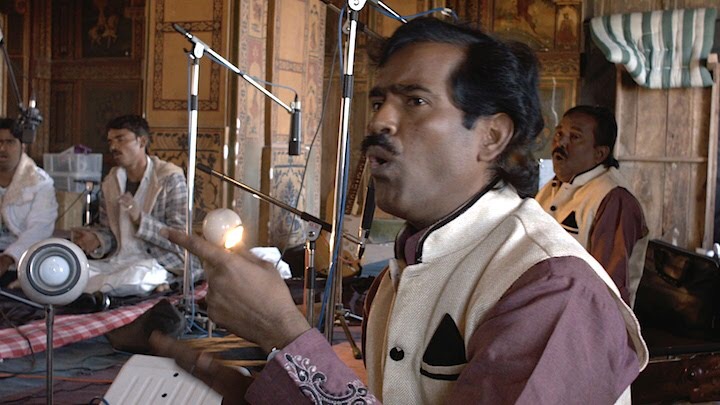
Let’s take a look of what the Autumn madness has to offer this year in terms of Asian non-fiction cinema.

By far the biggest festival in the region, the Busan International Film Festival, kicks off on October 6th and this year is a special one for BIFF, following the problems the event has been facing in the recent 12 months (you can read more here and here).
The line-up is as always huge and varied, and if we include the market, trying to follow even only a small portion of the screenings offered is an almost impossible task. Anyway, as South and Southeast Asian documentary is concern, these are some movies that will be shown and worth seeing if you’re in Busan:

Documentary Competition

Diamond Island (Davy Chou, 2016) Cambodia/France/Germany/Thailand/Qatar

Sunday Beauty Queen (Baby Ruth Villarama, 2016) Philippines/Hong Kong, China/Japan/United Kingdon

Time to Read Poems (Lee Soojung, 2016) South Korea

A Whale of a Tale (Sasaki Megumi, 2016) Japan/United States

Absent Without Leave (Lau Kek-Huat Chen Jing-Lian, 2016) Taiwan/Malaysia

Burmese on the Roof (Oh Hyunjin, 2016) South Korea

Farming Boys (Jang Sejung Byun Siyeon, 2016) South Korea

Neighborhood (Sung Seungtaek, 2016) South Korea

Railways Sleepers (Sompot CHIDGASORNPONGSE, 2016) Thailand

SUN (Won Hoyeon, 2016) South Korea

The Crescent Rising (Sheron Dayoc, 2016) Philippines

Documentary Showcase

Becoming Who I Was (Moon Changyong Jeon Jin, 2016) South Korea

Fake (Mori Tatsuya, 2016) Japan

In Exile (Tin Win Naing, 2016) Germany/Myanmar

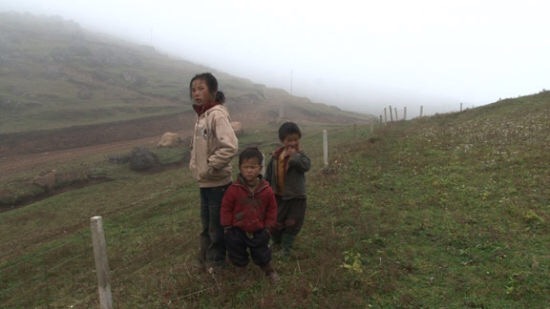
Ta’ang (Wang Bing, 2016) Hong Kong, China/France

The Remnants (Lee Hyuk-sang KIM Il-rhan, 2016) South Korea

WEEKENDS  (Lee Dongh, 2016) South Korea

If you want to know more and read each movie’s synopsys, do please visit BIFF’s homepage: Documentary Competition and Documentary Showcase.
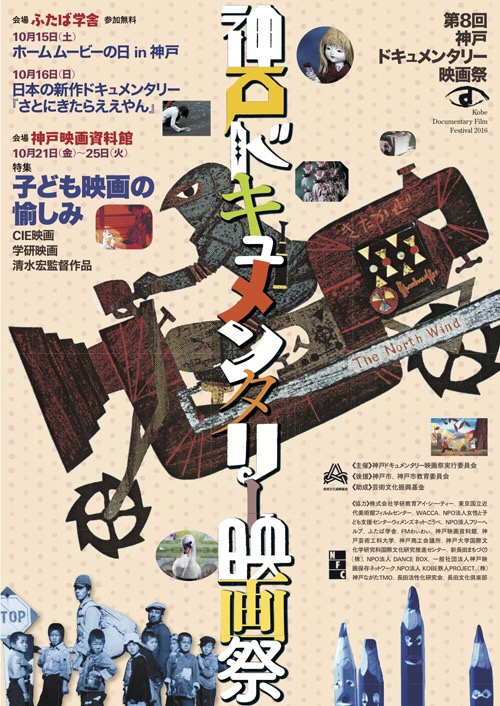
One of the most interesting festivals of the season, at least for me, is the Kobe Documentary Film Festival, a small and minor event organized every year since 2009 at the Kobe Planet Film Archive. This year the main theme will be “The pleasure of children movies” and as usual a wide range of movies will be screened, a fascinating program goes under the title of CIE Films (CIE 映画) where CIE stands for “Civil Information and Education Section”. Established by the Allied Powers soon after the end of World War II as a special section of the General Headquarters (GHQ), its task was to advise the Supreme Commander for the Allied Powers (SCAP) on policies relating to “public information, education, religion, and other sociological and cultural problems of Japan.” CIE donated about 1300 Natco 16mm projectors to the Japanese Ministry of Education to be distributed around the country, and with them short educational movies from United States, Canada and other countries in hopes of implementing the process of democratization in the country through cinema. This part of history of Japanese cinema is an important one if we want to grasp and understand the subsequent development of educational film, and by extension documentary, in the archipelago. A first part of the program is thus dedicated to foreign movies introduced in Japan by CIE, Everyone’s School (1948), Near Home (1948), Beautiful Dreamer (1949), Freedom of the Press (1951), Experimental Elementary School (1949) and Nanook of the North (1922),  with other programs continuing on the same trail and presenting Japanese educational films produced from the late 50’s to the 70’s, science, art, environment and big events (like the Expo in Osaka in 1970) are some of the themes tackled in the short movies, including 5 works created in different style of animation (puppet and stop motion paper animation).
It is worth mentioning that a program is also dedicated to the less known works (about and with children) of Shimizu Hiroshi, on of the finest Japanese filmmakers of the last century, but one who definitely deserve more space and consideration in the world cinema community. A good starting point is this DVD box set put out by Criterion, and two sets from Shochiku (the first is the same as the Criterion one) and “amazingly” both come with English subtitles.
The Festival will take place from October 21st to the 25th and will be preceded by the Home-Movie Day on October 15th, if you read Japanese the festival home page has the complete line-up.

tiff2016-yoko

From Kobe to Tokyo, where the 29th Tokyo International Film Festival will open its gates on October 25th, South and Southeast Asian non-fiction cinema will be represented by a bunch of works, to keep on the radar the new endeavor by  Matsue Tetsuaki (Live Tape, Flash Back Memories), DDT: Dramatic Dream Team!! -We are Japanese Wrestlers!, a year in the life of a pro-wrestling group, Welcome to SATO, about a children’s center in the day laborers’ town of Kamagasaki, and Mamoru Hosoda’s Job: Animation Film Director“A Soulful Film Illuminating Hope”, a documentary made for TV (part of NHK’s The Professionals series) about director Mamoru Hosoda.
vlcsnap-2016-10-02-16h00m26s750
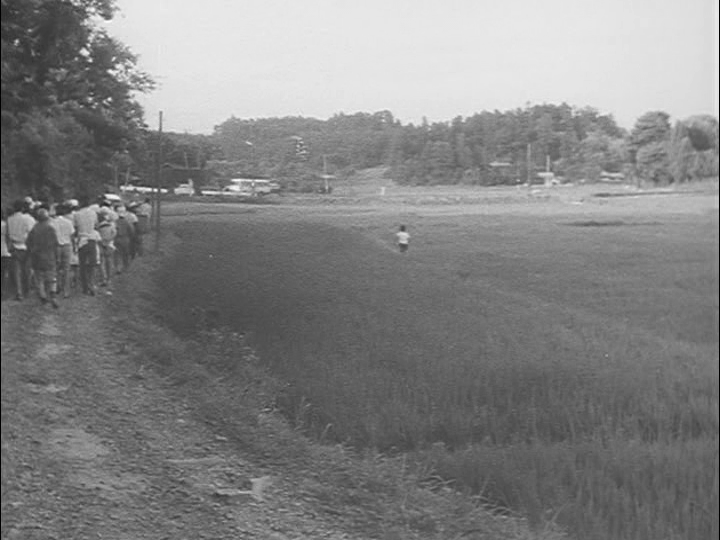
Let’s leave Asia and move to Europe, and more precisely to London, where from November 17th to Dec 11th the Institute of Contemporary Arts is organizing a retrospective on Ogawa Shinsuke‘s (or better Ogawa Production) works. I’ve written many times on this blog about Ogawa and the importance of his movies for the history and development of documentary in Asia (although not yet a long and more in-depth piece), and of course a must is Forest of Pressure written by Abe Markus Nornes. This is the schedule:

Thu 17 Nov: The Oppressed Students (1967)

Sat 19 Nov: The Battle Front for the Liberation of Japan – Summer in Narita (1968) +Sanrizuka – The Three Day War (1970)

Tue 22 Nov: Sanrizuka – Peasants of the Second Fortress (1971)

Thu 24 Nov: The Wages of Resistance: The Narita Stories (Otsu Koshiro and Daishima Haruhiko, 2015)

Sat 26 Nov: Heta Village: Rending Village Time | A lecture by Markus Nornes +Sanrizuka – Heta Village (1973)

Sun 27 Nov: Filmmaking and the Way to the Village (Fukuda Katsuhiko, 1973) +Devotion: A Film About the Ogawa Productions (Barbara Hammer, 2000)

Wed 30 Nov: Dokkoi! Songs from the Bottom (1975)

Sat 10 Dec: “Nippon”: Furuyashiki Village (1982)

Sun 11: The Sundial Carved with a Thousand Years of Notches – The Magino Village Story (1986)

If you’re in London, it’s really a chance not to be missed.
East and Southeast Asian documentaries, a list/database of the most significant works


updated September 14th 2016
In the past few days I was online looking for list(s) about East and Southeast Asian documentaries, lists that could give me an idea of what to watch if I wanted to explore the history non-fiction cinema in East and Southeast Asia, well….I couldn’t really find anything. So I told myself “why not making this list? a list that would also function as a sort of database for people interested in non-fiction” and then I realized that although I’m a kind of an expert in the history of Japanese documentary, I don’t really know that much about non-fiction cinema in the rest of Asia, besides of course Wang Bing, Rithy Panh and few others.


In most of these Asian countries cinema as a form of art is something pretty new and still in development, and often documentary is basically nothing more than state propaganda, fortunately things have slowly started to change few decades ago, when the new digital technologies allowed virtually everyone to become a documentary filmmaker and the social unrest set in motion the arts.
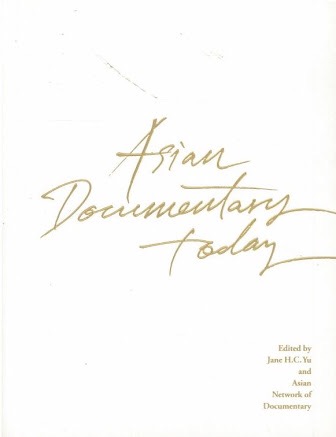
An interesting and useful resource on the topic, although it focuses more on the contemporary situation, is Asian Documentary Today, a book published by the Busan International Film Festival in 2012 and compiled and edited by AND (Asian Network of Documentary).

If anybody out there in the vastity of the internet is interested in helping me with this tiny project, a list/database of the most significant and important documentaries made in East and Southeast Asia, please feel free to get in touch with me: matteojpjp [at] gmail.com
Just a few “rules”:

– new works are accepted but don’t forget that the list is about “important and significant documentaries in the history of cinema”

– accepted are documentaries from these countries:  China, Hong Kong, Japan, North Korea, South Korea, Mongolia, Taiwan, Indonesia, Malaysia, Singapore, Philippines, East Timor, Brunei, Christmas Island, Cambodia, Laos, Myanmar (Burma), Thailand and Vietnam.

– if you’re kind enough to send me some suggestions or titles, it would be nice to have also few sentences contextualizing the documentary and briefly explaining what the movie is about.

the deadline is the end of September, once done and organised properly, I’ll publish it here on the blog and I’ll try to have it spread in the internet.

Thank you

NDU and Asia is One (アジアはひとつ)

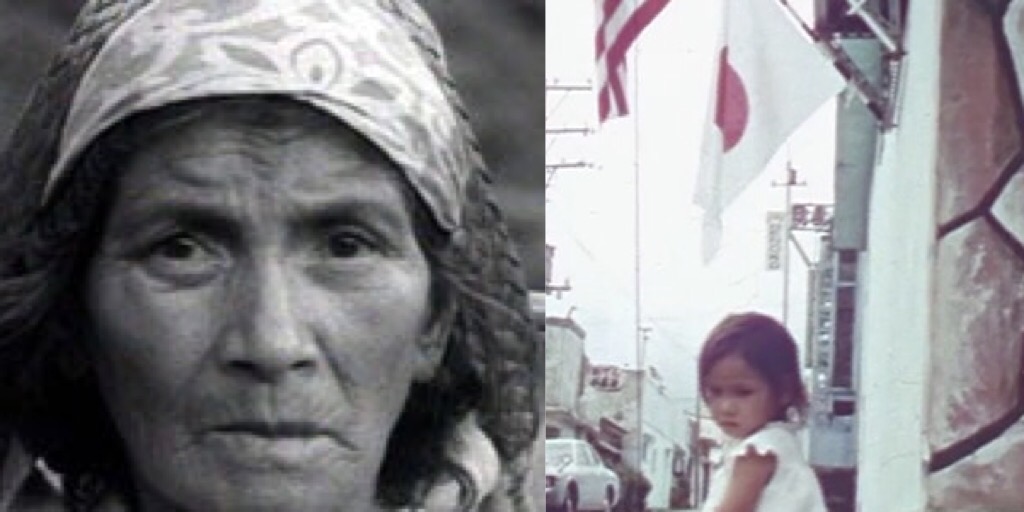
NDU (Nihon Documentary Union) was a Japanese collective established in 1968 by a group of Waseda University students, who would eventually drop out, one of the most prestigious universities in Japan. From 1968 to 1973, the year the group dismantled, this group of activists, they considered themselves first of all as a collective of activists,  made four documentaries, moving from the street of Tokyo – the first work was Onikko – A Record of the Struggle of Youth Laborers – to the far away islands in Micronesia passing through Okinawa, the archipelago where they shot two of the their most significant documentaries. Motoshinkakarannu (1971) was made and is about Okinawa before the reversion to Japan, the group went to the island in 1971 and captured on film a society in flux and in the middle of a shifting passage. The film show and focuses on the margins of society with illegal prostitution and life in the red districts, at the same time highlighting the historical and social fractures that were traversing the area: anti-establishment and anti-American riots, the Black Panthers visiting Okinawa, pollution of water and much more. I listed Motoshinkakarannu as one of my favorite Japanese documentaries in the poll I’ve organised a year ago, but today I want to shift my attention on the second movie made by the collective in Okinawa (and beyond): Asia is One (アジアはひとつ),  a work that I hadn’t seen at the time of the poll, and that would have certainly figured in my list paired with Motoshinkakarannu.

Asia is One was screened on June 26th at Kyoto Kambaikan, as part of the AAS in Asia, and it was screen with English subtitles for the first time, the movie was shelved for many many years, forgotten, and was (re)discovered only in 2005 when was screened at the Yamagata International Documentary Film Festival. The screening in Kyoto was followed by a fascinating Q&A with the only surviving member of NDU, Inoue Osamu, Nunokawa Tetsurō, who after the dismantling of the collective made other interesting solo documentaries in Palestine and US, passed away in 2012. As described by Roland Domenig (1), with Asia is One

NDU further explored the margins of Okinawan society and continued to break through borders by focusing on the Taiwanese minority. The film portrays Taiwanese migrant workers on the main island of Okinawa who substitute the Okinawa laborers who in turn are employed as migrant workers on Japan’s main islands. It traces the history of Taiwanese coal miners on Iriomote Island, follows legal and illegal workers to the westernmost island of Yonaguni and finally lands in Taiwan in a village of he Atayal tribe of Taiwanese aborigines, where still the Japanese naval anthem is played every noon.

Formally the documentary is composed of  landscapes and interviews, all of them out of sync, possibly due to the equipment used or maybe the lack of it. The uncanny space created by this displacement, but also by the use of music from radio broadcasts and kids voices, thrown here and there during the movie, gives the work  a peculiar aesthetic tone, a type of non-fiction cinema that I like to call “chaos cinema”. (2)
To explain and understand the “chaotic” trait of Asia is One, and Motoshinkakarannu, we have to delve deeper in the philosophy that laid behind NDU. What the collective has tried to convey through their cinema is extremely fascinating, in their writings (3), mainly published in the magazine Eiga Hihyo, the group was explicitly pushing towards a cinema/activism of anonymity, trying to reach an “impersonal space” and rejecting even the term “work” (sakuhin) because it was seen as the product of a single person in command and as a result of a dominating power structure. In this regard famous was their criticism of Ogawa Production, a collective that bore the name of a single person and that was basically structured hierarchically (4). To this kind of collectivism NDU tried to oppose a more fluid idea of group activism, where the structure was a flat and horizontal one,  and in doing so promoting a cinema made by amateurs (5) and not by professionals. “Everybody can push the button and shoot with a 16mm camera” said Inoue, and this is even more true today since the advent of the digital revolution. Whether this approach was successful or not, and more importantly, whether this horizontal structure and “amateur cinema” is possible at all, are questions without answers that are haunting scholars to this day.
Going back to Asia is One, the part of the movie the resonates more with me is the last one, when the film moves to the Atayal village in Taiwan. There’s a quality in the close-ups of the tribe people, beautiful and ancient faces, that is very fascinating, also because it is in these scenes that the political discourse on identity, or the negation of it, reach its peak. From the 17th Century onward The Atayal people, like the rest of the tribes inhabiting the island,  had to face the colonization of the Dutch, the Spanish, the Chinese and later of the Japanese (1895 – 1945). Calling them “barbarians” the Japanese Empire tried to assimilate and annihilate their culture (6), the words from the tribe people in the movie add layers of complexity to the situation  : “Japan conquered us and abolished many of our ancient traditions and customs”, but at the same time “we were drafted and went to war with pride and ready to die” and “luckily the Japanese abolished some of our ancestral traditions like beheading”.
Asia is One ends with the militaristic song If I Go to Sea against an everyday scene with the aboriginal Taiwanese people isolated in the mountains singing “We want to go to war again.” Of course there is oppression and violence, physical and cultural, in every colonization, but things here are very layered. It seems to me that in this process of cultural and historical coring that the movie conveys, from Okinawa to Taiwan, two very significant points emerge. The first is the crisis of the identity concept, often a forced cultural and national superstructure imposed by the stronger part on a “highly fluid space of human life” (6), as Inoue explained “identity was one of the most hated words inside the NDU, identity is a choking concept”. The second point that struck me is the recurrence of a power and social structure that exploits the margins and the outsiders, in mainland Okinawa the illegal prostitutes and worst jobs are done from people from Miyako island, and in Miyako and other small islands the lower part of society is occupied by Koreans, Taiwanese and aboriginal people.
A final note on the title, the movie as a product of a collective that was thriving towards anonymity, has not film credits, nor it had originally a title, Asia is One was attached to it only later, and it’s a kind of a joke because as Inoue himself said “we all know that Asia is not one!”

notes:

1 Faraway, yet so close by Roland Domenig, in The Legendary Filmmaking Collective NDU and Nunokawa Tetsurō ed. Yasui Yoshio, Tanaka Noriko, Kobe Documentary Film Festival Committee, 2012.

2 This might not be the best way to describe the movie, but aesthetically it reminded me, maybe because of the out of sync, of Imamura Shōhei’s documentaries shot in South East Asia during the 70s.

3 Some of the writings are translated in The Legendary Filmmaking Collective NDU and Nunokawa Tetsurō, op. cit.

4 You can find more in  Forest of Pressure: Ogawa Shinsuke and Postwar Japanese Documentary, Abé Markus Nornes, Visible Evidence 2007.

5 Some interesting insights on amateurism in cinema can be found in The Flash of Capital: Film and Geopolitics in Japan, Eric Cazdyn, Duke University Press 2002.

6 In 1930 the village was the site of an anti-Japanese uprising, the so called Musha Incident, an event portrayed in Warriors of the Rainbow: Seediq Bale (Wei Te-Sheng, 2011)

7 Nunokawa Tetsurō in YIDFF 2005 Special Program, Borders Within – What it means to live in Japan.

Interview with Oda Kaori


Directed, shot and edited by Oda Kaori, Aragane was one of my favorite documentaries of 2015, a work that came out from film.factory, a film school based in Sarajevo and founded by renown Hungarian director Bela Tarr.
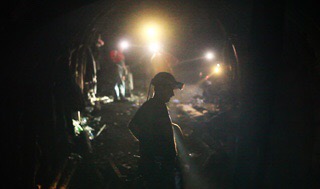
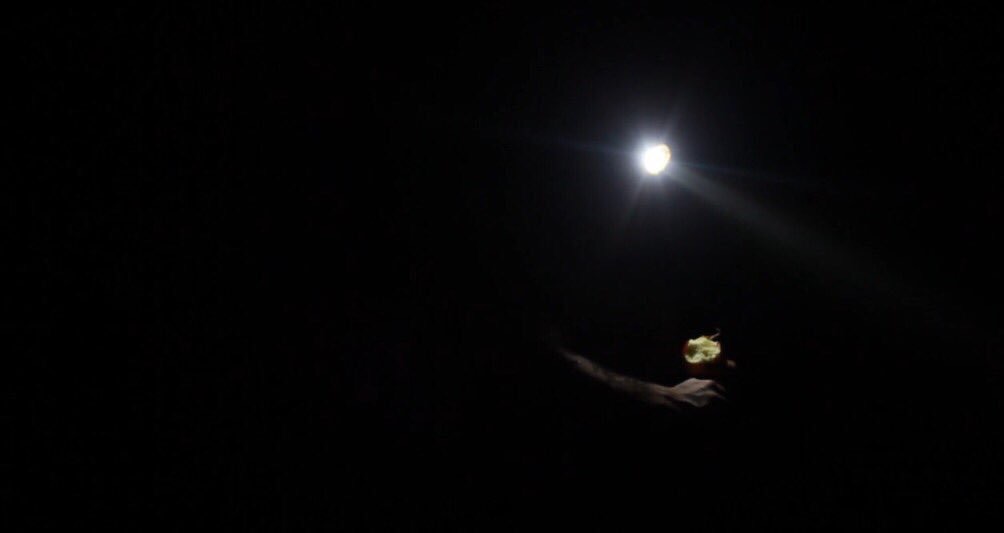
Aragane it’s an experimental documentary shot in a Bosnian coal mine, an immersive and hypnotic sensorial experience that was presented last year at the Yamagata International Documentary Film Festival, where it got a special mention. 
I wrote a review of the movie in Italian for the blog Sonatine, but I’m planning to write one in English as well and post it here, time permitting. 

In October I had the pleasure of interviewing Oda for the Italian newspaper Il Manifesto, the following is the original and longer version of that interview.

Can you tell us how you got involved in cinema, that is, how you got interested in watching and making movies in the first place?

 I wanted to be a professional basketball player, I played for 8 years since I was 10 years old, but unfortunately my right knee got broken. I underwent two big operations but it was not possible to keep playing seriously. Doctors said NO to me. So I was lost completely because the only thing I knew in life was basketball. I decided to go to the US to study abroad then, you know the typical thought that if you move the place, something may change in your life. There I took a film course, that was the first encounter to filmmaking, I was not cinephile at all and I am still not. (but I like some films, of course)

I made the very first film with my family in 2010 (ノイズが言うには Thus a Noise Speaks). It is a self-documentary made by my real family and myself about the coming-out as gay. The idea was to use filmmaking to communicate with my family and face the fact that they could not accept that I was gay. It was a tough experience but I learned a lot from that and started to see and use camera as a tool for communication. Communication between myself and the subject (the people/ the space).

 
(A still from Thus a Noise Speaks 「ノイズが言うには」)

How about film.factory? how did you happen to move to Sarajevo and be part of the group?  

 I got a chance to screen my first film in the student section of Nara International Film Festival in 2011, and there I met Kitagawa Shinji, the person who more than anybody else understands my filmmaking. He was the programmer/organizer of the section. The film got an audience award and we kept in touch since then. In 2012, he wrote me an email that there would be a new program in Sarajevo to support young filmmakers from all over the world. I was very much lost at that time, because it was very difficult to make my next film after a self-documentary by which I confronted the biggest conflict I had.

So I decided to apply to the program, moving to a new place and meeting new people.

Luckily, my application got accepted.   


Can you tell us more about Aragane, where did the idea come from? I heard that originally it was supposed to be a fiction inspired by a Kafka story (A Visit to a Mine), is that true?

Bela (Tarr) gave us an assignment to do an adaptation work. He wanted me to do ‘Bucket Rider’ a short story from Kafka that revolves around man looking for coal. So I went to a coal mine company to do research for the project. The space and the workers were incredibly attractive, immediately I knew I wanted to shoot them as I felt and not through an adaptation work.

What was the involvement of Bela Tarr in the making of Aragane? Did he give you any suggestions, ideas or was he just supervising the project?

I brought some shots I made there and told him that I wanted to make a film. He watched them and said ‘Go and shoot’. We had one meeting when I was still shooting and I had doubts about which direction I should go with the project, should I go more for the people and their story or more with the space itself?

He told me ‘Listen to yourself, what do you want to do?’

I said ‘I am attracted to the space and the physical work of miners’

After shooting, I edited the film and showed the first rough cut to him and he gave me some comments such as ‘maybe you should eliminate this shot’ or ‘keep this one’.

More than once you’ve mentioned space and your relationship with space when making a film, I think is a very fascinating subject. When I watched Aragane I felt very strongly that it’s a work about landscapes (a dark one, the mine), the materiality of it and the machinery in it. An “alien” landscape and the beauty of it. What brought you to focus more on the space/landscape and the machinery, and is there a reason behind the use of long takes?

 I think I was fascinated by the space because it was something totally new, complete darkness, magnificent volume of noises, but also sudden silence where there were no machines around.

The space drugged me into the film, my camera (gaze) was a communicator/mediator between what was there in front of camera and myself. I tried to understand and feel what was going on by shooting the space and its own time. Also, I didn’t approach the subject from the angle of the hard conditions of miners, unfairness and danger of their works (even though it is there in the film because it was just there). I hope people would not get me wrong by saying this. I/my camera shared some moments with them, I tried to be with them moment by moment. Focusing on social issue can be something good for miners, to say what is the problem and how ignorant we are about the issue, but I think the best I can do with my filmmaking is to try to be with the subject (space/people/time) and make them seen by being with them.

About the machinery, I think I shot them because their existence is big in that space and also because miners were proud of the machines, especially the huge ones digging into the side walls.

It may be a bit difficult to explain why the shots needed to be so long, but I tried to be honest toward the moments I captured with my camera.


I think the sound in Aragane is as important as the images, can you tell us more on how you were able to capture and magnify the sounds of the machines and, if you can, tell us about your relationship (as a filmmaker) to sounds/noise and soundscapes?

 It is very interesting to me that lots of people mention about sounds and soundscapes. The sound was recorded with the internal microphone of a Canon 5D, because I didn’t have something like Zoom, also I was most of the time alone, so my hands and focus was with the Camera/Image. My light was on the helmet to make the curtain space visible, so it would have been impossible for me to take care of the sound recording. What was recorded was done “without care” and automatically.

I did the sound mix myself, changing the volume here and there, cleaning a bit of noises, and making rhymes/music by adding some noise on top of another noise. That was fun and I think made the film to gain a sensorial feeling.

I was just playing with sound in Aragane , but I want to learn more about sound. The film made me realize and feel that Film is an audiovisual art.

It’s interesting that you’ve used the words “sensorial feeling”, the first time I saw Aragane I thought straight away of the works of the Harvard Sensory Ethnography Lab (Leviathan, Manakamana, Iron Ministry, etc.), you told me already you haven’t watched their movies and that you’re not really a cinephile, but I was wondering if you got ispired for your approach by any movies or more in general by any other work of art.

 After your email, Matteo, I watched ‘Manakamana’ ‘Iron MInistry’, and ‘People’s park’,

and I see what you see as similar.

It is very interesting because, before you mention about the Lab, I’ve thought that if I stop making films, I want to be an anthropologist. And I feel I am learning about human beings by making movies.

I might not be so good yet and I have not a clear idea about what I am doing with my camera, but it has been very clear for me that my theme is ‘where we come from, what we are, and where are we going?’ .

I know it sounds abstract and even pretentious, but I’m serious. I may not get the answers before I die, but I have at least the right to explore and challenge these themes with my life, I guess.

 I am inspired by: Wang Bing, Pedro Costa, Raymond Depardon, Wiseman, Cezanne. My bible: Letters To A Young Poet by Rilke.


One last question: what are your future plans, are you working on something at film.factory and how about after film.factory?

I have a few projects now.

One is my essay film, to conclude the experience in Bosnia and filmmaking here. This is my priority right now. It’s in the production stage.

And then I plan to do a workshop of filmmaking/photography/camera in a discipline center in Sarajevo. (It is a institution for the underage kids who commit crimes, not strict as much as a prison). I want to share the possibility of using the camera as a tool of communication and expression with these kids. This kind of workshop is what I want to do as my life time project, I don’t know if I can finance such a project, but I want to try my best to make it a constant practice in my life.

Or I might move to Mexico to do a project after film.factory, one of my colleagues is from Mexico and I want to shoot something there related to sea/water/cave. It’s still in the research/developing stage. Or maybe I’ll go back to Japan, it all depends on if I can support myself and how these projects can be produced!

 Feel free to add something you want to say or share.

 So many people have been supporting my filmmaking. My family, Kitagawa Shinji, Bela Tarr, and my dear colleagues. Most of the time, I shoot and edit alone and this sometimes make me misunderstand that I am making films alone, but in fact, there is always someone who introduces the subject to me, tries to support me mentally, gives me some thoughts on the film, shares the film, writes about the film, and watches the film. All these people make films. All these spaces and times make films. I’m just one of the gears/energies that make films happen.

Some thoughts on Le Moulin (Huang Ya-Li, 2015)

TheMoulin_Taiwan4

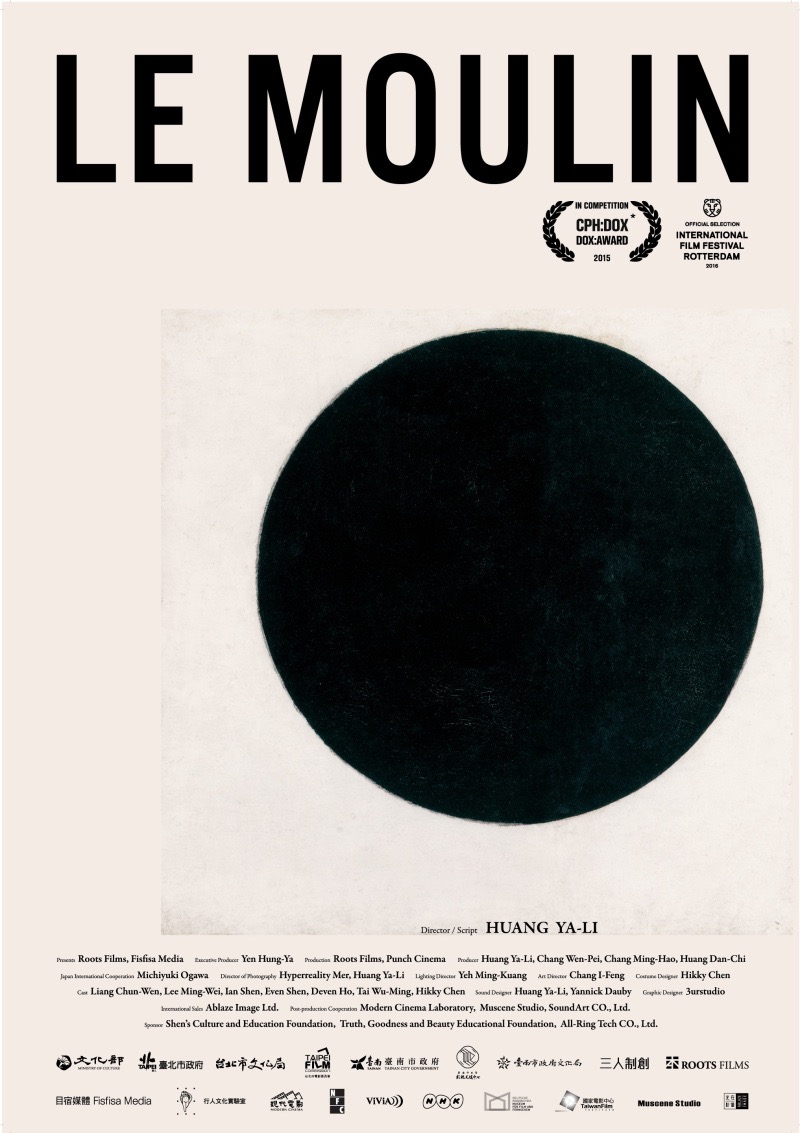
Le Moulin is one of the most challenging and interesting documentaries I’ve had the chance to watch during the past year, thought-provoking in its formal construction and revealing in its themes, the cultural and poetic movements that stirred Taiwan in the last part of the Japanese colonial period. The movie is directed, scripted and photographed by Huang Ya-Li, a young independent experimental Taiwanese filmmaker. His video poetry The Unnamed in 2010 was nominated by the 33th Golden Harvest Awards for Outstanding Short Films (Best Experimental Short Film) in Taiwan and was presented in many countries around the world.

Here the description of the movie:

Taiwan had already been under Japanese rule for forty years, and was in a stable period of cultural assimilation, when the country’s first modern art group – ‘Le Moulin’ – arose in the 1930s in a poetic protest against the colonial power’s cultural superiority. The name reflected the small group’s orientation towards the West and especially France, with the surrealists as their absolute role models. In an uncompromising and aesthetically sophisticated reconstruction of the group’s underground activities, the young filmmaker Huang Ya-Li has created a delicate and evocative feature film debut about a historical period that paved the way for a new freedom and self-awareness. A film where tableaux and beautifully calligraphed texts surround the ‘Moulin’ members, and where you sense an echo of their fellow Taiwanese writer Hou Hsiao-Hsien’s epic and elliptical period dramas.

Because of its “headless” structure it’s really difficult, if not impossible, to write a “normal” review, mirroring the construction of the film itself, I’ve tried to randomly accumulate a series of reflections instead.


Stylistically the movie is a deluge of poetic words & images from a variety of sources: painting, movies, poetry, photos, reenactment and radio programs.

Photos of the French surrealists themselves, lots and lots of their works, Dali, Breton, Cocteau, etc. everything is shown accompanied by spoken poetry written in Japanese by the Moulin group members themselves.

A sort of collage of photos, at least in the first part, a la mode of the Surrealist, but also the dadaists and their Japanese counterpart: fascination with machines, trains & speed, fragmentation of perception through objects.

Footage of Tokyo during the 30s, footage of the Maso festival

The fascination and admiration of the Taiwanese poets with Jean Cocteau and his works is one of the pivotal moment of the movie, he visited Japan for 3 days in May of 1936 where he had the chance to watch a kabuki play and was very impressed by it.

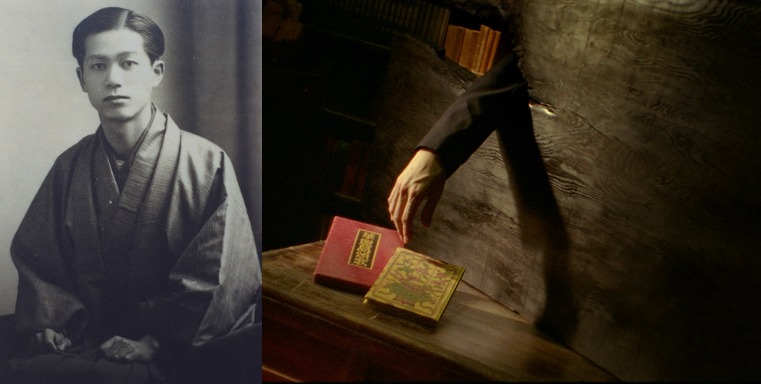
In the enacted sequences, never the faces of the people are shown, but most of the time we see hands, writing, turning pages, lighting cigarettes and holding books or photos. A choice in style that encapsulate the mood of the movie, anti-narrative, non-linear, accumulative and elliptical. Although it proceeds somehow chronologically, from the early 20th century to the total mobilization of the end of the 30′ and Pearl Harbor in 1941, a change in mood and attitude is reflected in the texture of the movie after the deteriorating relationship between Taiwanese and Japanese poets in the late part of the decade, the Allied bombing of Taiwan and, after the surrender, the arrival of “fatherland China” and its sour aftermath.

All in all, the movie functions like a huge and complex poem constructed with digital images, footage, written and spoken poetry, and minimalist music, a cubistic landscape of an era and of the poetic instances traversing the period and the place, occupied Taiwan.

The Moulin is in no way an easy watch, but nonetheless a very rewarding experience able to trail blaze uncharted cinematic territories.

TheMoulin_Taiwan2

New documentary for Hara Kazuo


Hara Kazuo is one of the most internationally well known Japanese documentarists, his The Emperor Naked Army Marches On (1987) is the first Japanese entry in the Sight & Sound’s poll The Best Documentaries of All Time and a movie that is often screened, talked about and studied in Japan as well as abroad. Now, personally The Emperor is not my favourite work from Hara, Sayonara CP (his debut from 1972) and especially Extreme Private Eros (1974) are better docs for reasons I’m not going to explore here today, and to be honest he’s not even among my favorite directors of non-fiction, but nonetheless I can’t deny he’s a very important and pivotal figure in Japanese cinema. Hara is also the only Japanese documentarist whose writings have been translated in English and collected in a volume, a very good one indeed, that everyone interested in non-fiction cinema should read. The title is Camera Obtrusa: The Action Documentaries of Hara Kazuo: By Hara Kazuo and was published in 2009 by Kaya Press.

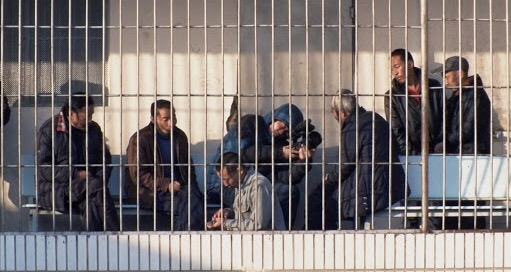
All that was to introduce him and to give an idea of his status as a respected director in the international documentary world. The good news is that Hara has a new work out, the first documentary for the big screen after 22 years of absence, he’s been active with feature films, on TV, writing books and with other projects, but 「ニッポン国泉南石綿村 劇場版 命て なんぼなん?」, this the title of the movie, breaks a silence of more than two decades. The film had its premiere at a small event in Tokyo, フィクションとドキュメンタリーのボーダーを超えて, and is about the victims of asbestos exposure in Sennan city (Osaka), where Hara has been intermittently filming for more than a decade, while at the same time working on a project about Minamata’s victims. 
I haven’t seen the movie yet, but I hope to catch up with it as soon as possible, although, for some reason, I have very low expectations, but I’m ready and willing to be surprised. 
Addendum: Hara won’t be screening it again until summer at the earliest, and most likely the fall (again somewhere in Tokyo), as he’s planning on reworking/editing it after these screenings in Shibuya. 

Many thanks to Jordan A. Yamaji Smith for the update

Ogawa Production’s documentaries finally on DVD

 
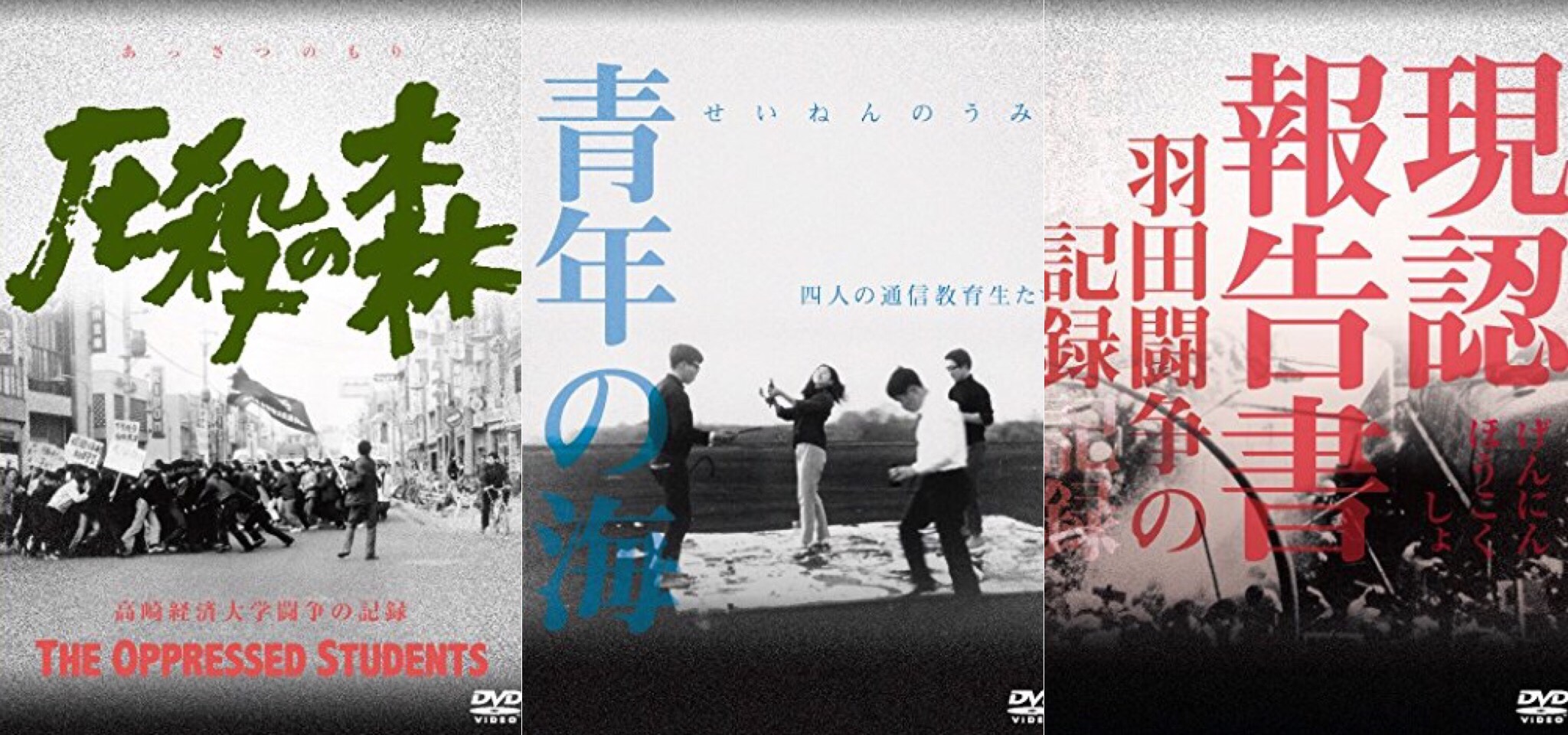
I’ve often written, here and elsewhere, about Ogawa Pro and the documentaries made by the collective, first in Sanrizuka – documenting the resistance of the peasants against the construction of Narita airport – and later in Yamagata. A couple of days ago through social networs I found out that finally all the works produced by the collective will see the light on DVD, a project by the Japanese label DIG. First, on June 2nd, we will get 3 of the early documentaries: A Sea of Youth (青年の海, 1966), The Oppressed Students (圧殺の森 高崎経済大学闘争の記録, 1967) and  A Report From Haneda 現認報告書 羽田闘争の記録, 1967) and later, presumably in one or two years, all the 20 documentaries made between 1966 and 1986 by the group. The news is big, at least for me, and although I have sample DVDs of many of the movies shot in Sanrizuka and Yamagata, copies kindly given to me by the festival people in Yamagata, it will be nice to have the films  “neatly transferred” on DVDs, the samples I have being a copy of a copy of a copy of a VHS. But here comes my biggest concern about this otherwise great news, will the transfer be really a proper one? Almost all the documentaries are shot in 16mm and I’m not really sure about the condition of the originals, in an ideal world we should see them first lovingly restored and then made them available for the home-video release. But the huge debt left by Ogawa complicates everything, what we’re likely to get is something close to the DVD of Kamei Fumio‘s Fighting Soldiers, a bare bones release, watchable of course but with a poor transfer, in the particular case probably due to the condition of the source material. The docs will not have English subtitles, adding them would have helped to “spread the word” of Ogawa Production to a wider international audience, but again, we don’t live in an ideal world and we should be happy and content with what we will get. Be that as it may, I’m pretty excited about this and I’ll write again about the project, the image quality, etc. when I get more information or in June, the time of the first releases. 

You can preorder the DVDs here

Under the Cherry Tree (Tanaka Kei, 2015)

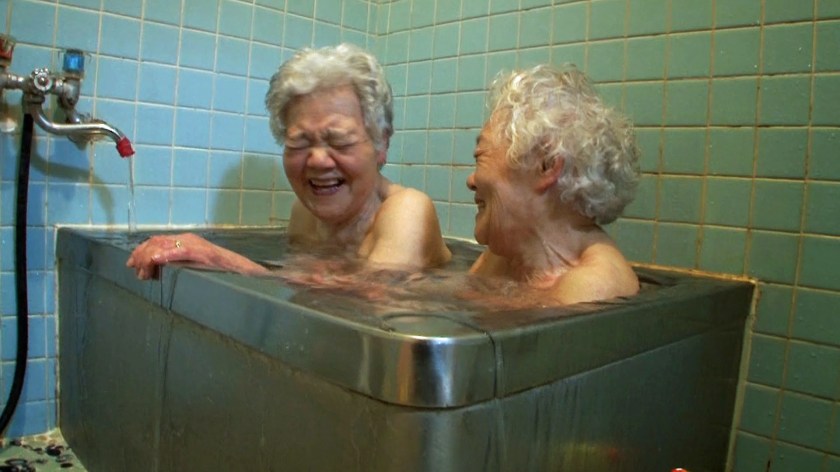
Under the Cherry Tree (桜の樹の下)  is the feature documentary debut of director Tanaka Kei, a work that follows the lives of the elderly residents of a public housing complex in Kawasaki. The movie had its premiere last October at the Yamagata International Documentary Film Festival (Perspective Japan) where I had the chance to see it.

Under_the_Cherry_Tree

From the opening scene the film reveals its touch, low-tech and anti-spectacular in style, with a pretty straightforward approach, even though there are some formal choices that tend to be elliptical, I’ll come back to it later. Through her camera Tanaka gives voice to the elderly living in the building, focusing especially on four of them whom, during the 92 minutes of the movie, we slowly get to know and attached to. They all tell stories of solitude, each of them of course has a diverse background and even comes from different areas of Japan. Recollecting their past and the reasons for their present condition, a life on the edge of poverty, is a sort of candid confession that each of them is not afraid to make in front of the camera.  In the chatting with the director what strongly emerges is a sense of impending death, a common horizon that feels very near, and yet seems to be accepted and sometimes even anticipate as a sort of deliverance particularly from one elderly lady. Enveloped in their loneliness, the only sparse moments of comfort for these people are represented by the weekly meetings with the care staff or other various recreational activities organised in the neighborhood.
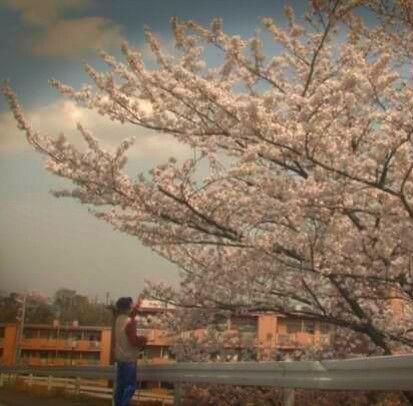
There’s a big cherry tree near the housing complex, often we see these old people taking a stroll, passing under it and stopping to contemplate its flowers, one of the few bursts of beauty coloring their lives and the visual element that gives the movie its title.
As gray as it might seem, the documentary is not only and always a bleak depiction of lives without hope, on the contrary and on a deeper level, is more an act of understanding and acceptance of what it means to become old in a society that doesn’t really know what to do with its old population. To lighten up the mood there are here and there some comic moments, especially when the two old ladies, one of them has also mental problems and lives in a flat piled with garbage, visit each other, chat and quarrel. Renouncing the classical narration in favor of intertitles and written texts to introduce the four protagonists is a perfect choice by the director, as a result the movie is smooth in its flow and doesn’t feel redundant or pathetic, gaining instead a matter-of-fact quality that is one of the best traits of the movie.

Under the Cherry Tree perfectly situates itself in a recent trend of Japanese documentary, a trend that has become almost a sub-genre, exploring and depicting the population ageing in Japan by focusing on personal lives of few individuals. A demographic trend that will dictate the political and economic decisions for years to come, Under the Cherry Tree goes together with Walking With my Mother,  Everyday Alzheimer 1 and 2 as one of the best examples of this unavoidable turn that Japanese non-fiction and Japanese society in general is undertaking.


List of lists – best documentaries of 2015

Let’s go “meta” once in a while, this is the idea I had few days back when I thought it would be interesting to make a list of lists, of course about documentaries. So, for the fun of it, but also because it might turn out into something surprisingly fascinating, I’ve decided to collect as many lists about “best non-fiction/documentary of 2015” as possible, newspapers, blogs, websites, magazines, personal lists and anything else will go. As usual with best-of-the-year-lists, and it’s particularly true for non-fiction movies, the most insightful part of the endeavour will probably be to see what other people have watched, that is what documentaries were distributed in different countries (in theatres or in other formats) during 2015, more than agreeing or not with someone’s choices.

This page will be updated periodically

Indiewire_best_doc_2015

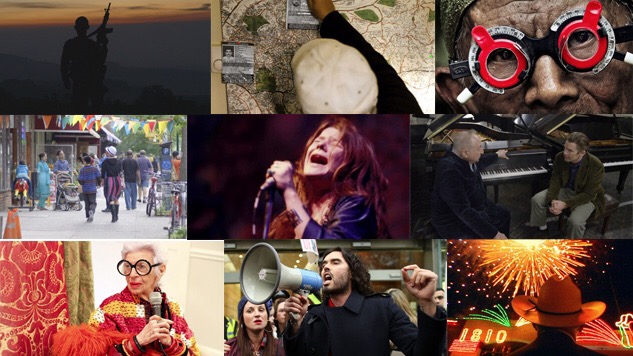
Indiewire – The 20 Best Documentaries Of 2015 (here the original article):

  • 20. “The Hunting Ground” (Andrea Pino)
  • 19. “Heart Of A Dog” (Laurie Anderson)
  • 18. “Prophet’s Prey” (Amy Berg)
  • 17. “Seymour: An Introduction” (Ethan Hawke)
  • 16. “The Seven Five” (Tiller Russell)
  • 15. “The Jinx” (Andrew Jarecki)
  • 14. “The Pearl Button” (Patricio Guzmán)
  • 13. “The Salt of the Earth” (Wim Wenders)
  • 12. “In Jackson Heights” (Frederick Wiseman)
  • 11. “The Black Panthers: Vanguard of a Revolution” (Stanley Nelson)
  • 10. “Junun” (Paul Thomas Anderson)
  • 9. “Dreamcatcher” (Kim Longinotto)
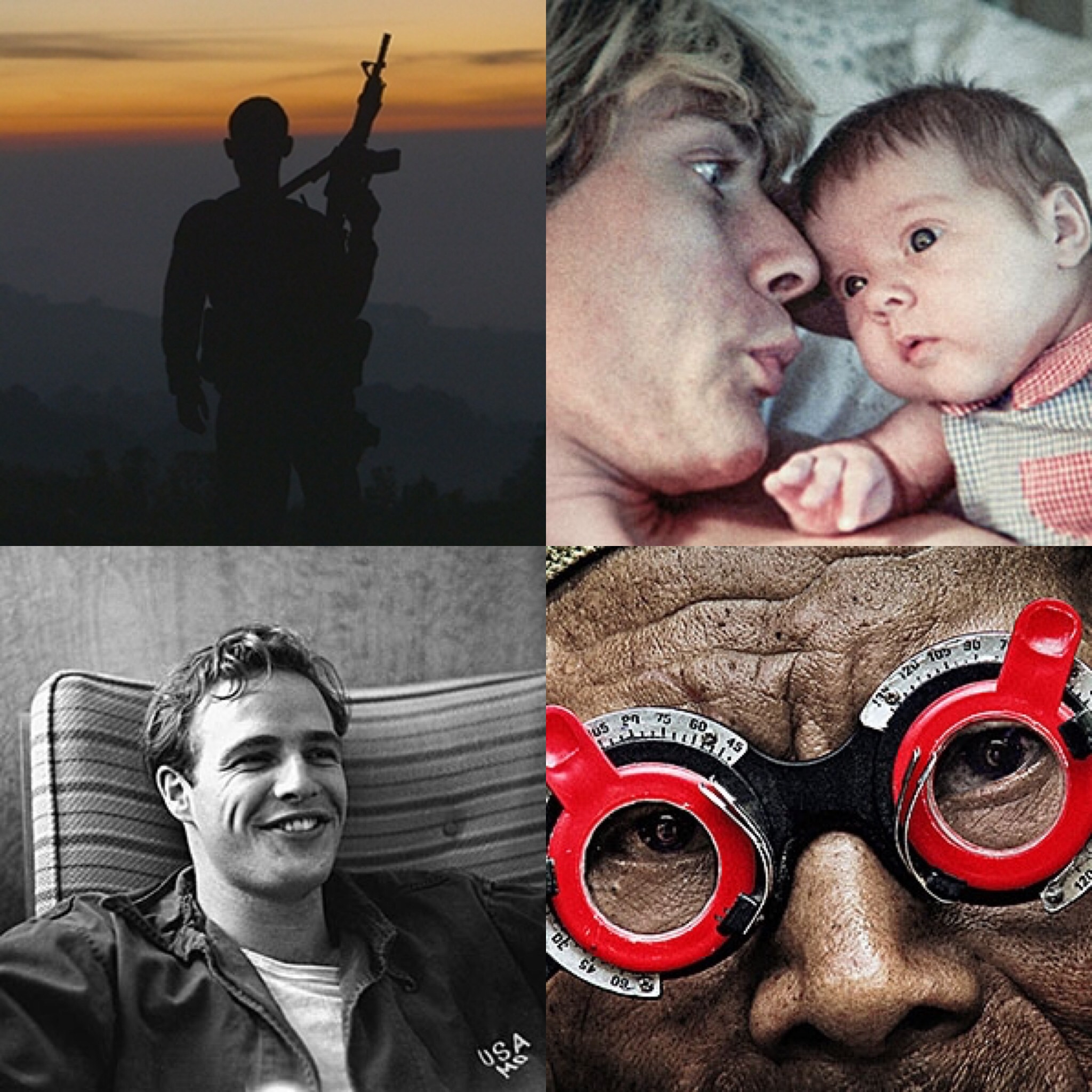
  • 8. ”Listen To Me Marlon” (Stevan Riley)
  • 7. “Best of Enemies” (Robert Gordon, Morgan Neville)
  • 6. “The Look of Silence” (Joshua Oppenheimer)
  • 5. “Kurt Cobain: Montage of Heck” (Brett Morgen)
  • 4. “Amy” (Asif Kapadia)
  • 3. “(T)error” (Lyric R. Cabral, David Felix Sutcliffe)
  • 2. “Meru” (Jimmy Chin, E. Chai Vasarhelyi)
  • 1. “Cartel Land” (Matthew Heineman)


Men’s Journal – 13 must-watch docs of 2015 (original article here):

  • Cartel Land (Matthew Heineman)
  • Stray Dog (Debra Granik)
  • Winter of Fire (Evgeny Afineevsky)
  • Montage of Heck (Brett Morgen)
  • Listen to Me Brando (Stevan Riley)
  • Racing Extinction (Louie Psihoyos)
  • Going Clear (Alex Gibney)
  • Amy (Asif Kapadia)
  • Meru (Jimmy Chin, E. Chai Vasarhelyi)
  • Call Me Lucky (Bobcat Godthwait)
  • Best of Enemies (Robert Gordon, Morgan Neville)
  • The Look of Silence  (Joshua Oppenheimer)
  • All Things Must Pass (Colin Hanks) 


NonFics – The 6 Must See Musical Dicumentaries of 2015 (original here): 

  • Amy (Asif Kapadia)
  • Don’t Think I’ve Forgotten: Cambodia’s Lost Rock ‘n’ Roll (John Pirozzi) 
  • Junun (Paul Thomas Anderson)
  • A Poem is a Naked Person (Les Blank)
  • Rubble Kings (Shan Nicholson)
  • Seymour: An Introduction (Ethan Hawke)

  
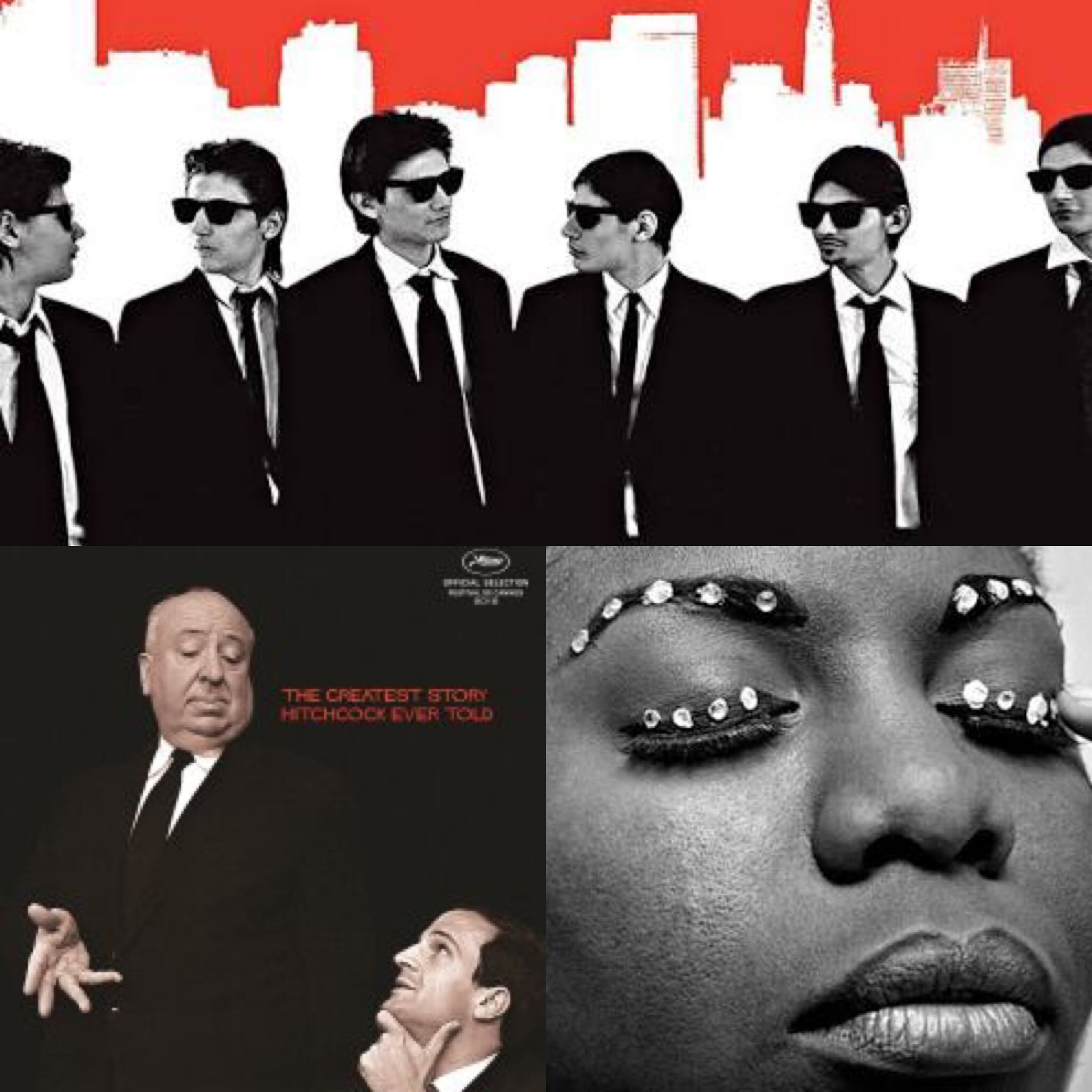
Paste – The 20 Best Documentaries of 2015 (here the article): 

  • 20. Finders Keepers (Bryan Carberry, J. Clay Tweel)
  • 19. What Happened, Miss Simone? (Liz Garbus)
  • 18. The Wolf Pack (Crystal Moselle)
  • 17. Amy (Asif Kapadia)
  • 16. Best of Enemies” (Robert Gordon, Morgan Neville)
  • 15. The Nightmare (Rodney Ascher)
  • 14. Welcome to Leith (Michael Beach Nichols, Christopher K. Walker)
  • 13. Approaching the Elephant (Amanda Wilder) 
  • 12. We Come as Friends (Hubert Sauper)
  • 11. Stray Dog (Debra Granik) 
  • 10. Heart Of A Dog” (Laurie Anderson)
  • 9. Western (Bill Ross, Turner Ross)
  • 8. Brand: A Second Coming (Indi Timoner) 
  • 7. Iris (Albert Maysles)
  • 6. Seymour: An Introduction (Ethan Hawke)
  • 5. Janis: Little Girl Blue (Amy Berg)
  • 4. In Jackson Heights” (Frederick Wiseman)
  • 3. The Look of Silence (Joshua Oppenheimer)
  • 2. (T)error (Lyric R. Cabral, David Felix Sutcliffe
  • 1. Cartel Land” (Matthew Heineman)

  
Screen Daily – critics’ top documentaries of 2015 (complete article here):

Fionnuala Halligan

  • My Nazi Legacy (David Evans)

Tom Grierson

  • (T)error (Lyric R Cabral, David Felix Sutcliffe)

Allan Hunter

  • The Fear of 13 (David Sington)

Dan Fainaru

  • Hitchcock/Truffaut (Kent Jones)

Lee Marshall

  • Behemoth (Zhao Liang)

Jonathan Romney 

  • De Palma (Noah Baumbach, Jake Paltrow)

Lisa Nesselson

  • Where To Invade Next (Michael Moore)

Charles Gant

  • Amy (Asif Kapadia)

Wendy Ide 

  • Behemoth (Zhao Liang)

James Marsh

  • The Look Of Silence (Joshua Oppenheimer)

  
Awards Daily – Seven Great Documentaries of 2015 (here the original article): 

  • The Look Of Silence (Joshua Oppenheimer)
  • Heart Of A Dog (Laurie Anderson)
  • Amy (Asif Kapadia)
  • In Jackson Heights (Frederick Wiseman)
  • Clear: Scientology and the Prison of Belief (Alex Gibney)
  • Montage of Heck (Brett Morgen)
  • Listen To Me Marlon” (Stevan Riley)

  
Philly.com – Best documentaries of 2015  (original article here): 

  • Amy (Asif Kapadia)
  • Hitchcock/Truffaut (Kent Jones)
  • Listen to Me Marlon (Stevan Riley)
  • What Happened Miss Simone? (Liz Garbus) 
  • The Wolfpack (Crystal Moselle) 

  
Keyframe – The Best Documentaries of 2015 (here the original):

  • 1. The Look of Silence (Joshua Oppenheimer)
  • 2. The Iron Ministry (J.P. Sniadecki)
  • 3. In Jackson Heights (Frederick Wiseman)
  • 4. The Pearl Button (Patricio Guzmán)
  • 5. The Royal Road (Jenni Olson)
  • 6. Heart of a Dog (Laurie Anderson)
  • 7. Amy (Asif Kapadia)
  • 8. What Happened, Miss Simone? (Liz Garbus)
  • 9. Iris (Albert Maysles)
  • 10. Listen to Me Marlon (Stevan Riley)


Nonfics – The 15 Best Documentaries of 2015 (here the original): 

  • 15. Evaporating Borders (Iva Radivojevic)
  • 14. Best of Enemies (Robert Gordon and Morgan Neville)
  • 13. Finders Keepers (J. Clay Tweel and Bryan Carberry)
  • 12. The Nightmare (Rodney Ascher)
  • 11. In the Basement (Ulrich Seidl)
  • 10. The Iron Ministry (J.P. Sniadecki)
  • 9.  Stray Dog (Debra Granik) 
  • 8. Approaching the Elephant (Amanda Wilder)
  • 7. The Salt of the Earth (Wim Wenders)
  • 6. We Come as Friends (Hubert Sauper)
  • 5. Amy (Asif Kapadia)
  • 4. In Jackson Heights (Frederick Wiseman)
  • 3. The Russian Woodpecker (Chad Gracia)
  • 2. A Poem is a Naked Person (Les Blank)
  • 1. The Look of Silence (Joshua Oppenheimer)

  
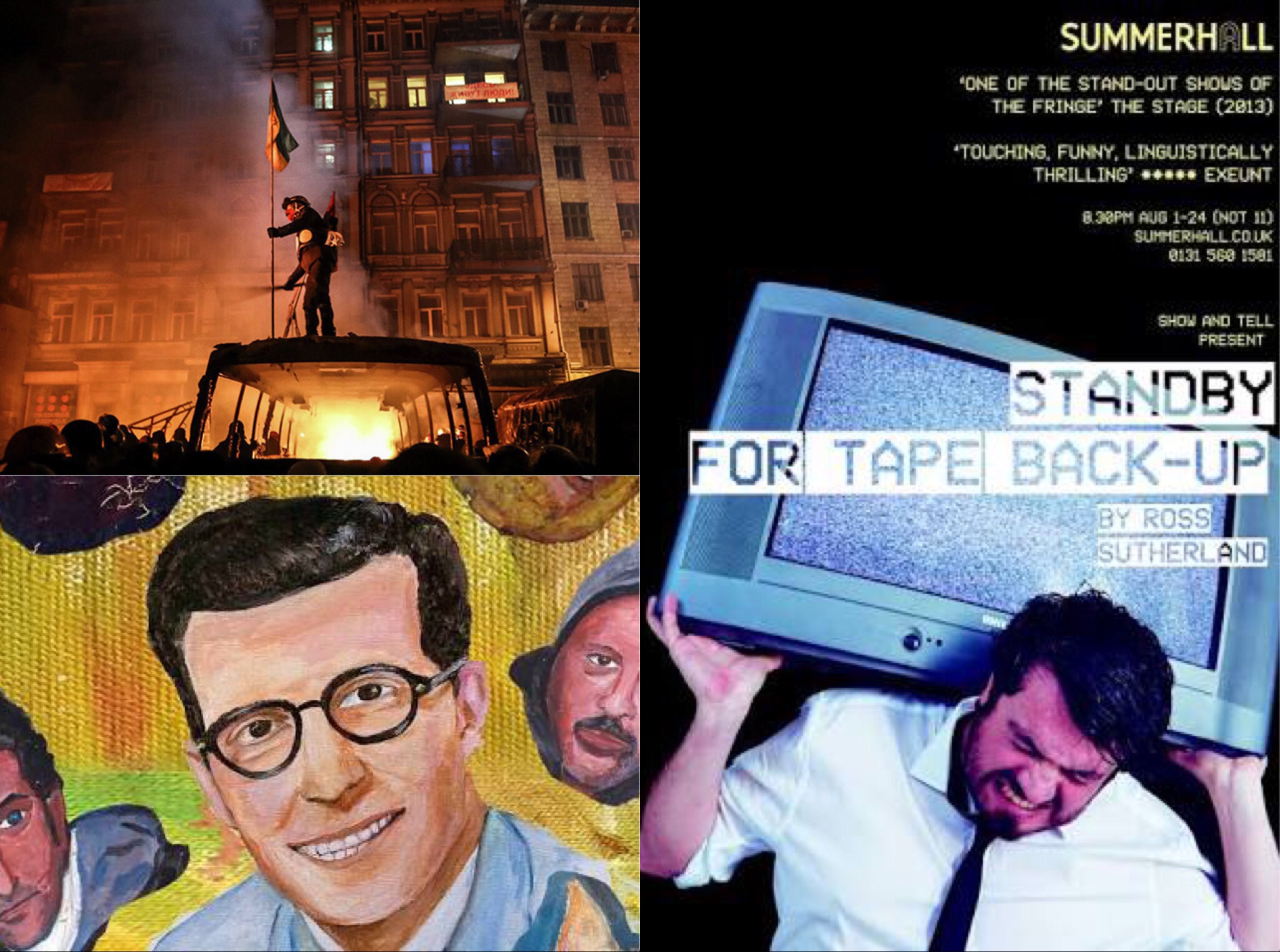
Doc Soup – Top Ten Documentaries of 2015 (original article here):

  • 10. Hunting Ground (Kirby Dick)
  • 9. Listen to Me Marlon (Stevan Riley)
  • 8. The Wolfpack (Crystal Moselle)
  • 7. Hitchcock/Truffaut (Kent Jones)
  • 6. Almost There (Dan Rybicky, Aaron Wickenden)
  • 5. Winter on Fire (Evgeny Afineevsky)
  • 4. Stand By for Tape Playback (Ross Sutherland)
  • 3. Montage of Heck (Brett Morgen)
  • 2. Cartel Land (Matthew Heineman)
  • 1. The Look of Silence (Joshua Oppenheimer)

  
Peter Bradshaw – Best documentaries of 2015 (read the original here): 

  • Amy (Dir. Asif Kapadia)
  • The Look of Silence (Dir. Joshua Oppenheimer)
  • He Named Me Malala (Dir. Davis Guggenheim)
  • A Syrian Love Story (Dir. Sean Mcallister)
  • Going Clear: Scientology and the Prison of Belief (Dir. Alex Gibney)
  • We Are Many (Dir. Amir Amirani)
  • The Last of the Unjust (Dir. Claude Lanzmann)
  • Beyond Clueless (Dir. Charlie Lyne)
  • Best of Enemies (Dirs. Morgan Grenville, Robert Gordon)
  • My Nazi Legacy (Dir. David Evans) 


Ray Pride – Fifteen Feature Documentaries For 2015 (original’s here

  • 1. The Look Of Silence (Joshua Oppenheimer) 
  • 2. Amy (Asif Kapadia)
  • 3. Heart of a Dog (Laurie Anderson) 
  • 4. Hitchcock/Truffaut (Kent Jones) 
  • 5. In Jackson Heights (Frederick Wiseman)
  • 6. The Iron Ministry (J. P. Sniadecki) 
  • 7. The Russian Woodpecker (Chad Gracia) 
  • 8. We Come As Friends (Hubert Sauper)
  • 9. Almost There (Dan Rybicky, Aaron Wickenden)
  • 10. Iris (Albert Maysles)
  • 11. Listen To Me Marlon (Stevan Riley)
  • 12. The Black Panthers: Vanguard of the Revolution (Stanley Nelson) 
  • 13. Arabian Nights (Miguel Gomes)
  • 14. Sembène! (Samba Gadjigo, Jason Silverman)
  • 15. Going Clear: Scientology And The Prison of Belief (Alex Gibney)


3rd Annual Nonfics Year-End Poll (the complete list, 103 docs, here

  • 1. The Look Of Silence (Joshua Oppenheimer) 
  • 2. Amy (Asif Kapadia)
  • 3. Best of Enemies (Dirs. Morgan Grenville, Robert Gordon)
  • 4. Listen to Me Marlon (Stevan Riley)
  • 5. In Jackson Heights (Frederick Wiseman) 
  • 6. Stray Dog (Debra Granik)
  • 7. Cartel Land (Matthew Heineman)
  • 8. Montage of Heck (Brett Morgen)
  • 9. Finders Keepers (J. Clay Tweel and Bryan Carberry)
  • 10. The Wolfpack (Crystal Moselle)

  
The Film Stage – The Best documentaries of 2015 (here the original): 

  • Amy (Asif Kapadia)
  • Ballet 422 (Jody Lee Lipes)
  • Best of Enemies (Morgan Neville and Robert Gordon)
  • Call Me Lucky (Bobcat Goldthwait
  •  Cartel Land (Matthew Heineman)
  • Cobain: Montage of Heck (Brett Morgen)
  • Democrats (Camilla Nielsson)
  • Finders Keepers (Bryan Carberry and J. Clay Tweel)
  • Going Clear: Scientology and the Prison of Belief (Alex Gibney)
  • Hitchcock/Truffaut (Kent Jones)
  • The Hunting Ground (Kirby Dick)
  • In My Father’s House (Ricki Stern and Annie Sundberg)
  • Iris (Albert Maysles)
  • Junun (Paul Thomas Anderson)
  • In Jackson Heights (Frederick Wiseman)
  • Listen to Me Marlon (Stevan Riley)
  • The Look of Silence (Joshua Oppenheimer)
  • The Pearl Button (Patricio Guzmán)
  • The Russian Woodpecker (Chad Gracia)
  • The Salt of the Earth (Wim Wenders and Juliano Ribeiro Salgado)
  • Stray Dog (Debra Granik)
  • We Come as Friends (Hubert Sauper)
  • Leith (Michael Beach Nichols and Christopher K. Walker)
  • What Happened Miss Simone? (Liz Garbus)
  • The Wolfpack (Crystal Moselle)

Ray Pride – Fifteen Feature Documentaries For 2015 (original’s here

  • 1. The Look Of Silence (Joshua Oppenheimer) 
  • 2. Amy (Asif Kapadia)
  • 3. Heart of a Dog (Laurie Anderson) 
  • 4. Hitchcock/Truffaut (Kent Jones) 
  • 5. In Jackson Heights (Frederick Wiseman)
  • 6. The Iron Ministry (J. P. Sniadecki) 
  • 7. The Russian Woodpecker (Chad Gracia) 
  • 8. We Come As Friends (Hubert Sauper)
  • 9. Almost There (Dan Rybicky, Aaron Wickenden)
  • 10. Iris (Albert Maysles)
  • 11. Listen To Me Marlon (Stevan Riley)
  • 12. The Black Panthers: Vanguard of the Revolution (Stanley Nelson) 
  • 13. Arabian Nights (Miguel Gomes)
  • 14. Sembène! (Samba Gadjigo, Jason Silverman)
  • 15. Going Clear: Scientology And The Prison of Belief (Alex Gibney)

3rd Annual Nonfics Year-End Poll (the complete list, 103 docs, here

  • 1. The Look Of Silence (Joshua Oppenheimer) 
  • 2. Amy (Asif Kapadia)
  • 3. Best of Enemies (287)
  • 4. Listen to Me Marlon (220)
  • 5. In Jackson Heights (193)
  • 6. Stray Dog (164)
  • 7. Cartel Land (159)
  • 8. Kurt Cobain: Montage of Heck (146)
  • 9. Finders Keepers (139)
  • 10. The Wolfpack (138)

The best documentaries of 2015 – my list

As 2015 comes to an end, it’s that time of the year again, the period when every cinephile is compelled to make his/her best movies list. I couldn’t not post my own one. I’ve mostly watched documentaries from East Asia, my list is then more like a “Best documentary of 2015 from East Asia” type of list, but at the end I’ve added a couple of movies from other part of the world and some (re)discoveries I’ve done during this 2015. Just a disclaimer, it’s a favorite list more than a best list, here we go (listed in the order I’ve seen them):

Walking with my Mother (Sakaguchi Katsumi, 2014)

An exploration of loss, sickness and memory in a society (the Japanese one) that is getting older and older, told in the shape of a private documentary, here some thoughts on the movie.

walking_with_mother

Aragane (Oda Kaori, 2015)

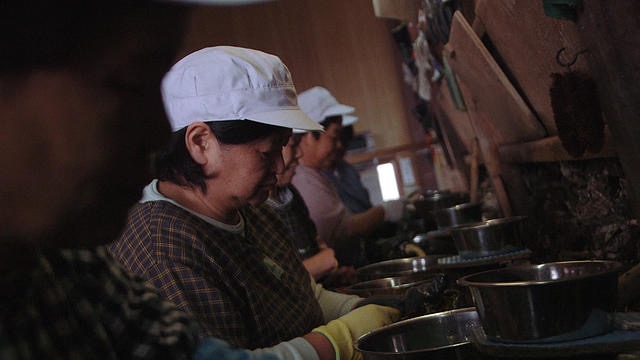
The camera follows patiently and almost hypnotically the workers of an old coal mine in Bosnia down into the darkness of their daily routine. The movie is visually stunning, partly documentary and partly experimental cinema, director Oda Kaori knows how to use the digital medium for her cinematic purposes in a work that revolves around the concept of duration and its materiality, and that is almost structural cinema in its construction. I had the pleasure of meeting and interviewing the director, the conversation was published on the Italian newspaper Il Manifesto, I’m currently working on an English translation and on a review/piece for this blog (maybe next year).

Oyster Factory (Sōda Kazuhiro, 2015)

The latest work from Japanese director Sōda Kazuhiro, together with Theatre 1 and 2, my favourite among his documentaries. I’ve written more about the film here.

IMG_5344

France Is Our Mother Country (Rithy Panh, 2015)

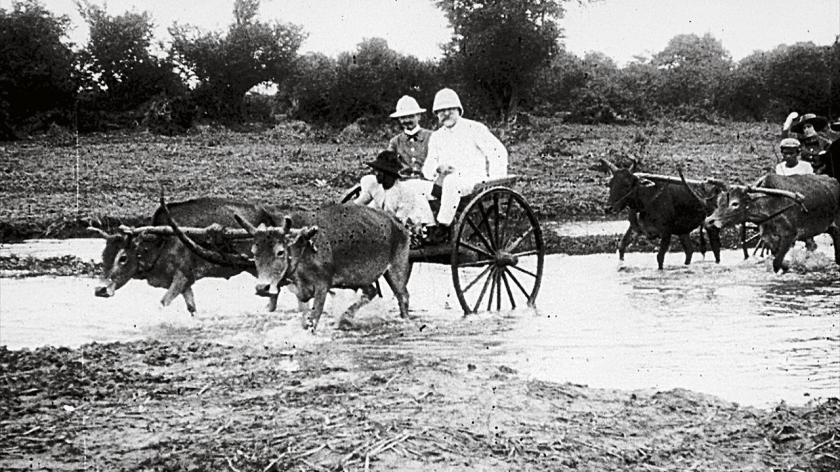
Rithy Panh (2-21: The Khmer Rouge Killing Machine, The Missing Picture) constructs a critical and satirical work about the colonial rule of Cambodia by France, using only footage, archival images and propaganda films shot by the rulers themselves. The power of re-editing and collage documentary.

france-is-our-mother-country

Night and Fog in Zona (Jung Sung-il, 2015)

A documentary about the great Wang Bing by movie critic-turned-director Jung Sung-ilhere you can read my review.

IMG_0379-0

The Moulin (Huang Ya-li, 2015)

Formally engaging and elliptical, I don’t really know how much of my fascination for this movie comes from its themes, a group of Taiwanese avant-garde artists active in the 30′ during the Japanese colonial period, and how much from the documentary itself.

TheMoulin_Taiwan4

Documentaries from other parts of the world:

The Iron Ministry ( J.P. Sniadecki, 2014) and in general all the movies by Sniadecki: Demolition, People’s Park, Yumen….

Jujun (Paul Thomas Anderson, 2015)


(re)discoveries of 2015:

The Vampires of Poverty (Carlos Mayolo, Luis Ospina, 1977)

All the documentaries/works of the great Agnès Varda (it was a pleasure watching 14 of her films this year)