YIDFF 2025 – report 6: Sanrizuka: Disappearing Landscapes—The Heta Project Screening

This is my final piece on this year’s Yamagata International Documentary Film Festival. It comes very late, apologies, it’s been a busy time.

Previous reports:
YIDFF 2025: preview
report 1: SPI (Sayun Simung)
report 2: Awards
report 3: From the River to the Sea, and the Mountains: Filmmakers in Solidarity with Palestine – A Gathering
report 4: Appalachian Lenses, Hakishka
report 5: The Future of Dialogue: Yoshida Dormitory, Kyoto University

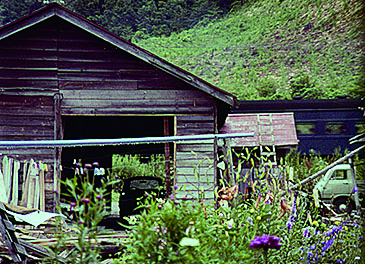
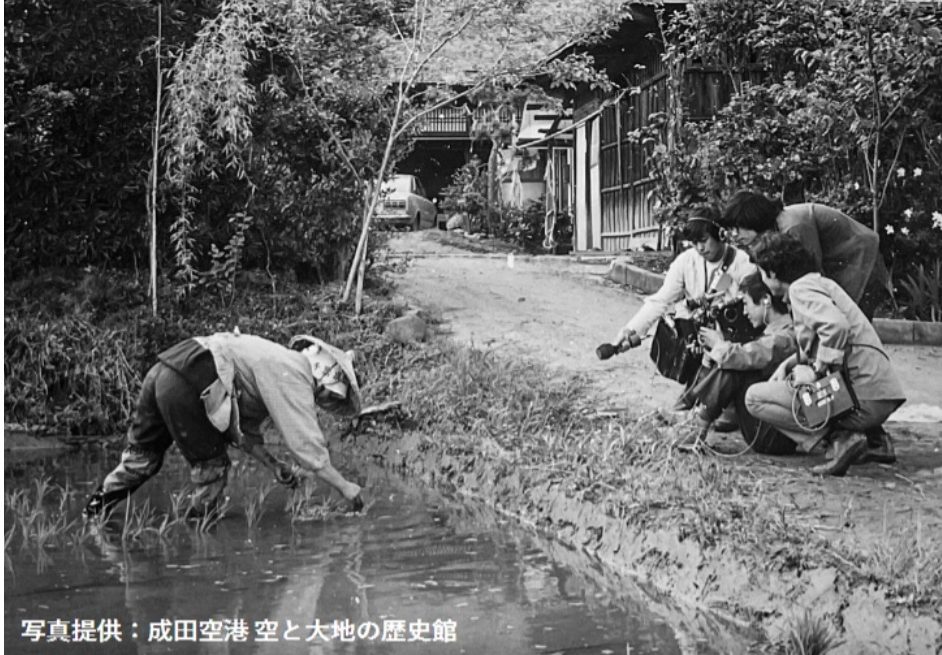
Heta village and the surrounding area, together with the people who lived there, are at the center of one of Ogawa Productions’ masterpieces—and the final work the collective shot before relocating to Yamagata—Narita: Heta Village (1973). About two decades ago, when the few remaining inhabitants were relocated, the area became a ghost of its past, a past that is threatened to be erased in the coming years with the further planned expansion of Narita Airport. This will cause the partial submersion of the zone, wiping out hundreds of years of culture, traditions, collective and personal memories, and not least, resistance.

After moving to Yamagata in the mid-1970s and after the death of Ogawa Shinsuke in 1992, the collective left behind a massive quantity of unused audiovisual material and notes—Ogawa also left a huge debt, though that is another story.
The Hokusō Regional Materials and Cultural Assets Preservation Network is a volunteer organization established in 2024 to document and preserve the buildings, communities, memories and landscapes that will be lost as a result of the large-scale expansion work currently underway at Narita Airport. One of the areas greatly affected by this expansion is Shibayama Town, where Heta Village was filmed. As part of its activities, in September 2024 the network co-organized Heta Project, a workshop for filmmakers and artists to engage with the material left by Ogawa Pro and create audiovisual works that reflect on the landscape of the area and the memories connected to it.

The results of this workshop were screened at one of the satellite events held in Yamagata on October 13, Sanrizuka: Disappearing Landscapes—The Heta Project Screening. Six short films were presented, and most of the filmmakers were also at the venue to discuss their work.

What I found particularly fascinating was the heterogeneity of the participants—not only in age and nationality, but also in their levels of knowledge about Ogawa Productions, and the history of the area. Some, like Markus Nornes, have been writing and speaking about the documentaries and the resistance of its people for decades; for others, this project served as an entry point to discover the films and to become familiar with the issues affecting the region. The following films were screened:

三里塚ー辺田部落の時間 SanrizukaVillage Time in Heta Village (Markus Nornes, 2024), 13′.

抵抗のむら The Village of Resistance (Stella Lansill, 2024), 5′.

此処に轟くThis ROAR Here…(Tanabe Yuma, 2024), 9′.

辺田部落へ To Heta Village (Watanuki Takaya, 2024), 10′.

三里塚 シャドー Sanrizuka Shadows (Wang Yijean, 2024), 6′.

辺田部落 瞑想 (祈)Heta Buraku Meditation (Prayer) (Aldo Schwartz, 2024) 12′.

The fact that Ogawa Production’s footage is freely available for artistic and historical purposes is an extraordinary achievement, and it could mark a turning point in the production of archival and compilation films in Japan. As I have already noted in a preliminary study on the subject, this form of cinema is strikingly absent from the Japanese audiovisual landscape—not only within the documentary sphere, but also in the experimental field.

One can only hope that this incredibly rich archive—there is, for instance, a great deal of vibrant color footage of natural elements and animal life, and the very fact that the collective chose not to use it says much about what they were striving for—will finally enter into circulation.
Beyond opening new artistic possibilities for filmmakers—Satō Makoto’s Memories of Agano (2004) is a shining example that pointed in this direction already two decades ago, and if I am not mistaken some of his peers are now moving along similar lines—the archive may also function as a living repository of Sanrizuka: its memories, its struggles, its history.
Film journal, spring 2024 (part one): The Minamata Mural, A Grasscutter’s Tale

Both for their importance in the history of Japanese documentary, and for their intrinsic artistic value, the two films below would deserve a longer and deeper analysis, but time is always scarce here… perhaps in the future…

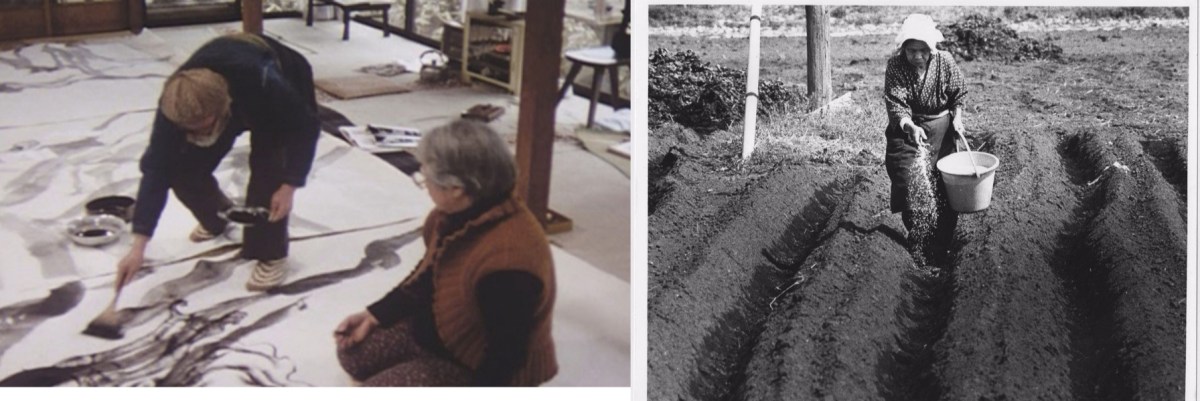
For some reason, in my exploration of the documentaries made during his long career by Tsuchimoto Noriaki about the Minamata disease and its victims, The Minamata Mural (1981) completely escaped me, at least until now. The film asks the delicate question of how it is possible to represent and depict the suffering and the struggles of Minamata’s victims, and more broadly, how artists can express, through their medium of choice, the sorrow caused by other tragedies as well, such as the bombing of Hiroshima and Nagasaki, or the suffering inflicted to minority groups in Japan.
Tsuchimoto and his crew follow Maruki Iri and Akamatsu Toshiko, a couple of artists working on a series of panels dedicated to the people of Minamata, showing us the couple at work on the mural, and during their visits in Kyūshū, when they meet some of the people affected by the disease. By showing how these encounters, especially with two young girls, influenced and changed the perspective of the two artists, Tsuchimoto is also, subtly but obviously, reflecting on his own (at the time) decade-long endeavour in capturing and siding with the people in Minamata.
The segment around the middle of the film, when activist and writer Ishimure Michiko reads her poems over the close-ups of the huge mural, is a spine-chilling and heart-wrenching masterpiece of a sequence. For me, one of the most impressive qualities of the scene, besides the poetic words by Ishimure, is how powerfully the camera is able to convey the intensity of the paintings.
Another striking aspect of the documentary is how Tsuchimoto and his cameramen are able to capture and convey on film the beauty of the young people affected by the disease. Shiranui Sea (1975), probably the peak of Tsuchimoto’s career, has a balance and a grace in depicting the people of Minamata, particularly the young ones, that can be found here as well.

One of the two cameramen in The Minamata Mural is Segawa Jun’ichi, a director of photography who, among other films, worked in the seminal Snow Trail—directed by Taniguchi Senkichi in 1947, from a script by Kurosawa Akira, and starring Mifune Toshirō in its first role—and with Haneda Sumiko in Ode to Mt. Hayachine— he was mainly in charge of filming the mountains—a documentary filmed around the same period as the one here discussed. It would be interesting to know if Segawa shot the paintings, was involved in filming the people and scenery in Minamata, or was involved in both (I’m inclined to think it’s the former).

The Minamata Mural

“This linking of memories, this setting remembrances in motion, is not a nostalgia but an immanence,”

Crisca Bierwert

A Grasscutter’s Tale (1986) is one of the Japanese “documentary treasures” I have been meaning to watch for quite a long time. The occasion finally came last April, when it was screened at Athénée Français Cultural Center in Tokyo, part of a very interesting retrospective about resistance and political struggle on film, organised to launch the new documentary by Daishima Haruhiko, Gewalto no mori – kare wa Waseda de shinda (ゲバルトの杜 彼は早稲田で死んだ, 2024).

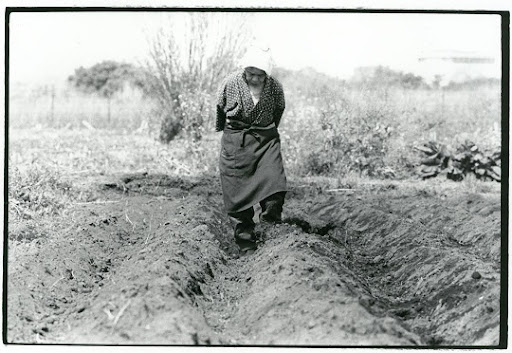
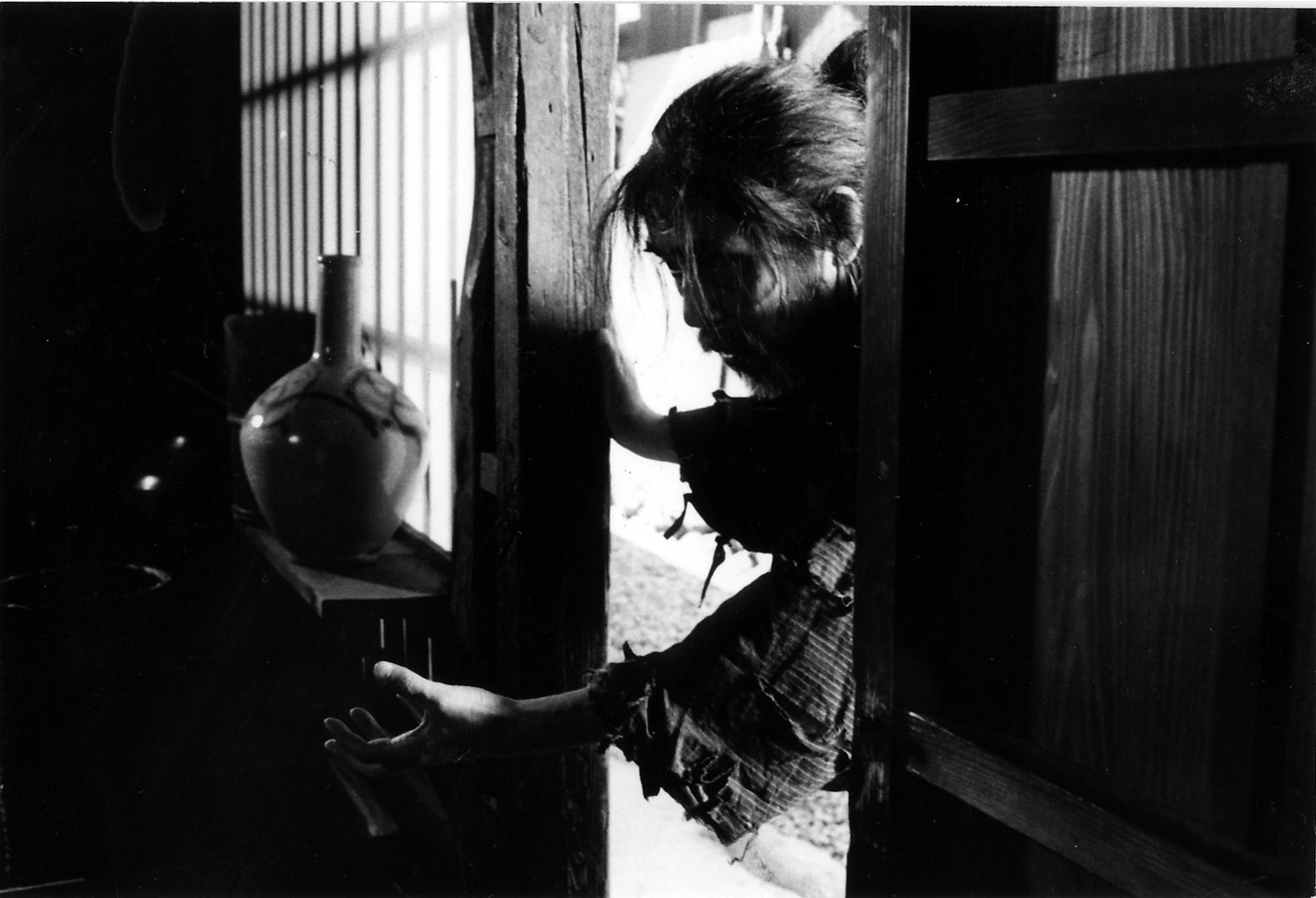
The film focuses on grandma Someya, born in 1899, one of the farmers who lived and worked on the land to-be-expropriated for the construction of Narita Airport. She fiercely opposed the second phase of the airport, a stance that severed her relationship with her family, and resulted in her living alone on her land.  The film consists of nineteen stories narrated by grandma Someya’s own words, and mainly of images of the old lady cleaning her field. 

Part of the Sanrizuka notes  Fukuda Katsuhiko (1943-1998) took after he left Ogawa Production at the end of the 1970s, after the collective left for Yamagata, the film is a crucial work to better understand the history and development of documentary practices in Japan, in that it heralds a shift in the way documentary was conceived, theorised and practiced in the archipelago. The film occupies at least two spaces: militant cinema with a focus on the resistance of one person (Someya-san) against the construction of Narita Airport on the one side, and a mode of cinema that explores the different (hi)stories traversing a physical space, Sanrizuka, and how these intersect with the personal history of one individual. Moreover, seen from a different perspective, A Grasscutter’s Tale can also be considered as an example of “oral cinema”, that is, a cinema that connects and activates the untapped potential of storytelling and the spoken word in relation with the moving image. By combining images and tales that are parallel and do not touch each other, so to speak—as previously noted, the images show mainly Someya-san working on her field—the film constructs a segmented and open portrait of a life, a poetic bricolage made of stories and images that invites the viewers to wander inside of this personal/historical “landscape”.

The film has an episodic structure and is composed of chapters, some funny and some tragic, such as the story of her sons who died, her husband who worked as barber, a strange dream remembered, the time she first came to Sanrizuka, or how she once ate only matches as a child to avoid starvation. Sometimes A Grasscutter’s Tale edges towards the experimental. In the segment about the dream, the screen is completely dark except a bright light on the upper left corner, in another, the voice of the director explain (if I’m not wrong) again on a black screen, how the reenactment of an episode from the old lady’s life was scrapped from the final work at the request of her son, who was in it.
The screening I attended was in 16mm, a rare chance to better appreciate the colours and the texture of the work. The greens of the crops and of the grass are almost tactile, and the time-lapse scene of the setting Sun, here a fiery red, is akin to that in Magino Village, a very different film, but a work that nonetheless shares many common traits with A Grasscutter’s Tale.

The Japanese Cinema Book – Ogawa Productions

We are currently navigating uncharted waters and I hope all you readers out there are safe and doing well, so today just a brief post to point to the release of an important volume: The Japanese Cinema Book, edited by Hideaki Fujiki and Alastair Phillips for Bloomsbury. As stated by the editors, the volume

provides a new and comprehensive survey of one of the world’s most fascinating and widely admired filmmaking regions. In terms of its historical coverage, broad thematic approach and the significant international range of its authors, it is the largest and most wide-ranging publication of its kind to date.

Ranging from renowned directors such as Akira Kurosawa to neglected popular genres such as the film musical and encompassing topics such as ecology, spectatorship, home-movies, colonial history and relations with Hollywood and Europe, The Japanese Cinema Book presents a set of new, and often surprising, perspectives on Japanese film.

With its plural range of interdisciplinary perspectives based on the expertise of established and emerging scholars and critics, The Japanese Cinema Bookprovides a groundbreaking picture of the different ways in which Japanese cinema may be understood as a local, regional, national, transnational and global phenomenon.

The book’s innovative structure combines general surveys of a particular historical topic or critical approach with various micro-level case studies. It argues there is no single fixed Japanese cinema, but instead a fluid and varied field of Japanese filmmaking cultures that continue to exist in a dynamic relationship with other cinemas, media and regions.


The Japanese Cinema Book is divided into seven inter-related sections:
· Theories and Approaches
· * Institutions and Industry
· * Film Style
· * Genre
· * Times and Spaces of Representation
· * Social Contexts
· * Flows and Interactions

There are a couple of chapters, or parts of them, that cover what is the main interest of this blog, the production and evolution of documentary cinema in the Japanese archipelago, experimental cinema, and amateur/home films. I was positively impressed by the scope of The Archive Screening locality: Japanese home movies and the politics of place by Oliver Dew, the ever-shifting boundaries between amateur/professional filmmaking, and everything that exceeds what we usually consider “cinema” are problematics that fascinate me. I might write something about Dew’s essay and Japanese home movies in general at another time, but today I want to briefly touch on the chapter written by Hata Ayumi. Filling Our Empty Hands’: Ogawa Productions and the Politics of Subjectivity is a dive into Ogawa Productions, with a special focus on how the collective changed their film-making identity, a process seen through the lens of three works made by the group at different times of their trajectory, Forest of Oppression (1967), Sanrizuka – Heta Village (1973), and The Magino Village Story – Raising Silkworms (1977). I will highlight some of the passages in the essay that more resonated with me, mainly those about the collective and their period in Yamagata,  disclaimer: the themes covered and analysed by Hata are much richer and deeper than what I’m about to write.

One of the most interesting issues tackled in the chapter is for me the connection the author draws between, on the one hand, the portrayal of farmers and farmers’ life created by the group throughout their career, and the rise of the minshūshi movement during the 1960s and 1970s in Japan, on the other. “The minshūshi, or ‘people’s history’ project, was part of a larger intellectual movement of the 1960s and 1970s that sought to construct new representations of the minshū, or non elite ‘people’ as political and historical agents, and overcome the view that they had been inert and passive objects of rule throughout history.”

The shift from a style of film-making more focused on the political struggle to a depiction, almost an ethnographic exploration, of the histories and cultures traversing villages and people in Sanrizuka, is one of the reasons Heta Village is a pivotal movie for Ogawa Productions. Hata argues that, what I call a tectonic shift for Japanese documentary, was possible also by the influence and the interaction of the collective with the minshūshi movement, thus repositioning the path of the collective in a much larger historical and political canvas.

One of the most astonishing artistic achievements in the long years spent by the collective in Yamagata filming and farming, was the ability to reach a degree of proximity, almost a merging and an identification, with the subject filmed, the taishō. Not only a proximity with people and their point of view, but also a quasi-fusion with the landscape and its non-human elements as it were, the plants, the seasonal changes, the weather, the geological time of the area, or the Sun perceived as a orbiting star. To read in the essay that Ogawa and his group “took this ideal subjectivity even further with the idea of ‘the human possessed by the rice plant’ (ine ningen), an imagined, metaphorical entity that they strove for in order to capture the essence of rice cultivation.” was for me a confirmation and a revelation. The beautiful poster of Magino Village: A Tale (1986)—some of the words on it are pure poetry, “a movie mandala”, “to carve the time of life into the body of film”—beautifully embodies this strive towards the becoming-rice plant of the collective, and it is in itself a work of art, in my opinion.

There are several scenes in Magino Village that encompass this love and obsession towards rice, farming, and all the human and non-human life that revolves around a plant so important for Japan and its people. Tamura Masaki patiently filming rice flowers bloom is one of the most famous, used also as the cover of the Japanese DVD, but my favourite is the one you can watch below, a scene Markus Nornes has described in his book on Ogawa Pro as “the most prominent haptic images” in the film.


Ogawa Production retrospective at Cinéma du réel (March 23-April 28)

This year Cinéma du réel, one of the most prestigious documentary film festivals, will kick off its 40th edition this coming Friday, among the more anticipated events of the Parisian festival there will be a special focus on Ogawa Shinsuke and Ogawa Production, a huge retrospective dedicated to the documentary collective that from the 1960s onward changed and impacted the landscape of non-fiction cinema in Japan and Asia. Part of the events celebrating and reflecting on the civil unrest and protests that shook the world in 1968, from March 23rd to April 28th, the festival and the city of Paris will showcase seven movies made by the group in the 1960s:

Sea of Youth – Four Correspondence Course Students (1966)

Forest of Oppression – A Record of the Struggle at Takasaki City University of Economics (1967)

Report from Haneda (1967)

The Battle Front for the Liberation of Japan – Summer in Sanrizuka (1968)

Prehistory of the Partisans (1969, directed by Tsuchimoto Noriaki)

At the end of Cinéma du réel, the retrospective will then move to the Galerie nationale du Jeu de Paume where will continue its focus on the Sanrizuka Series, movies documenting the struggle and resistance of the peasants and the students, united against the land expropriation perpetrated by the government in order to build Narita airport. The retrospective will last until April 27th presenting also the movies made by Ogawa Pro in its third phase, when the group moved to Magino village in Yamagata prefecture. The collective disbanded in 1992 with the untimely death of its founder Ogawa Shinsuke, a passing that also revealed the dark side of such a unique cinematic endeavor, Ogawa himself left a huge debt made during the years to support the collective and their films.

One member of the collective, Iizuka Toshio, will be in Paris to introduce the Magino films, and discuss his own movies and his relationship with Ogawa Shinsuke and the group. Curated by Ricardo Matos Cabo, whom I had the pleasure of meeting last October in Yamagata, the retrospective will also include other documentaries about the group, Devotion: A Film About Ogawa Productions (2000) by Barbara Hammer, A Visit to Ogawa Productions (1981) with Oshima Nagisa, Filmmaking and the Way to the Village (1973) by Fukuda Katsuhiko, and Kashima Paradise (1973) a French documentary about the struggle in Narita. An important part of the event will be the presence of scholar Abè Markus Nornes who will give a master class on Ogawa and lectures on militant film in Japan and Sanrizuka: Heta Village (1973).

If you’re in Paris, don’t miss this opportunity, experiencing Ogawa Pro’s documentaries on a big screen, in the proper contest and with proper introductions, is one of the best cinematic experiences I had in my life. Here the schedule of the screenings and lectures at Jeu de Paume :

April 3 (Tue), 18:30 Sanrizuka – Heta Village (1973)

April 4 (Wed), 18:00 Winter in Sanrizuka (1970)

April 6 (Fri) 16:30 Sanrizuka — the Three Day War (1970)
18:00 Sanrizuka – Peasants of the Second Fortress (1971)

April 7 (Sat) 11:30 Sanrizuka – The Construction of Iwayama Tower (1971)
14:30 Sanrizuka – Heta Village (1973)
18:00  Filmmaking and the Way to the Village (1973)

April 10 (Tue) 18:30 Dokkoi! Songs from the Bottom (1975)

April 17 (Tue) 16:00 Devotion: A Film About Ogawa Productions (2000)
18:00 The Magino Village Story – Pass (1977)
The Magino Village Story – Raising Silkworms (1977)

April 20 (Fri) 18:00 « Nippon » : Furuyashiki Village (1982)

April 21 (Sat) 11:30 Encounter with Toshio Iizuka
14:30 The Sundial Carved with a Thousand Years of Notches – The Magino Village Tale (1986)

April 24 (Tue) 19:00 The Magino Village Story – Pass (1977)
A Visit to Ogawa Productions (1981, directed by Oshige Jun’ichiro)

April 28 (Sat) 14:30 Kashima Paradise (1973, directed by Yann
Le Masson and Bénie Deswarte)
17:00 Sanrizuka – The Construction of Iwayama Tower (1971)

Record of Blood: Sunagawa 流血の記録・砂川 (Kamei Fumio, 1956)

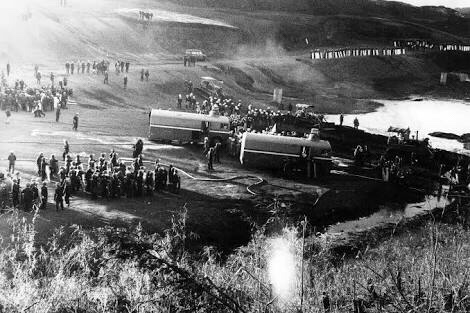
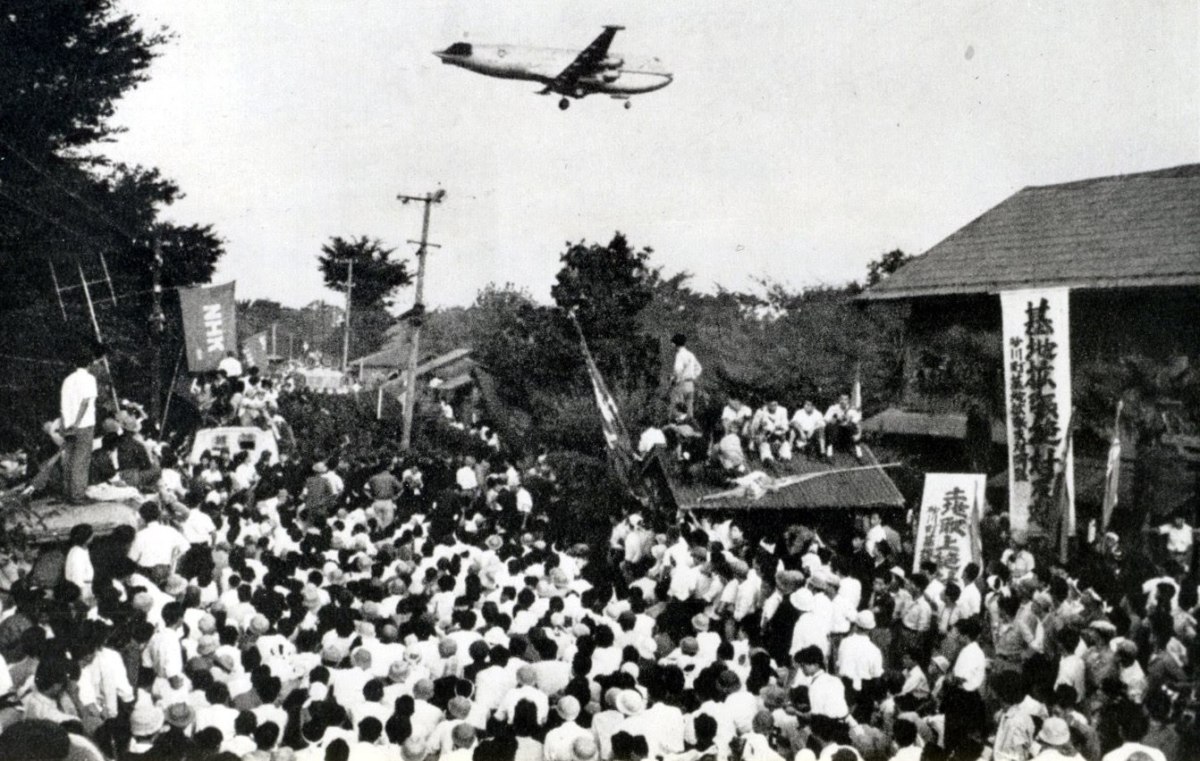
Before the battle of Sanrizuka to halt the building of Narita airport, and before the massive revolts of 1968-69, there was Sunagawa and the resistance against the expansion of the American base in Tachikawa (Tokyo). In the third installment dedicated to the struggle, Kamei Fumio, the grandfather of Japanese documentary, captures the clashes and fights of the farmers, labor unions and students groups (Zengakuren among others) with the police. The always useful YIDFF, a festival that held a huge Kamei retrospective in 2001, gives us more background:

This is the third film in the Sunagawa series following The People of Sunagawa (1955) and Wheat Will Never Die(1955). Making use of the second film in the series, it explains the progress made during last year’s struggle and then documents the state of this year’s efforts. On October 12, 1956, 53 surveyors and 1,300 armed police rushed the gathered union and Zen Gaku Ren (the All Japan Federation of Self-Governing Students Associations) members who then formed a scrum to protect themselves. 278 people from both sides were injured. On the 13th, at the protest’s peak, 5,000 workers and Zen Gaku Ren members had been mobilized when the police attacked the demonstrators’ picket lines. 844 protesters and 80 police were injured. Public opinion erupted against the the violence of the armed police and the government’s lack of a policy, and on the 14th, the radio suddenly announced that the government would stop its survey. Sunagawa overflowed with joy and excitement, and a victory demo was held. On the 15th, a National People’s Rally was held to celebrate the victory of Sunagawa’s fight against the base, and protesters who had sustained grave injuries came from the hospital to address the meeting.

Stylistically the movie has many of the elements that would be used by Ogawa and his group in their Narita/Sanrizuka series: hand-held camera scenes of pure chaos shot in the midst of the fights, but also moments of peace when traditional songs are sung and meals are communally eaten by farmers, students and labor union members.
Here is a short but impactful scene of one of the first clashes between the protesters and the police in the Autumn of 1956:

It is interesting to notice that two points of view are here used to depict the situation: one that shows the fight from the outside, from a certain distance that is, and the other where the camera is engulfed by the bodies of the participants and is actively part of them. The gaze of the movie is without any doubts on the side of the inhabitants of Sunagawa, an aesthetic statement that reflects and results from the choice by the cameraman and the crew to live together with the farmers and students for several months.

Here, like in many other of his documentaries, Kamei also uses narration, but the voice explaining the timeline of the facts and commenting on what is going on on screen, sometimes with emphasis, is that of a female. In the film and in the struggle, Women, mainly middle-aged or old farmers, are always on the front-line and a vital part of the resistance, like in the documentaries about Sanrizuka (although infamously they were not an active part of the Ogawa collective itself).

It is also worth noting how the Sunagawa struggle is one of the few battles against the state/power in Japan that in the end was won by the people. If it is true that in 1959 the Supreme Court overturned the previous decision of the Tokyo District Court that found all the U.S. bases on Japanese land unconstitutional, in 1968 the plan for the extension of the base was cancelled, and finally in 1977 the base was given back to Japan. As pointed out by Dustin Wright “Without the farmers of Sunagawa, the Anpo (Japan-U.S. security treaty) protests of 1960 would have been something else entirely”, equally I think it is not too far fetched to say that without Kamei Fumio and his works on the Sunagawa struggle, the Sanrizuka/Narita series and consequently the post-war Japanese documentary landscape would have been something completely different.

Record of Blood: Sunagawa is available on DVD in Japan (no English subtitles) as a part of this box set released by Iwanami Shoten.

On Kamei’s Fighting Soldiers (戦ふ兵隊 1939)

Ogawa Production’s Sanrizuka Series – DVD Box set is out today

img_2206

Known outside Japan as the Narita series, the works made by Ogawa Shinsuke and his collective from 1968 to 1973 (with a return to the area in 1977) filming the battle and resistance of farmers, students, activists against the building of Narita airport, are usually called in Japan the Sanrizuka series, from the name of the area where the main struggle and land expropriation took place (an ongiing battle that is not over, by the way). As written briefly in a previous post, the Japanese label DIG is putting out on DVD all the documentaries of Ogawa Production, the first 3 films were released in June, and today (July 2nd) DIG is also releasing a DVD box set of the Sanrizuka/Narita series. Here’s the list of the works included in the box set:

  1.  Summer in Narita『日本解放戦線 三里塚の夏』(1968)
  2. Winter in Narita 『日本解放戦線 三里塚』(1970)
  3.  Three Day War in Narita『三里塚 第三次強制測量阻止斗争』(1970)
  4.  Narita: Peasants of the Second Fortress『三里塚 第二砦の人々』(1971)
  5. Narita: The Building of Iwayama Tower  『三里塚 岩山に鉄塔が出来た』(1972)
  6. Narita: Heta Village 『三里塚 辺田部落』(1973)
  7. Narita: The Sky of May  『三里塚 五月の空 里のかよい路』(1977)
  8. as an extra work, available only in the box set: Fimmaking and the Way to the Village (1973, Fukuda Katsuhiko)『映画作りとむらへの道』(1973)

The box set comes with a booklet where each movie is introduced and a final note by renown documentarist Hara Kazuo. I haven’t had the chance to watch them yet, so I can’t say anything about the transfer*.
All the DVDs don’t have English subtitles, but that fact that finally these important documentaries are available on home-video basically for the first time, the only Summer in Narita was released with a book a couple of years ago, is something to rejoice. My hope is that some label outside Japan (maybe Zakka Films or even Icarus Films, why not?) will one day in the near future put together an international edition.

* July 4th addendum: I’ve watched some minutes of Heta Village, The Building of Iwayama Tower and Narita: Peasants of the Second Fortress just to get an idea of the transfer’s quality. As I expected the DVDs mirror the quality of the original prints – I’ve seen them all on the big screen, but many times on quite battered DVD samples, so my memory might trick me here. Be that as it may, the movies are not in a good state, lots of scratches, flecks and dirt, in a perfect world they would have had a restoration first and they would have been transferred on DVD only later. But we don’t live in a perfect world and the huge debt left by the group is still hindering any “normal” process of preserving and presenting the works in a pristine state. That being said,  this release is an important step anyway, because it will help to introduce Owaga Pro and its documentaries to a wider and younger audience, and just for this reason it’s a project that should be praised.

Ogawa Production’s documentaries finally on DVD

 
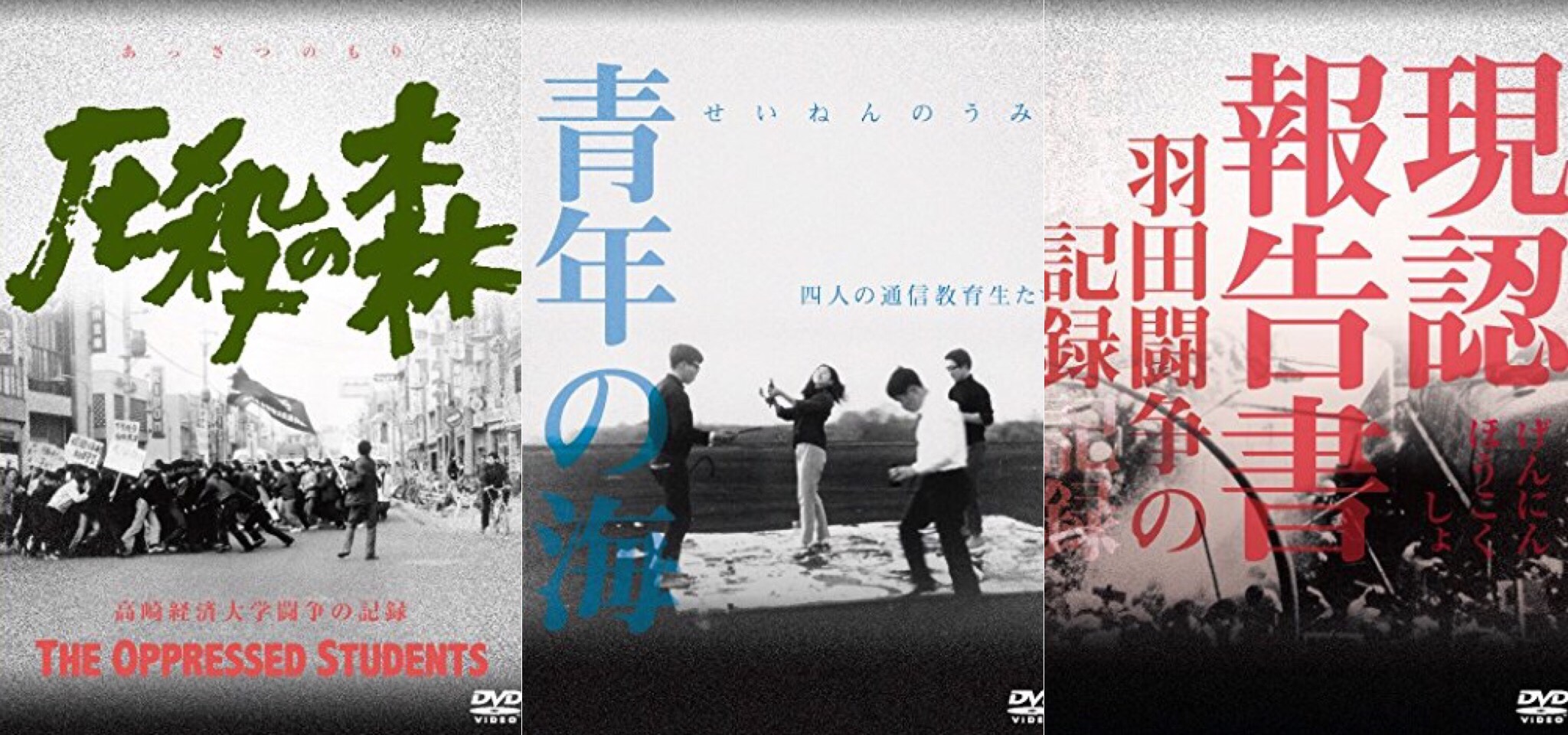
I’ve often written, here and elsewhere, about Ogawa Pro and the documentaries made by the collective, first in Sanrizuka – documenting the resistance of the peasants against the construction of Narita airport – and later in Yamagata. A couple of days ago through social networs I found out that finally all the works produced by the collective will see the light on DVD, a project by the Japanese label DIG. First, on June 2nd, we will get 3 of the early documentaries: A Sea of Youth (青年の海, 1966), The Oppressed Students (圧殺の森 高崎経済大学闘争の記録, 1967) and  A Report From Haneda 現認報告書 羽田闘争の記録, 1967) and later, presumably in one or two years, all the 20 documentaries made between 1966 and 1986 by the group. The news is big, at least for me, and although I have sample DVDs of many of the movies shot in Sanrizuka and Yamagata, copies kindly given to me by the festival people in Yamagata, it will be nice to have the films  “neatly transferred” on DVDs, the samples I have being a copy of a copy of a copy of a VHS. But here comes my biggest concern about this otherwise great news, will the transfer be really a proper one? Almost all the documentaries are shot in 16mm and I’m not really sure about the condition of the originals, in an ideal world we should see them first lovingly restored and then made them available for the home-video release. But the huge debt left by Ogawa complicates everything, what we’re likely to get is something close to the DVD of Kamei Fumio‘s Fighting Soldiers, a bare bones release, watchable of course but with a poor transfer, in the particular case probably due to the condition of the source material. The docs will not have English subtitles, adding them would have helped to “spread the word” of Ogawa Production to a wider international audience, but again, we don’t live in an ideal world and we should be happy and content with what we will get. Be that as it may, I’m pretty excited about this and I’ll write again about the project, the image quality, etc. when I get more information or in June, the time of the first releases. 

You can preorder the DVDs here

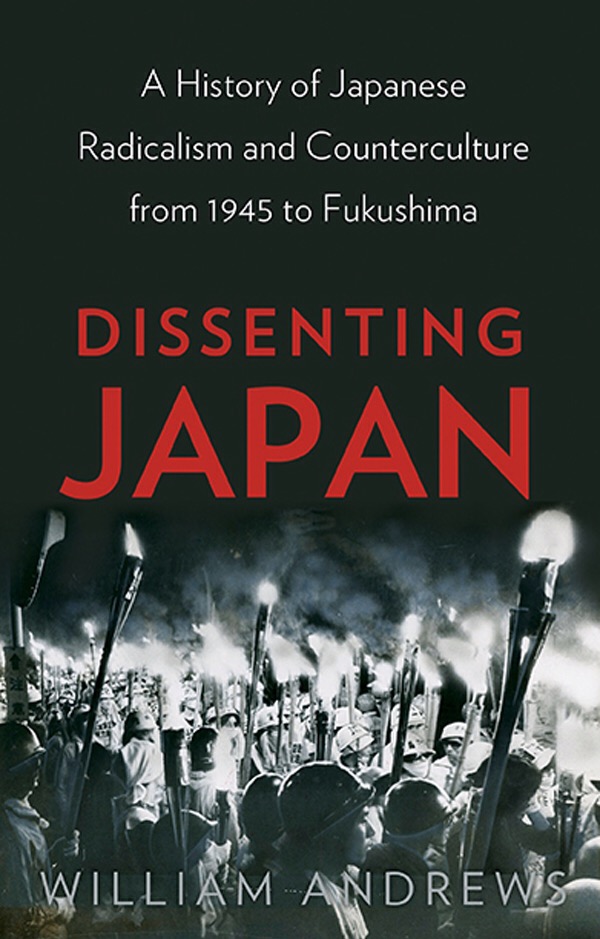
Dissenting Japan – A History of Japanese Radicalism and Counterculture 

Just a quick post to draw your attention on a significant book that the London-based Hurst will publish next September. The volume is titled Dissenting Japan – A History of Japanese Radicalism and Counterculture and is written by the Tokyo-based writer and translator William Andrews, who by the way runs an excellent blog on the same topic here


Here’s the description from the publisher’s homepage: 

Following the March 2011 Tsunami and Fukushima nuclear crisis, the media remarked with surprise on how thousands of demonstrators had flocked to the streets of Tokyo. But mass protest movements are nothing new in Japan. The post-war period experienced years of unrest and violence on both sides of the political spectrum: from demos to riots, strikes, campus occupations, factional infighting, assassinations and even international terrorism.
This is the first comprehensive history in English of political radicalism and counterculture in Japan, as well as of the artistic developments during this turbulent time. It chronicles the major events and movements from 1945 to the new flowering of protests and civil dissent in the wake of Fukushima. Introducing readers to often ignored aspects of Japanese society, it explores the fascinating ideologies and personalities on the Right and the Left, including the student movement, militant groups and communes. While some elements parallel developments in Europe and America, much of Japan’s radical recent past (and present) is unique and offers valuable lessons for understanding the context to the new waves of anti-government protests the nation is currently witnessing.

Who’s is familiar with documentary cinema (and cinema in general) knows very well that radicalism, dissenting, resistance and counterculture are a very important part of the vocabulary that defines the post war Japanese non-fiction landscape, and the fiction as well, especially during the 60s and 70s. Ogawa Production and Sanrizuka, Tsuchimoto Noriaki and Minamata, NDU and Okinawa and the borders, but also Kamei Fumio and his Sunagawa Trilogy, maybe the first Japanese works to fully embody this “philosophy” of resistance and struggle on film (excluding the Prokino before the war of course). 

For all these reasons, Dissenting Japan will probably be (I haven’t read it yet) a very important read not only for historians but also for film scholars interested in Japanese cinema and in documentary in general. I’ll certainly write more about it when the book is out. 

Best Japanese documentaries’ poll – results

More than 2 months have passed since I launched the best Japanese documentaries of all time poll, it’s time to wrap things up and to take a look at the results. Thanks everybody for your votes, for your support and for helping me spreading the word. sdgblogBefore digging into this fascinating trip through the history of Japanese non-fiction film, let me add some overall thoughts.
On the negative side, I have to admit that I’m a bit disappointed that I couldn’t get many people to vote, and this is partly my fault, the blog is pretty new and relatively unknown and I’ve been lazy and shy about pushing it through the social networks world. Besides, Japanese documentary is a niche subject inside a niche (Japanese cinema), and there are not so many people interested in documentary film as an art form, so I should have expected this. Many people, most of them cinema professionals, were kind enough to decline my invitation, honestly admitting their lack of knowledge in the field. After all, one of the purposes of the poll was indeed to check how much exposure Japanese non-fiction movies have in the world of cinephiles, so I shouldn’t really complain too much.
On the positive side, I was really surprised by the deep knowledge of the voters, most of them, I have to add, cinema professionals: festival programmers, critics, professors, and so on.
Below you’ll find the list, when possible I’ve added some information about each movie’s availability on DVD/BD.
Thanks again everyone, feedback and comments are, as always, welcomed.

1)Included in their lists by 40% of voters
Extreme Private Eros: Love Song 1974 「極私的エロス・恋歌1974」 (Hara Kazuo, 1974)
Extreme_private_eros_hara_kazuo

Available on DVD (with English subtitles).

2)Included in their lists by 33% of voters
Children in the Classroom 「教室の子供たち」(Hani Susumu, 1954)
children_in_the_classroom_Hani
Available in Japanese in this Iwanami DVD box

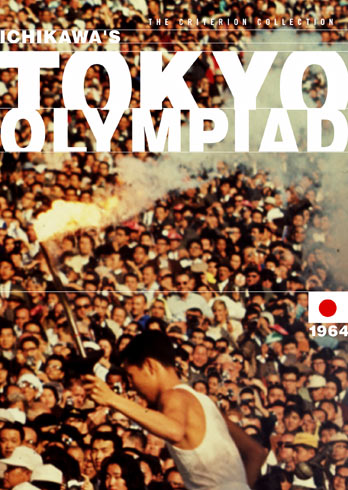
Tokyo Olympiad 「東京オリンピック」(Ichikawa Kon, 1965)
Tokyo_Olympiad_Ichikawa
Available on DVD in Japanese or with English sub, but the Criterion Collection edition is out of print.

Minamata: The Victims and Their World 「水俣 患者さんとその世界」(Tsuchimoto Noriaki, 1971)
Minamata_Victims
Available on DVD with English sub by Zakka Films

The Emperor’s Naked Army Marches On 「ゆきゆきて、神軍」(Hara Kazuo, 1987)
Emperor_Naked_army_Hara_Kazuo
Available on DVD with English sub

3)Included in their list by 27% of voters
Without Memory 「記憶が失われた時」(Koreeda Hirokazu, 1996)
Without_memory_Koreeda
Not available

4)Included in their lists by 20% of voters
A.K.A. Serial Killer 「略称・連続射殺魔」 (Adachi Masao, Iwabuchi Susumu, Nonomura Masayuki, Yamazaki Yutaka, Sasaki Mamoru, Matsuda Masao, 1969)
AKA_serial_Killer
There used to be a VHS in Japanese….

Fighting Soldiers 「戦ふ兵隊」(Kamei Fumio, 1939)
vlcsnap-2015-01-23-09h11m10s188
Available in Japanese on DVD (the quality of the transfer is pretty low though). Here my analysis of the first scenes.

A Man Vanishes 「人間蒸発」(Shōhei Imamura, 1967)
A_Man_Vanishes_Imamura
Available on DVD with English subtitles by Master of Cinema and by Icaruswith 5 bonus documentaries made for TV by Imamura in the 70s (reccomended).

The Shiranui Sea 「不知火海」(Tsuchimoto Noriaki, 1975)
ShiranuiSea_Tsuchimoto
Available by Zakka Films with English sub.

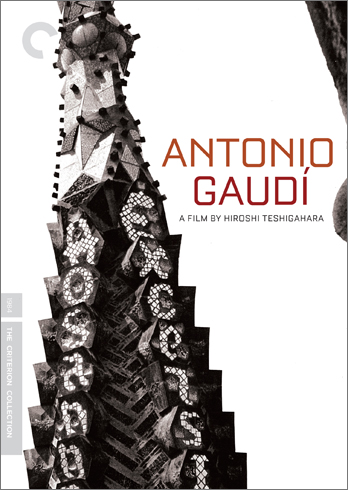
Antonio Gaudi 「アントニー・ガウディー」(Teshigahara Hiroshi, 1985)
antonio_gaudi_teshigahara
Available with English sub by Criterion Collection.

5)Included in their list by 13,3% of voters
For My Crushed Right Eye 「つぶれかかった右眼のために」(Matsumoto Toshio, 1968)
for-my-crushed-right-eye
The work is in the Matsumoto Toshio DVD collection – volume 2 – released by Uplink (now out of print?) in Japanese.

Goodbye CP [さよならCP] (Hara Kazuo, 1972)
Goodbye_CP_Hara_Kazuo
Available with English sub by Facets Video.

Narita: Heta Village 「三里塚・辺田部落」(Ogawa Production, 1973)
IMG_1328
Not available on DVD or VHS

God Speed You! Black Emperor 「ゴッド・スピード・ユー!」(Yanagimachi Mitsuo, 1976)
godspeedyou_emperor
Available in Japanese on DVD (used and expensive).

The Cherry Tree with Gray Blossoms 「薄墨の桜」(Haneda Sumiko, 1977)
vlcsnap-2015-01-28-21h24m04s10
Available on DVD (only in Japanese) by Jiyū Kōbō or in this Iwanami Nihon Documentary DVD-BOX

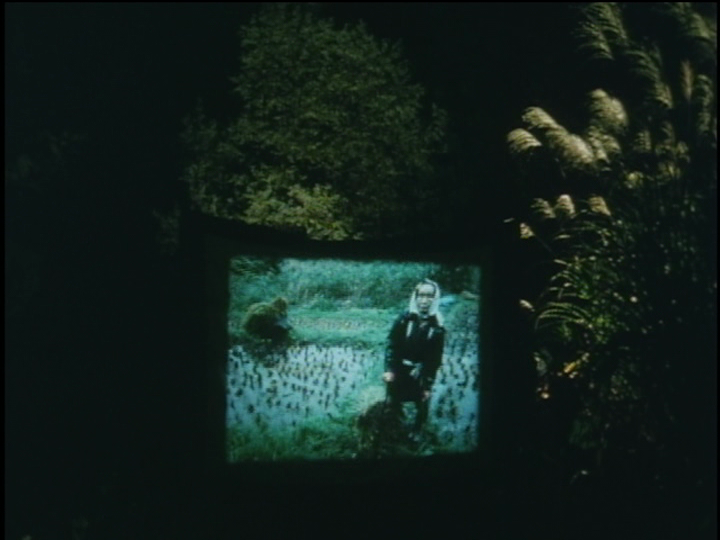
Magino Village – A Tale / The Sundial Carved With A Thousand Years of Notches 「1000年刻みの日時計 牧野村物語」(Ogawa Production, 1986)
magino1
Not Available

Embracing 「につつまれて」(Kawase Naomi, 1992)
Embracing_Kawase_Naomi
Available in Japanese with English sub in this DVD-BOX

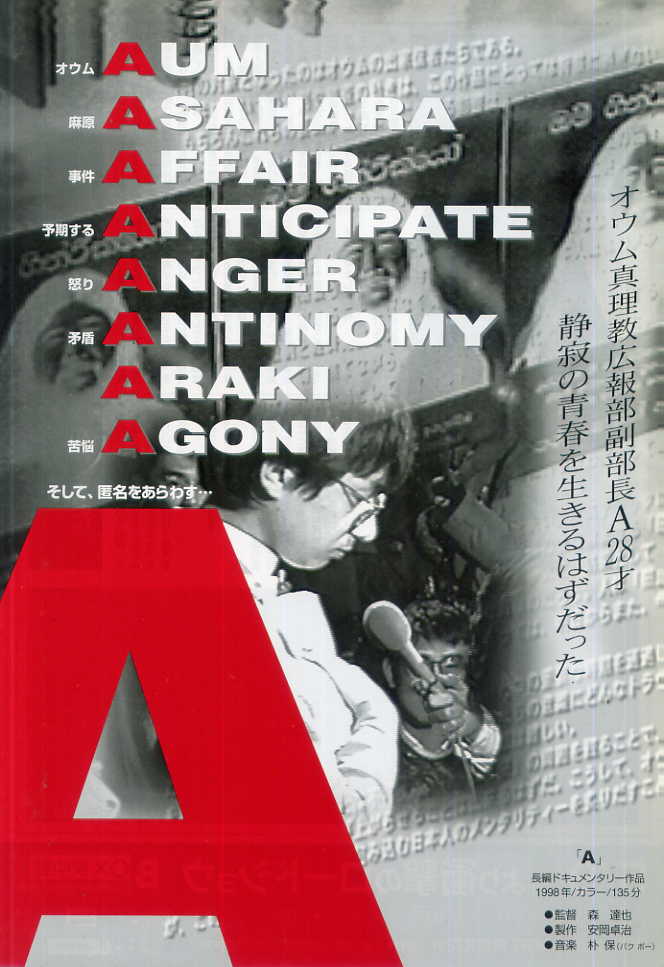
A (Mori Tatsuya, 1998)
A_Mori_Tatsuya
Available with English sub by Facets Video

The New God 「新しい神様」(Tsuchiya Yutaka, 1999)
IMG_3593
Available on DVD in Japanese

Memories of Agano (阿賀の記憶, 2004 Satō Makoto)
IMG_0105
Available on DVD with English sub by SIGLO.

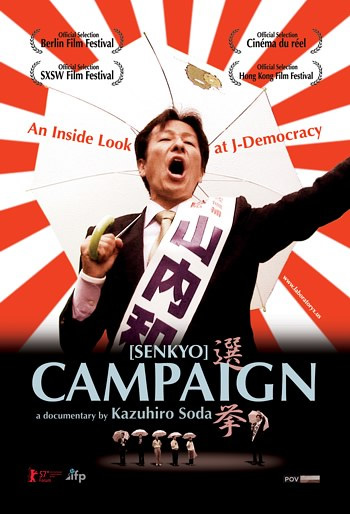
Campaign 「選挙」(Sōda Kazuhiro, 2007)
Campaign_Soda_Kazuhiro
Available on DVD with English sub.

Japanese documentary-related catalogues

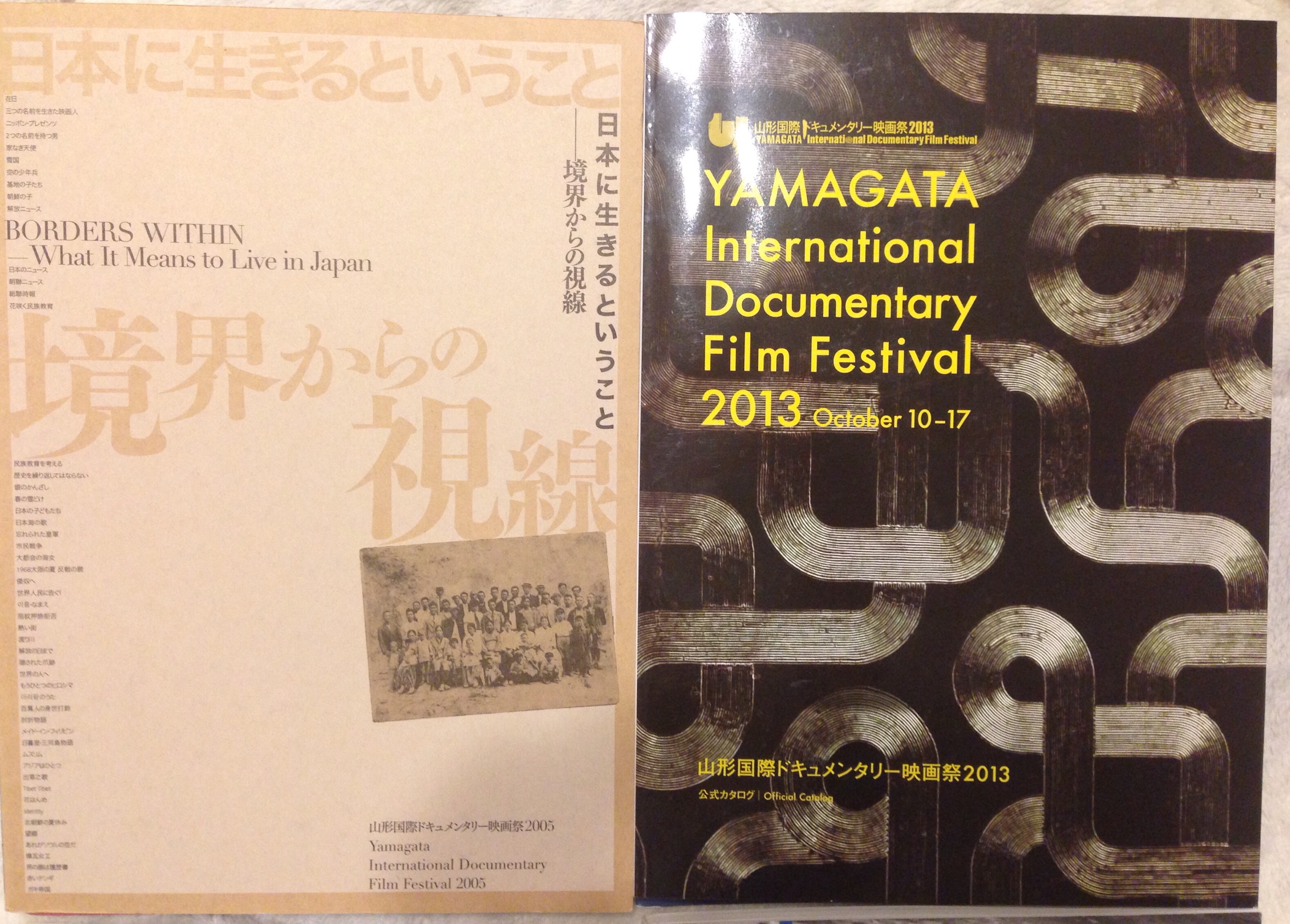
A lighter and more “visual” post today, some photos of the Yamagata International Documentary Film Festival’s catalogues I have at home:

2015/01/img_3378.jpg

YIDFF 1993 (Japanese documentaries of the 60s) and YIDFF 2003 (Ryūkyū Reflections Nexus of Borders)

2015/01/img_3377.jpg

YIDFF 1995 (Japanese documentaries of the 70s) and YIDFF 1997 (Japanese documentaries of the 80s and beyond)

2015/01/img_3379.jpg

YIDFF 2005 (Borders Within What It Means to Live in Japan) and YIDFF 2013

They’re in English and are an essential resource if you’re interested in Japanese cinema or documentary in general. For me personally “Ryūkyū Reflections Nexus of Borders” was a discovery: non-fiction films and the history of Okinawa, a place where all the contradictions and problematics arising from Japan-as-a-state and its relationship with other nations and its own inner borders are embodied and magnified. Or as Higashi Yoichi once said talking about his documentary Okinawa Islands (1969)
Continue reading “Japanese documentary-related catalogues”