The following is an excerpt from the first chapter of Dokyumentarii eiga no chihei: sekai o hihanteki ni uketomeru tame ni (The Horizon of Documentary Film: Toward a Critical Understanding of the World, 2001) by Satō Makoto, followed by a brief comment of my own. I believe that (re)discovering Satō’s writings is just as important as watching his films, as the two are often closely connected—if not reflections of one another.
Disclaimer: as for Haneda Sumiko’s writings, please keep in mind that neither English or Japanese is my first language, and that I’m not a professional translator. The following translation should be considered as an approximation.
A couple of further notes: I have used alternatively moving images or image for the term eizō (映像). As for the Benjamin’s passages quoted by Satō, I used the English translation by Harry Zohn (1969) for the longest quotes, but I kept the Japanese version used by Satō (translated by me in English) for other, shorter, sentences.
The aura captured by images
Let us call that which clings to images, something beyond words, aura. The term aura is one of the central concepts in Benjamin’s theory of art, employed when critiquing the visual arts in the age of mechanical reproduction. It signifies a certain subtle veil surrounding the genuine and original qualities once possessed by art.
According to Benjamin, aura is defined as “the uniqueness peculiar to the work of art, its ‘here’ and ‘now’,” and the resulting “one-time phenomenon that evokes a distant remoteness, however close it may be” (Walter Benjamin, The Work of Art in the Age of Mechanical Reproduction1). He criticized the new mass culture, arguing that this uniqueness, present in painting and theater, is destroyed by the reproductive arts of photography and film. However, Benjamin’s critique of the reproducible arts is not merely a lament over the loss of an artwork’s uniqueness and the disappearance of aura due to the rise of reproduction. He was trying to find a new aura within the emerging visual arts of photography and film, which were still considered dubious at the time.Regarding cinema, then in its nascent phase, he presented an ambivalent view: it could be both a destroyer of artistic tradition and a revolutionary critique.
Indeed, cinema fragmented the totality and uniqueness of a stage actor’s performance into “a series of individual episodes that could be pieced together later.” Yet, it also created the opportunity for “anyone, under certain circumstances, to appear within an artistic work.”“Compared with painting, it is the infinitely more detailed presentation of the situation that gives the performance portrayed on the screen its greater analysability. Compared with live theatre, the greater analysability of the performance portrayed cinematically is due to a higher degree of isolatability. That fact (and this is its chief significance) tends to foster the interpenetration of art and science. Indeed, in connection with a piece of behaviour embedded in a specific situation and now (like a muscle from a cadaver) neatly dissected out, it can scarcely be said which is more gripping: its artistic worth or its scientific usefulness.” (Walter Benjamin, The Work of Art in the Age of Mechanical Reproduction)
The faithful reproduction inherent in film—akin to an “optical test”—is the path to creating a new form of this art of reproduction. In The Work of Art in the Age of Mechanical Reproduction, Benjamin further argues that this scientific power of representation expands the “world of unconscious vision2” for human beings.
I believe that the moving images are the optimal medium for capturing the unique radiance inherent in the ephemeral nature of life—a quality that transcends linguistic expression and might be called the unconscious, or aura.
However, this is only true when fragments of captured reality are made into works without being forced into words, themes, or formulaic thinking.
The vast majority of images disseminated by mainstream mass media are selected and categorized as raw material necessary for summarizing them with clichéd language. Viewed from this perspective, images that have stripped away the beauty of uniqueness—aura—found only in the “now” and “here” can indeed be called a reproducible art.
Satō Makoto,ドキュメンタリー映画の地平: 世界を批判的に受けとめるために (Dokyumentarii eiga no chihei: sekai o hihanteki ni uketomeru tame ni), Gaifū-sha, 2001, pp 21-22.
The passage translated above is part of the opening chapter of Satō’s major theoretical work, where the filmmaker outlines his understanding of documentary cinema while examining a wide range of non-fiction films from Japan and beyond. The passage comes after a section distinguishing documentary from journalism, and is followed by a discussion of propaganda films produced during the Pacific War. There, Satō observes that even after the war, documentary filmmaking did not fundamentally transform: it remained largely structured around a central “message” to be conveyed to the viewers and shaped by a kind of formulaic thinking. At the same time, however, he points out that, even in the most programmatic or message-driven works, something invariably exceeds the filmmaker’s original intent. This surplus—produced by the very act of mechanically recording reality—emerges through the images themselves, revealing meanings that escape the imposed framework.
Following Walter Benjamin’s writings, Satō links the possibility of a new kind of aura in the moving image to the notion of the “world of unconscious vision” or “optical unconscious” as often the German term optisch-unbewusste is translated. This concept, first introduced by Benjamin in his 1931 essay Little History of Photography, designates the capacity of photographic—and, by extension, cinematic—images to reveal dimensions of reality that remain inaccessible to ordinary perception. As Benjamin famously writes: “It is through photography that we first discover the existence of this optical unconscious, just as we discover the instinctual unconscious through psychoanalysis.”
Aura and the optical unconscious are concepts to which Walter Benjamin would return on multiple occasions throughout his writings. As Arianne Conty observes, Benjamin “retains and develops another conception of the aura—understood through the key of the optical unconscious that is enabled by the very forms of technology that cause the decline of the cult status of the image. Technological media allows for an image of the past, lost to our conscious mind and lost to the history constructed by the victors, to surge into view. It is the unconscious eye of the camera that elicits a response and reveals the configuration of the present hidden in a snapshot of the past.”
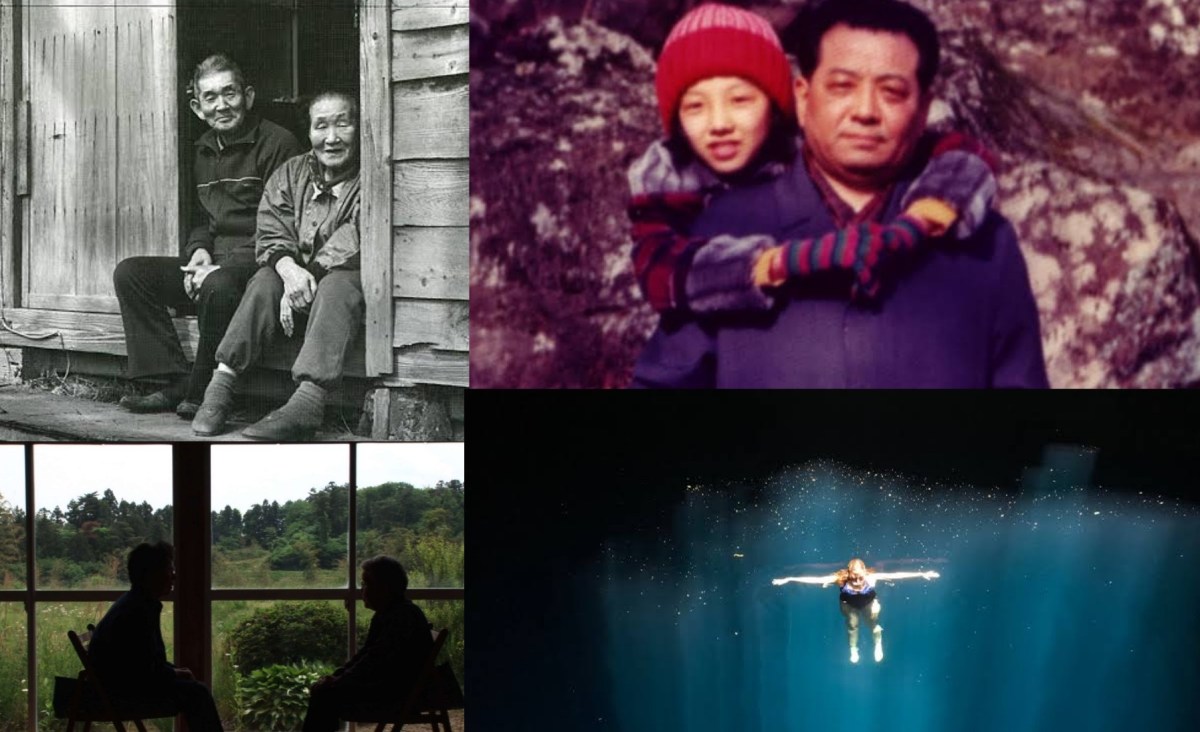
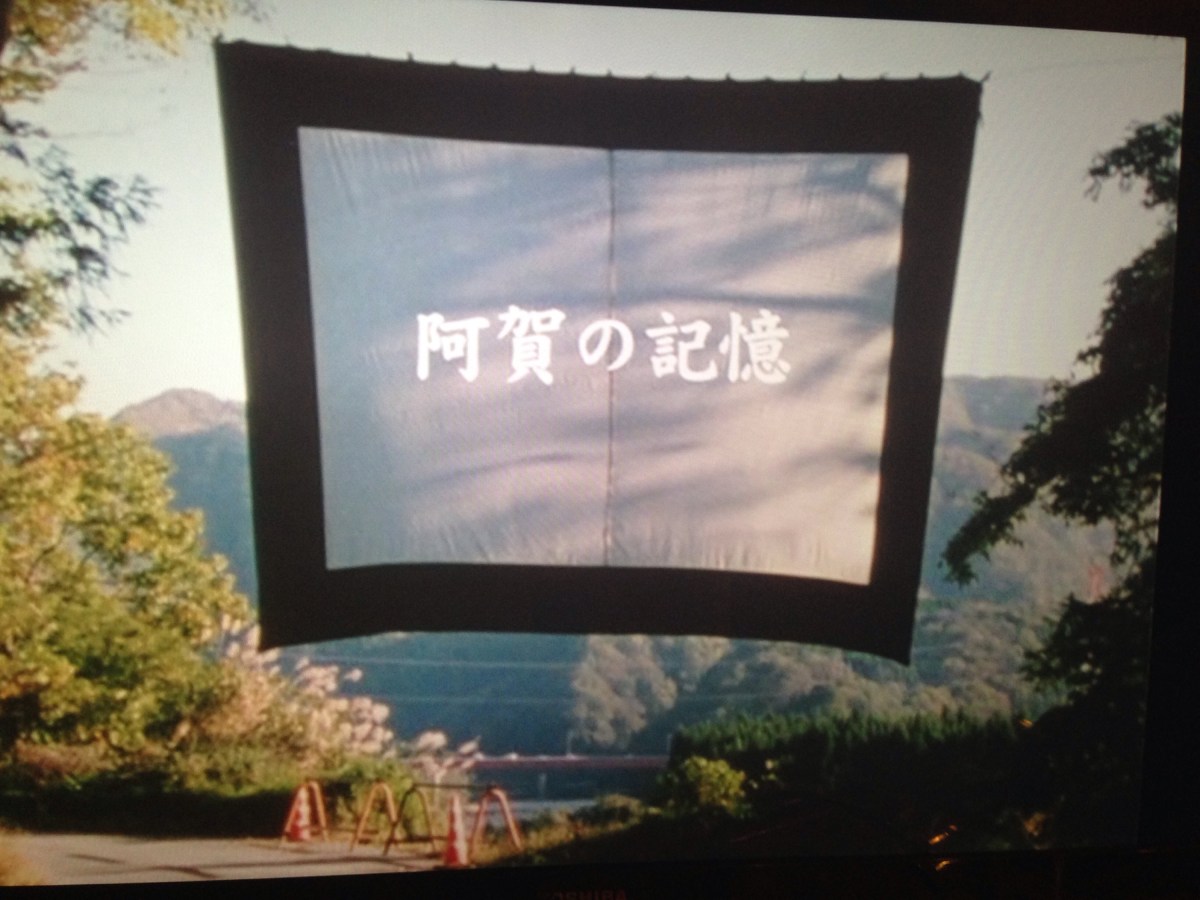
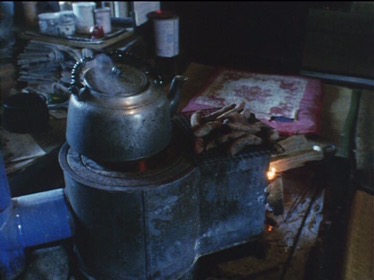
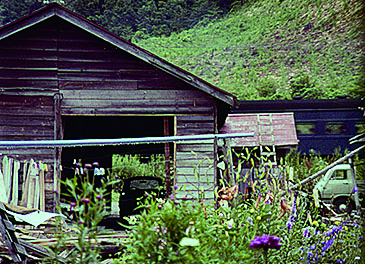
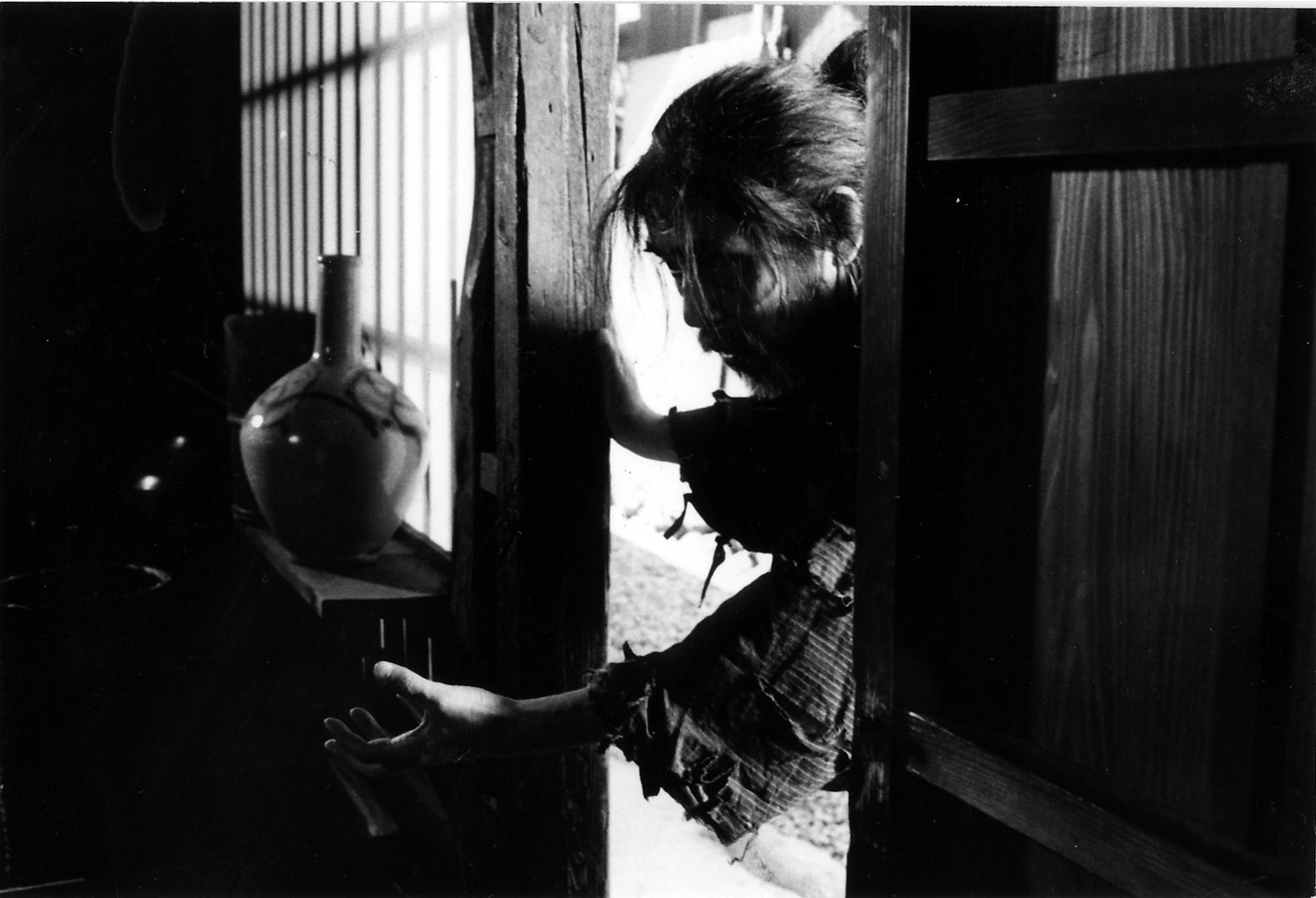
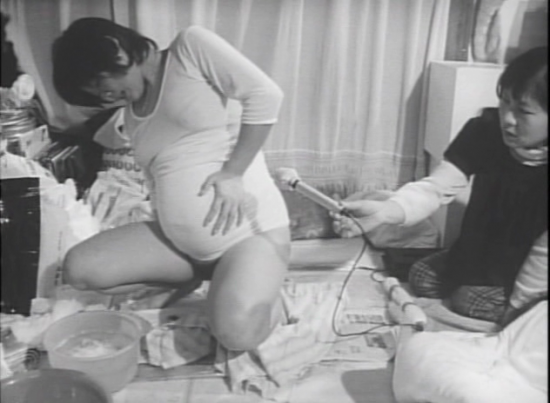
I believe that the exploration of how past and present reconfigure themselves into something new—through the reuse of old, defective, or otherwise unused images—constitutes a central thread throughout Satō’s filmmaking practice. This tendency is already visible, for instance, in The Brightness of the Day a.k.a. I Want the Sun (1995), a work he conceived and edited, but it emerges with particular intensity toward the end of his life, most notably in Memories of Agano (2005).
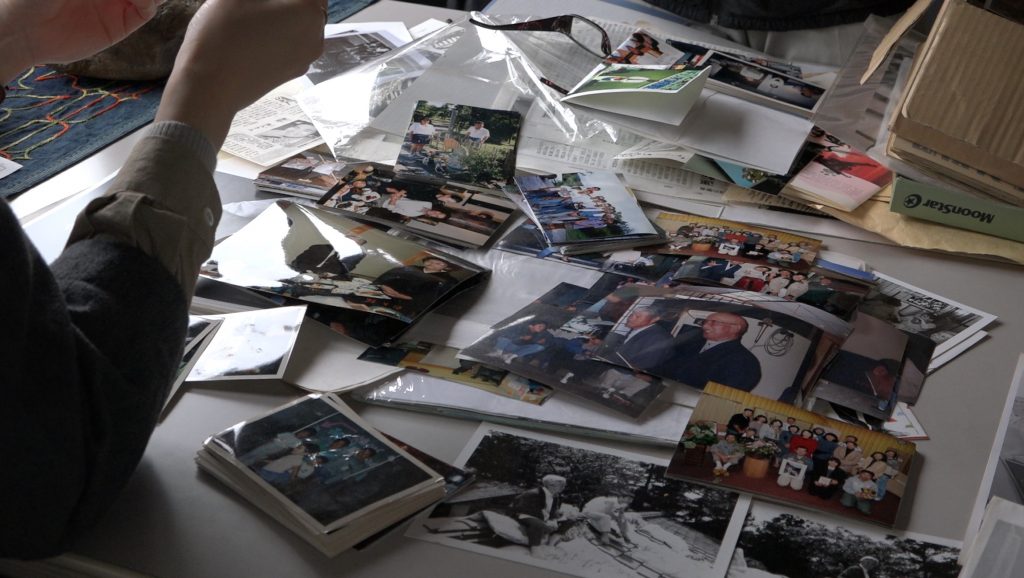
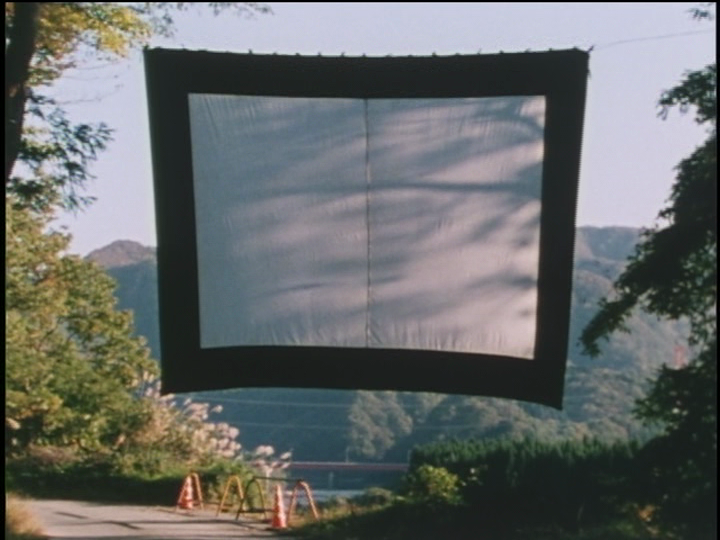
By reusing past images—often shot in different formats—allowing them to “ferment” over time, and shifting his attention away from central figures favouring the opaque background, Satō enables these images to open up and acquire new meanings. This approach of waiting for the images to reveal themselves creates the conditions for the optical unconscious to emerge, echoing Walter Benjamin’s notion of “a past not ordinarily accessible to the waking self” something that “entails a passivity in which something ‘takes possession of us’ rather than vice versa”.
Bibliography/Filmography:
Benjamin Walter, The Work of Art in the Age of Mechanical Reproduction, in Illuminations, Schocken Books, 1969, pp. 1-26.
Benjamin Walter, Little History of Photography, in Selected Writings Volume 2, Part 2, 1931-1934, Harvard University Press, 2005, pp. 507-530.
Benjamin Walter, L’opera d’arte nell’epoca della sua riproducibilità tecnica – Tre versioni (1936-39), a cura di Fabrizio Desideri, Donzelli Edizioni, 2012.
Conty Arianne, They Have Eyes That They Might Not See: Walter Benjamin’s Aura and the Optical Unconscious, in Literature & Theology, Vol. 27. No. 4, December 2013, pp. 472–486.
Memories of Agano 阿賀の記憶 (Satō Makoto, 2005)
Satō Makoto, Dokyumentarii eiga no chihei: sekai o hihanteki ni uketomeru tame ni, Gaifū-sha, 2001, pp. 21-22.
Satō Makoto, Aga ni ikiru’ kara ‘Aga no kiōku’ e, in Dokyumentarii no shūjigaku. Misuzu Shobo, 2005.
The Brightness of the Day a.k.a. I Want the Sun おてんとうさまがほしい (1995), shot by Watanabe Shō, edited by Satō Makoto.
- There are four versions of Benjamin’s essay—three in German and one in French, translated by Pierre Klossowski—the latter being the only version published during Benjamin’s lifetime. I’m not sure which version was used for the Japanese translation Satō read. ↩︎
- 無意識的な視覚 (muishiki teki na shikaku) is Benjamin’s Optisch-Unbewusste (optical unconscious) here and often translated into English also as “unconscious vision”. ↩︎


 Before digging into this fascinating trip through the history of Japanese non-fiction film, let me add some overall thoughts.













 Asian Docs
You must be logged in to post a comment.