When Collaborative Cataloging Japan, the online platform dedicated to experimental and avant-garde cinema in the archipelago, made available Doi Haruka’s He Was Here, and You Are Here (なかのあなた いまのあなた 1985) a couple of years ago, it was for me a revelation. The short film is an impressive and poetic debut centered on the idea of externalising one’s own memories, wishes, and fantasies as images projected onto walls, plates, or even the filmmaker’s own body. He Was Here, and You Are Here crystallizes the inventiveness of a particular approach to personal cinema in Japan during the 1990s, while at the same time standing as an exception—a singular and highly idiosyncratic experiment within the realm of Japanese “self-documentary” of that period.
For the whole month of December 2025, another work by Doi, My Father, burned (父が、燃えた1994), is available to stream on the platform.
While He Was Here, and You Are Here marked Doi’s debut, My Father, burned represents her final foray into filmmaking, a career that lasted less than a decade. In the following years, Doi has been active in the field of Japanese music under the pseudonym HALUKA.
The short film originated in Doi’s discovery of old photographs of her father, along with home movies he had shot himself. As Collaborative Cataloging Japan notes, My Father, burned—described by the filmmaker as an “anti–home movie” —is a rare example of personal film that
illustrates Doi’s complicated relationship with her deceased father. A distanced fascination replaces the nostalgic or sentimental aspects one might expect in a film of this kind. Yet the sense of the power of the found image to shock and disarm remains — the familiar face that stares out from the rediscovered album; the laughter of a past self, seen through the eyes of one deceased. Through this cinematic reflection, Doi questions the image she had of her father prior to this posthumous mediation, even seeing similarities between his violent tendencies and her own rebellious nature.
The film is not only a reflection on Doi’s difficult relationship with her father after his passing, and on how memories shape who we are and who we become, but also a more subtle contemplation of the latent potential inherent in the reactivation of audiovisual footage—here, personal material. Home movies shot by her father when she was little, together with old photographs of him, resurrect the “shadow” of his physical body, helping to construct a different image of the man and an alternative personal reality once inhabited by the filmmaker. Doi’s efforts here, albeit on a smaller and more personal scale, mirror those at work in the best examples of archival or found footage cinema, which “draw on archival material to breathe new life into it and construct new constellations of meaning—capable of questioning the present through a reconfiguration of the past.” (Cau, 2023)
My Father, burned represents thus a prime—if rare—example of the convergence of personal and archival cinema in Japan during the 1990s. This is particularly evident not only from what has been described above, but also from the film’s formal structure, in which the filmmaker’s thoughts are articulated as a form of commentary or narration accompanying the old photographs and home movies presented on screen.
It is also fascinating that the filmmaker briefly reflects, toward the end of the work, on the ethics of filming a dying person—when her father was ill in the hospital. Although this comment is not further developed, it remains a very relevant topic today and sheds light on Doi’s talent and her acute awareness of everything that surrounds the act of filming and filmmaking itself.
References:
Maurizio Cau, Rifigurare il passato. Il cinema d’archivio di Sergei Loznitsa in “Cinema e Storia 2023. Found footage: il cinema, i media, l’archivio” edited by Alberto Brodesco and Maurizio Cau, Rubettino edizioni, 2023.
This is the translation of an article I origianally wrote in Italian about three years ago, on the occasion of the special online edition of the Yamagata International Documentary Film Festival.
Anticipating many of the aesthetic trends that now abound in the visual and social media landscape, The New God is constructed as a video diary that explores and reveals what lies behind the attraction of some young Japanese for the far-right movements at the end of the last century. Video activist and filmmaker Tsuchiya Yutaka films his interactions with ultra-nationalist singer Karin Amamiya and other members of the far-right group to which she belongs. Although his political orientation is completely different, Tsuchiya is so fascinated by what the girl has to say that he decides to give her a video camera to record her daily reflections.
The documentary begins with Amamiya in front of the controversial Yasukuni Shrine, where soldiers and high-ranking generals who committed Class A war crimes during the Second World War are enshrined. A place that continues to cause controversy and tension between Japan and the international community, especially South Korea and China, due to the annual visits to the place by important Japanese political figures. As director Tsuchiya, a left-wing activist and fierce opponent of the imperial system, begins to film Amamiya and her band, he discovers that behind the hard veneer of right-wing extremism lies a sense of almost existential confusion not unlike that experienced by other young people in Japan at the time. The New God thus proves to be a fascinating portrait of a group of very confused young people who have made far-right ideology and the celebration of the emperor the centre of their lives.
Structured as a kind of low-fi video confessional and visual dialogue, shot alternately by Amamiya and Tsuchiya, the documentary is an exploration of the response to life malaise by a group of young people in search of something to fill their existential void. In this sense, one of the most striking elements of the work is the sincerity with which the young singer reveals her feelings to the camera. In her own words and by her own admission, the political stance is often just a mask, a personal reaction to a sense of not belonging in contemporary Japanese society. Amamiya often talks about the lack of meaning that reality has for her, especially when compared to the life-and-death decisions made by soldiers during the Second World War. Of course, this is her rather superficial, confused and mythical vision of Japan’s wartime and supposedly heroic past.
In her confessions and conversations with Tsuchiya and Itō, the band’s guitarist, the girl is looking for something to hold on to, something solid and stable that can give meaning to her everyday reality. Very often this meaning and centre of gravity is provided by the pride of belonging to the “Japanese ethnic group”, which she believes to be a real concept. One of the most fascinating parts of The New God is Amamiya and Itō’s trip to North Korea. There they meet some members of the Yodogō group of the Red Army Faction (Sekigun-ha), who hijacked a JAL flight to Tokyo on 31 March 1970 and eventually took refuge in North Korea, where they were still living when the film was shot. Amamiya, who is very distant from the group in ideology and politics, feels a certain envy both for these 60-year-old ex-terrorists and for the sense of ethnic unity she sees in the Asian country. In one of her videos, she confesses that children aren’t bullied here as they are in Japan, and that she was bullied by her classmates several times as a child and young girl.
As the film progresses, Amamiya’s weaknesses and feelings are slowly revealed, and she is not afraid to confess her fears and indecision directly to the camera. Through the videos that Tsuchiya and Amamiya exchange, the mutual attraction that the two are beginning to feel for each other comes to the surface at a certain point; the two will eventually marry after the filming is finished. It is this sense of progressive revelation and self-discovery accomplished with the help of the camera that makes this documentary such an interesting experiment. The New God thus sits at the crossroads of video activism – Tsuchiya’s own What Do You Think About the War Responsibility of Emperor Hirohito? (1997) is, in a sense, the starting point for The New God – and the tradition of Japanese personal cinema (self-documentary)1.
Seen today, more than 25 years after it was released, The New God is an interesting example of the problematic process of liberation and democratisation of the filming subject made possible by the technological revolution and brought about by the affordability of small video cameras. At the same time, the video message style with which the work is constructed anticipates today’s ubiquitous visual social media aesthetics. There is a great deal of exhibitionism behind Amamiya’s video letters and video confessions, more in the way she relates to the eye of the camera than in what she actually says to it. It is no coincidence that the film ends with her saying, before turning off the video: “I can’t live my life without a camera!”.
That is, the personal, diaristic, often amateur documentary, whose pioneers include Hara Kazuo’s Extreme Private Eros: Love Song, 1974 (1974) and Suzuki Shirōyasu’s Impressions of a Sunset (1975). ↩︎
Originally published in 2018, edited with some minor changes on September 2022, in remembrance of Suzuki Shiroyasu (1935-2022)
Cinephiles and film buffs on the internet, and specifically those active on social media, are often times obsessed by lists. Although I’m not a big fan of them when used to rank movies, it is nonetheless unquestionable that lists are one of the best tools, when properly used that is, to discover new movies and explore novel cinematic landscapes.
In the past month I’ve asked on Twitter to list some of the most significant or favourite personal documentaries/diary films made in Japan. Some friends were kind enough to reply and share some titles, some of which I wasn’t aware of.
With this feedback in mind, I started to collect my thoughts and compile a list of what I consider the most important personal documentaries made in Japan since the advent of cinema. I’ve also included some titles I have not seen yet, don’t kill me for this, but I’ve trusted what has been written and discussed by people I trust and respect.
Before starting to explore what the list has to offer, let me clarify what we mean when we talk about “personal documentary”. Keeping in mind that the definition is always vague, in flux and susceptible to change, and so is the term documentary, I think we can approach a sort of truthfulness by stating that personal documentaries are works often made, but not always, in the first person and about the life of the director/cameraman. For these reasons often they are also called, or more precisely they overlap with, diary films and first-person cinema.
In Japan the term often used to define this kind of works is “Self Documentary” セルフ ドキュメンタリー. Illuminating in this respect is this piece written by Nada Hisashi for the Yamagata International Documentary Film Festival in 2005. Also available on the YIDFF site, an interview with Matsumoto Toshio conducted by Aaron Gerow, in it the theoretician and director criticized some trends in the Japanese self documentary scene of the 1990s, a take that, for what is worth, I agree with:
there are problems with an “I” which doesn’t doubt its “self” and the so-called “I-films” (watakushi eiga) share those: they never put their “I” in question. Since they don’t attempt to relativize themselves through a relationship with the external world, they gradually become self-complete–a pre-established harmony.
With this in mind, let’s start:
Extreme Private Eros: Love Song 1974 (Hara Kazuo, 1974)
My favourite film by Hara Kazuo, at the moment, maybe together with Minamata Mandala, one of the cinematic highlights of the second part of his career. The movie is one of the first and finest examples of diary cinema and personal documentary in Japan, and contrary to what many films made in the following decades did, Extreme Private Eros is a sublime embodiment of the famous artistic motto of the 1960s and 1970s “the personal is political”.
Impressions of a Sunset (Suzuki Shiroyasu, 1975)
If Extreme Private Eros is where the Japanese personal documentary started, Impression of a Sunset is where the diary film à la Mekas emerged in the Japanese archipelago. Mostly unknown outside Japan, it’s in every way a diary composed by images where Suzuki, after buying a CineKodak 16 (a pre-war 16mm camera) at a second hand camera shop, starts filming his wife, his newborn baby and his workplace. With Impressions of a Sunset and other works such as 15 Days (1980), Suzuki is more a poet with a camera than a documentarian in the sense we give the term today.
Embracing (1992) and Katatsumori (1994)
Probably the most known personal documentarian from Japan, Kawase started her career with short home movies about the search for her father, who abandoned her as a child, in Embracing, and about the strong bond with her grandmother, who became de facto her adopted mother, in Katatsumori.
Memories of Agano (Satō Makoto, 2004)
I’ve written extensively about the movie and its hybrid and experimental qualities, clearly it’s much more than a personal documentary, but director Satō and his cameraman returning to the locations and the people filmed more than 10 years before in Niigata, make it a movie perfect for this list.
Dear Pyongyang (2006) and Sona, the Other Myself (2009) by Yang Yong-hi
A documentary by zainichi Korean director Yang Yong-hi about her own family. It was shot in Osaka (Yang’s hometown) and Pyongyang, North Korea. In the 1970s, Yang’s father, an ardent communist and leader of the pro-North movement in Japan, sent his three sons from Japan to North Korea under a repatriation campaign sponsored by ethnic activist organisation and de facto North Korean embassy Chongryon; as the only daughter, Yang herself remained in Japan. However, as the economic situation in the North deteriorated, the brothers became increasingly dependent for survival on the care packages sent by their parents. The film shows Yang’s visits to her brothers in Pyongyang, as well as conversations with her father about his ideological faith and his regrets over breaking up his family. In Sona, the Other Myself the director continues the exploration of her family, Sona is the daughter of her brother who moved to North Korea from Japan in the early 1970s. Narrating her story, the film shows the struggles of a generation that migrated from Japan to North Korea, and the life of their offspring, who were born and raised in North Korea. (from Letterboxd).
Ending Note: Death of a Japanese Salesman (Sunada Mami, 2011)
Recently retired from a company after some 40 years of service, Sunada Tomoaki, father of filmmaker Sunada Mami, is diagnosed with terminal cancer and only has a few months left to live. True to his pragmatic core, Sunada sets out to accomplish a list of tasks before his final departure: playing with his grandchildren, planning his own funeral, saying “I love you” to his wife, among others. (from Letterboxd)
Everyday is Alzheimer’s (2012), Everyday Is Alzheimer’s 2 – The Filmmaker Goes to Britain (2014) Everyday Is Alzheimer’s the Final: Death Becomes Us (2018) by Sekiguchi Yūka
Director Sekiguchi Yūka documents and depicts the daily life of her dementia-diagnosed mother and how this changed her family’s life.
Yongwanggung : Memories from Across the Water ( Kim Im-man, 2016)
Statement from the director: “Yongwangung was a Gutdang (shaman’s shrine) where first generation Korean women who crossed the seas from Jeju to Japan use to go before the Second World War. In 2009, I heard that the shrine was about to be demolished by the Osaka city government. My childhood memory of my mother praying in the kitchen came back when I was filming elderly women in Jeju. I felt the urge to have a shamanistic ritual for my mother who had been hospitalized.”
Home Sweet Home (Ise Shinichi, 2017)
This was one of the movies I was more eager to see last year, but unfortunately I couldn’t catch it. The film covers 35 years in the life of filmmaker Ise Shinichi’s family, documenting his disabled niece Nao since 1983.
Special mentions
Toward a Common Tenderness (Oda Kaori, 2017)
It’s one of my favourite viewings of the year, but it has just come out and I need to rewatch it, that’s why it’s not included in the list. The balance between the personal and the poetic is what makes it special.
Magino Village – A Tale (Ogawa Shinsuke, 1986)
As the mysterious object of Japanese documentary per excellence, Magino Village goes of course far beyond the realm of personal films, but somehow this sprawling movie is, among other things, the result and the partial documentation of more than a decade spent in Yamagata by the Ogawa collective.
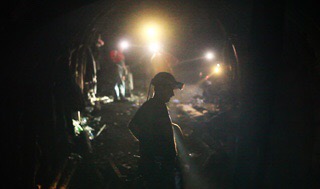
Directed, shot and edited by Oda Kaori, Aragane was one of my favorite documentaries of 2015, a work that came out from film.factory, a film school based in Sarajevo and founded by renown Hungarian director Bela Tarr.
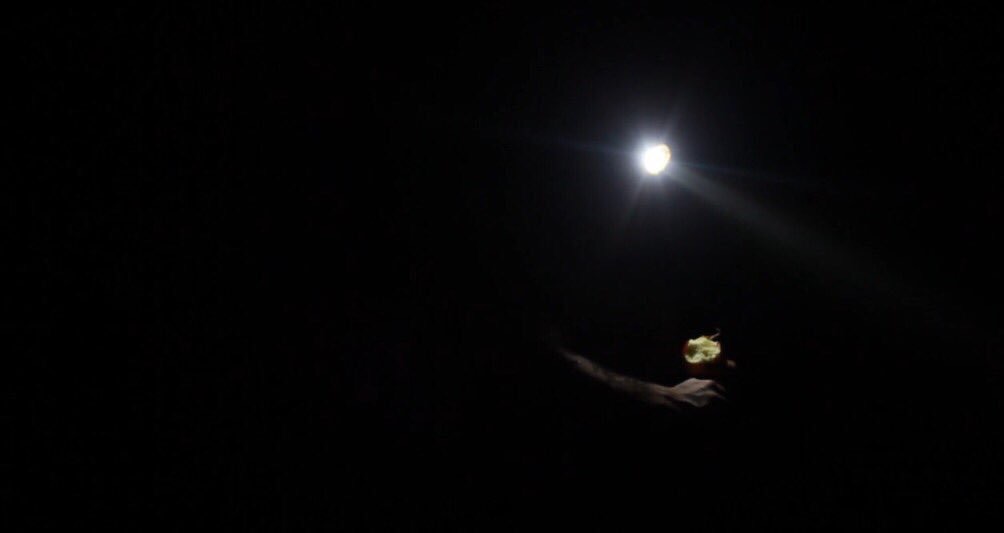
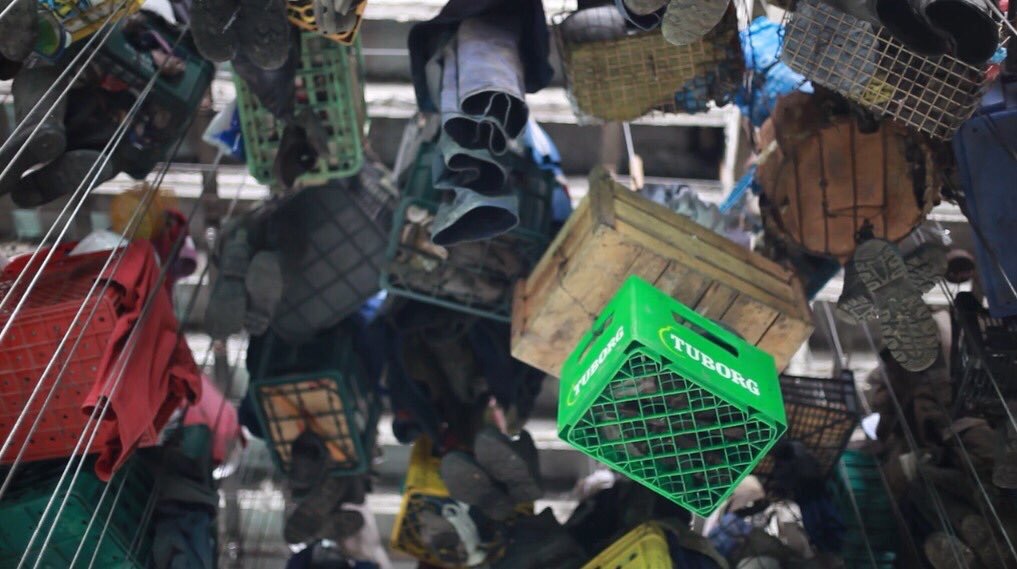
Aragane it’s an experimental documentary shot in a Bosnian coal mine, an immersive and hypnotic sensorial experience that was presented last year at the Yamagata International Documentary Film Festival, where it got a special mention.
I wrote a review of the movie in Italian for the blog Sonatine, but I’m planning to write one in English as well and post it here, time permitting.
In October I had the pleasure of interviewing Oda for the Italian newspaper Il Manifesto, the following is the original and longer version of that interview.
Can you tell us how you got involved in cinema, that is, how you got interested in watching and making movies in the first place?
I wanted to be a professional basketball player, I played for 8 years since I was 10 years old, but unfortunately my right knee got broken. I underwent two big operations but it was not possible to keep playing seriously. Doctors said NO to me. So I was lost completely because the only thing I knew in life was basketball. I decided to go to the US to study abroad then, you know the typical thought that if you move the place, something may change in your life. There I took a film course, that was the first encounter to filmmaking, I was not cinephile at all and I am still not. (but I like some films, of course)
I made the very first film with my family in 2010 (ノイズが言うには Thus a Noise Speaks). It is a self-documentary made by my real family and myself about the coming-out as gay. The idea was to use filmmaking to communicate with my family and face the fact that they could not accept that I was gay. It was a tough experience but I learned a lot from that and started to see and use camera as a tool for communication. Communication between myself and the subject (the people/ the space).
(A still from Thus a Noise Speaks 「ノイズが言うには」)
How about film.factory? how did you happen to move to Sarajevo and be part of the group?
I got a chance to screen my first film in the student section of Nara International Film Festival in 2011, and there I met Kitagawa Shinji, the person who more than anybody else understands my filmmaking. He was the programmer/organizer of the section. The film got an audience award and we kept in touch since then. In 2012, he wrote me an email that there would be a new program in Sarajevo to support young filmmakers from all over the world. I was very much lost at that time, because it was very difficult to make my next film after a self-documentary by which I confronted the biggest conflict I had.
So I decided to apply to the program, moving to a new place and meeting new people.
Luckily, my application got accepted.
Can you tell us more about Aragane, where did the idea come from? I heard that originally it was supposed to be a fiction inspired by a Kafka story (A Visit to a Mine), is that true?
Bela (Tarr) gave us an assignment to do an adaptation work. He wanted me to do ‘Bucket Rider’ a short story from Kafka that revolves around man looking for coal. So I went to a coal mine company to do research for the project. The space and the workers were incredibly attractive, immediately I knew I wanted to shoot them as I felt and not through an adaptation work.
What was the involvement of Bela Tarr in the making of Aragane? Did he give you any suggestions, ideas or was he just supervising the project?
I brought some shots I made there and told him that I wanted to make a film. He watched them and said ‘Go and shoot’. We had one meeting when I was still shooting and I had doubts about which direction I should go with the project, should I go more for the people and their story or more with the space itself?
He told me ‘Listen to yourself, what do you want to do?’
I said ‘I am attracted to the space and the physical work of miners’
After shooting, I edited the film and showed the first rough cut to him and he gave me some comments such as ‘maybe you should eliminate this shot’ or ‘keep this one’.
More than once you’ve mentioned space and your relationship with space when making a film, I think is a very fascinating subject. When I watched Aragane I felt very strongly that it’s a work about landscapes (a dark one, the mine), the materiality of it and the machinery in it. An “alien” landscape and the beauty of it. What brought you to focus more on the space/landscape and the machinery, and is there a reason behind the use of long takes?
I think I was fascinated by the space because it was something totally new, complete darkness, magnificent volume of noises, but also sudden silence where there were no machines around.
The space drugged me into the film, my camera (gaze) was a communicator/mediator between what was there in front of camera and myself. I tried to understand and feel what was going on by shooting the space and its own time. Also, I didn’t approach the subject from the angle of the hard conditions of miners, unfairness and danger of their works (even though it is there in the film because it was just there). I hope people would not get me wrong by saying this. I/my camera shared some moments with them, I tried to be with them moment by moment. Focusing on social issue can be something good for miners, to say what is the problem and how ignorant we are about the issue, but I think the best I can do with my filmmaking is to try to be with the subject (space/people/time) and make them seen by being with them.
About the machinery, I think I shot them because their existence is big in that space and also because miners were proud of the machines, especially the huge ones digging into the side walls.
It may be a bit difficult to explain why the shots needed to be so long, but I tried to be honest toward the moments I captured with my camera.
I think the sound in Aragane is as important as the images, can you tell us more on how you were able to capture and magnify the sounds of the machines and, if you can, tell us about your relationship (as a filmmaker) to sounds/noise and soundscapes?
It is very interesting to me that lots of people mention about sounds and soundscapes. The sound was recorded with the internal microphone of a Canon 5D, because I didn’t have something like Zoom, also I was most of the time alone, so my hands and focus was with the Camera/Image. My light was on the helmet to make the curtain space visible, so it would have been impossible for me to take care of the sound recording. What was recorded was done “without care” and automatically.
I did the sound mix myself, changing the volume here and there, cleaning a bit of noises, and making rhymes/music by adding some noise on top of another noise. That was fun and I think made the film to gain a sensorial feeling.
I was just playing with sound in Aragane , but I want to learn more about sound. The film made me realize and feel that Film is an audiovisual art.
It’s interesting that you’ve used the words “sensorial feeling”, the first time I saw Aragane I thought straight away of the works of the Harvard Sensory Ethnography Lab (Leviathan, Manakamana, Iron Ministry, etc.), you told me already you haven’t watched their movies and that you’re not really a cinephile, but I was wondering if you got ispired for your approach by any movies or more in general by any other work of art.
After your email, Matteo, I watched ‘Manakamana’ ‘Iron MInistry’, and ‘People’s park’,
and I see what you see as similar.
It is very interesting because, before you mention about the Lab, I’ve thought that if I stop making films, I want to be an anthropologist. And I feel I am learning about human beings by making movies.
I might not be so good yet and I have not a clear idea about what I am doing with my camera, but it has been very clear for me that my theme is ‘where we come from, what we are, and where are we going?’ .
I know it sounds abstract and even pretentious, but I’m serious. I may not get the answers before I die, but I have at least the right to explore and challenge these themes with my life, I guess.
I am inspired by: Wang Bing, Pedro Costa, Raymond Depardon, Wiseman, Cezanne. My bible: Letters To A Young Poet by Rilke.
One last question: what are your future plans, are you working on something at film.factory and how about after film.factory?
I have a few projects now.
One is my essay film, to conclude the experience in Bosnia and filmmaking here. This is my priority right now. It’s in the production stage.
And then I plan to do a workshop of filmmaking/photography/camera in a discipline center in Sarajevo. (It is a institution for the underage kids who commit crimes, not strict as much as a prison). I want to share the possibility of using the camera as a tool of communication and expression with these kids. This kind of workshop is what I want to do as my life time project, I don’t know if I can finance such a project, but I want to try my best to make it a constant practice in my life.
Or I might move to Mexico to do a project after film.factory, one of my colleagues is from Mexico and I want to shoot something there related to sea/water/cave. It’s still in the research/developing stage. Or maybe I’ll go back to Japan, it all depends on if I can support myself and how these projects can be produced!
Feel free to add something you want to say or share.
So many people have been supporting my filmmaking. My family, Kitagawa Shinji, Bela Tarr, and my dear colleagues. Most of the time, I shoot and edit alone and this sometimes make me misunderstand that I am making films alone, but in fact, there is always someone who introduces the subject to me, tries to support me mentally, gives me some thoughts on the film, shares the film, writes about the film, and watches the film. All these people make films. All these spaces and times make films. I’m just one of the gears/energies that make films happen.
Hara Kazuo is one of the most internationally well known Japanese documentarists, his The Emperor Naked Army Marches On (1987) is the first Japanese entry in the Sight & Sound’s poll The Best Documentaries of All Time and a movie that is often screened, talked about and studied in Japan as well as abroad. Now, personally The Emperor is not my favourite work from Hara, Sayonara CP (his debut from 1972) and especially Extreme Private Eros (1974) are better docs for reasons I’m not going to explore here today, and to be honest he’s not even among my favorite directors of non-fiction, but nonetheless I can’t deny he’s a very important and pivotal figure in Japanese cinema. Hara is also the only Japanese documentarist whose writings have been translated in English and collected in a volume, a very good one indeed, that everyone interested in non-fiction cinema should read. The title is Camera Obtrusa: The Action Documentaries of Hara Kazuo: By Hara Kazuo and was published in 2009 by Kaya Press.
All that was to introduce him and to give an idea of his status as a respected director in the international documentary world. The good news is that Hara has a new work out, the first documentary for the big screen after 22 years of absence, he’s been active with feature films, on TV, writing books and with other projects, but 「ニッポン国泉南石綿村 劇場版 命て なんぼなん?」, this the title of the movie, breaks a silence of more than two decades. The film had its premiere at a small event in Tokyo, フィクションとドキュメンタリーのボーダーを超えて, and is about the victims of asbestos exposure in Sennan city (Osaka), where Hara has been intermittently filming for more than a decade, while at the same time working on a project about Minamata’s victims.
I haven’t seen the movie yet, but I hope to catch up with it as soon as possible, although, for some reason, I have very low expectations, but I’m ready and willing to be surprised.
Addendum: Hara won’t be screening it again until summer at the earliest, and most likely the fall (again somewhere in Tokyo), as he’s planning on reworking/editing it after these screenings in Shibuya.
Many thanks to Jordan A. Yamaji Smith for the update
I’ll start today a new feature – Japanese documentary of the week – a weekly and very short post to introduce an important work of non-fiction cinema, or at least a documentary that I believe is worth seeing and discovering. I’ll focus on works that are either available to watch online (legally) or available on DVD/BD (with English sub).
The fist movie is Impressions of a Sunset (日没の印象) , a short diary-movie/self documentary/artistic home-movie made by Suzuki Shiroyasu in 1975. Suzuki is a poet and a professor who worked also for TV and who, from the mid 1970s, started to expand his artistic world in the cinematic realm. Impressions of a Sunset is probably, together with Fifteen Days (1980), his most famous work. Deeply inspired by Reminiscences of a Journey to Lithuania (Jonas Mekas, 1973) Suzuki:
has gotten his hands on a “CineKodak 16” (a pre-war 16mm camera) at a second hand camera shop, and in sheer delight he films his beloved wife, films his newborn baby, proudly takes his camera to work to film his colleagues, and then films the Tokyo sky at sunset.
(from Self-Documentary: Its Origins and Present State, Nada Hisashi. You can read the complete article here)
Partly experiment, partly diary and partly home-movie, this short work has, even today, a special appeal for me, maybe the grain of the film (16mm), maybe the freshness of the approach, or maybe the subtle experimental touch we can feel here and there (the dots, the reflections, etc.). Below you can see Impressions of a Sunset legally, it is linked, together with some of works, on Suzuki’s official homepage. It’s in Japanese (no English sub) but even if you don’t understand the language you can feel the magic.
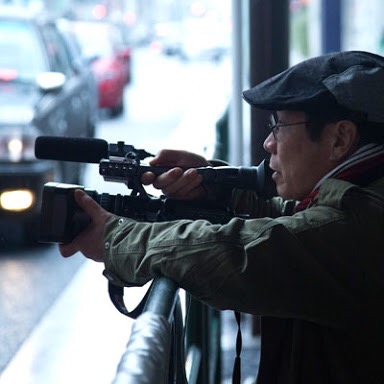
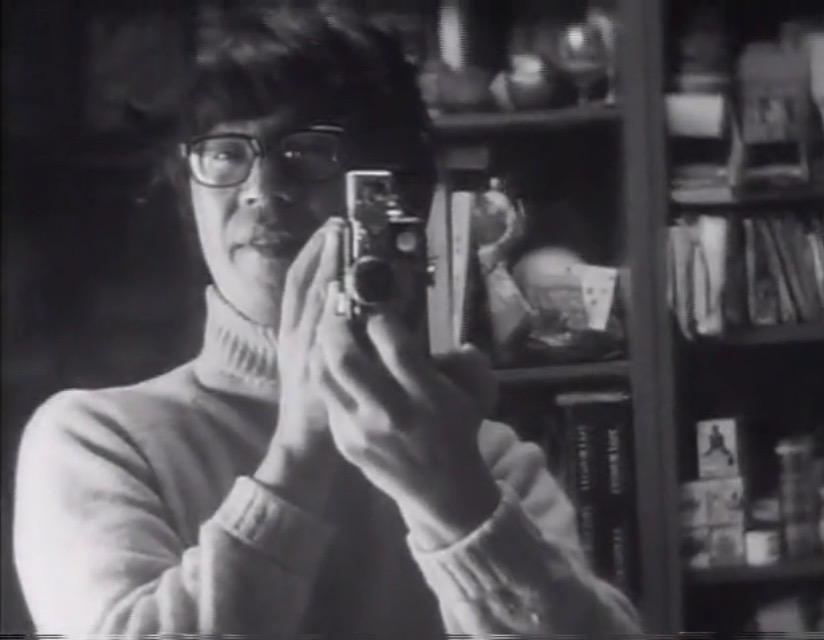
More than 2 months have passed since I launched the best Japanese documentaries of all time poll, it’s time to wrap things up and to take a look at the results. Thanks everybody for your votes, for your support and for helping me spreading the word. Before digging into this fascinating trip through the history of Japanese non-fiction film, let me add some overall thoughts.
On the negative side, I have to admit that I’m a bit disappointed that I couldn’t get many people to vote, and this is partly my fault, the blog is pretty new and relatively unknown and I’ve been lazy and shy about pushing it through the social networks world. Besides, Japanese documentary is a niche subject inside a niche (Japanese cinema), and there are not so many people interested in documentary film as an art form, so I should have expected this. Many people, most of them cinema professionals, were kind enough to decline my invitation, honestly admitting their lack of knowledge in the field. After all, one of the purposes of the poll was indeed to check how much exposure Japanese non-fiction movies have in the world of cinephiles, so I shouldn’t really complain too much.
On the positive side, I was really surprised by the deep knowledge of the voters, most of them, I have to add, cinema professionals: festival programmers, critics, professors, and so on.
Below you’ll find the list, when possible I’ve added some information about each movie’s availability on DVD/BD.
Thanks again everyone, feedback and comments are, as always, welcomed.
1)Included in their lists by 40% of voters
Extreme Private Eros: Love Song 1974 「極私的エロス・恋歌1974」 (Hara Kazuo, 1974)
2)Included in their lists by 33% of voters
Children in the Classroom 「教室の子供たち」(Hani Susumu, 1954)
Available in Japanese in this Iwanami DVD box
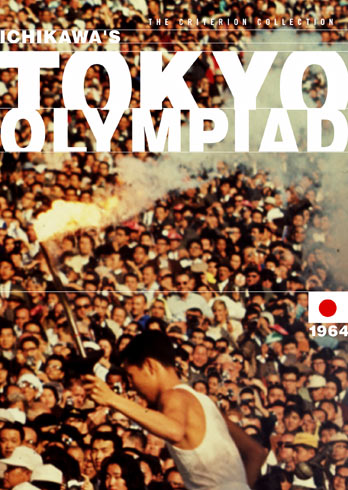
Tokyo Olympiad 「東京オリンピック」(Ichikawa Kon, 1965)
Available on DVD in Japanese or with English sub, but the Criterion Collection edition is out of print.
Minamata: The Victims and Their World 「水俣 患者さんとその世界」(Tsuchimoto Noriaki, 1971)
Available on DVD with English sub by Zakka Films
The Emperor’s Naked Army Marches On 「ゆきゆきて、神軍」(Hara Kazuo, 1987)
Available on DVD with English sub
3)Included in their list by 27% of voters
Without Memory 「記憶が失われた時」(Koreeda Hirokazu, 1996)
Not available
4)Included in their lists by 20% of voters
A.K.A. Serial Killer 「略称・連続射殺魔」 (Adachi Masao, Iwabuchi Susumu, Nonomura Masayuki, Yamazaki Yutaka, Sasaki Mamoru, Matsuda Masao, 1969)
There used to be a VHS in Japanese….
Fighting Soldiers 「戦ふ兵隊」(Kamei Fumio, 1939)
Available in Japanese on DVD (the quality of the transfer is pretty low though). Here my analysis of the first scenes.
A Man Vanishes 「人間蒸発」(Shōhei Imamura, 1967)
Available on DVD with English subtitles by Master of Cinema and by Icaruswith 5 bonus documentaries made for TV by Imamura in the 70s (reccomended).
The Shiranui Sea 「不知火海」(Tsuchimoto Noriaki, 1975)
Available by Zakka Films with English sub.
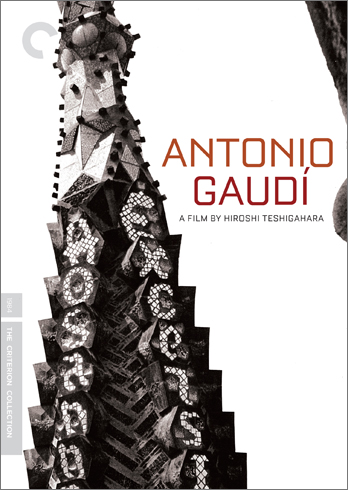
Antonio Gaudi 「アントニー・ガウディー」(Teshigahara Hiroshi, 1985)
Available with English sub by Criterion Collection.
5)Included in their list by 13,3% of voters
For My Crushed Right Eye 「つぶれかかった右眼のために」(Matsumoto Toshio, 1968)
The work is in the Matsumoto Toshio DVD collection – volume 2 – released by Uplink (now out of print?) in Japanese.
Goodbye CP [さよならCP] (Hara Kazuo, 1972)
Available with English sub by Facets Video.
Narita: Heta Village 「三里塚・辺田部落」(Ogawa Production, 1973)
Not available on DVD or VHS
God Speed You! Black Emperor 「ゴッド・スピード・ユー!」(Yanagimachi Mitsuo, 1976)
Available in Japanese on DVD (used and expensive).
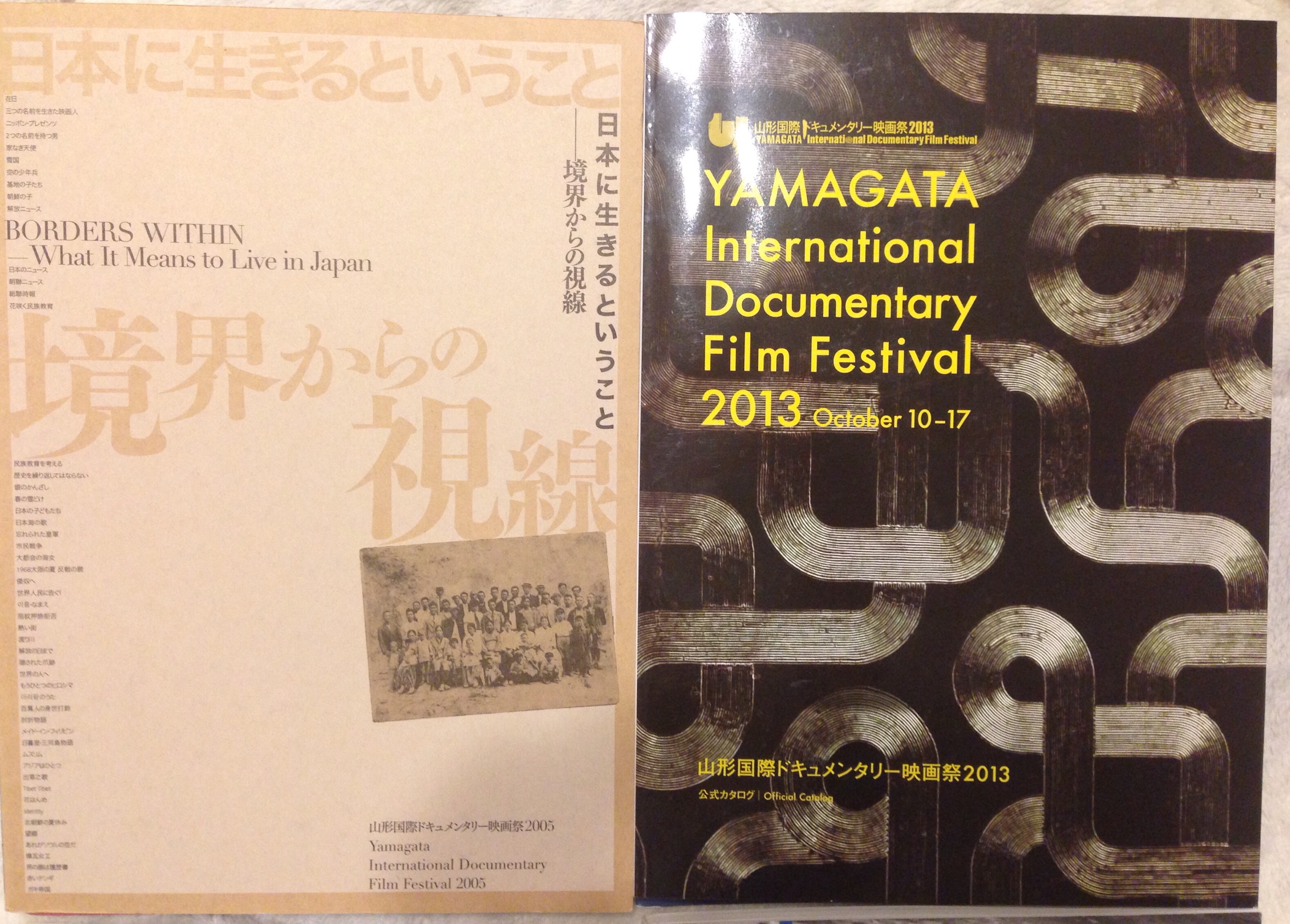
A lighter and more “visual” post today, some photos of the Yamagata International Documentary Film Festival’s catalogues I have at home:
YIDFF 1993 (Japanese documentaries of the 60s) and YIDFF 2003 (Ryūkyū Reflections Nexus of Borders)
YIDFF 1995 (Japanese documentaries of the 70s) and YIDFF 1997 (Japanese documentaries of the 80s and beyond)
YIDFF 2005 (Borders Within What It Means to Live in Japan) and YIDFF 2013
They’re in English and are an essential resource if you’re interested in Japanese cinema or documentary in general. For me personally “Ryūkyū Reflections Nexus of Borders” was a discovery: non-fiction films and the history of Okinawa, a place where all the contradictions and problematics arising from Japan-as-a-state and its relationship with other nations and its own inner borders are embodied and magnified. Or as Higashi Yoichi once said talking about his documentary Okinawa Islands (1969) Continue reading “Japanese documentary-related catalogues”
As a reminder that you still have a month to join the poll “Best 10 Japanese documentaries of a time” I’ve put together my list. I left out many good and inspiring documentaries made in recent years (Genpin, No Man’s Zone, Flashback Memories and others) and I’ve cheated twice, but anyway:
Onikko (鬼ッ子 闘う青年労働者の記録, 1969) and
Motoshinkakarannu (沖縄エロス外伝 モトシンカカランヌー 1971) by NDU/Nunokawa Tetsurō
Minamata: The Victims and Their World (水俣 患者さんとその世界, 1971 Tsuchimoto Noriaki)
Sanrizuka: Heta Village (三里塚 辺田部落,1973) and
Magino Village – A Tale / The Sundial Carved With A Thousand Years of Notches (1000年刻みの日時計 牧野村物語, 1986) by Ogawa Pro
Song of the Akamata–The life histories of the islanders, Komi, Iriomote Islands, Okinawa (海南小記序説・アカマタの歌-西表・古見, 1973 Kitamura Minao)
Extreme Private Eros 1974 Love Song (極私的エロス・恋歌1974, 1974 Hara Kazuo)
The Cherry Tree with Gray Blossoms (薄墨の桜, 1977 Haneda Sumiko)
Il regista Saitō Masakazu riprende nei giorni di vacanza la sua piccola figlia e la sua famiglia, dalla nascita fino ai quattro anni, alternando impressioni della quotidianità della bambina che cresce con notizie e preoccupazioni provenienti da Fukushima.
Presentato all’ultima edizione dell’Image Forum Film Festival, una manifestazione dedicata a scoprire o/e celebrare i film sperimentali e finanche le videoinstallazioni e tutto ciò che di interessante esce dalla cultura visiva giapponese ed internazionale, intesa in senso molto lato, Holiday Movie è in tutto e per tutto un home movie. Un video diario cioè, dove l’oggetto stesso del lavoro è qualcosa di personale e legato alla sfera privata del suo regista, Saitō Masakazu, in questo caso la nascita della prima figlia e la sua crescita nel corso di 4 anni, il tempo coperto dal film va infatti dal 2009 al 2013.
È necessario porre questo lavoro nell’ambito di competenza, quel filone del del self documentary o meglio del diary film, lanciato a livello internazionale da Reminiscences of a Journey to Lithuania (1972) di Jonas Mekas ed in terra giapponese da Suzuki Shiroyasu con Impressions of a Sunset (Nichibotsu no insho) nel 1975. Interessante è notare come sia Mekas che Suzuki abbiamo operato in vari modi anche nell’ambito del film sperimentale, cosa che getta una luce più ampia sul retroterra che ancora oggi è presente quando si parla di certo diary movie. Ci sembra proprio che questo Holiday Movie, pur nella sua apparente semplicità, si possa tranquillamente inserire in questo discorso e filone. Non sempre naturalmente ma è ben presente nel lavoro una coscienza verso le forme ed i limiti del linguaggio cinematografico, una consapevolezza che dà forma e ritmo al lavoro di Saitō, al contrario di molte opere dello stesso tipo però ed anche di molti documentari giapponesi realizzati in questi ultimi anni, la cura riservata alla forma, con particolare attenzione verso montaggio, framing e colore, dona a questo Holiday Movie una freschezza ed una spontaneità, anche se sapientemente filtrata, che raramente si trova in altri lavori di questo tipo. Alla fine è un vero e proprio piacere per i sensi la visione di questo lavoro, la nascita e lo sviluppo della piccola, con le sue difficoltà, i suoi tentativi di esprimersi, la sua voglia di esplorare il mondo circostante ed infine il suo relazionarsi con l’ambiente circostante, anche se ristretto ai soli periodi di vacanza in cui il padre ha potuto filmare, è reso con un tocco assai delicato ed a tratti molto divertente. L’uso del digitale poi è da manuale, il (nuovo) mezzo viene esplorato ed usato alla perfezione con alcune reminescenze, specialmente nell’uso dei colori, dei contrasti e della composizione delle inquadrature, quasi godardiano. Il lavoro si sviluppa come detto per 4 anni ed è puntuato, non in maniera opressiva, dalle notizie provenienti da Fukushima che danno un’ampiezza di vedute a quest’opera-diario ancora maggiore e che amplificano le preoccupazioni di padre del regista, rigettando sullo spettatore un quadro molto personale e privato ma inevitabilmente solcato da tematiche e problematiche di più ampio raggio. Ma queste notizie sono colte nel loro farsi, lo spettatore ne sente solo dei frammenti letti da una voce elettronica impersonale quando sullo schermo le immagini si soffermano sui momenti di quotidianità della famiglia.
Holiday Movie è un piccolo gioiello che rilancia prepotentemente le potenzialità del diary-movie e che allo stesso tempo ed attraverso lo stesso movimento privato-mondo e mondo-privato, scandaglia e getta scompiglio sui limiti che il cinema ha deciso di autoimporsi e sulle possibilità nel futuro prossimo di una cultura visuale di piú ampio raggio.
Holiday Movie 2009 – 2013
2013 / digital / color / 52min.
A close-up of juice spilled by a two year-old girl in a large shopping mall with no sign of people. A ball rolls nearby. News about the Fukushima nuclear power plant accident is conveyed… Each fragment of these images presented in a diary format vividly evokes burned-in memories with a rich visual vocabulary. A revolutionary home-movie created by a parent and child cast/staff.
SAITO Masakazu
Born in 1976, Main works include the ‘Sunsession’ series, made using automatic computer editing, and “Shadow of Movement ~ about Toru Iwashita,” a collaboration with dancer/choreographer Toru Iwashita. In addition to single-channel works, he has also exhibited video installations in Japan and overseas. In recent years he has created the ‘Holiday Movie’ series, centered around the motif of the family, using various production methods including Internet release.



 Before digging into this fascinating trip through the history of Japanese non-fiction film, let me add some overall thoughts.














 Asian Docs
You must be logged in to post a comment.