Best (favorite) documentaries of 2020

As usual, the list below is a reflection of my taste, interests, and viewing habits during 2020. For obvious reasons I have not attended any film festivals in person, but the online viewing events organized all over the globe were, for me at least, one of the few positive things to come out of this annus horribilis.

Synopsys in italics, followed by my quick take and the trailer:

Expedition Content (Veronika Kusumaryati, Ernst Karel)

In 1961, filmmaker Robert Gardner organized the Harvard Peabody Expedition to Netherlands New Guinea (current day West Papua). Funded by the Dutch colonial government and private donations, and consisting of several of the wealthiest members of American society wielding 16mm film cameras, still photographic cameras, reel-to-reel tape recorders, and a microphone, the expedition settled for five months in the Baliem Valley, among the Hubula (also known as Dani) people. It resulted in Gardner’s highly influential film Dead Birds, two books of photographs, Peter Matthiessen’s book Under the Mountain Wall, and two ethnographic monographs. Michael Rockefeller, a fourth-generation member of the Rockefeller (Standard Oil) family, was tasked with taking pictures and recording sound in and around the Hubula world. Expedition Content is an augmented sound work composed from the archive’s 37 hours of tape which document the strange encounter between the expedition and the Hubula people. The piece reflects on intertwined and complex historical moments in the development of approaches to multimodal anthropology, in the lives of the Hubula and of Michael, and in the ongoing history of colonialism in West Papua.

Visual representation and the obsession with it has become, in our society, a black hole absorbing and distorting everything around it. Expedition Content, by offering us for most of its duration a black screen —the are only some written words, and a couple of minutes of images towards the end—allows the sound to take prominence. The freshness of the encounter and discovery, different languages, different sounds, different time, is here preserved and conveyed with an almost haptic quality. It is a work where the experience for the “viewer” is thus channeled through sounds and voices, however I firmly believe it is primarily a film to be watched, possibly on a big screen, in that it establishes its discourse within the frame of the power of (here absent) images.

Expedition Content is also a theoretical piece that goes deeply into colonialism and how the anthropology endeavor, at least a certain way of doing anthropology, is deeply embedded in it. The last 20 minutes of the movie (I’m not revealing more because I don’t want to spoil it) are in this regard an incredible exposure of the stance of the anthropologist as a colonial subject.

By far the best work I saw this year, fiction or non-fiction, it definitely deserves a stand alone and more in-depth piece (I’m working on it, hopefully it will be ready early next year).


The Brilliant Biograph: Earliest Moving Images of Europe (1897-1902)

A compilation film of newly-restored rare images from the first years of filmmaking. Immerse yourself in enchanting images of Venice, Berlin, Amsterdam and London from 120 years ago. Let yourself be carried away in the mesmerizing events and celebrities of the time, and feel the enthusiasm of early cinema that overcame the challenge of capturing life-like movement.

One of the highlights of the Le Giornate del Cinema Muto/Pordenone Silent Film Festival, which this year moved its edition online. An incredible and touching dive into the anodyne beauty of everyday life, captured 120 years ago.


Concrete Forms of Resistance (Nick Jordan)

Filmed in Beirut and Tripoli, Lebanon, Concrete Forms of Resistance is a documentary centred upon Tripoli’s abandoned ‘Permanent International Fair’, designed by Brazilian architect Oscar Niemeyer in the mid-1960s. The film presents themes of progress and crisis, labour and capital, material and memory, contrasting the utopian vision of the original plans with the stark realities of sectarian divisions, regional conflicts and rising economic inequalities.

A short documentary I watched back in February, although it feels like ages ago, Jordan’s film is an enthralling journey through the recent history of the Middle East seen through the lens of Oscar Niemeyer’s works.


Dick Johnson is Dead (Kirsten Johnson)

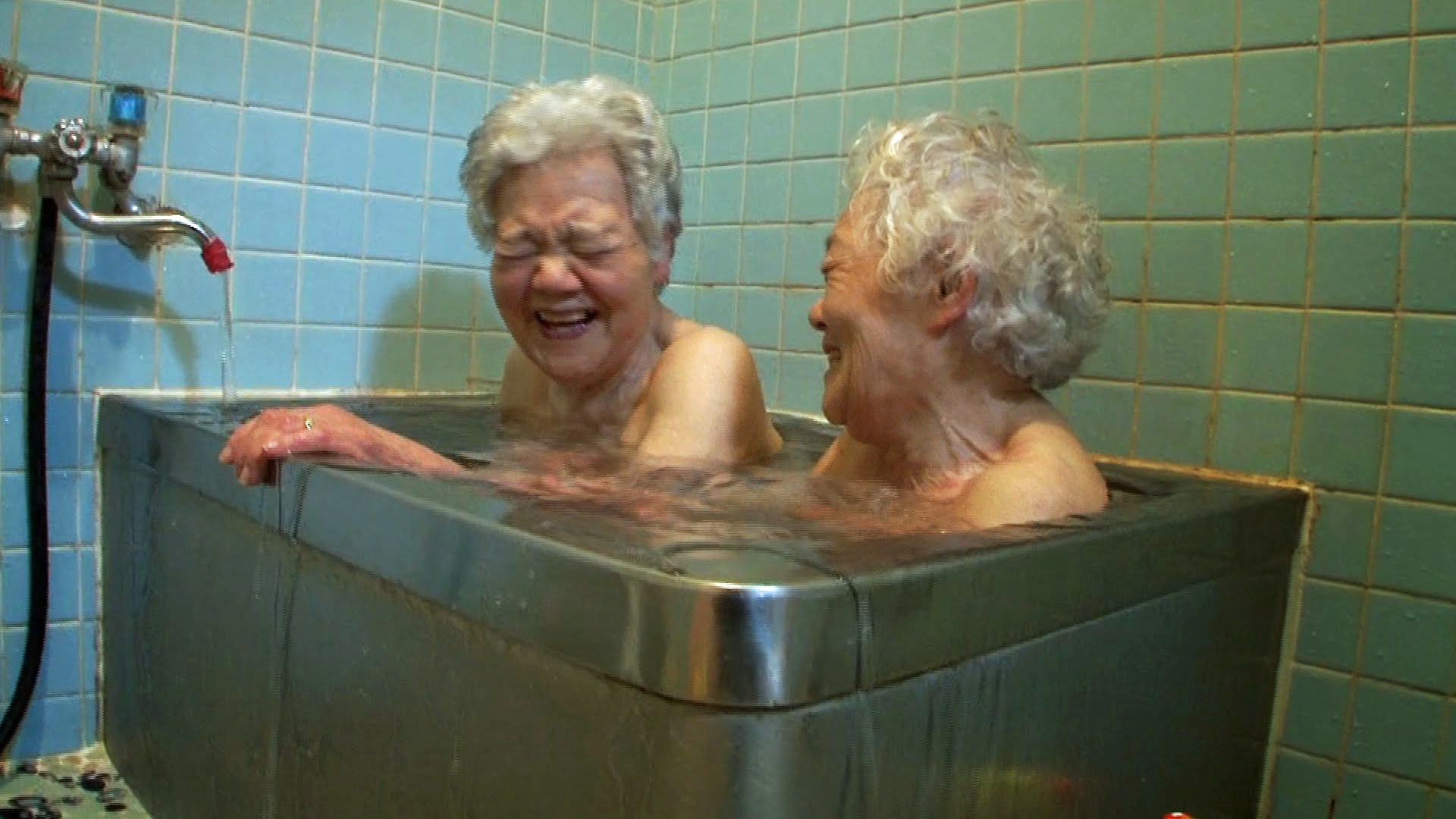
As her father nears the end of his life, filmmaker Kirsten Johnson stages his death in inventive and comical ways to help them both face the inevitable.

Stylistically I was expecting something different, so it didn’t have the impact I thought it would, yet the way Kirsten Johnson is able to blend grief and laughs was touching, healing and in the end refreshing.


Edo Avant-Garde (Linda Hoaglund)

Edo Avant-Garde reveals the pivotal role Japanese artists of the Edo era (1603 – 1868) played in setting the stage for the “modern art” movement in the West. During the Edo era, while a pacified Japan isolated itself from the world, audacious Japanese artists innovated stylization, abstraction, minimalism, surrealism, geometric composition and the illusion of 3-D. Their elegant originality is most striking in images of the natural world depicted on folding screens and scrolls by Sotatsu, Korin, Okyo, Rosetsu, Shohaku and many others who left their art unsigned.

While thematically is in another universe, stylistically the movie is very similar to Hoaglund’s ANPO: Art X War (2010). Coproduced by NHK, Edo Avant-Garde was shot using a special Sony 4k camera, and the sound and music used are also superb. For me it was the perfect viewing experience during the partial “lockdown” we had here in Japan in Spring. Soothing.


Me and the Cult Leader (Sakahara Atsushi)

Me and the Cult Leader — A Japanese Documentary on the 1995 Tokyo Sarin Gas Attack perpetrated by doomsday cult Aum Shinrikyo, following victim Atsushi Sakahara’s travels with current cult executive Hiroshi Araki.

Don’t be misguided by the trailer below, the film is a slow meditation on the banality of evil, and an exploration of a fascinating and problematic relationship. 


Archiving Time (Lu Chi-yuan)

In Taiwan, there is a group of people participating in this race against time. They are hidden inside the film archive of New Taipei City’s “Singapore Industrial Park”, where the 17,000-plus film reels and over a million film artifacts have become their spiritual nourishment. Day after day, they shuttle back and forth inside, carrying their doubts, their learnings, and their faith. What they are doing is awakening these long-neglected film reels, then piecing together the no-longer-existent social atmospheres and lives of distant pasts recorded on them. And spending time in this archive has become everyday life for these film archivists and restorers.

If you are a lover of movies and interested in how preservation and archiving are changing and shaping what the history of cinema, in this particular case, Taiwan cinema, will be in the near future, this is the documentary for you.


Fireball: Visitors From Darker Worlds (Werner Herzog, Clive Oppenheimer)

Fireball: Visitors From Darker Worlds takes viewers on an extraordinary journey to discover how shooting stars, meteorites and deep impacts have focused the human imagination on other realms and worlds, and on our past and our future.

While Family Romance was a complete letdown, a disaster both stylistically and content-wise, I quite enjoyed this documentary released on Apple TV a couple of months ago. “Enjoyed” is the correct word because this is, make no mistakes about it, 100% Herzog, for better or worse, and at the end of the day a documentary fully drenched in the public persona he has become in the last 10 years or so. That being said, the themes tackled and the time framing of the events narrated and shown on screen really resonated with me.


Ghosts: Long Way Home (Tiago Siopa)

After a spell cast by Grandma Faraway, the oldest son of a small family encounters the ghost of his late Grandma Maria still living in her old house, and they chat as they used to.

Moving between documentary and fiction, the film explores the memories of a family and those of an area, in a slow-paced style reminiscing of Pedro Costa’s cinema. Beautifully photographed, this hybrid experiment works also a visual poem and an ode to rural Portugal and its ancestral and magical/pagan beliefs. The dreamlike quality that is infused throughout the whole film really works well, but at the same time I think that some scenes could have been left out, especially those in the second half of the movie when the magical realism and the ghost story aspects are pushed too much on the surface and become too on the nose, so to speak.


Lil’Back: Real Swan (Luis Walkecan)

Dancer Lil’ Buck grew up jookin and bucking on the streets of Memphis. After a breathtaking video of him dancing to Camille Saint-Saëns’ “The Swan” accompanied by cellist Yo-Yo Ma went viral, everything changed.

A documentary about a topic I was not familiar at all, and yet, or because of this, it was a nice surprise, a discovery of a world.

Slow Motion, Stop Motion スローモーション、ストップモーション (Kurihara Mie, 2018)

Slow Motion, Stop Motion スローモーション、ストップモーション by Kurihara Mie was awarded with the Grand Prize and the Audience Award at the 32nd edition of the Image Forum Festival. Shot in Laos, Myanmar and Thailand in the course of 4 years, as far as I know the director usually stays in the regions for at least a couple of months a year, the movie is a funny and poetic telling, through the mode of the personal documentary, of her experiences and encounters in those countries. On the surface thus Slow Motion, Stop Motion is a diary film and a record of her meetings and interactions with the people she meets and befriends, but on a different level it’s also a glimpse into their life and daily struggle to survive. Avoiding shots of turistic places, beautiful postcard-like landscapes, and disengaging completely from a moralistic and exploitative use of the poorest areas of the countries, the film excels in creating a vivid and vital potrait of the people Kurihara meets. The images captured by the Japanese, but often she gives the camera to children and other people to freely film whatever and however they want, feel thus very authentic. Moreover the home movie-quality that permeates the entire work is functional to what seems to be one of Kurihara goals, that is capturing glances of ordinary life in South East Asia.

An important element of the film is the narration. Done by Kurihara herself it’s infused with a dry sense of humor, the words spoke n not only are funny and represent a commentary a posteriori on what is depicted on screen, but they often reflect and indirectly criticize the act of filming itself and the fetishism towards technology that visual artists very often succumb to. In one of the funniest parts, the director buys a cheap version of a Go-pro and tries to film underwater scenes and pigeons, there were no seagulls on the beach, like in the beloved Leviathan by Lucien Castaing-Taylor and Verena Paravel.

The humorous parts are intertwined with few poetic and melancholic scenes, when Kurihara reflects on the sad mood that permeated the day of her departure for instance, or in a long scene without comment or narration, almost ethnographic in style, where an old man kills, plucks, cleans and cooks a rooster for his family.

The film has neither the stylish and polished aesthetics so in demand in the current international festival circuit, nor the political and activist approach that often drives people to documentaries. I really hope that despite the lack of these qualities the movie won’t fall under the radar, because as a hybrid experiment that uses the diary and personal documentary style as a point of departure, it subtly touches very crucial themes such as post-colonial representation and representation of marginal areas in contemporary visual culture.

Image Forum Festival 2018 イメージフォーラムフェスティバル 2018

The 32nd Image Forum Festival ended last Sunday in Tokyo. The nine-day-long event, hosted at two different locations in the Japanese capital, the Theatre Image Forum and the Spiral Hall, screened in total more than 80 films, including 23 in the East Asian Experimental Film Competition, the main section. Established in its present form in 1987, the festival succeeded and replaced an experimental film festival that was held, in various phases and different shapes, in the capital from 1973 to 1986.

To this day the festival continue to embody the mission and the legacy of its predecessors. Primarily dedicated to experimental cinema and video, the event provides a special opportunity for the viewers to experience on a big screen a mix of feature films, home cinema, documentary and experimental animation.
After Tokyo, the festival will move to Kyoto, Yokohama and Nagoya, with slightly different contents, there will be special sections dedicated to artists of each city. This is a right and welcomed decision, since too often Tokyo ends up cannibalizing the cultural and artistic events taking place in the archipelago.

This slideshow requires JavaScript.

This year’s special retrospectives were dedicated to the provocative films of Christoph Schlingensief, German director who expanded his works beyond cinema to touch theater, television and public happenings, Kurt Kren, Austrian artist associated with Viennese Actionism, but also author of structural films, and the experiments on celluloid by Japanese photographer Yamazaki Hiroshi. I wasn’t aware of the films of Schlingensief, and I have to say that it was at the same time a discovery and a delusion. While I really liked 100 Years of Adolf Hitler (1989), claustrophobic and parodic reconstruction of the last hours of the dictator and comrades in his bunker, I couldn’t digest the other two movies of the so called German Trilogy. German Chainsaw Massacre (1990) and especially Terror 2000 (1992) are too much of a mess and stylistically all over the place , and probably too bound to the events of the time, the Fall of the Berlin Wall and the consequent unification of the two Germanies, for me to decipher them.

Unfortunately I wasn’t able to check the works of Yamazaki, but I’m planning to see them at the end of September, when the festival will come to Nagoya. As with his conceptual photos, the shorts made during his entire life explore the relationship between time and light, a topic I’m very attracted to.
I also missed the screening of Caniba (2017) by Lucien Castaing-Taylor and Véréna Paravel, about the “cannibal” Sagawa Issei, if I’m not wrong, this was the Japanese premiere of the film, and the special focus Experimenta India, a collection of visual art from the Asian country.
Interesting was to catch Matangi/Maya/M.I.A. (Steve Loveridge, 2018), about the famous ex-refugee of Tamil origin, now a pop icon and singer, an artist I was completely unaware of. The documentary is based on more than 20 years of footage filmed by herself and her friends in Sr Lanka and London. While I didn’t connect with the first part of the movie, too self-indulgent for my taste, the film gets much better in the last 30-40 minutes when, albeit briefly, touches on complex and fascinating topics such as immigration and art, fame, and social awareness in the show business.

The East Asia Experimental competition was pretty solid, besides several short films coming from a variety of areas like South Korea, China, Hong Kong, Taiwan and naturally Japan, two were the long documentaries screened. A Yangtze Landscape (Xu Xin, 2017), a visual exploration of the social and geographical landscape along the longest river in Asia (you can read my review here), and Slow Motion, Stop Motion (Kurihara Mie, 2018) a movie that positively surprised me and won both the Grand Prize and the Audience Award. A review is coming soon, stay tuned.

Machines (Rahul Jain, 2016)

Prompted by several online comments describing it as a cinematic experience close to the works by The Sensory Ethnography Lab or Aragane, I finally had the chance to watch Machines, the debut documentary directed by Rahul Jain and set in a textile factory in Gujarat, India.
It’s not a documentary made or about East or Southeast Asia, thus strictly speaking it is out of the areas usually covered in this blog, nonetheless I found it so compelling that I made an exception. Here the description of the movie from FestivalScope:

To the south of the Indian metropolis of Surat in Gujarat province lies a vast industrial zone that has been growing ever since the 1960s. Director Rahul Jain filmed the grueling daily routine in just one of the many textile factories there. In the factory, man and machine seem to have fused into one being. It is dark and dank, and barely any daylight penetrates the space. The labor is heavy and mind-numbing, and the work days seem endless. We are drawn into a gloomy world where the cacophonous beat of machinery sets the rhythm of toil. Jain is as interested in the mysterious connection between worker and product (the fabrics are treated mechanically, but also with love) as he is in the degrading conditions. Each shift lasts 12 hours, for adults and children alike, and wages are extremely low. Short interviews are interspersed throughout the observational sequences, some of which are captivating in their beauty while others are painful to watch – such as when we see a boy nodding violently in his struggle to stay awake.

Formally one of the focal points of the movie is the cacophonous sounds of the factory as experienced every day by the workers, here as in many contemporary documentaries similar in style and scope to Machines, works that stress the sensory experiences captured on video/film, the sound design plays a key role in the construction of the movie. The use of light and the color palette are also two aesthetic elements that stand out from the very first scenes. The neon lights inside the factory resonate with the cold tonality of the gray walls and the metallic machines, making the milky white of the textiles stand out as if ethereal rags. Particularly compelling is also the contrast between the warm and thick colors of some textiles, red, yellow and purple, and the darkness and coldness of the working environment,  formally one the best qualities of the documentary because it symbolizes the gulf between the beautiful and refined textile produced and the inhuman labour conditions inside the factory.

Machines2

The reason the movie is one of the best non-fiction pics I’ve seen this year however is the shift from a documentary purely focused on the sensory and the visual, to a more socially charged work. It is around 20-25 minutes into the movie that we see some workers been interviewed, a man who made debts to travel to the factory and support his family, but who has almost accepted the fate of being poor, a young boy revealing how everyday at the gate he’s so exhausted he wants to go back, and another man more critical of the system and particularly of the absence and weakness of unions.
Towards to end, the movie introduces also the owner of the company, a figure speaking empty words and lamenting how the workers want more money just to spend it in tobacco, alcohol and leisure he comes out as the epitome of the capitalist.
Machines however does not offer a simple and Manichean picture of the exploited workers against the evil owners, but a problematized and more complex depiction of the situation. A worker for instance, candidly admits he likes his job even if it is very hard, “God gave us hands, so we have to work”, after all they are still workers proud of their manual skills, and others, while criticizing the harsh conditions, state how this is the destiny of the poor and something almost unavoidable. I’m not an expert on India, but this could be directly linked to the class division of society that still permeates and shapes the country, or more probably to the production of subjectivity that characterizes this late phase of capitalism, especially in the new emerging superpowers. While these could be honest statements, and they probably are, we shouldn’t forget that the workers know this is a movie that eventually will be seen by the owners, thus forcing them to hold back part of the truth. To add a further layer of complexity, towards the end the documentary has an interesting meta-filmic shift when a large group of workers addresses directly the camera and Rahul Jain behind it, essentially criticizing him for exploiting them by making a movie and not helping them improving their working conditions instead.
One final not on the title. The machines of the title are of course those seen and heard during the whole movie, and the workers reduced to the status of a machine. The machine however is also the bigger picture and the given state of affairs, the capitalistic machinery that permeates society and shapes its people. As Deleuze wrote, I’m paraphrasing, you cannot escape the machine, out of the factory/office, the machine is everywhere, in the school, in the family, in everyday relations, in yourself, everywhere.

A Yangtze Landscape (Xu Xin, 2017)

Festivalscope is giving access, till mid April,  to some of the documentaries screened at this year edition of Cinéma du réel, one of the most prestigious festivals dedicated to non-fiction cinema. (You can learn more here)
I grabbed the chance and last night I watched A Yangtze Landscape, a movie directed, photographed and edited by Xu Xin. IMDB describes it as follows:

A Yangtze Landscape utilizes a non-narrative style, setting off from the Yangtze’s marine port Shanghai, filming all the way to the Yangtze River’s source, Qinghai/Tibet – filming a total distance of thousands of kilometers. Experimental music and noise recorded live on scene are used in post-production, painstakingly paired with relatively independent visuals, creating a magically realistic atmosphere contrasted with people seeming to be ‘decorative figures’ right out of traditional Chinese landscape scrolls.

The documentary is composed of stunning scenary rendered in beautiful digital black & white, particularly the night landscapes are of almost pictorial quality, punctuated by scenes of people inhabiting the areas along the river, mostly areas ruined or emptied by the industrial and urban changes of the last decades. These parts with people are, in my opinion, performative, in a sense that the people seen, most of them poors, with mental problems or homeless, are performing themselves and their daily routine in front and for the camera. A Yangtze Landscape is for this reason a very partial film that focuses its attention on certain edges of Chinese society, I’m pretty sure that most of the comunities living near or on the banks of the Yangtze river are very different from the few exceptional individuals shown in the movie. Yet this is not a demerit of the film, a certain quality of artificiality so to speak, or performance as I have called it above, is very obviously present from the first minutes of the documentary, and the fact that it’s shot in its entirety in black & white is after all the biggest hint of its poetic aspiration and quality. Also on a technical side, it is worth noticing how in more than 2 hours and half there’s never a camera movement and a zoom in or out, the frame never moves, everything is crystallized and done by a very crafted editing, we have the camera “moving” only in the scenes where it is positioned on a ship floating on the river.
The movie has some similarity in its basic concept and structure to P. J. Sniadecki’s The Iron Ministry, if I’m not wrong, the american director is among the people thanked at the end of the documentary. There the camera followed the lives of Chinese people commuting by train from one part of the country to the other, from the lower to the upper class, here Xu Xin directs his gaze from the port of Shanghai to its source in Tibet.
We see and learn through intertitles, there’s no narration, about abandoned old villages, a bridge where every year many people commit suicide and other disasters and accidents that have happened near or on the river in the last 5 or 10 years.
The only witness of all these happenings seems to be the landscape, it is almost useless to say it, but the real protagonist of the movie is the landscape, a space where natural, human and industrial histories/stories intermingle and merge.

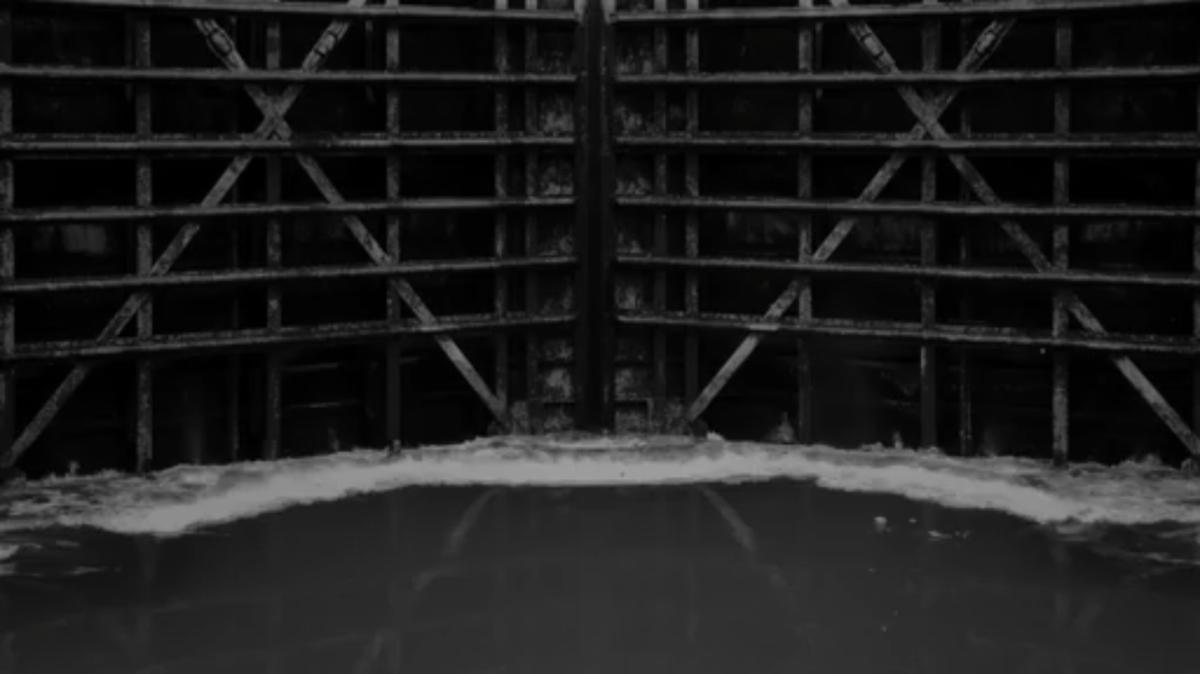
Interesting and well crafted as it is, I nonetheless feel that something is missing from it, to denounce and criticize certain aspects of contemporary Chinese society, and not only China, is something that absolutely must be done, but now that the country is in the spotlight internationally the risk is to look too redundant. For instance, towards the end of the movie there’s a long part all dedicated to a couple of homeless, their shacks and their dogs, we can see them on the foreground sitting in an old sofa or wandering among ruins with the ultramodern city and its skyscrapers on the background. The image is beautiful in its contrast, and even if it possesses a degree of truth, it ends up being trite and obvious, weakening the potential of the movie. While I like the general style, again the black & white is pictorial and the editing is perfect, it must be said that sometimes the film looks too “beautiful” and the image too “clean” without being subversive. The parts that resonate with me the most are those where Xu Xin explores the aesthetics of documentary to its limits. The aforementioned night scenes of the cities lights along the river, shiny but empty jewel boxes, or those at the river locks, slow and almost endless images of the water level, the ships raising and the gates opening, paired with a cacophonous soundscape made of squeaking noises and experimental music.

Aragane 「鉱」by Oda Kaori

Aragane is the first full-length movie by Oda Kaori, a talented Japanese director who had her debut in 2012 at the Nara International Film Festival with the short Thus A Noise Speaks, a meta self-documentary that unflinchingly explored her coming out as a female gay and the subsequent reactions from her family. Aragane is a completely different work though, an experimental documentary that Oda directed, photographed and edited herself, but also a “product” of Bela Tarr‘s film.factory, the film school based in Sarajevo and established by the Hungarian director few years ago, a place where the Japanese director studied for three years. Aragane, the Japanese title means “ore” or small pieces of stone, was shot in a Bosnian coal mine and it’s an immersive and hypnotic sensorial experience, a very special and rewarding one that was presented last year at the Yamagata International Documentary Film Festival and later at the DocLisboa in Portugal.

I had the pleasure of meeting Oda in Yamagata and later on she was kind enough to answer my questions by email, you can read the interview here.

Aragane

Bosnia and Herzegovina, Japan              2015, 68’                                                Director: Kaori Oda, Cinematographer: Kaori Oda, Editor: Kaori Oda, Producers: Shinji Kitagawa – FieldRain, Emina Ganic – film.factory.

The movie starts overground with the camera gazing at some busy workers preparing and checking the machines before going deep down into the mine, the camera then ride on a cart and with a very long tracking shot slowly starts its descent into the inner part of earth. Once inside, we’re introduced and enveloped in  a world of darkness, a pitch black curtain broken only by sudden and random flashes of lights revealing a segment of a machine here and a face smeared with coal there. There are really few spoken words, we hear some random sentences uttered every now and then by the workers, but that’s all, much more important is the wall of noise created by movie, the soundscape being a crucial element of it. In the 68 minutes of deep immersion into the chthonian and dissonant world of the mine, we are almost constantly submerged by the cacophonous noise of the machinery, although the movie is also punctuated by sparse but significant and sudden moments of deafening silence. At the end of the movie for instance, when we emerge from the bowels of the earth, the peace and the vivid colors of the changing rooms and the stillness of the hanging clothes have an almost soothing quality for our eyes and ears.
As stated by the director herself, Aragane is not a direct inquiry into the harsh conditions of the people working in the mine, although it’s something that eventually and necessarily emerges, but more an attempt to convey on screen the time and the space of the coal mine as experienced by the workers, or, I would add, as experience by the mine itself. It takes some time to get used to the alien space and almost abstract geographies of the mine, for most of the time we don’t really know what’s going on and who is doing what, it’s more like being thrown into a cubistic landscape in the middle of its making. Once we get accustomed to the time and the space presented on screen though, everything slowly begins to make sense, what starts to surface from the images and sounds, and through the tracking shots and the slow and hypnotic camera movements, is the time of the mine – time experienced as duration – and the materiality of the space depicted. On this point Aragane is a documentary very akin to the works of the the Harvard Sensory Ethnography Lab, Aragane reminded me – albeit with some distinctions of course- of Leviatahn, Single Stream and The Iron Ministry, just to name a few.             
Aragane is a compelling viewing experience, not a cinematic revolution or a masterpiece of course, but nonetheless a very significant work for Japanese documentary – it’s only partly Japanese to be honest, since it was produced and shot outside the archipelago.  What particularly interests me here is that finally Japanese cinema has an important work of non-fiction able to emancipate itself from the imprint of social and political documentary that usually dominates the contemporary non-fiction scene in Japan, and a work that in doing so liberate and explore the experimental qualities of documentary. I might exaggerate, but to find something similar in the history of Japanese cinema we have to go back to the great Matsumoto Toshio and his Ishi no uta (The Song of Stone, 1963).

img_1304

The best documentaries of 2015 – my list

As 2015 comes to an end, it’s that time of the year again, the period when every cinephile is compelled to make his/her best movies list. I couldn’t not post my own one. I’ve mostly watched documentaries from East Asia, my list is then more like a “Best documentary of 2015 from East Asia” type of list, but at the end I’ve added a couple of movies from other part of the world and some (re)discoveries I’ve done during this 2015. Just a disclaimer, it’s a favorite list more than a best list, here we go (listed in the order I’ve seen them):

Walking with my Mother (Sakaguchi Katsumi, 2014)

An exploration of loss, sickness and memory in a society (the Japanese one) that is getting older and older, told in the shape of a private documentary, here some thoughts on the movie.

walking_with_mother

Aragane (Oda Kaori, 2015)

The camera follows patiently and almost hypnotically the workers of an old coal mine in Bosnia down into the darkness of their daily routine. The movie is visually stunning, partly documentary and partly experimental cinema, director Oda Kaori knows how to use the digital medium for her cinematic purposes in a work that revolves around the concept of duration and its materiality, and that is almost structural cinema in its construction. I had the pleasure of meeting and interviewing the director, the conversation was published on the Italian newspaper Il Manifesto, I’m currently working on an English translation and on a review/piece for this blog (maybe next year).

Oyster Factory (Sōda Kazuhiro, 2015)

The latest work from Japanese director Sōda Kazuhiro, together with Theatre 1 and 2, my favourite among his documentaries. I’ve written more about the film here.

IMG_5344

France Is Our Mother Country (Rithy Panh, 2015)

Rithy Panh (2-21: The Khmer Rouge Killing Machine, The Missing Picture) constructs a critical and satirical work about the colonial rule of Cambodia by France, using only footage, archival images and propaganda films shot by the rulers themselves. The power of re-editing and collage documentary.

france-is-our-mother-country

Night and Fog in Zona (Jung Sung-il, 2015)

A documentary about the great Wang Bing by movie critic-turned-director Jung Sung-ilhere you can read my review.

IMG_0379-0

The Moulin (Huang Ya-li, 2015)

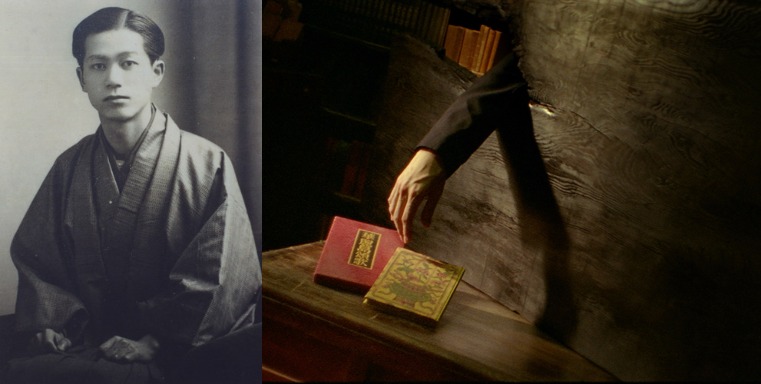
Formally engaging and elliptical, I don’t really know how much of my fascination for this movie comes from its themes, a group of Taiwanese avant-garde artists active in the 30′ during the Japanese colonial period, and how much from the documentary itself.

TheMoulin_Taiwan4

Documentaries from other parts of the world:

The Iron Ministry ( J.P. Sniadecki, 2014) and in general all the movies by Sniadecki: Demolition, People’s Park, Yumen….

Jujun (Paul Thomas Anderson, 2015)


(re)discoveries of 2015:

The Vampires of Poverty (Carlos Mayolo, Luis Ospina, 1977)

All the documentaries/works of the great Agnès Varda (it was a pleasure watching 14 of her films this year)


Yamagata Doc Film Fest, report – day 1

From a rainy Yamagata, I wrote down some thoughts about yesterday, October 10th, my first day at this year festival. Good movies, some unexpected discoveries, lively discussions and as always, great atmosphere at Komiya, the place where almost everybody meets & drinks at night.

My day started with a surprisingly good documentary, France Is Our Mother Country (2015), from Rithy Panh, the French-Cambodian filmmaker author of The Missing Picture and s21, works that focus on the aftermath of the Khmer Rouge regime in Cambodia. France Is Our Mother is an archive documentary entirely made of footage from the former French colony of Indochina, but Panh uses these images in a creative and even ironic way, when not sarcastic, to express all the sense of superiority of the colonizers (France) towards the colonized. Without a single spoken word but rich in music, now minimalist, now almost noise-like, and with the use of ironic but thought-provoking intertitles, the movie reaches almost an hypnotic quality. After few minutes in it we already start to realise how the film is a history in images, but also and at the same time a history of images, besides the obvious but tragic elements of oppression shown, what slowly sneaks into the viewers’ mind is a sense that basically everything can be demonstrated with images, after all wasn’t the footage shot by the colonizers themselves? At a certain point, this is my personal and extreme experience of it, I even started to doubt about the “reality” of the images, “couldn’t some of them just be fake?” I asked myself. The answer is: of course not, but this reaction made me realised how deceptive and open to interpretations images can be, and this is for me the best quality of France Is Our Mother Country.
The second movie of the day was Millets Back Home (2013) by the Taiwanese Sayun Simung, a documentary about the small Tayal ethnic minority living in a mountain village in Taiwan, a tribe to which the young director herself belong to. A very interesting work for its topic – how to transmit and keep alive minor languages, traditions and customs in our present world- but less for its style, too journalistic and straightforward, at least for my taste. Better was the talk after the screening when a member of the Tayal went onstage and sang a traditional chant.

The first movie in the afternoon was the highly anticipated The Pearl Button by Patricio Guzmán, a film that deserves all the praised it earned around the world. It stretches from the very distant – in time and space, the stars and the universe – to the very small of a button found at the bottom of the ocean. From the purity of a quartz and the almost celestial lightness of the sky and the water, to the gravity of death, torture and human beings smashed in the cogs of History (the Chilean dictatorship).
The 4th documentary of the day was Under the Cherry Tree (2015) by Tanaka Kei, a young Japanese director who followed the lives and struggles of 4 elderly people in a public housing complex in Kawasaki. Shot in low-tech and very simple in its style, no narration but intertitles to explain the background of these people and their problems, nonetheless Tanaka is very good at conveying through her camera the loneliness, the feeling of approaching death and the dreariness of their lives.
The last one of the day wasn’t a novelty for me, I had watched Aragane (2015) by Oda Kaori a couple of months ago on a screener, but seeing it on the big screen and with the proper sound system just confirmed the quality of the movie and the boldness of Oda in making an experimental work in form of documentary. Shot in a mine in Sarajevo, Aragane is composed of long takes mainly in the underground darkness, the real protagonists of the movie are the machinery, the flashing lights and a ceaseless noise enveloping the images. Hypnotic in the way Oda conveys the materiality of time and the sense of duration, Aragane reminded me, with due distinctions, of some works made by Harvard University’s Sensory Ethnography Lab, I’m thinking especially of The Iron Ministry and Manakamana.

That’s all for the first day in Yamagata, tomorrow or maybe after tomorrow for the next reports.

Yamagata International Documentary Film Festival 2015 – International Competition and New Asian Currents

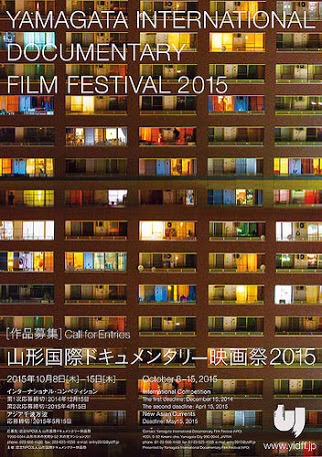
The Yamagata International Documentary Film Festival has completed its line-up, once more a rich and very interesting one, at least if you’re into the world of non-fiction cinema. The biennial event co-established in 1989 by Ogawa Shinsuke and dedicated to the exploration of the world of documentary, in its broadest sense, will take place as usual, in the Japanese city of Yamagata next October from 8th to 15th.                        I’ll be there for 3 days, from the 10th to the 12th, and hopefully I’ll be able to write down and post something, possibly a brief daily report, after-screening parties permitting….anyway, let’s see what this year program is offering us, of course I’ll focus more on the Japanese works.

These are the sections:

– International Competition

– New Asian Currents

– Perspectives Japan

– Yamagata Rough Cut!

– Latinoamérica The Time and the People: Memories, Passion, Work and Life

– Double Shadows—Talking about Films that Talk about Films

– Past and Future Stories of the Arab Peoples

– Cinema with Us 2015

– Yamagata and Film

The competition this year is graced with the presence of some big names such as Patricio Guzmán and Pedro Costa, in Yamagata with The Pearl Button and Horse Money respectively. Another title, among the 15 in competition, that has attracted my attention is the long (334′) Homeland (Iraq Year Zero) by Abbas Fahdel, “two years in the life of a family amidst the Coalition Forces’ 2003 invasion of Iraq”.                                         There will be only one documentary representing Japan in competition, We Shall Overcome (戦場(いくさば)ぬ止(とぅどぅ)み) from director Mikami Chie who 2 years ago was at the festival with her The Targeted Village (標的の村). We Shall Overcome continues to explore and document the ongoing “battle” of Okinawans against the plan to build a new American base in Henoko, and telling the story of Fumiko, an elderly woman who witnessed the battle of Okinawa in 1945, the film is connecting the past with the present of the archipelago. The documentary is also enriched by Cocco‘s voice over, the singer and actress herself is from Okinawa and is known by Japanese cinema fans because of her amazing and phisical performance in Tsukamoto Shin’ya’s Kotoko (2011).

Three Japanese docs and thus more to talk and write about in the New Asian Currents section, a selection that in total includes 20 works from different parts of Asia.  Distance is the debut behind the camera for Okamoto Mana, reading the description on the festival site it seems to be a sort of self-documentary, created by crossing family home movies with new shooting material, and in doing so reflecting on the director’s family and her past. The second work made by a Japanese is Each Story (Okuma Katsuya) a movie that takes place in India and “For their summer homework, Jigmet and Stanzin are assigned to study the Epic of King Gesar, passed down from generation to generation in the northern Indian region of Ladakh, where the boys live. As they splash in the river and run through the streets, the boys come to understand each story shared with them by the adults of their village.”                                                         Last but not least there’s Aragane, the feature debut for Oda Kaori, an artist leaving in Sarajevo and studing in a graduate program under Tarr Béla. I had the privilege of watching the documentary on a sample screening, and although it was on a TV screen, I was very impressed.  The camera follows patiently and almost hypnotically the workers of an old coal mine in Bosnia down into the darkness of their daily routine. Aragane is visually stunning, Oda knows how to use the digital for her cinematic purposes, partly documentary and partly experimental cinema, the movie possesses an impressive sound design, and a stilistic and poetic touch akin to the works produced by The Sensory Ethnography Lab (SEL) at Harvard University (Leviathan, Manakamama). I’m really looking forward to seeing it on a big screen and with a proper sound system.

Not from Japan but worth mentioning are the two Special Invitation Films: Almost a Revolution (Hong Kong, by Kwok Tat Chun, Kong King Chu) and Sunflower Occupation (Taiwan, by the Sunflower Occupation Documentary Project), both of them dealing with students street protests and uprising occured in Hong Kong and Taiwan in the last two years.

In the next post I’ll write about Perspectives Japan, a selection of new Japanese docs, and Latinoamérica—The Time and the People: Memories, Passion, Work and Life, a retrospective on the so called Third Cinema (Tercer Cine) and its resonances with the contemporary non-fiction production in Latin America.