Second report from the Kobe Discovery Film Festival 2022 (you can read this first one here).
On October 15th, the festival held a couple of screenings of home movies from the Kobe area, on the occasion of Home Movie day 2022. It was a very pleasant and eye-opening experience for me, the audience had the chance to see a couple of short films (from the 1960s, 1970s and 1980s, if I’m not wrong), projected on screen with the person who filmed it, or a family member, in attendance. It was like opening a treasure chest, a personal one, in front of a bunch of strangers, a way to share personal memories, often forgotten, with other people. The home movie day, held since 2002 all over the world, it’s a fascinating event situated at the intersection between personal history, History with a capital “H”, and film studies. It is an exploration of the possibility of building an alternative video history from the bottom up, almost a micro history as it were, excavating personal memories to document social changes, and also an occasion to celebrate a dying format (8mm, super 8, etc.). Besides the specific places and experiences captured on the films projected—a trip to the zoo, scenes of a countryside house, a family vacation, a day at the Osaka Expo 1970—it was interesting to learn how home movies from the 60s generally retain even today a better visual quality and colours (especially the reds), compared to those shot in the following decades. As the film and film equipment got more affordable, the quality of the celluloid also dropped, causing the films to deteriorate easily with the passing of time. Insightful was also to learn, from a live commentary done by a scholar of the subject, that, because of the cost of the film, home movies made in the 50s or 60s were usually edited faster, with shorter cuts that is, while later on the cuts tended to be longer.
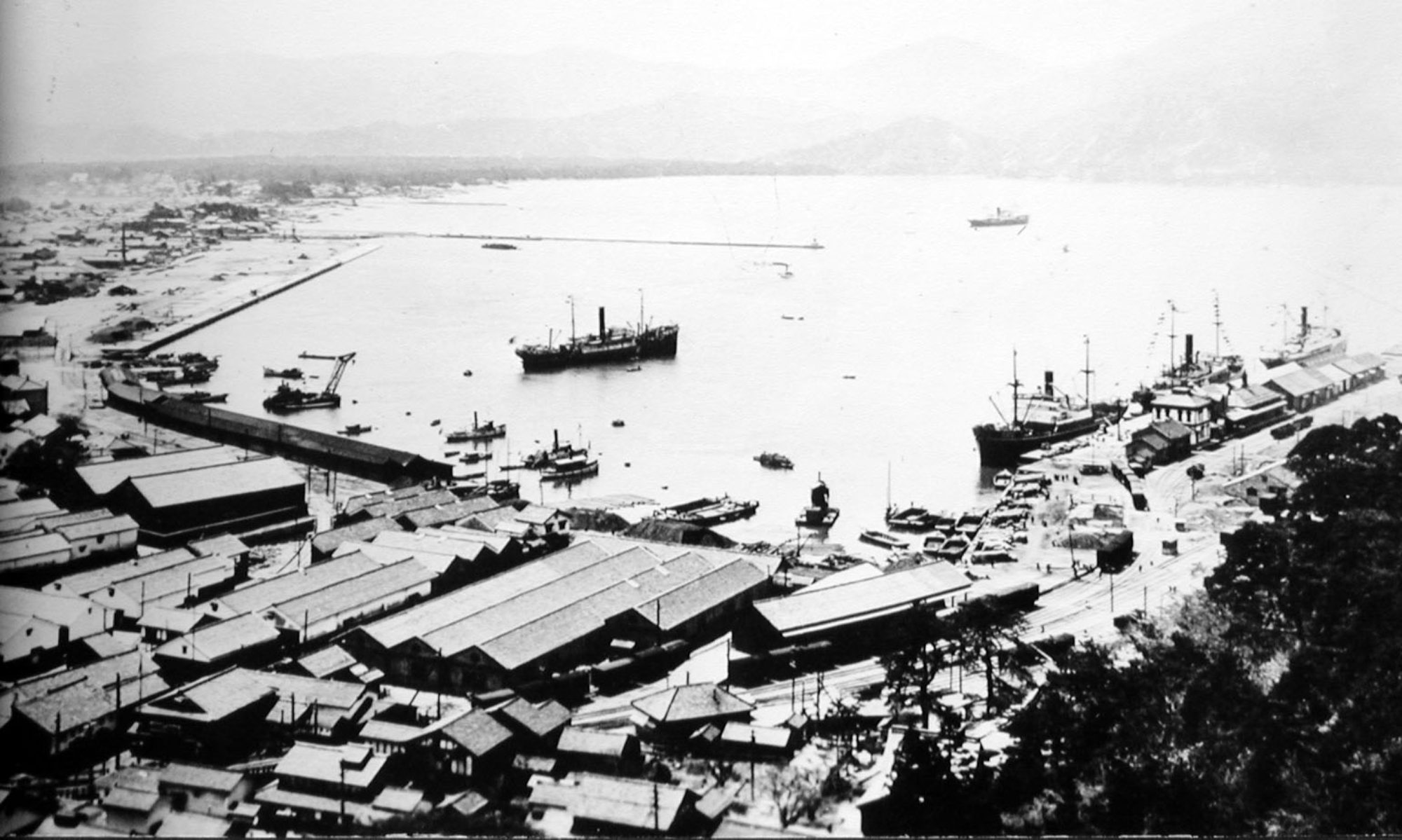
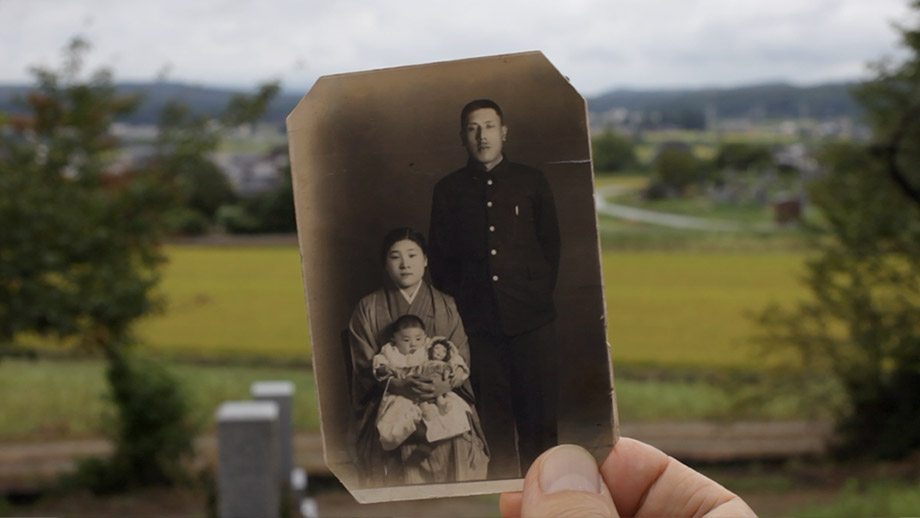
In September 1939, after the Nazi invasion of Poland, Maria Kamm and her brother Marcel Weyland were forced to leave their hometown and to start an endless journey around the globe to survive. After fifteen months in a refugee camp in Lithuania, they arrived in Tsuruga, a port city in Fukui prefecture, and from there they moved to Kobe, later to Shanghai, where the family was separated, and finally they reached, at different times, their final destination, Melbourne in Australia.
海でなくてどこに Where But Into The Sea (2021) is a film documenting their odyssey around the world, constructed by interweaving interviews, poetry, letters, and a historical investigation by scholar Kanno Kenji. The film is directed by Ōsawa Mirai, but the idea of the project came about when Kanno met Maria in Melbourne in 2016, and later decided to shape his research also into a visual work. The documentary is a delicate portrait of two people, their family, their past, and how their personal experiences intersected the large historical events of the last century. It is also about a less known and studied fact, how the asylum process for Jewish people worked in wartime Japan and in the Japanese occupied territories.
The movie has a beautiful and poetic ending, made in collaboration with artist Miyamoto Keiko, it was a discovery for me to learn that this scene was inspired, as the director himself confirmed in the talk after the screening, by the films of Satō Makoto—specifically Memories of Agano (2005) and the movie in the movie screened on a tarp, but also Out of Place: Memories of Edward Said (2006). Ōsawa was Satō’s student when he was teaching at The Film School of Tokyo (Eiga bigakko), and he is also the director of 廻り神楽 Mawari Kagura (2018), a documentary that has been on my radar for some time.
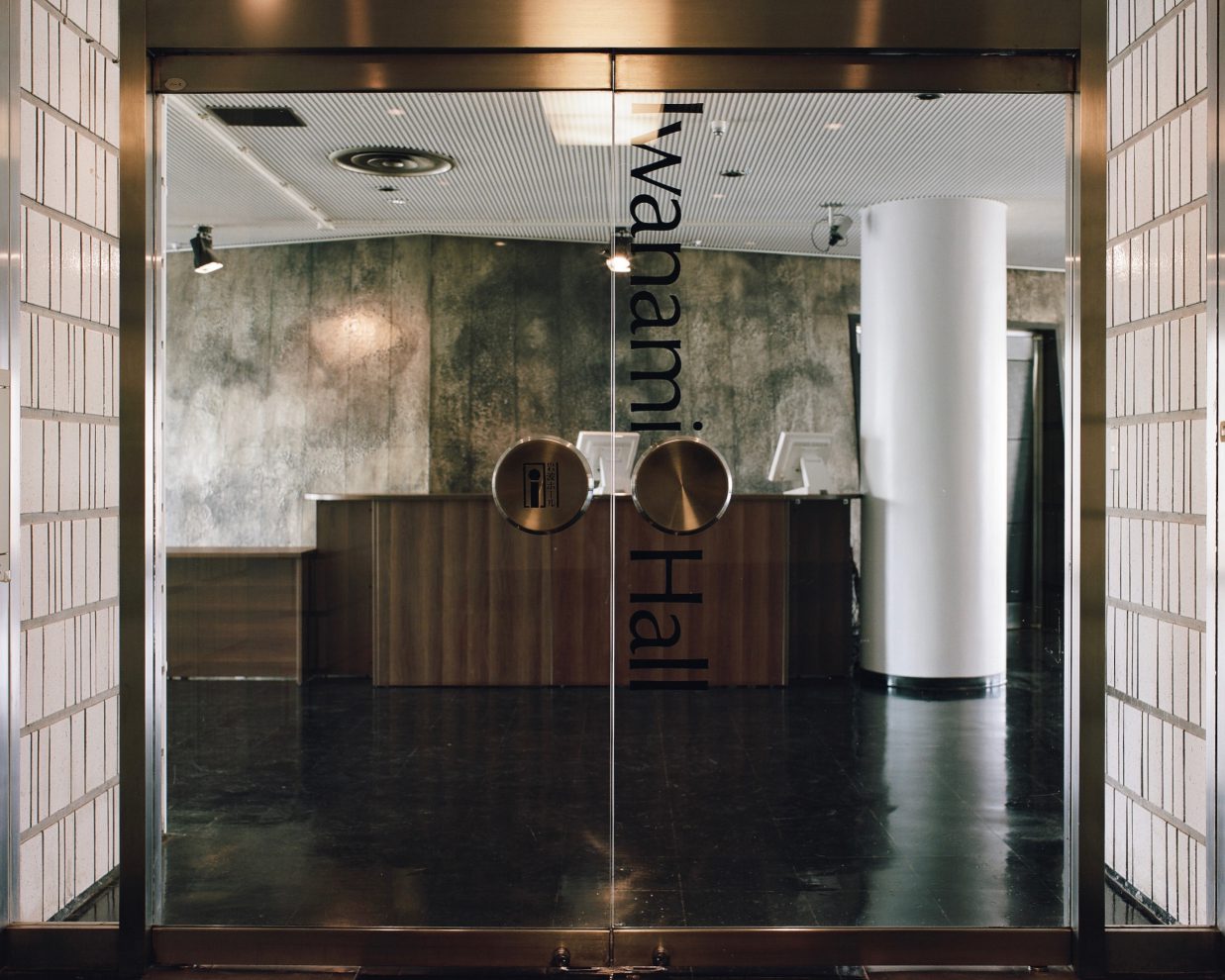
An official statement on the homepage of the theater, posted on January 11th, announced that Iwanami Hall, a pioneer space for independent cinema in Tokyo, will cease its activity at the end of July 2022. The decision was apparently caused by the decrease in attendance due to the ongoing pandemic. It’s was shocking news that reverberated not only in Japan, a sad day for cinema culture in the archipelago, and definitely an event that signals an end of an era. There are different angles from which this news can be approached and discussed, for instance, putting it in the broader context of the changing shape of cinema, or analyzing the closure in connection to the current film exhibition and distribution landscape in Japan and beyond. What I would like to do here today though, is to seize this unfortunate chance to celebrate Iwanami Hall and everything that the space and the people involved with it have meant for cinema culture in Japan in the last half century, focusing in particular on the Japanese films and documentaries screened.
Considered by many experts the trailblazer of what would become the Japanese mini-theater boom of the 80s—that is, the proliferation of small independent venues where movies made out of the big studio system were screened—the idea of a space dedicated to the performing arts and cinema was born at the end of the 1960s, when Iwanami Yujirō, then president of Iwanami Shoten, one of Japan’s largest publishing companies that later spun also into the documentary world with the glorious Iwanami Production, decided to have a separate building made for the visual arts, the Iwanami Jimbochō Building. It is inside of this new construction that Iwanami Hall was established and found its place in February 1968, at first as a multifunctional center dedicated to various arts, and in 1974, with the formation of Equipe de Cinema, a group curating and distributing films, as a proper cinema theater capable of accommodating about 200 customers.
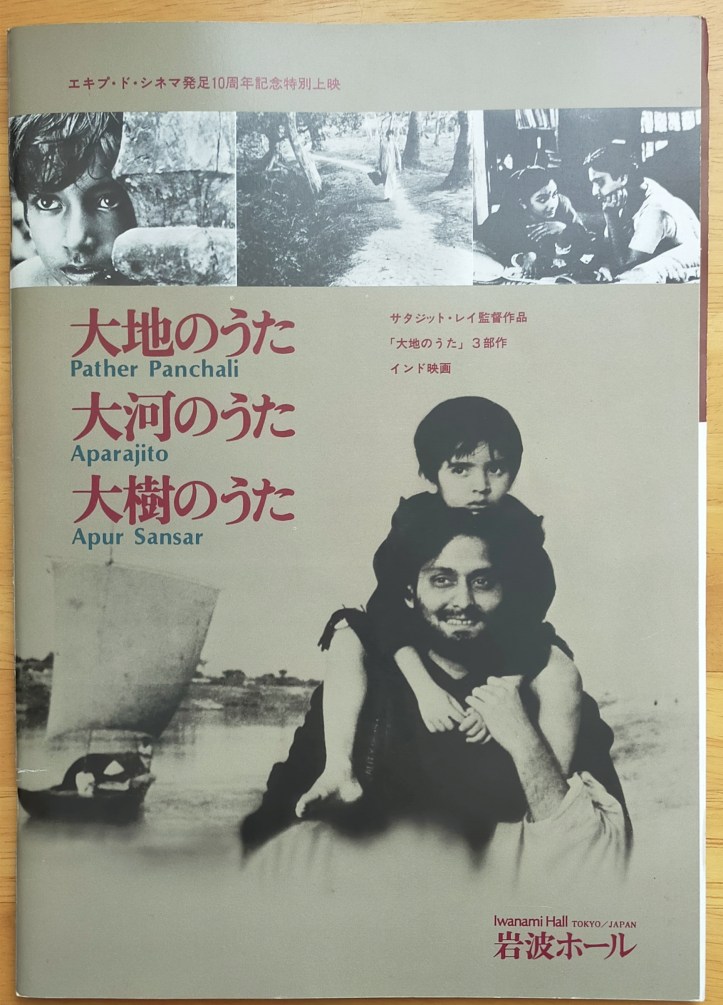
A pivotal figure for the activities that would be carried out in the following decades in the theater through the group was Takano Etsuko, who had previously worked in distribution for Toho, and who would serve as the director of the theater until her death in 2013. The philosophy that has guided the cinema since its beginnings is a special focus on films from areas less covered by traditional Japanese distribution, such as Latin America, Asia and Africa. In this sense, the first movie screened at the cinema, in February 1974, Satyajit Ray’s The World of Apu, felt like a mission statement.
Four were the guiding principles behind the activities of Iwanami Hall and Equipe de Cinema:
Introducing masterpieces from non-Western countries such as Asia, Africa, and Latin America, and also focusing on feature films directed by women.
Screening of non-Japanese films that usually are not picked up by major distribution companies.
Showing important film in the history of cinema, that are not screened in Japan for some specific reasons, and films that have been cut or shown in incomplete form.
Introducing significant Japanese films to the world
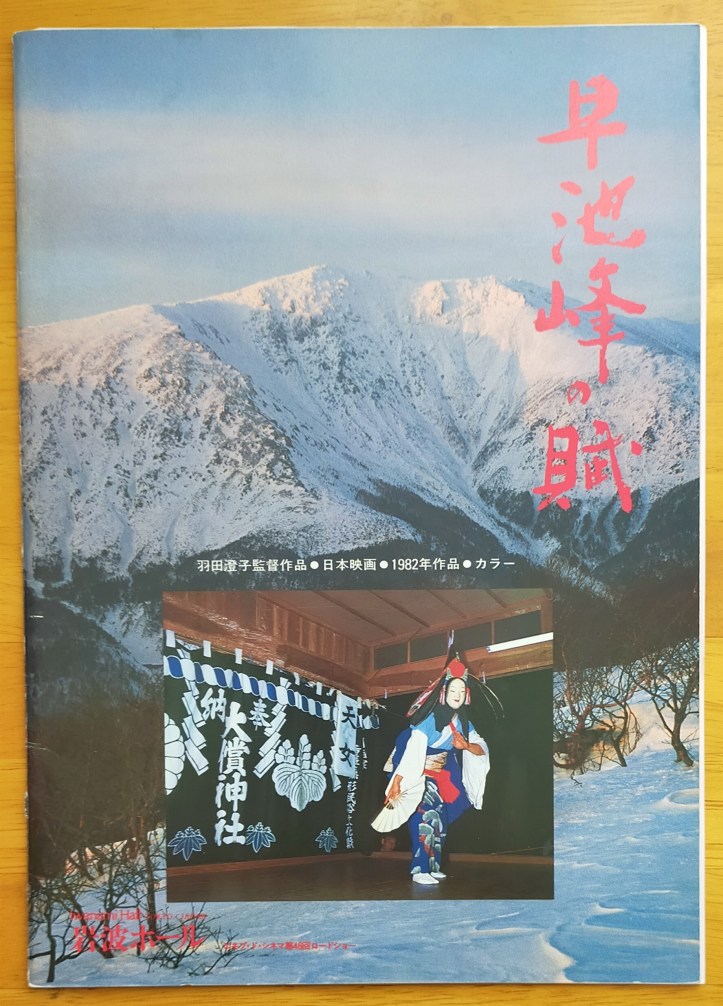
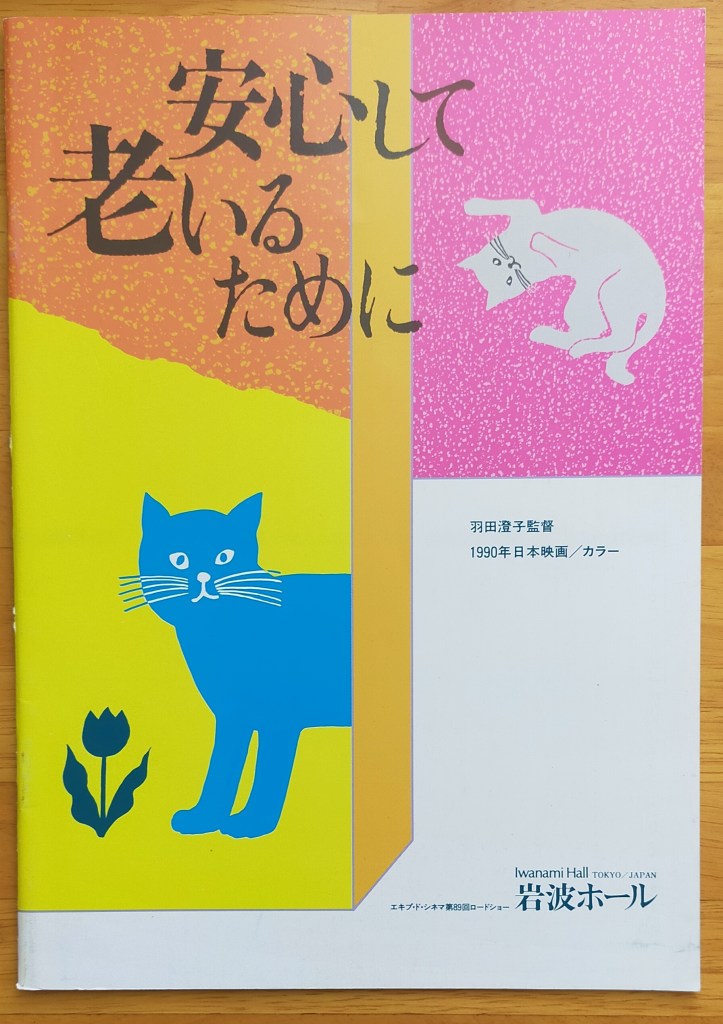
As written above, one of the goals of Equipe de Cinema and Iwanami Hall was to introduce and show art house cinema from all over the world to the Japanese viewers, and thus in the first decade of its existence the cinema focused mainly on non-Japanese films. However, there were some notable exceptions, Gassan (1979, Murano Tetsutarō) was made to celebrate the fifth anniversary of Equipe de Cinema and was screened at Iwanami Hall from October 20 to December 4, 1979. Children Drawing Rainbows (1980) by Miyagi Mariko, an actress and activist whose life would deserve an in-depth piece, a documentary about children with disabilities, was screened from July 26 to September 5, 1980, and Ode to Mt. Hayachine (Haneda Sumiko), from May 29 to June 25, 1982, and again, due to its success, August 7-13.
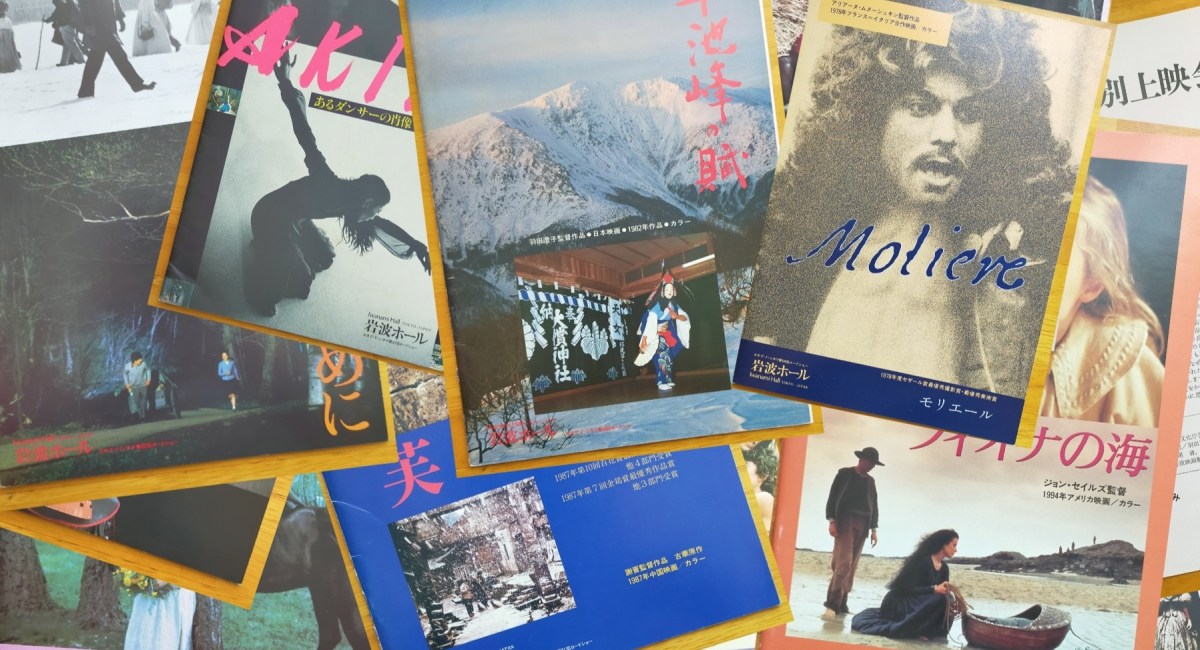
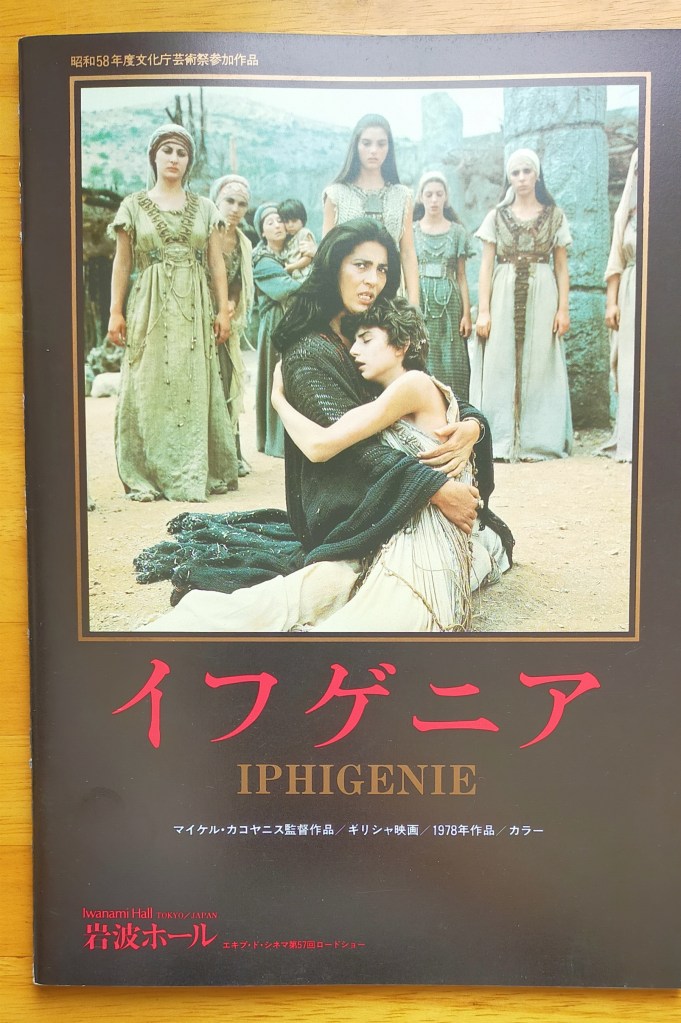
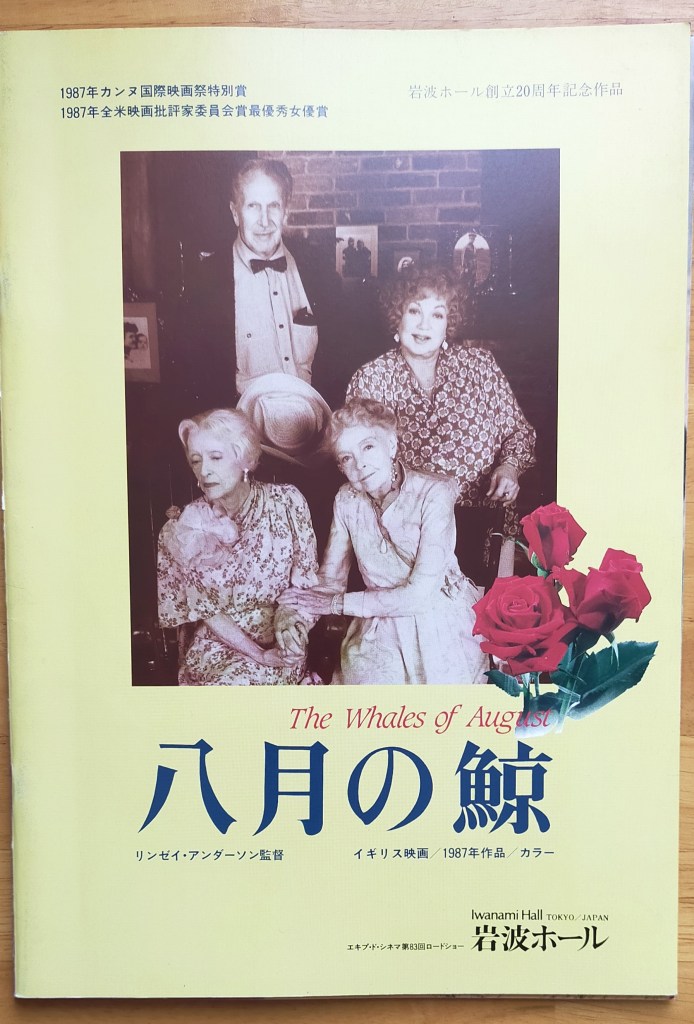
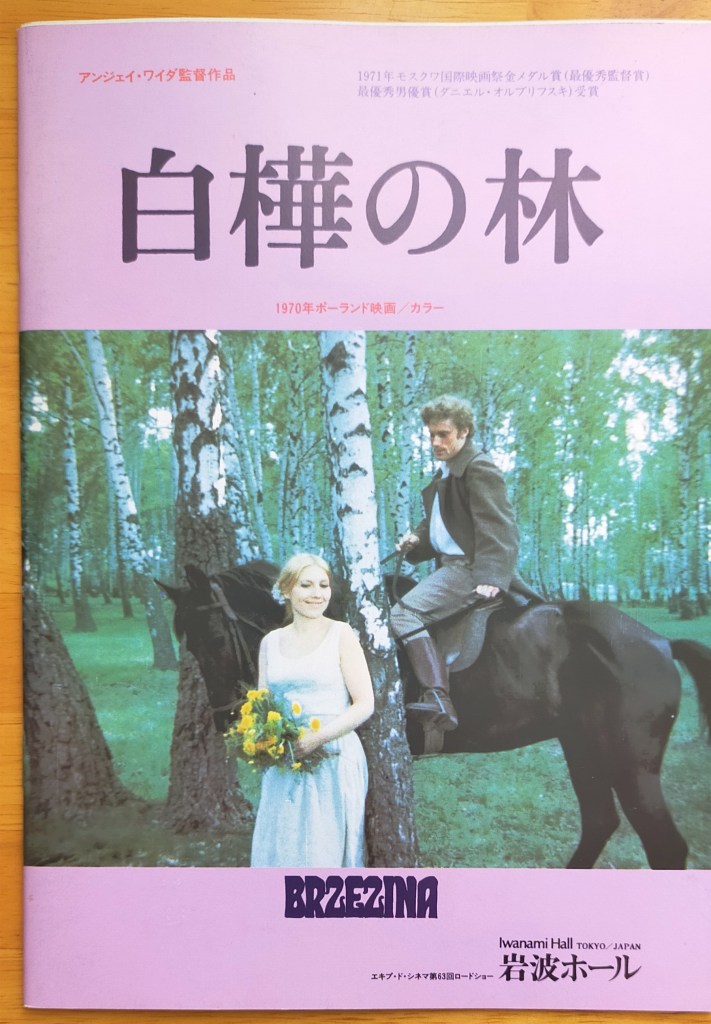
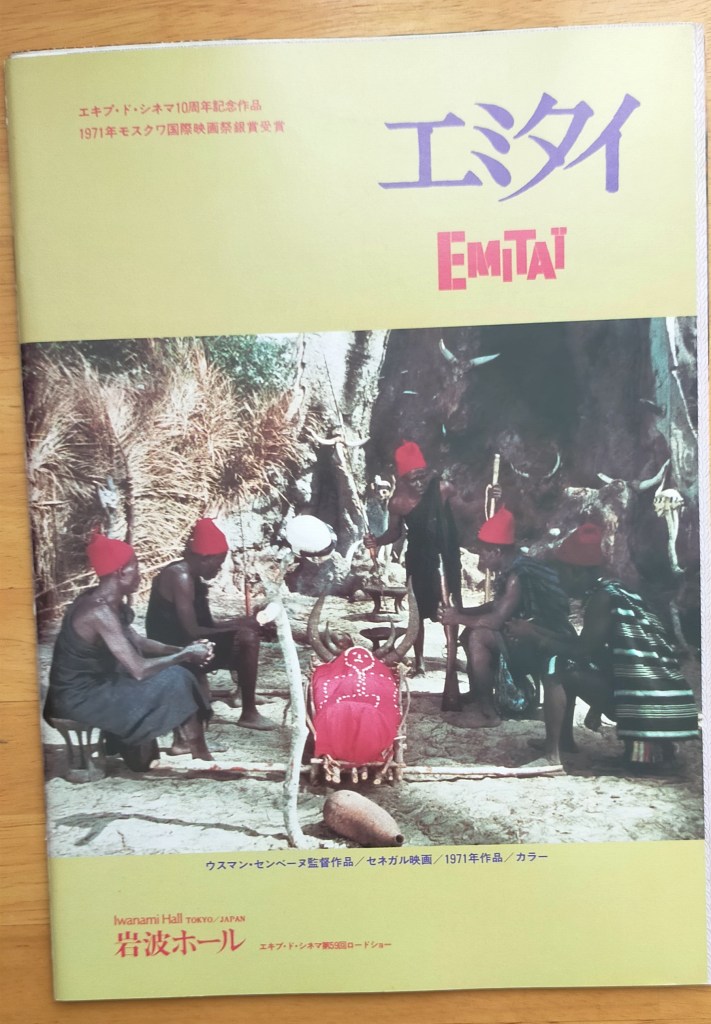
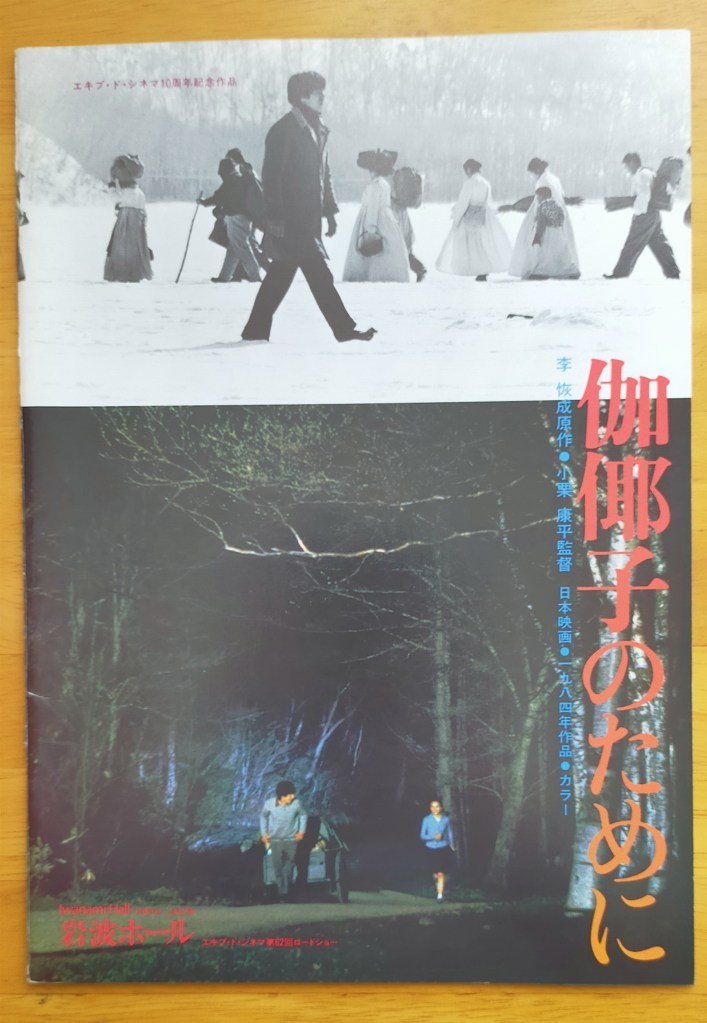
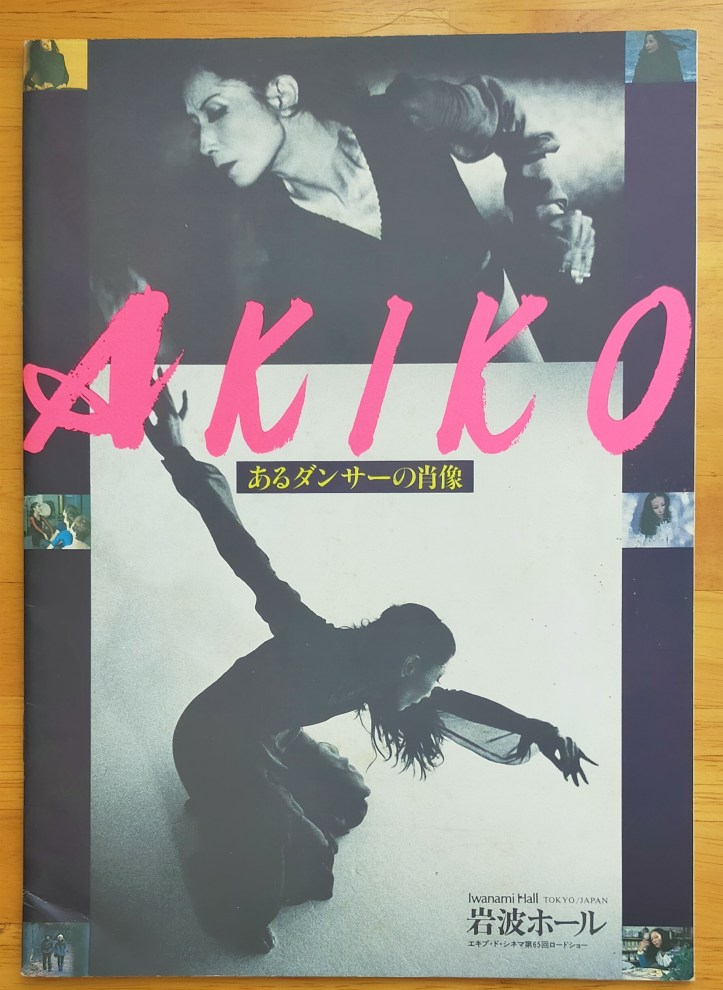
In the slideshow below you can find some of the booklets produced by Equipe de Cinema for the movies screened at Iwanami Hall in the last 50 years, not simple leaflets, but in-depth analysis of the film in question with contributions from scholars, critics and directors themselves (right click to swipe):
This is the last message from Iwanami Hall’s manager, Iwanami Ritsuko, posted on YouTube on July 28th:
The message summaries the birth and activities of Iwanami Hall during the last half century, stressing its importance in bringing and showing to Japanese audiences films from different parts of the world in a time when only big American and European productions were screened.
What is interesting for us here, is that during the so called boom of mini-theaters in Japan (from the mid 1980s onwards), Iwanami Hall, while continuing the screening of international cinema, focused its attention also on a different type of Japanese cinema, one that dealt with the problems of an aging society, people with disabilities, and one made by women directors.
This last point is a crucial one, because for more than 50 years Iwanami Hall has been functioning as an unofficial hub for woman in cinema, not only screening cinema made by female directors, but also involving women in the activities of the group and theater. The premium example of this is, as Iwanami Ritsuko says in her message, Nakano Etsuko. She really wanted to became a director, but it was almost impossible at the time, and that’s why she decided to go to France to study. Once back in Japan she tried again, writing scripts for TV, but the society of the time was still too male-centric. After working for Tōhō, Nakano found her place in Japanese cinema when she established Equipe de Cinema and became manager of Iwanami Hall.
The case of Ode to Mt. Hayachine
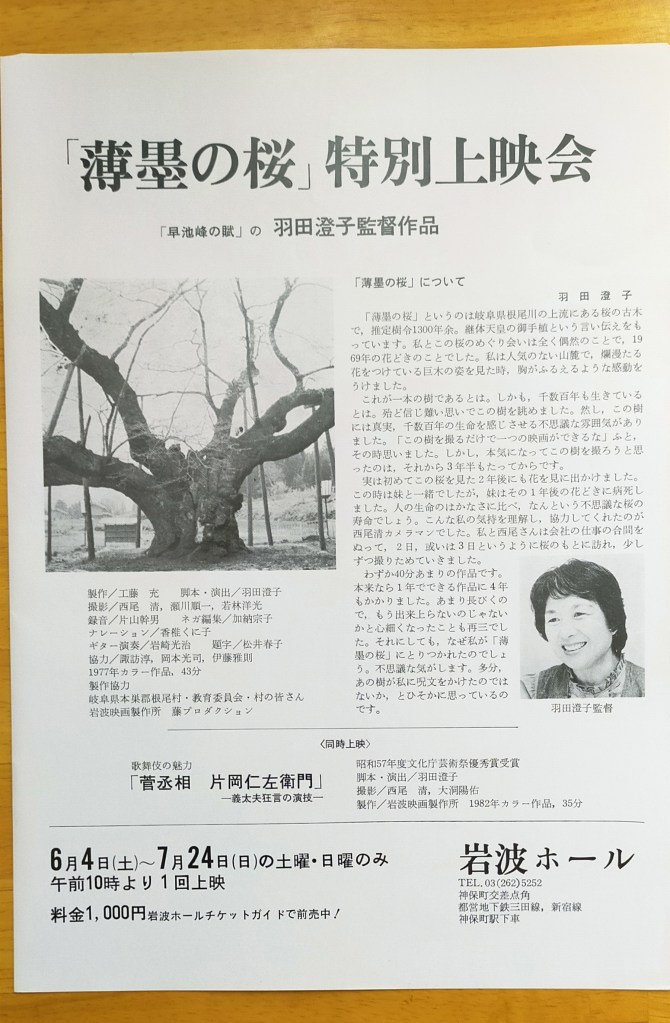
From the spring of 1979 and for about 16 months, Haneda Sumiko and her cameramen visited several times the villages of Dake and Ōtsugunai, in Iwate prefecture, to shoot Hayachine Kagura, a sacred dance performed in the area for centuries, and the lives of the people in the villages. After the shooting was completed, Haneda with her husband Kudō Mitsuru as a producer, made 早池峰神楽の里 Hayachine kagura no sato, a independent documentary that later was backed by Iwanami Production. The 52-minute work, made with the financial support of the villages, did not satisfied Haneda though, who thought that the subject and the people of the area needed a longer treatment. Up to that time Haneda had made only relatively short documentaries, and 薄墨の桜 The Cherry Tree with Gray Blossoms, her first independent documentary (1977), a work that kicked off her career as an independent documentarian, was only 42′ long. However, this time she felt the need for a different length in order to put in images what she experienced in Iwate. Gathering all the footage shot, Haneda ended up making 早池峰の神楽 Hayachine no kagura, a documentary 195′ long, a work she assembled just for the people of the villages and for herself, as a document to preserve the ancient art of kagura and a way of living that was quickly disappearing.
In 1981 she screened the movie in one of the villages, just a private screening held at a community hall. It was a success, and the people of the towns saw it several times. Haneda was particularly enthusiastic to hear that the women of the villages were finally able to properly see the festival and the kagura dance, since during the main festival they were usually so busy cooking, preparing and organizing everything, that they didn’t usually have time to see the kagura or enjoy the festival. Once she was back in Tokyo, Haneda showed the movie to Kawakita Kashiko and Takano Etsuko, at the time the leaders of Equipe de Cinema. They were so impressed by Hayachine no kagura, that they offered Haneda the possibility of having it screened at Iwanami Hall. She reluctantly accepted, but the film was still too long, and so it was decided to shorten it of 10 minutes. The final result was titled 早池峰の賦 Ode to Mt. Hayachine (185′), and was screened at Iwanami Hall starting from the Golden Week of 1982 (May). The documentary was screened for several weeks and was praised by viewers and critics alike.
The movie and the screenings held at Iwanami Hall were a turning point in Haneda’s career, who, from that point on, decided to quit Iwanami Production and pursue, together with her husband, a path in independent documentary cinema. The documentaries she made in the last part of her career were almost all screened at the theater. Had not been for Takano, Kawakita, Equipe du Cinema, and the chance offered her by the screening at Iwanami Hall, the documentary would probably have never been shown to the public and stayed in a box, forgotten, and Haneda’s career would have taken a different direction.
This is just one specific example, among many, illustrating the importance Iwanami Hall played for cinema culture in Japan.
If you follow this blog or my social media activity, you probably already know my love for the documentaries of Haneda Sumiko. One of the most important documentary filmmakers that Japan has seen in the last 70 years, Haneda is, in my opinion, the most important female director in the history of the cinema of the archipelago. One of my resolutions for 2021, time permitting, is to let more people know about Haneda, her career and impact in Japanese documentary cinema. In 2002 she published Eiga to watashi,a memoir of her career and experiences in the world of Japanese cinema from the 1950s until her more recent works. A revised version titled Watashi no kiroku eiga jinsei came out in 2014.
Starting from today I will post the translation of what I think are the most significant passages from the book (the first version) and other writings. Keep in mind that neither English or Japanese is my first language, and that I’m doing it just out of passion for the topic and admiration towards Haneda.
Titles are mine
Iwanami Shoten, and from China to Japan
Both before and after the war, the path for women to become directors was closed from the very beginning. It took many years of long practice to become a filmmaker; to become a director, you had to start as an assistant director, but for women, this was never a possibility. There are of course some exceptions like Sakane Tazuko, who, before the war, seized this opportunity from working with Mizoguchi Kenji, or Tanaka Kinuyo, who grabbed the chance from being one of the first and biggest stars [in Japanese cinema]. That being said, the situation was apparently different in the world of documentary films, and I, knowing nothing of all this, one day, almost by chance, became a director.
Shortly after the end of the war, in 1949, Iwanami Shoten, through Nakaya Ukichirō, established a new branch, the Nakatani Laboratory. Iwanami Shigeo, the founder of the company, saw the situation of audiovisual education brought in by the United States after the war, and thought that not only print culture but also video culture would be important from that moment on, and that is the reason Iwanami wanted his company to venture in the world of video productions. However, Iwanami died without realizing this.
It was Kobayashi Isamu, the managing director of Iwanami Shoten, who continued the idea started by Iwanami. The Nakatani laboratory was established in the hope of becoming a place were “good science films” could be made. Under the guidance of professor Nakatani, renown for his research on snow, the staff centered around Yoshino Keiji, who shot “Snow Crystals” and “Frost Flowers”, at the time highly regarded science films. Kyodo News reporter Hani Susumu was also scouted and became one of the core members of the group.
I was born in Dalian, Manchuria, and lived in the mainland for several years, but went to Manchuria again and graduated from elementary school and girls’ school in Lüshunkou. After that, I entered Jiyū Gakuen in Tokyo and graduated there in the year of the end of the war. On August 15 1945, the day of the end of the war, I went back to Dalian. For three years until the repatriation, under the occupation of the Soviet army, I worked for the women’s department in the only permitted organization, the “Dalian Japanese Labor Union” in the Japanese settlement. I missed the first repatriation, which began in 1946, and with the second one I arrived in Maizuru in July 1948. I wanted to move to Tokyo, but at that time Tokyo had restrictions, and people without jobs could not move in. I worked for a company called Shizuoka Prefectural Educational Book Publishing for a while, but from the spring of 1949 I found a job at the GHQ Chapel Center near the Diet Building and so finally I could go to Tokyo. I was 23 years old.
Wrapping up March and the first 3 months of 2021 with some of the most interesting non-fiction works I’ve watched this year so far.
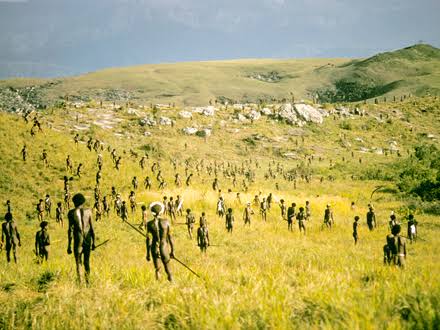
Dead Birds (Robert Gardner, 1963)
I discovered the existence of the movie through Expedition Content, thus I watched it and experienced it knowing what was behind it, colonial gaze and everything else that comes when a movie is constructed to fit a certain, problematic to say the least, view of the world. That being said, some of the images used are so powerfulーI’m here referring especially to the long shots of the battles between the two tribes, or the children washing the intestine of a pig in a river ーthat they escape the film own narration and the conceptual framing of the work. The movie is available here.
The First Emperor (Hara Masato, 197?)
From IFFR:
In 1971, Hara Masato and a group or actors started shooting his 16mm film, The First Emperor, based on an old Japanese book about history and myths that is known as the Kojiki (‘Record of Ancient Matters’). He did not finish the film. A year later, he started filming again with a small Super8 camera, all on his own, now intending to make some shots of the locations he had not previously been able to film. On the way, he reconsidered his ideas and realised that the myths could not be found anywhere outside and were not filmable in a material sense, but that they were located in cinema itself or in the making of cinema. He decided that recording his hunt for locations was the best way to finish The First Emperor, in which the Japanese myths could also serve as material. The smallest universe known as cinema corresponds with the universe of telling myths about Creation. This is a travelogue by the film maker himself and a film about film, while it is also a myth about film.
There are many iterations of this “movie”, the work completed by Hara in 1973 was 7 hour long, and there are later versions of 4 and 2 hours. A decade or so ago, I saw a 7 hour version (not sure if it was the first version), with live accompaniment by Hara himself, few years ago the 4 hour long, and last month the restored 2 hour edit (two-screen version). The latter is for me the best, a lysergic trip into the fabric of filmmaking and memories, and film as memory. Hara and his works is something that should be explored more—not only in connection with the so called Japanese new wave, he co-wrote Ōshima’s The Man Who Left His Will on Film, and the concept of fûkeiron (landscape theory) in film, to which this movie certainly belongs —but also as a unique filmmaker who works “outside” of cinema as traditionally conceived, in a liminal space formed between personal cinema and amateur filmmaking.
Japanese science and PR films are a well of discoveries, particularly those produced in the late 1950s and 1960s, when many directors who later would have become big names, started their career working in this genre. In the last past months I’ve had the chance to watch a couple of shorts directed by Noda Shinkichi, a director, poet, theorist and producer who was affiliated and collaborated with, among others, Matsumoto Toshio, and who was a central figure in the development of documentary in Japan.
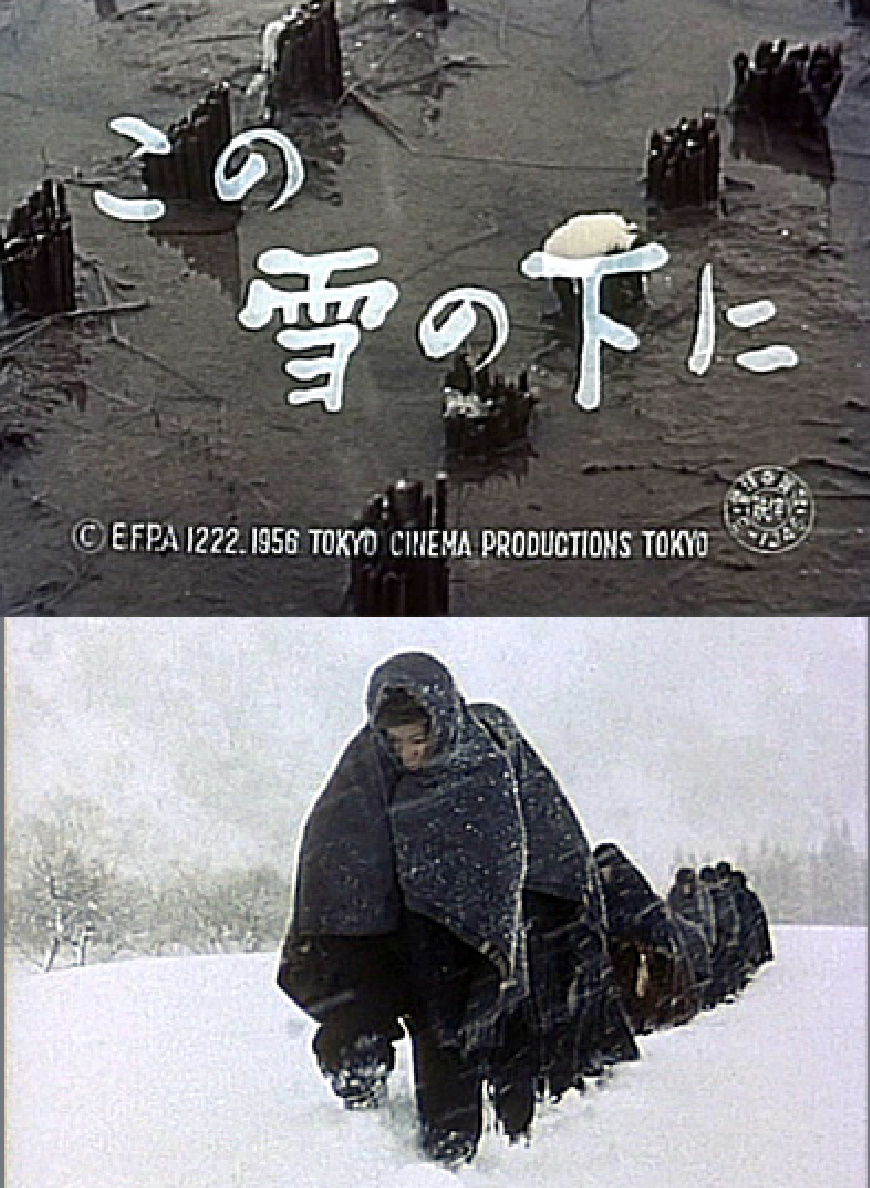
Country Life Under Snow この雪の下に (1956) is a fascinating depiction of the harsh life in a rural area in Yamagata prefecture, while Transporting the Olympics オリンピックを運ぶ (1964) is a documentary about the logistics and the behind the scene of the 1964 Olympics. How things (boats, yachts, traffic cones, film reels, etc.) and animals (horses, pigeons) were transported from and to Tokyo. Directed by Matsumoto and Noda, the film was part of the official coverage of the event, but the two crafted an interested filmic object nonetheless (the classic music used, for instance, reminded me of the Japanese new wave). The work tells us that without the people working behind the scene, such a big scale events would not be possible.
I’m reposting something I wrote almost 4 years ago about Kitamura Minao and visual anthropology in Japan
Visual anthropology, ethnographic cinema, visual folklore and ethnographic film are all definitions floating around the same concept, a point of intersection between cinema, film or the visual arts on the one side and ethnology, anthropology or ethnographic field work on the other. Although all these definitions don’t exactly signify the same thing, I personally like the term “visual anthropology” the best, for no special reason.
I came to be interested in visual anthropology through the works of Jean Rouch, author and co-author of some of the most outstanding works in the history of documentary (Chronicle of a Summer, Moi, un noir, etc.) who was also a very well respected anthropologist who spend most of his life working in the African continent. Driven by this interest a couple of years ago I started to look for something or someone similar in Japan, and by pure chance one morning at Nagoya Cinemaskhole, I came across and discovered the works of Kitamura Minao.
Kitamura is one of the most respected visual anthropologist (I don’t know if he’d agree to be called so) working today in Japan, the founder of Visual Folkrore Inc. and, besides his works for TV (mainly for NHK), he’s also the author of some very compelling and inspiring theatrical documentaries. For instance, Kitamura is the director of one of my favourite films of 2012,
ほかいびと 伊那の井月 Hokaibito: Ina no Seigetsu (2012) about the life of Inoue Seigetsu, a poet and wanderer who lived the last part of his life (he died in 1887) shifting through the land of Ina, now located in Nagano prefecture, between the Edo and Meiji period, a time of dramatic changes that transformed and shaped Japan as a modern nation.
Hokaibito: Ina no Seigetsu is a very unique documentary constructed by merging poems, written by Seigetsu himself and visualized on screen by nice handwritten strokes, with reconstructions of the life of the poet, played here by the legendary dancer Tanaka Min.
I haven’t seen so many of Kitamura’s works, especially those commissioned by museums or NHK, but a couple of years ago at the Kobe Planet Film Archive I had the chance to see two of his works made around 30 years ago: The Horse of Kaberu (1969) and The Song Of Akamata: Life Histories of the Islanders of Iriomote Okinawa (1971).
The former in particular impressed me for its compelling topic: the failed attempt to film a sacred festival in Komi (filming the rituals in the remote island remains a taboo) that nonetheless turned out into a meaningful portrait of the people living or returning to the small land, and a revealing study of their deep relationship with traditions and religion practices of the island.
What follows is an introduction to the movie by Kitamura himself, given on the occasion of a symposium, “Expanding the horizon of Area Studies through film presentation The New Generation of Anthropological Cinema” held in Kyoto in 2006:
THE SONG OF AKAMATA: LIFE HISTORIES OF THE ISLANDERS, IRIOMOTE, OKINAWA
KITAMURA Minao
There are two sacred festivals in the Okinawan Islands that, although they continue today, have not yet been filmed or documented: Uyagan-Sai of Ogami Island, Miyako; and Akamata of the Yaeyama Islands, which I attempted, on one notable occasion, to film with an Arriflex camera. The result is this rather peculiar work that did not actually achieve its main objective.
Once a year, during June of the lunar calendar, wearing a wild red wooden mask and covered in leaves and vines, Akamata appears from the sacred cave known as Nabindo. He visits the village founder’s house in Komi to bless the villagers and promise a good harvest for the coming season.
In July of 1972, I arrived at Komi with my filming crew, having traveled by Sabani, a kind of small fishing boat. Although 73 families had occupied the village in 1960, only 17 families remained. Most of the young people had left for Tokyo or Kawasaki, and each year an additional few families had also emigrated to Ishigaki Island or Naha. With such a small village population, I was doubtful that Akamata would be held.
At midnight of the first day of the festival, I was called outside, where I was surrounded by several young men with sickles. They returned to me a bottle of sake I had presented them with in honor of the festival, and then threatened me, shouting, “We never gonna let you shoot Akamata. Never! If you do, you’ll be found murdered.” Their parting shot, “If we ever allow your filming, it’s the end of the village,” made me even more curious about why Akamata made them so excited and energetic. What magnetic force made people come back to the island to join Akamata?
Due to these developments, instead of filming Akamata, I decided to document the life histories of the villagers and the ways of life of the people who had emigrated from Komi. I rallied my frightened crew and began a daytime visit to a family by asking them to let us take a souvenir photo. They liked our request, even though the camera was my 16mm Arriflex. We also voluntarily joined in the work of the village community, drank together, and sang together, with the camera and recorder turned on.
Before completing souvenir photos of all 17 families, I began to understand the fairly complicated relationships among the villagers. For instance, there were conflicts between native and newly introduced religions. After the photos had all been taken, we visited ex-islanders live in Ishigaki and Naha in order to ask why they had left their native island. I found that these ex-islanders living in the cities maintained the same values they had cherished in their native village. It seems that Akamata still lives in their minds.
The sacred masked Akamata, covered by leaves and vines, does not appear at all in “The Song of Akamata.” Nonetheless, this film succeeded in documenting and unmasking the real lives of the islanders.
Duration: 82 mins, Medium: DV, Year: 1973, 2006 (revised), Production: Yugyoki Location: Komi, Iriomote, Okinawa, Japan
I’m reposting an edited version of my piece on NDU’s Asia is One, an article I wrote two years ago.
NDU (Nihon Documentary Union) was a Japanese collective founded in 1968 by a group of Waseda University students who would eventually drop out to dedicate their lives to filmmaking and political struggle. From 1968 to 1973, when the group disbanded, this group of activists, who saw themselves first and foremost as a collective of activists, made four documentaries, moving from the streets of Tokyo – the first work was Onikko – A Record of the Struggle of Youth Labourers – to the distant islands of Micronesia, passing through Okinawa, the archipelago where they made two of their most important documentaries.
Motoshinkakarannu (1971) was made in and about Okinawa, before the archipelago was ‘returned’ to Japan. The group went to the island in 1971 and captured on film a society in transition. The film shows and focuses on the fringes of society, with illegal prostitution and life in the red districts, while also highlighting the historical and social fractures that have run through the area: anti-establishment and anti-American riots, the Black Panthers’ visit to Okinawa, water pollution and much more. I voted Motoshinkakarannu one of my favourite Japanese documentaries in a poll I organised a year ago, but today I’d like to turn my attention to the second film made by the collective in Okinawa (and beyond): Asia is One アジアはひとつ (1973, 16mm, 96′), a work that I hadn’t seen at the time of the poll and that would have certainly made my list along with Motoshinkakarannu.
Asia is One was screened on June 26th at Kyoto Kambaikan, as part of the AAS in Asia, and it was screen with English subtitles for the first time, the movie was shelved for many many years, forgotten, and was (re)discovered only in 2005 when was screened at the Yamagata International Documentary Film Festival. The screening in Kyoto was followed by a fascinating Q&A with the only surviving member of NDU, Inoue Osamu. Nunokawa Tetsurō, who after the dismantling of the collective made other interesting solo documentaries in Palestine and US, passed away in 2012. As described by Roland Domenig (1), with Asia is One
NDU further explored the margins of Okinawan society and continued to break through borders by focusing on the Taiwanese minority. The film portrays Taiwanese migrant workers on the main island of Okinawa who substitute the Okinawa laborers who in turn are employed as migrant workers on Japan’s main islands. It traces the history of Taiwanese coal miners on Iriomote Island, follows legal and illegal workers to the westernmost island of Yonaguni and finally lands in Taiwan in a village of he Atayal tribe of Taiwanese aborigines, where still the Japanese naval anthem is played every noon.
Formally the documentary is composed of landscapes and interviews, all of them out of sync, possibly due to the equipment used or maybe the lack of it. The uncanny space created by this displacement, but also by the use of music from radio broadcasts and kids voices, thrown here and there during the movie, gives the work a peculiar aesthetic tone, a type of non-fiction cinema that I like to call “chaos cinema”. (2)
To explain and understand the “chaotic” trait of Asia is One, and Motoshinkakarannu as well, we have to delve deeper in the philosophy that laid at the core of NDU’s approach. What the collective has tried to convey through their cinema is extremely fascinating, in their writings (3), mainly published in the magazine Eiga Hihyo, the group was explicitly pushing towards a cinema/activism of anonymity, trying to reach an “impersonal space” and rejecting even the term “work” (sakuhin) because it was seen as the product of a single person in command and as a result of a dominating power structure. In this regard famous was their criticism of Ogawa Production, a collective that bore the name of a single person and that was basically structured hierarchically (4). To this kind of collectivism NDU tried to oppose a more fluid idea of group activism, where the structure was a flat and horizontal one, and in doing so, promoting a cinema made by amateurs (5) and not by professionals. “Everybody can push the button and shoot with a 16mm camera” said Inoue, and this is even more true today since the advent of the digital revolution. Whether this approach was successful or not, and more importantly, whether this horizontal structure and “amateur cinema” is possible at all, are questions without answers that are haunting scholars to this day.
Going back to Asia is One, the part of the movie the resonated more with me was the last one, when the film moves to the Atayal village in Taiwan. There’s a quality in the close-ups of the tribe people, beautiful and ancient faces, that is extremely fascinating, also because it is in these scenes that the political discourse on identity, or the negation of it, reach its peak. From the 17th Century onward The Atayal people, like the rest of the tribes inhabiting the island, were forced to face the colonization of the Dutch first, the Spanish and the Chinese later, and eventually that of the Japanese Empire (1895 – 1945), which called them “barbarians” and tried to assimilate and annihilate their culture (6). That being said, the words spoken by the member of the tribe provide more context and add layers of complexity to the situation. “Japan conquered us and abolished many of our ancient traditions and customs”, but at the same time “we were drafted and went to war with pride and ready to die” and also “luckily the Japanese abolished some of our ancestral traditions like beheading”. Asia is One ends with the militaristic song If I Go to Sea against an everyday scene with the aboriginal Taiwanese people isolated in the mountains singing “We want to go to war again.”
Of course there is oppression and violence, physical and cultural, in every colonization, but things here are deeper than what they seem. In the process of cultural and historical coring that the movie conveys with its images and words, from Okinawa to Taiwan, I believe that two significant elements emerge. The first is the crisis of the identity concept, often a forced cultural and national superstructure imposed by the stronger and more powerful part on a “highly fluid space of human life” (6), as Inoue explained “identity was one of the most hated words inside the NDU, identity is a choking concept”. The second point that struck me is the recurrence of a power and social structure that exploits the margins, the outsiders and the weakest people. In mainland Okinawa the illegal prostitutes and worst jobs are done by people from Miyako island, and in Miyako and other small islands the lower part of society is occupied by Koreans, Taiwanese and aboriginal people. This perpetuating exploitation is possible only as long as a certain part of society is described as different and inferior, and only when and where the concept of border is a monolitic divide used to create the “other”, the “foreigner” and the “stranger”. NDU’s documentaries are an antidote against all this poisonous discourse, and an invitation to break through the borders, those in the world outside us, but also those inside ourselves.
A final note on the title, the movie as a product of a collective that was thriving towards anonymity, has not film credits, nor it had originally a title, Asia is One was attached to it only later, and it’s a kind of a joke because as Inoue himself said “we all know that Asia is not one!”
notes:
1 Faraway, yet so close by Roland Domenig, in The Legendary Filmmaking Collective NDU and Nunokawa Tetsurō ed. Yasui Yoshio, Tanaka Noriko, Kobe Documentary Film Festival Committee, 2012.
2 This might not be the best way to describe the movie, but aesthetically it reminded me, maybe because of the out of sync, of Imamura Shōhei’s documentaries shot in South East Asia during the 70s.
3 Some of the writings are translated in The Legendary Filmmaking Collective NDU and Nunokawa Tetsurō, op. cit.
4 You can find more in Forest of Pressure: Ogawa Shinsuke and Postwar Japanese Documentary, Abé Markus Nornes, Visible Evidence 2007.
5 Some interesting insights on amateurism in cinema can be found in The Flash of Capital: Film and Geopolitics in Japan, Eric Cazdyn, Duke University Press 2002.
6 In 1930 the village was the site of an anti-Japanese uprising, the so called Musha Incident, an event portrayed in Warriors of the Rainbow: Seediq Bale (Wei Te-Sheng, 2011)
7 Nunokawa Tetsurō in YIDFF 2005 Special Program, Borders Within – What it means to live in Japan.
I’m very pleased to announce that a paper I’ve been working on in the past several months, has finally been published. It’s been included in the latest number of Cinergie (2018, n. 13), an open-access, peer-reviewed journal about cinema and cinema related studies.
Titled “Contemporary documentary in Taiwan: Memory, Identity, Flux“, the article is an expansion and re-elaboration of some of the short takes on documentary in contemporary Taiwan I’ve been posting on this blog in the past two years.
The movies I’ve wrote about are: Le Moulin (Huang Ya-li, 2015), Wansei Painter – Tetsuomi Tateishi (Kuo Liang-yin and Fujita Shūhei,2016), Letter #69 (Lin Hsin-i, 2016) and 3 Islands (Lin Hsin-i, 2015).
P.S. Another movie that would have fit perfecty in the discourse I’ve tried to articulate in the essay is MATA-The island’s Gaze (2017, Cheng Li-Ming), but unfortunately I watched too late.
Today I had to write an article for Il Manifesto about the Politics and Film: Palestine and Lebanon 70s–80, so I could not see as many movies as I’d have liked to. Anyway, the first work of the day was Tremorings of Hope by Agatsuma Kazuki, a movie depicting the struggles of the people of Hadenya, one small community in Miyagi prefecture, to rebuild their lives after the tsunami completely erased their town. It was as I expected, not a bad movie but nothing exceptional or new, definitely too long though.
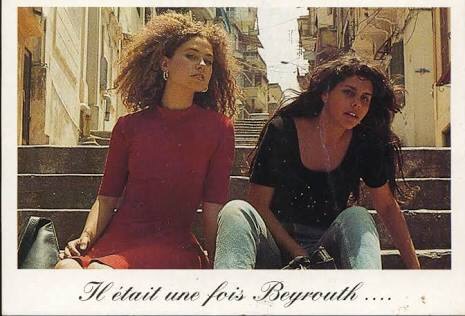
The only other movie I had the time to see was Once Upon a Time in Beirut: The Story of a Star by Jocelyne Saab, a complex interweaving of history and history of Lebanese cinema through the personal and fictional gaze of the director. A mesmerizing, tragic and fun film composed by images taken from Lebanese and not Lebanese movies of the first half of the 20th century. The icing on the cake was a Q & A with Saab herself via Skype.
Festivalscope is giving access, till mid April, to some of the documentaries screened at this year edition of Cinéma du réel, one of the most prestigious festivals dedicated to non-fiction cinema. (You can learn more here)
I grabbed the chance and last night I watched A Yangtze Landscape, a movie directed, photographed and edited by Xu Xin. IMDB describes it as follows:
A Yangtze Landscape utilizes a non-narrative style, setting off from the Yangtze’s marine port Shanghai, filming all the way to the Yangtze River’s source, Qinghai/Tibet – filming a total distance of thousands of kilometers. Experimental music and noise recorded live on scene are used in post-production, painstakingly paired with relatively independent visuals, creating a magically realistic atmosphere contrasted with people seeming to be ‘decorative figures’ right out of traditional Chinese landscape scrolls.
The documentary is composed of stunning scenary rendered in beautiful digital black & white, particularly the night landscapes are of almost pictorial quality, punctuated by scenes of people inhabiting the areas along the river, mostly areas ruined or emptied by the industrial and urban changes of the last decades. These parts with people are, in my opinion, performative, in a sense that the people seen, most of them poors, with mental problems or homeless, are performing themselves and their daily routine in front and for the camera. A Yangtze Landscape is for this reason a very partial film that focuses its attention on certain edges of Chinese society, I’m pretty sure that most of the comunities living near or on the banks of the Yangtze river are very different from the few exceptional individuals shown in the movie. Yet this is not a demerit of the film, a certain quality of artificiality so to speak, or performance as I have called it above, is very obviously present from the first minutes of the documentary, and the fact that it’s shot in its entirety in black & white is after all the biggest hint of its poetic aspiration and quality. Also on a technical side, it is worth noticing how in more than 2 hours and half there’s never a camera movement and a zoom in or out, the frame never moves, everything is crystallized and done by a very crafted editing, we have the camera “moving” only in the scenes where it is positioned on a ship floating on the river.
The movie has some similarity in its basic concept and structure to P. J. Sniadecki’s The Iron Ministry, if I’m not wrong, the american director is among the people thanked at the end of the documentary. There the camera followed the lives of Chinese people commuting by train from one part of the country to the other, from the lower to the upper class, here Xu Xin directs his gaze from the port of Shanghai to its source in Tibet.
We see and learn through intertitles, there’s no narration, about abandoned old villages, a bridge where every year many people commit suicide and other disasters and accidents that have happened near or on the river in the last 5 or 10 years.
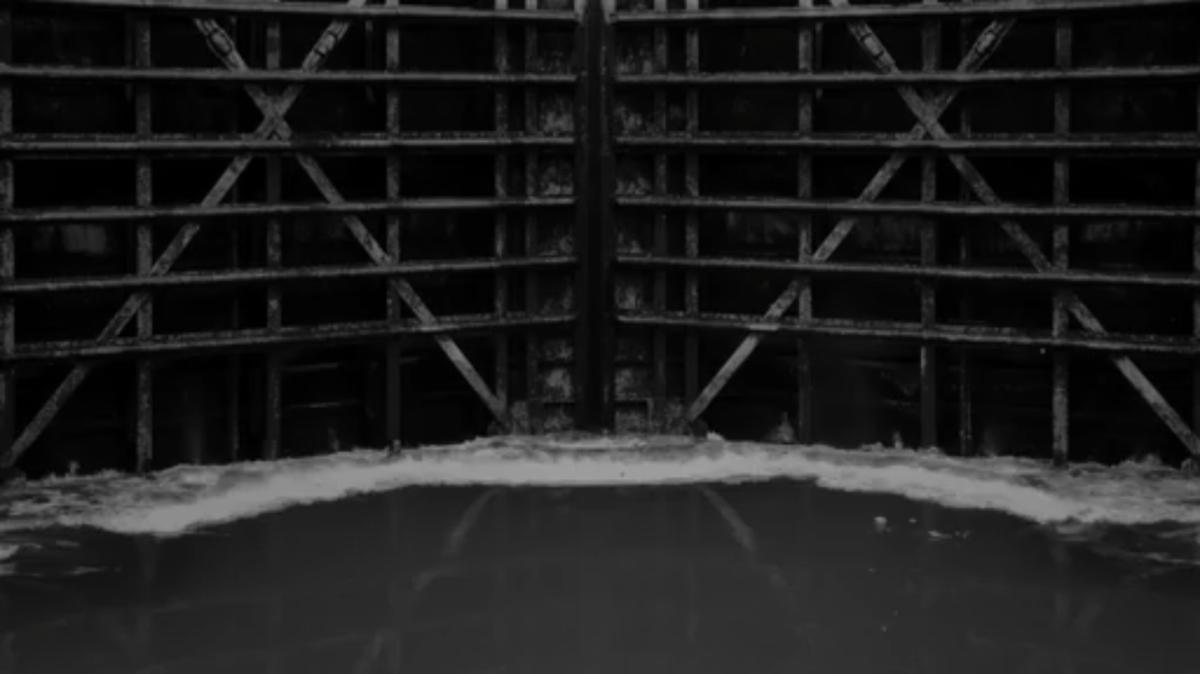
The only witness of all these happenings seems to be the landscape, it is almost useless to say it, but the real protagonist of the movie is the landscape, a space where natural, human and industrial histories/stories intermingle and merge.
Interesting and well crafted as it is, I nonetheless feel that something is missing from it, to denounce and criticize certain aspects of contemporary Chinese society, and not only China, is something that absolutely must be done, but now that the country is in the spotlight internationally the risk is to look too redundant. For instance, towards the end of the movie there’s a long part all dedicated to a couple of homeless, their shacks and their dogs, we can see them on the foreground sitting in an old sofa or wandering among ruins with the ultramodern city and its skyscrapers on the background. The image is beautiful in its contrast, and even if it possesses a degree of truth, it ends up being trite and obvious, weakening the potential of the movie. While I like the general style, again the black & white is pictorial and the editing is perfect, it must be said that sometimes the film looks too “beautiful” and the image too “clean” without being subversive. The parts that resonate with me the most are those where Xu Xin explores the aesthetics of documentary to its limits. The aforementioned night scenes of the cities lights along the river, shiny but empty jewel boxes, or those at the river locks, slow and almost endless images of the water level, the ships raising and the gates opening, paired with a cacophonous soundscape made of squeaking noises and experimental music.
2016 has been a busy year and unfortunately, and for various reasons (one of them being the place where I live, Japan), I haven’t had the chance to see as many new documentaries as I wanted to. On the other hand though, having had access to many documentaries produced in Taiwan through Taiwan Docs, for a couple of months I binge-watched the non-fiction movies produced in the island in 2016 (and 2015), and it was a revelation. Not only it allowed me to discover and explore the complex sociopolitical situation of the area and its recent history, but luckily I also stumbled upon a couple of formally challenging films.
That being said, I can’t really miss what recently has become a sort of yearly custom, so here is my list of the best documentaries I’ve seen in 2016, some of them are from 2015, but released internationally, or at least in Japan, only this year. At the end I’ve also compiled a short list of the best (re)discoveries of 2016. (disclaimer: best should here be understood as “favourite” of course)
8. Quemoy (Chiu Yu-nan)
“Quemoy, the islands adjacent to Mainland, used to be the frontier between Taiwan and China. However, it opens its border for the cross-strait exchanges. The film shows traces of Quemoy people in different generations and builds up a picture of complicated national identity in the boundary island.”
A relatively short movie (just 45′) whose main appealing point is its depiction of the complex geopolitical situation of the area.
7. Into the Inferno (Werner Herzog)
6. Lo and Behold, Reveries of the Connected World (Werner Herzog)
“This boiling mass is just monumentally indifferent to scurrying roaches, retarded reptiles and vapid humans alike.”
Both movies are pure Herzog, for better or for worse, I personally adore the man, but the risk the great German director is running in his recent documentaries – especially now in an era when the social media is so pervasive and his persona in the mediascape is sort of overexposed – is that of becoming prisoner of the image forged in almost 50 years of incredible career.
Be that as it may, if you like Herzog, these two documentaries released in 2016 are very enjoyable, Lo and Behold is a better work in my opinion, or at least more appealing to me, and not necessarily for its subject, more for its rhythm and editing. Into the Inferno in some points wanders a bit too much, the segment set in North Korea for instance, albeit fascinating for the unique insights on the country, felt too much like a long digression.
5. Further Beyond
An interesting experiment in meta-documentary and a non banal reflection of what identity and its construction through images and storytelling is. The movie is maybe a bit excessive in its meandering here and there, but some passages are pure digital beauty.
4. A Room of Her Own: Rei Naito and Light (Yuko Nakamura)
Graced by outstanding sound design and soundtrack, the movie captures and beautifully embodies the sense of fragility and ephemerality of life seen through the art of Naito Rei. But A Room of her Own is interesting on many other different levels, partly experiment in non-fiction, partly personal documentary – what brought Nakamura to approach Naito was the severe illness of her mother – and partly a work that explores the intangibility of life, the movie is a very refreshing work of non-fiction, especially when considered in the context of Japanese contemporary documentary. I wish the last part, when four women are gathered on Teshima island, would have been longer. One last note on the photography, in tone with the themes explored by the movie, is really one of the most accomplished aspects of it.
3. 15 Corners of the World (Zuzanna Solakiewicz)
I cheated, I know it’s a movie from 2014, but I watched it this year and it made a big impression on me, so I decided to include it in my list anyway.
15 Corners of the World is a mesmerizing and hypnotic documentary about the Polish electronic-music pioneer Eugeniusz Rudnik and, more importantly, about the visualisazion of sound and its materiality. An incredible visual and auditory experience.
2. Forgetting Vietnam
The latest visual work from Trinh Minh-ha, I’ve written more about the movie here.
1. 3 Island (Lin Hsin-i)
A work that creates a complex and experimental mapping of three distinct geographical Asian areas, interweaving poetry, abstract imagining, historical data and archival footage. If you want, you can read more here.
(re)discoveries (in no particular order)
Asia is One (NDU), read more here.
On the Road: A Document (Tsuchimoto Noriaki, 1964), read more here.
Hospital ( Frederick Wiseman, 1970)
Broadway by Light (William Klein, 19589
The Festival Pan-African of Algiers (William Klein, 1969)
You must be logged in to post a comment.