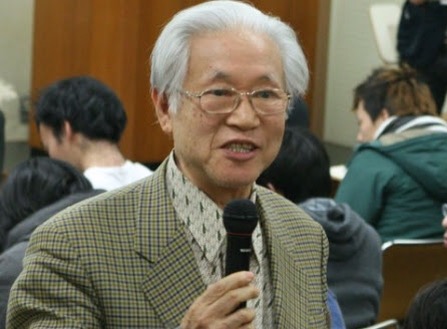
Satō Tadao is without any doubt one of the most renowed film critics and theorists living and working in Japan today with a career spanning more than 50 years, a scholar also known and respected in the West through the translations of his writing and some of his books. In the last year Sight & Sound poll – the greatest documentaries of all time, Satō was one of the voters, here are his picks:
Nanook of the North (1922)
Robert Flaherty
The Effects of the Atomic Bomb on Hiroshima and Nagasaki (1946)
Chozo Obata, Sueo Ito, Masao Yamanaka, Dairokuro Okuyama
An interesting list through which I could discover some works I had never heard about before like Fatherless and Echigo Okumiomote, it was also a pleasant surprise to see listed, among some “classics” of Japanese non-fiction cinema such as Minamata:The Victims and Their World or The Emperor’s Naked Army Marches, Kabuki-yakusha Kataoka Nizaemon, a work by Haneda Sumiko, a director I’m very fond of and a filmmaker who plays an important role in the history of Japanese documentary.
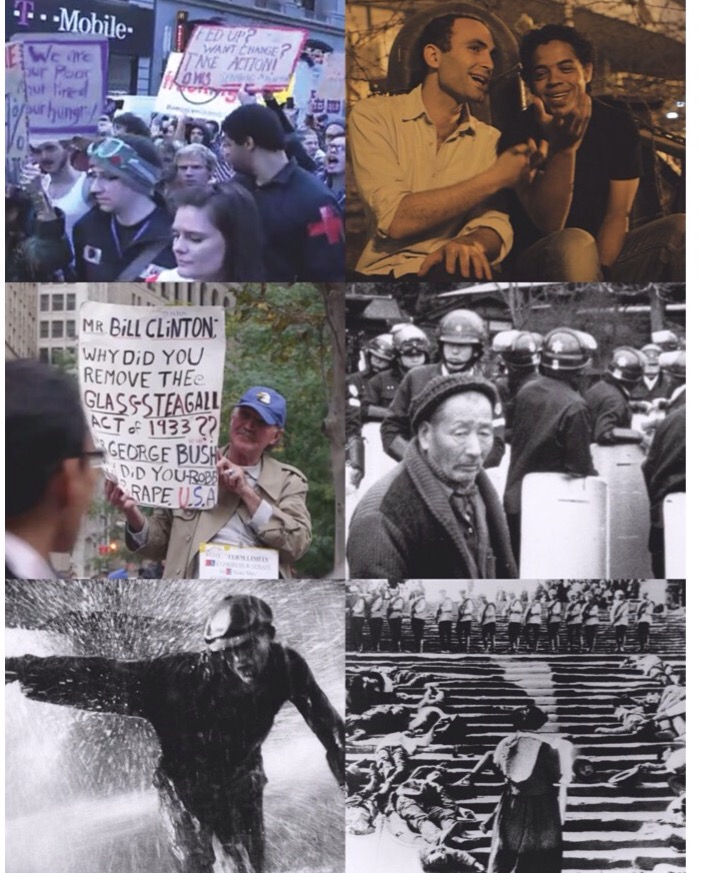
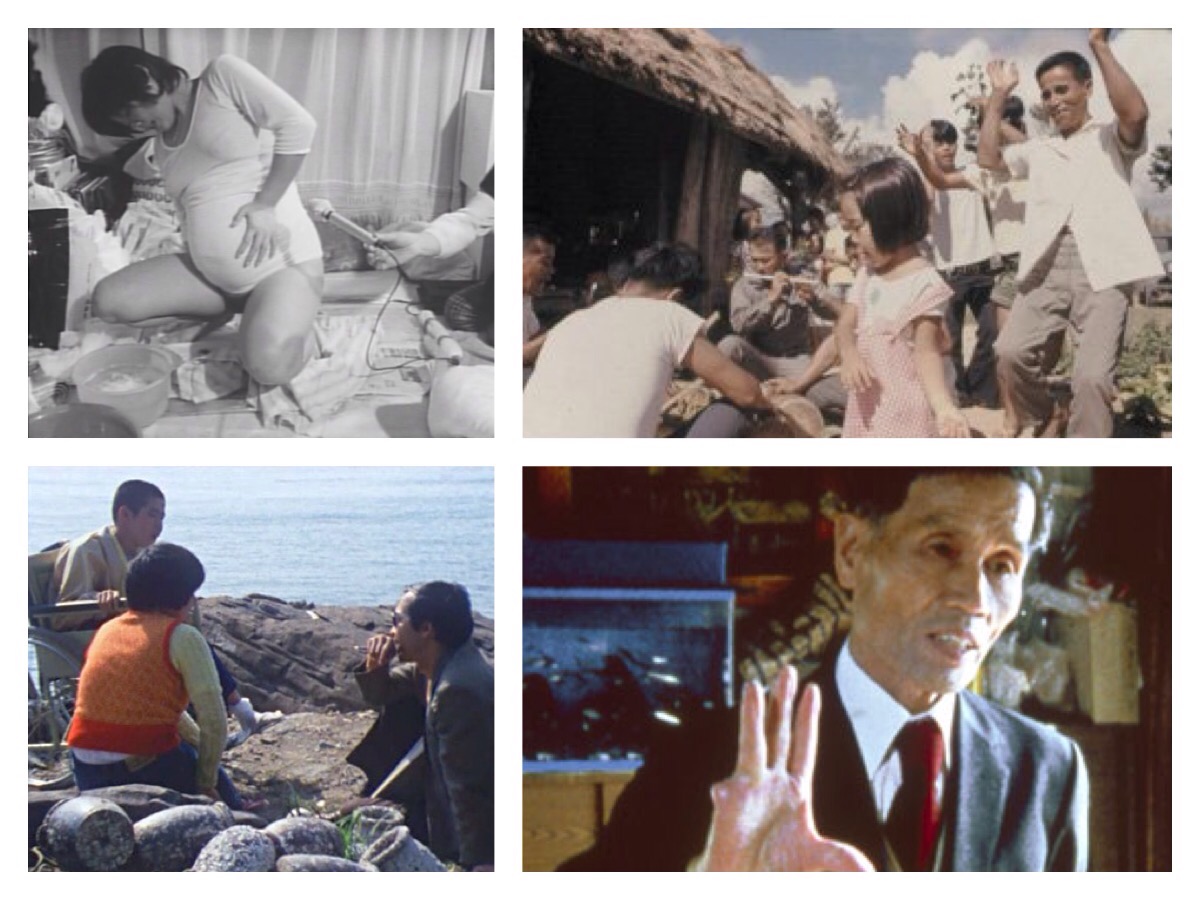
On a not-so-related-note, in the March issue of Sight & Sound a piece on Sergei Loznitsa’s Maidan by Nick Bradshaw opens with a collage of stills from different documentaries on anti-government protests. Among them a still of Sanrizuka: Heta Village (Ogawa Pro, 1973), a nice sign that Japanese documentary is slowly infiltrating (again?) in the international cinematic discourse, at least this is my hope.
Kamei Fumio’s Fighting Soldiers is a defining work in the history of Japanese documentary, possibly one of the first non-fiction works made in the archipelago to have a very distinctive authorial touch, to the extent that it is often referred to as the “first Japanese documentary”.
In 1939, on behalf of Toho (PCL had changed its name to Toho just three years earlier), Kamei and cameraman Miki Shigeru went to China to make a propaganda documentary, or rather a war record, about the Japanese Imperial troops involved in the ongoing invasion of Manchuria. However, Kamei made something very different from what the government and the army expected, and the film was immediately banned from release. What the authorities particularly disliked was the portrayal of the soldiers, and also the depiction of Chinese casualties. As the head of the Japanese Metropolitan Police Board famously remarked at an advance screening: “These aren’t fighting soldiers, they’re tired soldiers!” .
I’m going to focus on the first 5 minutes of the film, one of my favourite openings in Japanese cinema and a powerful example of Kamei’s use of montage, a “method of philosophical expression” that the Japanese director so beautifully explained in his book Takakau eiga:
I think documentary film must be like haiku. If the viewer observes something with shot A, then shot B must produce the space for the viewers to freely develop their own creative possibilities. Shot B, therefore, demands a new observation by the viewer. Shot B is what i call the MA of documentary film. (quote from “The Flash of Capital” Eric Cazdyn, pag. 64)
Kamei was obviously and directly influenced by Soviet cinema and, in particular, Soviet montage theory, a technique he mastered while studying film in Leningrad (now St Petersburg) in the early 1930s.
You can watch the opening here:
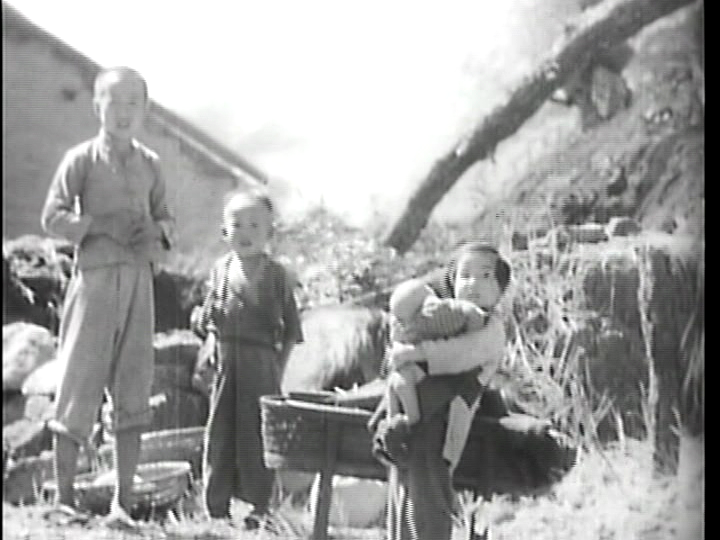
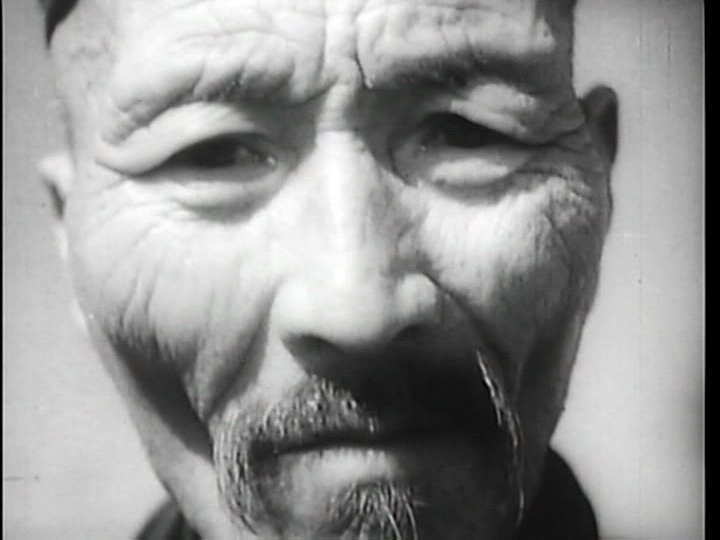
All the following stills are taken from the first five minutes of Fighting Soldiers and are here displayed in chronological order:
(1)
(2)
After the opening credits, the film begins with an old man praying in front of a shrine, images of destroyed houses, shots of children staring at the camera (1) and a powerful close-up of the same old man (2).
(3)
(4)
(5)
(6)
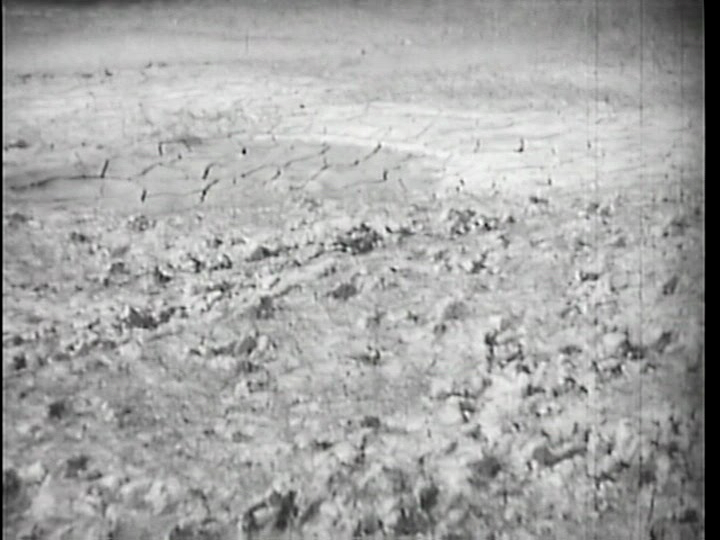
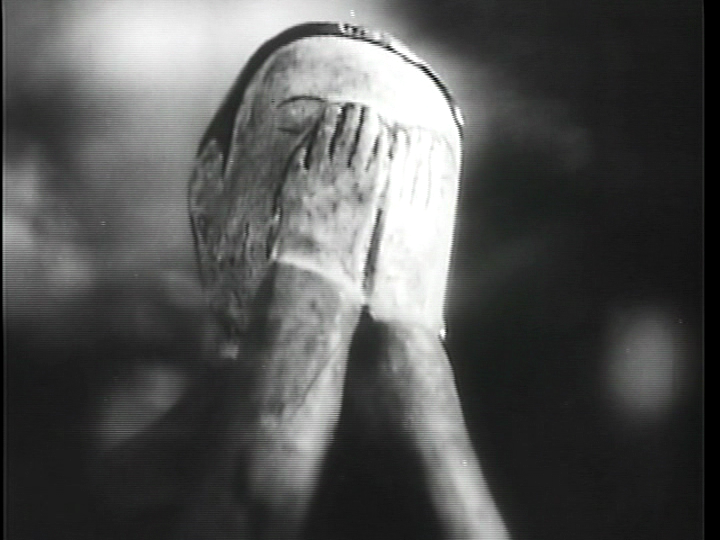
In the next scene, a group of people carrying all their belongings, walk away from the destroyed town (3) through a barren land (4), soon after, the movie cuts to a close-up of a small statue hands on its face, almost frozen in a scream of despair (5). Next we see the same statue from a different perspective with the expanse of dry land on its background (6).
(7)
(8)
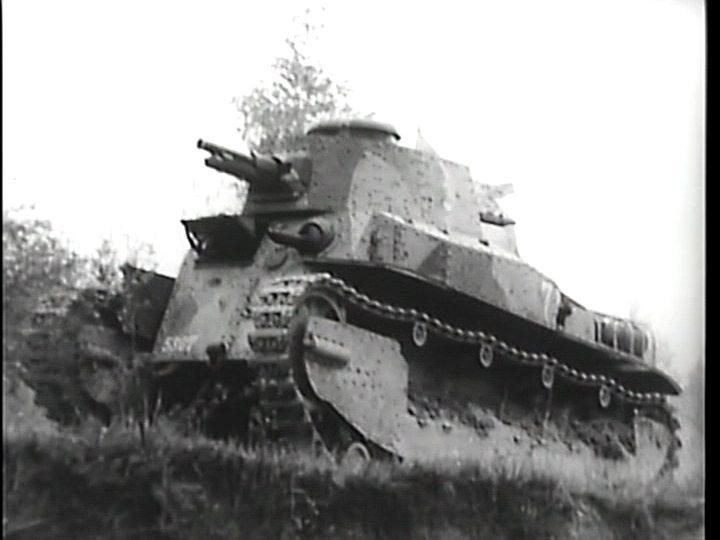
In the next shot we see the departure (or arrival) of Japanese tanks (7) from the land they conquered and destroyed, these war vehicles are seen from a medium distance. Next, in one of the most stunning shots and cuts in the history of Japanese documentary, the point of view shifts and we are now on a tank moving through the ruins of the bombed city. It’s a short tracking shot, and there’s also an amazing close-up of a Japanese flag flapping from the tank, but what we see in the background of the flag is the village reduced to rubble (8).
As a filmmaker, Kamei had the philosophical necessity, paradoxically even though he was making what is still considered a propaganda documentary, to bring to the fore what is usually relegated to the background: the suffering, the grief, the destruction and the loss that every military conflict brings. Because of this inner conflict/dichotomy, Fighting Soldiers is still hated or loved by many viewers and critics, and the film is considered by many critics and scholars to be both a cinematic miracle and an enigma. To make matters worse, in the years that followed, Kamei himself would often repeat and write that what he had made was in no way an anti-war film.
Problematic films, more than perfect ones, encourage us to think about and engage with their themes, they do not offer easy and ready-made points of view or solutions, they keep coming back to us, view after view, challenging our vision. Fighting Soldiers is one of these films, and one of the best to come out of the world of Japanese non-fiction cinema.
It’s a real shame that the film isn’t as well known in the West and that, apart from a cheap Japanese DVD, we don’t have a proper DVD or BD release.
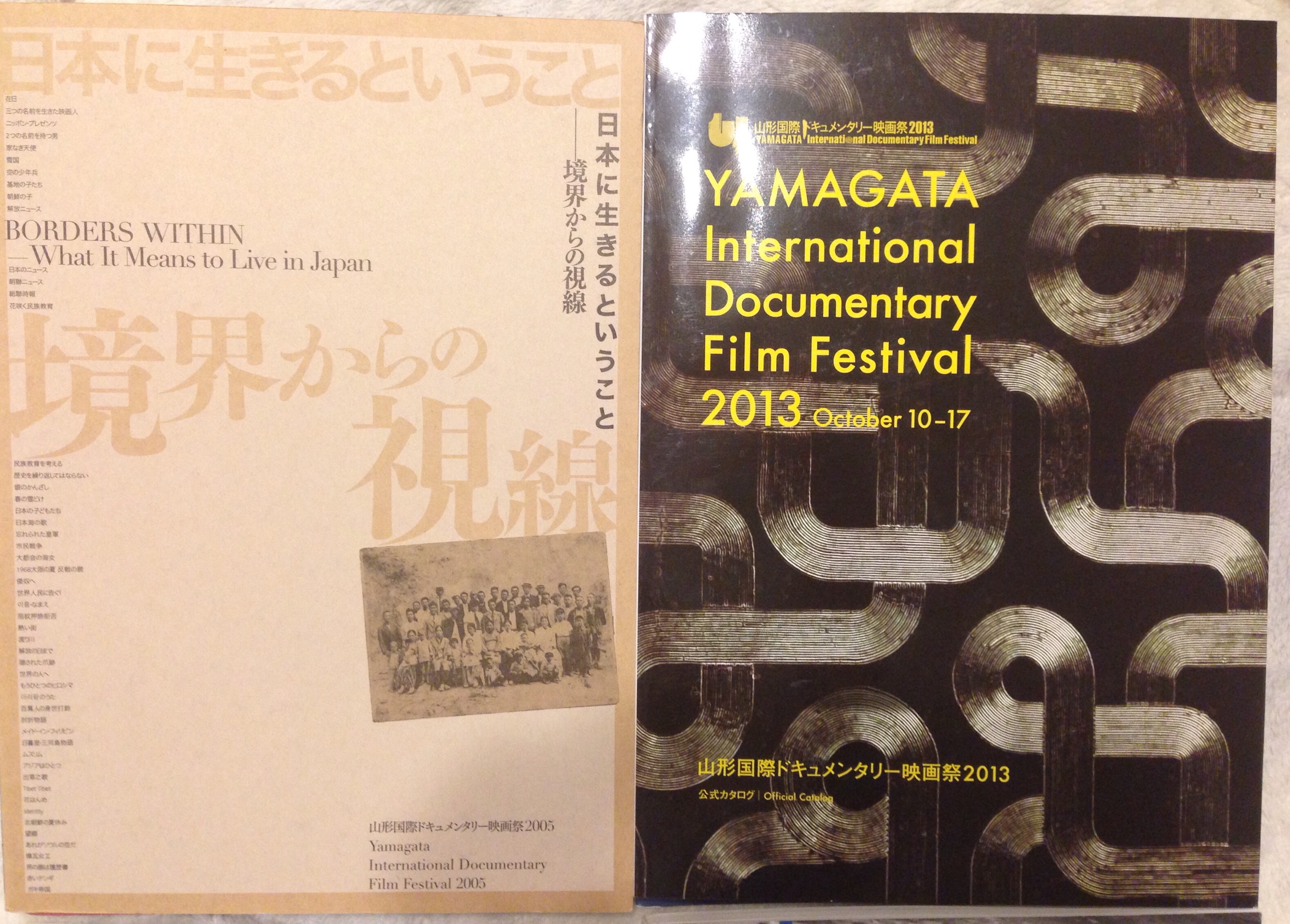
A lighter and more “visual” post today, some photos of the Yamagata International Documentary Film Festival’s catalogues I have at home:
YIDFF 1993 (Japanese documentaries of the 60s) and YIDFF 2003 (Ryūkyū Reflections Nexus of Borders)
YIDFF 1995 (Japanese documentaries of the 70s) and YIDFF 1997 (Japanese documentaries of the 80s and beyond)
YIDFF 2005 (Borders Within What It Means to Live in Japan) and YIDFF 2013
They’re in English and are an essential resource if you’re interested in Japanese cinema or documentary in general. For me personally “Ryūkyū Reflections Nexus of Borders” was a discovery: non-fiction films and the history of Okinawa, a place where all the contradictions and problematics arising from Japan-as-a-state and its relationship with other nations and its own inner borders are embodied and magnified. Or as Higashi Yoichi once said talking about his documentary Okinawa Islands (1969) Continue reading “Japanese documentary-related catalogues”
As a reminder that you still have a month to join the poll “Best 10 Japanese documentaries of a time” I’ve put together my list. I left out many good and inspiring documentaries made in recent years (Genpin, No Man’s Zone, Flashback Memories and others) and I’ve cheated twice, but anyway:
Onikko (鬼ッ子 闘う青年労働者の記録, 1969) and
Motoshinkakarannu (沖縄エロス外伝 モトシンカカランヌー 1971) by NDU/Nunokawa Tetsurō
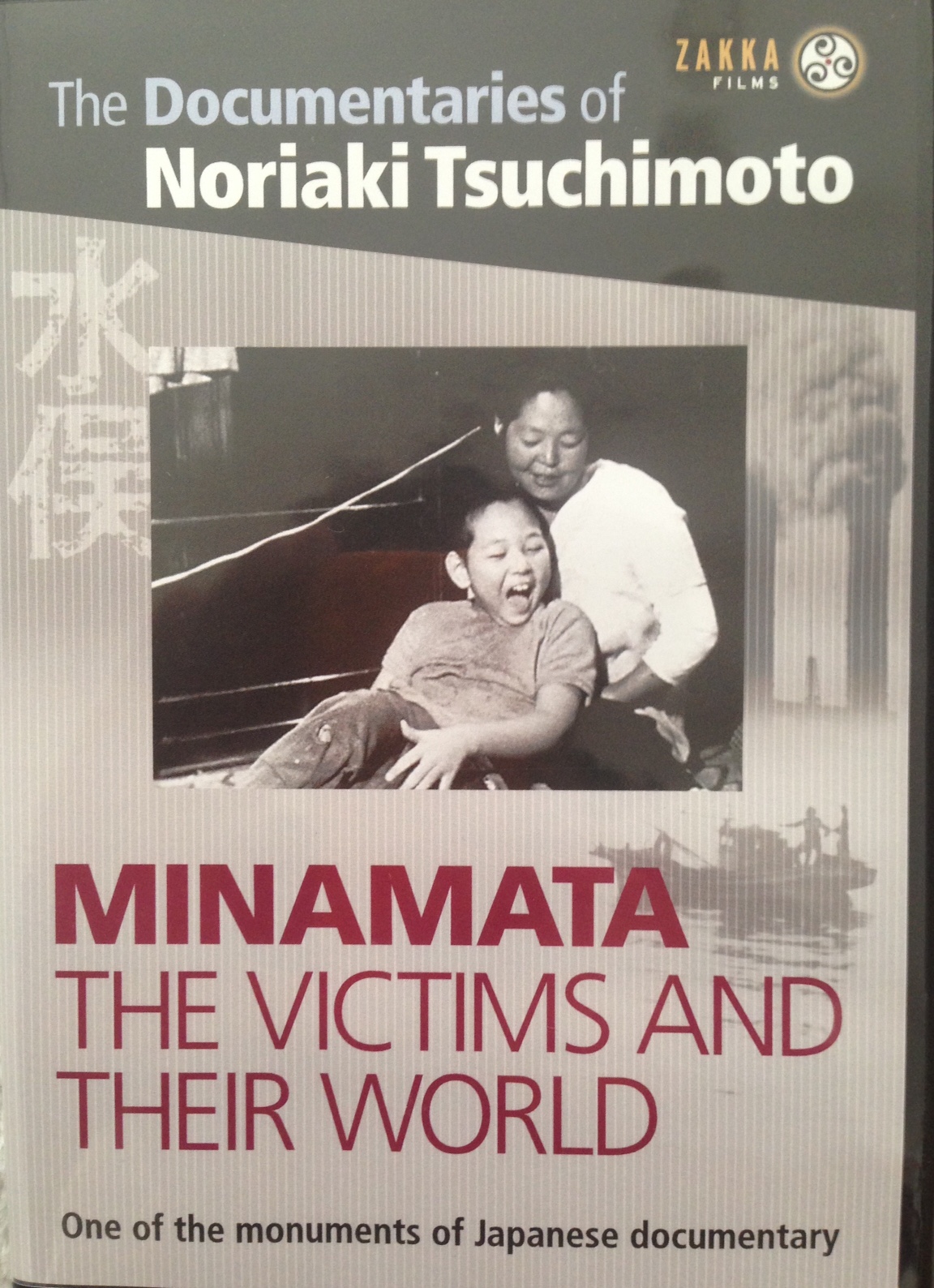
Minamata: The Victims and Their World (水俣 患者さんとその世界, 1971 Tsuchimoto Noriaki)
Sanrizuka: Heta Village (三里塚 辺田部落,1973) and
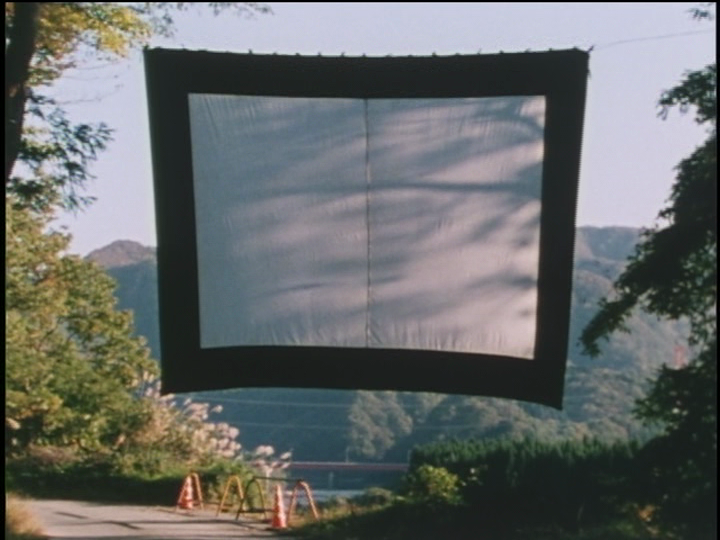
Magino Village – A Tale / The Sundial Carved With A Thousand Years of Notches (1000年刻みの日時計 牧野村物語, 1986) by Ogawa Pro
Song of the Akamata–The life histories of the islanders, Komi, Iriomote Islands, Okinawa (海南小記序説・アカマタの歌-西表・古見, 1973 Kitamura Minao)
Extreme Private Eros 1974 Love Song (極私的エロス・恋歌1974, 1974 Hara Kazuo)
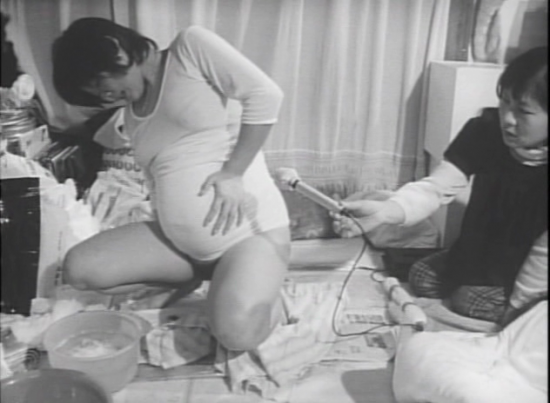
The Cherry Tree with Gray Blossoms (薄墨の桜, 1977 Haneda Sumiko)
Disclaimer: as I wrote few days back on twitter, I’ll kick off 2015 with a little experiment. I’ve translated (and partly rewritten) in English my post on Minamata: The Victims and their World. As English is my second language, inevitably some subtleties and nuances of the original Italian piece are probably lost. Feedback and/or suggestions are welcome.
Minamata: The Victims and Their World (水俣 患者さんとその世界, 1971)
Director: Tsuchimoto Noriaki
Production: Higashi Productions
Producer: Takagi Ryutarō
Camera: Ōtsu Kōshirō
Editor: Tsuchimoto Noriaki, Sekizawa Takako
Year: 1971
Links: review by Cathy Munroe Hotes, DVD by Zakka Films
Tsuchimoto Noriaki is one of the major figures in Japanese documentary history, and although he also made works about Afghanistan, road construction and other diverse topics, he is best known for the series made in more than 30 years about the victims of Minamata disease. Tsuchimoto first came into contact with the reality of Minamata, a city located in Kumamoto prefecture, in 1965 when he was commissioned to make a short documentary for television, Minamata no kodomo wa ikiteiru. After this experience, when approaching the victims was not as easy as one might expect, he went back to Minamata in 1970 and started to film the lives of the residents in a different manner and to uncover a Pandora’s box of horrors. Minamata had been the scene of one of the largest poisonings perpetrated by man to himself and to the environment, and the city’s name will remain forever linked to the chemical company Chisso, which from 1932 to 1968 polluted the Shiranui Sea and the Minamata Bay with huge quantities of mercury. The metal entered the food chain and caused what is now called Minamata disease (Minamata-byō), a neurological syndrome that was first discovered in 1956. Over the years, the disease has affected more than ten thousand people and killed more than two thousand, but these are just the officially recognized, numbers; the damages and effects of this crime sadly are not always quantifiable or legally provable, and there have been accusations of collusion between the Japanese government and the Chisso corporation to cover up the disaster.
Structurally Minamata: The Victims and Their World consists of a series of interviews, conducted by Tsuchimoto himself, with the victims and relatives of those who had been affected by the disease. These interviews reveal the daily lives of the inhabitants damaged by the poisoning: their relationship with the sea, the sickness and the painful memory of the deceased. The interview scenes are interspersed with moments in the lives of fishermen, their habits and traditions, and meetings and rallies in the streets to protest Chisso and the government. It is worth pointing out that the crime perpetrated by Chisso is something inherent in the capitalist system, a tragic result of the dynamics of exploitation of poor and marginal areas and not merely an incident in the course of normal industrial activities.
As a documentary director, Tsuchimoto had to face two big problems, (re)gaining the trust of the people whose lives and tragedies were often spectacularized and exploited by the media, as he experienced firsthand when making the aforementioned TV documentary, and secondly deconstructing the contrasting feelings of hate and gratitude towards Chisso that were present in many residents, even unconsciously. Tsuchimoto was well aware of all these contradictions, and one of his major achievements was his ability to achieve a balance between the anger with which he was unmasking the dark side of modernization in Minamata, and the human touch with which he always managed to present the victims and give them dignity.
We are introduced to the world of Minamata by a series of information about the poisoning and the Chisso corporation, displayed at the beginning of the documentary. These words substitute for the initial narration, the voice-of-god so often used in mainstream documentaries, and are soon followed by the first images of the area, the lapping of the water and a fishing boat in the sea. This is a highly symbolic start, as the water that dispenses life to the fishing community and upon which the community’s life is based, is the same water that, polluted by mercury, destroys their lives. The lack of sync between the image and the sound, due to the lack of the right technology, was very common in Japanese independent documentary of the time; most of Ogawa Pro’s works of the Sanrizuka period, for instance, were affected by the same “problem”. This technical limitation forced directors, including Tsuchimoto, to combine images and sound in highly creative ways. The words and cries of the victims and of their families are often overlapped with images showing the tragic effects of mercury poisoning upon the residents of Minamata, in the fishing scenes that often punctuate the documentary, a beautiful and almost ancient music contributes to creating an epic atmosphere that envelops the lives of these fishing communities, the most impressive and famous of these shots depict an elderly man, who has lost his wife because of the disease, fishing for octopi.
As a viewer watching the movie at the beginning of the 21st century, it is also worth noting that the images in black and white and the aforementioned lack of sync, pose as a further filter for the viewer, allowing Tsuchimoto to successfully avoid spectacularization of grief and the subsequent exploitation of the lives of the victims. We still see sick people and children whose lives were completely ruined, particularly touching is when in a series of harrowing scenes we are introduced to a young boy, who is drooling, staggering, and unable to move and speak freely. But the way the camera follows him and presents his and his family’s grief, is a form of respect that reveals his dignity as a human being. This attention towards the weak and the other is one of the highest achievements of Tsuchimoto’s body of work, it is a cinematic touch that serves also as a very powerful ethical statement on the meaning of being human, an approach that will reach a new level and culmination in The Shiranui Sea (1975), another documentary dedicated to the victims of Minamata.
In the second part of the documentary, we follow the journey of the victims and their families to Osaka, where the Chisso biannual shareholders meeting took place in 1970. This trip to the second largest city in Japan is also important because Osaka is the place that in the same year (1970) housed the International Exposition. Together with the Tokyo Olympics in 1964, this international event helped to reposition Japan in the international political map and in doing so marked the complete admission of Japan to modernity and the Western world. Exposing the dark side of modernization, Tsuchimoto is thus making a very powerful political statement about the development of Japanese society and modern societies in general, revealing the unavoidable part maudite.
The meeting between the leaders of Chisso corporation and the Minamata representatives almost resulted in a riot, with a sort of guerilla filmmaking reminiscent of the cacophony of Sanrizuka and the student protests, Tsuchimoto and director of photography Ōtsu Kōshirō show us the people of Minamata invading the stage and surrounding the CEO and his staff as if symbolically destroying the verticality between the zaibatsu and the people. Again here, as in the Sanrizuka documentaries of Ogawa Pro of the same time, the soul of the protest was feminine, and the ones who verbally confronted the Chisso CEO more than anyone else were in fact women and mothers driven by rage and grief.
The opportunities to see Japanese documentaries outside of the archipelago are really few, and usually restricted to film festivals, especially when these works were shot in 16mm or 35mm. It is thus noteworthy that Minamata: The Victims and Their World, together with The Shiranui Sea and other Tsuchimoto’s works, is available on DVD with English subtitles through the dedicated work of independent label Zakka Films.
(Special thanks to Ono Seiko and Tsuchimoto Motoko)
If you’re a movie critic, a movie fan, a scholar or just a Japanese cinema lover, I’d like to hear your opinion about Japanese documentary/non-fiction. I know that very few works are available on DVD (even in Japan) or with English subtitles, and I’m also aware that the only chance to see them is at festivals, nonetheless I would really like to know which are your favourite Japanese documentaries of all time, so please name your best 10 (or 5)!
It doesn’t matter if you haven’t seen so many or if you only saw documentaries produced in Japan over the last two/three decades. One of the aims of this poll is also to discover which are the docs usually watched (or available to watch) by a non-Japanese audience.
You can leave a comment on this post or send an email to: matteojpjp at gmail.com, of course you’re free to add some lines of explanation and your name, if you wish. The deadline is February 6th. The results will be published on this blog at the end of February, so you have plenty of time, please spread the word! Thank you.
Questo blog nasce dall’esigenza di creare un luogo dove poter scrivere o anche semplicemente buttar giù pensieri, riflessioni o segnalazioni riguardo al mondo del documentario in Giappone, dalle origini ai nostri giorni. Un luogo che mi dia la possibilità quindi di lasciare una traccia concreta, perquanto in rete, delle mie ricerche e delle mie esplorazioni sul e nel mondo del cinema di non-fiction nipponico. L’auspicio è che questo blog possa magari generare attenzione e perchè no, anche interesse, per un mondo cinematografico certamente minoritario ma meritevole, almeno secondo il sottoscritto, di un’esposizione maggiore anche fra gli studiosi del cinema.








 Asian Docs
You must be logged in to post a comment.