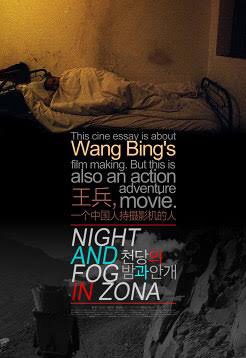
Night and Fog in Zona (Jung Sung-il, 2015)

I’m reposting a slightly edited version of a piece I wrote 8 years ago, an article about Night and Fog in Zona, directed by South Korean film critic, Jung Sung-il.

It’s always fascinating when cinema reflects on cinema, and even more so when a documentary’s subject is director Wang Bing filming one of his movies. Night and Fog in Zona is a documentary, or better yet a cine-essay as it is called by its author: South Korean critic turned director Jeong Sung-il, who follows the renowned Chinese filmmaker throughout a whole winter while working on two of his projects, ‘Til Madness Do Us Part and a sequel to his Three Sisters.

The “coming” of Wang Bing has been, and still is, one of the most important events that occurred in the world of cinema in the last 15 years: not only did he contribute asserting the aesthetic value of digital filmmaking, but with his documentaries he also brought an auroral and liberating gaze upon the world.
Jung Sung-il had the same kind of dawning experience watching West of the Tracks in 2001.

“When I was at the Rotterdam Film Festival I bought a ticket for a movie 9 hours and 10 minutes long, I was surprised by its length but went anyway. It begins with a train in movement and it reminded me of the first movie ever made by the Lumière brothers in 1895. Watching Wang Bing’s work I had the feeling of witnessing the cinema of 21st Century just like the audience in 1895 witnessed its birth.”

There’s no narration in Night and Fog in Zona, everything is explained with intertitles: geographical coordinates, places where Wang Bing is headed to, his plans. Sometimes these intertitles also work as a poetic comment to the following scene.
The only time when Wang speaks directly to the camera is in an interview-like fashion at the very beginning of the film, a sequence that works as a brief introduction to his world and his filmmaking style. A few minutes where, among other things, he talks about his filmmaking process, truth in cinema, the impossibility of conveying the totality, his projects, Chinese history and peasants, and the similar cultural background his generation shares with Andrei Tarkovsky.

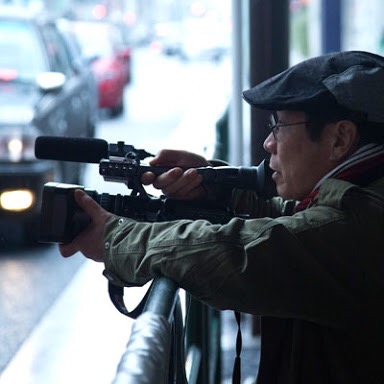
In 235 minutes Night and Fog in Zona illuminates a great deal about Wang Bing’s approach to filmmaking. Among other things, we learn about his habit of taking photos of the people he films, his relationship with them, and, most fascinating of all, about his “interview technique”: it’s compelling to see how he is able to seamlessly switch from “chatting with” to “shooting at” his subjects, as if there was no real break between the two actions.
It’s also interesting to witness how “Wang searches for the ‘strategic point’, the single position from which all of the actions in the scene can be recorded”. This is a fundamental feature of his filmmaking, as the relationship between the camera and the people and things around it determines both the movie’s sense of space and how space itself is conveyed in his works. And space, together with time/duration, is one of the most crucial elements of his cinema.
Another revelation of Night and Fog in Zona is to discover how Wang Bing is a director whose involvement with the subjects of his movies is deeper than we might think from just watching his works: when the camera is off, he’s often seen giving practical help and advices to his “protagonists”.

Particularly fascinating, from a movie making point of view, is a scene where the director and his two collaborators have an evening meeting to watch the footage shot during the day at the Asylum — footage that would eventually become ‘Til Madness Do Us Part. A few but meaningful minutes where he explains the reasons behind his use of long takes, why avoiding telephoto lens, and other rules to follow while shooting, so that the final work can gain a certain consistency, a certain style.
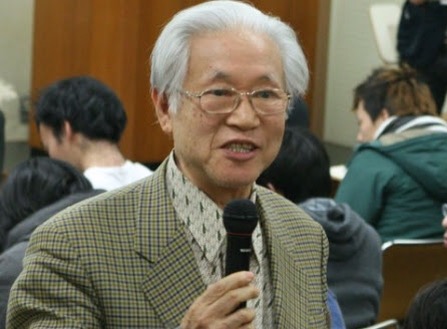
However, the best quality of Night and Fog in Zona is that it’s not only a documentary about Wang Bing shooting his movies, but it’s also shot and conceived — with all the due differences – just like one of Wang’s documentaries. In terms of style, it mirrors Wang Bing’s filmmaking: long takes, no narration, abstract landscapes and experimental music, everything put together to explore his filmmaking and, in a broader sense, contemporary China, a country gazed upon, as in most of Wang Bing’s works themselves, from a peripheral and rural point of view.
One of the best examples of this mirroring process is to be found towards the beginning of the film, when the Chinese director and his collaborators move to the Yunnan province.

A very long sequence shot from the car everyone is on, that shows us streets, mountains, plains, lights and tunnels almost melting together. A scene almost 10 minute long, matched with a hypnotic and minimalistic music interacting with the abstract landscape captured by the camera.
We encounter these sort of sequences a couple of times during the movie: another powerful one, shown in slow motion, is inside the asylum. Bing is sleeping and ten or so patients are sitting and moving around him. What gives Night and Fog in Zona a further experimental and even meta-filmic touch are two scenes, placed at the beginning and at the end of the movie, that show a Korean girl dressed in red sitting in a theater and making a phone call.
The only flaws to be found in this documentary, an otherwise almost perfect work, are some editing choices, in some cases too abrupt, and the pace of the intertitles, definitely too fast. But that’s just splitting hairs, Night and Fog in Zona is definitely one of the best non-fiction movies seen this year, not only for its fascinating subject, but also for its ability to resonate with Wang Bing’s own style at a deep and aesthetic level.

The Emperor’s Naked Army Marches On (Hara Kazuo) out on Blu-ray and DVD

The UK-based label Second Run has just released a Blu-ray and DVD of one of the most respected and internationally known Japanese documentaries, The Emperor’s Naked Army Marches On, directed by Hara Kazuo in 1987. The movie has often appeared in best-documentaries lists around the web and in prestigious magazines as well, it was at number 23 of the Sight & Sound’s best documentaries of all time, a list compiled by critics in 2014.

Here the description of the movie and the extras included in the new release:

Presented from a new director-approved HD remaster, Second Run present one of the most renowned, ground-breaking and inspirational documentaries of the past half-century.

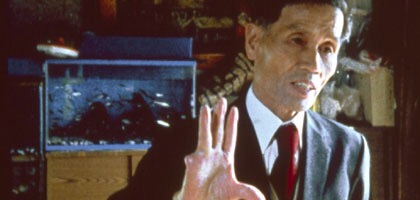
Conceived by Shôhei Imamura, Kazuo Hara’s infamous and audacious documentary follows Kenzo Okuzaki, an ageing Japanese WW2 veteran, on a mission to uncover the truth about atrocities committed as the war in the Pacific reached its bloody end. Ultimately, Okuzaki blames Japan’s Emperor Hirohito himself for these barbarities, and his obsessive pursuit of those he deems responsible soon escalates. Willing to confront the taboos of Japanese society in his fanatical quest for justice, Okuzaki is driven to unsettling acts of violence.

Harrowing and extraordinarily powerful, Hara’s film forces us to face the disturbing realities of war and, crucially, to question the complicity between filmmaker, subject and audience.

Our region-free Blu-ray and DVD editions also features a new interview with director Kazuo Hara, shot by the filmmaker especially for this release; the 2018 Open City Documentary Film Festival Masterclass with Hara and a booklet featuring writing by film historians Tony Rayns, Jason Wood and Abé Mark Nornes.

A great deal has been said and written about the documentary and about Hara himself, but if you want to explore more about the Japanese director, a good angle to approach his filmmaking is Camera Obtrusa: The Action Documentaries of Hara Kazuo (Kaya Production, 2009), a volume collecting some of Hara’s writings. If you want to know more about Kenzo Okuzaki, beyond Hara’s depiction of him in the film, there’s this in-depth paper written by scholar Tanaka Yuki,  “Yamazaki, Shoot Emperor Hirohito!” Okuzaki Kenzo’s Legal Action to Abolish Chapter One (The Emperor) of Japan’s Constitution.

New documentary for Hara Kazuo


Hara Kazuo is one of the most internationally well known Japanese documentarists, his The Emperor Naked Army Marches On (1987) is the first Japanese entry in the Sight & Sound’s poll The Best Documentaries of All Time and a movie that is often screened, talked about and studied in Japan as well as abroad. Now, personally The Emperor is not my favourite work from Hara, Sayonara CP (his debut from 1972) and especially Extreme Private Eros (1974) are better docs for reasons I’m not going to explore here today, and to be honest he’s not even among my favorite directors of non-fiction, but nonetheless I can’t deny he’s a very important and pivotal figure in Japanese cinema. Hara is also the only Japanese documentarist whose writings have been translated in English and collected in a volume, a very good one indeed, that everyone interested in non-fiction cinema should read. The title is Camera Obtrusa: The Action Documentaries of Hara Kazuo: By Hara Kazuo and was published in 2009 by Kaya Press.

All that was to introduce him and to give an idea of his status as a respected director in the international documentary world. The good news is that Hara has a new work out, the first documentary for the big screen after 22 years of absence, he’s been active with feature films, on TV, writing books and with other projects, but 「ニッポン国泉南石綿村 劇場版 命て なんぼなん?」, this the title of the movie, breaks a silence of more than two decades. The film had its premiere at a small event in Tokyo, フィクションとドキュメンタリーのボーダーを超えて, and is about the victims of asbestos exposure in Sennan city (Osaka), where Hara has been intermittently filming for more than a decade, while at the same time working on a project about Minamata’s victims. 
I haven’t seen the movie yet, but I hope to catch up with it as soon as possible, although, for some reason, I have very low expectations, but I’m ready and willing to be surprised. 

Addendum: Hara won’t be screening it again until summer at the earliest, and most likely the fall (again somewhere in Tokyo), as he’s planning on reworking/editing it after these screenings in Shibuya. 

Many thanks to Jordan A. Yamaji Smith for the update

Satō Tadao’s best documentaries of all time

IMG_3659

Satō Tadao is without any doubt one of the most renowed film critics and theorists living and working in Japan today with a career spanning more than 50 years, a scholar also known and respected in the West through the translations of his writing and some of his books. In the last year Sight & Sound poll – the greatest documentaries of all time, Satō was one of the voters, here are his picks:

Nanook of the North (1922)
Robert Flaherty

The Effects of the Atomic Bomb on Hiroshima and Nagasaki (1946)
Chozo Obata, Sueo Ito, Masao Yamanaka, Dairokuro Okuyama

Night and Fog (1955)
Alain Resnais

Minamata:The Victims and Their World (1972)
Noriaki Tsuchimoto

Kenji Mizoguchi: The Life of a Film Director (1975)
Kaneto Shindo

Echigo Okumiomote (1984)
Tadayoshi Himeda

The Emperor’s Naked Army Marches On (1987)
Kazuo Hara

Kabuki-yakusha Kataoka Nizaemon (1994)
Sumiko Haneda

Fatherless (1999)
Yoshihisa Shigeno

Acid Ocean (2012)
Sally Ingleton

IMG_3660

An interesting list through which I could discover some works I had never heard about before like Fatherless and Echigo Okumiomote, it was also a pleasant surprise to see listed, among some “classics” of Japanese non-fiction cinema such as Minamata:The Victims and Their World or The Emperor’s Naked Army Marches, Kabuki-yakusha Kataoka Nizaemon, a work by Haneda Sumiko, a director I’m very fond of and a filmmaker who plays an important role in the history of Japanese documentary.

IMG_3658

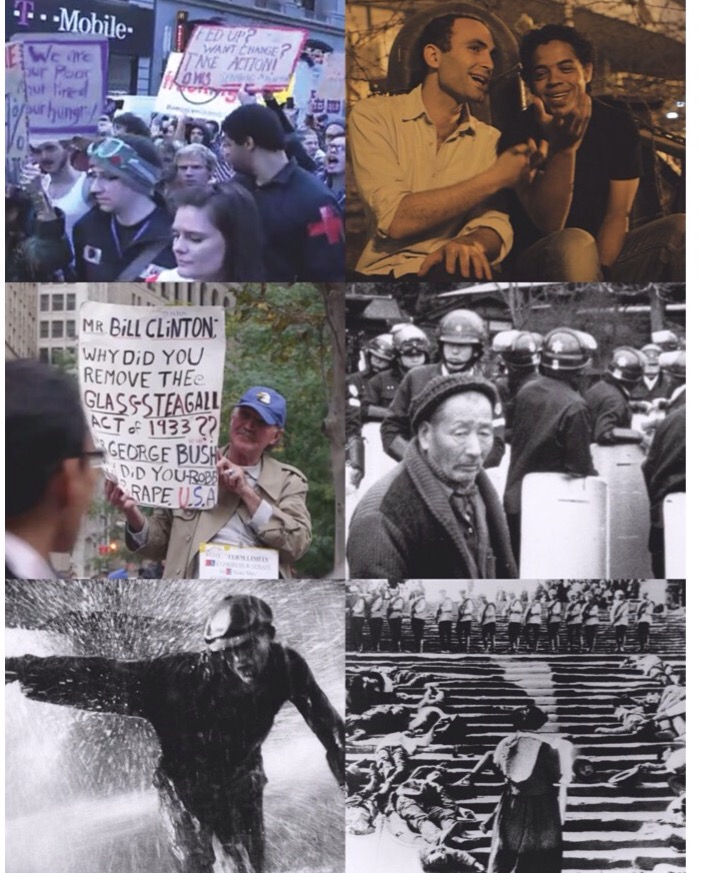
On a not-so-related-note, in the March issue of Sight & Sound a piece on Sergei Loznitsa’s Maidan by Nick Bradshaw opens with a collage of stills from different documentaries on anti-government protests. Among them a still of Sanrizuka: Heta Village (Ogawa Pro, 1973), a nice sign that Japanese documentary is slowly infiltrating (again?) in the international cinematic discourse, at least this is my hope.

Sight & Sound best documentaries – una prospettiva giapponese

IMG_3055.JPG

Lo scorso settembre la rivista britannica Sight and Sound ha pubblicato il risultato di una votazione, anzi due, una fra critici e studiosi di cinema e l’altra fra registi, per determinare i migliori documentari di ogni tempo. Al di là di tutte le critiche che possono essere rivolte ad iniziative di questo genere, la votazione dei critici è stata interessante perchè ha dato un certo risalto (non molto in realtà) alla produzione documentaristica/non fiction estremo orientale con il primo lavoro, West of the Tracks (2002) del cinese Wang Bing, al 17simo posto e The Emperor’s Naked Army Marches On (1987) del giapponese Hara Kazuo al 23esimo.

IMG_3034.JPG
Sfogliando la bella rivista però è possibile imbattersi in molte opere provenienti dall’arcipelago nipponico, citate nelle loro 10 best list da molti studiosi e critici e la qual cosa non può che far bene. Al di là del valore e della riuscita di un film come The Emperor’s Naked Army Marches On, personalmente di Hara preferisco Extreme Private Eros: Love Song 1974, va notato però che si tratta di uno dei documentari giapponesi più visti e proiettati all’estero (anche grazie alle parole sul film espresse da Michael Moore) e che di quasi tutte le opere del regista nipponico esistono anche i DVD con sottotitoli in inglese. Questo non vuole sminuire un’opera così importante e riuscita certo, ma va gettato uno sguardo un po’ più ampio su questi risultati.
Per esempio, dei film di Ogawa Shinsuke, meglio chiamarli della Ogawa Pro, non esistono DVD per il mercato internazionale ed in giapponese c’è solo Summer in Narita (1968) e questo perchè Ogawa ed il suo collettivo hanno lasciato un buco di milioni e milioni di yen che preclude per ora operazioni di restauro e transfer in DVD. Anche di uno dei padri fondatori del documentario giapponese come Kamei Fumio, attivo sia prima che dopo la Seconda Guerra Mondiale, non esistono DVD per il mercato internazionale mentre va detto che i suoi film sono stati proiettati in alcune manifestazioni. Il collettivo NDU e Nunokawa Tetsurō poi sono un oggetto oscuro anche in patria, ma la loro produzione e traiettoria artistica e tanto importante quanto gli altri nomi citati prima più sopra. Insomma la disponibilità e l’esposizione di documentari giapponesi degli anni passati rimane davvero minima se confrontata con la cinematografia “classica” dell’arcipelago (Mizoguchi, Kurosawa, Ōshima, Yoshida, Kitano, ecc.).
Detto questo, fa indubbiamente piacere vedere citati tanti di questi autori (Ogawa, Tsuchimoto, Hara, Kamei) in alcune liste individuali stilate dagli studiosi e dai critici, che sia un buon auspicio per un futuro in cui il documentario giapponese e quello estremo orientale in generale, possano essere studiati ma soprattutto conosciuti e visti in maniera più estesa di quanto non succeda oggi.