Report from the Yamagata International Documentary Film Festival 2019

The 30th edition of the Yamagata International Documentary Film Festival has ended more than a week ago. I was fortunate enough to be there, it was my fourth time, and for almost the entirety of the festival. What follows is a short report about things I’ve seen and my general impressions of the event. Please bear in mind that every film festival is experienced differently by each people attending it, depending on age, expectations, interests and the path each of us carve in the forest of movies screened.

As usual I didn’t see many of the films in competition, most of them are by big names, and, hopefully, will be screened in theaters o streamed on platforms in the near future. That being said, I really wanted to see Wang Bing’s Dead Souls, but its length deterred me, not the actual length in itself, but the fact that it would have eaten up a whole day of movies. Anyway I ended up not seeing it and I’m not sure I made the right decision, Dead Souls won the main prize, the Robert and Frances Flaherty Prize, and surprisingly to me, the citizen price as well. The other major award, the Special Jury Prize, was given to Indiana, Monrovia by Frederick Wiseman, a solid work, but not the best documentary by the American director, in my opinion, the main problem I had with the movie was the “fast” editing of certain scenes, the landscape scenes to be precise.

AM/NESIA: Forgotten “Archipelagos” of Oceania is the program I was most excited about, and it turned out I was right. The first work I saw at the festival was Lifeline of the Sea, a propaganda documentary made in 1933 with the support of the Navy Ministry of Imperial Japan, a film depicting the colonization and militarization of several islands in Oceania. It’s an extremely important document, almost ethnographic in its first part, when it depicts the various traditions and beliefs of the people inhabiting the islands, and overtly propagandist in the second part. It does that in such a bluntly way, it does not sweeten the pill so to speak, that it doesn’t hide the the fact that colonization is first and foremost about using other territories resources and exploiting people. A chillingly matter-of-fact documentary that found its perfect counterpart in the work screened soon after, Senso Daughter. Directed by Sakiguchi Yuko in 1990, the movie focuses on the legacy of the Japanese occupation of Papua New Guinea during the Second World War. A sad legacy that arises from rape, starvation and terror. It is an unflinching gaze at the horrors perpetuated by Japanese military towards women, the so called “comfort women”, in Papua New Guinea, told through interviews with ex-soldiers. While admitting the violence of war, almost all these veterans deny any violence or forced prostitution of women, on the other hand the director researches and presents us a very different reality when she interviews women who survived that period and painfully recollect those times. It is interesting to note that the documentary was released just a couple of years after Hara Kazuo’s The Emperor’s Naked Army Marches On, a movie that covers a different but related topic in the same area. Imamura Shohei also explored the topic of comfort women, sent from Japan in his film, in Karayuki-san, the Making of a Prostitute, a made-for-TV documentary aired in 1975.
A big surprise for me was to find out that Sakiguchi Yuko is the same person who directed from 2012 to 2108 Everyday is Alzheimer, a series of three personal documentaries about her mother’s dementia. A trilogy of films that had a relative success in the indie scene and in the mini-theater circuit.
AM/NESIA was a real discovery for me, unfortunately I saw only one more film, Kumu Hima (Dean Hamer, Joe Wilson, 2014) about a transgender person in contemporary Hawaii and how colonialism has affected and continues to affect people’s bodies as well, not only lands and territories. I bought the catalog, a beautiful book with which, hopefully, I will try to continue the exploration of the films produced in the continent. A forgotten cinema.

This slideshow requires JavaScript.

The other program that I followed somehow closely was The Creative Treatment of Grierson in Wartime Japan. While some of the movies screened are “classics” of documentary cinema, Night Mail, Coal Face, or Housing Problems, the screenings were often packed, typhoon notwithstanding. When Night Mail was shown for instance, during the scenes when it is shown how the postal mail is delivered around the country without the train stopping, the audience was cheering and clapping enthusiastically like at a Marvel movie. I was really impressed, and this made me ponder about who these kind of festivals and screenings events are made for. They’re definitely not only for “experts” and professionals, and I was glad to notice that many people in the audience were young, well younger than me at least.
In the same section I saw Kobayashi Issa (1941), a film commissioned by the Nagano Prefectural Department of Tourism and directed by Kamei Fumio. I had high expectations for this, if you read this blog you know my love for Kamei, and this short movie completely blew me away. Told in a poetic and subtle way, using the haiku of poet Kobayashi Issa, the documentary goes against all the idyllic depiction of countryside and mountain life that one would expect from a work commissioned by such an institution. Instead Kamei sets his gaze on the poverty and on the conditions of the people living in the area, presenting also a witty deconstruction of a frame of thought that wants to consider countryside like an “other” or furusato, a ”home” where to go back, an origin. One scene in particular stayed with me because it summarizes the tone of the movie perfectly. An old man’s face in close-up (remember Fighting Soldiers?) is accompanied by a narration that solemnly says something like, I’m paraphrasing of course, “what is this man gazing at?”. When the camera zooms out and cut to the bigger picture though, we see him urinating against the mountain landscape. Definitely one of the best discoveries of the festival, still very fresh and relevant today, both for its thematic approach and its style.

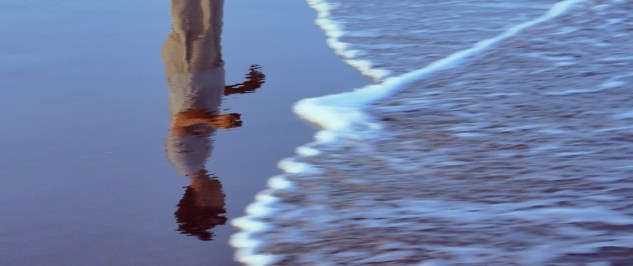
I couldn’t see many of the documentaries screened in the New Asian Currents program, usually one of the most interesting of the festival, but I was able to catch a couple, among these, worth mentioning are Cenote (2019) by Oda Kaori and Temporary (2017) by Hsu Hui-ju. I had already seen Cenote in Nagoya a few month ago, but this was too good of a chance to re-watch it with better sound and on a bigger screen. The movie confirms Oda as one of the most original and interesting voices working in documentary today, if Aragane was a revelation (I wrote about it here, and interviewed her 4 or so years ago about the movie), her next project, Toward a Common Tenderness (2017), was conceptually different, but kept the aesthetic touch present in Aragane, adding to it a poetic and essayistic element. With this work Oda continues on the same path started with those two movies, the long take aesthetic is here translated underwater and intertwined with stories and legends told by the people of the area, Cenote(s) are natural sinkholes in Mexico, sources of water that in ancient Mayan civilization were said to connect the real world and the afterlife. If Aragane was a movie that revolved formally around darkness, slow movement and repetition, Cenote is a work about water and light. Images and soundscape are, as usual in Oda’s films, impressive and deeply interconnected, particularly in the scenes shot underwater inside the the sinkholes. Swimming in these Cenotes, the camera is enveloped in a reality that is perceived and created through water and light, going deep back the to womb of the earth, to the origin of life, as it were. When I saw the movie in Yamagata, I felt it worked less than the first time, maybe it was festival fatigue on my part, but I think the movie in its final part loses some of its power. Perhaps the words and faces of the Mexican people, shot in a beautiful and grainy 8mm, could have been used differently. That being said, the intensity I got from some of the scenes was almost overwhelming, Oda is aiming here higher than in her previous works, she’s trying to convey deeper and even religious meanings, and although not always successfully, there are moments when I felt that the underwater images (filmed with an iPhone!) combined with the sound/noise, reached almost a sort of spiritual materiality. I definitely need to re-watch it.
Temporary is an interesting documentary, albeit not completely successful, that experiments with reenactment “in the ruins of an abandoned factory, three temporary workers—a young man, an older man and an older woman—behave like a choreographed family, as they clean up, construct a table, and eat together.” It felt more like a draft for a future feature film than a proper work, and indeed director Hsu Hui-ju after the screening said that she’s now filming and making a new work about one of the men who appeared in the short movie. More interesting for me was to see another documentary by the same director (she had 3 movies in Yamagata!), Out of Place (2012), shown in the Cinema with Us program, this year dedicated to the depiction of disasters in Japanese and Taiwanese documentary. Out of Place It’s a personal documentary in which Hsu films the town of Xiaoling, after Typhoon Morakot completely swept it away in 2009. The grieving process of the people is intertwined with a quest for an identity by the director herself, her family and the people who lived in the village, most of them said to belong to the Pingpu ethnic minority. Besides the value of the documentary itself as a visual piece, there’s nothing really exceptional about it, the work excels at conveying a complex multi-layered picture of a group of people whose origins are very shifting and hazy. Instead of giving us simple solutions in easy and stereotypical sentences like “going back to our ancestral roots” or “find who we really are” and so on, Hsu expresses in images all her doubts about the importance of belonging to a certain group, and, this is my personal reading of it, in the end, the uselessness of finding a solid origin or a fixed identity. It was a very moving screening experience for me because, by pure chance, I sat next to the director and her young daughter, whose birth was filmed and shown on screen, and it was very sweet seeing them exchanging glances and smiles.
Not to insist too much on the subject, but this, after all, small movie, consolidated my opinion that contemporary documentary in Taiwan, or at least a certain portion of it, is in a really good and healthy stage, not only from a purely artistic point of view (read more here), but also as an example of an effervescent culture not afraid of exploring, and even moving away from, its multi-layered and complex origins.

In competition, besides the above-mentioned Monrovia, Indiana, I saw Memento Stella (2018) by Makino Takashi, an experimental movie in line with Makino’s previous works, a visual feast and experience like no others, and a film that I haven’t completely digested or absorbed yet. Interesting was also taking a glance at two other special programs, Rustle of Spring, Whiff of Gunpowder: Documentaries from Northeast India and Reality and Realism: Iran 60s–80s, where I had the chance to see for the first time A Simple Event (1973) by Sohrab Shahid Saless, passionately introduced by Amir Naderi, a beautiful discovery.

Among the festival’s satellite events that were organized in the city, I was lucky and brave enough, on the day the big typhoon hit Japan, to venture to the Yamagata University and attend a very special event. The use of Gentou (magic lanterns) in the social and grass-roots movements of the 1950s, with a special focus on the revolts and strikes in the Miike mine. The topic is so deep and rich of implications to understand the development of documentary in Japan, that I should write a separate article. The 1950s is a period often forgotten or neglected when discussing representation of social protests in postwar Japan, the priority is usually given, and in certain cases deservedly so, to the more cool or stylish production of the 1960s. For now, if you want to know more about Gentou, there are these two excellent pieces: On the Relationship between Documentary Films and Magic Lanterns in 1950s Japan by Toba Koji, and The Revival of “Gentou” (magic lantern, filmstrips, slides) in Showa Period Japan: Focusing on Its Developments in the Media of Post-war Social Movements by Washitani Hana

The festival was, as usual, an extremely exhausting but exciting experience, I would say it is a unique event, but I don’t really go to many other festival around the world. What I can certainly say is that it is a celebration of film culture, where everybody meets everybody else, directors, film professionals, cinema lovers, students or professors alike. As someone has rightly pointed out on-line, the YIDFF is more akin to a rock festival than a film festival. I couldn’t agree more.

Movie journal (July 2019): six short documentaries from Taiwan

From today I will also use this blog as a sort of ongoing diary to briefly comment on the non-fiction movies I watch, those worth writing about. For more important works, I will still keep writing single and longer reviews, as I’ve been doing for the last couple of years.
I’m also on Letterboxd, but often the Asian documentaries I watch are not listed there, in addition, here I can ponder a bit more before writing down my thoughts.

In recent months I’ve been focusing again on documentaries made Taiwan, here you can read an essay I wrote for the journal Cinergie, about contemporary documentary in the island. In the piece I’ve touched on how hybridity is a feature that surfaces in Taiwanese cinema throughout all its history and evolution. Crossing borders, a sense of displacement, and a national identity always shifting and in flux, are often preoccupations at the center of movies produced in Taiwan, and the non-fiction landscape is, in this sense, no exception. Although far from being masterpieces, the five films I’ve recently watched, most of them shorts, continue along this path. An additional fascinating point for me is that some of them are also works made or produced in Taiwan, but not necessarily about Taiwan.


Crazy Calligraphy streaming Taiwan (Adiong Lu, 2012)

Kesan is a self-taught calligrapher, but also a poet who has spent almost his whole life “performing” the ancient art of calligraphy in a small town in southern Taiwan. Seen by his wife and his daughter more like a weirdo than an artist, the man has nonetheless kept doing what he thinks is his mission, teaching calligraphy and Chinese culture to the common people, for free. An interesting, but not completely successful portrait of a singular man and his obsession.

A Summer Afternoon  (Chia-ho Tai, 2018)

Phnom Penh before the national general election, images and sounds of the apparently unimportant moments of Cambodian daily life, before an important political and social event. Very short, definitely too short (a missed opportunity?), reminded me of certain landscape films.

Flow streaming (Ming-Yen Su, 2018)

Shot beautifully in black and white, this film follows a vendor to Toad Mountain, an old residential area in the suburbs of Taipei, in search of his lost memories and something that is probably forever gone. Something disappeared like the changed landscape of the area, now just a collections of ruins. A short work that moves between the waking and the dream state, the present and the past, the real and the imaginary.

Burma Monk Life (Yong-chao Lee, 2016)

Nine minutes in the apparently peaceful life of a group of monks in northern Myanmar, the offerings, the walking, the sound of sutras, the bare landscape, and the poverty of the villages they inhabit. Almost a counterpart of Midi Z‘s 14 Apples.

Gold (Yong-chao Lee, 2018)

Shot on an iPhone, the short film follows the daily activities of a young worker on a rusty boat, mining incessantly for gold in a river in Myanmar while thinking about Lily, his far away love.  While I liked the aesthetic touch of Burma Monk Life, I could not really connect with this one.

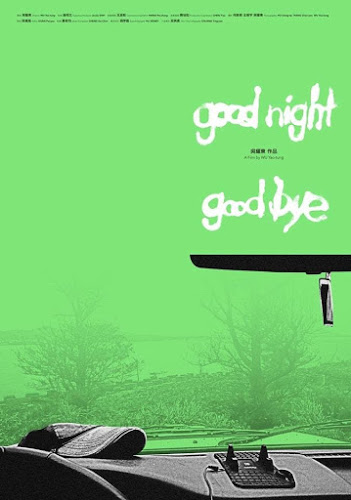
Goodnight and Goodbye (Adon Wu, 2018)

The longest of the bunch, and definitely the most seen in the festival circuit around the globe, Goodnight and Goodbye is a personal documentary through which Adon Wu searches and eventually reunites with his old friend Tom, after almost 20 years. The movie works as a sequel to Swimming on the Highway (1998), his thesis film as a student of art, a documentary screened at the Yamagata International Film Festival the following year, where it won the Ogawa Shinsuke Prize. Swimming on the Highway was about the turbulent relationship between the two friends, especially Tom’s self-destructive attitude towards life and his battle against AIDS.
Goodnight and Goodbye tries to close the circle, functioning as a sort of revisitation and remembrance of their, old, relationship, tracking down Tom, meeting him and together recollecting the time spent in front of the camera twenty years before.
Two decades without seeing each other is a long time, in the meantime Wu got married and moved forward in life, but the first movie and its often-criticized exploration of the personal matters described in it, must have haunted the director for all this time. In making his new documentary, Wu was probably moved by an intense feeling to meet again with his old friend, but also by a selfish and understandable attempt to find an interior peace for himself. On a pure aesthetic level and as a work in itself, I didn’t really latch with and particularly enjoy Goodnight and Goodbye, however I think the movie works on other levels. As an attempt to express an apology in images for instance, and also as a primal example of the myriad of implications, moral above all, that personal documentary as a sub-genre brings along with it.

good_night_goodbye_poster

Taiwanese Documentaries at the Syros International Film Festival

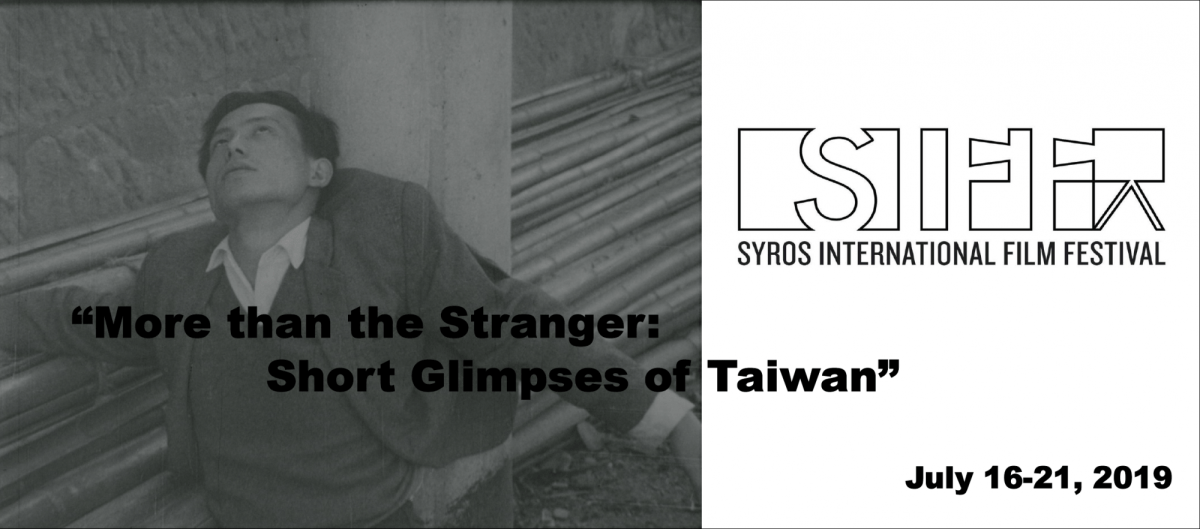
This year’s edition of the Syros International Film Festival (July 16-21) will dedicate a special program to Taiwanese documentary, More than the Stranger: Short Glimpses of Taiwan. The section includes 13 short films, from 1930 to the present, of distinguished Taiwanese artists, divided into two parts, Stranger#1 and Stranger#2. The experimental non-fiction presented in the small Greek island, will offer a glimpse of the historical and political landscape of Taiwan during the last 80 years, and its connection with a sense of “national” identity always complex and in flux. The program is made possible by the collaboration between the Syros festival, the Taiwan International Documentary Festival, and Taiwan Docs, a platform very actively promoting Taiwanese documentary films abroad.
Among the films screened, A Man Who Has a Camera – Parade (Llu na-ou, 1933), one of the earliest accounts on film of a religious event in the island, and Fisherwomen, a series of home movies shot between 1935 and 1941 by photographer Deng Nan-guang. There are also two more recent works that I had the chance to see in the last couple of years, Spectrum of Nostalgia (Chen Yi-chu, 2017), and Nostalgia of the Chinatown (Chen Chun-tien, 2016), an interesting  meditation on memories and the disappearance of a special communal space in the city of Tainan. You can download the SIFF catalog here. 

In related news, The 16th EXiS (July 24-31), held at the Korean Film Archive in Seoul, will screen 9 experimental films made in Taiwan during the 1960s, a program presented last year in California and this year in Thailand, and probably other countries as well.


MATA-The island’s Gaze (2017, Cheng Li-Ming)

Taiwan experimental-documentary scene, whatever meaning you want to attach to the term, is one of the most intriguing and vibrant in contemporary cinema, particularly when the themes tackled are going deep into decolonisation, negotiating identity, and the complex history of the island. I’ve written on the subject here, here and here, and a longer and deeper analysis is coming soon.

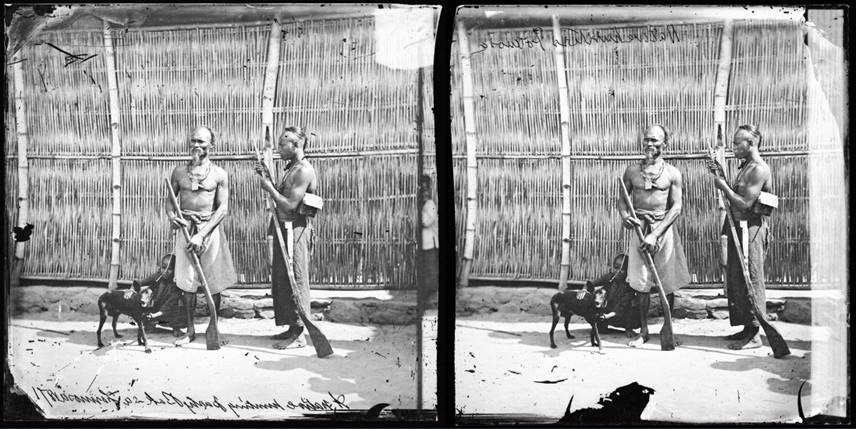
In MATA-The island’s Gaze filmmaker Cheng Li-Ming focuses his attention on the gaze of Scottish photographer John Thomson, who visited Taiwan in 1871, and his relationship with some members of the Siraya tribe – one of the several that inhabited Taiwan before the arrival of the Dutch and the Han— originally settled in the southern part of the island, near Tainan. Here the synopsis:

Scottish photographer John Thomson’s trip to Taiwan in 1871 is an important historical event. In this film we selected a hunter photo to re-interpret that event and visit the Siraya tribe to find an Elder, who talks and sings well, bringing us back to the past through his plucking of strings.

Then we saw the vigorous hunters holding their breath, staying very still in front of that weird machine for a long time, with a boy and a dog squatted at their feet. The director grabbed the view of this moment and invites the audience to watch with curious eyes.

On both sides of the river of time, he repeatedly speculates and watches the past, the future, and the influence of images on this island.

Elliptical in its constructon, the work is centered around the concept of gazing: the mechanical gaze of the camera of the outsider/colonizer on the one hand, and that of the two Siraya people captured in a photo by the Scottish himself, on the other. As the director himself explains “I created a pair of characters out of a photo with a boy and a dog squatted at the corner, through their curious stare at the vigorous tribal hunters and their encounter with the ‘image hunter’, witnessing a duel of old and new world”.

Words of a descendant of the Siraya and his reflections on language and the importance of words in creating a common history and reality are intertwined with an imaginative reconstruction of the encounter between the photographer and the two hunters. Here again the director’s own words:

This film is a sequel to “Looking for Siraya”, and this time starts with a photo of hunters holding shotguns to continue the act of taking back our souls. The stereo camera that John Thomson carried happened to inspire me creating a stereo composition. Through dramatic imitation of John Thomson’s journey as well as recording of Siraya who stays beautifully in primary image in photos yet actually is fading at present, we try to imagine how our Formosa’s “Mata(s)” treat this “mechanical eye” that intruded into the island.

You can watch MATA-The island’s Gaze on Vimeo:

MATA-The island’s Gaze from Li-Ming Cheng on Vimeo.

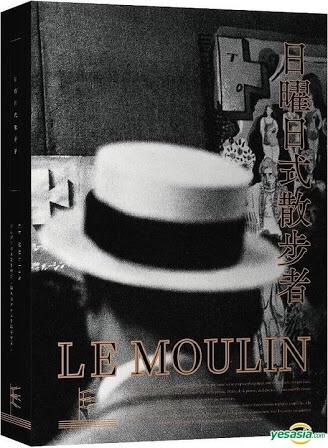
Le Moulin (Huang Ya-Li, 2016) out on Blu-ray and DVD

Just a quick post to share my excitement for a new home video release. I found out only a few days ago that from last June Le Moulin, one of the best documentaries I’ve seen in recent years, is available for on DVD and Blu-ray. The movie, directed by Huang Ya-Li, is a complex and fascinating exploration of the first Taiwan’s modern poetry group, Le Moulin Poetry Society, active in the island during the 1930s, when Taiwan was under Japanese colonial rule. You can read my piece on the movie here.

Le Moulin was made available in Taiwan by Fisfisa Media, but it comes with English, Traditional Chinese and Japanese subtitles, for more details on the technical aspects of the DVD and Blu-ray, please check the YesAsia page, where you can also order the movie.

I haven’t had the chance to check the DVD/Blu-ray yet, but it is nice to see that it also comes with a booklet of essays written by relatives of the Le Moulin poets and literary figures.

I will update this post once I get the release.

Retrospective of Taiwanese documentary cinema at the Jihlava International Doc Film Fest

Since the discovery of Le Moulin two or so years ago, non-fiction cinema in contemporary Taiwan has been one of my main cinematic obsessions and a research interest that drove me to explore the flourishing documentary scene of the island. This year edition of the  Ji.hlava International Documentary Film Festival (October 24-29) is currently holding a retrospective on Taiwanese documentary from 1937 to 2014 titled Transparent Landscape: Taiwan, a program that presents 25 Taiwanese documentaries from the period, according to the festival “the historically most comprehensive showcase of Taiwanese documentary cinema ever”.  I won’t be able to attend it, but, it goes without saying, it’s an event I’m highly interested in and I hope a catalogue will be published, here the press release:

The section will include some of the most important works of Taiwanese independent filmmakers. Allowing a glimpse into Taiwan’s complicated historical-political development, these films offer significant insights into different periods of recent Taiwanese history.
The earliest Taiwanese documentaries are the 8mm ”home videos“, shot by photographer DENG Nan-guang in the 1930s. They realistically portray scenes of daily life under Japanese occupation, such as life and work along the Tamsui river and family outings. The recently restored short The Mountain by Richard Yao-chi CHEN (1967) will be presented outside of Taiwan for the first time. Other representative works from the1960s, are the films by renowned director BAI Jing-rui and photographer ZHUANG Ling. In this decade, only government-commissioned propaganda films could be produced, but with their creative ingenuity, those filmmakers still managed to convey the lives and thoughts of ordinary people.
The Green Team, the most important non-mainstream media in the period prior to and after the lifting of martial law in Taiwan (1987), will also be represented by two important productions. The Green Team documented many social movements and protests that took place on Taiwan’s road to democracy in the 80s, and their images eventually became weapons against the authoritarian state. There are obvious connections with the situation in Czech society in the late 80s before the collapse of the Soviet regime.
Apart from its focus on history, Transparent Landscape: Taiwan also pays tribute to the experimental spirit of Ji.hlava IDFF. By showcasing aesthetically experimental, creative films, traditional expectations on documentaries are challenged. The selection includes several masterpieces, such as works by internationally renowned artist CHEN Chieh-jen, photographer CHANG Chien-chi, the first Taiwanese to become a member of Magnum Photos, and YUAN Goang-ming, the pioneer of video art in Taiwan.
This comprehensive retrospective also includes early documentaries by the leading figures of Taiwanese cinema, such as CHUNG Mong-hong, WU Mi-sen, HUANG Ting-fu and others. Beginning from the 90s, they used experimental vocabulary to explore the boundaries of documentary filmmaking. Even today, their films are regarded as avant-garde filmmaking, no matter if they deal with aesthetic conceptions or with human problems.

You can find the complete program here, and more information about documentary in Taiwan on the TaiwanDoc page.

This slideshow requires JavaScript.

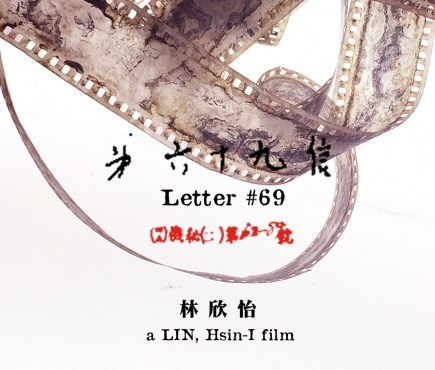
Letter #69 (Lin Hsin-i, 2016) 

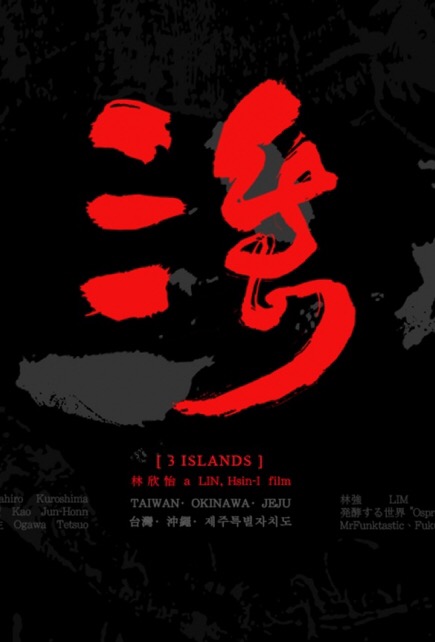
I’ve written at length, here and elsewhere, about 3 Islands, an experimental documentary by Taiwanese female filmmaker and artist Lin Hsin-i, one of my favorite nonfiction movies of last year. Yesterday I had the chance to watch another of her works, Letter #69, a short film (19 min) that was screened at this year Visions du Réel and in 2016 at the Women Make Waves Film Festival where it received the Excellence Award.

Here is the synopsis from Visions du Réel:

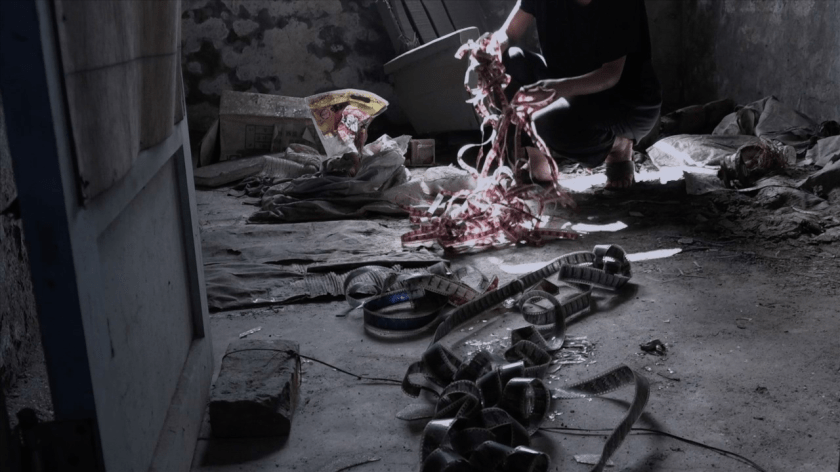
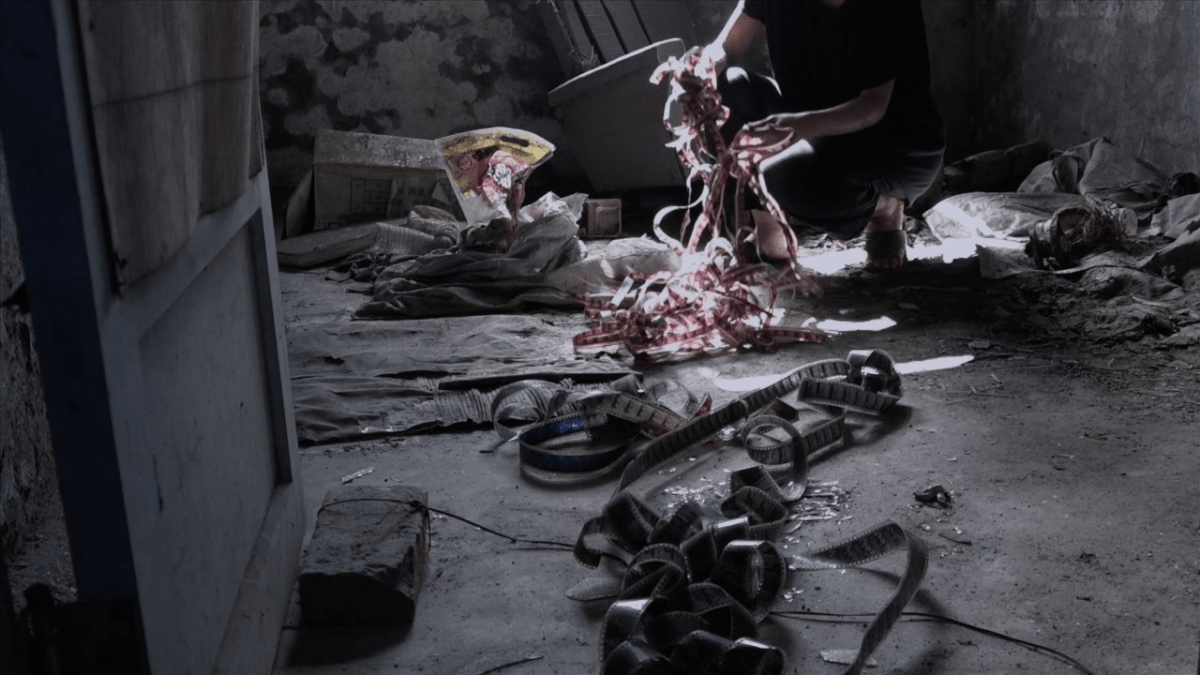
In the White Terror period in Taiwan, Shui-Huan SHI was imprisoned for hiding her brother, and was soon executed later. In the prison, she wrote 69 letters for her family. Simulating the life in the prison, this film silently criticizes the history. The “photographic film image” in the video, Letter #69, is an old photographic film from an abandoned old Taiwanese theater. After cleaning the film, Shi Shui-Huan’s letters were printed on it to construct a stop motion. The reproduction of old film serves as a response to the esoteric, dark history of Shi Shui-Huan and her brother Shi Zhi-Cheng in their last escape where they hid in the ceiling. It is also a response to the historical violence of Taiwan that cannot be cleared and is difficult to look back at.

In 1954 Shi Sui Huan was imprisoned for hiding her brother who was resisting the regime of Chiang Kai-shek. During the period spent in prison, she will eventually be executed, she wrote letters to her family and her last one, the letter number 69, was left blank.
The blankness of the last letter is the canvas from which the director starts her investigation into the so called White Terror, a period of purges when political dissidents who were protesting or resisting against the Kuomintang-led Republic of China government, were persecuted, incarcerated and killed. While the period started in 1947 and ended in 1987 when the martial law was officially lifted, I think the director is referring here to a more specific time and place, the first years of the White Terror and a corner of the Liuzhangli Cemetery in Taipei where Shi Sui Huan and other 201 people are buried. Most of them were leftist thinkers or activists but also, like Shi Sui herself, people who just protected their relatives. The graves were forgotten and basically untouched in fear of repercussions till the end of the martial law, when slowly the country started to breath again, a “rebirth” that is well reflected in cinema (the so called Taiwanese new wave of Hou Hsiao-hsien,  Edward Yang, Tsai Ming-liang, etc.)

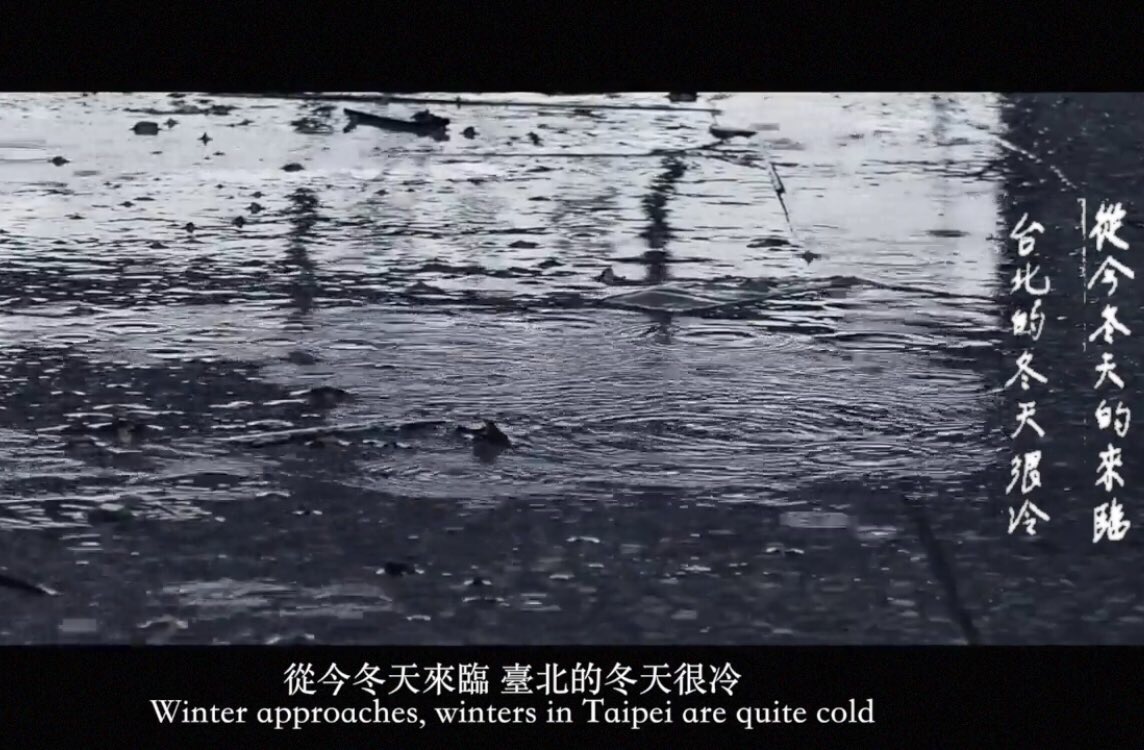
The absence of written words in the last letter embodies the impossibility of directly connecting with the tragic period and its remnants, yet the blankness also represents the white noise resulting from the accumulation of all the phantasmic memories that in one way or another, while denied for so many years, are still alive and present. Sowing together all these fragments of scattered memories in an heterogeneous piece of cinematic patchwork, Lin Hsin-i’s short movie is an attempt to discover and create images and sounds of a lost and tragic period. The letters of Shi Sui Huan are juxtaposed with the narration in the present (done by family members of the victims), and images of ruins are overlapped with performative actions that recreate some of the gestures that the prisoner might have done.
Not only Letter #69 brings to the surface an obliviated past and directs its gaze towards a crucial spot in Taiwanese history, but the filmmaking style that made 3 Islands so powerful and fascinating for me is here in full display again. Aesthetically Letter #69 is a fragmented and kaleidoscopic work that blends the beauty and clearness of the digital image with the grain and the roughness of overused celluloid film ー an old strip of film where the director printed the woman’s letters ー sound manipulation and voice distortion with reenactment, and read and written passages from letters with the constant sound of a running film projector.

I might be partial because my cinematic taste tends definitely towards hybrid documentaries, but 3 Islands and now this Letter #69 are so fascinating and challenging that make Lin Hsin-i one of the most interesting filmmakers working in experimental nonfiction today.

My favourite documentaries of 2016

2016 has been a busy year and unfortunately, and for various reasons (one of them being the place where I live, Japan), I haven’t had the chance to see as many new documentaries as I wanted to. On the other hand though, having had access to many documentaries produced in Taiwan through Taiwan Docs, for a couple of months I binge-watched the non-fiction movies produced in the island in 2016 (and 2015), and it was a revelation. Not only it allowed me to discover and explore the complex sociopolitical situation of the area and its recent history, but luckily I also stumbled upon a couple of formally challenging films.

That being said, I can’t really miss what recently has become a sort of yearly custom, so here is my list of the best documentaries I’ve seen in 2016, some of them are from 2015, but released internationally, or at least in Japan, only this year. At the end I’ve also compiled a short list of the best (re)discoveries of 2016. (disclaimer: best should here be understood as “favourite” of course)

8. Quemoy (Chiu Yu-nan)

quemoy_doc

“Quemoy, the islands adjacent to Mainland, used to be the frontier between Taiwan and China. However, it opens its border for the cross-strait exchanges. The film shows traces of Quemoy people in different generations and builds up a picture of complicated national identity in the boundary island.”
A relatively short movie (just 45′) whose main appealing point is its depiction of the complex geopolitical situation of the area.

7. Into the Inferno  (Werner Herzog)
6. Lo and Behold, Reveries of the Connected World (Werner Herzog)

“This boiling mass is just monumentally indifferent to scurrying roaches, retarded reptiles and vapid humans alike.”
Both movies are pure Herzog, for better or for worse, I personally adore the man, but the risk the great German director is running in his recent documentaries – especially now in an era when the social media is so pervasive and his persona in the mediascape is sort of overexposed – is that of becoming prisoner of the image forged in almost 50 years of incredible career.
Be that as it may, if you like Herzog, these two documentaries released in 2016 are very enjoyable, Lo and Behold is a better work in my opinion, or at least more appealing to me, and not necessarily for its subject, more for its rhythm and editing. Into the Inferno in some points wanders a bit too much, the segment set in North Korea for instance, albeit fascinating for the unique insights on the country, felt too much like a long digression.

5. Further Beyond

An interesting experiment in meta-documentary and a non banal reflection of what identity and its construction through images and storytelling is. The movie is maybe a bit excessive in its meandering here and there, but 
some passages are pure digital beauty.

4. A Room of Her Own: Rei Naito and Light (Yuko Nakamura)

a_room_of_her_own_rei_naito

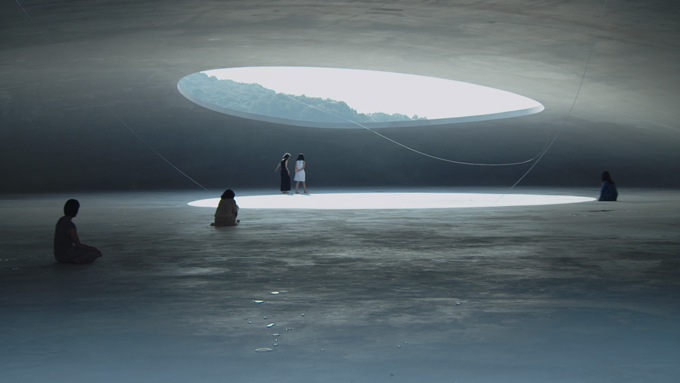
Graced by outstanding sound design and soundtrack, the movie captures and beautifully embodies the sense of fragility and ephemerality of life seen through the art of Naito Rei. But A Room of her Own is interesting on many other different levels, partly experiment in non-fiction, partly personal documentary – what brought Nakamura to approach Naito was the severe illness of her mother – and partly a work that explores the intangibility of life, the movie is a very refreshing work of non-fiction, especially when considered in the context of Japanese contemporary documentary. I wish the last part, when four women are gathered on Teshima island, would have been longer. 
One last note on the photography, in tone with the themes explored by the movie, is really one of the most accomplished aspects of it.

3. 15 Corners of the World (Zuzanna Solakiewicz)

15_corners_of_the_world

I cheated, I know it’s a movie from 2014, but I watched it this year and it made a big impression on me, so I decided to include it in my list anyway.
15 Corners of the World is a mesmerizing and hypnotic documentary about the Polish electronic-music pioneer Eugeniusz Rudnik and, more importantly, about the visualisazion of sound and its materiality. An incredible visual and auditory experience.

2. Forgetting Vietnam

forgetting_vietnam

The latest visual work from Trinh Minh-ha, I’ve written more about the movie here.

1. 3 Island (Lin Hsin-i)

img_2531

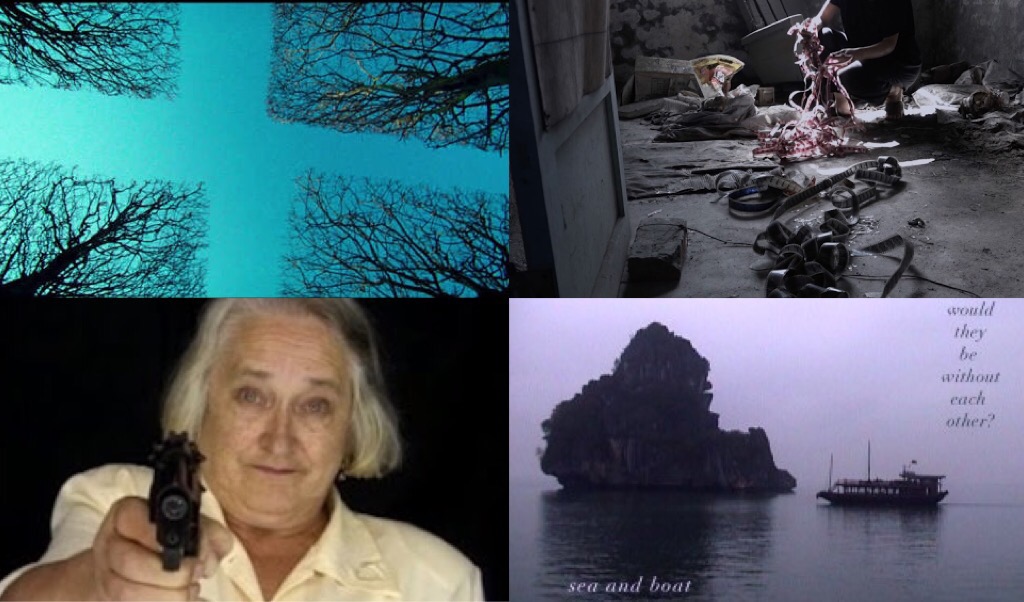
A work that creates a complex and experimental mapping of three distinct geographical Asian areas, interweaving poetry, abstract imagining, historical data and archival footage. If you want, you can read more here.


(re)discoveries (in no particular order)


Asia is One (NDU), read more here.

On the Road: A Document (Tsuchimoto Noriaki, 1964), read more here.

Hospital ( Frederick Wiseman, 1970)

Broadway by Light (William Klein, 19589

The Festival Pan-African of Algiers (William Klein, 1969)

Some thoughts on 3 Islands (Lin Hsin-I, 2015)


I finally had the time to rewatch 3 Islands, an experimental documentary directed in 2015 by Lin Hsin-I, a work I enjoyed on my first viewing a month or so ago, but one that, because of its complexity and all the historical references, I really wanted to watch it again before trying to write down a “proper” review.
The movie is a blending of experimental cinema and non-fiction, a “genre” that has recently become more and more the main field of my interest*, but at the same time an exploration of the historical resonances that tragically bind together three different territories, Okinawa, Taiwan, and the Jeju island in South Korea.
3 Islands is a complex and multilayered work punctuated by literary quotes (Marguerite Duras, Kenzaburō Ōe and T.S. Eliot among others**), archival footage, contemporary art, beautiful digital shots of jungle and ruins, fictional memories and a minimalist and eerie music to wrap up everything.

img_2371

The movie’s very first image is a close up of an old strip of celluloid in what appears to be a destroyed building, later on we’ll discover is probably an abandoned theater in Tainan, Taiwan. The shots of the strip and those of the hands that pull it, are superimposed with quotes from Marguerite Duras and those from a Taiwanese artist, dealing with personal and historical memory, the differences in language(s) and the impossibility to convey a truth of any sort through them. It is thus clear from the very beginning that what interests the director is also, if not mainly, an exploration of the aesthetic limits of non-fiction and those of representation more in general.
In the following scenes, written messages of a young kamikaze who died in the battle of Okinawa are intertwined with images of mural art in Taiwan and connected with footage of kamikaze attacks on American ships. Moments of battles as experienced during II World War by Zhang Zheng Guan, presumably a Taiwanese pilot who fought the Pacific War with the Japanese Imperial Army, are narrated (in Japanese) over a split screen, one side showing the places where the carnage and horrors of war took place as they are today, the other showing the act of filming and photographing the very same spots. The gimmick of the split screen has here its raison d’être because, as written above, the film gives equal importance to the facts, stories and histories narrated in it, but also to the problem of representation itself, without, and this is one of Lin Hsin-I big achievements, becoming just an empty and self-absorbing aesthetic show-off. Archival war images and scenes from the Taiwanese jungle are then linked to those of the protests in Okinawa against the American base in Futenma, and everything is connected by the memories narrated, one of the more dense and horrifying passages of this account is when it describes scenes of mutilated and headless body still moving, and other where men are walking and singing with their hands on the belly holding their own intestines and livers.

img_2355

In the central part of the movie Lin Hsin-I  moves her focus on the island of Jeiju, a very small territory located between Japan and South Korea, also a place of geopolitical importance due to its proximity to Chinese waters. Again we are presented with images from today and photos and archival footage from the colonial past of the area, and more importantly from the Jeju uprising in 1948, a revolt where people were raped, tortured and brutally murdered by the Korean government’s militia. Talking or writing about the massacre was taboo for more than 50 years and was only in 2005 that an official apology from the South Korean president was issued.
As often happen to me when I watch works that are also about Japan, the least interesting parts are those that take place, or are about, the archipelago, not because they’re less compelling or thought-provoking, but more because they usually look like a déjà-vu to me. The same happened with 3 Islands and its final part about Ichimura Misako, a woman who decided to live like a homeless at Yoyoji Park in Tokyo, to whom the director felt deeply connected.
That being said, 3 Islands remains nonetheless one of the best work of non-fiction cinema I’ve had the chance to see this year, a multitude of images and words colliding and clashing together to create a polyphonic narrative.
From the aesthetic point of view, the work feels perhaps more akin to installation art than a movie, but because of this quality it works as a unique intellectual and visual experience: fragmentation, peripherality and the centrifugal complexity of its images, give 3 Islands a very peculiar rhythm and style, allowing the film to be challenging and compelling in every single minute of its duration.

3 Islands’ documentary images try to shift from literary writings to the actual fixing of body-scene. Adopting literatures as well as the personal research and practices of artists as scripts, parallel with reversible movements of the flesh, the work recounts the unknown history and the symptomatic interpretations of the 3 islands of East Asia—Taiwan, Okinawa, and Jeju Island.

Notes

* And apparently in Taiwanese documentary as well “The 15 nominees for the Taiwanese Competition at this year’s Taiwan International Documentary Festival (TIDF) signal a reversal from the previous social issue-driven, journalistic documentaries, with many entries crossing over into the domain of contemporary art. More here)

** Not really a quote, but there’s a very brief moment towards the end of the film when the director herself pronounces the words “Ogawa Shinsuke”. An homage to one of her inspirations?

Wansei Painter – Tetsuomi Tateishi


After Le Moulin, and partly Asia is One, my personal exploration of the period when Taiwan was under Japanese rule (1895 – 1945) continues today with Wansei Painter – Tetsuomi Tateishi (2015), a documentary directed by Kuo Liang-yin and Fujita Shuhei, and presented at the last Taiwan International Documentary Festival, where it received the Audience Award.
Here the synopsis:

Tateshi Tetsuomi was born in Taiwan in 1905. He returned to his birthplace to find painting subjects and then he had been attracted by the landscape and local cultures of Taiwan. During his stay in Taiwan, he made oil paints, illustrations and wood engravings for the magazine Minzoku Taiwan (Taiwanese Folklore). He was regarded as a promising painter, but his achievements were to be forgotten when he was repatriated to Japan at the end of WWII and lost most of his paintings. He earned a living as an illustrator for children’s books, but finally achieved unique expressions in his last years. This film reveals his ambition and struggle, and reflects the dramatic political, cultural and social change in Taiwan.”

The word Wansei refers to the Japanese individuals born in Taiwan during the colonial occupation of the island, people who were forced to leave Taiwan, and de facto deported, in the years following the end of the Pacific War (1945). The movie, exploring the life of one of these people and a very special one, is indeed a biopic, but at the same time and on a more subtle level, it’s a depiction of what it means to belong and to live in two different cultures in times of shifting historical changes.

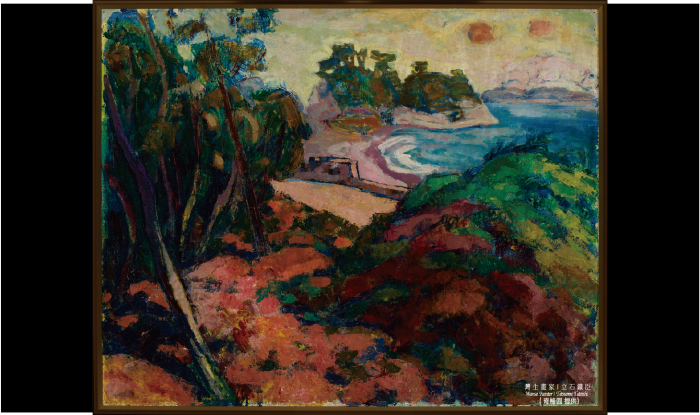
Tateishi was born and lived part of his life in Taiwan, a place and a culture that played a great part in his development as an artist and human being, when he returned there from Japan during the 1930s, the colors and landscape absorbed in his daily experiences would remain forever with him and would be very recognisable in his future paintings. As he writes in his memoir “I have always peferred strong colors and bold lines. Taiwan’s landscapes suited my personality perfectly”.
Things started to dramatically change in the sociopolitical environment at the beginning of the 40s, when the “divide began to emerge between Japanese and Taiwanese in areas such as painting, literature, and theater. The government was promoting Japanesation, Taiwanese culture was considered vulgar and barbaric”. In such a period, when the imperialistic and fascistic oppression promoted by Japan was at its peak and the propaganda machine was in full swing, Teteishi extensively wrote for Folklore Taiwan, a magazine (in Japanese) exploring and reviving the traditional arts and custom of the island. This (re)discovery of Taiwanese cultural heritage was so important that is still praised nowadays among Taiwanese scholars.
At the age of 39 in 1944 Tateishi was drafted and sent to the war front, and after the conflict ended his family stayed in Taiwan, part of those people called “overseas Japanese” in a land now under Chinese administration. In 1949 they were forced to leave the country and go back to Japan, where he continued to paint and eventually became a well-known illustrator for encyclopedias and scientific publications, many of his illustrations can be found in Japanese children’s books and covers of the 1960s and 70s. As for his painting, after the war his style changed considerably, becoming more surrealistic and abstract “military and post-war experiences in Taiwan cast a shadow over my heart, I searched for new styles of painting, yet I could not make up my mind on a particular style.”

From a purely cinematic point of view, the documentary is mainly composed by still photos, paintings, archival images and interviews with Tateishi’s relatives, his wife and his two sons, and Taiwanese arts scholars. The narration is heterogeneous, the main voice, the one from his granddaughter, is intertwined with short pieces read from his memoir and the voices of his wife and children. There are also few scenes of modern Taiwan and Japan, a school where he used to teach or places where he used to go, and everything is held together by a minimal and unobtrusive music, a sound design that gives the movie its almost contemplative mood.

When the story moves to Japan after the war, the documentary loses, for me, its appeal, it’s still a well crafted work, but the risk of becoming an hagiography is very strong. Fortunately balancing up this tendency are the artist’s beautiful and diverse paintings filling up the screen with their colors, shapes and mystery. Another problem I have with the movie is that the period of colonization, to my eyes at least, is depicted with some indulgence, of course the aim of the work wasn’t to deeply explore the violence of the occupation, but still, watching the documentary it seems like the period was after all a positive phase in Taiwan history, especially when opposed to the post-war Chinese administration. I am maybe reading too much into it, and again I’m not an expert on the subject, so I could be wrong and it may well be that amid all the violence and oppression, important cultural and artistic achievement were obtained, but at what price?  
If raising doubts about a subject is one of the best achievements a movie can obtain, willingly or not, Wansei Painter – Tatsuomi Tateishi for what I’ve written above is certainly a compelling work and a must-watch for anyone interested in how the life of an individual interweaves and is shaped by the events of a very intricate historical period.

The next installment in my personal series about Japan/Taiwan will be, time permitting, 3 Islands by Lin Hsin-i, you can now read my review here.