Film journal, spring 2024 (part one): The Minamata Mural, A Grasscutter’s Tale

Both for their importance in the history of Japanese documentary, and for their intrinsic artistic value, the two films below would deserve a longer and deeper analysis, but time is always scarce here… perhaps in the future…

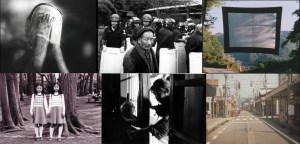
For some reason, in my exploration of the documentaries made during his long career by Tsuchimoto Noriaki about the Minamata disease and its victims, The Minamata Mural (1981) completely escaped me, at least until now. The film asks the delicate question of how it is possible to represent and depict the suffering and the struggles of Minamata’s victims, and more broadly, how artists can express, through their medium of choice, the sorrow caused by other tragedies as well, such as the bombing of Hiroshima and Nagasaki, or the suffering inflicted to minority groups in Japan.
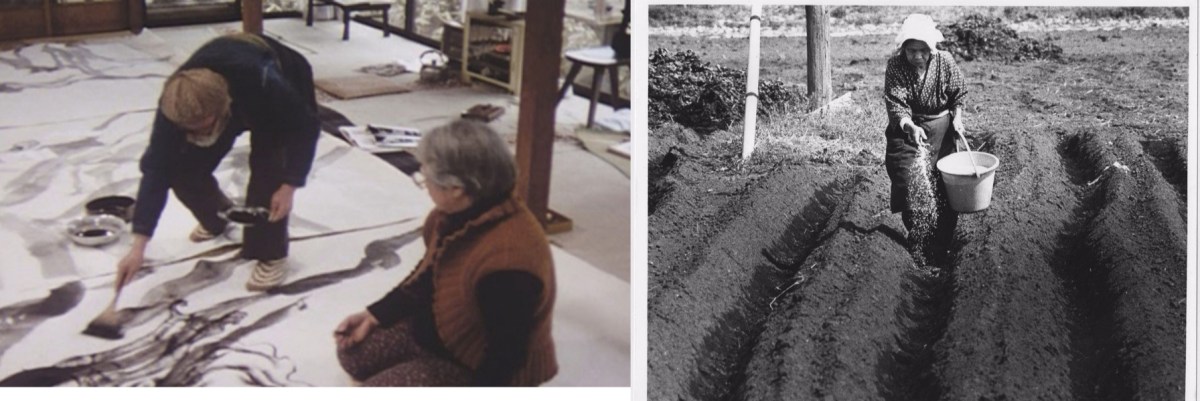
Tsuchimoto and his crew follow Maruki Iri and Akamatsu Toshiko, a couple of artists working on a series of panels dedicated to the people of Minamata, showing us the couple at work on the mural, and during their visits in Kyūshū, when they meet some of the people affected by the disease. By showing how these encounters, especially with two young girls, influenced and changed the perspective of the two artists, Tsuchimoto is also, subtly but obviously, reflecting on his own (at the time) decade-long endeavour in capturing and siding with the people in Minamata.
The segment around the middle of the film, when activist and writer Ishimure Michiko reads her poems over the close-ups of the huge mural, is a spine-chilling and heart-wrenching masterpiece of a sequence. For me, one of the most impressive qualities of the scene, besides the poetic words by Ishimure, is how powerfully the camera is able to convey the intensity of the paintings.
Another striking aspect of the documentary is how Tsuchimoto and his cameramen are able to capture and convey on film the beauty of the young people affected by the disease. Shiranui Sea (1975), probably the peak of Tsuchimoto’s career, has a balance and a grace in depicting the people of Minamata, particularly the young ones, that can be found here as well.

One of the two cameramen in The Minamata Mural is Segawa Jun’ichi, a director of photography who, among other films, worked in the seminal Snow Trail—directed by Taniguchi Senkichi in 1947, from a script by Kurosawa Akira, and starring Mifune Toshirō in its first role—and with Haneda Sumiko in Ode to Mt. Hayachine— he was mainly in charge of filming the mountains—a documentary filmed around the same period as the one here discussed. It would be interesting to know if Segawa shot the paintings, was involved in filming the people and scenery in Minamata, or was involved in both (I’m inclined to think it’s the former).

The Minamata Mural

“This linking of memories, this setting remembrances in motion, is not a nostalgia but an immanence,”

Crisca Bierwert

A Grasscutter’s Tale (1986) is one of the Japanese “documentary treasures” I have been meaning to watch for quite a long time. The occasion finally came last April, when it was screened at Athénée Français Cultural Center in Tokyo, part of a very interesting retrospective about resistance and political struggle on film, organised to launch the new documentary by Daishima Haruhiko, Gewalto no mori – kare wa Waseda de shinda (ゲバルトの杜 彼は早稲田で死んだ, 2024).

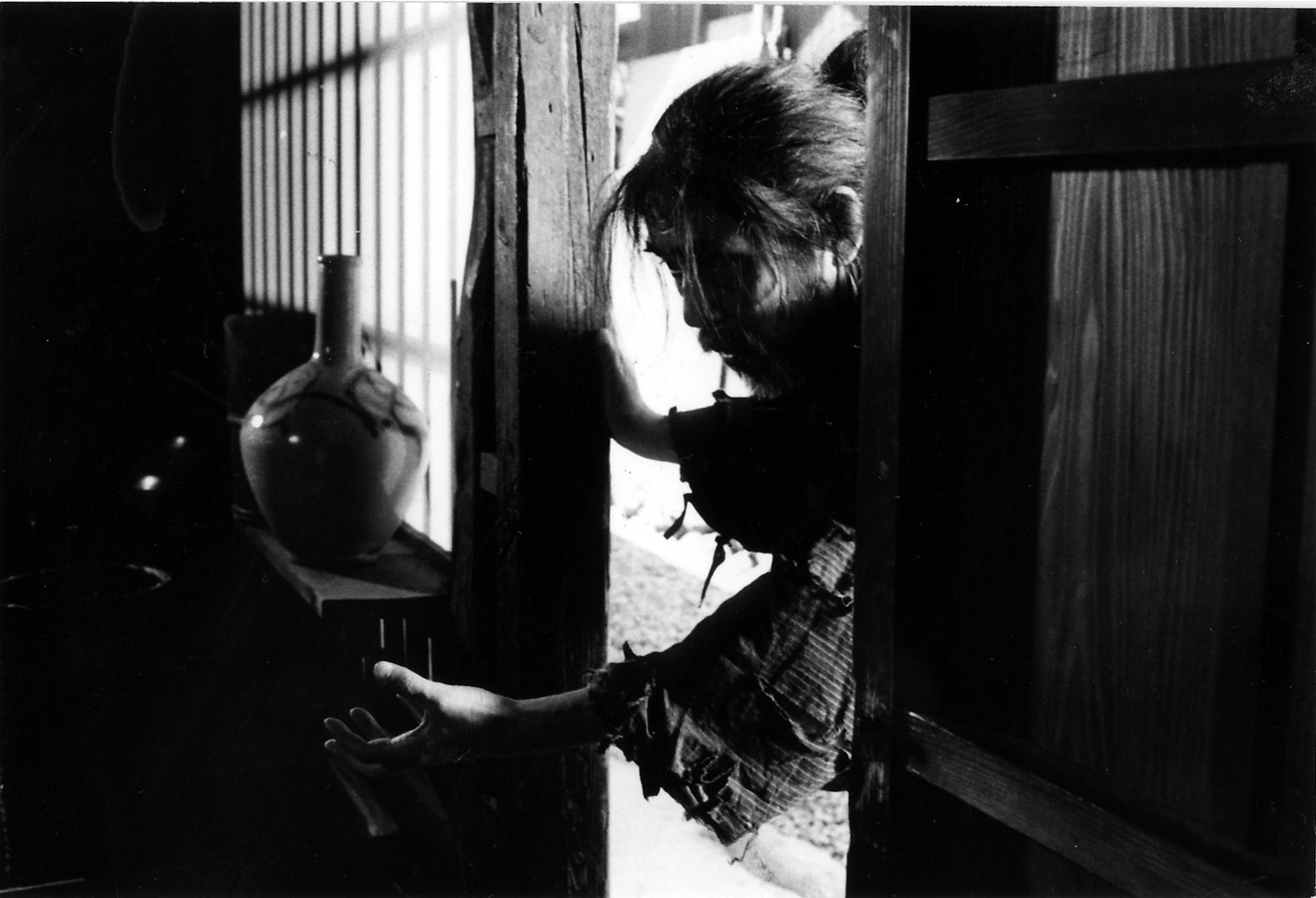
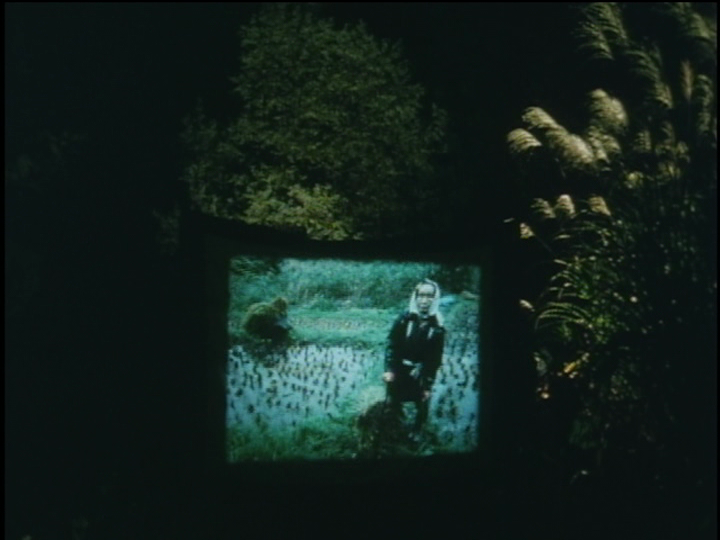
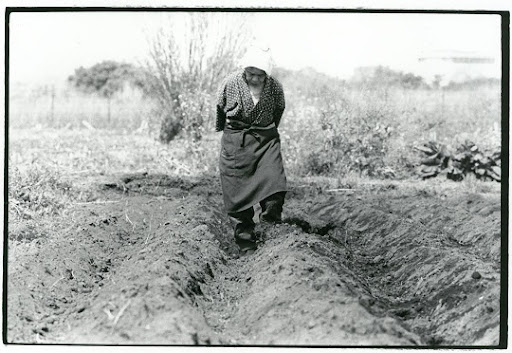
The film focuses on grandma Someya, born in 1899, one of the farmers who lived and worked on the land to-be-expropriated for the construction of Narita Airport. She fiercely opposed the second phase of the airport, a stance that severed her relationship with her family, and resulted in her living alone on her land.  The film consists of nineteen stories narrated by grandma Someya’s own words, and mainly of images of the old lady cleaning her field. 

Part of the Sanrizuka notes  Fukuda Katsuhiko (1943-1998) took after he left Ogawa Production at the end of the 1970s, after the collective left for Yamagata, the film is a crucial work to better understand the history and development of documentary practices in Japan, in that it heralds a shift in the way documentary was conceived, theorised and practiced in the archipelago. The film occupies at least two spaces: militant cinema with a focus on the resistance of one person (Someya-san) against the construction of Narita Airport on the one side, and a mode of cinema that explores the different (hi)stories traversing a physical space, Sanrizuka, and how these intersect with the personal history of one individual. Moreover, seen from a different perspective, A Grasscutter’s Tale can also be considered as an example of “oral cinema”, that is, a cinema that connects and activates the untapped potential of storytelling and the spoken word in relation with the moving image. By combining images and tales that are parallel and do not touch each other, so to speak—as previously noted, the images show mainly Someya-san working on her field—the film constructs a segmented and open portrait of a life, a poetic bricolage made of stories and images that invites the viewers to wander inside of this personal/historical “landscape”.

The film has an episodic structure and is composed of chapters, some funny and some tragic, such as the story of her sons who died, her husband who worked as barber, a strange dream remembered, the time she first came to Sanrizuka, or how she once ate only matches as a child to avoid starvation. Sometimes A Grasscutter’s Tale edges towards the experimental. In the segment about the dream, the screen is completely dark except a bright light on the upper left corner, in another, the voice of the director explain (if I’m not wrong) again on a black screen, how the reenactment of an episode from the old lady’s life was scrapped from the final work at the request of her son, who was in it.
The screening I attended was in 16mm, a rare chance to better appreciate the colours and the texture of the work. The greens of the crops and of the grass are almost tactile, and the time-lapse scene of the setting Sun, here a fiery red, is akin to that in Magino Village, a very different film, but a work that nonetheless shares many common traits with A Grasscutter’s Tale.
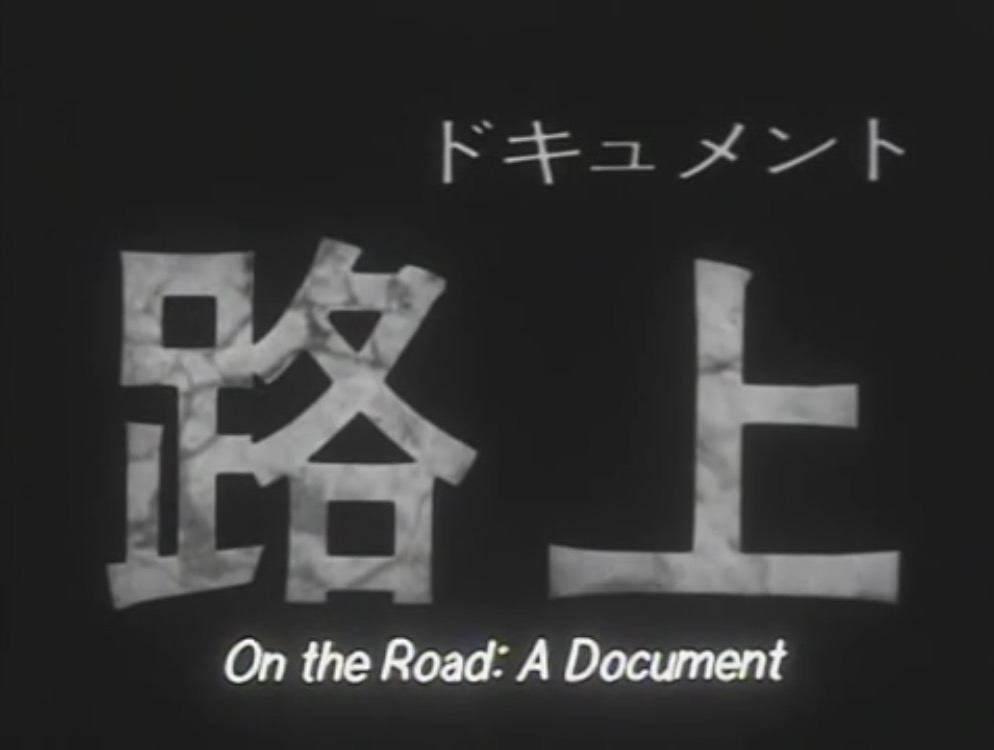
On the Road: A Document ドキュメント 路上(Tsuchimoto Noriaki, 1964)

One of the towering figures in Japanese documentary, Tsuchimoto Noriaki began his career as a documentarist, like many of his generation, at Iwanami Production in 1956. Tsuchimoto was since his university years a very active student, involved in the establishment of Zengakuren, member of the Japanese Communist Party and eventually expelled from Waseda University in 1953 for political activities. Mostly known in Japan and in the rest of the world, and rightly so, for his life-long series on Minamata and the mercury poisoning caused by Chisso Corporation, a total of 15 films in more than 40 years, Tsuchimoto in his long career tackled with his movies many different issues. Another Afghanistan: Kabul Diary 1985 and Traces: the Kabul Museum 1988, two movies set and about Afghanistan in a crucial time for the country, Nuclear Scrapbook (1982) on the danger of Japan’s nuclear policies, and On the Road: A Document, are some of his best non-Minamata works. It’s on this last one that I’d like to focus my attention today.
At the Beginning of the 60s Tokyo, and Japan in general, was in turmoil and experiencing huge changes, on the one hand the country was trying to leave behind and “forget” the tragedies of war, the consequent American occupation and more than 20 years of militarization and nationalism, on the other hand Japan was projecting itself and its people at maximum speed towards the future and a new phase. This “double” movement implied, among other things, starting a series of infrastructure projects that would completely alter the landscape of urban and suburban areas of the country, especially in preparation for the big international showcase of 1964, the Tokyo Olympics: streets, highways, the launch of the Shinkansen (the famous bullet train), and the devil’s pact with atomic energy. All changes that would shape, for better or for worse, the country’s future and made it what it is today.
On the Road was made in this whirl of structural, social and political changes, let’s not forget the huge demonstrations against the ANPO treaty in 1960 and those that would shake the country in the following years, a period of turmoil that is reflected in the film’s production history, as Zakka Films site puts it:

On the Road was originally commissioned as a traffic safety film with the Metropolitan Police as one of the sponsors. But it actually had a double existence: in reality Tsuchimoto was also working with the drivers’ union. When a police official finally saw the film, he dismissed it as “useless—the plaything of a cinephile,” and so it was never used for its original purpose. While winning numerous awards abroad, including at Venice, it was shelved in Japan for nearly 40 years.

The production is also a strong statement of Tsuchimoto’s artistic independence and creativity as a filmmaker, “The film was conceived as an experimental dramatized documentary” and “Tsuchimoto had amateur actors play the principal roles and, because the sound and image were recorder separately, asked drivers to reenact their duties, meeting and conversations”*. For all these reasons On the Road turned into a formally and highly creative documentary and a very different one, in style and concept, from those of the Minamata series that would follow in five years. Alienating music, fast editing and a cacophonic cityscape rendered through a jazz-like rhythm bring to mind the city symphony movies of the beginning of the 20th century, reimagined for and in the 60s. A snap-shot of an era of change for Japanese society framing a mutating urbanscape with a free-style touch that makes it highly watchable and fresh even for today’s viewers.

While it’s important to praise and introduce all the movies of the Minamata series to the broadest audience possible, it’s also vital not to overlook some of Tsuchimoto’s works made outside of his life-long series and by doing so affirming his importance and role in the history of Japanese documentary.

On the Road: A Document is available on DVD (with English subtitles) at Zakka Films, of course!

* from the DVD booklet

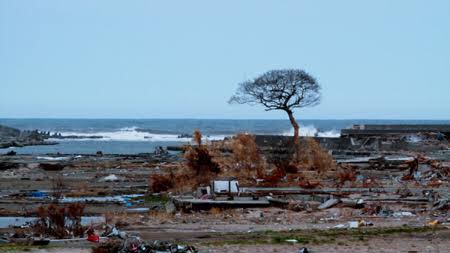
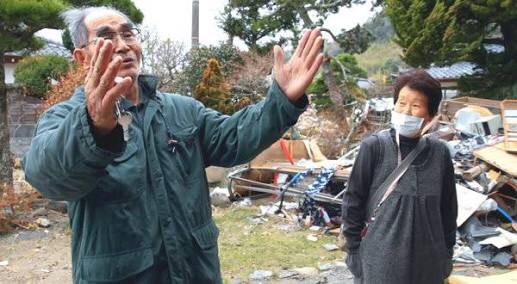
Interview with Toshi Fujiwara about No Man’s Zone (無人地帯, 2011)

I’m reposting here and Interview I did in 2011 with Fujiwara Toshi, author of No Man’s Zone (無人地帯, 2011), to this day and in my opinion the best documentary about the March 11th’s triple disaster.
The interview was originally posted on the Italian blog Sonatine. You can purchase the DVD of the movie here (with English subtitles). 


Matteo Boscarol I’ve watched a couple of documentaries dealing with the disaster that hit Japan on March 11th, but in my opinion, your work stands apart from them. I think you adopted a broader perspective. Among other things, I felt No Man’s Zone was a visual essay on the impact that images of destruction have on our society.
Toshi Fujiwara Yes, you’re right but obviously it was something that was inside me from before the disaster and grew up over the years.
M.B. It was also like watching two documentaries, one with the row images and interviews from the area hit by the tragedy, the other one more reflective, with the narration and the editing giving a philosophical frame.
T.F. We’ve tried to create two separate layers very deliberately. One of the reasons is that it is a French-Japanese co-production. The cameraman and director are Japanese, and the editor is French…so why not have two layers to incorporate a certain distance within the contest. Originally, we thought of a French voice and the narration was different from the final one. It was more like a fictional story. The idea was that of a French woman and a Japanese director corresponding through the Internet. We collaborated with some French writers, but they didn’t get the right ideas because it was also supposed to be quite critical of the French culture itself. It turned into something rather awfully colonialist. So it didn’t work and I rewrote the whole narration.
M.B. In this way, it should be able to reach a foreign audience. The Japanese media didn’t do a good job, but at the same time, the international media excelled in misinformation, especially the Italian media.
T.F. Even here in Japan, it’s turning this way. Now the Japanese anti-nuclear movements are paradoxically against the people of Fukushima.
M.B. There’s a scene that particularly impressed me and even reminded me of some parts of Ogawa Shinsuke’s Heta Buraku. It’s the one when the camera is following an old lady wandering and speaking in her garden.
T.F Thank you for the compliment. It is probably because my cameraman, Takanobu Kato, was working with Ogawa. He was one of the last people to leave the production. It was important that he was with me because, being trained under Ogawa when his production was in Yamagata, he literally lived there raising rice and so on. As such, he knew how to shoot rice fields, and other details of life in the countryside.
M.B. In the same scene through the memory of the old lady, there are also references to a wider sense of time, historical and natural cycles, reaching as far as the period after the Second World War.
T.F. I would say that it goes even farther back in time; in fact, she recalls her father having been a silk worms teacher. It was before the war when Japan biggest export was silk itself.The images of movies of this kind focus usually on destruction, but we tried to suggest what was there before the destruction. What was destroyed and also what the people of these areas have lost is much more important.


M.B. What triggered you to go to Fukushima a month after the Earthquake to start to shoot?
T.F. I was disgusted by the way the images were shown on TV. The live footage didn’t show us how the people used to live, and didn’t give people a chance to communicate. Their lives up there were so different from the lives of journalists in Tokyo; moreover, the images are just raw material without any good editing. My intention was to make a film that would look distinctly different from what we watched on television, which was usually shot very hastily with a hand-held camera. One of my first commitments was to shoot as beautifully as we could. That’s why, when possible, we used a tripod. Already, I’d hated lots of contemporary documentaries because their shots aren’t beautiful. They shoot them too easily. Even though we did it in 10 days, we tried to do it as well as we could. Beautiful editing also was important.
M.B. And the voice of Khanjian Arsinée for the narration is very beautiful indeed.
T.F. Her voice is incredible. She’ s Armenian, but she grew up in Lebanon so her native tongues are Arabic and French. She moved to Canada when she was 17, in French-speaking Quebec. I liked her voice because she is not totally native in English [the narration is in English] and so we cannot clearly identify the nationality of her voice.


M.B. You went to Fukushima with your cameraman and one assistant—is that right?
T.F. Yes, it’s better to have a small crew also knowing that the TV people often annoy them…
M.B. How did the people there react to you and your crew?
T.F. Again, we were only three and we were not wearing any protective gear or masks, so they were extremely polite to us as they usually are to everybody else. You know, the people of Tohoku have a tradition for hospitality. Also, we were not asking abrupt and stupid questions like “what do you think of that and that…?”.
M.B. The problem of how to approach and relate to the people affected by disasters is a crucial one for the art of documentary. At the last Yamagata Documentary International Film Festival, there was a debate on this topic.
T.F. I was there myself, and I think the largest problem of these documentaries is that they’re more about the filmmakers going there and not necessarily about the places and the people living there. The general problem is that many filmmakers went to Tohoku, but they made films about their own confusion and panicked state of minds, while they forgot to make documentaries about the damages of the quake and the people who were directly touched by the tragedies. They are too self-centered and unconsciously self-obsessed. An even larger problem that I observe is that the audience in Tokyo takes comfort in seeing these movies, being reassured that the filmmakers are also confused. I find this tendency very problematic for being too masturbatory. They are forgetting the original function of cinema, which must be something open to create links and communications; under such circumstances, we should be mediums to make a bridge between those who experienced the tragedies and us who didn’t. That is one of the reasons why we tried to make “No Man’s Zone” an open film text, instead of sharing the personal experiences (if not self-excuses) of filmmakers. We wanted it to ask direct questions to the audience. Of course, my cameraman worked with Ogawa and I made a film about Tsuchimoto. Thus, I was influenced by others and different generations of documentary’s filmmakers, I’ve kind of skipped the generation of the so-called private documentaries.
M.B. Like Kawase Naomi?
I like Kawase and what she does; she is of my generation, but we do different things and that’s ok with me. I could say that I do documentaries like in the 60s, except that there is no more politics involved. Japanese leftist politics disintegrated in a very rapid way after the 70s.
M.B. Do you think March 11th will change something in filmmaking?
T.F. In my opinion, it should. But I haven’t seen the change yet. After all, only 9 months have passed. One thing for sure is that we have to try to do something different, different from what we were doing before. Actually, before the quake, I was working on a movie but now I’m not sure if it’s worthwhile to complete it. It’s about Japan before March 11th.
It’s a different period, it’s like being after a war in a way.
M.B. We should consider March 11th almost as important as August 15th, 1945.
A few months ago, I talked to Sono Sion, and he said that the tragedy was paradoxically “good” because it suddenly uncovered many problems affecting the Japanese society. For instance the relationship between urban centers and countryside, that is Tokyo-Tohoku…
T.F. I totally agree with him. We (in Tokyo) are just parasites, which is repeatedly stated in No Man’s Zone. The nuclear plants have been there for almost 40 years, and what is awful is that even now after 9 months in Tokyo, people don’t want to admit that we’re responsible.
And even now [this interview was conducted during the Christmas period], it’s like nothing has happened at all.At the Tokyo FilmEx this year, a lady in the audience from Fukushima was quite surprised after watching the movie. She walked outside and found the streets in full illumination for Christmas.
M.B. Can you tell us something about the music used in the film?
T.F. It was composed and performed by a free jazz American musician who’s been living in France for many years. His name is Barre Phillips and we’ve worked together before [Independence, 2002]. Again, we decided on a non-Japanese composer, one of the best that you can get, and also one that was not so expensive and not too commercial. The funny thing is that he recorded the music in a chapel of an ancient monastery in the south of France. In No Man’s Zone, there are a lot of Japanese traditional views with images of Buddhas and small gods, so I thought it would be interesting to have the music recorded in a Catholic chapel. In this way, the music and the narration can maybe suggest something universal. That’s why I wanted someone else and not myself to do the narration in English. It would otherwise have become just a documentary about my experience. This nuclear accident is asking tremendous and huge questions to all of us, to our civilization and how we have related ourselves to nature and to the universe, how we perceive our lives. We actually have to think about the philosophical and even the religious aspects of it all, I would say, and it’s stated at the end of the film, that Japan, embracing western civilization, has accepted its idea of a nature existing for us, to serve humans. It’s actually a very Christian concept. It is not even Jewish or Islamic; it’s a particular belief of Christianity to say that God created everything for us.

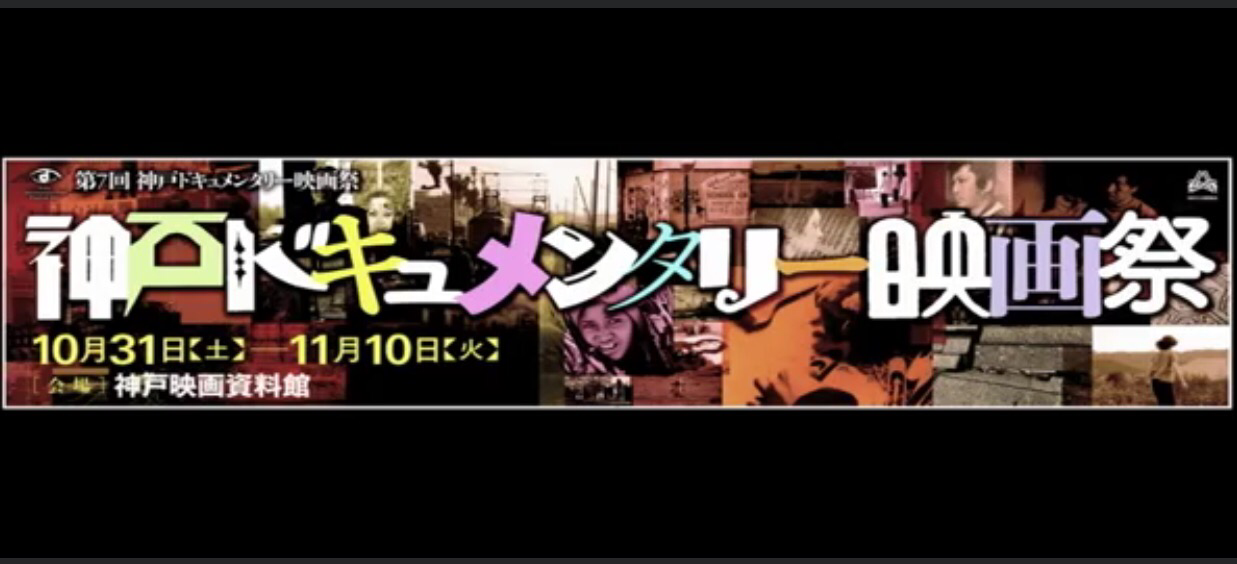
Kobe Documentary Film Festival 2015 第7回神戸ドキュメンタリー映画祭 (Oct 31st – Nov 10th)

In the autumn film festival madness, there are more film fests between October and November than stars in the sky, a very tiny but special place is occupied by the Kobe Documentary Film Festival,  an event established in 2009 at the Kobe Planet Film Archive. An important place for cinephiles and cinema lovers, the archive is a small structure, the theatre has only 38 seats, set up in 2007 and currently managed by Yasui Yoshio, one of the most renowed film historians and archivists of Japan. Incidentally Kobe has a special relationship to the seventh art, Edison’s Kinetoscope was imported to Kobe in 1896 and one year after the city was also the first place in Japan where the Lumiere brothers brought their Cinematographe

In these 7 years the mini festival, it’s more like a retrospective than a “real” fest, has presented works of Yanagisawa Hisao and Tsuchimoto Noriaki – in its 2 first editions, a special devoted to the great Tōhōku Earthquake and documentary in 2011, and the following year a retrospective on NDU and Nunokawa Tetsurō, a showcase that I was able to attend, a real discovery that allowed me to deepen my knowledge of one of the most important Japanese film collective of the 60s and 70s, a real treat. 

Kobe Documentary Film Festival kicks off tomorrow, October 31st,  and will last until November 10th. This year the main focus won’t be on one filmmaker or a movement in particular, but the screenings will be more varied. Discovering Images—The Age of Matsumoto Toshio, a documentary on Matsumoto Toshio by Takefumi Tsutsui, almost 12 hours (the work is divided in 5 parts) to retrace the career of one of the most important Japanese filmmakers and theorists of the post-bellic period, is maybe the most important to me. London (1994), Robinson in Space (1997) and Robinson in Ruins (2001) by Patrick Keiller, under the wave, on the ground (波のした、土のうえ) by Komori Haruka and Seo Natsumi will also be screened, and last but not least a special selection from the Yamagata International Documentary Film Festival, 5 films screened in the last 25 years at the prestigious event. 

Unfortunately I won’t be able to attend the festival this year, what I really wanted to see was the massive documentary on Matsumoto – I missed it at Yamagata as well, and under the wave, on the ground, but I’m sure there will be more chances to catch up with them. 

You can find the program here (only Japanese)

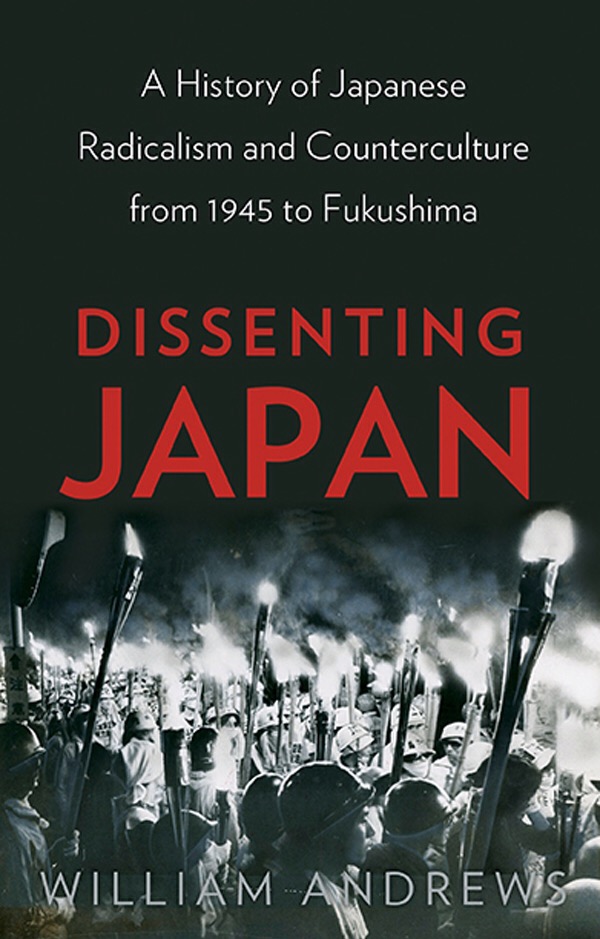
Dissenting Japan – A History of Japanese Radicalism and Counterculture 

Just a quick post to draw your attention on a significant book that the London-based Hurst will publish next September. The volume is titled Dissenting Japan – A History of Japanese Radicalism and Counterculture and is written by the Tokyo-based writer and translator William Andrews, who by the way runs an excellent blog on the same topic here


Here’s the description from the publisher’s homepage: 

Following the March 2011 Tsunami and Fukushima nuclear crisis, the media remarked with surprise on how thousands of demonstrators had flocked to the streets of Tokyo. But mass protest movements are nothing new in Japan. The post-war period experienced years of unrest and violence on both sides of the political spectrum: from demos to riots, strikes, campus occupations, factional infighting, assassinations and even international terrorism.
This is the first comprehensive history in English of political radicalism and counterculture in Japan, as well as of the artistic developments during this turbulent time. It chronicles the major events and movements from 1945 to the new flowering of protests and civil dissent in the wake of Fukushima. Introducing readers to often ignored aspects of Japanese society, it explores the fascinating ideologies and personalities on the Right and the Left, including the student movement, militant groups and communes. While some elements parallel developments in Europe and America, much of Japan’s radical recent past (and present) is unique and offers valuable lessons for understanding the context to the new waves of anti-government protests the nation is currently witnessing.

Who’s is familiar with documentary cinema (and cinema in general) knows very well that radicalism, dissenting, resistance and counterculture are a very important part of the vocabulary that defines the post war Japanese non-fiction landscape, and the fiction as well, especially during the 60s and 70s. Ogawa Production and Sanrizuka, Tsuchimoto Noriaki and Minamata, NDU and Okinawa and the borders, but also Kamei Fumio and his Sunagawa Trilogy, maybe the first Japanese works to fully embody this “philosophy” of resistance and struggle on film (excluding the Prokino before the war of course). 

For all these reasons, Dissenting Japan will probably be (I haven’t read it yet) a very important read not only for historians but also for film scholars interested in Japanese cinema and in documentary in general. I’ll certainly write more about it when the book is out. 

Best Japanese documentaries’ poll – results

More than 2 months have passed since I launched the best Japanese documentaries of all time poll, it’s time to wrap things up and to take a look at the results. Thanks everybody for your votes, for your support and for helping me spreading the word. sdgblogBefore digging into this fascinating trip through the history of Japanese non-fiction film, let me add some overall thoughts.
On the negative side, I have to admit that I’m a bit disappointed that I couldn’t get many people to vote, and this is partly my fault, the blog is pretty new and relatively unknown and I’ve been lazy and shy about pushing it through the social networks world. Besides, Japanese documentary is a niche subject inside a niche (Japanese cinema), and there are not so many people interested in documentary film as an art form, so I should have expected this. Many people, most of them cinema professionals, were kind enough to decline my invitation, honestly admitting their lack of knowledge in the field. After all, one of the purposes of the poll was indeed to check how much exposure Japanese non-fiction movies have in the world of cinephiles, so I shouldn’t really complain too much.
On the positive side, I was really surprised by the deep knowledge of the voters, most of them, I have to add, cinema professionals: festival programmers, critics, professors, and so on.
Below you’ll find the list, when possible I’ve added some information about each movie’s availability on DVD/BD.
Thanks again everyone, feedback and comments are, as always, welcomed.

1)Included in their lists by 40% of voters
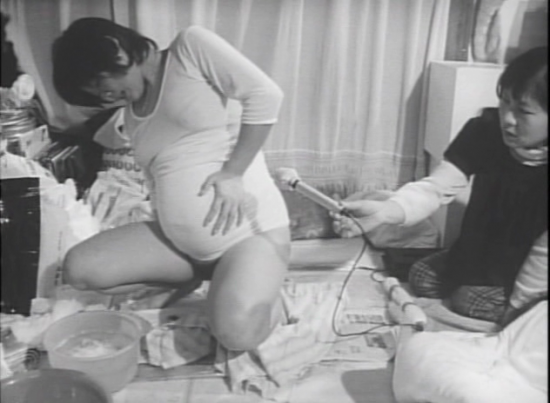
Extreme Private Eros: Love Song 1974 「極私的エロス・恋歌1974」 (Hara Kazuo, 1974)
Extreme_private_eros_hara_kazuo

Available on DVD (with English subtitles).

2)Included in their lists by 33% of voters
Children in the Classroom 「教室の子供たち」(Hani Susumu, 1954)
children_in_the_classroom_Hani
Available in Japanese in this Iwanami DVD box

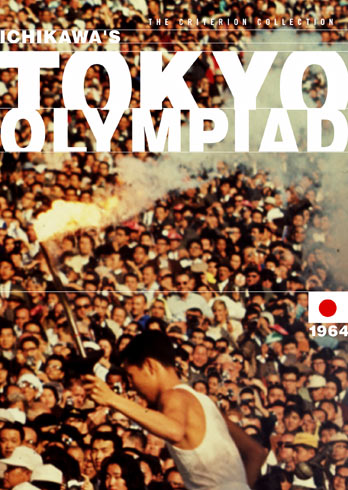
Tokyo Olympiad 「東京オリンピック」(Ichikawa Kon, 1965)
Tokyo_Olympiad_Ichikawa
Available on DVD in Japanese or with English sub, but the Criterion Collection edition is out of print.

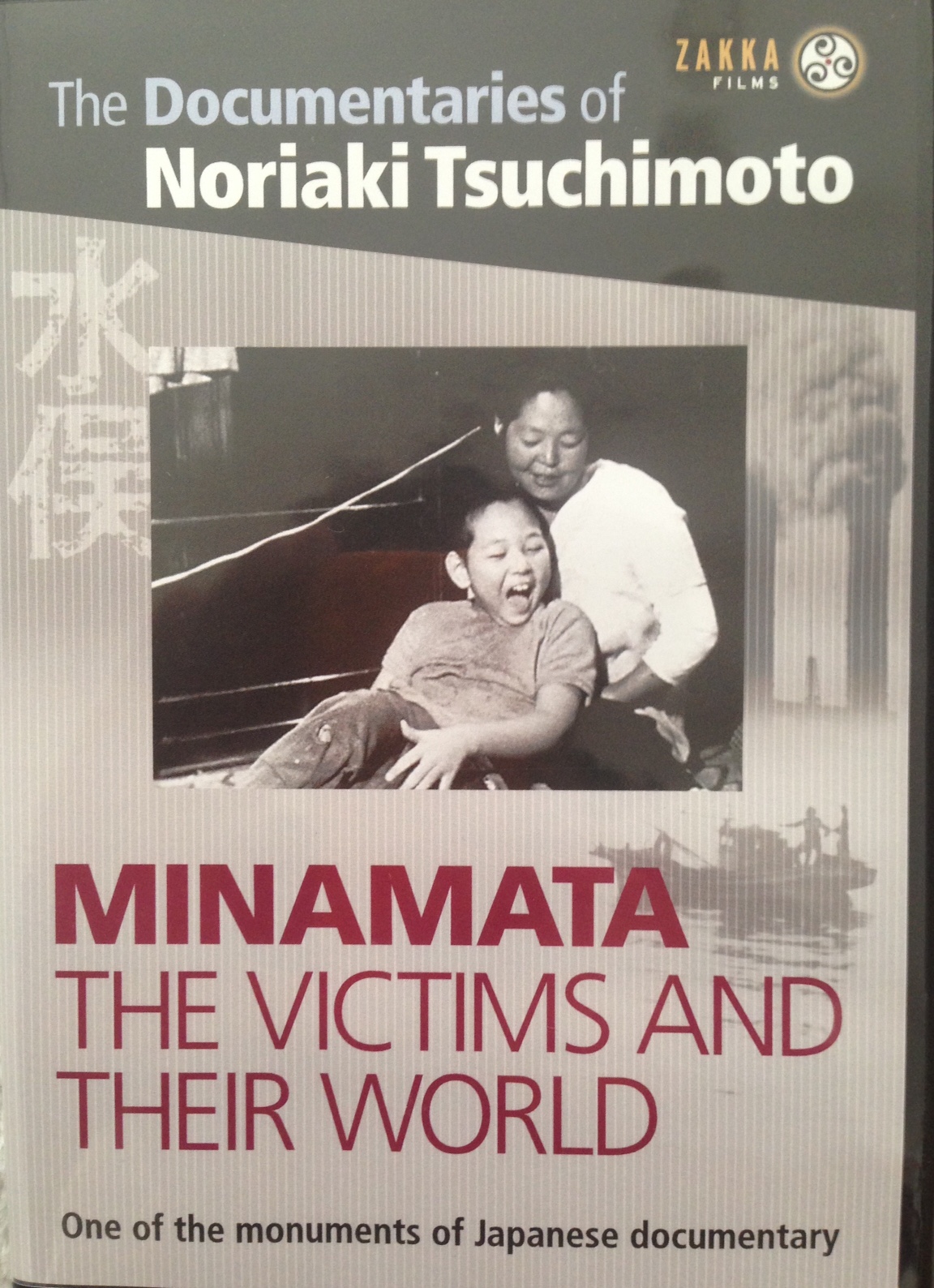
Minamata: The Victims and Their World 「水俣 患者さんとその世界」(Tsuchimoto Noriaki, 1971)
Minamata_Victims
Available on DVD with English sub by Zakka Films

The Emperor’s Naked Army Marches On 「ゆきゆきて、神軍」(Hara Kazuo, 1987)
Emperor_Naked_army_Hara_Kazuo
Available on DVD with English sub

3)Included in their list by 27% of voters
Without Memory 「記憶が失われた時」(Koreeda Hirokazu, 1996)
Without_memory_Koreeda
Not available

4)Included in their lists by 20% of voters
A.K.A. Serial Killer 「略称・連続射殺魔」 (Adachi Masao, Iwabuchi Susumu, Nonomura Masayuki, Yamazaki Yutaka, Sasaki Mamoru, Matsuda Masao, 1969)
AKA_serial_Killer
There used to be a VHS in Japanese….

Fighting Soldiers 「戦ふ兵隊」(Kamei Fumio, 1939)
vlcsnap-2015-01-23-09h11m10s188
Available in Japanese on DVD (the quality of the transfer is pretty low though). Here my analysis of the first scenes.

A Man Vanishes 「人間蒸発」(Shōhei Imamura, 1967)
A_Man_Vanishes_Imamura
Available on DVD with English subtitles by Master of Cinema and by Icaruswith 5 bonus documentaries made for TV by Imamura in the 70s (reccomended).

The Shiranui Sea 「不知火海」(Tsuchimoto Noriaki, 1975)
ShiranuiSea_Tsuchimoto
Available by Zakka Films with English sub.

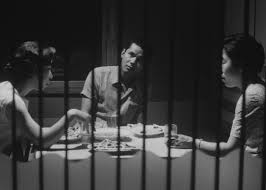
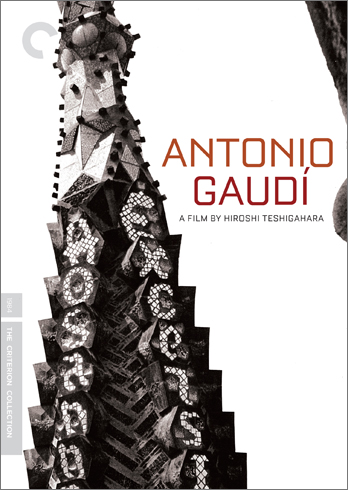
Antonio Gaudi 「アントニー・ガウディー」(Teshigahara Hiroshi, 1985)
antonio_gaudi_teshigahara
Available with English sub by Criterion Collection.

5)Included in their list by 13,3% of voters
For My Crushed Right Eye 「つぶれかかった右眼のために」(Matsumoto Toshio, 1968)
for-my-crushed-right-eye
The work is in the Matsumoto Toshio DVD collection – volume 2 – released by Uplink (now out of print?) in Japanese.

Goodbye CP [さよならCP] (Hara Kazuo, 1972)
Goodbye_CP_Hara_Kazuo
Available with English sub by Facets Video.

Narita: Heta Village 「三里塚・辺田部落」(Ogawa Production, 1973)
IMG_1328
Not available on DVD or VHS

God Speed You! Black Emperor 「ゴッド・スピード・ユー!」(Yanagimachi Mitsuo, 1976)
godspeedyou_emperor
Available in Japanese on DVD (used and expensive).

The Cherry Tree with Gray Blossoms 「薄墨の桜」(Haneda Sumiko, 1977)
vlcsnap-2015-01-28-21h24m04s10
Available on DVD (only in Japanese) by Jiyū Kōbō or in this Iwanami Nihon Documentary DVD-BOX

Magino Village – A Tale / The Sundial Carved With A Thousand Years of Notches 「1000年刻みの日時計 牧野村物語」(Ogawa Production, 1986)
magino1
Not Available

Embracing 「につつまれて」(Kawase Naomi, 1992)
Embracing_Kawase_Naomi
Available in Japanese with English sub in this DVD-BOX

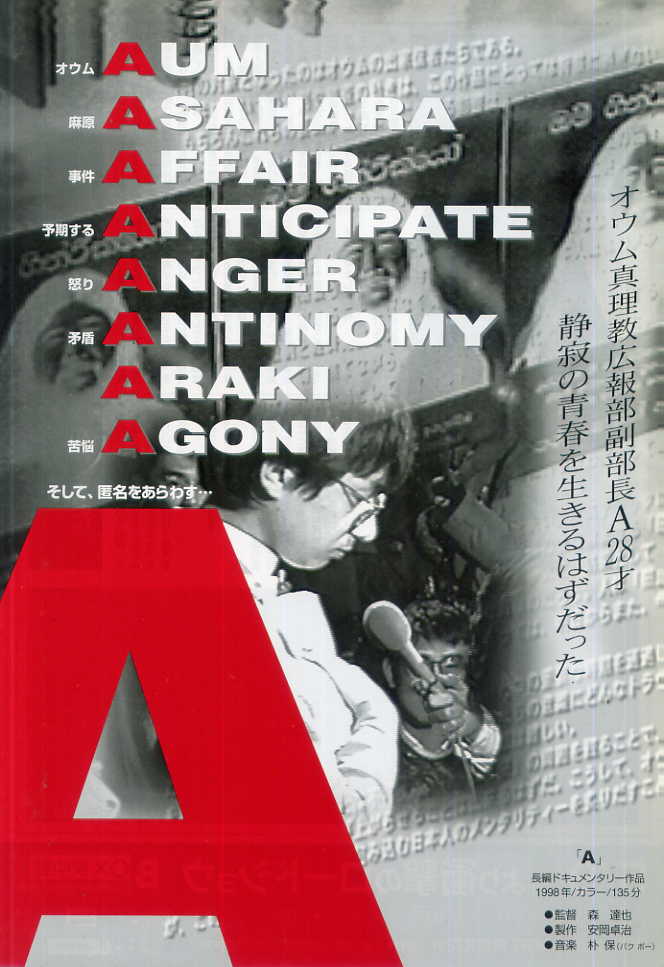
A (Mori Tatsuya, 1998)
A_Mori_Tatsuya
Available with English sub by Facets Video

The New God 「新しい神様」(Tsuchiya Yutaka, 1999)
IMG_3593
Available on DVD in Japanese

Memories of Agano (阿賀の記憶, 2004 Satō Makoto)
IMG_0105
Available on DVD with English sub by SIGLO.

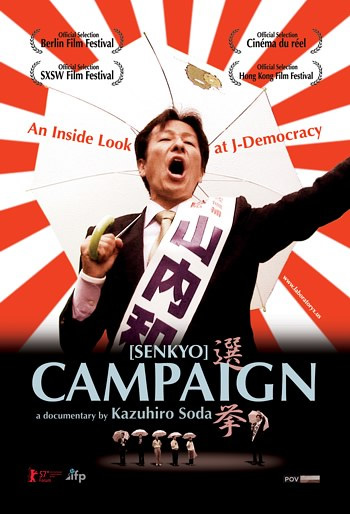
Campaign 「選挙」(Sōda Kazuhiro, 2007)
Campaign_Soda_Kazuhiro
Available on DVD with English sub.

Japanese documentary-related catalogues

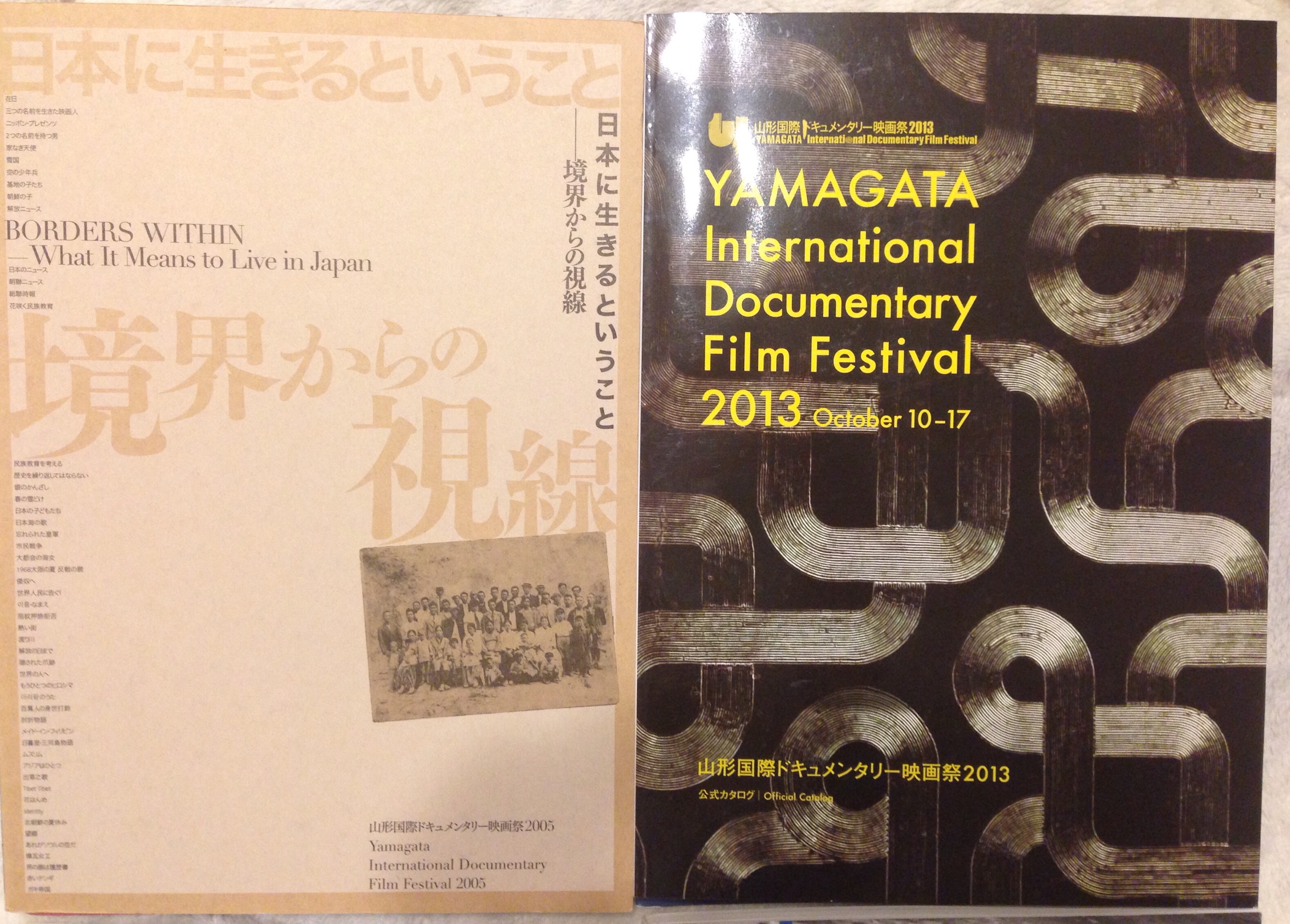
A lighter and more “visual” post today, some photos of the Yamagata International Documentary Film Festival’s catalogues I have at home:

2015/01/img_3378.jpg

YIDFF 1993 (Japanese documentaries of the 60s) and YIDFF 2003 (Ryūkyū Reflections Nexus of Borders)

2015/01/img_3377.jpg

YIDFF 1995 (Japanese documentaries of the 70s) and YIDFF 1997 (Japanese documentaries of the 80s and beyond)

2015/01/img_3379.jpg

YIDFF 2005 (Borders Within What It Means to Live in Japan) and YIDFF 2013

They’re in English and are an essential resource if you’re interested in Japanese cinema or documentary in general. For me personally “Ryūkyū Reflections Nexus of Borders” was a discovery: non-fiction films and the history of Okinawa, a place where all the contradictions and problematics arising from Japan-as-a-state and its relationship with other nations and its own inner borders are embodied and magnified. Or as Higashi Yoichi once said talking about his documentary Okinawa Islands (1969)
Continue reading “Japanese documentary-related catalogues”

Best 10 Japanese documentaries – my list

As a reminder that you still have a month to join the poll “Best 10 Japanese documentaries of a time” I’ve put together my list. I left out many good and inspiring documentaries made in recent years (Genpin, No Man’s Zone, Flashback Memories and others) and I’ve cheated twice, but anyway:

vlcsnap-2013-10-27-18h56m10s89
Fighting Soldiers (戦ふ兵隊, 1939 Kamei Fumio)

/home/wpcom/public_html/wp-content/blogs.dir/279/79975380/files/2015/01/img_3366.jpg
Children Who Draw (絵を描く子どもたち, 1956 Hani Susumu)

AKA-SerialKiller
A.K.A. Serial Killer (略称・連続射殺魔, 1969 Adachi Masao, Iwabuchi Susumu, Nonomura Masayuki, Yamazaki Yutaka, Sasaki Mamoru, Matsuda Masao)

motoshinkakarannu
Onikko (鬼ッ子 闘う青年労働者の記録, 1969) and
Motoshinkakarannu (沖縄エロス外伝 モトシンカカランヌー 1971) by NDU/Nunokawa Tetsurō

Minamata_Victims
Minamata: The Victims and Their World (水俣 患者さんとその世界, 1971 Tsuchimoto Noriaki)

hetaburaku083
Sanrizuka: Heta Village (三里塚 辺田部落,1973) and
Magino Village – A Tale / The Sundial Carved With A Thousand Years of Notches (1000年刻みの日時計 牧野村物語, 1986) by Ogawa Pro

akamata
Song of the Akamata–The life histories of the islanders, Komi, Iriomote Islands, Okinawa (海南小記序説・アカマタの歌-西表・古見, 1973 Kitamura Minao)

/home/wpcom/public_html/wp-content/blogs.dir/279/79975380/files/2015/01/img_3040.png
Extreme Private Eros 1974 Love Song (極私的エロス・恋歌1974, 1974 Hara Kazuo)

/home/wpcom/public_html/wp-content/blogs.dir/279/79975380/files/2015/01/img_3370.jpg
The Cherry Tree with Gray Blossoms (薄墨の桜, 1977 Haneda Sumiko)

Memories_Agano1
Memories of Agano (阿賀の記憶, 2004 Satō Makoto)

Tsuchimoto Noriaki, Minamata: The Victims And Their World (1971) a milestone in Japanese documentary

Minamata_Victims

Disclaimer: as I wrote few days back on twitter, I’ll kick off 2015 with a little experiment. I’ve translated (and partly rewritten) in English my post on Minamata: The Victims and their World. As English is my second language, inevitably some subtleties and nuances of the original Italian piece are probably lost. Feedback and/or suggestions are welcome.

Minamata: The Victims and Their World (水俣 患者さんとその世界, 1971)

Director: Tsuchimoto Noriaki
Production: Higashi Productions
Producer: Takagi Ryutarō
Camera: Ōtsu Kōshirō
Editor: Tsuchimoto Noriaki, Sekizawa Takako
Year: 1971
Links: review by Cathy Munroe Hotes, DVD by Zakka Films

Tsuchimoto Noriaki is one of the major figures in Japanese documentary history, and although he also made works about Afghanistan, road construction and other diverse topics, he is best known for the series made in more than 30 years about the victims of Minamata disease. Tsuchimoto first came into contact with the reality of Minamata, a city located in Kumamoto prefecture, in 1965 when he was commissioned to make a short documentary for television, Minamata no kodomo wa ikiteiru. After this experience, when approaching the victims was not as easy as one might expect, he went back to Minamata in 1970 and started to film the lives of the residents in a different manner and to uncover a Pandora’s box of horrors. Minamata had been the scene of one of the largest poisonings perpetrated by man to himself and to the environment, and the city’s name will remain forever linked to the chemical company Chisso, which from 1932 to 1968 polluted the Shiranui Sea and the Minamata Bay with huge quantities of mercury. The metal entered the food chain and caused what is now called Minamata disease (Minamata-byō), a neurological syndrome that was first discovered in 1956. Over the years, the disease has affected more than ten thousand people and killed more than two thousand, but these are just the officially recognized, numbers; the damages and effects of this crime sadly are not always quantifiable or legally provable, and there have been accusations of collusion between the Japanese government and the Chisso corporation to cover up the disaster.
Structurally Minamata: The Victims and Their World consists of a series of interviews, conducted by Tsuchimoto himself, with the victims and relatives of those who had been affected by the disease. These interviews reveal the daily lives of the inhabitants damaged by the poisoning: their relationship with the sea, the sickness and the painful memory of the deceased. The interview scenes are interspersed with moments in the lives of fishermen, their habits and traditions, and meetings and rallies in the streets to protest Chisso and the government. It is worth pointing out that the crime perpetrated by Chisso is something inherent in the capitalist system, a tragic result of the dynamics of exploitation of poor and marginal areas and not merely an incident in the course of normal industrial activities.
As a documentary director, Tsuchimoto had to face two big problems, (re)gaining the trust of the people whose lives and tragedies were often spectacularized and exploited by the media, as he experienced firsthand when making the aforementioned TV documentary, and secondly deconstructing the contrasting feelings of hate and gratitude towards Chisso that were present in many residents, even unconsciously. Tsuchimoto was well aware of all these contradictions, and one of his major achievements was his ability to achieve a balance between the anger with which he was unmasking the dark side of modernization in Minamata, and the human touch with which he always managed to present the victims and give them dignity.
We are introduced to the world of Minamata by a series of information about the poisoning and the Chisso corporation, displayed at the beginning of the documentary. These words substitute for the initial narration, the voice-of-god so often used in mainstream documentaries, and are soon followed by the first images of the area, the lapping of the water and a fishing boat in the sea. This is a highly symbolic start, as the water that dispenses life to the fishing community and upon which the community’s life is based, is the same water that, polluted by mercury, destroys their lives. The lack of sync between the image and the sound, due to the lack of the right technology, was very common in Japanese independent documentary of the time; most of Ogawa Pro’s works of the Sanrizuka period, for instance, were affected by the same “problem”. This technical limitation forced directors, including Tsuchimoto, to combine images and sound in highly creative ways. The words and cries of the victims and of their families are often overlapped with images showing the tragic effects of mercury poisoning upon the residents of Minamata, in the fishing scenes that often punctuate the documentary, a beautiful and almost ancient music contributes to creating an epic atmosphere that envelops the lives of these fishing communities, the most impressive and famous of these shots depict an elderly man, who has lost his wife because of the disease, fishing for octopi.

As a viewer watching the movie at the beginning of the 21st century, it is also worth noting that the images in black and white and the aforementioned lack of sync, pose as a further filter for the viewer, allowing Tsuchimoto to successfully avoid spectacularization of grief and the subsequent exploitation of the lives of the victims. We still see sick people and children whose lives were completely ruined, particularly touching is when in a series of harrowing scenes we are introduced to a young boy, who is drooling, staggering, and unable to move and speak freely. But the way the camera follows him and presents his and his family’s grief, is a form of respect that reveals his dignity as a human being. This attention towards the weak and the other is one of the highest achievements of Tsuchimoto’s body of work, it is a cinematic touch that serves also as a very powerful ethical statement on the meaning of being human, an approach that will reach a new level and culmination in The Shiranui Sea (1975), another documentary dedicated to the victims of Minamata.
In the second part of the documentary, we follow the journey of the victims and their families to Osaka, where the Chisso biannual shareholders meeting took place in 1970. This trip to the second largest city in Japan is also important because Osaka is the place that in the same year (1970) housed the International Exposition. Together with the Tokyo Olympics in 1964, this international event helped to reposition Japan in the international political map and in doing so marked the complete admission of Japan to modernity and the Western world. Exposing the dark side of modernization, Tsuchimoto is thus making a very powerful political statement about the development of Japanese society and modern societies in general, revealing the unavoidable part maudite.
The meeting between the leaders of Chisso corporation and the Minamata representatives almost resulted in a riot, with a sort of guerilla filmmaking reminiscent of the cacophony of Sanrizuka and the student protests, Tsuchimoto and director of photography Ōtsu Kōshirō show us the people of Minamata invading the stage and surrounding the CEO and his staff as if symbolically destroying the verticality between the zaibatsu and the people. Again here, as in the Sanrizuka documentaries of Ogawa Pro of the same time, the soul of the protest was feminine, and the ones who verbally confronted the Chisso CEO more than anyone else were in fact women and mothers driven by rage and grief.

Minamata_Victims_DVD

The opportunities to see Japanese documentaries outside of the archipelago are really few, and usually restricted to film festivals, especially when these works were shot in 16mm or 35mm. It is thus noteworthy that Minamata: The Victims and Their World, together with The Shiranui Sea and other Tsuchimoto’s works, is available on DVD with English subtitles through the dedicated work of independent label Zakka Films.
(Special thanks to Ono Seiko and Tsuchimoto Motoko)

Tsuchimoto Noriaki, Minamata: The Victims and Their World (1971) una pietra miliare del cinema documentario giapponese

Minamata_Victims

Here the English version

Regia: Tsuchimoto Noriaki. Fotografia: Otsu Koshiro. Produzione: Higashi Production. Produttore: Takagi Ryutaro.
Durata: 120’. Anno: 1971.
Reperibilità: DVD Zakka Films

Tsuchimoto Noriaki entra in contatto per la prima volta con la realtà di Minamata nel 1965 quando realizza un documentario per la televisione, Minamata no kodomo wa ikiteiru, ed inizia a calarsi in quella che nel corso degli anni sarebbe diventata l’avventura della sua vita, non solo artisticamente parlando. Tsuchimoto nato nella prefettura montuosa di Gifu, nel 1970 ritorna nell’isola meridionale di Kyushu per scoperchiare quella scatola degli orrori, ed è l’orrore del sistema non quello dell’incidente di percorso, che è stata e continua ad essere, per quanto gli stessi abitanti del luogo vogliano dimenticare, la città di Minamata. Luogo e teatro di uno dei più grandi avvelenamenti perpetrati dall’uomo verso sé stesso e l’ambiente, il nome della città rimarrà per sempre legato all’industria chimica di Chisso che dal 1932 al 1968 riversa nel mare, come materiale di scarto, quantità enormi di mercurio. Il metallo entra nella catena alimentare e finisce per causare la cosiddetta malattia di Minamata (Minamata-byō) che nel corso degli anni colpisce più di diecimila persone uccidendone quasi duemila, ma questi sono solo numeri di superficie, i danni e gli effetti di questa tragedia non sono sempre quantificabili e legalmente dimostrabili ed è questa un’ulteriore tragedia che lascia coloro che ne sono colpiti ancora più umiliati.
Fin dapprincipio però Tsuchimoto si accorge come molte delle famiglie rifiutano di lasciarsi filmare dopo che i media, già all’epoca, avevano sfruttato la tragedia ed il dolore delle persone per creare spettacolo. In più, in molti abitanti dell’area colpita era presente un contrastante sentimento di odio e gratitudine verso la Chisso che grazie al complesso industriale costruito nelle zone aveva sollevato, almeno secondo alcuni, dalla povertà la popolazione locale. Conscio di tutte queste condraddizioni Tsuchimoto riesce a realizzare un vero e proprio capolavoro di equilibri, da una parte la rabbia con cui smaschera i processi con cui la modernità si evolve nell’arcipelago giapponese e nel particolare nella zona di Minamata schiacciando i ceti inferiori, dall’altra l’umanesimo con cui riesce sempre a presentare le vittime e a dare loro dignità.
Il film inizia con lo sciabordio dell’acqua e una barca di pescatori da sola in mezzo al mare, l’acqua che dà la vita alla comunità dei pescatori ma che allo stesso tempo, inquinata dal mercurio, le vite le distrugge. Il bianco e nero nelle scene, liriche, tramuta il blu del mare nell’argento del mercurio portatore di morte. Il fuori sincrono delle interviste (dovuto probabilmente alle limitazioni tecniche) costringe Tsuchimoto ad inventarsi un montaggio di immagini che scorrano sulle parole, pianti e grida delle vittime e dei loro familiari. La bellissima musica poi in alcune scene contribuisce a creare quell’epopea della vita dei pescatori e della loro comunità, per esempio nelle scene di pesca del polpo da parte di un anziano pescatore che ha perso la moglie a causa della malattia.

Le foto dei deceduti, bambini di meno di cinque anni e di una ragazza nel fiore dei suoi anni scorrono con il sonoro delle parole delle loro famiglie, sono immagini che muovono lo spettatore, molto forti ma allo stesso tempo molto empatiche, la bravura di Tsuchimoto e del direttore della fotografia Otsu Koshiro sta proprio nel rispetto verso il soggetto filmato, le immagini in bianco e nero pongono poi un certo filtro verso lo spettatore e non si soffermano mai con morbosa volontà su coloro che parlano, evitano di usare il dolore cioè come eccitante per coloro che guardano. Si vedono comunque dei bambini e un giovane ragazzo malati e sono scene strazianti, la bava, i movimenti spastici, l’autosufficienza negata e la difficoltà di comunicare, ma la mdp li segue con leggerezza e rivelando sì il loro dolore e quello dei familiari, ma rispettandoli e rivelando la loro dignità di esseri umani. Sono proprio questo equilibrio e questa cura ed attenzione verso il debole ed il diverso alcuni dei più alti conseguimenti del cinema di Tsuchimoto e che raggiungeranno forse il loro coronamento in The Shiranui Sea (1975), sempre dedicato alle vittime di Minamata.
Strutturalmente il lavoro è composto da interviste alle vittime, ai genitori ed ai parenti di coloro che sono stati colpiti dalla malattia che raccontano la loro vita di ogni giorno, una quotidianità che gira attorno al mare ed il doloroso ricordo dello scomparso. A queste scene sono intervallate altre di vita nel mare dei pescatori, le loro abitudini e tradizioni, e scene di riunioni e comizi in piazza per protestare contro la Chisso e lo stato che ha aiutato a coprire il crimine perpetrato. Nella seconda parte del documentario vediamo il viaggio delle vittime e dei loro familiari verso Osaka ed è importante perchè la processione per le strade della città è diretta verso l’ufficio centrale della Chisso ma anche perchè Osaka è la città che ospita nello stesso anno, il 1970, l’Expo, evento che assieme alle Olimpiadi di Tokyo del 1964 sancirà la definitiva apertura del Giappone al mondo dopo la sconfitta bellica e l’accettazione del paese asiatico nella modernità occidentale. L’incontro fra i vertici della Chisso e la rappresentanza di Minamata sfocia in cacofonia e quasi in una rivolta, persone invadono il palco accerchiando il presidente ed il suo staff quasi a voler distruggere quella verticalità fra saibatsu e popolo sfruttato che ha contraddistinto la tragedia. Ancora una volta qui, come nei documentari coevi di Sanrizuka della Ogawa Pro, l’anima della protesta è femminile con le donne e le madri che nel dolore immenso per una vita distrutta aggrediscono verbalmente il presidente della Chisso. Il film si conclude con le immagini di pesca e col sottofondo musicale dei canti tradizionali di Minamata cantati dalle vittime e da tutte le persone del villaggio. Inizia con questo film come si diceva più sopra una vera e propria missione per Tsuchimoto che nell’arco di tutta una vita fino alla morte avvenuta nel 2008 dedicherà alle vittime di Minamata ben 14 documentari.

Minamata_Victims_DVD

In un panorama internazionale in cui i documentari provenienti dall’arcipelago giapponese reperibili sono davvero pochissimi, è un fatto non secondario che il film, assieme anche al già citato The Shiranui Sea, sia disponibile in DVD con sottotitoli in inglese presso Zakka Films.
(Un grazie di cuore a\Special thanks to Ono Seiko and Tsuchimoto Motoko)