Yamagata Doc Film Fest, report – day 1

From a rainy Yamagata, I wrote down some thoughts about yesterday, October 10th, my first day at this year festival. Good movies, some unexpected discoveries, lively discussions and as always, great atmosphere at Komiya, the place where almost everybody meets & drinks at night.

My day started with a surprisingly good documentary, France Is Our Mother Country (2015), from Rithy Panh, the French-Cambodian filmmaker author of The Missing Picture and s21, works that focus on the aftermath of the Khmer Rouge regime in Cambodia. France Is Our Mother is an archive documentary entirely made of footage from the former French colony of Indochina, but Panh uses these images in a creative and even ironic way, when not sarcastic, to express all the sense of superiority of the colonizers (France) towards the colonized. Without a single spoken word but rich in music, now minimalist, now almost noise-like, and with the use of ironic but thought-provoking intertitles, the movie reaches almost an hypnotic quality. After few minutes in it we already start to realise how the film is a history in images, but also and at the same time a history of images, besides the obvious but tragic elements of oppression shown, what slowly sneaks into the viewers’ mind is a sense that basically everything can be demonstrated with images, after all wasn’t the footage shot by the colonizers themselves? At a certain point, this is my personal and extreme experience of it, I even started to doubt about the “reality” of the images, “couldn’t some of them just be fake?” I asked myself. The answer is: of course not, but this reaction made me realised how deceptive and open to interpretations images can be, and this is for me the best quality of France Is Our Mother Country.
The second movie of the day was Millets Back Home (2013) by the Taiwanese Sayun Simung, a documentary about the small Tayal ethnic minority living in a mountain village in Taiwan, a tribe to which the young director herself belong to. A very interesting work for its topic – how to transmit and keep alive minor languages, traditions and customs in our present world- but less for its style, too journalistic and straightforward, at least for my taste. Better was the talk after the screening when a member of the Tayal went onstage and sang a traditional chant.

The first movie in the afternoon was the highly anticipated The Pearl Button by Patricio Guzmán, a film that deserves all the praised it earned around the world. It stretches from the very distant – in time and space, the stars and the universe – to the very small of a button found at the bottom of the ocean. From the purity of a quartz and the almost celestial lightness of the sky and the water, to the gravity of death, torture and human beings smashed in the cogs of History (the Chilean dictatorship).
The 4th documentary of the day was Under the Cherry Tree (2015) by Tanaka Kei, a young Japanese director who followed the lives and struggles of 4 elderly people in a public housing complex in Kawasaki. Shot in low-tech and very simple in its style, no narration but intertitles to explain the background of these people and their problems, nonetheless Tanaka is very good at conveying through her camera the loneliness, the feeling of approaching death and the dreariness of their lives.
The last one of the day wasn’t a novelty for me, I had watched Aragane (2015) by Oda Kaori a couple of months ago on a screener, but seeing it on the big screen and with the proper sound system just confirmed the quality of the movie and the boldness of Oda in making an experimental work in form of documentary. Shot in a mine in Sarajevo, Aragane is composed of long takes mainly in the underground darkness, the real protagonists of the movie are the machinery, the flashing lights and a ceaseless noise enveloping the images. Hypnotic in the way Oda conveys the materiality of time and the sense of duration, Aragane reminded me, with due distinctions, of some works made by Harvard University’s Sensory Ethnography Lab, I’m thinking especially of The Iron Ministry and Manakamana.

That’s all for the first day in Yamagata, tomorrow or maybe after tomorrow for the next reports.
Yamagata International Documentary Film Festival 2015 – Perspectives Japan and Latinoamérica

This year Yamagata International Documentary Film Festival is kicking off today Oct 8th in the Japanese city, and promises an intense and full week of non-fiction cinema and all its forms, a must for everyone interested in documentary.
This is the second post I dedicated to this year event and its line-up. While in the first one I wrote about Competition and New Asian Currents (you can read it here), today I’d like to take a look at Perspectives Japan, a selection of new Japanese docs, and Latinoamérica—The Time and the People: Memories, Passion, Work and Life, a retrospective on the so called Third Cinema (Tercer Cine) and its resonances with the contemporary non-fiction production in Latin America.

Perspective Japan, as stated on the official page, will introduce “Five dynamic films that defy convention (…) in a display of the powerful contemplation and fresh vibrancy being explored in Japanese documentary filmmaking.”
Of the 5, the only one I had the chance to see is THE COCKPIT, a relatively short documentary (just a bit more than an hour) about a group of hip-hop musicians working on a new song. A static and almost hypnotic work, especially in its first part where the camera in a fixed position is showing us the rapper OMSB at work on his mixing console chatting to his mates. The Cockpit is a nice piece of non-fiction cinema, minimalistic in its approach, but interesting and watchable not only for wannabe-musicians. Okinawa: The Afterburn, directed by John Junkerman – an American who has lived in Japan for almost 40 years (and for a certain period in Okinawa itself) – is a deep look at the recent history of the islands, always a crucial geopolitical space to understand Japan and its tensions and relationship with the outside. Completing the line-up for Perspective Japan: PYRAMID: Kaleidoscope Memories of Destruction (Sasakubo Shin), Under the Cherry Tree (Tanaka Kei) and Voyage (Ikeda Sho).

As for the Latinoamérica section, it’s going to be an incredible journey at the heart of what was happening – social and political changes, resistance, upheavals, revolutions, massacres -during the 60s and 70s in Central and South America. Milestones of word documentary such as Patricio Guzmán‘s The Battle of Chile 1,2 and 3 will be screened alongside works of Luis Ospina and a mini-retrospective of short chilean documentaries, including films from Raúl Ruiz (The Suitcase, 1963) and Joris Ivens (. . . A Valparaiso, 1963, with commentary written by Chris Marker), almost 30 works in total, a visual feast not to be missed.

As written before, I’ll be there for 3 days (Oct 10th to 12th), if time permits, I’ll be posting, or more likely twitting, about it. Stay tuned.

Japanese documentary-related catalogues

A lighter and more “visual” post today, some photos of the Yamagata International Documentary Film Festival’s catalogues I have at home:

2015/01/img_3378.jpg

YIDFF 1993 (Japanese documentaries of the 60s) and YIDFF 2003 (Ryūkyū Reflections Nexus of Borders)

2015/01/img_3377.jpg

YIDFF 1995 (Japanese documentaries of the 70s) and YIDFF 1997 (Japanese documentaries of the 80s and beyond)

2015/01/img_3379.jpg

YIDFF 2005 (Borders Within What It Means to Live in Japan) and YIDFF 2013

They’re in English and are an essential resource if you’re interested in Japanese cinema or documentary in general. For me personally “Ryūkyū Reflections Nexus of Borders” was a discovery: non-fiction films and the history of Okinawa, a place where all the contradictions and problematics arising from Japan-as-a-state and its relationship with other nations and its own inner borders are embodied and magnified. Or as Higashi Yoichi once said talking about his documentary Okinawa Islands (1969)
Continue reading “Japanese documentary-related catalogues”

Best 10 Japanese documentaries – my list

As a reminder that you still have a month to join the poll “Best 10 Japanese documentaries of a time” I’ve put together my list. I left out many good and inspiring documentaries made in recent years (Genpin, No Man’s Zone, Flashback Memories and others) and I’ve cheated twice, but anyway:

vlcsnap-2013-10-27-18h56m10s89
Fighting Soldiers (戦ふ兵隊, 1939 Kamei Fumio)

/home/wpcom/public_html/wp-content/blogs.dir/279/79975380/files/2015/01/img_3366.jpg
Children Who Draw (絵を描く子どもたち, 1956 Hani Susumu)

AKA-SerialKiller
A.K.A. Serial Killer (略称・連続射殺魔, 1969 Adachi Masao, Iwabuchi Susumu, Nonomura Masayuki, Yamazaki Yutaka, Sasaki Mamoru, Matsuda Masao)

motoshinkakarannu
Onikko (鬼ッ子 闘う青年労働者の記録, 1969) and
Motoshinkakarannu (沖縄エロス外伝 モトシンカカランヌー 1971) by NDU/Nunokawa Tetsurō

Minamata_Victims
Minamata: The Victims and Their World (水俣 患者さんとその世界, 1971 Tsuchimoto Noriaki)

hetaburaku083
Sanrizuka: Heta Village (三里塚 辺田部落,1973) and
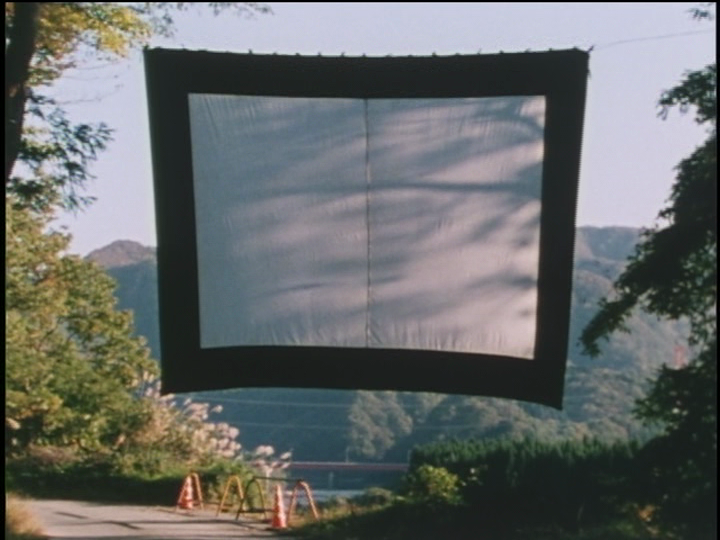
Magino Village – A Tale / The Sundial Carved With A Thousand Years of Notches (1000年刻みの日時計 牧野村物語, 1986) by Ogawa Pro

akamata
Song of the Akamata–The life histories of the islanders, Komi, Iriomote Islands, Okinawa (海南小記序説・アカマタの歌-西表・古見, 1973 Kitamura Minao)

/home/wpcom/public_html/wp-content/blogs.dir/279/79975380/files/2015/01/img_3040.png
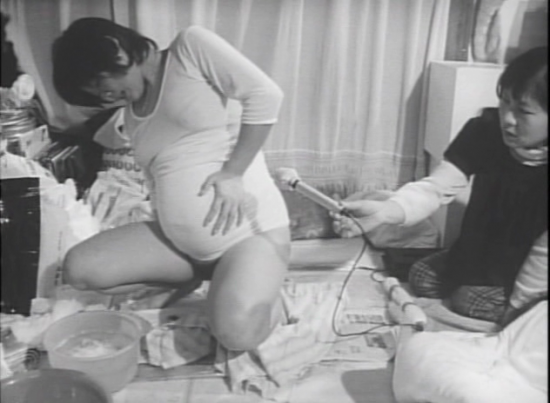
Extreme Private Eros 1974 Love Song (極私的エロス・恋歌1974, 1974 Hara Kazuo)

/home/wpcom/public_html/wp-content/blogs.dir/279/79975380/files/2015/01/img_3370.jpg
The Cherry Tree with Gray Blossoms (薄墨の桜, 1977 Haneda Sumiko)

Memories_Agano1
Memories of Agano (阿賀の記憶, 2004 Satō Makoto)

Yamagata: un archivio dei documentari sul terremoto, tsunami e crisi nucleare dell’ 11 marzo 2011

311_yamagata_film_archive_opt

Yamagata è una cittadina ed una prefettura situata nella zona nord occidentale del Giappone, per intenderci dall’altro lato dell’arcipelago rispetto a dove l’11 marzo del 2011 il terremoto prima e lo tsunami poi colpirono e si scagliarono con una forza inaudita tanto da portare a quella crisi nucleare nelle centrali nucleari di Fukushima che ancora oggi non vede vie d’uscita. Ma Yamagata è anche la zona dove ogni due anni si tiene il più importante festival del cinema documentario asiatico, e aggiungerei anche un dei più importanti a livello internazionale, il Yamagata Internatinal Documentary Film Festival, fondato nel 1989 anche per volere di Ogawa Shinsuke, colui che forse più di chiunque altro ha plasmato la storia del documentario dell’arcipelago. Un festival che soprattutto nei primi anni della sua esistenza ha funzionato anche da volano per la comunità documentaristica asiatica (cinese e coreana, ma non solo) che molto si è ispirata in un momento particolare per il continente asiatico all’opera di Ogawa e del suo collettivo.

yidff2013poster_rgb-2

Ebbene, nell’edizione del festival del 2011 molto del programma fu dedicato inevitabilmente alle produzioni non-fiction scaturite dalla tragedia del terremoto e da quella conseguente di Fukushima, una crisi quella nucleare che colpì e che continua a colpire ancora oggi la prefettura di Yamagata in quanto la distanza dalle centrali nucleari non è poi così vasta. Soprattutto a livello umano poi il legame fra le due zone è molto forte in quanto molti dei rifugiati che sono scappati dalle zone colpite dallo tsunami o dal fallout nucleare hanno trovato ospitalità e riparo proprio a Yamagata. Il festival grazie anche alla collaborazione di Markus Abè Nornes, lo studioso occidentale che sta più di tutti aiutando a (ri)portare il documentario giapponese sulla mappa cinematografica internazionale, ha deciso di costituire un archivio con i film indipendenti sulla triplice tragedia, realizzati sia da giapponesi che da non giapponesi. L’archivio si propone quindi come una memoria collettiva dove poter vedere e studiare, anche a distanza di decenni, ciò che fu prodotto come conseguenza del terremoto e dello tsunami del 2011, al di là dei prodotti documentari televisivi che comunque hanno già un archivio tutto loro.
Per ora l’archivio consta di circa una sessantina di documentari, la lista la potete trovare qui. Come detto, ciò che piace e sembra importante di questa iniziativa è il suo puntare su tempi lunghi se non lunghissimi, in una contemporaneità in cui siamo continuamente soffocati da un presente che sembra allargarsi sempre di più senza portare da nessuna parte, iniziative di questo genere, che nella loro vastità temporale e concettuale si rivolgono a tempi storici lenti ma più profondi, risulta come una vera e propria boccata di aria fresca.