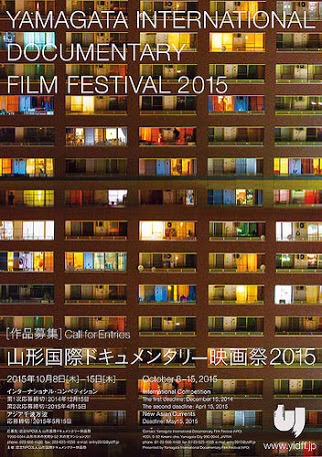
Yamagata International Documentary Film Festival 2015 – International Competition and New Asian Currents

The Yamagata International Documentary Film Festival has completed its line-up, once more a rich and very interesting one, at least if you’re into the world of non-fiction cinema. The biennial event co-established in 1989 by Ogawa Shinsuke and dedicated to the exploration of the world of documentary, in its broadest sense, will take place as usual, in the Japanese city of Yamagata next October from 8th to 15th.                        I’ll be there for 3 days, from the 10th to the 12th, and hopefully I’ll be able to write down and post something, possibly a brief daily report, after-screening parties permitting….anyway, let’s see what this year program is offering us, of course I’ll focus more on the Japanese works.

These are the sections:

– International Competition

– New Asian Currents

– Perspectives Japan

– Yamagata Rough Cut!

– Latinoamérica The Time and the People: Memories, Passion, Work and Life

– Double Shadows—Talking about Films that Talk about Films

– Past and Future Stories of the Arab Peoples

– Cinema with Us 2015

– Yamagata and Film

The competition this year is graced with the presence of some big names such as Patricio Guzmán and Pedro Costa, in Yamagata with The Pearl Button and Horse Money respectively. Another title, among the 15 in competition, that has attracted my attention is the long (334′) Homeland (Iraq Year Zero) by Abbas Fahdel, “two years in the life of a family amidst the Coalition Forces’ 2003 invasion of Iraq”.                                         There will be only one documentary representing Japan in competition, We Shall Overcome (戦場(いくさば)ぬ止(とぅどぅ)み) from director Mikami Chie who 2 years ago was at the festival with her The Targeted Village (標的の村). We Shall Overcome continues to explore and document the ongoing “battle” of Okinawans against the plan to build a new American base in Henoko, and telling the story of Fumiko, an elderly woman who witnessed the battle of Okinawa in 1945, the film is connecting the past with the present of the archipelago. The documentary is also enriched by Cocco‘s voice over, the singer and actress herself is from Okinawa and is known by Japanese cinema fans because of her amazing and phisical performance in Tsukamoto Shin’ya’s Kotoko (2011).

Three Japanese docs and thus more to talk and write about in the New Asian Currents section, a selection that in total includes 20 works from different parts of Asia.  Distance is the debut behind the camera for Okamoto Mana, reading the description on the festival site it seems to be a sort of self-documentary, created by crossing family home movies with new shooting material, and in doing so reflecting on the director’s family and her past. The second work made by a Japanese is Each Story (Okuma Katsuya) a movie that takes place in India and “For their summer homework, Jigmet and Stanzin are assigned to study the Epic of King Gesar, passed down from generation to generation in the northern Indian region of Ladakh, where the boys live. As they splash in the river and run through the streets, the boys come to understand each story shared with them by the adults of their village.”                                                         Last but not least there’s Aragane, the feature debut for Oda Kaori, an artist leaving in Sarajevo and studing in a graduate program under Tarr Béla. I had the privilege of watching the documentary on a sample screening, and although it was on a TV screen, I was very impressed.  The camera follows patiently and almost hypnotically the workers of an old coal mine in Bosnia down into the darkness of their daily routine. Aragane is visually stunning, Oda knows how to use the digital for her cinematic purposes, partly documentary and partly experimental cinema, the movie possesses an impressive sound design, and a stilistic and poetic touch akin to the works produced by The Sensory Ethnography Lab (SEL) at Harvard University (Leviathan, Manakamama). I’m really looking forward to seeing it on a big screen and with a proper sound system.

Not from Japan but worth mentioning are the two Special Invitation Films: Almost a Revolution (Hong Kong, by Kwok Tat Chun, Kong King Chu) and Sunflower Occupation (Taiwan, by the Sunflower Occupation Documentary Project), both of them dealing with students street protests and uprising occured in Hong Kong and Taiwan in the last two years.

In the next post I’ll write about Perspectives Japan, a selection of new Japanese docs, and Latinoamérica—The Time and the People: Memories, Passion, Work and Life, a retrospective on the so called Third Cinema (Tercer Cine) and its resonances with the contemporary non-fiction production in Latin America.
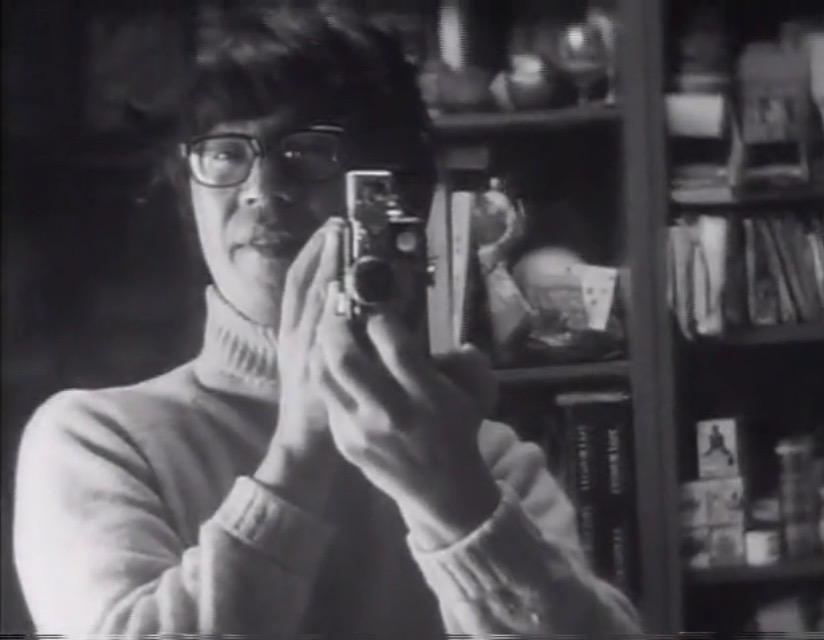
Japanese documentary of the week vol. 1 – Impressions of a Sunset (Suzuki Shiroyasu,1975)

Impressions_of_a_Sunset

I’ll start today a new feature – Japanese documentary of the week – a weekly and very short post to introduce an important work of non-fiction cinema, or at least a documentary that I believe is worth seeing and discovering. I’ll focus on works that are either available to watch online (legally) or available on DVD/BD (with English sub).
The fist movie is Impressions of a Sunset (日没の印象) , a short diary-movie/self documentary/artistic home-movie made by Suzuki Shiroyasu in 1975. Suzuki is a poet and a professor who worked also for TV and who, from the mid 1970s, started to expand his artistic world in the cinematic realm. Impressions of a Sunset is probably, together with Fifteen Days (1980), his most famous work. Deeply inspired by Reminiscences of a Journey to Lithuania (Jonas Mekas, 1973) Suzuki:

has gotten his hands on a “CineKodak 16” (a pre-war 16mm camera) at a second hand camera shop, and in sheer delight he films his beloved wife, films his newborn baby, proudly takes his camera to work to film his colleagues, and then films the Tokyo sky at sunset.

(from Self-Documentary: Its Origins and Present State, Nada Hisashi. You can read the complete article here)

Partly experiment, partly diary and partly home-movie, this short work has, even today, a special appeal for me, maybe the grain of the film (16mm), maybe the freshness of the approach, or maybe the subtle experimental touch we can feel here and there (the dots, the reflections, etc.). Below you can see Impressions of a Sunset legally, it is linked, together with some of works, on Suzuki’s official homepage. It’s in Japanese (no English sub) but even if you don’t understand the language you can feel the magic.

日没の印象 / Impression of Sunset

Holiday Movie 2009-2013 (休日映画 2009-2013)

Holiday Movie 2009-2013 (休日映画 2009-2013)

Regia, montaggio, fotografia, soggetto, sonoro: Saitō Masakazu. Durata: 52′
Formato: digitale

Il regista Saitō Masakazu riprende nei giorni di vacanza la sua piccola figlia e la sua famiglia, dalla nascita fino ai quattro anni, alternando impressioni della quotidianità della bambina che cresce con notizie e preoccupazioni provenienti da Fukushima.

Presentato all’ultima edizione dell’Image Forum Film Festival, una manifestazione dedicata a scoprire o/e celebrare i film sperimentali e finanche le videoinstallazioni e tutto ciò che di interessante esce dalla cultura visiva giapponese ed internazionale, intesa in senso molto lato, Holiday Movie è in tutto e per tutto un home movie. Un video diario cioè, dove l’oggetto stesso del lavoro è qualcosa di personale e legato alla sfera privata del suo regista, Saitō Masakazu, in questo caso la nascita della prima figlia e la sua crescita nel corso di 4 anni, il tempo coperto dal film va infatti dal 2009 al 2013.
È necessario porre questo lavoro nell’ambito di competenza, quel filone del del self documentary o meglio del diary film, lanciato a livello internazionale da Reminiscences of a Journey to Lithuania (1972) di Jonas Mekas ed in terra giapponese da Suzuki Shiroyasu con Impressions of a Sunset (Nichibotsu no insho) nel 1975. Interessante è notare come sia Mekas che Suzuki abbiamo operato in vari modi anche nell’ambito del film sperimentale, cosa che getta una luce più ampia sul retroterra che ancora oggi è presente quando si parla di certo diary movie. Ci sembra proprio che questo Holiday Movie, pur nella sua apparente semplicità, si possa tranquillamente inserire in questo discorso e filone. Non sempre naturalmente ma è ben presente nel lavoro una coscienza verso le forme ed i limiti del linguaggio cinematografico, una consapevolezza che dà forma e ritmo al lavoro di Saitō, al contrario di molte opere dello stesso tipo però ed anche di molti documentari giapponesi realizzati in questi ultimi anni, la cura riservata alla forma, con particolare attenzione verso montaggio, framing e colore, dona a questo Holiday Movie una freschezza ed una spontaneità, anche se sapientemente filtrata, che raramente si trova in altri lavori di questo tipo. Alla fine è un vero e proprio piacere per i sensi la visione di questo lavoro, la nascita e lo sviluppo della piccola, con le sue difficoltà, i suoi tentativi di esprimersi, la sua voglia di esplorare il mondo circostante ed infine il suo relazionarsi con l’ambiente circostante, anche se ristretto ai soli periodi di vacanza in cui il padre ha potuto filmare, è reso con un tocco assai delicato ed a tratti molto divertente. L’uso del digitale poi è da manuale, il (nuovo) mezzo viene esplorato ed usato alla perfezione con alcune reminescenze, specialmente nell’uso dei colori, dei contrasti e della composizione delle inquadrature, quasi godardiano. Il lavoro si sviluppa come detto per 4 anni ed è puntuato, non in maniera opressiva, dalle notizie provenienti da Fukushima che danno un’ampiezza di vedute a quest’opera-diario ancora maggiore e che amplificano le preoccupazioni di padre del regista, rigettando sullo spettatore un quadro molto personale e privato ma inevitabilmente solcato da tematiche e problematiche di più ampio raggio. Ma queste notizie sono colte nel loro farsi, lo spettatore ne sente solo dei frammenti letti da una voce elettronica impersonale quando sullo schermo le immagini si soffermano sui momenti di quotidianità della famiglia.
Holiday Movie è un piccolo gioiello che rilancia prepotentemente le potenzialità del diary-movie e che allo stesso tempo ed attraverso lo stesso movimento privato-mondo e mondo-privato, scandaglia e getta scompiglio sui limiti che il cinema ha deciso di autoimporsi e sulle possibilità nel futuro prossimo di una cultura visuale di piú ampio raggio.


Holiday Movie 2009 – 2013

Holiday Movie 2009 – 2013

2013 / digital / color / 52min.

A close-up of juice spilled by a two year-old girl in a large shopping mall with no sign of people. A ball rolls nearby. News about the Fukushima nuclear power plant accident is conveyed…
Each fragment of these images presented in a diary format vividly evokes burned-in memories with a rich visual vocabulary. A revolutionary home-movie created by a parent and child cast/staff.

SAITO Masakazu

Born in 1976, Main works include the ‘Sunsession’ series, made using automatic computer editing, and “Shadow of Movement ~ about Toru Iwashita,” a collaboration with dancer/choreographer Toru Iwashita. In addition to single-channel works, he has also exhibited video installations in Japan and overseas. In recent years he has created the ‘Holiday Movie’ series, centered around the motif of the family, using various production methods including Internet release.