Yamagata Doc Film Fest, report – day 3 and awards

My final day in Yamagata (October 12th) was a bit more relaxed than the previous two, the festival fatigue started to kick in and the nights spent talking & drinking at Komian did the rest. There were many movies I really wanted to see, Pedro Costa’s Horse Money, Homeland (Iraq Year Zero) by Abbas Fahdel, Ospina’s It all Started at the End and others. Unfortunatly all of them were screened around the same time in the afternoon, and I had to choose one, so finally I opted for Ospina’s, my personal way of completing the discovery of the Cali Group and the independent cinema of Colombia between the 70s and 80s. It All Started at the End is a long and absorbing work that goes back to the beginning of the movement, and using a mix of styles and images (footage, digital, mobile phone’s camera) tells the story of a group of friends and artists who revolutionised cinema in Colombia.

In the morning I attended the screening of a TV documentary (actually a mokumentary) made in 2006 by Mori Tatsuya and Murakami Kenji (edited by Matsue Tetsuaki) Documentary:  Truth or Lies「ドキュメンタリーは嘘をつく」A work that plays with and criticises the way non-fiction is usually planned and made on TV, funny at times but not always entertaining and cutting, this short film has nonetheless the quality of making the audience think and let them see what’s happening behind the camera. 
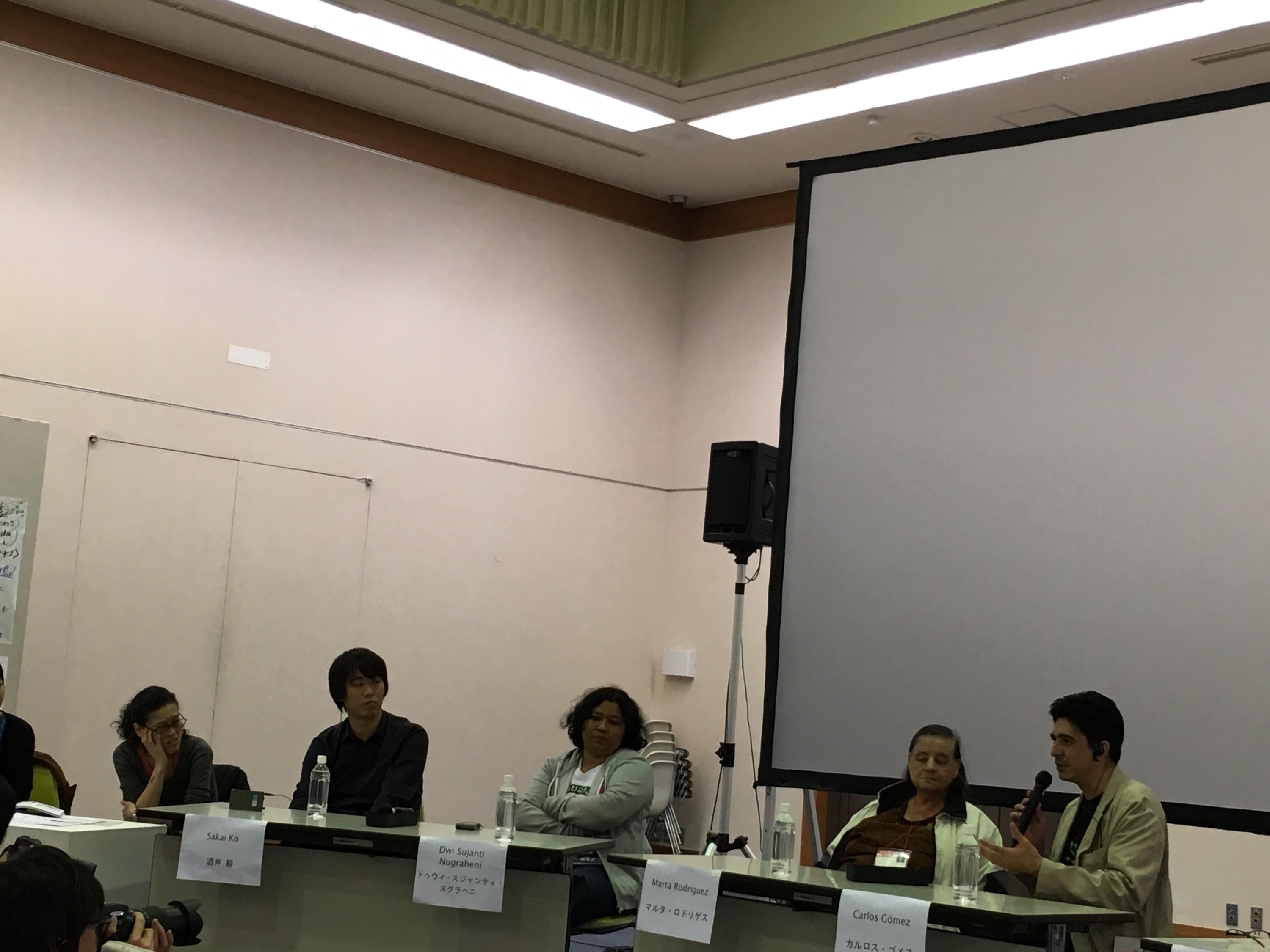
  

In the evening and as my final event for this edition of the festival, I decided to attend a symposium titled Creating a Space for Film, a discussion among six participants from different countries, Dwi Sujanti Nugraheni, Marta Rodríguez, Teng Mangansakan, Sakai Ko, Oki Hiroyuki, Carlos Gómez. Everyone of them brought and talk about his/her experience in creating a space for documentary, with indigenous people in Colombia for Marta Rodrigez and Carlos Gomez, in Indonesian schools with basically no budget for Nugraheni, in Sendai working with old people to find the still existing minwa (folklore in the oral tradition) for Sakai Ko, and in the Philippines in markets and basketball courts for Mangansakan. Very different stories and backgrounds, some governments opposing documentary like Indonesia, other supporting cinema like the Philippines, but everybody seemed to agree that what is fundamental and crucial is to build cinema and documentary literacy, through schools, workshops, festival and other activities. Without visual /media literacy there are no chances to have future generations of filmmakers and and audience capable of understanding and appreciating non-fiction cinema.

  
In conclusion, this year as two years ago, attending YIDFF was for me a really reinvigorating and fascinating experience, I didn’t see as many movies as I wanted to, but I as I wrote in the previous posts, there were some nice discoveries and above all I had the chance to meet, talk and exchange opinions with many filmmakers and film-festival people. The only downside to it is that I’ll have to wait two years until the next edition. See you soon Yamagata!

Today, October 14th the awards for this year festival were announced: 
The Robert and Frances Flaherty Prize (The Grand Prize):

Horse Money Dir: Pedro Costa

The Mayor’s Prize:
The Pearl Button Dir: Patricio Guzmán

Awards of Excellence:
Homeland (Iraq Year Zero) Dir: Abbas Fahdel

Silvered Water, Syria Self-portrait Dir: Ossama Mohammed, Wiam Simav Bedirxan

Special Prize: 
Us women . Them women Dir: Julia Pesce

New Asian Currents Awards

Ogawa Shinsuke Prize:
Standing Men Dir: Maya Abdul-Malak

Awards of Excellence:
Snakeskin Dir: Daniel Hui

Each Story Dir: Okuma Katsuya

Special Mention:
Glittering Hands Dir: Lee-Kil Bora

A Report about Mina Dir: Kaveh Mazaheri

ARAGANE Dir: Oda Kaori

I Am Yet to See Delhi Dir: Humaira Bilkis

Citizens’ Prizes
Homeland (Iraq Year Zero) Dir: Abbas Fahdel

Directors Guild of Japan Award

My No-Mercy Home Dir: Aori


Yamagata Doc Film Fest, report – day 1

From a rainy Yamagata, I wrote down some thoughts about yesterday, October 10th, my first day at this year festival. Good movies, some unexpected discoveries, lively discussions and as always, great atmosphere at Komiya, the place where almost everybody meets & drinks at night.

My day started with a surprisingly good documentary, France Is Our Mother Country (2015), from Rithy Panh, the French-Cambodian filmmaker author of The Missing Picture and s21, works that focus on the aftermath of the Khmer Rouge regime in Cambodia. France Is Our Mother is an archive documentary entirely made of footage from the former French colony of Indochina, but Panh uses these images in a creative and even ironic way, when not sarcastic, to express all the sense of superiority of the colonizers (France) towards the colonized. Without a single spoken word but rich in music, now minimalist, now almost noise-like, and with the use of ironic but thought-provoking intertitles, the movie reaches almost an hypnotic quality. After few minutes in it we already start to realise how the film is a history in images, but also and at the same time a history of images, besides the obvious but tragic elements of oppression shown, what slowly sneaks into the viewers’ mind is a sense that basically everything can be demonstrated with images, after all wasn’t the footage shot by the colonizers themselves? At a certain point, this is my personal and extreme experience of it, I even started to doubt about the “reality” of the images, “couldn’t some of them just be fake?” I asked myself. The answer is: of course not, but this reaction made me realised how deceptive and open to interpretations images can be, and this is for me the best quality of France Is Our Mother Country.
The second movie of the day was Millets Back Home (2013) by the Taiwanese Sayun Simung, a documentary about the small Tayal ethnic minority living in a mountain village in Taiwan, a tribe to which the young director herself belong to. A very interesting work for its topic – how to transmit and keep alive minor languages, traditions and customs in our present world- but less for its style, too journalistic and straightforward, at least for my taste. Better was the talk after the screening when a member of the Tayal went onstage and sang a traditional chant.

The first movie in the afternoon was the highly anticipated The Pearl Button by Patricio Guzmán, a film that deserves all the praised it earned around the world. It stretches from the very distant – in time and space, the stars and the universe – to the very small of a button found at the bottom of the ocean. From the purity of a quartz and the almost celestial lightness of the sky and the water, to the gravity of death, torture and human beings smashed in the cogs of History (the Chilean dictatorship).
The 4th documentary of the day was Under the Cherry Tree (2015) by Tanaka Kei, a young Japanese director who followed the lives and struggles of 4 elderly people in a public housing complex in Kawasaki. Shot in low-tech and very simple in its style, no narration but intertitles to explain the background of these people and their problems, nonetheless Tanaka is very good at conveying through her camera the loneliness, the feeling of approaching death and the dreariness of their lives.
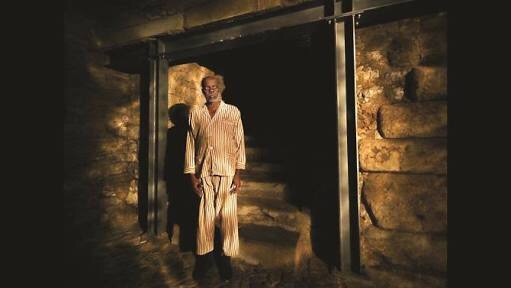
The last one of the day wasn’t a novelty for me, I had watched Aragane (2015) by Oda Kaori a couple of months ago on a screener, but seeing it on the big screen and with the proper sound system just confirmed the quality of the movie and the boldness of Oda in making an experimental work in form of documentary. Shot in a mine in Sarajevo, Aragane is composed of long takes mainly in the underground darkness, the real protagonists of the movie are the machinery, the flashing lights and a ceaseless noise enveloping the images. Hypnotic in the way Oda conveys the materiality of time and the sense of duration, Aragane reminded me, with due distinctions, of some works made by Harvard University’s Sensory Ethnography Lab, I’m thinking especially of The Iron Ministry and Manakamana.

That’s all for the first day in Yamagata, tomorrow or maybe after tomorrow for the next reports.

Yamagata International Documentary Film Festival 2015 – Perspectives Japan and Latinoamérica

This year Yamagata International Documentary Film Festival is kicking off today Oct 8th in the Japanese city, and promises an intense and full week of non-fiction cinema and all its forms, a must for everyone interested in documentary.
This is the second post I dedicated to this year event and its line-up. While in the first one I wrote about Competition and New Asian Currents (you can read it here), today I’d like to take a look at Perspectives Japan, a selection of new Japanese docs, and Latinoamérica—The Time and the People: Memories, Passion, Work and Life, a retrospective on the so called Third Cinema (Tercer Cine) and its resonances with the contemporary non-fiction production in Latin America.

Perspective Japan, as stated on the official page, will introduce “Five dynamic films that defy convention (…) in a display of the powerful contemplation and fresh vibrancy being explored in Japanese documentary filmmaking.”
Of the 5, the only one I had the chance to see is THE COCKPIT, a relatively short documentary (just a bit more than an hour) about a group of hip-hop musicians working on a new song. A static and almost hypnotic work, especially in its first part where the camera in a fixed position is showing us the rapper OMSB at work on his mixing console chatting to his mates. The Cockpit is a nice piece of non-fiction cinema, minimalistic in its approach, but interesting and watchable not only for wannabe-musicians. Okinawa: The Afterburn, directed by John Junkerman – an American who has lived in Japan for almost 40 years (and for a certain period in Okinawa itself) – is a deep look at the recent history of the islands, always a crucial geopolitical space to understand Japan and its tensions and relationship with the outside. Completing the line-up for Perspective Japan: PYRAMID: Kaleidoscope Memories of Destruction (Sasakubo Shin), Under the Cherry Tree (Tanaka Kei) and Voyage (Ikeda Sho).

As for the Latinoamérica section, it’s going to be an incredible journey at the heart of what was happening – social and political changes, resistance, upheavals, revolutions, massacres -during the 60s and 70s in Central and South America. Milestones of word documentary such as Patricio Guzmán‘s The Battle of Chile 1,2 and 3 will be screened alongside works of Luis Ospina and a mini-retrospective of short chilean documentaries, including films from Raúl Ruiz (The Suitcase, 1963) and Joris Ivens (. . . A Valparaiso, 1963, with commentary written by Chris Marker), almost 30 works in total, a visual feast not to be missed.

As written before, I’ll be there for 3 days (Oct 10th to 12th), if time permits, I’ll be posting, or more likely twitting, about it. Stay tuned.

Ichikawa’s Tokyo Olympiad (東京オリンピック, 1965) rereleased on DVD in Japan


More than a post just a quick note today. On September 16th Ichikawa Kon‘s Tokyo Olympiad (東京オリンピック, 1965) was rereleased on DVD here in Japan. As far as I know it’s not a new transfer neither a better edition than the last one published in 2004, but according to the description I found on the net, this DVD is actually the disc 2 of that edition released 11 years ago, that is the 170 minutes director-cut version (the Olympic commitee forced Ichikawa to re-edit and change the film to 93 minutes).
A new transfer and a new DVD/Blu-ray with both versions, rich in supplements and extras will probably be released in the next 4 or 5 years, when the hype for the 2020 games in Tokyo will start to spread around Japan and the globe. The much-wanted Criterion edition will hopefully follow the same path, or a surprise release next year on the occasion of Rio de Janeiro Olympics will be a much appreciated gift. The out-of-print DVD from the New York-based home video company is almost a piece of collection, priced as much as 200$

http://youtu.be/rHW1yJrrYfo

The DVD is published by Tōhō on its Tōhō meisaku selection line, an interesting selection of titles by the way, and, as happens too often with Japanese DVDs, it’s a bare-bone release, no extras seem to be included here besides the film script. The only positive side of it is the price: now you can get it on Amazon Japan and other resellers for less than 2000 yen

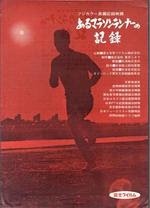
If you’re interested in non-fiction films about the Olympic Games, take a look at Kuroki Kazuo’s  Record of a Marathon Runner (あるマラソンランナーの記録) here

God Speed You! Black Emperor and other works by Yanagimachi Mitsuo released (again) on DVD


God Speed You! Black Emperor (ゴッド スピード ユー! Black Emperor) is 16mm black & white documentary  by Yanagimachi Mitsuo about a group of Japanese bikers, “The Black Emperors”, part of the so-called bōsōzoku movement, the motorcycling subculture that arose during the 70s in Japan. In the following years the film became a cult movie, inspiring even a Canadian rock band that took its name from it. Now, the good news is that from September 2nd the film is again available on DVD, although only in Japan and, as far as I know, without English subtitles. If you live in Japan you can also rent the same edition, try at your local Tsutaya or Geo. 
God Speed You! Black Emperor was the feature debut for Yanagimachi Mitsuo, shot after establishing his own production company, Gunro Films, 2 years before. Yanagimachi, who is known internationally also for Himatsuri (火まつり, 1985), is a director whose production during his 40 years career has been sparse to say the least, his last movie to date is Who’s Camus Anyway? (カミュなんて知らない, 2005), released exactly 10 years ago. 

  
Together with God Speed You! Black Emperor the home video company Dimension (DIG) has also released other films by Yanagimachi, A 19-Year-Old’s Map (十九歳の地図, 1979), Farewell to the Land (さらば愛しき大地, 1982) and About Love, Tokyo (愛について 東京, 1992) all 3 works of fiction. A very intriguing work for me is The Wandering Peddlers (旅するパオジャンフー, 1995) his only other documentary,  it premiered at the Venice Film Fest in 1995 and had never been released on home video before. I haven’t seen it, but according to Variety, Yanagimachi “and his crew went to Taiwan where they filmed, in loose cinema verité style a number of medicine peddlers, who still travel the country selling their wares and entertaining small-town audiences. Resulting pic blurs the line between documentary and fiction as Yanagimachi explores the lives of a couple of groups of peddlers, and they appear to act out their personal dramas for the camera”. The cinematographer being Tamura Masaki just adds more interest to the film. 


As for the releases, as far as we know from the description, the DVDs are bare-bone editions without special features, the only extra material listed is a recent interview with Yanagimachi himself that is included in each DVD. One day it would be nice to see an edition of God Speed You! Black Emperor with English subtitles and lots of extras; putting the movie in its sociopolitical context and drawing connections with other works of the period would indeed benefit and deepen our viewing experience of it. 

Links: 

God Speed You! Black Emperor on DVD

Farewell to the Land on DVD

A 19-Year-Old’s Map on DVD

About Love, Tokyo on DVD

The Wandering Peddlers on DVD

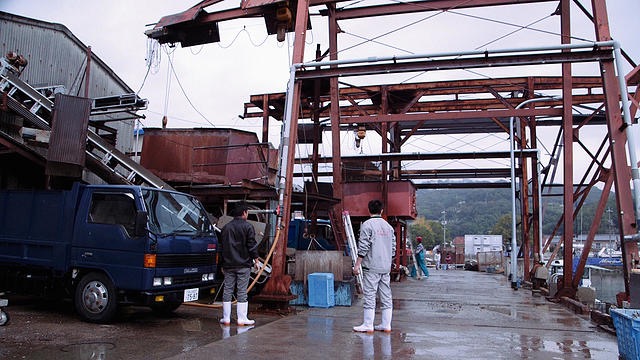
Review of Oyster Factory 牡蠣工場 (Soda Kazuhiro, 2015)


Sōda Kazuhiro is back with a new observational-style documentary, his 6th, and he’s getting better and better, Oyster Factory confirms his talent and his status as a non-fiction filmmaker of international level. The movie had its international premiere at the last Locarno International Film Festival. 

Here the synopsis (from the official homepage): 

In the Japanese town of Ushimado, the shortage of labor is a serious problem due to its population’s rapid decline. Traditionally, oyster shucking has been a job for local men and women, but for a few years now, some of the factories have had to use foreigners in order to keep functioning. Hirano oyster factory has never employed any outsiders but finally decides to bring in two workers from China. Will all the employees get along?


The New York-based director this time turns his attention to the small town of Ushimado, in Okayama prefecture – Sōda’s in law are from Okayama, if I remember correctly, and were the protagonists of his Peace (2012) – a microcosm that even in its marginal geographical position, or maybe because of it, reflects and resonates with some of the problematics going on on a wider scale in Japan, and more generally, in the so-called developed countries. Chinese workers (read: migrants “others”) and their relationship with the small community and the family-run processing plants. The decision of one of the main protagonists, who now works in the oyster factory as a manager, to move from Miyagi to Okayama as a consequence of the Great Tōhōku Earthquake in 2011. Population ageing, an inevitable factor that Japan will have to face enourmosly in the near future, and that will dictate political, economic e social decisions and agendas. Everything in Oyster Factory is presented and captured by Sōda and his gaze with a sublte touch, it’s something emerging gently and slowly from the film texture itself and surfacing image after image from casual conversations among workers, or in talks between the director and the people of the factory, owner, manager, owner’s son, wives. There is not a big theorem to be proved, neither a theory to be confirmed in Oyster Factory, of course Sōda knows the ontological impossibility of an objective documentary, every decision and every cut is a strong assertion of a point of view, nonetheless his gaze is open and willing to learn and explore uncharted territories. As perfectly noted by Clarence Tsui on The Hollywood Reporter

Online and in print, Kazuhiro Soda is never hesitant to make his political views known. The New York-based Japanese filmmaker writes damning posts about the rise of warmongers in his home country and abroad in his blog, (…) His films, however, have taken a very different approach, with problems in Japan’s national narrative gently revealed through exposition-free representations of ordinary lives on the margins.

Or in Sōda’s own words: 

In this film, I did not depict any violence, miseries, or social injustices that are often the favorite subjects of documentaries. You could find a trace of the disaster that shook the whole world, but the disaster itself doesn’t happen in this film. What you see are the ordinary lives of loveable fishermen and workers.

Consequently an important part in Oyster Factory is played by sea and costal landscapes – if I’m not wrong, this is  the first time for Sōda to use such images in his works, I mean images capturing wide views from an higher perspective. At a first glance they might seem to function as pillow shots to connect one scene to the next, but at a deeper level, these landscapes (sea, small islands, boats) together with scenes of a white cat wandering through the streets (a recurrent “guest” in Sōda works) are to be placed on the same plane of expression with scenes of people talking or working. That is, everything helps and contributes to create a bigger picture, a cinematic sketch depicting the life in Ushimado’s Oyster Factories in all its complexity. 


Harsh and difficult to forget are the words, uttered almost en passant, from a technician who’s helping setting the prefab house for the coming Chinese, “Chinese are terrible, they steal everything and are not like Japanese, they don’t have common sense. You need to know that, if you wanna work with them.” Words spoken without strong contempt, but in a-matter-of-fac tone, strong words indeed and part of a broader discourse about Chinese people that widely circulate and proliferate throughout Japan. What these sentences and the movie itself are telling us though, is far more complex than what it seems; it is more about the inadequacy of a society, or part of it, to accept and face “the other” and the changes brought about,and less about the personal hate of one person towards a nation and its people. It also implies, more subtly, the impossibility for the capitalistic society not to exploit the weakest and the less fortunate. If it’s true, as stated by one person in the movie, that young Japanese nowadays don’t want these kind of jobs (raising and shucking oysters), it’s also equally true that Chinese workers are employed because cheaper and “available” to work longer hours.  


The documentary’s climax, or at least one of its more intense parts is when the Hirano’s family prepares for and welcomes the Chinese workers, building the prefabricated house and setting everything first, introducing them to the Japanese workers later. The reactions upon meeting with the 2 young Chinese are very different – it’s important to note that they can’t speak Japanese – pretty cold from the old owner who calls them “China-men”, warmer those from the old ladies and the girls in general who try to make them more at ease. The film ends with a long take – I might be wrong on this technical detail – on a boat at anchor, the first day of work for the two Chinese. The camera follows them wandering at lost and completely puzzled to what to do, a Japanese worker tries to teach them the job, but the language barrier and their total inexperience of sea vessels seem to be an insurmountable hurdle. Sōda here has mastered the skill ( à la Wiseman) – and it’s one of the reasons why Oyster Factory might be his best work to date – to capture and edit together moments apparently normal, but charged with a subtle and deeper sense, meanings not already given, but to be searched by the film viewers.

If you live outside of Japan, you can buy or rent (VOD) Sōda’s documentaries here. For those of you living in Japan, you can rent his movies at your local DVD rental shop, or buy them on DVD

Yamagata International Documentary Film Festival 2015 – International Competition and New Asian Currents

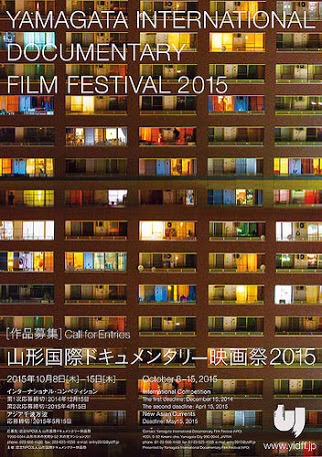
The Yamagata International Documentary Film Festival has completed its line-up, once more a rich and very interesting one, at least if you’re into the world of non-fiction cinema. The biennial event co-established in 1989 by Ogawa Shinsuke and dedicated to the exploration of the world of documentary, in its broadest sense, will take place as usual, in the Japanese city of Yamagata next October from 8th to 15th.                        I’ll be there for 3 days, from the 10th to the 12th, and hopefully I’ll be able to write down and post something, possibly a brief daily report, after-screening parties permitting….anyway, let’s see what this year program is offering us, of course I’ll focus more on the Japanese works.

These are the sections:

– International Competition

– New Asian Currents

– Perspectives Japan

– Yamagata Rough Cut!

– Latinoamérica The Time and the People: Memories, Passion, Work and Life

– Double Shadows—Talking about Films that Talk about Films

– Past and Future Stories of the Arab Peoples

– Cinema with Us 2015

– Yamagata and Film

The competition this year is graced with the presence of some big names such as Patricio Guzmán and Pedro Costa, in Yamagata with The Pearl Button and Horse Money respectively. Another title, among the 15 in competition, that has attracted my attention is the long (334′) Homeland (Iraq Year Zero) by Abbas Fahdel, “two years in the life of a family amidst the Coalition Forces’ 2003 invasion of Iraq”.                                         There will be only one documentary representing Japan in competition, We Shall Overcome (戦場(いくさば)ぬ止(とぅどぅ)み) from director Mikami Chie who 2 years ago was at the festival with her The Targeted Village (標的の村). We Shall Overcome continues to explore and document the ongoing “battle” of Okinawans against the plan to build a new American base in Henoko, and telling the story of Fumiko, an elderly woman who witnessed the battle of Okinawa in 1945, the film is connecting the past with the present of the archipelago. The documentary is also enriched by Cocco‘s voice over, the singer and actress herself is from Okinawa and is known by Japanese cinema fans because of her amazing and phisical performance in Tsukamoto Shin’ya’s Kotoko (2011).

Three Japanese docs and thus more to talk and write about in the New Asian Currents section, a selection that in total includes 20 works from different parts of Asia.  Distance is the debut behind the camera for Okamoto Mana, reading the description on the festival site it seems to be a sort of self-documentary, created by crossing family home movies with new shooting material, and in doing so reflecting on the director’s family and her past. The second work made by a Japanese is Each Story (Okuma Katsuya) a movie that takes place in India and “For their summer homework, Jigmet and Stanzin are assigned to study the Epic of King Gesar, passed down from generation to generation in the northern Indian region of Ladakh, where the boys live. As they splash in the river and run through the streets, the boys come to understand each story shared with them by the adults of their village.”                                                         Last but not least there’s Aragane, the feature debut for Oda Kaori, an artist leaving in Sarajevo and studing in a graduate program under Tarr Béla. I had the privilege of watching the documentary on a sample screening, and although it was on a TV screen, I was very impressed.  The camera follows patiently and almost hypnotically the workers of an old coal mine in Bosnia down into the darkness of their daily routine. Aragane is visually stunning, Oda knows how to use the digital for her cinematic purposes, partly documentary and partly experimental cinema, the movie possesses an impressive sound design, and a stilistic and poetic touch akin to the works produced by The Sensory Ethnography Lab (SEL) at Harvard University (Leviathan, Manakamama). I’m really looking forward to seeing it on a big screen and with a proper sound system.

Not from Japan but worth mentioning are the two Special Invitation Films: Almost a Revolution (Hong Kong, by Kwok Tat Chun, Kong King Chu) and Sunflower Occupation (Taiwan, by the Sunflower Occupation Documentary Project), both of them dealing with students street protests and uprising occured in Hong Kong and Taiwan in the last two years.

In the next post I’ll write about Perspectives Japan, a selection of new Japanese docs, and Latinoamérica—The Time and the People: Memories, Passion, Work and Life, a retrospective on the so called Third Cinema (Tercer Cine) and its resonances with the contemporary non-fiction production in Latin America.

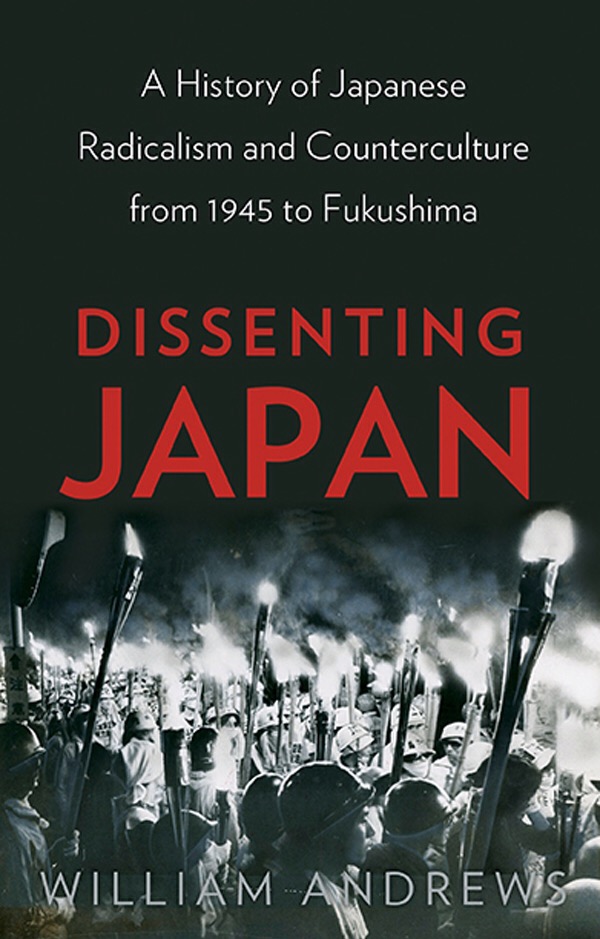
Dissenting Japan – A History of Japanese Radicalism and Counterculture 

Just a quick post to draw your attention on a significant book that the London-based Hurst will publish next September. The volume is titled Dissenting Japan – A History of Japanese Radicalism and Counterculture and is written by the Tokyo-based writer and translator William Andrews, who by the way runs an excellent blog on the same topic here


Here’s the description from the publisher’s homepage: 

Following the March 2011 Tsunami and Fukushima nuclear crisis, the media remarked with surprise on how thousands of demonstrators had flocked to the streets of Tokyo. But mass protest movements are nothing new in Japan. The post-war period experienced years of unrest and violence on both sides of the political spectrum: from demos to riots, strikes, campus occupations, factional infighting, assassinations and even international terrorism.
This is the first comprehensive history in English of political radicalism and counterculture in Japan, as well as of the artistic developments during this turbulent time. It chronicles the major events and movements from 1945 to the new flowering of protests and civil dissent in the wake of Fukushima. Introducing readers to often ignored aspects of Japanese society, it explores the fascinating ideologies and personalities on the Right and the Left, including the student movement, militant groups and communes. While some elements parallel developments in Europe and America, much of Japan’s radical recent past (and present) is unique and offers valuable lessons for understanding the context to the new waves of anti-government protests the nation is currently witnessing.

Who’s is familiar with documentary cinema (and cinema in general) knows very well that radicalism, dissenting, resistance and counterculture are a very important part of the vocabulary that defines the post war Japanese non-fiction landscape, and the fiction as well, especially during the 60s and 70s. Ogawa Production and Sanrizuka, Tsuchimoto Noriaki and Minamata, NDU and Okinawa and the borders, but also Kamei Fumio and his Sunagawa Trilogy, maybe the first Japanese works to fully embody this “philosophy” of resistance and struggle on film (excluding the Prokino before the war of course). 

For all these reasons, Dissenting Japan will probably be (I haven’t read it yet) a very important read not only for historians but also for film scholars interested in Japanese cinema and in documentary in general. I’ll certainly write more about it when the book is out. 

Some thoughts on 『抱擁』”Walking with My Mother” (2014, Sakaguchi Katsumi) 

 This is not a review, but I felt the need to drop a few and random lines about『抱擁』(Walking with My Mother) a documentary made by Sakaguchi Katsumi about his mother Sochie. The movie premiered last October at the Tokyo International Film Festival. Here the synopsis from the festival’s homepage:

How do you live after losing your loved ones? Suchie (78) is distraught after losing her daughter and then her husband. Countless tranquilizers were given to calm her. Her son, Director Katsumi Sakaguchi, turns to his camera to understand her more. When Mariko arrives for the funeral and sees her sister’s despair, she decides to take her back to their hometown for the first time in 38 years. Here, Mariko devotes her life to her sister. Her son reveals four painful years of her distress and conflict through the camera. Grief always comes after the sadness of losing those closest to us. What rescued her from it?

  
Besides its main themes – the exploration of loss, sickness and memory in an society, not only the Japanese one, that is getting older and older – the main aspect of the documentary that soon, from the very first scene, struck me is a technical  one: its editing. It might sound strange and far-fetched for a work of this kind –  after all it’s partly a self-documentary and partly a home-movie, not at all an art-house work –  but the film is really packed with “action”, in the sense that the 93 minutes are full of happenings.The sickness, the pain, the panic, the death of Sochie’s husband (and director’s father) and the funeral, the suicide talk and the memories of the hard-working days, the return to her hometown and the rural landscape of Tanegashima, the devoted sister and the relatives, the hospitals and the doctors. All this, a fine selection of 4 years of shooting, is held together by a masterfully done editing, fast and rythmic even when the subject is “just” an old women moving around the house complaining about her bad health. This is the real “secret” of Walking with My Mother. It would be nice if we could count the cuts, it’s like the Violence at Noon of documentary, I’m exaggerating of course, but I can garantee that there is not a single cut longer than a minute, and that the average are about 10 or 15 seconds long. An interesting choice indeed by Sakaguchi, who opens up new aesthetic possibilities for self-documentaries or, more in general, non-fictions works made on the edge of home-movies. 

Kuroki Kazuo, two works available for free at the Science Film Museum website

In postwar Japan, industrial films, PR movies, science films and educational movies formed an important space where filmmakers and production companies were allowed a certain degree of freedom and experimentation.

It’s a bless that such an important and massive output is now available to watch online at the Science Film Museum – free science movies resurrected from the Shōwa Era, a visual archive for researchers interested in non-fiction and films produced outside the entertainment sphere.

Although the works subtitled in English are really few, it is indeed an archive worth-checking and the reasons are well explained on their homepage:

The science films such as “THE WORLD OF MICROBES”, filmed using special camera techniques that gave the world it’s first film footage of the world under a microscope received many major awards in domestic and international scientific film festivals A true photographic legacy. From an academic perspective, these films will prove to be effective educational materials for the present and for the future.

However, with the existence of these films known only by a few, they lie dormant within companies that undertook the projects and the storerooms of production companies. Furthermore, as these films were produced in the analog era, the degree of deterioration is severe and their maintenance is proving extremely difficult.

Consequently, we established “The Science Film Museum (Incorporated NPO)” to make practical use of those science films in educational and research facilities by converting them to the high quality digitalisation (HD) from the original 35mm negatives through telecine transfer. And we present them through the website, also so that many people can experience the wonders of the mysteries of life.

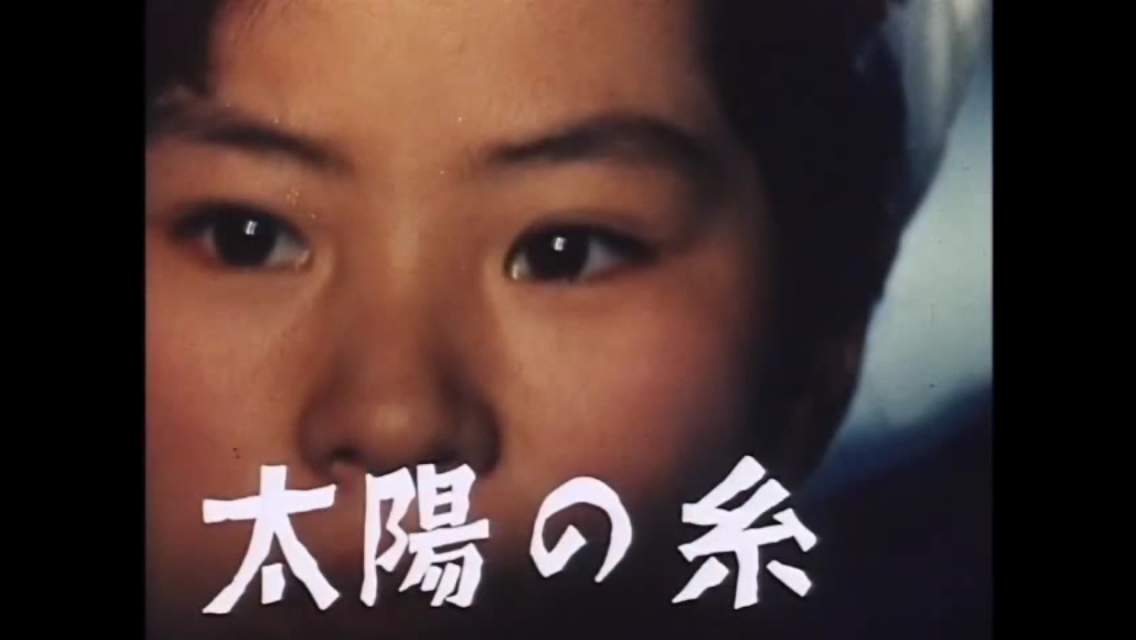
What I’d like to focus on today are two movies made in the 1960s by one of my favourite Japanese filmmakers of the era, Kuroki Kazuo, a director who before establishing himself as an author somehow associated with the new wave (Silence Has No Wing, Ryōma Assassination among others) was a respected non-fiction filmmaker. On The Science Film Museum webpage it’s possible to watch the PR movie The Solar Thread (太陽の糸) commissioned by the ryon campany Torey, and the more known Record of a Marathon Runner(あるマラソンランナーの記録), shot in 1964, the year of Tokyo Olympics, a defining event for Japan that symbolically ushered the country in the elite of Western and modernized nations.

Even if you don’t understand Japanese, the first minutes of The Solar Thread – co-directed with another big name in Japanese cinema and documentary, Higashi Yōichi – are quintessential sixties: disorienting music, vivid colours palette, free-style editing and a taste for the abstract and the experimental that was still alive in the Japanese documentary scene of the time. Here the movie:

http://www.kagakueizo.org/movie/industrial/72/

As for Record of a Marathon Runner, there are various articles dealing with it online, I would recommend at least this long interview with Kuroki. Record of a Marathon Runner represents, for different reasons (subject tackled, overall tone, and music used), the negative, the other side, of the Olympics official discourse that was pushed by the mainstream media at the time:

http://www.kagakueizo.org/create/tokyo-sinema/79/