Motohachi Seiichi is a photographer and documentary filmmaker whose works and activity and I’m referring here especially to his achievements in non-fiction, although presented at international film festivals, have not yet reached the audience and the recognition they deserved, in my opinion of course.
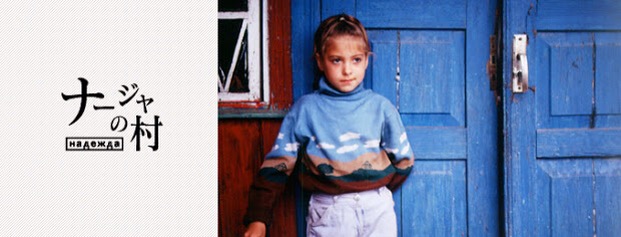
He’s the author of, among others, Nadja’s Village and Alexei and the Spring, works screened at the Berlin International Film Festival, but also the producer of other interesting documentaries such as A Village That Changed Into Water (Onishi Nobuo, 2007) or Tale of a Butcher Shop (2013), the latter listed last year by Kinema Junpo in its annual best bunka eiga section.
His new documentary, 『アラヤシキの住人たち』(Arayashiki no jūnintachi) will open in some selected cinemas in Japan on May 1st and was shot during a year at theKyodo Gakusha farm, acooperative community which hosts people from a variety of backgrounds such as mentally disadvantaged persons or who are tired of the city life. Raising animals, growing vegetables and making cheese with ecological and organic methods, staying in this community means for its people also exploring a different style of living. It seems a documentary worth mentioning and following for a series of reasons, the topic of course but also the style adopted, at least from what we can glimpse from the trailer, is a move “back” when documentary in Japan meant to be first of all a visual work and the filmmaker cared about framing, light, editing etc. and wasn’t just a branch or a development of video journalism…..
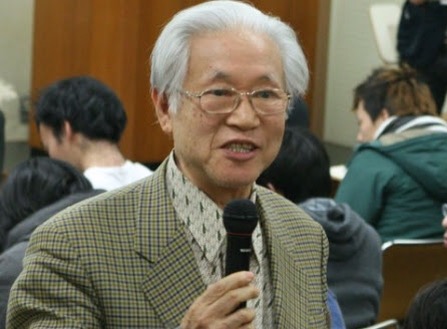
Satō Tadao is without any doubt one of the most renowed film critics and theorists living and working in Japan today with a career spanning more than 50 years, a scholar also known and respected in the West through the translations of his writing and some of his books. In the last year Sight & Sound poll – the greatest documentaries of all time, Satō was one of the voters, here are his picks:
Nanook of the North (1922)
Robert Flaherty
The Effects of the Atomic Bomb on Hiroshima and Nagasaki (1946)
Chozo Obata, Sueo Ito, Masao Yamanaka, Dairokuro Okuyama
An interesting list through which I could discover some works I had never heard about before like Fatherless and Echigo Okumiomote, it was also a pleasant surprise to see listed, among some “classics” of Japanese non-fiction cinema such as Minamata:The Victims and Their World or The Emperor’s Naked Army Marches, Kabuki-yakusha Kataoka Nizaemon, a work by Haneda Sumiko, a director I’m very fond of and a filmmaker who plays an important role in the history of Japanese documentary.
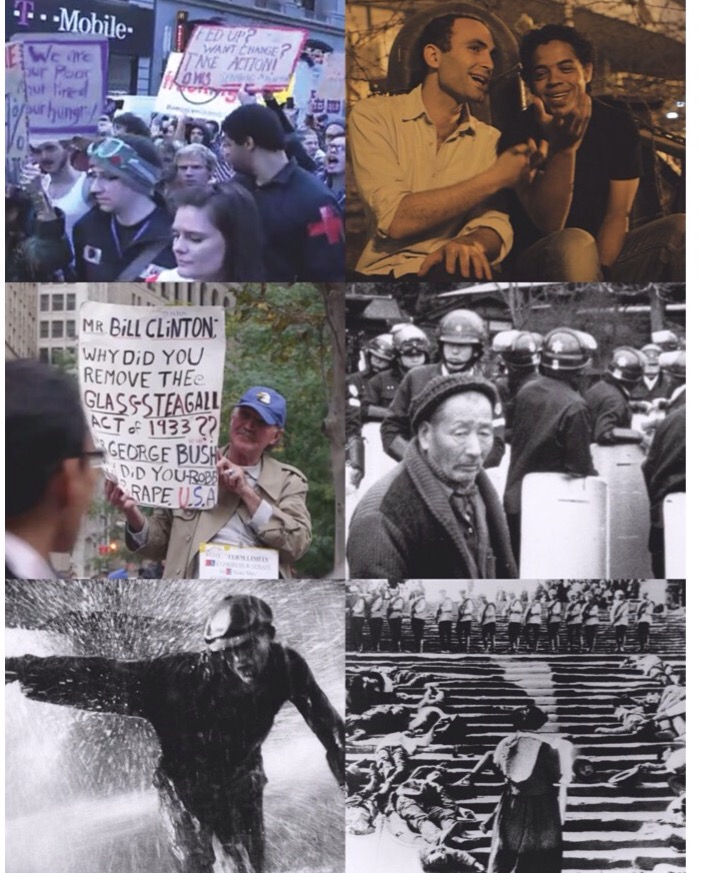
On a not-so-related-note, in the March issue of Sight & Sound a piece on Sergei Loznitsa’s Maidan by Nick Bradshaw opens with a collage of stills from different documentaries on anti-government protests. Among them a still of Sanrizuka: Heta Village (Ogawa Pro, 1973), a nice sign that Japanese documentary is slowly infiltrating (again?) in the international cinematic discourse, at least this is my hope.
Kamei Fumio’s Fighting Soldiers is a defining work in the history of Japanese documentary, possibly one of the first non-fiction works made in the archipelago to have a very distinctive authorial touch, to the extent that it is often referred to as the “first Japanese documentary”.
In 1939, on behalf of Toho (PCL had changed its name to Toho just three years earlier), Kamei and cameraman Miki Shigeru went to China to make a propaganda documentary, or rather a war record, about the Japanese Imperial troops involved in the ongoing invasion of Manchuria. However, Kamei made something very different from what the government and the army expected, and the film was immediately banned from release. What the authorities particularly disliked was the portrayal of the soldiers, and also the depiction of Chinese casualties. As the head of the Japanese Metropolitan Police Board famously remarked at an advance screening: “These aren’t fighting soldiers, they’re tired soldiers!” .
I’m going to focus on the first 5 minutes of the film, one of my favourite openings in Japanese cinema and a powerful example of Kamei’s use of montage, a “method of philosophical expression” that the Japanese director so beautifully explained in his book Takakau eiga:
I think documentary film must be like haiku. If the viewer observes something with shot A, then shot B must produce the space for the viewers to freely develop their own creative possibilities. Shot B, therefore, demands a new observation by the viewer. Shot B is what i call the MA of documentary film. (quote from “The Flash of Capital” Eric Cazdyn, pag. 64)
Kamei was obviously and directly influenced by Soviet cinema and, in particular, Soviet montage theory, a technique he mastered while studying film in Leningrad (now St Petersburg) in the early 1930s.
You can watch the opening here:
All the following stills are taken from the first five minutes of Fighting Soldiers and are here displayed in chronological order:
(1)
(2)
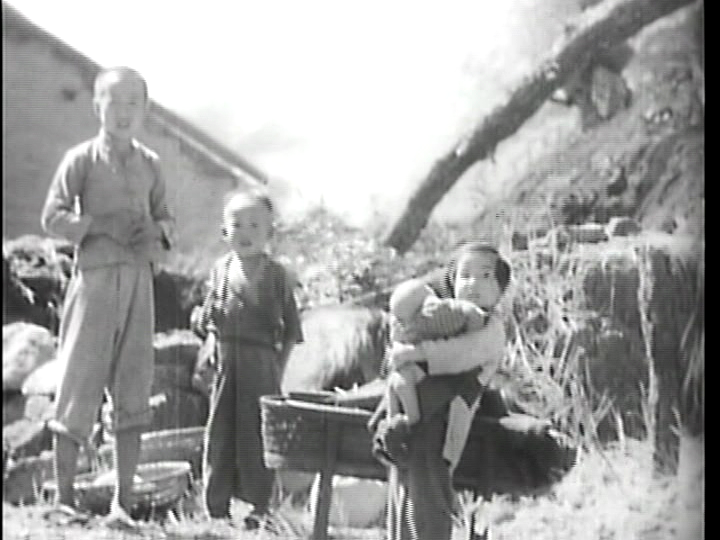
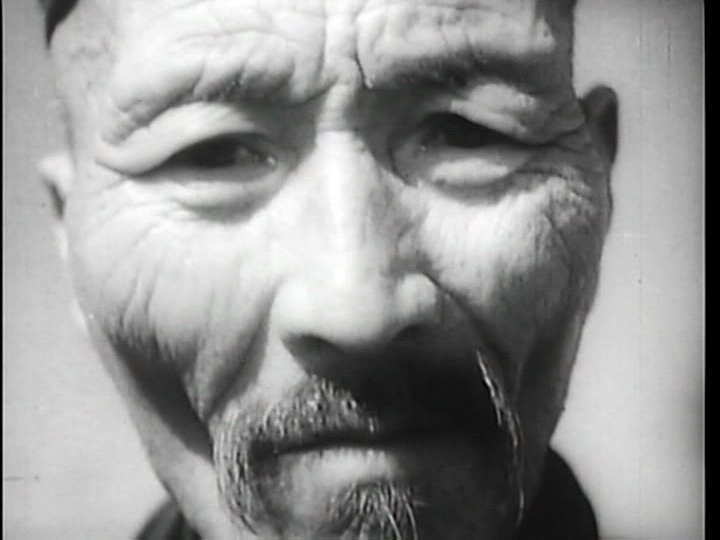
After the opening credits, the film begins with an old man praying in front of a shrine, images of destroyed houses, shots of children staring at the camera (1) and a powerful close-up of the same old man (2).
(3)
(4)
(5)
(6)
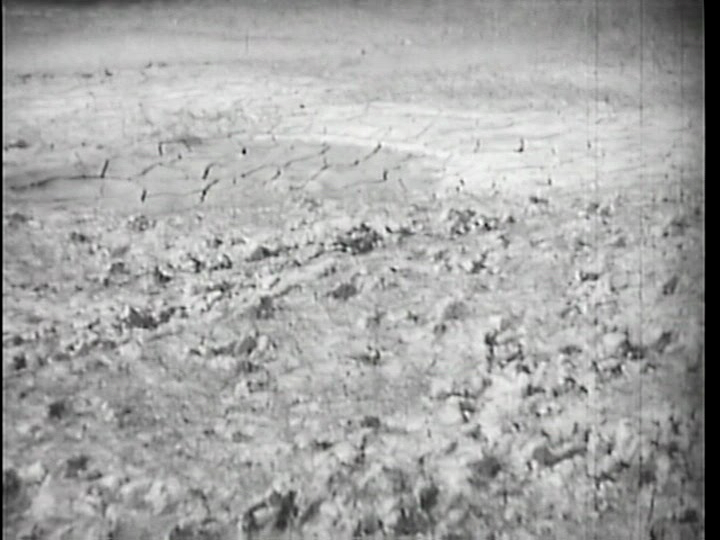
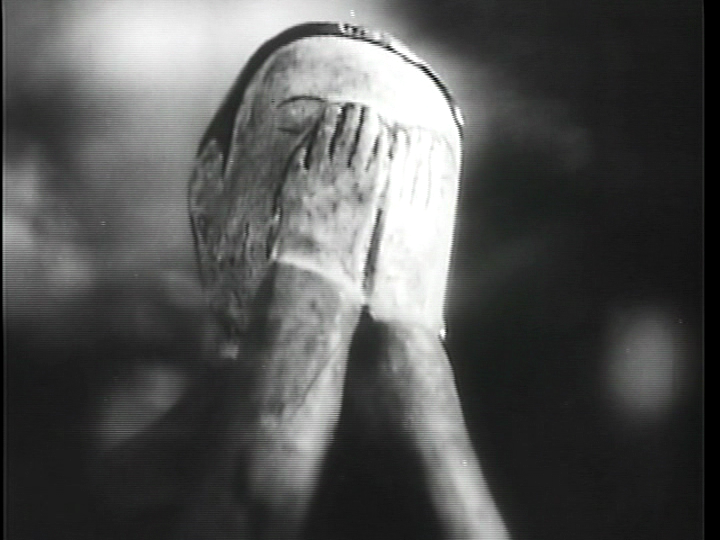
In the next scene, a group of people carrying all their belongings, walk away from the destroyed town (3) through a barren land (4), soon after, the movie cuts to a close-up of a small statue hands on its face, almost frozen in a scream of despair (5). Next we see the same statue from a different perspective with the expanse of dry land on its background (6).
(7)
(8)
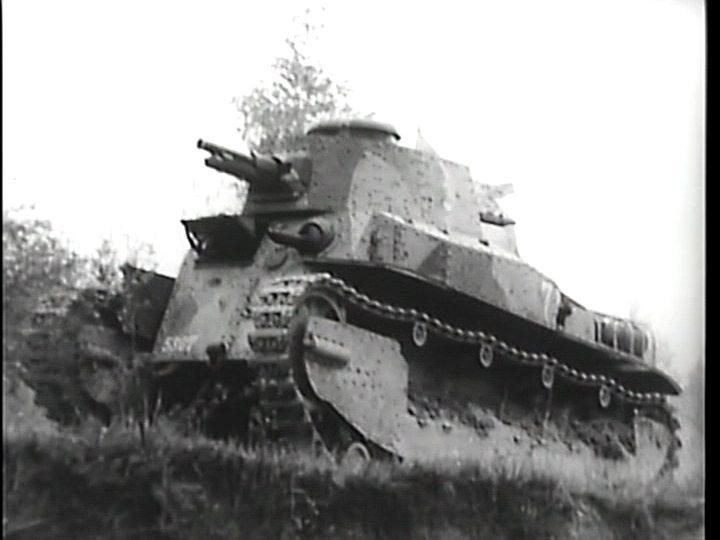
In the next shot we see the departure (or arrival) of Japanese tanks (7) from the land they conquered and destroyed, these war vehicles are seen from a medium distance. Next, in one of the most stunning shots and cuts in the history of Japanese documentary, the point of view shifts and we are now on a tank moving through the ruins of the bombed city. It’s a short tracking shot, and there’s also an amazing close-up of a Japanese flag flapping from the tank, but what we see in the background of the flag is the village reduced to rubble (8).
As a filmmaker, Kamei had the philosophical necessity, paradoxically even though he was making what is still considered a propaganda documentary, to bring to the fore what is usually relegated to the background: the suffering, the grief, the destruction and the loss that every military conflict brings. Because of this inner conflict/dichotomy, Fighting Soldiers is still hated or loved by many viewers and critics, and the film is considered by many critics and scholars to be both a cinematic miracle and an enigma. To make matters worse, in the years that followed, Kamei himself would often repeat and write that what he had made was in no way an anti-war film.
Problematic films, more than perfect ones, encourage us to think about and engage with their themes, they do not offer easy and ready-made points of view or solutions, they keep coming back to us, view after view, challenging our vision. Fighting Soldiers is one of these films, and one of the best to come out of the world of Japanese non-fiction cinema.
It’s a real shame that the film isn’t as well known in the West and that, apart from a cheap Japanese DVD, we don’t have a proper DVD or BD release.
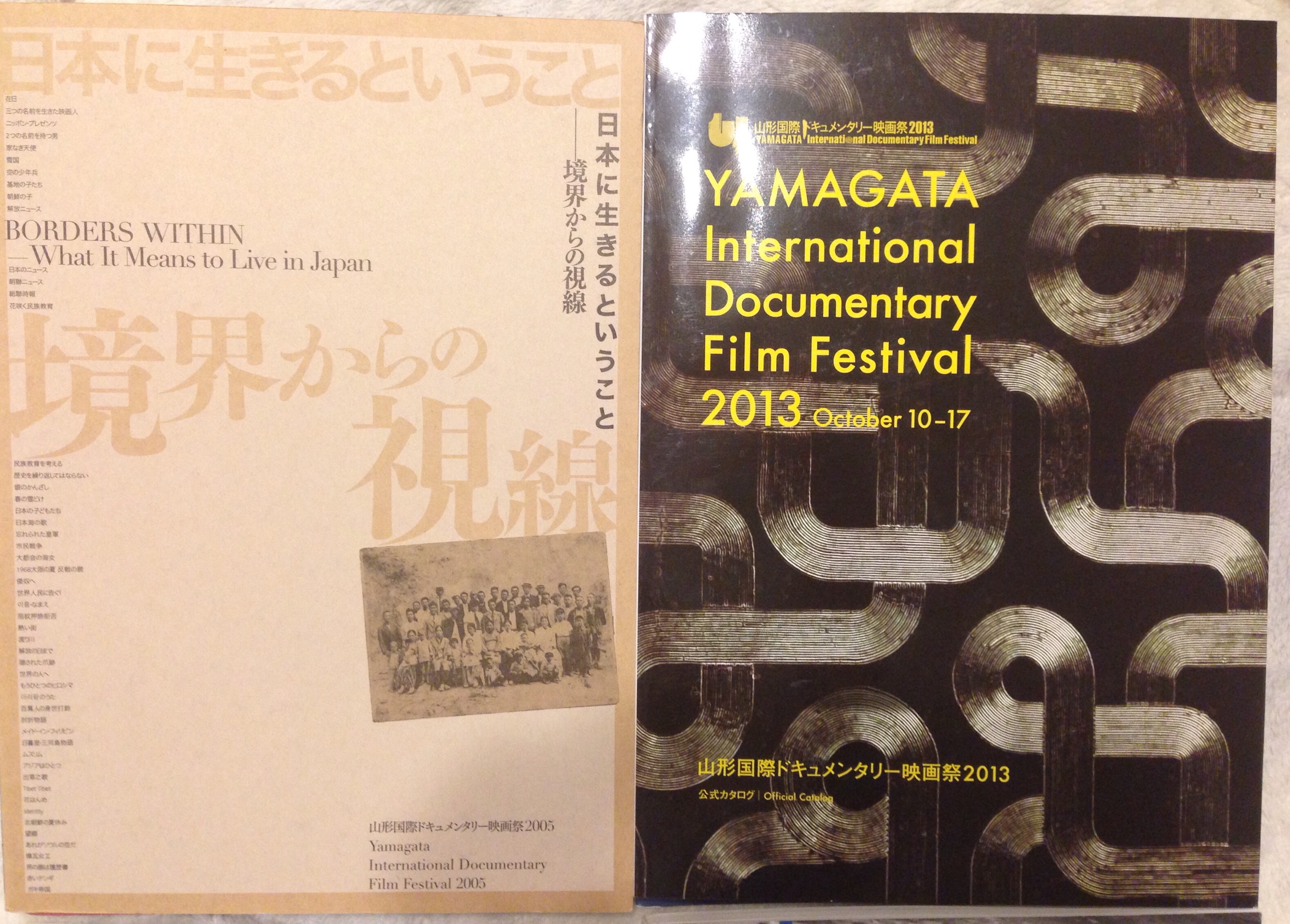
A lighter and more “visual” post today, some photos of the Yamagata International Documentary Film Festival’s catalogues I have at home:
YIDFF 1993 (Japanese documentaries of the 60s) and YIDFF 2003 (Ryūkyū Reflections Nexus of Borders)
YIDFF 1995 (Japanese documentaries of the 70s) and YIDFF 1997 (Japanese documentaries of the 80s and beyond)
YIDFF 2005 (Borders Within What It Means to Live in Japan) and YIDFF 2013
They’re in English and are an essential resource if you’re interested in Japanese cinema or documentary in general. For me personally “Ryūkyū Reflections Nexus of Borders” was a discovery: non-fiction films and the history of Okinawa, a place where all the contradictions and problematics arising from Japan-as-a-state and its relationship with other nations and its own inner borders are embodied and magnified. Or as Higashi Yoichi once said talking about his documentary Okinawa Islands (1969) Continue reading “Japanese documentary-related catalogues”







 Asian Docs