“Malaysia is a multiracial nation, ruled by a single coalition for over 60 years, using religious extremism and racist discrimination to remain in power.”
“With widespread conversion practices and state-sponsored discrimination and violence, LGBTQI people are criminalised through colonial-era laws”
“Ethnic Malay persons are born Muslim from birth and for life. The bureaucracy makes it almost impossible for Muslims to renounce Islam.”
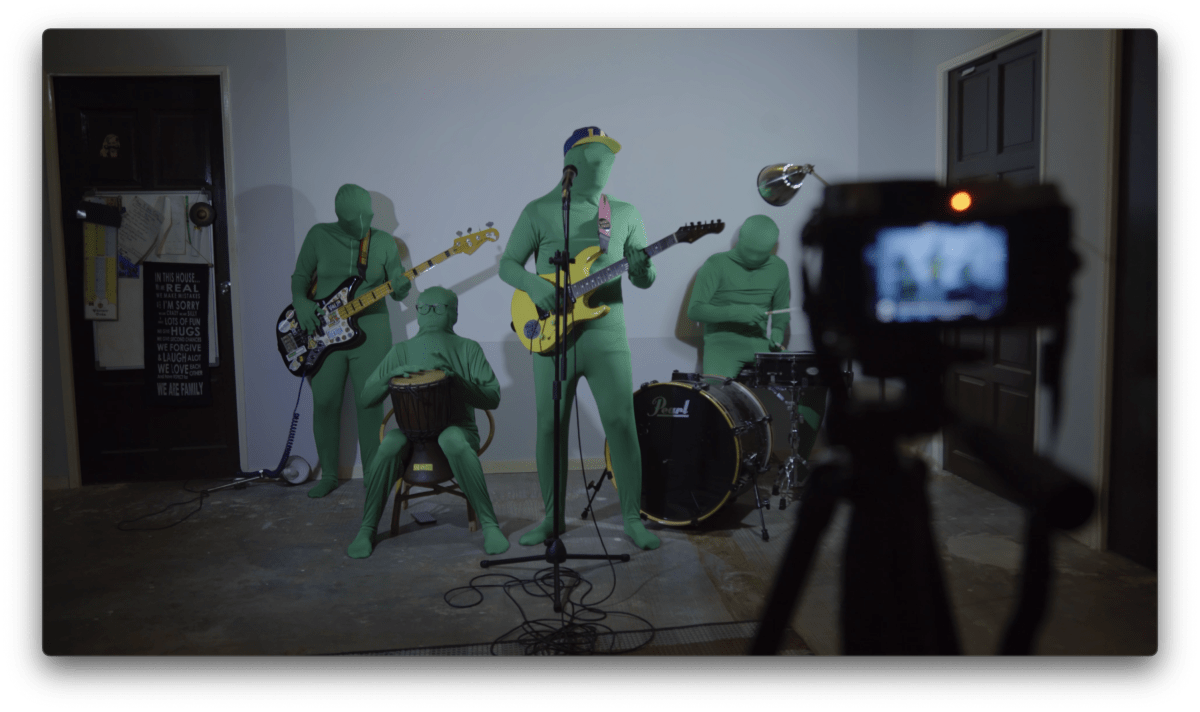
These are just a few of the statements that appear on screen in the opening minutes of Queer as Punk, Yihwen Chen’s documentary following the Malaysian punk band Shh…Diam! over the course of several years. Right from the start, the film makes it clear that this is about much more than music. Through the lives of the band’s four members, it paints an intimate portrait of what it means to be part of the LGBTQI community in contemporary Malaysia, where personal identity and political reality are almost impossible to separate.
The documentary opens with one of the band’s performances before introducing the country’s political and social landscape through footage of demonstrations against discrimination, immediately establishing the political framework within which the band’s story unfolds. The film then follows the four members of the group as they travel from Kuala Lumpur to Penang for a concert before crossing into Thailand to perform at an open-air music festival.
Formed in 2009 by a group of young LGBTQI “losers,” as they jokingly describe themselves, the band quickly emerges as more than a musical project: it is a community and a space of mutual support for people who often have severed the relations with their families and who struggle to fit in a very traditional and conservative society. The documentary focuses on three of the band’s members, Yon, Yoyo and especially on Faris, the guitarist and lead singer, a trans man, who is often the one speaking in front of the camera, about his plans for the future, his fears or his dreams.
Structured almost like a visual diary, Queer as Punk moves briskly, punkishly I would dare to say, freely jumping from one episode to another without lingering to long on any single event, as it follows the band’s lives through a series of deeply personal moments, while the country’s political climate continues to evolve around them.
A pivotal moment, for instance, arrives with the general election of May 9, 2018, when the opposition coalition won power for the first time in more than six decades. For many Malaysians, and especially for marginalized communities, the result generated genuine optimism and the hope that meaningful social change might finally be possible.
The documentary then moves with the band to the United Kingdom, where they perform at a small venue, and where the wedding between Yoyo and an English woman is celebrated. An event that would have been legally impossible in Malaysia.
Returning to Malaysia in 2019, the group becomes involved in a theatrical production responding to the public caning of a lesbian couple the previous September, a punishment that provoked condemnation both domestically and internationally, one of the most emotionally charged moments of the whole film.
In another revealing sequence, the band’s leader speaks with a trans woman, now apparently living in Singapore, who reflects on how the situation for sexual minorities has changed over the decades in the city. Somewhat paradoxically, she argues that the 1980s, before the rise of social media and the intensification of contemporary culture wars, felt, in certain respects, more tolerant and open.
The final section moves into 2020 and the COVID-19 pandemic. Bassist Yoyo relocates to the United Kingdom to live with her partner because, although they are legally married there, their marriage is not recognized in Malaysia, preventing the couple from building a life together in Yoyo’s home country. The documentary ends with Faries undergoing gender-affirming top surgery, a deeply personal milestone that functions as a hopeful closing note, the beginning of a new chapter, as it were.

