Upon discovering the Japan Community Cinema Center and its annual reports on film culture and its diffusion throughout the country, I was inspired to republish this old post. I hope this is the start of a series of articles about “The Places of Film Culture in Japan,” exploring the various cinema archives (big or small, independent or state-funded), film museums, and community cinema centers that foster a love for cinema and emphasize the importance of preserving and studying the history of audiovisual production.
Originally posted in 2018 and re-edited in September 2023 (further re-editing: 2025, June).
There’s a place I’ve wanted to visit since moving to Gifu Prefecture that I discovered by chance while surfing the Internet. It’s a small, movie-related museum located in Hashima City: the Hashima Eiga Shiryō-kan 羽島市映画資料館
Movie museums, archives, and places devoted to preserving and documenting the history of cinema and movies (big spectacles, home movies, and video art alike) are becoming an increasingly interesting field for me to explore. Therefore, even though it is, strictly speaking, not about documentaries, but rather about documenting films and their history, I have decided to start a series of posts about Japan’s few but active film museums and film centers (2025 correction: I was wrong, there are in Japan more facilities dedicated to cinema than I thought. Also I have not continued the series…shame on me).
The most famous are the National Film Archive in Tokyo and the Kobe Planet Film Archive in Hyogo. The latter is a place that has been featured many times on this blog. It is a mini-theater and archive—perhaps an exemple of counter archival practices in the archipelago?—that I have visited many times, and through which I have discovered many important movies. Another museum I visited a couple of years ago is the Toy Film Museum in Kyoto. It was recently in the international news because of the discovery of a film by Ozu Yasujirō that was once believed to be lost, Tokkan Kozo.
The Hashima Eiga Shiryō-kan, located on the outskirts of the “empire” in an old area of the city of Hashima, is housed in a small, two-story building.
Established in 1996, the museum shares the building with the Folk History Museum. However, its appearance (at least from the inside) is more reminiscent of a cinema museum than an ethnographic museum. For instance, at the ground floor entrance, visitors are welcomed by dozens of film posters from different eras.
The main exhibition space is located on the second floor, where one room is filled with old movie cameras, some of which are bulky machines dating back to the 1940s. There are also flatbed editors, speakers, and posters—a real feast for the eyes. As you can see in the photo below, there are even some seats from an old theater. The seats probably belonged to the Takehana Asahi Cinema, a beloved theater that was an important part of the local community. The theater was active between 1934 and 1971, and the museum stands in the same spot as the Takehana Asahi Cinema.
Even after its closure, the old building remained intact and untouched until the end of the 1980s. Around that time, the people of Hashima started pressuring the city to bring a cinema back to their neighborhood. The interest was probably sparked by the advent of mini-theaters during the decade and fueled by the money flowing through the bubble period. Around 1992, an inspection revealed that the building was dilapidated and in danger of collapsing. However, hundreds of movie posters were discovered inside its vaults. This led to the decision to embark on a new project: the establishment of a movie museum. The new building was modeled after the old theater on its south facade and after Takegahana Castle on its west facade.
This slideshow requires JavaScript.
(the old Takehana Asahi Cinema and the South facade of the museum, source)
The other room is set up like a screening room, with rows of chairs in the center and a small screen at the far end. Film posters and other memorabilia adorn the walls, mainly from the golden age of Japanese cinema and jidai-geki movies.
For me, the highlights were two very old and beautiful long posters from the 1930s, but unfortunately, I could not take photos of them. According to its website, the museum stores over 50,000 items, including posters and other memorabilia. Only a small portion of these items were on display the day I visited.
On the second Saturday of every month, the main room turns into a screening room where people gather to watch and discuss movies chosen by the museum staff. Films screened this year included I Want to Be a Shellfish (1959), Nobuko Rides on a Cloud (1955), and The Bullet Train (1975).
The museum sets a good example of what local movie theaters outside big cities could become: a place to preserve and celebrate cinema and film culture. They could also function as small repertory theaters or community cinemas.
Something not related to the world of documentary today: I translated my June 2024 interview with the talented stop-motion artist Soejima Shinobu. I met her at an exhibition in Kanazawa, where her latest short, 私の横たわる内臓 My Organs Lying on the Ground, was screened for a week or so. The piece was originally published in Italian in Alias on August 17, 2024.
On a different note, she is pitching her new project, 彼女の話をしよう Talking About Her (currently in production), at the ongoing Annecy International Animation Film Festival, on June 10.
Soejima Shinobu is a Japanese artist who has been active in the world of stop motion animation for the last decade. She creates fascinating short films that blend her interest in Asian and Japanese folklore and religious practices with her passion for sculpture. In these experimental works, which have been presented at various international events, Soejima prioritizes the materiality of the puppets and their environments over the narrative elements.
In 2018, Soejima created The Spirits of Cairn, a story in which a guardian must contend with heads of birds appearing and disappearing in a cemetery. The following year, in House Rattler, she brought the spirits of an old house to life as imagined in Japanese folklore. Her most successful and accomplished work to date is perhaps Blink in the Desert (2021), a short film in which a boy/monk is overcome with guilt after killing a moth.
Her latest work, My Organs Lying on the Ground, was presented last June [2024] in Kanazawa, in a small exhibition that displayed also some of her sculptures. It is a short film that reinterprets a Japanese spiritual practice known as tainai kuguri, a purifying journey through the bowels of the earth. In this piece, which makes extensive use of organic materials such as meat, insects and cereals, Soejima creates a space where the boundaries between earthly life and the afterlife, between organism and inorganic matter, and between inside and outside dissolve I had the opportunity to speak with the artist at the exhibition.
私の横たわる内臓 My Organs Lying on the Ground
How did you get into stop motion animation?
I have always been interested in sculpture ever since I was a child. I continued making sculptures until the end of my bachelor’s program when my professor realized I had a talent to creating stories, then he suggested I combine the two.
Very soon, I quickly realized that I loved stop motion animation. With sculpture, I usually had to keep all my work in my studio, which took up a lot of space. With film, however, I was able to edit and distort my work and film the whole process, which I really enjoy. I am also interested in the idea that, by filming materials decompose and transform into different forms, I can preserve the essence of the sculpture.
Could you talk about your creative process? On your website, you have collected images from your research journeys. Do you start from places, or do you start from a story you want to tell? Or, do the images guide you?
I usually think about the setting first. The environment in which the events take place is crucial to me. For example, in my first film, The Spirits of Cairn, I wanted to depict the story of someone who died very young and I tried to think of the best way to represent a place between life and death. I started with an image of dozens of bird heads in a place with many cavities that must be kept empty by a guardian of some kind.
For my second film, House Rattler, which is set in my grandmother’s old house, I also started with the setting. For my latest work, My Organs Lying on the Ground, I wanted the characters to be even more connected to the environment to reflect ideas from ecology and animism. To bring this concept to life, I decided to use organic materials because, when we consume something, it goes back to the earth. Plants grow back, and we eat again. It’s a repeating cycle.
Since the puppets are literally empty bodies that resemble human beings but have no soul, I thought these organic materials could connect them to their surroundings. This concept is also similar to a Buddhist view of reality: a fish does not exist in and of itself; we call something a fish because it is in the water.
Sticking with the religious theme, your latest work, My Organs Lying on the Ground, but also The Spirits of Cairn is based on the ritual and spiritual practice known as “tainai kuguri” (passing through the womb). What role do religious practices play in your work?
I come from a religious family and so from the time I was born I have something I can believe in, so I think it’s something very real to me, although I’m not very sure I’m as religious as my parents. I was also influenced by my time in Malaysia, where I lived from the time I was twelve years old until I was twenty, I remember for example that there were tropical fruits rotting on the ground and when no one touched them, they would dissolve into. But the Malaysians don’t think this is wasteful because they believe in this cycle, sometimes you eat the fruits, sometimes you let them rot on the ground and from there plants and new fruits grow back. I remember this image very clearly, partly because it goes against what the Japanese usually think, if you see something rotting on the ground, you immediately think of waste and a sense of dirtiness. Hindu culture also influenced me a lot, in my years in Malaysia of course, but also later when I went to Nepal to do research.
The puppets’ eyes in many of your works, especially in Blink in the Desert, have an uncommon expressiveness. Could you talk about how you achieve this effect?
I usually use glass eyes like the ones used for stuffed animals. When light hits them, they seem to move and take on an almost watery appearance. This technique comes from Buddhist and Japanese sculptures, as well as Asian sculptures in general. Special crystals were used for the eyes when making these statues. Long ago, Buddhist temples had no artificial lights, so candles were used. When the flickering candlelight hit the statues’ eyes, they looked very watery and almost alive.
In My Organs Lying on the Ground, the expressions and eyes of your puppets seem kinder to me, and the colors seem warmer and less cold than in your previous short film. Is this just my impression?
In my penultimate work, Blink in the Desert, I tried to portray the main character’s inner confusion and negative feelings, so the film ended up being rather emotionally intense. For this latest work, however, I tried something different, something more related to sculpture that could only be realized through stop motion. I thought a lot about how to make the puppets because combining them with organic material might shock viewers. In the past, dolls were used in Japan to expel sins or evil spirits from people, and then they were thrown into rivers. Perhaps all of this influenced the look of the puppets I used in my short film, as well as my decision to use positive, almost party-like music to accompany it.
It seems to me that your work tends to emphasize the symbolic and allegorical over the purely narrative. There is a story, but it is not linear.
When I create my work, I feel as if I am documenting sculptures and their changes over time. In this sense, I have been influenced by postminimalism, especially Richard Serra’s approach. Stop motion animation and the puppets I use are very real to me. Through them, I can show reality in a tactile way, so to speak, which is what interests me. This approach was also influenced by the pandemic, especially in my last short film. While working on Blink in the Desert, I was confined to my small room for nearly a year. I felt disconnected from the world, communicating solely through screens, and it seemed as if my body and feelings were detached. I needed physical interaction with the environment and to return to a tactile and material level.
Death Education (Yuxuan Ethan Wu, 2025) is a well-shot and edited short film about how a group of young people in China think about death. The reflection is, of course, universal and is based on a program created by a high school teacher in which a class of students buries unidentified ashes in a public cemetery on Tomb Sweeping Day. As explained at the end of the short: “Every March, Teacher Qian Jianbo holds a death education class for his students, opening up the conversation about death for the first time”. Though the film is overly stylized in places – the slow motion of the petals scattered on a tomb was unnecessary – it succeeds in creating a somber and meditative mood that envelops the viewer. This is especially evident when images of human ashes, cremation facilities, and graves are combined with soothing music and the voices of the students reading their diary entries.
Keiko Kishi: Eternally Rebellious (Pascal-Alex Vincent, 2023) is an intriguing portrait of a Japanese cinema icon. Through interviews with the actress and film scholars, as well as home movies and clips from her most famous films directed by Ozu, Ichikawa, and Kobayashi, this French production paints a fascinating, albeit partial and incomplete, portrait of Kishi. While the film is not particularly notable for its formal elements, I found it nonetheless interesting for several reasons. For instance, it recounts Kishi’s decision to move to France and marry director Yves Ciampi in 1957 after he filmed her as a protagonist in Typhoon Over Nagasaki. I was also surprised to learn about her involvement with the Ninjin Club, an actors’ agency founded by Kishi, Kuga Yoshiko, and Arima Ineko in 1954, that later became a production company. For two decades, the Ninjin Club produced some of the best and most boundary-pushing films of the time, including the Masaki Kobayashi Human Condition trilogy (1959–1961), Shinoda Masahiro’s Pale Flower (1964), Kinuyo Tanaka’s Love Under the Crucifix (1962), and Kobayashi’s Kwaidan (1964). Kwaidan is now considered a masterpiece, but it was a box-office bomb at the time, causing the company to file for bankruptcy. To pay off the debt, Kishi appeared on many TV programs in both France and Japan in the 1970s. Later in life, she shifted her career completely and started working as a photojournalist, often visiting war zones around the world.
Landscape Hunter (2021) is an experimental documentary commissioned by Chiayi Art Museum, Taiwan, and directed by Liao Hsiu-hui and the Your Bros. Filmmaking Group, a collective responsible for another fascinating experiment in nonfiction, Dorm (2021). The film centers on Fang Ching-mian (also known as Uncle Hsin-kao), an indigenous man of the Bunun people who was a passionate amateur mountain photographer. Seventy years ago, he climbed and took photos of Mount Jade (Yu Shan), the highest mountain in Taiwan, more than a thousand times. Landscape Hunter is structured like a mosaic composed of several overlapping facets: a nonlinear, oblique, and opaque work that interweaves Uncle Hsin-kao’s shots of Yu Shan’s locations; interviews with mountaineers discussing the significance of his endeavors for the discipline; Black-and-white alpine scenery; Bunun words; and reflections on representing and capturing reality, as well as an interrogation of the absence of indigenous peoples in the history of photography.
This absence reminded me of a presentation at the last Niigata International Animation Film Festival in March. A group from the Taichung International Animation Festival concluded their showcase of animated works produced in Taiwan with a question: What is missing from Taiwan’s animation landscape? The answer is the voices of indigenous peoples. While this is also true in the documentary field, the technological revolution brought about by video cameras and DV camcorders gave rise to a wave of indigenous-made works in the last decade of the 20th century. This was the focus of a fascinating program titled Indigenous with a Capital ‘I’ which was presented at the Taiwan International Documentary Festival in 2020. An interrogation of the relation between Photography and indigenous peoples in Taiwan is also at the center of the impressive MATA-The island’s Gaze by Cheng Li-Ming.
The self-reflexive and somewhat obscure qualities of Landscape Hunter can be traced back to the collective’s working methods and the professional backgrounds of its members. Some are video artists, some are architects, some are art history researchers, and some are theater critics. Field research, creative workshops, unforeseen circumstances, and flexible scripts are fundamental to their works and they describe their approach as “filmmaking as a method for reinterpreting reality, endowing it with an aesthetic form, and transforming it into a medium of thinking.”
This is an essay that grew out of two articles I wrote for this site last year. I submitted it for publication, but it was rejected. It is perhaps too vague and unfocused. Hopefully I will return to the subject in the future with more to say. The essay is available in pdf here.
Found Footage Films, Compilation Documentary and Recycled Cinema in Japan: a preliminary study
The practice of making found footage films and compilation documentaries from archival material has been widespread in Europe and the USA for some time, but research into these cinematic practices in Japan often leads to a deafening silence and a dead end. This essay constitutes a preliminary exploration into the development, or absence thereof, of this captivating field in Japan, whilst concurrently highlighting two works produced in the archipelago that can be categorised as archival film practices. The term ‘archival film practices’ is employed here as an umbrella term denoting a constellation formed by found footage documentaries, compilation documentaries, recycle cinema and collage films. The present essay is also intended to stimulate new studies and research on the subject.
In 1947, the French filmmaker Nicole Védrès created Paris 1900, a compilation film comprising footage shot between 1900 and 1914. In 1965, the Italian artists Gianfranco Baruchello and Alberto Grifi experimented with found footage of Hollywood films that were earmarked for destruction in Uncertain Verification; and in 1987, Yervant Gianikian and Angela Ricci Lucchi reworked the colonialist gaze of footage shot in 1925 into something entirely different in From the Pole to the Equator. These are just some of the most significant examples of compilation or found footage cinema from the last century. The practice of recycling cinema, another term that has emerged within this constellation, has seen a surge in production and quality in recent decades. Technological advances and the availability of archival material have played a significant role in this development, but so too has a willingness to explore the meaning of reassembling images from the past and their impact in the present. A diverse group of filmmakers, including Bill Morrison, Haroun Farocki, Jonas Mekas and Sergej Loznitsa, have extensively explored the possibilities and challenged the limits of archival film practices, resulting in insightful and boundary-pushing works.
The question that arises is: what is the history of these film practices in Japan? A review of the relevant literature suggests that there has been a scarcity of such films, particularly within the documentary and experimental realms, despite these modes of filmmaking being frequently associated with these practices in other regions. Given Japan’s extensive, diverse and heterogeneous history of documentary and experimental cinema, this apparent absence is surprising and warrants further investigation.
There are, of course, exceptions to this, which will be discussed in the second part of this essay, and there are several documentaries made in Japan that do indeed make use of archival footage, especially those dealing with and depicting the Pacific War or the social uprisings of the late 1960s. Daishima Haruhiko’s tetralogy of documentaries (2014-2024) on the Sanrizuka struggle and student movements[1], or Boy Soldiers: The Secret War in Okinawa (2018) by Mikami Chie and Ōya Hanayo are notable examples of this approach, combining interviews, reenactments, newly filmed scenes and narration to create a compelling narrative.
However, these films cannot be included in the cinematic practices discussed here in that they utilise archival material to illustrate a point rather than to provoke a sensation or a reflection on the status of the images.
Alberto Brodesco and Maurizio Cau posit that “in general terms, the expression [archival cinema] describes the operation of reuse, recycling and reappropriation of material shot in the past, which is recomposed to produce new film texts” (2023, Introduction), and according to Eric Thouvenel, “Found footage films are far more than the “documentation” of an era; there is always a critical statement behind the images. Because these films are a special form of archeology (to use a cur-rent and fashionable term), their significance is not located at the level of the represented event, but with the events occurring within the representation itself.” (2008, 98) Moreover, Bill Nichols, writing about Jay Leyda and his seminal volume on the subject, points out that “the core idea of the compilation film revolves not only montage and photomontage, but also ostranenie, the basic tenet of Russian formalism as put forward by Victor Shklovsky: ‘the purpose of art is to impart the sensation of things as they are perceived, not as they are known'” (2014, 149). Furthermore, the quantity and duration of the material employed is also a pertinent factor: the more archival images or found footage are utilised, the closer the films approach a concept of recycle cinema that engenders novel meanings for the assembled images, “in such a way as to produce new knowledge about history that evokes a deeper, more sensual and experiential understanding of the past.” (Russell 2018, 65)
The scarcity of such practices in the archipelago can be attributed, in no small part, to the considerable difficulty and expense of obtaining and using footage, or even stills, from films produced by major Japanese companies. While Japanese Copyright Law does allow for a certain degree of reproduction, the absence of a robust discourse on fair use in the country further exacerbates the issue. However, this cannot be the sole reason, as there are alternatives, such as the use of found footage from home movies and amateur cinema, or other non-commercial sources.
In search for words
To illuminate this subject further, a brief reflection on words and the use, or absence thereof, of specific terminologies in Japanese film studies is necessary. It should be noted that the purpose of this discussion is not to advocate for the superiority of any particular language, whether it be English, French, Italian, or any other, over Japanese. Rather, the objective is to provide an overview of a dynamic and constantly evolving field, one that is open to external influences and is, by its very nature, subject to change and development. It should also be noted that I am not advocating for the absolute correspondence and translatability between languages. Instead, I advocate for the expression of specificities inherent to geographical regions (not necessarily countries) and human groups. The existence of different languages, dialects, political conditions, and cultures gives rise to diverse cinematic expressions and approaches to visual communication.
In Japan, this linguistic peculiarity can be traced back to the early days of cinema and persists to this day. The spectrum of non-fiction films in Japanese has been characterised by a range of terms, including kiroku eiga (record film), senden eiga (propaganda film), bunka eiga (cultural film), and finally, dokyumentarii eiga (Nornes 2003, 2). Bunka eiga continues to be utilised by the prestigious film magazine Kinema Junpo to categorise and award non-fiction films. It is interesting for the discussion to note how the term bunka eiga tends to denote a certain type of non-fiction cinema that deals with historical and, above all, social issues without experimenting too much with cinematic language.
While the absence of a terminology does not necessarily correspond to the absence of a certain way of making cinema, it is interesting to note how the scarcity of certain documentary and experimental practices in the archipelago is reflected in the absence of a terminology, and how these two phenomena are related. As I have previously explained, following the English literature on the subject, I have decided to use the terms archival film practices, found footage documentary and compilation documentary to describe the galaxy of films discussed here. This constellation of terms, in conjunction with recycled cinema and collage film, provides a more comprehensive description of the field under analysis: a set of cinematic practices that utilise found footage and archive images to create works that traverse both the non-fiction and experimental realms.
However, the boundaries between what these practices are and what they are not are often nebulous, and the English terms employed in this field are similarly ambiguous, constituting a less than stable foundation for analysis. Nevertheless, these terms can serve as a point of departure. My research into Japanese terminology reveals a paucity of specific terms, or at least a lack of utilisation. For instance, the English term ‘compilation documentary’ appears to be without an equivalent in Japanese. Instead, the term is more likely to be expressed in phrases such as 映像素材を映画に編集した (edited the footage into a film), or or 映像素材をコラージュした作品 (a work made from a collage of footage), and so on. ‘Recycled cinema’ and ‘collage film’ are definitely two terms that point to a practice more akin to experimental filmmaking. While the former seems to have no equivalent in Japanese, the latter, コラージュ映画 (collage film) or 映像コラージュ (video collage), is a term that has been used in the archipelago for decades[2]. This is probably because the term ‘collage’ came to film studies from and through the visual arts and avant-garde movements of the early 20th century, for instance, Braque and Picasso. The term ‘found-footage documentary’ is even more confusing, since in Japan found-footage horror is a very popular subgenre that often overlaps with mockumentary, and a brief search for ファウンドフッテージドキュメンタリー (found footage documentary) on the Internet resulted in a substantial number of horror films and related works. The only occasion on which the term ファウンドフッテージ was used in a non-fiction context was when the articles were translations of discussions in English. However, a different case can be made for アーカイヴァルドキュメンタリー or アーカイヴァル映画 (archival documentary or archival film). This term appears to have gained currency in recent years in connection with the so-called “archival turn”. This is particularly evident in the films of Sergei Loznitsa, a filmmaker whose works have been screened multiple times in Japanese cinemas and are even available on streaming platforms. It is therefore reasonable to hypothesise that the adoption of this term in Japan may have originated with the diffusion of the Ukrainian auteur’s films. To date, I have found no examples of アーカイブヴァルドキュメンタリー being used to describe a film made in Japan. This is, however, only a preliminary investigation and further research is needed to provide a more comprehensive overview of its usage.
Still from Tokyo Trial
Two compilation documentaries made in Japan
Although there are some examples of collage films and recycled cinema projects in Japanese experimental cinema, often short works derived from installations and primarily produced in the 1960s and early 1970s[3], the focus of this segment is on two longer films that can be categorised as compilation documentaries: A “Toy Film” History of Shōwa: The Second Sino-Japanese War, 1931-1945 (Ōta Yoneo, 2021) and Tokyo Trial (Kobayashi Masaki, 1983). These works are notable for their examination of the Japanese wartime period, encompassing the nation’s military expansion and imperialist endeavours. Each of them offers a distinctive perspective, utilising archival footage to illuminate diverse historical events.
A “Toy Film” History of Shōwa: The Second Sino-Japanese War, 1931-1945 stems from Professor Ōta’s extensive involvement with omocha eiga (toy films), their restoration and preservation[4]. The film begins with intertitles providing the viewer with a definition of toy films: fragments of 35mm theatrical prints created for sale and domestic use, typically projected by hand-cranked toy projectors, and ranging in length from 30 seconds to 3 minutes. These include excerpts from documentaries, propaganda films, newsreels, home movies, and digest versions of theatrical feature films. Ōta, who also served as the film’s writer and editor, assembles these fragments, which were sourced from the collection of the Toy Film Museum, to offer a distinctive viewpoint on a calamitous era in Japanese history, 1931 to 1945, interweaving images from animated propaganda films, “the funeral of Emperor Taishō (Yoshihito, reigned 1912-1926), the enthronement of Emperor Shōwa (Hirohito, reigned 1926-1989), military training drills and field exercises, battlefield scenes in China, and home movie footage of the daily life of Manchukuo’s Japanese colonists.” (Bernardi 2023)
The structure of the film is didactic and content-oriented, with maps, historical dates and explanatory intertitles contextualising the moving images which are essentially militaristic if not propagandistic in nature. By chronologically linking and combining these images, the project is thus, as stated through the intertitles in the opening minutes, an attempt to bring to light a different historical truth and a deeper understanding of a crucial period in the history of the Far East. The music that accompanies the film varies from screening to screening, but the two versions I was able to see[5] were both accompanied by live piano music. This choice lends the entire project a certain sense of “silent film rediscovered”, instilling it with a classical tone and drawing attention to the film’s museum origins and the profession of its creator.
It is also noteworthy that the fragments were selected, restored and digitised by Ōta and his collaborators using the material available at the Toy Film Museum. Consequently, the film is composed entirely of images produced from a Japanese perspective, thus offering a single and one-sided point of view, an observation that was raised during the post-screening Q&A at the Lenfest Center in New York in 2023 (Ipek 2023). While acknowledging that images captured by the colonised would have provided a compelling counterpoint, it is important to recognise that one of the objectives of the project is to showcase the Japanese military propaganda apparatus in operation during the era, in all its might and ramifications, and that a counterbalance to the images is already provided by the addition of explanatory intertitles and maps, inclusions that reveal the real goals of the imperialist state.
Moreover, and more importantly, there is always an excess of meaning inherent in the images that goes beyond the original intent, and there is always the possibility of new meanings emerging from interweaving such diverse visual material within one single work. “The dilemma of images, their resistance to reuse, or, on the contrary, their openness to take on new meanings, remains something unfathomable.” (Bertozzi 2012, Chapter 5) A “Toy Film” History of Shōwa: The Second Sino-Japanese War, 1931-1945 does not represent an overt endeavour to reflect on the status of images and to question the mode of appearance of the ‘real’, but rather a reflection on history through images. Nevertheless, the juxtaposition and combination of images of such divergent styles and textures can also work on the viewer on a more purely aesthetic and perceptual level, raising new questions and pointing to new possible configurations of the past. This is especially true in the animated fragments of propaganda and home movies, where the complexity and richness of the act of representing the ‘real’ is fully revealed.
Tokyo Trial is a 1983 documentary compilation film directed by Kobayashi Masaki, one of the giants of the so-called golden era of classical Japanese cinema[6]. The film runs for a duration of over four and a half hours and was edited over a period of five years from nearly 100 hours of footage acquired from the US Department of Defense, material released 25 years after the conclusion of the International Military Tribunal for the Far East (29 April 1946 – 12 December 1948).
The documentary is narrated by the renowned actor Satō Kei and begins with scenes from the Potsdam Conference, followed by archival footage of the Pacific War. It then transitions to Emperor Shōwa’s Imperial Rescript of Surrender on 15 August 1945 and to footage of the rise and fall of Nazi Germany under Hitler. It is not until approximately the 40-minute mark that the film moves to the Tokyo courtroom and the ‘parade’ of war criminals, including Ōkawa Shūmei, a Class A war criminal and nationalist, in one of the most memorable scenes in the entire film, a behaviour which made headlines around the world at the time of the trial. This scene is shown twice: once from a distance at normal speed, and once again in slow motion from a frontal and close angle, showing Ōkawa hitting Tōjō Hideki, the former Prime Minister of Japan, on the head.
Another powerful scene portrays the controversial speech delivered by lawyer Benjamin Bruce Blakeney as a defence, asserting: “If the killing of Admiral Kidd by the bombing of Pearl Harbor is murder, we know the name of the very man who[se] hands loosed the atomic bomb on Hiroshima, we know the chief of staff who planned the act, we know the chief of the responsible state. Is murder on their consciences? We may well doubt it. We may well doubt it, and not because the event of armed conflict has declared their cause just and their enemies unjust, but because the act is not murder. Show us the charge, produce the proof of the killing contrary to the laws and customs of war, name the man whose hand dealt the blow, produce the responsible superior who planned, ordered, permitted or acquiesced in this act, and you have brought a criminal to the bar of justice.” The act of presenting the scene on screen, more than three decades after the event and in a new and evolving geopolitical context, approaches what scholar Marco Bertozzi defines as “the degree zero of archive reuse, an epistemic purity that leaves its mark: sometimes presenting a film (or a series of rediscovered sequences) as it is can be an artistically disruptive gesture that goes far beyond the arrangement of re-edited fragments.” (2012, Chapter 2)
However, Kobayashi also employs the power of editing on multiple occasions, such as when he presents images of the Nanjing Massacre, described as “a revelation of the inhumanity that had put down deep roots and being nurtured within the organization of the Japanese military, (…) a cross that the Japanese people must bear forever”, followed by images of the bombing of Hiroshima and Nagasaki. This is a choice that can be criticised as expressing Japanese collective victimhood in the context of the Second World War, but which is more likely, in Kobayashi’s mind, an editing decision that underscores his humanist perspective and the collective tragedy experienced by ordinary people affected by war, irrespective of their nationality.
The documentary ends with the death sentences of seven of the war criminals, who were executed on 23 December 1948, a month after the verdicts were announced. The film then presents a parade celebrating President Truman’s re-election, while concurrently adding subtitles that detail various wars and conflicts that took place globally following the Second World War, including the Korean War in 1950. The film concludes with the poignant image of Phan Thi Kim Phuc (the so-called “Napalm Girl”) fleeing an air raid during the Vietnam War.
Conclusion
In this article, I have attempted to trace a concise cartography of archival film practices, or the absence thereof, in the Japanese archipelago. A study that aspires to stimulate further interest in a field that has yet to be explored. I have briefly focused on the terminology associated with the field, and attempted to suggest reasons for the alleged scarcity of recycled cinema, compilation documentaries and found footage film production in Japan.
In the second part of the article, I have examined two significant ‘exceptions’; that is, two works that embody, albeit differently, the idea of archival film practices in Japanese cinema: A ‘Toy Film’ History of Shōwa: The Second Sino-Japanese War, 1931-1945 and Tokyo Trial. These are compilation documentaries that explore and reconsider Japan’s wartime and imperial past through the use and combination of diverse and varied archival footage. While not overtly experimental, both works illustrate the potential of archival film practices to resonate with contemporary times, thereby generating novel and evolving constellations between the past (the rediscovered images) and the present (the time when the compilation work is assembled and viewed).
References:
Bernardi, Joanne Notes on A ‘Toy Film’ History of Shōwa: The Second Sino-Japanese War, 1931-1945, unpublished, 2023.
Brodesco, Alberto and Cau Maurizio, ed. Found footage. Il cinema, i media, l’archivio. Cinema e Storia. Rivista di studi interdisciplinari n. 2023, Rubbettino, 2023.
Leyda, Jay Films Beget Films: A Study of the Compilation Film, Hill and Wang, 1971.
Nichols, Bill Remaking History: Jay Leyda and the Compilation Film, Film History
Vol. 26, No. 4, Indiana University Press, 2014.
Russel, Catherine Archiveology: Walter Benjamin and Archival Film Practices, Duke University Press, 2018.
Thouvenel, Eric How “Found Footage” Films Made Me Think Twice about Film History, in Cinéma & Cie, Milano University Press, 2008.
Nornes, Markus Japanese Documentary Film: The Meiji Era Through Hiroshima, University of Minnesota Press, 2003.
[1] They are: The Wages of Resistance: Narita Stories (2014) co-directed with Ōtsu Kōshirō, The Fall of Icarus: Narita Stories (2017), Whiplash of the Dead (2021), and Gewalto no mori – kare wa Waseda de shinda (2024).
[2] The 1998 edition of the Image Forum Festival presented a programme called FAKE THE TIME, which was dedicated to collage films – コラージュ映画 in the original title – shot on video or 16mm by artists such as Johan Grimonprez, Jay Rosenblatt or Martin Arnold. Kitakōji Takashi, Korāju eiga ― sono kanōsei no tansaku Imēji Fōramu Fesutibaru 1998 “tokushū FAKE THE TIME” https://artscape.jp/museum/nmp/nmp_j/review/0701/movie0701.html (retrieved 23 February 2025)
[3] For instance, On Eye Rape (Iimura Takahiko, Nakanishi Natsuyuki, 1962), Gewaltopia Trailer (Jōnouchi Motoharu, 1968), and Jointed Film (Imai Norio, 1972). I am indebted to Julian Ross for his invaluable input on this matter.
[4] Ōta Yoneo is a Professor of Art, Archivist, Curator, and director of the Toy Film Museum in Kyoto: https://toyfilm-museum.jp/ (retrieved 23 February 2025)
[5] I saw the pilot, about thirty minutes long, during the online edition of the Kyoto Historica International Film Festival in 2022. The screener of what can be considered the final version (97′) was shared with me by Ōta and Joanne Bernardi, Professor of East Asian Studies at the University of Rochester, who also provided the English translation of the film’s intertitles. The screener is a recording of a live screening presented at the Columbia’s Lenfest Center for the Arts, New York, on September 17, 2023. I am deeply indebted to both Professor Ōta and Professor Bernardi for their invaluable help and their kindness.
[6]Tokyo Trial is a film that stands in dialogue with the late careers of some of Kobayashi’s contemporaries, such as Kurosawa Akira and Kinoshita Keisuke, who also reflected on Japan’s past and its involvement in the Pacific War through their films released in the 1980s and 1990s. Significantly, in 1983 Kinoshita released Children of Nagasaki, a film that focused on the tragedy that befell the city and its inhabitants on 9 August 1945.
This is an open space – open because it’s a work in progress – where I will attempt to collect and index articles, essays and discussions generated in Japan by the non-release (as of today, 10 March 2025) of Black Box Diaries, journalist Itō Shiori’s documentary about her 2015 sexual assault case. Since the discussion is mainly taking place in the Japanosphere, most of the articles are in Japanese, but I’ll try to provide a brief summary for each, even though here, more than ever, the details and nuances are of the utmost importance.
Updates:
– November 7, 2025: it has been announced that the film will be screened at T-Joy Prince Shinagawa in December. – November 7, 2025: added a link to a piece by researcher Heidi Ka-Sin Lee published on Tokyo Review. – October 29, 2025: Itō Shiori has reached a settlement with the taxi driver who was filmed without consent: a new version of the scene will be used in the documentary. The official apology and statement from Itō can be downloaded here. – April 22 2025, added a discussion between filmmaker Yang Yonghi and location Coordinator Nishiyama Momoko (FRaU) – April 1 2025, added the English version of the article written by Funahashi Atsushi and scholar Chelsea Szendi Schieder – March 29 2025, added professor Markus Nornes comments – March 23 2025, added Sōda Kazuhiro ‘s piece on Shūkan Kinyōbi
The Mainichi Shimbun has an article (February 21, 2025), following Itō’s press conference on February 20th, that summarises the situation and explains the reasons the documentary has yet to be released in Japan:
The documentary, “Black Box Diaries,” has been screened in over 50 overseas countries and regions since its world premiere at a film festival in January last year but not yet in Japan due to legal concerns. Lawyers, including those who represented Itō in a civil lawsuit over the case, have said that she broke a pledge to protect sources by using unauthorized footage and audio. (…)
Itō admitted that she used security camera footage at the hotel she was dragged into by the alleged assailant, a former television reporter, even though it was provided solely for use in the trial. She also used a phone recording of a conversation with one of the former lawyers, as well as footage of conversations with a taxi driver and a detective, without getting approval from the relevant parties for the film.
(…) Itō said in the statement that in seeking to prioritize the public interest, she decided to go ahead with using part of the unauthorized material, believing it “essential” to conveying the reality of sexual violence and “the only visual proof.” The incident occurred in April 2015 when Itō met the alleged assailant for dinner and she later filed a complaint with police, saying she had been sexually assaulted by him in the hotel room after losing consciousness. The Tokyo District Public Prosecutors Office decided not to prosecute the reporter, but Itō won a damages suit against him, with the Supreme Court finalizing a ruling that found there had been sexual intercourse without consent.
The journalist has announced that she will edit the film in order to hopefully have it released in Japan. As I said, the revelation that some material was used in the documentary without consent has sparked a growing number of articles and discussions, most of them about ethics in documentary, informed consent and the difference between journalism and documentary. As far as I can tell, most of them are appreciative of what the documentary is trying to achieve and respectful of the struggles and trauma Itō has had to go through.
One of the first articles on the subject was co-authored by filmmaker Funahashi Atsushi and scholar Chelsea Szendi Schieder (18 February 2025). Both believe that the film should be shown widely and that it would be an act of public interest to do so. The documentary is not just a visual record of an individual, but has a universality that makes the viewer think that to tolerate this injustice as a society is to ignore the long history of sexual abuse that Japan’s male-dominated society has imposed on women. I am paraphrasing here, please read the whole article for more details, if you can: https://note.com/bigriverfilms/n/nd58e6b238411
Now (March 29, 2025) there’s an English version of the article:
Through a brutally revealing account of how one individual woman’s bodily autonomy and reputation were violated, her film forces viewers to reflect on their complicity in perpetuating a culture of silence and male dominance.
(…)
We are hopeful that she can manage to adjust her film to address concerns about the ethics of her film around footage. (Reportedly, Ito made a new version, addressing some of the criticism.) Such adjustments could tighten the focus again on the important issue that Ito raises regarding the high price of speaking out about sexual violence.
So far, silence—keeping the black box tightly sealed—has served to create plausible deniability of endemic sexual violence. As a documentary that presents the evidence of this violence, “Black Box Diaries” is a film of public interest.
(…)
To truly reach the Japanese public, Ito may need to not only adjust the film but also find a way to reconnect with her supporters. Still, the film deserves a chance to be taken to the Japanese public, and to be seen, discussed, and acted upon. Its message is too important to remain locked away.
The full piece is available here (on a very side note: I really appreciate that is not posted on social media, but on a different platform): https://note.com/brooklyn11211/n/n480dc1044bfe
It’s interesting to me that two of the harshest criticisms of Itō Shiori’s approach in her film have come from two female documentary filmmakers, Mikami Chie (We Shall Overcome, The Targeted Village) and Yang Yonghi (Dear Pyongyang, Soup and Ideology). On their social media accounts, the two have repeatedly expressed their shock and disbelief at Itō’s unauthorised use of recorded material. I don’t want to redirect the reader to X or Facebook, so I won’t provide links(I wish people would write on other platforms and then link to their social media accounts).
Filmmaker Mori Tatsuya (A, Fake, I -Documentary of the Journalist-) has a long piece on Newsweek Japan (3 March 2025) that focuses on what are, according to him, the main differences between documentary and journalism:
Journalism and documentary are very different. Documentaries are self-expression. They reconstruct one’s own feelings and thoughts, that is, one’s own subjectivity, using fragments of reality. (…) Journalists are tasked with serving the public interest and realising social justice, monitoring power and helping the weak, and they impose many norms and rules on themselves, such as those that information providers must absolutely abide by. Double and triple-checking and fact-checking are also essential. They must also be as neutral and objective as possible. One reason for this is that the process of reporting and publishing information (especially in the case of video media) can take on a highly abusive nature.
Documentary filmmakers are free. It is about self-expression. The norms and rules are up to the individual. So you have to be prepared to hurt others. I don’t mean that we should be defiant, of course we want to minimise the damage. But as long as it is a documentary, the damage cannot be reduced to zero. You have to be prepared to be on the side of the perpetrator, but at the same time you have to bear the guilt and the blame. (…) This is the biggest problem with the documentary “Black Box Diaries”: not only the director Itō Shiori – who calls herself a journalist and claims that the unauthorised use of images and sound is in the “public interest” – but also those who defend the film and those who criticise it confuse documentary with journalism.
Journalism is not art. It is important to raise issues and make them known to society. But documentaries are works of art. (…) Documentary filmmakers should not use things like public interest or fairness as indicators of what they are doing. (..) I must always put my ego first and not submit to social norms, organisational rules or anyone else’s common sense.
Director Ito Shiori is free to call herself a journalist. But if she does, she must adhere to the principles and rules of journalism. She must protect informants thoroughly. She must minimise damage. She must prioritise objectivity and the public interest, and she must prioritise the realisation of social justice. These are the basic requirements. You can’t have the best of both journalism and documentary. It’s one or the other. If you’re making documentaries, you shouldn’t be using nice words like public interest and social justice.
What I fear most now is that in the aftermath of this incident, lines will be forcibly drawn in ambiguous areas about how documentaries should be made, that subjects must be shown the material in advance and that permission must be obtained in all cases. (…) The film is valuable. Not only does it have a strong perspective on the #MeToo issue, but it also strongly denounces the collusion between political and investigative powers, truly opening the black box. It should also be released in Japan. It would be really frustrating and unfortunate if it was not.
A discussion of the issues raised by the documentary between three women who, to varying degrees, supported Itō in her battles. Published on the Japanese magazine FRaU’s website, 9 March 2025:
Why are those who have supported Itō for many years now expressing concern? What are the problems? At a roundtable discussion, Hamada Keiko, who organised the Japanese preview in July 2024, Ogawa Tamaka, a journalist who attended all the trials, and Nakano Madoka, who studies gender, education and media issues, discussed the issues.
First, we asked each of the three about their involvement with Itō Shiori.
Nakano Madoka: I was just a viewer, and I only exchanged business cards with Shiori once, when she was at a panel discussion. However, as an adjunct professor at a university, I have studied this incident in my “Media and Gender” class. At the moment, I am working on DEI (Diversity, Equity & Inclusion) at my university, and I am dealing with the fact that within an individual there is majority and minority status, power and vulnerability, so I am interested in this case.
Ogawa Tamaka: A few months before our first press conference in 2017, Shiori was covering the issue of harassment in Japan with an Al Jazeera journalist, and I interviewed her, which is how I first met her. She spoke about her experiences then, and I’ve been supporting her ever since, attending the trial between her and Yamaguchi, as well as several trials related to slander and defamation.
Hamada Keiko: Since interviewing Shiori in the autumn of 2017 at the online media where I was editor-in-chief, I have supported her behind the scenes at her trials and have had personal contact with her. In 2024, there was a screening of the film in New York, and my friend said it was “very good”, so I thought, “Why don’t they have a preview screening in Japan? I want to see it soon.” In May, I asked Star Sands, the distributor, and Shiori if I could hold a special preview for media people and researchers who cover gender issues in Japan. At the time, I just wanted to see a film that had such a good reputation overseas, and I felt it would also help support Shiori. We held a screening in July [2024, tn] to coincide with Shiori’s return to Japan and planned a discussion after the screening.
(…)
Hamada : When we were deciding who to invite to the preview screening, I heard that the legal team that supported Shiori hadn’t seen the film yet, so I asked them, “Why don’t you come?” The list of participants was shared with Star Sands, with consideration for Shiori’s security, and we had also told Shiori that the lawyers would be coming.
When I actually watched the film, there was security camera footage, so I thought, “They must have gotten permission from the hotel,” and I gave my talk on that premise. I watched the film thinking that permission had also been obtained from investigators and the taxi driver, but after the event I was told that the lawyers representing the couple had left the venue immediately after the screening without listening to the talk event. I wondered why the legal team was so shocked. Afterwards, they pointed out issues with the positioning of the security camera footage and whether permission had been obtained for the testimony. I was shocked to hear that too. When I watched the film without any information, I thought it was a good movie.
The article also provides a clear explanation and timeline of the issues at stake:
The former legal team, which had been fighting the civil lawsuit with Ito for eight and a half years, learned about the contents of the film at the preview and had an exchange with Ito’s side. Then, about three months later, at a press conference held in October 2024, they pointed out the “problems” of the film:
1) The hotel security camera footage was used without permission. 2) Investigator A’s voice and image were used without permission. 3) The footage of the taxi driver was used without permission. 4) The content of the conversation with the lawyer was recorded without permission and edited to give a different impression from reality.
The discussion is really fascinating and worth reading in full, but I would like to highlight a few passages more where the three women talk about a journalist’s responsibility towards his or her sources, the case of Mommy (Nimura Masahiro, 2019), a documentary about the Wakayama curry poisoning case (1998) that was almost cancelled, and the role and responsibility of the producer in deciding the final cut of a film:
Hamada : I think this film could only have been made by Shiori, who is a survivor of sexual violence, a film director and a journalist, and I think that makes the film strong, but at the same time complicates the issues. When I first saw it without any information, I had the impression that it was a story about the rebirth of a survivor, in that there are several depictions of her mental state. However, she said that she made the film ‘as a journalist’, so I thought that she should have followed the minimum rules of ‘journalism’. (…) Shiori also said in a statement that she wanted to convey the state of society after reporting a sexual assault. I think this issue is very important. But if she wanted to convey it as a journalist, she could have done more to report objectively on the investigation and interviewed other survivors in addition to her own story. Why did she insist on using CCTV footage? It’s true that the inclusion of this footage has a powerful impact and adds to the strength of the work. But even in our interviews, we can’t use all the testimonies and footage we interview. When we think of the other person, we sometimes have to suppress our desire to inform society. I think many journalists, faced with this conflict, are still doing their job of conveying what needs to be conveyed, making the most of their limited resources.
Nakano : This point is not being criticised because Ito is a woman, but I think that no matter what kind of director you are, if your collaborators or actors say “Please don’t use that”, you have no choice but to respond. Recently, “Mommy”, which deals with the Wakayama curry incident, was almost cancelled. The eldest son of Hayashi Masumi, who is currently on death row, appears in the film, but just before its release the slander was so severe on social media that many asked for the film to be cancelled. In the end, however, the distribution company said: “After discussions between the producers, the distributor and the family involved in the film, we have decided to show a version of the documentary with some edits”, and released the film after reaching a mutually satisfactory agreement.
Such a dialogue should take place between the producers and the participants, and because not everyone may be able to speak out in this way, the producers must take as much consideration as possible in advance. The question “You were in the film, but did you have permission?” can be a secondary casualty, and viewers want to be able to watch without wondering about such things. As a journalist, I don’t want to be unable to use the testimony and footage that I’ve worked so hard to get, but that’s why I think it’s necessary to get permission from the participants before the film is released, and to take a stance of absolute protection of sources.
The weekly magazine Shūkan Kinyōbi, published on 21 March, devotes a large section to the case of the Black Box Diaries. Among the contributors to the issue is Sōda Kazuhiro, who has written a long essay discussing the issues surrounding the film from the perspective of the ethical responsibility of documentary filmmakers. According to Soda himself (on X, I’m not providing a link, sorry):
what complicates the discussion of this case is the unprecedented structure of the film, in which Ms Itō, a survivor of sexual assault, becomes the filmmaker and investigates and exposes her own case. However, it is necessary to make a clear distinction between Ms Itō as a survivor and Ms Itō as a filmmaker. Documentary filmmakers have a responsibility to their subjects and to their audiences, but because they wield considerable power, they bear a heavy responsibility and cannot be exempted from it simply because they are survivors of sexual assault.
Here are some extracts from the article (the introduction):
Most of the members [of the people who worked on Black Box Diaries, n.t.] are friends, so it’s difficult for me to talk about the film at all. The fact that I’m a man makes it even harder.
Documentaries should be something that every creator is free to make and release in their own way. That’s why I feel it’s presumptuous of me to comment on the way other people make their films. However, this film inadvertently raises important questions about the methods and ethics of documentary filmmaking. Even though it’s someone else’s work, it contains issues that a documentary filmmaker cannot overlook. In addition, because the methods and ethics of the work have generated controversy and the issue has become public beyond the scope of a single work, I feel that as someone in the documentary world I cannot shy away from discussing this issue.
But I am not a judge. I am not writing this article to condemn anyone, but rather in the hope of making the documentary world richer and fairer.
Professor and scholar Markus Nornes shared his opinion on the Black Box Diaries case on the Kine Japan mailing list on 18 February. I’m adding it only now because his interview with NeoNeo Magazine “Ethics is an inevitable issue for documentaries – Six perspectives and the ‘ethics machine'” has been shared several times on Japanese social media in the last month. http://webneo.org/archives/11537
Make no mistake, the film is a real achievement. It’s extremely compelling, a righteous condemnation of sexual violence. Itō shows remarkable strength in the face of (mostly anonymous) powerful men, while revealing the wages the rape took upon her psyche. While she’s clearly damaged and delicate, her inner resources and determination and resilience is incredibly moving.
The film is extraordinary and precious in many ways. It will go down as an historically important documentary for being a MeToo film from the point of view of a victim who refuses to remain silent.
(…)
As I watched Black Box Diaries, I could not help thinking of Hara Kazuo’s Emperor’s Naked Army Marches On. Both Hara and Itō embark on a quest to provoke, record, and preserve testimony of atrocious wrongdoing. Both weaponize image and sound technologies that possess that special ontological status that captures the stuff of reality, which makes visual and aural evidence palpable, immediate, powerful and believable.
But actually, when you get right down to it, Itō is less like Hara and more like Okuzaki. Both are relentless. Okuzaki is, not surprisingly, the more brutal of the two. But both brazenly pursue their recordings with a fervor that drives their respective films.
But the differences are instructive.
First, Okuzaki is on an insane mission from God; his mission has a metaphysical dimension, as he is doing this not just for the correction of historical record but to sooth the souls of the dead. Itō is on a righteous quest for justice, both for herself as victim and for social justice in the broadest sense, even geographically since her story has spread the world over. And now.
More importantly, Okuzaki’s strategy is completely open and transparent. Not only does he command Hara to record his encounters, but when his victims call for help he calls the police. And when they arrive, he is completely honest in describing his deeds. What’s more, he ultimately went to prison for them.
In contrast, Itō is completely surreptitious and opaque. Her unethical lack of transparency is inscribed in the photography; when she starts non-consensual encounters, the aim of the camera is haphazard and random. In one scene, a friend who now takes on the burden of her dubious filmmaking practice, photographs Ito and Whistleblower A with a hidden camera. The graininess from the darkness and the distance from the subjects mark the shot as deeply problematic.
Another article published in the online magazine FRaU (17 April, 2025) delves, in its first part, into the ethics and practical requirements necessary when filming a documentary. It is particularly interesting in that it’s a discussion between two women who have been working and fighting against sexual harassment and misogyny in the industry for decades: filmmaker Yang Yonghi, and Nishiyama Momoko, a location coordinator. An important fact highlighted by Nishiyama, which I personally think is crucial in all of this is the role of the producers:
It’s the job of the producers and production companies to deal with the practical aspects of rights clearance (…) so I wonder what the producers and production company have done this time.
in the second part of the discussion, the two women share their feelings about Itō, both as a victim of sexual violence and as a director. Yang painfully sums up why this case is so difficult and intricate:
I was torn between wanting to support Shiori Ito, a victim of sexual violence, and not hurt her, and being angry at her irresponsibility as a film director. Because I understand the pain of PTSD, I felt guilty about blaming her in my mind, asking myself, “Why didn’t you do your job as a film director honestly?
Going back to the topic of the filmmaker’s approach, in response to the opinions (for instance, those of Mori Tatsuya) that in same cases public interest should come before ethics and fair usage, Nishiyama shares an interesting and more general take about the state of non-fiction productions today:
Directors and filmmakers often want to create powerful images. But that’s not creativity. Isn’t it just sensationalism? If a documentary becomes popular, sponsors will come and it can be made again. But then it becomes a competition to produce something sensational instead of being honest and caring about the subject. Is it okay to leave ethics behind when something goes viral? It makes me sad that the world is moving in that direction.
The discussion between the two women is fascinating also because they are not necessarily opposing the release of the film.
However, we need to distinguish between the slander against Shiori Ito as a survivor and the criticism of Shiori Ito as a documentary director “.
Yang concludes:
I hope that discussion of “Black Box Diaries” will not be treated as a taboo subject, but will be openly discussed and unraveled, so that people from various positions can find their own perspective, and I would be delighted if this discussion can be one of those opportunities.
Film researcher Heidi Ka-Sin Lee has an interesting piece on the film and its destiny in the Japanese mediascape, published on Tokyo Review (November 2025):
(…) This rival rhetoric surrounding trust violation and privacy protection deflects the attention to Itō’s petition for justice and sympathy and instead serves symbolically as an act of character assassination. Most of all, it works to quash voices on sexual violence and societal complicity in its being a taboo subject, which indirectly perpetuates such violence. With the film’s limited domestic media exposure and her international success at foreign film festivals and university tours, Itō has been cast as an outsider in her home country, aligning with the dated perception of female victims yet proving her point in the documentary: (wo)men in power would do everything to name and shame those who displease or threaten them. But does this rhetoric really succeed in deflecting what was meant to be bypassed? The silence, marked by the lack of official explanation for the film’s yet-to-be-released status as well as a near-complete eschewal of domestic conversations about the subject, is deafening.
Fukushima with Béla Tarr documents a two-week workshop held by the Hungarian filmmaker in February 2024 in the Japanese area hit by the 2011 Tōhoku earthquake and tsunami. The documentary is directed by Oda Kaori, who studied with Tarr at film.factory, his film school in Sarajevo, more than a decade ago, a period that led to Oda’s debut film Aragane (2015).
I found Fukushima with Béla Tarr fascinating on so many levels, not least the director’s abrasive personality, which – as some reviewers have pointed out – at first seems almost like a caricature of the artistic persona he has developed over the years. What also struck me was his varied interactions with each filmmaker; there is a sense, at least from what we can gather from the documentary, that he likes some of the participants’ approach to filming more than others. Tarr’s comments, suggestions and conversations with the filmmakers also reveal how he sees cinema and the filmmaking process, at least in the limited conditions of the workshop: only two weeks, no familiarity with the area and the language for many of the participants. Perhaps it’s because of the limited time available that Tarr pushes everyone, sometimes almost aggressively, to visualise the ideas they have in mind in images, rather than just talking about them or explaining the context of what’s happening. Some of the most interesting technical tips he gives the workshop participants are also prime examples of his idea of cinema, such as holding a shot longer than one would normally do, it’s always possible to shorten it later, or how paying attention to the interplay of light and darkness enhances the visual impact and the meanings conveyed by the work.
The best quality of the documentary, in my opinion, is the time it spends and stays with the group of people involved in the workshop, allowing the camera to capture the distinctive personality of each filmmaker and how each of their projects progresses, or in some cases crumbles, towards the deadline. It is this familiarity with the subjects that makes the work more organic and meaningful as it unfolds, and leads the viewer to care about, or at least become more familiar with, all the people involved, not just the filmmakers and Tarr, but also the interpreters, drivers and ordinary people filmed here. All this takes place against the backdrop of the lives of the people of Fukushima affected by the triple disaster, the subject of the works produced in the workshop, of which we, the viewers, get only a glimpse. Among the most fascinating of these stories is that of a kamishibai performed by two women in an abandoned cow shed, now in ruins, and told from the animals’ point of view (Tale of Cows directed by Fukunaga Takeshi).
On a technical level, Oda’s decision to use mostly static shots with very little camera movement is very effective in creating a restrained cinematic space centred around the people portrayed and their interactions. But perhaps the Japanese filmmaker’s greatest effort, as is often the case with this type of documentary, was in the editing room, deciding what to include, how to include it, how to structure it, and what to leave on the cutting room floor.
The short films made by the 7 filmmakers have been compiled into an omnibus film, Letters From Fukushima. Below is the description of each short film (from the Tokyo International Film Festival’s webpage):
“Nappo” After 13 years of silence, the instruments are played again. Nappo gathers Fukushima children at Odaka Church. Singing and dancing, they breathe new life into the land. Director: Lin Po-Yu 2024/Color/9min/Japanese
“Wall” A man from Namie Town had to relocate his landscaping business after the disaster. One day, he begins working on a garden in the office, which has been untouched. Director: Ooura Miran 2024/Color/28min/Japanese
“Long Long Hair” In a Fukushima hair salon, daily interactions unveil personal stories, resilience, and the beauty of life after the Great East Japan Earthquake and the nuclear accident. Director: Iizuka Minami 2024/Color/23min/Japanese
“From F” Fukushima, Family, Female, and Future. A story about various Fs, starring 17-year-old-girl who wants to be a dancer while attending an evening school in Fukushima. Director: Shimizu Shumpei 2024/Color/10min/Japanese
“Letters from Fukushima” “Woman, Life, Freedom” is a social movement seeking gender equality. Through three scenes of Fukushima, the film honors the women who gave their lives for dignity. Director: Roya Eshraghi 2024/Color/27min/Japanese, Persian
“The Guests” After a nuclear radiation leak at the Fukushima power plant in 2011, a group of Southeast Asian auto mechanics is dispatched to work in this land… Director: Xu Zhien 2024/Color/28min/Filipino, Japanese
“Tale of Cows” Two women who survived the 2011 Tohoku Earthquake, perform a Kamishibai picturebook about the abandoned cows during the Fukushima nuclear power plant accident. Director: Fukunaga Takeshi 2024/Color/29min/Japanese
This is the fourth and final dispatch from this year’s Yebisu International Festival for Art & Alternative Visions. You can read the first three here, here, and here.
Founded in 2009, this year’s edition of the Yebisu International Festival for Art & Alternative Visions is dedicated to exploring the possibilities and problems posed by the changing nature of moving images in our time. Titled Docs: Images and Records, the event, currently taking place at the Tokyo Photography Art Museum, features a variety of works (films, installations, photography, performances and talks) that reflect on the meaning of representation through the visual medium and, in particular, question the meaning of the word ‘documentary’, a term that has become increasingly ossified (both on the big and small screen) and synonymous with the word ‘factual’. Or, as stated on the web page of the festival:
A document is a record of fact-based information, traditionally in the form of words but more recently also as images such as photographs and moving images. The word “documentary,” meanwhile, has come to be used not only as an adjective meaning “factual” or “consisting of documents,” but also as a noun referring to a film expressing facts.
The Lumière brothers’ Exiting the Factory (1895), which is a record of people leaving a factory, is widely recognized as the starting point of the history of motion pictures. People at the time were astonished to see scenes from their everyday lives being recorded and replayed before their eyes as if the events were actually happening right there. Today, 130 years after the invention of moving images, it is entirely unexceptional for people to record and share their daily lives through photographs and videos. Meanwhile, the definition of a photograph has been expanded to include digital images and that of moving images now encompasses digital video; in digital form, these media can be manipulated more freely than before, resulting in a more complex and ambiguous relationship between facts and the images that represent them. Held on the occasion of the 30th anniversary of the Tokyo Photographic Art Museum, the Yebisu International Festival for Art & Alternative Visions 2025 will focus on the transformation of these media. By examining a wide range of works through the lens of images and words, the festival will pursue a reconsideration of documents and documentary.
One of the four works commissioned by the festival this year is Spring, On the Shores of Aga (春、阿賀の岸辺にて, 2025) by Komori Haruka, a filmmaker I was familiar with through two of her previous works, Under the Wave, On the Ground (波のした、土のうえ, 2014) and Double Layered Town / Making a Song to Replace Our Positions 二重のまち/交代地のうたを編む (2019), both co-written with Seo Natsumi. While I couldn’t really connect with the latter, the former is a fascinating look at a specific and distinctive time and place in the aftermath of the earthquake and tsunami of 11 March 2011, a glimpse into people’s lives during the period of slow reconstruction when mainstream media attention is fading. What is captured on screen is the slow rebuilding of an area flattened by the ocean, but also the rebuilding of the lives of the survivors and their coping with the sense of guilt towards the dead, expressed here through a landscape cinema approach and the voices and memories of the people.
Another tragedy, and the people affected by it, is the subject of Spring, On the Shores of Aga, a tragedy of a very different kind that has almost silently struck the area along the Agano River in Niigata Prefecture over the decades. Niigata Minamata Disease occurred around 1964, during a period of rapid economic growth in the archipelago, when the Showa Electrical Company’s chemical plant in Kanose released large quantities of methylmercury into the Agano River, poisoning the food chain and contaminating the fish eaten by the people living in the villages in the region.
The lives of those affected by the disease were famously captured and depicted in Satō Makoto’s debut, Living on the River Agano (阿賀に生きる, 1992) and in part in the subsequent Memories of Agano (阿賀の記憶, 2005). I have written extensively about Satō and his documentaries, so this new film by Komori is particularly fascinating to me, not only because it focuses on Hatano Hideto, the head of the Niigata Minamata Disease Support Group in Yasuda, and his struggles and commitment to helping the victims for almost five decades, but also because it is partly a reflection on how Living on the River Agano has now become part of the fabric and memories of the area.
In fact, Hatano was one of the driving forces behind Satō’s debut, and over the years has been very vocal about keeping the focus on the victims of the disease and their struggles alive, even after they have passed away. Hatano still screens Living on the River Agano every year on 4 May, when he holds a memorial service called “On the Shores of Aga” to commemorate the victims of the disease and those who have worked to alleviate their plight over the years. This event is part of the activities that, as we learn from the film, he has been leading for decades, a kind of cultural movement called Meido no miyage (a final wish, something someone wants to do before dying).
Komori became interested in the Agano River and Hatano’s activities after seeing Living on the River Agano more than a decade ago, and in 2022 she decided to move to the area to film the man. While the central subject of the documentary is undoubtedly Hatano and his efforts and struggles to commemorate and memorialise the events that have shaped the Agano basin over the past sixty years, I felt that the core of the film was the sense of community forged between the very few victims still alive, their relatives and descendants, the people who have fought for their recognition, and those victims – the majority, including those depicted in Satō’s films – who are no longer of this world. This is what struck me most: how the relationship between people directly or indirectly affected by the disease does not end when someone dies, but continues to be part of an ecosystem of mourning and remembrance, made possible also by the role played by Satō’s documentaries.
The film was screened in the museum’s theatre on the day I visited, but it is currently being shown as an installation until 23 March.
This is the third dispatch from this year’s Yebisu International Festival for Art & Alternative Visions. You can read the first two here and here.
Founded in 2009, this year’s edition of the Yebisu International Festival for Art & Alternative Visions is dedicated to exploring the possibilities and problems posed by the changing nature of moving images in our time. Titled Docs: Images and Records, the event, currently taking place at the Tokyo Photography Art Museum, features a variety of works (films, installations, photography, performances and talks) that reflect on the meaning of representation through the visual medium and, in particular, question the meaning of the word ‘documentary’, a term that has become increasingly ossified (both on the big and small screen) and synonymous with the word ‘factual’. Or, as stated on the web page of the festival:
A document is a record of fact-based information, traditionally in the form of words but more recently also as images such as photographs and moving images. The word “documentary,” meanwhile, has come to be used not only as an adjective meaning “factual” or “consisting of documents,” but also as a noun referring to a film expressing facts.
The Lumière brothers’ Exiting the Factory (1895), which is a record of people leaving a factory, is widely recognized as the starting point of the history of motion pictures. People at the time were astonished to see scenes from their everyday lives being recorded and replayed before their eyes as if the events were actually happening right there. Today, 130 years after the invention of moving images, it is entirely unexceptional for people to record and share their daily lives through photographs and videos. Meanwhile, the definition of a photograph has been expanded to include digital images and that of moving images now encompasses digital video; in digital form, these media can be manipulated more freely than before, resulting in a more complex and ambiguous relationship between facts and the images that represent them. Held on the occasion of the 30th anniversary of the Tokyo Photographic Art Museum, the Yebisu International Festival for Art & Alternative Visions 2025 will focus on the transformation of these media. By examining a wide range of works through the lens of images and words, the festival will pursue a reconsideration of documents and documentary.
After presenting アンダーグラウンドUnderground, her latest work concluding a trilogy of sorts dedicated to the exploration of subterranean spaces, at the last Tokyo International Film Festival, a film which will be screened at this year’s Berlinale, Oda Kaori returns to focus on a more personal and private story with Recording with Mother “Working Hands” (母との記録「働く手」). This medium-length (41′) work was one of the four projects commissioned by this year’s festival and continues to document the artist’s engagement with her mother, a relationship that gave rise to the short film Karaoke Cafe BOSA in 2022 and launched her career as a filmmaker with 2012’s Thus a Noise Speaks, a film in which Oda expressed and documented her coming out to her family.
Oda’s approach seems to come from a place of curiosity about her mother’s life; the artist herself has said that there was a lot about her mother’s life that she didn’t know, such as the fact that she was the second youngest of ten siblings and that she lost her father when she was five. The film begins with images of domesticity, her mother working in the house, making some sort of wooden craft, while singing and talking to her daughter. Actually, there is no conversation, but the woman’s words are superimposed on the images as a kind of narration, a narration that from the very beginning conveys her confusion about Kaori’s gender: “I don’t know if I should call them son or daughter”.
The work is structured to mirror the story of her mother’s life, but backwards, from the closure of the small karaoke café she ran for a few years before and during the pandemic, through the various jobs she went through during her life, back to her childhood’s places. We learn that at the age of 15 she went to work in a wool mill in Aichi Prefecture, and after graduating while working in Kyoto, she became a telephone operator in Osaka. Returning to her hometown of Takashima in Nagasaki Prefecture, she became pregnant with her first child at the age of 23 and subsequently married.
The seeming simplicity and rigour with which the images tell the story once again reveals Oda’s visual talent; the framing is never improvised but always purposeful, as is the use of natural light, shadows and shots of the sky and clouds that open the film. Moreover, there is almost no camera movement throughout the film, leaving room for a static camera filming her mother working in the kitchen, moving around the house, or travelling by train to her hometown and the house where she grew up, now covered by vegetation.
The film ends with her mother back at home carving a small wooden figurine, an object that seems to reflect Oda’s own effort: a heartfelt message made to thank and celebrate her mother.
The film was screened in the museum’s theatre on the day I visited, but it is currently being shown as an installation until 23 March. The exhibition space also features a vibrant oil painting by Oda herself.
This is the second dispatch from this year Yebisu International Festival for Art & Alternative Visions. Your can reda the first one here.
Founded in 2009, this year’s edition of the Yebisu International Festival for Art & Alternative Visions is dedicated to exploring the possibilities and problems posed by the changing nature of moving images in our time. Titled Docs: Images and Records, the event, currently taking place at the Tokyo Photography Art Museum, features a variety of works (films, installations, photography, performances and talks) that reflect on the meaning of representation through the visual medium and, in particular, question the meaning of the word ‘documentary’, a term that has become increasingly ossified (both on the big and small screen) and synonymous with the word ‘factual’. Or, as stated on the web page of the festival:
A document is a record of fact-based information, traditionally in the form of words but more recently also as images such as photographs and moving images. The word “documentary,” meanwhile, has come to be used not only as an adjective meaning “factual” or “consisting of documents,” but also as a noun referring to a film expressing facts.
The Lumière brothers’ Exiting the Factory (1895), which is a record of people leaving a factory, is widely recognized as the starting point of the history of motion pictures. People at the time were astonished to see scenes from their everyday lives being recorded and replayed before their eyes as if the events were actually happening right there. Today, 130 years after the invention of moving images, it is entirely unexceptional for people to record and share their daily lives through photographs and videos. Meanwhile, the definition of a photograph has been expanded to include digital images and that of moving images now encompasses digital video; in digital form, these media can be manipulated more freely than before, resulting in a more complex and ambiguous relationship between facts and the images that represent them. Held on the occasion of the 30th anniversary of the Tokyo Photographic Art Museum, the Yebisu International Festival for Art & Alternative Visions 2025 will focus on the transformation of these media. By examining a wide range of works through the lens of images and words, the festival will pursue a reconsideration of documents and documentary.
I was able to attend a couple of screenings last week, a special dedicated to discovering Japanese television documentaries and independent works that inhabit documentary and experimental cinema called Japanese Post-Documentary, and two of the four Commission Projects created specifically for this year’s event.
Japanese Post-Documentary Special 3: Nihon University Film Study Club Special brings together four short films made by a collective of students at the famous university; according to what was explained in the presentation, the versions screened at the event are digital restorations of the films based on footage from the Tokyo Photographic Art Museum Collection.
Conversation between Nail and Sock (釘と靴下の対話,1958), by Hirano Katsumi and Hiroh Koh, was perhaps the best of the bunch, a surrealist dream set at the university, heavily influenced by Bunuel and with stylistic choices reminiscent of Bresson, while Record N (Nの記録, Kanbara Hiroshi and Motoharu Jōnouchi, 1959) is a short film documenting the immediate aftermath of the Isewan Typhoon (Typhoon Vera), a disaster that struck the central part of the archipelago in September 1959, killing more than 5,000 people and displacing thousands more. Similar in its immediacy to the documentaries produced in the immediate aftermath of the Tōhoku earthquake and tsunami of March 2011, it differs profoundly from them in that many of its images show bodies swept away by floodwaters or trapped in collapsed houses, and in that it is accompanied by light and pop music, choices that make it, in parts, exploitative and perhaps unethical. However, as scholar and researcher Hirasawa Gō pointed out in the talk following the screening, images of such disasters were not easily accessible at the time – this was the late 1950s, an era when television was not yet popular in every household – and so the very raw footage, and the fact that it was screened at the university, was both an act of documentation and witnessing, and a protest that went against the grain of social norms.
Pu Pu (1960) is definitely the most surrealist of the four films showcased at the festival, and was made within the club in response to and in support of the protests against the US-Japan Security Treaty that took place and shook the country in 1960. Following these uprisings, it was decided to reorganise the Nihon University Film Study Club into the New Film Study Club, and as a result the VAN Lab for Film Science was founded. Bowl (椀, 1961), perhaps the best known of the four shorts, was one of the first results of this shift, a work I couldn’t really relate to – I found the first part almost unbearable, while the second was more aesthetically accomplished – but which undoubtedly has a raw energy and anger about it, and which also marks the directorial debut of Adachi Masao.
This is the first report from this year Yebisu International Festival for Art & Alternative Visions
Founded in 2009, this year’s edition of the Yebisu International Festival for Art & Alternative Visions is dedicated to exploring the possibilities and problems posed by the changing nature of moving images in our time. Titled Docs: Images and Records, the event, currently taking place at the Tokyo Photography Art Museum, features a variety of works (films, installations, photography, performances and talks) that reflect on the meaning of representation through the visual medium and, in particular, question the meaning of the word ‘documentary’, a term that has become increasingly ossified (both on the big and small screen) and synonymous with the word ‘factual’. Or, as stated on the web page of the festival:
A document is a record of fact-based information, traditionally in the form of words but more recently also as images such as photographs and moving images. The word “documentary,” meanwhile, has come to be used not only as an adjective meaning “factual” or “consisting of documents,” but also as a noun referring to a film expressing facts.
The Lumière brothers’ Exiting the Factory (1895), which is a record of people leaving a factory, is widely recognized as the starting point of the history of motion pictures. People at the time were astonished to see scenes from their everyday lives being recorded and replayed before their eyes as if the events were actually happening right there. Today, 130 years after the invention of moving images, it is entirely unexceptional for people to record and share their daily lives through photographs and videos. Meanwhile, the definition of a photograph has been expanded to include digital images and that of moving images now encompasses digital video; in digital form, these media can be manipulated more freely than before, resulting in a more complex and ambiguous relationship between facts and the images that represent them. Held on the occasion of the 30th anniversary of the Tokyo Photographic Art Museum, the Yebisu International Festival for Art & Alternative Visions 2025 will focus on the transformation of these media. By examining a wide range of works through the lens of images and words, the festival will pursue a reconsideration of documents and documentary.
I was able to attend a couple of screenings last week, a special dedicated to discovering Japanese television documentaries and independent works that inhabit documentary and experimental cinema called Japanese Post-Documentary, and two of the four Commission Projects created specifically for this year’s event.
Japanese Post-Documentay Special 2: “I Want to Go Far Away” brings together four episodes of the popular TV programme Tooku e ikitai (literally, I want to go far away), produced by TV Man Union and Yomiuri Telecasting Corporation between 1970 and 1974, a period when the small screen in Japan offered artistic freedom and space for experimentation. It is worth noting that it was in this milieu that Sasaki Shōichirō produced some stunning works such as Dream Island Girl (1974) or Four Seasons: Utopiano (1980), films for television that influenced a generation of filmmakers, including Kore’eda Hirokazu, who speaks highly of him in his book of memoirs.
Rokusuke sasurai no tabi Iwatesan uta to chichi to (六輔さすらいの旅・岩手山・歌と乳と, 1970, Konno Tsutomu) is a journey to Iwate Prefecture led by Ei Rokusuke, a musician, essayist and television personality. Mōhitotsu no tabi`- Yamashita Kiyoshi-ga bunshū yori (もう一つの旅「山下清画文集」より, Tanikawa Shuntarō, 1971), the host here is Itami Jūzō, who was a famous actor before he became a director (Tampopo, A Taxing Woman) He follows in the footsteps of the artist Yamashita Kiyoshi, famous for his chigiri-e works and his wanderings around Japan. Both works echo the trend of programmes dedicated to the discovery of the Japanese countryside that were so popular on television at the time, but deconstruct them through the use of irony and comic sketches.
I had seen it before, but it was nice to revisit Ore no Shimokita (おれの下北, 1972) a 26-minute programme (like all the others) directed by and starring Imamura Shōhei, who travels to the Shimokita Peninsula in Aomori Prefecture to pay homage to his mentor, director Kawashima Yūzō, who was born in the area. As with the other two episodes, there are also some funny bits, such as Imamura stopping his journey to visit a snack bar or relax in a hot spring. The 1970s, especially the first and middle part, was a decade in which Imamura, like other filmmakers of his generation, was not very active in cinema, after the collapse of the big studios in the early 1970s, but devoted himself to making documentaries for the small screen (Following the Unreturned Soldiers: Malaysia, Karayuki-san,etc.). The almost meta approach to documentary and the use of his own persona in front of the camera was not new to the Japanese director, who in 1967 made one of the most famous works bridging and questioning non-fiction and fiction cinema, A Man Vanishes.
The last episode was the rarest and by far the wildest of the four: Fuji Tatsuya no wan uei chiketto – Yokohama, Hayama, Tsuruga (藤竜也のワン・ウェイ・チケット-横浜・葉山・敦賀, Sato Teru, 1974). Director Satō Teru uses Fuji Tatsuya’s life (born in Beijing, and raised in Tsuruga and Yokohama) to compose a surrealistic collage of images of the famous actor travelling around the places where he grew up: ipercinetic, flashy, colourful and mixing different styles, this is a joyful experiment similar to the works produced by ATG Theatre at the time, and was never broadcast on television because of its boldness.
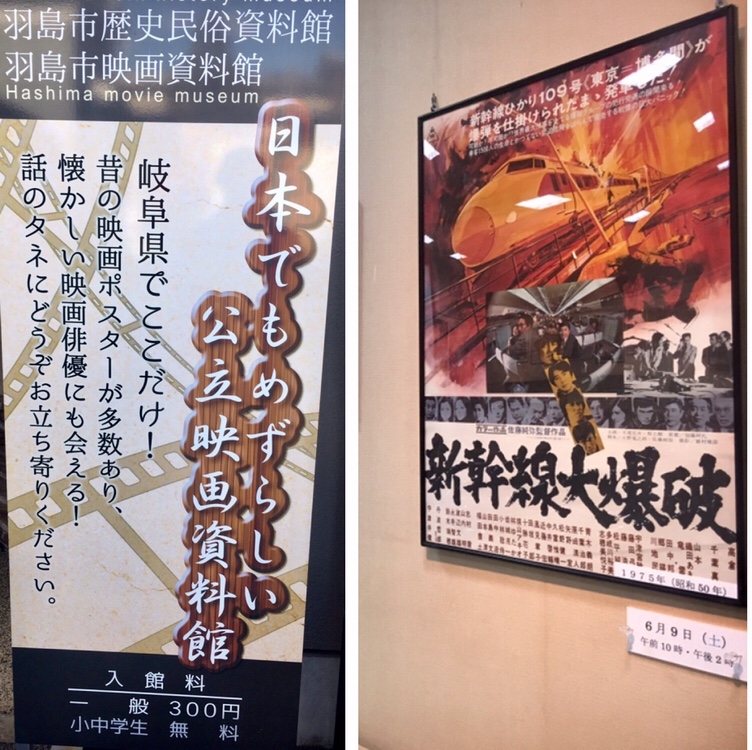

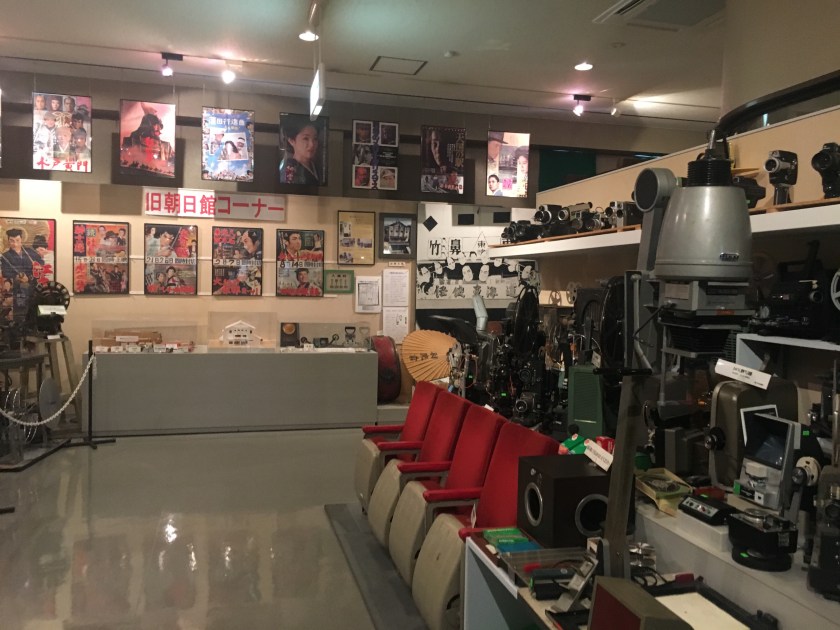


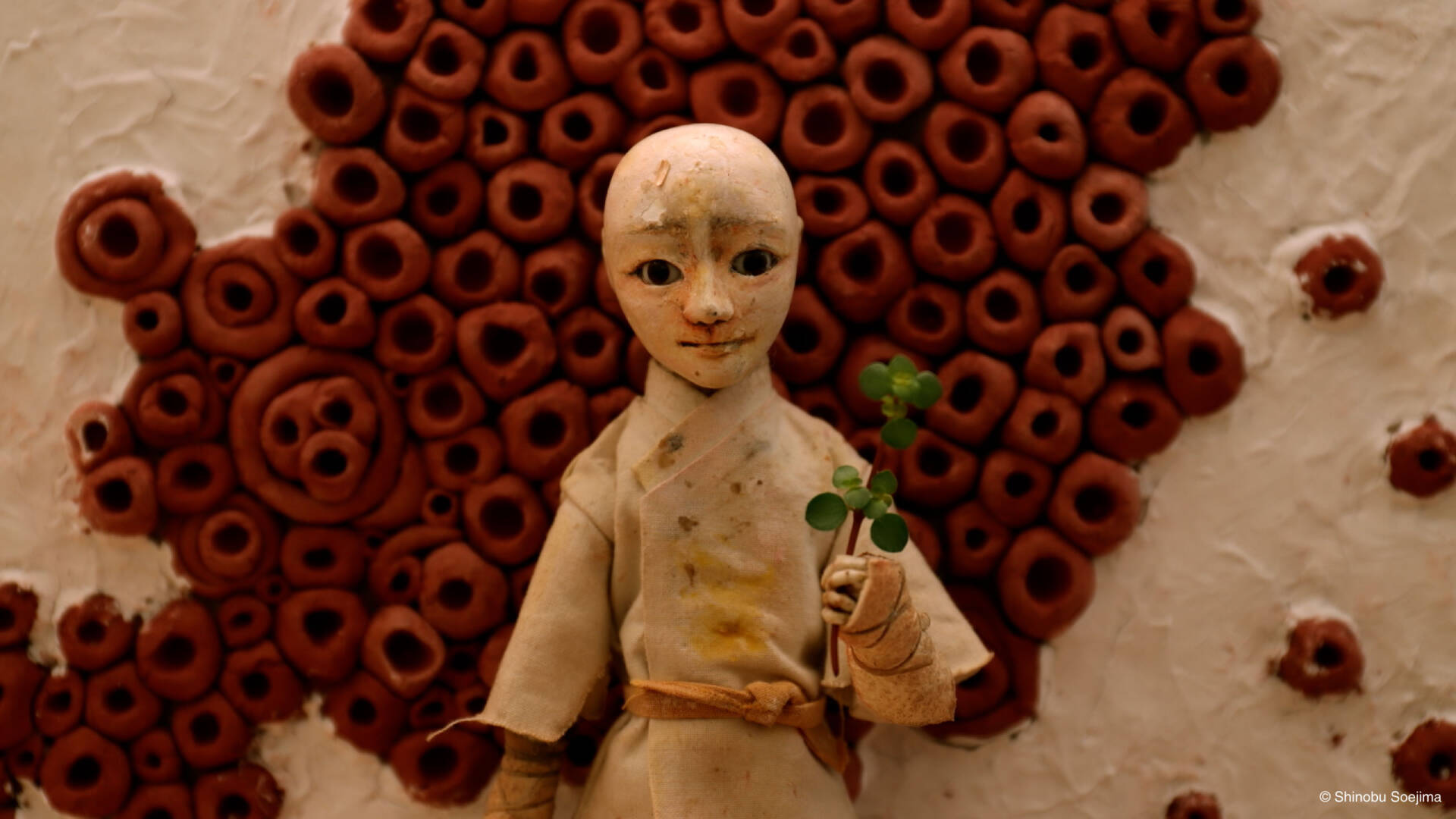
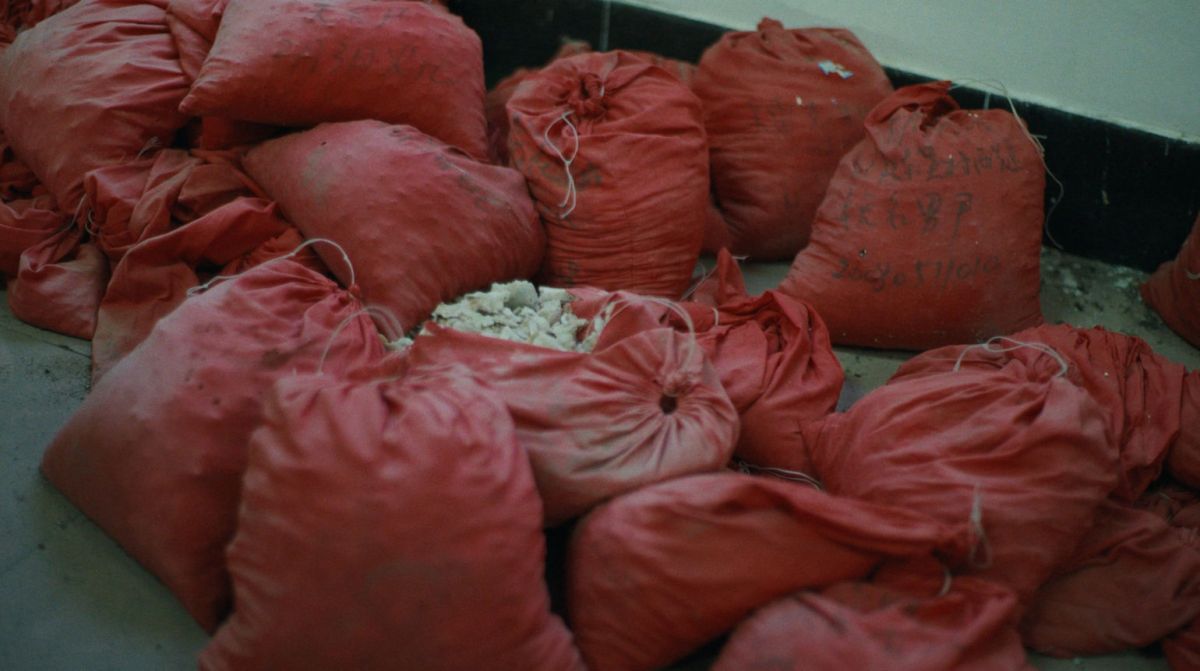
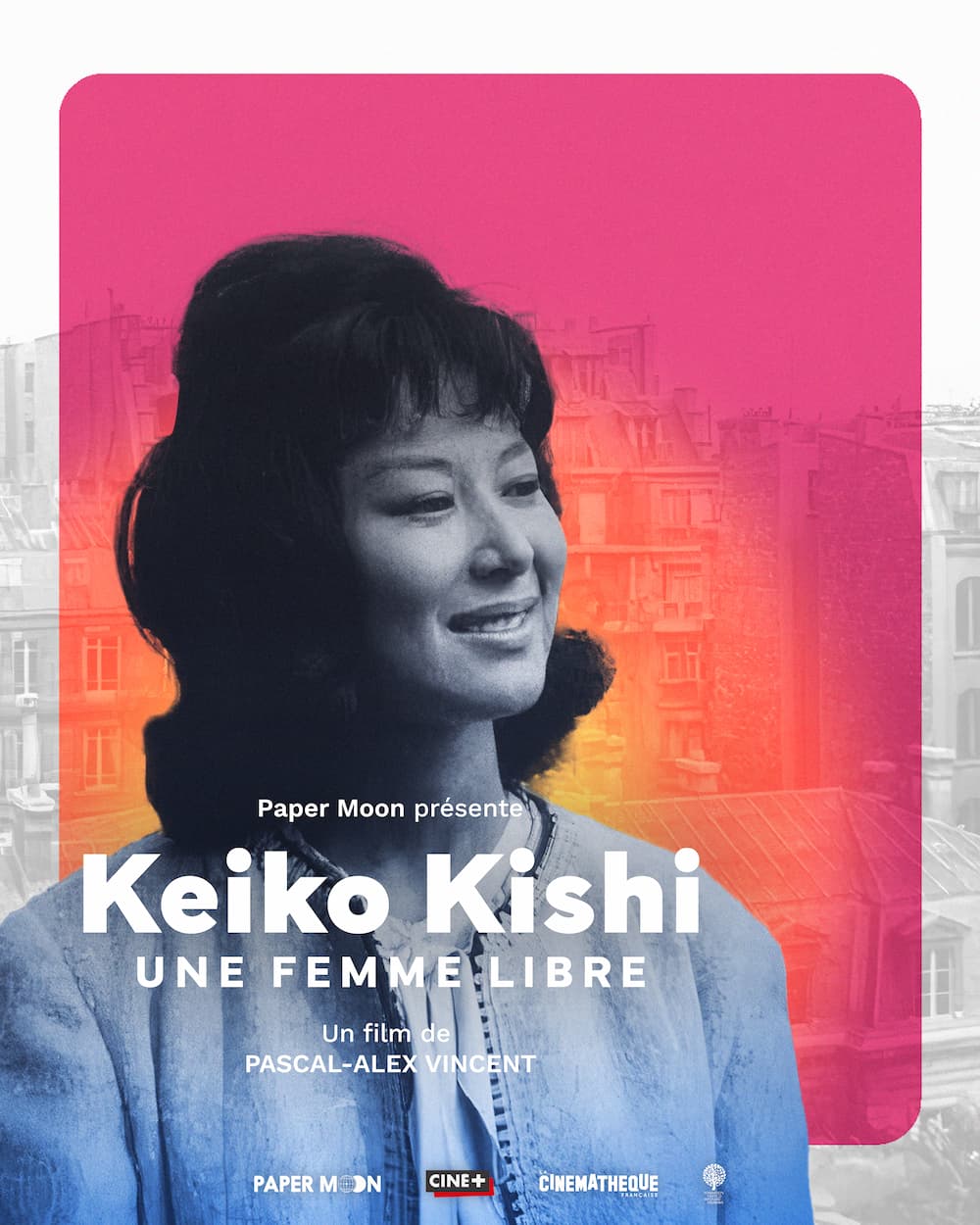


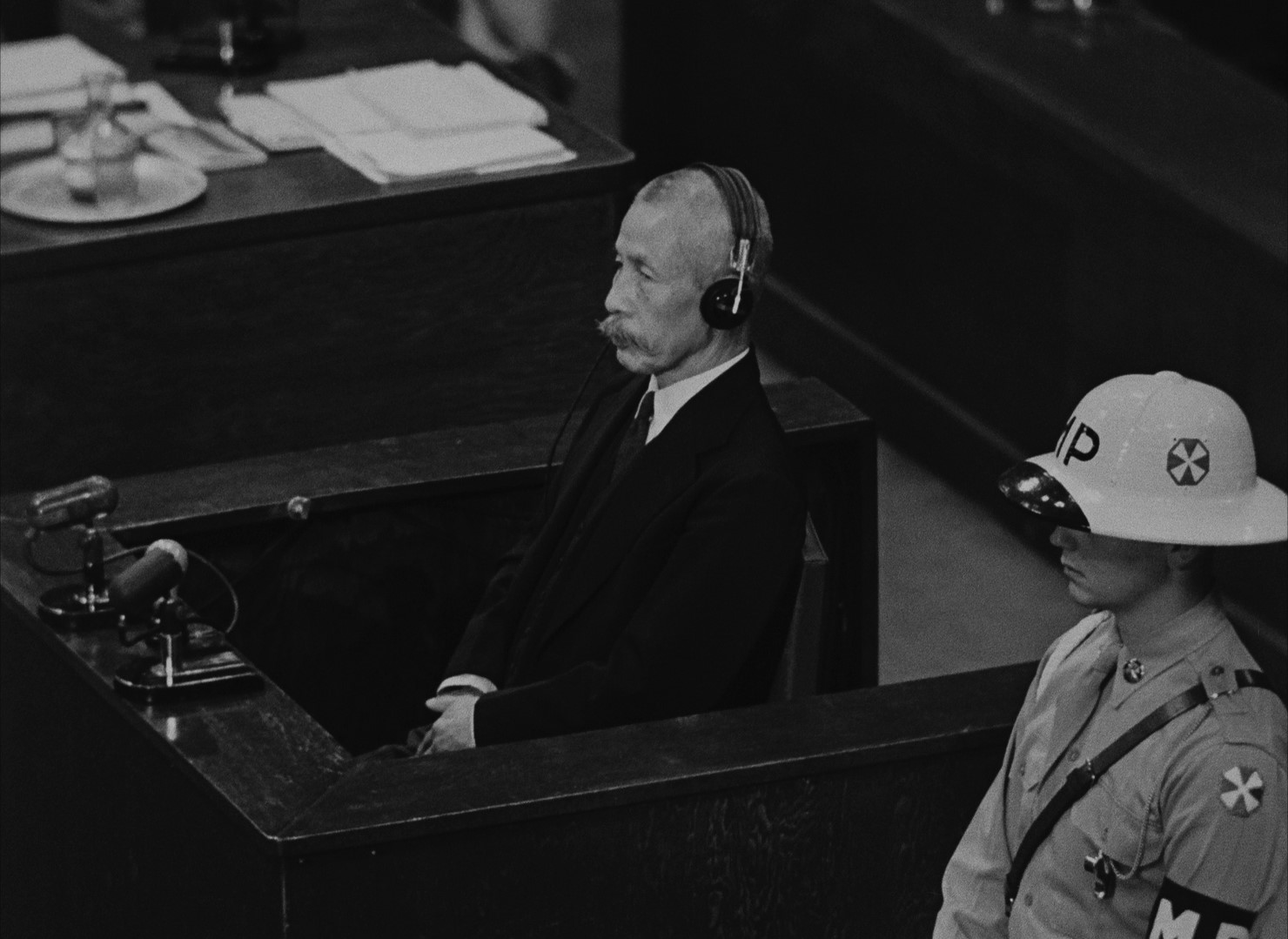

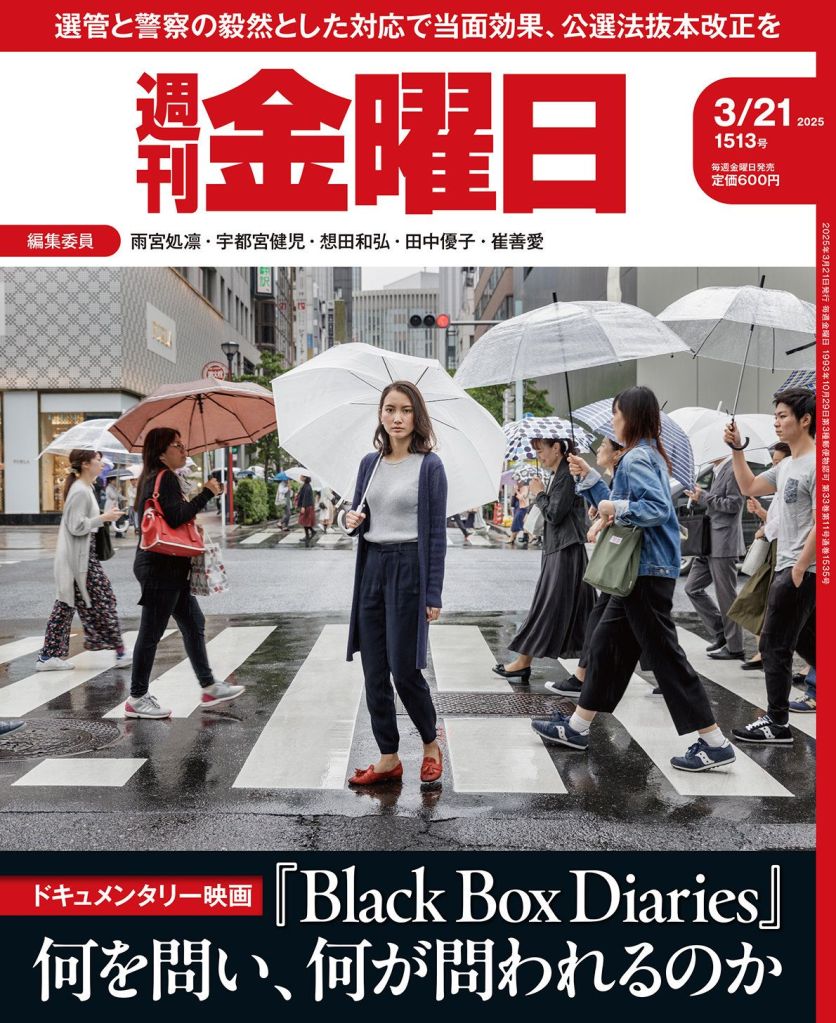
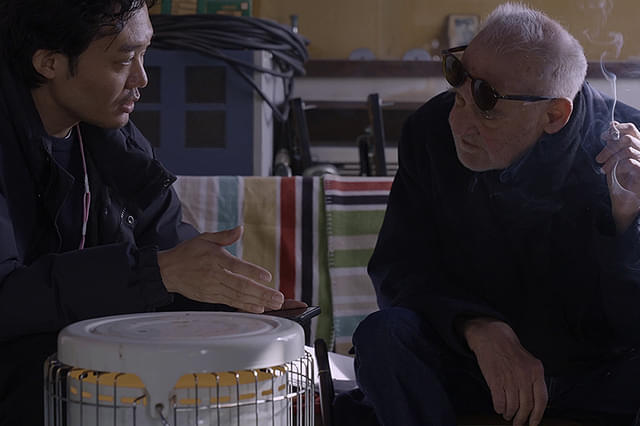
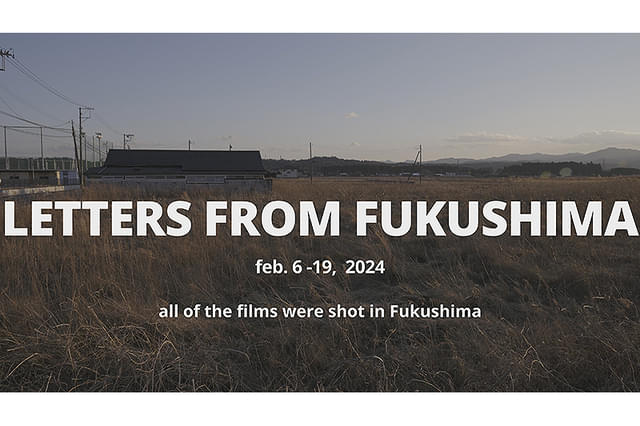
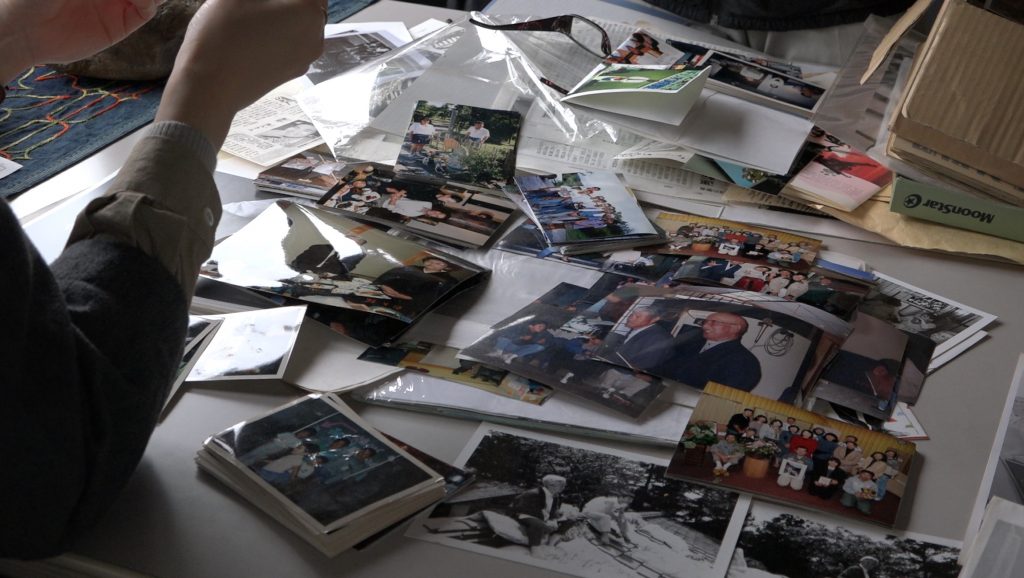
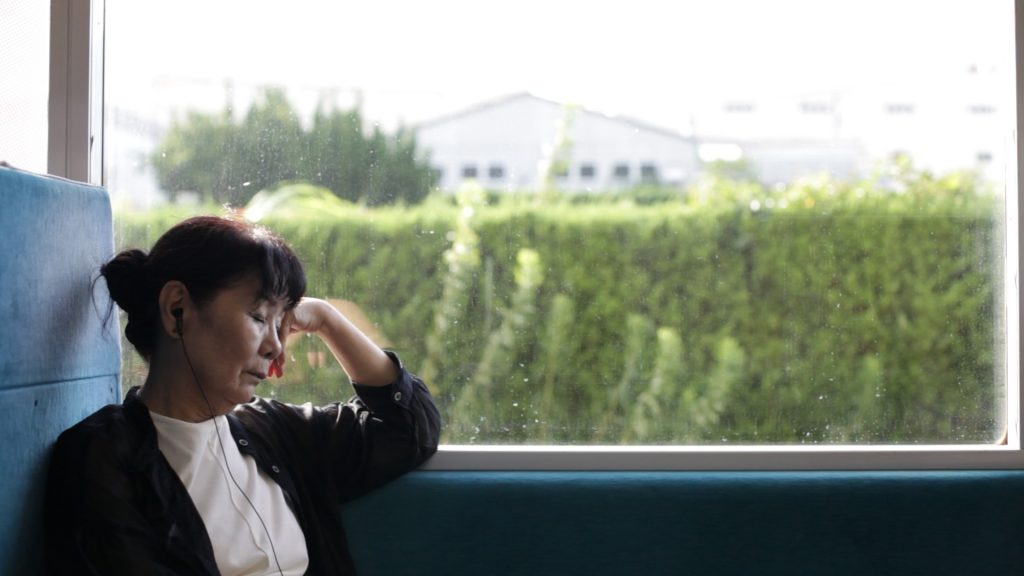

 Asian Docs
You must be logged in to post a comment.