note: I took the liberty of writing about a non-Asian documentary today, and it might become the new rule…
Mother of Many Children (1977) is the first feature-length documentary by Abenaki filmmaker Alanis Obomsawin, one of the towering figures in contemporary non-fiction cinema, and an artist who has been making films about indigenous struggle, representation, and from a Native perspective for almost five decades. Mother of Many Children is not only her first feature-length film, but also one of her best works, in my opinion—I personally think Kanehsatake: 270 Years of Resistance (1993), and Incident at Restigouche (1984) are her two other masterpieces. Insightful, touching, multilayered, and beautifully constructed, it focuses on several Native women of different indigenous people, and from different backgrounds, living in Canada at the time (1977). As Randolph Lewis poignantly notes in his book Alanis Obomsawin The Vision of a Native Filmmaker (University of Nebraska Press, 2006):
Mother of Many Children works on a horizontal plane: rather than diving deep into one or two subjects, it moves around the Canadian landscape every few minutes, pausing to focus on a woman of interest, to take in her story, before moving to another interviewee, often someone quite different. The result of this lateral movement is a feeling that all these women are connected, despite differences in language, tribal affiliation, educational background, and geography.
Clouds of War 戦雲(いくさふむ)(2024) is the latest documentary by journalist and filmmaker Mikami Chie, a director who, in her previous works (The Targeted Village, Boy Soldiers: the Secret War in Okinawa, We Shall Overcome) has been focusing on the current situation in the Ryūkyū archipelago (Okinawa), its complex geopolitical history, and on the resistance of its people against the several American bases operating in the islands. Clouds of War was shot in the span of eight year, starting in 2015, and documents the construction of military ports and ammunition depots by the Japanese Self-defense Force, and more broadly the general militarisation happening in Okinawa main island, Yonaguni Island, Miyako Island, and Ishigaki Island. These spine-chilling changes affecting the land and its citizens, such as the construction of underground shelters built in Yoneguni, or a plan for the evacuation, to Kyūshū, of all the inhabitants, are done in preparation to the next war on the horizon, the one between China and Taiwan. If the picture painted by the documentary is as interesting as it is frightening, less inspired is the way the documentary interweaves all the footage together. The style is journalistic, like in the previous works of the director, but there’s here a lack of focus, in my opinion. It’s very informative nonetheless, and there are some very powerful and profound moments.
Both for their importance in the history of Japanese documentary, and for their intrinsic artistic value, the two films below would deserve a longer and deeper analysis, but time is always scarce here… perhaps in the future…
For some reason, in my exploration of the documentaries made during his long career by Tsuchimoto Noriaki about the Minamata disease and its victims, The Minamata Mural (1981) completely escaped me, at least until now. The film asks the delicate question of how it is possible to represent and depict the suffering and the struggles of Minamata’s victims, and more broadly, how artists can express, through their medium of choice, the sorrow caused by other tragedies as well, such as the bombing of Hiroshima and Nagasaki, or the suffering inflicted to minority groups in Japan. Tsuchimoto and his crew follow Maruki Iri and Akamatsu Toshiko, a couple of artists working on a series of panels dedicated to the people of Minamata, showing us the couple at work on the mural, and during their visits in Kyūshū, when they meet some of the people affected by the disease. By showing how these encounters, especially with two young girls, influenced and changed the perspective of the two artists, Tsuchimoto is also, subtly but obviously, reflecting on his own (at the time) decade-long endeavour in capturing and siding with the people in Minamata. The segment around the middle of the film, when activist and writer Ishimure Michiko reads her poems over the close-ups of the huge mural, is a spine-chilling and heart-wrenching masterpiece of a sequence. For me, one of the most impressive qualities of the scene, besides the poetic words by Ishimure, is how powerfully the camera is able to convey the intensity of the paintings. Another striking aspect of the documentary is how Tsuchimoto and his cameramen are able to capture and convey on film the beauty of the young people affected by the disease. Shiranui Sea (1975), probably the peak of Tsuchimoto’s career, has a balance and a grace in depicting the people of Minamata, particularly the young ones, that can be found here as well.
One of the two cameramen in The Minamata Mural is Segawa Jun’ichi, a director of photography who, among other films, worked in the seminal Snow Trail—directed by Taniguchi Senkichi in 1947, from a script by Kurosawa Akira, and starring Mifune Toshirō in its first role—and with Haneda Sumiko in Ode to Mt. Hayachine— he was mainly in charge of filming the mountains—a documentary filmed around the same period as the one here discussed. It would be interesting to know if Segawa shot the paintings, was involved in filming the people and scenery in Minamata, or was involved in both (I’m inclined to think it’s the former).
The Minamata Mural
“This linking of memories, this setting remembrances in motion, is not a nostalgia but an immanence,”
Crisca Bierwert
A Grasscutter’s Tale (1986) is one of the Japanese “documentary treasures” I have been meaning to watch for quite a long time. The occasion finally came last April, when it was screened at Athénée Français Cultural Center in Tokyo, part of a very interesting retrospective about resistance and political struggle on film, organised to launch the new documentary by Daishima Haruhiko, Gewalto no mori – kare wa Waseda de shinda (ゲバルトの杜 彼は早稲田で死んだ, 2024).
The film focuses on grandma Someya, born in 1899, one of the farmers who lived and worked on the land to-be-expropriated for the construction of Narita Airport. She fiercely opposed the second phase of the airport, a stance that severed her relationship with her family, and resulted in her living alone on her land. The film consists of nineteen stories narrated by grandma Someya’s own words, and mainly of images of the old lady cleaning her field.
Part of the Sanrizuka notes Fukuda Katsuhiko (1943-1998) took after he left Ogawa Production at the end of the 1970s, after the collective left for Yamagata, the film is a crucial work to better understand the history and development of documentary practices in Japan, in that it heralds a shift in the way documentary was conceived, theorised and practiced in the archipelago. The film occupies at least two spaces: militant cinema with a focus on the resistance of one person (Someya-san) against the construction of Narita Airport on the one side, and a mode of cinema that explores the different (hi)stories traversing a physical space, Sanrizuka, and how these intersect with the personal history of one individual. Moreover, seen from a different perspective, A Grasscutter’s Tale can also be considered as an example of “oral cinema”, that is, a cinema that connects and activates the untapped potential of storytelling and the spoken word in relation with the moving image. By combining images and tales that are parallel and do not touch each other, so to speak—as previously noted, the images show mainly Someya-san working on her field—the film constructs a segmented and open portrait of a life, a poetic bricolage made of stories and images that invites the viewers to wander inside of this personal/historical “landscape”.
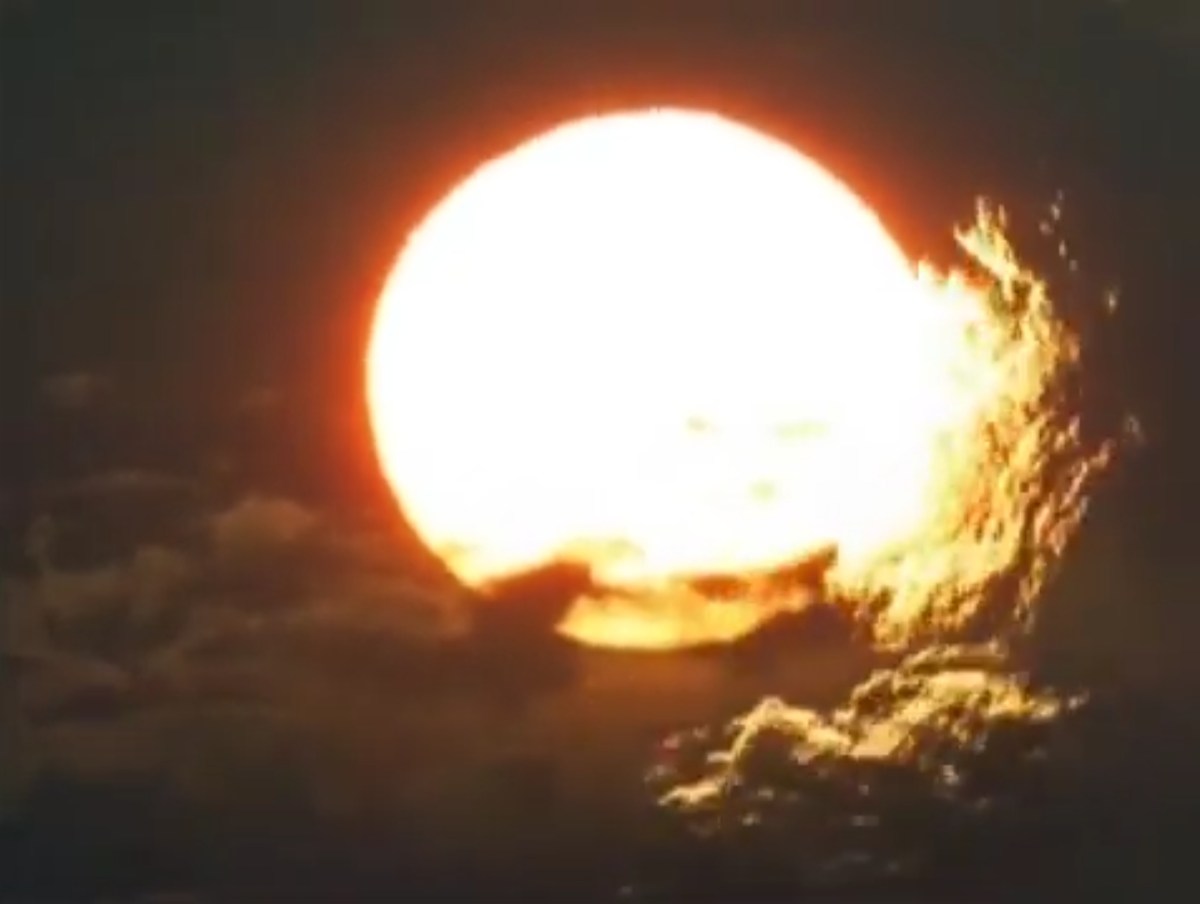
The film has an episodic structure and is composed of chapters, some funny and some tragic, such as the story of her sons who died, her husband who worked as barber, a strange dream remembered, the time she first came to Sanrizuka, or how she once ate only matches as a child to avoid starvation. Sometimes A Grasscutter’s Tale edges towards the experimental. In the segment about the dream, the screen is completely dark except a bright light on the upper left corner, in another, the voice of the director explain (if I’m not wrong) again on a black screen, how the reenactment of an episode from the old lady’s life was scrapped from the final work at the request of her son, who was in it. The screening I attended was in 16mm, a rare chance to better appreciate the colours and the texture of the work. The greens of the crops and of the grass are almost tactile, and the time-lapse scene of the setting Sun, here a fiery red, is akin to that in Magino Village, a very different film, but a work that nonetheless shares many common traits with A Grasscutter’s Tale.
Held in Osaka from March 15th to September 13th, the 1970 World Exposition was, along with the Tokyo Olympics of 1964, one of the events that most reflected the changes happening in Japanese society, and especially in the world of art, between the end of the 1960s and the beginning of the 1970s. According to scholar Yoshimoto Midori, Expo ‘70, as it is commonly known, has become in this century “one of the most frequently discussed topics in the Japanese art world”, and the subject and the setting of many comic books, movies, and books. It is worth mentioning here at least Urasawa Naoki’s manga 20th Century Boys (1999-2006), and Crayon Shin-chan: Storm-invoking Passion! The Adult Empire Strikes Back (2001) directed by Hara Keiichi.
Many of the people invited to participate in the event were part of a wave of artists that was affected by and shaped the 1960s, when art was conceived and practiced as a form of political activism and social resistance, a period kicked off in 1960 with the ANPO protests. The act of participating in Expo ‘70 was considered in itself, by many, a betrayal of what was theorized in the previous decade: a “selling out” to power and a symbolic gesture that (re)institutionalized art, after the urban and rural revolts of the sixties had sought a path outside of the official circles. However, for some of the criticized artists, the event “provided unprecedented opportunities to realize ambitious and big-budget projects that would otherwise never have been conceived” (Yoshimoto), and pushed artistic boundaries, helping to explore unkown creative landscapes.
One of the artists who joined Expo ‘70 was filmmaker and theorist Matsumoto Toshio. In the second half of the 1960s, with some of his short films, Matsumoto had reflected on the protests against ANPO, and more broadly on the artistic and political fervor of the time. For Expo ‘70, Matsumoto created Space Projection Ako, a work projected on ten screens inside a pavilion dedicated to textiles production. On the occasion of the previous World Exposition, held in Montreal in 1967, many artists had already begun to experiment with multi-projections films, for instance Canada ’67 by Walt Disney Production, a work in which the audience was surrounded on 360 degrees by nine large screens, where images of Canada were displayed. On the one hand, art funded by large companies, Space Projection Ako by a textile company, Canada ’67 by a telephone company. On the other, an experimentation that explored the limits, possibilities, and role of visual media, and intermedia, in contemporary society, thus casting a fascinating glance into the evolution of the relationship between technology and humanity.
It is in this socio-historical context that Teshigahara Hiroshi and Abe Kōbō collaborated once again—together they had already made at least three masterpieces: Woman in the Dunes, The Face of Another, and The Man Without a Map— to make what would become their last join effort, 240 Hours in OneDay (1日240時間). A short visual experiment directed by Teshigahara and based on an idea by Abe, 240 Hours in One Day was sponsored and screened at the Automobile Pavilion during Expo ‘70. Rediscovered and restored only in recent years, the short film was shown on a couple of occasions in the past decade, and last March at the Osaka Asian Film Festival, a screening event I was lucky to attend.
…but they say that the passage of time that the dream fish experiences is quite different from when it is awake. The speed is remarkably slower, and one has the feeling that a few terrestrial seconds are drawn out to several days or several weeks. The Box Man, Abe Kōbō
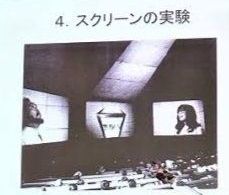
The short film was originally projected at the World Exposition on four screens, three arranged horizontally, the fourth, trapezoidal in shape, placed almost on the ceiling. At the Osaka Film Festival, the work was projected on one flat screen with the 4 original screens forming an upside down T, so to speak (the still that opens this article gives hopefully an idea of it).
240 Hours in One Day is set in a city of the near future, where Dr. X and his female assistant have successfully developed a miraculous drug. When inhaled, this medicine, an accelerator known as Acceletin, allows the user to function ten times faster than normal, perhaps a reference and homage to the protagonist of Alfred Bester’s novel The Stars My Destination (1956), or Ishinomori Shōtarō’s Cyborg 009. At first, people celebrate the newfound freedoms offered to them by this miraculous drug that extends a single day to 240 hours, but gradually things start to change. Teshigahara experiments with a dizzying combination of genres, and the tone is always playful and joyous, a bit all over the place to be honest, and probably by design, because the work does not take itself too seriously. In this regard, it reminded me of the best and most delirious PR movies (industrial films) of the 1960s, such as Noda Shinkichi’s Nitiray A La Carte (ニチレ・ア・ラ・カルト) (1963) or Kuroki Kazuo’s 恋の羊が海いっぱい (1961).
Science fiction, comedy, musical, animation, documentary, and metafiction are weaved together in an aesthetic divertissement that is also a light critic of the obsession of our society with speed and production. The film also offers an obvious reference to the changes produced by the invention of means of transportation; after all, the film was screened in the Automobile Pavilion. What particularly stood out to me is the inventiveness of the different cinematic styles used, and how the four screens are used to create a cinematic viewing experience that is spatially different from the usual one: the characters move freely from one screen to the other, and sometimes each screen represents a distinctive point of view on the same scene.
As pointed out by Tomoda Yoshiyuki, professor and scholar that did a short but fascinating talk after the screening, in the last scenes of the film, when the doctor runs away and spins so rapidly that he becomes a wheel of light and colours, Teshigahara and Abe are hinting at something different that goes beyond the pure negative sides of an accelerated society. The two artists are pointing towards the post-human changes and becomings that new technologies inevitably bring with them, a becoming-thing that was one of the themes often touched by Abe in his books.
Reference: – Expo ’70 and Japanese Art: Dissonant Voices An Introduction and Commentary, Yoshimoto Midori, Review of Japanese Culture and Society, Vol. 23, 2011. – The Box Man, Abe Kōbō, Vintage, 2001.
As a sort of work in progress, draft for a possible future research, or more probably simply as a trace of a significant and very rare viewing experience, in the past weeks I published the unedited notes and reflections I took while attending the Noda Shinkichi‘s retrospective (Yamagata International Documentary Film Festival, October 2023). A total of 38 films were screened in 5 days (you can read the synopsis of each film here). My thoughts on days 1-2, 3 and 4.
Final thoughts
Unfortunately, I could not attend the last day of screenings, day five, at the festival. Mental and physical exhaustion kicked in, as usually does at these kind of events, but I also opted to see some of the films presented in the main program, after all I had to write a general piece on the event for the Italian publication I freelance for. As a sort of justification and excuse, I recall people saying that the films presented on the last day were the “less interesting” ones of all the Noda’s program. .. That being said, I can definitely say that the retrospective was a very impactful viewing experience; as a film writer interested in Japanese documentary, I found the program to be revelatory. It was a very well curated showcase, and I really appreciated the fact that the films were not presented chronologically, but divided into thematic blocks. There are some incredibly powerful and fascinating works in Noda’s filmography —personally Forgotten Land, The Matsukawa Incident, Nitiray A La Carte, The Feast of the Gods, and Good Road for the Livingand the Dead are some films that, for different reasons, still resonate with me to this day. However, the stongest point of the event was, in my opinion, that it presented a significant section of Noda’s filmography, and in doing so it highlighted the developments of Noda’s style and interests in the course of almost five decades, but also, and perhaps more importantly, the developments and transformations of post-war Japanese documentary. All the films screened hint, in their totality, at connections, coincidances (cit. Joyce), and constellations with other works and names in the field of Japanese non-fiction cinema: Matsumoto Toshio, Ogawa Pro, Haneda Sumiko, Kitamura Minao, and others. Each day of the program, there was at least a talk or a discussion with experts and documentarians, the one, by far, most deep and fascinating saw the great Kitamura Minao, a filmmaker and visual anthropologist (or visual folklorist as he, probably, would like to be called), talking about his personal experience with Noda, with whom, in 1978, he co-founded the Japan Visual Folklore Society. I believe Kitamura, his films and his writings, should be (re)discovered, sooner rather than later.
Some of the films that were shown in Yamagata are available on streaming, legally and for free (see below), or for rental. After the festival I was able to revisit some of them, especially The Feast of the Gods, and Good Road for the Living and the Dead deserve probably a longer treatment and a specific focus, an article or a longer essay (?).
As a sort of work in progress, draft for a possible future research, or simply as a trace of a significant, and very rare viewing experience, I have decided to publish, unedited, the notes and reflections I took while attending the Noda Shinkichi’s retrospective, organized at the Yamagata International Documentary Film Festival, in October 2023. A total of 38 films were screened in 5 days; you can read the synopsis of each film here. Below you can find the notes I took on day 4 (my notes on the first two days, and the third one):
Day 4
The Mikagura Festival of Tomiyama Village 1985 Opens with 1970s folk music. Shots of mountains. Graphs. Photos in black & white explaining how part of the town was moved because of the construction of a Dam. Production of tea and shitake mushrooms. Cut to new credits: 1985 January 3rd and 4th. Creative way to use multiple openings. In the following films, there are multiple endings. Describing step by step each phase of the festival. Preparing mochi. Purifying rooms, musical instruments, and people who will join the festival. Offerings to the tree. No direct sound. Music and images combined. Small room. Dances start. Men, men, men. No women for most of the time. We see some of them in the audience later. All the music is very similar, what changes is the dance. Ichi no mai, Shishi mai, Yubayashi no mai, Oni no mai. Interesting: drunk (?) young people interacting freely with the masked dancer. Masks are very expressive and feel very specific to the area. Atmosphere is very “casual” (or better, popular?) from the very beginning. It’s a ritual, but not hyeratic. Everyone seems relaxed, joking, while others are performing, the singing and chanting themselves are not perfect, it’s all over the place. After all it’s a matsuri, not a ceremony or only a performance. Meaning of matsuri: giving new life to people and area, renewing life.
The Procession of Weird and Wonderful Masks 1988 No narration, solemn music. Shot of people wearing masks, all together on the stairs. Panning on each mask slowly. Amazing colours and shapes. Again they feel very specific of the area. It’s a film about masks. Parade. Close-ups of masks and people’s faces. Like in the films about strikes/protests: images filmed on the street in the parade shaking-style, are alternated with shots from above, and low angles shots from street level. Fast editing. End: introducing each mask, explanation cards, mask on a black background. No sound in this part.
Sarushima-Island With a Fort: Ruins and Graffiti 1987 Music. No narration. Shots stay longer on soil, walls, stones. Panning. Concrete shelters. Holes in the walls (bullets). Graffiti and traces of war overlap. Different times. Sometimes there is no sound. Sometimes music (guitar). Camera pans on walls, entrances, tunnels, corridors. The ending is very beautiful (Noda master of ending in this period): black frame with a tiny bright square (entrance/exit out of tunnel) oscillating for a long time. Bright spot gets bigger. We’re out. Cut to the island (mirroring the beginning). Zoom out slightly. Stay on the image for long. End. Filmed between in 1968 and 1983 (really?!) edited together in 1987.
Good Road for the Living and the Dead: Niino Bon Odori, Festival to Send Off the Gods 1991
The Feast of the Gods on a Winter’s Night: Toyama’s Shimotsuki Festival 1970 B&W. Images of the area. Music. Images of fire. Images of shide (paper hanging from the ceiling). Images of hands. Close-ups of hands. Fire. Water boiling. Fire and smoke are often on the foreground. Dancers are almost never shown from far away. Camera is in the middle, part of the constellation formed by people and objects. Performers shown in a fragmented way. Everything is continuously cut. Camera goes back to shide, fire and water many times. Kitamura explained in the after talk that fire and water come together in the ceremony. Chants, dances and images become monotonous like in a trance. Cinema-trance. No narration or explanation. Just a card at the beginning. As Kitamura Minao said: this is a festival captured without knowing almost anything about it. Sensorial. The most experimental of the folklore films. Exceptional.
Good Road for the Living and the Dead: Niino Bon Odori, Festival to Send Off the Gods 1991 People dancing for three days welcoming the dead during Obon. Again, shot from above, from street level and low angles. Colourful. Impressive images of all the town dancing. Different times soak the images in different lights (twilight, dawn, etc.) Singing and dancing together as in utagoe: identity making? Young people make kind of a mess, but scenes are kept in the movie like in the first movie of the day. The film takes its time, slower rhythm, music and dances envelop the viewer slowly. Cinema-trance, but of a different sort from the previous. People move toward the graveyard. Burning the small floats. The spirits of the dead. Fascinating and creative the ending, long time black screen, music. The dead.
Personal note: there’s a similar festival in Gifu (Gujō Hachiman, 3 days in Obon) but it’s so packed with tourists that we can’t even enter the town (link to Hayachine and tourism). Impossible now to film a festival like Noda did.
Snow as Flowers: Niino’s Snow Festival 1980 Opens with the deep blue of the sky and a beautiful map of the area. Constructed like Mikagura Festival: documenting each step of the festival. Shots and scenes are here much longer. Again, Noda does not shy away to show the rough/popular side of the festival: two guys parading are drunk, people interacting quite directly and roughly with the performers, one guy is caught yawning. Wondering is the presence of the camera enhanced or altered the behaviour of some participants. Less poetic and experimental compared to the two previous films. Noda getting more interested in folklore itself than in the representation of it?
As a sort of work in progress, draft for a possible future research, or simply as a trace of a significant and very rare viewing experience, I have decided to publish, unedited, the notes and reflections I took while attending the Noda Shinkichi‘s retrospective, organized at the Yamagata International Documentary Film Festival, in October 2023. A total of 38 films were screened in 5 days (you can read the synopsis of each film here). Below the notes I took on day 3 (my thoughts on the first two days are here):
Day 3
Tying Land and Sea 1960 The film opens like a Shōchiku movie, but the colour palette is not very poppy. Various ports in Japan: Yokohama, Toyama, Kobe, Niigata, Hiroshima, Hokkaido, Nagoya, Shikoku, etc. Interesting how in the film, the narration uses the term ura nihon to describe cities on the West coast, nowadays it is considered offensive and it’s not used anymore. Noda uses it in other movies too, the geography ones, I think. The editing’s rhythm mirrors the music, when it is fast the music also gets fast, or more “aggressive”. Focus is not on people but on the things (there are very few close-up shots of faces)
Carrying the Olympics 1964 If the previous was like a Shōchiku, this one felt like an action produced by Nikkatsu, although the focus on things is similar. The music is louder, mainly classic, organ and baroque. Starts from the empty pool and the national stadium, empty. New monorail. Trucks transporting materials for the Olympics. Equipment arriving for the players from different countries. Aeroplanes, luggage, horses. Night scene with oblique shots and superimposition of the 5 rings (one of the most beautiful images of the film). The editing is much faster than in the previous movie. Same scene is shot from different angles. Mirroring the subject of the movie, the images are continuously moving, rarely we get a static shot for more than 2 seconds. The camera is always panning, zooming in or out, or the image is vibrating (telephoto lens), or the camera is moving because it is on a truck. Shots from the perspective of the cones, of the pigeons, of the reels for TV. While the subject is “simple”, formally it is a very sophisticated movie, very smartly constructed.
Nitiray A La Carte 1963 From the very first shot to the last, the film is pure experimentation, visual and sonic. Music by Takahashi Yūji is hinting at a space age to come. Abstract titles. Stagy parade of models like in Suzuki’s Tokyo Drifter. Felt like an installation sometimes. The narration is comedic and almost surreal. Slow motion, shots in the mirror, close-up of lips, 4 screens. Shot of the meeting from above. Kids parading. Graphs/animation about the history of the company. Pure art-house entertainment. The music suggests a futuristic product (nylon) constantly evolving, the images are experimental as the company is experimenting with new chemicals. This sense of looking ahead and moving away from the past is also hinted at by alternating black and white scenes with the ones in popping colour.
A Town Not Yet Seen1963 One view was not enough for me to fully appreciate it. Street, water flowing, walls, stones, meat hanging. A small stone bridge reflected on the water. The film is in dialogue with Matsumoto Toshio’s The Song of Stones, and The Weavers of Nishijin (1962). I found the music a bit too intrusive.
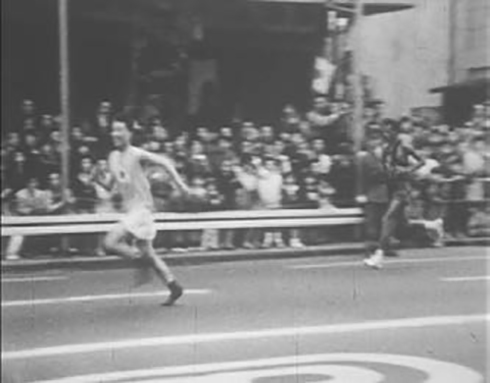
The Loneliness of Two Long Distance Runners 1966 Credits written on cardboard with ants. Starts with a black screen and music (in English) The scene is repeated 19 times. Every time we notice something new, the police, the official cameraman, the audience, the smile on the face of the young Japanese. The music matches ironically with what we see on screen: “c’mon” “you move me baby” “go go go go go” “oh yeah!” The perception of what is on screen changes with repetition and music, the more we see it the more it gets funny. Difference in repetition.
Collapsed Swamp, or Painter Yamashita Kikuji 1976 Unfortunately, I haven’t taken so many notes on this, I’ll add some lines from the Osaka’s “phantom” retrospective organised in 2020.
Film opens with the artist’s face. He was in the war, and so was his brother, all his art is about expressing what is almost impossible to express, the horror of war. His paintings depict scenes where animals and spirits coexist with humans. Noda and Yamashita were colleagues at Tōhō Studio, where they both experienced the Tōhō dispute. It’s a very peculiar film about an artist, in that it’s in black & white, the words of the artist are prominent. Yamashita’s words were recorded in 1969, images were captured between 1970 and 1972. Work completed in 1976. When the film moves to the Owls it becomes almost comedic, but a surreal comedy. Scenes when Yamashita talks about being questioned by the police on images of him smashing birds head: Violence on the protesters in the late 60s?
Mizutani Isao’s Wanderings through Ten Spiritual Worlds 1984 Silent but originally was accompanied by the artist’s own narration, benshi-like. Pouring paint on canvas at night. Morning, Mount Fuji in the background. Frozen Yamanaka Lake. When is pouring paint, his face is like a Noh mask. Performance for the camera? Cut inside. Making the final touches. Close up of details. Insects. Summertime. Finished paintings are placed in different parts of the city: stairs, middle of a street, etc. Feels like performance art. A happening.
As a sort of work in progress, draft for a possible future research, or simply as a trace of a significant and very rare viewing experience, I have decided to publish, unedited, the notes and reflections I took while attending the Noda Shinkichi’s retrospective, organized at the Yamagata International Documentary Film Festival, in October 2023. A total of 38 films were screened in 5 days, here are my notes on the first two days (you can read the synopsis of each film here, notes on the third day here).
Day 1 Renovating Farm Houses (1941) Festivals in Tohoku Part 1 (1956 ) Festivals in Tohoku Part 2 ( 1956 ) Festivals in Tohoku Part 3 (1957 ) Impressive use of colours, especially in the second film, where the parade reminded me of Rio’s carnival.
Forgotten Land: Record of Life Series II (1958) Impressive film, especially on a formal level. Opening: the camera pans on the faces of students, who are telling their dreams, mainly to leave the village. The use of editing reminded me of soviet montage, for example: close-up of a fisherman, fast cut to the sea and wave, or when the woman is ploughing the soil, the editing is almost in rhythm with her actions. The soundscape has also a big part in the film: the sounds of waves penetrate each image, and each individual’s life, we are reminded that the sea is always there with its harshness On the Method of Avant Garde Documentary by Matsumoto Toshio was published in June 1958, in Kiroku Eiga, the journal founded by Noda, Matsumoto and others.
The Girl of the Valley (1949) Fiction with a heavy touch of realism. Making of charcoal is a theme recurring in all his movies about or set in Tohoku, signifying an old and severe way of living,
The Locomotive Kid (1950) The scenes about the train are beautifully filmed, I liked the transition from the kid looking at a photo of a locomotive to images of it. The tone of the movie is definitely lighter than the previous one. Of course the train is the kid’s dream but also, as always, symbolises progress, especially for a rural area. Slow paced. Noda is good at directing kids. The two movies and Work in Retail (1951) reminded me of the films of Shimizu Hiroshi, the kids of course but also the tone (a mixture of serious and funny).
Day 2
The Unforgivable Atom Bomb: The Singing Voice of 1954 Japan (1954) Impressive film that reminds us the importance of utagoe festivals, and utagoe culture more in general. As we’ll see in the next couple of movies, singing while protesting gives the people an identity, unifies them. Each union or group has a different song. Formally the film alternates long shots, when we see the stage and groups performing on it, with images filmed close to the performers. As the movie progresses the images of the auditorium with all the people singing and moving together are used more often. Very impactful scenes. Noda a couple of times cuts to images of strikes. Chinese and Korean groups are also performing on stage, it is a very transnational movement, highlighting class struggle first, in this it reflects the political atmosphere of the 1950s. Women are very present and a very active part of the unions, at least it seems so from the film. Utagoe as a convergence of popular and political is fascinating, it is popular before becoming pop (probably in the 60s)
On a side note, in the credits I’ve seen the name かんけまり Kanke Mari, she was a director of PR movies and documentaries active in the 60s and 70s (did a documentary on a railway workers strike screened at National Film Archive ), Noda writes about her in his book about documentary.
The Matsukawa Incident: Seeing the Truth Through the Wall (1954) Opens with images of a wall, silent, and then with organ music. From here we move to the court where we are explained about the incident, the official version. The film is constructed as a counter story of the incident and does so in a very modern way that feels very fresh even today. Interviews with the men wrongly accused, graphs and animation used to explain the movements of the suspects, scenes that feel almost reenactments (man walking along the railway). The film takes its time in explaining the facts and in depicting the wrongly-accused men. It is strange to say, but it feels like a crime novel, there’s even suspense.
The Workers of Keihin 1953 (1953) Film starts with the depiction of the workers on the way to their job place, bus, train and boat. Use of photos. During the demos, we often see the mothers with their kids. Preparation for May Day, all the different unions and some new ones are formed (department stores, mainly women). U.S. bases are considered responsible for the conditions of the workers, overworking, low salaries, etc. This sentiment against the US is added to the one against the war in Korea. As in the utagoe film, the events organised by the unions are horizontal in their scope, here we see a sports day organised for the Korean community in Japan. We also see support in China, Italy (just mentioned), and other countries. Important: the unions/workers are reaching to the farmers to get their support against the use of Japanese land by the American bases (this predates the documentaries about the Sunagawa riots by Kamei Fumio and of course Ogawa Pro). The farmer resistance of the 60s does not appear suddenly from nothing.
June 1960: Rage Against the Security Treaty (1960) Dramatic music opens the film, from the very beginning it’s very noticeable how the style has evolved: fast cutting, shaky hand camera, many shots are from street levels and in the action (Sunagawa and Sanrizuka style), close-ups, direct sound… Powerful scene: arrival in Japan of Ike, helicopter is landing among a sea of people protesting. Farmers are more present here in the protests, Miike mine workers are also showing solidarity. Spectacular images of protests in front of the American embassy and the National Diet Building. Death of Kanba Michiko, killed in the protests. After the tragedy the movie goes silent for a couple of minutes showing mainly photos of people beaten laying on the street, powerful and violent images. Photos of prime minister Nishi are often used and stay on screen for quite a long period of time.
The New Japanese Geography Film Series: Tone River (1955) The New Japanese Geography Film Series: The Roofs of Honshu (1957 ) The New Japanese Geography Film Series: Tokaido, Yesterday and Today (1958) The New Japanese Geography Film Series: Villages of the Northeast (1959) What I remember of the four movies is that in one it is said that the modernisation of Japan, while obviously necessary, turns every city into something similar. The specificity is lost.
Technique of Foundry: The Cupola Operation (1954) Experimental music used throughout. Images of melting metal are like abstract paintings, the camera stays on these images for long periods of time (considering it is a PR film).
Marine Snow: The Origin of Oil (1960) Well, a spectacle, the colours are amazing, the editing in a scene about the waves is almost jump-cut. Again, some images, are like abstract paintings, it’s science porn (like the rice ones in Magino). Grandiose music. Commissioned by a oil company, thus partly celebrating the petroleum industry, and yet…
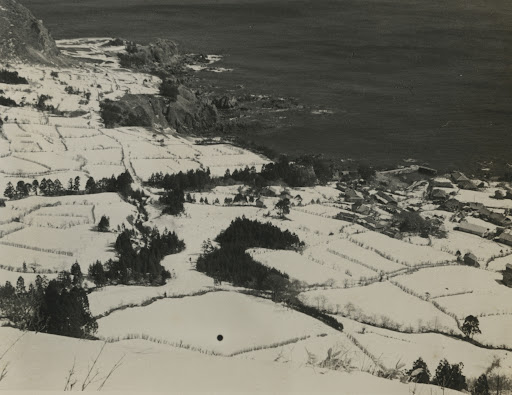
Country Life under Snow (1956) The colour palette is tone down here, what I remember is the music being similar to the one used in Godzilla.
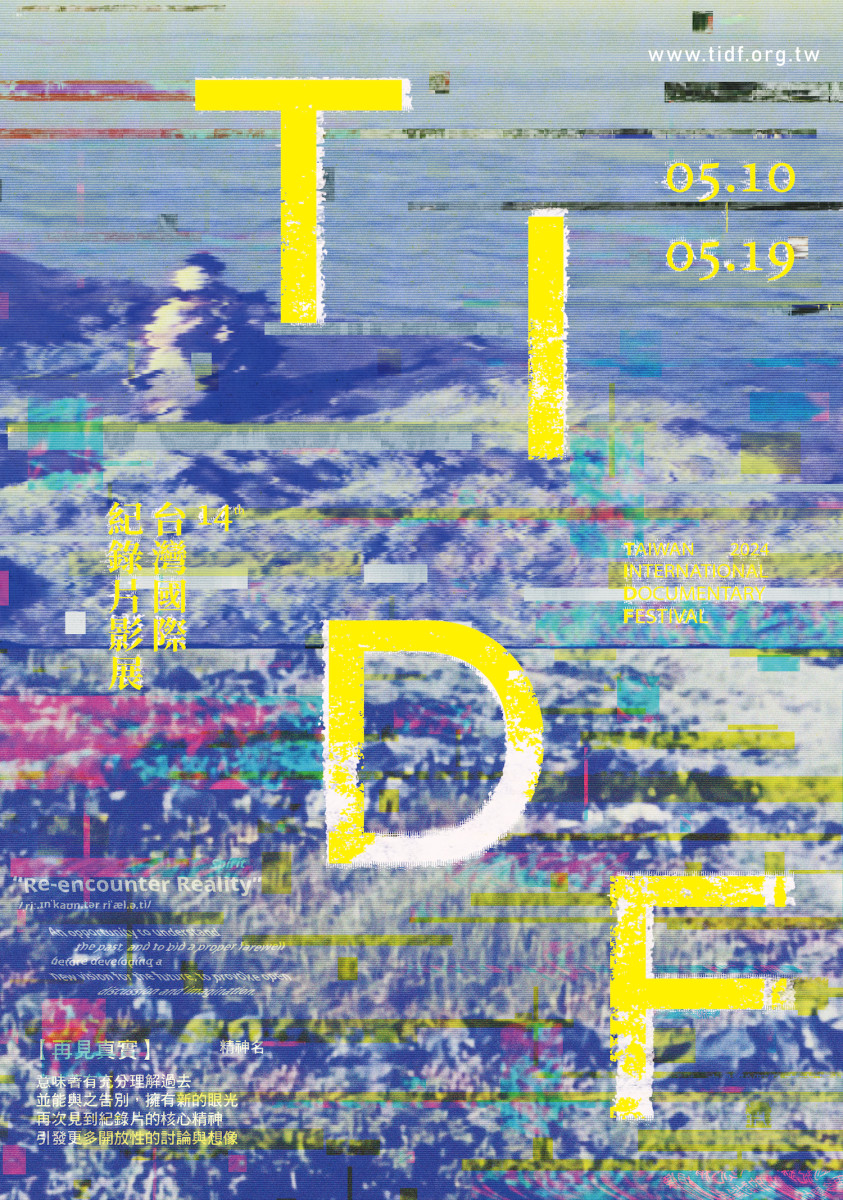
In the past days, the Taiwan International Documentary Festival (TIDF) has announced the official line-up for its 14th edition. Launched in 1998, the TIDF has slowly but surely become one of the most important festivals dedicated to documentary cinema in Asia. Held in various venues in the capital city of Taipei, the event will take place from May 10 to the 19, and will showcase the best non-fiction cinema produced in recent years —with a special attention and focus towards Asia, but also other parts of the world— through its four sections: the Asian Vision Competition, International Competition, Taiwan Competition, and TIDF Visionary Award.
This year, the festival will also commemorate two key figures in the development of documentary in Taiwan, Chang Chao-tang, author of works that are widely considered the first poetic and experimental documentaries in the island (The Boat-Burning Festival, Homage to Chen-Da), and ethnographic filmmaker pioneer Hu Tai-li (Voices of Orchid Island), who passed away in 2022. Unfortunately I will not be able to attend, one day though, one day…anyway these are the sections and the films.
Taiwan Competition A Holy Family Elvis LU|Taiwan, France
A Performance in the Church (World Premiere) HSU Chia-wei|Taiwan
All and Nothing (World Premiere) LIAO I-ling, CHU Po-ying|Taiwan
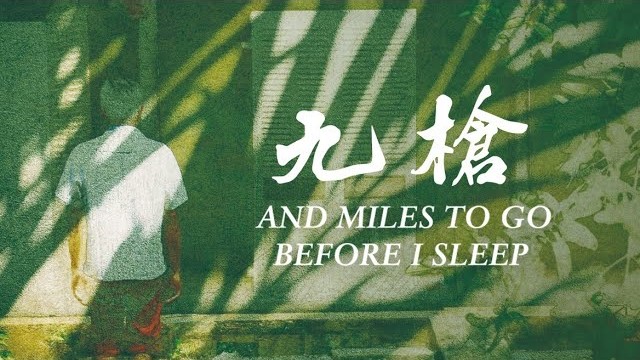
And Miles to Go Before I Sleep TSAI Tsung-lung|Taiwan
Come Home, My Child (Asian Premiere) Jasmine Chinghui LEE|Taiwan
Diamond Marine World HUANG Hsiu-yi|Taiwan
From Island to Island (World Premiere) LAU Kek-huat|Taiwan
I Must Keep Singing LIN Chih-wen, LIAO Ching-wen, CHUNG Hyeuh-ming|Taiwan
Lauchabo TSAI Yann-shan|Taiwan
Parallel World HSIAO Mei-ling|Taiwan
Taman-taman (Park) (World Premiere) SO Yo-hen|Taiwan
Pongso no Tao〜 Island of People TSAO Wen-chieh, LIN Wan-yu|Taiwan
The Clinic Midi Z|Taiwan、Myanmar
When Airplanes Fly Across LEE Li-shao|Taiwan
Worn Away CHEN Chieh-jen|Taiwan
Asian Vision Competition Atirkül in the Land of Real Men (Asian Premiere) Janyl JUSUPJAN|Czech Republic
As usual, the list below is a reflection of my taste, interests, and viewing habits during the past year. Some works are from 2022, but became available here in Japan just in 2023. The synopses are taken from Letterboxd (films are in no particular order).
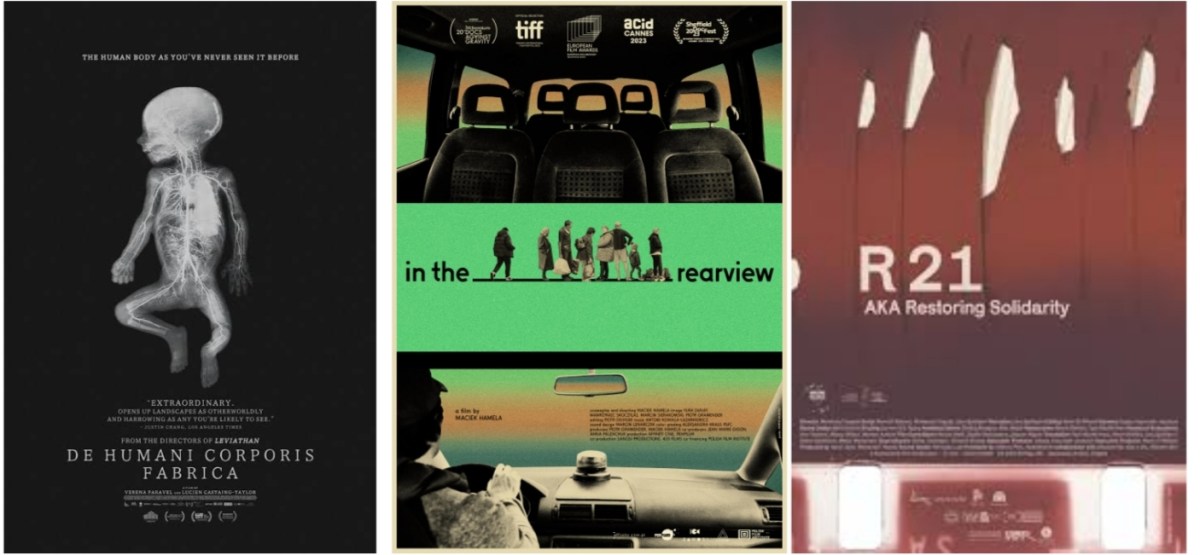
R 21 aka Restoring Solidarity (Mohanad Yaqubi) The growing struggle for Palestinian self-determination between 1960 and 1980 was supported by radical left-wing movements worldwide, also in Japan. This is illustrated by a collection of 16mm films by militant filmmakers from various countries, which were dubbed and screened in Japan. Their Japanese audiences felt oppressed by the US after World War II, and not only sympathized but also identified with the Palestinians.
De Humani Corporis Fabrica (Lucien Castaing-Taylor, Véréna Paravel) An extraordinary adventure through the interior of the human body; or the discovery of an alien landscape of unprecedented beauty.
In the Rearview (Maciek Hamela) A Polish vehicle traverses the roads of Ukraine. On board, people are evacuated following the Russian invasion. This van becomes a fragile and transitory refuge, a zone of confidences and confessions of exiles who have only one objective, to escape the war.
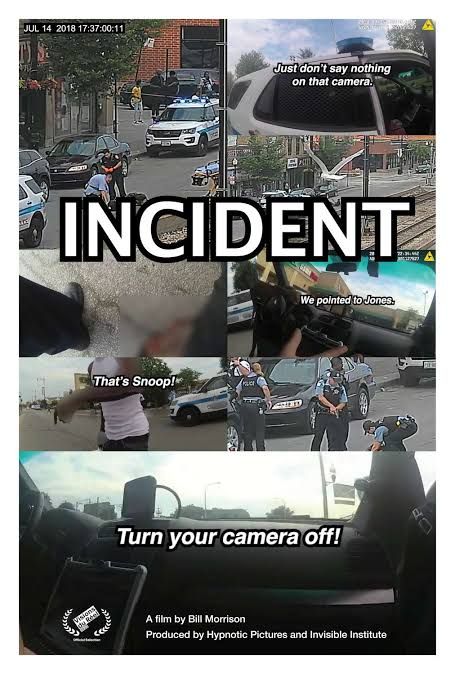
Incident (Bill Morrison) Chicago, 2018. A man is killed by police on the street. Through a composite montage of images from surveillance and security footage as well as police body-cams, Incident recreates the event and its consequences, featuring vain justifications, altercations and attempts to avoid blame. Bill Morrison delivers a chilling political investigation in search of the truth.
Losing Ground (Anonymous) In February 2021, Myanmar wakes up to the sounds of a military coup. The hopes of an entire generation are extinguished. Protests are held, but the dictatorship is too powerful: arrests, imprisonments and threats of execution ensue. The capital becomes a large open-air prison, but a few anonymous voices still have the strength to cry out.
Raat: Night Time in Small Town India (The Third Eye Portal) What is that you can see at night? What is allowed, what is not? What do you become a witness to?
The Natural History of Destruction (Sergei Loznitsa) Is it morally acceptable to use the civilian population as yet another tool for waging war? Is it possible to justify death and destruction for the sake of supposedly lofty ideals? The question remains as pertinent today as it was at the beginning of World War II, and it is becoming increasingly urgent to answer, as countless tragedies have been caused by unethical political decisions.
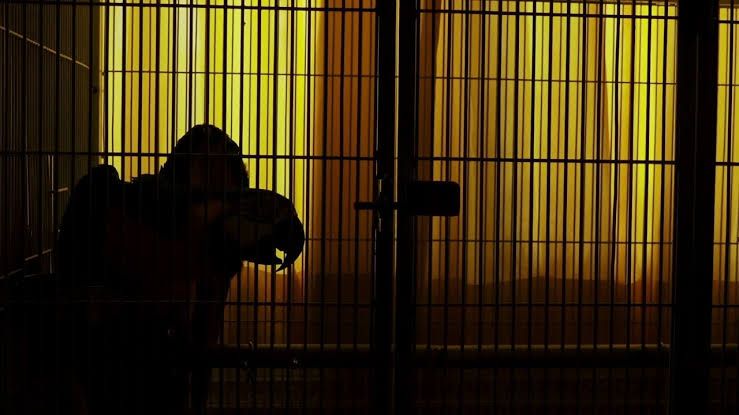
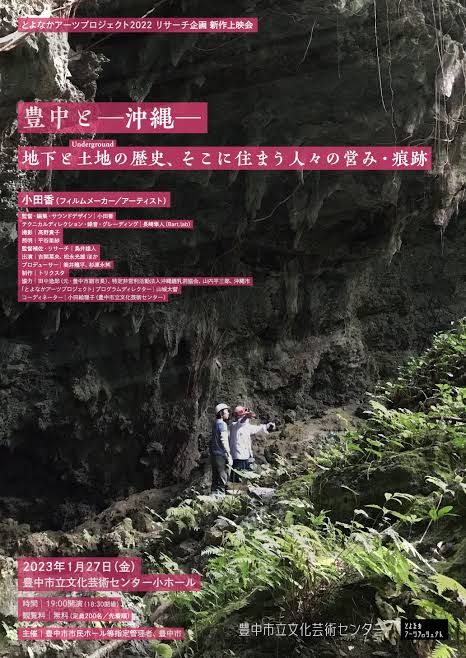
GAMA 2023 (Oda Kaori) A storyteller of peace serves as a guide in the “Gama”—natural caves where many local people lost their lives during the Battle of Okinawa. The woman in blue standing by his side represents the intersection of the present and the past. Here my report from the screening of the movie last January.
Youth (Spring) (Wang Bing) This film was shot between 2014 and 2019 in the town of Zhili, a district of Huzhou City in Zhejiang province, China. Zhili is home to over 18,000 privately-run workshops producing children’s clothes, mostly for the domestic market, but some also for export. The workshops employ around 300,000 migrant workers, chiefly from the rural provinces of Yunnan, Guizhou, Anhui, Jiangxi, Henan and Jiangsu.
Waorani Omede Beye Ante Nee Adani (Luisana Carcelén) For thousands of years, the Waorani women of the Ecuadorian Amazon have lived in perfect harmony with Mother Earth in the most bio diverse spot on the planet: the Yasuní. They have coexisted within this delicate ecosystem, allowing them to flourish while preserving their unique customs and traditions. However, the winds of change have swept through their lands, and now, the sacred place that grandmothers, daughters, and granddaughters have cherished as home stands under grave threat.
A couple of interesting documentaries I’ve watched recently, besides those I saw at the Yamagata International Documentary Film Festival.
Shot in four years, 越後奥三面 山に生かされた日々 Echigo Okumiomote: A Traditional Mountain Village (1984) follows the everyday life of Okumiomote, a mountain village in Niigata prefecture, near the border with Yamagata prefecture. The village, its inhabitants, the mountains, the forest and the rivers, form a fascinating ecosystem and microcosm of a life (1980-1984) dependent upon and regulated by natural elements and the cycle of seasons. This lifestyle and the specific traditions, customs and habits—performed, changed and improved throughout centuries by the inhabitants—would eventually disappear years after the documentary was filmed, due to the construction of the Okumiomote Dam (the area would be submerged).
The documentary has been recently digitally remastered and screened, together with other works by director and video ethnographer Himeda Tadayoshi, at a special retrospective organized at Athénée Français Culture Center in Tokyo.
While the film opens with one of the villagers talking about the anti-dam movement active since 1971, the entirety of the documentary depicts matter-of-factly the various customs and jobs done in the mountains and in the fields (hunting, gathering, harvesting). Only the last 30 minutes are more a direct reflection on the disappearance of the village, and on the act of documenting its existence and preserving its memory on film. The documentary is narrated, or better, commented, in a very friendly manner, so to speak, by Himeda himself. The presence of the director and his troupe is never hidden, once we even see a special meeting, requested by Himeda himself, when the village’s hunters are strongly opposing the presence of the camera during their upcoming bear-hunting trip. This film pairs very well, thematically but not stylistically, with Haneda Sumiko’s 早池峰の賦 Ode to Mt. Hayachine, filmed almost during the same years in the mountains of Iwate prefecture.
Echigo Okumiomote was accompanied by a publication of a huge volume about the life of the village, an ethnographic study and document of the area (I own it, I might return to the movie and the book in the future). Himeda would return to Okumiomote in 1996 to film a new work, 越後奥三面 第二部 ふるさとは消えたか Echigo Okumiomote dai ni bu furusato wa kieta ka, about the situation after the people of the village were forced to relocate. One of the discoveries of 2023 for me.
Nguyen Quoc Phi was a Vietnamese migrant worker, who on 31 August 2017 was reported for a car theft in Hsinchu County, near Taipei. On the same day, he was shot nine times by police officer Chen Chung-wen. He was left bleeding on the ground, and tragically died on his way to the hospital. A part of the public in Taiwan supported Chen’s use of firearms against the runaway immigrant who resisted arrest.
And Miles to Go Before I Sleep (Tsai Tsung-lung, 2022) is a documentary that asks the viewer uncomfortable questions, first by sketching the situation of immigrant workers in Taiwan (regular and irregular), and then by using images filmed by the body cameras of the policeman who shot Nguyen to death. These are very tough scenes to watch: after being shot, the young man lies down completely naked, slowly dying, with the officers observing and walking around him. It could be said that these scenes are exploitative, but as some viewers have commented, they also could function as a sort of “visual moral report”. I’m not sure I agree with the statement.
While as a document of a shocking and tragic event, the work has its merits, I think it meanders too much from the scene of the death, to others with the family of the deceased or where the conditions of immigrants are explained, losing in the end its focus.
While as an experimental film made of and about things, rocks, textiles, roof tiles, wood, and houses, Kyoto by Ichikawa Kon (1969) is extraordinary, also because of the experimental music by Takemitsu Tōru. As a documentary about Kyoto (or Japan more broadly ), the narration and the film itself are orientalist at best, even if it was written by a Japanese. In this respect, it should be noted that the film was commissioned by the Italian company Olivetti, so there’s the usual “I’m giving you what your image of me is” typical of some cultural products made for export in Japan. Ichikawa’s editing here starts (or perhaps it had already started before) to become almost subliminal. For more extreme examples, see his post Inugami Family’s production.
I watched the version with English and Italian narration. I would need to check out the Japanese version as well to properly assess the film.
Wang Bing’s Youth (Spring) was a fascinating viewing experience, for me also because of the long time it took to be completed: it was shot between 2014-2019 and edited/released in 2023. At the same time, I share some of the doubts expressed in this review, points that are not really about how the work is constructed or filmed, but more about the very meaning of the project itself (it’s only the first installment of a trilogy, apparently).
Sometimes the documentary felt like a Big Brother shot in a factory, that is to say, very performative in some of its parts. In the age of YouTube and tik-tok the young generations know very well how to behave when a camera is in front of them, thus, even though it goes against Wang Bing’s style, a certain dialogue with the camera (I’m sure there was, but was cut) would have made the documentary more “authentic”, so to speak. After watching the film, I had the distinct feeling that something was missing and had been cut out.
Having been filmed almost 10 years ago and for 5 years, I also would have liked to see the year of filming for each segment.













 Asian Docs
You must be logged in to post a comment.