Best (favorite) documentaries of 2023

As usual, the list below is a reflection of my taste, interests, and viewing habits during the past year. Some works are from 2022, but became available here in Japan just in 2023. The synopses are taken from Letterboxd (films are in no particular order).

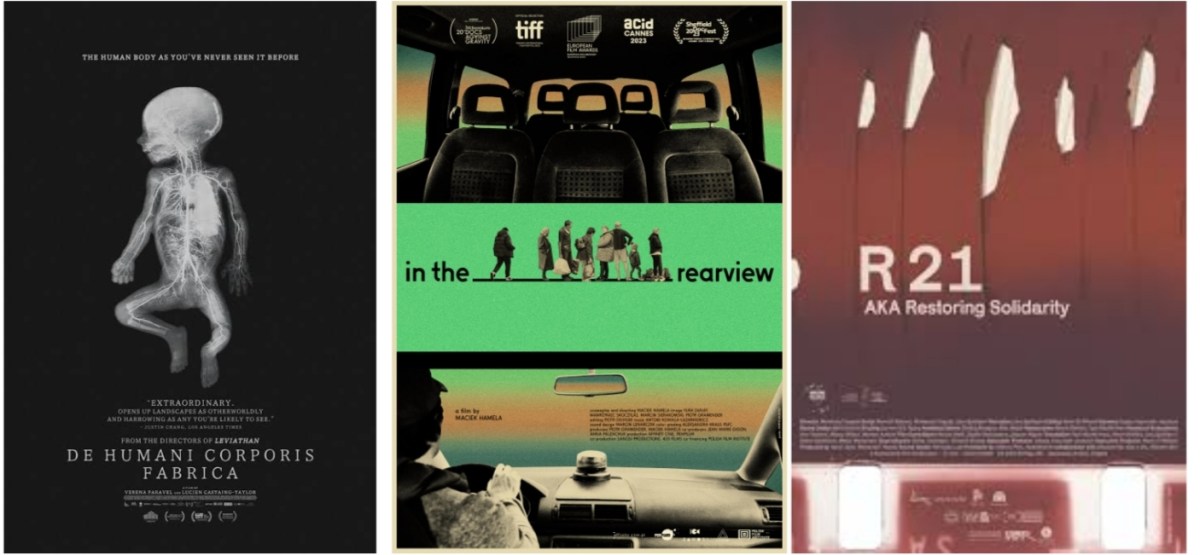
R 21 aka Restoring Solidarity (Mohanad Yaqubi) The growing struggle for Palestinian self-determination between 1960 and 1980 was supported by radical left-wing movements worldwide, also in Japan. This is illustrated by a collection of 16mm films by militant filmmakers from various countries, which were dubbed and screened in Japan. Their Japanese audiences felt oppressed by the US after World War II, and not only sympathized but also identified with the Palestinians.

De Humani Corporis Fabrica (Lucien Castaing-Taylor, Véréna Paravel) An extraordinary adventure through the interior of the human body; or the discovery of an alien landscape of unprecedented beauty.

In the Rearview (Maciek Hamela) A Polish vehicle traverses the roads of Ukraine. On board, people are evacuated following the Russian invasion. This van becomes a fragile and transitory refuge, a zone of confidences and confessions of exiles who have only one objective, to escape the war.

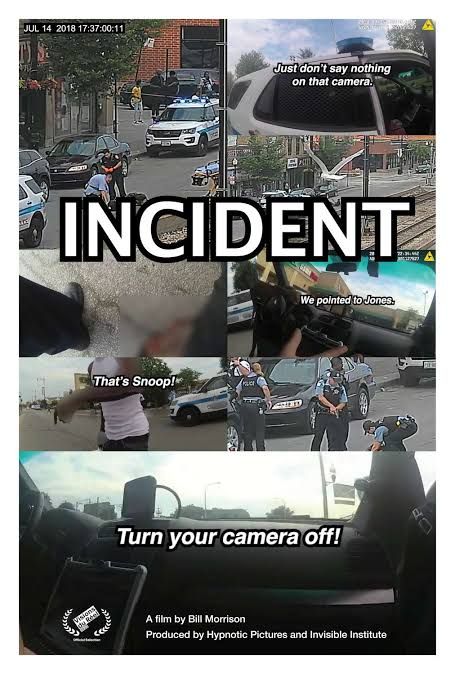
Incident  (Bill Morrison) Chicago, 2018. A man is killed by police on the street. Through a composite montage of images from surveillance and security footage as well as police body-cams, Incident recreates the event and its consequences, featuring vain justifications, altercations and attempts to avoid blame. Bill Morrison delivers a chilling political investigation in search of the truth.

Losing Ground (Anonymous) In February 2021, Myanmar wakes up to the sounds of a military coup. The hopes of an entire generation are extinguished. Protests are held, but the dictatorship is too powerful: arrests, imprisonments and threats of execution ensue. The capital becomes a large open-air prison, but a few anonymous voices still have the strength to cry out.

Raat: Night Time in Small Town India (The Third Eye Portal) What is that you can see at night? What is allowed, what is not? What do you become a witness to?

The Natural History of Destruction (Sergei Loznitsa) Is it morally acceptable to use the civilian population as yet another tool for waging war? Is it possible to justify death and destruction for the sake of supposedly lofty ideals? The question remains as pertinent today as it was at the beginning of World War II, and it is becoming increasingly urgent to answer, as countless tragedies have been caused by unethical political decisions.

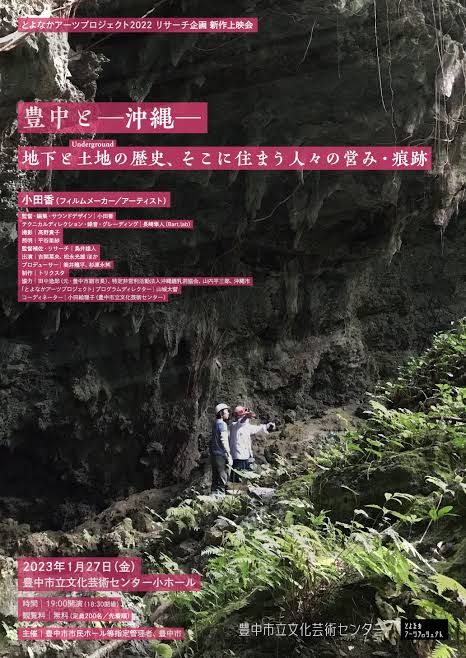
GAMA 2023 (Oda Kaori) A storyteller of peace serves as a guide in the “Gama”—natural caves where many local people lost their lives during the Battle of Okinawa. The woman in blue standing by his side represents the intersection of the present and the past. Here my report from the screening of the movie last January.

Youth (Spring) (Wang Bing) This film was shot between 2014 and 2019 in the town of Zhili, a district of Huzhou City in Zhejiang province, China. Zhili is home to over 18,000 privately-run workshops producing children’s clothes, mostly for the domestic market, but some also for export. The workshops employ around 300,000 migrant workers, chiefly from the rural provinces of Yunnan, Guizhou, Anhui, Jiangxi, Henan and Jiangsu.

Waorani Omede Beye Ante Nee Adani (Luisana Carcelén) For thousands of years, the Waorani women of the Ecuadorian Amazon have lived in perfect harmony with Mother Earth in the most bio diverse spot on the planet: the Yasuní. They have coexisted within this delicate ecosystem, allowing them to flourish while preserving their unique customs and traditions. However, the winds of change have swept through their lands, and now, the sacred place that grandmothers, daughters, and granddaughters have cherished as home stands under grave threat.

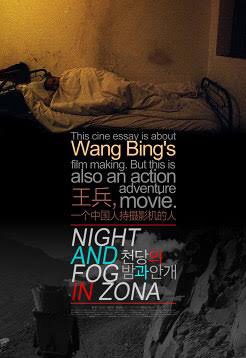
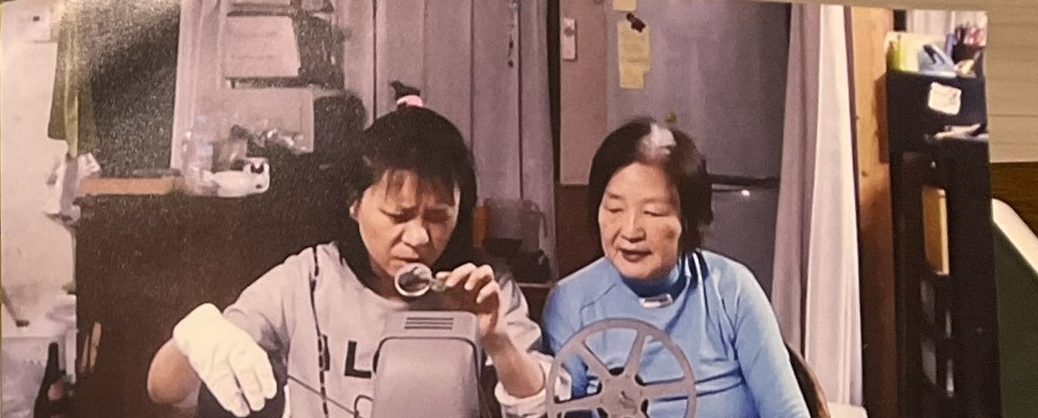
Night and Fog in Zona (Jung Sung-il, 2015)

I’m reposting a slightly edited version of a piece I wrote 8 years ago, an article about Night and Fog in Zona, directed by South Korean film critic, Jung Sung-il.

It’s always fascinating when cinema reflects on cinema, and even more so when a documentary’s subject is director Wang Bing filming one of his movies. Night and Fog in Zona is a documentary, or better yet a cine-essay as it is called by its author: South Korean critic turned director Jeong Sung-il, who follows the renowned Chinese filmmaker throughout a whole winter while working on two of his projects, ‘Til Madness Do Us Part and a sequel to his Three Sisters.

The “coming” of Wang Bing has been, and still is, one of the most important events that occurred in the world of cinema in the last 15 years: not only did he contribute asserting the aesthetic value of digital filmmaking, but with his documentaries he also brought an auroral and liberating gaze upon the world.
Jung Sung-il had the same kind of dawning experience watching West of the Tracks in 2001.

“When I was at the Rotterdam Film Festival I bought a ticket for a movie 9 hours and 10 minutes long, I was surprised by its length but went anyway. It begins with a train in movement and it reminded me of the first movie ever made by the Lumière brothers in 1895. Watching Wang Bing’s work I had the feeling of witnessing the cinema of 21st Century just like the audience in 1895 witnessed its birth.”

There’s no narration in Night and Fog in Zona, everything is explained with intertitles: geographical coordinates, places where Wang Bing is headed to, his plans. Sometimes these intertitles also work as a poetic comment to the following scene.
The only time when Wang speaks directly to the camera is in an interview-like fashion at the very beginning of the film, a sequence that works as a brief introduction to his world and his filmmaking style. A few minutes where, among other things, he talks about his filmmaking process, truth in cinema, the impossibility of conveying the totality, his projects, Chinese history and peasants, and the similar cultural background his generation shares with Andrei Tarkovsky.

In 235 minutes Night and Fog in Zona illuminates a great deal about Wang Bing’s approach to filmmaking. Among other things, we learn about his habit of taking photos of the people he films, his relationship with them, and, most fascinating of all, about his “interview technique”: it’s compelling to see how he is able to seamlessly switch from “chatting with” to “shooting at” his subjects, as if there was no real break between the two actions.
It’s also interesting to witness how “Wang searches for the ‘strategic point’, the single position from which all of the actions in the scene can be recorded”. This is a fundamental feature of his filmmaking, as the relationship between the camera and the people and things around it determines both the movie’s sense of space and how space itself is conveyed in his works. And space, together with time/duration, is one of the most crucial elements of his cinema.
Another revelation of Night and Fog in Zona is to discover how Wang Bing is a director whose involvement with the subjects of his movies is deeper than we might think from just watching his works: when the camera is off, he’s often seen giving practical help and advices to his “protagonists”.

Particularly fascinating, from a movie making point of view, is a scene where the director and his two collaborators have an evening meeting to watch the footage shot during the day at the Asylum — footage that would eventually become ‘Til Madness Do Us Part. A few but meaningful minutes where he explains the reasons behind his use of long takes, why avoiding telephoto lens, and other rules to follow while shooting, so that the final work can gain a certain consistency, a certain style.
However, the best quality of Night and Fog in Zona is that it’s not only a documentary about Wang Bing shooting his movies, but it’s also shot and conceived — with all the due differences – just like one of Wang’s documentaries. In terms of style, it mirrors Wang Bing’s filmmaking: long takes, no narration, abstract landscapes and experimental music, everything put together to explore his filmmaking and, in a broader sense, contemporary China, a country gazed upon, as in most of Wang Bing’s works themselves, from a peripheral and rural point of view.
One of the best examples of this mirroring process is to be found towards the beginning of the film, when the Chinese director and his collaborators move to the Yunnan province.

A very long sequence shot from the car everyone is on, that shows us streets, mountains, plains, lights and tunnels almost melting together. A scene almost 10 minute long, matched with a hypnotic and minimalistic music interacting with the abstract landscape captured by the camera.
We encounter these sort of sequences a couple of times during the movie: another powerful one, shown in slow motion, is inside the asylum. Bing is sleeping and ten or so patients are sitting and moving around him. What gives Night and Fog in Zona a further experimental and even meta-filmic touch are two scenes, placed at the beginning and at the end of the movie, that show a Korean girl dressed in red sitting in a theater and making a phone call.
The only flaws to be found in this documentary, an otherwise almost perfect work, are some editing choices, in some cases too abrupt, and the pace of the intertitles, definitely too fast. But that’s just splitting hairs, Night and Fog in Zona is definitely one of the best non-fiction movies seen this year, not only for its fascinating subject, but also for its ability to resonate with Wang Bing’s own style at a deep and aesthetic level.

Documentary discoveries of 2022

No best documentaries list for me this year, unfortunately I have not seen, or liked, enough films to make one. Instead, I have compiled a list of the best documentary discoveries I had in the past 12 months (the first two are actually movies released in 2022). As usual, the films are listed in no particular order.


名付けようのない踊りThe Unnameable Dance (2022) by Inudo Isshin is the portrait of dancer and performer Tanaka Min, one of the most fascinating Japanese artists alive. The documentary retraces some of the events and encounters that guided his life as a dancer and actor, such as meeting Hijikata Tatsumi in the 1960s, and dancing in Paris in 1978, a trip that de facto launched Tanaka’s career, and a place where he met Roger Caillois, a writer Tanaka strongly admired (the title of the movie is taken from a sentence the French writer used to describe Tanaka’s dance). The documentary, using Tanaka’s own narration, continues by retelling his debut as an actor in Yamada Yōji’s Twilight Samurai (2002), an event that kicked off, at the age of 57, his career in cinema, and focuses also on his work as a farmer, an important part of his life, as he famously stated “In agriculture one can find the anti-modern coming from the past. There you find the concreteness of the present.”
The retelling of all these experiences is interspersed with some of his recent performances, always awe-inspiring, even when mediated by the camera. Performances that were recorded in Japan, but also abroad, in Paris, and especially in Portugal, a country where the documentary begins and ends. The film is an enthralling viewing experience also because it is constructed by interweaving Tanaka’s performances with Yamamura Kōji ‘s beautiful and affective animation, used here mainly to depict Tanaka’s memories and dreams as a child.
Particularly significant is also how the documentary includes purposely the audience, their faces and their reactions when filming Tanaka’s performances in public spaces, since dance is, for the artist, born between dancer, place, and audience.

In Fire of Love (2022)American documentarian Sara Dosa crafted a fascinating work assembling images and films shot around the world in the course of their life by two French volcanologists, Katia and Maurice Krafft. Dosa interweaves these images with other videos about them, and wrapped up everything with the narration of actress, filmmaker and artist Miranda July. I would have preferred a movie made entirely of their films without narration, while July’s voice is very affective, but it is nonetheless a powerful viewing experience. Not only because of the spectacular images, but also because the documentary is very good at delving into the obsession and raison d’etre that guided the life, and ultimately the death, of the couple.

Origin of Cosmos (Lothar Baumgarten) was for me the cinematic experience of 2022, I had the chance to see the movie at the Aichi Triennale, where is was screened in a loop in a very dark room as an installation. Shot between 1973–1977 and finished in 1982, Origin od Cosmos is based on a myth of the Tupi people, a South America’s indigenous group, and while conceptually it is a film about the rain forest, it was filmed in its entirety along the Rhine near Düsseldorf Airport. It is a sensorial experience, as people nowadays say, that envelops the viewers with images and especially with the cacophonous soundscape. Animate and inanimate life is displayed and amassed on screen like a Pollock’s painting: stones, insects, trees, soil, mud, plastic, branches, spiders, eyes, the moon, the sky…
It has to be seen in darkness, because in some of its parts the shapes emerging from the pitch black background are very subtle. I definitely need to do more research on the movie, its production history, filming, and on director Lothar Baumgarten himself.

東京‘69 – 青いクレヨンのいつかは . . . Tokyo ’69 – one day blue crayons . . . (1969) and 治安出動草稿 お昼の戒厳令 Public Order Project: Martial Law at Noon (1981) are two recently discovered works made by the collective NDU (Nihon Documentary Union). I wrote about them here.

死者よ来たりて我が退路を断て Dead, Come and Cut Off my Retreat (1969) is a documentary chronicling the resistance of the students at Nihon University (College of Art) in 1968-69 made by a group of activists called グループびじょん Group Vision, people working at the time at Nippon Eiga Shinsha.
Besides being a powerful documentary about a certain type of resistance at a crucial time in Japan, what I found extremely compelling is how the film is also a profound exploration of places and spaces. It is an interesting documentary also because it gives voice, not much, but more than usual in these kind of contexts in Japan, to women on screen, but also off screen. Among the members of the group, there were at least two women in important positions: Kitamura Takako was one of directors, and Sasaki Michiko one of the cameraman.
Group Vision was also involved in the production of Ogawa Shinsuke’s A Report from Haneda, and Dead, Come and Cut Off My Retreat (the English title is unofficial) has definitely a similar tone. Apparently Jōnouchi Motoharu was also affiliated for a period of time with the group, but I cannot confirm. The group has uploaded the movie on YouTube:

Autour de Jeanne Dielman( Sami Frey, 1975) is a touching document of the filming of Jeanne Dielman, 23, quai du Commerce, 1080 Bruxelles, a window open to the fascinating working relationship between Chantal Akerman and Delphine Seyrig, and to the making of a masterpiece. The movie is available through Another Screen, here.

Before the Flood (Yifan Li, Yu Yan, 2005) chronicles the death of Fengjie, on the Yangtze River, a city and its people slowly being executed and reduced to rubbles by the state and “progress”, in order to make way for the new Three Gorges Dam that eventually ended up flooding the entire valley.

2H (Li Ying, 1999) is a compelling piece of documentary cinema about ageing, the Chinese diaspora, and a group of Chinese expatriates in Tokyo at the end of last century. Ma Jinsan is a 95 year-old former Kuomintang general who defected to Japan nearly 50 years earlier, shortly after the Communist revolution, who has a strong connection with Xiong Wenyun, a young avant-garde artist.
Through the DV camcorder’s aesthetics, used here to its full potential, everything is hugely impactful in 2H, from the staged scenes of Xiong and her lover, to the portrait of Ma, from the dialogic relationship between the camera/director Li and all the people filmed, to the touching finale with Tokyo covered in snow.

Incident at Restigouche (Alanis Obomsawin, 1984) is a documentary chronicling two raids on the Listuguj Mi’gmaq First Nation (Restigouche) by the Sûreté du Québec in 1981, as part of the efforts of the Quebec government to impose new restrictions on Native salmon fishermen. The film, constructed through interviews, photos, and original footage, explores the history behind the Quebec Provincial Police (QPP) raids and the reasons of the protests. The Quebec government had decided to restrict salmon fishing, traditionally an important source of food and income for Micmac Indians. It’s a bless every time we can watch a movie from an author we have never seen anything of, and get blown away; a cinematic door opens in front of us presenting and offering a new landscape to explore. This was for me Incident at Restigouche, and I’m looking forward to watching more documentaries by Obomsavin this year.

Model (1981) Every time I watch a new (for me) film by Frederick Wiseman it is a discovery, this one was glorious, one of his most entertaining, and at the same time, ça va sans dire, deep works. A pivotal film in his career, where something new started to surface. Perhaps the first documentary where he started to use extensively the “pillow shots”. Listen to the excellent Wiseman Podcast, a perfect companion to his documentaries, if you decide to delve in his filmography.

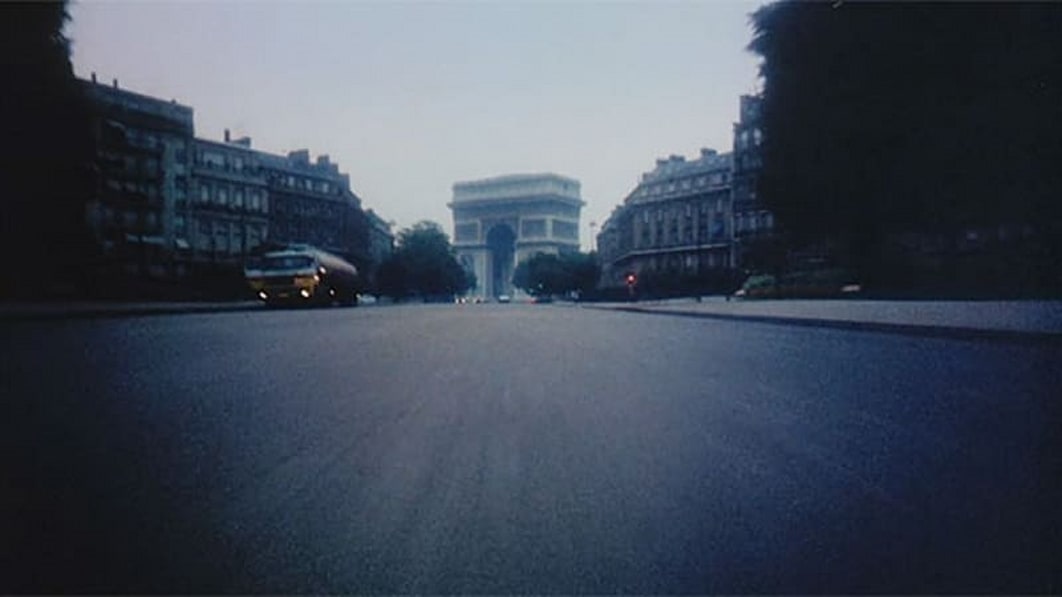
C’etait un Rendezvous (Claude Lelouch, 1976), eight adrenalinic minutes of high-speed drive through the street of Paris.

Best (favorite) documentaries of 2021

As usual, the list below is a reflection of my taste, interests, and viewing habits during 2021, this year mainly, but not exclusively, online. I’m not sure all the titles can be considered documentaries, but this is, after all, the fascinating beauty of dealing with documentary cinema. Synopsys in italics, followed by my quick take and, when available, the trailer:

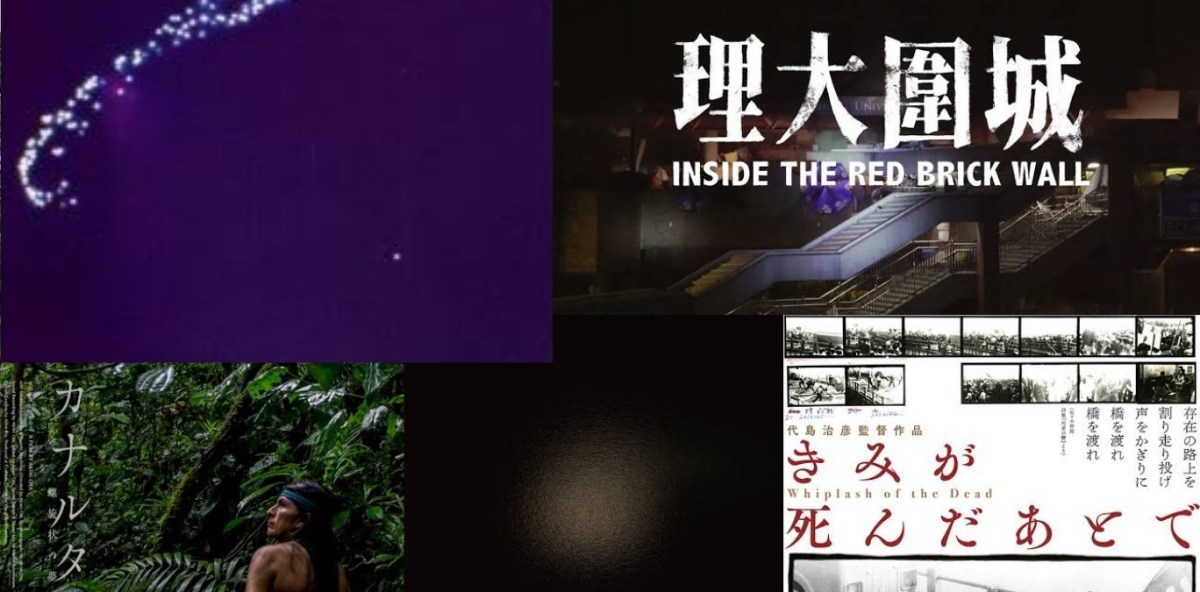
Kanarta – Alive in Dreams (Ōta Akimi). Sebastian and Pastora live in a Shuar village in the upper Amazonia of Ecuador. Sebastian is not only a respected healer, but also a medicinal botanist who experiments with unknown plants he encounters in the forest. His unique practice seeks to cultivate new knowledge, reconnecting him with his ancestors. Pastora is one of the rare female leaders in Amazonia, who struggles to negotiate with local authorities for her community. With powerful plants such as ayahuasca, they revive and energise their perceptions of the future. These plants allow them to acquire power and a faith to cope with the obstacles they now face, given that their lives have been irreversibly affected by the modern state system. There is a lot to like about this movie, and, like in the best works that cross the boundaries between documentary, visual anthropology and experimental cinema, every new viewing reveals extra layers. On the one hand Kanarta shows the problems Shuar people and their culture encounter in dealing with modern society and the way their community adapts and changes in response. On the other, it also offers a glimpse of their being part, almost as if made by the same flesh, of the Amazon forest, and their vital connection with the medicinal plants, “plants that make reality” as one of the people suggests.
However, what really kept me engaged throughout the whole movie is that the documentary is permeated by joy, there are lots of laughs and funny scenes, usually fuelled by chicha, an alcoholic beverage made of fermented potatoes. The joy is also coming from the movie and its protagonists being in a constant state of exploration, through the visions and through the wandering in the forest in search for new plants or new places where to build a house. Kanarta offers also some emotional and even dramatic scenes, it’s very touching for instance, when we see Sebastian’s son receiving his medical diploma during a small ceremony, and father and mother posing with him for the camera with pride and smiles. This contributes to build a stronger sense of attachment for the two protagonists, Sebastian and Pastora, who are willing to show and tell the director about their culture and their way of living.
The main reason why everything works though—from the more poetic scenes, to the more visceral ones, when Sebastian takes ayahuasca for instance—is because the documentary is structured in a dialogic manner, so to speak. The camera is not a passive actor in the scenes, but it’s part of, and often influences, what is going on, directly or indirectly. Furthermore, Ōta is very good at transmitting, through an immersive visual and sensorial experience, the powerful feeling of empathy that emanates from Sebastian and Pastora, and the Amazon forest itself.

.

13 (Isobe Shinya) The filmmaker left his camera in exactly the same spot for five years to shoot a picture of the sunset every thirteen seconds. In a series of merged time-lapses, we see the sun(s) moving repeatedly from the left part of the screen to the right. One of the best movies I’ve seen this year, documentary or not, I wrote about it here.

.

Inside The Red Brick Wall (Hong Kong Documentary Filmmakers) On 17 November 2019, the police laid siege to protestors at the Hong Kong Polytechnic University in a blockade lasting nearly two weeks. Beleaguered students fought teargas with makeshift whiteboard shields, hoping to escape and return home to safety. With the media barred from on-site access, an anonymous collective films from within the campus, recording the teenage protesters’ hopes and distress. From the very first shot the documentary is imbued with a sense of precariousness and anger, and by filming the violence between riot police, students, aid people, and members of the press —mainly independent press that live-streamed the battles on the internet— captures and creates, through a masterful use of editing, a very powerful sense of space and proximity with the students, a visual cartography of violence and resistance. The scenes when many of the young students break down, cry and walk out, defeated, from the campus, often criticized by their comrades, is— although it is something I have seen over and over again in the documentaries about the Japanese protests of the 1960s and 1970s—heartbreaking. What is also extremely fascinating for me, is that all the young people wearing masks and gear, for protection and for anonymity, form, more than a revolt of the individuals, a resistance of the multitude. The sense that the struggle is about something bigger than the siege itself is very palpable.

.

Minamata Mandala (Hara Kazuo)         After years of dumping industrial wastes from the factory to the ocean, Chissō Chemical Corporation contaminated the area of a small Japanese fishing village with excessive amounts of methylmercury. This highly toxic chemical bioaccumulated in fishes of the local water, which when consumed by the local populace resulted in mercury poisoning. In 1977, Minamata disease certification criteria was set by a strange method that tried not to recognize the rights of environmental disease patients. However, an Osaka court won the case for some patients because of a newly developed theory by medical doctors’ recent experiments and proofs. For decades, these patients struggled within the Japanese judicial system for their rights to receive compensation as victims of environmental disease. Those different aspects of these patients’ lives have been filmed by director Hara for the last 15 years, inspired by the late director Tsuchimoto’s documentary MINAMATA: THE VICTIMS AND THEIR WORLD (1971).                                                Not a minute of the documentary (it’s 373′ long) is superfluous. This is, in my view, one of Hara’s best works, and so far the pinnacle of the second part of his career as a filmmaker.

.

The Works and Days (of Tayoko Shiojiri in the Shiotani Basin) (C.W. Winter, Anders Edström) An eight-hour fiction shot for a total of twenty-seven weeks, over a period of fourteen months, in a village population forty-seven in the mountains of Kyoto Prefecture, Japan. It is a geographic description of the work and non-work of a farmer. A portrait, over five seasons, of a family, of a terrain, of a soundscape, and of duration itself. Undeniably it’s an impressive cinematic achievement and is worth engaging with it, but for me, once the “artificiality” of the movie becomes apparent, it loses part of the appeal and power. I’m not revealing more to avoid spoilers (but are there really spoilers?). Also, I’m approaching the movie from a special angle: I live in Japan, in a somehow similar place to the one depicted in the film.
All that being said, the soundscape is astounding, and I like how the movie’s editing is often constructed following the sounds. I really should, and I wish to one day, experience it in a theater.

.

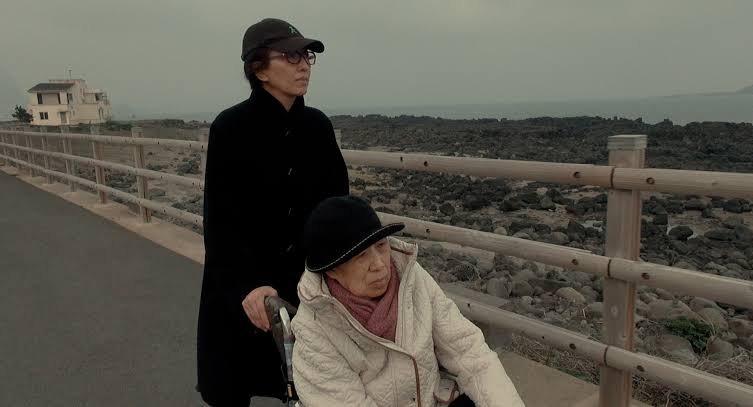
Soup and Ideology (Yang Yong-hi) Confronting half of her mother’s life—her mother who had survived the Jeju April 3 Incident—the director tries to scoop out disappearing memories. A tale of family, which carries on from Dear Pyongyang, carving out the cruelty of history, and questioning the precarious existence of the nation-state. With her latest documentary Yang Yonghi continues to explore how her own personal life is tragically connected to the post war history of Japan and Korea. The movie presents not only the painful memories of the Jeju massacre (April 3rd 1948) as remembered by the director’s mother, and the destruction a family, her three brothers were sent from Japan to North Korea at a young age, but it is also an emotional portrait of her frail and ageing mother. As the film progresses she is diagnosed with senile dementia, and little by little she loses her memories, including those of the massacre she witnessed, only 18, in the small Korean island. The movie is also partly an act of self-reflection by Yang Yonghi herself, if in the first part she is the one filming her mother, and we don’t really see her too much, in the second, when her mother condition worsens, she enters the frame more often, and becomes the co-protagonist of the film. We can clearly see her emotions, especially when she visits the island, with mother and husband, for the anniversary of the massacre. There, Yang Yonghi understands that her mother’s affiliation and attraction for North Korea, something the director had never completely forgiven her for, was also caused by the atrocities committed by the South Korean Army her mother saw with her own eyes.
It would have been a better movie for me, had not been for the five or so minutes of animation used to explain her mother story in Jeju in 1948. I found the segment out of place and it really took me out of the movie.

.

Shiver (Toyoda Toshiaki) A music movie featuring a performance of Taiko Performing Arts Ensemble ‘Kodo’ and Koshiro Hino. Filmed entirely on Sado island. Partly a filmed music performance, partly a visual experiment connecting music, landscape and spirituality, Shiver is a fascinating piece of work that fits perfectly with what Toyoda has being creating in recent years. Through the spiritual encounter between Sado landscape and the hypnotic music of the taiko drummers, Toyoda touches and expands some of the themes tackled in some of his most recent films, such as the The Blood of Rebirth, Monsters Club, and The Day of Destruction. That is, the primal nature of the world we inhabit, and how we, humans, can connect with it through music, a similar approach was also at the core of Planetist in 2020. Something primal not in a temporal sense as something that comes before, or ancestral, but more as something essential that is always present and awaits to be discovered and brought to light. Like the rock/monolith towards the end of the work, which seems to have some kind of energy inside, and whose light is filtering through the cracks only when the music plays.

.

Whiplash of the Dead (Daishima Haruhiko) Weaving together the memories of Yamazaki Hiroaki, a university student who lost his life in the First Haneda Struggle in 1967 through the words of his bereaved family and ex-classmates, this film turns the memories of those who protested against government power into questions for the future. The movie is comprised of two parts, for a total of 200 minutes, in the first 90 minutes the director focuses on the events preceding the death of Yamazaki, while in the second segment, that could easily have been another movie, the protagonists of the students protests of the late 1960s, reflect on the reasons of the implosion of the new left and its movements.
The story of the Mito family, not affiliated with any left group, but a family that helped the young people in prison, and later promoted anti-nuclear activism and whose members (father and two sons) tragically died in 1986 in a mountain incident, is so fascinating that would deserve its own documentary.

.

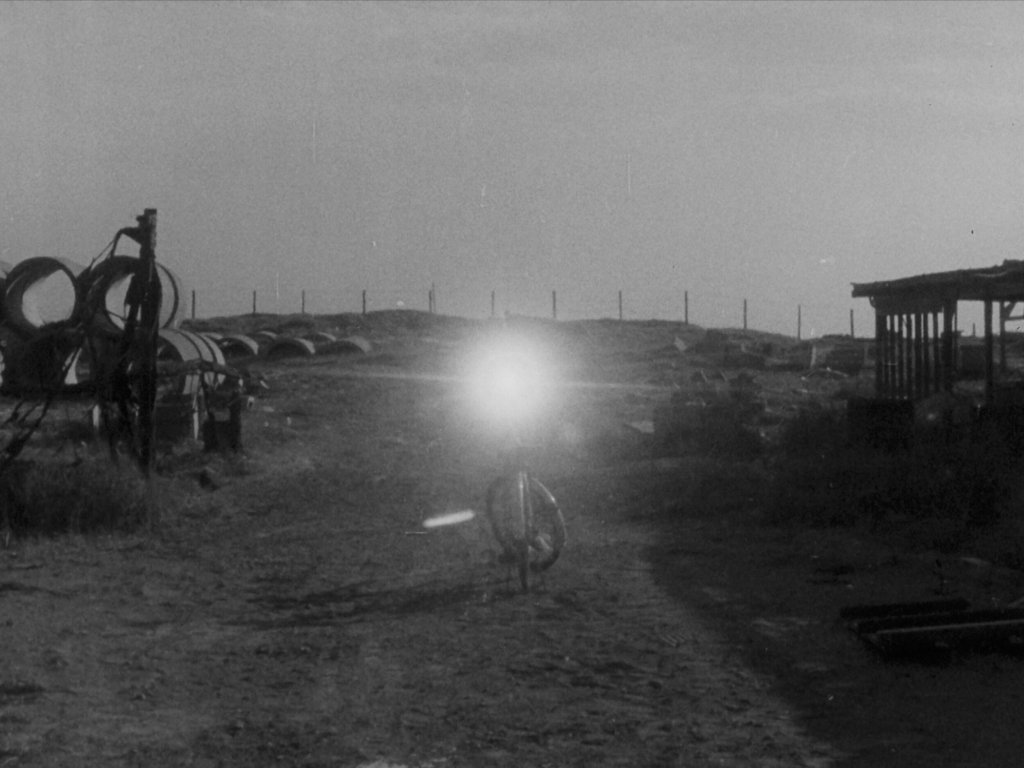
Discovery of the year: Alchemy (Nakai Tsuneo, 1971). The camera slowly zooms, in over a long period of time, on the light of the sun reflected in the mirror of a bicycle parked at the construction site. To this is added a slowly evolving flicker effect derived from negative-positive reversals, progressively dismantling the distance from the subject. Nakai created a masking film with a calculated pattern of black and white frames into which he inserted positive and negative images and made a print out of two separate rolls of film. The original projection speed was 16 frames per second, but the sound is separate from the open-roll tape rather than burned in, so it can also be screened at 24fps. Also, the original sound consisted of the friction noise of rubbing steel, but in 2019 a new version of the sound was created featuring the friction noise of glass. Two versions of the film exist: 24:15 mins at 24 fps and 40 mins at 16 fps.                                   A structuralist film made in 1971 by Nakai, clearly inspired by Michael Snow’s Wavelength, but at the same time highly original, and somehow anticipating Matsumoto’s Atman.

.

Honourable mentions: Her Socialist Smile (John Gianvito), Summer of Soul (…or, When the Revolution Could Not Be Televised) (Questlove)


13 by Isobe Shinya

In a peripheral corner of Japanese cinema, one where experimental film, photography, and documentary film encounter, overlap, and merge, there seem to be a thread connecting some films made by different artists in different eras. Alchemy (Nakai Tsuneo, 1971) and Heliography (Yamazaki Hiroshi, 1979), but also parts of Magino Village: A Tale (Ogawa Shinsuke, 1986) and Gootariputra (Yamazaki Mikio, 1999), just to name a few, all share a common fascination for, and a total cinematic dedication to the Sun, its path, and its astral movements in the sky.

The photographer and filmmaker Yamazaki Hiroshi (1946-2017) is particularly important in this context, in the past I wrote about Heliography, here, and on his photographic works, here. After having dedicated a large part of his career to the creation of long-exposure photographs of the sun, Yamazaki in 1979 crowned this artistic path with the short film Heliography, one of the most important experimental films in the history of the genre in Japan. In the work, as the title indicates, the sun is placed at the center of the filmed universe, while everything else moves around it, horizon, sky and city. A visual and artistic vertigo that in the following years evolved and took a similar path when Yamazaki collaborated with Ogawa Production. Yamazaki went to Yamagata prefecture and for the collective filmed the time-lapse sequences of the Sun for the masterpiece Magino Village: A Tale (1986). 

This “solar community” has now a new practitioner, Isobe Shinya. In 13 the young Japanese filmmaker left his camera in exactly the same spot for five years to shoot a picture of the sunset every thirteen seconds. In a series of merged time-lapses, we see the sun(s) moving repeatedly from the left part of the screen to the right. Superimposing these images collected over half a decade, Isobe created a work where the sky, while going through a series of permutation in colours, from black to purple, from red to blue, is also being slowly populated by fluorescent dots, the sun(s), gradually clustering the screen.

13 begins with a black screen and without sound, but soon the sun(s) and other drapes of light begin to appear from the upper left corner. As the progression and arcs of the sun(s) get faster, the images are paired first with a what could be described as a sort of background noise, and as the film moves along, with a soundscape composed of accelerating instrumental music. This musical progression peaks with the arrival on screen of a C-shaped cluster of sun(s), a sensorial explosion in a screen now transformed almost into a pink canvas perforated by a multitude of blinding lights.  13 offers a vision of the cosmos and of life conceived as the alternation of solar cycles, and this passage of time – the years, the sun(s), the skies – is condensed and visualised in its 10 minutes with an intense and almost haptic quality. The travel in time that 13 represents, the creation of a different time, could be also read as a travel in space: from the deep darkness of the first images, the journey passes through different phases and different colours of the universe – the sky – to land, in the last minute or so, again on planet earth. The sun(s) turn here into a singular Sun, and the purple, red and pink skies make way to a blue one. We are now back on earth, we can finally see the horizon, the clouds passing, and the shape of a house with its antenna. The singular Sun is setting, concluding its astral path.  The film definitely belongs to the same realm of visions created by Yamazaki, and with his solar works, both cinematic and photographic, almost establishes an artistic and long-distance dialogue.

13 has won several awards around the world, and in 2021 has been shown in many festivals, online and in-presence, in the United States and Europe. If you read this in 2021, the film is made available by Isobe himself on Vimeo until December 28th: 

Best (favorite) documentaries of 2020

As usual, the list below is a reflection of my taste, interests, and viewing habits during 2020. For obvious reasons I have not attended any film festivals in person, but the online viewing events organized all over the globe were, for me at least, one of the few positive things to come out of this annus horribilis.

Synopsys in italics, followed by my quick take and the trailer:

Expedition Content (Veronika Kusumaryati, Ernst Karel)

In 1961, filmmaker Robert Gardner organized the Harvard Peabody Expedition to Netherlands New Guinea (current day West Papua). Funded by the Dutch colonial government and private donations, and consisting of several of the wealthiest members of American society wielding 16mm film cameras, still photographic cameras, reel-to-reel tape recorders, and a microphone, the expedition settled for five months in the Baliem Valley, among the Hubula (also known as Dani) people. It resulted in Gardner’s highly influential film Dead Birds, two books of photographs, Peter Matthiessen’s book Under the Mountain Wall, and two ethnographic monographs. Michael Rockefeller, a fourth-generation member of the Rockefeller (Standard Oil) family, was tasked with taking pictures and recording sound in and around the Hubula world. Expedition Content is an augmented sound work composed from the archive’s 37 hours of tape which document the strange encounter between the expedition and the Hubula people. The piece reflects on intertwined and complex historical moments in the development of approaches to multimodal anthropology, in the lives of the Hubula and of Michael, and in the ongoing history of colonialism in West Papua.

Visual representation and the obsession with it has become, in our society, a black hole absorbing and distorting everything around it. Expedition Content, by offering us for most of its duration a black screen —the are only some written words, and a couple of minutes of images towards the end—allows the sound to take prominence. The freshness of the encounter and discovery, different languages, different sounds, different time, is here preserved and conveyed with an almost haptic quality. It is a work where the experience for the “viewer” is thus channeled through sounds and voices, however I firmly believe it is primarily a film to be watched, possibly on a big screen, in that it establishes its discourse within the frame of the power of (here absent) images.

Expedition Content is also a theoretical piece that goes deeply into colonialism and how the anthropology endeavor, at least a certain way of doing anthropology, is deeply embedded in it. The last 20 minutes of the movie (I’m not revealing more because I don’t want to spoil it) are in this regard an incredible exposure of the stance of the anthropologist as a colonial subject.

By far the best work I saw this year, fiction or non-fiction, it definitely deserves a stand alone and more in-depth piece (I’m working on it, hopefully it will be ready early next year).


The Brilliant Biograph: Earliest Moving Images of Europe (1897-1902)

A compilation film of newly-restored rare images from the first years of filmmaking. Immerse yourself in enchanting images of Venice, Berlin, Amsterdam and London from 120 years ago. Let yourself be carried away in the mesmerizing events and celebrities of the time, and feel the enthusiasm of early cinema that overcame the challenge of capturing life-like movement.

One of the highlights of the Le Giornate del Cinema Muto/Pordenone Silent Film Festival, which this year moved its edition online. An incredible and touching dive into the anodyne beauty of everyday life, captured 120 years ago.


Concrete Forms of Resistance (Nick Jordan)

Filmed in Beirut and Tripoli, Lebanon, Concrete Forms of Resistance is a documentary centred upon Tripoli’s abandoned ‘Permanent International Fair’, designed by Brazilian architect Oscar Niemeyer in the mid-1960s. The film presents themes of progress and crisis, labour and capital, material and memory, contrasting the utopian vision of the original plans with the stark realities of sectarian divisions, regional conflicts and rising economic inequalities.

A short documentary I watched back in February, although it feels like ages ago, Jordan’s film is an enthralling journey through the recent history of the Middle East seen through the lens of Oscar Niemeyer’s works.


Dick Johnson is Dead (Kirsten Johnson)

As her father nears the end of his life, filmmaker Kirsten Johnson stages his death in inventive and comical ways to help them both face the inevitable.

Stylistically I was expecting something different, so it didn’t have the impact I thought it would, yet the way Kirsten Johnson is able to blend grief and laughs was touching, healing and in the end refreshing.


Edo Avant-Garde (Linda Hoaglund)

Edo Avant-Garde reveals the pivotal role Japanese artists of the Edo era (1603 – 1868) played in setting the stage for the “modern art” movement in the West. During the Edo era, while a pacified Japan isolated itself from the world, audacious Japanese artists innovated stylization, abstraction, minimalism, surrealism, geometric composition and the illusion of 3-D. Their elegant originality is most striking in images of the natural world depicted on folding screens and scrolls by Sotatsu, Korin, Okyo, Rosetsu, Shohaku and many others who left their art unsigned.

While thematically is in another universe, stylistically the movie is very similar to Hoaglund’s ANPO: Art X War (2010). Coproduced by NHK, Edo Avant-Garde was shot using a special Sony 4k camera, and the sound and music used are also superb. For me it was the perfect viewing experience during the partial “lockdown” we had here in Japan in Spring. Soothing.


Me and the Cult Leader (Sakahara Atsushi)

Me and the Cult Leader — A Japanese Documentary on the 1995 Tokyo Sarin Gas Attack perpetrated by doomsday cult Aum Shinrikyo, following victim Atsushi Sakahara’s travels with current cult executive Hiroshi Araki.

Don’t be misguided by the trailer below, the film is a slow meditation on the banality of evil, and an exploration of a fascinating and problematic relationship. 


Archiving Time (Lu Chi-yuan)

In Taiwan, there is a group of people participating in this race against time. They are hidden inside the film archive of New Taipei City’s “Singapore Industrial Park”, where the 17,000-plus film reels and over a million film artifacts have become their spiritual nourishment. Day after day, they shuttle back and forth inside, carrying their doubts, their learnings, and their faith. What they are doing is awakening these long-neglected film reels, then piecing together the no-longer-existent social atmospheres and lives of distant pasts recorded on them. And spending time in this archive has become everyday life for these film archivists and restorers.

If you are a lover of movies and interested in how preservation and archiving are changing and shaping what the history of cinema, in this particular case, Taiwan cinema, will be in the near future, this is the documentary for you.


Fireball: Visitors From Darker Worlds (Werner Herzog, Clive Oppenheimer)

Fireball: Visitors From Darker Worlds takes viewers on an extraordinary journey to discover how shooting stars, meteorites and deep impacts have focused the human imagination on other realms and worlds, and on our past and our future.

While Family Romance was a complete letdown, a disaster both stylistically and content-wise, I quite enjoyed this documentary released on Apple TV a couple of months ago. “Enjoyed” is the correct word because this is, make no mistakes about it, 100% Herzog, for better or worse, and at the end of the day a documentary fully drenched in the public persona he has become in the last 10 years or so. That being said, the themes tackled and the time framing of the events narrated and shown on screen really resonated with me.


Ghosts: Long Way Home (Tiago Siopa)

After a spell cast by Grandma Faraway, the oldest son of a small family encounters the ghost of his late Grandma Maria still living in her old house, and they chat as they used to.

Moving between documentary and fiction, the film explores the memories of a family and those of an area, in a slow-paced style reminiscing of Pedro Costa’s cinema. Beautifully photographed, this hybrid experiment works also a visual poem and an ode to rural Portugal and its ancestral and magical/pagan beliefs. The dreamlike quality that is infused throughout the whole film really works well, but at the same time I think that some scenes could have been left out, especially those in the second half of the movie when the magical realism and the ghost story aspects are pushed too much on the surface and become too on the nose, so to speak.


Lil’Back: Real Swan (Luis Walkecan)

Dancer Lil’ Buck grew up jookin and bucking on the streets of Memphis. After a breathtaking video of him dancing to Camille Saint-Saëns’ “The Swan” accompanied by cellist Yo-Yo Ma went viral, everything changed.

A documentary about a topic I was not familiar at all, and yet, or because of this, it was a nice surprise, a discovery of a world.

Best (favorite) documentaries of 2019

Here we go again, like every year and like all (wanna-be) respectable cinema blogs or cinephiles around the web, these are my personal favorite documentaries of 2019. As usual, and it goes without saying, the list below is a reflection of my taste, interests and viewing habits during 2019, and thus it is mainly composed of documentaries made in the Eastern part of the Asian continent (but there are few exceptions of course).


Outstanding works (unranked)

Many Undulating Things (Wang Bo, Pan Lu)
History, art, geography and colonialism mixed in an aesthetically challenging piece of work. The movie is an expansion of Miasma, Plants, Export Paintings, a short made in 2018 by Wang Bo and Pan Lu.

No Data Plan (Miko Revereza)
A travelogue and a drifting through America to explore the identities of undocumented immigrants, the director himself and his mother.

Memento Stella (Takashi Makino)
Like a wave of spiritual materialism in continuous becoming.

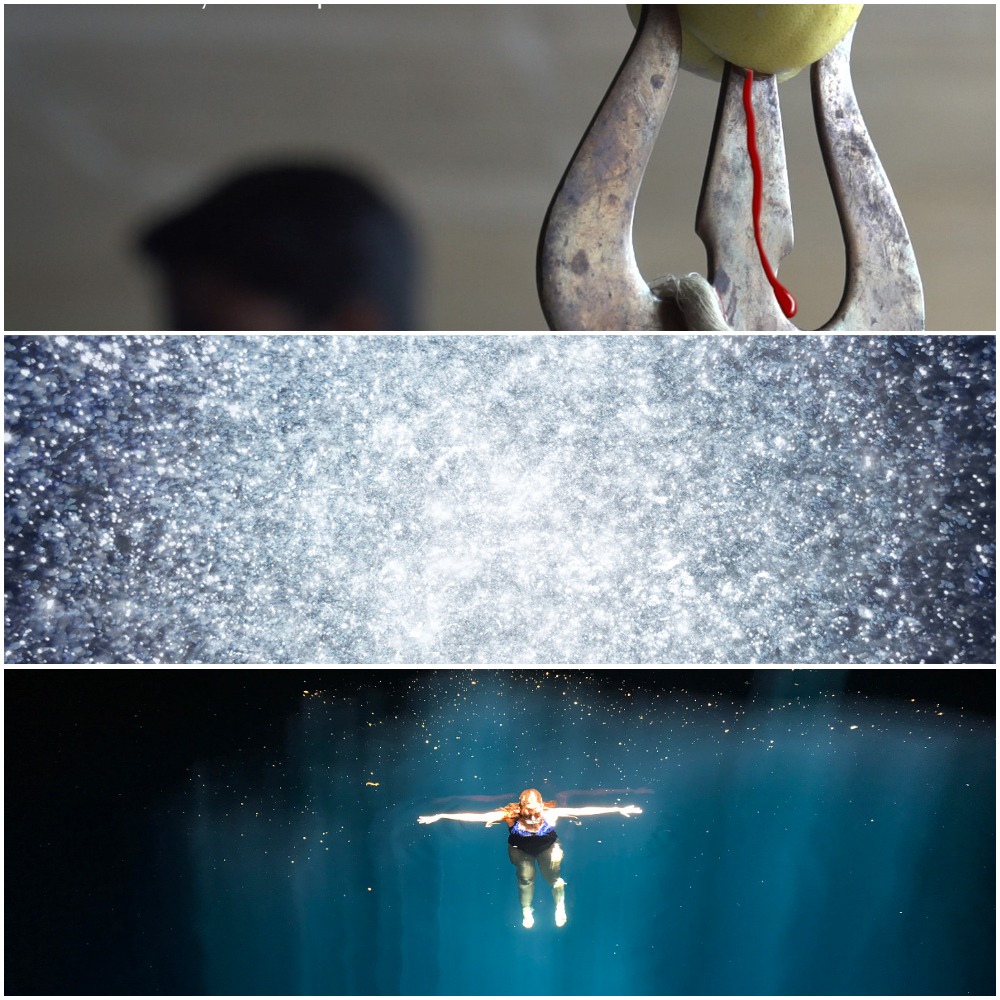
Cenote (Ts’onot) (Oda Kaori)
After Aragane, and Toward a Common Tenderness Oda moves her attention to the cenotes in Mexico. It’s not a perfect movie, but has some of the most impressive combination of sound and images I’ve seen last year. Entrancing to say the least.

Reason (Anand Patwardhan)
Fascism in contemporary India.

This slideshow requires JavaScript.


Honorable mentions:

Indiana, Monrovia(Frederick Wiseman)

Happy Android (Jaina Kalifa)

The Holiday Inn-Side (Charby Ibrahim)

Dutch Angle: Chas Gerretsen & Apocalypse Now (Baris Azman)


Special (re)discoveries:

The Man Who Has a Camera (Liu Na’ou, 1935)

Kobayashi Issa (Kamei Fumio, 1941)

Senso Daughter (Sakiguchi Yuko, 1990)


Best cinematic experience

By far the best viewing experience I had in 2019 was not at all an orthodox cinematic experience. At Yamagata  I was lucky enough to be at a Gentou (magic lanterns) screening, dedicated to the grass-roots movements in the Miike mine’s strikes during the 1950s.


The Emperor’s Naked Army Marches On (Hara Kazuo) out on Blu-ray and DVD

The UK-based label Second Run has just released a Blu-ray and DVD of one of the most respected and internationally known Japanese documentaries, The Emperor’s Naked Army Marches On, directed by Hara Kazuo in 1987. The movie has often appeared in best-documentaries lists around the web and in prestigious magazines as well, it was at number 23 of the Sight & Sound’s best documentaries of all time, a list compiled by critics in 2014.

Here the description of the movie and the extras included in the new release:

Presented from a new director-approved HD remaster, Second Run present one of the most renowned, ground-breaking and inspirational documentaries of the past half-century.

Conceived by Shôhei Imamura, Kazuo Hara’s infamous and audacious documentary follows Kenzo Okuzaki, an ageing Japanese WW2 veteran, on a mission to uncover the truth about atrocities committed as the war in the Pacific reached its bloody end. Ultimately, Okuzaki blames Japan’s Emperor Hirohito himself for these barbarities, and his obsessive pursuit of those he deems responsible soon escalates. Willing to confront the taboos of Japanese society in his fanatical quest for justice, Okuzaki is driven to unsettling acts of violence.

Harrowing and extraordinarily powerful, Hara’s film forces us to face the disturbing realities of war and, crucially, to question the complicity between filmmaker, subject and audience.

Our region-free Blu-ray and DVD editions also features a new interview with director Kazuo Hara, shot by the filmmaker especially for this release; the 2018 Open City Documentary Film Festival Masterclass with Hara and a booklet featuring writing by film historians Tony Rayns, Jason Wood and Abé Mark Nornes.

A great deal has been said and written about the documentary and about Hara himself, but if you want to explore more about the Japanese director, a good angle to approach his filmmaking is Camera Obtrusa: The Action Documentaries of Hara Kazuo (Kaya Production, 2009), a volume collecting some of Hara’s writings. If you want to know more about Kenzo Okuzaki, beyond Hara’s depiction of him in the film, there’s this in-depth paper written by scholar Tanaka Yuki,  “Yamazaki, Shoot Emperor Hirohito!” Okuzaki Kenzo’s Legal Action to Abolish Chapter One (The Emperor) of Japan’s Constitution.

Kinema Junpo Best Japanese Documentaries of 2018

A couple of weeks ago the film magazine Kinema Junpo announced its 2018 Best Ten Lists. Launched in 1924 with only non-Japanese films, and from 1926 including Japanese movies as well, the poll includes, in its present form, four categories: Japanese movies, non-Japanese movies, bunka eiga and a section awarding individual prizes such as best director, best actor, best actress, best screenplay, etc.
You can check the results for all the categories here.

The best 10 Japanese bunka eiga — a term that, more or less, could be translated into culture movies, in orher words documentary — according to the magazine are:

1 Boy Soldiers: The Secret War in Okinawa  沖縄スパイ戦史 (Chie Mikami, Hanayo Oya)

2 Sennan Asbestos Disaster ニッポン国VS泉南石綿村 (Kazuo Hara)

3 ぼけますから、よろしくお願いします (Naoko Nobutomo)

4 奇跡の子どもたち (Hidetaka Inazuka)

5 Gokutomo 獄友 (Sung Woong Kim)

6 武蔵野 江戸の循環農業が息づく (Masaki Haramura)

7 春画と日本人(Ōgaki Atsushi)

8 蒔絵 中野孝一のわざ

9 夜明け前 呉秀三と無名の精神障害者の100年 (Tomoki Imai)

10 まだ見ぬまちへ〜石巻 小さなコミュニティの物語 (Kenji Aoike)

Not all of them have an official English title, since most were not, and probably will not be, released internationally.

I haven’t seen all of them, but the list seems to reflect certain general and for me disappointing aspects of contemporary documentary in Japan, or at least, a certain way of doing and conceptualizing documentary in the archipelago. Documentary seems to be viewed more as a vehicle to present a certain subject or a certain theme to the viewers and less as a form of visual expression. In other words, no much effort and time is spent on how to stylistically construct the film, and I think part of the “problem”, at least regarding the list in question, is connected to the meaning of term bunka eiga and thus to the by-the-fault approach from the magazine that seems to prioritize the subject matter over cinematic style.
The list is also a reflection of what is happening at the moment in the Japanese documentary scene. I haven’t watched every single non-fiction movie made in the archipelago in recent years, but I see a good number of Japanese documentaries every year, and not only there are almost no trace of documentaries that successfully blur the boundaries between non-fiction, avant-garde and fiction — with few glorious exceptions of course — but there’s hardly space even for works that try to present and tackle themes in different ways.

This slideshow requires JavaScript.

With that out of the way, I can now move to the positive notes. It was nice to see at the first two places Boy Soldiers: The Secret War in Okinawa and Sennan Asbestos Disaster. The former is the third “installment” of the ongoing exploration, by journalist and documentarist Chie Mikami, of the resistance and fight of the Okinwan people against the American “occupation” of the islands. This time Mikami’s movie (co-directed with Hanayo Oya) focuses more on the past, documenting with old photos, footage and interviews, how in the closing stages of the Battle of Okinawa, a unit called “Gokyotai” was used to wage guerrilla behind enemy lines.
Sennan Asbestos Disaster is the latest work by Hara Kazuo (Extreme Private Eros: Love Song 1974, The Emperor’s Naked Army Marches On), about former workers and the relatives of workers at asbestos factories in Osaka’s Sennan district. Hara with his camera follows their legal battle against the Japanese government while seeking compensation for the damage done to their health by asbestos. I had the chance to see the movie in Yamagata in 2017, with four of the victims sitting and chatting in the row in front of me, a very impactful viewing experience that I still treasure.

A final point worth noting is that many of the documentaries in the list are about, to different degrees, the third age. In Sennan Asbestos Disaster the victims are almost all over 60, and so are the five men wrongly convicted in Gokutomo, and the couple depicted in Bokemasukara, yoroshiku onegaishimasu (ぼけますから、よろしくお願いします), a movie about senile dementia,  is well over 90. The disease is also the central theme explored in the triptych of documentaries Everyday is Alzheimer (毎日がアルツハイマー 2012-2018) by Yuka Sekiguchi, the third and latest was released last year, an underrated series in my opinion. I am not discovering anything new, but this heavy focus on the elderly is another signal of the increasingly aging population In Japan, a demographic shift that is shaping, and in fact has already started to shape, the country in several ways, not least its film and visual production.

Best documentaries of 2018

2018 has been an intense and fruitful year for documentary, especially on the margins, between works released theatrically, those made available directly on streaming platforms, and those screened almost exclusively at festivals, the offer has become as diversified as ever. As usual on this blog I have tried to direct my attention to some of the most significant works of nonfiction produced in East and Southeast Asia, and in doing so (time is limited I’m afraid) I have neglected many others made in other parts of the world, and living in Japan also didn’t help. For instance I was not able to see Dead Souls by Wang Bing, a movie I’m looking forward to seeing.
If last year my main focus was Taiwan and its dynamic contemporary documentary scene, a research that culminated with this essay I wrote for Cinergie in July, 2018 was more varied. The screening of NDU‘s To the Japs: South Korean A-Bomb Survivors Speak Out (1971) at the Kobe Planet Film Archive, part of my ongoing exploration of the works of the collective, was one of the highlights of the year, unfortunately I didn’t have the time to write about it, but hopefully I will be able to scribble down something next year.
It goes without saying that the list below is a reflection of my taste, interests and viewing habits, and thus it is mainly composed of documentaries made in the Asian continent (but there are few exceptions of course), and works that push the boundaries of what is usually considered nonfiction cinema.

This slideshow requires JavaScript.

Outstanding works

Toward a Common Tenderness (Oda Kaori, 2017)
After Aragane, Oda confirms herself as one of the most original voices in contemporary nonfiction with another excellent work, this time mixing the diaristic and the poetic. Mesmerizing, as usual, the sound design.

Miasma, Plants, Export Paintings (Wang Bo, Pan Lu, 2018)
I discovered the movie a month or so ago, but it was a revelation: history, art, geography and colonialism mixed in an aesthetically challenging piece of work.

A Room with a Coconut View (Tulapop Saenjaroen, 2018)
The most overtly experimental work in this list, not for everyone taste for sure, but I found it refreshingly good.

Inland Sea (Soda Kazuhiro, 2018)
Probably my favorite by Soda, one that resonates more with me and my experience of living in Japan. You can read more here.

Everyday Is Alzheimer’s the Final: Death Becomes Us (Sekiguchi Yuka, 2018)
A really important documentary, not stylistically daring, nonetheless a film that delivers a strong punch in the stomach of the viewer with its matter-of-factness exposure of the disintegration of memory, aging and death.

MATA-The Island’s Gaze (Cheng Li-Ming, 2017)
An elliptical work that focuses its attention on the gaze of Scottish photographer John Thomson, who visited Taiwan in 1871 , and on his relationship with some members of the Siraya tribe – one of the several that inhabited Taiwan before the arrival of the Dutch and the Han. (here more)

The Hymns of Muscovy (Dimitri Venkov, 2017)
“…the sky itself appeared to me like an abyss, something which I had never felt before ー the vertigo above and the vertigo below” Goerge Bataille

Slow Motion, Stop Motion (Kurihara Mie, 2018)
A poetic and witty personal film, documenting the filmmaker’s wanderings and meetings in Laos, Myanmar and Thailand. I’ve written more here.

This slideshow requires JavaScript.

Special (re)discoveries:

What Do You Think About the War Responsibility of Emperor Hirohito (Tsuchiya Yutaka, 1997)
A video experiment and an important time capsule inside a time capsule: the Pacific War and the emperor’s responsibility as perceived by certain strata of the Japanese population during the 1990s.

Jakub (Jana Ševčicová, 1992)
A film of faces, the ancient faces of the Ruthenians people, “painted” in a black and white so dense, grainy and gritty that is almost painful to watch.

Cambodia Lost Rock & Roll (John Pirozzi, 2014)
Incredibly sad, but at the same time incredibly fun to watch and listen to.


This slideshow requires JavaScript.

Best cinematic experience

Heliography
By far the best viewing experience I had in 2018. You can read my excitement here.


This slideshow requires JavaScript.

Honorable mentions:

78/52 (Alexandre O. Philippe, 2017)
A guilty pleasure.

Matangi/ Maya/ M.I.A. (Stephen Loveridge, 2018)
I did not like many things in the movie, but the last 30-40 minutes offer an interesting take on complex topics such as being an artist in the contemporary world, fame, social awareness, and immigration and art.

A Man Who Became Cinema
A documentary about Hara Masato and his struggles to keep making movies, one day I need to write something on Hara, a fascinating and “cinematic” figure.