What Should We Have Done? was one of the most commercially successful independent documentaries released in Japanese theaters last year, earning more than 180 million yen after its initial release in December 2024, and remaining in cinemas for almost a year. The film directed by Fujino Tomoaki was also included in Kinema Junpo’s Best Bunka Eiga list for 2025, where it ranked second. Now What Should We Have Done? is again being screened in selected mini-theaters across the archipelago, giving me the chance to revisit it.
Produced by Fujino’s Zou-Shima, distributed in Japan by Tofoo Films, and completed with the support of Yamagata Dojo, a residency program for documentary filmmakers working on projects in progress, the film is built from video material—mostly shot digitally by the director himself over more than twenty years within his own family. These visual footage was recorded intermittently during his visits to the parents house, and traces the story of the director’s older sister, nicknamed Mako-chan or Mako, who suffered from mental illness, and of parents who, for almost her entire life, denied her condition and attempted to deal with it while almost never consulting a doctor.
Watching it for the second time gave me the chance to notice and appreciate things that, the first time around, were somewhat drowned out by the raw intensity of the experience. It was still a painful, heavy watch—perhaps even more piercing in some ways. As Fujino has stated on various occasions, What Should We Have Done? is, from its very title, a document of a failure: the failure of an entire family—director included—toward his sister Mako, who began showing symptoms of schizophrenia in 1983, when she was 24. After allegedly consulting a specialist, the parents came to the conclusion that there was absolutely nothing wrong with her, and the family was discouraged from seeking psychiatric care for their daughter.
The film begins on a black screen, with the sister’s voice out of control, recorded by her brother on a Walkman in 1992. The video recordings started almost ten years later, in 2001, during the visits the director—now living in Kanagawa—made back home in Sapporo, Hokkaido. He began documenting his sister’s life and her relationship with their parents as a way of opposing and criticizing their treatment and decisions regarding her.
The use of low-resolution video feels absolutely right for conveying Mako’s miserable experience and, secondarily, that of the entire family. The rough texture of the images almost mirrors the emotional conditions in which everyone is trapped. On a filmmaking level, the documentary works largely thanks to the editing, which naturally shapes what the film ultimately becomes: a partial but real point of view on the tragic reality of the family. It must have been a near-Promethean task for Fujino and Asano Yumiko, who edited the film with the support of Hata Takeshi, to decide what to include, and especially when to cut away from some of the most distressing moments.
The structure, in this regard, is exemplary. The first part briefly sketches Mako’s life and that of her parents using photographs and home movies shot by the father in the early 1960s during their trip, for business, around the world. The couple was highly educated, both were researchers, and made the whole situation even more astonishing. The film then moves forward chronologically, covering more than a decade beginning in 2001 and documenting the steady deterioration of Mako’s condition—and, alongside it, that of her parents. One day the director returns home and finds a padlock on the front door, installed by the parents so that Mako cannot escape. We learn, together with an appalled brother, that his sister has not left the house for almost a year.
The emotional peak of the documentary—and what must have been the lowest point in the relationship between daughter and parents, at least the one kept in the film—comes in a nighttime scene in which we realize that the mother, too, is beginning to show signs of dementia, while Mako’s piercing, bone-chilling screams fill the house.
The following scene—a black screen with written text—tells us that the parents finally gave up, and that Mako was hospitalized and given the appropriate medication. The contrast between those unbearable screams and the later scene in which she calmly speaks, cooks, and washes the dishes is both astonishing and heartbreaking. It points toward what might have been—and that makes it all the more painful. The final part of the film is filled with tender, almost peaceful moments between the father, Mako, and her brother—and then with the inevitable ending, which I will not spoil. An interesting layer is added when Fujino speaks with his father—now frail and in a wheelchair in a hospital—telling him about his wish to assemble all the footage shot over the past two decades and essentially asking, on camera, for his consent to do so.
Of the many satellite events organized during last October’s Yamagata International Documentary Film Festival that I was unable to attend, one in particular caught my attention: “Cinematographer Segawa Jun’ichi: Tracing Japanese Documentary Cinema through His Works.” This was an event organized to revisit the legacy of Segawa as a cameraman 30 years since his passing, and to kick off a retrospective that was held last December at the Athénée Français Cultural Center in Tokyo before traveling to Osaka’s Cinema Nouveau this February.
Although I had previously seen several documentaries in which Segawa worked as cinematographer, I only became fully aware of the real scope of his contribution to Japanese cinema about five years ago, while researching Haneda Sumiko’s Ode to Mt. Hayachine (1982). In Hayachine no fu (1984), her book on the film—part reflection on its genesis, part production diary—Haneda emphasizes several times the importance of having Segawa behind the camera. In what is arguably her masterpiece, Haneda organized the shooting into two units. One group, led by Nishio Kiyoshi, focused primarily on filming the villages of Take and Ōtsugunai, while the other, lead by Segawa, concentrated on the alpine landscapes and the scenes shot near or at the summit of Mt. Hayachine, although for major sequences, such as the summer festival, the entire crew worked together. Haneda repeatedly stresses how decisive Segawa’s prior experience filming at high altitudes—and the fact that he was himself from Iwate Prefecture, where the mountain is located—proved to be for the success of the documentary.
Once I realized how central Segawa had been to the making of Ode to Mt. Hayachine, I began to look more closely at his career and discovered his involvement in several other landmark works in the history of Japanese documentary cinema such as Kamei Fumio’s Fighting Soldiers (1939) or Yanagisawa Hisao’s Children Before the Dawn (1968). The retrospective moves precisely in this direction, offering a cartography of the evolution of Japanese nonfiction cinema, but also fiction films, through the major works in which Segawa played a key role. 24 works were screened in Tokyo and Osaka, here the list of the films in chronological order:
戦ふ兵隊 Fighting Soldiers (Kamei Fumio, 1939) 銀嶺の果て Snow Trail (Taniguchi Senkichi, 1947) ジャコ萬と鉄 Jakoman and Tetsu (Taniguchi Senkichi, 1949) 新しい鉄 Atarashii tetsu (Ise Chōnosuke, 1956) 法隆寺 Hōryū-ji (Hani Susumu, 1958) 新しい製鉄所 Atarashī seitetsusho (Ise Chōnosuke, 1959) 留学生チュアスイリン Chua Swee Lin, Exchange Student (Tsuchimoto Noriaki, 1965) 夜明け前の子どもたち Children Before the Dawn (Yanagisawa Hisao, 1968) 仕事=重サ×距離 三菱長崎造船所からのレポート Work = Weight x Distance Report from Mitsubishi Nagasaki Shipyard (Matsukawa Yasuo, 1971) 風 The Wind (Segawa Jun’ichi, 1977) 遠い一本の道 The Far Road (Hidari Sachiko, 1977) 不安な質問 Anxious Questions (Matsukawa Yasuo, 1979) 海とお月さまたち Fishing Moon (Tsuchimoto Noriaki, 1980) 水俣の図・物語 The Minamata Mural (Tsuchimoto Noriaki, 1981) 早池峰の賦 Ode to Mt. Hayachine (Haneda Sumiko, 1982) アントニー・ガウディー Antonio Gaudì (Teshigahara Hiroshi, 1984) 奈緒ちゃん Nao-chan (Ise Shin’ichi, 1995) ルーペ カメラマン瀬川順一の眼 Magnifying Glass: The Eyes of Photographer Jun’ichi Segawa (Ise Shin’ichi, 1997) 回想・瀬川順一 土本典昭、2003年3月13日 (Tsutsui Takefumi, 2025)
Unfortunately, I was able to spend only one day in each city, but I managed nonetheless to see or revisit some milestones of Japanese documentary cinema. In Tokyo, I attended a screening of Ode to Mt. Hayachine. Although I had watched it multiple times for my research, this was my first experience seeing it on 16mm and in a theatrical setting—and it was a revelation. The more lyrical sequences were, as expected, awe-inspiring, yet what stayed with me most after this viewing was Haneda and her team’s remarkable ability to weave an intricate and expansive audiovisual tapestry, in which people, history, folkloric practices, economic realities, non-human forces, and the mountain itself are all delicately embroidered into an ever-changing, open-ended whole.
My day in Osaka was more densely packed, with screenings of Jakoman and Tetsu—one of the few fiction films included in the retrospective, and perhaps the most handsome Mifune Toshirō has ever looked on screen—The Minamata Mural, one of the most powerful works Tsuchimoto Noriaki directed on the Minamata disaster (I wrote more about it here), and Hani Susumu’s Hōryū-ji, which left such a deep impression on me that I decided to write about it separately. Like Hōryū-ji, Antonio Gaudí (1975)—the fourth film I saw in Osaka—engages with art, though of a different kind from the Buddhist sculpture housed at the temple in Nara. The way Segawa Jun’ichi’s camera and Teshigahara’s Hiroshi’s direction capture Gaudí’s sinuous buildings and imagination—enhanced by the music by Takemitsu Tōru—is hypnotic. For my part, the film could easily have lasted six hours.
I’m not sure whether the retrospective will travel to other Japanese cities, I suspect it will not, but I secretly hope it might eventually make its way to the Chūbu region region, where I live. The event was planned and organized by Tsutsui Takefumi, Tanaka Shinpei, Nakamura Daigo, and Okada Hidenori, and was accompanied by an excellent catalogue (in Japanese), featuring essays by film historians, scholars, and directors — including a contribution by Hamaguchi Ryūsuke.
Kobayashi Shigeru is an important figure in Japanese documentary cinema, he was mentored by Yanagisawa Hisao—with whom he worked as an assistant director in his last two films, そっちゃないこっちゃ コミュニティ・ケアーへの道(1982) and 風とゆききし(1989)—but is probably best known for his long-standing collaboration with Satō Makoto. Kobayashi was behind the camera and an integral part of the creative process on both Living on the River Agano (Aga ni ikiru, 1992) and Memories of Agano (Aga no kioku, 2004), and in more recent years he has also been a key force in preserving and reviving the legacy of the latter film, as well as Satō’s work more broadly. Their collaboration extended also in the opposite direction with Satō editing Kobayashi’s And Life Goes On (Watashi no kisetsu, 2004). Unfortunately, of the films directed by Kobayashi I have so far seen only Dryads in a Snow Valley (Kaze no hamon, 2015), a beautiful documentary set in a mountain area between Niigata and Nagano Prefecture, which also functions as a kind of homage to Satō’s cinema.
Kobayashi was born in Niigata Prefecture and, from a young age, became involved in groups supporting the victims of Minamata disease. One of the close friends he made during this period began, some thirty years later, to experience violent flashbacks related to the sexual abuse she had suffered as a child. Around the same time, Kobayashi met a female photographer—also a survivor—who was using her photographs to support others who had endured similar experiences. These encounters prompted Kobayashi to confront his own past, suffering and growing up in an abusive family. It was at this point that he decided to make a documentary film, with the aim of helping audiences understand the reality of sexual abuse from the survivors’ point of view.
In Their Traces (Tamashii no kiseki) was presented last year in Yamagata and later on at the Tokyo International Film Festival. I missed the film during my stay in Yamagata, so I was very eager to catch up with it, and I’m glad I finally did.
The film opens with a phone call in which Kobayashi’s elderly friend tells him, matter-of-factly, that she tried to hang herself the previous night, unable to bear the recurring memories of the repeated abuse she suffered as an elementary school student. The rawness of the subject matter, combined with the gentleness and respect with which the film is constructed, is one of the elements that makes In Their Traces such a remarkable and powerful viewing experience. A crucial decision in achieving this balance was Kobayashi’s choice to include himself as one of the film’s subjects. By foregrounding the violence he experienced—without lingering on it or allowing it to dominate the narrative—Kobayashi establishes a bond of trust with the viewer, while also underscoring the trust he built with the women who appear in the film.
It is this transparency and proximity to the other subjects that allows Kobayashi to build, on screen, resonances and parallels between the three women and their traumatic experiences. This transparency—and the trust it engenders—becomes even more powerful when the documentary, through the words of his friend (“you shouldn’t make the documentary” I’m paraphrasing), turns back on itself, questioning the very premise of the project.
The formal strategy of positioning the camera (operated by Oda Kaori), Kobayashi as director, and Kobayashi as participant as three active agents within the film’s reality enables to create a dialogic structure through which the women’s testimonies emerge in a touching and heart-wrenching manner, without ever feeling exploitative or overly dramatic. On the contrary, it is precisely the matter-of-fact quality of some of the exchanges we hear—regarding suicidal thoughts and experiences of sexual violence—that most deeply affects the viewer, making the film a profoundly empathetic experience. This effect is further achieved by interspersing the highly affecting scenes of conversation with striking black-and-white photographs taken by one of the women, as well as with shots of the countryside and the sea. The ocean, with its vast expanse stretching toward the horizon, has a special meaning, especially for one of the women, who describes it as offering a sense of openness and thus hope.
A fascinating point raised by the film is that in many cases the abusive fathers or male figures were themselves survivors of war or people whose lives were severely affected by war. Kobayashi has commented when talking about the documentary that his own family was reimpatriated from the former Manchuria, bearing the weight of war with them.
In conclusion, while the film loses some of its power, in my view, in the final thirty minutes—essentially from the point at which a workshop discussion about the making of the film is introduced—I found the first hour or so to be among the finest documentary filmmaking I have encountered in recent years.
On March 20, 1995—the day sarin nerve gas was released in several cars of the Tokyo subway—Japan experienced what is often regarded, together with the Great Hanshin earthquake two months earlier, a watershed moment in the recent history of the archipelago. Much has already been written and said about the attack carried out by members of the Aum Shinrikyō cult, which killed 13 people and injured hundreds, about the motivations behind it, and about the figure of Asahara Shōkō, the group’s leader, who was eventually executed in July 2018. Within documentary cinema, it is worth recalling at least Mori Tatsuya’s A (1998) and A2 (2001), two key works exploring the sect’s inner workings after Asahara’s arrest and its relationship with the mass media.
Far less attention, however, has been paid to Asahara’s family and to how the tragedy that unfolded three decades ago also affected his closest relatives. Most of them, understandably, changed their names and had their identities protected—especially the children, who were still minors at the time. The sole exception is Matsumoto Rika, Asahara’s third daughter (his real name being Matsumoto Chizuo), who was twelve years old at the time of the attack and had been designated as her father’s spiritual successor. A few years ago, she chose to reclaim her real name, come forward publicly, and stop hiding.
Though I’m His Daughter, a documentary directed by Nagatsuka Yō and released in Japan last year, investigates the reasons behind this decision and follows Rika’s life over a period of roughly six years, from 2018 to 2024. Although the film was screened in a limited number of cinemas across the archipelago last year, it appears to have maintained a relatively low profile, as addressing Aum Shinrikyō and its members remains a delicate and problematic subject—both for the Japanese state and for public opinion, which often, and rightly, calls for respect toward the victims of the attack.
Significantly, the film opens with a meeting between Rika and the brother of one of the victims of a manslaughter case that occurred in Aichi prefecture in 1979 (the so called Handa Hoken Kinsatsujin Jiken)—an encounter initiated by the latter—which immediately sets the film’s thematic tone. One of the documentary’s central concerns is precisely the way in which the relatives of victims and those of perpetrators come to share—to different degrees, naturally—a common fate: that of carrying an almost unbearable burden for the rest of their lives.
Yet the theme that perhaps emerges most forcefully from the film is the complex and deeply ambivalent relationship between father and daughter. While unequivocally condemning her father’s actions, Rika is shown to retain many positive personal memories of him. She cannot make sense of how the violence carried out by the group could coexist with one of its central tenets—the prohibition against killing, even insects. Moreover, following his arrest, she was never able to speak with him or ask about the true motivations behind his actions—both because officials did not permit such a meeting and because Asahara is said to have descended into a state of mental confusion after his arrest, to the point that he was reportedly no longer able to speak coherent Japanese. The film also shows briefly Tatsuya Mori, director of the aforementioned A and A2, attending a meeting held prior to Asahara’s execution in support of granting him proper medical treatment, so that it might be determined whether he was truly the one who ordered the killings—and why—two of the most significant unresolved questions hanging over both the film and Japanese society.
Rika learned of her father’s execution from a friend who was watching the news on television. At that moment, the director was understandably unable to film her; instead, Rika recorded herself, along with her sister Umi—whose identity is protected by the blurring of her face. The resulting footage shows her sister having an emotional breakdown while riding on a bus or in a car.
The emotional ambivalence towards his father is compounded by the discrimination Rika continues to face as she attempts to navigate Japanese society. Following the execution, Rika became the target of a wave of online harassment, with social media flooded by death threats and messages directing rage toward her. In this section of the film, screenshots of tweets and replies appear on screen, one of which starkly encapsulates the situation: “you have no right to be happy.” Finding employment, opening a bank account, or sustaining a romantic relationship all prove to be nearly insurmountable challenges. As a result, Rika experiences recurring bouts of depression and suicidal thoughts; here again, video footage—this time shot by her sister Umi—is used. The death wish Rika harbored as a teenager after her father’s arrest—she remained in the group for four years following the attacks—painfully resurfaces. Her memories of that period are rendered on screen through harrowing sequences depicted in pencil animation.
As a way of confronting and reconnecting with their past, Umi and Rika travel to their father’s hometown, where his family once ran a tatami shop, reminiscing about a time when they still saw him as a caring figure. During the same trip, they also visit relatives who had disowned them and completely severed ties with the Matsumoto family. It is at this point in the film that Nagatsuka decides to ask Rika what he considers the most important question: “Why did such a happy and fulfilled person come to do those horrible things?” The question remains unanswered, as no one is able to make sense of what happened in his life.
The final thirty minutes of the film focus on Rika’s efforts to break free from the depressive spiral into which she had fallen—exacerbated by the pandemic—and to forge an independent life, partly through her passion for mountaineering and bodybuilding, pursuits she approaches at a semi-professional level.
The film opens with the director’s own narration, and his voice—along with the rationale behind the making of the documentary—serves as the thread connecting the work as a whole. Nagatsuka frequently appears on screen, both during and after the pandemic, including in the inevitable Zoom split-screen sequences, a choice I found visually weak. The film is at its strongest in its first hour or so, concluding with the onset of the pandemic and the visit to Asahara’s hometown, when the editing is tighter and the images are less overtly—and cheaply—emotional. The film’s concluding shot, a drone-filmed image from the top of a mountain, exemplifies the opposite tendency and ultimately feels inappropriate.
Though I’m His Daughter may not be without faults, but it possesses the considerable merit of posing difficult and compelling questions, even for viewers who may not share its underlying premises.
When Collaborative Cataloging Japan, the online platform dedicated to experimental and avant-garde cinema in the archipelago, made available Doi Haruka’s He Was Here, and You Are Here (なかのあなた いまのあなた 1985) a couple of years ago, it was for me a revelation. The short film is an impressive and poetic debut centered on the idea of externalising one’s own memories, wishes, and fantasies as images projected onto walls, plates, or even the filmmaker’s own body. He Was Here, and You Are Here crystallizes the inventiveness of a particular approach to personal cinema in Japan during the 1990s, while at the same time standing as an exception—a singular and highly idiosyncratic experiment within the realm of Japanese “self-documentary” of that period.
For the whole month of December 2025, another work by Doi, My Father, burned (父が、燃えた1994), is available to stream on the platform.
While He Was Here, and You Are Here marked Doi’s debut, My Father, burned represents her final foray into filmmaking, a career that lasted less than a decade. In the following years, Doi has been active in the field of Japanese music under the pseudonym HALUKA.
The short film originated in Doi’s discovery of old photographs of her father, along with home movies he had shot himself. As Collaborative Cataloging Japan notes, My Father, burned—described by the filmmaker as an “anti–home movie” —is a rare example of personal film that
illustrates Doi’s complicated relationship with her deceased father. A distanced fascination replaces the nostalgic or sentimental aspects one might expect in a film of this kind. Yet the sense of the power of the found image to shock and disarm remains — the familiar face that stares out from the rediscovered album; the laughter of a past self, seen through the eyes of one deceased. Through this cinematic reflection, Doi questions the image she had of her father prior to this posthumous mediation, even seeing similarities between his violent tendencies and her own rebellious nature.
The film is not only a reflection on Doi’s difficult relationship with her father after his passing, and on how memories shape who we are and who we become, but also a more subtle contemplation of the latent potential inherent in the reactivation of audiovisual footage—here, personal material. Home movies shot by her father when she was little, together with old photographs of him, resurrect the “shadow” of his physical body, helping to construct a different image of the man and an alternative personal reality once inhabited by the filmmaker. Doi’s efforts here, albeit on a smaller and more personal scale, mirror those at work in the best examples of archival or found footage cinema, which “draw on archival material to breathe new life into it and construct new constellations of meaning—capable of questioning the present through a reconfiguration of the past.” (Cau, 2023)
My Father, burned represents thus a prime—if rare—example of the convergence of personal and archival cinema in Japan during the 1990s. This is particularly evident not only from what has been described above, but also from the film’s formal structure, in which the filmmaker’s thoughts are articulated as a form of commentary or narration accompanying the old photographs and home movies presented on screen.
It is also fascinating that the filmmaker briefly reflects, toward the end of the work, on the ethics of filming a dying person—when her father was ill in the hospital. Although this comment is not further developed, it remains a very relevant topic today and sheds light on Doi’s talent and her acute awareness of everything that surrounds the act of filming and filmmaking itself.
References:
Maurizio Cau, Rifigurare il passato. Il cinema d’archivio di Sergei Loznitsa in “Cinema e Storia 2023. Found footage: il cinema, i media, l’archivio” edited by Alberto Brodesco and Maurizio Cau, Rubettino edizioni, 2023.
This is a translation and a partial rewriting of a piece I wrote for Alias (Saturday supplement of the Italian newspaper Il Manifesto) in 2021.
In 2003, Māori director and theorist Barry Barclay proposed the idea of a “Fourth Cinema.” Building on and expanding the concept of “Third Cinema” as theorized by Fernando Solanas and Octavio Getino in the late 1960s, Fourth Cinema designates a practice centered on the Indigenous gaze and Indigenous viewers. Rooted in Barclay’s background in documentary, the concept was initially conceived as an audiovisual practice in non-fiction—works created by Indigenous authors, within Indigenous communities, and for Indigenous audiences.
Paying homage to Barclay’s reflections, the twelfth edition of the Taiwan International Documentary Festival devoted a section of its official program to works by Indigenous filmmakers from the island, produced in the final years of the twentieth century (1994-2000). This was a period when long-standing questions of indigenous identity, resistance, and decolonisation converged with—and were amplified by—the revolutionary arrival of small, portable digital video cameras.
This technological shift, coupled with a transformed socio-political landscape, opened new avenues of self-expression for ethnic groups who, until then, had been confined to the roles of mere actors or spectators in their own representation. It is worth noting that this followed the profound transformations of the last two decades of the 20th century—a period of seismic historical change for Taiwan, beginning with the lifting of martial law in 1987 and the subsequent democratisation of the country. On a cinematic level, this era also witnessed the rise of the Taiwanese New Wave and, on a smaller scale, the emergence of a grassroots documentary movement exemplified by the Green Team.
The history of Taiwan is one of centuries-long colonial domination. Its arts, customs, traditions, land, language, and landscape all bear traces of the successive layers of a history that, accumulating over time, have shaped the island as we know it today. The various Indigenous peoples who inhabited Taiwan for millennia first faced invasions by the Dutch and the Spanish, followed by the arrival of Han Chinese settlers from the mainland, and later domination under the Qing dynasty and the Japanese Empire.
Today, the island officially recognizes sixteen Indigenous groups, each with its own language and distinct culture. In most cases, these communities—despite enduring countless challenges—continue to strive to keep their rituals, languages, and traditions alive and meaningful, upholding alternative ways of life in resistance to the cultural homogenization brought by modernity.
By the late 1990s, the advent of digital cinema and the spread of small, affordable video cameras—“a theology of liberation,” to borrow a striking expression from Filipino director Lav Diaz—offered Taiwan’s Indigenous groups the possibility, finally and for the first time, of becoming active agents in their own visual representation, adding their voices to the island’s rich mediascape.
C’roh Is Our Name
Indigenous with a Capital ‘I’: Indigenous Documentaries from 1994 to 2000 brings together seventeen works—each between thirty and fifty minutes in length—made by Indigenous filmmakers, focusing on the lives, struggles, and resilience of their communities in contemporary Taiwan. In New Paradise (1999) by Laway Talay, members of the Pangcah ethnic group leave their ancestral lands to seek work in other parts of the island, only to encounter exploitation and a profound sense of non-belonging—perhaps the most recurrent theme running through the works featured in this special program. This feeling of displacement is often subtle, but at times it emerges openly and even defiantly, as in C’roh Is Our Name (1997) by Mayaw Biho, a short documentary that follows a regatta annually organized by Taiwan’s Han population—the ethnic majority of Chinese origin that constitutes most of the island’s inhabitants. For the first time in the competition’s history, a group of Pangcah—who had traditionally lent their nautical skills to other teams—chose instead to form a team composed entirely of their own members.
For members of these communities, holding a camera also means gaining the ability to recount and preserve ancestral traditions and forms of knowledge that might otherwise vanish with the passing of time. This is the case in several works devoted to capturing the memories of elders—such as former tribal chiefs or weavers—who embody the living memory of their people.
One of the most compelling works presented at the festival is Children in Heaven (1997), also by Mayaw Biho. Although it focuses on a specific ethnic group, the situation it portrays is, sadly, all too familiar in contexts marked by stark economic inequality. For a time, a small Pangcah community was forced to watch, year after year, as the government demolished the shacks they called home, deemed illegal structures. Surrounded by garbage and ruins, the children who grew up amid this Sisyphean cycle of demolition and rebuilding came to transform the recurring tragedy into a kind of game.
In this film, as in all the others in the program, the camera’s perspective is never detached or neutral. Aesthetically and narratively, it knows—and shows—from the very first scenes where it stands. The images are often low-resolution and deliberately anti-spectacular—what Hito Steyerl would call a “poor image.” It is a gaze that, precisely because it comes from within, does not judge—even when, as in Song of the Wanderer (1996) by Yang Ming-hui, it exposes the problems, contradictions, and even the violence that many of these communities face. Instead, it offers both a perspective and a means of expression to those who, until now, have had none.
It’s that time of year again: autumn arrives, bringing with it a cascade of film festivals around the globe. Just to name a few of the major ones in Asia, we have Busan and Tokyo, along with the Image ForumFestival, the biggest event dedicated to experimental cinema in Japan. December will also see the debut of the newly established Aichi Nagoya International Animation Film Festival in Nagoya. But I digress.
One of the oldest and most prestigious festivals in Japan is without doubt the Yamagata International Documentary Film Festival, an event I’ve been attending for more than a decade now (and about which I’ve written various reports and reflections on this very website).
I plan to attend this year’s edition (October 9–16) as well, though life is unpredictable and you never know what might happen in the “real” world. Below are some of the screenings and programs that have caught my eye and that I’m especially looking forward to.
Being a biennial festival, YIDFF is not the place to see world premieres, but rather a chance to catch up with significant films already screened elsewhere or to discover under-the-radar documentaries, often from the Asian continent. This year’s International Competition will showcase Park by So Yo-Hen, which won the Grand Prize at the Taiwan International Documentary Festival last year, and With Hasan in Gaza by Kamal Aljafari, presented at Locarno a couple of months ago. Aljafari will also present his more experimental A Fidai Filmin the program Palestine – Memory of the Land, a work I am eager to revisit on the big screen, this time with more information and conext to help decipher it.
Returning to the competition lineup, Letters to My Dead Parents by Ignacio Agüero weaves together personal stories with the history of the labor movement in Chile, while I Was, I Am, and I Will Be! by Itakura Yoshiyuki promises an exploration of Kamagasaki, a town of day laborers, at a moment when the city was preparing for Expo 2025.
New Asian Currents has usually been the section where I’ve made the most discoveries over my years of attending Yamagata. While many of these came from last-minute decisions or suggestions by friends and fellow critics on site, this time there are a couple of titles I’m especially eager to check out. Collective Dreams Stitched into December by Bappadittya Sarkar—a patchwork of interconnected stories set in the Indian city of Jaipur—promises to satiate my appetite for more documentaries from this vast country. Meanwhile, The Tales of the Tale by Song Cheng-ying and Hu Chin-ya captures the stories and dreams of an old mining town of Houtong in Taiwan.
In Perspective Japan,The Yoshida-ryo Dormitory by Fujikawa Keizō documents the ongoing battle to keep the country’s oldest student dormitory open—a struggle deeply intertwined with the social fabric of the city and the political activism of Japan at large (you can read more here). In the same section, Spring, On the Shores of Aga by Komori Haruka carries a special resonance for me, as it is connected to Satō Makoto, his cinematic legacy and the Agano area.
Every edition of the festival offers audiences a major retrospective, and this year it is Unscripted: The Art of Direct Cinema—32 works spanning five decades of a documentary mode that revolutionized the way non-fiction films are conceived, produced, and filmed. Although I have already seen most of these documentaries – but not all!- this is a perfect opportunity to revisit some “classics” and to gain deeper insights through the accompanying discussions.
Among the peripheral screenings and events, one that stands out is Feb 11, 1990 Rough Cut Screening: The Other Version—four and a half hours of material documenting the very first YIDFF in 1989, footage not included in Iizuka Toshio’s A Movie Capital (1991). For those, like me, fascinated by Sanrizuka, the resistance against the construction of Narita Airport, and the legacy of Ogawa Pro, the special presentation Sanrizuka: Disappearing Landscapes – The Heta Project Screening is not to be missed. Another highlight is the invitation of Voices of the Silenced, this year’s closing film—a reflection on counter-archives and the suppression of minorities in Japan (particularly the Korean minority) by Park Soo-nam and Park Maeui. The documentary screened in Berlin two years ago, but YIDFF lists it as 2025, so I wonder whether the film has been reworked.
All of these films, however, feel like just planets orbiting around the central sun: Palestinian cinema, and Palestine itself—the true core of this year’s festival, even if the number of works is not overwhelming. At least, that is how I perceive it. Palestine, its culture, and the struggle of its people have always held a special place at YIDFF. This year, while the dedicated program Palestine—Memory of the Land features only eight films, additional Palestinian works will appear across other sections, and I expect that conversations at nearly every venue will inevitably turn toward the ongoing genocide of the Palestinian people.
As it is the case for the Direct Cinema section, I’ve already seen most of the films in the Palestinian program, but here more than ever I’m eager for the post-screening discussions, and for the chance to share on the big screen—together with other viewers—some true masterpieces of political cinema.
The documentary I’d like to highlight in these closing lines is Fertile Memory (1980) by Michel Khleifi. When I first encountered it, the film was a revelation. It reflects a culture and a society oppressed and dispossessed by the Israeli state from the outside, while at the same time telling the story of two women struggling to navigate the shifts and tensions within Palestinian society itself.
What is equally striking is how the film unfolds as a meditation on landscapes: the geographical terrain, where human history and geological time are layered, and the human landscape of faces—faces that reveal emotions, hopes, regrets, and anger. In this sense, the breathtaking images of the Palestinian land, with its warm colors and sinuous contours, both contrast with and converse with the more intimate shots of the two women moving and working inside their homes. Particularly moving are the images of food and its preparation, as well as those moments when one of the protagonists is framed between a door left ajar and the jamb. We should keep the door open and continue to talk and discuss about Palestine, its people and memories.
Death Education (Yuxuan Ethan Wu, 2025) is a well-shot and edited short film about how a group of young people in China think about death. The reflection is, of course, universal and is based on a program created by a high school teacher in which a class of students buries unidentified ashes in a public cemetery on Tomb Sweeping Day. As explained at the end of the short: “Every March, Teacher Qian Jianbo holds a death education class for his students, opening up the conversation about death for the first time”. Though the film is overly stylized in places – the slow motion of the petals scattered on a tomb was unnecessary – it succeeds in creating a somber and meditative mood that envelops the viewer. This is especially evident when images of human ashes, cremation facilities, and graves are combined with soothing music and the voices of the students reading their diary entries.
Keiko Kishi: Eternally Rebellious (Pascal-Alex Vincent, 2023) is an intriguing portrait of a Japanese cinema icon. Through interviews with the actress and film scholars, as well as home movies and clips from her most famous films directed by Ozu, Ichikawa, and Kobayashi, this French production paints a fascinating, albeit partial and incomplete, portrait of Kishi. While the film is not particularly notable for its formal elements, I found it nonetheless interesting for several reasons. For instance, it recounts Kishi’s decision to move to France and marry director Yves Ciampi in 1957 after he filmed her as a protagonist in Typhoon Over Nagasaki. I was also surprised to learn about her involvement with the Ninjin Club, an actors’ agency founded by Kishi, Kuga Yoshiko, and Arima Ineko in 1954, that later became a production company. For two decades, the Ninjin Club produced some of the best and most boundary-pushing films of the time, including the Masaki Kobayashi Human Condition trilogy (1959–1961), Shinoda Masahiro’s Pale Flower (1964), Kinuyo Tanaka’s Love Under the Crucifix (1962), and Kobayashi’s Kwaidan (1964). Kwaidan is now considered a masterpiece, but it was a box-office bomb at the time, causing the company to file for bankruptcy. To pay off the debt, Kishi appeared on many TV programs in both France and Japan in the 1970s. Later in life, she shifted her career completely and started working as a photojournalist, often visiting war zones around the world.
Landscape Hunter (2021) is an experimental documentary commissioned by Chiayi Art Museum, Taiwan, and directed by Liao Hsiu-hui and the Your Bros. Filmmaking Group, a collective responsible for another fascinating experiment in nonfiction, Dorm (2021). The film centers on Fang Ching-mian (also known as Uncle Hsin-kao), an indigenous man of the Bunun people who was a passionate amateur mountain photographer. Seventy years ago, he climbed and took photos of Mount Jade (Yu Shan), the highest mountain in Taiwan, more than a thousand times. Landscape Hunter is structured like a mosaic composed of several overlapping facets: a nonlinear, oblique, and opaque work that interweaves Uncle Hsin-kao’s shots of Yu Shan’s locations; interviews with mountaineers discussing the significance of his endeavors for the discipline; Black-and-white alpine scenery; Bunun words; and reflections on representing and capturing reality, as well as an interrogation of the absence of indigenous peoples in the history of photography.
This absence reminded me of a presentation at the last Niigata International Animation Film Festival in March. A group from the Taichung International Animation Festival concluded their showcase of animated works produced in Taiwan with a question: What is missing from Taiwan’s animation landscape? The answer is the voices of indigenous peoples. While this is also true in the documentary field, the technological revolution brought about by video cameras and DV camcorders gave rise to a wave of indigenous-made works in the last decade of the 20th century. This was the focus of a fascinating program titled Indigenous with a Capital ‘I’ which was presented at the Taiwan International Documentary Festival in 2020. An interrogation of the relation between Photography and indigenous peoples in Taiwan is also at the center of the impressive MATA-The island’s Gaze by Cheng Li-Ming.
The self-reflexive and somewhat obscure qualities of Landscape Hunter can be traced back to the collective’s working methods and the professional backgrounds of its members. Some are video artists, some are architects, some are art history researchers, and some are theater critics. Field research, creative workshops, unforeseen circumstances, and flexible scripts are fundamental to their works and they describe their approach as “filmmaking as a method for reinterpreting reality, endowing it with an aesthetic form, and transforming it into a medium of thinking.”
This is an essay that grew out of two articles I wrote for this site last year. I submitted it for publication, but it was rejected. It is perhaps too vague and unfocused. Hopefully I will return to the subject in the future with more to say. The essay is available in pdf here.
Found Footage Films, Compilation Documentary and Recycled Cinema in Japan: a preliminary study
The practice of making found footage films and compilation documentaries from archival material has been widespread in Europe and the USA for some time, but research into these cinematic practices in Japan often leads to a deafening silence and a dead end. This essay constitutes a preliminary exploration into the development, or absence thereof, of this captivating field in Japan, whilst concurrently highlighting two works produced in the archipelago that can be categorised as archival film practices. The term ‘archival film practices’ is employed here as an umbrella term denoting a constellation formed by found footage documentaries, compilation documentaries, recycle cinema and collage films. The present essay is also intended to stimulate new studies and research on the subject.
In 1947, the French filmmaker Nicole Védrès created Paris 1900, a compilation film comprising footage shot between 1900 and 1914. In 1965, the Italian artists Gianfranco Baruchello and Alberto Grifi experimented with found footage of Hollywood films that were earmarked for destruction in Uncertain Verification; and in 1987, Yervant Gianikian and Angela Ricci Lucchi reworked the colonialist gaze of footage shot in 1925 into something entirely different in From the Pole to the Equator. These are just some of the most significant examples of compilation or found footage cinema from the last century. The practice of recycling cinema, another term that has emerged within this constellation, has seen a surge in production and quality in recent decades. Technological advances and the availability of archival material have played a significant role in this development, but so too has a willingness to explore the meaning of reassembling images from the past and their impact in the present. A diverse group of filmmakers, including Bill Morrison, Haroun Farocki, Jonas Mekas and Sergej Loznitsa, have extensively explored the possibilities and challenged the limits of archival film practices, resulting in insightful and boundary-pushing works.
The question that arises is: what is the history of these film practices in Japan? A review of the relevant literature suggests that there has been a scarcity of such films, particularly within the documentary and experimental realms, despite these modes of filmmaking being frequently associated with these practices in other regions. Given Japan’s extensive, diverse and heterogeneous history of documentary and experimental cinema, this apparent absence is surprising and warrants further investigation.
There are, of course, exceptions to this, which will be discussed in the second part of this essay, and there are several documentaries made in Japan that do indeed make use of archival footage, especially those dealing with and depicting the Pacific War or the social uprisings of the late 1960s. Daishima Haruhiko’s tetralogy of documentaries (2014-2024) on the Sanrizuka struggle and student movements[1], or Boy Soldiers: The Secret War in Okinawa (2018) by Mikami Chie and Ōya Hanayo are notable examples of this approach, combining interviews, reenactments, newly filmed scenes and narration to create a compelling narrative.
However, these films cannot be included in the cinematic practices discussed here in that they utilise archival material to illustrate a point rather than to provoke a sensation or a reflection on the status of the images.
Alberto Brodesco and Maurizio Cau posit that “in general terms, the expression [archival cinema] describes the operation of reuse, recycling and reappropriation of material shot in the past, which is recomposed to produce new film texts” (2023, Introduction), and according to Eric Thouvenel, “Found footage films are far more than the “documentation” of an era; there is always a critical statement behind the images. Because these films are a special form of archeology (to use a cur-rent and fashionable term), their significance is not located at the level of the represented event, but with the events occurring within the representation itself.” (2008, 98) Moreover, Bill Nichols, writing about Jay Leyda and his seminal volume on the subject, points out that “the core idea of the compilation film revolves not only montage and photomontage, but also ostranenie, the basic tenet of Russian formalism as put forward by Victor Shklovsky: ‘the purpose of art is to impart the sensation of things as they are perceived, not as they are known'” (2014, 149). Furthermore, the quantity and duration of the material employed is also a pertinent factor: the more archival images or found footage are utilised, the closer the films approach a concept of recycle cinema that engenders novel meanings for the assembled images, “in such a way as to produce new knowledge about history that evokes a deeper, more sensual and experiential understanding of the past.” (Russell 2018, 65)
The scarcity of such practices in the archipelago can be attributed, in no small part, to the considerable difficulty and expense of obtaining and using footage, or even stills, from films produced by major Japanese companies. While Japanese Copyright Law does allow for a certain degree of reproduction, the absence of a robust discourse on fair use in the country further exacerbates the issue. However, this cannot be the sole reason, as there are alternatives, such as the use of found footage from home movies and amateur cinema, or other non-commercial sources.
In search for words
To illuminate this subject further, a brief reflection on words and the use, or absence thereof, of specific terminologies in Japanese film studies is necessary. It should be noted that the purpose of this discussion is not to advocate for the superiority of any particular language, whether it be English, French, Italian, or any other, over Japanese. Rather, the objective is to provide an overview of a dynamic and constantly evolving field, one that is open to external influences and is, by its very nature, subject to change and development. It should also be noted that I am not advocating for the absolute correspondence and translatability between languages. Instead, I advocate for the expression of specificities inherent to geographical regions (not necessarily countries) and human groups. The existence of different languages, dialects, political conditions, and cultures gives rise to diverse cinematic expressions and approaches to visual communication.
In Japan, this linguistic peculiarity can be traced back to the early days of cinema and persists to this day. The spectrum of non-fiction films in Japanese has been characterised by a range of terms, including kiroku eiga (record film), senden eiga (propaganda film), bunka eiga (cultural film), and finally, dokyumentarii eiga (Nornes 2003, 2). Bunka eiga continues to be utilised by the prestigious film magazine Kinema Junpo to categorise and award non-fiction films. It is interesting for the discussion to note how the term bunka eiga tends to denote a certain type of non-fiction cinema that deals with historical and, above all, social issues without experimenting too much with cinematic language.
While the absence of a terminology does not necessarily correspond to the absence of a certain way of making cinema, it is interesting to note how the scarcity of certain documentary and experimental practices in the archipelago is reflected in the absence of a terminology, and how these two phenomena are related. As I have previously explained, following the English literature on the subject, I have decided to use the terms archival film practices, found footage documentary and compilation documentary to describe the galaxy of films discussed here. This constellation of terms, in conjunction with recycled cinema and collage film, provides a more comprehensive description of the field under analysis: a set of cinematic practices that utilise found footage and archive images to create works that traverse both the non-fiction and experimental realms.
However, the boundaries between what these practices are and what they are not are often nebulous, and the English terms employed in this field are similarly ambiguous, constituting a less than stable foundation for analysis. Nevertheless, these terms can serve as a point of departure. My research into Japanese terminology reveals a paucity of specific terms, or at least a lack of utilisation. For instance, the English term ‘compilation documentary’ appears to be without an equivalent in Japanese. Instead, the term is more likely to be expressed in phrases such as 映像素材を映画に編集した (edited the footage into a film), or or 映像素材をコラージュした作品 (a work made from a collage of footage), and so on. ‘Recycled cinema’ and ‘collage film’ are definitely two terms that point to a practice more akin to experimental filmmaking. While the former seems to have no equivalent in Japanese, the latter, コラージュ映画 (collage film) or 映像コラージュ (video collage), is a term that has been used in the archipelago for decades[2]. This is probably because the term ‘collage’ came to film studies from and through the visual arts and avant-garde movements of the early 20th century, for instance, Braque and Picasso. The term ‘found-footage documentary’ is even more confusing, since in Japan found-footage horror is a very popular subgenre that often overlaps with mockumentary, and a brief search for ファウンドフッテージドキュメンタリー (found footage documentary) on the Internet resulted in a substantial number of horror films and related works. The only occasion on which the term ファウンドフッテージ was used in a non-fiction context was when the articles were translations of discussions in English. However, a different case can be made for アーカイヴァルドキュメンタリー or アーカイヴァル映画 (archival documentary or archival film). This term appears to have gained currency in recent years in connection with the so-called “archival turn”. This is particularly evident in the films of Sergei Loznitsa, a filmmaker whose works have been screened multiple times in Japanese cinemas and are even available on streaming platforms. It is therefore reasonable to hypothesise that the adoption of this term in Japan may have originated with the diffusion of the Ukrainian auteur’s films. To date, I have found no examples of アーカイブヴァルドキュメンタリー being used to describe a film made in Japan. This is, however, only a preliminary investigation and further research is needed to provide a more comprehensive overview of its usage.
Still from Tokyo Trial
Two compilation documentaries made in Japan
Although there are some examples of collage films and recycled cinema projects in Japanese experimental cinema, often short works derived from installations and primarily produced in the 1960s and early 1970s[3], the focus of this segment is on two longer films that can be categorised as compilation documentaries: A “Toy Film” History of Shōwa: The Second Sino-Japanese War, 1931-1945 (Ōta Yoneo, 2021) and Tokyo Trial (Kobayashi Masaki, 1983). These works are notable for their examination of the Japanese wartime period, encompassing the nation’s military expansion and imperialist endeavours. Each of them offers a distinctive perspective, utilising archival footage to illuminate diverse historical events.
A “Toy Film” History of Shōwa: The Second Sino-Japanese War, 1931-1945 stems from Professor Ōta’s extensive involvement with omocha eiga (toy films), their restoration and preservation[4]. The film begins with intertitles providing the viewer with a definition of toy films: fragments of 35mm theatrical prints created for sale and domestic use, typically projected by hand-cranked toy projectors, and ranging in length from 30 seconds to 3 minutes. These include excerpts from documentaries, propaganda films, newsreels, home movies, and digest versions of theatrical feature films. Ōta, who also served as the film’s writer and editor, assembles these fragments, which were sourced from the collection of the Toy Film Museum, to offer a distinctive viewpoint on a calamitous era in Japanese history, 1931 to 1945, interweaving images from animated propaganda films, “the funeral of Emperor Taishō (Yoshihito, reigned 1912-1926), the enthronement of Emperor Shōwa (Hirohito, reigned 1926-1989), military training drills and field exercises, battlefield scenes in China, and home movie footage of the daily life of Manchukuo’s Japanese colonists.” (Bernardi 2023)
The structure of the film is didactic and content-oriented, with maps, historical dates and explanatory intertitles contextualising the moving images which are essentially militaristic if not propagandistic in nature. By chronologically linking and combining these images, the project is thus, as stated through the intertitles in the opening minutes, an attempt to bring to light a different historical truth and a deeper understanding of a crucial period in the history of the Far East. The music that accompanies the film varies from screening to screening, but the two versions I was able to see[5] were both accompanied by live piano music. This choice lends the entire project a certain sense of “silent film rediscovered”, instilling it with a classical tone and drawing attention to the film’s museum origins and the profession of its creator.
It is also noteworthy that the fragments were selected, restored and digitised by Ōta and his collaborators using the material available at the Toy Film Museum. Consequently, the film is composed entirely of images produced from a Japanese perspective, thus offering a single and one-sided point of view, an observation that was raised during the post-screening Q&A at the Lenfest Center in New York in 2023 (Ipek 2023). While acknowledging that images captured by the colonised would have provided a compelling counterpoint, it is important to recognise that one of the objectives of the project is to showcase the Japanese military propaganda apparatus in operation during the era, in all its might and ramifications, and that a counterbalance to the images is already provided by the addition of explanatory intertitles and maps, inclusions that reveal the real goals of the imperialist state.
Moreover, and more importantly, there is always an excess of meaning inherent in the images that goes beyond the original intent, and there is always the possibility of new meanings emerging from interweaving such diverse visual material within one single work. “The dilemma of images, their resistance to reuse, or, on the contrary, their openness to take on new meanings, remains something unfathomable.” (Bertozzi 2012, Chapter 5) A “Toy Film” History of Shōwa: The Second Sino-Japanese War, 1931-1945 does not represent an overt endeavour to reflect on the status of images and to question the mode of appearance of the ‘real’, but rather a reflection on history through images. Nevertheless, the juxtaposition and combination of images of such divergent styles and textures can also work on the viewer on a more purely aesthetic and perceptual level, raising new questions and pointing to new possible configurations of the past. This is especially true in the animated fragments of propaganda and home movies, where the complexity and richness of the act of representing the ‘real’ is fully revealed.
Tokyo Trial is a 1983 documentary compilation film directed by Kobayashi Masaki, one of the giants of the so-called golden era of classical Japanese cinema[6]. The film runs for a duration of over four and a half hours and was edited over a period of five years from nearly 100 hours of footage acquired from the US Department of Defense, material released 25 years after the conclusion of the International Military Tribunal for the Far East (29 April 1946 – 12 December 1948).
The documentary is narrated by the renowned actor Satō Kei and begins with scenes from the Potsdam Conference, followed by archival footage of the Pacific War. It then transitions to Emperor Shōwa’s Imperial Rescript of Surrender on 15 August 1945 and to footage of the rise and fall of Nazi Germany under Hitler. It is not until approximately the 40-minute mark that the film moves to the Tokyo courtroom and the ‘parade’ of war criminals, including Ōkawa Shūmei, a Class A war criminal and nationalist, in one of the most memorable scenes in the entire film, a behaviour which made headlines around the world at the time of the trial. This scene is shown twice: once from a distance at normal speed, and once again in slow motion from a frontal and close angle, showing Ōkawa hitting Tōjō Hideki, the former Prime Minister of Japan, on the head.
Another powerful scene portrays the controversial speech delivered by lawyer Benjamin Bruce Blakeney as a defence, asserting: “If the killing of Admiral Kidd by the bombing of Pearl Harbor is murder, we know the name of the very man who[se] hands loosed the atomic bomb on Hiroshima, we know the chief of staff who planned the act, we know the chief of the responsible state. Is murder on their consciences? We may well doubt it. We may well doubt it, and not because the event of armed conflict has declared their cause just and their enemies unjust, but because the act is not murder. Show us the charge, produce the proof of the killing contrary to the laws and customs of war, name the man whose hand dealt the blow, produce the responsible superior who planned, ordered, permitted or acquiesced in this act, and you have brought a criminal to the bar of justice.” The act of presenting the scene on screen, more than three decades after the event and in a new and evolving geopolitical context, approaches what scholar Marco Bertozzi defines as “the degree zero of archive reuse, an epistemic purity that leaves its mark: sometimes presenting a film (or a series of rediscovered sequences) as it is can be an artistically disruptive gesture that goes far beyond the arrangement of re-edited fragments.” (2012, Chapter 2)
However, Kobayashi also employs the power of editing on multiple occasions, such as when he presents images of the Nanjing Massacre, described as “a revelation of the inhumanity that had put down deep roots and being nurtured within the organization of the Japanese military, (…) a cross that the Japanese people must bear forever”, followed by images of the bombing of Hiroshima and Nagasaki. This is a choice that can be criticised as expressing Japanese collective victimhood in the context of the Second World War, but which is more likely, in Kobayashi’s mind, an editing decision that underscores his humanist perspective and the collective tragedy experienced by ordinary people affected by war, irrespective of their nationality.
The documentary ends with the death sentences of seven of the war criminals, who were executed on 23 December 1948, a month after the verdicts were announced. The film then presents a parade celebrating President Truman’s re-election, while concurrently adding subtitles that detail various wars and conflicts that took place globally following the Second World War, including the Korean War in 1950. The film concludes with the poignant image of Phan Thi Kim Phuc (the so-called “Napalm Girl”) fleeing an air raid during the Vietnam War.
Conclusion
In this article, I have attempted to trace a concise cartography of archival film practices, or the absence thereof, in the Japanese archipelago. A study that aspires to stimulate further interest in a field that has yet to be explored. I have briefly focused on the terminology associated with the field, and attempted to suggest reasons for the alleged scarcity of recycled cinema, compilation documentaries and found footage film production in Japan.
In the second part of the article, I have examined two significant ‘exceptions’; that is, two works that embody, albeit differently, the idea of archival film practices in Japanese cinema: A ‘Toy Film’ History of Shōwa: The Second Sino-Japanese War, 1931-1945 and Tokyo Trial. These are compilation documentaries that explore and reconsider Japan’s wartime and imperial past through the use and combination of diverse and varied archival footage. While not overtly experimental, both works illustrate the potential of archival film practices to resonate with contemporary times, thereby generating novel and evolving constellations between the past (the rediscovered images) and the present (the time when the compilation work is assembled and viewed).
References:
Bernardi, Joanne Notes on A ‘Toy Film’ History of Shōwa: The Second Sino-Japanese War, 1931-1945, unpublished, 2023.
Brodesco, Alberto and Cau Maurizio, ed. Found footage. Il cinema, i media, l’archivio. Cinema e Storia. Rivista di studi interdisciplinari n. 2023, Rubbettino, 2023.
Leyda, Jay Films Beget Films: A Study of the Compilation Film, Hill and Wang, 1971.
Nichols, Bill Remaking History: Jay Leyda and the Compilation Film, Film History
Vol. 26, No. 4, Indiana University Press, 2014.
Russel, Catherine Archiveology: Walter Benjamin and Archival Film Practices, Duke University Press, 2018.
Thouvenel, Eric How “Found Footage” Films Made Me Think Twice about Film History, in Cinéma & Cie, Milano University Press, 2008.
Nornes, Markus Japanese Documentary Film: The Meiji Era Through Hiroshima, University of Minnesota Press, 2003.
[1] They are: The Wages of Resistance: Narita Stories (2014) co-directed with Ōtsu Kōshirō, The Fall of Icarus: Narita Stories (2017), Whiplash of the Dead (2021), and Gewalto no mori – kare wa Waseda de shinda (2024).
[2] The 1998 edition of the Image Forum Festival presented a programme called FAKE THE TIME, which was dedicated to collage films – コラージュ映画 in the original title – shot on video or 16mm by artists such as Johan Grimonprez, Jay Rosenblatt or Martin Arnold. Kitakōji Takashi, Korāju eiga ― sono kanōsei no tansaku Imēji Fōramu Fesutibaru 1998 “tokushū FAKE THE TIME” https://artscape.jp/museum/nmp/nmp_j/review/0701/movie0701.html (retrieved 23 February 2025)
[3] For instance, On Eye Rape (Iimura Takahiko, Nakanishi Natsuyuki, 1962), Gewaltopia Trailer (Jōnouchi Motoharu, 1968), and Jointed Film (Imai Norio, 1972). I am indebted to Julian Ross for his invaluable input on this matter.
[4] Ōta Yoneo is a Professor of Art, Archivist, Curator, and director of the Toy Film Museum in Kyoto: https://toyfilm-museum.jp/ (retrieved 23 February 2025)
[5] I saw the pilot, about thirty minutes long, during the online edition of the Kyoto Historica International Film Festival in 2022. The screener of what can be considered the final version (97′) was shared with me by Ōta and Joanne Bernardi, Professor of East Asian Studies at the University of Rochester, who also provided the English translation of the film’s intertitles. The screener is a recording of a live screening presented at the Columbia’s Lenfest Center for the Arts, New York, on September 17, 2023. I am deeply indebted to both Professor Ōta and Professor Bernardi for their invaluable help and their kindness.
[6]Tokyo Trial is a film that stands in dialogue with the late careers of some of Kobayashi’s contemporaries, such as Kurosawa Akira and Kinoshita Keisuke, who also reflected on Japan’s past and its involvement in the Pacific War through their films released in the 1980s and 1990s. Significantly, in 1983 Kinoshita released Children of Nagasaki, a film that focused on the tragedy that befell the city and its inhabitants on 9 August 1945.
This is an open space – open because it’s a work in progress – where I will attempt to collect and index articles, essays and discussions generated in Japan by the non-release (as of today, 10 March 2025) of Black Box Diaries, journalist Itō Shiori’s documentary about her 2015 sexual assault case. Since the discussion is mainly taking place in the Japanosphere, most of the articles are in Japanese, but I’ll try to provide a brief summary for each, even though here, more than ever, the details and nuances are of the utmost importance.
Updates:
– November 7, 2025: it has been announced that the film will be screened at T-Joy Prince Shinagawa in December. – November 7, 2025: added a link to a piece by researcher Heidi Ka-Sin Lee published on Tokyo Review. – October 29, 2025: Itō Shiori has reached a settlement with the taxi driver who was filmed without consent: a new version of the scene will be used in the documentary. The official apology and statement from Itō can be downloaded here. – April 22 2025, added a discussion between filmmaker Yang Yonghi and location Coordinator Nishiyama Momoko (FRaU) – April 1 2025, added the English version of the article written by Funahashi Atsushi and scholar Chelsea Szendi Schieder – March 29 2025, added professor Markus Nornes comments – March 23 2025, added Sōda Kazuhiro ‘s piece on Shūkan Kinyōbi
The Mainichi Shimbun has an article (February 21, 2025), following Itō’s press conference on February 20th, that summarises the situation and explains the reasons the documentary has yet to be released in Japan:
The documentary, “Black Box Diaries,” has been screened in over 50 overseas countries and regions since its world premiere at a film festival in January last year but not yet in Japan due to legal concerns. Lawyers, including those who represented Itō in a civil lawsuit over the case, have said that she broke a pledge to protect sources by using unauthorized footage and audio. (…)
Itō admitted that she used security camera footage at the hotel she was dragged into by the alleged assailant, a former television reporter, even though it was provided solely for use in the trial. She also used a phone recording of a conversation with one of the former lawyers, as well as footage of conversations with a taxi driver and a detective, without getting approval from the relevant parties for the film.
(…) Itō said in the statement that in seeking to prioritize the public interest, she decided to go ahead with using part of the unauthorized material, believing it “essential” to conveying the reality of sexual violence and “the only visual proof.” The incident occurred in April 2015 when Itō met the alleged assailant for dinner and she later filed a complaint with police, saying she had been sexually assaulted by him in the hotel room after losing consciousness. The Tokyo District Public Prosecutors Office decided not to prosecute the reporter, but Itō won a damages suit against him, with the Supreme Court finalizing a ruling that found there had been sexual intercourse without consent.
The journalist has announced that she will edit the film in order to hopefully have it released in Japan. As I said, the revelation that some material was used in the documentary without consent has sparked a growing number of articles and discussions, most of them about ethics in documentary, informed consent and the difference between journalism and documentary. As far as I can tell, most of them are appreciative of what the documentary is trying to achieve and respectful of the struggles and trauma Itō has had to go through.
One of the first articles on the subject was co-authored by filmmaker Funahashi Atsushi and scholar Chelsea Szendi Schieder (18 February 2025). Both believe that the film should be shown widely and that it would be an act of public interest to do so. The documentary is not just a visual record of an individual, but has a universality that makes the viewer think that to tolerate this injustice as a society is to ignore the long history of sexual abuse that Japan’s male-dominated society has imposed on women. I am paraphrasing here, please read the whole article for more details, if you can: https://note.com/bigriverfilms/n/nd58e6b238411
Now (March 29, 2025) there’s an English version of the article:
Through a brutally revealing account of how one individual woman’s bodily autonomy and reputation were violated, her film forces viewers to reflect on their complicity in perpetuating a culture of silence and male dominance.
(…)
We are hopeful that she can manage to adjust her film to address concerns about the ethics of her film around footage. (Reportedly, Ito made a new version, addressing some of the criticism.) Such adjustments could tighten the focus again on the important issue that Ito raises regarding the high price of speaking out about sexual violence.
So far, silence—keeping the black box tightly sealed—has served to create plausible deniability of endemic sexual violence. As a documentary that presents the evidence of this violence, “Black Box Diaries” is a film of public interest.
(…)
To truly reach the Japanese public, Ito may need to not only adjust the film but also find a way to reconnect with her supporters. Still, the film deserves a chance to be taken to the Japanese public, and to be seen, discussed, and acted upon. Its message is too important to remain locked away.
The full piece is available here (on a very side note: I really appreciate that is not posted on social media, but on a different platform): https://note.com/brooklyn11211/n/n480dc1044bfe
It’s interesting to me that two of the harshest criticisms of Itō Shiori’s approach in her film have come from two female documentary filmmakers, Mikami Chie (We Shall Overcome, The Targeted Village) and Yang Yonghi (Dear Pyongyang, Soup and Ideology). On their social media accounts, the two have repeatedly expressed their shock and disbelief at Itō’s unauthorised use of recorded material. I don’t want to redirect the reader to X or Facebook, so I won’t provide links(I wish people would write on other platforms and then link to their social media accounts).
Filmmaker Mori Tatsuya (A, Fake, I -Documentary of the Journalist-) has a long piece on Newsweek Japan (3 March 2025) that focuses on what are, according to him, the main differences between documentary and journalism:
Journalism and documentary are very different. Documentaries are self-expression. They reconstruct one’s own feelings and thoughts, that is, one’s own subjectivity, using fragments of reality. (…) Journalists are tasked with serving the public interest and realising social justice, monitoring power and helping the weak, and they impose many norms and rules on themselves, such as those that information providers must absolutely abide by. Double and triple-checking and fact-checking are also essential. They must also be as neutral and objective as possible. One reason for this is that the process of reporting and publishing information (especially in the case of video media) can take on a highly abusive nature.
Documentary filmmakers are free. It is about self-expression. The norms and rules are up to the individual. So you have to be prepared to hurt others. I don’t mean that we should be defiant, of course we want to minimise the damage. But as long as it is a documentary, the damage cannot be reduced to zero. You have to be prepared to be on the side of the perpetrator, but at the same time you have to bear the guilt and the blame. (…) This is the biggest problem with the documentary “Black Box Diaries”: not only the director Itō Shiori – who calls herself a journalist and claims that the unauthorised use of images and sound is in the “public interest” – but also those who defend the film and those who criticise it confuse documentary with journalism.
Journalism is not art. It is important to raise issues and make them known to society. But documentaries are works of art. (…) Documentary filmmakers should not use things like public interest or fairness as indicators of what they are doing. (..) I must always put my ego first and not submit to social norms, organisational rules or anyone else’s common sense.
Director Ito Shiori is free to call herself a journalist. But if she does, she must adhere to the principles and rules of journalism. She must protect informants thoroughly. She must minimise damage. She must prioritise objectivity and the public interest, and she must prioritise the realisation of social justice. These are the basic requirements. You can’t have the best of both journalism and documentary. It’s one or the other. If you’re making documentaries, you shouldn’t be using nice words like public interest and social justice.
What I fear most now is that in the aftermath of this incident, lines will be forcibly drawn in ambiguous areas about how documentaries should be made, that subjects must be shown the material in advance and that permission must be obtained in all cases. (…) The film is valuable. Not only does it have a strong perspective on the #MeToo issue, but it also strongly denounces the collusion between political and investigative powers, truly opening the black box. It should also be released in Japan. It would be really frustrating and unfortunate if it was not.
A discussion of the issues raised by the documentary between three women who, to varying degrees, supported Itō in her battles. Published on the Japanese magazine FRaU’s website, 9 March 2025:
Why are those who have supported Itō for many years now expressing concern? What are the problems? At a roundtable discussion, Hamada Keiko, who organised the Japanese preview in July 2024, Ogawa Tamaka, a journalist who attended all the trials, and Nakano Madoka, who studies gender, education and media issues, discussed the issues.
First, we asked each of the three about their involvement with Itō Shiori.
Nakano Madoka: I was just a viewer, and I only exchanged business cards with Shiori once, when she was at a panel discussion. However, as an adjunct professor at a university, I have studied this incident in my “Media and Gender” class. At the moment, I am working on DEI (Diversity, Equity & Inclusion) at my university, and I am dealing with the fact that within an individual there is majority and minority status, power and vulnerability, so I am interested in this case.
Ogawa Tamaka: A few months before our first press conference in 2017, Shiori was covering the issue of harassment in Japan with an Al Jazeera journalist, and I interviewed her, which is how I first met her. She spoke about her experiences then, and I’ve been supporting her ever since, attending the trial between her and Yamaguchi, as well as several trials related to slander and defamation.
Hamada Keiko: Since interviewing Shiori in the autumn of 2017 at the online media where I was editor-in-chief, I have supported her behind the scenes at her trials and have had personal contact with her. In 2024, there was a screening of the film in New York, and my friend said it was “very good”, so I thought, “Why don’t they have a preview screening in Japan? I want to see it soon.” In May, I asked Star Sands, the distributor, and Shiori if I could hold a special preview for media people and researchers who cover gender issues in Japan. At the time, I just wanted to see a film that had such a good reputation overseas, and I felt it would also help support Shiori. We held a screening in July [2024, tn] to coincide with Shiori’s return to Japan and planned a discussion after the screening.
(…)
Hamada : When we were deciding who to invite to the preview screening, I heard that the legal team that supported Shiori hadn’t seen the film yet, so I asked them, “Why don’t you come?” The list of participants was shared with Star Sands, with consideration for Shiori’s security, and we had also told Shiori that the lawyers would be coming.
When I actually watched the film, there was security camera footage, so I thought, “They must have gotten permission from the hotel,” and I gave my talk on that premise. I watched the film thinking that permission had also been obtained from investigators and the taxi driver, but after the event I was told that the lawyers representing the couple had left the venue immediately after the screening without listening to the talk event. I wondered why the legal team was so shocked. Afterwards, they pointed out issues with the positioning of the security camera footage and whether permission had been obtained for the testimony. I was shocked to hear that too. When I watched the film without any information, I thought it was a good movie.
The article also provides a clear explanation and timeline of the issues at stake:
The former legal team, which had been fighting the civil lawsuit with Ito for eight and a half years, learned about the contents of the film at the preview and had an exchange with Ito’s side. Then, about three months later, at a press conference held in October 2024, they pointed out the “problems” of the film:
1) The hotel security camera footage was used without permission. 2) Investigator A’s voice and image were used without permission. 3) The footage of the taxi driver was used without permission. 4) The content of the conversation with the lawyer was recorded without permission and edited to give a different impression from reality.
The discussion is really fascinating and worth reading in full, but I would like to highlight a few passages more where the three women talk about a journalist’s responsibility towards his or her sources, the case of Mommy (Nimura Masahiro, 2019), a documentary about the Wakayama curry poisoning case (1998) that was almost cancelled, and the role and responsibility of the producer in deciding the final cut of a film:
Hamada : I think this film could only have been made by Shiori, who is a survivor of sexual violence, a film director and a journalist, and I think that makes the film strong, but at the same time complicates the issues. When I first saw it without any information, I had the impression that it was a story about the rebirth of a survivor, in that there are several depictions of her mental state. However, she said that she made the film ‘as a journalist’, so I thought that she should have followed the minimum rules of ‘journalism’. (…) Shiori also said in a statement that she wanted to convey the state of society after reporting a sexual assault. I think this issue is very important. But if she wanted to convey it as a journalist, she could have done more to report objectively on the investigation and interviewed other survivors in addition to her own story. Why did she insist on using CCTV footage? It’s true that the inclusion of this footage has a powerful impact and adds to the strength of the work. But even in our interviews, we can’t use all the testimonies and footage we interview. When we think of the other person, we sometimes have to suppress our desire to inform society. I think many journalists, faced with this conflict, are still doing their job of conveying what needs to be conveyed, making the most of their limited resources.
Nakano : This point is not being criticised because Ito is a woman, but I think that no matter what kind of director you are, if your collaborators or actors say “Please don’t use that”, you have no choice but to respond. Recently, “Mommy”, which deals with the Wakayama curry incident, was almost cancelled. The eldest son of Hayashi Masumi, who is currently on death row, appears in the film, but just before its release the slander was so severe on social media that many asked for the film to be cancelled. In the end, however, the distribution company said: “After discussions between the producers, the distributor and the family involved in the film, we have decided to show a version of the documentary with some edits”, and released the film after reaching a mutually satisfactory agreement.
Such a dialogue should take place between the producers and the participants, and because not everyone may be able to speak out in this way, the producers must take as much consideration as possible in advance. The question “You were in the film, but did you have permission?” can be a secondary casualty, and viewers want to be able to watch without wondering about such things. As a journalist, I don’t want to be unable to use the testimony and footage that I’ve worked so hard to get, but that’s why I think it’s necessary to get permission from the participants before the film is released, and to take a stance of absolute protection of sources.
The weekly magazine Shūkan Kinyōbi, published on 21 March, devotes a large section to the case of the Black Box Diaries. Among the contributors to the issue is Sōda Kazuhiro, who has written a long essay discussing the issues surrounding the film from the perspective of the ethical responsibility of documentary filmmakers. According to Soda himself (on X, I’m not providing a link, sorry):
what complicates the discussion of this case is the unprecedented structure of the film, in which Ms Itō, a survivor of sexual assault, becomes the filmmaker and investigates and exposes her own case. However, it is necessary to make a clear distinction between Ms Itō as a survivor and Ms Itō as a filmmaker. Documentary filmmakers have a responsibility to their subjects and to their audiences, but because they wield considerable power, they bear a heavy responsibility and cannot be exempted from it simply because they are survivors of sexual assault.
Here are some extracts from the article (the introduction):
Most of the members [of the people who worked on Black Box Diaries, n.t.] are friends, so it’s difficult for me to talk about the film at all. The fact that I’m a man makes it even harder.
Documentaries should be something that every creator is free to make and release in their own way. That’s why I feel it’s presumptuous of me to comment on the way other people make their films. However, this film inadvertently raises important questions about the methods and ethics of documentary filmmaking. Even though it’s someone else’s work, it contains issues that a documentary filmmaker cannot overlook. In addition, because the methods and ethics of the work have generated controversy and the issue has become public beyond the scope of a single work, I feel that as someone in the documentary world I cannot shy away from discussing this issue.
But I am not a judge. I am not writing this article to condemn anyone, but rather in the hope of making the documentary world richer and fairer.
Professor and scholar Markus Nornes shared his opinion on the Black Box Diaries case on the Kine Japan mailing list on 18 February. I’m adding it only now because his interview with NeoNeo Magazine “Ethics is an inevitable issue for documentaries – Six perspectives and the ‘ethics machine'” has been shared several times on Japanese social media in the last month. http://webneo.org/archives/11537
Make no mistake, the film is a real achievement. It’s extremely compelling, a righteous condemnation of sexual violence. Itō shows remarkable strength in the face of (mostly anonymous) powerful men, while revealing the wages the rape took upon her psyche. While she’s clearly damaged and delicate, her inner resources and determination and resilience is incredibly moving.
The film is extraordinary and precious in many ways. It will go down as an historically important documentary for being a MeToo film from the point of view of a victim who refuses to remain silent.
(…)
As I watched Black Box Diaries, I could not help thinking of Hara Kazuo’s Emperor’s Naked Army Marches On. Both Hara and Itō embark on a quest to provoke, record, and preserve testimony of atrocious wrongdoing. Both weaponize image and sound technologies that possess that special ontological status that captures the stuff of reality, which makes visual and aural evidence palpable, immediate, powerful and believable.
But actually, when you get right down to it, Itō is less like Hara and more like Okuzaki. Both are relentless. Okuzaki is, not surprisingly, the more brutal of the two. But both brazenly pursue their recordings with a fervor that drives their respective films.
But the differences are instructive.
First, Okuzaki is on an insane mission from God; his mission has a metaphysical dimension, as he is doing this not just for the correction of historical record but to sooth the souls of the dead. Itō is on a righteous quest for justice, both for herself as victim and for social justice in the broadest sense, even geographically since her story has spread the world over. And now.
More importantly, Okuzaki’s strategy is completely open and transparent. Not only does he command Hara to record his encounters, but when his victims call for help he calls the police. And when they arrive, he is completely honest in describing his deeds. What’s more, he ultimately went to prison for them.
In contrast, Itō is completely surreptitious and opaque. Her unethical lack of transparency is inscribed in the photography; when she starts non-consensual encounters, the aim of the camera is haphazard and random. In one scene, a friend who now takes on the burden of her dubious filmmaking practice, photographs Ito and Whistleblower A with a hidden camera. The graininess from the darkness and the distance from the subjects mark the shot as deeply problematic.
Another article published in the online magazine FRaU (17 April, 2025) delves, in its first part, into the ethics and practical requirements necessary when filming a documentary. It is particularly interesting in that it’s a discussion between two women who have been working and fighting against sexual harassment and misogyny in the industry for decades: filmmaker Yang Yonghi, and Nishiyama Momoko, a location coordinator. An important fact highlighted by Nishiyama, which I personally think is crucial in all of this is the role of the producers:
It’s the job of the producers and production companies to deal with the practical aspects of rights clearance (…) so I wonder what the producers and production company have done this time.
in the second part of the discussion, the two women share their feelings about Itō, both as a victim of sexual violence and as a director. Yang painfully sums up why this case is so difficult and intricate:
I was torn between wanting to support Shiori Ito, a victim of sexual violence, and not hurt her, and being angry at her irresponsibility as a film director. Because I understand the pain of PTSD, I felt guilty about blaming her in my mind, asking myself, “Why didn’t you do your job as a film director honestly?
Going back to the topic of the filmmaker’s approach, in response to the opinions (for instance, those of Mori Tatsuya) that in same cases public interest should come before ethics and fair usage, Nishiyama shares an interesting and more general take about the state of non-fiction productions today:
Directors and filmmakers often want to create powerful images. But that’s not creativity. Isn’t it just sensationalism? If a documentary becomes popular, sponsors will come and it can be made again. But then it becomes a competition to produce something sensational instead of being honest and caring about the subject. Is it okay to leave ethics behind when something goes viral? It makes me sad that the world is moving in that direction.
The discussion between the two women is fascinating also because they are not necessarily opposing the release of the film.
However, we need to distinguish between the slander against Shiori Ito as a survivor and the criticism of Shiori Ito as a documentary director “.
Yang concludes:
I hope that discussion of “Black Box Diaries” will not be treated as a taboo subject, but will be openly discussed and unraveled, so that people from various positions can find their own perspective, and I would be delighted if this discussion can be one of those opportunities.
Film researcher Heidi Ka-Sin Lee has an interesting piece on the film and its destiny in the Japanese mediascape, published on Tokyo Review (November 2025):
(…) This rival rhetoric surrounding trust violation and privacy protection deflects the attention to Itō’s petition for justice and sympathy and instead serves symbolically as an act of character assassination. Most of all, it works to quash voices on sexual violence and societal complicity in its being a taboo subject, which indirectly perpetuates such violence. With the film’s limited domestic media exposure and her international success at foreign film festivals and university tours, Itō has been cast as an outsider in her home country, aligning with the dated perception of female victims yet proving her point in the documentary: (wo)men in power would do everything to name and shame those who displease or threaten them. But does this rhetoric really succeed in deflecting what was meant to be bypassed? The silence, marked by the lack of official explanation for the film’s yet-to-be-released status as well as a near-complete eschewal of domestic conversations about the subject, is deafening.

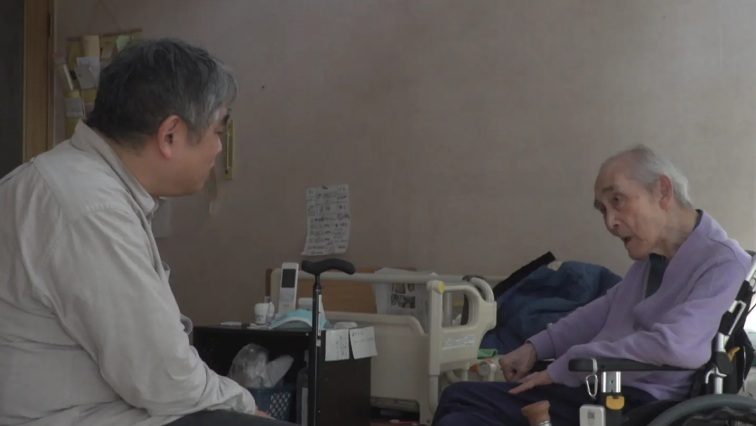
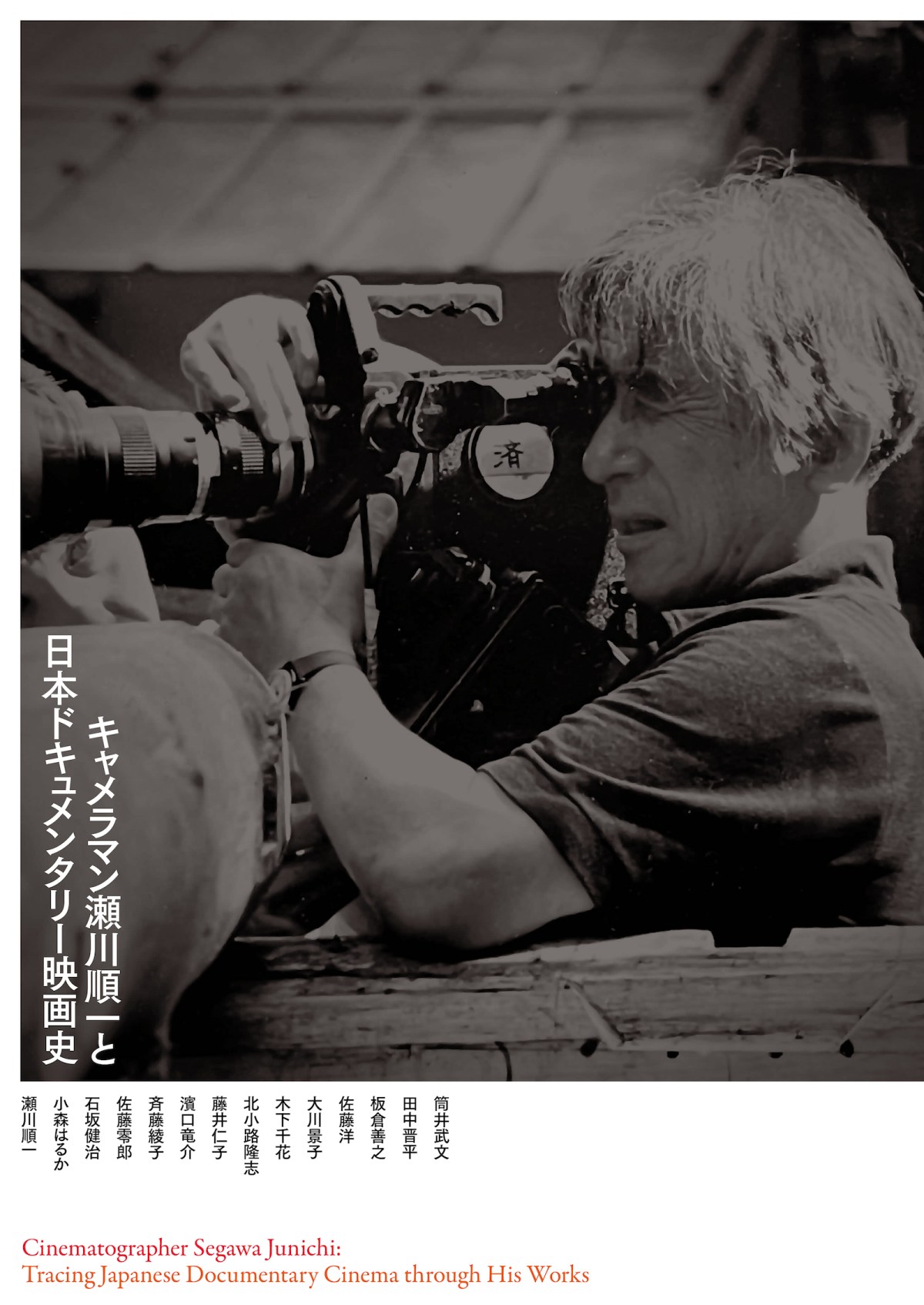
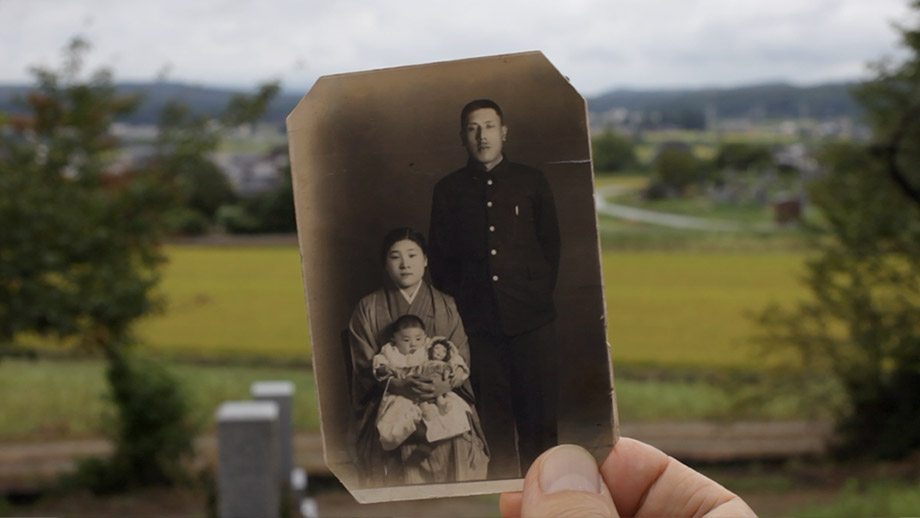
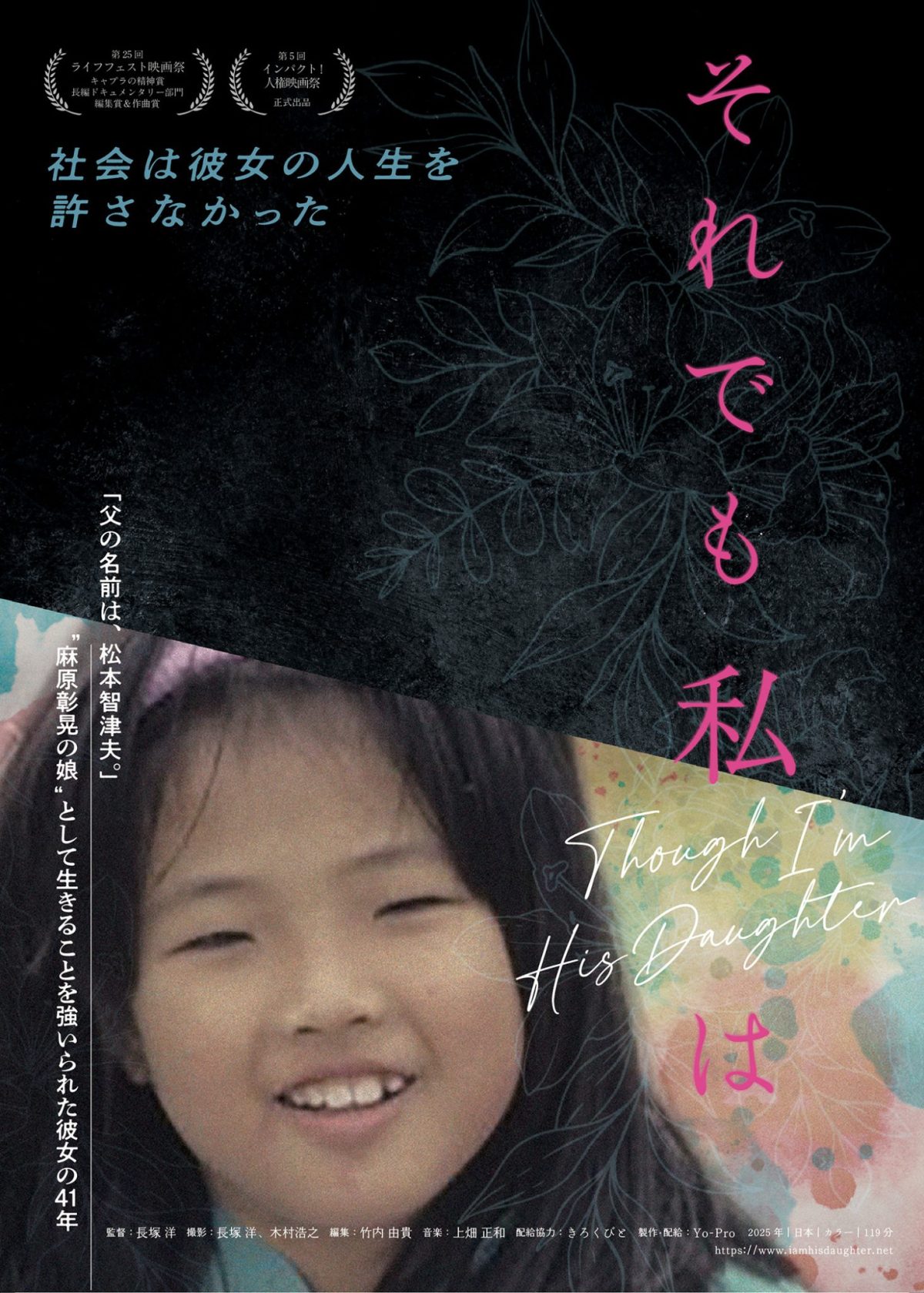
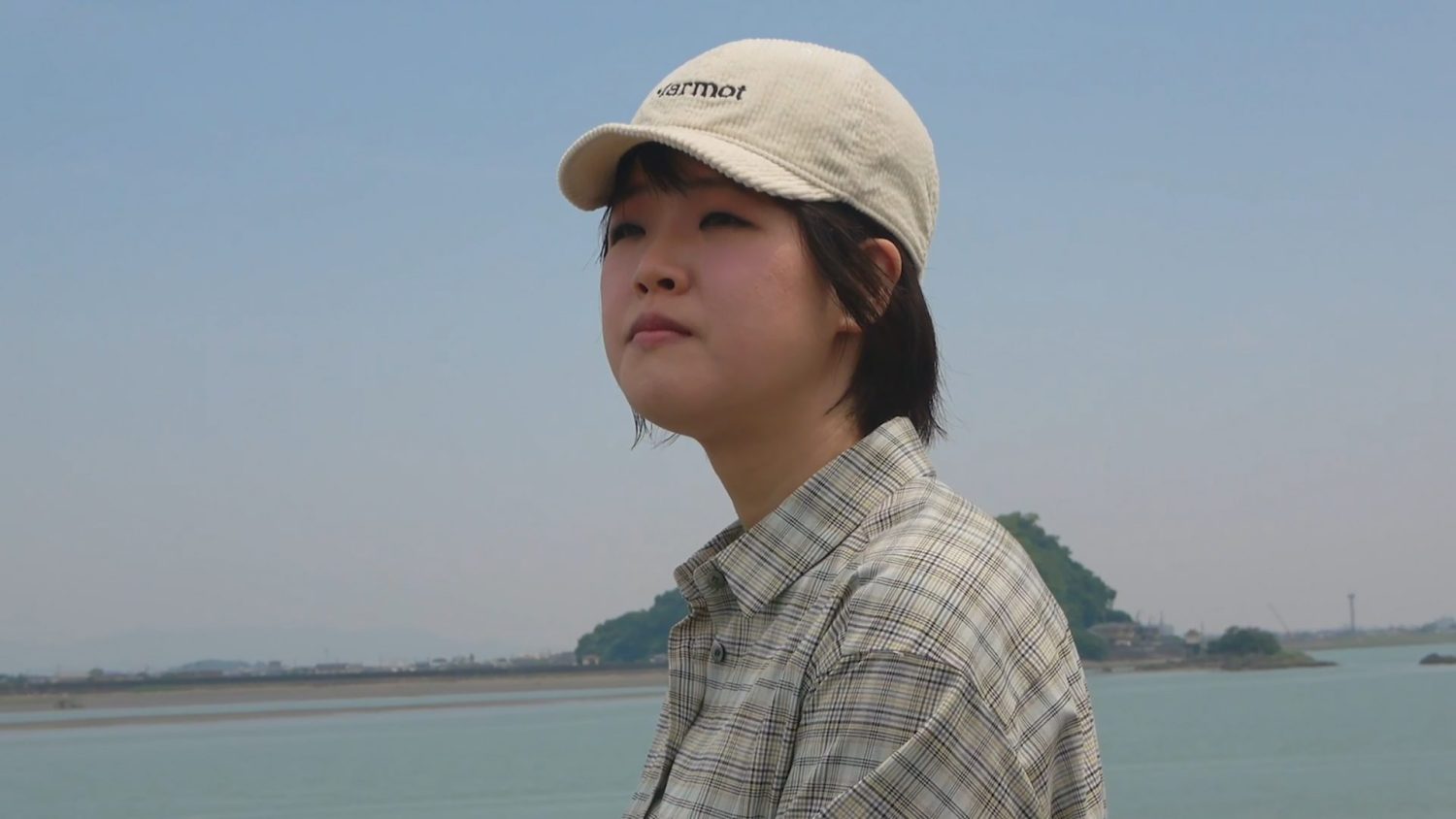
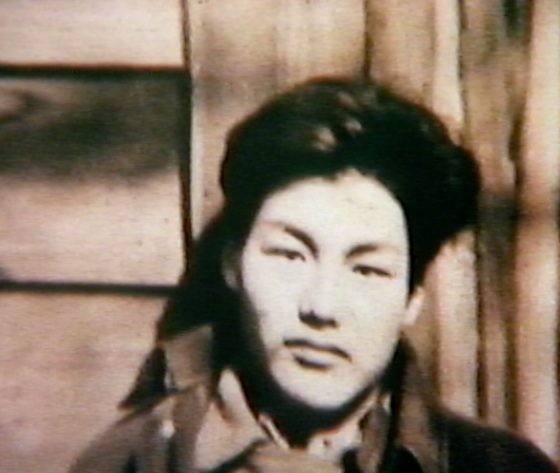

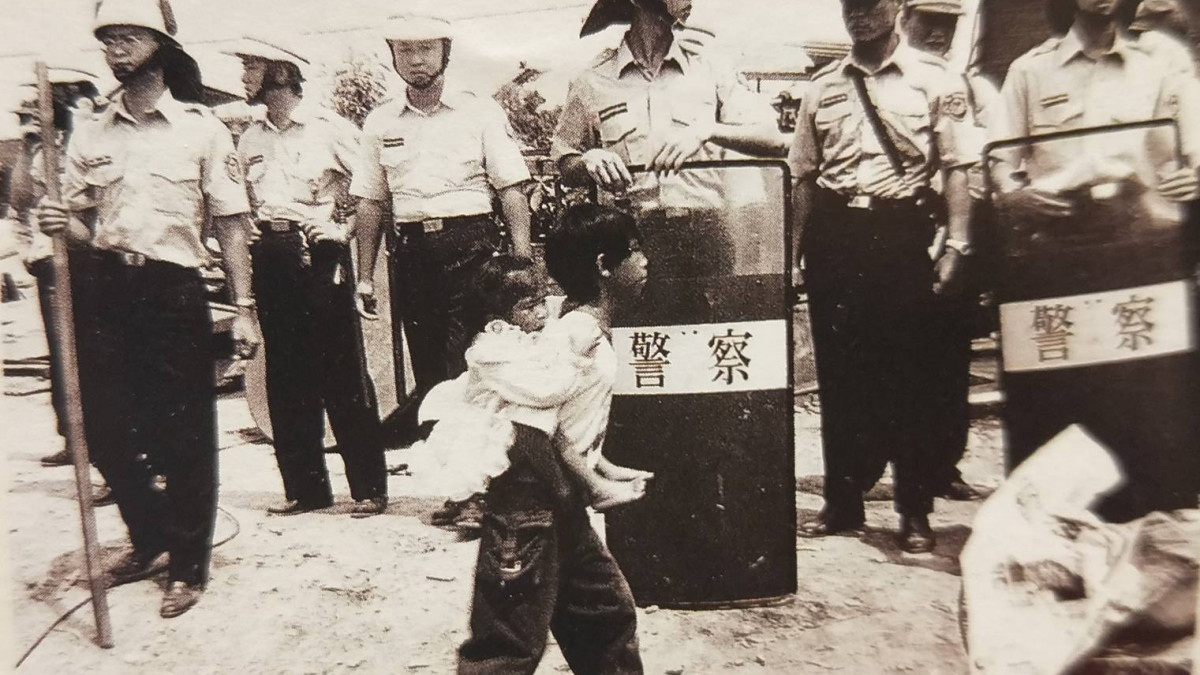


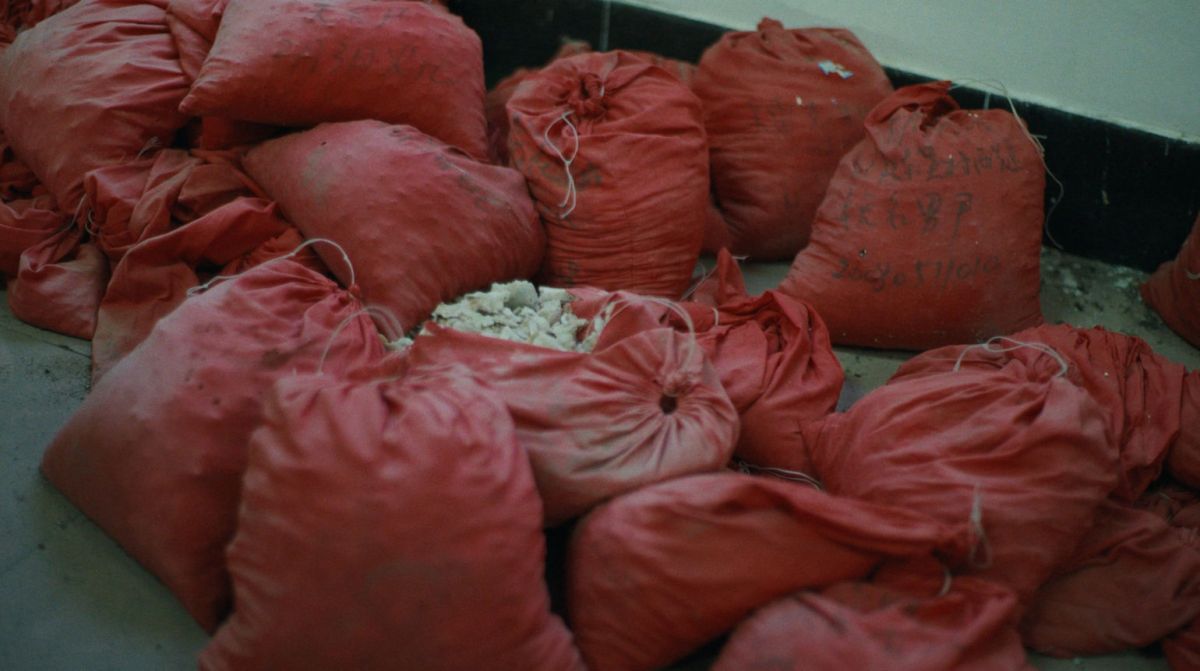
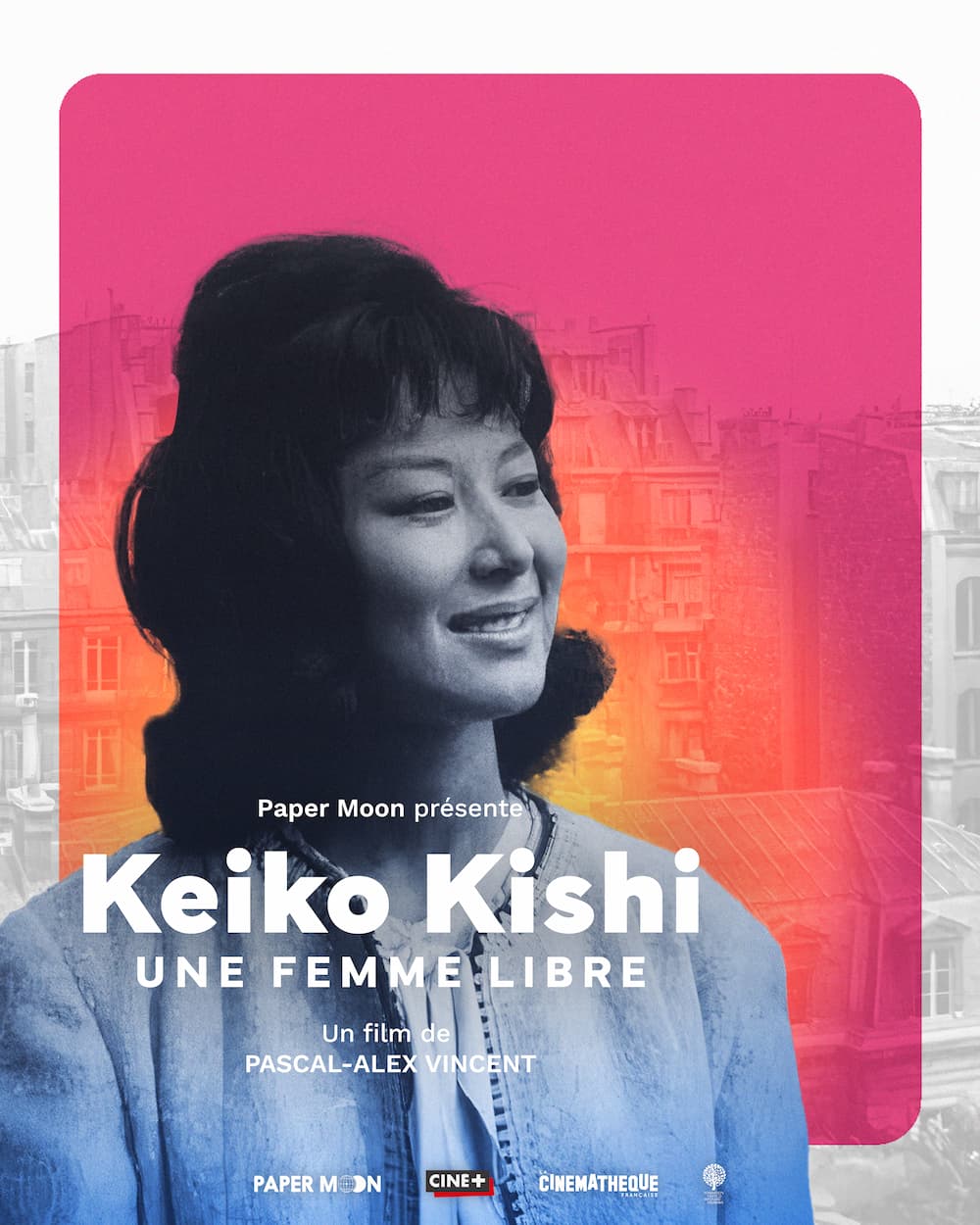


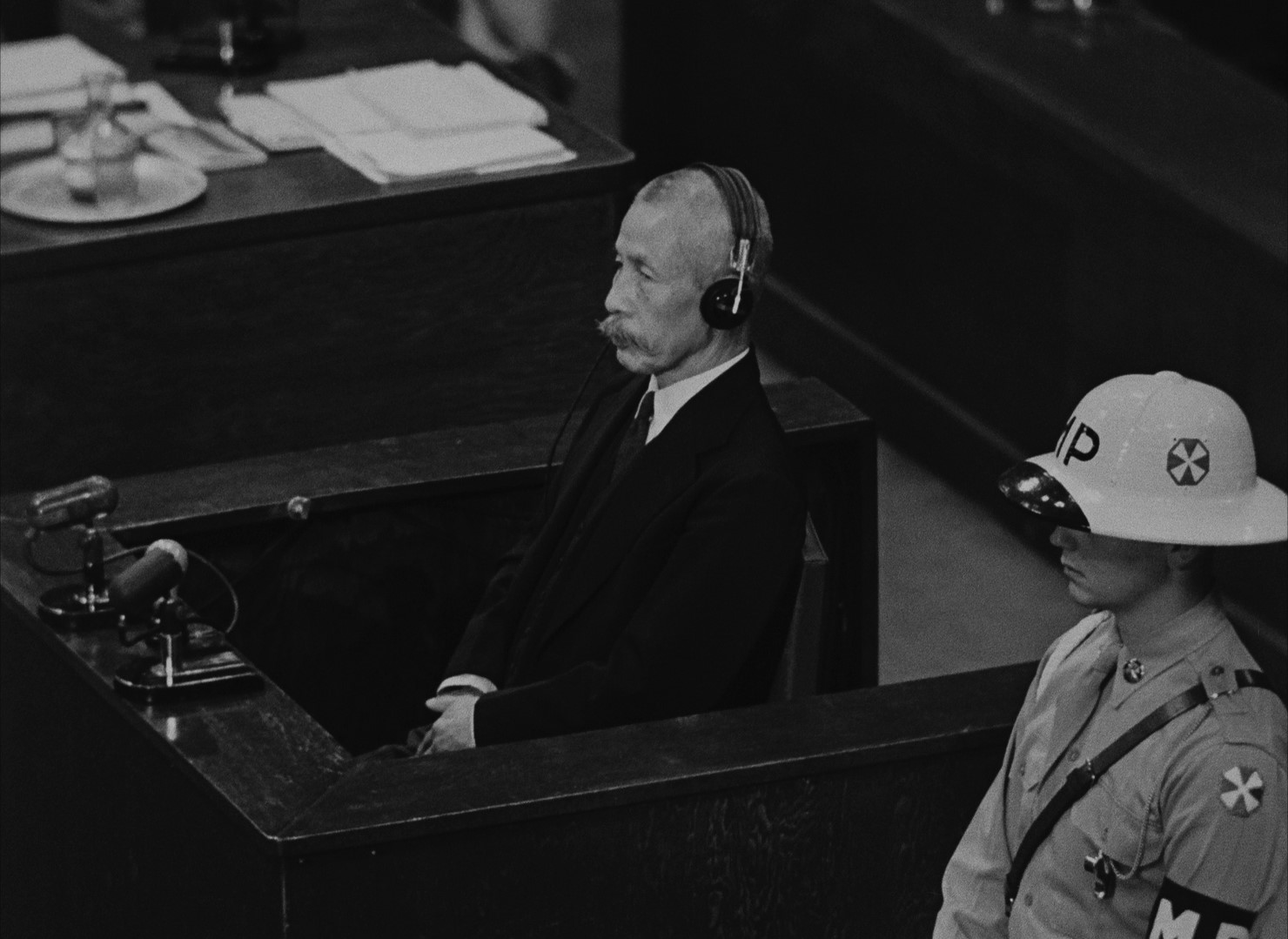


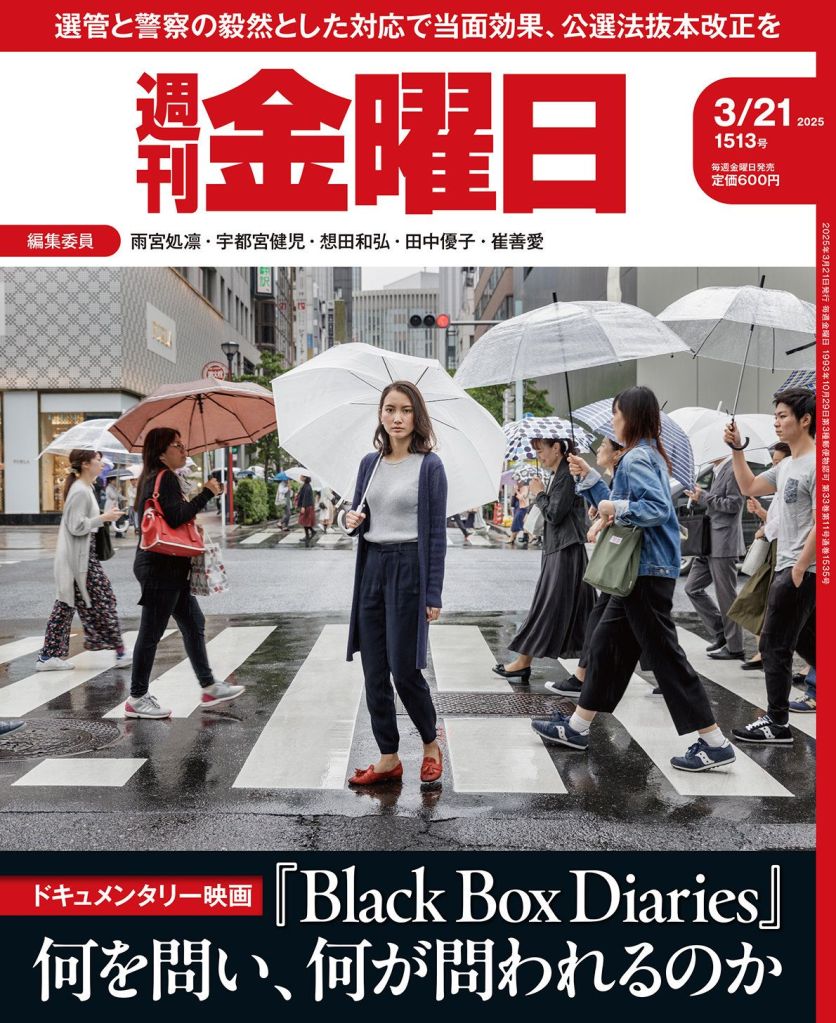
 Asian Docs
You must be logged in to post a comment.