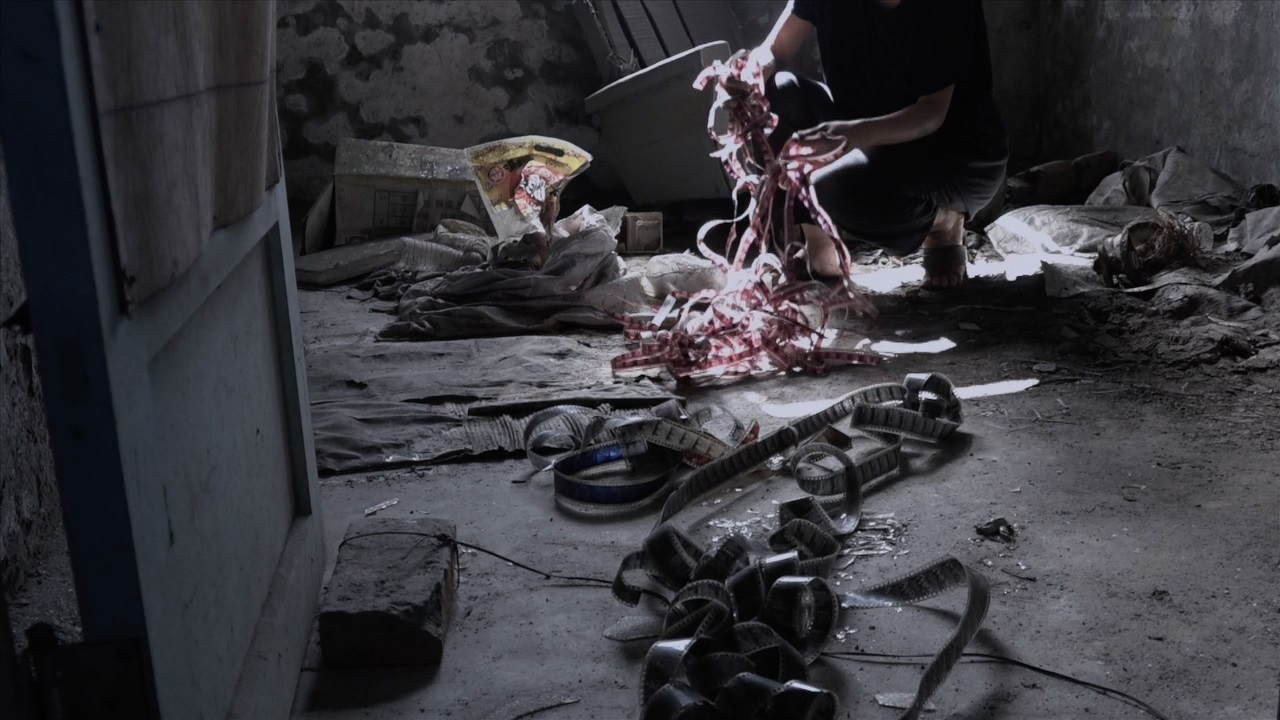
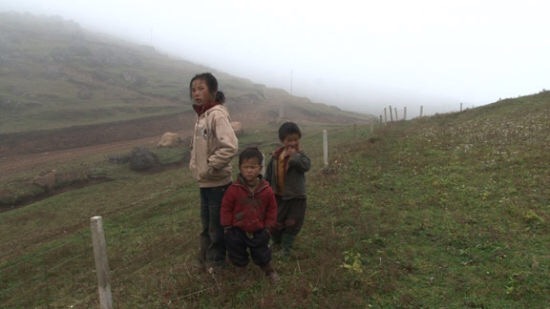
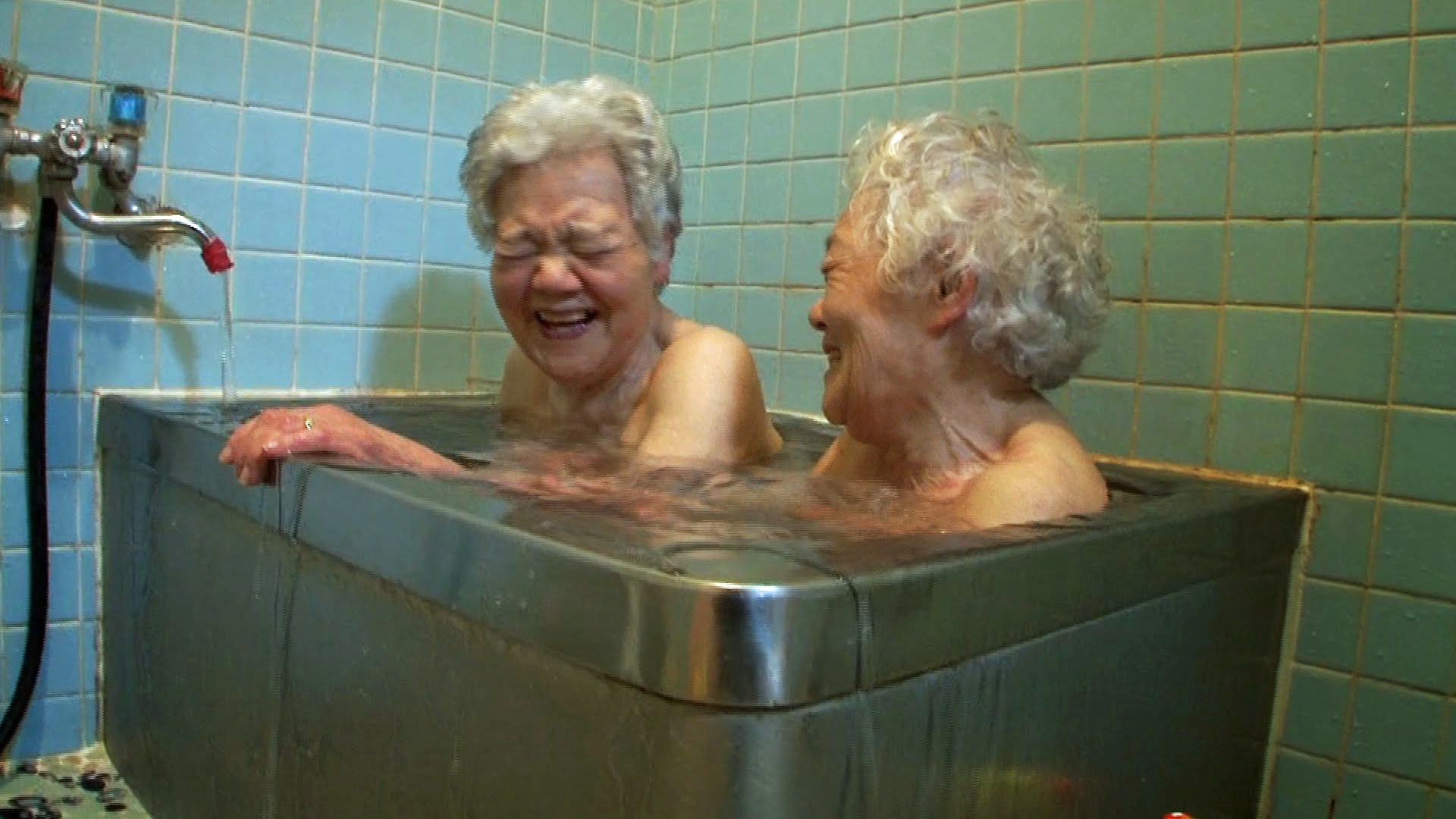
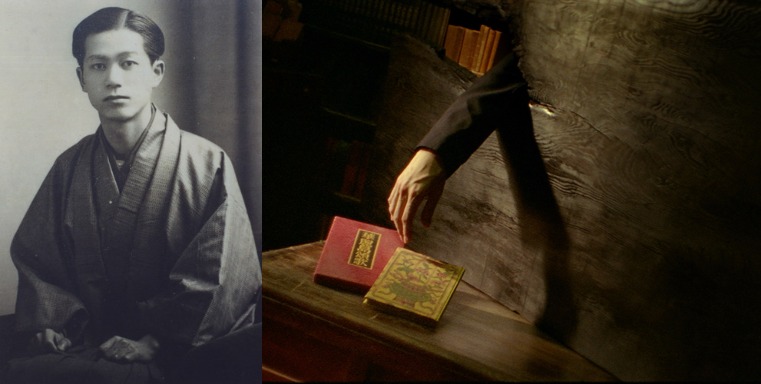
Night and Fog in Zona (Jung Sung-il, 2015)

I’m reposting a slightly edited version of a piece I wrote 8 years ago, an article about Night and Fog in Zona, directed by South Korean film critic, Jung Sung-il.

It’s always fascinating when cinema reflects on cinema, and even more so when a documentary’s subject is director Wang Bing filming one of his movies. Night and Fog in Zona is a documentary, or better yet a cine-essay as it is called by its author: South Korean critic turned director Jeong Sung-il, who follows the renowned Chinese filmmaker throughout a whole winter while working on two of his projects, ‘Til Madness Do Us Part and a sequel to his Three Sisters.

The “coming” of Wang Bing has been, and still is, one of the most important events that occurred in the world of cinema in the last 15 years: not only did he contribute asserting the aesthetic value of digital filmmaking, but with his documentaries he also brought an auroral and liberating gaze upon the world.
Jung Sung-il had the same kind of dawning experience watching West of the Tracks in 2001.

“When I was at the Rotterdam Film Festival I bought a ticket for a movie 9 hours and 10 minutes long, I was surprised by its length but went anyway. It begins with a train in movement and it reminded me of the first movie ever made by the Lumière brothers in 1895. Watching Wang Bing’s work I had the feeling of witnessing the cinema of 21st Century just like the audience in 1895 witnessed its birth.”

There’s no narration in Night and Fog in Zona, everything is explained with intertitles: geographical coordinates, places where Wang Bing is headed to, his plans. Sometimes these intertitles also work as a poetic comment to the following scene.
The only time when Wang speaks directly to the camera is in an interview-like fashion at the very beginning of the film, a sequence that works as a brief introduction to his world and his filmmaking style. A few minutes where, among other things, he talks about his filmmaking process, truth in cinema, the impossibility of conveying the totality, his projects, Chinese history and peasants, and the similar cultural background his generation shares with Andrei Tarkovsky.

In 235 minutes Night and Fog in Zona illuminates a great deal about Wang Bing’s approach to filmmaking. Among other things, we learn about his habit of taking photos of the people he films, his relationship with them, and, most fascinating of all, about his “interview technique”: it’s compelling to see how he is able to seamlessly switch from “chatting with” to “shooting at” his subjects, as if there was no real break between the two actions.
It’s also interesting to witness how “Wang searches for the ‘strategic point’, the single position from which all of the actions in the scene can be recorded”. This is a fundamental feature of his filmmaking, as the relationship between the camera and the people and things around it determines both the movie’s sense of space and how space itself is conveyed in his works. And space, together with time/duration, is one of the most crucial elements of his cinema.
Another revelation of Night and Fog in Zona is to discover how Wang Bing is a director whose involvement with the subjects of his movies is deeper than we might think from just watching his works: when the camera is off, he’s often seen giving practical help and advices to his “protagonists”.

Particularly fascinating, from a movie making point of view, is a scene where the director and his two collaborators have an evening meeting to watch the footage shot during the day at the Asylum — footage that would eventually become ‘Til Madness Do Us Part. A few but meaningful minutes where he explains the reasons behind his use of long takes, why avoiding telephoto lens, and other rules to follow while shooting, so that the final work can gain a certain consistency, a certain style.
However, the best quality of Night and Fog in Zona is that it’s not only a documentary about Wang Bing shooting his movies, but it’s also shot and conceived — with all the due differences – just like one of Wang’s documentaries. In terms of style, it mirrors Wang Bing’s filmmaking: long takes, no narration, abstract landscapes and experimental music, everything put together to explore his filmmaking and, in a broader sense, contemporary China, a country gazed upon, as in most of Wang Bing’s works themselves, from a peripheral and rural point of view.
One of the best examples of this mirroring process is to be found towards the beginning of the film, when the Chinese director and his collaborators move to the Yunnan province.

A very long sequence shot from the car everyone is on, that shows us streets, mountains, plains, lights and tunnels almost melting together. A scene almost 10 minute long, matched with a hypnotic and minimalistic music interacting with the abstract landscape captured by the camera.
We encounter these sort of sequences a couple of times during the movie: another powerful one, shown in slow motion, is inside the asylum. Bing is sleeping and ten or so patients are sitting and moving around him. What gives Night and Fog in Zona a further experimental and even meta-filmic touch are two scenes, placed at the beginning and at the end of the movie, that show a Korean girl dressed in red sitting in a theater and making a phone call.
The only flaws to be found in this documentary, an otherwise almost perfect work, are some editing choices, in some cases too abrupt, and the pace of the intertitles, definitely too fast. But that’s just splitting hairs, Night and Fog in Zona is definitely one of the best non-fiction movies seen this year, not only for its fascinating subject, but also for its ability to resonate with Wang Bing’s own style at a deep and aesthetic level.

Image Forum Festival 2022: Silver Cave, Humoresque, A Short Story, and The Cleaning Lady After 100 Years: Spectre.

Yesterday I had the chance to attend one of the programs of this year Image Forum Festival, in Nagoya. Every year the event is held first in Tokyo, and later in the year, in a scale-down format, in other cities in Japan: Yokohama, Kyoto, and Nagoya.

In the past decade I went to the festival in Tokyo a couple of times, once in Kyoto if I remember correctly, and recently just in Nagoya, since it’s for me, a closer location. The event is dedicated mainly to experimental cinema and video, produced all over the world, with a particular attention of what is going on in Japan and Asia. The festival has been for me a source of wonderful discoveries, here I wrote about the 2018’s edition, here about Stop-Motion Slow-Motion, and here about Heliography by Yamazaki Hiroshi. Unfortunately this year I could just see a tiny fraction of what I planned and wanted to, just four works of the East Asian Experimental Film Competition.

Silver Cave

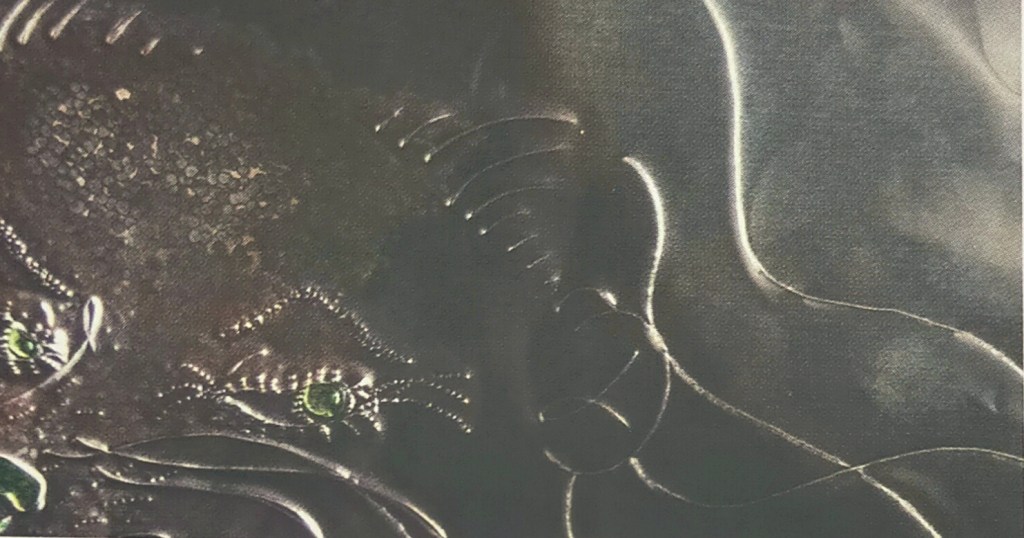
Silver Cave (2022) by Cai Caibei is an interesting piece that plays with surfaces, and the flat metallic substance that animates and “moves” for most of the work. For its focus on abstractions, rhythm, and its quasi meta-filmic quality, it reminded me of the works of some pioneer animators of the beginning of last century, such as Walter Ruttmann. Silver Cave won the Award for Excellence at the festival.

A Short Story

Filmmaker and artist Bi Gan’s latest work, A Short Story (2022) tells about a black cat that embarks on a bizarre journey to meet three curious characters. Presented in the short competition at Cannes last spring, the work is populated with dream-like images, visual inventiveness, and poetry, but I could not really connect with it.

ユーモレスクHumoresque

I was really looking forward to checking ユーモレスク Humoresque (2022) by Isobe Shinya, who in 2020 made 13, one of my favourite films of that year. I had already read that this work was something very different from what he had done before, Humoresque is 46 minutes long and was shot digitally, so I was somehow prepared. As the description in the official catalog reports the work is

an abrupt turn from “13”, this film employs the technique of home movies to tell the story of the lives of a mother and child across four seasons. Day after day, water drawn from a lake is filtered and bartered for food. One day, a man visits with a portable gramophone. The song it plays is Dvorak’s “Humoresque.” What does he think about this music?

and according to Isobe

I created a fictional world by converting and extending home movie shooting as a filmmaking technique. Many of the scenes in the film were inspired by their real-life counterparts. The small story in front of us, the big story far away, and the story that is no longer here. This film is an attempt to assimilate them in fiction and reality.

Some images are really mesmerising, the way sound is used is remarkable, and while very different from the time-lapse experiments Isobe is known for, Humoresque is still a movie about time, the thickness of it, and the passage of it. That being said, I definitely need to watch it again to give it a proper assessment. Humoresque was awarded the Grand Prize at the festival.

The Cleaning Lady After 100 Years: Spectre

The Cleaning Lady After 100 Years: Spectre (Shichiri Kei, 2022) is a reimagining of the filmmaker’s own multimedia stage drama The Cleaning Lady, where the ghost of her mother appears to an old woman. This was probably the most powerful work among the four I saw, in a completely digitised world the human presence is not even a memory, even the words uttered are just part of the cacophonous soundscape presented in the film. No straightforward meanings emerge from the work, but images and sounds slowly and aggressively point towards and put the viewer through a sensorial and exhilarating experience. The film loses part of this power towards the end when the spoken words try to enunciate philosophical ideas.

Leafing through the catalogue made me realised how many interesting and possibly wonderful works I missed: a retrospective on contemporary Chinese independent cinema, Qingnian Express: New Voices and Visions of Chinese Independent Cinema Today (curated by Tong Shan and Ma Ran), TUNOHAZU, the latest by Tezka Macoto, a retrospective on artist and graphic designer Tanaami Keiichi, and much more.

Interview with Hamaguchi Ryūsuke

At the end of last February, I had the pleasure of interviewing Hamaguchi Ryūsuke about his Wheel of Fortune and Fantasy, a movie that would debut at the Berlinale. The short interview was conducted on zoom and it was published in the Italian newspaper I usually write for, Il Manifesto.

In recent months, with the release and success of Drive My Car, many long and more in-depth interview with the Japanese director have been published around the world, but I decided nonetheless to translate my interview in English and post it here on the blog (even if it’s not really related to documentary). As said, the conversation was about Wheel of Fortune and Fantasy and before the release of Drive My Car. In recent months, with the release and success of Drive My Car, many long and more in-depth interview with the Japanese director have been published around the world, but I decided nonetheless to translate my interview in English and post it here on the blog (even if it’s not really related to documentary). As said, the conversation was about Wheel of Fortune and Fantasy and before the release of Drive My Car.

Interview with Hamaguchi Ryūsuke (February 27th, 2021)

Although you had already made short and medium length films in the past, this is the first time you have tackled the anthology film format, could you tell us more about this choice?

A few years ago, I made the medium length film Heaven Is Still Far Away, a project also born out of a collaboration with actresses and actors that for me worked partly as a sort of review of Happy Hour, and partly as preparation for my next film, Asako I & II. This experience was also very useful to me because I was able to find my own rhythm, so to speak, in alternating feature films and short or medium length films, something that I think I will continue to do in the future. However, one of the problems with short films is not having a real exhibition outlet, that is, it is very difficult to find a proper distribution for these kinds of works. The solution I tried this time was to combine three shorts into an anthology, making them into a feature film that thus could be distributed. 

Compared to feature films, do you think the format you worked on this time opens up different expressive possibilities?

Of course. All works, whether long or short, must have an end, a point at which they stop and leave the viewer with a strong feeling of having seen a world. Having said that, short films have the possibility, in my opinion, to leave a more intense and vivid impression as they only offer a brief glimpse into a certain world. A shorter film can also show something rare, events whose existence is not certain, leaving everything in suspense and without going too deep into it.

In each of the three episodes that make up the film there are at least three scenes of strong aesthetic and emotional impact. In Magic (or Something Less Assuring), the first episode, the long initial part with the two women in a taxi, in Door Wide Open the scene where the female protagonist visits the professor and in the last episode, Once Again, the final part with the two women embracing. Each of these scenes uses very different acting styles, yet there are parts in them where the characters, within the narrative, are acting, and where the boundary between what is real in the story and what is acted is ambiguous and fluid. Could you tell us how you worked with the actors to create this ambiguous feeling?

I wanted to create this ambiguity, but I also tried to create a clear sense of ambiguity, so to speak. That is, I wanted to create something defined, but something that can be interpreted in different ways. The fascinating thing for me is that the act of acting itself is ambiguous, and in the three scenes you mentioned, the actresses themselves in the midst of their performances must surely have noticed the ambiguity of the question “what is real?”. One strategy I used to create this ambiguity was, first of all, to write it into the scenes themselves, by inserting the act of acting into the narrative. I could not ask the actors to emphasise the fact that they were acting, it was rather a matter of achieving a very light and thin performance that, as in the case of the two women in the taxi, could later be read differently in the continuation of the story, when more information is revealed to us. In addition, it is important that there is something hidden in the performance, as happens for example in the second episode where even the main character, Nao, realises that she does not know exactly why she is doing what she is doing, thus generating a sense of displacement in the scene.

The third episode is set in a world where a computer virus has made the internet unusable. Could you tell us more about the reasons for this choice?

I shot the first two segments in 2019 and the last one in 2020. I originally planned to shoot it in spring, but the pandemic disrupted all the plans and we ended up shooting it in summer. The script was already completed, but an event as big as the pandemic made me tweak it. I couldn’t avoid taking into account the effect the Corona virus had on all of us, so I decided to set it in a kind of parallel world where the internet is no longer usable, a world disrupted by a different kind of calamity. 

One last question about the situation of independent cinemas (mini-theaters) in Japan at the time of the pandemic, a culture that is very close to your heart and for which you are fighting with various initiatives, such as Mini-Theater Aid (crowdfunding that helped these small cinemas survive last year and that is still active with various support initiatives). What is your relationship with these independent theatres?

For me, they have been an important place to discover films that are completely different from the Hollywood films or TV series I was used to, films that were “boring” compared to the ones I used to see.  Seeing these “boring” films in the space of these small independent theatres, I discovered a new kind of feeling, my body changed and I learned to appreciate a different kind of cinema. Now my films are shown here in Japan, mainly in these independent theatres, and I am in contact with all the people working there, it is for these reasons that I have been actively participating and supporting projects like Mini-Theater Aid.

Slow Motion, Stop Motion スローモーション、ストップモーション (Kurihara Mie, 2018)

Slow Motion, Stop Motion スローモーション、ストップモーション by Kurihara Mie was awarded with the Grand Prize and the Audience Award at the 32nd edition of the Image Forum Festival. Shot in Laos, Myanmar and Thailand in the course of 4 years, as far as I know the director usually stays in the regions for at least a couple of months a year, the movie is a funny and poetic telling, through the mode of the personal documentary, of her experiences and encounters in those countries. On the surface thus Slow Motion, Stop Motion is a diary film and a record of her meetings and interactions with the people she meets and befriends, but on a different level it’s also a glimpse into their life and daily struggle to survive. Avoiding shots of turistic places, beautiful postcard-like landscapes, and disengaging completely from a moralistic and exploitative use of the poorest areas of the countries, the film excels in creating a vivid and vital potrait of the people Kurihara meets. The images captured by the Japanese, but often she gives the camera to children and other people to freely film whatever and however they want, feel thus very authentic. Moreover the home movie-quality that permeates the entire work is functional to what seems to be one of Kurihara goals, that is capturing glances of ordinary life in South East Asia.

An important element of the film is the narration. Done by Kurihara herself it’s infused with a dry sense of humor, the words spoke n not only are funny and represent a commentary a posteriori on what is depicted on screen, but they often reflect and indirectly criticize the act of filming itself and the fetishism towards technology that visual artists very often succumb to. In one of the funniest parts, the director buys a cheap version of a Go-pro and tries to film underwater scenes and pigeons, there were no seagulls on the beach, like in the beloved Leviathan by Lucien Castaing-Taylor and Verena Paravel.

The humorous parts are intertwined with few poetic and melancholic scenes, when Kurihara reflects on the sad mood that permeated the day of her departure for instance, or in a long scene without comment or narration, almost ethnographic in style, where an old man kills, plucks, cleans and cooks a rooster for his family.

The film has neither the stylish and polished aesthetics so in demand in the current international festival circuit, nor the political and activist approach that often drives people to documentaries. I really hope that despite the lack of these qualities the movie won’t fall under the radar, because as a hybrid experiment that uses the diary and personal documentary style as a point of departure, it subtly touches very crucial themes such as post-colonial representation and representation of marginal areas in contemporary visual culture.

Best documentaries of 2017

Although I saw fewer documentaries released in 2017 than I wanted, this was for me the year of the box-set (Wiseman, Rouch, etc.), there were a couple that really impacted and resonated with me for long time, and others that, for various reasons, I’ve thoroughly enjoyed discovering.
It might sound tautological, but it is always better to clarify: this is the list of my favourite non-fiction movies, thus it reflects my taste in documentary and it’s very partial.

Outstanding works:

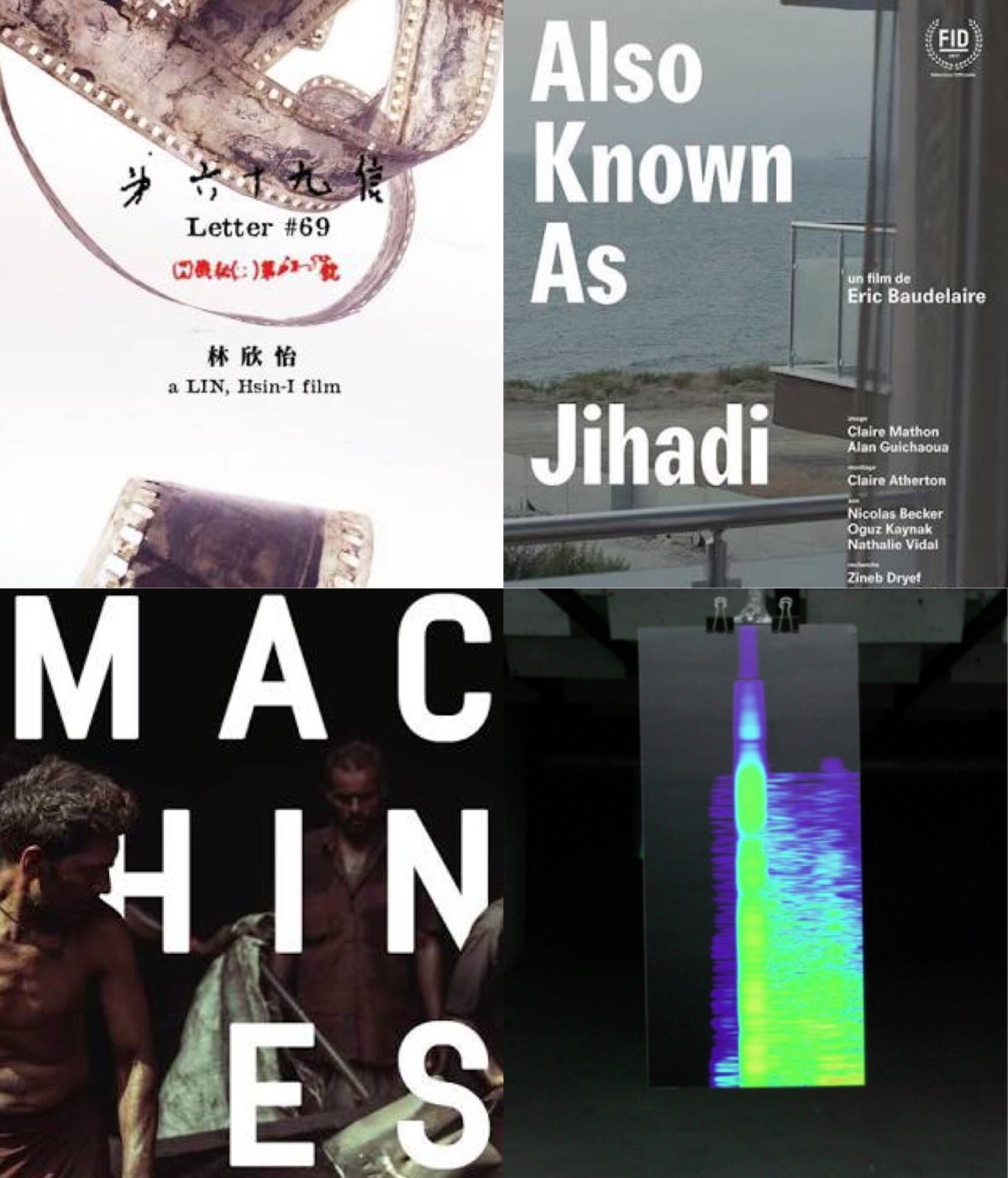
Also Know as Jihadi (Eric Baudelaire)
An homage to and partially a remake of Adachi Masao’s A.K.A. Serial Killer. Baudelaire’s finest work to date.

Letter #69 (Lin Hsin-i)
My fascination with the works of this young Taiwanese artist continues. read more

Machines (Rahul Jain)
You can read my review here

Rubber Costed Steel (Lawrence Abu Hamdan)
Short but powerful, thematically and aesthetically.

Honorable mentions:

Sennan Asbestos Disaster (Hara Kazuo)
Hara is back after more than 10 years with a work about the legal battle between the Citizen Group for Sennan Asbestos Damage and the Japanese government.

Ex-Libris: New York Public Library (Frederick Wiseman)
Not my favourite by the American legendary director, but Wiseman is Wiseman.

Donkeyote (Chico Pereira)

A Yangtze Landscape (Xu Xin)

Dislocation Blues (Sky Hopinka)

Turtle Rock (Xiao Xiao)
A soothing and beautifully shot documentary set in a remote village in China, the black and white photography reminded me of Lav Diaz.

Special (re)discoveries:

The Mad Masters (Jean Rouch, 1955)
Whatever it is, docufiction, ethnofiction, problematic documentary or theatrical exploitation, it’s a powerful and raw punch. Masterpiece.

Homeland: Iraq Year Zero (Abbas Fahdel, 2015)
Probably the best documentary I’ve seen in 2017.

A House in Ninh Hoa (Nguyễn Phương-Đan &. Philip Widmann, 2016)
You can read my review and interview with the director here.

Beirut Never More (Jocelyne Saab, 1976)
Jocelyne Saab was one of my cinematic discoveries of the year.

Yamagata International Documentary Film Festival 2017

The Yamagata International Documentary Film Festival, one of the most awaited film-related events of the Japanese archipelago, will kick off its fifteenth edition next week on October 5th. For eight days the city of Yamagata will be the capital of documentary cinema, hosting not only an international competition with movies from all over the globe, but also a plethora of  more or less known documentaries presented in other sections, special screenings and retrospectives. For the cinephiles and the film lovers visiting the northern Japanese city, the festival will be an occasion to discover hidden gems of historical importance and an unmissable chance to meet directors, scholars and documentary-obsessed people.
Festival opens on the 5th with a special screening commemorating the passing of Matsumoto Toshio, one of the true giants of Japanese cinema. Two of his best known documentaries, Nishijin (1961) and Ginrin / Bicycle in Dreams (1955) will be presented for the occasion in their original format (35mm), while For My Crushed Right Eye (1968) will be screened as it was originally conceived, that is in 16mm and with 3 projectors. Funeral Parade of Roses (1969) and other experimental works made by Matsumoto during the 1970s and 1980s will also be shown during the festival, including one of my favourite, Atman (1975), a kaleidoscopic trip to the philosophical source of movement and image.
Among the titles presented in the International Competition a must-see for me is Ex Libris—The New York Public Library, the latest work by Frederick Wiseman, but I’m also looking forward to I Am Not Your Negro by Raoul Peck and the long-awaited new work by Hara Kazuo, Sennan Asbestos Disaster, the first feature documentary the director of The Emperor’s Naked Army Marches On made in more than a decade. The movie follows the victims who suffered asbestos-related damages in the city of Sennan in Osaka, during their eight years fight for compensation.
Also in competition the beautiful Machines by Rahul Jain (I wrote about it here), Donkeyote, a subtle reflection on dreams and hopes through the eyes of a donkey and its ageing owner, directed by Chico Pereira, and Another Year by Zhu Shengze, a movie that has received much praise in the international festival circuit. Wake (Subic) by John Gianvito, about the pollution afflicting the residents of a former US naval base in Luzon Island, the Philippines, looks interesting and so does Tremoring of Hope, the difficult recovery of the people of Hadenya in Miyagi, six years after the Great East Japan Earthquake.
Here the complete line-up.
A promising section that will probably sparkle heated post-screening debates is Politics and Film: Palestine and Lebanon 70s–80s, a selection of films made in Palestine and Lebanon during the Lebanon civil war (1975-1990) and in recent years, movies that show and reflect on the struggles and politics of the area. Among them the (in)famous Red Army / PFLP: Declaration of World War, filmed by Wakamatsu Koji and Adachi Masao in 1971, and Genet in Shatila (1999), about the French writer and his relation with the Palestinian revolution as he witnessed the aftermath of the Shatila’s massacre in September of 1982.

Introducing Asian documentary filmmakers, New Asian Currents is usually one of my favorite section for its scope and the variety of films shown, this year 21 works from the continent will be presented, giving us a glimpse of the life, difficulties and struggles the people inhabiting the huge and diversified area have to cope with in their daily life. A Yangtze Landscape by Xu Xin is an interesting movie (more here) that deserves to be seen on the big screen, exploring the geographical and social landscape surrounding the Yangtze River in its long course of more than thousands kilometers. While the works of Yamashiro Chikako are a rare example, rare in Japan at least, of how to tackle a series of thorny historical issues, Okinawa and its relation with mainland Japan and with its past, merging documentary with the experimental.
Here the section’s complete line-up.
I’m ashamed to admit, but I know almost nothing of African documentary. Africa Views will thus be my entrance gate to it, “a program that introduces over 20 films created since the year 2000—with a particular focus on the Sub-Saharan region—depicting a contemporary Africa that lets off a considerable racket as it creaks toward progress, and introducing us to the people who live there.” What caught my attention in Perspective Japan are the new films by Murakami Kenji and Onishi Kenji, two short experiments in 8mm whose screening promises to be, like two years ago, a real cinema-event.
The Festival will also hold a retrospective on Fredi M. Murer, a Swiss director that the program describes as “a leader of the internationally-acclaimed Swiss Nouveau Cinema movement that was active from the late 1960s through the 1980s, together with Daniel Schmid and Alain Tanner. (…) Depending on the period in which they were made, Murer’s works may be classified variously as experimental film, documentary, or narrative film.” The retrospective that interest me the most though is Ten Trips Around the Sun: Sato Makoto’s Documentary Horizon Today, a tribute to Sato Makoto on the 10th anniversary of his death, that will include screenings of his major works accompanied by discussions and panels.

North Korean missiles permitting, I’ll be in Yamagata from October 6 to 11, and, as I did two years ago, I will try to keep a diary of my viewings experiences, here or more likely on my Twitter account.

P.S. I’ve also created a list on Letterboxd with most of the movies that will be in Yamagata.

This slideshow requires JavaScript.

My favourite documentaries of 2016

2016 has been a busy year and unfortunately, and for various reasons (one of them being the place where I live, Japan), I haven’t had the chance to see as many new documentaries as I wanted to. On the other hand though, having had access to many documentaries produced in Taiwan through Taiwan Docs, for a couple of months I binge-watched the non-fiction movies produced in the island in 2016 (and 2015), and it was a revelation. Not only it allowed me to discover and explore the complex sociopolitical situation of the area and its recent history, but luckily I also stumbled upon a couple of formally challenging films.

That being said, I can’t really miss what recently has become a sort of yearly custom, so here is my list of the best documentaries I’ve seen in 2016, some of them are from 2015, but released internationally, or at least in Japan, only this year. At the end I’ve also compiled a short list of the best (re)discoveries of 2016. (disclaimer: best should here be understood as “favourite” of course)

8. Quemoy (Chiu Yu-nan)

quemoy_doc

“Quemoy, the islands adjacent to Mainland, used to be the frontier between Taiwan and China. However, it opens its border for the cross-strait exchanges. The film shows traces of Quemoy people in different generations and builds up a picture of complicated national identity in the boundary island.”
A relatively short movie (just 45′) whose main appealing point is its depiction of the complex geopolitical situation of the area.

7. Into the Inferno  (Werner Herzog)
6. Lo and Behold, Reveries of the Connected World (Werner Herzog)

“This boiling mass is just monumentally indifferent to scurrying roaches, retarded reptiles and vapid humans alike.”
Both movies are pure Herzog, for better or for worse, I personally adore the man, but the risk the great German director is running in his recent documentaries – especially now in an era when the social media is so pervasive and his persona in the mediascape is sort of overexposed – is that of becoming prisoner of the image forged in almost 50 years of incredible career.
Be that as it may, if you like Herzog, these two documentaries released in 2016 are very enjoyable, Lo and Behold is a better work in my opinion, or at least more appealing to me, and not necessarily for its subject, more for its rhythm and editing. Into the Inferno in some points wanders a bit too much, the segment set in North Korea for instance, albeit fascinating for the unique insights on the country, felt too much like a long digression.

5. Further Beyond

An interesting experiment in meta-documentary and a non banal reflection of what identity and its construction through images and storytelling is. The movie is maybe a bit excessive in its meandering here and there, but 
some passages are pure digital beauty.

4. A Room of Her Own: Rei Naito and Light (Yuko Nakamura)

a_room_of_her_own_rei_naito

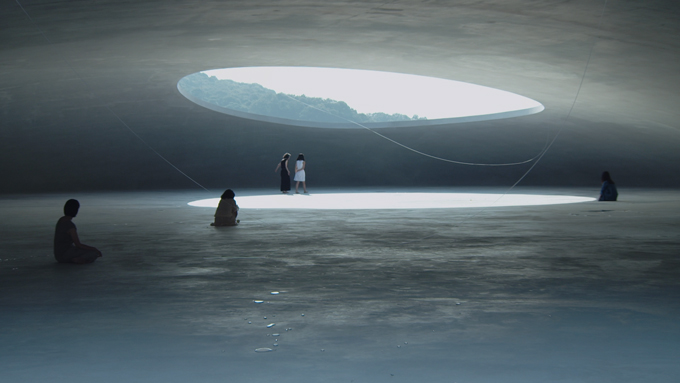
Graced by outstanding sound design and soundtrack, the movie captures and beautifully embodies the sense of fragility and ephemerality of life seen through the art of Naito Rei. But A Room of her Own is interesting on many other different levels, partly experiment in non-fiction, partly personal documentary – what brought Nakamura to approach Naito was the severe illness of her mother – and partly a work that explores the intangibility of life, the movie is a very refreshing work of non-fiction, especially when considered in the context of Japanese contemporary documentary. I wish the last part, when four women are gathered on Teshima island, would have been longer. 
One last note on the photography, in tone with the themes explored by the movie, is really one of the most accomplished aspects of it.

3. 15 Corners of the World (Zuzanna Solakiewicz)

15_corners_of_the_world

I cheated, I know it’s a movie from 2014, but I watched it this year and it made a big impression on me, so I decided to include it in my list anyway.
15 Corners of the World is a mesmerizing and hypnotic documentary about the Polish electronic-music pioneer Eugeniusz Rudnik and, more importantly, about the visualisazion of sound and its materiality. An incredible visual and auditory experience.

2. Forgetting Vietnam

forgetting_vietnam

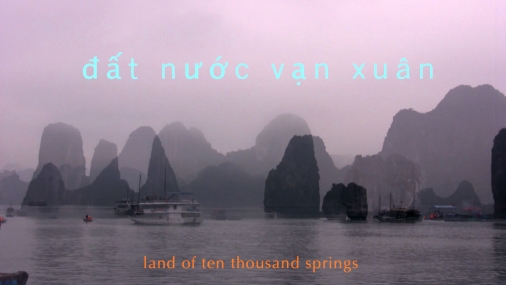
The latest visual work from Trinh Minh-ha, I’ve written more about the movie here.

1. 3 Island (Lin Hsin-i)

img_2531

A work that creates a complex and experimental mapping of three distinct geographical Asian areas, interweaving poetry, abstract imagining, historical data and archival footage. If you want, you can read more here.


(re)discoveries (in no particular order)


Asia is One (NDU), read more here.

On the Road: A Document (Tsuchimoto Noriaki, 1964), read more here.

Hospital ( Frederick Wiseman, 1970)

Broadway by Light (William Klein, 19589

The Festival Pan-African of Algiers (William Klein, 1969)

Documentary in East and Southeast Asia, a list/database

Few months have passed since I’ve launched here on the blog, a project to create a list of the most significant East and Southeast documentaries, and, as I expected, the submissions did not come in big numbers — after all “documentary” and “East and Southeast Asia” are terms still part of a niche in the discourse about cinema around the world — but the quality of their content was very high. I think it’s about the right time to publish the list and have it circulated around the web.

The idea was to compile a list of the most significant and important works of non-fiction made in East and Southeast Asia, a database that could function as a guide for cinephiles and anybody else interested in documentary, but also as a sort of cartography to discover and explore non-fiction cinema, and its history and development in the region.
Cinema arrived at varying times in different areas of the continent, thus evolving in completely diverse ways, and this is even more true when considering documentary, a minority mode of cinema whose limits and definitions have been hazy and shifting since the dawn of the seventh art. Moreover, because many countries in the region have experienced, and tragically are still experiencing, colonization and dictatorship, in most of the area documentary was for a long period associated to propaganda, and it’s only in the last decades, with the impact of political change and the liberating advent of new and affordable technologies, that non-fiction cinema was able to free itself, rise and gain its status as a mode of free-expression and art, although unfortunately not yet in every country. For these reasons some national cinematographies (namely Japan) are more represented than others on the list, while others are sadly absent. Lack of access is also another problem that affected the making of the list, even today in the internet age and in a time where the net has become, or at least is trying to be, a different mode of distribution, access is a big and unresolved issue.
I’m sure there are many knowledgeable scholars out there in the world, who could give us more titles and insights to enrich the project. The list does not pretend to be all-inclusive, it’s not a dictionary or a documentary encyclopedia — although at certain stage in the future it might turn into one — but the aim is nonetheless to offer a database, a list and a sort of expanding work in progress. If you think there are works worth to be included, do please leave a comment or even better, reach me by email here, we can discuss about it.

Last but not least a big and special thank you to the bunch of scholars and film experts who submitted their titles, the project wouldn’t have seen the light without their vital contributions. Special credits go to Rowena Santos Aquino, film scholar and critic who specialises in documentary film history/theory and Asian cinemas/histories, Nadin Mai, independent researcher specialized in Slow Cinema and Trauma Cinema, and curator of Tao films, and Frank Witkam were essential in broadening and deepening the scope of the list.

Works are listed in chronological order:
vlcsnap-2013-10-27-18h56m10s89

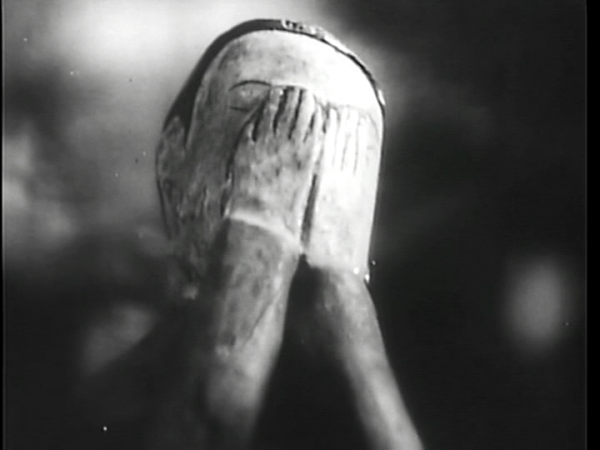
Fighting Soldiers (Kamei Fumio, Japan 1939)
Although in the 20s and 30s Japan had Prokino, it can be said that Fighting Soldiers was the first true example of Japanese (Asian?) non-fiction cinema made with an authorial touch. You can read more here.

Children in the Classroom (Hani Susumu, Japan 1954), Children Who Draw (Hani Susumu, Japan 1955)
Capturing the daily routine of an elementary school class in the manner of  direct cinema and cinema vérité, but way before the terms were coined, these two films brought radical changes and opened up new possibilities in the world of Japanese non-fiction cinema.

The Weavers of Nishijin (Matsumoto Toshio, Japan 1961)
The process of manufacturing textile in a famous Kyoto’s district rendered through rhythm, montage and music in a beautiful and grainy B&W.

Record of a Marathon Runner (Kazuo Kuroki, Japan 1964)
Focusing on the young runner Kimihara Kenji and his preparation for Tokyo Olympics, Kuroki turns a PR sport movie into a fine piece of authorial expression.

Summer in Narita (Ogawa Pro, Japan 1968), Narita: Heta Village (Ogawa Pro, Japan 1973)
The two films here stand for the whole Sanrizuka/Narita series, but especially Heta Village deserves to be in this list, a milestone in world documentary and an extraordinary documentary about time and place“.

Okinawa Islands (Higashi Yoichi, Japan 1969)
From August to October 1968, a film crew from the Japanese mainland ventured into U.S.-controlled Okinawa. Student struggles entered a new phase from 1968, rejecting “values” in the broad sense of the word. Higashi strongly felt the need to be free from previously established values, choosing in this work to grapple with the theme of Okinawa. The Okinawan problems analyzed in this film remain unresolved today. (from YIDFF)

A.K.A. Serial Killer (Adachi Masao, Japan 1969)
The avant-garde Japanese documentary film par excellence, and the first embodiment of Landscape Theory, A.K.A. Serial Killer is a film solely composed of a series of locations where young Norio Nagayama lived and passed by before committing the crimes for which he was later arrested.

Motoshinkakarannu (NDU, Japan 1971), Asia is One (NDU, Japan 1973)
Promoting an anonymus cinema made by amateurs and not by professionals, the Nihon Documentary Union delves here into the margins of Okinawan and Taiwanese society, focusing their gaze on the minorities and on the historical fractures in the areas. More here.

Minamata: The Victims and Their World (Tsuchimoto Noriaki, Japan 1971), The Shiranui Sea (Tsuchimoto Noriaki, Japan 1975)
Another monument in the history of world documentary, the Minamata series is an incredible and touching exploration of one of the biggest poisoning incident ever happened in Japan, and how it tragically affected people and their lives. You can read more here.

Extreme Private Eros 1974 Love Song (Hara Kazuo, Japan 1974)
A defining work for Japanese non-fiction cinema, exploring the personal sphere (the famous scene showing the birth of Hara’s child remains shocking even by today’s standards) in a period when it was “cool” to make politically engaged films, Hara was nonetheless able to avoid sealing himself and the movie off from the rest of the world in a sort of closed and solipsistic universe, more than ever the private is here the public and vice-versa.

God Speed You! Black Emperor (Yanagimachi Mitsuo, Japan 1976)
The camera follow a group of Japanese bikers, “The Black Emperors”, part of the so-called bōsōzoku movement, the motorcycling subculture that arose during the 70s in Japan.

The Cherry Tree with Grey Blossoms (Haneda Sumiko, Japan 1976)
Shot in a small valley in Gifu prefecture, the movie is a reflection on the mortality and ephemerality of all things disguised as a documentary about a 1300-year-old cherry tree. More here.
turumba

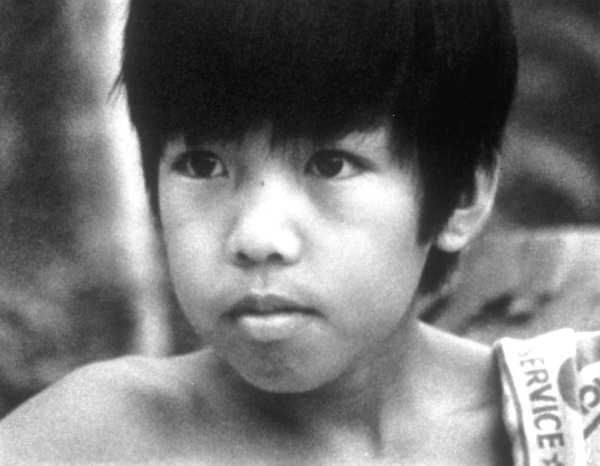
Turumba (Kidlat Tahimik, the Philippines 1981)
Turumba is a commissioned piece, which shows the work of a family making paper mâché figurines in preparation for the major “Turumba” festival in the area.

Oliver (Nick Deocampo, the Philippines 1983), Children of the Regime (Nick Deocampo, the Philippines 1985), Revolutions happen like refrains in a song (Nick Deocampo, the Philipines 1987)
These three films are all part of a trilogy of life under Marcos and Martial Law. Children is a documentary on child prostitution while Revolutions is a personal essay film in which Deocampo traces his own personal development and history against the backdrop of the People Power Revolution, which started in 1983 and later led to the ousting of president Marcos. Just like Oliver, a work that follows the life and work of a transvestite in the Philippines in the 1980s, it is shot on Super-8.

Magino Village: a Tale (Ogawa Production, Japan 1986)
Another masterpiece from Ogawa Pro, a stunning and epic movie that follows and tracks down the various histories traversing a village in Northern Japan, and at the same time a record of 15 years lived together by the collective.
bumming_in_beijing

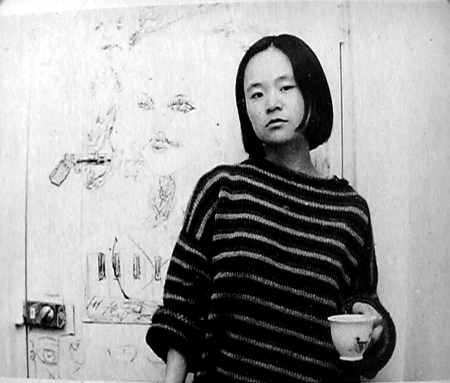
Bumming in Beijing – The Last Dreamers (Wu Wenguang, China 1990)
Generally considered one of the films that heralded the advent of what Lu Xinyu terms the ‘New Chinese Documentary Film Movement,’ its subject is fittingly a group of Wu’s artist friends and their (marginal) lives in Beijing.

I Have Graduated (Wang Guangli, China 1992)
Series of interviews with university students graduating in 1992 in the post-Tiananmen Square protests/massacre, interspersed with performances of songs.

The Murmuring (Byun Young-joo, South Korea 1995), Habitual Sadness (Byun Young-joo, South Korea 1997), My Own Breathing (Byun Young-joo, South Korea 1999)
Byun’s ‘comfort women’/‘low voice’ trilogy is a monumental project that gives space for Korean survivors to give their testimony, protest for redress, and fight against the social stigma of their traumatic past, staunchly filmed in the observational, present tense of the everyday and with the women’s direct collaboration.

Quitting (Zhang Yang, China 2001)
Centered on the late actor Jia Hongsheng’s real battle with drug addiction, the film is a docudrama in which Jia, his actual parents and sister, and his doctors play themselves as they reenact events that occurred during his addiction in the 1990s.

DV China (Zheng Dasheng, China 2002)
With its subject of a state employee making amateur films in collaboration with the villagers of Jindezheng, with limited state funds and equipment, the film gives the lie that ‘independent,’ ‘amateur,’ and the state media are mutually exclusive terms.

The Big Durian  (Amir Muhammad, Malaysia 2003)
A soldier who in 1987 began to randomly fire his rifle in the streets of Kuala Lumpur is an entry point to exploring racism and racial politics that the incident triggered among the city’s diverse population.
tie-xi-qu-west-of-the-tracks

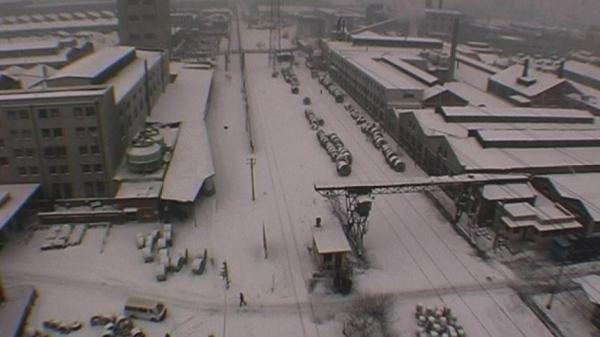
Tie Xi Qu: West of the Tracks (Wang Bing, China 2003)
Quite possibly one of the most startling documentary debuts in recent decades, one that painstakingly observes the gradual decline of state-run factories as well as livelihoods and community bonds in the Tiexi district.

S-21: The Khmer Rouge Killing Machine (Rithy Panh, Cambodia-France 2003)
Arguably Panh’s most striking documentary on the Cambodian genocide, as it brings together survivors and torturers/executioners to the site of Tuol Sleng, now a museum but formerly a prison during the Khmer Rouge regime where tens of thousands were killed.

Memories of Agano (Satō Makoto, Japan 2004)
Ten years after the acclaimed film Living on the River Agano, the film crew returns to Niigata. Personal memories reflect upon remnants of those who passed away as the camera observes abandoned rice fields and hearths that have lost their masters.
More here

Singapore Rebel (Martyn See, Singapore 2004), Zahari’s 17 Years (Martyn See, Singapore 2006), Dr. Lim Hock Siew (Martyn See, Singapore 2010)
These three works represent oppositional voices/perspectives – opposition party leader Chee Soon Juan, ex-political detainee Said Zahari, and the second-longest held political prisoner the late Dr. Lim – which betray See’s commitment to political filmmaking and suppressed Singaporean histories.

Dear Pyongyang (2005,Yang Yong-hi Japan)
A second generation zainichi Korean director makes inquiries about the history of her activist father and mother. Over the years she records on video visits to her three brothers and their families, who migrated from Ikuno, Osaka to Pyongyang over thirty years ago, while reflecting on how she had been running away from the values her father forced upon her. (from YIDFF)

Oxhide I (Liu Jiayin, China 2005), Oxhide II (Liu Jiayin, China 2009)
Novelistic in detail and scope and in pushing the notion of filming in real time and filming real life perhaps to an extreme, with a shot count of twenty-three and nine, respectively, Liu and her family reenact real-life events and pierce the multilayeredness of lived experience.

The Heavenly Kings (Daniel Wu, Hong Kong 2006)
Following the formation of the boy band Alive, of which Wu is a member, the film follows the band’s attempts to crack the music market and, in the process, delivers satirical jabs at the Cantopop industry and Hong Kong popular culture in general and reveals itself as a hoax.

24 City  (Jia Zhangke, China 2007)
One of Jia’s documentary contributions, with a bit of fictional play with the interview, which nevertheless does not take away from its sober examination of the demolition of a factory town and its transformation as ‘24 City’.

Investigation on the night that won’t forget (Lav Diaz, the Philippines 2009)
Perhaps Diaz most invisible and least accessible film. The films is a two-shot recording of Erwin Romulo speaking about the circumstances of the death of popular film critic Alexis Tioseco and the subsequent investigation.

Disorder (Huang Weikai, China 2009)
A black-and-white found-footage film assembled from 1,000+ hours of footage shot by amateur filmmakers of everyday scenes in the Guangzhou region, whose effect is assaulting and absorbing.

Last Train Home (Lixin Fan, Canada 2009)
Canada-based Chinese filmmaker’s debut follows a couple who work in the city and annually make the long trek to their home village for Chinese New Year and becomes, in the long run, a frank portrait of one family’s diverging values/priorities.

The Actresses (E J-yong, South Korea 2009) Behind the Camera (E J-yong, South Korea 2012)
This mockumentary diptych takes the premise of a photo shoot and remote directing, starring top Korean stars, to address celebrity culture, the (absurd) nature of filmmaking, and the public/private divide.

Live Tape (Matsue Tetsuaki, Japan 2010)
On New Year’s Day in 2009, Musician Kenta Maeno strums his guitar and sings in a pilgrimage from Kichijoji Hachiman Shrine, packed with people paying respects, to Inokashira Park, where he joins his band on the outdoor stage. Live Tape is a miraculous live documentary capturing Maeno’s New Year’s Day nomadic guerrilla show in a single 74-minute take.

Arirang (Kim Ki-duk, South Korea 2011)
Kim’s sole documentary effort thus far followed a three-year hiatus from directing and is aptly a self-portrait of himself as a suffering (and at times, insufferable) artist – and perhaps even a parody of artistic self-portraits.

Golden Slumbers (Davy Chou, France-Cambodia 2011)
With his lineage of being the grandson of famed (and disappeared) Cambodian producer of the 1960s/1970s Van Chann, Cambodian-French filmmaker searches for the oral history of pre-Khmer Rouge Cambodian cinema and cinephilia.
ex_press

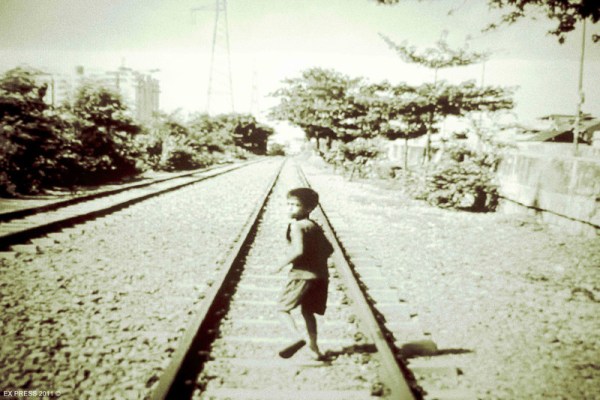
Ex Press (Jet Leyco, the Philippines 2011)
A passenger train travels across the landscape of the Philippines, while a monologue description of the journey presents fragments of memory and fantasy that look back at the country’s past.

Theatre 1 and 2 (Soda Kazuhiro, Japan, USA, France 2012)
The most complex and broadest in scope of Soda’works. Following Oriza Hirata and the Seinendan Theatre Company, Theatre 1 and 2 form a deep analysis of the creative process, but at the same time touching topics such as politics, performance, economy, art, engagement.

No Man’s Zone (Fujiwara Toshi, Japan 2012)
One of the best works about the triple disaster that hit Japan in March 2011, No Man’s Zone reflects on the meaning of natural and man-made disasters for our age, but has also been defined Tarkovskian in its aesthetics.

The Act of Killing (Joshua Oppenheimer, Christine Cynn, Anonymus, Norway-Denmark-UK, 2012), The Look of Silence (Joshua Oppenheimer, 2014)
Two successive works on the 1965-66 massacres of civilians in the name of Communist purges and the suppression of this past are set stubbornly in the present and made in collaboration with both perpetrators and survivors.

War is a tender thing (Adjani Arumpac, the Philippines 2013)
Arumpac is the child of a Christian mother and a Muslim father. She explores the second-longest running conflict in the world, the Mindanao War, through the lens of her parents’ divorce.

Storm Children, Book I (Lav Diaz, the Philippines 2014)
The film is supposed to be the first part of a two-part film, albeit Diaz never said when he would finish the second part of it. Storm Children follows the lives of children in the parts of the country hit hardest by typhoon Yolanda in 2013. Months later, the documentary shows that nothing has been done to alleviate the people’s struggle.
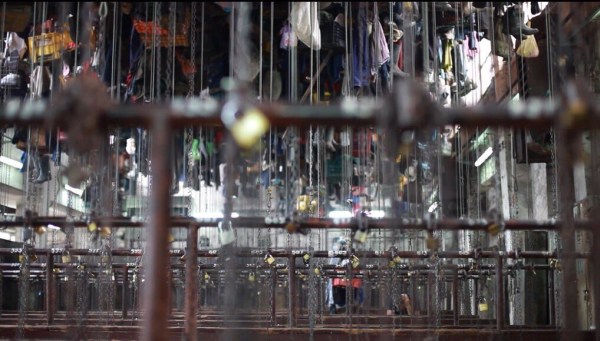
IMG_0170Aragane (Oda Kaori, Bosnia and Herzegovina, Japan 2015)
A breath of fresh air in the Japanese documentary world, Aragane, made by Oda at Bela Tarr’s school in Sarajevo, explores in the manner of structural cinema the time and dark spaces of a Bosnian coal mine. You can read more here.

Jade Miners (Midi Z, 2015), City of Jade (Midi Z, 2016)
This duology by the Taiwan-trained Burmese filmmaker was clandestinely shot in northern Myanmar to capture hundreds of labourers (one of which has been his brother, City of Jade’s focus) toiling the earth in jade mines, which are also part of a site of a civil war.
East and Southeast Asian documentaries, a list/database of the most significant works


updated September 14th 2016
In the past few days I was online looking for list(s) about East and Southeast Asian documentaries, lists that could give me an idea of what to watch if I wanted to explore the history non-fiction cinema in East and Southeast Asia, well….I couldn’t really find anything. So I told myself “why not making this list? a list that would also function as a sort of database for people interested in non-fiction” and then I realized that although I’m a kind of an expert in the history of Japanese documentary, I don’t really know that much about non-fiction cinema in the rest of Asia, besides of course Wang Bing, Rithy Panh and few others.


In most of these Asian countries cinema as a form of art is something pretty new and still in development, and often documentary is basically nothing more than state propaganda, fortunately things have slowly started to change few decades ago, when the new digital technologies allowed virtually everyone to become a documentary filmmaker and the social unrest set in motion the arts.
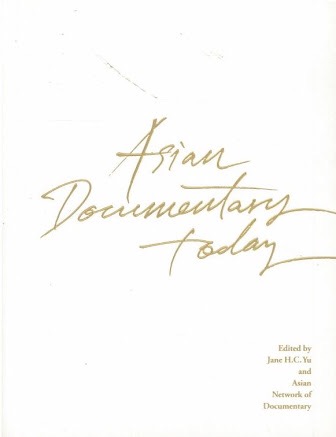
An interesting and useful resource on the topic, although it focuses more on the contemporary situation, is Asian Documentary Today, a book published by the Busan International Film Festival in 2012 and compiled and edited by AND (Asian Network of Documentary).

If anybody out there in the vastity of the internet is interested in helping me with this tiny project, a list/database of the most significant and important documentaries made in East and Southeast Asia, please feel free to get in touch with me: matteojpjp [at] gmail.com
Just a few “rules”:

– new works are accepted but don’t forget that the list is about “important and significant documentaries in the history of cinema”

– accepted are documentaries from these countries:  China, Hong Kong, Japan, North Korea, South Korea, Mongolia, Taiwan, Indonesia, Malaysia, Singapore, Philippines, East Timor, Brunei, Christmas Island, Cambodia, Laos, Myanmar (Burma), Thailand and Vietnam.

– if you’re kind enough to send me some suggestions or titles, it would be nice to have also few sentences contextualizing the documentary and briefly explaining what the movie is about.

the deadline is the end of September, once done and organised properly, I’ll publish it here on the blog and I’ll try to have it spread in the internet.

Thank you

The best documentaries of 2015 – my list

As 2015 comes to an end, it’s that time of the year again, the period when every cinephile is compelled to make his/her best movies list. I couldn’t not post my own one. I’ve mostly watched documentaries from East Asia, my list is then more like a “Best documentary of 2015 from East Asia” type of list, but at the end I’ve added a couple of movies from other part of the world and some (re)discoveries I’ve done during this 2015. Just a disclaimer, it’s a favorite list more than a best list, here we go (listed in the order I’ve seen them):

Walking with my Mother (Sakaguchi Katsumi, 2014)

An exploration of loss, sickness and memory in a society (the Japanese one) that is getting older and older, told in the shape of a private documentary, here some thoughts on the movie.

walking_with_mother

Aragane (Oda Kaori, 2015)

The camera follows patiently and almost hypnotically the workers of an old coal mine in Bosnia down into the darkness of their daily routine. The movie is visually stunning, partly documentary and partly experimental cinema, director Oda Kaori knows how to use the digital medium for her cinematic purposes in a work that revolves around the concept of duration and its materiality, and that is almost structural cinema in its construction. I had the pleasure of meeting and interviewing the director, the conversation was published on the Italian newspaper Il Manifesto, I’m currently working on an English translation and on a review/piece for this blog (maybe next year).

Oyster Factory (Sōda Kazuhiro, 2015)

The latest work from Japanese director Sōda Kazuhiro, together with Theatre 1 and 2, my favourite among his documentaries. I’ve written more about the film here.

IMG_5344

France Is Our Mother Country (Rithy Panh, 2015)

Rithy Panh (2-21: The Khmer Rouge Killing Machine, The Missing Picture) constructs a critical and satirical work about the colonial rule of Cambodia by France, using only footage, archival images and propaganda films shot by the rulers themselves. The power of re-editing and collage documentary.

france-is-our-mother-country

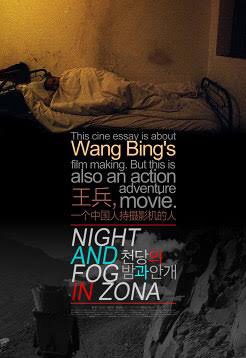
Night and Fog in Zona (Jung Sung-il, 2015)

A documentary about the great Wang Bing by movie critic-turned-director Jung Sung-ilhere you can read my review.

IMG_0379-0

The Moulin (Huang Ya-li, 2015)

Formally engaging and elliptical, I don’t really know how much of my fascination for this movie comes from its themes, a group of Taiwanese avant-garde artists active in the 30′ during the Japanese colonial period, and how much from the documentary itself.

TheMoulin_Taiwan4

Documentaries from other parts of the world:

The Iron Ministry ( J.P. Sniadecki, 2014) and in general all the movies by Sniadecki: Demolition, People’s Park, Yumen….

Jujun (Paul Thomas Anderson, 2015)


(re)discoveries of 2015:

The Vampires of Poverty (Carlos Mayolo, Luis Ospina, 1977)

All the documentaries/works of the great Agnès Varda (it was a pleasure watching 14 of her films this year)