Taiwan International Documentary Festival (TIDF) 2024

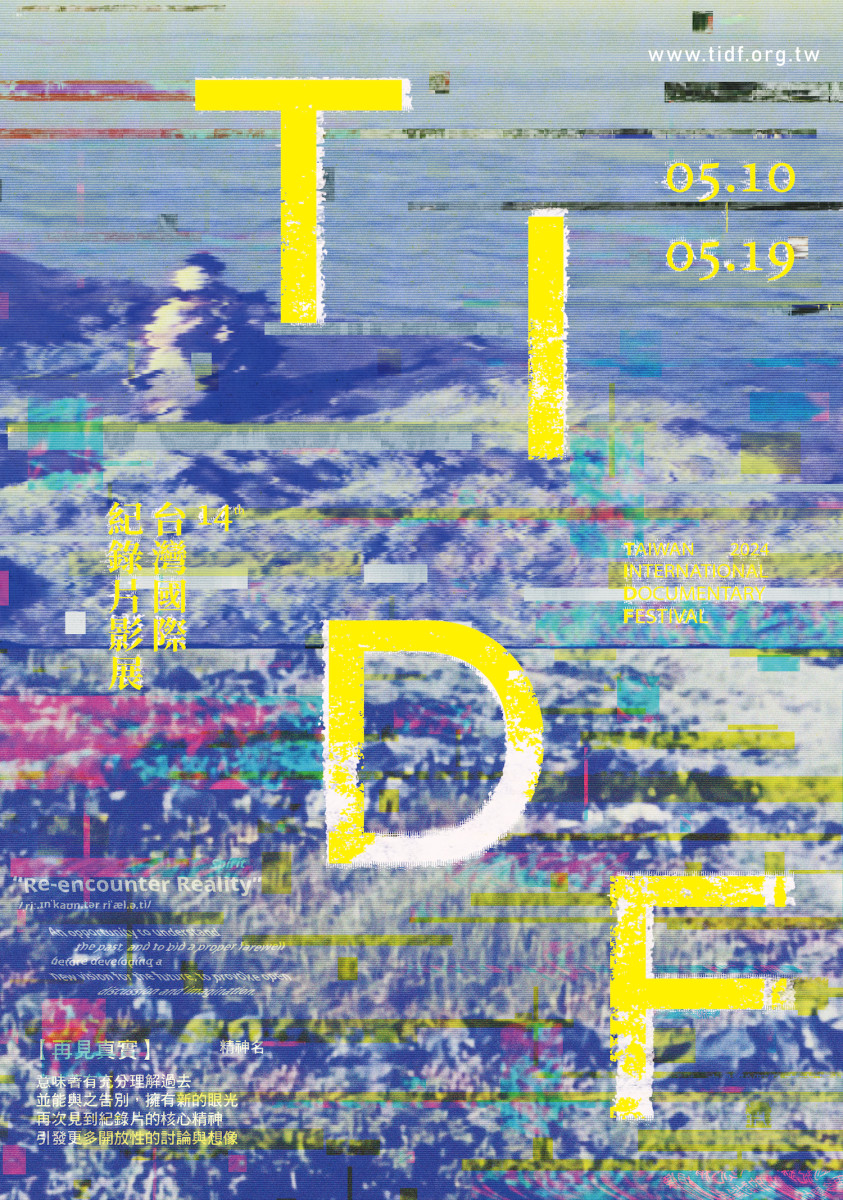
In the past days, the Taiwan International Documentary Festival (TIDF) has announced the official line-up for its 14th edition. Launched in 1998, the TIDF has slowly but surely become one of the most important festivals dedicated to documentary cinema in Asia. Held in various venues in the capital city of Taipei, the event will take place from May 10 to the 19, and will showcase the best non-fiction cinema produced in recent years —with a special attention and focus towards Asia, but also other parts of the world— through its four sections: the Asian Vision Competition, International Competition, Taiwan Competition, and TIDF Visionary Award.

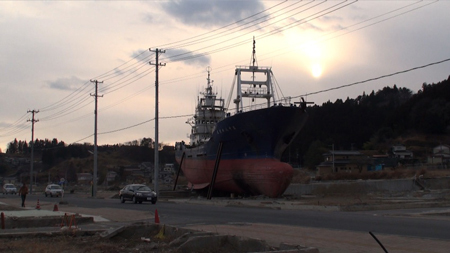
This year, the festival will also commemorate  two key figures in the development of documentary in Taiwan, Chang Chao-tang, author of works that are widely considered the first poetic and experimental documentaries in the island (The Boat-Burning Festival, Homage to Chen-Da), and ethnographic filmmaker pioneer Hu Tai-li (Voices of Orchid Island), who passed away in 2022. Unfortunately I will not be able to attend, one day though, one day…anyway these are the sections and the films.

Taiwan Competition
A Holy Family
Elvis LU|Taiwan, France

A Performance in the Church (World Premiere)
HSU Chia-wei|Taiwan

All and Nothing (World Premiere)
LIAO I-ling, CHU Po-ying|Taiwan

And Miles to Go Before I Sleep
TSAI Tsung-lung|Taiwan

Come Home, My Child (Asian Premiere)
Jasmine Chinghui LEE|Taiwan

Diamond Marine World
HUANG Hsiu-yi|Taiwan

From Island to Island (World Premiere)
LAU Kek-huat|Taiwan

I Must Keep Singing
LIN Chih-wen, LIAO Ching-wen, CHUNG Hyeuh-ming|Taiwan

Lauchabo
TSAI Yann-shan|Taiwan

Parallel World
HSIAO Mei-ling|Taiwan

Taman-taman (Park)  (World Premiere)
SO Yo-hen|Taiwan

Pongso no Tao〜 Island of People
TSAO Wen-chieh, LIN Wan-yu|Taiwan

The Clinic
Midi Z|Taiwan、Myanmar

When Airplanes Fly Across
LEE Li-shao|Taiwan

Worn Away
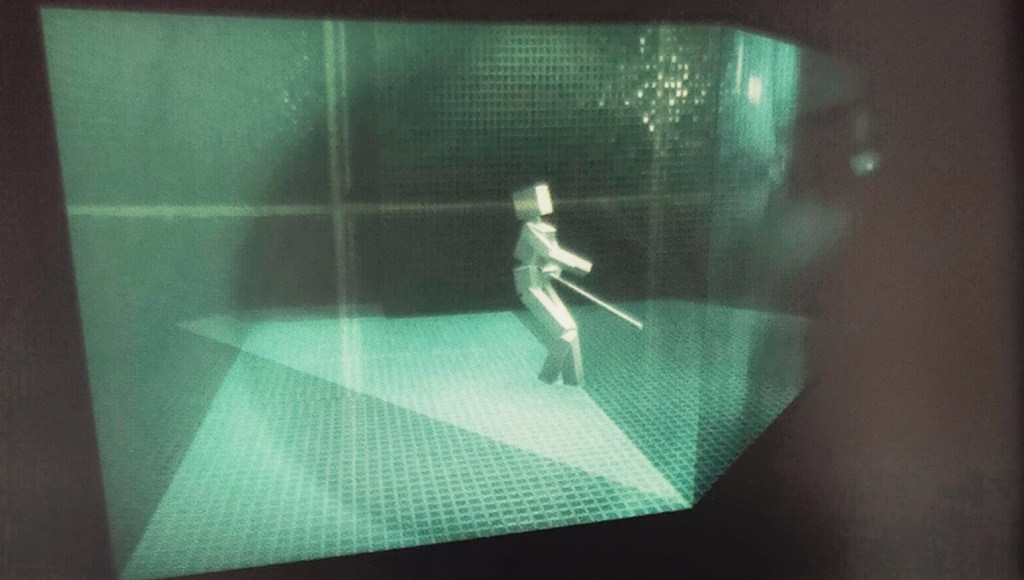
CHEN Chieh-jen|Taiwan


Asian Vision Competition
Atirkül in the Land of Real Men (Asian Premiere)
Janyl JUSUPJAN|Czech Republic

Damnatio Memoriae
Thunska PANSITTIVORAKUL|Thailand、Germany

Far From Michigan (Asian Premiere)
Silva KHNKANOSIAN|Armenia、France

Flickering Lights
Anupama SRINIVASAN, Anirban DUTTA|India

From Island to Island (World Premiere)
LAU Kek-huat|Taiwan

I Look Into the Mirror and Repeat to Myself
Giselle LIN|Singapore

K-Family Affairs
NAM Arum|South Korea

Lost a Part Of (International Premiere)
CHAN Hau-chun|Hong Kong

My Stolen Planet (Asian Premiere)
Farahnaz SHARIFI|Iran、Germany

No Winter Holidays
Rajan KATHET , Sunir PANDEY|Nepal

Saving a Dragonfly
HONG Daye|South Korea

Self-Portrait: 47KM 2020
ZHANG Mengqi|China

Song of Souls
Sai Naw Kham|Myanmar

Taman-taman (Park) (World Premiere)
SO Yo-hen|Taiwan

What Should We Have Done? (International Premiere)
FUJINO Tomoaki|Japan


International Competition
Anhell69
Theo MONTOYA|Colombia、Romania、Germany、France

Bye Bye Tiberias
Lina SOUALEM|France

Canuto’s Transformation (Asian Premiere)
KUARAY ORTEGA, Ernesto DE CARVALHO|Brazil

Crossing Voices
Raphaël GRISEY, Bouba TOURÉ|France、Germany、Mali

Guapo’y (Asian Premiere)
Sofía PAOLI THORNE|Paraguay、Argentina、Qatar

KIX (Asian Premiere)
Bálint RÉVÉSZ, Dávid MIKULÁN|Hungary、France、Croatia

Knit’s Island
Ekiem BARBIER, Guilhem CAUSSE, Quentin L’HELGOUALC’H|France

Light Falls Vertical (Asian Premiere)
Efthymia ZYMVRAGAKI|Spain、Germany、Netherlands、Italy

My Worst Enemy
Mehran TAMADON|France

Nowhere Near
Miko REVEREZA|Philippines、United States

Parallel World
HSIAO Mei-ling|Taiwan

Richland (Asian Premiere)
Irene LUSZTIG|United States

The Trial (Asian Premiere)
Ulises DE LA ORDEN|Argentina、Norway、Italy、France

Where Zebus Speak French (Asian Premiere)
Nantenaina LOVA|France、Madagascar、Germany、Burkina Faso

Zinzindurrunkarratz
Oskar ALEGRIA|Spain


TIDF Visionary Award
A Performance in the Church (World Premiere)
HSU Chia-wei|Taiwan

Bitter Rice (World Premiere)
JIANG Chunhua|China

The Clinic
Midi Z|Taiwan、Myanmar

Diamond Marine World
HUANG Hsiu-yi|Taiwan

From Island to Island (World Premiere)
LAU Kek-huat|Taiwan

I Look Into the Mirror and Repeat to Myself
Giselle LIN|Singapore

In Your Shoes (World Premiere)
Florence LAM, CHAN Tze Woon|Hong Kong

Let’s Talk (Asian Premiere)
Simon LIU|Hong Kong、 United States

Lost a Part Of (International Premiere)
CHAN Hau-chun|Hong Kong

Obedience
WONG Siu-pong|Hong Kong

Parallel World
HSIAO Mei-ling|Taiwan

Resurrection (World Premiere)
HU Sanshou|China

Self-Portrait: 47KM 2020
ZHANG Mengqi|China

Taman-taman (Park) (World Premiere)
SO Yo-hen|Taiwan

Image Forum Festival 2022: Silver Cave, Humoresque, A Short Story, and The Cleaning Lady After 100 Years: Spectre.

Yesterday I had the chance to attend one of the programs of this year Image Forum Festival, in Nagoya. Every year the event is held first in Tokyo, and later in the year, in a scale-down format, in other cities in Japan: Yokohama, Kyoto, and Nagoya.

In the past decade I went to the festival in Tokyo a couple of times, once in Kyoto if I remember correctly, and recently just in Nagoya, since it’s for me, a closer location. The event is dedicated mainly to experimental cinema and video, produced all over the world, with a particular attention of what is going on in Japan and Asia. The festival has been for me a source of wonderful discoveries, here I wrote about the 2018’s edition, here about Stop-Motion Slow-Motion, and here about Heliography by Yamazaki Hiroshi. Unfortunately this year I could just see a tiny fraction of what I planned and wanted to, just four works of the East Asian Experimental Film Competition.

Silver Cave

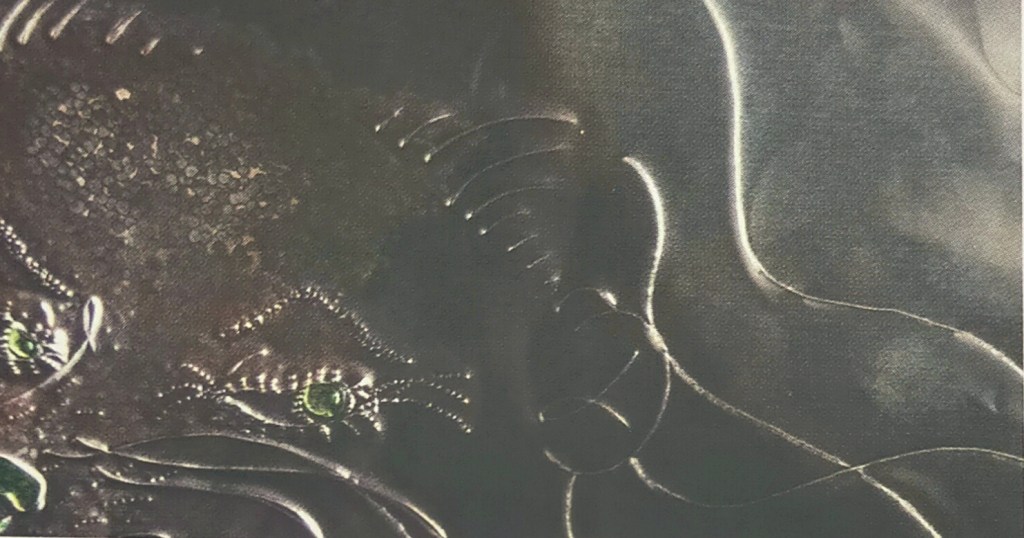
Silver Cave (2022) by Cai Caibei is an interesting piece that plays with surfaces, and the flat metallic substance that animates and “moves” for most of the work. For its focus on abstractions, rhythm, and its quasi meta-filmic quality, it reminded me of the works of some pioneer animators of the beginning of last century, such as Walter Ruttmann. Silver Cave won the Award for Excellence at the festival.

A Short Story

Filmmaker and artist Bi Gan’s latest work, A Short Story (2022) tells about a black cat that embarks on a bizarre journey to meet three curious characters. Presented in the short competition at Cannes last spring, the work is populated with dream-like images, visual inventiveness, and poetry, but I could not really connect with it.

ユーモレスクHumoresque

I was really looking forward to checking ユーモレスク Humoresque (2022) by Isobe Shinya, who in 2020 made 13, one of my favourite films of that year. I had already read that this work was something very different from what he had done before, Humoresque is 46 minutes long and was shot digitally, so I was somehow prepared. As the description in the official catalog reports the work is

an abrupt turn from “13”, this film employs the technique of home movies to tell the story of the lives of a mother and child across four seasons. Day after day, water drawn from a lake is filtered and bartered for food. One day, a man visits with a portable gramophone. The song it plays is Dvorak’s “Humoresque.” What does he think about this music?

and according to Isobe

I created a fictional world by converting and extending home movie shooting as a filmmaking technique. Many of the scenes in the film were inspired by their real-life counterparts. The small story in front of us, the big story far away, and the story that is no longer here. This film is an attempt to assimilate them in fiction and reality.

Some images are really mesmerising, the way sound is used is remarkable, and while very different from the time-lapse experiments Isobe is known for, Humoresque is still a movie about time, the thickness of it, and the passage of it. That being said, I definitely need to watch it again to give it a proper assessment. Humoresque was awarded the Grand Prize at the festival.

The Cleaning Lady After 100 Years: Spectre

The Cleaning Lady After 100 Years: Spectre (Shichiri Kei, 2022) is a reimagining of the filmmaker’s own multimedia stage drama The Cleaning Lady, where the ghost of her mother appears to an old woman. This was probably the most powerful work among the four I saw, in a completely digitised world the human presence is not even a memory, even the words uttered are just part of the cacophonous soundscape presented in the film. No straightforward meanings emerge from the work, but images and sounds slowly and aggressively point towards and put the viewer through a sensorial and exhilarating experience. The film loses part of this power towards the end when the spoken words try to enunciate philosophical ideas.

Leafing through the catalogue made me realised how many interesting and possibly wonderful works I missed: a retrospective on contemporary Chinese independent cinema, Qingnian Express: New Voices and Visions of Chinese Independent Cinema Today (curated by Tong Shan and Ma Ran), TUNOHAZU, the latest by Tezka Macoto, a retrospective on artist and graphic designer Tanaami Keiichi, and much more.

Online Film Festivals: first impressions

Already more than half year has passed since the pandemic generated a tidal wave of changes in our daily lives and habits. Of course the world of cinema and the film industry at large have been affected by Covid-19 too, and one of the consequences is that the international film festival circuit has been completely disrupted.

From last March, most of the big film events worldwide have been cancelled, postponed or have moved online, and it was only in recent months that we saw, with Venice as a frontrunner, the return of the film festival as we used to know it, with all the necessary social distancing and limitations.

Many festivals opted for an online and often limited edition. It has been interesting for me to see how these net-events have been organised and scheduled (ticket price, catalogs, regional restrictions, etc.) and, I have to be honest, it was fun to experience them in all their diversity, and I’m not talking about the movies. Before proceding with some reflections on a couple of online festivals I’ve “attended”, let me make some disclaimers:

– I live in central Japan, in a small city far from Tokyo, and neither very near to Osaka or Kyoto, that is, for me going to a festival here in Japan means to plan in advance and commit time and money.

– I work in the field, so to speak, I write and occasionaly collaborate with film festivals, but I have also a daily job that allows me to survive.

– I really enjoy going to film festivals, watching the movies is only a part of the experience, it’s everything else that makes it special for me, film culture extends way beyond the mere act of wtching a movie, online or not. That is one of the reasons why going to the Yamagata International Documentary Film Festival every two years has been a real joy.

That was to clarify my position. Now, in the past months I had the chance to experience, in one form or another, watching many movies or only one, the following online film festivals:

Far East Film Festival, Udine, Italy

Il Cinema Ritrovato, Bologna, Italy

EXiS 2020, Seoul, South Korea

Open City Documentary Festival, London

Yūbari International Fantastic Film Festival, Yūbari, Japan.

2020 Skip City International D-Cinema Festival, Saitama, Japan.

Le Giornate del cinema muto, Pordenone, Italy (starting soon)

and counting…

The biggest wall that everybody interested in watching film festivals online (or should I call them film events online?) bump into are the regional restriction. Understandably, not all movies can be licensed to stream in all locations, and navigating through these limitations can be frustrating at times. The Udine Far East and Il Cinema Ritrovato had regional restrictions but their sites (actually the MyMovie platform) was very easy to navigate and it was very clear which movies were available in which country.

Those two festivals and Le Giornate in Pordenone use the same screening schedule’s method: each movie is scheduled at a certain day on a certain time, like in a normal film festival, but it’s available to watch online for 24 hours, also to make it easy for people watching from different time zones. On the other hand, the Yūbari Film Festival in Hokkaido basically replicated online the format of the physical festival: there were three “screens” (channels on Hulu Japan, the festival was free if you had the service) each showing different movies, a bit like TV, with the only difference being that the movies were rotating. While this option is without doubt the closer to the real festival, I found the 24 hours window to be the perfect one for me, you still have the “pressure” of missing a movie, but at the same time it’s easy to organise your day.

A different approach is being used by the Skip Digital Festival (at the time I’m writing still happening), if you buy a pass, about 1500 yen, you can can watch, only if you’re in Japan, all the 24 movies presented, at any time during the event.

While, as I wrote above, the online festival is not the same as the “real thing” ーno big screens no communal viewing, no socializingーit is undisputable that for cinema people who, like me, live far from big cities, in other countries, or don’t have much free time, it’s a golden chance for new discoveries. And by the way, you’re finally watching movies like the film festival programmers and directors…on your PC….

Is the online film festival here to stay? I don’t honestly know, but I would say that in the next few years we will see more hybrid experiments between online and physical film festivals happening.

Feel free to chime in and share your experience, you can do it here.

Movie journal (Sept 2020): Toro Axe Part 3: All Things Change, The Tide Pool, Ainu My Voice, The Dawn of Kaiju Eiga

The Covid-19 and the consequent pandemic has also been affecting the film festival circuit around the globe, with many festivals forced to cancel their events, postpone them or moving the screenings online. As bad as the situation is (first world problems of course), this shift in the showing practice, we all hope it’s a temporary solution, gave me the chance of “attending” the virtual edition of a couple of film festivals that under normal circumstances I wouldn’t have been able to be at. The Udine Far East Festival and the Cinema Ritrovato in Italy, and more recently the EXiS Film Festival in South Korea, and the Yubari International Fantastic Film Festival here in Japan. Below are some thoughts about a couple of documentaries I had the opportunity to watch at these events.

Toro Axe Part 3: All Things Change (2012, 35′) is Matsumoto Toshio last work, a collaborative video project produced by Sano Gallery initially in 2009, in which six co-writers would participate and create an omnibus film. At first, Matsumoto was not supposed to be involved too much in it, but in 2011 the Great East Japan Earthquake and the consequent nuclear disaster had such a strong impact on him, that Matsumoto decided to change the shape of the project. This new work became a trilogy titled Tōrō no ono, the third installment, All Things Change, was screened at this year EXiS Film Festival (online).

蟷螂の斧: 万象無常 Toro Axe Part 3: All Things Change

The origin of this project was the experience of the horrific disaster (earthquake and nuclear accident) that took place in 2011. This event was so powerful that it changed the way humans see and value things. If we don’t look directly at at the fundamental way death and life are entangled, we will not be able to move forward. For this reason, this visual work became even more disorganized and destructive than “Pilgrimage into Memory” the second installment, containing all different sort of noises and creating a dissonant vortex of chaos. (Matsumoto Toshio)

The film consists of videos shot and produced by 5 artists, Tanotaiga, Inaki Kanako, Oki Hiroyuki, Kunito Okuno, and Tanaka Tanako, blended together by Matsumoto, an attempt, according to the director himself, to get rid of the individuality of the artist, and to create or to move towards an anonymous subjectivity. His last involvement in a visual work as a manipulator of images is the perfect sum of his career, everything he made and worked on during his life resonates throughout this collaborative film, from his early preoccupations about the filmmaker/image maker’s subjectivity, to his interest in the process of the creation of moving images.

The first five minutes are almost like a work by Makino Takashi, colours and particles in motion that leaves room, in the rest of the movie, to a more traditional video documentary about the triple disaster of 3.11. The interest of Matsumoto and his collaborators towards the pullulating life (worms, flies, but also a new born baby) among the landscape of death of the ruins and wreckage left by the tsunami, is as disturbing as it is fascinating. The endless pulse of life, life here considered in its broader meaning encompassing also death and destruction, is not only conveyed through the scenes of swarming insects and the arrival of a new life to this world, but also, in pure Matsumoto style, is embedded in the plasticity and throb of images.

The title is fascinating in itself too, 蟷螂の斧 (tōrō no ono) is a maxim signifying a futile endeavor like a “mantis brandishing a hatchet”, while mujō of the title of the installment, 万象無常 (banshō mujō) All Things Change, is the Buddhist anitya meaning impermanence, and banshō signifies all the creation, the universe.

Ainu My Voice アイヌ, 私の声 (Tomida Daichi, 2020) was presented at the Yubari International Fantastic Film Festival (online) section dedicated to women’s empowerment, a collection of shorts dealing with the lives of female subjects, a wide and diverse range of subjects, in contemporary societies.
Shot and composed like a TV commercial, after all it was produced by the fashion magazine MINE, the movie is nonetheless an interesting dive, albeit short ça va sans dire, on a young Ainu woman who is trying to make sense of her life and her belonging to a minority group in contemporary Japan and beyond, in the course of the film she also visits a tribe of native Indians in America. You can watch, legally, Ainu My Voice here.

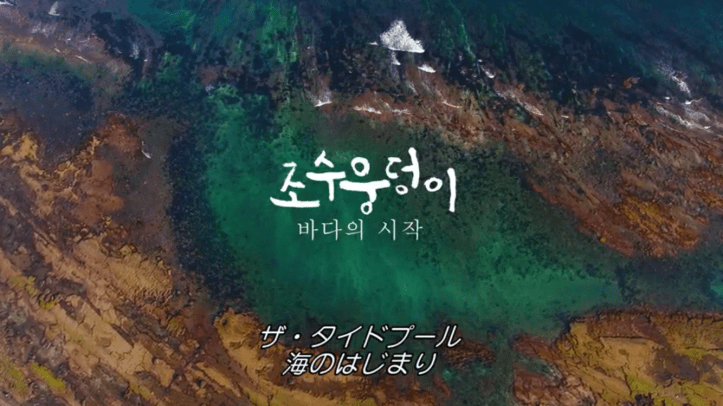
The Tide Pool: Where the Ocean Begins (Lim Hyung Mook, 2019) is a movie about the tide pools in Jeju island, South Korea, and their complex ecosystem. As the official description says “A tide pool is an isolated pocket of seawater found in the ocean’s intertidal zone (…) areas where the ocean meets the land: from steep, rocky ledges to long, sloping sandy beaches and vast mudflats.”

An above-average documentary about marine life that is elevated by a stunning photography and a smart use of music. A very “traditional” science documentary, make no mistake about it, with narration, explanations, and an educational purpose at its core, but the images are so beautiful and the colours so popping that it is easy to understand why it was included in a festival about the fantastic.

I’m cheating a bit here, The Dawn of Kaiju Eiga (Jonathan Bellés, 2019) is not properly speaking a documentary produced or made in Asia, but nonetheless it is about a very Japanese phenomenon, the Kaiju eiga. Bellés explores the connections between the advent of Kaiju movies, especially Godzilla, and the horrific history of Japan and atomic bombs. Nothing special and nothing new for an average but well-informed Godzilla fan, but if you’re new to the subject, it might work as a portal. As already noted by many reviewers, while there are some interesting interviews with people who worked for the Godzilla franchise throughout the decades, the lack of images from the movies ruins the enjoyment of it (the movie is made almost completely of interviews). It is by no means the director’s fault, Tōhō and more in general Japanese movie companies are famous for their closure of mind in regards to the usage of images from their works (unless you pay of course, pay a lot).

Image Forum Festival 2018 イメージフォーラムフェスティバル 2018

The 32nd Image Forum Festival ended last Sunday in Tokyo. The nine-day-long event, hosted at two different locations in the Japanese capital, the Theatre Image Forum and the Spiral Hall, screened in total more than 80 films, including 23 in the East Asian Experimental Film Competition, the main section. Established in its present form in 1987, the festival succeeded and replaced an experimental film festival that was held, in various phases and different shapes, in the capital from 1973 to 1986.

To this day the festival continue to embody the mission and the legacy of its predecessors. Primarily dedicated to experimental cinema and video, the event provides a special opportunity for the viewers to experience on a big screen a mix of feature films, home cinema, documentary and experimental animation.
After Tokyo, the festival will move to Kyoto, Yokohama and Nagoya, with slightly different contents, there will be special sections dedicated to artists of each city. This is a right and welcomed decision, since too often Tokyo ends up cannibalizing the cultural and artistic events taking place in the archipelago.

This slideshow requires JavaScript.

This year’s special retrospectives were dedicated to the provocative films of Christoph Schlingensief, German director who expanded his works beyond cinema to touch theater, television and public happenings, Kurt Kren, Austrian artist associated with Viennese Actionism, but also author of structural films, and the experiments on celluloid by Japanese photographer Yamazaki Hiroshi. I wasn’t aware of the films of Schlingensief, and I have to say that it was at the same time a discovery and a delusion. While I really liked 100 Years of Adolf Hitler (1989), claustrophobic and parodic reconstruction of the last hours of the dictator and comrades in his bunker, I couldn’t digest the other two movies of the so called German Trilogy. German Chainsaw Massacre (1990) and especially Terror 2000 (1992) are too much of a mess and stylistically all over the place , and probably too bound to the events of the time, the Fall of the Berlin Wall and the consequent unification of the two Germanies, for me to decipher them.

Unfortunately I wasn’t able to check the works of Yamazaki, but I’m planning to see them at the end of September, when the festival will come to Nagoya. As with his conceptual photos, the shorts made during his entire life explore the relationship between time and light, a topic I’m very attracted to.
I also missed the screening of Caniba (2017) by Lucien Castaing-Taylor and Véréna Paravel, about the “cannibal” Sagawa Issei, if I’m not wrong, this was the Japanese premiere of the film, and the special focus Experimenta India, a collection of visual art from the Asian country.
Interesting was to catch Matangi/Maya/M.I.A. (Steve Loveridge, 2018), about the famous ex-refugee of Tamil origin, now a pop icon and singer, an artist I was completely unaware of. The documentary is based on more than 20 years of footage filmed by herself and her friends in Sr Lanka and London. While I didn’t connect with the first part of the movie, too self-indulgent for my taste, the film gets much better in the last 30-40 minutes when, albeit briefly, touches on complex and fascinating topics such as immigration and art, fame, and social awareness in the show business.

The East Asia Experimental competition was pretty solid, besides several short films coming from a variety of areas like South Korea, China, Hong Kong, Taiwan and naturally Japan, two were the long documentaries screened. A Yangtze Landscape (Xu Xin, 2017), a visual exploration of the social and geographical landscape along the longest river in Asia (you can read my review here), and Slow Motion, Stop Motion (Kurihara Mie, 2018) a movie that positively surprised me and won both the Grand Prize and the Audience Award. A review is coming soon, stay tuned.

Yamagata City designated UNESCO Creative City of Film

The city of Yamagata has just been designated as member of the UNESCO Creative Cities Network for the field of Film, the first in Japan, joining other 116 existing member cities around the world.

As the readers of this blog have heard and read ad nauseam, the city is the place of the oldest, and arguably the most important, documentary film festival in the Asian continent, a place I had the pleasure of visiting several times in the last decade.

It goes without saying that this is great news for the festival and the city itself, and, as many commentators have pointed out, the congratulations should go first and foremost to the people of Yamagata, the volunteers and all the people involved, to one degree or another, in the organization of the festival.

Knowing how much Japanese people
Continue reading “Yamagata City designated UNESCO Creative City of Film”

A Yangtze Landscape (Xu Xin, 2017)

Festivalscope is giving access, till mid April,  to some of the documentaries screened at this year edition of Cinéma du réel, one of the most prestigious festivals dedicated to non-fiction cinema. (You can learn more here)
I grabbed the chance and last night I watched A Yangtze Landscape, a movie directed, photographed and edited by Xu Xin. IMDB describes it as follows:

A Yangtze Landscape utilizes a non-narrative style, setting off from the Yangtze’s marine port Shanghai, filming all the way to the Yangtze River’s source, Qinghai/Tibet – filming a total distance of thousands of kilometers. Experimental music and noise recorded live on scene are used in post-production, painstakingly paired with relatively independent visuals, creating a magically realistic atmosphere contrasted with people seeming to be ‘decorative figures’ right out of traditional Chinese landscape scrolls.

The documentary is composed of stunning scenary rendered in beautiful digital black & white, particularly the night landscapes are of almost pictorial quality, punctuated by scenes of people inhabiting the areas along the river, mostly areas ruined or emptied by the industrial and urban changes of the last decades. These parts with people are, in my opinion, performative, in a sense that the people seen, most of them poors, with mental problems or homeless, are performing themselves and their daily routine in front and for the camera. A Yangtze Landscape is for this reason a very partial film that focuses its attention on certain edges of Chinese society, I’m pretty sure that most of the comunities living near or on the banks of the Yangtze river are very different from the few exceptional individuals shown in the movie. Yet this is not a demerit of the film, a certain quality of artificiality so to speak, or performance as I have called it above, is very obviously present from the first minutes of the documentary, and the fact that it’s shot in its entirety in black & white is after all the biggest hint of its poetic aspiration and quality. Also on a technical side, it is worth noticing how in more than 2 hours and half there’s never a camera movement and a zoom in or out, the frame never moves, everything is crystallized and done by a very crafted editing, we have the camera “moving” only in the scenes where it is positioned on a ship floating on the river.
The movie has some similarity in its basic concept and structure to P. J. Sniadecki’s The Iron Ministry, if I’m not wrong, the american director is among the people thanked at the end of the documentary. There the camera followed the lives of Chinese people commuting by train from one part of the country to the other, from the lower to the upper class, here Xu Xin directs his gaze from the port of Shanghai to its source in Tibet.
We see and learn through intertitles, there’s no narration, about abandoned old villages, a bridge where every year many people commit suicide and other disasters and accidents that have happened near or on the river in the last 5 or 10 years.
The only witness of all these happenings seems to be the landscape, it is almost useless to say it, but the real protagonist of the movie is the landscape, a space where natural, human and industrial histories/stories intermingle and merge.

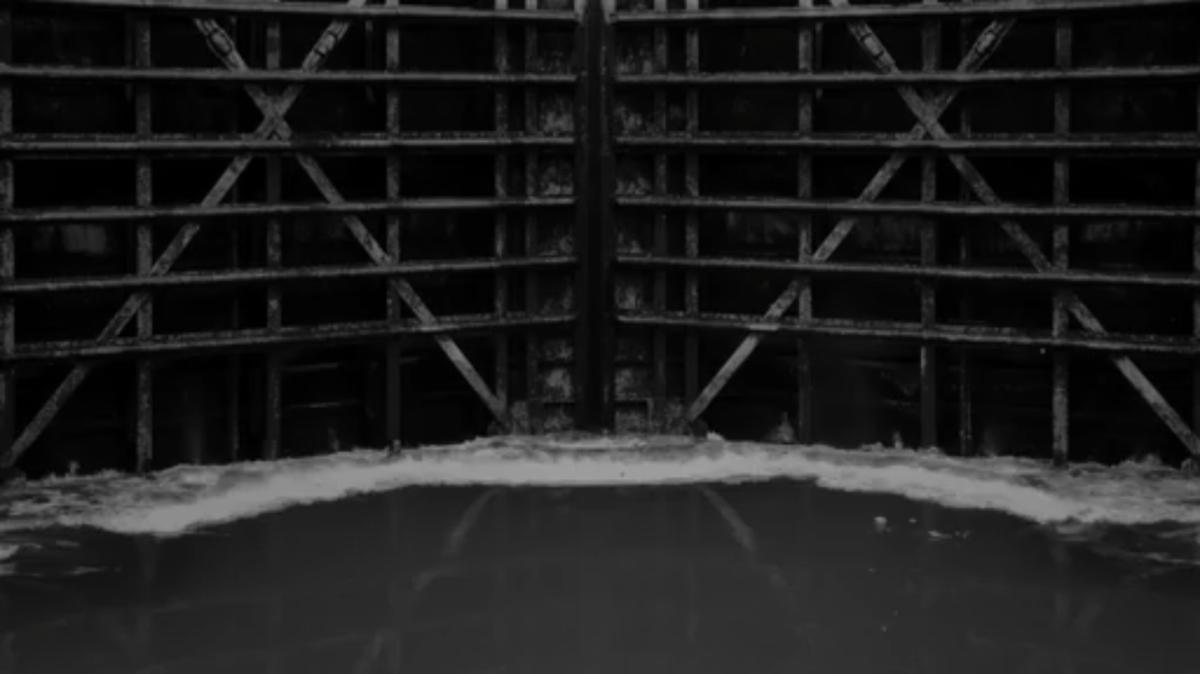
Interesting and well crafted as it is, I nonetheless feel that something is missing from it, to denounce and criticize certain aspects of contemporary Chinese society, and not only China, is something that absolutely must be done, but now that the country is in the spotlight internationally the risk is to look too redundant. For instance, towards the end of the movie there’s a long part all dedicated to a couple of homeless, their shacks and their dogs, we can see them on the foreground sitting in an old sofa or wandering among ruins with the ultramodern city and its skyscrapers on the background. The image is beautiful in its contrast, and even if it possesses a degree of truth, it ends up being trite and obvious, weakening the potential of the movie. While I like the general style, again the black & white is pictorial and the editing is perfect, it must be said that sometimes the film looks too “beautiful” and the image too “clean” without being subversive. The parts that resonate with me the most are those where Xu Xin explores the aesthetics of documentary to its limits. The aforementioned night scenes of the cities lights along the river, shiny but empty jewel boxes, or those at the river locks, slow and almost endless images of the water level, the ships raising and the gates opening, paired with a cacophonous soundscape made of squeaking noises and experimental music.

Autumn madness: Kobe Doc Fest, Ogawa Production in London and much more


It’s again Autumn madness, that time of the year when there are more cinema-related events around the world than stars in the sky: festivals, special screenings, symposia, festivals, home-movie days and again festivals, festivals and festivals. For cinephiles around the globe it is at the same time a period of blessing and curse, which festival to go to? which screenings to attend? and how not to spend all the money saved during the year…
Let’s take a look of what the Autumn madness has to offer this year in terms of Asian non-fiction cinema.

By far the biggest festival in the region, the Busan International Film Festival, kicks off on October 6th and this year is a special one for BIFF, following the problems the event has been facing in the recent 12 months (you can read more here and here).
The line-up is as always huge and varied, and if we include the market, trying to follow even only a small portion of the screenings offered is an almost impossible task. Anyway, as South and Southeast Asian documentary is concern, these are some movies that will be shown and worth seeing if you’re in Busan:

Documentary Competition

Diamond Island (Davy Chou, 2016) Cambodia/France/Germany/Thailand/Qatar

Sunday Beauty Queen (Baby Ruth Villarama, 2016) Philippines/Hong Kong, China/Japan/United Kingdon

Time to Read Poems (Lee Soojung, 2016) South Korea

A Whale of a Tale (Sasaki Megumi, 2016) Japan/United States

Absent Without Leave (Lau Kek-Huat Chen Jing-Lian, 2016) Taiwan/Malaysia

Burmese on the Roof (Oh Hyunjin, 2016) South Korea

Farming Boys (Jang Sejung Byun Siyeon, 2016) South Korea

Neighborhood (Sung Seungtaek, 2016) South Korea

Railways Sleepers (Sompot CHIDGASORNPONGSE, 2016) Thailand

SUN (Won Hoyeon, 2016) South Korea

The Crescent Rising (Sheron Dayoc, 2016) Philippines

Documentary Showcase

Becoming Who I Was (Moon Changyong Jeon Jin, 2016) South Korea

Fake (Mori Tatsuya, 2016) Japan

In Exile (Tin Win Naing, 2016) Germany/Myanmar

Ta’ang (Wang Bing, 2016) Hong Kong, China/France

The Remnants (Lee Hyuk-sang KIM Il-rhan, 2016) South Korea

WEEKENDS  (Lee Dongh, 2016) South Korea

If you want to know more and read each movie’s synopsys, do please visit BIFF’s homepage: Documentary Competition and Documentary Showcase.

One of the most interesting festivals of the season, at least for me, is the Kobe Documentary Film Festival, a small and minor event organized every year since 2009 at the Kobe Planet Film Archive. This year the main theme will be “The pleasure of children movies” and as usual a wide range of movies will be screened, a fascinating program goes under the title of CIE Films (CIE 映画) where CIE stands for “Civil Information and Education Section”. Established by the Allied Powers soon after the end of World War II as a special section of the General Headquarters (GHQ), its task was to advise the Supreme Commander for the Allied Powers (SCAP) on policies relating to “public information, education, religion, and other sociological and cultural problems of Japan.” CIE donated about 1300 Natco 16mm projectors to the Japanese Ministry of Education to be distributed around the country, and with them short educational movies from United States, Canada and other countries in hopes of implementing the process of democratization in the country through cinema. This part of history of Japanese cinema is an important one if we want to grasp and understand the subsequent development of educational film, and by extension documentary, in the archipelago. A first part of the program is thus dedicated to foreign movies introduced in Japan by CIE, Everyone’s School (1948), Near Home (1948), Beautiful Dreamer (1949), Freedom of the Press (1951), Experimental Elementary School (1949) and Nanook of the North (1922),  with other programs continuing on the same trail and presenting Japanese educational films produced from the late 50’s to the 70’s, science, art, environment and big events (like the Expo in Osaka in 1970) are some of the themes tackled in the short movies, including 5 works created in different style of animation (puppet and stop motion paper animation).
It is worth mentioning that a program is also dedicated to the less known works (about and with children) of Shimizu Hiroshi, on of the finest Japanese filmmakers of the last century, but one who definitely deserve more space and consideration in the world cinema community. A good starting point is this DVD box set put out by Criterion, and two sets from Shochiku (the first is the same as the Criterion one) and “amazingly” both come with English subtitles.
The Festival will take place from October 21st to the 25th and will be preceded by the Home-Movie Day on October 15th, if you read Japanese the festival home page has the complete line-up.

tiff2016-yoko

From Kobe to Tokyo, where the 29th Tokyo International Film Festival will open its gates on October 25th, South and Southeast Asian non-fiction cinema will be represented by a bunch of works, to keep on the radar the new endeavor by  Matsue Tetsuaki (Live Tape, Flash Back Memories), DDT: Dramatic Dream Team!! -We are Japanese Wrestlers!, a year in the life of a pro-wrestling group, Welcome to SATO, about a children’s center in the day laborers’ town of Kamagasaki, and Mamoru Hosoda’s Job: Animation Film Director“A Soulful Film Illuminating Hope”, a documentary made for TV (part of NHK’s The Professionals series) about director Mamoru Hosoda.

vlcsnap-2016-10-02-16h00m26s750
Let’s leave Asia and move to Europe, and more precisely to London, where from November 17th to Dec 11th the Institute of Contemporary Arts is organizing a retrospective on Ogawa Shinsuke‘s (or better Ogawa Production) works. I’ve written many times on this blog about Ogawa and the importance of his movies for the history and development of documentary in Asia (although not yet a long and more in-depth piece), and of course a must is Forest of Pressure written by Abe Markus Nornes. This is the schedule:

Thu 17 Nov: The Oppressed Students (1967)

Sat 19 Nov: The Battle Front for the Liberation of Japan – Summer in Narita (1968) +Sanrizuka – The Three Day War (1970)

Tue 22 Nov: Sanrizuka – Peasants of the Second Fortress (1971)

Thu 24 Nov: The Wages of Resistance: The Narita Stories (Otsu Koshiro and Daishima Haruhiko, 2015)

Sat 26 Nov: Heta Village: Rending Village Time | A lecture by Markus Nornes +Sanrizuka – Heta Village (1973)

Sun 27 Nov: Filmmaking and the Way to the Village (Fukuda Katsuhiko, 1973) +Devotion: A Film About the Ogawa Productions (Barbara Hammer, 2000)

Wed 30 Nov: Dokkoi! Songs from the Bottom (1975)

Sat 10 Dec: “Nippon”: Furuyashiki Village (1982)

Sun 11: The Sundial Carved with a Thousand Years of Notches – The Magino Village Story (1986)

If you’re in London, it’s really a chance not to be missed.

Documentary film festivals in East Asia

Surfing through the internet in search of information and publications about documentary in East Asia, I’ve stumbled upon what seems to be an interesting and original dissertation.”Extending the local: documentary film festivals in East Asia as sites of connection and communication” is a thesis written in 2012 by Cheung Tit Leung at Lingnan University and, as the title suggests, it’s a study about the importance of East Asian documentary film festivals for the development, nurture and distribution of Asian non-fiction cinema, and Asia in general, across the globe. The author focuses his attention on four film festivals in the region, arguably the most important ones, the Yamagata International Documentary Film Festival (Japan), the Documentary Film Festival China (China), the Taiwan International Documentary Festival (Taiwan) and the Hong Kong’s Chinese Documentary Festival (Hong Kong). 
I’ve read a dozen of pages so far and I have to say that the topic is really fascinating, more than I expected; whether or not you’re into Asian cinema, this thesis is an important piece to the relatively new field of Film Festival studies, but also one that explores the connections between cinema and a region, East Asia, seldom analysed on specialist periodicals or inside academic circles. 

Your can legally download and read the thesis here.

Taiwan International Documentary Festival 2016

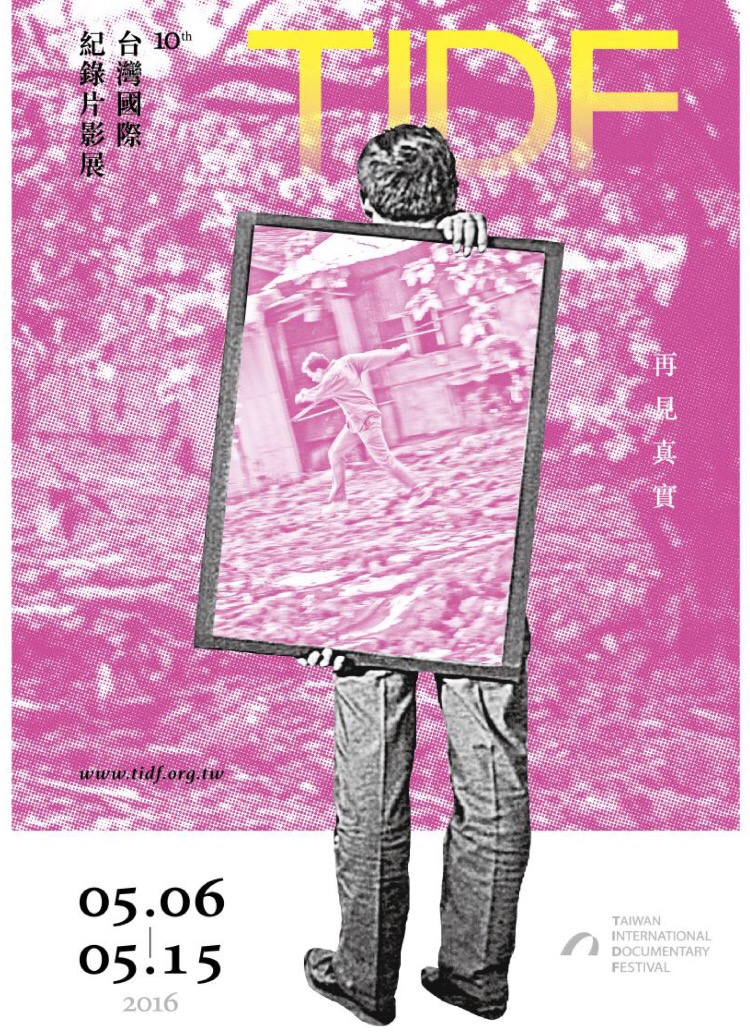
The Taiwan International Documentary Festival kicked off its 10th edition over the weekend, an important event for the region and one of the main avenue and showcase for non-fiction in Asia, the festival will last 10 days, till May 15th. 

Let’s take a look at the presentation for this year edition as written in the official brochure:

Founded in 1998, TIDF is now 18-year-old, reaching the age of adulthood. This year marks our 10th edition. With the core spirit o‘f Re-encounter Reality’, TIDF preserves its traditions as well as blazes new trails, aiming to present diversity, break boundaries and bring back the essence of documentary.
During the preparation of the film festival, we went through rounds of discussions, debates and brainstorming. Our initially vague ideas and perceptions were elaborated step by step. When most of the decisions have been made, it is the best time for us to examine our original intention.
This year we have arranged more Q&A sessions, set up a regular venue for professional interaction, organised a new interdisciplinary workshop, cancelled the policy of‘not allowing admission 20 minutes after each screening starts’, and launched a long-term volunteer plan DOC U. All these changes are made in the hope of making things more practical and convenient for festival-goers. It also means we are offering more accessibility and trust. In our programme, time, memory and aesthetics are in conversation. We have curated three special sections: Director in Focus: Hubert SAUPER, the Folk Memory Project, and the retrospective celebrating the 30th anniversary of Green Team. Although focusing on different regions and periods of time, these films share a power to challenge history, fight authority and bravely reveal the reality most people avoid. Furthermore, they lead us to reflect on how to take actions, make changes and be able to imagine the future.
As we progress along the trail of documentary, future does not lie ahead of us but rather in the past.
Welcome to participate in TIDF’s coming-of-age celebration. Let us walk into the cinema and re-encounter reality!

15 documentaries will take part to the International Competition, among them the Taiwanese Why Aren’t You Angry (2016) shot by Green Team and about the Wild Lily Movement, a student demostration that took place in Taipei in March 1990, and Le Moulin (Huang Ya-li, 2015) also from Taiwan, an experimental documentary that was one of my favorites of the past year (more here). There are many other interesting works from other parts of the world of course, but being this a blog devoted mainly to East Asian documentary, I’ll focus only to movies produced in that part of the globe. Also in competition Realm of Reverberations (Chen Chieh-jen, 2015), about the Lesheng Sanatorium in Taipei, a hospital for lepers established in 1930 during the Japanese colonial period, and a facility that although the government planned to demolish, it’s still there due to people’s opposition.
15 are also the documentaries shortlisted in the Asian Vision Competition, a section that intrigues me a lot for obvious reasons, I’m very happy to see that Aragane (Oda Kaori, 2015) and Dryads in a Snow Valley (Kobayashi Shigeru) will be part of the group. I’ve written many times about Aragane (here my recent review), as for Kobayashi, he’s a cameraman turned director who collaborated prominently with Satō Makoto (Living on the River Agano, Memories of Agano), unfortunately I haven’t seen his new movie yet, but I’m planning to do it as soon as possible since the movie is now in the Japanese theaters. Asian Vision will also present 2 works from South Korea, A Roar of the Prairie (Oh Min-wook, 2015) and  Welcome to Playhouse (Kim Soo-vin, 2015), a self-documentary about the 23 year-old director whose life changes when she becomes unwantedly pregnant. The movies from mainland China are 3, Shaman’s Journey (Gu Tao, 2016), Enclave  (Li Wei, 2015) and The Road (Zhang Zanbo, 2015), a work filmed for three years in a small town where a section of a new highway is being built, while those from the Philippines are 2, Murmurs from the Somber Depths of Sta. Mesa (Hector Barretto Calma, 2015) and Of Cats, Dogs, Farm Animals and Sashimi (Perry Dizon, 2015). But there are many more documentaries, you can read about all of them in the program – there’s a section devoted exclusively to non-fiction cinema from Taiwan, one on re-enactment and one on significant documentaries shown at international festivals – on the official brochure (here the PDF).
Just a final note on a series of special events and screenings organized by the festival with the Folk Memory Project, an initiative started in 2010 by Wu Wenguang, the so called father of Chinese independent documentary, whose aim is to preserve the oral memories of the Great Chinese Famine of 1959-1961 through documentaries, interviews and theatrical performances.