What Should We Have Done? was one of the most commercially successful independent documentaries released in Japanese theaters last year, earning more than 180 million yen after its initial release in December 2024, and remaining in cinemas for almost a year. The film directed by Fujino Tomoaki was also included in Kinema Junpo’s Best Bunka Eiga list for 2025, where it ranked second. Now What Should We Have Done? is again being screened in selected mini-theaters across the archipelago, giving me the chance to revisit it.
Produced by Fujino’s Zou-Shima, distributed in Japan by Tofoo Films, and completed with the support of Yamagata Dojo, a residency program for documentary filmmakers working on projects in progress, the film is built from video material—mostly shot digitally by the director himself over more than twenty years within his own family. These visual footage was recorded intermittently during his visits to the parents house, and traces the story of the director’s older sister, nicknamed Mako-chan or Mako, who suffered from mental illness, and of parents who, for almost her entire life, denied her condition and attempted to deal with it while almost never consulting a doctor.
Watching it for the second time gave me the chance to notice and appreciate things that, the first time around, were somewhat drowned out by the raw intensity of the experience. It was still a painful, heavy watch—perhaps even more piercing in some ways. As Fujino has stated on various occasions, What Should We Have Done? is, from its very title, a document of a failure: the failure of an entire family—director included—toward his sister Mako, who began showing symptoms of schizophrenia in 1983, when she was 24. After allegedly consulting a specialist, the parents came to the conclusion that there was absolutely nothing wrong with her, and the family was discouraged from seeking psychiatric care for their daughter.
The film begins on a black screen, with the sister’s voice out of control, recorded by her brother on a Walkman in 1992. The video recordings started almost ten years later, in 2001, during the visits the director—now living in Kanagawa—made back home in Sapporo, Hokkaido. He began documenting his sister’s life and her relationship with their parents as a way of opposing and criticizing their treatment and decisions regarding her.
The use of low-resolution video feels absolutely right for conveying Mako’s miserable experience and, secondarily, that of the entire family. The rough texture of the images almost mirrors the emotional conditions in which everyone is trapped. On a filmmaking level, the documentary works largely thanks to the editing, which naturally shapes what the film ultimately becomes: a partial but real point of view on the tragic reality of the family. It must have been a near-Promethean task for Fujino and Asano Yumiko, who edited the film with the support of Hata Takeshi, to decide what to include, and especially when to cut away from some of the most distressing moments.
The structure, in this regard, is exemplary. The first part briefly sketches Mako’s life and that of her parents using photographs and home movies shot by the father in the early 1960s during their trip, for business, around the world. The couple was highly educated, both were researchers, and made the whole situation even more astonishing. The film then moves forward chronologically, covering more than a decade beginning in 2001 and documenting the steady deterioration of Mako’s condition—and, alongside it, that of her parents. One day the director returns home and finds a padlock on the front door, installed by the parents so that Mako cannot escape. We learn, together with an appalled brother, that his sister has not left the house for almost a year.
The emotional peak of the documentary—and what must have been the lowest point in the relationship between daughter and parents, at least the one kept in the film—comes in a nighttime scene in which we realize that the mother, too, is beginning to show signs of dementia, while Mako’s piercing, bone-chilling screams fill the house.
The following scene—a black screen with written text—tells us that the parents finally gave up, and that Mako was hospitalized and given the appropriate medication. The contrast between those unbearable screams and the later scene in which she calmly speaks, cooks, and washes the dishes is both astonishing and heartbreaking. It points toward what might have been—and that makes it all the more painful. The final part of the film is filled with tender, almost peaceful moments between the father, Mako, and her brother—and then with the inevitable ending, which I will not spoil. An interesting layer is added when Fujino speaks with his father—now frail and in a wheelchair in a hospital—telling him about his wish to assemble all the footage shot over the past two decades and essentially asking, on camera, for his consent to do so.
This is an open space – open because it’s a work in progress – where I will attempt to collect and index articles, essays and discussions generated in Japan by the non-release (as of today, 10 March 2025) of Black Box Diaries, journalist Itō Shiori’s documentary about her 2015 sexual assault case. Since the discussion is mainly taking place in the Japanosphere, most of the articles are in Japanese, but I’ll try to provide a brief summary for each, even though here, more than ever, the details and nuances are of the utmost importance.
Updates:
– November 7, 2025: it has been announced that the film will be screened at T-Joy Prince Shinagawa in December. – November 7, 2025: added a link to a piece by researcher Heidi Ka-Sin Lee published on Tokyo Review. – October 29, 2025: Itō Shiori has reached a settlement with the taxi driver who was filmed without consent: a new version of the scene will be used in the documentary. The official apology and statement from Itō can be downloaded here. – April 22 2025, added a discussion between filmmaker Yang Yonghi and location Coordinator Nishiyama Momoko (FRaU) – April 1 2025, added the English version of the article written by Funahashi Atsushi and scholar Chelsea Szendi Schieder – March 29 2025, added professor Markus Nornes comments – March 23 2025, added Sōda Kazuhiro ‘s piece on Shūkan Kinyōbi
The Mainichi Shimbun has an article (February 21, 2025), following Itō’s press conference on February 20th, that summarises the situation and explains the reasons the documentary has yet to be released in Japan:
The documentary, “Black Box Diaries,” has been screened in over 50 overseas countries and regions since its world premiere at a film festival in January last year but not yet in Japan due to legal concerns. Lawyers, including those who represented Itō in a civil lawsuit over the case, have said that she broke a pledge to protect sources by using unauthorized footage and audio. (…)
Itō admitted that she used security camera footage at the hotel she was dragged into by the alleged assailant, a former television reporter, even though it was provided solely for use in the trial. She also used a phone recording of a conversation with one of the former lawyers, as well as footage of conversations with a taxi driver and a detective, without getting approval from the relevant parties for the film.
(…) Itō said in the statement that in seeking to prioritize the public interest, she decided to go ahead with using part of the unauthorized material, believing it “essential” to conveying the reality of sexual violence and “the only visual proof.” The incident occurred in April 2015 when Itō met the alleged assailant for dinner and she later filed a complaint with police, saying she had been sexually assaulted by him in the hotel room after losing consciousness. The Tokyo District Public Prosecutors Office decided not to prosecute the reporter, but Itō won a damages suit against him, with the Supreme Court finalizing a ruling that found there had been sexual intercourse without consent.
The journalist has announced that she will edit the film in order to hopefully have it released in Japan. As I said, the revelation that some material was used in the documentary without consent has sparked a growing number of articles and discussions, most of them about ethics in documentary, informed consent and the difference between journalism and documentary. As far as I can tell, most of them are appreciative of what the documentary is trying to achieve and respectful of the struggles and trauma Itō has had to go through.
One of the first articles on the subject was co-authored by filmmaker Funahashi Atsushi and scholar Chelsea Szendi Schieder (18 February 2025). Both believe that the film should be shown widely and that it would be an act of public interest to do so. The documentary is not just a visual record of an individual, but has a universality that makes the viewer think that to tolerate this injustice as a society is to ignore the long history of sexual abuse that Japan’s male-dominated society has imposed on women. I am paraphrasing here, please read the whole article for more details, if you can: https://note.com/bigriverfilms/n/nd58e6b238411
Now (March 29, 2025) there’s an English version of the article:
Through a brutally revealing account of how one individual woman’s bodily autonomy and reputation were violated, her film forces viewers to reflect on their complicity in perpetuating a culture of silence and male dominance.
(…)
We are hopeful that she can manage to adjust her film to address concerns about the ethics of her film around footage. (Reportedly, Ito made a new version, addressing some of the criticism.) Such adjustments could tighten the focus again on the important issue that Ito raises regarding the high price of speaking out about sexual violence.
So far, silence—keeping the black box tightly sealed—has served to create plausible deniability of endemic sexual violence. As a documentary that presents the evidence of this violence, “Black Box Diaries” is a film of public interest.
(…)
To truly reach the Japanese public, Ito may need to not only adjust the film but also find a way to reconnect with her supporters. Still, the film deserves a chance to be taken to the Japanese public, and to be seen, discussed, and acted upon. Its message is too important to remain locked away.
The full piece is available here (on a very side note: I really appreciate that is not posted on social media, but on a different platform): https://note.com/brooklyn11211/n/n480dc1044bfe
It’s interesting to me that two of the harshest criticisms of Itō Shiori’s approach in her film have come from two female documentary filmmakers, Mikami Chie (We Shall Overcome, The Targeted Village) and Yang Yonghi (Dear Pyongyang, Soup and Ideology). On their social media accounts, the two have repeatedly expressed their shock and disbelief at Itō’s unauthorised use of recorded material. I don’t want to redirect the reader to X or Facebook, so I won’t provide links(I wish people would write on other platforms and then link to their social media accounts).
Filmmaker Mori Tatsuya (A, Fake, I -Documentary of the Journalist-) has a long piece on Newsweek Japan (3 March 2025) that focuses on what are, according to him, the main differences between documentary and journalism:
Journalism and documentary are very different. Documentaries are self-expression. They reconstruct one’s own feelings and thoughts, that is, one’s own subjectivity, using fragments of reality. (…) Journalists are tasked with serving the public interest and realising social justice, monitoring power and helping the weak, and they impose many norms and rules on themselves, such as those that information providers must absolutely abide by. Double and triple-checking and fact-checking are also essential. They must also be as neutral and objective as possible. One reason for this is that the process of reporting and publishing information (especially in the case of video media) can take on a highly abusive nature.
Documentary filmmakers are free. It is about self-expression. The norms and rules are up to the individual. So you have to be prepared to hurt others. I don’t mean that we should be defiant, of course we want to minimise the damage. But as long as it is a documentary, the damage cannot be reduced to zero. You have to be prepared to be on the side of the perpetrator, but at the same time you have to bear the guilt and the blame. (…) This is the biggest problem with the documentary “Black Box Diaries”: not only the director Itō Shiori – who calls herself a journalist and claims that the unauthorised use of images and sound is in the “public interest” – but also those who defend the film and those who criticise it confuse documentary with journalism.
Journalism is not art. It is important to raise issues and make them known to society. But documentaries are works of art. (…) Documentary filmmakers should not use things like public interest or fairness as indicators of what they are doing. (..) I must always put my ego first and not submit to social norms, organisational rules or anyone else’s common sense.
Director Ito Shiori is free to call herself a journalist. But if she does, she must adhere to the principles and rules of journalism. She must protect informants thoroughly. She must minimise damage. She must prioritise objectivity and the public interest, and she must prioritise the realisation of social justice. These are the basic requirements. You can’t have the best of both journalism and documentary. It’s one or the other. If you’re making documentaries, you shouldn’t be using nice words like public interest and social justice.
What I fear most now is that in the aftermath of this incident, lines will be forcibly drawn in ambiguous areas about how documentaries should be made, that subjects must be shown the material in advance and that permission must be obtained in all cases. (…) The film is valuable. Not only does it have a strong perspective on the #MeToo issue, but it also strongly denounces the collusion between political and investigative powers, truly opening the black box. It should also be released in Japan. It would be really frustrating and unfortunate if it was not.
A discussion of the issues raised by the documentary between three women who, to varying degrees, supported Itō in her battles. Published on the Japanese magazine FRaU’s website, 9 March 2025:
Why are those who have supported Itō for many years now expressing concern? What are the problems? At a roundtable discussion, Hamada Keiko, who organised the Japanese preview in July 2024, Ogawa Tamaka, a journalist who attended all the trials, and Nakano Madoka, who studies gender, education and media issues, discussed the issues.
First, we asked each of the three about their involvement with Itō Shiori.
Nakano Madoka: I was just a viewer, and I only exchanged business cards with Shiori once, when she was at a panel discussion. However, as an adjunct professor at a university, I have studied this incident in my “Media and Gender” class. At the moment, I am working on DEI (Diversity, Equity & Inclusion) at my university, and I am dealing with the fact that within an individual there is majority and minority status, power and vulnerability, so I am interested in this case.
Ogawa Tamaka: A few months before our first press conference in 2017, Shiori was covering the issue of harassment in Japan with an Al Jazeera journalist, and I interviewed her, which is how I first met her. She spoke about her experiences then, and I’ve been supporting her ever since, attending the trial between her and Yamaguchi, as well as several trials related to slander and defamation.
Hamada Keiko: Since interviewing Shiori in the autumn of 2017 at the online media where I was editor-in-chief, I have supported her behind the scenes at her trials and have had personal contact with her. In 2024, there was a screening of the film in New York, and my friend said it was “very good”, so I thought, “Why don’t they have a preview screening in Japan? I want to see it soon.” In May, I asked Star Sands, the distributor, and Shiori if I could hold a special preview for media people and researchers who cover gender issues in Japan. At the time, I just wanted to see a film that had such a good reputation overseas, and I felt it would also help support Shiori. We held a screening in July [2024, tn] to coincide with Shiori’s return to Japan and planned a discussion after the screening.
(…)
Hamada : When we were deciding who to invite to the preview screening, I heard that the legal team that supported Shiori hadn’t seen the film yet, so I asked them, “Why don’t you come?” The list of participants was shared with Star Sands, with consideration for Shiori’s security, and we had also told Shiori that the lawyers would be coming.
When I actually watched the film, there was security camera footage, so I thought, “They must have gotten permission from the hotel,” and I gave my talk on that premise. I watched the film thinking that permission had also been obtained from investigators and the taxi driver, but after the event I was told that the lawyers representing the couple had left the venue immediately after the screening without listening to the talk event. I wondered why the legal team was so shocked. Afterwards, they pointed out issues with the positioning of the security camera footage and whether permission had been obtained for the testimony. I was shocked to hear that too. When I watched the film without any information, I thought it was a good movie.
The article also provides a clear explanation and timeline of the issues at stake:
The former legal team, which had been fighting the civil lawsuit with Ito for eight and a half years, learned about the contents of the film at the preview and had an exchange with Ito’s side. Then, about three months later, at a press conference held in October 2024, they pointed out the “problems” of the film:
1) The hotel security camera footage was used without permission. 2) Investigator A’s voice and image were used without permission. 3) The footage of the taxi driver was used without permission. 4) The content of the conversation with the lawyer was recorded without permission and edited to give a different impression from reality.
The discussion is really fascinating and worth reading in full, but I would like to highlight a few passages more where the three women talk about a journalist’s responsibility towards his or her sources, the case of Mommy (Nimura Masahiro, 2019), a documentary about the Wakayama curry poisoning case (1998) that was almost cancelled, and the role and responsibility of the producer in deciding the final cut of a film:
Hamada : I think this film could only have been made by Shiori, who is a survivor of sexual violence, a film director and a journalist, and I think that makes the film strong, but at the same time complicates the issues. When I first saw it without any information, I had the impression that it was a story about the rebirth of a survivor, in that there are several depictions of her mental state. However, she said that she made the film ‘as a journalist’, so I thought that she should have followed the minimum rules of ‘journalism’. (…) Shiori also said in a statement that she wanted to convey the state of society after reporting a sexual assault. I think this issue is very important. But if she wanted to convey it as a journalist, she could have done more to report objectively on the investigation and interviewed other survivors in addition to her own story. Why did she insist on using CCTV footage? It’s true that the inclusion of this footage has a powerful impact and adds to the strength of the work. But even in our interviews, we can’t use all the testimonies and footage we interview. When we think of the other person, we sometimes have to suppress our desire to inform society. I think many journalists, faced with this conflict, are still doing their job of conveying what needs to be conveyed, making the most of their limited resources.
Nakano : This point is not being criticised because Ito is a woman, but I think that no matter what kind of director you are, if your collaborators or actors say “Please don’t use that”, you have no choice but to respond. Recently, “Mommy”, which deals with the Wakayama curry incident, was almost cancelled. The eldest son of Hayashi Masumi, who is currently on death row, appears in the film, but just before its release the slander was so severe on social media that many asked for the film to be cancelled. In the end, however, the distribution company said: “After discussions between the producers, the distributor and the family involved in the film, we have decided to show a version of the documentary with some edits”, and released the film after reaching a mutually satisfactory agreement.
Such a dialogue should take place between the producers and the participants, and because not everyone may be able to speak out in this way, the producers must take as much consideration as possible in advance. The question “You were in the film, but did you have permission?” can be a secondary casualty, and viewers want to be able to watch without wondering about such things. As a journalist, I don’t want to be unable to use the testimony and footage that I’ve worked so hard to get, but that’s why I think it’s necessary to get permission from the participants before the film is released, and to take a stance of absolute protection of sources.
The weekly magazine Shūkan Kinyōbi, published on 21 March, devotes a large section to the case of the Black Box Diaries. Among the contributors to the issue is Sōda Kazuhiro, who has written a long essay discussing the issues surrounding the film from the perspective of the ethical responsibility of documentary filmmakers. According to Soda himself (on X, I’m not providing a link, sorry):
what complicates the discussion of this case is the unprecedented structure of the film, in which Ms Itō, a survivor of sexual assault, becomes the filmmaker and investigates and exposes her own case. However, it is necessary to make a clear distinction between Ms Itō as a survivor and Ms Itō as a filmmaker. Documentary filmmakers have a responsibility to their subjects and to their audiences, but because they wield considerable power, they bear a heavy responsibility and cannot be exempted from it simply because they are survivors of sexual assault.
Here are some extracts from the article (the introduction):
Most of the members [of the people who worked on Black Box Diaries, n.t.] are friends, so it’s difficult for me to talk about the film at all. The fact that I’m a man makes it even harder.
Documentaries should be something that every creator is free to make and release in their own way. That’s why I feel it’s presumptuous of me to comment on the way other people make their films. However, this film inadvertently raises important questions about the methods and ethics of documentary filmmaking. Even though it’s someone else’s work, it contains issues that a documentary filmmaker cannot overlook. In addition, because the methods and ethics of the work have generated controversy and the issue has become public beyond the scope of a single work, I feel that as someone in the documentary world I cannot shy away from discussing this issue.
But I am not a judge. I am not writing this article to condemn anyone, but rather in the hope of making the documentary world richer and fairer.
Professor and scholar Markus Nornes shared his opinion on the Black Box Diaries case on the Kine Japan mailing list on 18 February. I’m adding it only now because his interview with NeoNeo Magazine “Ethics is an inevitable issue for documentaries – Six perspectives and the ‘ethics machine'” has been shared several times on Japanese social media in the last month. http://webneo.org/archives/11537
Make no mistake, the film is a real achievement. It’s extremely compelling, a righteous condemnation of sexual violence. Itō shows remarkable strength in the face of (mostly anonymous) powerful men, while revealing the wages the rape took upon her psyche. While she’s clearly damaged and delicate, her inner resources and determination and resilience is incredibly moving.
The film is extraordinary and precious in many ways. It will go down as an historically important documentary for being a MeToo film from the point of view of a victim who refuses to remain silent.
(…)
As I watched Black Box Diaries, I could not help thinking of Hara Kazuo’s Emperor’s Naked Army Marches On. Both Hara and Itō embark on a quest to provoke, record, and preserve testimony of atrocious wrongdoing. Both weaponize image and sound technologies that possess that special ontological status that captures the stuff of reality, which makes visual and aural evidence palpable, immediate, powerful and believable.
But actually, when you get right down to it, Itō is less like Hara and more like Okuzaki. Both are relentless. Okuzaki is, not surprisingly, the more brutal of the two. But both brazenly pursue their recordings with a fervor that drives their respective films.
But the differences are instructive.
First, Okuzaki is on an insane mission from God; his mission has a metaphysical dimension, as he is doing this not just for the correction of historical record but to sooth the souls of the dead. Itō is on a righteous quest for justice, both for herself as victim and for social justice in the broadest sense, even geographically since her story has spread the world over. And now.
More importantly, Okuzaki’s strategy is completely open and transparent. Not only does he command Hara to record his encounters, but when his victims call for help he calls the police. And when they arrive, he is completely honest in describing his deeds. What’s more, he ultimately went to prison for them.
In contrast, Itō is completely surreptitious and opaque. Her unethical lack of transparency is inscribed in the photography; when she starts non-consensual encounters, the aim of the camera is haphazard and random. In one scene, a friend who now takes on the burden of her dubious filmmaking practice, photographs Ito and Whistleblower A with a hidden camera. The graininess from the darkness and the distance from the subjects mark the shot as deeply problematic.
Another article published in the online magazine FRaU (17 April, 2025) delves, in its first part, into the ethics and practical requirements necessary when filming a documentary. It is particularly interesting in that it’s a discussion between two women who have been working and fighting against sexual harassment and misogyny in the industry for decades: filmmaker Yang Yonghi, and Nishiyama Momoko, a location coordinator. An important fact highlighted by Nishiyama, which I personally think is crucial in all of this is the role of the producers:
It’s the job of the producers and production companies to deal with the practical aspects of rights clearance (…) so I wonder what the producers and production company have done this time.
in the second part of the discussion, the two women share their feelings about Itō, both as a victim of sexual violence and as a director. Yang painfully sums up why this case is so difficult and intricate:
I was torn between wanting to support Shiori Ito, a victim of sexual violence, and not hurt her, and being angry at her irresponsibility as a film director. Because I understand the pain of PTSD, I felt guilty about blaming her in my mind, asking myself, “Why didn’t you do your job as a film director honestly?
Going back to the topic of the filmmaker’s approach, in response to the opinions (for instance, those of Mori Tatsuya) that in same cases public interest should come before ethics and fair usage, Nishiyama shares an interesting and more general take about the state of non-fiction productions today:
Directors and filmmakers often want to create powerful images. But that’s not creativity. Isn’t it just sensationalism? If a documentary becomes popular, sponsors will come and it can be made again. But then it becomes a competition to produce something sensational instead of being honest and caring about the subject. Is it okay to leave ethics behind when something goes viral? It makes me sad that the world is moving in that direction.
The discussion between the two women is fascinating also because they are not necessarily opposing the release of the film.
However, we need to distinguish between the slander against Shiori Ito as a survivor and the criticism of Shiori Ito as a documentary director “.
Yang concludes:
I hope that discussion of “Black Box Diaries” will not be treated as a taboo subject, but will be openly discussed and unraveled, so that people from various positions can find their own perspective, and I would be delighted if this discussion can be one of those opportunities.
Film researcher Heidi Ka-Sin Lee has an interesting piece on the film and its destiny in the Japanese mediascape, published on Tokyo Review (November 2025):
(…) This rival rhetoric surrounding trust violation and privacy protection deflects the attention to Itō’s petition for justice and sympathy and instead serves symbolically as an act of character assassination. Most of all, it works to quash voices on sexual violence and societal complicity in its being a taboo subject, which indirectly perpetuates such violence. With the film’s limited domestic media exposure and her international success at foreign film festivals and university tours, Itō has been cast as an outsider in her home country, aligning with the dated perception of female victims yet proving her point in the documentary: (wo)men in power would do everything to name and shame those who displease or threaten them. But does this rhetoric really succeed in deflecting what was meant to be bypassed? The silence, marked by the lack of official explanation for the film’s yet-to-be-released status as well as a near-complete eschewal of domestic conversations about the subject, is deafening.
This is the first report from this year Yebisu International Festival for Art & Alternative Visions
Founded in 2009, this year’s edition of the Yebisu International Festival for Art & Alternative Visions is dedicated to exploring the possibilities and problems posed by the changing nature of moving images in our time. Titled Docs: Images and Records, the event, currently taking place at the Tokyo Photography Art Museum, features a variety of works (films, installations, photography, performances and talks) that reflect on the meaning of representation through the visual medium and, in particular, question the meaning of the word ‘documentary’, a term that has become increasingly ossified (both on the big and small screen) and synonymous with the word ‘factual’. Or, as stated on the web page of the festival:
A document is a record of fact-based information, traditionally in the form of words but more recently also as images such as photographs and moving images. The word “documentary,” meanwhile, has come to be used not only as an adjective meaning “factual” or “consisting of documents,” but also as a noun referring to a film expressing facts.
The Lumière brothers’ Exiting the Factory (1895), which is a record of people leaving a factory, is widely recognized as the starting point of the history of motion pictures. People at the time were astonished to see scenes from their everyday lives being recorded and replayed before their eyes as if the events were actually happening right there. Today, 130 years after the invention of moving images, it is entirely unexceptional for people to record and share their daily lives through photographs and videos. Meanwhile, the definition of a photograph has been expanded to include digital images and that of moving images now encompasses digital video; in digital form, these media can be manipulated more freely than before, resulting in a more complex and ambiguous relationship between facts and the images that represent them. Held on the occasion of the 30th anniversary of the Tokyo Photographic Art Museum, the Yebisu International Festival for Art & Alternative Visions 2025 will focus on the transformation of these media. By examining a wide range of works through the lens of images and words, the festival will pursue a reconsideration of documents and documentary.
I was able to attend a couple of screenings last week, a special dedicated to discovering Japanese television documentaries and independent works that inhabit documentary and experimental cinema called Japanese Post-Documentary, and two of the four Commission Projects created specifically for this year’s event.
Japanese Post-Documentay Special 2: “I Want to Go Far Away” brings together four episodes of the popular TV programme Tooku e ikitai (literally, I want to go far away), produced by TV Man Union and Yomiuri Telecasting Corporation between 1970 and 1974, a period when the small screen in Japan offered artistic freedom and space for experimentation. It is worth noting that it was in this milieu that Sasaki Shōichirō produced some stunning works such as Dream Island Girl (1974) or Four Seasons: Utopiano (1980), films for television that influenced a generation of filmmakers, including Kore’eda Hirokazu, who speaks highly of him in his book of memoirs.
Rokusuke sasurai no tabi Iwatesan uta to chichi to (六輔さすらいの旅・岩手山・歌と乳と, 1970, Konno Tsutomu) is a journey to Iwate Prefecture led by Ei Rokusuke, a musician, essayist and television personality. Mōhitotsu no tabi`- Yamashita Kiyoshi-ga bunshū yori (もう一つの旅「山下清画文集」より, Tanikawa Shuntarō, 1971), the host here is Itami Jūzō, who was a famous actor before he became a director (Tampopo, A Taxing Woman) He follows in the footsteps of the artist Yamashita Kiyoshi, famous for his chigiri-e works and his wanderings around Japan. Both works echo the trend of programmes dedicated to the discovery of the Japanese countryside that were so popular on television at the time, but deconstruct them through the use of irony and comic sketches.
I had seen it before, but it was nice to revisit Ore no Shimokita (おれの下北, 1972) a 26-minute programme (like all the others) directed by and starring Imamura Shōhei, who travels to the Shimokita Peninsula in Aomori Prefecture to pay homage to his mentor, director Kawashima Yūzō, who was born in the area. As with the other two episodes, there are also some funny bits, such as Imamura stopping his journey to visit a snack bar or relax in a hot spring. The 1970s, especially the first and middle part, was a decade in which Imamura, like other filmmakers of his generation, was not very active in cinema, after the collapse of the big studios in the early 1970s, but devoted himself to making documentaries for the small screen (Following the Unreturned Soldiers: Malaysia, Karayuki-san,etc.). The almost meta approach to documentary and the use of his own persona in front of the camera was not new to the Japanese director, who in 1967 made one of the most famous works bridging and questioning non-fiction and fiction cinema, A Man Vanishes.
The last episode was the rarest and by far the wildest of the four: Fuji Tatsuya no wan uei chiketto – Yokohama, Hayama, Tsuruga (藤竜也のワン・ウェイ・チケット-横浜・葉山・敦賀, Sato Teru, 1974). Director Satō Teru uses Fuji Tatsuya’s life (born in Beijing, and raised in Tsuruga and Yokohama) to compose a surrealistic collage of images of the famous actor travelling around the places where he grew up: ipercinetic, flashy, colourful and mixing different styles, this is a joyful experiment similar to the works produced by ATG Theatre at the time, and was never broadcast on television because of its boldness.
Underground spaces accumulate traces and memories of past presences, both non-human ones created over thousands of years by geological processes, and those left by human activity and histories. Over the past three years, Japanese artist and filmmaker Oda Kaori has explored and focused her attention on some of these underground places in Japan, seeking to capture and evoke past existences through images and sounds. The result of this research, which has also led to other productions in various media, is アンダーグラウンド Underground (2024), a sonic and visual experiment that was presented at the 37th edition of the Tokyo International Film Festival in the Nippon Cinema Now section last November.
At least three years in the making, Underground is her most experimental work to date, and a project that concludes a phase of Oda’s career dedicated to exploring subterranean spaces with Aragane (2015) and continued with the underwater world with Cenote (2019), but one that may also herald a new path, more experimental, for the artist. If you want to know more about Oda and her previous work, I’ve written a long essay about her first three works, or there’s also an interview I did with her – although it was almost ten years ago, at the beginning of her career.
The interest in the Japanese underground and in the past lives it evokes is thus a continuation of the path that the artist took with Aragane and Cenote, but here with a focus on the subterranean spaces of the archipelago. An early result of this exploration of Japan’s underground spaces was released last year, Gama (2023), a medium-length film that brings to light, almost literally, the stories of forced mass suicides of Okinawan people in gamas (natural caves), during the latter stages of the Pacific War. Much of the footage shot for Gama was reused in Underground and combined with images from another project, a nearly ten-minute installation created for the city of Sapporo in 2022. To complete Underground, Oda combined all this material with others shot in Yubari, Shimane, Saga, and Hyogo, although the locations are never specified in the film.
The biggest departure and difference from her previous works is Oda’s decision to use Yoshigai Nao as “shadow” in the film, an almost phantasmatic presence that moves freely throughout the work, connecting different places and different times, and the meaning of which is never explained. This addition brings a performative element to Underground that is almost absent from her other films. Yoshigai is a coreographer, dancer, and director herself, and has made some interesting works such as Grand Bouquet (2019) and Shari (2021); まさゆめ Masayume (2024), her latest – which I have unfortunately not seen – was produced as Cenote by the Aichi Arts Center and screened in Nagoya last November. Yoshigai also has a prominent role in Gama, as most of the images from the hybrid documentary released in 2023 are reused in Underground. This is probably the main problem I have with Oda’s latest film, the central part is a repetition of what was done and shown in Gama, and although I know that it is the other way round – Gama came out of the Underground project and not vice versa – I feel that the images of Okinawa could have been left out.
While Underground is perhaps less effective when it combines material that is too visually disparate – at least for me the film does not work when it weaves together Yoshigai’s performance with the more abstract images shot underground – it excels in the more visually and sonically experimental moments. In the director’s own words “the underground world is pitch black, and nothing can be seen unless light is shone on it. It is not reflected. The act of shining light on the darkness felt like an act of sculpting the space with light”. This play of light and darkness, the overlapping of the artificial and the natural – the use of film superimposition is first class – and the materiality of the images, which I understand were shot on film, find a magnificent parallel in the sound, a sonic tapestry that, in the most inspired moments, manages to elevate the whole film.
If I’m not mistaken, at the moment Oda is working on smaller projects, she will be screening one of her shorter works, shot digitally, about her mother, at the next Yebisu International Festival for Art & Alternative Visions between next February and March.
Completed only in 2001, although the preliminary works for its construction started 30 years prior (in 1971), the Okumiomote Dam is one of the many mammoth projects built in Japan in the latter part of the 20th century in order to satiate the country’s growing thirst for energy; the other side of the Japanese post war economic miracle. Constructed also to prevent flooding in the Miwa water reservoir, the main purpose of the dam remains to generate hydroelectric power, a type of energy considered, and rightly so, “green”. However, as a “side effect”, the construction of dams often ends up reshaping the geographical and social landscape of the area where they are built, destroying villages, displacing people, and erasing the cultural and historical heritage of the area.
There are several documentaries that explore how the construction of a dam impacts and alters the lives of people and their histories, from Before the Flood by Li Yifan and Yu Yan in 2005, about the colossal Three Gorges Dam in China, to Mizu ni natta mura (2007) by photographer and director Ōnishi Nobuo on the Tokuyama Dam in Gifu prefecture. Last August I had the chance to attend a screening of Echigo Okumiomote: A Traditional Mountain Village (越後奥三面 山に生かされた日々) at the newly established Kinema Neu in Nagoya. Side note, this is a mini-theater born from the ashes of the Nagoya Cinematheque, a cinema that, in turn, arised from the jishu jōei undō (自主上映運動), the independent screenings organised throughout Japan during the 1970s and 1980s, in this specific case to show Ogawa Production’s documentaries.
Echigo Okumiomote is a documentary directed by Himeda Tadayoshi (1928-2013), a film director and visual folklorist who, in 1976, established the Center for Ethnological Visual Documentation, an organization that has produced almost 300 works, both films and videos, exploring and capturing the varied folk culture of the archipelago. Originally released in Japan in September 1984, Echigo Okumiomote was recently restored in 4K. This was my second time watching it, I took part in the crowdfunding project to restore it organised last year (2023), and so I received a temporary digital screener as a perk.
Shot in four years, between 1980 and 1984, after Himeda visited the village for the first time in the spring of 1979, the movie follows the everyday life of the people of Okumiomote, an isolated mountain village in Niigata prefecture, located near the border with Yamagata prefecture. The village, its inhabitants, the mountains, the forest and the rivers, all together form a fascinating ecosystem and microcosm of a life dependent upon and regulated by the interaction of natural and human elements, where the former are predominant. This lifestyle and the specific traditions, customs, and habits practiced—changed and improved for centuries by the people—would eventually disappear as a result of the construction of the dam: the village and the surrounding area would be completely submerged. The villagers were relocated to a nearby place, this was the subject of Himeda’s Echigo Okumiomote dai ni-bu furusato wa kieta ka (1996) a documentary that follows the villagers from 1984 to 1995, a film that unfortunately I have have not seen.
While, as we learn in the first minutes of the film, there had been an anti-dam movement active since 1971, the entirety of the documentary depicts and focuses on various jobs done in the mountains and in the fields by the villagers, such as hunting, plant gathering, and harvesting, and on the rituals practiced in the hamlet. Only the last thirty minutes are a more direct reflection on the disappearance of the village, and on the act of documenting its existence, and thus preserving its memory on film. The work is narrated by Himeda himself—more like a commentary of what is happening on screen, a reflection on his and his staff experience, than a traditional narration— and his presence and that of the troupe are never hidden. Once we even see a special meeting, requested by Himeda himself, when the village’s hunters are strongly opposing the presence of the camera during an upcoming and very important bear-hunting trip. The theatrical viewing allowed me, ça va sans dire, to focus more, and the darkness of the teather made the colours stand out even more since the very beginning: the blue screen of the title, the white of the snowy landscape, and the greens of the woods in the first opening minutes, plunge the viewer in a world rich and abundant in colours and tonalities. It’s a didactical movie in a way, but, as written above, the narration by Himeda keeps everything very matter-of-fact. Moreover, while the pace is not fast, the film moves very quickly from one aspect of the village to the other. What slowly emerges on screen is the complex economics of the microcosms that is the village: gathering chestnuts, burning different patches of the land every three years to plant different grains, fishing, hunting bears and chamois, and gathering zenmai, a type of edible fern that, as we learned, provided half of the income for the town. This is one of the most fascinating sections of the film, families would usually go into the woods for a month, living in a shed, gathering, boiling and then drying the plants, everything onsite. There was even a school holiday in the area that allowed kids to go into the woods with their parents for about ten days. This and all the activities in the fields, mountains, and rivers captured on film signal a natural abundance, on the one hand, and a very harsh life dictated by the natural elements and the cycle of seasons for the people of the village, on the other. I think it is this contrast, together with the specificity of the practices developed in the area for centuries, that makes Echigo Okumiomote a unique and enriching viewing experience, especially seen now, 30 years after everything was filmed.
There is no doubt that by focusing mainly on ancient practices—more on this later—the documentary can be read as a slightly traditionalist work, that is, a film that glorifies the way of the past. While this take might be partly true, I think the images, the time spent by the crew with the people of the village, and the care with which Himeda and his group recorded and preserved aspects of a way of life about to disappear, make it nonetheless a compelling chapter in the history of Japanese documentary cinema.
An interesting statement by a responsible of the Center for Ethnological Visual Documentation, and, if I’m not mistaken, a member of the crew that was with Himeda in Niigata, posted online in August 2024, sheds light on the process behind the making of Echigo Okumiomote. According to his words, I’m paraphrasing, this is not a film that records the real life of the Okumiomote community in 1984, but a film that captured the various inherited customs before they were submerged under the dam. I think this statement could and should be read more as a stylistic choice than a reflection about what was going on at the time. Also it is worth adding that documentary is always a form of “fiction”, a construction that cannot reproduce or represent the totality of “life” or “lifestyle” of a certain area and a certain time. Documentary is not a point of view on the real, but a real point of view. In 1984 Japan was about to enter into its bubble economy phase, and lifestyle was changing even in rural areas. By focusing their camera on old and traditional practices still alive in the village, and not on the changes brought by modern life, Himeda and his crew stayed true to their ethnographic and folkloric approach. Not to the extent done in Oku-Aizu kijishi (奥会津の木地師, 1976), when the practice of building a temporary shed in the woods was basically exhumed and brought to life one more time for the camera, but nonetheless, it is a cinematic choice that functions as a philosophical foundation for the film.
The documentary pairs very well, in my opinion, with Haneda Sumiko’s Ode to Mt. Hayachine (早池峰の賦 ,1982), filmed almost during the same years in the mountains of Iwate prefecture, although their approach could not be more different. On the one hand, Himeda is interested, as we have seen, to preserve and document on film practices on the cusp of oblivion, on the other, Haneda, while documenting an ancient tradition (Kagura), seems to be more interested in the changes happening in the two towns and how ritual practices have evolved and are evolving in time.
Echigo Okumiomote was accompanied by a publication of a massive volume about the life of the village, an ethnographic study and document of the area that is as impressive as the film itself.
I’ve decided to publish here my essay on three films by Oda Kaori that was originally meant to be published in an international film magazine (things have stalled, unfortunately). I took the decision because in the meantime Oda’s career (the piece was written almost five years ago) has evolved significantly, with more exhibitions, art installations, political and social stances, and films (Gama, and the Underground project). It goes without saying that now I would write the piece quite differently, mainly in style but also regarding the content. Posting here this short essay does not preclude that in the future I might return to write on the subject; on the contrary, it gives me the chance and the peace of mind to turn the page and freshly reassess the filmography of one of the most fascinating artists working in Japan today.
Reassessing the human: three experimental documentaries by Oda Kaori
“The landscape thinks itself in me and I am its consciousness.”[1]
A worker sits down and takes a break. In the deep belly of a mine and enveloped in a pitch black surrounding, he bites a red apple. His helmet lamp provides the only few blades of light in a scene of almost Vermeer-like beauty. In the preceding scenes the noise from the machinery at work in the mine is so unbearable that the words are oftentimes superfluous or just a waste of energy. The life in the mine is only silence or cacophony: there is no middle ground. It is an alien landscape, both visual and sonic, where the human is just one element among several. The beauty of the moment derives from the interplay between darkness and light, from the silence after the wall of noise that precedes it, and from the empathy towards the man conveyed by the camera.
The scene is one of most significant and impressive passages in Aragane, a feature documentary shot, edited, sound-designed and directed by Oda Kaori in 2015. Oda made her debut in 2010 with the short Thus a Noise Speaks, a personal documentary that unflinchingly explored her coming out as gay and the subsequent reactions from her family, especially her mother. The experience of Thus a Noise Speaks, one where the camera is also used, in Oda’s own words, “as a weapon for revenge against my mother,” was a fundamental experience for the young Japanese director, who was 23 years old at the time: Not only because it was a way of expressing her true self, but also because it was a chance to grasp the incredible power that filmmaking can have, and to realize how harmful a camera pointed at someone can be.
Born in Japan, but partly educated in the U.S.[2] and with three formative years spent in Bosnia, Oda’s artistic arc began from a position of hybridity from the very beginning and afterward wandered around the globe in search of places and stories to explore. The sense of displacement experienced and expressed in her debut short, and her background as a so-called “halfie,”[3] opened the gates for a cinema conceived as a nomadic wandering, and an artistic path that in crossing borders, cultures, genres, and styles, explores what it means to be a subject in flux and always open, as the best ethnographers always are, to what the world has to offer[4]. Moving from one geographical area to the next, from Japan to Bosnia, back to Japan and then to Mexico—but a Mexico filtered through Mayan mythology—Oda’s filmography expresses the idea of a nomadic cinema not interested in broad and essentialist discourses about cultures, but more focused on specific places and the collective experiences and memories linked to such places.
Towards an alien phenomenology
The first (and to this day, most artistically accomplished) example of this approach arrived for Oda in 2015, when Aragane was presented at the Yamagata International Documentary Film Festival. A work, as previously mentioned, that she directed, photographed, edited, and sound-designed, but also a “product” of Bela Tarr’s film.factory, the short-lived film school based in Sarajevo and established by the Hungarian director in 2013, a place where Japanese director Oda studied for three years.
Aragane, meaning ore or small pieces of stone in Japanese, was shot in a Bosnian coal mine as a project for film.factory. An immersive and hypnotic sensorial experience, the movie starts, and thus sets the tone for the rest of the work, with a pounding noise and a close-up of a machine. The scene is followed by a short depiction of life on the surface, with workers preparing and completing various tasks before commencing the deep dive into the mine. Once in, we’re in a different kind of world, one where the only lights rippling and dancing in the total darkness are those of the headlights of the workers and of Oda herself, and one where the noise is so deafening and monotonous it turns into a sort of alien music.
Aragane is not a direct inquiry into the harsh conditions of the people working in the mine (although that is something that eventually and necessarily emerges) but more an attempt to convey on screen the time and space of the coal mine as experienced by the people working in it. Creating a sensory experience of the place, an experience constructed through the interplay of machines, darkness, head lamps and the miners, Oda hints at a different field of perception and at a different type of time. For most of the duration of the film, we don’t really know what’s going on and who is doing what: what is missing is a central orientation, a focal point around which the movie can organize itself in the usual sense.
“The darkness, no sunlight, no moonlight”
“timber dust floating”
“pump, electric saws”
“grey fog”
“steam evaporating from T-shirts”
“a flickering head lamp sways”
“A small universe within a universe”.
“I see because there is light”
“In this underground world people and machine carry the same weight”[5]
Once we get accustomed to the things, events and musicality of the noise presented on screen, though, everything slowly begins to make sense. What starts to surface from the images, sounds, tracking shots and slow and hypnotic camera movements, is the time and the materiality of the mine itself. When a long and dark scene towards the end of the movie, with the carts ascending to the surface of the earth, is brutally interrupted by a static image of the outside of the mine covered in snow, it is almost like a revelation. After an hour of darkness inside the bowels of the earth experiencing a different perception of time and space, the whiteness of the snow, the colors of the clothes and those of the equipment hanging are so sharp and bright that gazing upon them almost induces vertigo.
With the sensory and cacophonic descent into the alien landscape that is the life in the mine, Aragane is also an exploration of the relation between the people working inside and the place itself. This is a crucial point in understanding Oda’s works: her films are, for the most part, and especially on first viewing, an overwhelming visual and sensory experience that seem to focus more on the non-human elements of what is filmed. However, when fully absorbed, they reveal the true potential of what her cinema can do at its best: establish a cartography of non-human landscapes and, at the same time, reflect on the role and position of the human element in this “new world.” It is not by chance that the central part of the movie, the core and one of the most significant scenes in the entire documentary, is the beautiful scene that we have described at the very beginning of this essay.
“Tell me how I can touch a butterfly without breaking her wings”[6]
The preoccupation towards people is one of the central themes of Towards a Common Tenderness. Released in 2017, the movie is many things: a visual poem structured like a diary about the experience Oda had while filming her first and second works, but at the same time a reflection on the act of filming, and, as in Thus a Noise Speaks, the power the camera has when pointed at someone.
The movie starts with a beautiful murmur of voices and sounds, with Oda herself pronouncing lines from her memories and reading from Notes on Cinematography by Robert Bresson and Rosemary Menzies’ Poems for Bosnia. It then moves to a shot of her first movie (a shot of a shot) of her mother crying when Oda comes out. The movie is, in fact, structured as a long letter sent to Oda’s mother, in which the director speaks directly to her mother about her experiences with the camera and everything that happened to her after she decided to become a filmmaker. Toward a Common Tenderness uses a mixed visual style, with abstract and poetic images intertwined with shots recorded by Oda in Bosnia and Herzegovina during her period at Bela Tarr’s school, outtakes not used in Aragane, and other images from unfinished projects.
The central part of the documentary is when Oda was a guest at a family of Romani descent for a week. When talking about this experience, she recalls how she couldn’t finish filming the project because she could not stare at the old husband and go deeper inside him, depicting the loss and grief his family went through when one of their members passed away. Rosemary Menzies’s poem shown at the end of the movie through extreme close-ups of the printed page is exemplary of the conundrum that haunts and informs the whole movie. “Tell me how can I touch a butterfly without breaking her wings.” How can we gracefully depict the beauty of things without destroying it? How can we film reality without annihilating it or destroying the things and the people in it?
“…reveals the base of inhuman nature upon which man has installed himself”[7]
If Aragane is a movie revolving formally around darkness, slow movement, and repetition, and Towards a Common Tenderness a reflection on the riddle that is the act of filming, Cenote is a movie that combines the two approaches.
It is about water, light and their connection to the cosmos, but also about people and their collective memories. Cenotes, or ts’onot in a form of Mayan, are natural sinkholes found in the Yucatan Peninsula in Mexico, the only source of water for people living far away from rivers or lakes, and considered sacred places in ancient Mayan civilization.
Abstract images of the underwater world inside the cenotes intercut with people reciting, almost whispering, old Mayan poems, and other voices, in Spanish, recalling memories about life near these natural pits. Swimming in the water, the camera is enfolded in a reality that is perceived and created by the play of water and light. The first ten minutes, the more experimental part of the work, are in this sense an absolute bliss, an exhilarating and liberating artistic experience that brings us back to the womb of the earth, to the origin of life, or, as one of the quoted Mayan poems states, to the place where the sun sinks, disappears and reappears every day. Blotches and blades of colors flash on screen, drops of water dance like subatomic particles on the surface of water, and fish swim as peacefully as ancient deities. While this formal experimentation is noticeable in the path blazed by Aragane, a cinema of sensation that shifts the representation of humanity towards the periphery of reality, the non-human elements presented in Cenote expand further, reaching the spiritual and the mythical.
Another novelty that Cenote brings when compared to Aragane or even Towards a Common Tenderness is the presence, throughout the film, of a dialogic tension, both aesthetically and thematically, between words and noise, light and water, grainy images and digital sharpness, mythical time and geological time, and people and natural elements. Using 8mm film (Super8) and images shot underwater with an iPhone, Oda creates a difference and an aesthetic space, a poetic “ma” (間) that reflects and has a parallel in the space between the two worlds explored: the sensory experience taking place underwater, on the one hand, and the close-ups of faces and the voices of people on the other. Faces of people, but also animals, chicken, butterflies, dogs, cats, and local festivals are filmed in 8mm, while the world inside the cenotes is filmed with an iPhone. The dialog between these two types of images, the intercut between these two worlds, becomes the structural backbone around which the movie develops.
The sound and words spoken in the movie, folklore, mythical stories, memories of people who live near a cenote, and legends of children who drowned in them are all weaved together, recited and spoken in Yucatec Maya and Spanish. The stories told are important, of course, but the musicality of the words is an element that, paired with the underwater sounds and the distorted noise captured or created by the camera’s microphone, form a sonic tapestry of rare beauty. The soundscape used in Cenote, more than the one adopted in Aragane, where the human voices were relegated to very few words, hints at an idea of the cosmos in which humans are part of a larger dimension, both in time and space. The images confirm this larger scope on a geological scale: the sinkholes are a product of a celestial encounter between a shower of meteorites and the earth’s crust, but at the same time, a mythical place for ancient Mayan civilization, a portal and a threshold where, according to the Popol Vuh, this world and the afterlife touch each other. The connection between these two realms is an important part of Cenote, and, as a matter of fact, the movie also works as an exploration of collective memories and ancient mythologies, both still very present in the area and the villages around these sinkholes. The dead (via the poems), the women sacrificed in the pits, and all the legends and stories retold by the villagers, form a layer where the past, real or mythical, and the present coexist. This present-permeated-by-the-past has a phantasmic quality channeled into the movie by the images in 8mm, which always feel distant from the here and now, and by the voices in Spanish and Yucatec Maya, always out of sync and hovering above the images, as it were. The connection between the dead and the living is made more explicit in a brief and beautiful passage when the movie gazes, bathed in a frail and milky light, at funeral rituals in the area, when human bones and skulls are brushed, polished and collected with extreme care as remnants of past lives.
Conclusion
Like some of the works made at the Sensory Ethnography Lab[8], and to the cinema of Bela Tarr and Wang Bing, Oda’s filmmaking has, in the past years, built a unique trajectory in the film world: a brand of experimental documentary born at the intersection between visual anthropology and a cinema that prioritizes a pre-reflective engagement with the world. The result is an oeuvre that traces and establishes new connections between people, things, memories and the landscape they inhabit and from which they emerge. The human element is thus repositioned and reframed according to a different vision of reality, compared to one that often dominates the field of documentary, especially in contemporary Japan. This artistic approach is also traceable in her works as a painter: for instance, in a series of CD covers of Aragane’s soundtrack she painted by hand. Each cover is a thick impasto depiction of a scene from the movie, or a memory from her filming inside the mine. Another example is a series of portraits of women Oda made inspired by the story of the women who were thrown into the cenotes as ritual sacrifices. In these paintings, the faces of these women seem to resurface from the water like deities, made by the recollection of what Oda experienced while filming and swimming in these sinkholes.
Visual and sonic experimentation which engages with the world and creates a cinema that, while reassessing the human element and abandoning a human-centered perspective on reality, continues at the same time to show a deep care, affection and interest toward people. This is the biggest accomplishment of Oda’s artistic trajectory so far.
[1] Paul Cézanne, quoted in Cezanne’s Doubt, Maurice Merleau-Ponty, 1945. Later in Sense and Non-Sense, trans. by Hubert and Patricia Dreyfus (Evanston: Northwestern, 1964).
[2] She studied film at Hollins University in Virginia.
[3] “People whose national or cultural identity is mixed by virtue of migration, overseas education, or parentage” Lila Abu-Lughod, Writing Against Culture, in Fox, Richard G. Hg, Recapturing Anthropology: Working in the Present. Santa Fe, S. 137–162.
[4] More than fifty years before, a similar approach to documentary was proposed by Matsumoto Toshio: “Matsumoto’s avant-garde documentary theory focused instead on the revelation of the existential force of an object or the actual people filmed through the process of subjective film-making” Hata Ayumi, ‘Filling our empty hands’: Ogawa Productions and the politics of subjectivity in H. Fujiki, A. Phillips ed. The Japanese Cinema Book, Bloomsbury 2020.
note: I took the liberty of writing about a non-Asian documentary today, and it might become the new rule…
Mother of Many Children (1977) is the first feature-length documentary by Abenaki filmmaker Alanis Obomsawin, one of the towering figures in contemporary non-fiction cinema, and an artist who has been making films about indigenous struggle, representation, and from a Native perspective for almost five decades. Mother of Many Children is not only her first feature-length film, but also one of her best works, in my opinion—I personally think Kanehsatake: 270 Years of Resistance (1993), and Incident at Restigouche (1984) are her two other masterpieces. Insightful, touching, multilayered, and beautifully constructed, it focuses on several Native women of different indigenous people, and from different backgrounds, living in Canada at the time (1977). As Randolph Lewis poignantly notes in his book Alanis Obomsawin The Vision of a Native Filmmaker (University of Nebraska Press, 2006):
Mother of Many Children works on a horizontal plane: rather than diving deep into one or two subjects, it moves around the Canadian landscape every few minutes, pausing to focus on a woman of interest, to take in her story, before moving to another interviewee, often someone quite different. The result of this lateral movement is a feeling that all these women are connected, despite differences in language, tribal affiliation, educational background, and geography.
Clouds of War 戦雲(いくさふむ)(2024) is the latest documentary by journalist and filmmaker Mikami Chie, a director who, in her previous works (The Targeted Village, Boy Soldiers: the Secret War in Okinawa, We Shall Overcome) has been focusing on the current situation in the Ryūkyū archipelago (Okinawa), its complex geopolitical history, and on the resistance of its people against the several American bases operating in the islands. Clouds of War was shot in the span of eight year, starting in 2015, and documents the construction of military ports and ammunition depots by the Japanese Self-defense Force, and more broadly the general militarisation happening in Okinawa main island, Yonaguni Island, Miyako Island, and Ishigaki Island. These spine-chilling changes affecting the land and its citizens, such as the construction of underground shelters built in Yoneguni, or a plan for the evacuation, to Kyūshū, of all the inhabitants, are done in preparation to the next war on the horizon, the one between China and Taiwan. If the picture painted by the documentary is as interesting as it is frightening, less inspired is the way the documentary interweaves all the footage together. The style is journalistic, like in the previous works of the director, but there’s here a lack of focus, in my opinion. It’s very informative nonetheless, and there are some very powerful and profound moments.
I’ve been fascinated and captivated by Yamazaki Hiroshi’s works, both still and moving images, since the first time I discovered them in 2018, at the Image Forum Festival.
Reading about his approach to photography in the catalogue of one of his exhibitions, and finding ‘Ugoku shashin! tomaru eiga!‘(Moving photos! Still movies!), the book where he recounts part of his life and career, made me appreciate his artistic output even more.
Moreover, it a was a revelation to discover (how did I miss it!?) that Yamazaki was behind the time-lapse sequences shot for Magino Village – A Tale / The Sundial Carved with a Thousand Years of Notches (1986) by Ogawa Production, and that he worked as a cameraman in Matsumoto Toshio’s Ātman (1975).
Chute, an experimental film cooperative based in Istanbul and The Hague, offered me the chance to gather my thoughts on Yamazaki, Heliography (1979), and what I’ve called “the solar connection”.
In the article I’ve only scratched the surface of what could, and frankly should, be written about Yamazaki. His engagement with moving images, the relation between his films and his work in photography, his method, and his position in the history of experimental cinema in Japan.
Soon after the article was posted, more thoughts started to coagulate in my head, and I was also told that Matsumoto wrote a piece on some pre-Heliography experimental films by Yamazaki. The journey has just started.
At the end of last January, I had the pleasure of attending a special screening of Gama, the latest project by Oda Kaori, a talented filmmaker and artist whose previous works I covered in the past for this blog, and for various other outlets (review of Aragane, interview with Oda, review of Cenote).
The work was screened in the city of Toyonaka on January 27th, and was commissioned by the Toyonaka Arts Project 2022. From Oda’s perspective Gama is also a second chapter of sorts, or a “trace” so to speak, of an ongoing project, a movie that will come out next year, Oda is developing about underground areas in Japan, underground both in its literal and figurative sense. The first chapter of this project is a visual installation produced by the Sapporo Cultural Arts Community Center, and projected on an ultra-wide horizontal screen in a underground pedestrian passageway in the city of Sapporo, Hokkaido. The work, also titled Underground, is being screened until the end of March, alternated with works by artists such as Apichatpong Weerasethakul (The Longing Field) or Rika Noguchi (Insects/ Leaves/ Songs of Birds), as part of a project called Nishi 2-Chome Chikahodo Video Creation. Here the official description of Oda’s installation:
Kaori Oda “Underground” 2022 | 09’37” Kaori Oda consistently seeks for human memories―Where are we coming from and where are we going to―. In this piece, she dives into the underground paths in Sapporo beneath its enormous landscape aboveground. She projects everyday lives and sound footages of Sapporo in the past decades, as well as repetitive caves and holes, or images of the universe. The locations where she projects these moving images are normally closed to public. This film shot in 16mm considers layers of the time lived by the people, redefining them as multi-track timeframe. It invites us to imagine the space where we exist now as well as the very beginning of time.
Back to Gama, the work screened in Toyonaka. The film takes place entirely in Okinawa, and the connection between Toyonaka, a city located in Osaka prefecture, and the Ryūkyū archipelago has a history that goes back after the war, when in 1964 the city of Koza, now Okinawa city, started to send sacred stones and hibiscus flowers to the families, living in Toyonaka, of people who died during the war in Okinawa. The film is shot mainly in natural caves (gama), where civilians took shelter during the early stages of the Battle of Okinawa (April-June, 1945). One of these though, the so-called Chibichiri Gama, tragically ended up becoming the site of a mass suicide, when people were told that American soldiers would eventually kill them all. If I’m not wrong, there’s another cave also mentioned in Gama, one where the Okinawans who took refuge surrendered, because they were told by people who lived in Hawaii that U.S. Army would spare civilians.
I think it is fair to say that Gama is, formally, a slight departure from Oda’s previous works, at least the feature-length documentaries, and for a couple of different reasons. The first and major one is that the movie has a strong performative element to it, one that was almost absent in Aragane, Cenote or Towards a Common Tenderness. In the film, the caves are used as a set for the stories told by a local guide, who specializes in the history and stories connected to the caves, and who is very passionate about his “job” to the extent he considers it a mission. Engulfed in the darkness of the cave, with just some blades of light cutting the frame, these tragic stories about women, children and old people fearing for their life are declaimed as in a recital. There’s a certain singsong rhythm to the way the man tells his stories, that gives the movie almost a hypnotic sonic quality. On the visual aspect, the play between darkness and light—it is worth mentioning that the work was shot on film—and the balance/imbalance of artificial and natural elements in the frame, make the movie fascinating to look at, and at times looking like a painting. Going back to the performative element, an important and central part of the work is the presence of Yoshigai Nao, a dancer and filmmaker (Grand Bouquet, Shari) who, according to what was said in the talk after the screening by herself and Oda, is for the movie not only an actor or a performer serving the director, but more a member of the staff, she actively participated in some filming decisions as well. Interesting and connected to what we wrote above about Gama being a work that signals a divergence from her previous modus operandi, is also the fact that the movie is the first work Oda did not film herself, it was shot by another female filmmaker and cinematographer, Takano Yoshiko, she was, among other things, the cinematographer for Saudade by Tomita Katsuya (2011).
While the guide is reciting his stories, Yoshigai, in the film dressed in blue, moves, crawls, and almost dances throughout the cave, a phantasmatic figure, she plays the role, in Oda’s own words, of the “shadow”, possibly conveying presences from the past, human or non-human. The compresence of human histories, in this case tragic war memories, with the geologic time, millennia that here shaped the caves, while not directly expressed, is one of the themes that lies at the core of Gama (and is prominent in Cenote as well). The cave has at its bottom, and is itself composed of, layers of minerals, micro-organisms, animals’ bones, and human bones. Traces of historical and geologic time that are here overlapping. “Traces” is an important concept for approaching Gama and more broadly Oda’s works, not only because of what we just wrote, but also because of a certain scene in the movie. While the guide is telling his stories, the screen goes completely black, Oda explained that she just turned off all the lights leaving the cave in its natural darkness with the man speaking. As an after effects—this was discussed in the talk after the screening and Oda said she did not notice it at first—the shape of the man and the outlines of the rocks stay for a couple of second on the black screen, giving a sense of a phantasmatic presence, of something that manifest itself while not being there. As a common thread running through her films, it is fascinating to notice how Cenote explores something similar, not formally, but thematically, the presence of the dead both in the sinkholes, and in the Maya ceremonies shot in 8mm.
One of the formal choices that have become a sort of signature of Oda’s style, an abrupt cut from darkness to light and from noise to silence, moves the focus of Gama from the cave, where the guide and his group are searching for and separating human and animal bones, to the outside, where the screen is filled with the blue of the sea and the sky, and the white of the coral beach. Here Yoshigai is playing with pieces of coral, themselves remnants of past lives, making a light and soothing sound with them. The peace of the scene is interrupted, by pure chance according to the director, when the deafening sound of an American aircraft passing nearby transforms the scene into a scream, reminding us, the viewers not the people of Okinawa, about the reality of the physically oppressive presence of the American Army in the archipelago.
As in her previous works, but in Gama is something more prominent, the underground space with its darkness and depth seems to be the perfect locus solus where different times, and different (hi)stories intermingle and intersect. It will be fascinating to see how Oda will be able to organize and infuse these ideas in her next feature-length work.
Yesterday I had the chance to attend one of the programs of this year Image Forum Festival, in Nagoya. Every year the event is held first in Tokyo, and later in the year, in a scale-down format, in other cities in Japan: Yokohama, Kyoto, and Nagoya.
In the past decade I went to the festival in Tokyo a couple of times, once in Kyoto if I remember correctly, and recently just in Nagoya, since it’s for me, a closer location. The event is dedicated mainly to experimental cinema and video, produced all over the world, with a particular attention of what is going on in Japan and Asia. The festival has been for me a source of wonderful discoveries, here I wrote about the 2018’s edition, here about Stop-Motion Slow-Motion, and here about Heliography by Yamazaki Hiroshi. Unfortunately this year I could just see a tiny fraction of what I planned and wanted to, just four works of the East Asian Experimental Film Competition.
Silver Cave
Silver Cave (2022) by Cai Caibei is an interesting piece that plays with surfaces, and the flat metallic substance that animates and “moves” for most of the work. For its focus on abstractions, rhythm, and its quasi meta-filmic quality, it reminded me of the works of some pioneer animators of the beginning of last century, such as Walter Ruttmann. Silver Cave won the Award for Excellence at the festival.
A Short Story
Filmmaker and artist Bi Gan’s latest work, A Short Story (2022) tells about a black cat that embarks on a bizarre journey to meet three curious characters. Presented in the short competition at Cannes last spring, the work is populated with dream-like images, visual inventiveness, and poetry, but I could not really connect with it.
ユーモレスクHumoresque
I was really looking forward to checking ユーモレスク Humoresque (2022) by Isobe Shinya, who in 2020 made 13, one of my favourite films of that year. I had already read that this work was something very different from what he had done before, Humoresque is 46 minutes long and was shot digitally, so I was somehow prepared. As the description in the official catalog reports the work is
an abrupt turn from “13”, this film employs the technique of home movies to tell the story of the lives of a mother and child across four seasons. Day after day, water drawn from a lake is filtered and bartered for food. One day, a man visits with a portable gramophone. The song it plays is Dvorak’s “Humoresque.” What does he think about this music?
and according to Isobe
I created a fictional world by converting and extending home movie shooting as a filmmaking technique. Many of the scenes in the film were inspired by their real-life counterparts. The small story in front of us, the big story far away, and the story that is no longer here. This film is an attempt to assimilate them in fiction and reality.
Some images are really mesmerising, the way sound is used is remarkable, and while very different from the time-lapse experiments Isobe is known for, Humoresque is still a movie about time, the thickness of it, and the passage of it. That being said, I definitely need to watch it again to give it a proper assessment. Humoresque was awarded the Grand Prize at the festival.
The Cleaning Lady After 100 Years: Spectre
The Cleaning Lady After 100 Years: Spectre (Shichiri Kei, 2022) is a reimagining of the filmmaker’s own multimedia stage drama The Cleaning Lady, where the ghost of her mother appears to an old woman. This was probably the most powerful work among the four I saw, in a completely digitised world the human presence is not even a memory, even the words uttered are just part of the cacophonous soundscape presented in the film. No straightforward meanings emerge from the work, but images and sounds slowly and aggressively point towards and put the viewer through a sensorial and exhilarating experience. The film loses part of this power towards the end when the spoken words try to enunciate philosophical ideas.
Leafing through the catalogue made me realised how many interesting and possibly wonderful works I missed: a retrospective on contemporary Chinese independent cinema, Qingnian Express: New Voices and Visions of Chinese Independent Cinema Today (curated by Tong Shan and Ma Ran), TUNOHAZU, the latest by Tezka Macoto, a retrospective on artist and graphic designer Tanaami Keiichi, and much more.

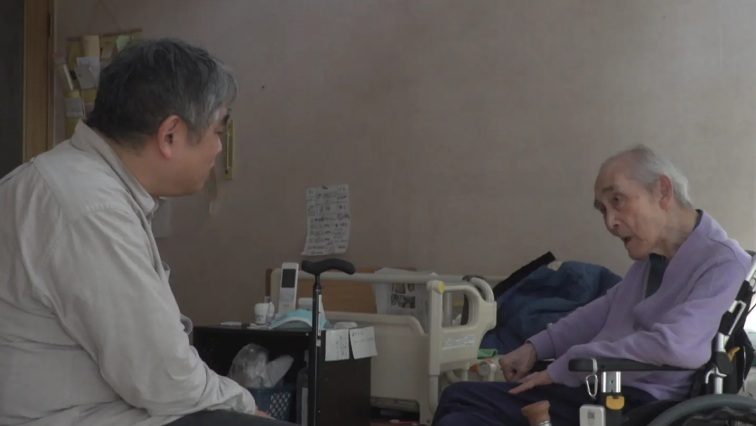

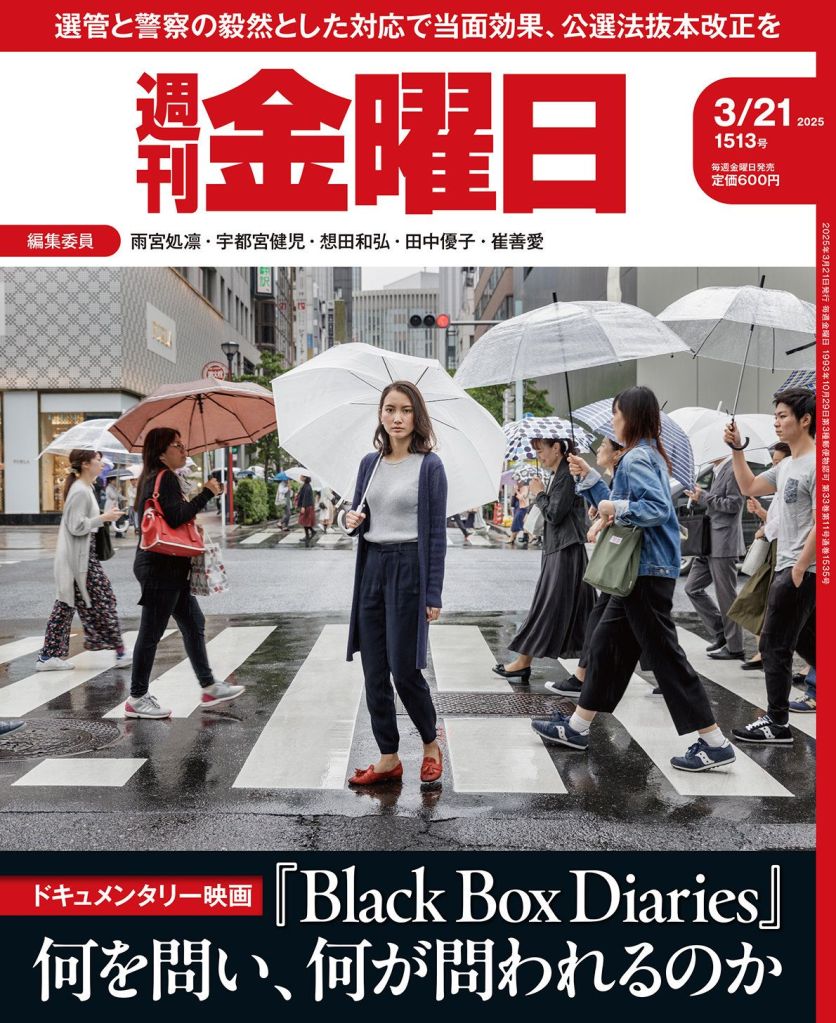
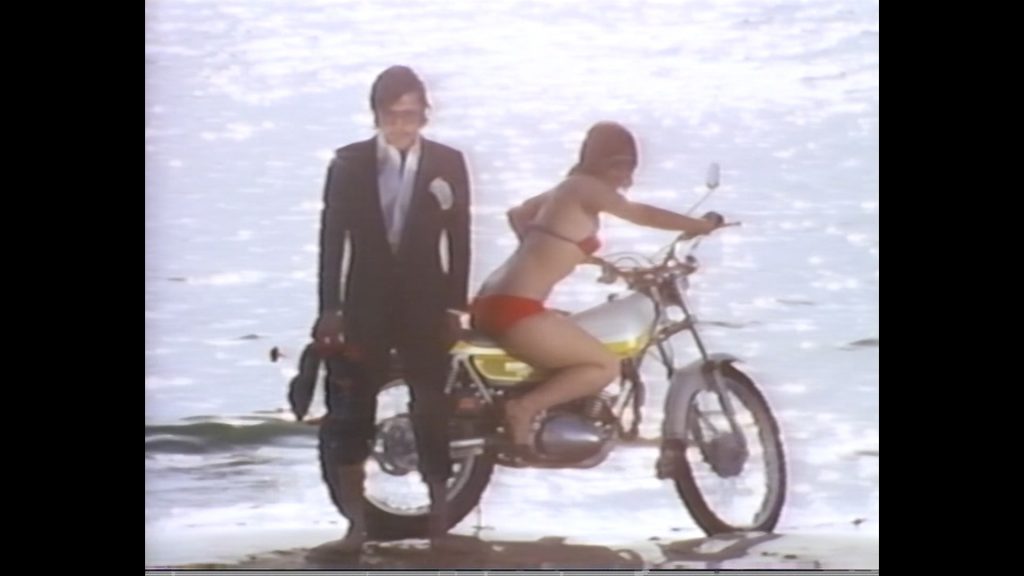


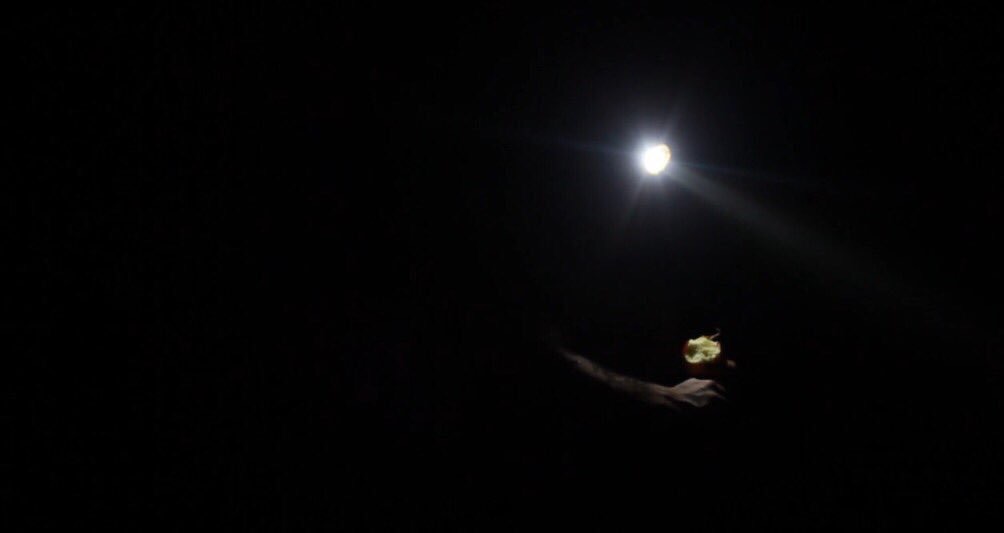
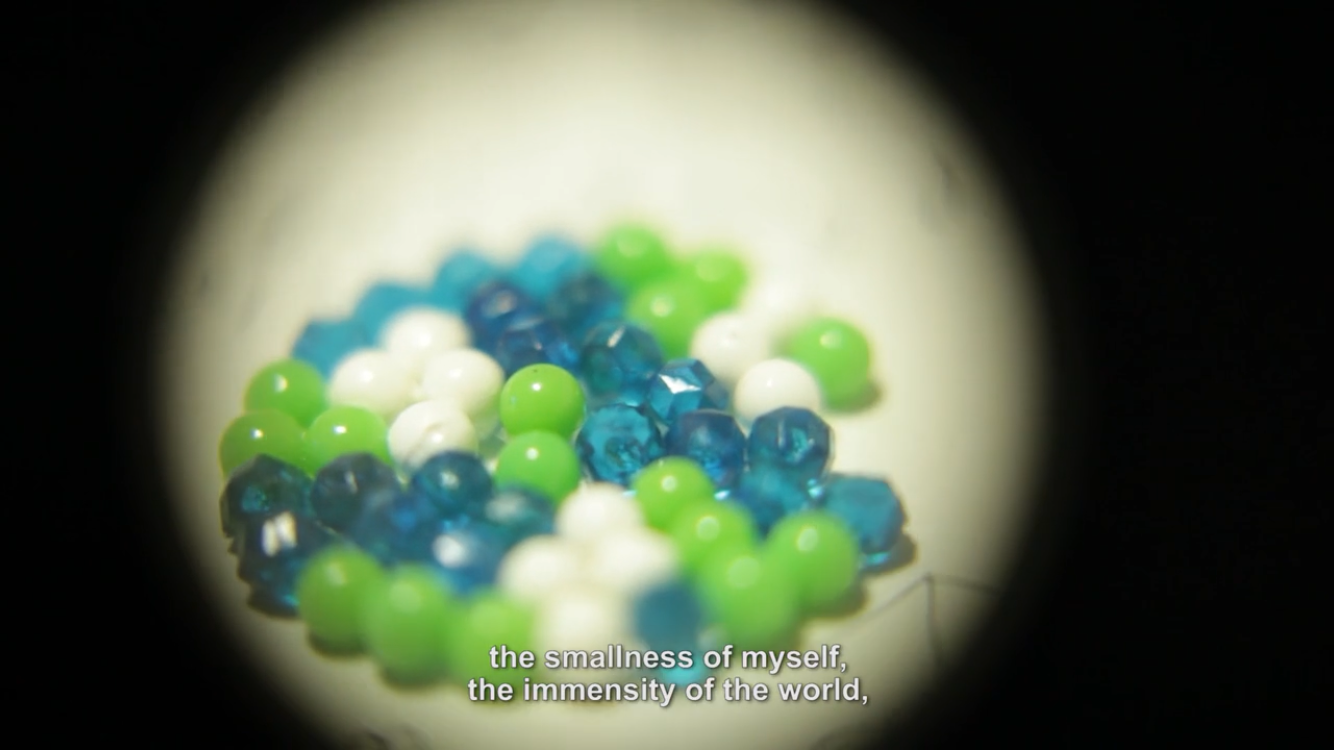
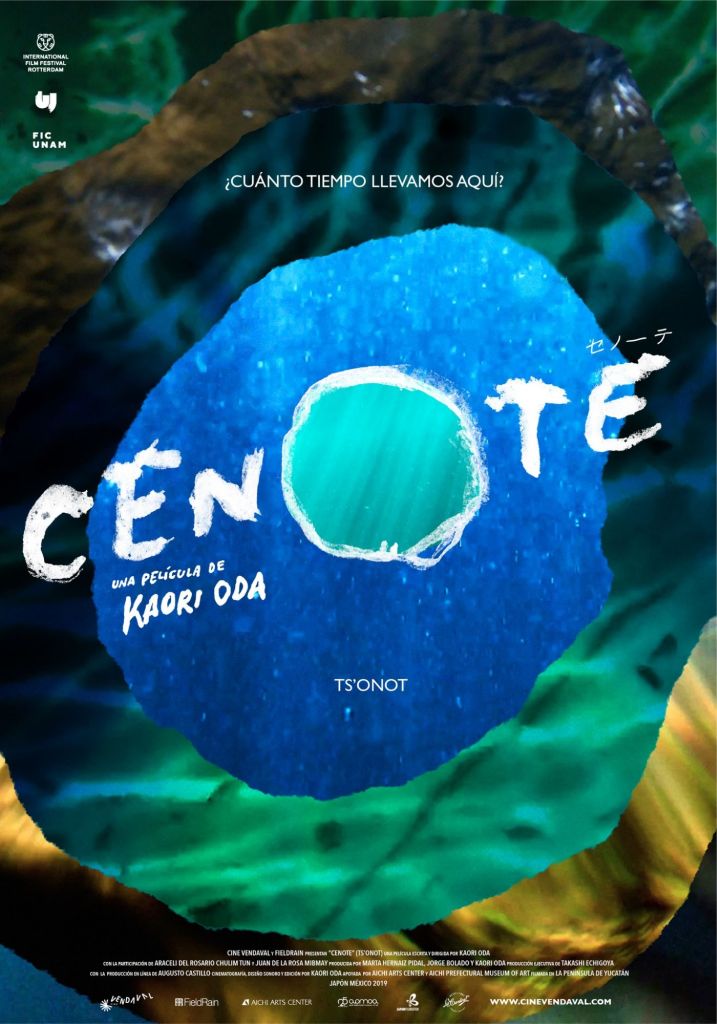






 Asian Docs
You must be logged in to post a comment.