Unedited notes on the Noda Shinkichi’s retrospective (October 2023, Yamagata). Days 1-2.

As a sort of work in progress, draft for a possible future research, or simply as a trace of a significant and very rare viewing experience, I have decided to publish, unedited, the notes and reflections I took while attending the Noda Shinkichi’s retrospective, organized at the Yamagata International Documentary Film Festival, in October 2023.
A total of 38 films were screened in 5 days, here are my notes on the first two days (you can read the synopsis of each film here, notes on the third day here).

Day 1

Renovating Farm Houses  (1941)
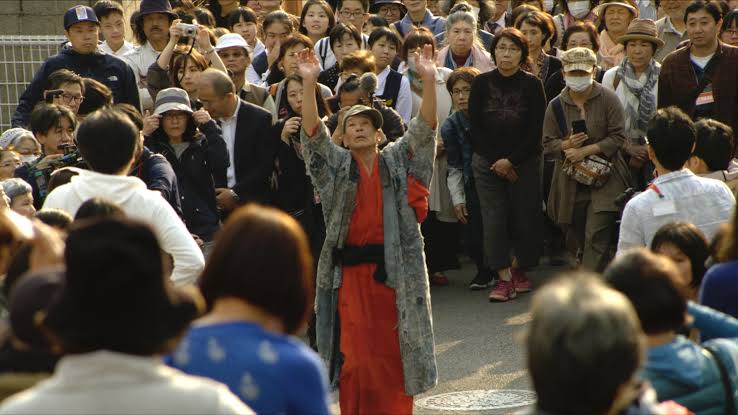
Festivals in Tohoku Part 1  (1956 )
Festivals in Tohoku Part 2 ( 1956 )
Festivals in Tohoku Part 3 (1957 )
Impressive use of colours, especially in the second film, where the parade reminded me of Rio’s carnival.

Forgotten Land: Record of Life Series II  (1958)
Impressive film, especially on a formal level.
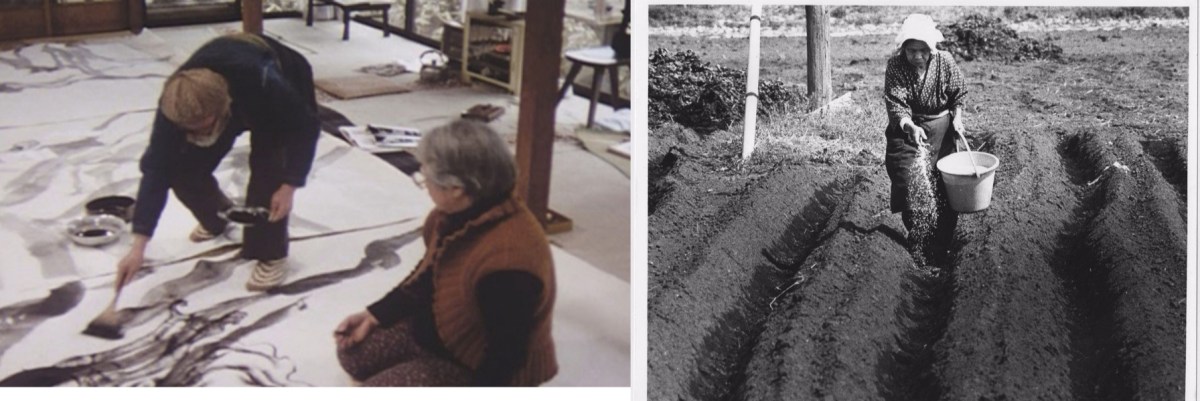
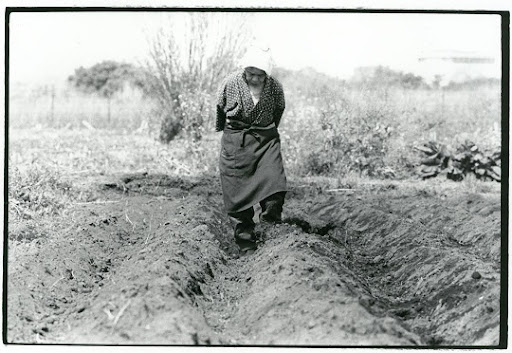
Opening: the camera pans on the faces of students, who are telling their dreams, mainly to leave the village. The use of editing reminded me of soviet montage, for example: close-up of a fisherman, fast cut to the sea and wave, or when the woman is ploughing the soil, the editing is almost in rhythm with her actions.
The soundscape has also a big part in the film: the sounds of waves penetrate each image, and each individual’s life, we are reminded that the sea is always there with its harshness
On the Method of Avant Garde Documentary by Matsumoto Toshio was published in June 1958, in Kiroku Eiga, the journal founded by Noda, Matsumoto and others.

The Girl of the Valley  (1949)
Fiction with a heavy touch of realism.
Making of charcoal is a theme recurring in all his movies about or set in Tohoku, signifying an old and severe way of living,

The Locomotive Kid  (1950)
The scenes about the train are beautifully filmed, I liked the transition from the kid looking at a photo of a locomotive to images of it.
The tone of the movie is definitely lighter than the previous one. Of course the train is the kid’s dream but also, as always, symbolises progress, especially for a rural area.
Slow paced.
Noda is good at directing kids. The two movies and Work in Retail (1951) reminded me of the films of Shimizu Hiroshi, the kids of course but also the tone (a mixture of serious and funny).

Day 2

The Unforgivable Atom Bomb: The Singing Voice of 1954 Japan  (1954)
Impressive film that reminds us the importance of utagoe festivals, and utagoe culture more in general. As we’ll see in the next couple of movies, singing while protesting gives the people an identity, unifies them. Each union or group has a different song.
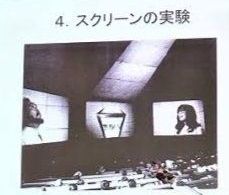
Formally the film alternates long shots, when we see the stage and groups performing on it, with images filmed close to the performers. As the movie progresses the images of the auditorium with all the people singing and moving together are used more often. Very impactful scenes.
Noda a couple of times cuts to images of strikes.
Chinese and Korean groups are also performing on stage, it is a very transnational movement, highlighting class struggle first, in this it reflects the political atmosphere of the 1950s. Women are very present and a very active part of the unions, at least it seems so from the film.
Utagoe as a convergence of popular and political is fascinating, it is popular before becoming pop (probably in the 60s)

On a side note, in the credits I’ve seen the name かんけまり Kanke Mari, she was a director of PR movies and documentaries active in the 60s and 70s (did a documentary on a railway workers strike screened at National Film Archive ), Noda writes about her in his book about documentary.

The Matsukawa Incident: Seeing the Truth Through the Wall  (1954)
Opens with images of a wall, silent, and then with organ music. From here we move to the court where we are explained about the incident, the official version.
The film is constructed as a counter story of the incident and does so in a very modern way that feels very fresh even today.
Interviews with the men wrongly accused, graphs and animation used to explain the movements of the suspects, scenes that feel almost reenactments (man walking along the railway).
The film takes its time in explaining the facts and in depicting the wrongly-accused men. It is strange to say, but it feels like a crime novel, there’s even suspense.

The Workers of Keihin 1953 (1953)
Film starts with the depiction of the workers on the way to their job place, bus, train and boat.
Use of photos.
During the demos, we often see the mothers with their kids.
Preparation for May Day, all the different unions and some new ones are formed (department stores, mainly women).
U.S. bases are considered responsible for the conditions of the workers, overworking, low salaries, etc.
This sentiment against the US is added to the one against the war in Korea.
As in the utagoe film, the events organised by the unions are horizontal in their scope, here we see a sports day organised for the Korean community in Japan. We also see support in China, Italy (just mentioned), and other countries.
Important: the unions/workers are reaching to the farmers to get their support against the use of Japanese land by the American bases (this predates the documentaries about the Sunagawa riots by Kamei Fumio and of course Ogawa Pro).
The farmer resistance of the 60s does not appear suddenly from nothing. 

June 1960: Rage Against the Security Treaty  (1960)
Dramatic music opens the film, from the very beginning it’s very noticeable how the style has evolved: fast cutting, shaky hand camera, many shots are from street levels and in the action (Sunagawa and Sanrizuka style), close-ups, direct sound…
Powerful scene: arrival in Japan of Ike, helicopter is landing among a sea of people protesting.
Farmers are more present here in the protests, Miike mine workers are also showing solidarity.
Spectacular images of protests in front of the American embassy and the National Diet Building.
Death of Kanba Michiko, killed in the protests. After the tragedy the movie goes silent for a couple of minutes showing mainly photos of people beaten laying on the street, powerful and violent images. Photos of prime minister Nishi are often used and stay on screen for quite a long period of time. 

The New Japanese Geography Film Series: Tone River  (1955)
The New Japanese Geography Film Series: The Roofs of Honshu  (1957 )
The New Japanese Geography Film Series: Tokaido, Yesterday and Today  (1958)
The New Japanese Geography Film Series: Villages of the Northeast  (1959)
What I remember of the four movies is that in one it is said that the modernisation of Japan, while obviously necessary, turns every city into something similar. The specificity is lost. 

Technique of Foundry: The Cupola Operation  (1954)
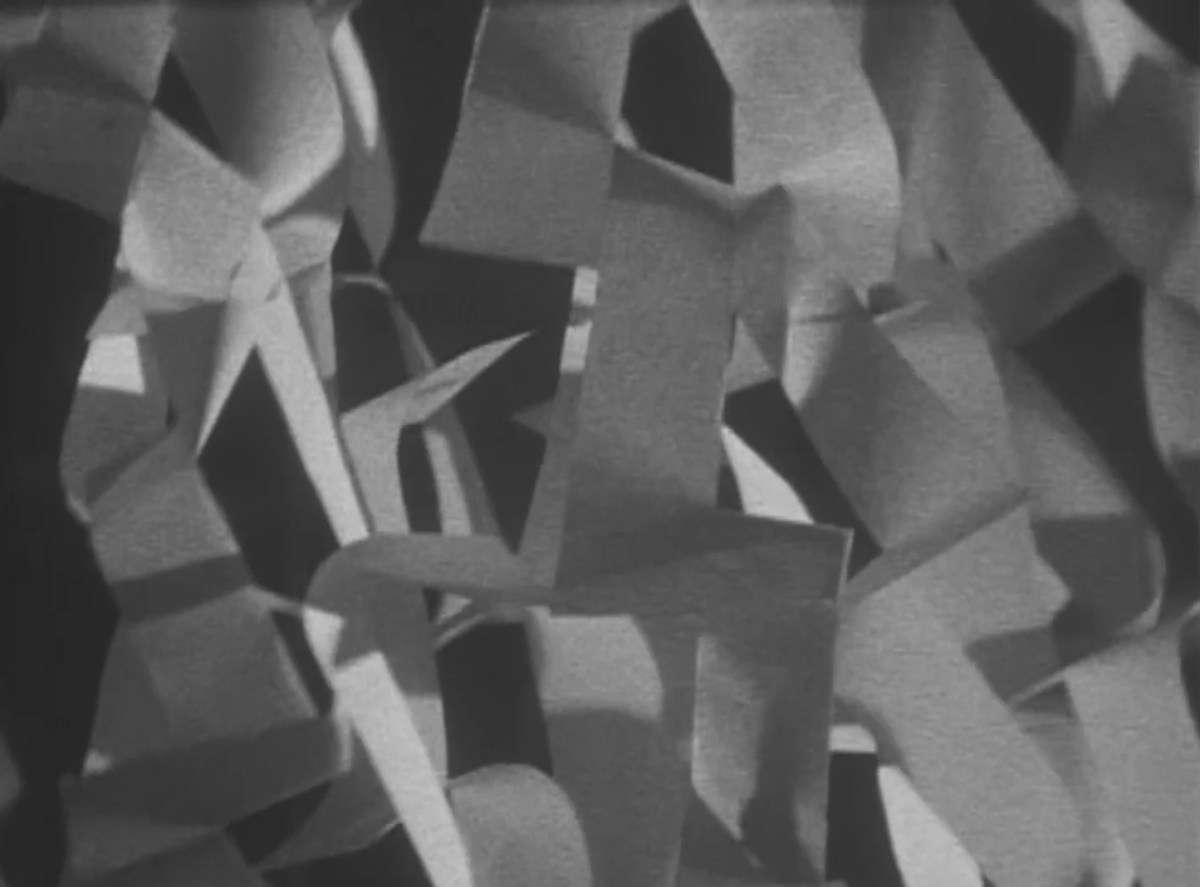
Experimental music used throughout. Images of melting metal are like abstract paintings, the camera stays on these images for long periods of time (considering it is a PR film).

Marine Snow: The Origin of Oil  (1960)
Well, a spectacle, the colours are amazing, the editing in a scene about the waves is almost  jump-cut.
Again, some images, are like abstract paintings, it’s science porn (like the rice ones in Magino).
Grandiose music. Commissioned by a oil company, thus partly celebrating the petroleum industry, and yet…

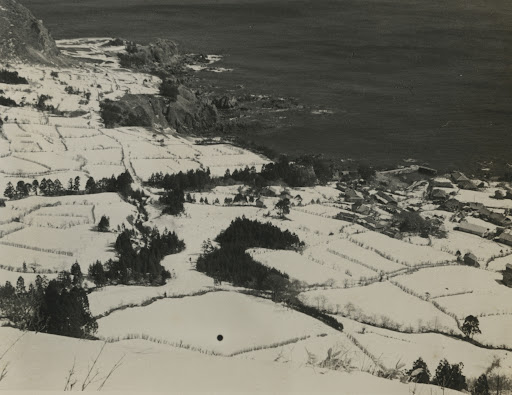
Country Life under Snow  (1956)
The colour palette is tone down here, what I remember is the music being similar to the one used in Godzilla.

Marine Snow: The Origin of Oil  (1960)

to be continued

Movie journal, autumn 2023: Echigo Okumiomote, And Miles to Go Before I Sleep, Ichikawa Kon’s Kyoto, Youth (Spring)

A couple of interesting documentaries I’ve watched recently, besides those I saw at the Yamagata International Documentary Film Festival.

Shot in four years, 越後奥三面 山に生かされた日々 Echigo Okumiomote: A Traditional Mountain Village (1984) follows the everyday life of Okumiomote, a mountain village in Niigata prefecture, near the border with Yamagata prefecture. The village, its inhabitants, the mountains, the forest and the rivers, form a fascinating ecosystem and microcosm of a life (1980-1984) dependent upon and regulated by natural elements and the cycle of seasons. This lifestyle and the specific traditions, customs and habits—performed, changed and improved throughout centuries by the inhabitants—would eventually disappear years after the documentary was filmed, due to the construction of the Okumiomote Dam (the area would be submerged).

The documentary has been recently digitally remastered and screened, together with other works by director and video ethnographer Himeda Tadayoshi, at a special retrospective organized at Athénée Français Culture Center in Tokyo. 

While the film opens with one of the villagers talking about the anti-dam movement active since 1971, the entirety of the documentary depicts matter-of-factly the various customs and jobs done in the mountains and in the fields (hunting, gathering, harvesting). Only the last 30 minutes are more a direct reflection on the disappearance of the village, and on the act of documenting its existence and preserving its memory on film. The documentary is narrated, or better, commented, in a very friendly manner, so to speak, by Himeda himself. The presence of the director and his troupe is never hidden, once we even see a special meeting, requested by Himeda himself, when the village’s hunters are strongly opposing the presence of the camera during their upcoming bear-hunting trip. This film pairs very well, thematically but not stylistically, with Haneda Sumiko’s 早池峰の賦 Ode to Mt. Hayachine, filmed almost during the same years in the mountains of Iwate prefecture.

Echigo Okumiomote was accompanied by a publication of a huge volume about the life of the village, an ethnographic study and document of the area (I own it, I might return to the movie and the book in the future). Himeda would return to Okumiomote in 1996 to film a new work, 越後奥三面 第二部 ふるさとは消えたか Echigo Okumiomote dai ni bu furusato wa kieta ka, about the situation after the people of the village were forced to relocate. One of the discoveries of 2023 for me.

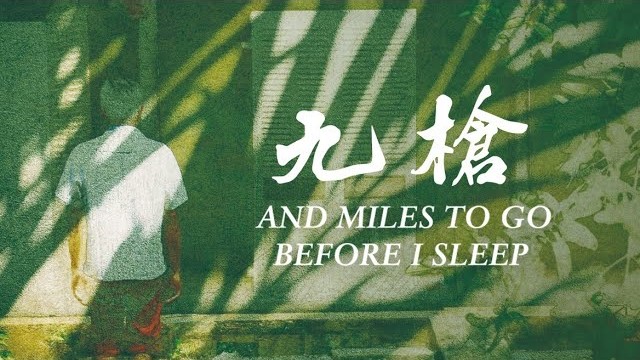
Nguyen Quoc Phi was a Vietnamese migrant worker, who on 31 August 2017 was reported for a car theft in Hsinchu County, near Taipei. On the same day, he was shot nine times by police officer Chen Chung-wen. He was left bleeding on the ground, and tragically died on his way to the hospital. A part of the public in Taiwan supported Chen’s use of firearms against the runaway immigrant who resisted arrest. 

And Miles to Go Before I Sleep (Tsai Tsung-lung, 2022) is a documentary that asks the viewer uncomfortable questions, first by sketching the situation of immigrant workers in Taiwan (regular and irregular), and then by using images filmed by the body cameras of the policeman who shot Nguyen to death. These are very tough scenes to watch: after being shot, the young man lies down completely naked, slowly dying, with the officers observing and walking around him. It could be said that these scenes are exploitative, but as some viewers have commented, they also could function as a sort of “visual moral report”. I’m not sure I agree with the statement.

While as a document of a shocking and tragic event, the work has its merits, I think it meanders too much from the scene of the death, to others with the family of the deceased or where the conditions of immigrants are explained, losing in the end its focus. 

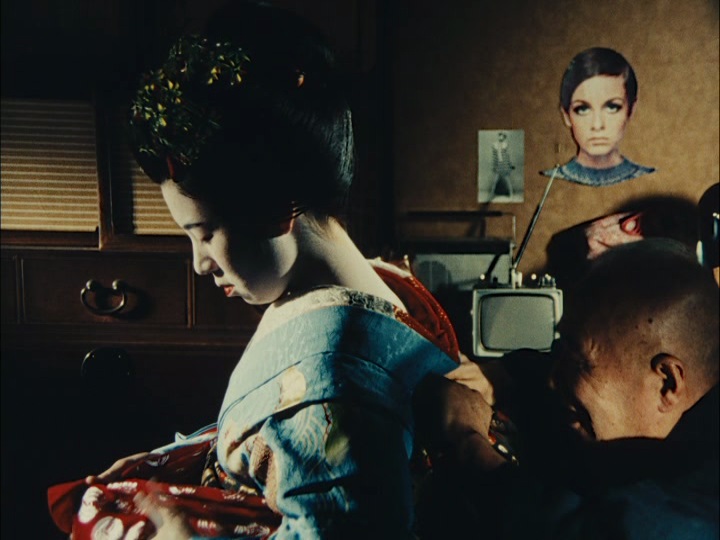
While as an experimental film made of and about things, rocks, textiles, roof tiles, wood, and houses, Kyoto by Ichikawa Kon (1969) is extraordinary, also because of the experimental music by Takemitsu Tōru. As a documentary about Kyoto (or Japan more broadly ), the narration and the film itself are orientalist at best, even if it was written by a Japanese. In this respect, it should be noted that the film was commissioned by the Italian company Olivetti, so there’s the usual “I’m giving you what your image of me is” typical of some cultural products made for export in Japan. Ichikawa’s editing here starts (or perhaps it had already started before) to become almost subliminal. For more extreme examples, see his post Inugami Family’s production. 

I watched the version with English and Italian narration. I would need to check out the Japanese version as well to properly assess the film. 

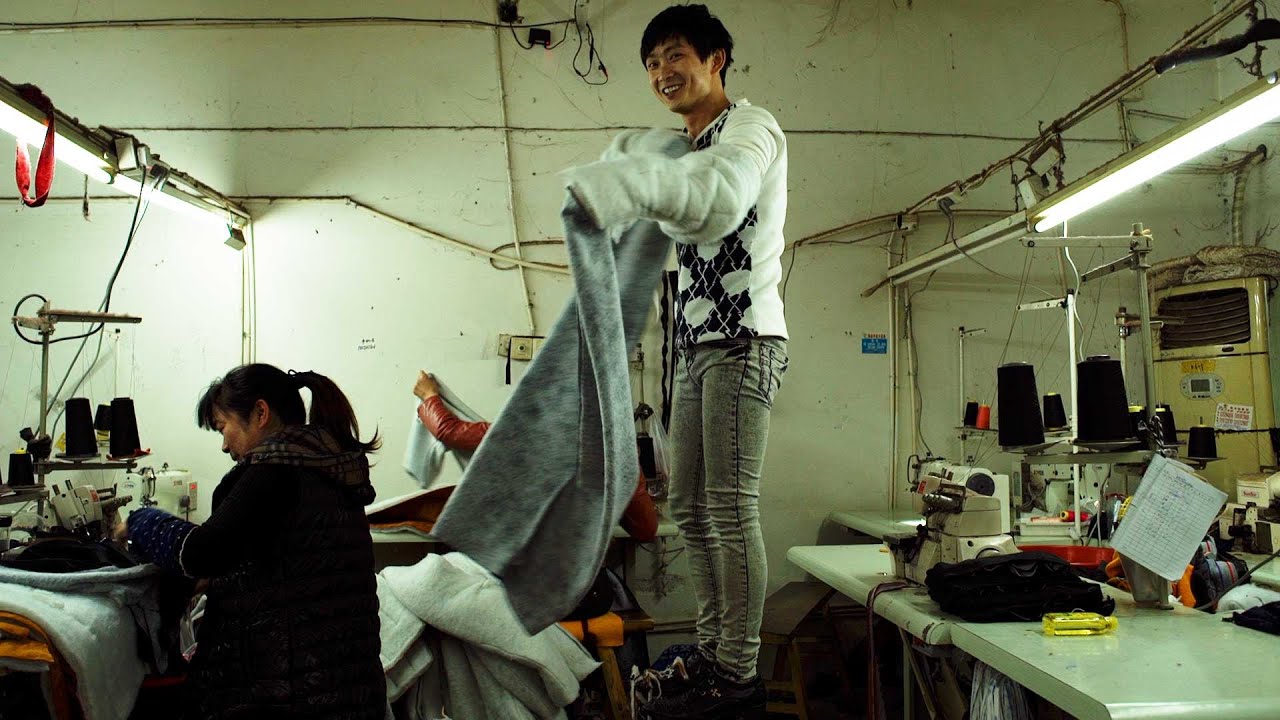
Wang Bing’s Youth (Spring) was a fascinating viewing experience, for me also because of the long time it took to be completed: it was shot between 2014-2019 and edited/released in 2023. At the same time, I share some of the doubts expressed in this review, points that are not really about how the work is constructed or filmed, but more about the very meaning of the project itself (it’s only the first installment of a trilogy, apparently).

Sometimes the documentary felt like a Big Brother shot in a factory, that is to say, very performative in some of its parts. In the age of YouTube and tik-tok the young generations know very well how to behave when a camera is in front of them, thus, even though it goes against Wang Bing’s style, a certain dialogue with the camera (I’m sure there was, but was cut) would have made the documentary more “authentic”, so to speak. After watching the film, I had the distinct feeling that something was missing and had been cut out. 

Having been filmed almost 10 years ago and for 5 years, I also would have liked to see the year of filming for each segment.

Tanaka Min, 名付けようのない踊りThe Unnameable Dance (Inudō Isshin, 2022)

Tanaka Min is one of the contemporary Japanese artists I admire the most, both for his past as a butoh performer—a definition he has openly and vehemently refused to used in recent years—and for his connection with Gilles Deleuze and especially Felix Guattari, an encounter that resulted, in 1985, in the volume 光速と禅炎 Agencement ’85. Last but not least, I’ve always been fascinated by the turn that Tanaka’s career took around two decades ago, a change that made him a movie actor appreciated for his powerful and magnetic presence on screen. Not only a performing body in service of documentaries with an experimental touch, such as the beautiful ほかいびと 伊那の井月 Hokaibito: Ina no Seigetsu (Kitamura Minao, 2012), and the delirious piece of performance that is 始まりも終わりもない No Beginning, No End, directed in 2013 by Itō Shunya of 女囚701号/さそりFemale Prisoner #701: Scorpion fame. But also for his presence in more mainstream movies, and his work in voice acting for feature animations.

名付けようのない踊りThe Unnameable Dance (2022) is a documentary that retells, using Tanaka’s own narration and words, and in an episodic and at times syncopated way, some of the events and encounters that guided his life as a performer. Tanaka recalls, for instance, his meeting with Hijikata Tatsumi and the discovery of his revolutionary performances in the early 1970s. Or dancing in Paris in 1978, a trip that de facto launched his career, not only internationally but also in Japan. During one of his trips to France, Tanaka had also the chance to meet Roger Caillois, a writer and philosopher he strongly admired, and for whom he insisted to dance. The title of the movie, The Unnameable Dance, is, as a matter of fact, taken from a sentence Caillois used to describe Tanaka’s performance.

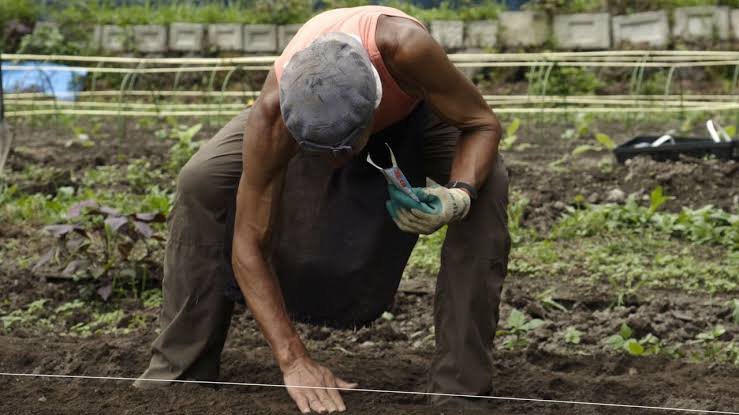
The documentary, directed by Inudō Isshin, covers also Tanaka’s debut as an actor in Yamada Yōji’s Twilight Samurai, an event that kicked off, at age 57, his career on the big, and small, screen. A part of the documentary is also dedicated to Tanaka’s work as a farmer, an activity very important for his philosophy, because, as he famously stated, “In agriculture one can find the anti-modern coming from the past. There you find the concreteness of the present.”

The recalling of all these experiences is interspersed with some of his more recent performances, always awe-inspiring, even when mediated through the camera. These performances were recorded in Japan and abroad, Paris and Portugal play a big role in the work, the latter is not only the place where the documentary begins and ends, but its music (Fado?) accompanies the whole documentary.
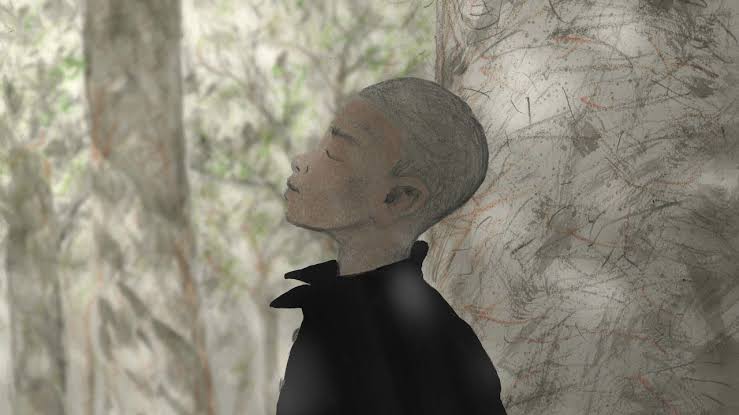
Another fascinating quality of the film is that the performances and scenes with Tanaka on screen are interspersed with Yamamura Kōji ‘s beautiful and effective animation, used mainly to depict Tanaka’s memories and dreams as a child.
Particularly significant is also how the documentary includes purposely the audience, their faces and their reactions, when filming Tanaka’s performances in public spaces. There’s not attempt to hide or cut out the people watching and taking videos and photos with their smartphones, since for the Japanese performer “dance cannot be owned; dance is born in the space between; the viewers become dancers too”.

On Yamazaki Hiroshi, Heliography, Magino Village, and Ātman

I’ve been fascinated and captivated by Yamazaki Hiroshi’s works, both still and moving images, since the first time I discovered them in 2018, at the Image Forum Festival.

Reading about his approach to photography in the catalogue of one of his exhibitions, and finding ‘Ugoku shashin! tomaru eiga!‘(Moving photos! Still movies!), the book where he recounts part of his life and career, made me appreciate his artistic output even more.

Moreover, it a was a revelation to discover (how did I miss it!?) that Yamazaki was behind the time-lapse sequences shot for Magino Village – A Tale / The Sundial Carved with a Thousand Years of Notches (1986) by Ogawa Production, and that he worked as a cameraman in Matsumoto Toshio’s Ātman (1975).

Chute, an experimental film cooperative based in Istanbul and The Hague, offered me the chance to gather my thoughts on Yamazaki, Heliography (1979), and what I’ve called “the solar connection”.

The piece is available here.

In the article I’ve only scratched the surface of what could, and frankly should, be written about Yamazaki. His engagement with moving images, the relation between his films and his work in photography, his method, and his position in the history of experimental cinema in Japan.

Soon after the article was posted, more thoughts started to coagulate in my head, and I was also told that Matsumoto wrote a piece on some pre-Heliography experimental films by Yamazaki. The journey has just started.

Report: screening of Gama (Oda Kaori, 2023) in Toyonaka

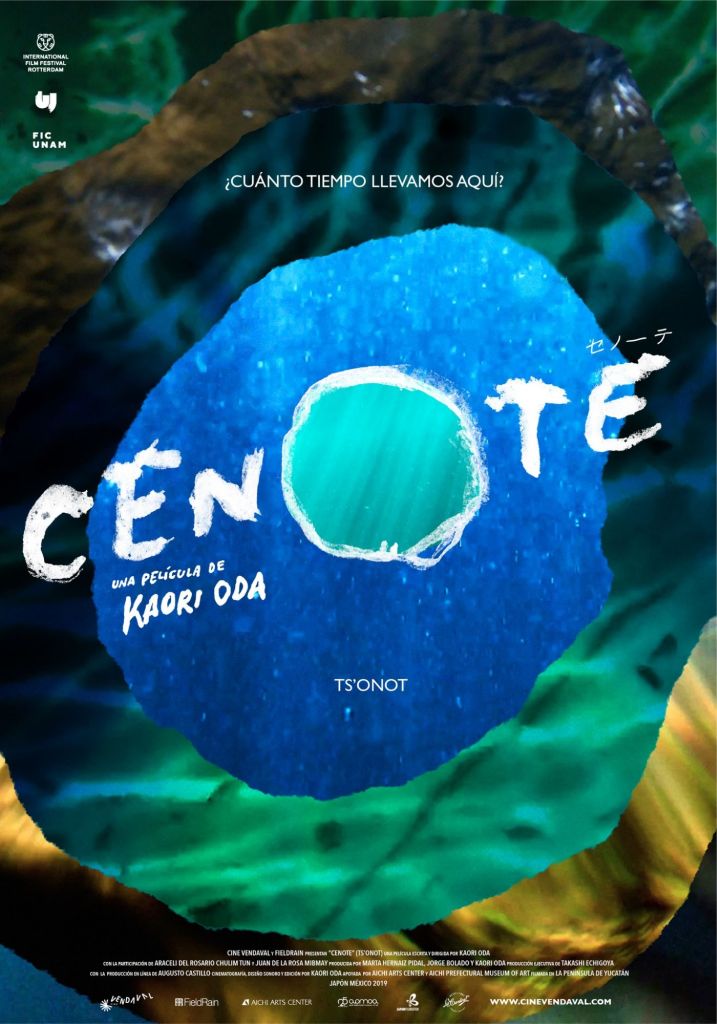
At the end of last January, I had the pleasure of attending a special screening of Gama, the latest project by Oda Kaori, a talented filmmaker and artist whose previous works I covered in the past for this blog, and for various other outlets (review of Aragane, interview with Oda, review of Cenote).

The work was screened in the city of Toyonaka on January 27th, and was commissioned by the Toyonaka Arts Project 2022. From Oda’s perspective Gama is also a second chapter of sorts, or a “trace” so to speak, of an ongoing project, a movie that will come out next year, Oda is developing about underground areas in Japan, underground both in its literal and figurative sense. The first chapter of this project is a visual installation produced by the Sapporo Cultural Arts Community Center, and projected on an ultra-wide horizontal screen in a underground pedestrian passageway in the city of Sapporo, Hokkaido. The work, also titled Underground, is being screened until the end of March, alternated with works by artists such as Apichatpong Weerasethakul (The Longing Field) or Rika Noguchi (Insects/ Leaves/ Songs of Birds), as part of a project called Nishi 2-Chome Chikahodo Video Creation. Here the official description of Oda’s installation:

Kaori Oda “Underground”
2022 | 09’37”
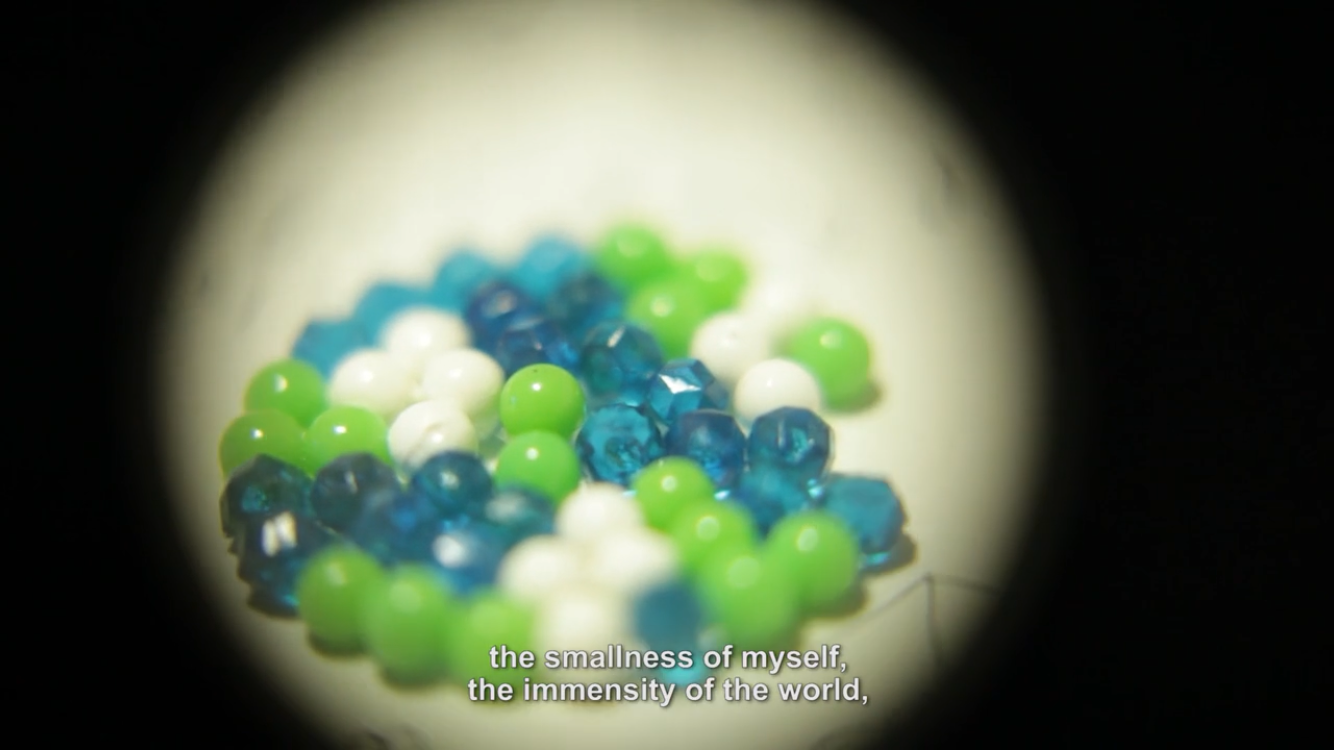
Kaori Oda consistently seeks for human memories―Where are we coming from and where are we going to―. In this piece, she dives into the underground paths in Sapporo beneath its enormous landscape aboveground. She projects everyday lives and sound footages of Sapporo in the past decades, as well as repetitive caves and holes, or images of the universe. The locations where she projects these moving images are normally closed to public. This film shot in 16mm considers layers of the time lived by the people, redefining them as multi-track timeframe. It invites us to imagine the space where we exist now as well as the very beginning of time.

Back to Gama, the work screened in Toyonaka. The film takes place entirely in Okinawa, and the connection between Toyonaka, a city located in Osaka prefecture, and the Ryūkyū archipelago has a history that goes back after the war, when in 1964 the city of Koza, now Okinawa city, started to send sacred stones and hibiscus flowers to the families, living in Toyonaka, of people who died during the war in Okinawa. The film is shot mainly in natural caves (gama), where civilians took shelter during the early stages of the Battle of Okinawa (April-June, 1945). One of these though, the so-called Chibichiri Gama, tragically ended up becoming the site of a mass suicide, when people were told that American soldiers would eventually kill them all. If I’m not wrong, there’s another cave also mentioned in Gama, one where the Okinawans who took refuge surrendered, because they were told by people who lived in Hawaii that U.S. Army would spare civilians.  

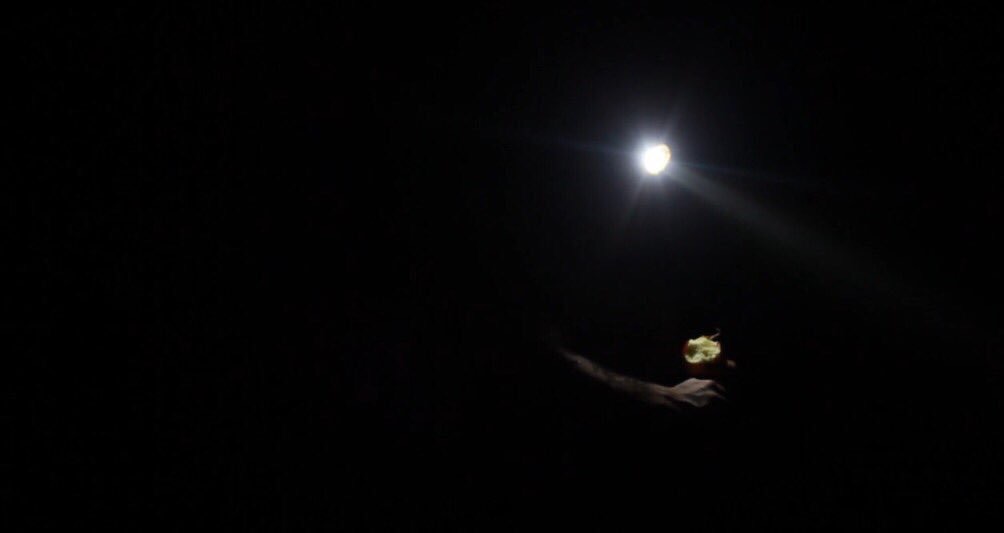
I think it is fair to say that Gama is, formally, a slight departure from Oda’s previous works, at least the feature-length documentaries, and for a couple of different reasons. The first and major one is that the movie has a strong performative element to it, one that was almost absent in Aragane, Cenote or Towards a Common Tenderness. In the film, the caves are used as a set for the stories told by a local guide, who specializes in the history and stories connected to the caves, and who is very passionate about his “job” to the extent he considers it a mission. Engulfed in the darkness of the cave, with just some blades of light cutting the frame, these tragic stories about women, children and old people fearing for their life are declaimed as in a recital. There’s a certain singsong rhythm to the way the man tells his stories, that gives the movie almost a hypnotic sonic quality. On the visual aspect, the play between darkness and light—it is worth mentioning that the work was shot on film—and the balance/imbalance of artificial and natural elements in the frame, make the movie fascinating to look at, and at times looking like a painting. Going back to the performative element, an important and central part of the work is the presence of Yoshigai Nao, a dancer and filmmaker (Grand Bouquet, Shari) who, according to what was said in the talk after the screening by herself and Oda, is for the movie not only an actor or a performer serving the director, but more a member of the staff, she actively participated in some filming decisions as well. Interesting and connected to what we wrote above about Gama being a work that signals a divergence from her previous modus operandi, is also the fact that the movie is the first work Oda did not film herself, it was shot by another female filmmaker and cinematographer, Takano Yoshiko, she was, among other things, the cinematographer for Saudade by Tomita Katsuya (2011).     

While the guide is reciting his stories, Yoshigai, in the film dressed in blue, moves, crawls, and almost dances throughout the cave, a phantasmatic figure, she plays the role, in Oda’s own words, of the “shadow”, possibly conveying presences from the past, human or non-human. The compresence of human histories, in this case tragic war memories, with the geologic time, millennia that here shaped the caves, while not directly expressed, is one of the themes that lies at the core of Gama (and is prominent in Cenote as well). The cave has at its bottom, and is itself composed of, layers of minerals, micro-organisms, animals’ bones, and human bones. Traces of historical and geologic time that are here overlapping.  “Traces” is an important concept for approaching Gama and more broadly Oda’s works, not only because of what we just wrote, but also because of a certain scene in the movie. While the guide is telling his stories, the screen goes completely black, Oda explained that she just turned off all the lights leaving the cave in its natural darkness with the man speaking. As an after effects—this was discussed in the talk after the screening and Oda said she did not notice it at first—the shape of the man and the outlines of the rocks stay for a couple of second on the black screen, giving a sense of a phantasmatic presence, of something that manifest itself while not being there. As a common thread running through her films, it is fascinating to notice how Cenote explores something similar, not formally, but thematically, the presence of the dead both in the sinkholes, and in the Maya ceremonies shot in 8mm.

One of the formal choices that have become a sort of signature of Oda’s style, an abrupt cut from darkness to light and from noise to silence, moves the focus of Gama from the cave, where the guide and his group are searching for and separating human and animal bones, to the outside, where the screen is filled with the blue of the sea and the sky, and the white of the coral beach. Here Yoshigai is playing with pieces of coral, themselves remnants of past lives, making a light and soothing sound with them. The peace of the scene is interrupted, by pure chance according to the director, when the deafening sound of an American aircraft passing nearby transforms the scene into a scream, reminding us, the viewers not the people of Okinawa, about the reality of the physically oppressive presence of the American Army in the archipelago.

As in her previous works, but in Gama is something more prominent, the underground space with its darkness and depth seems to be the perfect locus solus where different times, and different (hi)stories intermingle and intersect. It will be fascinating to see how Oda will be able to organize and infuse these ideas in her next feature-length work.

Kobe Discovery Film Festival 2022 – dispatch 3: Koike Teruo’s screen memorial

Third and final dispatch from this year’s Kobe Discovery Film Festival (first and second here and here)

My last day at the festival coincided with the screening of four programs: the state of film preservation today, actor Hayakawa Sessue, the 100th anniversary of Pathé Baby, and a selection of works by Koike Teruo, experimental filmmaker who passed away last March.

Film, the Living Record of Our Memory (2021) is a documentary directed by Inés Toharia, where film archivists, curators, technicians and filmmakers reflect on the current state of film preservation, why it is a vital part of our culture, and how film archives in different countries are facing a set of very different problems. The second screening of the day was Where Lights Are Low, a silent drama directed by Colin Campbell in 1921, with protagonist the Japanese Hollywood star Hayakawa Sessue. I had already watched the movie before, on the streaming edition of the Pordenone Silent Film Festival during the pandemic I believe, but to experience it on the big screen with a live accompaniment was a delight. 2022 marks the 100th birthday of Pathé Baby, to celebrate it, a group of people, lead by Anna Briggs, Michele Manzolini, and Mirco Santi, in conjunction with the association INEDITS Amateur Films / Memory of Europe, assembled a montage of amateur films shot in 9.5mm from around the globe, 9 1⁄2 the title. The work is a visual symphony of everyday life, as it is called in the introduction, that, for its moments of unexpected poetry, reminded me of Liu Na’ou’s The Man Who Has a Camera.

Experimental filmmaker and visual artist Koike Teruo passed away on March 18th, KDFF 2022 dedicated to the director a special program comprised of four of his works, three of which are part of his life-long series Ecosystem, which Koike himself described as something that “has grown as a sort of giant tree for me”: 生態系 -5- 微動石 (1988), 生態系 -20- ストーン (2013), and 生態系 -27- 密度1(2018). One of the four, 衝 (1995), is a short piece, a sort of documentary, shot in Kobe in the aftermath of the earthquake that hit the area on January 17th 1995. Besides the works themselves, a wave of materiality that inundates the viewer with their rhythm and editing speed, especially when experienced on a big screen, what turned out to be particularly interesting for me, was the talk after the screening. Researcher Tanaka Shimpei talked about the importance of Koike in establishing the experimental scene in the Kansai area through events and independent screenings (自主上映会). As Tanaka writes in the catalogue ECOSYSTEM Teruo Koike Visual Works 1974 – 2020:

The career of a prominent visual artist Teruo Koike must be reconsidered through not only his film making which includes collaborations with various modern dances and his improvisational music performances, but also his aggressive independent screening activities which have been maintained since as far back as around 1980’s. And not only should we look back on his rich filmography centering on the “Ecosystem” series, but also by reviewing Koike’s screening activities engaged around Kobe.

Born in Ichinomiya city, he graduated in Kobe, and after his experience in Iran at the end of the 1970s, where he worked in a petroleum complex, and where he experienced first hand the Iranian Revolution, Koike returned to Japan, started again to make films, and began to organize screening events. In 1980, together with Okuda Osamu founded Cosmic Caravan (1980-1982), a group engaged in showing and making experimental movies. After this experience, Koike and others, among whom Zeze Takahisa, formed Voyant Cinémathéque (1983-1996), a group active for more than a decade in Kyoto, Osaka, and Kobe, that promoted experimental cinema, and helped new artists by providing them venues for showing their work. Koike continued to be very active in showing and organizing events (installations, visual performances) in the new millennium as well, he learned to play the Japanese flute in the mid-1990s, and often accompanied the screenings of his works, not only with his live improvised performances, but also with professional dancers.

The Written Face (Daniel Schmid, 1995)

Presented in its 4K restored version last summer at the Locarno Festival, 書かれた顔 The Written Face (1995) offers a fascinating and at times experimental portrait of Bandō Tamasaburō, kabuki actor known in Japan especially for being one of the most talented onnagata ever, a man who plays the role of a woman in traditional Japanese theatre. Bandō has also directed a couple of movies, and appeared as an actor in a number of films, among which I would like to highlight at least 夜叉ヶ池 Demon Pond (1979), an excellent movie by Shinoda Masahiro, with an outstanding performance by Bandō in the double role of a girl and a mythical princess.
The Written Face is a Japanese-Swiss coproduction directed by Swiss filmmaker Daniel Schmid, who assembled together Bandō’s on-stage performances, which make up the bulk of the film, with interviews of artists he was inspired by, such as actress Sugimura Haruko, the face of many works by Ozu and Naruse, dancer Takehara Han, the elderly geisha Tsutakiyokomatsu Asaji, and Ohno Kazuo, the great butoh dancer, subject of another movie directed by Schmid and also released in the same year, Kazuo Ohno (1995). The movie is also punctuated by short interviews with Bandō himself, and wrapped up with a film within a film, Twilight Geisha Story, a short movie without spoken words starring the actor himself in the role of a geisha at the end of her career.

The Written Face opens with Bandō on stage, his performance, however, is filmed from the side and not frontally as seen by the audience. These scenes are alternated with brief passages in which the actor strolls through the streets, or explores the stage and the areas surrounding it, as if he were watching the performance he himself is acting in. Once the show is over, after the roaring applause of the off-camera audience, the film shows Bandō removing his make-up, the white patina covering the face, the wig, the heavy dress, and profusely thanking the musicians. At this point we cut to the actor in plain clothes chatting with a child, probably his young son, who is playing with a portable video game. While the scene itself is very brief and not too significant in itself, when considered in the context of the movie, so far made mainly of acting on stage, ritual gestures and traditional music, it represents a counterpoint that zooms us out of the stage performances, and anchors the film to the time it was filmed, the 1990s. While most of the movie, as written above, is made by the beautifully choreographed performances of Bandō, everything else that surrounds them— interviews, words, and “pillow shots”— functions as an indirect explanation of his artistic approach, and partly as a deconstruction of what is happening on stage. One of the crucial points of the movie is when we first hear Bandō’s voice reflecting on his art and approach. He is sitting in a hotel facing what is probably Osaka Castle at sunset, and explaining to the interviewer what he is trying to express when he takes the stage as onnagata: “I do not represent a woman, but I suggest the essence of women. That is the nature of the onnagata, isn’t?”.

In order to do so, Bandō has often seeked inspiration, throughout his career, from the art of the four aforementioned figures, each of them representing a different and unique type of femininity. A clip from Naruse Mikio’s 晩菊 Late Chrysanthemums (1954) suggests the particular type of femininity, strong and direct, Sugimura often represented in her long and glorious film career. At the other end of the spectrum, the dancing body of Ohno, 88 years old at the time, immersed in the blue of dawn, and surrounded by water, captures and expresses something more ethereal and dreamlike. Ingrained in the nihon-buyō‘s tradition are the dance movements that Takehara performs for the film, delicate, elegant, and almost imperceptible, while the voice of Tsutakiyokomatsu, trembling but still full of life, is a sign of a fierce vitality, she was 101 years old at the time of the shooting.


After the short Twilight Geisha Story, a segment about twenty minutes long, which perhaps represents the weakest part of the work, in the last ten minutes, the movie returns to a kabuki play with Bandō protagonist. The performance is Sagi Musume (1762), also the opening performance of the documentary, one of the most famous and celebrated kabuki play in Japan. It is the story of a girl, abandoned by her lover, who is transformed into a heron and dies on a snowy night. Bandō’s performance is here breathtaking in its beauty.

Haneda Sumiko’s writings /5: from “Ode to Mt. Hayachine 早池峰の賦”

Fifth part of an ongoing series of translations dedicated to the writings of Haneda Sumiko (4th here, 3rd here, first and second here and here)

The short passages translated below—from 早池峰の賦 published in 1984—are very important and central to properly understand Ode to Mt. Hayachine, and more broadly, Haneda’s approach to documentary filmmaking. Just to provide a bit of background: Haneda discovered yamabushi kagura in 1964 in Tokyo, and the following year, the beauty of the performances and their connection with Tōhōku, when she visited Ōtsugunai, where she attended a kagura performed in an old magariya, an L-shaped farmhouse typical of the area. When she went back to the town in 1977, she noticed how the magariya and the culture associated with them were slowly disappearing from the scenery. She really wanted to start her documentary from a performance held in one of these old houses, an image that had stayed in her mind for decades, but instead she decided to go the opposite direction and started the movie by filming the demolition of one of these old farmhouses. It is interesting to note that, the first and shorter version of the documentary, 早池峰神楽の里 Hayachine kagura no sato, opens with kagura performed in the entrance of an old house, not a magariya, if I’m not wrong, and that the demolition scene is absent.

NOTE: This is by no means a professional translation, but I hope the readers can get the gist of it:

I first became aware of the Tōhoku region when I was in primary school, and read about a famine in the area in a children’s book. I think this was probably about the great famine of 1934. I had completely forgotten what it was about, but the tragic impression stayed with me for a long time. So when I think of the Tōhoku region, the first thing that comes to mind is a dark and impoverished image.

When I thought about making a movie about Hayachine kagura, I thought that Kagura is like a flower that blossoms and has its roots in the soil, that is, the harsh living conditions of the Tōhoku region. The true value of the flower cannot be understood unless it is depicted together with its soil. But how should this soil be expressed? In 1979, this was quite difficult.

When I first visited Ōtsugunai in 1965, the old farmhouses were still there, and the atmosphere of the old times was still strong. However, the rural landscape has now completely changed. Wide paved roads. Large concrete buildings. Houses just like in the city. Colourful tin roofs reflect the sunlight, and there is no longer any sense of history, poverty or darkness. I was at loss in front of this rural landscape.

The image of kagura I had in my mind was the one I saw during my first trip to Ōtsugunai [in 1965 when Haneda attended a kagura performed at the entrance of an old magariya, t/n]. I tried to find a place that somehow came close to that image, and in my mind I was constantly trying to recreate a scene like that. However, I soon began to feel that there was something wrong with obsessing over only old things. I realised that in order to depict the life of kagura, which has continued to live until today, even when the houses are new and the roofs are red, first of all it was important to accurately capture the present life of the farmers, and I also realised it would be a mistake to go too far in pursuing the perfect form, and thus to lose the vitality of the present. I was forced to change my methodology.

I thought that starting the shooting with the destruction of the magariya was quite symbolic. I filmed the demolition of the magariya as a symbol of the transfiguration of the rural areas in the Tōhoku region, but it also became the “demolition” of my own way of thinking. It doesn’t matter if the magariya are no more. It doesn’t matter if the roofs are blue or red. I wanted to make this work as an expression of the spirit of the farmers in Tōhoku, beyond what is visible to the eye, and as an expression of the ever-changing flow of history.

(pp 81-82)

Haneda Sumiko’s writings /4: from “Ode to Mt. Hayachine 早池峰の賦”

This is the 4th part of an ongoing series of translations dedicated to the writings of Haneda Sumiko (third part here, first and second here and here)

Distributed by Equipe de Cinema, 早池峰の賦 Ode to Mt. Hayachine (a.k.a. The Poem of Hayachine Valley) is the second work conceived and directed independently by Heneda Sumiko. The movie was released in 1982 at Iwanami Hall, where it stayed from May 29th to June 25th (and later, due to its success, again from August 7th to 13th). A booklet about Haneda and the movie was published and sold at the theater, and more importantly in 1984 Haneda published 早池峰の賦 (Hayachine no fu), a fascinating volume about the origin, production and shooting of the film, how the various versions of the documentary came about, and about her relationship with the people of Take and Ōtsugunai, the two villages where kagura is performed. As for the versions of the documentary, the first one, backed by Iwanami Eiga, is titled 早池峰神楽の里 Hayachine kagura no sato, a 52-minute long film that, among other things, is interesting in that it has a male voice narration, while the following versions have a female one. 早池峰の神楽 Hayachine no kagura is a second version, assembled by Haneda after the previous was completed, using more footage shot during the years, while the third one, 早池峰の賦 Ode to Mt. Hayachine, the version usually screened, is 185 minutes long , and very similar to the second one (195′), that was cut down of 10 minutes in order to be screened at Iwanami Hall. The book was, like the film, an unexpected and moderate success, and the first experience for Haneda writing a volume about one of her films.

In the short passages here translated from the volume 早池峰の賦, Haneda narrates the first steps that led to the conception and production of the documentary. She discovered yamabushi kagura when she attended a performance held in Tokyo in 1964, the following year, together with cameraman Segawa Jun’ichi, she visited the two villages of Take and Ōtsugunai, at the time part of Ōhasama town, where they witnessed the various kagura dances performed, also in a magariya, an old style farmhouse typical of the area. Haneda was so impressed by the area and its atmosphere, the people and the performances, that she decided to make a documentary. She even wrote a provisional script, but was not satisfied with it and so the project was shelved. The chance came again in 1977, after she independently made 薄墨の桜 The Cherry Tree with Grey Blossoms and gained more confidence in her career as a filmmaker.

NOTE: This is by no means a professional translation, but I hope the readers can get the gist of it:

To make a film I really wanted to shoot, that is, by myself [without the help of a production company, t/n] was for me something like a dream, almost impossible to realize. Thus, when I made The Cherry Tree with Grey Blossoms as an independent work, it was like a new road was opening in front of my eyes. When I made that movie its subject was one tree, it does not go away and it didn’t require so much time and money to be made, however, this time it was different, the subject was people, and many, since there are about 20 performers in the kagura group. If I wanted to film the kagura, I needed the proper filming equipment and a considerable amount of money, above all, what I needed to make the movie, was the cooperation and the understanding of the kagura performers and the people of the area. 

In the early summer of 1977 I visited, after 12 years, the town of Ōhasama. I told Ōhasama’s major, Murata-san, that I wanted to make a film that would not be a documentary about kagura, but would portray the culture, life and spirit of the land that has supported kagura, and that it would be a record of the town that I would make and give to the town. Often people came to the town to film kagura, leaving nothing behind for the people of the area. [in the conversation with the major recollected in the book, there are complaints about NHK troupes coming to the area and leaving soon after the main festival is over, without leaving behind anything, t/n]

The decision to form a group to make a movie was decided only a year and a half after this first meeting with major Murata, in the meantime we had the chance to visit and talk with him many times. (…) At the time I was still a Iwanami Eiga employee, and I was very happy to know Iwanami Eiga provided full support for this personal project. More fortunately, the fundraising campaign was able to secure a certain amount of funding, and Tohoku Electric Power agreed to purchase the film necessary. About a year and a half after meeting the mayor for the first time, on 13 February 1979, the 早池峰神楽の里を作る会 ‘Group for making the film Hayachine kagura no sato’ was established. The mayor himself named the film “Hayachine kagura no sato”, which I thought was not a bad title. The group started its activities with the goal of producing a film with a fund of 30 million yen, and a running time of 50 minutes. I thought that fifty minutes was too short, but the production costs would have been much higher otherwise.

However, it was not so easy to raise money, money could never keep up with the speed of film production, nduring filming and during the finishing touches, we still had to find the money. I still cringe when I think back on all the headaches over money we had during this period. In the end, we managed to reach the target amount in autumn of the following year, a year and a half after we had completed and delivered “Hayachine kagura no sato” to the town. During this period, all the footage shot for the film was fully utilized to produce the three-hour and five-minute Ode to Mt. Hayachine, which was shown at Iwanami Hall in Tokyo, gaining a good reputation and being seen by many people.

The film was screened twice a day at the City Hall. On that day, nearly 1,300 people gathered to watch it enthusiastically. We were thrilled that so many people came to see our film, even though the town had a population of less than 8,000.

The 52-minute film was appreciated by the local people, but the 3 hours and 15 minutes film was appreciated even more. Unexpectedly, a woman from Take told us that it was the first time she could properly see the festival and the kagura performances. Come to think of it, when they are busy with the preparation for the festivals and kagura, the women are so busy in the kitchen, that they don’t have time to watch them. Some of them were impressed that the dancers looked so divine when they danced in the film, even though they are usually normal people very close to them in everyday life. What was most gratifying for us was that many people said they felt proud of their hometown.

We were hesitant to let people see the three-hour 15-minute film we donated to the town, because it was so long, and we weren’t sure if it would work as a film to be released in a theater or not. Even though, I showed it to a few people.

A few months later, I was told that the film would be screened at Iwanami Hall as a film distributed by Equipe de Cinema, and I honestly couldn’t believe it. It was unthinkable that such a documentary film would be shown to the public. We reduced the length of the film to three hours and five minutes in order to be able to screen it at the theater, and named the film Ode to Mt. Hayachine. The title of the film best expresses our feelings about the twists and turns that led to the creation of the documentary.

Kobe Discovery Film Festival 2022 – dispatch 2: home movies and Where But Into The Sea

Second report from the Kobe Discovery Film Festival 2022 (you can read this first one here).

On October 15th, the festival held a couple of screenings of home movies from the Kobe area, on the occasion of Home Movie day 2022. It was a very pleasant and eye-opening experience for me, the audience had the chance to see a couple of short films (from the 1960s, 1970s and 1980s, if I’m not wrong), projected on screen with the person who filmed it, or a family member, in attendance. It was like opening a treasure chest, a personal one, in front of a bunch of strangers, a way to share personal memories, often forgotten, with other people. The home movie day, held since 2002 all over the world, it’s a fascinating event situated at the intersection between personal history, History with a capital “H”, and film studies. It is an exploration of the possibility of building an alternative video history from the bottom up, almost a micro history as it were, excavating personal memories to document social changes, and also an occasion to celebrate a dying format (8mm, super 8, etc.). Besides the specific places and experiences captured on the films projected—a trip to the zoo, scenes of a countryside house, a family vacation, a day at the Osaka Expo 1970—it was interesting to learn how home movies from the 60s generally retain even today a better visual quality and colours (especially the reds), compared to those shot in the following decades. As the film and film equipment got more affordable, the quality of the celluloid also dropped, causing the films to deteriorate easily with the passing of time. Insightful was also to learn, from a live commentary done by a scholar of the subject, that, because of the cost of the film, home movies made in the 50s or 60s were usually edited faster, with shorter cuts that is, while later on the cuts tended to be longer.

In September 1939, after the Nazi invasion of Poland, Maria Kamm and her brother Marcel Weyland were forced to leave their hometown and to start an endless journey around the globe to survive. After fifteen months in a refugee camp in Lithuania, they arrived in Tsuruga, a port city in Fukui prefecture, and from there they moved to Kobe, later to Shanghai, where the family was separated, and finally they reached, at different times, their final destination, Melbourne in Australia.

海でなくてどこに Where But Into The Sea (2021) is a film documenting their odyssey around the world, constructed by interweaving interviews, poetry, letters, and a historical investigation by scholar Kanno Kenji. The film is directed by Ōsawa Mirai, but the idea of the project came about when Kanno met Maria in Melbourne in 2016, and later decided to shape his research also into a visual work.
The documentary is a delicate portrait of two people, their family, their past, and how their personal experiences intersected the large historical events of the last century. It is also about a less known and studied fact, how the asylum process for Jewish people worked in wartime Japan and in the Japanese occupied territories.

The movie has a beautiful and poetic ending, made in collaboration with artist Miyamoto Keiko, it was a discovery for me to learn that this scene was inspired, as the director himself confirmed in the talk after the screening, by the films of Satō Makoto—specifically Memories of Agano (2005) and the movie in the movie screened on a tarp, but also Out of Place: Memories of Edward Said (2006). Ōsawa was Satō’s student when he was teaching at The Film School of Tokyo (Eiga bigakko), and he is also the director of 廻り神楽 Mawari Kagura (2018), a documentary that has been on my radar for some time.

You can read more on the official page of the project.