Asian documentaries on streaming platforms, 2: Doc Alliance/DaFilms

This is the second installment of an ongoing series of posts where I highlight some of the documentaries from East and Southeast Asia, offered on the most popular streaming platforms around the globe.

Read part 1, The Criterion Channel

DaFilms/Doc Alliance

Founded in 2008, Doc Alliance is a partnership of seven European documentary film festivals: CPH:DOX, Doclisboa, Docs Against Gravity FF, DOK Leipzig, Marseille Festival of Documentary Film, Jihlava International Documentary Film Festival, and Visions du Réel. The streaming platform is called DAfilms and if you are interested in discovering the broad spectrum of documentaries made in all parts of the globe, this is by far the best streaming service available.
As the name indicates, the platform is dedicated exclusively to non-fiction, here to be understood on its broader sense, and although the service is mainly focused on European cinema, the East and Southeast Asian section is well represented.
The list is long, I’ve divided the movies by country, adding here and there few lines of comment.

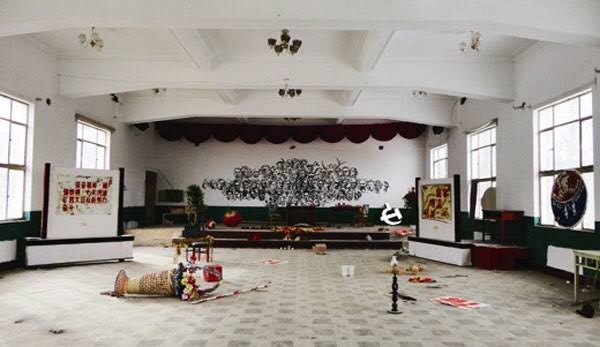
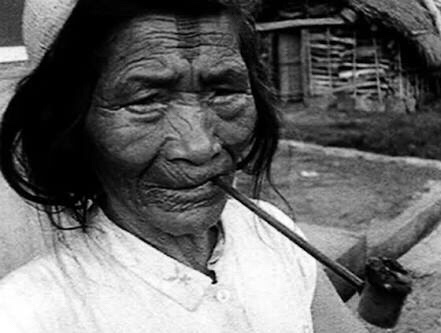
West of the Tracks (Wang Bing, 2003) China

One of the most important and influential documentaries of this century, and a mesmerizing masterpiece. Revolutionary.

Double Happiness (Ella Raidel, 2014) China, Austria

Double Happiness (Otsuka Ryuji, 2014) China

P. J. Sniadecki is one of the most interesting directors working between documentary and experimental cinema today. Watch all of his movies if you can, my personal favourites are Demolition, Yumen, People’s Park and The Iron Ministry.

Songhua (P. J. Sniadecki, 2007) China, United States

The Yellow Bank (P. J. Sniadecki, 2010) China, United States

Bailu Dream (Nicolas Boone, 2012) China, France

Demolition (P. J. Sniadecki, 2008) China, United States

Yumen (Xiang Huang, Xu Ruotao, P. J. Sniadecki, 2013) China, United States

People’s Park (Libbie D. Cohn, P. J. Sniadecki, 2012) China, United States

The Iron Ministry (P. J. Sniadecki, 2014) China, United States

Open 24 Hours (Xavi Camprecios, 2004) Spain, China.

A Hundred Patients of Dr Jia (Wang Hongjun, 2014) China

Disorder (Huang Weikai, 2009) China

731: Two Versions of Hell (James T. Hong) China, Taiwan, United States.

Ta’ang (Wang Bing 2016) Hong Kong SAR China, France

Alone (Wang Bing, 2012) France, Hong Kong SAR China
Few years back I wrote a short post on the movie

Silent Visitors (Jeroen Van Der Stock, 2012) Belgium, Japan.

August (Mieko Azuma, 2011) Japan, Germany.

Peace (Soda Kazuhiro, 2010)Japan, South Korea, United States.

Sofa Rockers (Timo Novotny, 2000) Austria, Japan.

Haiku (Naomi Kawase, 2009) Japan.

Most of the works from the Philippines are from the past decade and by Khavn De La Cruz, once called “the most prominent member of Philippine independent cinema”.

The Muzzled Horse of an Engineer in Search of Mechanical Saddles (Khavn De La Cruz,2008) Philippines.

Philippine New Wave: This Is Not a Film Movement (Khavn De La Cruz, 2010) Philippines.

Can and Slippers (Khavn De La Cruz, 2005) Philippines.

Son of God (Khavn De La Cruz, Michael Noer, 2010) Denmark, Philippines.

Squatterpunk (Khavn De La Cruz, 2007) Philippines.

Kamias: Memory of Forgetting (Khavn De La Cruz, 2006) Philippines.

Our Daily Bread (Khavn De La Cruz, 2006) Philippines.

Rugby Boyz (Khavn De La Cruz, 2006) Philippines.

Bahag Kings (Khavn De La Cruz, 2006) Philippines.

Ex Press (Jet Leyco, 2012) Philippines.

State of Play (Steven Dhoedt, 2013) Belgium, South Korea.

Tour of Duty (Dong-ryung Kim Kyoung-tae Park, 2012) South Korea.

img_4261.jpg

I’ve written a in-depth analysis on contemporary Taiwanese documentary a couple of years ago, and Letter #69 is to this day one of the best and more satisfying blend between experimental cinema and political non-fiction, I’ve had the chance to watch in recent years.

Letter #69 (Hsin-I Lin, 2016) Taiwan

In Memory of the Chinatown (Chun-tien Chen, 2015) Taiwan.

Face to Face (Chuan Chung, 2013) Taiwan.

Trace of the future according to Khoa Lê (Khoa Le, 2014) Taiwan.

Temperature at Nights (Yin-Yu Huang, 2103) Taiwan.

Temperature at Nights (Yin-Yu Huang, 2014) Taiwan.

Kinema Junpo Best Japanese Documentaries of 2018

A couple of weeks ago the film magazine Kinema Junpo announced its 2018 Best Ten Lists. Launched in 1924 with only non-Japanese films, and from 1926 including Japanese movies as well, the poll includes, in its present form, four categories: Japanese movies, non-Japanese movies, bunka eiga and a section awarding individual prizes such as best director, best actor, best actress, best screenplay, etc.
You can check the results for all the categories here.

The best 10 Japanese bunka eiga — a term that, more or less, could be translated into culture movies, in orher words documentary — according to the magazine are:

1 Boy Soldiers: The Secret War in Okinawa  沖縄スパイ戦史 (Chie Mikami, Hanayo Oya)

2 Sennan Asbestos Disaster ニッポン国VS泉南石綿村 (Kazuo Hara)

3 ぼけますから、よろしくお願いします (Naoko Nobutomo)

4 奇跡の子どもたち (Hidetaka Inazuka)

5 Gokutomo 獄友 (Sung Woong Kim)

6 武蔵野 江戸の循環農業が息づく (Masaki Haramura)

7 春画と日本人(Ōgaki Atsushi)

8 蒔絵 中野孝一のわざ

9 夜明け前 呉秀三と無名の精神障害者の100年 (Tomoki Imai)

10 まだ見ぬまちへ〜石巻 小さなコミュニティの物語 (Kenji Aoike)

Not all of them have an official English title, since most were not, and probably will not be, released internationally.

I haven’t seen all of them, but the list seems to reflect certain general and for me disappointing aspects of contemporary documentary in Japan, or at least, a certain way of doing and conceptualizing documentary in the archipelago. Documentary seems to be viewed more as a vehicle to present a certain subject or a certain theme to the viewers and less as a form of visual expression. In other words, no much effort and time is spent on how to stylistically construct the film, and I think part of the “problem”, at least regarding the list in question, is connected to the meaning of term bunka eiga and thus to the by-the-fault approach from the magazine that seems to prioritize the subject matter over cinematic style.
The list is also a reflection of what is happening at the moment in the Japanese documentary scene. I haven’t watched every single non-fiction movie made in the archipelago in recent years, but I see a good number of Japanese documentaries every year, and not only there are almost no trace of documentaries that successfully blur the boundaries between non-fiction, avant-garde and fiction — with few glorious exceptions of course — but there’s hardly space even for works that try to present and tackle themes in different ways.

This slideshow requires JavaScript.

With that out of the way, I can now move to the positive notes. It was nice to see at the first two places Boy Soldiers: The Secret War in Okinawa and Sennan Asbestos Disaster. The former is the third “installment” of the ongoing exploration, by journalist and documentarist Chie Mikami, of the resistance and fight of the Okinwan people against the American “occupation” of the islands. This time Mikami’s movie (co-directed with Hanayo Oya) focuses more on the past, documenting with old photos, footage and interviews, how in the closing stages of the Battle of Okinawa, a unit called “Gokyotai” was used to wage guerrilla behind enemy lines.
Sennan Asbestos Disaster is the latest work by Hara Kazuo (Extreme Private Eros: Love Song 1974, The Emperor’s Naked Army Marches On), about former workers and the relatives of workers at asbestos factories in Osaka’s Sennan district. Hara with his camera follows their legal battle against the Japanese government while seeking compensation for the damage done to their health by asbestos. I had the chance to see the movie in Yamagata in 2017, with four of the victims sitting and chatting in the row in front of me, a very impactful viewing experience that I still treasure.

A final point worth noting is that many of the documentaries in the list are about, to different degrees, the third age. In Sennan Asbestos Disaster the victims are almost all over 60, and so are the five men wrongly convicted in Gokutomo, and the couple depicted in Bokemasukara, yoroshiku onegaishimasu (ぼけますから、よろしくお願いします), a movie about senile dementia,  is well over 90. The disease is also the central theme explored in the triptych of documentaries Everyday is Alzheimer (毎日がアルツハイマー 2012-2018) by Yuka Sekiguchi, the third and latest was released last year, an underrated series in my opinion. I am not discovering anything new, but this heavy focus on the elderly is another signal of the increasingly aging population In Japan, a demographic shift that is shaping, and in fact has already started to shape, the country in several ways, not least its film and visual production.

Slow Motion, Stop Motion スローモーション、ストップモーション (Kurihara Mie, 2018)

Slow Motion, Stop Motion スローモーション、ストップモーション by Kurihara Mie was awarded with the Grand Prize and the Audience Award at the 32nd edition of the Image Forum Festival. Shot in Laos, Myanmar and Thailand in the course of 4 years, as far as I know the director usually stays in the regions for at least a couple of months a year, the movie is a funny and poetic telling, through the mode of the personal documentary, of her experiences and encounters in those countries. On the surface thus Slow Motion, Stop Motion is a diary film and a record of her meetings and interactions with the people she meets and befriends, but on a different level it’s also a glimpse into their life and daily struggle to survive. Avoiding shots of turistic places, beautiful postcard-like landscapes, and disengaging completely from a moralistic and exploitative use of the poorest areas of the countries, the film excels in creating a vivid and vital potrait of the people Kurihara meets. The images captured by the Japanese, but often she gives the camera to children and other people to freely film whatever and however they want, feel thus very authentic. Moreover the home movie-quality that permeates the entire work is functional to what seems to be one of Kurihara goals, that is capturing glances of ordinary life in South East Asia.

An important element of the film is the narration. Done by Kurihara herself it’s infused with a dry sense of humor, the words spoke n not only are funny and represent a commentary a posteriori on what is depicted on screen, but they often reflect and indirectly criticize the act of filming itself and the fetishism towards technology that visual artists very often succumb to. In one of the funniest parts, the director buys a cheap version of a Go-pro and tries to film underwater scenes and pigeons, there were no seagulls on the beach, like in the beloved Leviathan by Lucien Castaing-Taylor and Verena Paravel.

The humorous parts are intertwined with few poetic and melancholic scenes, when Kurihara reflects on the sad mood that permeated the day of her departure for instance, or in a long scene without comment or narration, almost ethnographic in style, where an old man kills, plucks, cleans and cooks a rooster for his family.

The film has neither the stylish and polished aesthetics so in demand in the current international festival circuit, nor the political and activist approach that often drives people to documentaries. I really hope that despite the lack of these qualities the movie won’t fall under the radar, because as a hybrid experiment that uses the diary and personal documentary style as a point of departure, it subtly touches very crucial themes such as post-colonial representation and representation of marginal areas in contemporary visual culture.

Image Forum Festival 2018 イメージフォーラムフェスティバル 2018

The 32nd Image Forum Festival ended last Sunday in Tokyo. The nine-day-long event, hosted at two different locations in the Japanese capital, the Theatre Image Forum and the Spiral Hall, screened in total more than 80 films, including 23 in the East Asian Experimental Film Competition, the main section. Established in its present form in 1987, the festival succeeded and replaced an experimental film festival that was held, in various phases and different shapes, in the capital from 1973 to 1986.

To this day the festival continue to embody the mission and the legacy of its predecessors. Primarily dedicated to experimental cinema and video, the event provides a special opportunity for the viewers to experience on a big screen a mix of feature films, home cinema, documentary and experimental animation.
After Tokyo, the festival will move to Kyoto, Yokohama and Nagoya, with slightly different contents, there will be special sections dedicated to artists of each city. This is a right and welcomed decision, since too often Tokyo ends up cannibalizing the cultural and artistic events taking place in the archipelago.

This slideshow requires JavaScript.

This year’s special retrospectives were dedicated to the provocative films of Christoph Schlingensief, German director who expanded his works beyond cinema to touch theater, television and public happenings, Kurt Kren, Austrian artist associated with Viennese Actionism, but also author of structural films, and the experiments on celluloid by Japanese photographer Yamazaki Hiroshi. I wasn’t aware of the films of Schlingensief, and I have to say that it was at the same time a discovery and a delusion. While I really liked 100 Years of Adolf Hitler (1989), claustrophobic and parodic reconstruction of the last hours of the dictator and comrades in his bunker, I couldn’t digest the other two movies of the so called German Trilogy. German Chainsaw Massacre (1990) and especially Terror 2000 (1992) are too much of a mess and stylistically all over the place , and probably too bound to the events of the time, the Fall of the Berlin Wall and the consequent unification of the two Germanies, for me to decipher them.

Unfortunately I wasn’t able to check the works of Yamazaki, but I’m planning to see them at the end of September, when the festival will come to Nagoya. As with his conceptual photos, the shorts made during his entire life explore the relationship between time and light, a topic I’m very attracted to.
I also missed the screening of Caniba (2017) by Lucien Castaing-Taylor and Véréna Paravel, about the “cannibal” Sagawa Issei, if I’m not wrong, this was the Japanese premiere of the film, and the special focus Experimenta India, a collection of visual art from the Asian country.
Interesting was to catch Matangi/Maya/M.I.A. (Steve Loveridge, 2018), about the famous ex-refugee of Tamil origin, now a pop icon and singer, an artist I was completely unaware of. The documentary is based on more than 20 years of footage filmed by herself and her friends in Sr Lanka and London. While I didn’t connect with the first part of the movie, too self-indulgent for my taste, the film gets much better in the last 30-40 minutes when, albeit briefly, touches on complex and fascinating topics such as immigration and art, fame, and social awareness in the show business.

The East Asia Experimental competition was pretty solid, besides several short films coming from a variety of areas like South Korea, China, Hong Kong, Taiwan and naturally Japan, two were the long documentaries screened. A Yangtze Landscape (Xu Xin, 2017), a visual exploration of the social and geographical landscape along the longest river in Asia (you can read my review here), and Slow Motion, Stop Motion (Kurihara Mie, 2018) a movie that positively surprised me and won both the Grand Prize and the Audience Award. A review is coming soon, stay tuned.

Asia is One アジアはひとつ (NDU, 1973) edited

I’m reposting an edited version of my piece on NDU’s Asia is One, an article I wrote two years ago.

NDU (Nihon Documentary Union) was a Japanese collective founded in 1968 by a group of Waseda University students who would eventually drop out to dedicate their lives to filmmaking and political struggle. From 1968 to 1973, when the group disbanded, this group of activists, who saw themselves first and foremost as a collective of activists, made four documentaries, moving from the streets of Tokyo – the first work was Onikko – A Record of the Struggle of Youth Labourers – to the distant islands of Micronesia, passing through Okinawa, the archipelago where they made two of their most important documentaries.

Motoshinkakarannu (1971) was made in and about Okinawa, before the archipelago was ‘returned’ to Japan. The group went to the island in 1971 and captured on film a society in transition. The film shows and focuses on the fringes of society, with illegal prostitution and life in the red districts, while also highlighting the historical and social fractures that have run through the area: anti-establishment and anti-American riots, the Black Panthers’ visit to Okinawa, water pollution and much more. I voted Motoshinkakarannu one of my favourite Japanese documentaries in a poll I organised a year ago, but today I’d like to turn my attention to the second film made by the collective in Okinawa (and beyond): Asia is One アジアはひとつ (1973, 16mm, 96′), a work that I hadn’t seen at the time of the poll and that would have certainly made my list along with Motoshinkakarannu.

Asia is One was screened on June 26th at Kyoto Kambaikan, as part of the AAS in Asia, and it was screen with English subtitles for the first time, the movie was shelved for many many years, forgotten, and was (re)discovered only in 2005 when was screened at the Yamagata International Documentary Film Festival. The screening in Kyoto was followed by a fascinating Q&A with the only surviving member of NDU, Inoue Osamu. Nunokawa Tetsurō, who after the dismantling of the collective made other interesting solo documentaries in Palestine and US, passed away in 2012. As described by Roland Domenig (1), with Asia is One

NDU further explored the margins of Okinawan society and continued to break through borders by focusing on the Taiwanese minority. The film portrays Taiwanese migrant workers on the main island of Okinawa who substitute the Okinawa laborers who in turn are employed as migrant workers on Japan’s main islands. It traces the history of Taiwanese coal miners on Iriomote Island, follows legal and illegal workers to the westernmost island of Yonaguni and finally lands in Taiwan in a village of he Atayal tribe of Taiwanese aborigines, where still the Japanese naval anthem is played every noon.

Formally the documentary is composed of landscapes and interviews, all of them out of sync, possibly due to the equipment used or maybe the lack of it. The uncanny space created by this displacement, but also by the use of music from radio broadcasts and kids voices, thrown here and there during the movie, gives the work a peculiar aesthetic tone, a type of non-fiction cinema that I like to call “chaos cinema”. (2)
To explain and understand the “chaotic” trait of Asia is One, and Motoshinkakarannu as well, we have to delve deeper in the philosophy that laid at the core of NDU’s approach. What the collective has tried to convey through their cinema is extremely fascinating, in their writings (3), mainly published in the magazine Eiga Hihyo, the group was explicitly pushing towards a cinema/activism of anonymity, trying to reach an “impersonal space” and rejecting even the term “work” (sakuhin) because it was seen as the product of a single person in command and as a result of a dominating power structure. In this regard famous was their criticism of Ogawa Production, a collective that bore the name of a single person and that was basically structured hierarchically (4). To this kind of collectivism NDU tried to oppose a more fluid idea of group activism, where the structure was a flat and horizontal one, and in doing so, promoting a cinema made by amateurs (5) and not by professionals. “Everybody can push the button and shoot with a 16mm camera” said Inoue, and this is even more true today since the advent of the digital revolution. Whether this approach was successful or not, and more importantly, whether this horizontal structure and “amateur cinema” is possible at all, are questions without answers that are haunting scholars to this day.
Going back to Asia is One, the part of the movie the resonated more with me was the last one, when the film moves to the Atayal village in Taiwan. There’s a quality in the close-ups of the tribe people, beautiful and ancient faces, that is extremely fascinating, also because it is in these scenes that the political discourse on identity, or the negation of it, reach its peak. From the 17th Century onward The Atayal people, like the rest of the tribes inhabiting the island, were forced to face the colonization of the Dutch first, the Spanish and the Chinese later, and eventually that of the Japanese Empire (1895 – 1945), which called them “barbarians” and tried to assimilate and annihilate their culture (6). That being said, the words spoken by the member of the tribe provide more context and add layers of complexity to the situation. “Japan conquered us and abolished many of our ancient traditions and customs”, but at the same time “we were drafted and went to war with pride and ready to die” and also “luckily the Japanese abolished some of our ancestral traditions like beheading”. Asia is One ends with the militaristic song If I Go to Sea against an everyday scene with the aboriginal Taiwanese people isolated in the mountains singing “We want to go to war again.”

Of course there is oppression and violence, physical and cultural, in every colonization, but things here are deeper than what they seem. In the process of cultural and historical coring that the movie conveys with its images and words, from Okinawa to Taiwan, I believe that two significant elements emerge. The first is the crisis of the identity concept, often a forced cultural and national superstructure imposed by the stronger and more powerful part on a “highly fluid space of human life” (6), as Inoue explained “identity was one of the most hated words inside the NDU, identity is a choking concept”. The second point that struck me is the recurrence of a power and social structure that exploits the margins, the outsiders and the weakest people. In mainland Okinawa the illegal prostitutes and worst jobs are done by people from Miyako island, and in Miyako and other small islands the lower part of society is occupied by Koreans, Taiwanese and aboriginal people. This perpetuating exploitation is possible only as long as a certain part of society is described as different and inferior, and only when and where the concept of border is a monolitic divide used to create the “other”, the “foreigner” and the “stranger”. NDU’s documentaries are an antidote against all this poisonous discourse, and an invitation to break through the borders, those in the world outside us, but also those inside ourselves.
A final note on the title, the movie as a product of a collective that was thriving towards anonymity, has not film credits, nor it had originally a title, Asia is One was attached to it only later, and it’s a kind of a joke because as Inoue himself said “we all know that Asia is not one!”

notes:

1 Faraway, yet so close by Roland Domenig, in The Legendary Filmmaking Collective NDU and Nunokawa Tetsurō ed. Yasui Yoshio, Tanaka Noriko, Kobe Documentary Film Festival Committee, 2012.

2 This might not be the best way to describe the movie, but aesthetically it reminded me, maybe because of the out of sync, of Imamura Shōhei’s documentaries shot in South East Asia during the 70s.

3 Some of the writings are translated in The Legendary Filmmaking Collective NDU and Nunokawa Tetsurō, op. cit.

4 You can find more in Forest of Pressure: Ogawa Shinsuke and Postwar Japanese Documentary, Abé Markus Nornes, Visible Evidence 2007.

5 Some interesting insights on amateurism in cinema can be found in The Flash of Capital: Film and Geopolitics in Japan, Eric Cazdyn, Duke University Press 2002.

6 In 1930 the village was the site of an anti-Japanese uprising, the so called Musha Incident, an event portrayed in Warriors of the Rainbow: Seediq Bale (Wei Te-Sheng, 2011)

7 Nunokawa Tetsurō in YIDFF 2005 Special Program, Borders Within – What it means to live in Japan.

Ogawa Production retrospective at Cinéma du réel (March 23-April 28)

This year Cinéma du réel, one of the most prestigious documentary film festivals, will kick off its 40th edition this coming Friday, among the more anticipated events of the Parisian festival there will be a special focus on Ogawa Shinsuke and Ogawa Production, a huge retrospective dedicated to the documentary collective that from the 1960s onward changed and impacted the landscape of non-fiction cinema in Japan and Asia. Part of the events celebrating and reflecting on the civil unrest and protests that shook the world in 1968, from March 23rd to April 28th, the festival and the city of Paris will showcase seven movies made by the group in the 1960s:

Sea of Youth – Four Correspondence Course Students (1966)

Forest of Oppression – A Record of the Struggle at Takasaki City University of Economics (1967)

Report from Haneda (1967)

The Battle Front for the Liberation of Japan – Summer in Sanrizuka (1968)

Prehistory of the Partisans (1969, directed by Tsuchimoto Noriaki)

At the end of Cinéma du réel, the retrospective will then move to the Galerie nationale du Jeu de Paume where will continue its focus on the Sanrizuka Series, movies documenting the struggle and resistance of the peasants and the students, united against the land expropriation perpetrated by the government in order to build Narita airport. The retrospective will last until April 27th presenting also the movies made by Ogawa Pro in its third phase, when the group moved to Magino village in Yamagata prefecture. The collective disbanded in 1992 with the untimely death of its founder Ogawa Shinsuke, a passing that also revealed the dark side of such a unique cinematic endeavor, Ogawa himself left a huge debt made during the years to support the collective and their films.

One member of the collective, Iizuka Toshio, will be in Paris to introduce the Magino films, and discuss his own movies and his relationship with Ogawa Shinsuke and the group. Curated by Ricardo Matos Cabo, whom I had the pleasure of meeting last October in Yamagata, the retrospective will also include other documentaries about the group, Devotion: A Film About Ogawa Productions (2000) by Barbara Hammer, A Visit to Ogawa Productions (1981) with Oshima Nagisa, Filmmaking and the Way to the Village (1973) by Fukuda Katsuhiko, and Kashima Paradise (1973) a French documentary about the struggle in Narita. An important part of the event will be the presence of scholar Abè Markus Nornes who will give a master class on Ogawa and lectures on militant film in Japan and Sanrizuka: Heta Village (1973).

If you’re in Paris, don’t miss this opportunity, experiencing Ogawa Pro’s documentaries on a big screen, in the proper contest and with proper introductions, is one of the best cinematic experiences I had in my life. Here the schedule of the screenings and lectures at Jeu de Paume :

April 3 (Tue), 18:30 Sanrizuka – Heta Village (1973)

April 4 (Wed), 18:00 Winter in Sanrizuka (1970)

April 6 (Fri) 16:30 Sanrizuka — the Three Day War (1970)
18:00 Sanrizuka – Peasants of the Second Fortress (1971)

April 7 (Sat) 11:30 Sanrizuka – The Construction of Iwayama Tower (1971)
14:30 Sanrizuka – Heta Village (1973)
18:00  Filmmaking and the Way to the Village (1973)

April 10 (Tue) 18:30 Dokkoi! Songs from the Bottom (1975)

April 17 (Tue) 16:00 Devotion: A Film About Ogawa Productions (2000)
18:00 The Magino Village Story – Pass (1977)
The Magino Village Story – Raising Silkworms (1977)

April 20 (Fri) 18:00 « Nippon » : Furuyashiki Village (1982)

April 21 (Sat) 11:30 Encounter with Toshio Iizuka
14:30 The Sundial Carved with a Thousand Years of Notches – The Magino Village Tale (1986)

April 24 (Tue) 19:00 The Magino Village Story – Pass (1977)
A Visit to Ogawa Productions (1981, directed by Oshige Jun’ichiro)

April 28 (Sat) 14:30 Kashima Paradise (1973, directed by Yann
Le Masson and Bénie Deswarte)
17:00 Sanrizuka – The Construction of Iwayama Tower (1971)

Record of a Marathon Runner あるマラソンランナーの記録 (Kuroki Kazuo, 1964)

The Winter Olympics in Pyeongchang, the next edition of the Summer Olympics in Tokyo on the horizon, and the massive 100 Years of Olympic Films box set released last year by the Criterion Collection, revived and rekindled my interest in sport documentaries. I decided to revisit one of my favourite non-fiction films dedicated to sport, Record of a Marathon Runner, a movie made by Kuroki Kazuo between 1963 and 1964 about Kimihara Kenji, a Japanese marathon runner active during the 1960s and 1970s. Kuroki was a director who, long before establishing himself as an author somehow associated with the Japanese New Wave (Silence Has No Wing and Ryōma Assassination are two of his best work of the period), was a respected and innovative documentary filmmaker at the Iwanami Production, where he and other friends, Tsuchimoto Noriaki and Ogaka Shinsuke among others, formed the Ao no Kai (Blue Society), a group that tried to experiment and find new ways of expression through non-fiction cinema.

Record of a Marathon Runner is a PR movie (a sponsored movie) founded by Fuji Film, but paradoxically shot almost entirely on a Eastman Kodak film. If you want to know more about the movie’s troubled production and have more insights on Kuroki career, this interview is a must read.

It is possible to watch the relatively short documentary (only 62 minutes) on The Science Film Museum’s Yutube official page, unfortunately it’s without English subtitles.

For some scholars, and I couldn’t agree more, Record of a Marathon Runner represents the other side of the official discourse about the Olympics, the one exemplified, with great artistic results I have to admit, by Ichikawa Kon’s Tokyo Olympiad (1965). In Record of a Marathon Runner the connections with the big event are very thin if not completely absent, in fact someone could argue that the movie is not even about the Olympics at all, we don’t see the marathon or the games themselves, the camera “just” follows Kimihara Kenji, who would eventually finish in eighth place at the competition in Tokyo, throughout his training and running in the winter and spring of 1963-64, as he prepares for the big event.

Although originally the documentary was conceived by Kuroki without narration, the movie uses a traditional narration alternating with the words spoken by the marathon runner himself and his coach. However, the tone of the words is so flat and has an almost matter-of-fact quality in it, that there’s no glamour nor pathos, on the contrary, everything, from the endless and solitary training, to the foot injury and the recovery, is displayed like some sort of natural phenomenon. Drained of any passion, the style of the movie reflects the act of running as felt by Kimihara himself, or at least as it is presented in the film, mechanical and without a real purpose, but it is also a way of transferring on screen the gray skies and the dull landscapes depicted, Kitakyūshū city with its industrial suburbs often drenched in rain, or the very ordinary countryside roads in Kagoshima prefecture.

This sense of necessity and that of the loneliness of the runner is amplified by the use of an eerie, dissonant and minimalist music, and by a cinematography that often uses long shots when depicting the athlete while training on the track, on the beach or on the streets. Even in the only scene when Kimihara is shot on a close-up while running, the monotonous sound design and the circularity of his movements form a hypnotic run that seem to lead nowhere. Another scene towards the end is also exemplary about this aesthetic approach: Kimihara after recovering from his injury participate in a competition- the Asahi road relay as the last runner – the only proper race we see on screen. After he wins and crosses the finish line though, he goes on running for a couple of minutes among people and trees like in a state of trance and without goal.

Focusing on the experience of running in preparation for a competition, highlighting its harshness and solitude, Kuroki also depicts indirectly the social background which Kimihara belongs to, the working class of a highly industrialized Kita Kyushu, and the life of an athlete before the brief and ephemeral light cast by the Olympic event.

2017: Kinema Junpo Best 10 – documentary

Awaited every year with trepidation by cinephiles and the community of Japanese film-lovers, and a perfect occasion for discussing the state of the art in the archipelago and agree or disagree with it, last month the prestigious film magazine Kinema Junpo announced its 2017 Best Ten Lists . Launched in 1924 with only non-Japanese films, and from 1926 including Japanese movies as well, the poll includes, in its present form, four categories: Japanese movies, non-Japanese movies, bunka eiga and a section awarding individual prizes such as best director, best actor, best actress, best screenplay, etc.
You can check the results for all the categories here. Given the nature of this space, I want to focus my attention (with the slowness that characterizes this blog, apologies) on the bunka eiga list, that is to say, the best 10 Japanese documentaries released in 2017 according to Kinema Junpo (as far as I know only three have been released outside of Japan and thus have international titles):

1 人生フルーツ Life is Fruity

2 標的の島 風(かじ)かたか The Targeted Island: A Shield Against Storms

3 やさしくなあに 奈緒ちゃんと家族の35年

4 ウォーナーの謎のリスト

5 谺雄二 ハンセン病とともに生きる

6 沈黙 立ち上がる慰安婦 The Silence

7 米軍が最も恐れた男 その名は、カメジロー

8 笑う101歳×2 笹本恒子 むのたけじ

9 まなぶ 通信制中学 60年の空白を越えて

10 廻り神楽

With the term bunka eiga (cultural film), for a comprehensive analysis of the word and its usage in relation with other definitions, read here, the magazine awards non-fiction movies that explore social, cultural and political themes, often focusing more on the subjects tackled than on the formal aspects of the films themselves.
It is almost a fact that we’re living in a new golden age for documentaries, an era when every year, in theaters or on streaming platforms alike, there’s at least one film that push the boundaries of non-fiction cinema towards new territories. Unfortunately Japan, with all the exceptions of the case, seems to have stayed or have left behind. This is not the right place to discuss and deep dive into the reasons for this impasse, suffice to say that it is a problem affecting Japanese cinema in general and not only nonfiction movies.

That being said, it is nice to see at the top of the list Life is Fruity, a movie directed by Fushihara Kenshi and produced by Tokai TV, a production company based in Nagoya that in the last twenty years or so has been releasing a bunch of interesting and insightful documentaries. Again, all of them have quasi-TV aesthetics, nonetheless the topics explored and, in the best cases, the touch used, make them worth watching. Of the 21 documentaries produced by Tokai TV I’ve had the chance to watch five, among these my favorite is 青空どろぼう (Sky’s Thieves, 2010), a movie on the Yokkaichi Asthma, one of Japan’s four major diseases caused by pollution.
Life is Fruity tells the story of 90-years-old architect Shuichi Tsubata and his wife Hideko living in Aichi prefecture in a house surrounded by vegetables and fruits. Almost half a century ago Tsubata was asked to plan a new town in the area, but his idea of building houses that could coexist with woods and blend with the natural environment was rejected, and a project more in tune with the fast growing Japanese economy of the time was chosen. Tsubata left his job, purchased a piece of land and built his dream-house in a manner of his master,  Czech-American architect Antonin Raymond.

You can see an English subtitled trailer by clicking on the Vimeo button:

Number two in the list is A targeted Village, the second documentary directed by Mikami Chie about the ongoing protests and resistance of Okinawa people against the American military presence and expansion in the island.
In 1983 director Ise Shinichi started to record the daily life of his 8-year-old niece Nao, a girl with intellectual disability who also suffers epilepsy, and her interaction with her family and society. After 12 years of shooting he edited the material into Nao-chan, a movie released in theaters in 1995, followed by 「ぴぐれっと」in 2002 and ありがとう 『奈緒ちゃん』自立への25 in 2006. やさしくなあに 奈緒ちゃんと家族の35年, number 3 in the Kinema Junpo list, is the fourth installment in this ongoing series and documents the ups and downs in the daily life of Nao and his family. I haven’t seen the movie yet, but it seems to perfectly continue the tradition of Japanese documentaries dealing with disability, from Tsuchimoto Noriaki to Yanagisawa Hisao (a retrospective of his works is happening now in Tokyo) and, in more recent years, Soda Kazuhiro with Mental.

Nao_chan.jpg

ウォーナーの謎のリスト is a documentary about American archeologist Langdon Warner and his list of culturally valuable Japanese sites that, allegedly, saved the most important temples and monuments from destruction during the American bombing of Japan in World War II. 谺雄二 ハンセン病とともに生きる tells the story of poet, activist and writer Kodama Yōji, who suffered from leprosy and fought against isolation and discrimination during his entire life, while with The Silence, second generation Japanese-Korean Park Soonam, records the struggle carried on by the victims of sexual slavery during the invasion of Korea by imperial Japan. In 米軍が最も恐れた男 その名は、カメジロー, his debut behind the camera, newscaster Sako Tadahiko explores the life of Senaga Kamejirō, an outspoken politician and communist who fought the American occupation of Okinawa until his death in 2001.
The list does not represent Japanese documentary landscape in its variety and complexity of course, by design the more experimental works are ruled out, nonetheless besides few titles, the films here selected don’t seem to hold any particular appeal to an international audience, again at the risk of becoming trite, it’s not because of the themes explored, but more because of what to me appears to be the lack of a distinctive style and vision.

Yamagata International Documentary Film Festival 2017

The Yamagata International Documentary Film Festival, one of the most awaited film-related events of the Japanese archipelago, will kick off its fifteenth edition next week on October 5th. For eight days the city of Yamagata will be the capital of documentary cinema, hosting not only an international competition with movies from all over the globe, but also a plethora of  more or less known documentaries presented in other sections, special screenings and retrospectives. For the cinephiles and the film lovers visiting the northern Japanese city, the festival will be an occasion to discover hidden gems of historical importance and an unmissable chance to meet directors, scholars and documentary-obsessed people.
Festival opens on the 5th with a special screening commemorating the passing of Matsumoto Toshio, one of the true giants of Japanese cinema. Two of his best known documentaries, Nishijin (1961) and Ginrin / Bicycle in Dreams (1955) will be presented for the occasion in their original format (35mm), while For My Crushed Right Eye (1968) will be screened as it was originally conceived, that is in 16mm and with 3 projectors. Funeral Parade of Roses (1969) and other experimental works made by Matsumoto during the 1970s and 1980s will also be shown during the festival, including one of my favourite, Atman (1975), a kaleidoscopic trip to the philosophical source of movement and image.
Among the titles presented in the International Competition a must-see for me is Ex Libris—The New York Public Library, the latest work by Frederick Wiseman, but I’m also looking forward to I Am Not Your Negro by Raoul Peck and the long-awaited new work by Hara Kazuo, Sennan Asbestos Disaster, the first feature documentary the director of The Emperor’s Naked Army Marches On made in more than a decade. The movie follows the victims who suffered asbestos-related damages in the city of Sennan in Osaka, during their eight years fight for compensation.
Also in competition the beautiful Machines by Rahul Jain (I wrote about it here), Donkeyote, a subtle reflection on dreams and hopes through the eyes of a donkey and its ageing owner, directed by Chico Pereira, and Another Year by Zhu Shengze, a movie that has received much praise in the international festival circuit. Wake (Subic) by John Gianvito, about the pollution afflicting the residents of a former US naval base in Luzon Island, the Philippines, looks interesting and so does Tremoring of Hope, the difficult recovery of the people of Hadenya in Miyagi, six years after the Great East Japan Earthquake.
Here the complete line-up.
A promising section that will probably sparkle heated post-screening debates is Politics and Film: Palestine and Lebanon 70s–80s, a selection of films made in Palestine and Lebanon during the Lebanon civil war (1975-1990) and in recent years, movies that show and reflect on the struggles and politics of the area. Among them the (in)famous Red Army / PFLP: Declaration of World War, filmed by Wakamatsu Koji and Adachi Masao in 1971, and Genet in Shatila (1999), about the French writer and his relation with the Palestinian revolution as he witnessed the aftermath of the Shatila’s massacre in September of 1982.

Introducing Asian documentary filmmakers, New Asian Currents is usually one of my favorite section for its scope and the variety of films shown, this year 21 works from the continent will be presented, giving us a glimpse of the life, difficulties and struggles the people inhabiting the huge and diversified area have to cope with in their daily life. A Yangtze Landscape by Xu Xin is an interesting movie (more here) that deserves to be seen on the big screen, exploring the geographical and social landscape surrounding the Yangtze River in its long course of more than thousands kilometers. While the works of Yamashiro Chikako are a rare example, rare in Japan at least, of how to tackle a series of thorny historical issues, Okinawa and its relation with mainland Japan and with its past, merging documentary with the experimental.
Here the section’s complete line-up.
I’m ashamed to admit, but I know almost nothing of African documentary. Africa Views will thus be my entrance gate to it, “a program that introduces over 20 films created since the year 2000—with a particular focus on the Sub-Saharan region—depicting a contemporary Africa that lets off a considerable racket as it creaks toward progress, and introducing us to the people who live there.” What caught my attention in Perspective Japan are the new films by Murakami Kenji and Onishi Kenji, two short experiments in 8mm whose screening promises to be, like two years ago, a real cinema-event.
The Festival will also hold a retrospective on Fredi M. Murer, a Swiss director that the program describes as “a leader of the internationally-acclaimed Swiss Nouveau Cinema movement that was active from the late 1960s through the 1980s, together with Daniel Schmid and Alain Tanner. (…) Depending on the period in which they were made, Murer’s works may be classified variously as experimental film, documentary, or narrative film.” The retrospective that interest me the most though is Ten Trips Around the Sun: Sato Makoto’s Documentary Horizon Today, a tribute to Sato Makoto on the 10th anniversary of his death, that will include screenings of his major works accompanied by discussions and panels.

North Korean missiles permitting, I’ll be in Yamagata from October 6 to 11, and, as I did two years ago, I will try to keep a diary of my viewings experiences, here or more likely on my Twitter account.

P.S. I’ve also created a list on Letterboxd with most of the movies that will be in Yamagata.

This slideshow requires JavaScript.

From the archives: Kamei Fumio, Hani Susumu, and Ogawa Production in two Italian publications (1967, 1970)

The Centro sperimentale di cinematografia (Experimental film centre) in Rome is one of the oldest cinema schools in the world and the oldest in Europe. Founded in 1935, the centre nourished and helped establishing, in different degrees, the career of many important filmmakers, photographers and actors. Japanese director Masumura Yasuzō famously studied at the school for about two years at the beginning of the 1950s under luminaries such as Michelangelo Antonioni, Federico Fellini and Luchino Visconti, an experience that without doubt helped shaping his approach to cinema and his views as a filmmaker.
In 1937 the centre started to publish its own film journal, Bianco e Nero, a monthly magazine that is still been published to this day. A couple of years back I bought a copy from 1967 (February) that has an article, penned by film critic Claudio Bertieri, on the documentaries of Hani Susumu and Kamei Fumio. In November of the previous year the Festival dei Popoli in Florence, an event dedicated to non-fiction still running today, presented a mini-retrospective on Japanese documentary, and Bertieri discusses in the short article, titled Susumu Hani, Fumio Kamei ed il documentario giapponese (Susumu Hani, Fumio Kamei and Japanese documentary), the movies he was able to see at the festival. He devotes most of the article on Hani, Yuki Matsuri (1953), Children in the Classroom (1954), Children Who Draw (1955), Twins in the Class (1956) and Hōryū-ji (1958) are the documentaries here analysed, while the rest of the piece is spent examining Kamei’s It’s Good to Live (1956) and The World of Yukara (1964), a trilogy about Ainu’s traditions. Although written in 1967 — a period when Japanese documentaries certainly were not known or available to watch as they are today (well, they are not that discussed even today…)— and with few dated observations here and there, most of the analysis remain solid to this day. Documentary as opposed to mainstream cinema ‘the man in the street here [in Europe] has not seen Louisiana Story, in Japan he does not know Hani or Kamei’, Hani’s ability to capture moments of pure innocence in children, or Kamei sensibility when portraying human suffering are spot-on insights.

Even more interesting, but for different reasons, is Cinema: Giappone e Zengakuren (Cinema: Japan and Zengakuren) a short book published in 1970 by Samonà e Savelli, later Savelli – La Nuova Sinistra, a publisher established in 1963 and the first to directly represent the extra-parliamentary left-wing in the Italian publishing world. Over the next decade the books printed by Savelli – La Nuova Sinistra, also fueled by political and social unrest in the peninsula, would gain momentum and become a cultural reference point for left-wing groups such as Potere Operaio and Lotta Continua , and for the newspaper Il Manifesto.

The book is devoted to Ogawa Shinsuke’s The Battle Front for the Liberation of Japan – Summer in Narita (1968), the first movie in the Narita/Sanrizuka Series. A brief introduction that outlines the Japanese political situation and the fierce resistance by the peasants and the students, is followed by a translation of some writings by members of Ogawa Production, just a couple of paragraphs nothing more, while the main part of the volume is a transcription of the dialogues spoken in the film. It was a period where revolutionary cinema(s) of the globe were connecting to each other and were trying to build a common front against capitalism, the people in power and the establishment. The back cover is in this regard illuminating: Comitato di Cinema e Rivoluzione: Baldelli, Filippi, Ivens, Ogawa, Rocha, Solanas, Straub (Cinema and Revolution’s committee: Baldelli, Filippi, Ivens, Ogawa, Rocha, Solanas, Straub).

Reading these two publications after almost 50 years since they were originally printed was a very fascinating discovery, Ogawa and Kamei are two of the most important documentarists in the history of world cinema and essentially the reason this blog exists. Cinema: Japan and Zengakuren in particular is revelatory not as much for the information it contains, there are some mistakes of course—in the pre-internet age Japan was still a land far away and often misrepresented—but more as an artifact of an era long gone but still able to resonate with our present. An era when the arts were explicitly politicized, in a state of never-ending struggle and ready to change the world.

This slideshow requires JavaScript.