Third and final dispatch from this year’s Kobe Discovery Film Festival (first and second here and here)
My last day at the festival coincided with the screening of four programs: the state of film preservation today, actor Hayakawa Sessue, the 100th anniversary of Pathé Baby, and a selection of works by Koike Teruo, experimental filmmaker who passed away last March.
Film, the Living Record of Our Memory (2021) is a documentary directed by Inés Toharia, where film archivists, curators, technicians and filmmakers reflect on the current state of film preservation, why it is a vital part of our culture, and how film archives in different countries are facing a set of very different problems. The second screening of the day was Where Lights Are Low, a silent drama directed by Colin Campbell in 1921, with protagonist the Japanese Hollywood star Hayakawa Sessue. I had already watched the movie before, on the streaming edition of the Pordenone Silent Film Festival during the pandemic I believe, but to experience it on the big screen with a live accompaniment was a delight. 2022 marks the 100th birthday of Pathé Baby, to celebrate it, a group of people, lead by Anna Briggs, Michele Manzolini, and Mirco Santi, in conjunction with the association INEDITS Amateur Films / Memory of Europe, assembled a montage of amateur films shot in 9.5mm from around the globe, 9 1⁄2 the title. The work is a visual symphony of everyday life, as it is called in the introduction, that, for its moments of unexpected poetry, reminded me of Liu Na’ou’s The Man Who Has a Camera.
Experimental filmmaker and visual artist Koike Teruo passed away on March 18th, KDFF 2022 dedicated to the director a special program comprised of four of his works, three of which are part of his life-long series Ecosystem, which Koike himself described as something that “has grown as a sort of giant tree for me”: 生態系 -5- 微動石 (1988), 生態系 -20- ストーン (2013), and 生態系 -27- 密度1(2018). One of the four, 衝 (1995), is a short piece, a sort of documentary, shot in Kobe in the aftermath of the earthquake that hit the area on January 17th 1995. Besides the works themselves, a wave of materiality that inundates the viewer with their rhythm and editing speed, especially when experienced on a big screen, what turned out to be particularly interesting for me, was the talk after the screening. Researcher Tanaka Shimpei talked about the importance of Koike in establishing the experimental scene in the Kansai area through events and independent screenings (自主上映会). As Tanaka writes in the catalogue ECOSYSTEM Teruo Koike Visual Works 1974 – 2020:
The career of a prominent visual artist Teruo Koike must be reconsidered through not only his film making which includes collaborations with various modern dances and his improvisational music performances, but also his aggressive independent screening activities which have been maintained since as far back as around 1980’s. And not only should we look back on his rich filmography centering on the “Ecosystem” series, but also by reviewing Koike’s screening activities engaged around Kobe.

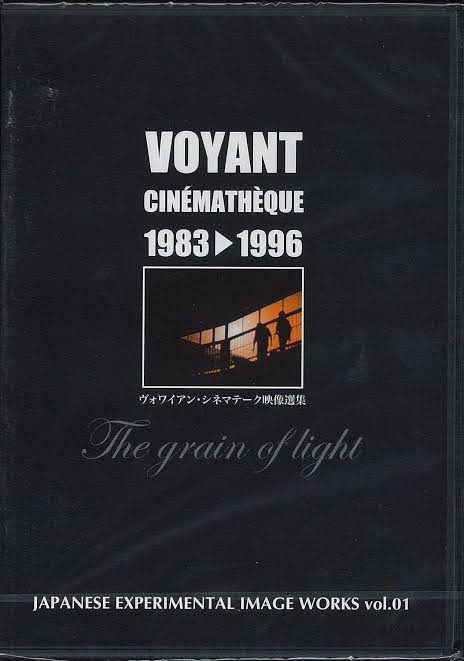
Born in Ichinomiya city, he graduated in Kobe, and after his experience in Iran at the end of the 1970s, where he worked in a petroleum complex, and where he experienced first hand the Iranian Revolution, Koike returned to Japan, started again to make films, and began to organize screening events. In 1980, together with Okuda Osamu founded Cosmic Caravan (1980-1982), a group engaged in showing and making experimental movies. After this experience, Koike and others, among whom Zeze Takahisa, formed Voyant Cinémathéque (1983-1996), a group active for more than a decade in Kyoto, Osaka, and Kobe, that promoted experimental cinema, and helped new artists by providing them venues for showing their work. Koike continued to be very active in showing and organizing events (installations, visual performances) in the new millennium as well, he learned to play the Japanese flute in the mid-1990s, and often accompanied the screenings of his works, not only with his live improvised performances, but also with professional dancers.

 Asian Docs
You must be logged in to post a comment.